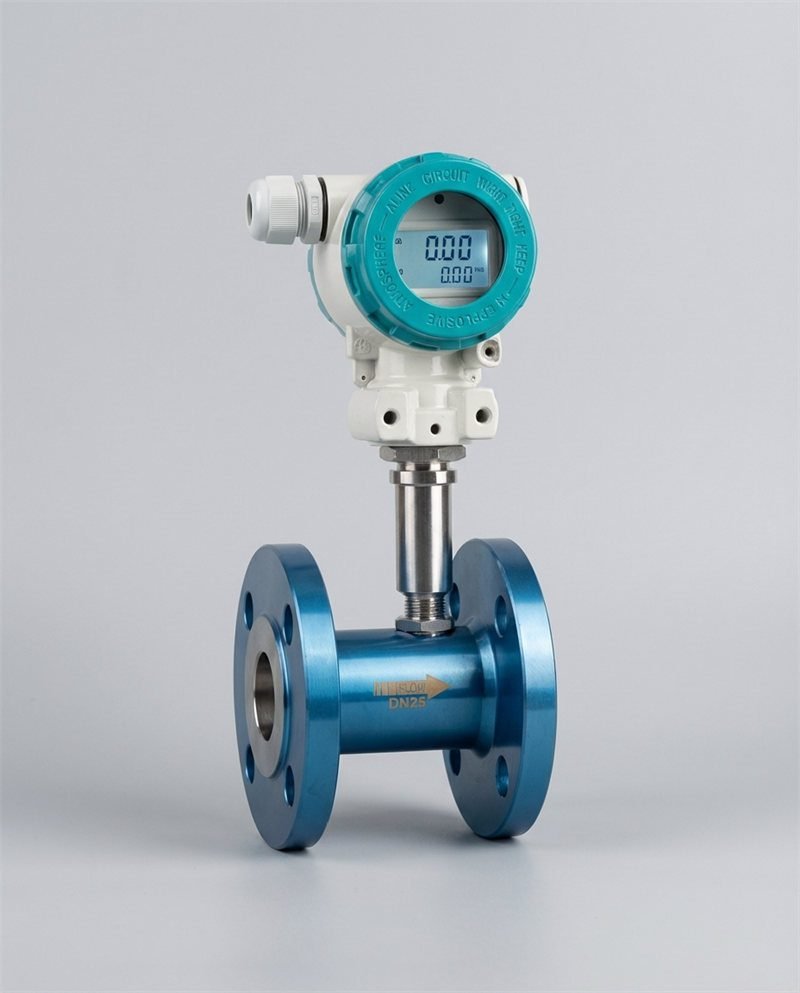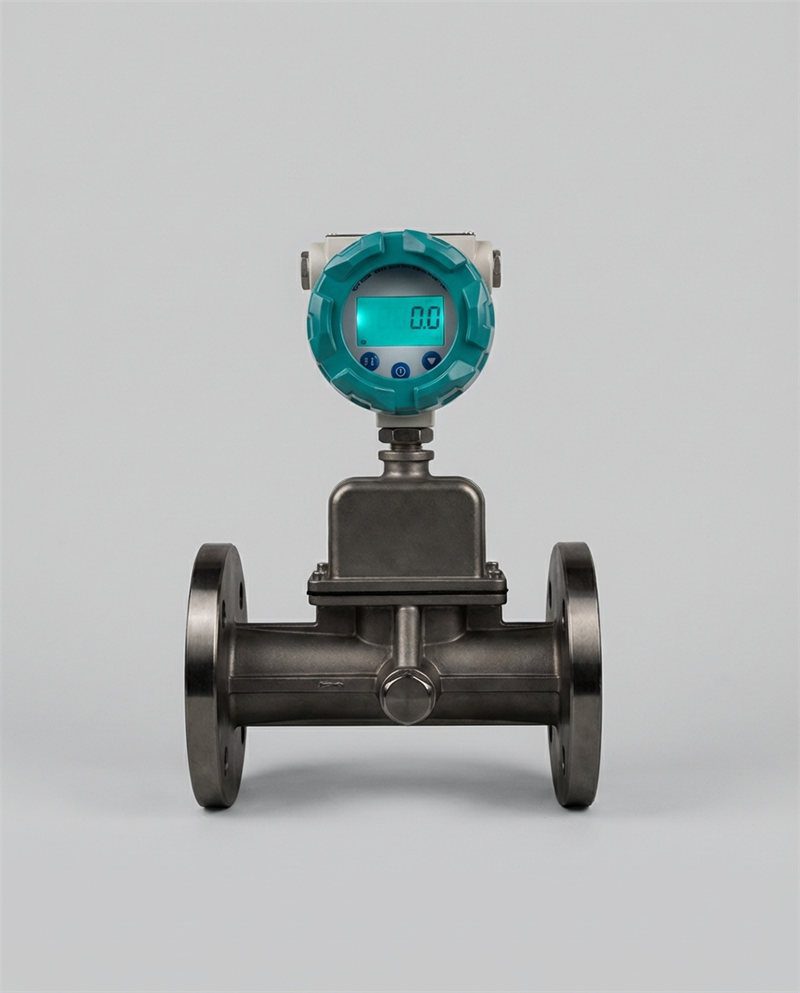
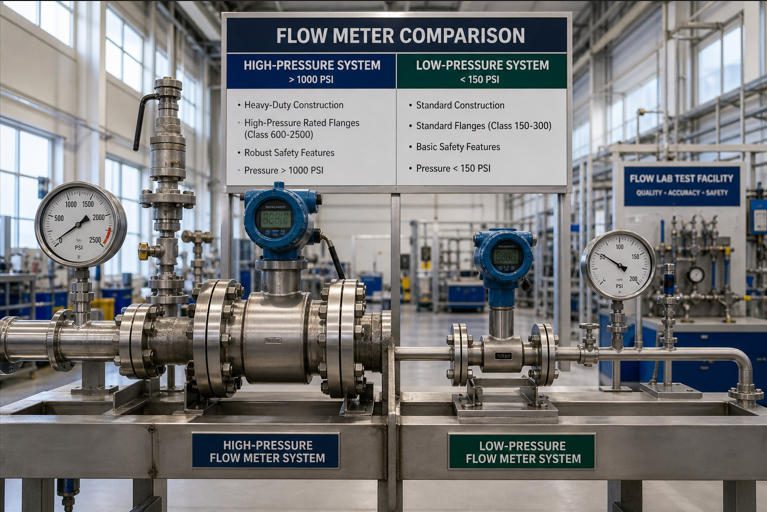
This article compares high-pressure and low-pressure flow meters across performance, reliability, and practical applications, highlighting trade-offs for design engineers, operators, and procurement teams.
Pressure rating is not just a mechanical specification on a datasheet. It changes the meter body design, sealing strategy, sensor selection, installation risk, calibration approach, and long-term maintenance plan. A meter that performs well on a low-pressure cooling-water loop may be the wrong choice for chemical injection, hydrogen dispensing, steam, or compressed gas service. Likewise, specifying a high-pressure meter for a low-pressure utility line can add cost and pressure drop without improving process value.
In practical reviews, Jade Ant Instruments often sees the best flow meter decisions come from matching the meter to the real process envelope: normal pressure, maximum allowable pressure, pressure cycling, temperature, fluid phase, required turndown, and maintenance access. The goal is not to buy the highest-rated meter; the goal is to keep measurement uncertainty, downtime, and lifecycle cost under control.

Fundamentals of Flow Meters: High vs Low Pressure
What Defines High-Pressure and Low-Pressure Categories
There is no single universal pressure boundary that separates “high-pressure” and “low-pressure” flow meters across all industries. In HVAC or municipal water, a few bar may already be meaningful. In oil & gas, hydrogen, chemical injection, or hydraulic systems, pressures may reach hundreds of bar. Therefore, the more useful definition is application-based:
- Low-pressure flow meters are typically used where process pressure is modest, pressure cycling is limited, and mechanical stress on the meter body is not the dominant design constraint. Examples include cooling water, wastewater, low-pressure air, process water, and many beverage or pharmaceutical transfer lines.
- High-pressure flow meters are designed for systems where pressure containment, fatigue resistance, connection integrity, and safety margins become central. Examples include compressed gas, refinery units, chemical injection skids, steam systems, hydraulic oil, and hydrogen dispensing.
A practical specification should always list:
- Normal operating pressure
- Maximum operating pressure
- Design pressure or maximum allowable working pressure
- Pressure cycling frequency
- Pressure surge or water hammer risk
- Temperature at pressure
- Required pressure rating of flanges, threaded connections, clamps, or sanitary fittings
For early selection work, Jade Ant Instruments’ flow meter selection guide is useful because it starts from fluid behavior, installation reality, and lifecycle cost rather than only nominal meter type.
Common Meter Technologies Used at Different Pressures
Different flow meter technologies respond differently to pressure rating requirements. Some technologies scale well into high pressure, while others are better suited to low-pressure service.
| Meter Technology | Common Low-Pressure Uses | Common High-Pressure Uses | Key Pressure-Related Trade-Off |
|---|---|---|---|
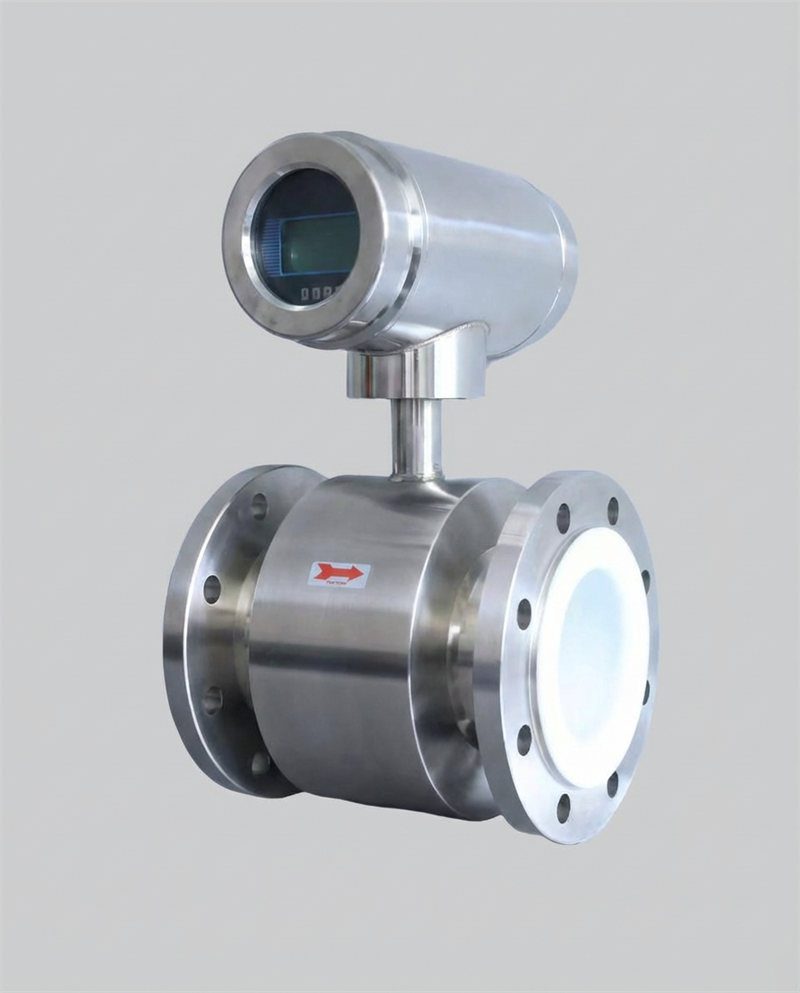
| Electromagnetic | Water, wastewater, conductive liquids | Possible with suitable liner, flange, and body rating | Excellent low pressure loss, but only for conductive liquids |
| Coriolis | Batching, density, mass flow | Chemical injection, hydrogen, compressed gases | High accuracy, but pressure drop and cost rise with rating |
| Differential Pressure | Air, water, steam utilities | Steam, gas, refinery services | Primary element and impulse-line integrity are critical |
| Vortex | Steam, compressed air, water | Steam and gas with rated body design | Needs enough velocity and stable flow profile |
| Variable Area | Purge, dosing, lab, local indication | Limited to specially rated metal-tube designs | Glass tubes are generally unsuitable for high-pressure hazards |
| Ultrasonic | Water networks, large pipes, clamp-on checks | Possible for gas/liquid with correct transducer and pipe data | Installation quality and acoustic coupling dominate performance |
For liquid applications, the article liquid flow measurement device comparison provides a broader view of technology trade-offs across electromagnetic, turbine, ultrasonic, Coriolis, and differential-pressure options.

How Pressure Affects Measurement Principles
Impact on Differential Pressure and Flow Physics
Pressure affects flow measurement in two ways: mechanically and physically. Mechanically, the meter must contain the pressure safely. Physically, pressure changes density, compressibility, Reynolds number, viscosity behavior, and sometimes phase condition.
For incompressible liquids, pressure may not drastically change density, but it can still affect seals, liners, gaskets, and tube stress. For gases and steam, pressure has a direct impact on density. A gas flow meter reporting volumetric flow at actual conditions may show a very different value from standard volumetric flow or mass flow if pressure compensation is missing.
Differential-pressure meters are especially pressure-sensitive in real installations. The primary element creates a pressure drop, and the transmitter converts that differential pressure into flow. In high-pressure gas or steam, small errors in density assumptions, impulse-line condition, or static pressure compensation can produce measurable flow error.
Influence on Sensor Types and Signal Processing
High pressure pushes sensor design toward stronger bodies, thicker measuring tubes, smaller internal passages, robust welds, and rated process connections. These choices can influence pressure drop, response time, and sensitivity.
Signal processing also changes. For example:
- Coriolis meters must separate true tube vibration from installation vibration and pressure-induced stress effects.
- DP transmitters must handle high static pressure while accurately resolving a smaller differential pressure.
- Ultrasonic meters require accurate pipe wall, acoustic path, and fluid property data, especially in gas systems.
- Vortex meters need sufficient Reynolds number and stable velocity profile; low-pressure gas may fail to generate a clean vortex signal at low flow.
For a standards-based explanation of differential-pressure flow devices, ISO 5167 flow measurement guidance is a useful reference for orifice plates, nozzles, Venturi tubes, and cone meters.
Accuracy and Repeatability Under Different Pressures
Typical Accuracy Ranges for Each Pressure Class
Accuracy depends on meter technology, flow profile, calibration, installation, fluid condition, and operating range. Pressure class alone does not determine accuracy, but it changes the difficulty of achieving and maintaining it.
In low-pressure water or chemical transfer, a properly installed electromagnetic or Coriolis meter may provide stable accuracy with limited pressure-related stress. In high-pressure gas or steam, maintaining accuracy often requires compensation for pressure, temperature, density, and sometimes compressibility.
The following Excel-ready table summarizes typical practical expectations. Values are broad engineering screening ranges, not guarantees. Always confirm final uncertainty with the manufacturer and calibration documentation.
| Pressure Class | Common Meter Types | Typical Practical Accuracy Range | Repeatability Consideration | Main Risk |
|---|---|---|---|---|
| Low pressure liquid | Magnetic, ultrasonic, turbine, Coriolis | ±0.2% to ±1.5% depending on technology | Usually strong if pipe stays full and flow profile is stable | Air entrainment, low velocity, poor grounding, fouling |
| Low pressure gas | Thermal mass, vortex, ultrasonic, DP | ±1% to ±3% typical installed range | Can degrade at low density or low velocity | Weak signal, leakage, density assumptions |
| High pressure liquid | Coriolis, turbine, DP, positive displacement | ±0.1% to ±1% if calibrated and installed well | Good, but pressure cycling can affect mechanical stability | Erosion, pulsation, seal stress, pressure surges |
| High pressure gas or steam | Coriolis, ultrasonic, vortex, DP | ±0.5% to ±3% depending on compensation and installation | Sensitive to density, temperature, and phase behavior | Compressibility, vibration, wet steam, impulse-line issues |
Factors That Degrade Repeatability Under Load
Repeatability often fails before accuracy does. A meter may be correctly calibrated in a lab but repeat poorly after installation because the process load changes the measurement environment.
Common repeatability degraders include:
- Pressure pulsation: common near reciprocating pumps, compressors, and control valves.
- Mechanical vibration: especially relevant to Coriolis, vortex, and turbine meters.
- Two-phase flow: gas in liquid or liquid droplets in gas can destabilize many technologies.
- Pressure cycling: repeated expansion and contraction can stress seals, welds, liners, and fittings.
- Changing density: especially important for gas, steam, and temperature-sensitive fluids.
Relative Repeatability Risk by Service
Qualitative score: 5 = highest risk requiring stronger engineering controls
0
1
2
3
4
5
Low-pressure
liquid
Low-pressure
gas
High-pressure
liquid
High-pressure
gas/steam
Turndown Range and Rangeability
Definitions and Importance in Process Control
Turndown is the ratio between the maximum measurable flow and the minimum measurable flow within stated accuracy. Rangeability is often used similarly, although vendors may define it differently. In process control, turndown matters because real systems rarely operate at design maximum. A meter sized only for peak flow may perform poorly at normal or minimum flow.
Low-pressure systems often struggle with weak signal at low velocity. High-pressure gas systems may have enough density to improve some signals, but they also introduce safety and compensation requirements. High-pressure liquids can maintain strong signals, yet pressure drop and mechanical stress may limit the acceptable meter size.
Trade-Offs Between Wide Rangeability and Precision
A wide turndown number on a datasheet does not automatically mean high precision across the full range. At the lower end, signal-to-noise ratio, zero stability, viscosity, density, and installation effects become more visible.
For example, a low-pressure air system may use a thermal mass meter because it can detect low mass flow without needing high velocity. A high-pressure chemical injection skid may use a Coriolis meter for mass flow and density, but the engineer must check pressure drop, tube rating, pulsation, and available straight-run or support requirements.
Jade Ant Instruments’ article on five factors for accurate industrial flow measurement selection is relevant here because turndown should be reviewed together with fluid properties, installation, environment, and total cost of ownership.
Pressure Effects on Reliability and Longevity
Wear, Erosion, and Material Compatibility Under High Pressure
High pressure increases the consequences of material mismatch. A small leak at low pressure may be a nuisance; the same defect in high-pressure gas, steam, or chemical service can become a safety incident.
Reliability concerns include:
- Erosion: high-velocity fluids, sand, catalyst fines, or scale can wear tubes, turbine rotors, or orifice edges.
- Corrosion under pressure: chlorides, acids, sour gas, and cleaning chemicals can attack wetted parts and seals.
- Pressure fatigue: frequent pressure cycling can damage welds, diaphragms, tubes, and fittings over time.
- Seal extrusion: elastomers can deform or fail if pressure, temperature, and chemical compatibility are not checked together.
- Cavitation and flashing: liquid systems with pressure drop can create vapor bubbles, noise, damage, and unstable readings.
For high-pressure hydrogen, Emerson’s application note on flow measurement in high-pressure hydrogen dispensing shows why pressure rating, gas properties, and fast fueling dynamics must be considered together.
Failure Modes More Common in Low-Pressure Systems
Low-pressure systems have different problems. Mechanical rupture risk may be lower, but measurement reliability can still suffer from installation and process conditions.
Common low-pressure failure modes include:
- Air entrainment in liquids: bubbles create unstable readings in magnetic, ultrasonic, turbine, and Coriolis meters.
- Partially filled pipes: common in gravity drains or oversized lines, causing significant error.
- Low Reynolds number: viscous or slow flow may fall outside the reliable range of some meters.
- Fouling and biological growth: water and wastewater systems can coat electrodes, sensors, or internal surfaces.
- Weak differential pressure: DP systems may produce too little signal at low flow.

Installation and System Integration Considerations
Piping, Vibration, and Mounting Impacts
Installation quality determines whether the meter performs like the datasheet. High-pressure service adds stricter requirements for supports, torque, gaskets, pressure testing, vibration isolation, and safe depressurization. Low-pressure service may appear easier, but oversized pipes, poor grounding, air pockets, and short straight runs can still damage accuracy.
Key installation checks include:
- Confirm pressure rating of meter body, flanges, fittings, gaskets, and bolts.
- Check pipe supports so the meter is not carrying line stress.
- Control vibration from pumps, compressors, and nearby rotating equipment.
- Respect straight-run requirements for turbine, vortex, ultrasonic, and DP meters.
- Ensure full-pipe conditions for electromagnetic and many ultrasonic liquid meters.
- Use proper grounding for electromagnetic meters.
- Check accessibility for proving, zeroing, cleaning, and replacement.
Calibration Interfaces and Signal Integration with Other Instruments
High-pressure flow systems often require pressure and temperature measurement alongside flow measurement. This is especially important for gas, steam, and compensated mass or standard-volume calculations. Low-pressure systems may use simpler signal integration, but verification should still be traceable and repeatable.
Typical integration signals include:
- 4–20 mA
- Pulse output
- HART
- Modbus RTU
- Profibus PA
- Foundation Fieldbus
- EtherNet/IP or Profinet through gateways
For calibration practice, Fluke’s flowmeter calibration best practices emphasize traceability, stable flow conditions, and matching calibration conditions to real operating conditions. For national metrology context, NIST’s water flowmeter calibration services documentation is also a useful reference.
Flow Meter System Integration Checklist
Flow Meter
Pressure-rated body + sensor
Pressure Transmitter
Temperature Sensor
Diagnostic Data
PLC / DCS
Control + reporting
High-pressure gas and steam applications usually need pressure and temperature compensation, not only a flow signal.
Applications by Industry: When to Choose High vs Low Pressure
Petrochemical and Refinery Scenarios
Petrochemical and refinery services often involve elevated pressure, high temperature, hazardous fluids, and strict safety requirements. High-pressure-rated Coriolis, ultrasonic, vortex, turbine, and DP systems are common depending on the fluid and measurement objective.
High-pressure meters are often justified for:
- Chemical injection skids
- High-pressure fuel gas
- Hydrogen and hydrocarbon gas service
- Steam distribution
- Custody-adjacent process balancing
- Refinery unit feed and recycle streams
Industry insight: In refinery environments, the most expensive failure is often not the meter cost. It is the production interruption, permit work, depressurization time, and safety review required to replace a pressure-boundary instrument. Procurement teams should compare installed risk, not only purchase price.

Water and Wastewater, Food & Beverage, and Pharmaceutical Contexts
Low-pressure flow meters are more common in water treatment, food & beverage transfer, CIP systems, and many pharmaceutical utilities. Here, hygienic design, low pressure drop, cleanability, conductivity, batch repeatability, and documentation may matter more than extreme pressure rating.
Typical low-pressure choices include:
- Electromagnetic meters for conductive water, wastewater, and CIP fluids
- Ultrasonic meters for large pipes or non-invasive checks
- Coriolis meters for batching, blending, density, and high-value liquids
- Thermal mass meters for compressed air monitoring and low-flow gas measurement
- Variable area meters for local indication and purge lines
For conductive-liquid projects, Jade Ant Instruments’ electromagnetic flow meter selection guide explains liner, electrode, sizing, grounding, and installation considerations. For gas utilities, the thermal air flow meter comparison is relevant when measuring compressed air or low-pressure gas consumption.
Maintenance, Calibration, and Diagnostics
Calibration Schedules and Traceability
Calibration frequency should be based on risk, not habit. High-pressure meters in safety-critical or billing-related service need stronger documentation than a low-pressure utility indicator. However, a low-pressure meter used for chemical dosing or pharmaceutical batching may still require strict traceability.
A practical calibration plan should define:
- Calibration interval
- Accepted uncertainty
- Traceability chain
- As-found and as-left recording
- Operating pressure and temperature during verification
- Whether the meter is calibrated with the real fluid or a substitute fluid
- Who is authorized to change meter factors or configuration
For laboratories and calibration service providers, ISO/IEC 17025 accreditation is often used to demonstrate technical competence. Engineers should also verify whether the calibration conditions represent field operating conditions closely enough for the application.
Diagnostic Features to Monitor Pressure-Related Degradation
Modern meters increasingly include diagnostics that help maintenance teams move from scheduled checks to condition-based maintenance. Diagnostics do not remove the need for inspection, but they help identify which loops deserve attention first.
Useful diagnostic indicators include:
- Tube drive gain or vibration status in Coriolis meters
- Electrode coating or empty-pipe alarms in magnetic meters
- Signal strength and transit-time quality in ultrasonic meters
- Vortex signal quality and low-flow cutoff events
- Differential-pressure transmitter overrange or impulse-line symptoms
- Temperature and pressure compensation errors
Jade Ant Instruments recommends storing configuration snapshots after commissioning. In real troubleshooting, comparing today’s damping, cutoff, K-factor, density setting, and communication status against the commissioning record can shorten fault-finding from hours to minutes.
Cost of Ownership and Lifecycle Considerations
Capex vs Opex Implications
High-pressure flow meters usually have higher capital cost because of stronger materials, pressure-rated bodies, special connections, additional testing, and more demanding documentation. But capex is only one part of the decision.
Operating cost may include:
- Permanent pressure loss
- Pump or compressor energy
- Calibration and proving
- Shutdown time for replacement
- Spare meter inventory
- Seal and gasket replacement
- Safety permits and isolation procedures
Low-pressure meters can have lower upfront cost, but poor selection still creates hidden cost. For example, an oversized low-pressure magnetic meter on a water line may operate below its reliable velocity range, causing unstable flow reporting and repeated site visits.
Spare Parts, Maintenance Downtime, and Replacement Cycles
High-pressure systems should be reviewed for replacement practicality before purchase. If a meter cannot be removed without extended depressurization, bypass piping or spool-piece planning may be worth the extra engineering effort.
Spare-part planning should include:
- Gaskets and seals rated for pressure and temperature
- Bolting kits for flange classes
- Replacement electronics
- Sensor cartridges where applicable
- Bypass spools or temporary measurement options
- Configuration files and calibration certificates
Lifecycle Cost Drivers for Pressure-Rated Flow Meters
Qualitative model for project screening; actual shares vary by application
Total Cost
of Ownership
Meter purchase: 20%
Installation & pressure testing: 25%
Calibration & documentation: 15%
Maintenance downtime: 25%
Energy / pressure loss: 15%
Future Trends and Emerging Technologies
Advances in Sensing, Digitalization, and Predictive Maintenance
Flow meters are becoming more diagnostic, connected, and maintenance-aware. In high-pressure service, this trend is not just about convenience; it helps reduce technician exposure to hazardous areas and pressure-boundary work.
Emerging capabilities include:
- Remote configuration and verification
- Advanced self-diagnostics
- Meter health scoring
- Cloud-based maintenance records
- Predictive alerts for fouling, vibration, or sensor degradation
- Integrated pressure and temperature compensation
- Digital twins for critical flow loops
In procurement, this means the “best” meter is increasingly the one that provides useful operating data over its life, not only a strong factory accuracy figure. A meter that warns operators about poor signal quality before a batch fails can prevent more loss than a slightly better datasheet accuracy number.
New Materials and Designs for Extreme Pressures
Extreme-pressure applications are driving stronger materials, better weld procedures, compact high-pressure Coriolis designs, improved sealing systems, and better fatigue analysis. Hydrogen service is especially important because of small molecule size, high pressure, rapid fueling cycles, and material compatibility concerns.
Future pressure-rated meter designs will likely focus on:
- Lower pressure drop at high pressure
- Better vibration immunity
- Improved fatigue resistance
- Compact bodies for skid-mounted systems
- Integrated safety diagnostics
- Materials compatible with hydrogen, corrosive chemicals, and high-temperature steam
For broader supplier and technology benchmarking, the Jade Ant Instruments mass flow meter brands comparison gives engineers a practical framework for reviewing Coriolis and thermal mass flow options in demanding applications.
Recommended YouTube Video
The following video gives a helpful visual example of high-pressure Coriolis flow measurement in hydrogen and other demanding applications.
Both high- and low-pressure meters offer distinct advantages; selecting the right meter depends on operating pressure, accuracy needs, maintenance strategy, and total cost of ownership.
High-pressure flow meters are justified when pressure containment, gas density compensation, mechanical fatigue, hazardous service, or process safety risk dominates the decision. Low-pressure meters are often the better answer when the application values low pressure drop, easy installation, sanitary design, water compatibility, or economical utility monitoring.
Key takeaways for engineers and buyers:
- Do not choose a meter by pressure rating alone; review fluid behavior, velocity, density, temperature, and pressure cycling.
- For gases and steam, pressure and temperature compensation may be essential for meaningful flow reporting.
- Low-pressure systems often fail from air entrainment, fouling, poor pipe filling, or low velocity.
- High-pressure systems often fail from vibration, fatigue, seal stress, erosion, or difficult maintenance access.
- Total cost of ownership should include installation, calibration, pressure testing, downtime, and energy loss.
- Digital diagnostics are most valuable when they are tied to maintenance decisions, not only displayed on a transmitter screen.
The most reliable specification approach is to define the full process envelope, compare technologies against real operating conditions, and require documentation for pressure rating, calibration, materials, and maintenance access before purchase.
FAQs
How do I decide between high-pressure and low-pressure meters for a given pipeline?
Start with the pipeline’s normal pressure, maximum pressure, design pressure, pressure cycling, fluid type, temperature, and safety classification. If pressure containment, density compensation, fatigue, or hazardous leakage risk is central, specify a high-pressure-rated meter. If the line is a utility or clean low-pressure process line, a low-pressure meter with good installation practice may be more economical.
What maintenance practices extend the life of pressure-rated meters?
Use proper pipe supports, control vibration, avoid over-torqueing connections, verify gaskets and seals, keep calibration records, monitor diagnostics, and inspect for erosion or corrosion. In high-pressure service, also plan safe depressurization, bypassing, and pressure testing procedures before maintenance is required.
Are there universal calibration standards for high and low pressure meters?
There is no single universal standard for every flow meter and fluid. Calibration practices depend on meter technology, fluid, industry, uncertainty requirement, and local regulations. ISO/IEC 17025-accredited calibration labs, NIST-traceable references, and technology-specific standards are commonly used to support traceability.
Does higher pressure always improve flow meter accuracy?
No. Higher pressure can increase gas density and improve signal strength in some applications, but it can also introduce stress, vibration sensitivity, compressibility effects, seal risk, and compensation requirements. Accuracy depends on the complete meter installation and calibration basis.
Which flow meter type is best for high-pressure gas?
Common choices include Coriolis, ultrasonic, differential-pressure, and vortex meters. The best option depends on gas composition, flow range, pressure, temperature, pipe size, allowable pressure loss, and whether mass flow or standard volume flow is required.
Which flow meter type is best for low-pressure water?
Electromagnetic meters are often a strong choice for conductive low-pressure water because they have low pressure loss and no moving parts. Ultrasonic meters can work well for large pipes or clamp-on applications. The pipe must remain full, and installation quality still matters.
Why is pressure drop important when comparing flow meters?
Pressure drop can increase pump or compressor energy cost. In continuous systems, even a modest permanent pressure loss can become more expensive than the meter itself over time. This is especially important in large water lines, compressed air, steam, and high-flow process systems.
Can one flow meter model cover both high-pressure and low-pressure applications?
Sometimes, but it should not be assumed. The same meter family may offer different body ratings, connection types, liners, seals, and calibration ranges. Engineers should verify the exact model code, pressure rating, material compatibility, and calibration conditions for each application.