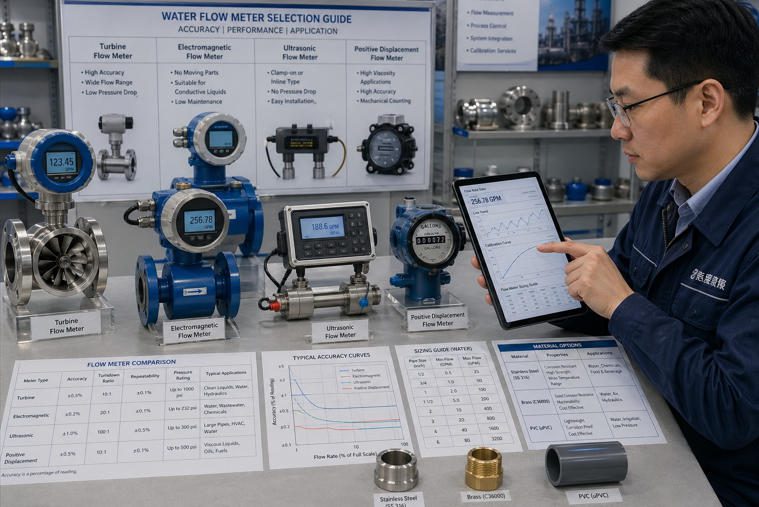
This guide helps you select a water flow meter that delivers accurate GPM readings for your specific application, covering meter types, specifications, installation, and total cost of ownership.
GPM, or gallons per minute, sounds simple until the reading is used to control chemical dosing, verify cooling-water demand, balance irrigation zones, prove pump performance, or allocate water cost between tenants. In those cases, a 5% error is not just a number on a display. It can mean overfeeding treatment chemicals, missing a leak, undersizing a pump, or making decisions from bad trend data.
The most common buying mistake is choosing a meter by pipe size alone. Accurate GPM measurement depends on the full measurement chain: water quality, pipe ID, flow range, straight-run length, pressure, temperature, wetted materials, output signal, calibration evidence, and maintenance access. Jade Ant Instruments often asks customers for these details before recommending a meter because the correct choice for clean chilled water is not always the correct choice for reclaimed water, mineral-rich well water, or a dosing skid with pulsing flow.

For related buying frameworks, see the Jade Ant Instruments flow meter selection guide, the practical article on choosing the right water flow meter, and the guide to ultrasonic water flow meter selection. For consumer water-efficiency context, the U.S. EPA notes that WaterSense bathroom sink faucets use a maximum of 1.5 GPM and can reduce flow by 30% or more compared with the 2.2 GPM standard flow.
Understanding GPM and Flow Meter Basics
What GPM Means and Why It Matters
GPM means gallons per minute. It expresses how many U.S. gallons of water pass through a pipe, meter, or fixture each minute. One gallon equals 3.785 liters, so 10 GPM is about 37.85 L/min.
In residential plumbing, GPM helps confirm fixture performance, leak behavior, irrigation demand, and pressure booster sizing. In commercial and industrial systems, GPM becomes a process variable. It may drive pump speed, chiller load calculation, chemical dosing ratio, cooling tower makeup, filtration backwash timing, or water-cost allocation.
How Flow Meters Measure and Convert Flow to Readable Data
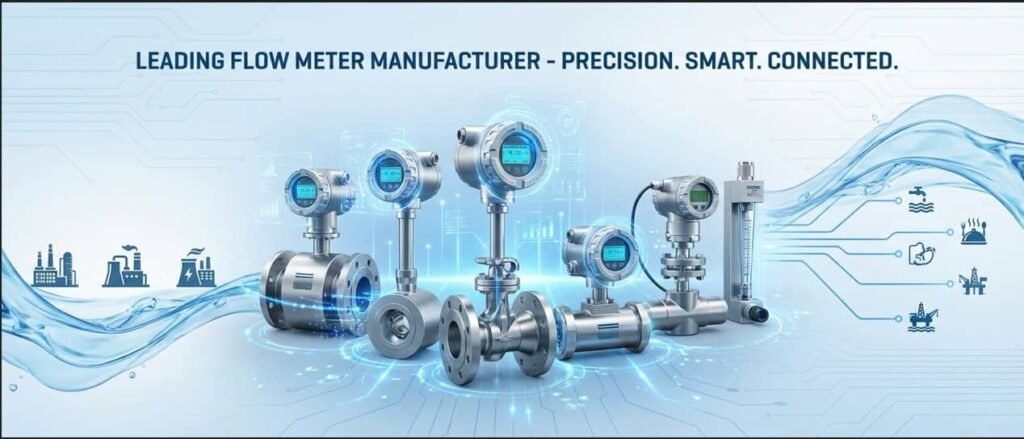
Most water flow meters measure either velocity, displacement, pressure difference, or acoustic transit time. The transmitter then converts the raw signal into an engineering unit such as GPM.
- Velocity meters estimate flow from water velocity and pipe area.
- Positive displacement meters divide the water into measured volumes and count them.
- Electromagnetic meters use Faraday’s law to measure conductive water velocity.
- Ultrasonic meters calculate velocity from sound-wave transit time or Doppler shift.
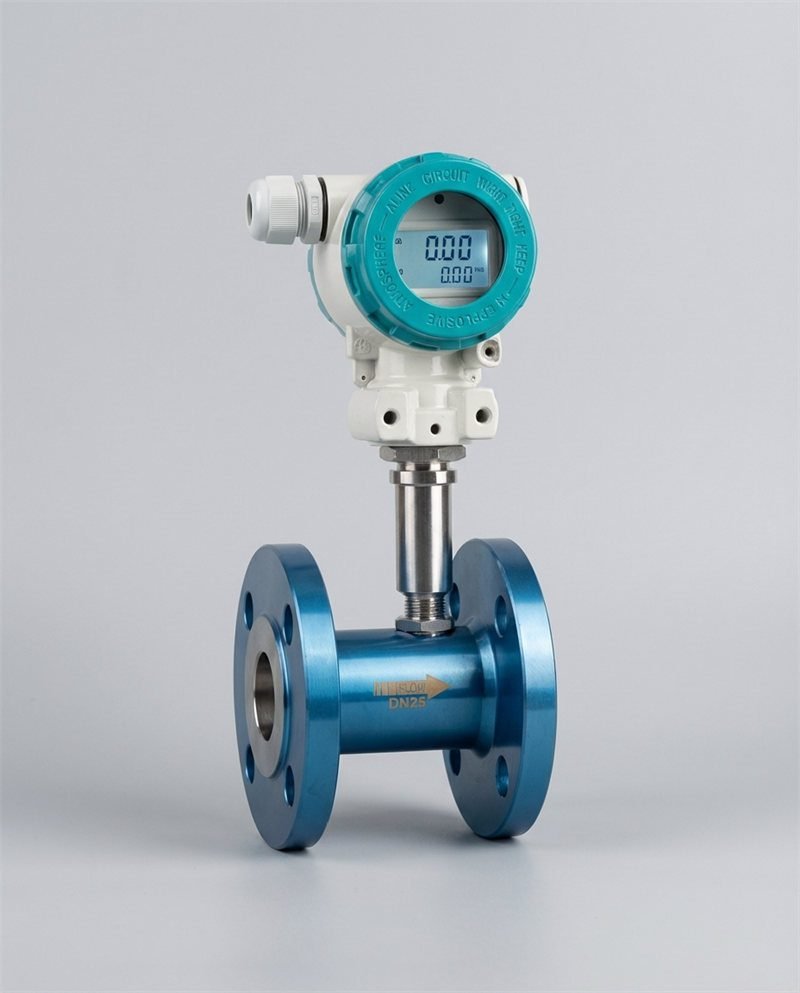
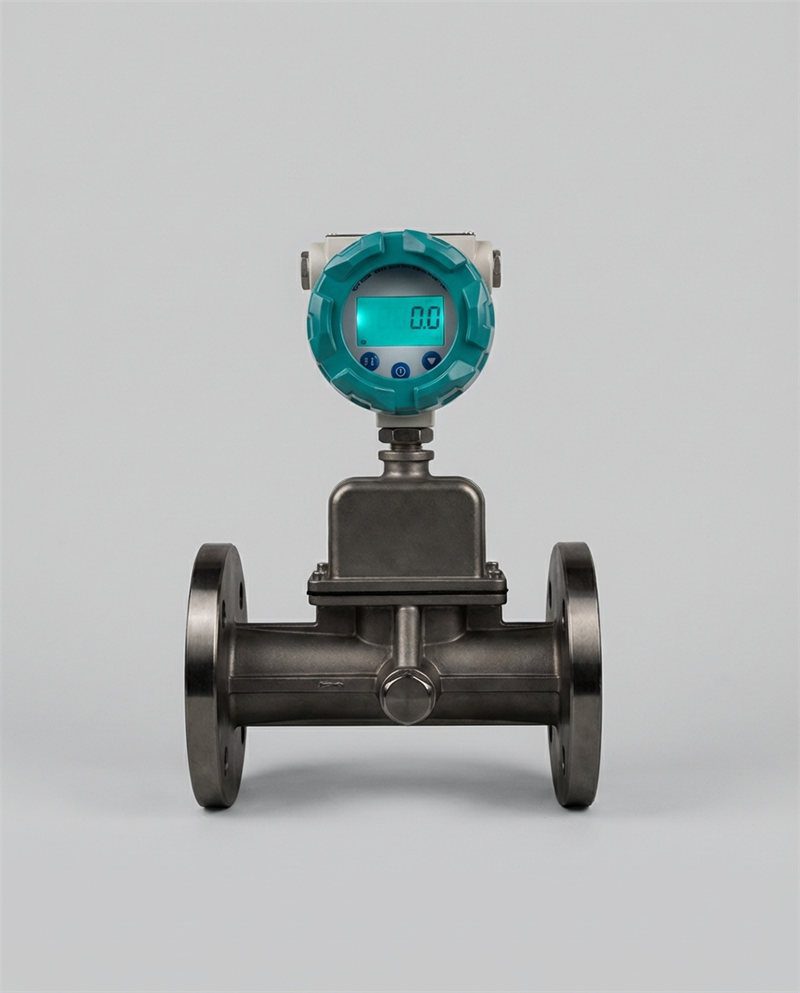
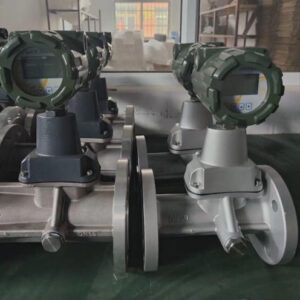
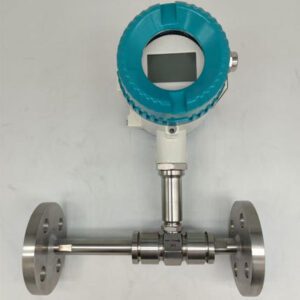
- Vortex meters detect vortices shed by a bluff body and convert frequency into flow.
Flow Meter
Velocity / pulses
converted to GPM
PLC / Display
Water flow
GPM + total gallons
Key Terms You’ll Encounter: K-Factor, Accuracy Class, Turndown, Wetted Material
| Term | What It Means | Buying Impact |
|---|---|---|
| K-factor | Pulses generated per unit volume, often pulses/gallon or pulses/liter. | Critical for turbine, paddlewheel, and positive displacement meters connected to counters or PLCs. |
| Accuracy class | Allowed measurement error under defined conditions. | Check whether accuracy is stated as % of reading or % of full scale. |
| Repeatability | How consistently the meter reports the same flow under unchanged conditions. | Important for process control and trend monitoring. |
| Turndown ratio | Maximum measurable flow divided by minimum measurable flow. | Prevents low-flow blind spots during night load, partial demand, or seasonal operation. |
| Wetted material | Parts exposed to the water, such as body, liner, electrodes, rotor, seals, and bearings. | Must match chlorinated water, softened water, brine, glycol, minerals, or treatment additives. |
| Pressure drop | Permanent loss created by the meter body or internal element. | High pressure drop can increase pump energy cost and reduce system capacity. |
Types of Water Flow Meters
Positive Displacement, Turbine, Vortex, Electromagnetic, and Ultrasonic Meters
Each meter type measures water differently, so the “best” water flow meter for GPM accuracy depends on water cleanliness, required accuracy, installation limits, and maintenance tolerance.
| Meter Type | Typical GPM Accuracy Range | Best Fit | Main Limitation |
|---|---|---|---|
| Positive displacement | ±0.5% to ±2% | Low-flow water, batching, clean liquids, small lines | Moving parts; debris can jam chambers |
| Turbine | ±0.5% to ±1.5% | Clean water, high repeatability, pulse totalization | Bearings and rotor are sensitive to solids |
| Vortex | ±0.75% to ±2% | Utility water, steam-capable plants, stable flow profiles | Needs minimum velocity and straight run |
| Electromagnetic | ±0.2% to ±0.5% | Conductive water, wastewater, chilled water, chemical water | Requires conductive liquid and proper grounding |
| Ultrasonic clamp-on | ±1% to ±3% | Retrofits, no-shutdown projects, temporary surveys | Accuracy depends on pipe material, wall thickness, coupling, and full pipe |
| Ultrasonic inline | ±0.3% to ±1% | Clean water, large pipes, low pressure loss | Higher installation effort than clamp-on |
Pros and Cons of Each Type and Typical Use Cases
Positive displacement meters are excellent when low-flow totalization matters. They physically capture small volumes, so they can perform well where velocity meters struggle. Their weakness is dirty water: scale, sand, and biological debris can increase wear or block motion.
Turbine meters offer strong repeatability in clean water and produce a pulse signal that integrates easily with totalizers. They are common in skids, test loops, and clean utility water. However, solids and bearing wear can shift the K-factor over time.
Vortex meters have no rotating parts and can be used in some water and steam systems. They need adequate velocity and stable flow. If the system spends much time below the meter’s minimum velocity, GPM readings can drop out or become unstable.
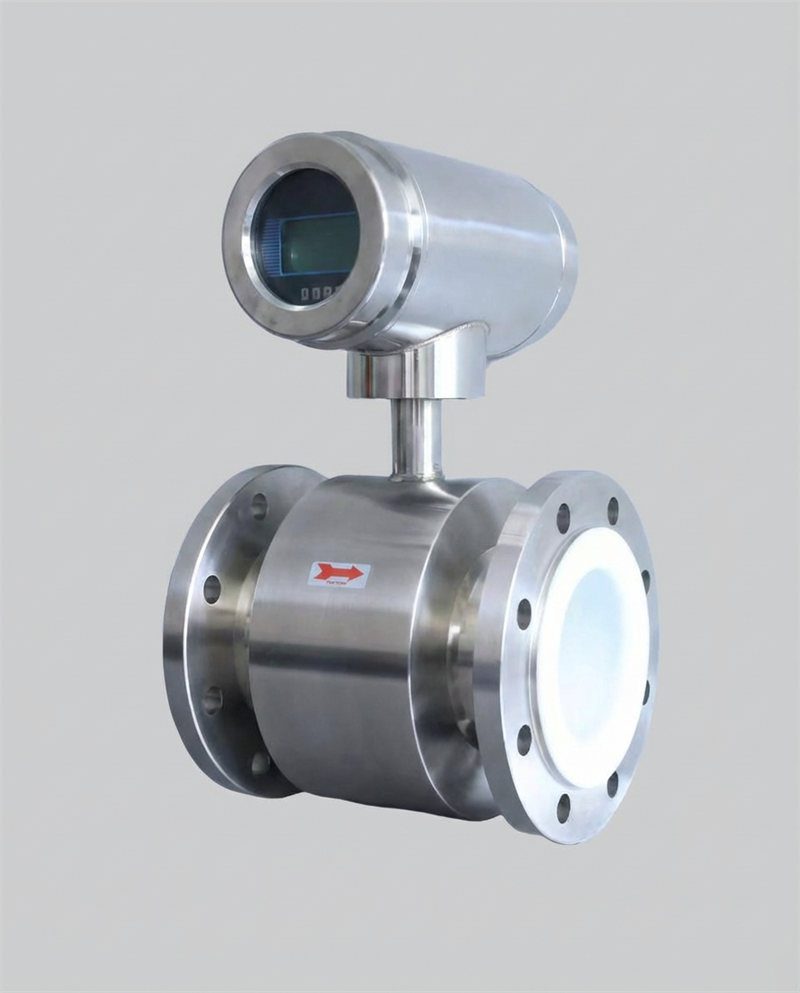
Electromagnetic flow meters are a strong default for conductive water because they have no internal obstruction, low pressure loss, and no moving parts. They are often selected for municipal water, wastewater, cooling water, and process water with treatment chemicals. Jade Ant Instruments offers electromagnetic solutions for projects where pipe grounding, liner material, and output integration need to be reviewed together. See the electromagnetic flow meter overview for more detail.
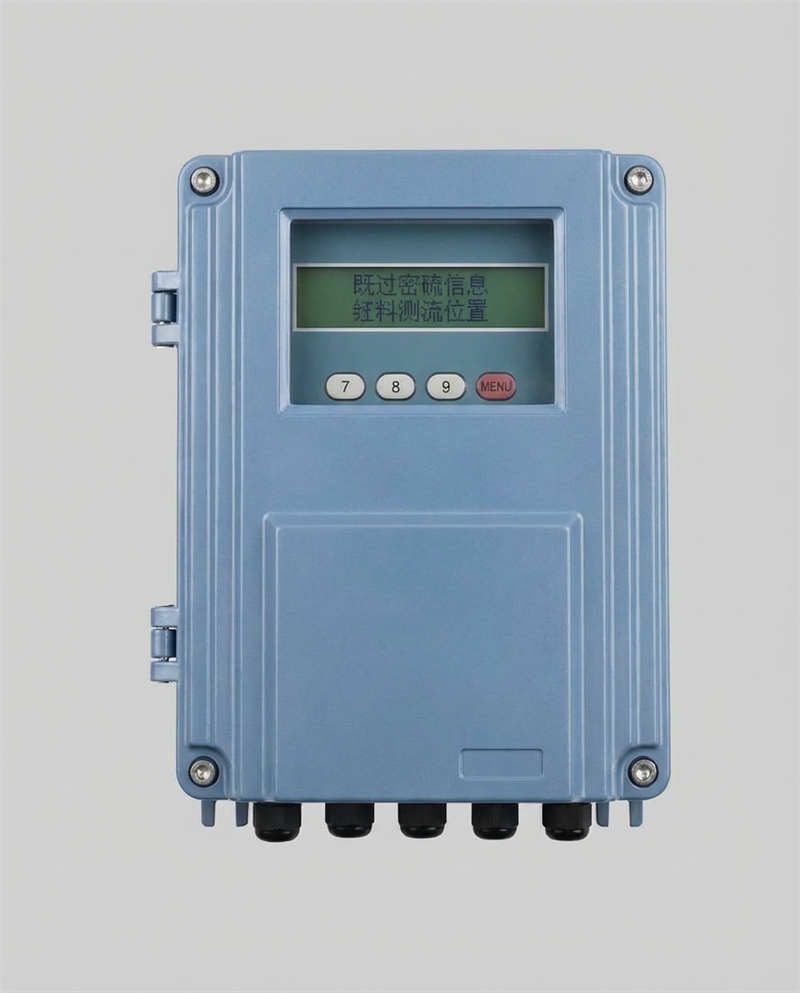
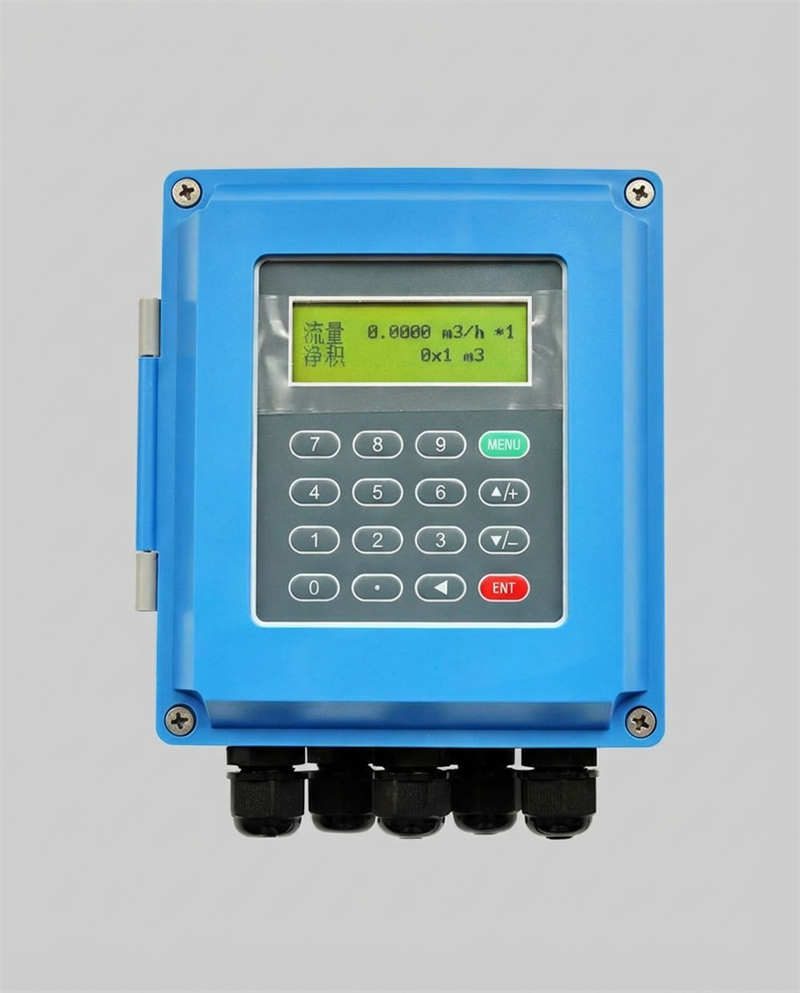
Ultrasonic meters are valuable when you cannot cut the pipe. Clamp-on transit-time models are common in HVAC, plant audits, and troubleshooting. Inline ultrasonic models improve accuracy because the acoustic path is fixed. For a deeper comparison, review the Jade Ant Instruments ultrasonic flow meter page.
How to Match Type to Your Fluid, Pressure, and Installation
Start with the water itself. Clean potable or chilled water can work with turbine, ultrasonic, electromagnetic, or positive displacement meters. Conductive dirty water usually pushes the shortlist toward electromagnetic. If the pipe cannot be opened, clamp-on ultrasonic becomes attractive. If very low flow must be counted accurately in a small pipe, positive displacement may deserve attention.
- Clean water + low flow: positive displacement or turbine
- Clean water + no pipe cutting: clamp-on ultrasonic
- Conductive water + low maintenance: electromagnetic
- Large pipe + low pressure loss: ultrasonic or electromagnetic
- Dirty water or wastewater: electromagnetic first, Doppler ultrasonic second if non-invasive measurement is required

Key Specifications to Check
Accuracy and Repeatability, and How They’re Tested
Accuracy tells you how close the meter is to the true flow. Repeatability tells you whether it returns to the same reading under the same conditions. A meter can be repeatable but offset, which is why calibration matters.
Always ask how the accuracy was tested. Was it factory calibrated on water? At what temperature? Across how many flow points? Does the certificate list uncertainty? Is the accuracy based on ideal laboratory straight-run conditions or real installed conditions?
NIST publications on liquid flow calibration describe the use of primary standards and uncertainty analysis for flowmeter calibration. For industrial buyers, the practical takeaway is that calibration evidence should name the reference standard, uncertainty, flow points, and meter serial number—not just say “tested OK.”
Turndown Ratio, Measuring Range, and Resolution
Turndown ratio is one of the most important GPM buying specifications. A 10:1 meter rated from 10 to 100 GPM cannot measure 3 GPM accurately. If your system has variable demand, choose the meter around the actual operating range, not only the design maximum.
| Application | Expected Low GPM | Normal GPM | Peak GPM | Recommended Selection Logic |
|---|---|---|---|---|
| Residential main line | 0.3 | 2–8 | 20–30 | Prioritize low-flow sensitivity and totalization. |
| Irrigation zone | 5 | 15–40 | 60 | Prioritize debris tolerance and leak alarm output. |
| HVAC chilled water loop | 20 | 80–250 | 400 | Prioritize stable GPM, low pressure loss, and BMS integration. |
| Cooling tower makeup | 2 | 15–80 | 150 | Prioritize mineral tolerance and total volume tracking. |
| Chemical dilution skid | 0.2 | 1–5 | 10 | Prioritize repeatability, pulse resolution, and wetted compatibility. |
Materials, Seals, and Compatibility with Water Treatment Additives
“Water” can mean potable water, deionized water, softened water, chlorinated water, seawater, RO reject, glycol-water, process rinse water, or wastewater. Each has different material risks.
Check body material, liner material, electrode material, rotor material, bearing material, and seal elastomer. EPDM may work well for many water services. FKM may be better for some chemicals. PTFE liners are often used where chemical resistance matters. For potable water, verify local drinking-water approvals where required.
Calibration and Certification
Calibration Requirements for Different Industries
Calibration need depends on how the GPM value is used. A decorative flow indicator in a non-critical utility line does not need the same proof as a meter used for billing, batch records, cooling-energy calculation, or regulatory reporting.
| Industry / Use | Typical Requirement | Recommended Calibration Approach |
|---|---|---|
| Residential monitoring | Trend accuracy and leak detection | Factory calibration usually sufficient; verify during installation. |
| Commercial submetering | Reliable cost allocation | Factory certificate and periodic verification. |
| HVAC / energy management | Stable flow for BTU calculation | Commissioning verification and annual trend review. |
| Industrial process water | Control stability and production records | Multi-point calibration matched to operating range. |
| Water treatment dosing | High repeatability at low flow | Frequent verification against known volume or reference meter. |
| Regulated reporting | Traceable evidence | Documented calibration with uncertainty and traceability chain. |
Certification Types: NIST, ISO, ASTM, and Why They Matter
A calibration certificate should be clear about traceability. NIST traceability usually means the reference equipment used for calibration has an unbroken chain back to NIST or another national metrology institute. ISO/IEC 17025 is the international standard for testing and calibration laboratory competence. ASTM standards can define test methods, material performance, or measurement practices depending on the application.
Do not treat these names as decorative logos. Ask what exactly is certified: the meter, the calibration lab, the material, the drinking-water contact safety, or the quality-management system. They are not interchangeable.
How to Verify Ongoing Accuracy in the Field
Field verification can be done by a reference meter, volumetric tank test, drawdown test, clamp-on ultrasonic comparison, or process balance. The right method depends on pipe size and accuracy target. A simple bucket-and-stopwatch test may be useful for small lines, but it is not enough for a 300 GPM industrial line.
Determine Your Flow Range and Required Turndown
How to Estimate Expected GPM Based on Your System
Estimate GPM from actual operating conditions. Use pump curves, fixture demand, historical water bills, PLC trends, chiller design data, irrigation nozzle charts, or temporary measurements. If you only know pipe size, you do not know enough to buy accurately.
For pressurized full pipes, you can estimate flow from velocity:
GPM = Velocity (ft/s) × Pipe Area (ft²) × 448.83
For example, a 2-inch Schedule 40 pipe has an internal diameter of about 2.067 inches. At 5 ft/s, the approximate flow is about 52 GPM. This is a planning estimate only; use actual pipe ID for sizing.
Selecting a Meter with Appropriate Turndown for Future Variation
Systems rarely stay at the original design point. Production shifts, new fixtures, seasonal cooling loads, water conservation changes, and pump upgrades all change the flow profile. A meter with wider turndown costs more upfront, but it can avoid replacement when the plant starts operating at lower loads.
Consequences of Under- or Over-Specifying the Range
An undersized meter creates pressure loss, excessive velocity, noise, and potential damage. An oversized meter may not see enough velocity to measure accurately at normal flow. Oversizing is more common because buyers match the meter to pipe size instead of real GPM.
Bar Chart: Typical Accuracy Impact of Selection Mistakes
8%
6%
5%
4%
3%
Oversized meter
Short straight run
Air pockets
Wrong material
Poor grounding
Illustrative GPM Error from Common Buying and Installation Mistakes
Illustrative values for comparison; actual field error depends on technology, piping layout, and operating conditions.
Material Compatibility and Corrosion Resistance
Common Wetted Materials and Their Limitations
Common water meter materials include bronze, stainless steel, ductile iron, PVC, CPVC, PVDF, PTFE, EPDM, FKM, ceramic, and Hastelloy electrodes. Bronze is common in building water service but may not fit aggressive chemicals. Stainless steel handles many industrial water applications but is not automatically suitable for high-chloride water. PVC and CPVC reduce corrosion risk but have pressure and temperature limits.
Compatibility with Treated Water, Minerals, and Cleaning Agents
Chlorine, chloramine, ozone, antiscalants, corrosion inhibitors, acids, caustic cleaners, and glycol blends can affect seals and liners. Mineral-rich water creates scale that can reduce pipe ID, coat sensors, and alter ultrasonic signal quality. If cleaning chemicals are introduced during CIP or line flushing, include those temporary fluids in the compatibility review.

Installation Considerations
Pipe Size, Straight-Run Requirements, and Flow Conditioning
Most flow meters need a stable velocity profile. Elbows, tees, pumps, reducers, and partially open valves create swirl. A common planning rule is 10 pipe diameters upstream and 5 pipe diameters downstream, but some disturbances and technologies require more. If space is limited, a flow conditioner or different meter technology may be needed.
Water meter
Upstream: plan 10D or more
Downstream: plan 5D
Avoid placing directly after elbow, pump, or throttled valve
Orientation, Mounting, and Electrical Connections
Many water meters require a full pipe. Avoid high points where air collects. For liquid service, vertical upward flow is often favorable because it helps keep the pipe full. For electromagnetic meters, grounding is critical. For pulse-output meters, shielded wiring and correct PLC input settings prevent false counts.
Installation Pitfalls to Avoid: Air Pockets, Vibration, Turbulence
- Air pockets: cause erratic readings and ultrasonic signal loss.
- Vibration: affects vortex, turbine, and some clamp-on installations.
- Turbulence: creates biased readings after elbows, valves, and pumps.
- Partial pipe: invalidates many full-pipe meter readings.
- Poor grounding: causes noise in electromagnetic meter signals.
Maintenance and Longevity
Routine Cleaning, Inspection, and Sensor Life
Maintenance depends strongly on meter technology and water quality. Turbine and positive displacement meters need more attention in dirty water because moving parts wear. Electromagnetic and ultrasonic meters have no moving parts, but sensors, liners, cable glands, grounding, and signal strength still require inspection.
| Meter Type | Routine Inspection | Typical Maintenance Focus | Common Failure Trigger |
|---|---|---|---|
| Positive displacement | Quarterly to annual | Chambers, seals, debris, wear | Particles or scale jamming moving parts |
| Turbine | Quarterly to annual | Rotor, bearings, strainer | Sand, rust, bearing wear |
| Vortex | Annual | Sensor stability, vibration, bluff body condition | Low velocity or external vibration |
| Electromagnetic | Annual | Grounding, liner, electrodes, empty-pipe detection | Coating, grounding loss, damaged liner |
| Ultrasonic clamp-on | Annual | Couplant, transducer alignment, signal strength | Pipe corrosion, dry couplant, wrong pipe data |
Battery Life and Transmitter Maintenance If Applicable
Battery-powered meters are useful for remote water distribution, irrigation, and retrofit submetering. Confirm battery life under your logging interval and communication schedule. A meter that transmits every minute consumes more energy than one that reports hourly. Also check whether the battery is field-replaceable or factory-serviceable.
Replacement Cycles and Spare Parts Planning
For moving-part meters, keep strainers, bearings, rotors, seals, and gaskets in the spare-parts plan. For electronic meters, keep cable glands, displays, transmitters, and sensor cables available if downtime is costly. The replacement cycle should be based on water quality and duty cycle, not only calendar age.
Pie Chart: Typical Five-Year Ownership Cost Distribution
■ 30% Meter purchase
■ 25% Installation
■ 18% Calibration
■ 15% Maintenance
■ 12% Downtime risk
Illustrative ownership model for comparison during procurement.
Cost vs Value: Total Cost of Ownership
Upfront Purchase Price vs Long-Term Accuracy and Reliability
A low-cost meter can be the right choice for simple indication. It becomes expensive when it cannot measure low flow, needs frequent cleaning, causes pressure drop, or cannot connect to your control system. A higher-cost meter can be cheaper over five years if it avoids shutdowns, reduces pumping energy, and produces trusted GPM data.
Maintenance, Calibration, and Downtime Costs
Include labor, pipe shutdown, spare parts, calibration service, lost production, and engineering troubleshooting. In many industrial projects, the installed cost is higher than the meter purchase price. This is why Jade Ant Instruments reviews installation constraints and maintenance access before recommending a final model.
Premium Features Worth Paying for in Your Use Case
- Wide turndown: valuable for variable demand and future process changes.
- Data logging: useful for leak analysis, audits, and troubleshooting.
- Modbus, BACnet, HART, or pulse output: avoids integration workarounds.
- Empty-pipe detection: important for intermittent or partially filled systems.
- Remote transmitter: improves readability and protects electronics in harsh areas.
- Traceable calibration certificate: essential when data is used for billing, compliance, or batch records.
Quick Decision Checklist and Buying Process
Step-by-Step Buying Workflow from Need Identification to Procurement
- Define what the GPM reading will be used for: indication, control, billing, dosing, leak detection, or reporting.
- List minimum, normal, and peak GPM based on real operating data.
- Confirm pipe ID, material, schedule, liner, and available straight run.
- Identify water chemistry, conductivity, solids, minerals, temperature, and pressure.
- Choose a shortlist of technologies based on fluid and installation constraints.
- Check accuracy, turndown, output signal, calibration certificate, and wetted materials.
- Estimate total cost of ownership, not only purchase price.
- Request a vendor application review before issuing the purchase order.
- Plan commissioning verification and document final settings.
Vendor Evaluation Questions and Criteria
| Question | Why It Matters | Good Answer Should Include |
|---|---|---|
| What accuracy can I expect in my actual installation? | Catalog accuracy assumes ideal conditions. | Application-specific estimate with installation assumptions. |
| What is the minimum reliable GPM? | Low-flow errors are common. | Minimum flow, velocity, and uncertainty statement. |
| Which wetted materials contact my water? | Chemical compatibility affects life and drift. | Body, liner, electrode/rotor, bearing, and seal list. |
| What calibration certificate is supplied? | Evidence must match quality requirements. | Serial number, flow points, uncertainty, traceability. |
| What straight-run length is required? | Installation affects GPM accuracy. | Upstream/downstream requirements and alternatives. |
| How does it integrate with my PLC/BMS? | Signal mismatch causes commissioning delays. | Output type, protocol, scaling, wiring diagram. |
Post-Purchase Validation Plan: Commissioning and Testing
After installation, verify zero flow, confirm pipe fill, check direction, verify units, simulate outputs where possible, and compare measured GPM against a known operating condition. For pulse meters, confirm pulse weight and K-factor. For 4–20 mA meters, check 4 mA and 20 mA scaling at the PLC. For digital meters, confirm register mapping and engineering units.
Choosing a water flow meter for reliable GPM accuracy means aligning meter type, specifications, and installation with your process needs. Start with the real flow range, not the pipe size. Match the technology to water quality, pressure, temperature, and maintenance reality. Check turndown, wetted materials, output signals, calibration evidence, and total cost of ownership before buying.
If you are comparing electromagnetic, turbine, ultrasonic, vortex, or positive displacement options, Jade Ant Instruments can help review your GPM range, pipe details, water chemistry, and installation photos to build a practical shortlist. Visit www.jadeantinstruments.com to start with application details instead of guessing from a catalog table.
FAQs
What Is the Typical Accuracy Range for Residential vs. Industrial Flow Meters?
Residential water meters often focus on total volume and practical monitoring, with accuracy depending on meter class and installation. Industrial water meters typically range from about ±0.2% to ±2% depending on technology, calibration, flow range, and site conditions. Electromagnetic and inline ultrasonic meters often provide tighter accuracy than basic mechanical or clamp-on meters.
How Often Should a Flow Meter Be Calibrated in a Continuous Process System?
For non-critical water monitoring, verification every 1–3 years is common. For dosing, billing, compliance, or high-value process water, annual verification is safer. Recalibrate sooner after sensor replacement, major piping changes, coating, suspected drift, or unexplained water balance errors.
Can I Retrofit an Existing Pipe with a New Meter, or Is Replacement Necessary?
You can often retrofit an existing pipe. Clamp-on ultrasonic meters require no pipe cutting, while insertion meters require tapping. Inline meters need pipe modification but often deliver better accuracy. The decision depends on shutdown tolerance, accuracy target, pipe material, and available straight run.
Which Water Flow Meter Type Is Best for Accurate GPM in Clean Water?
For clean water, turbine, positive displacement, electromagnetic, and ultrasonic meters can all work. The best choice depends on flow range and installation. Low-flow clean water may suit positive displacement. Larger clean-water systems often use electromagnetic or ultrasonic meters to reduce pressure loss and maintenance.
Which Meter Works Best for Dirty Water or Wastewater?
Electromagnetic flow meters are commonly selected for conductive dirty water and wastewater because they have no moving parts and minimal obstruction. Doppler ultrasonic can be considered when pipe cutting is impossible, but field accuracy depends heavily on solids distribution and signal quality.
Why Does My GPM Reading Change After Installation Even Though the Pump Is Stable?
Common causes include air pockets, insufficient straight run, turbulence from an upstream valve, wrong pipe ID settings, poor grounding, partial pipe conditions, or incorrect PLC scaling. Check installation and configuration before assuming the meter is defective.
Is Clamp-On Ultrasonic Accurate Enough for GPM Measurement?
Clamp-on ultrasonic meters are excellent for retrofits, audits, and many monitoring applications. Typical field accuracy is often lower than inline meters because pipe material, wall thickness, lining, coupling, and straight run affect the signal. For billing or dosing, validate with a reference method.
What Information Should I Send a Supplier Before Buying?
Send fluid type, conductivity, temperature, pressure, pipe material, pipe ID, wall thickness, minimum/normal/maximum GPM, available straight run, required accuracy, output signal, installation photos, and whether the pipe can be cut or shut down.