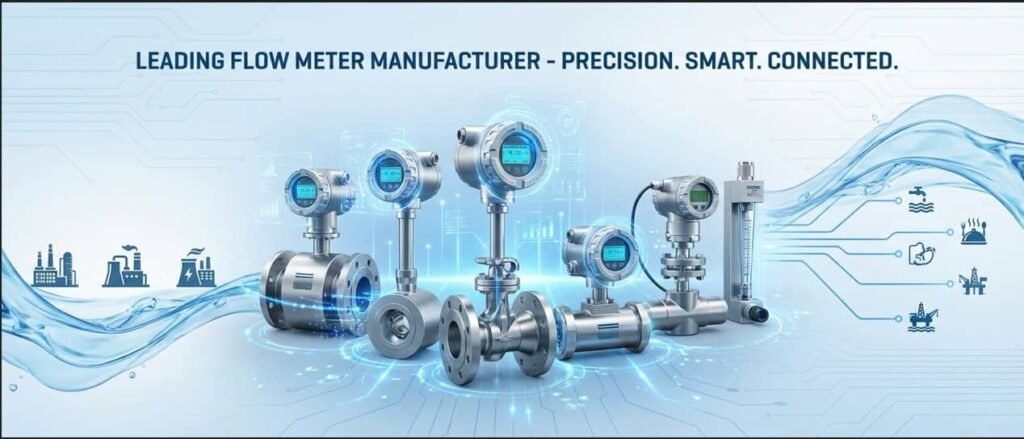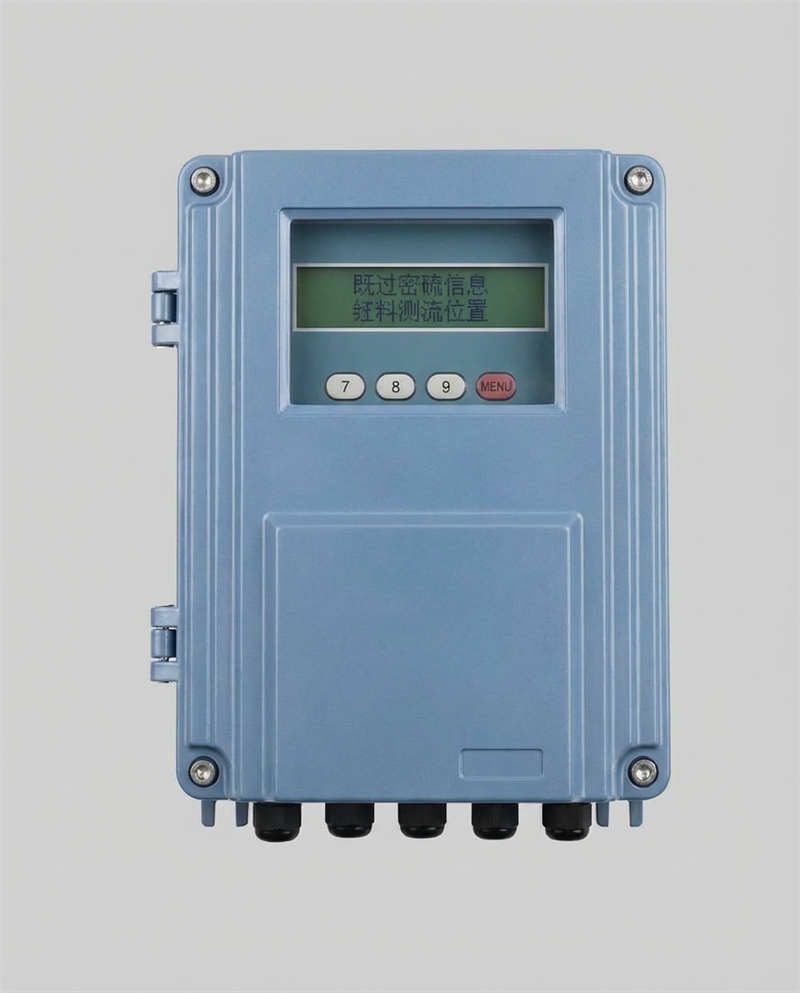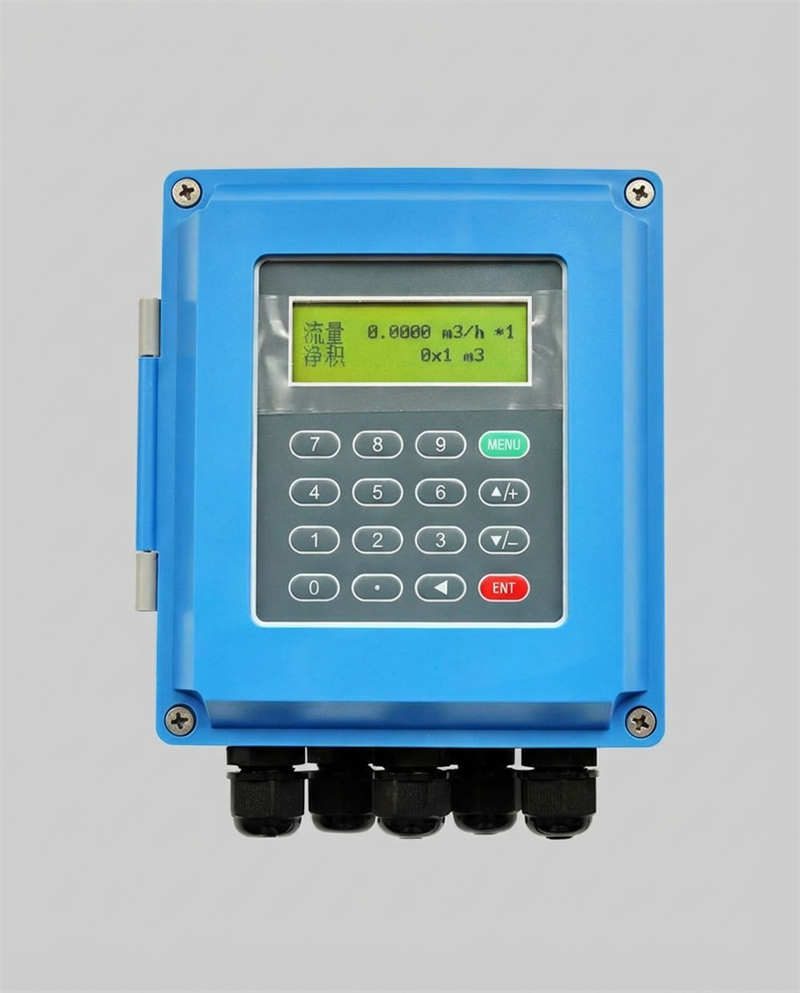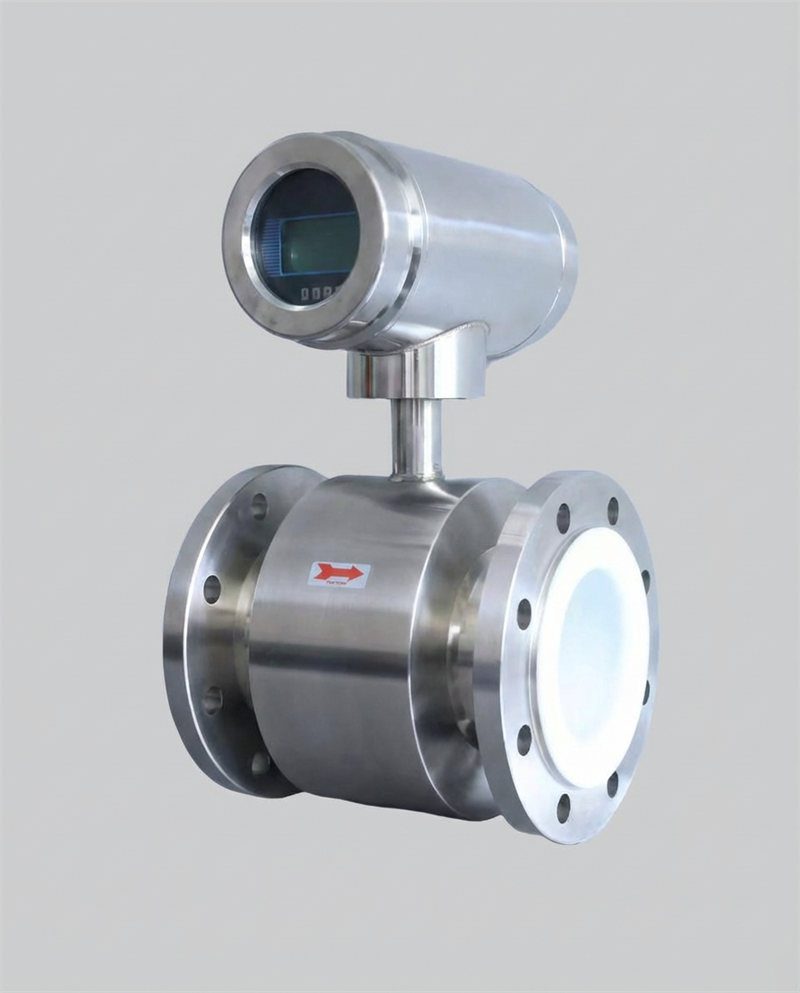
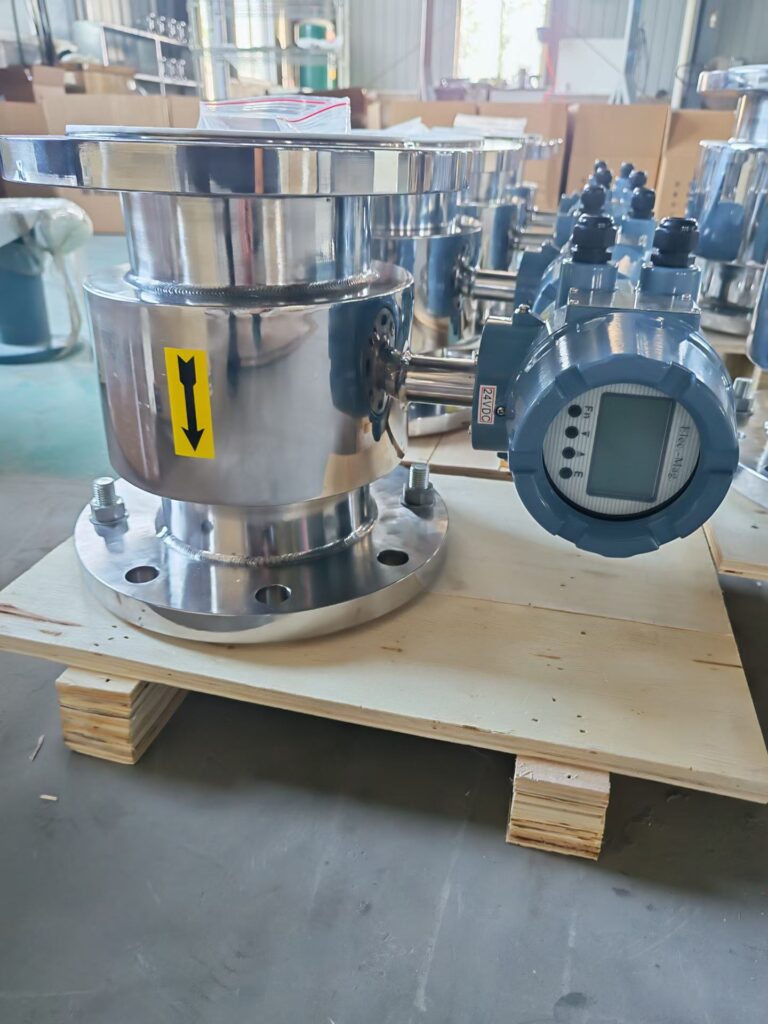
Flow meter selection can make or break your ability to serve clients effectively. This comprehensive playbook helps distributors and agents choose the right technologies for each industry, navigate sector-specific challenges, and position yourself as the trusted expert your customers rely on.

Why This Playbook Matters for Your Distribution Business
The global flow meter market reached approximately USD 11.4 billion in 2025, with oil and gas commanding 28% of demand, followed by water and wastewater, food and beverage, and pharmaceutical sectors. These are not retail consumers browsing comparison websites. These are engineers, plant managers, procurement directors, and compliance officers who need to trust that the person quoting them a meter actually understands their process — not just their pipe size.
Here is the uncomfortable reality of distribution: two distributors quoting the exact same meter, from the exact same manufacturer, at nearly identical prices, are not selling the same thing. One is selling a product. The other is selling certainty — the confidence that when this meter is installed, it will perform as expected, pass the audit, survive the cleaning cycle, and still be reading accurately in three years. That difference is entirely invisible in a purchase order. It lives in the conversation before the order is placed.
This playbook was not written for search engines. It was written for distributors and agents who are tired of losing deals to competitors who cut prices, or losing accounts to problems that should never have happened. Each section gives you the technical backbone and the commercial language to serve your clients as a genuine advisor — by industry, by application, and by the specific challenges that actually keep your customers’ operations managers awake at night.
The four industry chapters that follow — oil and gas, pharmaceutical and life sciences, food and beverage, and water and wastewater — are structured around the same core question: what does your customer actually need from this measurement, and what happens when they don’t get it?
1. Oil & Gas Sector Flow Meter Playbook
Understanding Your Oil & Gas Customers’ Real Challenges
The Accuracy Demands That Keep Your Clients Awake at Night
In oil and gas, a flow meter is not an instrument. It is a financial statement. When crude oil changes hands at a custody transfer point — the measurement point where ownership officially transfers and payment is triggered — a measurement error of just 0.1% on a 50,000 barrel-per-day pipeline represents approximately $350,000 in annual revenue variance at $70/barrel. The buyer is convinced they received less than they paid for. The seller is convinced they gave away more than the meter recorded. Both are right, and the dispute belongs to whoever owns the measurement.
This is why the API Manual of Petroleum Measurement Standards (API MPMS) governs custody transfer measurement in this sector with precision requirements that leave almost no room for “it’s close enough.” API MPMS Chapter 5 covers metering technologies, and the overall measurement uncertainty target for liquid hydrocarbon custody transfer is typically ±0.25% or better. That is not a preference — it is an industry standard your clients must meet and can be contractually obligated to demonstrate.
Beyond accuracy, your oil and gas clients are managing process conditions that would destroy standard instruments. Crude oil with hydrogen sulfide (H₂S) content. Gas streams at 250 bar operating pressure. Wellhead temperatures swinging from -40°C in Alberta to +70°C in the Middle East desert. Any meter recommendation that does not start with “what is the fluid chemistry, operating temperature, and pressure envelope?” is not a recommendation — it is a guess with a purchase order attached.
Why Standard Meters Fail in Harsh Operating Conditions
The failure mode in oil and gas is rarely dramatic. It is slow, insidious, and expensive. A turbine meter with standard stainless steel bearings installed on a crude oil line carrying 800 ppm H₂S does not explode — it corrodes at the bearing surfaces over six months, developing progressive measurement drift that looks like normal variation until the quarterly audit reveals it is 1.8% off calibration. That 1.8% on a fiscal measurement point is a contractual dispute, a financial restatement, and potentially a regulatory finding.
The other failure pattern is flow condition mismatch. Positive displacement meters are robust and accurate for clean, stable-viscosity liquids, but when crude oil viscosity changes from 5 cSt to 150 cSt between winter and summer operating conditions, the meter’s calibration factor shifts. If the client is not compensating for this, they are recording incorrect volumes every time the ambient temperature drops significantly.
Recommended Flow Meter Technologies for Oil & Gas
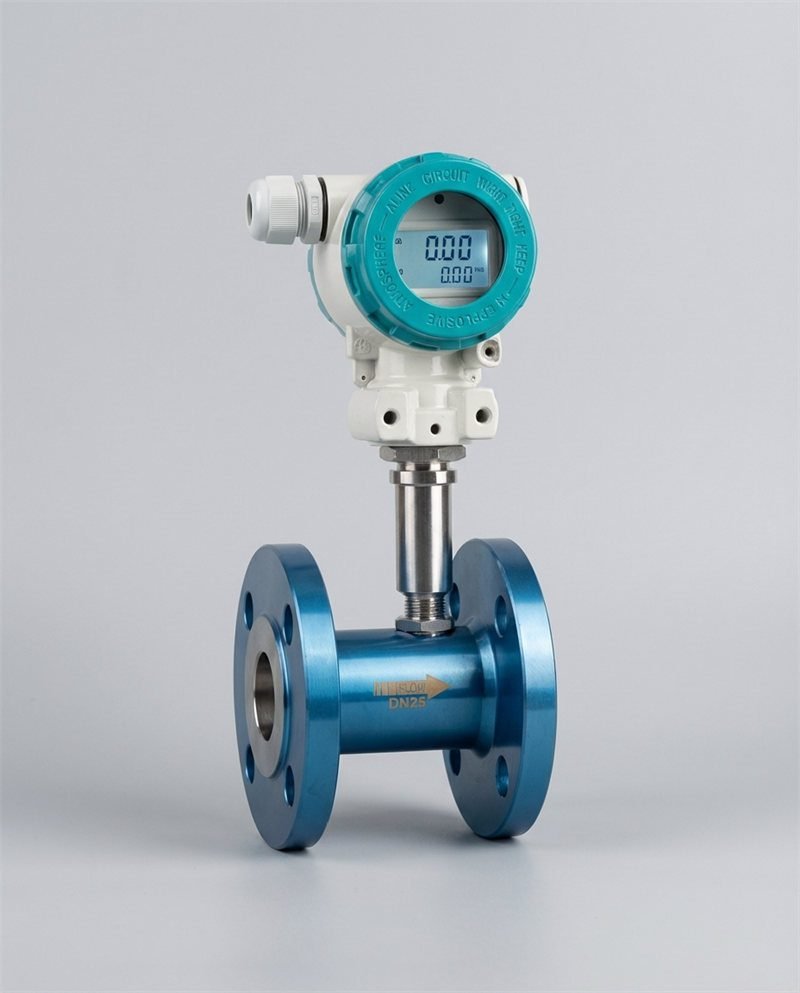
Turbine meters: When they work and when they don’t. Turbine meters — which measure flow by counting the rotations of a rotor blade assembly in the flow stream, where rotation speed corresponds to volumetric flow rate — perform excellently in clean, single-phase, low-viscosity liquid service. Refined petroleum products (gasoline, diesel, kerosene, jet fuel) at stable temperatures are the natural habitat of a turbine meter. The moment the fluid has significant viscosity variation, entrained gas, or abrasive contamination, turbine performance degrades. The conversation with your client is not “is a turbine meter good?” — it is “is your fluid, across all operating conditions, within the turbine’s reliable operating envelope?”
Coriolis meters: The investment conversation you need to have. Coriolis mass flow meters measure flow by detecting the phase shift in a vibrating tube caused by fluid inertia — a principle that is directly sensitive to mass flow, not volume, and entirely independent of fluid density, viscosity, or composition. That independence is what makes them the preferred choice for variable-composition crude oil, LNG measurement, and any application where fluid properties change significantly with operating conditions. The conversation distributors avoid because of price is exactly the conversation that builds trust: “This Coriolis meter costs three times more than the turbine option, and here is the specific financial reason it will save you more than that difference in the first two years.” Use the API MPMS custody transfer accuracy requirement as the anchor. A turbine meter on crude oil service typically requires a prover system to maintain fiscal accuracy. A premium Coriolis meter, properly installed, can achieve the same result with a simpler verification program.
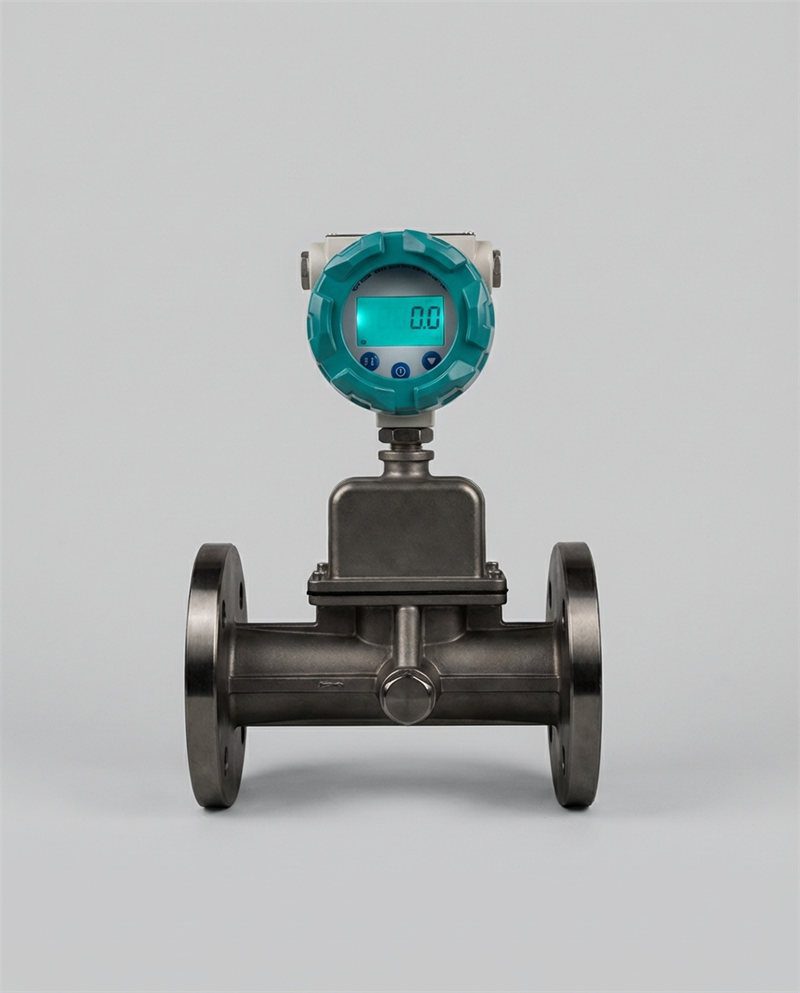
Ultrasonic meters: Solving non-invasive measurement problems. Multi-path ultrasonic flow meters — which measure flow by calculating the transit time difference of acoustic pulses traveling with and against the flow direction — have become the technology of choice for large-diameter natural gas transmission and high-volume liquid pipeline applications. Their key advantages in oil and gas are: no moving parts (no mechanical wear in a service that runs continuously for years), no pressure drop (critical for long-distance transmission where every bar of line pressure is operational cost), and bidirectional measurement capability. For distributors, the competitive conversation is straightforward: an ultrasonic meter on a 24-inch gas transmission line has a payback period measured in months from pressure drop savings alone.
Positive displacement meters: The workhorse option your customers trust. Positive displacement (PD) meters — which measure flow by capturing discrete, fixed volumes of fluid in a rotating or oscillating mechanism and counting the cycles — remain the dominant technology for refined product distribution terminals, fuel dispensing, and LPG measurement applications where the fluid is clean, the viscosity is relatively stable, and the required accuracy class is ±0.1–0.5%. Their strength is intrinsic accuracy at their design flow conditions. Their vulnerability is contamination and viscosity change. For a refinery product loading rack handling clean diesel, a PD meter is the right call. For a crude oil wellhead with sand content and varying viscosity, it is the wrong one.
Oil & Gas Installation & Maintenance Best Practices
How to position yourself as the problem-solver, not just the vendor. The site visit before the quotation is where oil and gas distribution relationships are won or lost. Showing up with a catalog and asking “what size meter do you need?” is the vendor approach. Showing up with a process questionnaire — fluid composition, operating temperature range, pressure range, flow range minimum and maximum, existing pipe configuration, custody transfer or process monitoring, regulatory body requirements, and maintenance access constraints — is the advisor approach. The information you collect protects you from specification errors and signals to the client that you understand their world.
Common installation mistakes that cost your customers money. The three most expensive installation errors in oil and gas are: insufficient upstream straight run, which creates velocity profile distortion that biases measurement by 0.3–2.5% depending on the meter type and disturbance; incorrect orientation of PD meters in service with entrained gas, which causes gas slugging through the meter and severe overregistration; and installation of meters without isolation valves and a prover connection, which means the meter can never be verified in-service and the client must take it out of service for every calibration event.
Maintenance protocols that prevent costly downtime. For turbine meters in refined product service, the practical maintenance program is: filter inspection monthly, bearing check quarterly, calibration verification semi-annually using a portable prover or master meter comparison. For Coriolis meters in crude service, the program is simpler: periodic zero verification, annual diagnostic check, calibration verification against the client’s prover schedule. The meter that needs less maintenance is not always the one with the lower purchase price — it is the one that was correctly specified for the actual service conditions.
Selling Flow Meters to Oil & Gas: Your Competitive Edge
How to talk about pressure and temperature compensation with confidence. Volumetric flow measurement — counting liters or cubic meters of fluid at operating conditions — is only meaningful in oil and gas if it can be converted to a standard reference condition (typically 15°C and 101.325 kPa) for billing and regulatory purposes. This conversion requires knowing the fluid’s density, which varies with temperature and pressure. Your clients are either doing this conversion manually (error-prone and labor-intensive), through a flow computer that reads the meter plus separate temperature and pressure transmitters, or through a meter that integrates all three measurements internally. Understanding which of these approaches your client is using — and where the compensation errors are — is a conversation that demonstrates expertise and frequently reveals upgrade opportunities.
Addressing corrosive fluid concerns without overselling. The standard wetted materials for a turbine meter body are 316 stainless steel and Hastelloy C-276 for the more corrosion-resistant option. For H₂S service, the relevant standard is NACE MR0175 / ISO 15156, which governs material selection for equipment in sour (H₂S-containing) environments. Rather than promising that a given meter “handles corrosive fluids” — which means nothing without specifics — the professional conversation is: “What is the H₂S partial pressure in your service? Let me verify the meter’s wetted materials against the NACE MR0175 requirements for that condition.” That level of specificity builds trust that no amount of general reassurance can achieve.
| Tecnologia | Best Oil & Gas Applications | Accuracy Class | Key Limitation |
|---|---|---|---|
| Turbina | Refined products, clean liquids | ±0.1–0.25% | Viscosity sensitivity, moving parts wear |
| Coriolis | Crude oil, LNG, variable composition | ±0.1–0.2% mass | High cost at large pipe sizes |
| Ultrasonic (multi-path) | Gas transmission, large liquid pipelines | ±0.15–0.5% | Installation-dependent performance |
| Deslocamento positivo | Product distribution, LPG, clean liquids | ±0.1–0.5% | Contamination and viscosity variation |
2. Pharmaceutical & Life Sciences Flow Meter Playbook

Why Pharmaceutical Clients Have Different Expectations
Regulatory Compliance as Your Selling Point, Not Your Obstacle
Pharmaceutical and life sciences clients do not buy flow meters. They buy validated, documented, compliance-ready measurement systems. The distinction matters enormously for how you approach the sale. A plant engineer at a generic pharmaceutical manufacturer does not have the authority to simply choose the cheapest meter that fits the pipe — they must demonstrate to their quality assurance team, their internal validation group, and potentially a regulatory inspector that the measurement system was selected, installed, and verified in accordance with applicable standards. Your job is to make that demonstration as straightforward as possible.
The regulatory framework that governs pharmaceutical manufacturing in the US market is FDA 21 CFR Parts 210 and 211, which require documented equipment qualification before commercial production. This is where IQ/OQ/PQ enters the conversation: Installation Qualification (proof that the equipment was installed correctly), Operational Qualification (proof that it operates within specified parameters), and Performance Qualification (proof that it performs correctly in the actual process environment). Distributors who can provide pre-formatted IQ/OQ/PQ documentation packages as part of the sale are not just offering a convenience — they are removing a significant workload from the client’s validation team and directly shortening the time to production startup.
Sterility and Contamination Concerns That Drive Purchasing Decisions
The single most consequential design requirement in pharmaceutical flow measurement is that the meter must not introduce contamination into the process fluid, and must be cleanable to sterility without disassembly. This requirement eliminates most standard industrial meter designs immediately. Dead-ended cavities — recesses inside the meter where fluid can pool and resist cleaning — are not permitted. Surface finishes must be smooth enough that biofilm cannot establish (Ra ≤ 0.8 μm is the accepted standard for product-contact surfaces). Wetted materials must be non-reactive with both the process fluid and the cleaning and sanitizing agents used in CIP (Clean-in-Place) and SIP (Steam-in-Place) cycles.
In practical terms, this means that when a pharmaceutical client asks for “a flow meter for the purified water loop,” the correct first response is not a technology recommendation — it is a series of questions about the cleaning protocol, the maximum steam temperature in SIP cycles, the chemical concentrations in CIP solutions, and whether the loop is WFI (Water for Injection) grade. The answers determine whether an electromagnetic meter with a PTFE liner or a Coriolis meter with electropolished wetted surfaces is the appropriate choice.
Documentation Requirements That Separate Amateurs from Professionals
A pharmaceutical distributor who arrives with a meter, a calibration certificate, and a catalog page will lose the account to one who arrives with a meter, a factory calibration certificate traceable to national standards, a material of construction declaration with FDA 21 CFR compliance citations, an instrument data sheet, a pre-formatted IQ/OQ template, and an explanation of how the meter’s self-diagnostic features support 21 CFR Part 11 electronic record integrity. The difference in actual product may be zero. The difference in the client’s perception of risk is enormous.
Recommended Flow Meter Technologies for Pharmaceuticals
Electromagnetic meters: The gold standard for regulatory compliance. Electromagnetic flow meters have no moving parts, no pressure drop, and no internal obstructions. Their full-bore wetted path is a straight tube with a smooth liner and flush-mounted electrodes — exactly the geometry that CIP cleaning engineers prefer because cleaning solution can flow through without turbulence or dead zones. For water systems (purified water, Water for Injection, clean steam condensate), the electromagnetic meter is the dominant choice, certified under ASME BPE standards for biopharmaceutical processing equipment. Accuracy at ±0.3–0.5% of reading, combined with zero pressure drop and full CIP/SIP compatibility, makes the total value proposition straightforward.
Coriolis meters: Precision where it matters most. When the pharmaceutical process involves high-value ingredients — Active Pharmaceutical Ingredients (APIs), solvents for synthesis, excipient liquids for formulation — the cost of measurement error is not a theoretical concern. A ±0.2% error on a 500 kg batch of a $4,000/kg API ingredient represents $4,000 per batch in material variance. A Coriolis meter, delivering ±0.1% mass flow accuracy while simultaneously measuring density (enabling real-time concentration verification), eliminates that variance and simultaneously provides the process consistency documentation that quality assurance requires.
Gear meters: Why they work for viscous formulations. Oval gear or helical gear positive displacement meters — which measure flow by capturing precise volumes in intermeshing gear chambers — provide excellent accuracy for viscous liquids such as pharmaceutical syrups, oils, and concentrated solutions that would challenge the linearity of turbine or electromagnetic meters. Their limitation is that they require clean, particle-free fluid (a gear mesh can be damaged by solid contamination) and regular calibration to account for wear. For a pharmaceutical client formulating topical creams or oral suspensions, a sanitary gear meter in 316L stainless steel is a practical, cost-effective choice.
Thermal mass meters: Gas measurement in controlled environments. Pharmaceutical manufacturing facilities use significant quantities of nitrogen, compressed air, and pharmaceutical-grade gases for blanketing, sparging, and pneumatic conveying. Thermal mass flow meters — which measure mass flow directly by detecting the heat transfer from a heated sensor to the flowing gas — require no separate pressure and temperature compensation and maintain accuracy across wide flow ranges. For nitrogen blanketing of sensitive reaction vessels or cleanroom ventilation air balance verification, a thermal mass meter is the most direct measurement approach.
Validation and Documentation Your Pharma Clients Demand
What IQ/OQ/PQ means and why your customers care. Installation Qualification confirms that the meter arrived in the correct configuration, was installed to the manufacturer’s specification, and all relevant documentation (calibration certificates, material certifications, drawings) is available and filed. Operational Qualification confirms that the meter operates correctly across its specified range under controlled test conditions. Performance Qualification confirms that it delivers the required measurement accuracy in the actual pharmaceutical process environment under real operating conditions. Each phase requires test protocols, test results, and a formal approval signature from the plant’s authorized quality representative.
How to position meters that come pre-validated. Some manufacturers, including suppliers in Jade Ant Instruments’ network, provide instrument data packages that include factory calibration certificates traceable to national metrology standards, material of construction declarations with USP and FDA compliance citations, and documentation formatted to support the customer’s IQ template. The commercial message is not “our documentation is better” — it is “our documentation package reduces your validation timeline by approximately two to three weeks, which means your production startup date moves forward by the same amount.”
| Tecnologia | Pharma Application | Regulatory Advantage | Key Specification |
|---|---|---|---|
| Eletromagnético | Purified water, WFI, CIP | ASME BPE compliant, no dead legs | Full-bore, PTFE/PFA liner, ±0.3–0.5% |
| Coriolis | API dosing, solvent batching | Mass accuracy, density verification | ±0.1% mass, electropolished 316L |
| Gear (PD) | Viscous formulations, oils | Good accuracy for high viscosity | Sanitary design, ±0.5% |
| Thermal Mass | Nitrogen, compressed air | Direct mass measurement | No P/T compensation needed |
Pharma-Specific Installation Considerations
Cleanroom compatibility and material selection. Every wetted material in a pharmaceutical flow meter must be documented as non-reactive with the process fluid and with all cleaning and sanitizing agents. This is not a catalog selection task — it is a chemistry review. PTFE and PFA liners are compatible with most pharmaceutical cleaning agents but have temperature limitations. EPDM seals are compatible with steam but not with certain organic solvents. 316L stainless steel electropolished to Ra ≤ 0.8 μm provides the best balance of cleanability, chemical resistance, and mechanical durability for the majority of pharmaceutical applications.
Minimizing product waste during commissioning. Pharmaceutical intermediates and finished dosage forms are expensive. Every liter of product that passes through an unvalidated section of piping during commissioning must be discarded as non-conforming until the validation is complete. Specifying meters with inline zero calibration capability — which can be validated with the meter in-place without removing product — reduces the flush volume required before production restart after each calibration event.
3. Food & Beverage Manufacturing Playbook
The Unique Pressures Food & Beverage Distributors Face
Sanitary Design Requirements That Aren’t Negotiable
A dairy plant does not have the option to choose between sanitary and industrial-grade flow meters. The 3-A Sanitary Standards (3-A SSI) and the EHEDG (European Hygienic Engineering & Design Group) guidelines define the design criteria that all flow measurement equipment in dairy, beverage, and food processing must meet. These are not certifications that manufacturers self-declare — they are independently verified by qualified third-party sanitarians who inspect the actual equipment against the standard requirements. A 3-A certificate number is verifiable in the public 3-A registry. An unmarked claim of “3-A compliant design” is not.
The practical consequences of non-compliant equipment became visible in the pharmaceutical case study earlier in this guide. For food and beverage, the failure mode is the same: dead-ended cavities in a non-compliant meter create growth niches for Listeria, Salmonella, or other pathogens that resist standard CIP cleaning protocols. The downstream consequences — product recall, FDA Warning Letter, temporary facility closure, brand reputation damage — are disproportionately larger than the cost difference between a standard industrial meter and a properly certified sanitary one.
Your commercial message is simple: the 3-A certificate is not an upgrade option. It is the baseline.
How to Address Food Safety Certification Concerns
Food and beverage clients — particularly those in dairy, juice, beer and spirits, and infant formula — operate under a regulatory environment where the FDA’s Food Safety Modernization Act (FSMA) places affirmative responsibility on the manufacturer to prevent contamination rather than simply respond to it after the fact. This preventive control philosophy means that equipment selection decisions must be defensible in a regulatory audit as proactive risk management. A meter specification decision that prioritized purchase price over hygienic certification is not defensible. A specification decision that evaluated 3-A certification, surface finish, material compatibility, and CIP performance is defensible regardless of the outcome, because the process was rigorous.
Viscosity Variation Challenges in Beverage Production
Consider a juice processing facility handling products ranging from water-thin citrus juice (viscosity approximately 1.2 cP) to concentrated fruit purees (viscosity up to 15,000 cP at process temperatures). The meter that performs perfectly at one end of this range will behave very differently at the other. A turbine meter sized for clear juice service will exhibit significant measurement error when the same line runs puree — because turbine meter accuracy is calibrated for a specific viscosity range, and the relationship between rotor speed and volumetric flow changes as viscosity increases. A Coriolis meter, by contrast, measures mass flow directly and is inherently insensitive to viscosity changes within a very wide range, making it the natural choice for lines that handle variable-viscosity products.
Recommended Flow Meter Technologies for Food & Beverage
Coriolis meters: Accuracy for high-value products. In wine, spirits, and premium juice production, measurement accuracy is directly linked to profitability because the product being measured is expensive per unit volume. A Coriolis meter measuring the filling of a 750 mL wine bottle with ±0.1% accuracy versus a turbine meter with ±0.5% accuracy creates a real financial difference across millions of fill cycles annually. At a $15/bottle product value and 2 million fills per year, a 0.4% improvement in fill accuracy represents $120,000 annually in reduced overfill waste. The meter cost difference is typically recovered within the first production year.
Magnetic meters: The sanitary choice for most applications. For the majority of food and beverage flow measurement applications — water for production, CIP solution flow, beverages with conductivity above 5 μS/cm — a sanitary electromagnetic flow meter is the practical workhorse. Full bore, no moving parts, no internal obstructions, full compatibility with CIP and SIP protocols, and available in complete sanitary designs with 3-A and EHEDG certification. The electromagnetic meter handles thin beverages, sauces, dairy products, liquid sugars, and brines with equal reliability. Its one hard limitation is non-conductive fluids: pure oils, certain alcohols, and highly purified water may be below the minimum conductivity threshold.
Turbine meters: Cost-effective solutions for low-viscosity liquids. In food and beverage applications involving clean, low-viscosity, low-value-density fluids — water, thin brines, dilute solutions — a sanitary turbine meter can provide a cost-effective solution where the accuracy requirements are modest and the fluid will not cause bearing wear or contamination. The key qualification is “sanitary design”: hygienic fittings (tri-clamp connections), smooth internal bore, no dead-ended cavities, and rotor materials certified for food contact. Do not install an industrial turbine meter in a food application regardless of cost pressure.
Vortex meters: Steam and gas measurement in food processing. Most large food processing facilities consume significant quantities of steam for pasteurization, cooking, and process heating. Vortex flow meters — which measure flow by counting the frequency of vortices shed from a bluff body in the flow stream, where vortex frequency is proportional to flow velocity — are the industry-standard choice for saturated steam measurement in food applications. Their advantages are no moving parts, direct compatibility with high-temperature steam service, and a relatively simple installation requirement compared to differential pressure orifice systems.
Sanitary Design & Hygiene Standards You Must Know
3-A SSI certification: What it means and why it matters. 3-A Sanitary Standards govern the hygienic design of equipment used in dairy, food, and beverage processing. The standards specify acceptable materials, surface finish requirements, drainability, and cleanability for all equipment in contact with food products. A meter certified to 3-A Standard 28-06 (the standard specifically governing flow meters) has been evaluated by an authorized sanitarian against specific design requirements — not just self-declared as “3-A compliant.” The certification number is verifiable at the 3-A SSI website. If a manufacturer cannot provide a verifiable certification number, the meter is not 3-A certified.
Material compatibility for food-grade applications. Wetted parts in food applications must comply with FDA 21 CFR regulations: 21 CFR §177.2600 for rubber and elastomers, 21 CFR §177.1550 for fluoropolymers, and applicable sections for metals. 316L stainless steel is the standard material for food-contact metal parts. EPDM gaskets are appropriate for steam and water service. PTFE is appropriate for most chemical CIP agents. Buna-N (NBR) rubber should not be used in food contact applications where cleaning chemicals are present, as it degrades in contact with certain disinfectants.
CIP system integration. Clean-in-Place (CIP) is the automated process of cleaning piping and equipment without disassembly, by circulating cleaning solutions (typically caustic, acid, and sanitizer in sequence) through the system at defined temperatures, concentrations, and flow velocities. The flow meter must be designed to withstand the CIP chemical concentrations and temperatures without degradation of the liner, seals, or electrodes — and must be geometrically designed to ensure the cleaning solution reaches every product-contact surface. For a distributor, the CIP compatibility conversation requires knowing the client’s specific cleaning protocol: what chemicals, at what concentrations, at what temperatures, and for what duration. A liner that handles standard 2% caustic at 80°C may fail with the 4% phosphoric acid used in a beverage plant’s equipment.
Reducing Product Loss and Maximizing Profitability
Installation techniques that minimize dead legs. A dead leg is any section of piping that terminates in a closed end, such that fluid trapped there cannot be reliably reached by the CIP cleaning flow. Dead legs are a contamination risk in food applications and are prohibited by hygienic design standards. When installing a flow meter with isolation valves, ensure that any valve between the meter and the cleaning circuit can be positioned so the CIP flow reaches and flushes the entire meter bore. T-connections for sampling points, pressure taps, and temperature sensors should be designed with leg lengths no greater than 1.5 times the pipe diameter.
| Tecnologia | Food/Bev Application | Sanitary Standard | Precisão típica | Viscosity Limit |
|---|---|---|---|---|
| Eletromagnético | Water, dairy, beverages, CIP | 3-A, EHEDG | ±0.3–0.5% | <10,000 cP |
| Coriolis | Premium products, purees, spirits | 3-A 28-06, EHEDG | ±0.1% mass | <500,000 cP |
| Turbina | Clean water, thin solutions | 3-A | ±0.25–0.5% | <50 cP |
| Vórtice | Steam, compressed air | Standard industrial | ±1,01 TP3T | Gas/steam |
4. Water & Wastewater Treatment Playbook

Understanding Your Water Industry Customers’ Budget Reality
Why Water Utilities Operate on Tight Margins
Municipal water utilities are not profit-maximizing enterprises. They are regulated public services managing infrastructure that in many cases is 40–80 years old, with capital budgets that are perpetually insufficient relative to infrastructure replacement needs. The American Water Works Association estimates that replacing water infrastructure across the United States requires approximately $1 trillion in investment over the next 25 years. When a water utility procurement manager tells you they cannot afford the recommended meter, they are almost certainly telling the truth.
The commercial challenge for distributors is not to persuade utilities to spend more — it is to help them understand that spending less often costs more. A utility that installs a less accurate meter saves $8,000 on the purchase. If that meter’s ±2% measurement uncertainty on a large transmission main causes a 1.5% non-revenue water misallocation between pressure zones, the annual revenue impact at $1.50/thousand-gallon rates on a 10 MGD throughput is approximately $82,000. The payback on the premium meter is under four months.
How to Position Cost-Effective Solutions Without Sacrificing Quality
The most effective sales conversation in the water utility market is the lifecycle cost analysis presented as a per-thousand-gallon operating cost. Utility finance directors think in those units — it is how they structure rate cases and capital justifications. A meter that costs $12,000 more at purchase but saves $40,000 annually in non-revenue water reduction has a per-unit-throughput economics case that is far more compelling than a catalog price comparison. Position the upfront cost in the context of the rate case recovery timeline and the operating expense reduction.
Recommended Flow Meter Technologies for Water Treatment
Magnetic meters: The industry standard for custody transfer. The electromagnetic flow meter has been the dominant technology in municipal water measurement for three decades, supported by AWWA Standard C751 which specifically governs magnetic inductive flowmeters in water supply applications. The combination of no moving parts, no pressure drop, full-bore wetted path compatible with treated and untreated water, and typical accuracy of ±0.5% of reading makes it the practical choice for the full range of municipal applications from raw water intake to distribution main measurement. For conductivity above 50 μS/cm — which includes virtually all natural and treated water supplies — the electromagnetic meter performs reliably across the full operating range.
Ultrasonic meters: Non-invasive solutions for existing infrastructure. Transit-time ultrasonic meters — which measure flow by comparing the travel time of acoustic pulses sent with and against the flow direction — offer a critical operational advantage for utilities managing aging infrastructure: clamp-on ultrasonic meters can be installed without cutting the pipe, without a process shutdown, and without any insertion into the water main. For a utility managing an 80-year-old cast iron main where any excavation and pressure test carries significant risk of secondary failure, the ability to add flow measurement without disturbing the pipe is not a convenience — it is a risk management decision. Accuracy of ±0.5–2% for properly installed clamp-on systems is acceptable for distribution zone monitoring and non-revenue water analysis, though custody transfer billing typically requires the higher accuracy of an inline electromagnetic installation.
Turbine meters: Proven reliability in water applications. Multi-jet turbine meters remain widely deployed for customer billing measurement in the smaller pipe sizes (DN15–DN100), where their accuracy at ±1% of reading and competitive purchase price make them the standard choice. The AWWA standards for service meters define the accuracy requirements for meters used in customer billing, and multi-jet turbine meters certified to these standards provide the performance level required for revenue metering applications in this size range.
Vortex meters: Handling variable flow conditions. In water treatment plants where gas flow measurement is required — chlorine gas for disinfection, ozone generation feed gas, or air for aeration systems — vortex meters provide a practical, direct measurement solution without the complexity of differential pressure systems. Their ability to handle wide flow range variation (typical turndown of 20–30:1) makes them suitable for the variable demand conditions of aeration air supply, where overnight minimum flows may be 15–20% of peak daytime demand.
Custody Transfer & Billing Accuracy Considerations
What accuracy classes your customers need. For raw water intake measurement used in regulatory reporting and source water allocation accounting, the applicable EPA guidance document is the EPA Recommended Practice for the Use of Electromagnetic Flowmeters, which specifies that accuracy should be within 1% of full scale and should not exceed 3% of actual flow rate at any measurement point. For municipal billing measurement at customer meters, the applicable accuracy requirements are defined by AWWA standards for the relevant meter type and size class.
How to ensure meters meet regulatory standards. The critical documentation for a water utility installation package includes: the calibration certificate traceable to national standards (NIST or equivalent), the manufacturer’s accuracy statement for the specific meter size and flow range, the installation verification report confirming that upstream/downstream straight run requirements were met, and the commissioning test report confirming the meter performs within specification under actual operating conditions. Utilities that face regulatory audits need this documentation in their instrument files — not just the installation work order.
Installation in Challenging Water Environments
Dealing with corrosive water chemistry. Aggressive water chemistries — high chloride content in coastal groundwater, low pH softened water, high-velocity treated water with residual disinfectants — attack meter liners, electrode materials, and sealing compounds at rates that vary significantly by material choice. PTFE liner material resists virtually all water chemistry but has a lower mechanical strength than hard rubber liners. Hard rubber (natural or synthetic) liners have excellent abrasion resistance for slurry applications but can be attacked by high ozone concentrations used in some advanced treatment plants. Stainless steel electrodes (316 or Hastelloy C-276) provide the best corrosion resistance; platinum or tantalum electrodes are available for extreme chemistries.
Handling low-conductivity water measurement. Demineralized water used in boiler feed preparation, reverse osmosis permeate, and ultrapure water treatment typically has conductivity below the 50 μS/cm minimum threshold for standard electromagnetic meters. For these applications, either a specialized low-conductivity electromagnetic meter (rated to 5 μS/cm), an ultrasonic flow meter (no conductivity requirement), or a Coriolis meter is required. The specification error of installing a standard electromagnetic meter on a low-conductivity application is a classic failure mode — the meter appears to function normally but produces erratic or zero output during the periods when conductivity drops below the threshold.
Preventing fouling and maintaining accuracy. Biological fouling on electromagnetic meter electrodes — a coating of biological material that gradually insulates the electrode surface from the process fluid — is a common cause of signal degradation and measurement drift in untreated water and wastewater applications. Modern electromagnetic meters with electrode diagnostic features can detect coating development before it reaches the magnitude that affects accuracy, enabling maintenance scheduling rather than reactive response. Specifying meters with electrode DC detection or empty pipe detection as standard features reduces long-term maintenance complexity.
| Tecnologia | Water/WW Application | AWWA/EPA Standard | Precisão | Key Advantage |
|---|---|---|---|---|
| Eletromagnético | Transmission mains, treatment plant | AWWA C751, EPA | ±0,51 TP3T | No moving parts, zero pressure drop |
| Ultrasonic (inline) | Large transmission mains | AWWA | ±0.5–1.0% | Bidirectional, large pipe |
| Ultrassônico (com grampo) | Monitoring, retrofits | — | ±1.0–2.0% | No process interruption |
| Turbine (multi-jet) | Customer billing (<DN100) | AWWA | ±1,01 TP3T | Cost-effective, established |
5. Navigating Technical Specifications with Confidence
Reading Datasheets Like a Pro
Which Specifications Actually Matter for Each Application
A flow meter datasheet typically contains 15–25 specification parameters. In any given application, three to five of them actually determine whether the meter will perform correctly. The ability to identify those critical few — and ignore the commercial noise around the rest — is what separates a knowledgeable advisor from a catalog reader.
The specifications that matter most vary by application type. For custody transfer applications: stated accuracy as a percentage of reading (not percentage of full scale — these are very different), the flow range over which that accuracy is maintained, the calibration conditions (fluid, temperature, pressure) and how they compare to the actual application conditions, and the manufacturer’s description of long-term stability and drift characteristics. For process control applications: response time (T90, the time for the output to reach 90% of its final value), repeatability (how consistently the meter reads the same flow under identical conditions), and diagnostic output capability for remote fault detection.
For all applications without exception: the maximum operating temperature and pressure relative to your application’s actual extremes, the minimum conductivity requirement for electromagnetic meters, the wetted materials versus the actual fluid chemistry, and the minimum straight-run requirements versus the available installation geometry.
How to Spot Red Flags That Indicate Wrong-Fit Solutions
The three most common datasheet red flags that signal a potential mismatch are: an accuracy specification stated as “% of full scale” rather than “% of reading” (a meter rated ±0.5% of full scale at a flow rate that is 20% of full scale is effectively ±2.5% of actual reading — a very different performance level), a rated temperature range that barely accommodates the application’s maximum with no safety margin (a meter rated to 150°C installed in a line that reaches 145°C during summer operation will be operating at the edge of its specification with no room for upset conditions), and a material compatibility statement that says “suitable for most liquids” without specifying the actual wetted materials and their chemical resistance data.
Questions to Ask Manufacturers That Protect Your Reputation
Five questions that every distributor should ask the manufacturer before confirming a specification: What is the accuracy specification as a percentage of reading at the minimum expected operating flow rate? What is the basis of the calibration — was it performed with the actual process fluid, or with water? What happens to the measurement when the fluid conductivity drops below the specified minimum — does the meter alarm, provide a zero output, or silently degrade? What is the manufacturer’s stated accuracy drift over a 24-month service period without recalibration? And what installation-related conditions — upstream disturbances, vibration, electromagnetic interference — will cause measurement error outside the published specification?
Flow Range and Turndown Ratio Explained
Why oversizing meters costs your customers money. A meter sized for the maximum possible flow rate rather than the actual typical operating flow rate will spend most of its service life operating at 10–30% of its rated range — precisely where accuracy specifications often degrade and where the minimum velocity requirement may not be met. The HVAC energy measurement case study cited in industry literature repeatedly shows the same pattern: meters sized for “future expansion” or “design maximum” operating in their degraded accuracy zone for 70–80% of annual operating hours, creating billing errors and missing system inefficiencies that cost far more than the premium for a correctly sized meter would have.
How to calculate the right meter for variable flow applications. The correct sizing process starts with the actual flow distribution, not the design maximum. Gather or estimate: minimum expected flow rate, typical (median) flow rate, and maximum expected flow rate. The meter should be sized so that maximum expected flow does not exceed 80–90% of the meter’s rated range, and the minimum expected flow does not fall below 10% of the rated range for most technologies (or the turndown ratio limit for the specific meter). For applications with very wide flow variation, prioritize technologies with high natural turndown: electromagnetic meters typically achieve 30:1 to 50:1 turndown, Coriolis meters 100:1, and some ultrasonic designs exceed 300:1. The interactive flow meter selection tool at Jade Ant Instruments walks through the sizing process systematically for multiple technology types.
Communicating turndown limitations to clients. The clearest way to explain turndown to a non-technical client is to define the “reliable operating window”: “This meter can measure accurately between 4 m³/h and 120 m³/h. If your process occasionally drops below 4 m³/h, the reading will be unreliable during those periods. If that matters for your application, we need to either select a different meter or understand how frequently it occurs and whether it creates a meaningful measurement gap.”
Pressure and Temperature Ratings
How to verify compatibility with customer systems. The pressure and temperature ratings of a flow meter must be verified against the application’s full operating envelope, not just the normal operating conditions. Process upsets, cleaning cycles, thermal expansion, and safety system activations can create brief excursions significantly above normal operating pressure and temperature. A meter with a 10 bar pressure rating installed on a 6 bar normal operating system provides adequate margin. A meter with a 10 bar rating on a system with 9.5 bar normal operating pressure and occasional pressure surges to 11 bar during pump startup does not.
Temperature compensation: When it’s essential, when it’s optional. For liquid flow measurement where the fluid density is relatively constant (water, low-viscosity chemicals), temperature compensation of the volumetric flow reading is rarely critical. For gas flow measurement — natural gas, compressed air, nitrogen, any compressible gas — temperature and pressure compensation is essential because the actual gas density at operating conditions determines the relationship between volumetric and mass (or standard) flow. A gas meter without temperature and pressure compensation is not measuring the quantity of gas — it is measuring the volume at whatever conditions happen to prevail, which is only useful if those conditions are exactly equal to the reference conditions used for billing or process control.
Material Selection & Compatibility
Corrosion resistance requirements by industry. Material selection is the most frequently skipped step in the flow meter specification process, and it produces the most expensive failures. The table below provides a practical starting framework. For any application involving unusual chemistry, verify material compatibility against supplier corrosion tables for the specific fluid, concentration, and temperature before confirming the specification.
| Fluid Category | Preferred Liner | Preferred Electrode | Preferred Body |
|---|---|---|---|
| Clean water / drinking water | Hard rubber, PTFE | 316L SS | Carbon steel, PTFE-lined |
| Wastewater / sludge | Hard rubber, EPDM | Hastelloy C-276 | Carbon steel |
| Strong acids (pH <2) | PTFE, ETFE | Hastelloy C-276 or Platinum | 316L SS or Hastelloy |
| Alkalis (NaOH, KOH) | PTFE, hard rubber | 316L SS | Carbon steel |
| Seawater / brine | PTFE | Titanium, Hastelloy | 316L SS |
| Dairy / food products | PTFE, FKM (Viton) | 316L SS electropolished | 316L SS, 3-A certified |
Elastomer and gasket compatibility considerations. Seal materials in flow meters — gaskets, O-rings, and liner compression elements — are frequently overlooked in the specification process. An EPDM gasket that performs perfectly in water service will swell and deform in contact with certain organic solvents, creating a leak within weeks of installation. A PTFE gasket that is chemically inert to nearly everything requires higher bolt torque to achieve a seal, and can cold-flow under sustained compression, requiring periodic re-torqueing. For each application, verify the seal material compatibility with both the process fluid and the cleaning agents used in CIP or maintenance protocols.
6. Installation Best Practices Across All Industries
Pre-Installation Assessment & Site Surveys
Questions to Ask Before Recommending a Meter
The most valuable tool in a distributor’s technical toolkit is a standardized pre-installation questionnaire that must be completed before any meter recommendation is made. The questions are not bureaucratic overhead — they are the information required to make a defensible recommendation. At minimum, the questionnaire should document: fluid identification and composition range, operating flow range (minimum, typical, maximum), operating temperature and pressure (normal and extremes), available upstream and downstream straight run in pipe diameters, ambient environment (indoor/outdoor, temperature range, humidity, hazardous area classification), pipe material and schedule, required output signals and communication protocols, applicable regulatory standards, and the measurement purpose (process control, custody transfer, regulatory reporting, or energy monitoring).
For each application where any of these parameters falls outside the normal range for the technology being considered, the questionnaire response should trigger a formal application review before the quotation is confirmed. This is not optional quality assurance — it is the professional standard that separates a distributor who prevents problems from one who discovers them after installation.
How to Identify Potential Installation Problems Early
Three site characteristics that create installation problems but are routinely missed in the pre-installation phase: upstream disturbances within the required straight-run distance (an elbow, valve, or reducer inside the minimum required straight run creates a biased velocity profile that cannot be corrected by calibration), vertical pipe sections below a horizontal run where gas can accumulate (creating a gas pocket that the meter reads as flow, or which causes signal dropout for electromagnetic meters), and electrical grounding and shielding conditions that may introduce electromagnetic interference into the meter’s signal circuit.
Piping Configuration & Straight Run Requirements
Why upstream and downstream piping matters. Every flow meter assumes a specific flow velocity profile at the measurement point — typically a fully developed, symmetrical, non-swirling profile that is achieved only after sufficient length of straight, undisturbed pipe. An elbow 3 pipe diameters upstream of an electromagnetic meter creates a velocity bias that can add 0.5–3% systematic error that no calibration can remove, because the error is in the measurement environment, not in the meter’s internal calibration. Vortex meters are particularly sensitive to swirl, requiring 10–15 pipe diameters upstream of undisturbed straight run to eliminate swirl-induced false vortex signals.
How to work with existing infrastructure constraints. When the available straight run is less than the minimum requirement, the options are: install a flow conditioner upstream of the meter (a device that breaks up swirl and redistributes the velocity profile to approximate a fully developed condition in a shorter distance), select a meter technology that is less sensitive to velocity profile distortion (some ultrasonic configurations with multiple acoustic paths are designed to correct for profile variations), or relocate the measurement point to a location with adequate straight run. Of these options, relocation is often the most reliable but least commercially convenient. Present the analysis to the client with the accuracy implication of each option — this positions you as the engineer solving their problem rather than the vendor protecting their margin.
Solutions when ideal installation isn’t possible. Flow conditioners — devices such as the Gallagher tube bundle, the CPA 50E, or the Vortab — can reduce the required straight run upstream of a meter by 50–70% in many configurations. They add a small incremental pressure drop (typically 0.1–0.5 bar depending on design and flow velocity), require documentation of their installation position and condition as part of the meter’s performance record, and must be selected and positioned specifically for the actual installation geometry. A flow conditioner that addresses a single upstream elbow has different specifications than one addressing a double out-of-plane elbow combination.
Commissioning & Startup Procedures
Step-by-step commissioning that prevents callbacks. A commissioning procedure that is documented, followed consistently, and signed off by the client creates a baseline record that prevents the majority of post-installation disputes. The procedure should include: verification that the meter was installed in the correct orientation and direction, verification that all electrical connections match the installation drawing, zero calibration verification with the process fluid (for Coriolis) or empty pipe verification (for electromagnetic), initial flow test at a known reference flow rate (if a portable calibration standard is available), confirmation that the output signal reading matches the expected flow rate at the reference condition, and recording of all as-found parameters in the commissioning report.
How to train your customers’ staff for success. Meter failures in the first six months after installation are more commonly caused by operator errors during routine maintenance than by the meter itself. The operations staff who will interact with the meter need training on: how to read and interpret the diagnostics display, what the common alarm conditions mean and what to do in response, how to perform a zero calibration and when it is appropriate, and what not to do (specifically: do not attempt to re-calibrate the meter in the field without factory-approved procedures; do not modify the transmitter configuration without documenting the change). A two-hour training session at commissioning, with a leave-behind quick reference card, prevents the majority of operator-caused failures.
Ongoing Support & Maintenance
Predictive maintenance strategies that build loyalty. Modern flow meter transmitters include continuous self-diagnostic capabilities that monitor parameters such as empty pipe detection, electrode coating, signal strength, and electronics temperature. A distributor who establishes a formal annual diagnostic review program — visiting the client’s instrumentation, downloading the diagnostic logs, interpreting the trends, and identifying meters that are approaching calibration drift or liner degradation before they create a measurement problem — builds a relationship that is categorically different from one based on selling equipment and responding to failures. The value proposition is concrete: “We identified 3 of your 47 installed meters that are showing early signs of electrode coating, and we’re recommending proactive cleaning and recalibration before your quarterly audit.” That conversation generates service revenue, prevents compliance issues, and makes you irreplaceable.
Creating recurring service revenue through service contracts. A service contract that covers annual calibration verification, diagnostic review, and emergency response for a client’s installed flow meter base creates predictable recurring revenue that is independent of new equipment sales cycles. Pricing structure typically: base fee per meter per year covering the annual visit and report, with tiered rates for emergency response. For a client with 30 installed meters at $350/meter/year, the base contract is $10,500 annually — with the additional commercial benefit that the annual visit creates the conversation that identifies upgrade and replacement opportunities.
7. Competitive Positioning & Differentiation
How to Win Against Larger Competitors
Leveraging Industry Expertise as Your Advantage
A national distributor with a warehouse catalog and a dedicated inside sales team has a structural cost advantage over a regional specialist on standard commodity products. They will always be able to quote a faster delivery or a marginally lower price on a product that both of you stock. The ground on which you cannot lose is the conversation that happens before the purchase order: the application review, the site visit, the specification discussion, the TCO analysis, and the compliance documentation assistance that the national distributor’s inside sales team does not have the bandwidth or the expertise to provide.
Your competitive advantage is not the products you sell — it is the problems you solve before they become expensive. Every time you prevent a specification error, identify a installation risk, or proactively flag a compliance concern before it becomes a regulatory finding, you are performing a service that has measurable financial value to your client and zero visibility on any competitor’s price sheet.
Creating Your Unique Value Proposition
What sets your distribution business apart. The unique value proposition for a technically expert flow meter distributor is best expressed not as a feature list but as a risk profile: “When you buy from us, you are buying the assurance that someone who understands your process reviewed this specification before it left our office.” The specific evidence that supports this claim includes: the pre-installation questionnaire you use, the TCO analysis you provide with every capital equipment recommendation, the documentation package you include with every meter shipment, and the post-installation follow-up visit you conduct three months after commissioning to verify performance.
How to communicate technical expertise without overwhelming customers. Technical depth is an asset when it solves a problem the client recognizes. It becomes a liability when it creates complexity the client does not understand. The practical skill is calibrating the depth of technical explanation to the client’s role and concern: a procurement director needs to understand why the more expensive option is financially justified; a process engineer needs to understand why the specific technology is correct for the application; a quality assurance manager needs to understand how the documentation package satisfies their audit requirements. Three different conversations, three different depths, one underlying technical foundation.
Handling Price Objections with Confidence
Why the cheapest option often becomes the most expensive. The most effective response to a price objection in flow meter distribution is a specific cost narrative from an analogous application. “We had a customer in a similar application who went with the lower-price option. Here is what happened, and here is what it cost them.” The case study data from earlier in this guide — the $296,000 turbine meter failure in a polymer application, the $99,000 electromagnetic meter retrofit in a wastewater plant, the $1,356,000 data center cooling system failure — provides concrete financial anchors for this conversation.
Total cost of ownership conversations that win deals. Structure the TCO comparison as a three-year total investment, not an item price. Include in the recommended option: purchase price, installation cost, expected annual maintenance labor, calibration frequency and cost, and an explicit zero for “unplanned downtime” based on the technology’s reliability record in similar applications. Include in the lower-cost alternative: purchase price, installation cost, estimated maintenance cost based on moving-parts wear data or known performance limitations, and a specific downtime probability estimate based on the application mismatch you have identified.
How to protect margins while serving customer needs. The conversation that allows you to maintain margin while competing against a lower price is the one that makes your value visible. A distributor who provides a calibration certificate, a material of construction declaration, a pre-formatted IQ/OQ template, a commissioning procedure, and a 12-month post-installation check is providing $1,500–$3,000 in documented service value alongside the product. Price the package, not just the product. Clients who understand what they are receiving have a much weaker basis for demanding a lower unit price.
8. Common Mistakes & How to Avoid Them
Specification Errors That Damage Your Reputation
Oversizing Meters When Undersizing Would Work
The most common sizing error in commercial flow meter distribution is specifying for the theoretical maximum rather than the actual operating range. A meter sized for 200 m³/h in a system that typically operates at 25–60 m³/h will spend most of its life in its degraded accuracy zone — typically below 20% of rated range for most technologies — producing systematic measurement errors that will not be identified until a calibration audit or a billing dispute forces an investigation. Before confirming any meter size, ask the client: “What is the typical operating flow rate, and what percentage of your operating hours are spent below 30% of the maximum flow?” The answer will frequently reveal that a smaller meter is the correct choice.
Ignoring Application-Specific Requirements
Standard industrial flow meters are specified for standard industrial conditions. The specification process fails when it does not ask whether the application is standard. Pharmaceutical applications require hygienic certification and validation documentation. Food applications require 3-A or EHEDG certification. Hazardous area applications require ATEX or IECEx certification. Custody transfer applications require traceable calibration and, in some jurisdictions, pattern approval by the national measurement authority. Failing to identify and address these requirements before the equipment ships creates a problem that is far more expensive to correct after installation than before it.
How to Catch Mistakes Before They Reach Customers
The most reliable error prevention tool is a peer review of every specification before it is confirmed. Establish a practice where a second technically competent person in your organization reviews every specification against the application questionnaire before the purchase order is placed. The review takes five minutes per order and prevents 90% of specification errors, because the most common errors — missing a conductivity requirement, ignoring a minimum straight run, overlooking a certification requirement — are obvious when a fresh set of eyes reviews the application data against the chosen meter.
Installation Failures & Prevention Strategies
Why proper preparation prevents 80% of problems. The factors that cause most post-installation flow meter failures are not product defects — they are installation conditions that were known, or knowable, before the equipment was installed. Insufficient straight run, wrong orientation, inadequate grounding, process fluid contamination of the sample during initial fill, and incorrect transmitter configuration are each preventable with proper pre-installation planning and a methodical commissioning procedure. The distribution relationship that includes a site survey before the specification and a commissioning visit after installation dramatically reduces the frequency of callbacks.
Common piping mistakes and their solutions. Installing a full-bore electromagnetic meter in the low-point of a piping system where gas pockets accumulate is the most common single electromagnetic meter failure mode — and it is entirely a piping design issue, not a meter defect. Installing a vortex meter downstream of a partially open control valve creates flow noise that the meter interprets as false vortex signals, producing erratic high readings that look like a product defect until the upstream piping configuration is reviewed. These problems are identified in the pre-installation assessment and solved in the piping design phase — not in the warranty claim process.
Compliance & Documentation Oversights
What happens when you skip proper documentation. A flow meter installed without a traceable calibration certificate, or commissioned without a documented commissioning report, cannot be used in a regulatory audit as evidence of compliant measurement. The utility that receives an EPA inspection notice, the pharmaceutical facility preparing for an FDA audit, and the food processor responding to a FSMA inspection all face the same problem if their instrumentation files are incomplete: they cannot demonstrate that their measurement was controlled, and they bear the burden of proving it was adequate. The documentation is not bureaucratic overhead — it is the paper trail that transforms an instrument into a compliance asset.
Building compliance into your sales process. The practical change is to make documentation a standard deliverable, not an optional add-on. Every flow meter shipment from Jade Ant Instruments’ supply chain includes a factory calibration certificate. Your value-add as a distributor is: reviewing that certificate against the application requirements, providing an installation drawing with the as-specified piping configuration, delivering a commissioning report after startup, and maintaining a copy of all of these documents in a client-specific instrumentation file that can be produced for any audit within 24 hours.
Communication Breakdowns Between You and Your Customers
Setting clear expectations from the start. The most damaging communication pattern in flow meter distribution is the unexamined assumption — the client who assumes the meter will handle every condition they can imagine, and the distributor who assumes the client has checked all the edge cases. The specification confirmation email, sent after every application review and before every order, documents what was agreed, what was assumed, and what falls outside the scope of the recommendation. This practice prevents the post-failure conversation from becoming a dispute about who said what, and it forces both parties to review the assumptions before they become installation constraints.
9. Industry-Specific Regulatory & Compliance Frameworks
Oil & Gas Regulatory Landscape
API Standards Your Customers Must Meet
The American Petroleum Institute’s Manual of Petroleum Measurement Standards (API MPMS) is the definitive reference for flow measurement in oil and gas applications. Chapter 5 covers metering for general petroleum applications; Chapter 6 addresses metering assemblies; Chapter 9 covers density determination; and Chapter 21 addresses electronic measurement systems. For custody transfer applications, the measurement system — meter, pressure transmitter, temperature sensor, and flow computer — must be implemented in accordance with the relevant chapter and must be proved (verified) against a portable or master prover at a frequency that demonstrates continued calibration within the required uncertainty limit.
For natural gas measurement, the American Gas Association’s AGA-7 (turbine meters), AGA-9 (ultrasonic meters), and AGA-11 (Coriolis meters) standards define the performance requirements and installation requirements for meters used in billing applications. Understanding these standards — not just knowing they exist — is what enables you to review a client’s measurement system design and identify whether their current installation meets the applicable requirement. The Jade Ant Instruments custody transfer guide provides a practical compliance and ROI reference for oil and gas distributors.
Documentation requirements for offshore applications. Offshore oil and gas facilities operate under both the standard API measurement requirements and additional regulatory oversight from bodies such as BSEE (Bureau of Safety and Environmental Enforcement) in the US Gulf of Mexico or country-specific offshore regulators. Documentation requirements include equipment certification records, installation records with dimensional confirmation of critical measurements (including straight run), commissioning test reports, and an ongoing maintenance and proving log that demonstrates continuous measurement control. Distributors serving offshore clients who arrive at a quotation meeting with a full documentation checklist for the installation package make a very different impression than those who arrive with a product catalog.
Pharmaceutical Compliance Requirements
FDA 21 CFR Part 11 implications for digital meters. Part 11 governs electronic records and electronic signatures in FDA-regulated manufacturing environments. For flow meters with digital transmitters that log measurement data, generate calibration records, or provide process history, Part 11 compliance requires: audit trail capability (the ability to trace every data record to its origin and to identify any modifications), access controls (authentication of users who can change configuration or acknowledge alarms), and data integrity (records must not be alterable without a detectable audit trace). Modern digital transmitters with secure audit trail features support Part 11 compliance — but compliance requires not just the technology, but also the procedural controls around user access, backup, and record retention.
USP <1225> standards for pharmaceutical water systems. The United States Pharmacopeia’s General Chapter <1225> addresses the validation of compendial procedures, with implications for the qualification of measurement systems used to demonstrate compliance with compendial specifications. For water systems producing Purified Water or Water for Injection (WFI), the flow measurement system must be qualified as part of the overall water system validation. The meter calibration and qualification records are therefore part of the validated system documentation, subject to review in FDA facility inspections.
Food & Beverage Standards & Certifications
FDA Food Safety Modernization Act (FSMA) requirements. FSMA’s Preventive Controls for Human Food rule (21 CFR Part 117) requires food manufacturers to implement hazard analysis and risk-based preventive controls, including controls on equipment hygiene. Flow meters in direct product contact are subject to these controls, and their design, cleaning, and maintenance must be documented as part of the facility’s food safety plan. The practical implication for distributors: helping your food processing clients select equipment that is demonstrably designed for hygienic service — and providing the documentation that supports their food safety plan — is a compliance service, not just a product sale.
How to communicate compliance advantages. The compliance advantage of a certified meter is best communicated not as a technical feature but as a risk reduction: “Choosing a 3-A certified meter for this application means that if the FDA or a third-party auditor reviews your instrumentation as part of a food safety inspection, the equipment design is already on record as meeting the hygienic design standard. The alternative — explaining why a non-certified meter was chosen — is a conversation you do not want to have during an inspection.”
Water Industry Regulations
EPA standards for municipal water systems. The EPA’s regulations governing municipal water measurement are primarily expressed through the Safe Drinking Water Act framework and the NPDES (National Pollutant Discharge Elimination System) permit program for wastewater treatment plants. Flow measurement accuracy requirements are embedded in the permit conditions — typically specifying an accuracy standard that the measurement system must demonstrably meet, with periodic calibration verification as evidence. Distributors serving water utilities should understand which EPA measurement guidelines apply to each application category in their territory.
How to ensure meters meet custody transfer standards. Municipal water utilities engaged in inter-district water transfers, bulk water sales to neighboring utilities, or wholesale purchases from regional water authorities are conducting water custody transfer — a transaction where the accuracy of the measurement directly affects the financial settlement. The applicable accuracy standard for these applications is typically expressed in the transfer agreement, with reference to the relevant AWWA standard for the meter type. Ensuring that the meter specification, installation, and calibration documentation meet these contractual and AWWA requirements is a service with direct financial value to the utility’s billing department.
10. Building Your Playbook Into a Revenue Generator

Creating Custom Recommendations for Your Territory
How to Tailor This Playbook to Your Specific Customers
This playbook is a framework, not a finished product. The version that creates revenue for your business is the version you customize with: the specific clients in your territory and their industry distribution, the specific flow meter technologies you represent and their strengths in each application category, the specific regulatory requirements that apply in your geographic market, and the specific case studies from your own installation history that demonstrate what happens when the specification is right and what happens when it is wrong.
A customized version of this playbook — with your company’s name, your territory’s industry focus, and your own case studies replacing the generic examples — becomes a qualification document that you leave with prospective clients as evidence that you are the expert in your territory. It also serves as the training curriculum for new sales staff, the reference material for your technical review process, and the basis for the industry-specific content marketing that positions you as the go-to expert in your market.
Training Your Sales Team for Industry-Specific Selling
How to develop your team’s technical expertise. Technical training for a distribution sales team should start with the application, not the product. A new sales representative who learns the product catalog first will struggle to understand why one meter is right and another is wrong for a given application. The same representative who first learns the pharmaceutical validation process, the custody transfer accuracy requirements, or the sanitary design constraints of food processing will develop a natural framework for understanding why specific meter technologies are suited to specific applications. Structure your training program around the four industry playbooks in this guide, using the technology tables and case studies as the teaching material.
Creating sales conversations that showcase knowledge. The technical sales conversation that builds trust starts with the client’s application — not with a product recommendation. Open with: “Before I make any recommendation, I want to understand your specific application. Can you walk me through the fluid you’re measuring, the operating conditions, and what you need the measurement for?” This question structure does two things simultaneously: it gathers the information you need to make a good recommendation, and it signals to the client that you are not going to default to the cheapest option that fits the pipe size. That signal, consistently demonstrated, builds the trust that turns one-time transactions into long-term partnerships.
Using This Playbook to Increase Deal Size & Frequency
How to identify upsell opportunities. Every installed flow meter in your clients’ facilities is a potential upsell opportunity — not for a replacement sale, but for a value-add conversation. When you conduct an annual diagnostic review visit (as discussed in the maintenance section), you are simultaneously reviewing the client’s full measurement installation for upgrade opportunities: meters that were undersized for the current flow range after expansion, obsolete transmitters without digital diagnostic capability, meters without the communication protocols needed for the client’s new SCADA upgrade, or applications where a technology change would improve accuracy, reduce maintenance, or enable compliance with a new regulatory requirement.
Building long-term customer relationships. The relationship that creates recurring revenue is built on a simple foundation: the client who trusts your judgment on the technical decision does not shop your recommendation on price. They call you first when a new project arises, refer you to colleagues at other facilities, and bring you into conversations at the planning stage rather than the procurement stage. That kind of relationship is not built by having the lowest price — it is built by being right, consistently, over time.
Measuring Success & Continuous Improvement
Tracking which recommendations work best. Keep a simple record for every significant installation: application type, technology recommended, meter size, performance at 6-month and 12-month follow-up visits, and any problems or changes required. Over 18–24 months, this record reveals which technology recommendations perform consistently and which generate callbacks — and the pattern almost always points to a specific application category or installation condition where your team’s knowledge gap needs attention. The investment in tracking is small. The return — in avoided callbacks, preserved margins, and improved recommendation quality — is substantial.
Staying ahead of industry changes. The regulatory, technology, and market landscape for industrial flow measurement changes continuously. New EPA measurement requirements, updated AWWA standards, revised FDA guidance, and evolving ATEX certification requirements all affect what your clients need and what you must know to serve them. Staying current means: subscribing to relevant industry publications (ISA, AWWA journal, pharmaceutical engineering journals), attending one or two industry conferences per year, maintaining active relationships with manufacturer application engineering teams, and reviewing regulatory body updates on a quarterly basis. The distributor who knew about the regulatory change before the client’s compliance deadline, and already had a meter recommendation ready, is the distributor who owns that account.
Your Path to Becoming the Trusted Expert in Flow Meter Selection
The technical knowledge in this playbook is the foundation. The relationships, the processes, and the professional practices built on top of that foundation are what convert technical knowledge into a competitive advantage that produces revenue.
Your clients do not want another vendor on their approved supplier list. They want a partner who understands that a Coriolis meter on their API dosing line is not a capital expense — it is their batch record compliance strategy. They want someone who knows that their wastewater permit requires ±1% accuracy on the effluent flow measurement, and who arrives at the site survey with that requirement already mapped to the available meter options. They want a distributor who will call them three months after installation to confirm the meter is performing as expected, and who will flag the diagnostic drift before it becomes a compliance finding.
That is the business you are building with this playbook. The clients who receive that level of service do not leave for a 5% price reduction. They become the reference accounts that bring in the next three clients, and the one after that.
Instrumentos Jade Ant supports its distributor network with a full range of electromagnetic, vortex, turbine, ultrasonic, Coriolis, and thermal flow meters across all industrial segments, backed by factory technical support for application reviews and documentation packages that support the sales and compliance work described in this playbook. The product range and technical resources at jadeantinstruments.com provide the product foundation for the advisory business you are building.
Relevant YouTube Video — Flow Meter Technology Selection for Industrial Applications
Watch: Custody Transfer Metering Explained — API standards, OIML requirements, and technology selection principles for oil and gas distributors. An excellent briefing on the accuracy and compliance requirements that your oil and gas clients must meet.

Perguntas frequentes
1. How do I know which flow meter technology is right for my customer’s application?
Start with the application requirements that constrain the technology choice, in this order: fluid phase and properties (conductive or non-conductive, viscosity, chemical compatibility), regulatory and certification requirements (3-A, FDA, API, ATEX), installation constraints (available straight run, pipe size, ability to shut down for installation), accuracy requirement expressed at the actual typical operating flow rate, and required communication protocols. Work through these constraints in sequence and you will find that most applications narrow to two or three viable technologies before price enters the discussion. The Jade Ant Instruments interactive selection tool provides a structured digital workflow for this process.
2. What’s the difference between accuracy and repeatability, and why should my customers care?
Accuracy describes how close the meter reading is to the true flow value, under the conditions stated in the specification. Repeatability describes how consistently the meter produces the same reading when the flow rate is truly unchanged. For custody transfer applications where the measurement is used for billing and financial settlement, accuracy is the primary requirement — the reading must be close to the true value. For process control applications where the measurement is used to maintain a setpoint or ratio, repeatability often matters more — the controller responds to changes, not to absolute value, so consistent relative readings enable tighter control even if the absolute calibration is not perfect. The distinction prevents the expensive error of specifying a high-accuracy custody transfer meter for a simple control loop application, and the equally expensive error of using a control-grade meter for fiscal measurement.
3. Why do some of my customers experience meter failures shortly after installation?
The most common cause of early failure is an installation condition mismatch — a problem that was present at startup but did not become visible immediately. The three most frequent patterns are: insufficient upstream straight run creating a distorted velocity profile that causes progressive calibration drift, a meter installed in a partially full pipe condition (a horizontal installation at a high point in the piping where gas accumulates) that generates erratic signals interpreted as flow noise, and incorrect grounding of an electromagnetic meter system that allows stray currents to interfere with the measurement signal. All three of these problems are identified and resolved during a proper pre-installation site survey — which is why the site survey is not optional documentation but a core technical service.
4. How do I explain the cost difference between a basic turbine meter and a Coriolis meter without losing the sale?
The three-year TCO comparison is more persuasive than any feature argument. Calculate the three-year total cost for each option: purchase price, installation cost, annual maintenance labor (turbine meters in demanding applications require bearing replacement at 12–18 month intervals; Coriolis meters in the same service require zero moving-parts maintenance), calibration cost and frequency, and the financial impact of the measurement accuracy difference on the client’s specific application. In high-value product applications — pharmaceutical APIs, premium spirits, specialty chemicals — the measurement accuracy difference alone typically justifies the Coriolis premium within the first production year. In standard water monitoring applications, the turbine meter may genuinely be the right choice. The honesty of making the right recommendation for each situation, including the lower-cost option when it is genuinely appropriate, is what builds the trust that drives long-term account retention.
5. What should I do when a customer insists on a meter that won’t work for their application?
Document your recommendation clearly in writing — an email or formal quotation letter that specifies the application parameters, the technology you recommend, and the technical reasons why the client’s preferred option creates a performance or compliance risk. Explain the specific risk in concrete terms: not “the meter may not perform as expected” but “at the operating viscosity range you described, the turbine meter’s calibration factor will shift by 8–12%, producing systematic measurement errors of that magnitude in every reading.” If the client proceeds with their preferred option after this explanation, get written acknowledgment of your recommendation and their decision. In approximately 60% of these situations in the industry, the client later returns to the recommended solution — and the written record of your recommendation makes you the advisor who was right, rather than the vendor who sold the equipment that failed.
6. How important is material compatibility, really?
It is the specification parameter with the highest consequence-to-attention ratio in the industry — meaning that more failures result from material incompatibility than from any other single specification parameter, yet it receives less attention in the pre-purchase review than accuracy or price. The failure mode is typically time-delayed (the corrosion or material degradation that causes failure takes weeks to months to develop) and visually hidden (stress corrosion cracking and seal swelling begin inside the meter, invisible until a leak or performance degradation occurs), which means the connection between the specification decision and the failure is not immediately obvious. Always verify wetted materials against the actual fluid chemistry — not generic “compatible with water” or “compatible with most chemicals” language, but the specific fluid, concentration, temperature, and cleaning agent chemistry that the meter will actually experience.
7. What’s the minimum straight run I need upstream and downstream of a flow meter?
The requirement varies significantly by technology and by the specific disturbance type. As a practical starting guide: electromagnetic meters typically require 5 pipe diameters upstream and 2 downstream from a single 90° elbow, but 10 upstream when the upstream disturbance is a fully open control valve or a pump. Turbine meters require 10 pipe diameters upstream and 5 downstream. Vortex meters are more demanding at 15–20 upstream for complex upstream geometry. Coriolis meters are relatively forgiving, with most designs requiring only 5 upstream and 2 downstream for standard conditions. These are starting values — always verify against the manufacturer’s installation manual for the specific meter model, and specify additional straight run or a flow conditioner when the available geometry falls below the minimum. The Guia de seleção de medidores de vazão da Jade Ant Instruments provides detailed installation guidance by meter type.
8. How often should flow meters be calibrated?
Calibration interval is determined by application criticality, regulatory requirement, and the meter technology’s inherent stability. For API custody transfer applications in oil and gas, proving frequency is defined by the measurement agreement and applicable standard — typically every 30 days to 6 months for liquid custody transfer, depending on the meter type and the proving results. For FDA-regulated pharmaceutical applications, calibration is required as part of the periodic qualification maintenance cycle, typically annually. For AWWA water utility applications, calibration verification frequency is specified in the permit or the utility’s quality management program, typically annually for revenue metering. For non-regulatory process monitoring applications, a practical approach is to establish initial calibration frequency based on the technology’s rated stability, then adjust based on the actual as-found calibration data at each event: if the meter is consistently within specification, the interval can be extended; if it consistently shows drift, the interval should be shortened and the root cause investigated.
9. Can I install a flow meter in a horizontal pipe, or does it need to be vertical?
Most flow meters are compatible with either orientation, but each has specific conditions. Electromagnetic meters must be installed with the pipe full — a horizontal installation in a system where the meter can be partially empty during low flow or startup will produce false zero or erratic readings. Full-bore installation in a horizontal section is acceptable if the pipe is always full; otherwise, a vertical section with upward flow is preferred. Coriolis meters are available in horizontal and vertical tube configurations, with the installation orientation affecting the specific model choice rather than ruling out horizontal installation. Turbine meters in horizontal installation are generally acceptable for clean liquids; for liquids with entrained gas, a vertical installation with upward flow prevents gas accumulation in the meter body. Always verify the orientation requirements with the manufacturer for the specific model before confirming the installation configuration.
10. What’s the difference between custody transfer and process control applications, and why does it matter?
Custody transfer is any measurement used to determine the quantity transferred when ownership or financial responsibility changes — pipeline custody points, loading rack measurements, inter-facility transfers, utility billing. It requires the highest accuracy class, traceable calibration, regular proving or verification, and documented evidence that the measurement system is operating within the required uncertainty. Process control measurement is used to maintain process conditions — flow ratios, setpoints, dosing rates — where consistency and repeatability matter more than absolute accuracy, and where the measurement is not used for financial settlement or regulatory reporting. The distinction matters for specification because custody transfer applications require more expensive meters, more rigorous installation practices, and more demanding ongoing maintenance programs. Applying custody transfer rigor to a simple process control application wastes money. Applying process control standards to a custody transfer point creates financial exposure and regulatory risk.
11. How do I handle a situation where my customer’s existing piping won’t accommodate my recommended meter size?
Work through the alternatives in this sequence: first, evaluate whether a different meter technology has lower straight-run requirements that would fit the available geometry (clamp-on ultrasonic, for example, has essentially no straight-run constraint in the way that turbine meters do); second, evaluate whether a flow conditioner upstream of the preferred meter can reduce the required straight run to match the available geometry (with a documented accuracy impact statement); third, evaluate whether the measurement point can be relocated to a location with adequate geometry, even if that requires additional piping; and fourth, if none of these options is practical, evaluate whether a different measurement approach (insertion-style probe instead of full-bore inline meter, or clamp-on as a temporary solution during a shutdown window when permanent relocation can be performed) serves the client’s needs. Document the analysis and the rationale for the chosen approach as part of the installation record.
12. What documentation do I need to keep for every installation?
The minimum complete installation file contains: the pre-installation application questionnaire and specification sign-off; the purchase order and factory calibration certificate for the meter supplied; the installation drawing showing the as-installed piping configuration, orientation, and dimensions; the commissioning report confirming as-found parameter verification; any client-specific documents required by the application (IQ/OQ for pharmaceutical, prover certificate for custody transfer, permit documentation for regulated water applications); and subsequent calibration records and maintenance logs. Maintain these records for the life of the installation plus a minimum of seven years, or longer if the client’s regulatory environment requires extended record retention. This documentation protects you in warranty disputes, supports your clients through regulatory audits, and provides the historical basis for future upgrade recommendations.
13. How can I stay current with changing industry standards and regulations?
The four most reliable information channels for a flow meter distributor are: direct relationships with the application engineering teams at your primary manufacturers (who monitor and implement standard changes as part of their product development cycle), membership in relevant trade and professional associations (ISA for instrumentation, AWWA for water utility, ISPE for pharmaceutical, AIChE for chemical processing), subscriptions to the regulatory bodies’ update services (FDA, EPA, API standards update notifications), and the Jade Ant Instruments news and technical blog which covers flow measurement technology developments, regulatory updates, and industry-specific application guidance on a regular publication schedule.
Ready to Position Yourself as Your Market’s Flow Meter Expert?
The distributors who build lasting competitive advantage in the flow meter market are not defined by their inventory or their pricing. They are defined by the depth of their application knowledge, the rigor of their specification process, and the consistency of their follow-through on installations. Every section of this playbook is designed to give you the technical foundation for those conversations — across oil and gas, pharmaceuticals, food and beverage, and water treatment.
Download the complete industry-specific playbooks for oil and gas, pharmaceuticals, food and beverage, and water treatment. Use these guides to confidently recommend the right solutions, build stronger customer relationships, and grow your distribution business.
Start a Technical Consultation with Our Team →
Explore the full Jade Ant Instruments product range and technical resources to support your distributor practice:
- Complete Flow Meter Selection Guide — All Technologies and Applications
- Electromagnetic Flow Meters — Specifications, Liner Materials, and Applications
- Vortex Flow Meters — Steam, Gas, and Liquid Measurement
- Turbine Flow Meters — Clean Liquid and Precision Applications
- Ultrasonic Flow Meters — Non-Invasive and Clamp-On Solutions
- Coriolis Mass Flow Meters — Precision Mass and Density Measurement
- Thermal Flow Meters — Gas and Air Mass Flow Measurement
- Custody Transfer Compliance and ROI Guide
Your customers don’t want another vendor — they want a trusted advisor who understands their challenges. This playbook helps you become that partner.
Glossary of Key Technical Terms
Transferência de custódia — The measurement of fluid quantity at a point where ownership or financial responsibility changes hands. Requires higher accuracy standards and traceable calibration than process monitoring applications.
Turndown Ratio (Rangeability) — The ratio of maximum to minimum measurable flow rate at which the meter maintains its specified accuracy. A meter with 50:1 turndown rated at 100 m³/h maximum can measure accurately down to 2 m³/h.
IQ/OQ/PQ — Installation Qualification, Operational Qualification, and Performance Qualification. The three-stage equipment validation framework required in FDA-regulated pharmaceutical manufacturing.
3-A Sanitary Standards — Standards governing the hygienic design of equipment in dairy and food processing. Certified equipment has been independently verified by an authorized third-party sanitarian. Certification numbers are verifiable in the 3-A SSI public registry.
CIP (Clean-in-Place) — Automated cleaning of process piping and equipment by circulating cleaning solutions without disassembly. Flow meters in food applications must be designed for full CIP compatibility without dismantling.
API MPMS — American Petroleum Institute Manual of Petroleum Measurement Standards. The governing reference for flow measurement in oil and gas custody transfer applications.
AWWA C751 — The American Water Works Association standard governing magnetic inductive flowmeters in water utility applications.
Total Cost of Ownership (TCO) — The complete 3–10 year cost of owning and operating a flow meter, including purchase price, installation, annual maintenance, calibration, energy losses from pressure drop, downtime, and the financial impact of measurement errors.
ATEX / IECEx — European and international certification frameworks for electrical equipment used in explosive atmospheres. Required for flow meters installed in areas with flammable gas, vapor, or dust hazards.
Straight Run — The length of straight, undisturbed pipe required upstream and downstream of a flow meter to establish a stable velocity profile for accurate measurement. Measured in pipe diameters (D).