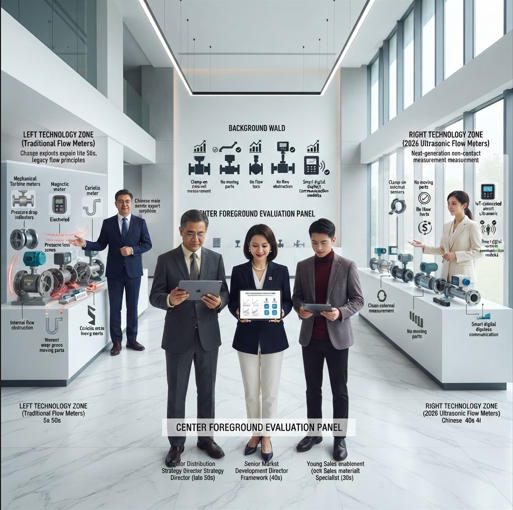
Um guia comparativo abrangente para ajudar distribuidores e agentes a selecionar a solução ideal de medição de vazão para as necessidades operacionais de seus clientes e maximizar a rentabilidade

Introdução: Por que a escolha do medidor de vazão é importante em 2026
O medidor de vazão que você recomendar a um cliente hoje determinará seus custos operacionais, sua situação de conformidade e sua agilidade competitiva nos próximos 15 a 20 anos. Isso não é uma abstração — é o que os números mostram consistentemente quando se acompanha um medidor desde a aquisição até o descomissionamento.
O mercado global de medidores de vazão foi avaliado em US$ 11,44 bilhões em 2025 e deve atingir US$ 12,14 bilhões em 2026, crescendo para US$ 14,9 bilhões até 2034, a uma taxa composta de crescimento anual (CAGR) de aproximadamente 4,93%. Dentro desse mercado mais amplo, o segmento de medidores de vazão inteligentes — dispositivos com diagnósticos digitais integrados, conectividade IoT e análises avançadas — foi estimado em US$ 3,09 bilhões em 2025 e deve crescer a uma taxa anual de 4,20% até 2033. Somente os medidores de vazão ultrassônicos devem crescer de US$ 2,18 bilhões em 2026 para US$ 3,56 bilhões em uma década.
Para distribuidores e agentes, esses números revelam uma realidade específica: seus clientes já atuam em um mercado onde a medição “inteligente” é a norma, e não a exceção. A escolha de tecnologia para a qual você os orientar determinará se eles alcançarão os ganhos de eficiência, as certificações de conformidade e o tempo de atividade operacional que seus concorrentes já estão obtendo — ou se gastarão três vezes mais em manutenção e calibração para sustentar uma infraestrutura legada que limita a inteligência de seus processos.
Este guia foi elaborado para você — o distribuidor ou agente que gerencia várias contas de clientes em diversos setores. Ele oferece o conhecimento técnico necessário para que você possa aconselhar com autoridade, as estruturas comerciais para calcular e comunicar o ROI real e as orientações específicas para cada setor, a fim de que você se posicione como um parceiro técnico de confiança, em vez de um mero fornecedor de peças genéricas.
Entendendo as tecnologias de medidores de vazão inteligentes
Tecnologias essenciais na medição moderna de vazão
Antes de comparar desempenho, custo e adequação à aplicação, é importante basear a discussão em definições claras. “Medidor de vazão inteligente” é um termo de marketing que adquiriu um significado genuíno: refere-se a medidores que combinam medição precisa com processamento digital integrado, capacidade de autodiagnóstico e comunicação de dados externos — combinação essa que possibilita a manutenção preditiva, a análise em nuvem e a automação regulatória.
Explicação sobre medidores de vazão ultrassônicos
Os medidores de vazão ultrassônicos medem a velocidade de um fluido enviando pulsos sonoros de alta frequência através da parede do tubo e do fluido. O princípio fundamental é medição do tempo de trânsito: dois transdutores enviam pulsos simultaneamente em direções opostas — um na direção do fluxo e outro na direção contrária. Como o som se propaga mais rapidamente quando se move na mesma direção do fluido do que quando se move na direção contrária, a diferença de tempo entre os dois pulsos é diretamente proporcional à velocidade do fluido. Multiplique a velocidade pela área da seção transversal do tubo e você terá a vazão volumétrica.
Um medidor de vazão ultrassônico de tempo de trânsito (o tipo predominante em aplicações industriais, que não deve ser confundido com os medidores Doppler, que utilizam um princípio diferente, adequado para polpas e fluidos aerados) alcança uma precisão de medição de ±0,5% a ±1,0% do valor de leitura na maioria das faixas de vazão. Projetos avançados de múltiplos caminhos, utilizados em aplicações de transferência de custódia, podem atingir precisões de ±0,15% a ±0,25%.
A vantagem digital se torna visível na saída de dados. Os medidores ultrassônicos modernos coletam amostras de vazão a taxas de até 25 vezes por segundo, gerando fluxos de dados em tempo real que se integram diretamente a plataformas SCADA, DCS ou na nuvem por meio de protocolos padrão, incluindo Modbus RTU/TCP, HART, PROFIBUS, DNP3 e OPC-UA. Isso significa que a sala de controle do seu cliente recebe informações úteis — não apenas a vazão, mas também perfis de velocidade, indicadores de qualidade do sinal, leituras com compensação de temperatura e registros de trilha de auditoria.
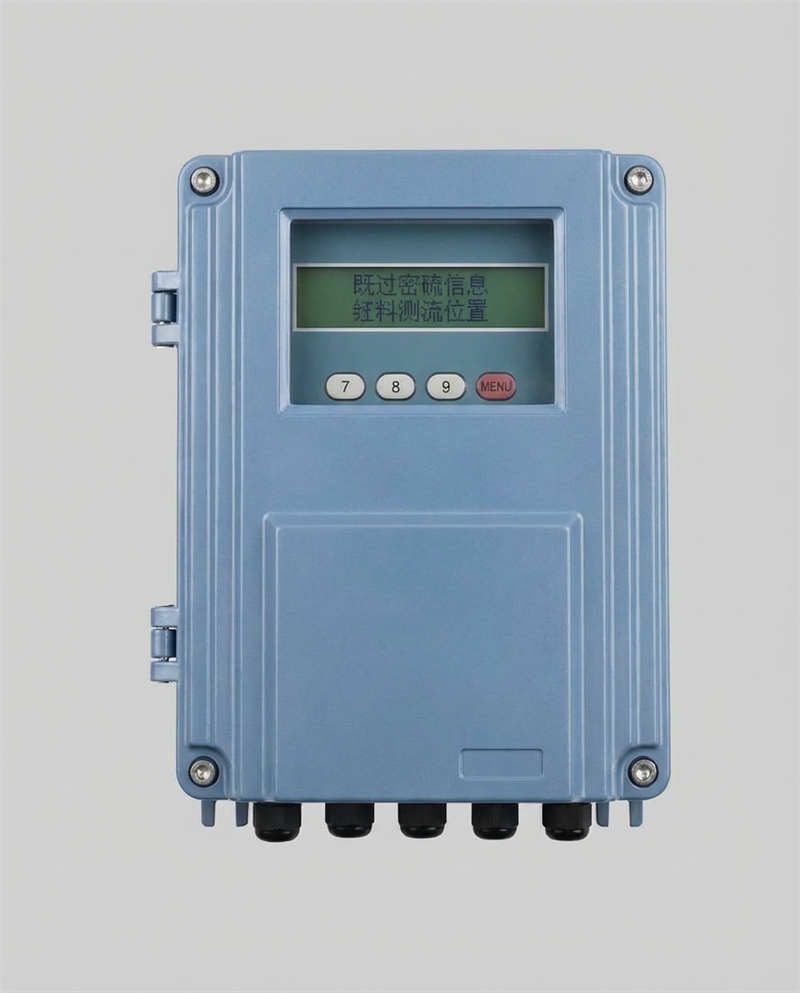
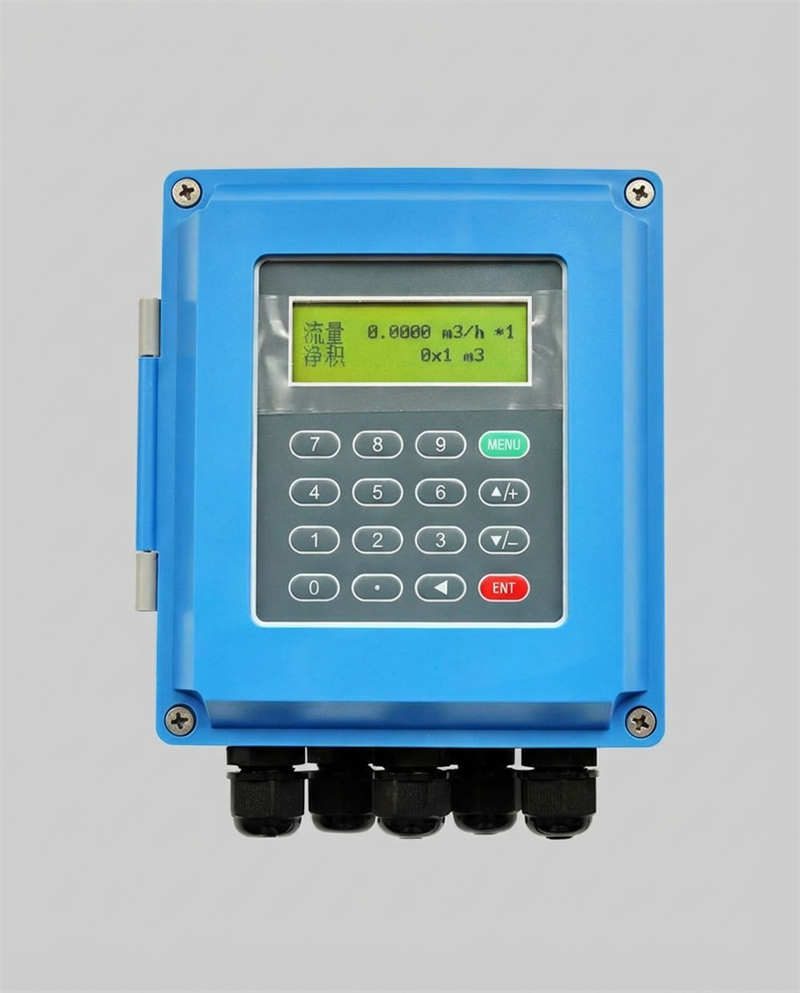
 Os pares de transdutores do tipo “clamp-on” eliminam a necessidade de perfuração na tubulação — uma vantagem fundamental para projetos de modernização em que a interrupção do processo é comercialmente inaceitável.
Tecnologias tradicionais de medidores de vazão
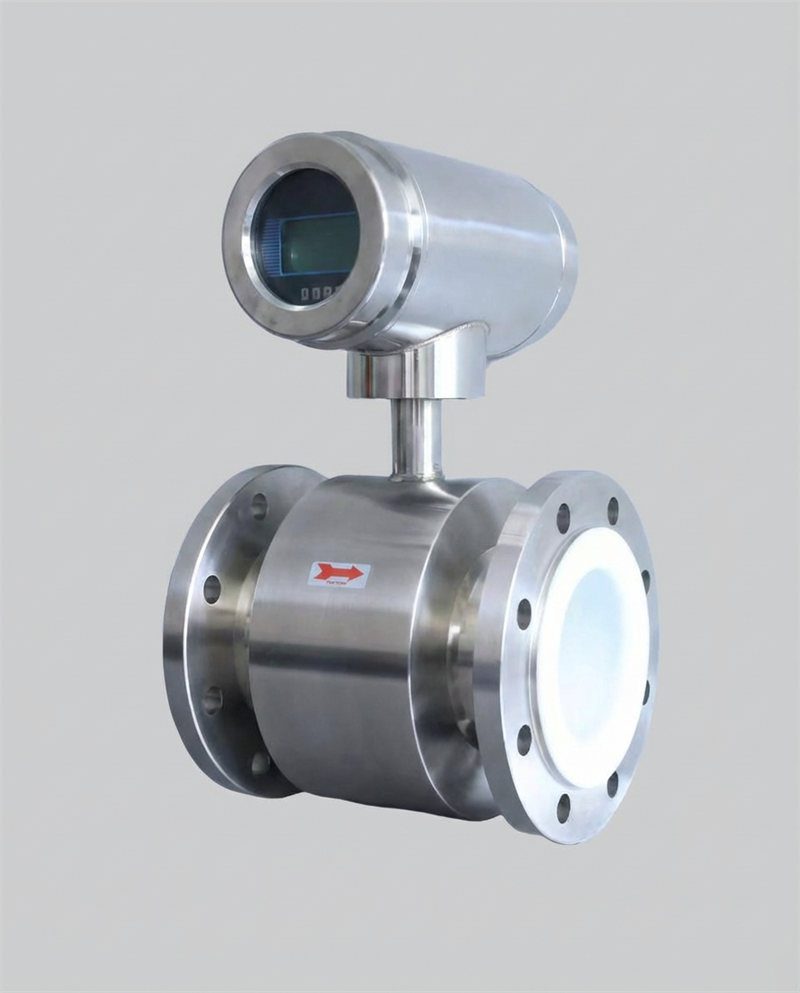
Medidores de vazão eletromagnéticos — frequentemente chamados de medidores magnéticos ou EMFs — funcionam com base na Lei de Faraday da indução eletromagnética: um fluido condutor que se move através de um campo magnético gera uma tensão proporcional à sua velocidade. Os medidores eletromagnéticos requerem fluidos eletricamente condutivos (condutividade ≥ 5 μS/cm) e oferecem excelente precisão (±0,2% a ±0,5%), sem peças móveis no caminho do fluxo. Eles são os principais instrumentos utilizados no tratamento de água e de efluentes em todo o mundo.
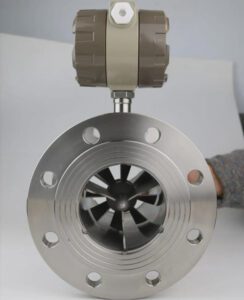
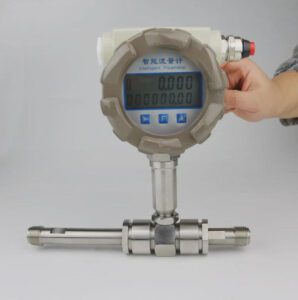
Medidores de vazão mecânicos abrangem vários subtipos, cada um com princípios de funcionamento distintos. Os medidores de turbina medem o vazão contando as rotações de um rotor acionado pela velocidade do fluido — são precisos e econômicos para líquidos e gases limpos, mas suscetíveis ao desgaste causado pela contaminação por partículas. Os medidores de deslocamento positivo (PD) retêm e contam volumes discretos de fluido, oferecendo alta precisão para fluidos viscosos e transferência de custódia, mas exigindo manutenção regular das vedações e engrenagens. Os medidores de engrenagem operam de maneira semelhante, normalmente para aplicações de alta viscosidade, como óleo combustível ou fluido hidráulico.
Soluções híbridas emergentes
O avanço tecnológico mais significativo dos últimos dois anos não é um único tipo de medidor, mas uma filosofia de plataforma: medidores híbridos multitecnológicos que combinam dois princípios de medição (por exemplo, Coriolis com verificação ultrassônica ou vórtice com compensação de temperatura) em um único dispositivo. Essas unidades eliminam os pontos cegos de qualquer tecnologia isolada por meio da validação cruzada das leituras em tempo real. Elas estão ganhando espaço na medição comercial, no processamento de lotes farmacêuticos e na medição de energia, onde a incerteza de medição se traduz diretamente em risco financeiro.
Paralelamente aos medidores híbridos, a integração de gateways de IoT diretamente na eletrônica dos medidores — em vez de como acessórios acoplados — está redefinindo o que as distribuidoras podem oferecer. Um medidor que transmite dados de consumo por hora para a plataforma de gestão de ativos de um cliente, sinaliza leituras anômalas antes que causem interrupções no processo e gera relatórios de conformidade automaticamente não é um produto de consumo comum. Trata-se de uma assinatura de inteligência operacional.
Comparação de métricas de desempenho
Indicadores-chave de desempenho para 2026
Quando um cliente pergunta “qual medidor é mais preciso?”, a resposta tecnicamente completa é: depende da aplicação, do fluido, da faixa de vazão e das condições de instalação. Veja a seguir o que os testes comparativos realmente mostram.
Exatidão e precisão de medição
| Tecnologia | Precisão típica | Relação de redução | Repetibilidade |
|---|---|---|---|
| Ultrassom multipath (tempo de trânsito) | ±0,15% – ±0,5% | 100:1 | ±0,11 TP3T |
| Ultrassônico com fixação por grampo | ±1,0% – ±2,0% | 50:1 | ±0,51 TP3T |
| Eletromagnético | ±0,2% – ±0,5% | 40:1 | ±0,11 TP3T |
| Vórtice | ±0,5% – ±1,0% | 20:1 | ±0,21 TP3T |
| Turbina (líquida) | ±0,251 TP3T – ±1,01 TP3T | 10:1 | ±0,11 TP3T |
| Deslocamento positivo | ±0,1% – ±0,5% | 10:1 | ±0,051 TP3T |
| Rotâmetro (área variável) | ±2,0% – ±5,0% | 10:1 | ±1,01 TP3T |
Relação de redução refere-se à faixa na qual um medidor mantém a precisão declarada — uma relação de 100:1 significa que o medidor opera com precisão de 1% a 100% de sua vazão máxima nominal. Essa métrica é de extrema importância em aplicações com perfis de vazão variáveis, como sistemas de aquecimento urbano ou de resfriamento industrial.
No caso da transferência de custódia (o cenário de uso mais sensível à precisão — em que cada erro de 0,11 TP3T em uma refinaria se traduz diretamente em perda financeira), a norma ISO 17089 para medição ultrassônica de gás e o Capítulo 5.8 da API para medição ultrassônica de líquidos agora aceitam medidores ultrassônicos certificados como dispositivos de medição primários. Unidades ultrassônicas em linha com múltiplos caminhos de diferentes fabricantes líderes atingem rotineiramente ±0,151 TP3T — atendendo ou superando o desempenho de medidores eletromagnéticos em faixas de preço comparáveis.
Tempo de resposta e monitoramento em tempo real
Os medidores ultrassônicos com saídas digitais geralmente atualizam a cada 4–25 Hz, o que significa que o sistema de controle de processos do seu cliente recebe um novo valor de medição até 25 vezes por segundo. Os medidores eletromagnéticos geralmente atualizam a cada 25–50 Hz. Medidores mecânicos, especialmente aqueles que dependem da saída de pulsos de um elemento rotativo, podem atualizar a uma frequência de 1 a 5 Hz em configurações padrão.
Para aplicações como dosagem em lote, dosagem ou controle de bombas — nas quais uma resposta rápida evita incidentes de transbordamento que custam milhares de dólares por ocorrência em termos de perda de produto, limpeza e notificação às autoridades regulatórias —, o tempo de resposta não é apenas uma nota de rodapé nas especificações. É um fator essencial para o negócio.
Requisitos de durabilidade e manutenção
É nesse ponto que o panorama de vida útil de 20 anos diferencia mais claramente as tecnologias. Os medidores ultrassônicos não possuem peças móveis em contato com o fluido, o que significa que não há superfícies sujeitas a desgaste, nenhuma degradação das vedações causada pela composição química do fluido e nenhuma fadiga mecânica. Dados de campo provenientes de instalações em concessionárias de água mostram consistentemente um tempo médio entre falhas (MTBF) superior a 15 anos para unidades ultrassônicas em linha. As configurações do tipo “clamp-on”, uma vez que os transdutores nunca entram em contato com o fluido, têm vida útil essencialmente ilimitada em condições normais.
Os medidores mecânicos de turbina, nessa mesma comparação, exigem a substituição dos rolamentos a cada 3 a 5 anos em condições de fluido limpo; em aplicações com presença de partículas ou variação de viscosidade, o desgaste dos rolamentos e do rotor se acelera significativamente. Os medidores de deslocamento positivo com engrenagens de polímero podem exigir a substituição completa do medidor a cada 3 a 7 anos em serviços abrasivos.
Os medidores ultrassônicos inteligentes oferecem mais uma vantagem em termos de manutenção: diagnóstico preditivo. Quando a intensidade do sinal diminui — indicando acúmulo de incrustações na superfície do transdutor, alterações na composição do fluido ou depósitos nas paredes da tubulação —, o medidor sinaliza a condição antes que ela afete a precisão da medição. Um cliente notificado três semanas antes de ocorrer um desvio na calibração evita o erro no processo; um cliente que descobre o desvio durante uma auditoria anual acaba arcando com as consequências.
Compatibilidade ambiental e operacional
| Parâmetro | Ultrassônico | Eletromagnético | Turbina | Deslocamento positivo |
|---|---|---|---|---|
| Faixa de temperatura | de –40 °C a +160 °C | de –10 °C a +180 °C | de –20 °C a +120 °C | de –20 °C a +100 °C |
| Classificação de pressão | Até 40 bar (padrão) | Até 64 bar | Até 100 bar | Até 250 bar |
| Condutividade do fluido exigida | Nenhum | ≥5 μS/cm | Nenhum | Nenhum |
| Peças móveis | Nenhum | Nenhum | Sim | Sim |
| Queda de pressão | Zero (tipo pinça) | Muito baixo | Baixo a moderado | Moderado a alto |
| Adequado para polpas | Limitado | Sim (com forro) | Não | Não |
| Tolerância a gases/vapores | Limitado | Não | Moderado | Limitado |
Estrutura de Análise Custo-Benefício
Custo total de propriedade para seus clientes
Uma das conversas mais impactantes que você pode ter com um cliente é mudar o foco da discussão do preço de compra para custo total de propriedade (TCO). Pesquisas mostram consistentemente que o preço de compra representa apenas 30–40% do TCO de um medidor de vazão ao longo de 10 anos. Os 60–70% restantes — calibração, peças de reposição, mão de obra de instalação, tempo de inatividade do processo durante a manutenção e infraestrutura de dados — são onde a medição inteligente cria seu argumento financeiro.
Investimento inicial de capital
| Tipo de medidor | Custo típico do equipamento | Mão de obra para instalação | Custo total de instalação (estimado) |
|---|---|---|---|
| Ultrassônico com fixação por grampo | $800 – $3.500 | $150 – $400 | $950 – $3.900 |
| Ultrassônico em linha | $1.500 – $8.000 | $500 – $2.000 | $2.000 – $10.000 |
| Eletromagnético | $1.200 – $6.000 | $600 – $2.500 | $1.800 – $8.500 |
| Vórtice | $1.000 – $4.000 | $500 – $1.500 | $1.500 – $5.500 |
| Turbina (líquida) | $400 – $2.500 | $400 – $1.200 | $800 – $3.700 |
| Deslocamento positivo | $500 – $3.000 | $400 – $1.500 | $900 – $4.500 |
Observação: Os custos são faixas indicativas para medidores de processo DN50–DN100 em configurações padrão. A certificação para áreas perigosas, materiais especiais e classificações para alta pressão/alta temperatura acrescentam 30–150% aos custos do equipamento.
Os custos ocultos que os distribuidores devem revelar proativamente aos clientes incluem o tempo de inatividade do processo durante a instalação (uma paralisação da linha de produção por 4 horas em uma unidade farmacêutica pode custar mais do que o próprio medidor), o custo do isolamento e do restabelecimento do processo para medidores em linha (o que as unidades do tipo clamp-on evitam totalmente), e o custo da calibração contínua — normalmente de $300 a $800 por evento de calibração para medidores mecânicos que exigem calibração em bancada, em comparação com a autoverificação automatizada em medidores ultrassônicos e eletromagnéticos inteligentes.
Despesas operacionais ao longo do ciclo de vida do produto
Os medidores de vazão inteligentes justificam seu custo mais elevado por meio da redução das despesas operacionais. Considere uma concessionária municipal de água que opera 200 medidores eletromagnéticos em uma rede de distribuição. A calibração anual a $400 por medidor por ano = $80.000 em custo direto de calibração. A transição para medidores inteligentes com autoverificação e capacidade de verificação in situ reduz isso a verificações pontuais periódicas, normalmente reduzindo os custos relacionados à calibração em 40–60%. Em uma base de 10 anos, isso representa $320.000–$480.000 em custos evitados para uma única concessionária — um valor que torna o custo adicional dos medidores inteligentes fácil de justificar.
As diferenças no consumo de energia, embora pequenas individualmente, se acumulam com o tempo. Um medidor de deslocamento positivo com queda de pressão significativa em uma aplicação de água de alto fluxo pode exigir um aumento de 0,1 a 0,3 bar na altura manométrica da bomba. Em uma instalação que opera 8.000 horas por ano, isso se traduz em um desperdício mensurável de energia da bomba. A medição ultrassônica do tipo “clamp-on”, sem queda de pressão, elimina isso completamente.
Impacto na receita e cálculos de ROI
Além da redução de custos, uma medição precisa gera receita diretamente — ou a protege. Um cliente do setor de transferência de custódia de petróleo e gás que descobre que seu medidor de turbina, já antigo, sofreu um desvio de 0,5% em relação à calibração ao longo de 18 meses esteve pagando a mais ou vendendo a menos o produto durante todo esse período. Com vazões de 500 m³/hora e um valor do produto de $80/barril, um erro de medição de 0,5% gera mais de $700.000 em erro acumulado de faturamento ao longo de 18 meses. Isso não é um problema de manutenção — é uma constatação de auditoria financeira.
Medidores inteligentes com análises avançadas também permitem monetização de dados: a capacidade de utilizar dados de fluxo como base para análises comparativas de consumo de energia, otimização de processos e previsão de demanda. Para um operador de rede de energia distrital, saber que o Edifício A consome 23% a mais de energia térmica por metro quadrado do que instalações semelhantes — e dispor dos dados dos medidores para comprovar isso — possibilita negociações de contratos de desempenho energético que geram novas fontes de receita.
Oportunidades de financiamento e margem para distribuidores
A transição para a medição inteligente cria oportunidades de melhoria estrutural das margens para as distribuidoras que estruturam corretamente suas ofertas. A venda pontual de um medidor mecânico de turbina pode gerar uma margem bruta de 15–25%. Uma oferta combinada que inclua um medidor ultrassônico inteligente, supervisão da instalação, inspeção de manutenção anual e uma assinatura de painel de monitoramento remoto pode gerar uma margem combinada de 35–50%, com receita recorrente de serviços que se mantém ao longo do ciclo de vida do produto.
As estruturas de contratos de serviço que têm boa aceitação entre os clientes em 2026 incluem: verificação anual de calibração e atualizações de firmware ($200–$500/ano por medidor), alertas de manutenção preditiva com tempo de resposta garantido ($1.000–$3.000/ano por local) e relatórios trimestrais de benchmarking de desempenho ($2.000–$5.000/ano para instalações com vários medidores). Esses não são apenas complementos — eles constituem o modelo comercial que transforma você de um fornecedor em um parceiro estratégico.
Recomendações específicas para cada setor
Orientação tecnológica por setor
 O tratamento de água e de efluentes continua sendo o maior segmento de aplicação para medidores de vazão em nível global, representando mais de 25% da receita do mercado.
Gestão da Água e do Esgoto
As concessionárias de água operam sob requisitos de precisão de medição cada vez mais rigorosos, impulsionados por programas de redução da água não faturada (NRW) e pelas obrigações de medição da Norma ISO 4064 Classe C. Uma concessionária que perde 20% de seu volume de distribuição devido a vazamentos, roubos ou erros de medição está sob pressão política e regulatória para reduzir esse número — e a escolha do medidor é parte essencial da solução.
Os medidores de vazão eletromagnéticos com revestimento de cerâmica ou borracha dura são, há muito tempo, o padrão para aplicações de distribuição de água. Sua adequação para água suja e com dosagem química, o percurso de fluxo sem obstruções e a certificação ISO 4064 Classe B/C já consolidada fazem deles uma opção padrão confiável. No entanto, os medidores eletromagnéticos requerem alimentação elétrica (normalmente 24 VCC ou 230 VCA), o que limita sua implantação em locais remotos sem conexão à rede elétrica.
Os medidores ultrassônicos — especialmente os modelos do tipo “clamp-on” — estão ganhando participação de mercado nas concessionárias de água por duas razões específicas: eles podem ser instalados em tubulações existentes sem interrupção do serviço, e as versões alimentadas por bateria permitem o monitoramento remoto em locais onde não há acesso à rede elétrica. Para tubulações de transmissão de grande diâmetro (DN300–DN1200), os medidores ultrassônicos multipath instalados em linha alcançam agora uma precisão comparável à dos medidores eletromagnéticos, com menor custo de instalação, devido aos menores requisitos de materiais para flanges e revestimentos.
O posicionamento da sua distribuidora no setor de água deve enfatizar Estudos de caso sobre redução de NRW e capacidade de gerar documentação de conformidade. As concessionárias que conseguem comprovar a precisão da Classe C da norma ISO 4064 perante seus órgãos reguladores evitam multas e defendem seus pedidos de aumento de tarifas. Essa é uma proposta de valor financeiro concreta.
Operações de Petróleo e Gás
O setor de petróleo e gás representa o ambiente de medição de maior risco: a precisão da transferência de custódia na entrada de uma grande refinaria afeta o faturamento diário de vários milhões de dólares. Altas temperaturas de processo (até 300 °C), altas pressões (até 150 bar), atmosferas explosivas e composições de fluidos abrasivos ou corrosivos eliminam imediatamente a maioria das opções de medidores de consumo ou para a indústria leve.
Tradicionalmente, os medidores de deslocamento positivo e os medidores de turbina têm dominado a medição de liquidação de contas de líquidos nos setores de upstream e midstream de petróleo e gás, enquanto os medidores de pressão diferencial (placas de orifício, tubos de Venturi) têm sido utilizados para a medição de gás. A tecnologia ultrassônica vem revolucionando esse setor há mais de uma década: medidores ultrassônicos em linha com múltiplos caminhos, certificados de acordo com o Capítulo 5.8 da API (líquidos) e a norma AGA-9 (gás), representam agora o segmento tecnológico que mais cresce na medição fiscal.
O fator prático é o diagnóstico. Um medidor de turbina operando com petróleo bruto de alta viscosidade degrada seus rolamentos seguindo uma curva temporal conhecida — mas “conhecida”, em termos de engenharia, significa uma média. Na medição comercial, a taxa real de degradação de um medidor específico em um serviço específico permanece desconhecida até a calibração. Um medidor ultrassônico multipath com monitoramento do perfil de velocidade pode sinalizar problemas equivalentes aos dos rolamentos (na verdade, degradação do sinal do transdutor ou distorção do perfil) em tempo real, dando ao operador um aviso prévio de 2 a 4 semanas antes que a incerteza da medição exceda a tolerância contratual. Trata-se de uma postura de risco fundamentalmente diferente.
Para a escolha entre a fase de exploração e a de produção, o principal fator diferenciador é a permanência da instalação. As aplicações de exploração se beneficiam de unidades ultrassônicas portáteis do tipo “clamp-on”, que podem ser reposicionadas à medida que os poços são desenvolvidos. As aplicações de produção exigem uma instalação permanente em linha com certificação completa para áreas perigosas — Portfólio da Jade Ant Instruments abrange projetos certificados pela ATEX/IECEx para aplicações com gás e líquido nesses ambientes exigentes.
Produção Química e Farmacêutica
Esses setores enfrentam um desafio crítico de medição: o fluido a ser medido pode ser altamente puro (princípios ativos farmacêuticos, solventes de grau alimentício) ou altamente agressivo (ácidos concentrados, solventes clorados) e, em ambos os casos, a contaminação — seja do processo pelos materiais do medidor, seja do medidor pelo processo — acarreta consequências que vão desde a rejeição do lote até a falha do equipamento.
Para aplicações farmacêuticas e biotecnológicas, medidores de vazão eletromagnéticos com conexões de processo higiênicas (DIN 11851, Tri-Clamp, SMS) e revestimentos de PTFE ou PFA são o padrão validado para soluções aquosas e água de processo. O principal requisito regulatório é a conformidade com a norma 21 CFR Parte 11 para registros eletrônicos — medidores eletromagnéticos inteligentes com capacidade de trilha de auditoria e registro de dados à prova de adulteração atendem a esse requisito e eliminam os erros de transcrição manual que geram observações da FDA.
A medição ultrassônica não invasiva é cada vez mais especificada em aplicações farmacêuticas nas quais a rede de tubulação não pode ser rompida — seja porque o fluido é estéril e não pode ser exposto à atmosfera, seja porque o processo é contínuo e a interrupção para instalação é inaceitável. Medidores ultrassônicos do tipo “clamp-on” instalados em tubulações de aço inoxidável de grau farmacêutico oferecem essa capacidade sem risco de contaminação e sem impacto na validação de um processo já validado.
Em processos em lote, o tempo de resposta e a precisão do medidor determinam o grau de precisão com que um lote pode ser formulado. Um erro de medição de 0,5% em um lote com $50.000 de ingrediente ativo se traduz diretamente no uso excessivo do produto ou na possível rejeição do lote — nenhuma das duas situações é aceitável.
Produção de Alimentos e Bebidas
Os fabricantes de alimentos e bebidas operam de acordo com os requisitos do EHEDG (European Hygienic Engineering and Design Group) e das Normas Sanitárias 3-A, que regulamentam todas as superfícies em contato com o produto que um medidor introduz no processo. A principal contradição é que os medidores em linha mais precisos geralmente apresentam mais fendas e descontinuidades superficiais do que os projetos higiênicos permitem.
A tecnologia ultrassônica do tipo clamp-on resolve essa tensão ao remover completamente o medidor do caminho do fluido. Ao medir concentrações de produtos químicos em CIP (limpeza no local), vazões de xaropes para bebidas ou transferência de produtos lácteos, uma unidade clamp-on instalada na parte externa de um tubo sanitário de parede lisa permite a medição sem nunca entrar em contato com o produto. A Panametrics (Baker Hughes), a Endress+Hauser e vários fabricantes chineses líderes no mercado oferecem agora sistemas de fixação por braçadeira adequados para uso em alimentos, com conformidade higiênica comprovada.
For quality control integration, the ability of intelligent meters to log every batch flow event, flag out-of-specification filling speeds, and provide traceability documentation aligned with HACCP requirements is becoming a procurement criterion at major food manufacturers — not just a feature to consider.
HVAC and District Energy Systems
District heating and cooling networks measure energy — the product of flow rate and temperature differential — not just volume. The correct term here is heat meter ou BTU meter, and the measurement standard is EN 1434 in Europe, with equivalent national standards in North America and Asia. Ultrasonic flow meters are the dominant technology in modern heat metering because they can simultaneously measure flow rate, inlet temperature, and outlet temperature — computing energy consumption on-board and transmitting to building energy management systems (BEMS) in real time.
A district energy operator managing 500 connected buildings who upgrades from mechanical heat meters to intelligent ultrasonic meters typically reports three specific improvements: a 5–12% reduction in apparent heat losses (which turn out to be measurement errors in the legacy meters); a 15–30% reduction in meter reading labor costs (automated data collection vs. manual site visits); and the ability to detect building system inefficiencies — a heat exchanger fouling in a specific building shows up as anomalous heat consumption weeks before the tenant notices.
Industrial Cooling and Process Water
Cooling tower circuits, chilled water systems, and process water supply loops represent large-volume, continuous-flow applications where measurement accuracy directly affects energy billing and leak detection capability. The key challenge is that these fluids often contain treatment chemicals (biocides, scale inhibitors, corrosion inhibitors) that affect conductivity, density, and viscosity over time.
Electromagnetic meters excel in treated cooling water applications — the conductivity is typically adequate, and the no-moving-parts design handles the occasional particulate that passes through a strainer. Jade Ant Instruments’ electromagnetic flow meters are available in DN10 to DN2000, covering everything from small secondary loops to large-diameter primary chiller circuits.
Technical Advantages and Limitations
Detailed Technology Comparison Matrix
Ultrasonic Flow Meter Strengths
The non-invasive advantage of clamp-on ultrasonic meters is genuinely transformative in retrofit scenarios. Consider a pharmaceutical plant that needs to add flow measurement to an existing process line without halting production: a mechanical or electromagnetic inline meter requires a line break, a process shutdown, welding or flanging, system reinstatement, and often a new validation cycle. A clamp-on ultrasonic installation takes 2–4 hours, requires no pipe modification, and the process never stops. In a facility where one hour of production downtime costs $50,000 or more, that installation difference is worth more than the price of the meter itself.
Zero pressure drop — a physical consequence of the non-invasive measurement approach — matters more than it appears in initial specification discussions. Every inline instrument that obstructs flow extracts energy from the fluid in the form of pressure loss. In a large facility with 50 measurement points, the cumulative pressure drop from mechanical and electromagnetic meters imposes additional pump energy demand. A 2026 energy audit that identifies 15 kW of avoidable pump energy waste from meter pressure drop — which at $0.12/kWh and 8,000 annual operating hours costs $14,400/year — is exactly the kind of finding that drives technology refresh cycles.
Bidirectional flow measurement is inherent to ultrasonic transit-time technology, not an add-on. The same physics that measures flow in one direction measures return flow with equal accuracy, without configuration changes. For heat metering, tidal flow applications, and systems with reversing pumps, this capability eliminates the need for dual-meter installations.
Ultrasonic Flow Meter Challenges
Fluid composition sensitivity is the most important limitation to communicate to clients. Ultrasonic transit-time meters require a relatively homogeneous, particle-free, bubble-free fluid for the sound signal to propagate cleanly. In aerated water (common in distribution networks at pressure differentials), heavily contaminated process streams, or fluids with suspended solids above approximately 2% by volume, signal attenuation degrades accuracy. The meter typically reports a signal quality indicator that flags this condition, but if the fluid itself is the variable, ultrasonic transit-time measurement may not be the right choice — and Doppler-type ultrasonic or electromagnetic measurement should be considered instead.
Pipe material and condition affect clamp-on measurement in ways that must be assessed during site survey. Cast iron, lined pipes (bitumen, rubber, concrete), or pipes with heavy external corrosion all present challenges for sound transmission. The transducer coupling compound must make acoustic contact with the outer pipe wall, and heavily corroded or painted pipes may require surface preparation. Layered or composite pipe materials introduce measurement uncertainty that must be accounted for in the meter configuration. Distributors who conduct proper site surveys — checking pipe material, nominal diameter, wall thickness, and condition — before recommending clamp-on installation protect both their clients and their own reputation.
Traditional Meter Advantages
Proven reliability in extreme conditions — specifically high-pressure, high-temperature hydrocarbon service — remains a genuine advantage for established mechanical and differential-pressure meter designs. A turbine meter certified to API Chapter 5.3 in natural gas custody transfer has decades of regulatory acceptance, extensive field data, and a supply chain of spare parts that is well-understood by pipeline operators. Introducing a new technology into a custody transfer system requires re-certification and operator retraining — costs that do not appear in a side-by-side meter comparison.
Lower technology complexity is sometimes genuinely advantageous. In a remote oil field location where the instrumentation technician has 20 years of experience with turbine meters and no training on digital diagnostic systems, a simple turbine meter with a local mechanical register may be more reliably maintained than an intelligent ultrasonic unit requiring firmware updates and signal analysis. This is a site-specific judgment, not a technology verdict.
Traditional Meter Limitations
Moving parts susceptibility to wear is not a minor caveat — it is the fundamental cost driver that makes mechanical meters expensive to own over time. A turbine meter in a municipal water supply that passes small sand particles (a normal condition in many distribution systems) may experience bearing wear at double the rated rate, requiring replacement at 2–3 years rather than 5–7. The labor cost alone for 200 meter replacements per year at a medium-sized utility ($300 labor per removal/reinstall event) exceeds $60,000 annually before the cost of the meters themselves.
Pressure drop, as discussed in the ultrasonic strengths section, is not just an energy issue — it is also a hydraulic constraint. In systems designed with tight pressure margins, additional meter-induced pressure drop may require pump upgrades or limit maximum flow capacity in ways that create engineering rework costs.
Integration and Smart System Capabilities
Intelligent Features Driving 2026 Adoption
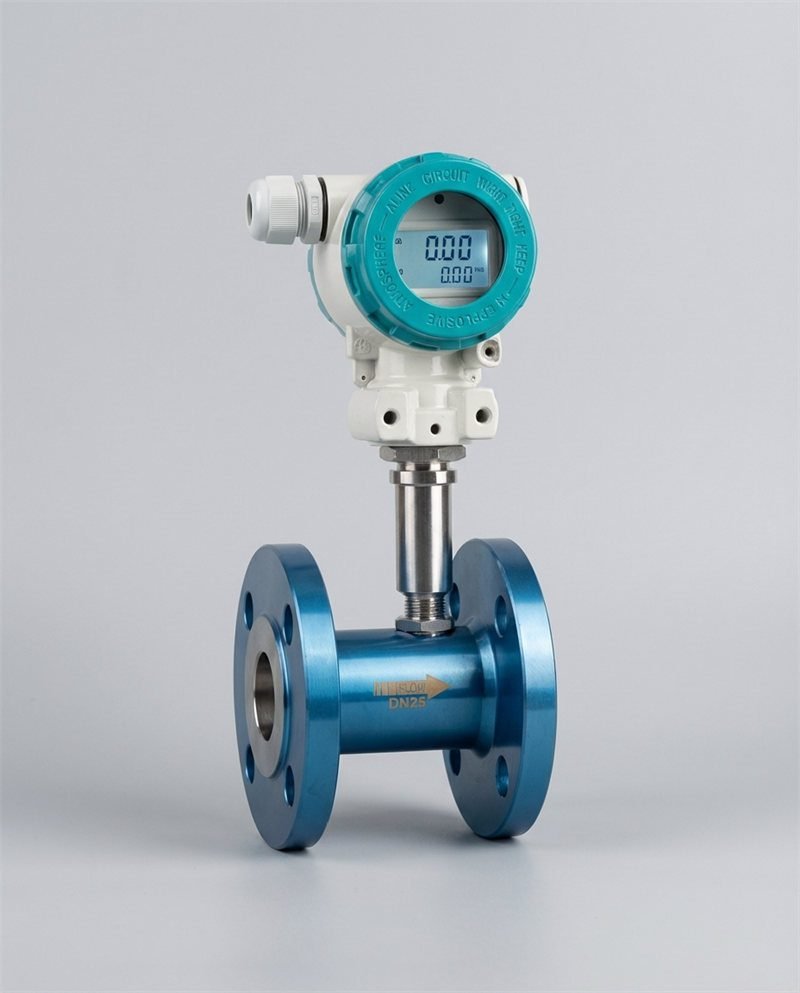
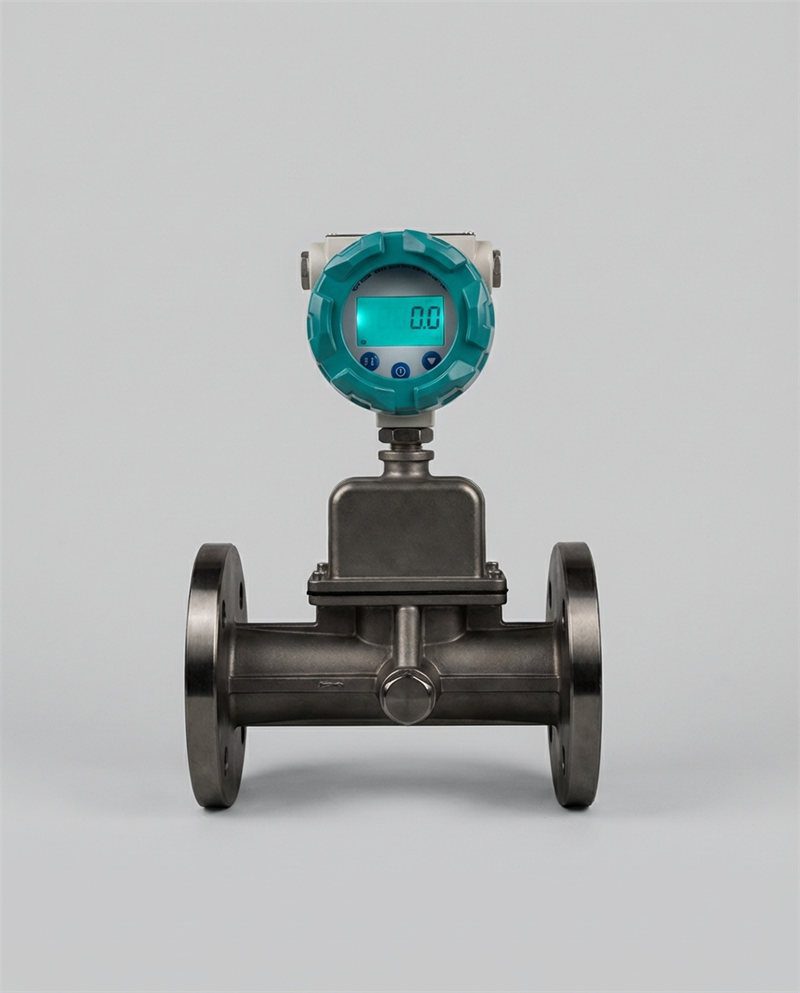
 Modern intelligent flow meters feed real-time data directly into SCADA and cloud platforms — transforming measurement points into decision-support systems.
IoT Connectivity and Cloud Integration
The practical meaning of “IoT-enabled” for a flow meter is that it speaks standard industrial protocols natively — not that it requires a third-party gateway device to translate its output. In 2026, any intelligent meter worth recommending to a client should support at minimum: Modbus RTU/TCP for PLC/SCADA integration, HART (Highway Addressable Remote Transducer) for hybrid analog/digital communication in legacy systems, and an Ethernet or WirelessHART interface for cloud connectivity.
More advanced systems support OPC-UA (the industrial IoT interoperability standard), enabling direct integration with cloud analytics platforms including Microsoft Azure IoT Hub, AWS IoT Core, and Siemens MindSphere without custom middleware. For a client operating a distributed facility across multiple sites, cloud-connected metering means a single energy dashboard showing real-time consumption across all locations — without a site visit to collect data.
The cybersecurity dimension of IoT meters is a conversation distributors must initiate proactively. A meter connected to a client’s OT network is a potential entry point for cyberattacks. The 2021 Oldsmar Florida water treatment facility incident — where an attacker briefly accessed a SCADA system through an unsecured remote connection — made industrial control system security a boardroom topic. Reputable meter manufacturers address this through: secure boot firmware, encrypted data transmission (TLS 1.2 minimum), role-based access control, and automatic firmware update mechanisms with code signature verification. Distributors should be prepared to discuss these features with client IT/OT security teams.
Advanced Diagnostics and Self-Verification
Self-verification capability — where the meter electronically confirms its own calibration without removing it from service — is perhaps the single feature that most directly changes the economics of flow metering. The Magnetoflux verification technology in advanced electromagnetic meters (Endress+Hauser’s Heartbeat Technology is a well-documented example) and acoustic path diagnostics in multi-path ultrasonic meters both allow operators to demonstrate measurement traceability to regulatory standards without calibration laboratory work.
For a food manufacturer subject to weights and measures inspection, or a water utility required to verify meter accuracy under national regulation, in-situ verification that generates a traceable PDF report is not a convenience — it is a compliance mechanism that eliminates the cost and operational disruption of bench calibration.
Software Ecosystems and Platform Integration
SCADA compatibility is no longer a differentiating feature — it is a baseline requirement. The real differentiation in 2026 is at the application layer: does the meter’s software ecosystem include energy management modules, predictive maintenance algorithms, and customizable alarming that can be configured without specialist programming? For your clients, the question is not “can this meter connect to our SCADA?” but “what can we do with the data once it’s in our system?”
For clients with legacy systems — particularly older DCS platforms without native Ethernet capability — migration strategy matters. The most practical approach is a phased integration: install intelligent meters with standard 4-20mA output to maintain compatibility with existing systems, while simultaneously providing a parallel digital output to a data gateway for analytics purposes. This gives clients immediate measurement improvement without requiring a full control system upgrade, and positions you as the advisor who managed the transition without operational risk.
Market Trends and Future Outlook
What Distributors Need to Know for 2026 and Beyond
The intelligent flow meter market is growing at 4.2–5.1% CAGR, but within that aggregate, specific technology segments are growing significantly faster. Understanding where the acceleration is happening tells you where to position inventory and build expertise.
Technological Convergence and Hybrid Solutions
Single-variable measurement — “how many liters per hour?” — is becoming a minimum viable specification rather than a complete solution. Clients in energy-intensive industries need mass flow, density, temperature, and viscosity data simultaneously. Coriolis meters have traditionally addressed this need but at significant cost ($8,000–$60,000 for industrial units). The trend toward multi-parameter ultrasonic meters — combining flow, temperature, and acoustic density measurement in a single clamp-on unit — is bringing this capability to a wider price point.
Modular platform architecture is emerging from major manufacturers as a way to future-proof installations. Rather than replacing an entire meter when communication protocols or diagnostic capabilities upgrade, modular systems allow electronic head replacement while the primary measurement element (transducer body or electrode assembly) remains in service. For clients with 15–20 year meter installation lifecycles, this means a meter installed in 2026 can be upgraded to support protocols that do not yet exist, without a process shutdown.
Regulatory Evolution and Compliance Drivers
Several regulatory trends are directly accelerating intelligent meter adoption. The EU Energy Efficiency Directive (EED) revision requires mandatory energy audits and sub-metering for large energy users — creating demand for meter installations where none previously existed. The US EPA’s Lead and Copper Rule Revisions require water utilities to improve system monitoring, which translates to additional metering points across distribution networks.
Carbon reporting requirements under emerging corporate sustainability frameworks (SEC climate disclosure rules, CSRD in Europe) require Scope 1 and Scope 2 emissions data at facility level. Natural gas consumption measurement for combustion emissions calculations requires certified flow measurement at each gas entry point — a direct driver of meter procurement at industrial facilities not previously subject to flow measurement requirements.
Market Consolidation and Supplier Landscape
The flow meter supplier landscape has consolidated significantly over the past decade. Emerson (including Micro Motion and Rosemount brands), Endress+Hauser, Yokogawa, ABB, and Honeywell collectively account for approximately 45% of global industrial flow meter revenue. Chinese manufacturers — including Siemens’ Chinese JV partners, domestic brands, and export-focused manufacturers like those represented in the Jade Ant Instruments portfolio — have captured substantial market share in mid-range and price-competitive segments, particularly in water, wastewater, and industrial process applications.
For distributors, supplier consolidation has two implications: fewer but larger brands to manage relationship complexity with, and growing opportunity to represent high-quality Chinese manufacturers in markets where European or US brand prices are commercially prohibitive for mid-size clients. The quality gap between Tier 1 international brands and leading Chinese manufacturers has narrowed considerably — particularly in electromagnetic and vortex meter categories — while price gaps of 30–60% remain, creating commercial opportunity.
Sustainability and Green Technology Priorities
ESG reporting has shifted from voluntary disclosure to regulatory obligation for publicly listed companies in most major markets. Flow meters are directly implicated in two ESG metric categories: energy efficiency (where accurate sub-metering enables consumption reduction verification) and water stewardship (where leakage detection and consumption measurement underpin water use intensity metrics).
For distributors, the sustainability angle is a sales conversation opener that resonates at a different organizational level than traditional procurement discussions. A CFO who needs accurate energy data for SEC climate disclosure is a more powerful advocate for an intelligent metering project than a maintenance engineer who recognizes the technical benefits. Positioning your intelligent meter recommendations in ESG terms — and providing sample reporting templates that show how meter data maps to sustainability KPIs — reaches decision-makers who control capital budgets, not just maintenance budgets.
Implementation and Deployment Strategy
Helping Your Clients Successfully Deploy New Technology
Needs Assessment and Technology Selection Process
The single most common cause of poor flow meter performance in the field is inadequate application assessment before meter selection. Before recommending any technology, a systematic needs assessment should address seven core questions:
What is the fluid — its composition, conductivity, viscosity, and potential for contamination or aeration? What is the flow range — both minimum and maximum expected flow rates, and the turndown ratio required to measure both accurately? What are the pressure and temperature conditions — both normal operating range and credible worst-case scenarios? What are the pipe characteristics — material, diameter, wall thickness, upstream/downstream straight-run availability? What is the measurement purpose — indication, control, billing, or custody transfer (each with progressively stricter accuracy requirements)? What are the integration requirements — existing control systems, protocols, and data destinations? What are the maintenance capabilities — who will service the meter, and what tools and skills do they have?
O how to choose a flow meter guide from Jade Ant Instruments provides a structured framework for this assessment, including decision trees for technology selection by fluid type and application.
Installation Best Practices and Commissioning
Straight-run requirements are the most frequently violated installation parameter in field deployments. Ultrasonic transit-time meters require 10–20 pipe diameters of straight, unobstructed pipe upstream and 5 diameters downstream to ensure a fully developed flow profile. Installing a meter immediately downstream of an elbow, valve, or pump outlet introduces velocity profile distortion that can add 2–5% systematic measurement error — eliminating most of the accuracy advantage you paid for.
For retrofit projects where straight-run requirements cannot be met due to existing piping constraints, multi-path ultrasonic meters with flow profile correction algorithms can compensate for up to 30% of the normal straight-run requirement, and flow conditioners (devices installed upstream of the meter to normalize the velocity profile) can bring non-conforming installations into compliance.
Commissioning verification should include a zero-flow check (verify the meter reads zero with the process isolated), a hydraulic leak test, protocol communication verification with the control system, and — for billing or custody transfer applications — a calibration certificate confirming traceability to national measurement standards.
Training and Knowledge Transfer
The gap between meter installation and meter utilization is a significant source of unextracted value. A client who installs an intelligent ultrasonic meter with advanced diagnostic capability but only uses it to read flow rate is getting perhaps 20% of the available value. The diagnostic data, predictive maintenance alerts, and energy analytics features that justify the premium are being ignored.
Effective training programs for operations staff typically require 4–8 hours of hands-on instruction covering: meter configuration and parameterization, interpretation of diagnostic indicators (signal quality, velocity profile symmetry, electronic verification results), integration with the control system, and escalation procedures when abnormal readings occur. For clients with high staff turnover — common in water utilities and food manufacturing — training documentation should be simple enough that a new technician can achieve operational competency within one working day.
Risk Assessment and Mitigation
Protecting Your Clients’ Investments

Technology Risk Factors
Obsolescence risk is a legitimate concern for clients making 15–20 year capital commitments. The appropriate mitigation is supplier evaluation that goes beyond current product specifications to include: manufacturer financial stability and market position, published product roadmaps and upgrade pathways, spare parts availability commitments (request written confirmation of minimum 10-year parts availability), and firmware update policies. Established manufacturers with diverse product portfolios and global manufacturing footprints present substantially lower obsolescence risk than single-product companies.
Compatibility challenges with existing systems are best identified during the needs assessment phase, not after installation. Specific risk areas include: legacy DCS systems that cannot accept digital communication (requiring 4-20mA outputs or protocol converters), IS (intrinsically safe) area installations that restrict electronic component options, and hygienic applications where the meter’s process connections must match existing piping standards.
Operational Risk Management
For critical measurement applications — fiscal metering, safety-related flow monitoring, or process control where measurement failure causes production loss — single-meter redundancy planning is essential. Options include: dual-technology measurement (e.g., ultrasonic primary + electromagnetic check), series installation with automated comparison alarming, or portable clamp-on backup meters that can be deployed within hours if the primary meter fails.
The business case for redundancy is straightforward: in an oil and gas fiscal metering application, a meter failure that takes the custody transfer point offline for 24 hours costs whatever the daily production value is — potentially $500,000 or more. A backup measurement system worth $8,000 is not a luxury; it is a minimum acceptable risk management investment.
Financial Risk Considerations
Warranty terms deserve more attention than they typically receive in industrial meter procurement. Standard manufacturer warranties of 12–24 months are adequate for standard applications, but for hazardous area installations or specialty process applications where replacement lead times can be 8–12 weeks, an extended warranty with committed response times provides essential financial protection. Distributors who offer extended service agreements — factory-authorized rather than third-party — add genuine value that clients recognize over time.
Supply chain resilience became a concrete operational risk after the 2020–2022 component shortage period disrupted delivery schedules for electronic instruments across the industry. In 2026, the lessons have been partially internalized: clients in critical applications maintain a small inventory of key spare parts (transducer pairs, transmitter modules, electrode assemblies) rather than relying on just-in-time procurement. Distributors who help clients develop appropriate spare parts strategies — and who maintain local stock of high-velocity items — build the kind of reliability reputation that converts to long-term account retention.
Regulatory and Compliance Risks
ISO 4064 (water meters), ISO 6817 (electromagnetic meters), and the OIML R 49 series define the certification requirements for trade measurement applications globally. Distributing uncertified meters into custody transfer or billing applications exposes both the distributor and the client to legal liability. Before recommending any meter for a billing application, confirm that the specific model, software version, and configuration match the certification under which the accuracy class is claimed — a meter certified in Class C configuration may lose its certification if installed in a non-compliant pipeline arrangement.
Distributor Competitive Positioning
Leveraging Technology Knowledge for Market Advantage
Building Expert Credibility with Clients
The most enduring competitive advantage in flow meter distribution is not price — it is the ability to reduce a client’s technical risk. When a client faces an application they have not seen before — a new chemical service, a retrofit into an aging piping system, a measurement point required for a new regulatory obligation — the distributor who walks in with an application-specific recommendation backed by documented case studies has already won the evaluation.
Case studies do not need to be elaborate documents. A one-page summary showing the application, the meter selected, the performance achieved, and the client’s measurable outcome (a specific percentage reduction in calibration costs, a documented accuracy improvement versus the previous technology, a compliance objective achieved) is sufficient to demonstrate expertise credibly. Maintain a library of 10–15 such summaries across the verticals you serve, and make them part of every first conversation with a new prospect.
O comprehensive range of flow meter educational resources on Jade Ant Instruments’ website — covering electromagnetic, vortex, turbinee ultrasonic technologies in application-specific depth — is a resource you can share with clients as part of positioning yourself as a knowledge partner, not just a parts catalog.
Value-Added Services and Differentiation
System design consultation — reviewing a client’s P&ID (piping and instrumentation diagram) and making meter placement recommendations — is a service that most mechanical equipment distributors do not offer, and one that clients value highly. It requires technical competency that takes investment to develop, but it creates a purchasing decision context where price comparison to a competing distributor is almost impossible, because the competitor is not providing the same service.
Performance benchmarking programs — where you periodically compare a client’s meter performance data to industry benchmarks for their application — position you as an ongoing contributor to operational excellence rather than a one-time equipment supplier. A quarterly report showing that a client’s water distribution network is achieving 94% measurement accuracy coverage (vs. a regional average of 87%) is a result they will attribute to working with you, and a result they will not risk by switching to a lower-price alternative.
Sales Enablement and Marketing Strategies
Vertical market segmentation — developing distinct messaging, case study packages, and product recommendations for water utilities, oil and gas operators, food manufacturers, and pharmaceutical producers separately — allows you to communicate in application-specific terms that resonate more powerfully than generic product specifications. A water utility procurement manager is not interested in oil and gas custody transfer accuracy; they want to know about NRW reduction and ISO 4064 compliance. Getting these conversations right means the difference between a technical sale and a commodity procurement.
Trial and demonstration programs remove the perceived risk of technology transitions for conservative clients. Offering a 90-day trial of an intelligent ultrasonic meter on a non-critical measurement point — with comparative data against the client’s existing meter — lets the technology make its own case. When the trial data shows the client’s mechanical meter was reading 1.8% high (a common finding in aged turbine meters), the business case for replacement writes itself.
The Ultrasonic vs. Traditional Flow Meter Decision: A Reference Tool
{% raw %} To support your client conversations, here is a summary decision framework:
| Aplicativo | Recommended Primary Technology | Alternative | Notas |
|---|---|---|---|
| Distribuição municipal de água | Electromagnetic (DN50–DN1200) | Ultrassônico com fixação por grampo | ISO 4064 certification required |
| Wastewater (with solids) | Electromagnetic with hard rubber liner | — | Solids tolerance critical |
| Transferência de custódia de gás natural | Multi-path Ultrasonic | Turbine (legacy) | AGA-9 certification required |
| Liquid petroleum custody transfer | Multi-path Ultrasonic | PD Meter | API 5.8 certification required |
| Chemical (corrosive) | Electromagnetic with PTFE liner | Ultrassônico com fixação por grampo | Material compatibility critical |
| Pharmaceutical (sterile) | Ultrassônico com fixação por grampo | Hygienic Electromagnetic | No line break preferred |
| Alimentos e bebidas | Clamp-on Ultrasonic / Hygienic EMF | — | EHEDG/3-A compliance required |
| HVAC / district energy | Ultrasonic heat meter | — | EN 1434 certification required |
| Steam measurement | Vórtice | — | With temperature compensation |
| High-viscosity fluids | Deslocamento positivo | Coriolis | Flow range stability critical |
| Retrofit / no-shutdown | Ultrassônico com fixação por grampo | — | Pipe condition survey required |
| Remote / battery-powered | Clamp-on Ultrasonic (battery) | — | Low power mode essential |
| {% endraw %} |
YouTube: Understanding Ultrasonic Flow Meter Technology
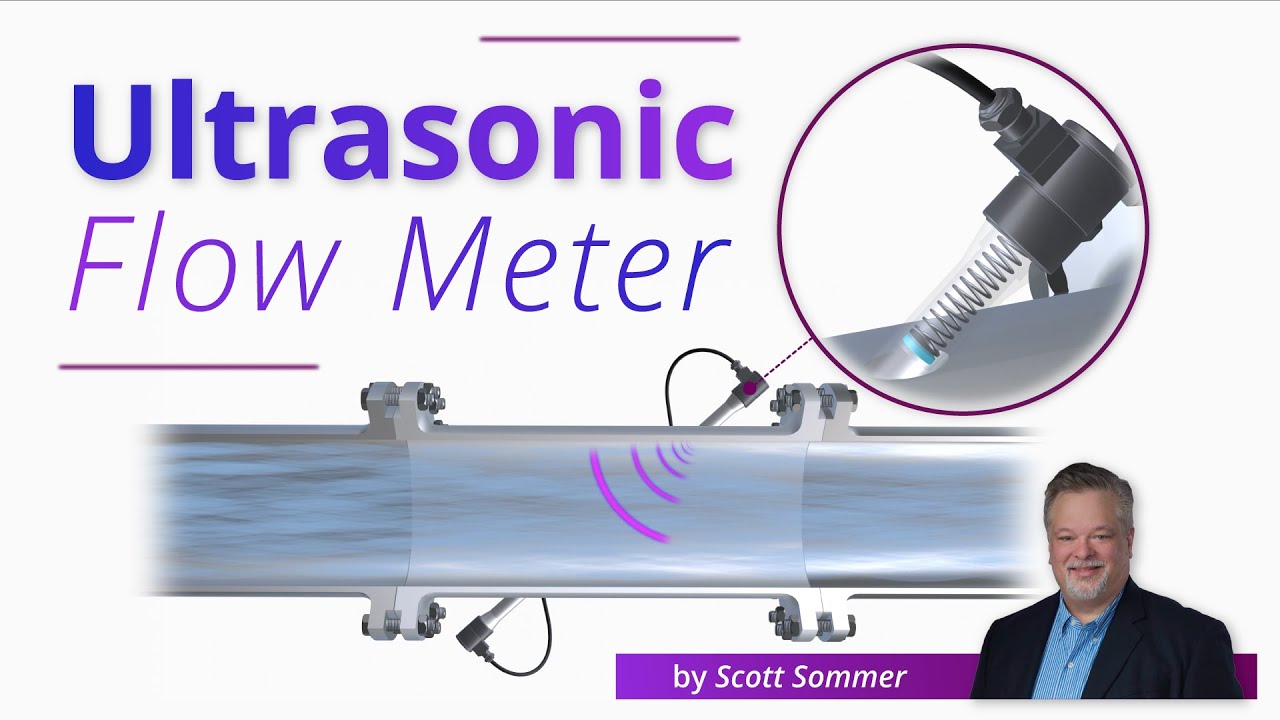
▶ Watch: Ultrasonic Flow Meter Explained | Working Principles — RealPars (207K+ views). This video provides a clear visual walkthrough of transit-time measurement physics, ideal for sharing with clients who need a technology introduction before a more detailed technical conversation.
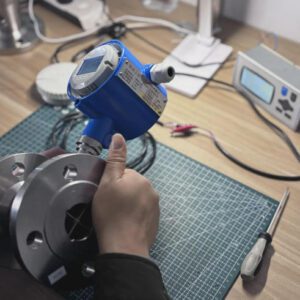
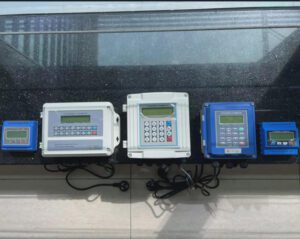
 Field-portable clamp-on ultrasonic units give technicians on-demand flow verification without process interruption — a capability valued across water, oil & gas, and industrial maintenance applications.
Making the Right Choice for 2026 and Beyond
Key Takeaways for Distributor Decision-Making
The technology landscape has moved decisively toward intelligent metering, but the migration is not uniform across industries or applications. Water and energy utilities are leading adoption driven by regulatory mandates. Oil and gas is transitioning custody transfer toward ultrasonic technology driven by diagnostic capability. Chemical and pharmaceutical are adopting clamp-on solutions driven by contamination avoidance and validation economics. Food and beverage is following the hygienic design and quality traceability imperatives.
No single technology is universally superior. Electromagnetic meters remain the best choice for conductive liquid applications requiring high accuracy in dirty or chemically aggressive fluids. Ultrasonic transit-time meters offer the most compelling combination of accuracy, longevity, non-invasiveness, and digital integration capability for clean liquid measurement. Mechanical meters retain competitive positions in price-sensitive applications with simple requirements. Hybrid and multi-parameter solutions are emerging as the premium tier for custody transfer and critical process measurement.
Total cost of ownership analysis is the framework that converts a price-sensitive procurement conversation into a value-based one. When a client understands that 60–70% of their flow meter cost occurs after installation, the decision criteria change fundamentally — and you are positioned as the advisor who helped them see the full picture.
Action Steps for Distributors
Begin with a portfolio audit: map your current product offerings against the technology positioning outlined in this guide, and identify the gaps. If you do not have intelligent ultrasonic options for retrofit applications, you are losing business to competitors who do. If you lack electromagnetic meters with in-situ verification capability, you are losing pharmaceutical and water utility business that requires it.
Develop your vertical market expertise systematically. Choose two or three industry sectors where you have the strongest existing customer relationships, and invest in application-specific technical training for those sectors first. Build case studies, develop sector-specific ROI calculation templates, and create client-facing comparison materials. Depth of expertise in two sectors is more commercially valuable than superficial knowledge across six.
Invest in technical certification for your team. Manufacturers including Endress+Hauser, Emerson, and Yokogawa offer certified distributor training programs that provide your team with application credentials that clients recognize and value. These certifications also typically provide access to technical support resources that improve your ability to resolve client problems quickly.
Finally, position your documentation and application knowledge as a service in itself. Clients who receive a properly documented site survey, a written technology recommendation with supporting analysis, and a commissioning report on their installation are receiving professional services that most equipment distributors do not provide — and they will pay for these services through long-term account loyalty.
Ready to Position Your Distribution Business for 2026 Success?
Access our comprehensive Intelligent Flow Meter Technology Selector Tool — built specifically for distributors and agents managing multiple client accounts. Gain instant access to:
- Our proprietary comparison matrix covering 7 flow meter technologies across 12 application parameters
- An ROI calculator that generates client-ready total cost of ownership reports
- Industry-specific implementation checklists for water, oil & gas, pharmaceutical, food & beverage, and HVAC applications
- A curated library of technical datasheets and application case studies
➡ Download Your Free Technology Selector Tool — Contact Jade Ant Instruments
Or explore our full range of certified electromagnetic, vortex, turbine, and ultrasonic flow meters at www.jadeantinstruments.com — with technical support from application specialists who understand your clients’ requirements.
Frequently Asked Questions (FAQ)
The following questions are among the most frequently asked by flow meter distributors, engineers, and procurement managers evaluating intelligent flow measurement technology in 2026. These answers are designed to support both your internal knowledge base and your client-facing conversations.
What is the primary difference between ultrasonic and electromagnetic flow meters?
Ultrasonic flow meters measure flow velocity using high-frequency sound pulses that travel through the fluid — a method that works on almost any liquid regardless of electrical conductivity, and which can be implemented non-invasively with clamp-on transducers mounted outside the pipe. Electromagnetic flow meters rely on Faraday’s Law of electromagnetic induction: the fluid itself acts as a moving conductor in a magnetic field, generating a voltage proportional to flow velocity. This means electromagnetic meters require electrically conductive fluids (generally ≥5 μS/cm), making them unsuitable for hydrocarbons, pure water, or deionized process fluids. Ultrasonic clamp-on meters have zero pressure drop since they never contact the fluid; electromagnetic meters create a very small but nonzero pressure drop from the electrode geometry. In practice, ultrasonic meters offer the broader fluid compatibility, while electromagnetic meters maintain an accuracy and response-speed advantage for high-conductivity liquid applications in challenging conditions.
Which technology is more accurate for custody transfer applications?
For liquid petroleum custody transfer, API Chapter 5.8-certified multi-path inline ultrasonic meters now routinely achieve ±0.15% to ±0.25% accuracy with on-board velocity profile diagnostics — matching or exceeding the ±0.2% typically specified for electromagnetic meters in water and wastewater custody applications. For natural gas, AGA Report No. 9 ultrasonic meters have become the dominant technology in large-bore fiscal measurement due to their diagnostic capability and long-term accuracy stability. Positive displacement meters remain the standard for small-bore, high-viscosity liquid custody transfer where flow range variability is limited. The important nuance for distributors is that “more accurate” must always be evaluated against the specific certification requirement for the application — an instrument’s stated accuracy is only valid within the conditions under which it was calibrated and certified.
Can ultrasonic flow meters work with all types of fluids?
No — transit-time ultrasonic meters, which are the most accurate type, require a relatively homogeneous fluid free of significant gas entrainment, high solids concentration (above approximately 2–3% by volume), or extreme viscosity variation. The acoustic signal must travel cleanly from one transducer to the other; conditions that scatter, attenuate, or reflect the signal degrade measurement accuracy. For aerated, slurry, or multiphase fluids, Doppler ultrasonic meters (which use a different physical principle, detecting frequency shifts from particles or bubbles) can be more appropriate — but typically achieve lower accuracy (±2–5%) than transit-time meters. For highly viscous fluids (heavy crude, polymer melts), electromagnetic meters on conductive media or Coriolis meters for mass flow measurement are generally more appropriate.
What is the typical lifespan difference between intelligent ultrasonic and mechanical flow meters?
In clean liquid service, intelligent inline ultrasonic meters consistently demonstrate operational lifespans of 15–20+ years based on field data from water utility and process industry deployments — the limiting factor is typically electronics obsolescence rather than physical wear, since there are no wetted moving parts. Clamp-on ultrasonic meters, with transducers never contacting the fluid, have essentially indefinite physical life. Mechanical turbine meters in clean water service typically require bearing inspection at 3–5 years and bearing or rotor replacement at 5–7 years. In services with particulate content, abrasion, or viscosity variation, mechanical meter service intervals shorten considerably — to 1–3 years in aggressive conditions. Positive displacement meters in high-viscosity or abrasive applications may require complete meter replacement every 3–5 years. The longevity advantage of non-invasive intelligent meters is the single largest contributor to their favorable total cost of ownership over 10–20 year facility planning horizons.
How do installation costs compare between ultrasonic clamp-on and traditional inline meters?
For retrofit projects on existing piping, clamp-on ultrasonic meters have a decisive installation cost advantage: no line break, no welding or flanging, no process shutdown, and installation typically completable in 2–4 hours by two technicians. Inline meter installation — whether electromagnetic, turbine, or vortex — requires process isolation, pipe cutting or flange installation, system reinstatement, leak testing, and typically 8–24 hours of skilled labor depending on line size. In industrial facilities where process shutdown costs $10,000–$50,000 per hour, this difference dominates the total installation cost calculation. For greenfield installations in new construction (where the pipe is not yet in service), the cost differential narrows significantly, and the choice between inline and clamp-on is driven more by long-term accuracy requirements and fluid characteristics.
Are intelligent flow meters worth the premium for small or budget-constrained operations?
The answer depends on what the measurement is used for. For simple flow indication in a non-critical service — a cooling water branch line for monitoring only, with no billing, control, or compliance function — a basic mechanical rotameter or turbine meter at lower cost may provide adequate information. However, for any application involving energy billing, process control, regulatory compliance, or product quality verification, intelligent meters with documented accuracy, digital output, and self-diagnostic capability consistently demonstrate positive ROI within 2–4 years through reduced calibration cost, better process efficiency, and lower maintenance labor. The specific ROI calculation varies by application, but the framework in Section 3 of this guide provides a client-ready template for making this case.
What cybersecurity concerns should distributors address with smart flow meters?
IoT-connected flow meters introduce cybersecurity risk that did not exist with analog instruments. Key risk areas include: unauthorized access to meter configuration (which could allow calibration tampering or data falsification), network intrusion through the meter as an entry point to the broader OT network, and data integrity (ensuring that measurement records cannot be altered). Distributors should be prepared to discuss with clients: what authentication mechanisms the meter uses for remote access, whether data transmission is encrypted, how firmware updates are authenticated and delivered, whether the meter has been assessed against IEC 62443 (the industrial cybersecurity standard), and what the manufacturer’s policy is on security vulnerability disclosure and patches. For clients in regulated industries (financial services, critical infrastructure, pharmaceuticals), these are not secondary concerns — they are procurement criteria.
How do temperature extremes affect ultrasonic versus traditional flow meters?
Standard industrial ultrasonic meters typically operate across –40°C to +160°C process temperature range, with high-temperature versions extending to 200°C. Clamp-on transducers on high-temperature lines require high-temperature coupling compounds and transducer materials rated for the service. Electromagnetic meters perform well across –10°C to +180°C ranges in standard configurations, with materials selection (PTFE liner for chemical resistance, hard rubber for abrasion resistance) determining the thermal ceiling. Mechanical turbine meters in standard materials (stainless steel, engineered polymers) typically cover –20°C to +120°C; cryogenic turbine meters for LNG service require specialized bearing and seal materials. The key practical point for distributors is that temperature range specifications on datasheets refer to the process fluid temperature — the ambient temperature at the installation location may further constrain options in cold-climate outdoor installations or high-temperature furnace environments.
Can existing traditional meters be replaced with clamp-on ultrasonic solutions without system redesign?
Yes — this is one of the most commercially significant capabilities of clamp-on ultrasonic technology. Any existing piping system with accessible straight-run sections meeting minimum length requirements (typically 10–20 diameters upstream, 5 downstream) can accept a clamp-on ultrasonic installation without any modification to pipe, valves, or process connections. The output signals of modern clamp-on meters (4-20mA, pulse output, or digital protocols) are directly compatible with existing transmitters, PLCs, and flow computers — typically requiring only input configuration changes in the control system, not hardware changes. The limitations are pipe condition (heavily corroded, coated, or composite-wall pipes may require a site survey to confirm signal transmission feasibility) and straight-run availability (which can sometimes be addressed with flow conditioners or multi-path configurations). Inline ultrasonic replacement of traditional inline meters requires matching connection standards but avoids the system redesign needed to accommodate different pressure ratings or liner materials.
What maintenance schedules should clients expect with each technology?
Clamp-on ultrasonic meters: annual visual inspection of transducer mounting brackets and coupling compound condition, firmware update review, electronic self-verification as needed for compliance documentation. No wetted parts replacement expected in the first 15 years of service. Inline ultrasonic meters: annual inspection of transducer integrity, electrode or transducer replacement as indicated by signal quality diagnostics (typically every 7–12 years in clean service, more frequently in aggressive chemical service). Electromagnetic meters: annual inspection of electrode condition, liner integrity, and grounding; electrode cleaning in high-fouling services as needed (frequency depends on fluid chemistry — water treatment plant operators in hard water regions may clean electrodes every 6–12 months). Mechanical turbine meters: annual bearing inspection, lubrication, and calibration check; bearing replacement at 3–5 year intervals in clean water service, 1–2 years in particulate or viscosity-variable service; complete meter replacement every 5–10 years. Positive displacement meters: bi-annual inspection of gears/rotors and seal condition; component replacement every 2–5 years depending on fluid abrasivity and pressure.
How do intelligent flow meters integrate with modern SCADA and building management systems?
Modern intelligent meters support the full range of standard industrial communication protocols: Modbus RTU over RS-485 (the most widely deployed protocol in existing SCADA systems globally), Modbus TCP over Ethernet, HART (the backward-compatible protocol that overlays digital communication on the traditional 4-20mA signal wire), PROFIBUS DP (common in European process industry SCADA), DNP3 (widely used in water and energy utilities), Foundation Fieldbus (legacy process automation networks), and increasingly EtherNet/IP and PROFINET for modern integrated automation platforms. For building management systems specifically, BACnet/IP integration is available on meters designed for HVAC and energy metering applications, and direct integration with platforms such as Siemens Desigo, Honeywell EBI, and Johnson Controls Metasys is supported through BACnet or Modbus gateways. The practical advice for distributors is to confirm protocol compatibility with the client’s specific control system version — not just the protocol family — before installation, as firmware updates and legacy system version differences can create unexpected incompatibilities.
What are the environmental benefits of switching to intelligent flow measurement?
The environmental case for intelligent metering operates at three levels. At the process level, accurate flow measurement enables precise process control — eliminating the systematic overdosing of chemicals, over-pumping of fluids, and inefficient heat exchange that occurs when operators compensate for measurement uncertainty with safety margins. A pharmaceutical plant that confirmed a 3% reduction in process water consumption after upgrading from aged turbine meters to intelligent electromagnetic meters — driven by better dosing control — provides a concrete example of the efficiency gains that accurate measurement enables. At the facility level, intelligent metering provides the sub-metering data needed to identify and prioritize energy and water reduction opportunities that would otherwise be invisible in aggregate consumption figures. At the regulatory and reporting level, certified flow measurement data is the foundation for Scope 1 and 2 emissions calculations required by corporate sustainability reporting frameworks — making accurate meters a prerequisite for credible ESG disclosure.
Which flow meter technology is best for bidirectional flow applications?
Transit-time ultrasonic meters handle bidirectional flow as a native capability — the physics of transit-time measurement are symmetric with respect to flow direction, so the meter measures reverse flow with identical accuracy to forward flow without any configuration change or additional installation. This makes ultrasonic meters the preferred choice for tidal flow applications (river gauging in tidal zones), heat meter circuits where flow direction may reverse during system startup, pump test stands, and certain hydraulic system monitoring applications. Electromagnetic flow meters also measure bidirectional flow accurately without modification. Mechanical meters (turbine, positive displacement) require special bidirectional designs, which exist but are significantly more expensive and less commonly available than standard unidirectional versions. Standard vortex meters are unidirectional; bidirectional vortex applications require dual-meter installations or acceptance of measurement gap during flow reversal.
How do regulatory certifications differ between ultrasonic and traditional flow meter technologies?
Certification requirements are application-specific rather than technology-specific — the standard applies to the measurement function, and multiple technologies can be certified under the same standard. ISO 4064 (water meters for cold potable water) certifies meters in accuracy classes A, B, and C regardless of technology. ISO 6817 covers electromagnetic meters specifically. AGA Report No. 9 and AGA Report No. 7 cover ultrasonic and turbine gas meters respectively. API Chapter 5.8 covers inline ultrasonic liquid meters, while API 5.3 and 5.4 cover turbine and positive displacement meters. The practical implication for distributors: verify the specific certification number, version, and applicable software firmware version for any meter being specified into a custody transfer or trade measurement application, and confirm that the proposed installation configuration (pipe size, flow range, upstream straight run) falls within the scope of the certification. Certifications obtained in one regulatory jurisdiction (e.g., OIML in Europe) may require re-evaluation for acceptance in other jurisdictions (e.g., NTEP in the US, or national standards in China, Australia, etc.).
What should distributors know about technology obsolescence and long-term support?
The most practical due-diligence question to ask a meter manufacturer is not “how long have you made this product?” but “what is your committed spare parts availability period and product support period?” Reputable manufacturers (Endress+Hauser, Yokogawa, Emerson, and established Chinese manufacturers with ISO 9001 certification) typically commit to 10+ years of spare parts availability from the date of product discontinuation and provide migration paths to successor products. For electronic components specifically, the key risk is not mechanical wear but IC (integrated circuit) obsolescence — when the controller chip in a meter’s transmitter is discontinued by its semiconductor manufacturer, the meter manufacturer must either qualify a replacement chip or discontinue the product. Modular transmitter designs that allow the electronics to be replaced independently of the primary measurement element (transducer body, electrode assembly) provide the best protection against this risk. Distributors should request written documentation of manufacturers’ support commitments before recommending products for 15–20 year installation lifecycles.
Glossário de termos-chave
For clients who are newer to flow measurement technology, the following definitions support the technical conversations this guide describes:
Transit-time ultrasonic measurement: A measurement technique where two opposing ultrasonic transducers send pulses with and against the flow direction, and the velocity of the fluid is calculated from the time difference between the two signals.
Relação de redução: The ratio between the maximum and minimum flow rates within which a meter maintains its stated accuracy. A meter with 100:1 turndown can accurately measure flows as low as 1% of its maximum rated flow.
Total Cost of Ownership (TCO): The complete cost of operating an instrument over its service life, including procurement, installation, calibration, maintenance, spare parts, and eventual replacement.
Custody transfer: Flow measurement used as the basis for commercial transaction — where measurement accuracy has direct financial and legal consequences.
Non-Revenue Water (NRW): The difference between water entering a distribution system and water billed to customers — representing leakage, metering inaccuracy, and unauthorized consumption.
In-situ verification: The ability to confirm a meter’s calibration while it remains installed in the process, without removal to a calibration laboratory.
IEC 62443: The international standard series for industrial cybersecurity, covering security requirements for automation and control systems including connected measurement instruments.
OPC-UA: Open Platform Communications Unified Architecture — the interoperability standard for industrial IoT that enables meter data to be shared across different platforms and manufacturers without custom integration.
This guide has been produced with technical research contributions and application expertise drawn from the flow measurement industry. For product-specific inquiries, technical application support, or to discuss distributor partnership opportunities, visit Instrumentos Jade Ant or contact the technical sales team directly.
Additional industry reference resources: OIML International Organization of Legal Metrology | ISA — International Society of Automation | Endress+Hauser Flow Measurement Technology Center