Master the measurement language your clients speak — and turn technical credibility into a consistent commercial advantage

A North American petrochemical distributor submitted a $120,000 instrument quote specifying flow output in kg/h. The client’s existing control system — a legacy DCS (Distributed Control System) platform installed in 2009 — was configured in lbm/h throughout. The purchasing manager caught the discrepancy before sign-off and asked for a revised quote. The distributor’s sales team didn’t know how to handle the conversion conversation with confidence. The client reordered from a competitor who did.
The equipment was identical. The price was comparable. The difference was a unit specification error that the sales team couldn’t recover from professionally.
This situation happens more frequently than most wholesale businesses track, because unit-related losses rarely appear as a distinct line item in lost-order analyses. They show up as vague notes — “went with another supplier,” “client wanted a different specification,” “couldn’t align on technical requirements.” The underlying cause is the same: the sales team didn’t have the unit knowledge to guide the client, catch the mismatch, or recover credibly when the issue surfaced.
This guide solves that problem. It covers every major mass flow rate unit system, explains where each one is used and why, provides the conversion reference your team needs on client calls, and maps unit requirements to specific industries, regulatory frameworks, and instrument selection decisions. By the end, your team will be able to ask the right unit question before the order, not after it.
Understanding Mass Flow Rate: The Foundation Your Sales Team Needs
What Mass Flow Rate Actually Measures — and Why Your Customers Care
Mass flow rate measures the quantity of matter — not space, not volume, but actual substance — passing through a point per unit of time. The unit is always some mass unit divided by some time unit: kilograms per hour, pounds per minute, grams per second.
Volumetric flow rate, by contrast, measures the volume of fluid passing through a point per unit of time — liters per minute, cubic meters per hour, gallons per minute. Volume is what you see; mass is what you own. A tanker truck delivers product by mass because a liter of propane at –40°C and a liter of propane at 20°C are the same volume but very different quantities of fuel.
This distinction sits at the center of almost every technical buying conversation in your market. When a customer specifies in mass flow units, they are telling you something important about their application: they need measurement accuracy that is independent of temperature and pressure variation. When they specify in volumetric units, they may be operating a legacy system, may have a stable single-component fluid where density is known and constant, or may genuinely not need mass-based measurement.
Knowing which of those situations applies — before you quote — is what separates a trusted technical wholesaler from a catalog distributor.
The Critical Difference Between Mass and Volumetric Flow
Temperature and pressure change the volume of a gas dramatically — and change the volume of liquids measurably. A gas measured at 8 bar and 80°C occupies approximately one-tenth the volume it would at atmospheric pressure and 15°C. A volumetric meter on that gas line, without correction, produces a reading that is a function of operating conditions rather than actual gas quantity.
Consider a chemical plant billing a downstream user for nitrogen gas consumption. If the nitrogen line operates at varying pressure as the supply cylinder empties over a shift, a volumetric meter will show declining flow rate even if the mass consumption rate is constant — because the gas is simply at lower pressure. The billing is wrong by a margin that grows with every pressure variation. A mass flow meter — or a volumetric meter with temperature and pressure compensation — corrects for this automatically.
For your customers in chemical processing, this matters because their process recipes are formulated in mass terms. A reaction that requires 250 kg/hr of reactant A cannot substitute “approximately 280 liters per hour at whatever the line pressure happens to be today.” The chemistry doesn’t work that way, and neither does the economics.
Why Your Customers in Chemical Processing Demand Mass Flow Accuracy
The consequences of volumetric-to-mass conversion error in chemical manufacturing accumulate in three ways: batch yield variation (every batch produces slightly different output because the reactant quantity was slightly different), product quality variation (concentration deviates from specification, requiring rejection or rework), and cost overrun (excess raw material consumption that isn’t captured in yield calculations because the measurement system doesn’t detect it).
A specialty chemical manufacturer running 20 batch reactors, each consuming $8,000 in raw material per batch, operating three batches per day, with a 1.5% mass flow measurement error: that error translates to $72,000 per month in material cost variance that the accounting system reports as “normal variation.” When they install calibrated mass flow meters and eliminate that variance, they recover the meter investment in under 30 days.
Your role is to know this calculation structure and use it in client conversations before the competitor does.
Why Wholesalers Must Master This Concept
Technical buyers — process engineers, instrumentation engineers, plant managers — assess your organization’s credibility in the first 90 seconds of a technical conversation. The question they are answering, consciously or not, is: “Does this supplier understand my application, or are they reading from a datasheet?”
The first indicator they evaluate is whether you ask the right questions. The most revealing question about mass flow application understanding is simple: “Are you measuring in mass or volumetric terms, and what’s driving that choice?” A supplier who asks this question signals that they understand the difference has operational and financial consequences. A supplier who doesn’t ask — and quotes whatever unit the client mentioned — signals that they’re treating this as a catalog transaction.
Technical buyers route catalog transactions to their purchasing department, who optimize for price. Application conversations route to engineering, who optimize for fit and long-term reliability. That routing decision is made in the first 90 seconds, based largely on the questions you ask.
The Essential Mass Flow Rate Units You’ll Encounter Daily
Metric Units Your International Customers Expect
The SI (International System of Units) base unit for mass flow rate is kilogram per second (kg/s). In practice, kg/s is used primarily for high-flow industrial applications — large-scale pipeline measurement, steam turbine inlet monitoring, and custody transfer in high-throughput petroleum operations — where the per-second scale reflects process reality without requiring decimal notation on the instrument display.
Kilograms per hour (kg/h) is the most commonly specified mass flow unit in industrial process applications globally. Chemical reactors, food processing lines, pharmaceutical manufacturing, and HVAC systems almost universally specify in kg/h when metric units are required. The per-hour scale aligns with the operational timeframe that plant managers think in: shift reports, batch records, and daily production logs are all structured around hourly rates.
Grams per second (g/s) appears in precision instrumentation applications where flow rates are low and accuracy requirements are high. Laboratory research equipment, pharmaceutical sterile filling lines, analytical instrument gas supply, and semiconductor process gases are the primary application segments. When a customer specifies in g/s, they are almost always in a high-value, high-precision application where a 0.1% measurement error has immediate, measurable consequences — a context that shapes both your product recommendation and your margin conversation.
Imperial Units That Still Dominate North American Markets
Despite the global shift toward SI units, the North American process industry — oil and gas, petrochemical, chemical, and power generation — continues to specify predominantly in imperial units. Your sales team will encounter these daily in US, Canadian, and some Middle Eastern and Asian markets with US-origin process equipment.
Pounds per hour (lbm/h) is the North American equivalent of kg/h: the standard daily-rate mass flow unit across process industries. The conversion is:
Pounds per second (lbm/s) appears in high-flow applications — large pipeline measurement, power plant steam flow monitoring, aerospace propulsion systems — mirroring the use pattern of kg/s in the metric system.
The lbm vs. lbf distinction that matters to engineers
This is the unit distinction that most frequently creates confusion in cross-team communication — and that engineering customers use to assess your team’s technical depth.
lbm (pound-mass) is a unit of mass — the quantity of matter in an object, equivalent to 0.4536 kg. It does not change with gravity or acceleration.
lbf (pound-force) is a unit of force — the force exerted by one pound-mass under standard Earth gravity (9.80665 m/s²). At standard gravity, a 1 lbm object exerts 1 lbf. In a non-standard gravity environment (offshore platforms in certain configurations, aerospace applications, centrifuge systems), the two diverge.
For flow measurement: mass flow rate is always expressed in lbm/time, never in lbf/time. When a customer’s specification sheet shows “lbf/hr,” they have almost certainly made a notation error that should be lbm/hr. Diplomatically flagging this — “I want to confirm this is pounds-mass rather than pounds-force, which would give us the mass flow rate your process needs” — is exactly the kind of technical check that builds client confidence in your team.
The distinction matters practically in aerospace and defense applications where your customers’ engineering teams live in different unit worlds depending on whether they’re specifying structural loads (lbf) or propellant consumption (lbm/s). Getting it wrong in a quote document flags your team as unfamiliar with engineering unit conventions.
Specialty Units for Niche Applications
Tonnes per hour (t/h or MT/h) — metric tonnes per hour — is standard in bulk processing industries: mining (ore slurry transport), pulp and paper (black liquor flow), large-scale food production (grain processing, liquid sugar), and bulk chemical transfer. One tonne equals 1,000 kg, so:
When a mining customer specifies in t/h, they’re operating at a scale where kg/h creates unwieldy four-to-six digit numbers on their displays and reports. The unit choice tells you about the flow rate magnitude even before you see the specific numbers.
Slugs per second is an imperial mass unit used in aerospace and defense engineering. One slug equals 14.5939 kg, derived from Newton’s second law in the English engineering system. You will encounter this unit primarily in aerospace propulsion, military systems, and certain defense-adjacent industrial applications. For most wholesale operations, knowing that it exists and being able to convert it is sufficient — actual flow meter specifications in these applications are typically handled by the customer’s engineering team with your product performing to their specification.
Grains per hour — where one grain equals 1/7,000 of a pound (approximately 0.0648 grams) — appears in pharmaceutical tablet coating systems, humidity measurement for precision environmental control, and some specialty chemical micro-dosing applications. This unit operates at a scale three orders of magnitude below kg/h, which tells you immediately that the application involves very small quantities of high-value material — a context requiring precision instrumentation and careful specification.
Conversion Factors: Your Wholesale Quick-Reference Tool
The Master Conversion Table
The following table covers the most common mass flow rate unit conversions your team will encounter. Print it, embed it in your quoting software, and build it into your CRM notes template.
| From | To | Multiply by |
|---|---|---|
| kg/s | kg/h | 3,600 |
| kg/s | lbm/h | 7,936.64 |
| kg/s | lbm/s | 2.20462 |
| kg/s | t/h | 3.6 |
| kg/s | g/s | 1,000 |
| kg/h | lbm/h | 2.20462 |
| kg/h | g/s | 0.27778 |
| kg/h | t/h | 0.001 |
| lbm/h | kg/h | 0.45359 |
| lbm/h | lbm/s | 0.000278 |
| lbm/s | kg/s | 0.45359 |
| t/h | kg/h | 1,000 |
| t/h | lbm/h | 2,204.62 |
| g/s | kg/h | 3.6 |
| slug/s | kg/s | 14.5939 |
The Critical Conversion Formula Your Team Uses Most
The kg/h to lbm/h conversion is the single most frequent unit request in international flow instrumentation sales. Memorize the multipliers:
Example in a real client conversation: A US petrochemical buyer asks for 500 lbm/h maximum flow capacity. Your instrument datasheet shows rated capacity in kg/h. The quick calculation:
The DN25 Coriolis meter rated to 250 kg/h maximum covers the requirement. You can confirm this on the call, correctly, without putting the client on hold.
The 2.2 Multiplier Trap That Catches Wholesalers Off-Guard
The commonly used approximation — “multiply kg by 2.2 to get pounds” — creates an error of 0.21% when applied to flow rates. For process monitoring applications, this approximation is harmless. For custody transfer applications where 0.1% accuracy is a contractual requirement, it is not.
A specific scenario: a custody transfer meter for a petroleum pipeline is rated to 10,000 kg/h. The client asks for the lbm/h equivalent for their custody transfer flow computer configuration. Using the 2.2 approximation gives 22,000 lbm/h. The correct value using 2.20462 is 22,046.2 lbm/h — a difference of 46.2 lbm/h. At the flow rates and product values in custody transfer, this matters.
The rule for your team: use 2.20462 for any specification, proposal, calibration certificate, or custody transfer document. Reserve 2.2 for verbal approximations in informal conversations where no document is being created.
Temperature and Pressure Corrections in Conversions
When converting between mass and volumetric flow units — which is a different calculation from unit-to-unit mass flow conversion — temperature and pressure corrections become essential. The standard conversion from volumetric to mass flow is:
Où is mass flow rate, is volumetric flow rate, and (rho) is fluid density at the operating temperature and pressure.
Density here is not the standard density from a reference table — it is the density of the fluid at actual process conditions. For gases, this requires applying the ideal gas law or a real gas equation (for high-pressure applications) to correct the reference density to operating conditions. For liquids, a temperature-dependent density correction is typically sufficient.
This is the conversion calculation where errors are most costly and most common. When a client asks you to convert their existing volumetric meter specification to a mass flow meter specification, always ask: at what temperature and pressure is that volumetric reading taken? Without those two numbers, any mass flow specification you derive is an approximation that may or may not serve their application.
Digital Tools Your Team Should Bookmark
For quick on-call unit conversions, the Teledyne Hastings Mass Flow Conversion Tool provides gas-specific conversions that account for molecular weight differences across common industrial gases — a critical capability when converting SCCM (standard cubic centimeters per minute) or SLPM (standard liters per minute) gas flow rates to mass flow equivalents. The Automation Forum Mass Flow Rate Converter covers 50+ unit combinations for quick reference.
For proposals and formal documentation, use your quoting software’s built-in conversion to ensure consistency — and always show the conversion calculation explicitly in the proposal document so the client can verify it.
Industry-Specific Applications: Speaking Your Customer’s Language
Chemical and Petrochemical Industries

Chemical and petrochemical customers specify in kg/h for metric-system operations (Europe, Asia) and lbm/h for North American operations — with occasional t/h for large-scale bulk chemical transfer. The unit choice reflects both the engineering convention of the facility and the scale of operation.
When a chemical processing client specifies in kg/h with tight accuracy requirements, they’re almost always measuring a reactant or product stream where mass conservation equations govern their process control. The process engineer thinks in mole fractions and stoichiometric ratios — all mass-based. Their flow meter specification needs to feed into that calculation framework, which means the meter must output mass flow rate in the correct unit without requiring the control system to perform additional density compensation.
Handling corrosive media adds a material compatibility layer to the unit discussion. A customer specifying highly corrosive fluids — chlorinated solvents, strong acids, fluorine compounds — typically uses Hastelloy or PTFE-wetted Coriolis meters that output in kg/h. When you recommend meter options for this application, confirm that the unit output of the instrument you’re proposing is configurable to match their DCS input expectation — not all instruments display in every unit by default.
Transformation des produits alimentaires et des boissons
Food and beverage manufacturers specify in kg/h for ingredient dosing and batch formulation, t/h for large-scale continuous processing (beverage bottling lines, bulk liquid sugar transfer), and occasionally g/s for precision micro-ingredient addition (flavoring, color, preservative).
EU and US food safety regulations — specifically FDA 21 CFR Part 110 and EU Regulation 852/2004 — require batch records that demonstrate ingredient quantities within specified tolerances. Those records must show mass quantities — not volumetric approximations — to satisfy auditor requirements. When a food manufacturer asks for a meter that “works with our batch record system,” they’re asking for mass flow output with audit trail capability, even if they haven’t articulated it that way.
Your role in helping food customers optimize production through unit selection is concrete: a beverage manufacturer scaling a recipe from a 1,000 L pilot batch to a 50,000 L production run cannot simply multiply volumetric quantities — ingredient densities vary with temperature, concentration, and source, meaning volumetric scaling introduces systematic recipe error. Mass-based scaling eliminates this error source entirely. When you frame the Coriolis meter recommendation in these terms — “this lets you scale your recipe in kg/batch rather than liters, eliminating density-correction error” — you’re solving a real production problem, not selling a more expensive instrument.
Pharmaceutical and Biotech Applications
Pharmaceutical manufacturing operates under FDA 21 CFR Part 211 (current Good Manufacturing Practice, cGMP) and ICH Q7 guidelines for active pharmaceutical ingredients (APIs). Both frameworks require complete, accurate, traceable records of ingredient quantities used in every production batch. Those records must be in mass units — grams or kilograms — with the measurement traceability documented to national measurement standards.
When your pharmaceutical client asks for flow meters, they need two documents from you: the instrument datasheet showing mass flow output in g/s or kg/h (depending on scale), and the calibration certificate with a traceable uncertainty statement. The calibration certificate is not optional documentation — it is what allows the batch record to satisfy FDA audit requirements. A meter without a proper calibration certificate, regardless of its accuracy, cannot appear in a validated manufacturing process.
Le Jade Ant Instruments mass flow meter brand comparison guide includes calibration certificate specifications and uncertainty statement formats for key Coriolis and thermal mass meter models — useful reference material when preparing pharmaceutical account proposals.
Sterile processing applications — biotech fermentation monitoring, sterile filling lines — additionally require that mass flow measurement is performed with instruments that have no crevices where biological contamination can accumulate. This eliminates turbine and most mechanical meters, and limits the field to Coriolis (for liquids) and thermal mass (for gases) in hygienic configurations. The unit requirement in these applications is almost always g/s for small-scale filling or kg/h for production-scale batching.
Oil and Gas Operations
Custody transfer — flow measurement used as the basis for commercial billing between two parties — is the highest-stakes application in your entire product portfolio from a liability and accuracy standpoint. A 0.1% measurement error on a pipeline delivering $2 million per day of crude oil generates $2,000 per day in billing inaccuracy, $730,000 per year. At that scale, the choice of unit system affects not just readability but contractual compliance.
North American oil and gas custody transfer operates under API Manual of Petroleum Measurement Standards (API MPMS) — the definitive reference for custody transfer measurement. API MPMS specifies measurement in volume units (barrels per day, gallons) corrected to standard conditions for petroleum liquids, and in energy units (BTU or MMBTU) for natural gas. Mass units — lbm/h or kg/h — are used in specific upstream and process applications but are not the primary billing unit in downstream custody transfer.
When an oil and gas customer specifies a custody transfer application, your first question is not about which unit to use — it is about which API MPMS chapter governs the application. The answer determines not just the unit system but the entire measurement standard: allowable accuracy class, proving requirements, meter certification, and documentation format.
HVAC and Building Systems
HVAC applications use mass flow for two distinct measurement purposes: air mass flow monitoring for ventilation, combustion, and building management systems, and thermal energy (heat) measurement in district heating, chilled water, and heat pump systems.
Air mass flow in HVAC typically uses SLPM (standard liters per minute) or SCFM (standard cubic feet per minute) for smaller systems, and kg/h or lbm/h for large commercial and industrial applications. “Standard” conditions in these units means conditions corrected to a defined reference temperature and pressure — usually 0°C and 101.325 kPa in ISO convention, or 60°F and 14.696 psia in US convention. Confirm which “standard” your customer is using — the numerical difference between the two reference states is approximately 7%, which is significant in energy billing applications.
For thermal energy measurement in district heating, the meter output combines mass flow (kg/h) with temperature differential (°C or °F) to calculate thermal power (kW or BTU/hr). The unit chain here is: mass flow in kg/h × specific heat capacity in kJ/(kg·K) × temperature differential in K = thermal power in kW. This calculation chain means that the mass flow meter and the temperature sensors must be specified in compatible units — a mismatch between the meter’s kg/h output and a flow computer expecting lbm/h creates a systematic error in every energy billing record.
Communicating Mass Flow Rate Units to Your Customers
Translating Technical Specifications into Sales Conversations
The most effective unit conversation is diagnostic, not prescriptive. Rather than arriving with a unit recommendation, ask the questions that reveal what unit the customer’s system actually needs — and then confirm your recommendation against those answers.
The three diagnostic questions that reveal unit requirements in order of priority:
First: “What unit does your existing control system accept on this measurement input?” — This is the non-negotiable constraint. Whatever the DCS, SCADA, or PLC is configured to receive, the meter must output in the same unit or be accompanied by a conversion in the flow computer. If the customer doesn’t know, ask for the PLC input range documentation — the engineering unit will be specified there.
Second: “What unit does your existing process documentation use for this parameter?” — Batch records, production reports, and regulatory documentation in a consistent unit. Introducing a new meter that outputs a different unit creates a documentation translation step that adds complexity and audit risk.
Third: “What does your process engineer think in when they’re troubleshooting this parameter?” — The unit that comes naturally to the person who manages the process is usually the right one. If the engineer always calculates in kg/h, a meter that displays in lbm/h requires mental conversion at every troubleshooting event — a small friction that accumulates into genuine operational inconvenience.
How to Ask the Right Questions Without Sounding Like You Don’t Know
There’s a common concern among sales teams that asking about units reveals ignorance rather than expertise. The opposite is true — but the framing matters.
Weak framing: “What units do you need?” (sounds like you don’t know where to start)
Strong framing: “Before I pull up the specification, let me confirm your unit system — your existing Modbus configuration is likely already set to receive in either kg/h or lbm/h, and I want to make sure the meter we specify outputs natively in whichever format your DCS expects, so there’s no conversion step needed.” (sounds like you’re protecting their system integration — because you are)
The difference is context: you’re asking about units because you understand the downstream integration implications, not because you’re uncertain about the product.
Handling Customer Requests Across Different Unit Systems
When a customer specifies in a unit you don’t immediately recognize — SCCM, Nm³/h, MMSCFD — the professional response is: “Let me confirm that conversion so I can pull the right product specification — I want to make sure we’re comparing apples to apples.” Then convert and confirm in writing before the proposal.
SCCM (standard cubic centimeters per minute) is common in semiconductor and laboratory gas applications. It is a volumetric unit at standard conditions, not a mass unit — but since “standard conditions” are defined, it has a fixed mass equivalent for each specific gas. For air at 0°C and 101.325 kPa: 1 SCCM = 0.001 g/min = 0.00006 kg/h. For heavier gases, the conversion differs because molecular weight differs.
Nm³/h (normal cubic meters per hour) is a European volumetric standard unit at 0°C and 101.325 kPa — commonly used in gas flow applications and frequently mistaken for a mass unit by sales teams unfamiliar with the distinction. It is NOT a mass unit; it requires fluid density at normal conditions to convert to mass flow.
Diplomatically Correcting Customer Specifications Without Losing the Sale
When a client’s specification contains a unit error — specifying lbf/hr when they mean lbm/hr, or specifying volumetric flow when their application requires mass flow — the correction conversation should be framed as collaborative verification rather than correction:
“I’m reviewing the specification you sent over, and I want to flag something before we go further — the unit listed is lbf/hr, and for a mass flow application, I’d expect lbm/hr. These look identical numerically at standard Earth gravity, but I want to confirm this is lbm before we issue the calibration certificate, because the distinction matters for your traceability documentation. Can I check with your instrumentation engineer?”
This framing positions you as the person protecting their compliance documentation — not as the supplier pointing out their mistake. The client’s reaction is gratitude, not defensiveness.
Selecting the Right Flow Instrumentation Based on Units
How Unit Requirements Drive Product Selection
Unit requirements directly constrain instrument selection in four ways:
Native output unit: Some instruments output in a fixed unit that can only be changed by hardware modification or factory reconfiguration. Legacy Coriolis transmitters from some manufacturers output in the unit specified at order — a meter ordered in kg/h cannot be reconfigured to lbm/h in the field. Confirm configurability before order, not after delivery.
Display resolution: The number of decimal places visible on a local display depends on the magnitude of the unit value. A meter displaying 2.45678 kg/h shows five significant figures clearly. A meter displaying the same flow in lbm/h (5.41241 lbm/h) may truncate to fewer decimal places depending on display configuration. For high-precision applications, confirm that the display resolution in the specified unit meets the customer’s operational requirement.
Communication protocol unit mapping: Modbus registers, HART variables, and PROFIBUS data blocks are configured with specific unit assignments. A meter whose Modbus register 3001 is mapped to “Flow Rate in kg/h” will transmit the wrong value to a PLC expecting lbm/h — not an error message, but a number that is 2.2× too low, silently and continuously. Verify the protocol unit mapping in the instrument’s function specification before commissioning.
Configurable instruments as your competitive advantage: Modern Coriolis, thermal mass, and electromagnetic meters from leading manufacturers — including those in the Jade Ant Instruments product range — support field-configurable unit selection across 10–20 unit combinations through the local operator interface or HART configuration tool. This flexibility allows a single SKU to serve multiple customer unit preferences, reducing your inventory complexity and allowing you to position the configurability as an advantage: “This meter can be configured to output in kg/h for your European facility and lbm/h for your US plant — same model, same calibration, different unit setting.”
Accuracy and Uncertainty in Different Unit Systems
Measurement uncertainty — the range within which the true value is expected to lie — is specified as a percentage of reading or percentage of full scale. When you convert between unit systems, the percentage uncertainty is preserved, but the absolute uncertainty (expressed in the new unit) changes proportionally.
A meter specified at ±0.5% of reading with a full-scale of 1,000 kg/h has an absolute uncertainty of ±5 kg/h at full scale. When you report this in lbm/h: full scale becomes 2,204.62 lbm/h, and the absolute uncertainty becomes ±11.02 lbm/h — still ±0.5% of reading. The percentage accuracy is unit-independent. The absolute value in the destination unit is always the percentage times the converted full-scale value.
The practical mistake your team must avoid: quoting accuracy as “±5 units” without specifying the unit. “Accurate to ±5 lbm/h” and “accurate to ±5 kg/h” are different statements by a factor of 2.2, and both are technically correct descriptions of a different specification level.
Integration Challenges Wholesalers Must Anticipate
Legacy SCADA and PLC systems present unit integration challenges that the instrumentation datasheet does not document. A DCS installed in 1998 may accept only 4-20mA analog input, with the engineering unit configured as a scale factor in the DCS software — the meter itself outputs a 4-20mA signal that the DCS interprets as 0–1000 lbm/h (or whatever scale was configured at installation). Replacing that meter with a new digital instrument that outputs Modbus requires a software change in the DCS input configuration, not just meter replacement.
For clients with mixed unit systems — which is almost universal in facilities built over 30+ years — the practical approach is a phased integration strategy: specify the new meter with both analog (4-20mA) and digital (Modbus/HART) outputs, configure the analog output to match the existing DCS scale and unit, and use the digital output for new analytics or monitoring systems in the customer’s preferred modern unit. This approach eliminates the control system change required at installation while positioning the customer for future digital integration. For a wholesaler, this solution — which requires knowing both the legacy system constraints and the modern instrument capabilities — is exactly the kind of technical consulting that justifies a preferred supplier relationship.
Regulatory Compliance and Documentation
Industry Standards That Govern Unit Selection

ISO 4006 is the international vocabulary standard for fluid flow measurement in closed conduits. It defines the terms and symbols used in flow measurement — including mass flow rate and its standard units — and serves as the reference basis for all downstream ISO flow measurement standards (ISO 5167, ISO 9300, ISO 17089). When a customer’s specification references ISO 4006 compliance, they are requiring that the terminology and unit definitions in their documentation align with this standard. The ISO 4006 standard definition page confirms the normative basis for mass flow rate terminology.
ASME MFC-3M (Measurement of Fluid Flow in Pipes Using Orifice, Nozzle, and Venturi) and the broader ASME MFC series govern differential pressure-based flow measurement — including the units used in measurement calculations and reports. US engineering customers in power generation, nuclear, and heavy industrial applications reference ASME MFC standards and expect instrumentation documentation to use consistent units. For these accounts, quoting in metric units when their engineering basis is ASME MFC creates documentation inconsistency that can trigger RFI (Request for Information) delays in procurement.
API MPMS (Manual of Petroleum Measurement Standards) governs custody transfer in oil and gas. Chapter 5 covers metering systems, Chapter 12 covers calculations and unit conventions, and Chapter 21 covers flow measurement using electronic measurement systems. When an oil and gas customer specifies “API MPMS compliant measurement,” they are specifying not just accuracy class but a complete documentation and reporting framework with defined units, conversion factors, and calculation methods.
Documentation Your Customers Need from You
Every flow meter delivery for a regulated application should include three documents as a minimum: a calibration certificate with traceability statement, a declaration of conformity or performance test certificate, and a material certificate for wetted parts.
The calibration certificate must specify the unit in which the meter was calibrated. If the meter was calibrated in kg/h and the customer’s application is in lbm/h, the calibration certificate should note the conversion factor used — or a supplementary conversion document should accompany the calibration certificate. An auditor who sees a calibration certificate in kg/h but operational records in lbm/h will ask how the unit translation is controlled — and “we just multiplied by 2.2” is not an acceptable quality system answer.
Your liability as a wholesaler in unit-related documentation errors depends on the jurisdiction and the nature of the error. In most markets, incorrect unit specifications in a proposal or calibration certificate that cause the client to install a meter in a non-compliant application create warranty and professional liability exposure. Documenting your recommendations in writing — with the specified unit explicitly stated and the client’s confirmation requested — creates the paper trail that protects you if a dispute arises.
International Transactions and Unit Compliance
Cross-border sales introduce unit standardization requirements that domestic-only wholesalers don’t encounter. EU markets require compliance with the EU Measuring Instruments Directive (MID) for trade measurement applications — instruments certified under MID display the CE marking and a specific module letter (e.g., MI-001 for water meters, MI-002 for gas meters) that confirms accuracy class and unit compliance. A meter certified in the US under OIML R 117 may not be directly equivalent to EU MID certification, requiring either re-certification or acceptance of the OIML certificate by the EU member state’s national measurement authority.
For distributor export transactions, confirm whether the destination country’s national measurement authority accepts the certification under which your instrument was calibrated, and whether any supplementary documentation (unit conversion certificates, national type approval) is required before the instrument can be used in trade measurement applications.
Common Mistakes Wholesalers Make with Mass Flow Rate Units
The Six Errors That Cost You Sales and Credibility
Confusing mass flow with volumetric flow in the pitch is the most fundamental error — and the one that most immediately damages credibility with technical buyers. When a sales representative says “this meter measures 500 liters per hour mass flow,” they have revealed that they don’t understand what mass flow rate means. The client will either correct you (awkward), ask no further technical questions (they’ve already mentally disqualified you from the expert category), or — worst — proceed on the basis of incorrect specification. There is no good outcome. The solution is ensuring every client-facing team member can accurately state the difference between mass and volumetric flow in plain language before they join any technical sales call.
Recommending the wrong units for the customer’s application is most common when the sales team defaults to whichever unit system they’re most comfortable with rather than asking what the application requires. A team trained primarily on US oil and gas accounts will reflexively quote in lbm/h for every customer. When that habit carries into pharmaceutical or European chemical accounts, the unit mismatch creates friction that requires quote revision and signals organizational rigidity rather than customer focus.
Failing to verify unit specifications before quoting is the error that generated the $120,000 lost order in the introduction. The specific prevention: add a mandatory unit verification field to your quoting template that cannot be left blank. “Unit system confirmed as: ________” with the required source document (client specification, PLC configuration, engineering standard). This single template change eliminates most post-quote unit disputes.
Overselling accuracy when standard accuracy suffices is a margin-protection issue that also creates trust problems. A customer who needed ±1.0% accuracy and bought a ±0.1% meter at three times the cost will eventually calculate that they paid for precision they didn’t use — and they’ll mention it to your competitor when they’re next in the market.
Not training your team on unit basics is the root cause of the other five errors. Unit knowledge is not automatically acquired through product training — it requires dedicated instruction. Most product training covers what the meter measures and how accurate it is. Almost none covers the unit system implications of the measurement, the conversion calculations, or the documentation requirements in different regulatory frameworks. This gap is your opportunity relative to competitors who have the same training gap.
Ignoring customer-specific unit preferences and standards — particularly in accounts that are large enough to have internal measurement standards documents — creates repeated friction on every transaction. If a major chemical manufacturer has a standard that specifies all flow measurement in kg/h, and your team keeps quoting their instruments in the manufacturer’s default lbm/h display without noting this, you’re creating a documentation reconciliation task for their instrumentation team every time they process your quote. That friction reduces your priority as a supplier over time.
How to Recover When You Make a Mistake
Unit specification errors — when caught after order but before installation — are recoverable without relationship damage if handled correctly. The recovery framework has three elements:
Immediate acknowledgment without defensiveness: “We identified a unit specification error in the quote we sent you. The meter we specified outputs in kg/h and your system requires lbm/h. I’m calling to catch this before it becomes an installation problem.” This framing positions you as proactive and client-focused, even though you caused the error.
A specific solution with timeline: “The manufacturer can configure the Modbus output in lbm/h before shipment — I can confirm this with them today and provide a revised calibration certificate with the corrected unit by Thursday.” Not “we’ll look into it” — a specific, dated action.
A process change commitment that reassures the client it won’t happen again: “We’re adding a unit verification step to our quoting process so this doesn’t recur on future orders. I’ll show you what that looks like on your next quote.” Clients forgive errors they believe are genuinely addressed. They don’t forgive errors that recur.
Building Your Competitive Advantage Through Unit Expertise
Positioning Yourself as the Unit Expert in Your Market
Content marketing in technical wholesale markets is most effective when it solves a specific, practical problem your clients face regularly. Unit conversion guides, application-specific unit selection matrices, and regulatory unit compliance summaries are exactly the right content type for your market — genuinely useful, rarely produced by competitors, and directly connected to purchasing decisions.
A downloadable one-page unit conversion reference card with your company name and contact information on it is not just a marketing tool — it is a reference document that will sit on a client engineer’s desk for years, generating brand recall every time they use it for a calculation. The investment to create it is an hour of design time. The return is years of repeated visibility with technical buyers.
Developing case studies around unit selection — “How a unit mismatch was caught before a $180,000 installation,” “How we helped a pharmaceutical client align their batch records to GMP documentation requirements by switching from volumetric to mass measurement” — creates the specific, credible narrative that technical buyers use to differentiate suppliers. These are not hypothetical success stories; they are your actual account history formatted as publishable content.
Tools and Resources That Differentiate Your Wholesale Business
An interactive specification sheet — where the client inputs their fluid type, operating conditions, and required unit, and the tool returns a narrowed product list with the relevant conversion already calculated — moves your website from a catalog to a self-service technical resource. Clients who use this tool self-qualify as serious buyers and arrive at the conversation with a specific specification in hand, reducing the sales cycle and improving your close rate on technical accounts.
Free technical consultation for complex unit decisions — not as a standalone service, but as the default response when a client contacts you with a specification they’re uncertain about — is the entry point for the trusted advisor relationship. Clients who receive genuine technical help with a unit or specification question before they’ve placed an order are five times more likely to place that order with you than with a competitor who simply responds with a quote.
Le Jade Ant Instruments technical support and consultation page supports distributor and agent technical calls for complex applications — a resource you can reference with clients who have specification questions that require manufacturer-level engineering input.
Long-Term Customer Relationships Built on Knowledge
The accounts that generate consistent revenue over 5–10 years are not the ones who chose you because of price. They are the ones who chose you because of a specific technical interaction that demonstrated you understood their business better than anyone else they spoke to.
Unit expertise contributes to that perception in a specific way: it is the technical knowledge that is most consistently tested in routine client interactions — every quote, every proposal, every commissioning conversation. Competitors who don’t invest in this knowledge gap out repeatedly, in small ways, across hundreds of interactions. Distributors who master it build a cumulative credibility advantage that is invisible in any single transaction but decisive in account retention over time.
Upselling and cross-selling opportunities emerge naturally from unit expertise: a client who asks you about kg/h to lbm/h conversion for a Coriolis meter is also a candidate for a flow computer that handles the conversion automatically, a calibration management service that maintains their traceability documentation, and a training session for their instrument technicians. The unit question is the entry point; your technical knowledge determines how far into the account the conversation goes.
Watch: Mass Flow Rate vs. Volumetric Flow Rate Explained
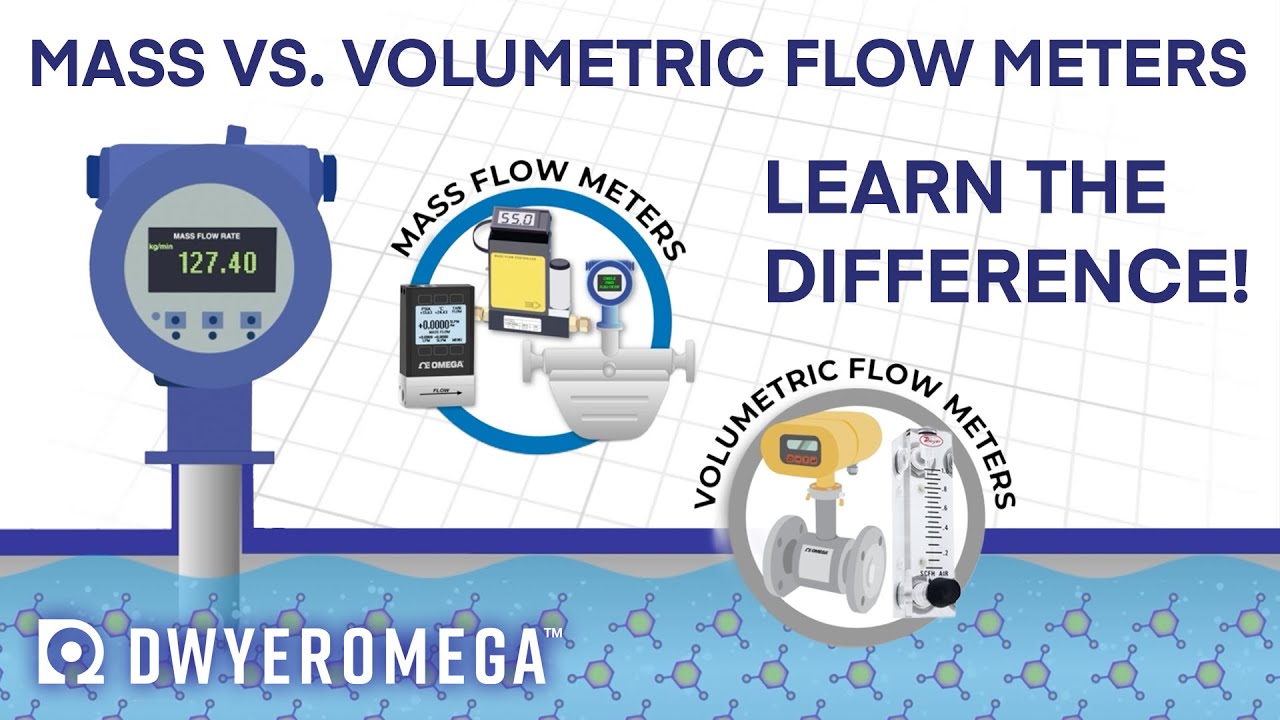
▶ This video breaks down the difference between mass flow and volumetric flow clearly — ideal for sharing with purchasing managers or new team members who need a conceptual foundation before your technical product conversation.
Practical Implementation: Your 30-Day Action Plan
Week 1 — Audit Your Current Knowledge Gaps
Start by assessing your team’s actual unit knowledge, not their self-assessed knowledge. Give your sales team a five-question written test — without notice, without resources — covering: the conversion factor from kg/h to lbm/h, the definition of lbm vs. lbf, the difference between mass flow and volumetric flow, what SLPM means and when it’s used, and which regulatory standard governs custody transfer measurement in oil and gas. Grade the results honestly.
Then review the last 20 proposals your team submitted. Count how many explicitly state the unit system confirmed with the client versus how many simply repeat whatever unit the client mentioned in their initial inquiry without verification. The gap between these two numbers is your unit verification compliance rate — and almost certainly lower than you expect.
Identify which customer segments show the most unit-related proposal revisions, delays, or post-order adjustments. These segments are your highest-priority training targets, because the friction is currently costing you both time and credibility.
Week 2 — Create Your Internal Resources
Build the conversion reference table from this guide into three formats: a laminated desk card for sales team workstations, a PDF download available on your internal knowledge base, and a formula embedded in your CRM or quoting software so it appears automatically when a quote is opened.
Create a unit FAQ document from your actual customer inquiry history. If you track customer questions in your CRM, search for every conversation that included the words “unit,” “convert,” “kg,” “lbm,” or “specification” in the last 12 months. Cluster those questions into the 10 most common, and write a definitive internal answer to each. This document becomes the reference your team uses during calls, and the source material for your external-facing content.
Build email templates for the three most common unit-related client communications: (1) a unit verification request to include with every proposal (“Before we finalize this quote, can you confirm your required unit system for this measurement point?”), (2) a unit error correction notice that communicates the error professionally without excessive apology, and (3) a unit conversion summary to include with calibration certificates when the measurement unit differs from the certificate unit.
Week 3 — Train Your Sales and Support Teams
Role-playing scenarios for unit conversations should cover four situations: a client who specifies the correct unit and needs confirmation; a client who specifies an unusual unit (SCCM, MMSCFD) that requires conversion; a client who has specified the wrong unit (lbf instead of lbm) and needs correction; and a client who doesn’t know what unit they need and is asking for your recommendation.
For each scenario, train your team to use the three diagnostic questions from the communication section above, confirm the answer against the client’s control system documentation, and respond with a specific, documented recommendation. Conduct these role-plays in small groups so team members can observe each other and build shared vocabulary.
Establish a peer mentoring system where your most technically proficient team member serves as the on-call unit resource during client calls — a specific person colleagues can ask “I have a client asking about SLPM conversion for a nitrogen application — can I pull you in for two minutes?” This is not a permanent arrangement, but it accelerates the knowledge transfer during the training period.
Week 4 — Launch External Communications
Publish your first educational piece for clients: the unit conversion reference guide in PDF format, branded with your company information and available for download on your website. Send a personal email to your top 20 accounts letting them know the resource is available. Track downloads as a leading indicator of engagement.
Update your website inquiry form to include a field for “required measurement unit” — this single change routes unit-specific inquiries to the right technical resource immediately rather than after two rounds of clarifying questions.
Contact your top three accounts with a specific offer: “We’d like to spend 20 minutes reviewing your current flow measurement specifications to confirm all unit assignments are aligned with your control system — no charge, just a technical service call.” One in three of these conversations will identify either a unit mismatch that needs to be addressed or an upgrade opportunity that was invisible until someone looked closely at the specifications.
Key Terms Glossary
Mass flow rate: The quantity of matter passing through a measurement point per unit of time, expressed in units of mass per time (kg/s, lbm/h, g/s). Independent of temperature and pressure variation in the process.
Volumetric flow rate: The volume of fluid passing through a measurement point per unit of time (m³/h, L/min, GPM). Varies with temperature and pressure for gases; varies with temperature for liquids.
lbm (pound-mass): A unit of mass equal to 0.45359 kg. Not to be confused with lbf (pound-force). Mass flow rate is always expressed in lbm/time.
lbf (pound-force): A unit of force equal to the force exerted by one pound-mass under standard Earth gravity (9.80665 m/s²). Used for structural loads, pressure, and weight — not for mass flow rate.
SLPM (Standard Liters Per Minute): A volumetric gas flow unit referenced to standard conditions (typically 0°C and 101.325 kPa). Not a mass unit, but has a fixed mass equivalent for each specific gas at standard conditions.
SCCM (Standard Cubic Centimeters per Minute): A very small volumetric gas flow unit at standard conditions, common in semiconductor and laboratory applications. 1 SCCM = 0.001 g/min for air at standard conditions.
Nm³/h (Normal Cubic Meters per Hour): A European standard volumetric gas flow unit referenced to 0°C and 101.325 kPa. Differs from “actual” cubic meters per hour, which is at operating conditions.
Density (ρ): Mass per unit volume (kg/m³ or lbm/ft³). The bridge between mass flow and volumetric flow: mass flow = volumetric flow × density.
Measurement uncertainty: The range within which the true flow value is expected to lie, expressed as a percentage of reading or percentage of full scale. Unit-independent as a percentage; must be recalculated in absolute terms when converting between unit systems.
Calibration traceability: Documentation demonstrating that a meter’s calibration is connected to national or international measurement standards through an unbroken chain of comparisons with stated uncertainties.
API MPMS: American Petroleum Institute Manual of Petroleum Measurement Standards — the governing framework for custody transfer measurement in oil and gas, defining units, accuracy classes, and documentation requirements.
Why Mass Flow Rate Unit Expertise Matters to Your Bottom Line
Technical knowledge in wholesale distribution is not an academic exercise. It is a commercial differentiator with a measurable revenue impact — in the accounts you retain when a competitor offers a lower price, in the margins you protect when a client trusts your specification rather than comparison-shopping, and in the lost orders you recover when a unit mismatch is caught before it becomes a compliance problem rather than after.
The specific connection between unit mastery and revenue: distributors who can confidently guide a customer through unit selection, conversion, and compliance documentation are positioned as technical advisors rather than catalog suppliers. Technical advisors get invited into specification conversations before the purchase decision is made — giving them information, relationship access, and influence that catalog suppliers only get after the decision has already been made somewhere else.
One wholesaler in the European chemical distribution market tracked their win rate on first-time customer inquiries before and after implementing the unit verification protocol described in this guide. Before: 34% of first-time inquiries resulted in a first purchase. After: 51%. The only operational change was asking the three diagnostic unit questions before responding to every inquiry, and confirming the unit in writing in every proposal. The win rate improvement translated to $340,000 in additional first-year revenue from new accounts — from a training investment of approximately $4,000 in staff time.
Your next step: implement one element from this guide this week. If your team’s unit conversion knowledge is the gap, start with the reference table and the five-question assessment. If your proposal process is the gap, start with the unit verification field in your quoting template. If your client-facing content is the gap, start with the conversion reference PDF. Pick the element where the improvement opportunity is largest, implement it this week, and measure the result in 30 days.
For additional technical support on mass flow rate applications, unit specifications, and instrument selection for your client accounts, the Jade Ant Instruments technical team is available for distributor and agent consultation on complex applications — including unit system alignment for international deployments and regulatory documentation requirements.
➡ Download the Free Mass Flow Rate Unit Conversion Guide — Contact Jade Ant Instruments
➡ Browse the Complete Flow Meter Product Portfolio
Questions fréquemment posées
These are the questions technical buyers, purchasing managers, and plant engineers actually ask — with the answers your team should be ready to deliver confidently.
What’s the difference between kg/h and lbm/h, and how do I convert between them?
Both kg/h and lbm/h are mass flow rate units — kilograms per hour and pounds-mass per hour respectively. They measure the same physical quantity using different mass unit conventions. The conversion is: multiply kg/h by 2.20462 to get lbm/h, or multiply lbm/h by 0.45359 to get kg/h. At 1,000 kg/h, the equivalent is 2,204.62 lbm/h. The choice between them is driven by which unit system the client’s process documentation, control system, and regulatory framework use — not by any technical performance difference. For international sales, confirm the client’s control system configuration before specifying, because a meter configured to output in kg/h on a DCS expecting lbm/h will read 2.2× too low without generating an error message.
Why do some customers insist on specific units when both seem technically equivalent?
The insistence is almost always rooted in system integration rather than personal preference. A control system configured in lbm/h since 1995 has 30 years of trending data, alarm setpoints, and regulatory reports in that unit. Changing the measurement unit requires reconfiguring every alarm, every trend display, every report template, and every historical data comparison — a project that can take weeks and introduces configuration errors. It is far simpler to specify the new meter in the existing unit than to reconfigure the system. When a client insists on a specific unit, ask about their existing control system configuration — the reason will almost always be there, and understanding it allows you to confirm that the instrument you’re proposing outputs natively in their required unit.
How do I know which units to recommend for a new customer I’ve never worked with?
Start with geography and industry: European industrial clients almost universally use kg/h; North American oil and gas use lbm/h and industry-specific units (barrels per day for petroleum); pharmaceutical clients use g/s or kg/h; HVAC clients use SLPM, SCFM, or kg/h depending on system size. Then ask the three diagnostic questions: what unit does their control system accept on this input, what unit does their process documentation use, and what unit does their process engineer think in. If they’re a new facility with no existing system, recommend SI units (kg/h) as the international default unless their engineering firm or equipment supplier has specified otherwise — modern instruments are configurable, but starting with SI avoids conversion steps in future international transactions.
Can a single flow instrument display in multiple unit systems simultaneously?
Most modern intelligent flow instruments — Coriolis, thermal mass, and electromagnetic meters from leading manufacturers — support multiple simultaneous outputs in different units. A Coriolis meter can output mass flow in kg/h via HART (for the DCS), mass flow in lbm/h via Modbus (for an operations dashboard), and volumetric flow in L/min via a 4-20mA output (for a local flow computer) — all from the same physical measurement, simultaneously. The local display typically shows one configurable unit at a time, selectable through the operator interface. This multi-unit output capability is worth explicitly confirming during specification, because it eliminates the flow computer or signal converter that some clients assume is necessary when they have mixed unit systems in the same facility.
What happens if I quote in the wrong units — is it my liability?
The liability exposure depends on the contract terms, the jurisdiction, and the nature of the application. For trade measurement applications (custody transfer, utility billing), specifying an instrument in the wrong unit that causes systematic billing errors creates professional liability exposure that can extend beyond the equipment warranty. For process monitoring applications, the exposure is typically limited to equipment return or replacement costs under warranty terms. In all cases, the practical protection is documentation: a written proposal that explicitly states the specified unit, a written confirmation from the client that this unit matches their requirement, and a commissioning record confirming that the installed meter is outputting in the confirmed unit and that the control system is receiving it correctly. This documentation chain doesn’t prevent the error — it determines who bears the cost of correcting it if an error occurs.
How do temperature and pressure changes affect mass flow rate units?
Mass flow rate — measured in kg/h, lbm/h, g/s, or any other mass-per-time unit — is fundamentally independent of temperature and pressure. That is the definition of mass: it does not change with thermodynamic conditions. This is why Coriolis meters, which measure mass directly, maintain their accuracy through process temperature and pressure variations without external compensation. Volumetric flow rate, conversely, changes with both temperature and pressure for gases (ideal gas law governs the relationship) and with temperature for liquids (thermal expansion). When your client’s system displays in volumetric units at line conditions and they need to compare to a reference at standard conditions, that conversion requires temperature and pressure data. When they’re working in mass flow units, the comparison is direct. This is the fundamental reason that mass flow measurement is preferred for billing, recipe control, and regulatory documentation in variable-condition processes.
Why does my customer’s specification include both mass flow and volumetric flow?
Dual-unit specifications are common in applications where both measurements serve distinct purposes. In a natural gas line, mass flow (kg/h or lbm/h) is the billing basis — what you charge for — while volumetric flow at standard conditions (Nm³/h or SCFM) is the process control basis — what the combustion system control loops see. In pharmaceutical batch formulation, mass flow (kg/h) is the documentation basis for GMP compliance, while volumetric flow (L/min) may be what the filling machine’s rate controller accepts. Modern Coriolis and electromagnetic meters output both simultaneously — mass flow via one communication channel, volumetric flow via another — from the same physical measurement. When you see a dual-unit specification, it tells you the customer has two distinct downstream uses for the measurement data and needs a meter that can serve both without a separate calculation step.
Are there industry standards that dictate which units I should use?
Yes, and they vary by industry and application type. ISO 4006 defines the standard vocabulary and symbols for fluid flow measurement and provides the reference basis for mass flow rate unit definitions. API MPMS Chapter 12 specifies calculation procedures and units for petroleum custody transfer. ASME MFC standards govern measurement calculations for power and process industries in the US. EU Measuring Instruments Directive (MID) specifies unit requirements for trade measurement instruments used commercially in EU member states. For pharmaceutical applications, FDA 21 CFR Part 211 requires that batch records show ingredient quantities in mass units with traceability documentation. The practical approach: identify the standard that governs your client’s specific application before specifying units, because a meter documented in non-compliant units may fail a regulatory audit regardless of its measurement accuracy.
How do I explain to a non-technical purchasing manager why unit selection matters?
Use a billing scenario they immediately understand: “Imagine your gas meter at home measured in cubic meters when the temperature was warm, and in slightly smaller cubic meters when it was cold — without telling you. Your bill would vary based on weather rather than your actual gas use. Industrial flow measurement has the same problem with volumetric units and process conditions. Mass flow units are the equivalent of measuring how many gas molecules actually passed through — that number doesn’t change with temperature or pressure. For your billing accuracy and process consistency, we want to make sure the meter outputs in mass units so you’re always comparing like with like.” This explanation avoids all technical jargon, connects directly to a financial outcome the purchasing manager owns, and positions the unit selection conversation as protecting their billing integrity rather than as a technical detail they don’t need to understand.
What’s the most common unit conversion mistake wholesalers make?
Using the rounded 2.2 approximation (instead of 2.20462) in formal documentation — calibration certificates, custody transfer records, and regulatory compliance documentation — where the 0.21% rounding error matters. In a custody transfer application at $2 million per day throughput, 0.21% is $4,200 per day in billing error — $1.5 million per year. No custody transfer contract allows 0.21% error without investigation. A second common mistake is failing to confirm whether “standard conditions” in the client’s specification means 0°C (ISO convention) or 15°C (some national standards) or 60°F (US petroleum standard) — these are different reference conditions that produce different standard volume and standard mass values for the same actual gas flow. Both mistakes are prevented by the same habit: never assume a conversion factor or a reference condition — always confirm and document.
Do I need different instruments for metric vs. imperial unit applications?
In most cases, no — but you need to confirm configurability before ordering. Modern flow instruments from leading manufacturers support field-configurable unit selection for all major mass and volumetric flow units through their operator interface or configuration software. The physical measurement is unit-agnostic; the unit is applied in the transmitter’s signal processing. However, some instruments at the lower end of the market ship with factory-fixed units that cannot be changed without returning the instrument to the manufacturer. And some legacy instruments in the field have unit configurations that are locked in firmware and cannot be changed at all. Always confirm the unit configurability specification as part of your pre-order technical review — not as an afterthought after delivery when the client’s commissioning team discovers the issue on site.
How should I document unit specifications to protect myself legally?
Every proposal, order acknowledgment, and calibration certificate involving flow measurement should explicitly state: the measurement parameter (mass flow rate), the specific unit (e.g., kilograms per hour, kg/h), the full-scale range in that unit (e.g., 0–500 kg/h), the accuracy specification in both percentage and absolute terms in that unit (e.g., ±0.5% of reading, ±2.5 kg/h at full scale), and the reference standard for the calibration (e.g., traceable to NIST/PTB via calibration certificate number XX-YYYY). When a unit conversion is involved — for example, the meter was calibrated in kg/h but the client’s application is in lbm/h — document the conversion factor used (2.20462 lbm/kg) and confirm the client’s acceptance of the converted specification in writing before delivery. Store these documents in the client’s account record with a minimum retention period matching the longer of: your jurisdiction’s commercial document retention requirement, the expected meter service life, or any specific regulatory retention requirement in the client’s industry.
What units should I use when selling internationally?
Default to SI units (kg/h for most applications, Nm³/h for gas applications) for international sales unless the client’s engineering specification explicitly requires imperial units. SI units are specified in ISO standards, accepted by all national measurement authorities as primary reference units, and require no conversion for documentation in most regulatory frameworks. When selling into North American markets — particularly oil and gas, petrochemical, and legacy industrial facilities — imperial units (lbm/h, SCFM) are frequently required by existing system configuration. For cross-border transactions where the engineering specification is in one unit system and the receiving facility’s control system is in another, specify the instrument with configurable unit output and document both the factory calibration unit and the field-configured operational unit in the calibration certificate addendum.
How do I handle a customer who doesn’t know what units they need?
This is not an unusual situation — it occurs most often with purchasing managers who are buying a replacement for an existing meter without full engineering involvement. The correct response is to gather three pieces of information: the make and model of the existing meter, the existing PLC or DCS input configuration documentation (which states the engineering unit), and the most recent calibration certificate from the existing meter (which shows the unit in which it was calibrated). From these three documents, you can determine both the unit the current system uses and the unit the replacement meter must output. If none of these documents are available, ask to speak with the client’s instrumentation engineer or maintenance technician before quoting — it takes one 10-minute conversation to get the information needed to quote correctly, versus potentially a week of delay if the wrong unit is specified and the meter needs reconfiguration after delivery.
This guide has been developed with technical research from the flow measurement field. For flow meter technical specifications, unit configuration support, and distributor partnership inquiries, visit Jade Ant Instruments or contact the technical team directly.
Additional industry reference resources: ISO 4006 Flow Measurement Vocabulary Standard | Bronkhorst — Mass Flow vs Volume Flow Technical Guide | Teledyne Hastings Mass Flow Unit Converter | Jade Ant Instruments Coriolis Flow Meter Selection Guide | Jade Ant Instruments Thermal Mass Flow Meter Decision Guide