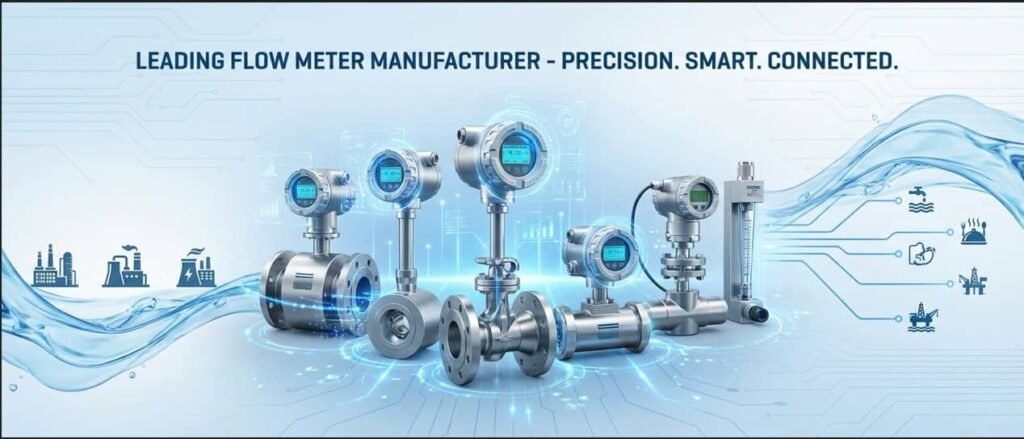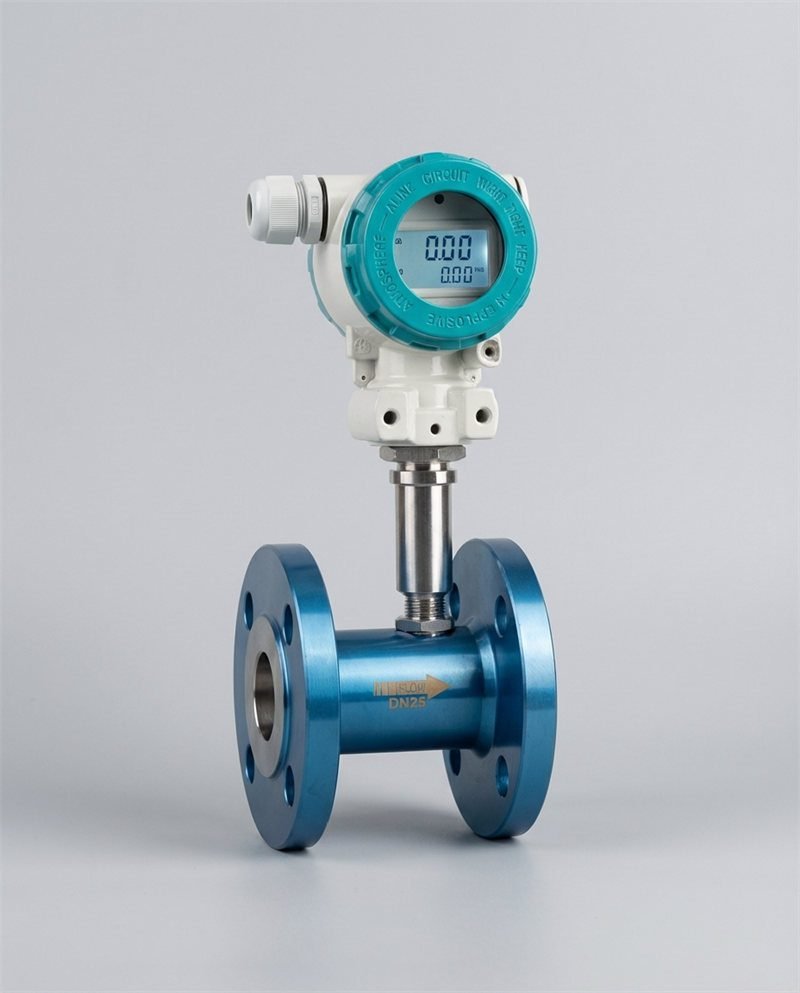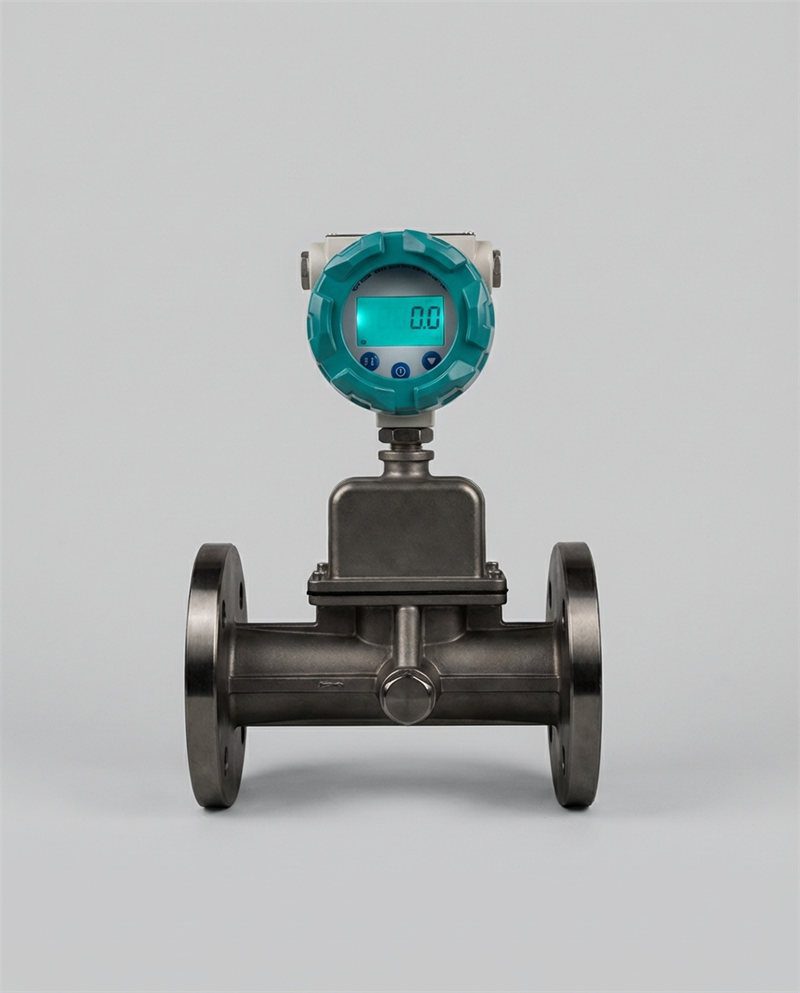
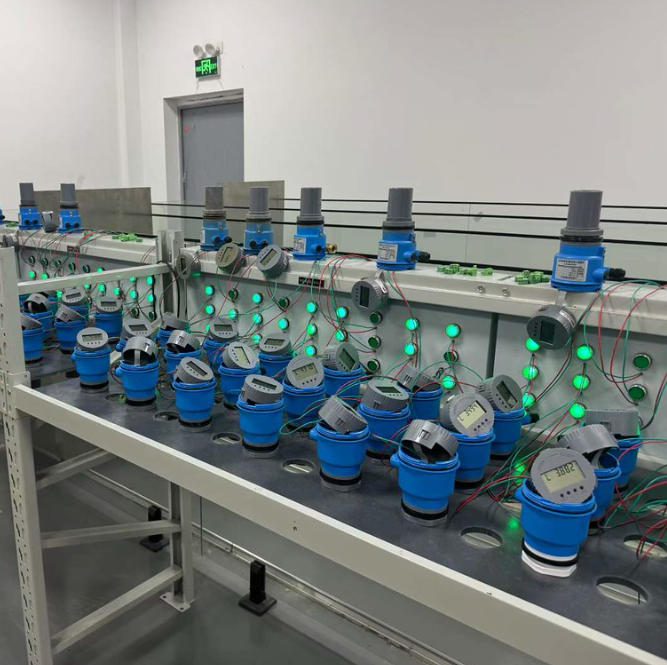
Stay competitive in the flow instrumentation market by adding these five essential products to your distribution portfolio — proven to attract new customers, increase order frequency, and strengthen client relationships.
Why This Guide Exists
The global flow meter market was valued at USD 11.44 billion in 2025 and is forecast to reach USD 19.46 billion by 2034, expanding at a 6.08% compound annual growth rate (Fortune Business Insights). That number means one thing for distributors and agents: your clients are already buying these products. The question is whether they are buying them from you.
Most distribution businesses lose flow instrumentation revenue not because they lack relationships, but because their product line has gaps their clients quietly fill elsewhere. A plant manager who trusts you for pressure transmitters but buys their Coriolis meters from a competitor is a loyalty problem, not a pricing problem — and it is solved by what is in your inventory, not by discounting what already is.
This guide is written specifically for B2B flow meter distributors and agents, not for end-users or retail buyers. It covers the five flow meter technologies that generate the highest combination of customer demand, repeat purchase frequency, and margin opportunity. For each product, you will find the technical positioning your sales team needs, the industries to target, the objections you will face, and the ROI arguments that convert technical conversations into purchase orders.
Understanding Your Customers’ Real Flow Measurement Challenges
The Pain Points Your Clients Face Without Proper Flow Instrumentation
Inaccurate Measurements Leading to Operational Inefficiencies
A 1% measurement error sounds inconsequential until you calculate what it costs at industrial scale. On a pipeline transferring $50 million worth of liquid product annually, a 0.3% accuracy improvement — achievable simply by switching from an aging turbine meter to a modern Coriolis or magnetic alternative — recovers $150,000 per year in settlement accuracy. That is the financial context your clients are living in, even when they do not frame it that way.
Le Jade Ant Instruments case study library documents a specialty chemical manufacturer in Southeast Asia that ran 23 failed batches before identifying a misspecified thermal mass flow meter as the root cause. By that point, the tally included $340,000 in rejected product, $180,000 in regulatory fines, $210,000 in emergency replacement and downtime, and $117,000 in lost contract revenue. The meter itself cost $1,800.
Your clients have versions of this story. The distributor who helps them avoid it — or recover from it — earns a different kind of relationship than the one who simply processes reorder requests.
Compliance and Regulatory Reporting Requirements Across Industries
Flow measurement in regulated industries is not optional and it is not a commodity decision. Pharmaceutical batch records require mass flow documentation. Municipal water billing requires certified metering accuracy. Custody transfer in oil and gas is governed by API measurement standards where a non-compliant meter cannot be legally used regardless of its technical performance.
Distributors who understand these compliance layers can position themselves as compliance-enabling partners, not just equipment suppliers. That positioning commands better margins and makes switching suppliers genuinely costly for clients.
Why Distributors Need These Products in Their Inventory Now
Expanding Margins Through Higher-Value Product Offerings
Industrial distributor gross margins in the flow instrumentation segment typically range from 20% to 40%, with premium technologies like Coriolis meters commanding the upper end of that range due to their specialized application requirements and the lower number of distributors who can confidently sell them (Bizowie, distributor KPI benchmarks). Standard electromagnetic meters for municipal water sit toward the 20–25% range on volume; specialty chemical or pharmaceutical Coriolis installations regularly carry 35–40% margins because the value being delivered — compliance assurance, batch accuracy, process reliability — is not primarily about the meter’s unit cost.
Building Long-Term Customer Loyalty by Solving Critical Operational Problems
The distributors who lose clients are almost always those perceived as vendors. The distributors who keep clients for a decade are those perceived as advisors. The difference is whether you solve problems your client cannot easily solve alone.
Adding the five products in this guide to your portfolio does not just expand your SKU count. It expands the range of problems you can solve — and every problem you solve is a reason your client does not need to look elsewhere.
Product 1 — Ultrasonic Flow Meters: The Non-Invasive Solution Your Clients Demand

Why Ultrasonic Technology Is Becoming the Industry Standard
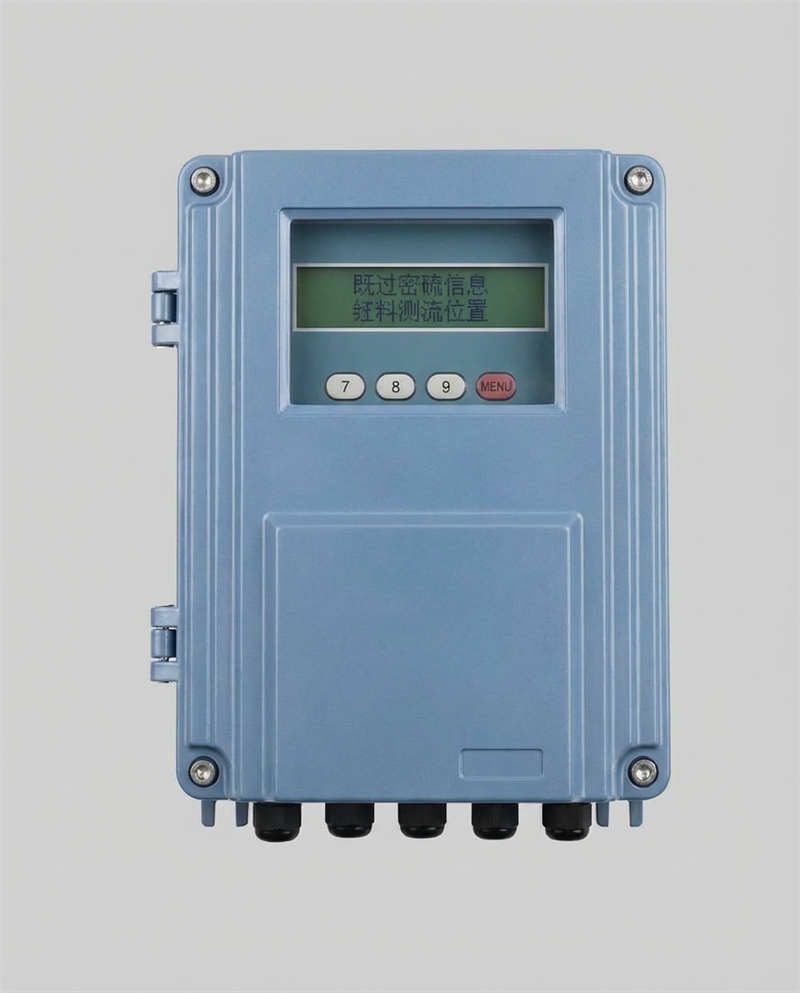
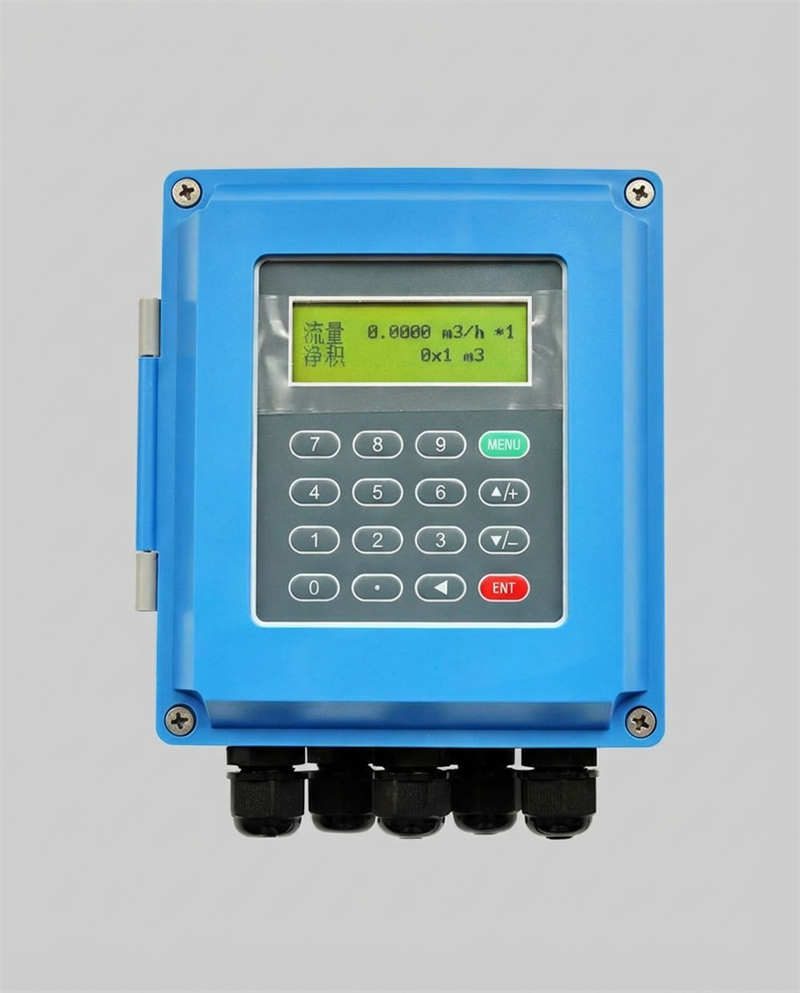
Ultrasonic flow meter (a device that measures fluid velocity by transmitting sound pulses through the fluid and measuring the time difference between pulses sent with and against the flow direction) technology is the fastest-growing segment in the flow measurement market. The ultrasonic meter market was valued at USD 2.08 billion in 2025 and is forecast to reach USD 3.56 billion by 2034.
The growth driver is straightforward: clamp-on ultrasonic meters are the only flow measurement technology that can be installed on an existing pipeline without shutting down the process, cutting into the pipe, or draining the system. No other technology offers this.
Zero Pressure Drop and Minimal Installation Disruption
Unlike turbine or differential pressure meters, ultrasonic meters create no additional resistance to flow. There are no moving parts inside the pipe, no orifice plate, no bluff body — the measurement is purely acoustic. For clients with large pump systems where energy efficiency matters, this is a real operational benefit.
More commercially important for your sales conversation is the installation story. A plant maintenance manager with a 12-inch cooling water header running 24/7 with no isolation valves can have a clamp-on ultrasonic meter installed in under 90 minutes without stopping production. That same installation in any inline technology requires a process shutdown, a system drain, pipe cutting, and recommissioning. The labor and downtime cost differential often exceeds the cost of the meter itself.
For a complete technical breakdown of clamp-on installation requirements and pipe compatibility by material, the Jade Ant Instruments clamp-on ultrasonic guide covers DN32 to DN1000 pipe sizes.
Compatibility with Virtually Any Pipe Material and Fluid Type
Clamp-on ultrasonic meters work on steel, stainless steel, HDPE, copper, PVC, and most standard pipe materials. The transducers mount to the outside of the pipe — they never contact the fluid. This means the meter’s compatibility is driven by the pipe material and acoustic properties, not by the chemistry of what flows inside.
The one constraint to communicate clearly to clients: heavily fouled pipes (thick internal scale, corrosion pitting, or thick linings) attenuate the acoustic signal and reduce measurement accuracy. For those installations, insertion-type ultrasonic or inline alternatives are more appropriate.
Who Your Customers Are and Why They Need This
Water Utilities and Wastewater Treatment Facilities
Municipal water and wastewater utilities are the highest-volume ultrasonic meter market. Portable clamp-on meters give these clients the ability to verify existing meter accuracy, conduct network loss audits, and add temporary measurement points without the capital expenditure and installation disruption of permanent inline meters.
The regulatory driver here is real: many national water regulations require utilities to demonstrate measurement accuracy for billing. A utility that cannot verify the accuracy of its installed meters faces regulatory exposure that a portable clamp-on audit program directly addresses.
HVAC and Building Management System Operators
The building energy management sector is the fastest-growing non-process ultrasonic application. Commercial buildings with chilled water, heating water, and condenser water circuits need energy metering to comply with ESG reporting requirements, optimize HVAC efficiency, and support sub-metering for tenant billing.
Clamp-on meters enable a large commercial building with 40 air-handling units to have energy metering installed across all circuits in a single day — impossible with any inline alternative. Accuracy in the 1–3% range is fully adequate for energy monitoring and HVAC balance verification in this application.
How to Position This Product to Your Sales Team and Clients
Real ROI Calculations Based on Reduced Downtime
The ROI conversation for clamp-on ultrasonic meters is built around avoided cost, not product features. A distribution center client discovered through a portable clamp-on audit that 18% of their compressed air was being lost to undetected leaks — a finding that a 2024 Jade Ant Instruments analysis of industrial compressed air systems identified as a 10–30% energy saving opportunity for facilities without flow measurement. The cost of the audit-grade portable meter: under $3,500. The annual compressed air savings after leak remediation: over $28,000.
When your sales team brings that arithmetic into a client conversation, the question changes from “what does the meter cost?” to “when do we get started?”
Case Studies Showing Measurement Accuracy Improvements
A water utility in Southeast Asia used portable clamp-on meters to audit 47 installed electromagnetic meters across a distribution network and found 11 meters reading outside tolerance — generating a billing discrepancy of approximately $140,000 per year. The audit program cost $12,000 in portable equipment. Presenting this kind of industry-documented scenario — not as a theoretical benefit but as a documented outcome from a comparable client — is what converts prospecting conversations into technical assessments, and technical assessments into purchase orders.
Product 2 — Vortex Shedding Flow Meters: The Reliable Workhorse for Steam and Gas Applications
The Technical Advantages That Drive Customer Adoption
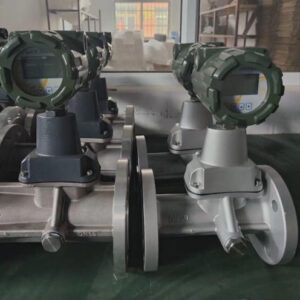
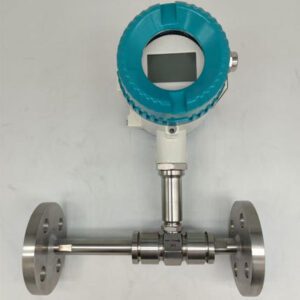
Vortex flow meters (devices that measure flow by counting the frequency of vortices — swirling eddies of fluid — shed by a bluff body placed in the flow path, where the vortex frequency is proportional to flow velocity) are the preferred technology for steam, compressed gas, and clean liquid applications where long-term reliability and low maintenance are the primary operational priorities.
Superior Performance in Steam, Gas, and Liquid Applications
Vortex meters handle the three-phase challenge that trips up many alternative technologies: they can measure saturated steam, superheated steam, compressed gas, and liquids within a single meter design. For manufacturing plants with multiple utility streams — steam for heating, compressed air for process, cooling water for heat exchangers — a single vortex meter product line covers multiple measurement points, simplifying your inventory and your client’s spare parts management.
Accuracy typically falls between 0.75% and 1.5% of rate in their rated flow range, which is sufficient for energy accounting, process monitoring, and utility billing applications. For applications requiring better than 0.5% accuracy on mass flow, Coriolis is the appropriate technology — but for the broad middle ground of industrial utility measurement, vortex meters hit the accuracy target at a significantly lower cost point.
Exceptional Durability With No Moving Parts
“No moving parts” is the feature specification that resonates most strongly with plant maintenance managers who have lived through turbine meter bearing failures. The vortex meter’s bluff body is a fixed, passive obstacle — it has no wear mechanism. The piezoelectric sensor that detects vortex pressure pulses has no moving parts and no process contact beyond the pipe wall.
Field data from Emerson’s vortex meter installed base (Emerson vortex meter overview) shows mean times between maintenance events of 7–10 years in standard process conditions. That is the kind of reliability data your clients’ reliability engineers respond to.
Which Market Segments Your Distributors Should Target
Industrial Manufacturing Plants and Refineries
Manufacturing plants consume steam and compressed gas across dozens of measurement points — boiler output, distribution headers, individual process feeds, condensate returns. Each of those points is a vortex meter opportunity, and because manufacturing plants typically operate in maintenance windows where process shutdowns are planned and coordinated, inline vortex meter installation fits naturally into turnaround schedules.
Refineries and petrochemical plants represent a higher-specification version of the same opportunity, where ATEX hazardous-area certification (the European standard defining equipment suitable for use in potentially explosive atmospheres) and high-temperature / high-pressure ratings are required in addition to the base measurement capability.
Energy Production and HVAC System Operators
District energy systems — central plants providing chilled water and hot water to campus or building clusters — need accurate flow measurement for energy billing between the central plant and individual building connections. Vortex meters in inline configuration provide the calibrated accuracy (better than 1%) and bidirectional flow capability needed for sub-metering billing, while their simple installation and low maintenance requirement fits the operational profile of facilities management organizations.
Overcoming Client Objections and Building Confidence
Addressing Concerns About Pressure Drop and Installation Complexity
Vortex meters do introduce a modest pressure drop — typically 20–50 mbar at rated flow in standard industrial pipe sizes. For most steam and gas applications, this is operationally insignificant. Frame it against the alternative: a turbine meter in the same steam service will introduce comparable or greater pressure drop, with the additional liability of bearing wear and annual recalibration.
Installation complexity concerns are best addressed by walking clients through the straight-pipe-run requirement: 15–20 pipe diameters upstream et 5 pipe diameters downstream of the meter. In retrofit applications where straight-run is limited, flow conditioners (precision-engineered devices that normalize the fluid velocity profile before it reaches the sensor) resolve most installation conflicts without requiring pipe reconfiguration.
Demonstrating Long-Term Cost Savings Versus Competing Technologies
The direct competitor in steam and gas measurement is the orifice plate differential pressure system — still widely installed in older plants. The operational cost comparison is compelling: orifice plates require annual inspection for wear and fouling, replacement of the primary element when worn, and differential pressure transmitters that need periodic calibration. Over a 10-year lifecycle, the vortex meter’s lower maintenance burden typically represents $8,000–$15,000 in avoided maintenance cost per measurement point, depending on the facility’s labor rates and calibration service costs.
Product 3 — Electromagnetic Flow Meters: Essential for Conductive Liquids and Corrosive Environments

Why Electromagnetic Technology Solves Problems Other Meters Cannot
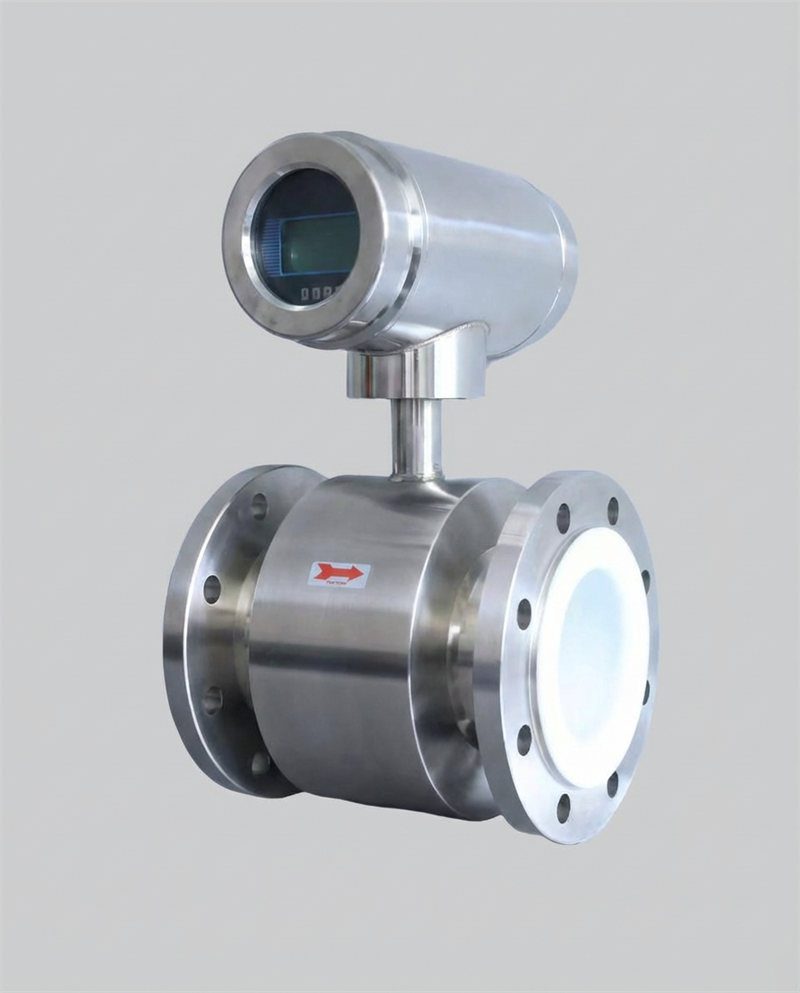
Electromagnetic flow meters (also called magmeters or mag meters — devices that measure volumetric flow by applying Faraday’s Law of electromagnetic induction: a voltage proportional to fluid velocity is generated when a conductive fluid passes through a magnetic field) dominate the water, wastewater, chemical, and food processing markets because their physics are uniquely suited to those applications.
Accurate Measurement of Conductive Liquids Including Slurries
The electromagnetic principle has no internal obstructions — the meter’s bore is a smooth tube, identical in cross-section to the connecting pipe. There is no rotor, no bluff body, no orifice — nothing for solids, fibrous material, or abrasive particles to damage, foul, or plug. For wastewater with suspended solids, raw sludge, paper pulp, or mining slurries, this is the primary selection driver that eliminates all mechanical alternatives.
The only fluid compatibility requirement is minimum electrical conductivity: the fluid must conduct electricity at ≥3–5 µS/cm to generate the measurable voltage signal. Most aqueous fluids — water, wastewater, acids, alkalis, slurries, dairy products, and most food-grade liquids — easily exceed this threshold. Hydrocarbons, alcohols, and deionized water do not, which is the application boundary your sales team needs to communicate clearly.
Complete Immunity to Viscosity and Density Changes
Because the electromagnetic measurement principle relies on fluid velocity alone — not on pressure drop, rotor momentum, or acoustic transit time — it is entirely unaffected by changes in viscosity or density. A mag meter calibrated on clean water at 20°C will measure the same fluid at 80°C with the same percentage accuracy, without correction factors or recalibration.
This viscosity immunity is particularly valuable in food processing and chemical applications where fluid properties change with temperature, concentration, or batch composition. For a client running multiple product types through the same pipeline — for example, a dairy plant alternating between skim milk, whole milk, and cream — the mag meter’s unresponsiveness to density changes means no recipe-specific correction factors and no batch-changeover recalibration.
Electromagnetic meters with PTFE, hard rubber, and ceramic liner options cover service from pH 0–14 and temperatures up to 180°C. Jade Ant Instruments supplies electromagnetic flow meters across these liner configurations, enabling application-specific selection from a single supplier relationship.
The Industries Where Your Customers Will See Immediate Demand
Chemical Processing and Pharmaceutical Manufacturing
Chemical plants represent the electromagnetic meter’s broadest application territory. Acid dosing, alkali transfer, solvent recovery, reactor feed, and CIP (Clean-in-Place — the process of cleaning equipment in situ by circulating cleaning solutions without dismantling) return lines all involve conductive liquids at varied temperatures and concentrations. The liner and electrode material selection is the primary application engineering decision — matching the meter’s wetted components to the specific fluid chemistry at the actual operating temperature.
Pharmaceutical manufacturing adds a regulatory compliance layer: meters in aqueous process streams must meet FDA cGMP requirements, and sanitary electromagnetic meters with 3-A or EHEDG (European Hygienic Engineering and Design Group) certification are required for food-contact and pharmaceutical production environments. The certification requirement is not a marketing differentiator — it is a legal prerequisite for installation in regulated facilities.
Mining Operations and Wastewater Treatment Facilities
Mining slurry measurement is one of the most technically demanding electromagnetic meter applications and one of the highest-value opportunities for distributors with the technical depth to specify it correctly. Abrasive, high-solid-content slurries require hard-rubber or ceramic liners, tungsten carbide or Hastelloy electrodes, and careful attention to minimum flow velocity (the slowest flow at which the meter maintains measurement accuracy — critical in slurry applications where particles must remain in suspension) to prevent solids settling.
Municipal wastewater treatment facilities are the single largest volume electromagnetic meter market globally — measured by unit count installed. Their procurement patterns are predictable, their replacement cycles are scheduled, and their technical requirements (large pipe diameters, high suspended solids, regulatory billing accuracy) align precisely with the electromagnetic meter’s strengths.
How to Train Your Team to Explain This Technology Confidently
Breaking Down Complex Electromagnetic Principles Into Practical Benefits
The Faraday’s Law explanation is not what sells electromagnetic meters. What sells them is the application benefit statement: “This meter has no moving parts, no internal obstructions, and handles any conductive liquid including slurries and aggressive chemicals — with accuracy that doesn’t drift when your fluid temperature or concentration changes.”
Train your team to start with the operational benefit, then answer the “how does it work?” question when the client asks. Most plant engineers want to know that the meter solves their problem; the physics explanation builds credibility, but it does not initiate the sale.
Demonstrating Why This Is the Only Viable Solution for Specific Applications
For raw wastewater and mining slurry applications, the competitive landscape is thin. Turbine meters are destroyed by abrasive solids. Vortex meters’ bluff bodies can become fouled by fibrous material. Ultrasonic meters struggle with high solid concentrations that scatter the acoustic signal. The electromagnetic meter is the functionally correct answer in these applications — and when your sales team can explain why the alternatives fail, the price conversation becomes secondary.
Product 4 — Turbine Flow Meters: The High-Accuracy Choice for Precise Measurement Applications
Understanding When Turbine Meters Outperform All Other Options
Turbine flow meters (devices that measure volumetric flow rate by spinning a rotor in the flow stream — the rotor’s rotation speed, proportional to fluid velocity, is detected by a magnetic or optical pickup and converted to flow rate) have been the preferred technology for petroleum and refined fuel measurement for over six decades. Despite competition from newer technologies, they retain irreplaceable positions in specific high-velocity, clean-liquid applications.
Exceptional Accuracy and Repeatability in Clean Liquid Applications
In their optimal operating range — clean, low-viscosity liquids at moderate to high flow velocities — turbine meters achieve 0.25% to 0.5% of rate accuracy, matching or approaching Coriolis performance at a fraction of the cost. The key qualifier is “clean, low-viscosity” — turbine meters degrade rapidly in fluids with suspended solids (which damage the rotor bearings) or high viscosity (which creates bearing drag that distorts the K-Factor relationship (K-Factor: the number of electrical pulses the meter generates per unit volume of fluid, determined during calibration and used to convert pulse frequency to flow rate)).
Wide Flow Range Capability in Compact Designs
Turbine meters are available in designs covering liquid flow ranges up to 1,000:1 turndown in specialized configurations, and their compact form factor — smaller than equivalent Coriolis meters at any given pipe size — is an advantage in space-constrained installations. For distributors serving petroleum terminals, fuel farms, and refined product pipelines where compact, high-accuracy volumetric measurement is the requirement, turbine meters remain the technically correct and commercially competitive answer.
Identifying Your Best Customer Prospects for This Product
Fuel Distribution Networks and Petroleum Operations
Fuel distribution represents the turbine meter’s deepest market penetration. Aviation fuel loading, road tanker loading, bunkering operations, and retail fuel dispensing all rely on turbine meter technology for volumetric accountability, regulatory compliance (Weights and Measures certification), and commercial settlement. The installed base in petroleum infrastructure is enormous — and the replacement cycle, driven by bearing wear and recalibration requirements, creates a predictable recurring revenue stream for distributors who serve this sector.
The API MPMS (Manual of Petroleum Measurement Standards) framework, which governs custody transfer measurement in petroleum, has deep-rooted acceptance of turbine meter technology under Chapter 5.3. New installations in established petroleum infrastructure often specify turbine meters not because they are technically superior to alternatives, but because they fit within a regulatory and operational framework that existing staff understand.
Pharmaceutical and Food and Beverage Manufacturers
Pharmaceutical manufacturing uses turbine meters in clean utility streams — purified water distribution, nitrogen blanket gas, and solvent transfer — where the fluid is clean, low-viscosity, and non-aggressive. The turbine meter’s pulse output integrates naturally with batch control systems, and its compact form factor fits into the constrained pipe runs common in pharmaceutical production environments.
Food and beverage applications include ingredient dosing, beverage blending, and packaging line flow monitoring — applications where the fluid is clean, the required accuracy is in the 0.5–1.0% range, and the compact size and established regulatory acceptance of turbine technology are practical advantages.
Positioning Turbine Meters as a Premium, High-Value Addition to Your Line
Emphasizing Precision Benefits That Protect Customer Operations
The turbine meter sales conversation works best when it is framed around measurement precision protecting operational value. In aviation fuel loading, a 0.3% measurement error on a single aircraft fueling event (typically 30,000–100,000 liters) creates a commercial discrepancy worth hundreds of dollars. Multiply that across hundreds of daily fueling events at a busy airport, and the value of maintaining measurement accuracy within specification becomes a financial argument that procurement managers understand immediately.
Highlighting How Accuracy Translates to Reduced Waste and Compliance
For pharmaceutical clients, the compliance argument is equally concrete. Batch records for regulated APIs (Active Pharmaceutical Ingredients — the biologically active components of a drug product) must document solvent additions by volume with traceability to a calibrated measurement device. A turbine meter with current calibration certification is a direct compliance tool, not just a process instrument. Distributors who supply calibration services alongside the meter create a recurring revenue stream while positioning themselves as compliance partners.
Product 5 — Coriolis Mass Flow Meters: The Gold Standard for Demanding Applications

Why Coriolis Technology Commands Premium Pricing and Customer Loyalty
Coriolis mass flow meters (devices that measure fluid mass directly by detecting the Coriolis force — a deflection force that acts on fluid moving through a vibrating tube, where the phase shift between inlet and outlet sensors is directly proportional to mass flow rate) are the highest-value product in the flow meter market. The global Coriolis flow meter segment was valued at USD 1.4 billion in 2025 and is projected to reach USD 2.41 billion by 2034 (DataIntelo market research).
Direct Mass Measurement Eliminating Temperature and Pressure Corrections
Every other flow meter technology measures volumetric flow — the volume of fluid passing per unit time — and then derives mass flow by multiplying by an assumed density. If the fluid’s actual density at operating conditions differs from the assumed value, the mass flow calculation is wrong by a proportional amount.
Coriolis meters measure mass directly. The phase shift between the vibrating tube’s inlet and outlet sensors is driven by the Coriolis force, which is a function of mass — not volume, not density, not temperature. A Coriolis meter calibrated on water at 20°C will measure a polymer melt at 150°C with the same percentage accuracy — without correction factors, without density compensation, without recalibration.
For applications where fluid density varies — which includes virtually every real process application — this is not a technical nuance. It is the difference between a measurement that is right and one that accumulates systematic error every time the process conditions deviate from the assumed density baseline.
Multi-Parameter Measurement Capability
A single Coriolis meter simultaneously delivers four measurements from one installation point:
- Mass flow rate (direct, ±0.05%–0.5% accuracy)
- Volumetric flow rate (derived from mass and density)
- Fluid density (real-time, ±0.0005 g/cm³ typical)
- Fluid temperature (integrated RTD sensor)
For chemical plants running batch processes, that density output enables real-time concentration monitoring — eliminating manual sampling intervals and laboratory analysis delays. For food and beverage lines, it enables online Brix (a measure of dissolved sugar content in a liquid, expressed as a percentage of sucrose by weight) and concentration verification without a separate inline analyzer. That level of application intelligence from one instrument is the business case that justifies the Coriolis price premium in these sectors.
The High-Value Market Segments Most Willing to Invest in This Technology
Specialty Chemical and Food Processing Operations
Specialty chemical producers running multi-step batch synthesis need mass-accurate dosing of each reagent — not volumetric approximations adjusted by assumed density. A 1% density deviation in a key reactant (typical across a temperature swing of 15–20°C during batch addition) introduces a stoichiometric error that compounds across every reaction step. For a client running 500 batches per year at a rework cost of $12,000 per off-spec batch, reducing the batch rejection rate from 4% to 1% through improved mass measurement accuracy saves 1TP4 180 000 par an — documented against a Coriolis meter that costs $8,000–$15,000 to install.
That arithmetic is your sales conversation. Not the meter’s specifications — the client’s documented rework cost and the percentage reduction achievable through mass-accurate measurement.
Custody Transfer and Billing Applications Where Accuracy Is Non-Negotiable
Transfert de garde (the commercial transaction point where ownership of a fluid changes hands, and where flow measurement directly determines the billing amount) represents the highest-stakes flow measurement application in any industry. At custody transfer, accuracy is not a quality attribute — it is a commercial and legal obligation. A 0.1% measurement error on a petroleum terminal transferring 500,000 barrels per day at $80/barrel represents a daily commercial discrepancy of $40,000.
Coriolis meters certified to API MPMS Chapter 5.6 and OIML R117 are increasingly specified for custody transfer in specialty chemical, pharmaceutical bulk transfer, and high-value liquid applications where the per-unit fluid value justifies the meter’s premium cost. The connected meters report 12–18% savings in unscheduled downtime through built-in diagnostics and predictive maintenance capability (Market Research Future, 2025 flow meter analysis).
Building Your Expertise to Become the Trusted Authority
Understanding Total Cost of Ownership Versus Initial Purchase Price
The most common Coriolis objection is the purchase price — typically 3–5× the cost of an equivalent turbine or electromagnetic meter at the same pipe size. The response is not to defend the price; it is to shift the comparison framework from purchase price to 10-year total cost of ownership.
| Catégorie de coûts | Coriolis | Turbine | Électromagnétique |
|---|---|---|---|
| Capital purchase (DN50, 2-inch) | $8,000 | $2,000 | $2,000 |
| Installation (labor + fittings) | $1,500 | $1,200 | $1,200 |
| Calibration (10-year total) | $2,000 (2 events) | $10,000 (7 events) | $3,500 (5 verifications) |
| Maintenance / bearing replacement | $0 | $3,500 (4 events) | $0 |
| Process downtime cost (maintenance) | $500 | $5,000 | $500 |
| Product loss (measurement error, 10 yr) | $800 | $8,500 | $3,500 |
| Total 10-Year TCO (estimated) | ~$12,800 | ~$30,200 | ~$10,700 |
Estimates based on moderate-value process service. Product loss values assume 0.1% accuracy for Coriolis, 1.5% aging turbine accuracy, 0.5% electromagnetic accuracy, applied to $200,000/year fluid throughput value. Source: Jade Ant Instruments application engineering data, synthesized from 2024–2025 field cases.
The turbine meter’s 10-year TCO of ~$30,200 exceeds the Coriolis meter’s ~$12,800 by nearly 2.4 times — despite costing four times less at purchase. That is the number that changes the conversation.
Explaining How Coriolis Meters Prevent Costly Errors in Critical Applications
For clients in pharmaceutical batch manufacturing, the Coriolis error-prevention argument goes directly to regulatory compliance. FDA’s 21 CFR Part 211 requires that each component of a pharmaceutical batch be measured by a calibrated instrument with documented traceability. A Coriolis meter with built-in zero-drift diagnostics and audit-trail logging (electronic records of measurement events, configuration changes, and calibration status, meeting the traceability requirements of FDA 21 CFR Part 11) directly satisfies this requirement in a way that no manually corrected volumetric measurement can replicate.
Strategic Framework for Adding These Products to Your Distribution Portfolio
Assessing Your Current Inventory and Identifying the Highest-Demand Products First
Analyzing Your Customer Base to Determine Which Products Solve the Most Pressing Problems
Before placing any stocking orders, map your existing client base against the five product categories. Ask three questions for each major client: What are they currently measuring? With what technology? And what complaints or limitations have they mentioned about their current setup?
Clients in water treatment or HVAC who lack flow measurement in key system locations are electromagnetic and ultrasonic opportunities. Chemical clients running batch processes with high rework rates are Coriolis opportunities. Petroleum clients on aging turbine meter maintenance cycles are Coriolis or modern turbine replacement opportunities.
Evaluating Which Products Align With Your Existing Relationships and Industry Expertise
The fastest path to revenue from a new product line is through existing client relationships, not new prospect development. If your existing client base is concentrated in water/wastewater, electromagnetic and ultrasonic meters create the fastest entry. If you serve manufacturing plants heavily, vortex and electromagnetic meters fit the application profile. Build depth before breadth — become the authority in two or three segments before spreading across all five product categories simultaneously.
Building Your Team’s Product Knowledge and Sales Confidence
Developing Internal Training Programs Focused on Customer Applications, Not Just Specifications
Technical specifications — accuracy percentages, pressure ratings, temperature ranges — are reference data, not sales tools. Train your team to work backwards from customer problems, not forward from product features.
The training sequence that works: start with the industries and applications, then introduce the technology that fits each application, and explain the specifications only in the context of why they matter for that specific use case. A team member who can say “for your steam metering application, vortex is the right technology because it has no moving parts to maintain and handles steam without condensate traps or density compensation” is more effective than one who can recite the vortex meter’s full specification sheet.
Creating Talking Points That Address Real Customer Pain Points and ROI Concerns
For each product, develop three core talking points that address the most common client concerns — not generic feature statements, but specific answers to questions your clients actually ask. For turbine meters in fuel distribution: “This meter maintains ±0.25% accuracy on refined fuels with current API calibration certification — which is what your Weights and Measures requirement calls for.” For Coriolis in chemical batch: “This gives you mass flow and real-time density from a single device — which means no more density-correction factors in your batch calculation and a direct audit trail for your quality records.”
Creating a Go-to-Market Strategy That Resonates With Your Existing Customers
Positioning These Products as Solutions to Problems Your Customers Already Face
The product introduction conversation that works is not a catalog presentation — it is a problem identification conversation. Ask your client about their current measurement challenges before mentioning a product. “What’s your biggest pain point with your current steam metering system?” is a better opening than “We’ve just added vortex meters to our line.” The problem-first approach positions your product introduction as a response to a need the client has already acknowledged, rather than an unsolicited sales pitch.
Leveraging Existing Relationships to Introduce New Products With Minimal Resistance
Existing clients who trust you have already absorbed the relationship cost of switching. They do not need to evaluate your credibility, your technical capability, or your delivery reliability — they have already done that. Introducing new products to existing clients through a consultative “we identified a gap in your measurement coverage” conversation generates far higher acceptance rates than cold outreach to new prospects. Start with your highest-trust accounts, build documented success stories, and use those stories in new prospect conversations.
Overcoming Common Objections and Building Customer Confidence
“We Already Have a Supplier for Flow Meters”
Demonstrating Superior Product Performance and Reliability
This objection is not really about the existing supplier — it is about the switching cost, perceived risk, and energy required to introduce a new vendor relationship. Address it directly: “I understand you have an existing supplier. What I’d like to do is show you how our selection process and technical support works on a single application you’re currently struggling with — at no obligation. If the outcome is better than what you’re getting now, we can discuss a broader conversation.”
A single well-executed technical consultation, at no charge, demonstrates capability in a way that a product brochure never can.
Offering Competitive Pricing and Flexible Terms That Create Switching Incentives
Consider offering a pilot stocking program — a small initial order at favorable terms, with the understanding that performance on that order opens the door to a broader conversation. Many distributors who now carry a full flow meter portfolio started with a competitor replacement for a single product type that was back-ordered or poorly supported by the existing supplier.
“We Don’t Understand the Technical Differences Between These Products”
Providing Clear, Practical Explanations Focused on Application Outcomes
Technical complexity is a barrier to sale when it is communicated as specifications. It is a buying signal when it is communicated as application guidance. A client who says “we don’t understand the differences between these products” is not asking for a technical lecture — they are asking for someone to translate the technical complexity into a clear recommendation.
Respond by asking a clarifying question about their application, then providing a specific recommendation with a one-sentence rationale. The Jade Ant Instruments interactive flowmeter selection tool is built exactly for this scenario — a structured framework that guides distributors through the application questions needed to produce a defensible technology recommendation without requiring engineering-level expertise from the sales team.
Offering Hands-On Demonstrations and Site Visits to Build Confidence
Physical demonstration removes uncertainty that specifications cannot. If your product line includes a demonstration ultrasonic meter that can be installed on a client’s pipe during a site visit and produce live readings, that 20-minute demonstration converts more inquiries into orders than any technical document. Budget for demonstration equipment and client site visits as a cost of sale, not an overhead expense.
“The Installation and Integration Process Seems Too Complicated”
Highlighting Your Team’s Expertise and Support Throughout Implementation
For clients who are unfamiliar with flow meter installation, complexity concerns are typically about who handles the work when problems arise. Address this by making your post-sale support explicit: “We provide installation guidance documentation, and our technical team is available by phone during the commissioning process. If there are issues we can’t resolve remotely, we can arrange an on-site visit.” That explicit commitment, made before the sale, is often the deciding factor.
Providing Detailed Installation Guides and Ongoing Technical Support
Develop a library of installation guides, commissioning checklists, and troubleshooting flowcharts for each product in your portfolio. These documents serve dual purposes: they reduce your support call volume by giving clients self-service resources, and they signal — before the first purchase order — that your organization has the technical depth to support the products it sells. A distributor who hands over a professionally produced commissioning guide with a new meter order communicates a level of operational capability that catalog-only competitors cannot match.
“We’re Concerned About Total Cost of Ownership”
Creating Transparent ROI Calculations Showing Long-Term Savings
The TCO objection deserves a TCO response — not a price justification. Build a simple spreadsheet template with your client’s actual cost inputs: their maintenance labor rate, their calibration service cost, their planned production volume, and the per-unit value of the fluid being measured. Use those inputs to populate the 10-year TCO comparison table. When the numbers come from the client’s own data, the conclusion cannot be dismissed as manufacturer marketing.
Comparing Lifecycle Costs Across Competing Technologies
The most persuasive TCO comparison is not Coriolis vs. turbine in generic terms — it is Coriolis vs. turbine for this client’s specific application, with their specific labor rates, their specific calibration interval, and their specific fluid value. Personalized TCO analysis, built transparently from client-provided data, is one of the most effective tools for converting a price-sensitive prospect into a premium product buyer.
Implementation Roadmap: Getting These Products Into Your Customers’ Operations
Phase 1 — Preparation (Months 1–2)
Selecting Which Products to Add Based on Customer Demand Analysis
In the first 60 days, the priority is intelligence gathering, not inventory. Survey your top 20 existing clients — by phone or in person, not by email survey — about their current flow measurement setup, their maintenance challenges, and any measurement points they currently lack instrumentation on. The responses will tell you which two or three technologies to prioritize in your initial stocking decision.
Building Relationships With Manufacturers and Securing Favorable Terms
Use the demand signal from your client survey when approaching manufacturers for distributor agreements. A conversation that begins “We’ve identified demand from 12 existing clients across water treatment, HVAC, and chemical processing, and we’re looking for a manufacturer who can support us with technical training and stocking terms” is materially more productive than a generic distributor inquiry. Manufacturers invest in distributors who have demonstrated market presence — show them the evidence before asking for terms.
Phase 2 — Team Training and Internal Enablement (Months 2–3)
Conducting Comprehensive Product Training With Your Sales and Technical Teams
Training should cover three layers: application identification (recognizing which client situations call for which technology), technical fundamentals (enough to answer basic client questions and identify when to escalate to an application engineer), and competitive positioning (the TCO arguments, the regulatory requirements, and the objection responses that turn technical conversations into purchase decisions).
Manufacturer-provided training is a starting point, not an end state. Supplement it with internal case studies from your own client conversations — scenarios that are specific to your industries and your client types, not generic manufacturer examples.
Developing Customer-Focused Marketing Materials and Case Studies
Before outreach begins, build at least one client-facing reference case for each technology. It does not need to be a formal case study — a one-page document describing a client application, the problem they faced, the technology selected, and the measurable outcome is sufficient. These documents travel with your sales team into client conversations and provide third-party validation that no product brochure can replicate.
Phase 3 — Customer Outreach and Initial Sales (Months 3–6)
Prioritizing Outreach to Existing Customers Facing Flow Measurement Challenges
The highest-return outreach in this phase is a scheduled call or visit with your top 10 clients under the explicit premise of discussing their measurement infrastructure — not to sell them something specific, but to understand their situation. From that conversation, the product introduction follows naturally from the problem identified.
Launching Targeted Campaigns Highlighting Specific Products for Specific Applications
Targeted outreach performs significantly better than broad product announcements. A message to your water treatment clients about electromagnetic meter upgrades for aging turbine installations, with a specific ROI scenario, will generate more response than a generic “we’ve expanded our product line” announcement to your full contact list. Segment your client communication by industry and by the specific operational problem each product solves.
Phase 4 — Optimization and Expansion (Months 6+)
Analyzing Sales Data to Identify Which Products Are Gaining Traction
Track sales volume by product type, average order value by technology category, and customer acquisition rate for each product. The data will show clearly which technologies have resonated with your existing client base and which require additional market development — whether that means different application targeting, additional technical training, or pricing adjustment.
Expanding Your Product Line Based on Customer Feedback and Market Demand
Six months of active selling produces market intelligence that no pre-launch research can generate. Client objections that recur across multiple conversations identify either communication gaps (a training issue) or genuine product limitations for your market (a product selection issue). Client requests for product variations — different pipe sizes, different communication protocols, different certifications — identify specification gaps to address with your manufacturer partners.
Frequently Asked Questions About Adding Flow Instrumentation Products
General Product Selection and Strategy
Q: How do I know which flow meter product is right for my customer’s application?
The best approach is to understand your customer’s specific fluid type, flow range, required accuracy, and installation constraints. Each technology excels in different scenarios — ultrasonic for non-invasive measurement and retrofit applications, electromagnetic for conductive liquids and slurries, Coriolis for mass measurement and multi-parameter needs, turbine for clean liquids at high velocity, and vortex for steam and gas applications. The Jade Ant Instruments flowmeter selection tool is specifically designed to walk distributors through this decision systematically, without requiring application engineering expertise from every team member.
Q: Should I add all five products at once, or start with a subset?
Start with products that match your existing customer base and their most pressing needs. If you serve manufacturing plants, vortex and electromagnetic meters may be the highest-priority additions. For water utilities, ultrasonic and electromagnetic are strong starting points. If you have pharmaceutical or specialty chemical clients, Coriolis should be the first priority because it commands the highest margins and creates the deepest client dependency. Add products strategically as you build expertise and documented customer demand rather than attempting to build competency across all five categories simultaneously.
Q: How do I compete against larger distributors who already carry these products?
Larger distributors compete on product breadth and price. You compete on application depth, response time, and the quality of your technical support. A client who has called three competitors and received quote-and-price responses will respond differently to a distributor who asks to understand their application before providing a recommendation. That consultative differentiation is genuinely difficult for large, order-processing-focused distributors to replicate — and it is entirely within the reach of a smaller distributor who has invested in application knowledge.
Q: What kind of margins can I expect on flow instrumentation products?
Margins vary by product and market segment, typically ranging from 20–40% depending on volume and the competitive intensity of the specific product category. Standard electromagnetic meters for municipal water applications sit at 20–25% on volume. Specialty Coriolis installations for pharmaceutical or chemical clients regularly carry 35–40% margins because the value proposition extends beyond the meter to include application consulting, compliance documentation, and technical support — none of which are priced separately but all of which are embedded in the margin structure.
Technical and Implementation Questions
Q: Do I need specialized technical knowledge to sell these products effectively?
You do not need to be an engineer, but your team should understand basic application principles well enough to identify the right technology for a given situation and articulate why. The most important knowledge is not specification recall — it is knowing which questions to ask about the client’s application before making a recommendation. Hands-on manufacturer training, internal case study development, and the structured selection frameworks available through partners like Jade Ant Instruments provide the scaffolding for building that capability systematically.
Q: What kind of installation support should I provide to customers?
At minimum, provide detailed installation documentation covering straight-pipe-run requirements, orientation constraints, and commissioning procedures. For electromagnetic and Coriolis meters in regulated applications, ensure your documentation package includes calibration certificates with ISO/IEC 17025 traceability (accreditation standard for calibration laboratories, ensuring that calibration measurements are traceable to international measurement standards). For clients in regulated industries, consider offering pre-installation site assessments that verify the proposed installation location meets the meter’s requirements — preventing the post-installation discoveries that generate support calls and client friction.
Q: How do I handle customers who are concerned about installation complexity?
Most modern flow meters are designed for straightforward installation, and the complexity concern is typically about support availability rather than technical difficulty. Make your support commitment explicit before the sale: available technical support during commissioning, documented troubleshooting guidance, and an escalation path for issues that cannot be resolved remotely. Distributors who make this commitment clearly and then deliver on it build the kind of trust that converts first orders into long-term accounts.
Sales and Customer Relationship Questions
Q: How do I introduce these products to existing customers without seeming like I’m just trying to sell more?
Position products as solutions to problems they already have. Start conversations by asking about their current measurement challenges, pain points, and any areas where they feel their current instrumentation is falling short. Then introduce the product that directly addresses the need they have just described. This consultative approach — where the product introduction follows from a problem the client has acknowledged, rather than preceding it — is structurally different from a product pitch and builds the trust that makes clients receptive to future recommendations.
Q: What’s the best way to handle price objections from customers?
Shift the conversation from purchase price to total cost of ownership using the client’s own cost data. Ask what their current maintenance cost is for the flow measurement they have today. Ask how often they calibrate and what that service costs. Ask what production is worth per hour when a meter failure causes unplanned downtime. Then build the TCO comparison from those client-provided inputs. A conclusion that emerges from the client’s own numbers is structurally more persuasive than a number you present to them from a manufacturer’s marketing material.
Q: How frequently should I follow up with customers about new products?
Maintain regular contact through quarterly business reviews, industry updates, and targeted outreach when you have a specific solution to a challenge the client has mentioned. Avoid generic mass communications — a personalized email that references a specific operational challenge the client described three months ago, with a specific product update that addresses it, generates dramatically higher response than a broadcast newsletter. Frequency matters less than relevance.
Q: Should I offer product warranties or service agreements?
Yes. Extended warranties, preventive maintenance programs, and calibration service agreements create recurring revenue, build client loyalty, and give clients confidence in their investment. Calibration service agreements are particularly valuable for clients in regulated industries who must demonstrate instrument traceability on a defined schedule — and who would otherwise have to manage calibration procurement independently. A distributor who handles calibration scheduling and documentation on their client’s behalf is providing a service that is genuinely difficult to replicate internally.
Market and Growth Questions
Q: Which industries should I prioritize when adding these products?
Start with industries where you have existing relationships and operational credibility. High-demand sectors for flow instrumentation include water and wastewater treatment (electromagnetic dominant), industrial manufacturing and utilities (vortex and electromagnetic), chemical processing (Coriolis and electromagnetic), HVAC and building management (ultrasonic and electromagnetic), petroleum and fuel distribution (turbine), and pharmaceutical and food and beverage manufacturing (Coriolis and sanitary electromagnetic). Evaluate your current client base — the highest-priority industries for your business are those where your existing relationships give you immediate access to purchasing conversations.
Q: How do I stay current with product innovations and market trends?
Maintain active relationships with your manufacturer partners’ technical teams — they typically provide advance notice of new product introductions, certification updates, and application guidance. Subscribe to industry publications including Flow Control Magazine et Traitement chimique, attend industry conferences relevant to your primary market segments, and participate in professional associations. The Jade Ant Instruments comparison guide is updated regularly with current market and technology data and is a useful reference for distributor training.
Q: What metrics should I track to measure success with these new products?
Track sales volume by product type and by client segment, gross margin by product category, average order value per transaction, customer retention rate among clients who have purchased at least one new product, and customer satisfaction scores from post-installation follow-up. Also track warranty claim rate and specification-error return rate by product — these are leading indicators of whether your application selection process is working correctly. A 50% reduction in specification-error returns within the first year of implementing a structured selection process is a realistic and documented target.
📺 Watch: How Industrial Flow Meters Work — A Visual Overview for Distributors
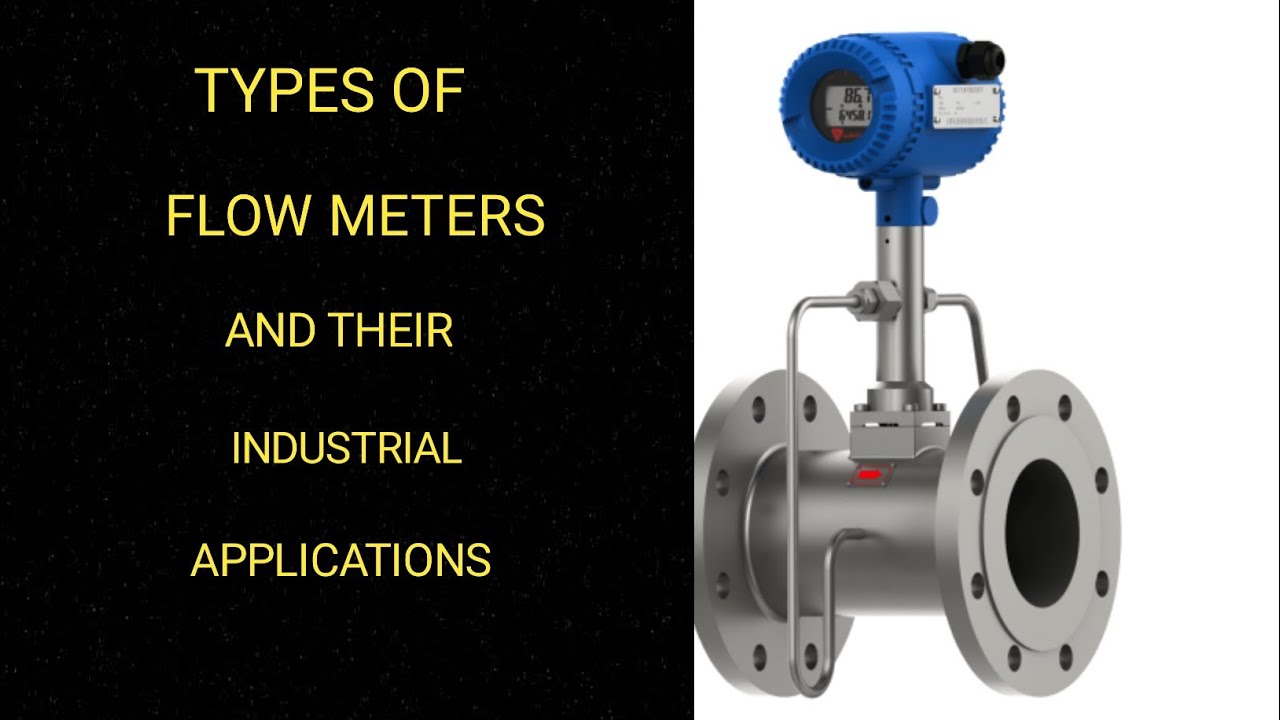
This video provides a clear visual walkthrough of how each major flow meter technology works — from electromagnetic induction to Coriolis vibration to vortex shedding — with industrial application examples. Share it with your client’s engineering teams as a structured introduction to technology selection logic.
Quick-Reference: Technology Selection Matrix for Distributors
Use this matrix to identify the right technology for the most common client scenarios your sales team encounters. Print it and keep it accessible during client conversations.
| Application / Fluid Type | Ultrasons | Électromagnétique | Vortex | Turbine | Coriolis | Primary Recommendation |
|---|---|---|---|---|---|---|
| Clean water (municipal, HVAC) | ✅ Clamp-on | ✅ Meilleur rapport qualité-prix | ⚠️ Possible | ⚠️ Wear risk | ✅ If mass needed | Électromagnétique (volume) or Coriolis (mass) |
| Wastewater / raw sewage | ⚠️ Doppler only | ✅ Dominant | ❌ Fouling | ❌ Rotor damage | ⚠️ Higher cost | Électromagnétique |
| Steam (saturated or superheated) | ❌ Signal degraded | ❌ Non-conductive | ✅ La coupe idéale | ⚠️ Condensate issues | ⚠️ Size/cost | Vortex |
| Compressed gas / air | ✅ Inline | ❌ Non-conductive | ✅ Good fit | ✅ High velocity | ✅ If mass needed | Vortex or Turbine |
| Refined fuels / petroleum | ✅ Inline | ❌ Non-conductive | ⚠️ Limited | ✅ Established | ✅ Custody transfer | Turbine (volume) or Coriolis (mass/custody) |
| Chemical slurry / abrasive | ⚠️ Doppler only | ✅ La coupe idéale | ❌ Bluff body fouling | ❌ Rotor damage | ✅ No obstructions | Électromagnétique |
| High-viscosity fluid (>100 cP) | ⚠️ Signal loss | ✅ Conductive | ❌ Stall risk | ❌ K-Factor drift | ✅ La coupe idéale | Coriolis |
| Pharma API / batch dosing | ⚠️ Limited sanitary | ✅ Sanitary (aqueous) | ❌ Not sanitary | ⚠️ Limited | ✅ Mass/density critical | Coriolis |
| Food / dairy / beverage | ⚠️ Limited | ✅ 3-A designs | ❌ Not 3-A | ⚠️ CIP challenges | ✅ 3-A/EHEDG | Coriolis or Électromagnétique |
| Retrofit (no process shutdown) | ✅ Clamp-on only | ❌ Requires shutdown | ❌ Requires shutdown | ❌ Requires shutdown | ❌ Requires shutdown | Ultrasonic clamp-on |
| Custody transfer (high-value fluid) | ✅ Multipath inline | ⚠️ Limited apps | ⚠️ Limited apps | ✅ API 5.3 (petroleum) | ✅ API 5.6 (liquid) | Depends on fluid: Coriolis or Turbine |
| Large diameter (DN300+) | ✅ La coupe idéale | ✅ La coupe idéale | ✅ Good fit | ⚠️ Cost escalates | ❌ Impractical | Électromagnétique or Ultrasons |
✅ = Recommended / well-suited | ⚠️ = Possible with conditions | ❌ = Not recommended. Data synthesized from manufacturer specifications, DwyerOmega technology guide, and Jade Ant Instruments application engineering data (2024–2025).

Your Path Forward in Flow Instrumentation Distribution
Why This Moment Matters for Your Distribution Business
The flow meter market does not grow in theory — it grows in the procurement decisions your clients make every quarter. Water utilities are replacing aging turbine meters with electromagnetic or ultrasonic alternatives. Chemical plants are moving from manual batch sampling to Coriolis-based inline density verification. HVAC operators are installing energy metering to meet ESG commitments that did not exist three years ago. Petroleum terminals are adding fiscal metering accuracy they cannot achieve with their existing installed base.
Your clients are facing real operational challenges that require reliable flow measurement solutions. By adding these five products to your portfolio, you are not just expanding inventory — you are positioning yourself as a trusted partner who understands their industry, their pain points, and their path to operational efficiency. That positioning is what separates advisors from vendors, and it is what clients pay premium margins to access.
Taking Action: Your Next Steps
Start with an honest assessment of your current customer base and their most pressing measurement needs. Survey your top 20 accounts in the next 30 days — not with a formal questionnaire, but with a targeted conversation about their current flow measurement infrastructure and where they feel it falls short. Let the responses guide your first stocking decisions.
Select one or two products that directly address the most common needs you identify, invest in your team’s application training before the first client conversation, and approach your clients with a documented problem-and-solution framework rather than a catalog presentation.
Building Long-Term Competitive Advantage
The distributors who will thrive in this market are those who become genuine advisors to their clients — understanding their applications, solving their problems, and continuously adding value that competitors cannot replicate by discounting a catalog. These five products give you the tools to build that advisory position. The question is not whether to add them. It is whether you begin building that capability now, or watch a competitor build it in your territory first.
Ready to Expand Your Flow Instrumentation Portfolio?
Jade Ant Instruments is an ISO-certified flow meter manufacturer offering electromagnetic, vortex, turbine, ultrasonic, and Coriolis flow meters with OEM/ODM customization, HART/Modbus/4–20mA communication options, and distributor-focused technical support.
Our distributor partner program includes application engineering support, technical training resources, competitive stocking terms, and a dedicated contact for technical questions that arise during client conversations and post-sale commissioning.
Start with a free technical consultation to identify which products best align with your existing customer base and market position. Our application engineering team will help you develop a product introduction strategy, identify the highest-ROI opportunities in your territory, and provide the technical documentation your sales team needs to sell with confidence.
👉 Contact the Jade Ant Instruments distributor team to schedule your strategic planning session and request our distributor product and pricing guide.
Glossary of Key Technical Terms
Précision — How close a flow meter’s reading is to the true flow rate, expressed as a percentage of reading (e.g., ±0.5% of rate) or percentage of full scale. Custody transfer applications require ±0.05–0.5%; process monitoring typically accepts ±1–3%.
Bluff body — A fixed, flow-obstructing element inside a vortex flow meter that generates repeating vortices downstream. The vortex frequency is proportional to flow velocity.
Coriolis force — The deflection force acting on a mass in motion relative to a rotating reference frame. In Coriolis flow meters, fluid moving through a vibrating tube experiences this force, creating a measurable phase shift proportional to mass flow rate.
Transfert de garde — A flow measurement point where commercial ownership of a fluid changes hands. Accuracy requirements at custody transfer points are regulated by standards such as API MPMS, OIML R117, and AGA-7/9.
Faraday’s Law — The electromagnetic principle underlying magnetic flow meters: a voltage proportional to fluid velocity is generated when a conductive fluid moves through a magnetic field. The voltage is detected by electrodes and converted to flow rate.
K-Factor — In turbine flow meters, the number of electrical pulses generated per unit volume of fluid (e.g., pulses per liter). Determined during factory calibration; changes with bearing wear, driving the need for periodic recalibration.
Répétabilité — How consistently a flow meter produces the same reading under identical conditions. Often more important than absolute accuracy for process control applications.
Straight-pipe run — The length of unobstructed, straight pipe required upstream and downstream of a flow meter to ensure a developed, symmetrical velocity profile at the measurement point. Insufficient straight-run is one of the most common causes of field measurement error.
Rapport de réduction — The ratio of maximum to minimum measurable flow within the meter’s rated accuracy specification. A 100:1 turndown means the meter measures accurately from 1 to 100 units without reconfiguration.
µS/cm (microsiemens per centimeter) — The unit of electrical conductivity used to characterize fluid suitability for electromagnetic flow measurement. Most magnetic flow meters require a minimum fluid conductivity of 3–5 µS/cm.