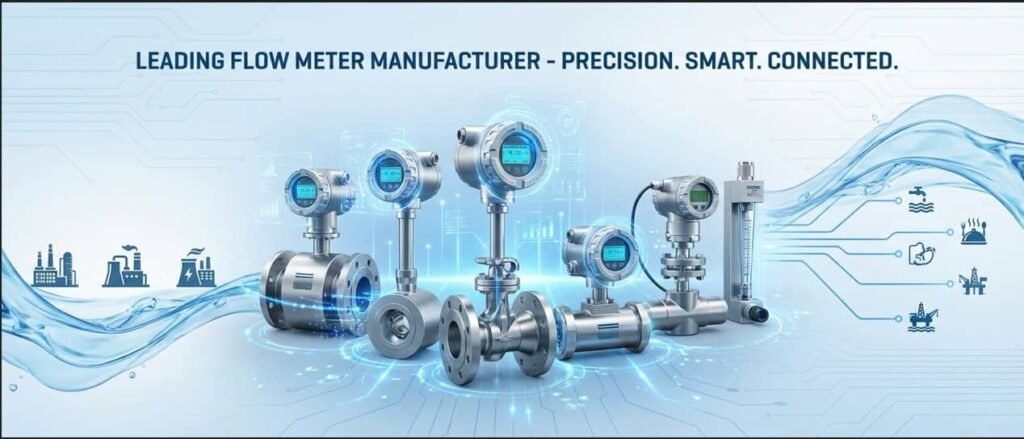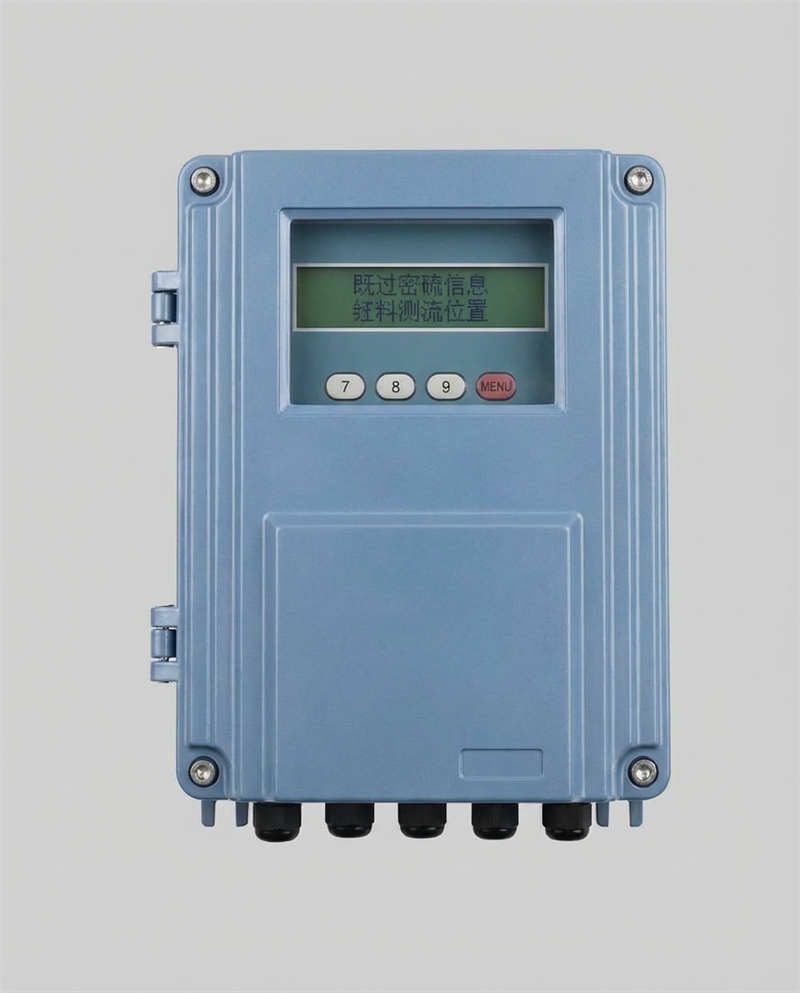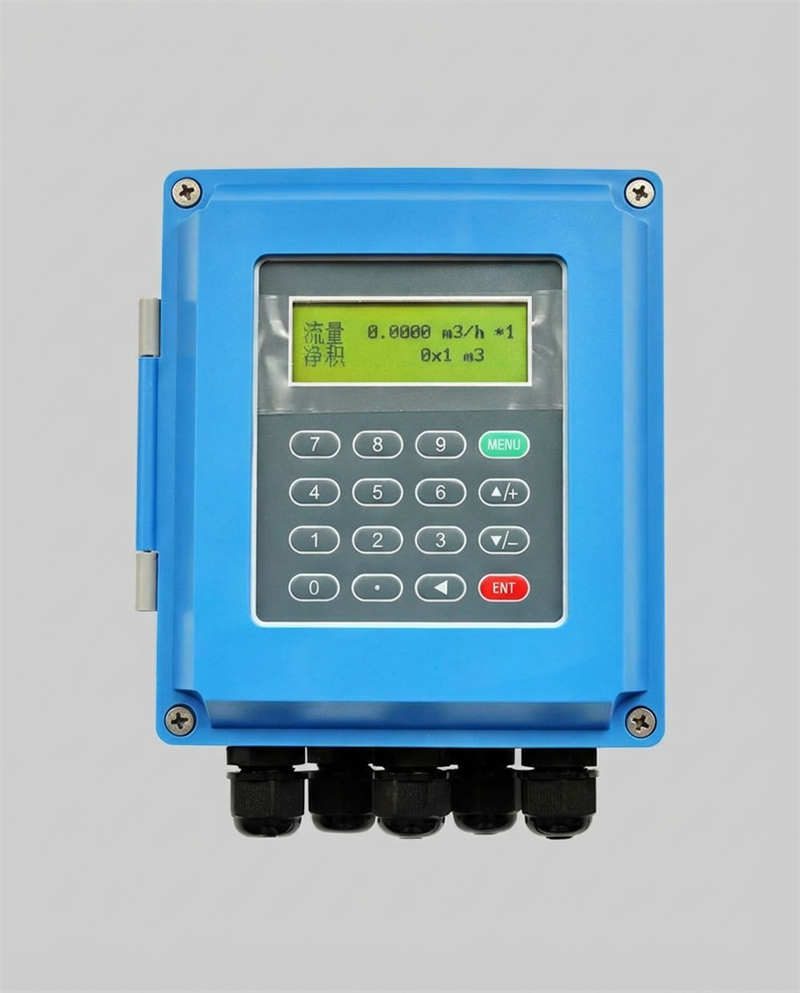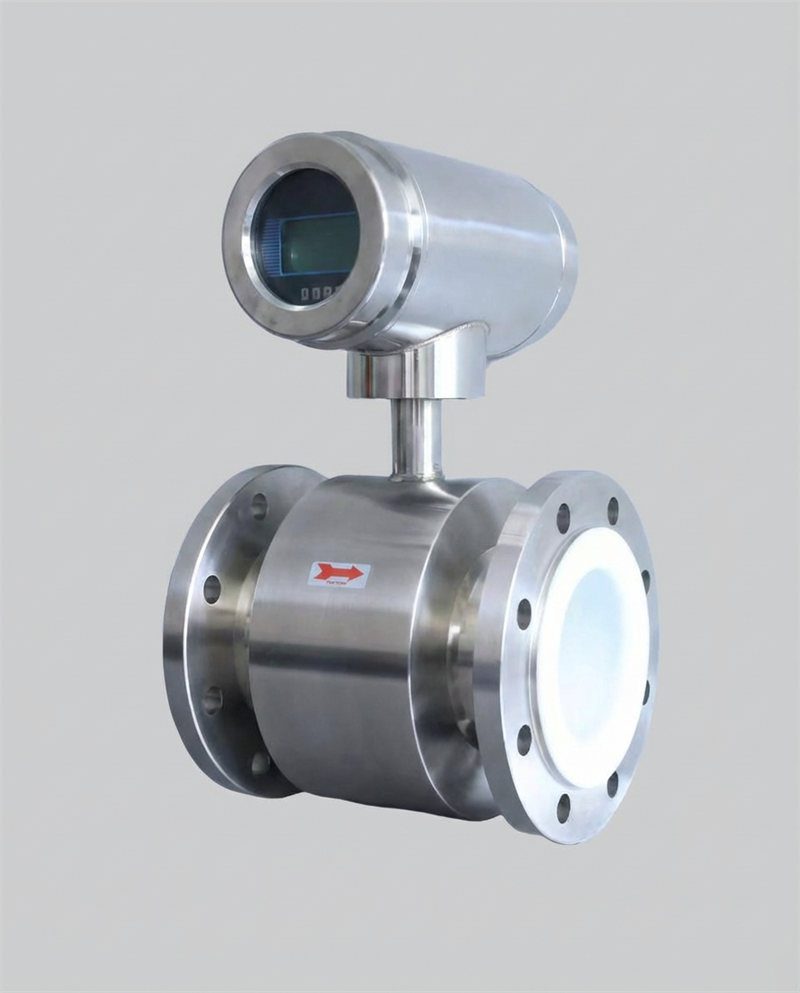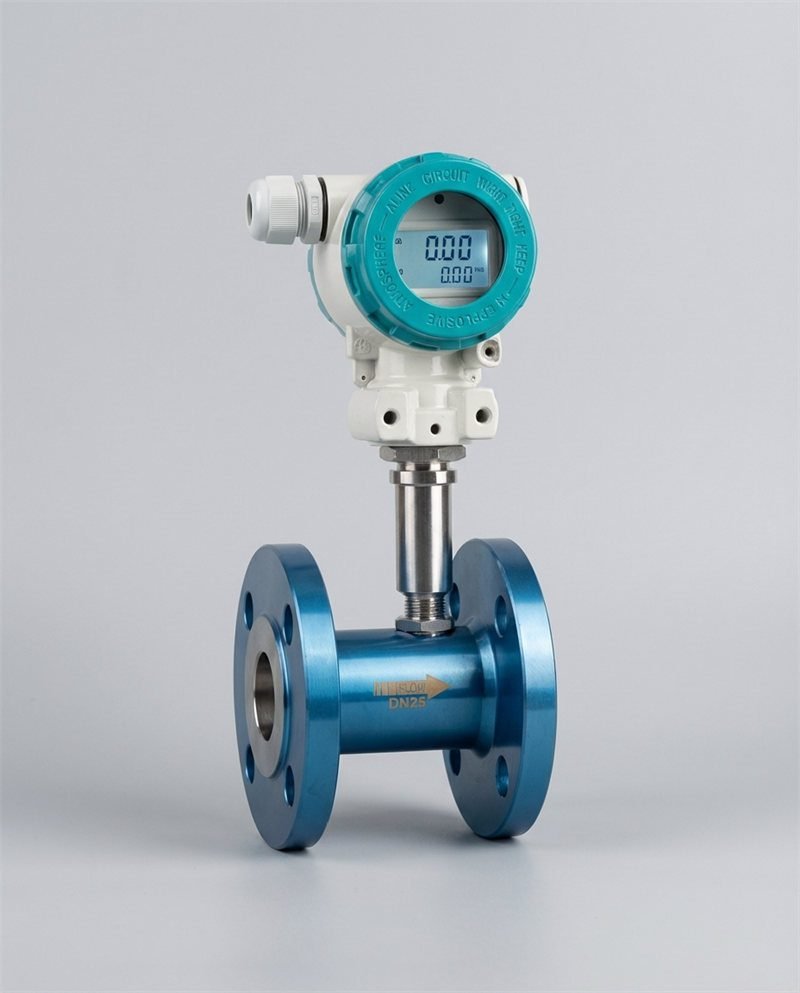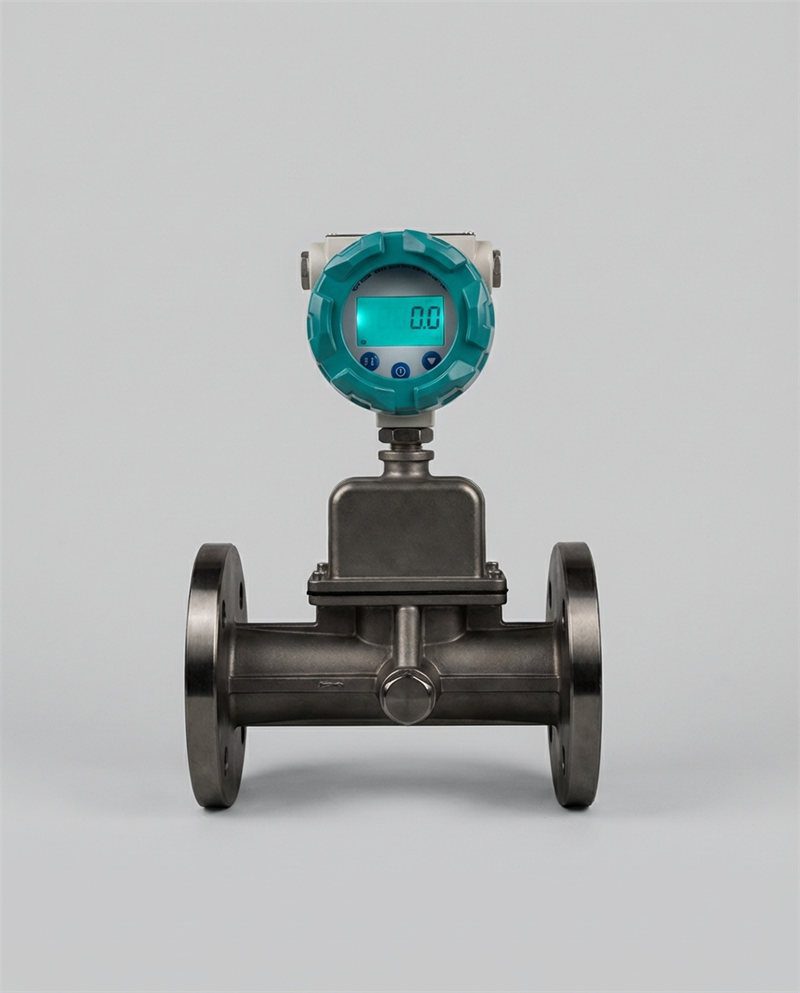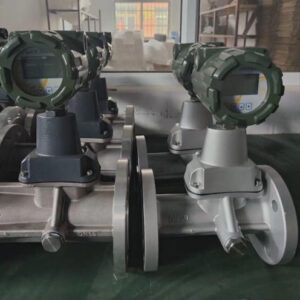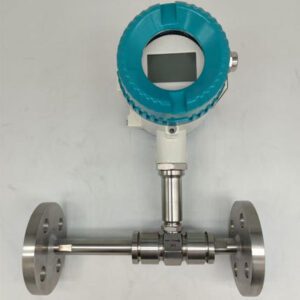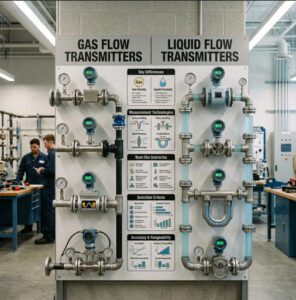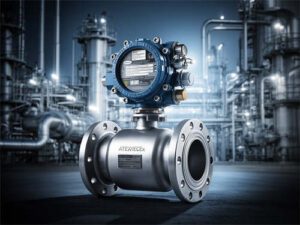
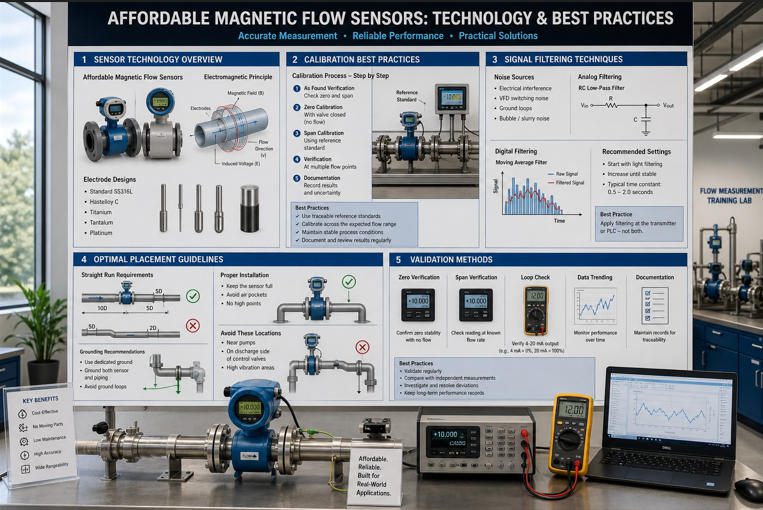
Magnetic flow measurement uses magnetic fields and electrical signals to estimate how fast a fluid is moving. In industrial flowmeters, the most common version is the electromagnetic flow meter, also called a mag flow meter or magmeter.
Accuracy matters because flow data often controls dosing, batching, water distribution, chemical usage, pump energy, and compliance reporting. A small flow error can become a large cost when the line runs every day.
Affordable magnetic sensing is possible, but low-cost devices need careful design. Hall-effect sensors, magnetoresistive sensors, search coils, and low-cost electromagnetic flow modules can work well when the application is understood. They perform poorly when calibration, grounding, noise filtering, pipe alignment, and validation are ignored.
This guide explains what affects accuracy, how affordable sensors compare, how to calibrate them, and how to build a practical validation workflow.

A magnetic flow meter measures flow without placing moving parts in the pipe. This is useful in water, wastewater, chemical liquids, slurries, and conductive process fluids.
The basic electromagnetic flow principle comes from Faraday’s law of electromagnetic induction. In simple terms: when a conductive liquid moves through a magnetic field, it creates a small voltage. That voltage increases as flow velocity increases.
Affordable sensing options are now common. Engineers and makers can buy compact Hall sensors, AMR sensors, search coils, low-cost ADC boards, and embedded signal processors. This lowers the entry cost, but it also increases the risk of false confidence.
A low-cost sensor can show repeatable numbers and still be wrong if the magnetic field is unstable, the pipe is misaligned, the signal is noisy, or the calibration was done at only one flow point.
Quick Glossary
- Magnetic flux: The total magnetic field passing through an area.
- Flux density, B: Magnetic field strength at a point, often measured in tesla or gauss.
- Hall-effect sensor: A sensor that outputs voltage when exposed to a magnetic field.
- AMR sensor: An anisotropic magnetoresistive sensor. It changes resistance when magnetic field direction changes.
- Search coil: A coil that produces voltage when magnetic field changes over time.
- Calibration: Comparing a sensor output against a known reference to create a reliable measurement curve.
For industrial magnetic meter selection, Jade Ant Instruments provides a practical magnetic flow meter selection guide for water and chemical applications. For liner, electrode, sizing, and grounding details, see its electromagnetic flow meter selection guide.
Fundamentals of Magnetic Flux and Measurement Accuracy
Magnetic Flux vs Flow Rate
Magnetic flux does not automatically equal flow rate. This is a common mistake.
In a true electromagnetic flowmeter, the flow signal is linked to three main factors:
Induced voltage ≈ B × D × v
- B = magnetic flux density
- D = distance between electrodes, usually related to pipe diameter
- v = average fluid velocity
If the pipe diameter and magnetic field are stable, the measured voltage can be converted into flow velocity. Then velocity is converted into volumetric flow using pipe area.
For example, if a conductive liquid moves twice as fast through the same magnetic field, the induced voltage should roughly double.

Key Accuracy Metrics: Offset, Span, Linearity, Noise
Affordable sensors should be judged by real measurement behavior, not only by price. Four terms are especially important.
| Accuracy Metric | Simple Definition | Example in Magnetic Flow Sensing | How to Reduce the Error |
|---|---|---|---|
| Offset | Output when real flow should be zero | Sensor shows 0.08 L/min when pump is off | Zero calibration, shielding, stable temperature |
| Span error | Wrong slope between signal and flow | Sensor reads 5% low at full flow | Multi-point calibration with reference meter |
| Linearity | How straight the signal-to-flow curve is | Accurate at mid-flow but wrong at low flow | Use calibration curve instead of one-point scaling |
| Noise | Random signal fluctuation | Reading jumps when a pump motor starts | Filtering, grounding, twisted-pair wiring, shielding |
Industry insight: in many low-cost systems, noise and offset create more field error than the sensor’s advertised sensitivity. A sensor with a good datasheet can still perform poorly beside a variable-frequency drive, pump motor, or unshielded power cable.
Sensor Technologies for Affordable Magnetic Flow Sensing
Hall-Effect Sensors
A Hall-effect sensor outputs a voltage when magnetic field passes through it. Hall sensors are inexpensive, widely available, compact, and easy to connect to microcontrollers.
They are useful for:
- Detecting a magnet on a rotating turbine or paddle wheel
- Monitoring magnetic field strength in a low-cost electromagnetic flow prototype
- Checking coil excitation stability
- Position and speed sensing in compact flow assemblies
Hall sensors are not ideal for very weak signals unless the design includes amplification, filtering, and temperature compensation. For background reading, Allegro provides a useful Hall-effect sensor applications guide.

Magnetoresistive AMR Options
AMR means anisotropic magnetoresistive. An AMR sensor changes electrical resistance when magnetic field direction changes.
AMR sensors can detect smaller field changes than many basic Hall sensors. They are useful when you need better sensitivity or directional field information.
AMR sensors are often considered when:
- The magnetic field is weak
- Direction matters
- The system needs better low-flow response
- The available sensor space is small
The trade-off is that AMR sensors can require more careful signal conditioning, bridge measurement, and temperature handling. They are affordable, but not always simpler.
Search Coils for Dynamic or Pulsatile Flow
A search coil generates voltage when magnetic field changes. It is useful for dynamic signals, pulses, vibration checks, and changing magnetic fields.
Search coils are not good for static magnetic field measurement. If the magnetic field is constant, the coil output can fall to zero.
They can be useful in systems where:
- Flow is pulsating
- A magnet moves past the coil
- Coil excitation is alternating
- The goal is to detect change rather than absolute field

Principles of Measurable Quantities and Calibration
Calibration Methods: In-Situ vs Reference Meters
In-situ calibration means checking the sensor while it is installed in the real pipe. This captures real flow profile, pipe effects, vibration, and electrical noise.
Reference meter calibration means comparing the affordable sensor against a trusted meter. The reference may be a calibrated electromagnetic, Coriolis, ultrasonic, or gravimetric setup.
Both methods are useful. In early development, a reference meter helps build the calibration curve. In operation, in-situ checks help confirm that the installed system has not drifted.
Jade Ant Instruments’ flow meter sensor calibration setup guide is a useful starting point for planning calibration tools, records, and repeatability checks.
Temperature Compensation and Drift Handling
Drift means the reading changes over time even when the real flow stays the same. Temperature is a common cause.
Affordable magnetic sensors, amplifiers, ADCs, coils, and magnets can all change behavior with temperature.
Use these practices:
- Record sensor temperature during calibration
- Calibrate at low, normal, and high operating temperatures when possible
- Use stable excitation current for coils
- Use temperature compensation in firmware
- Perform zero checks after warm-up
| Calibration Step | What to Do | Why It Matters | Excel Record Column |
|---|---|---|---|
| Zero check | Measure output at no flow | Find offset and electrical bias | Zero_Output_mV |
| Low-flow point | Test near minimum expected flow | Checks low signal reliability | Low_Flow_Error_% |
| Mid-flow point | Test near normal operating flow | Best estimate of daily performance | Normal_Flow_Error_% |
| High-flow point | Test near maximum flow | Checks span and saturation | High_Flow_Error_% |
| Repeatability check | Repeat each point three or more times | Separates random noise from bias | Std_Deviation |
For general calibration principles, Fluke’s flowmeter calibration best practices explain why traceability, stable conditions, and matching field conditions matter.
Noise Sources and Handling in Low-Cost Sensors
Electrical Noise and EMI Considerations
EMI means electromagnetic interference. It is unwanted electrical or magnetic energy from nearby equipment.
Common EMI sources include:
- Variable-frequency drives
- Pump motors
- Power cables
- Solenoid valves
- Welding equipment
- Radio transmitters
Low-cost sensors often use small signals. That makes them sensitive to noise. Use shielded cable, twisted-pair wiring, proper grounding, differential inputs, and physical separation from power wiring.
Mechanical Vibration and Installation Effects
Mechanical vibration can create false signal changes. It can move sensors, magnets, coils, wires, or electrodes slightly. It can also loosen connectors over time.
Mount sensors firmly. Avoid placing them on unsupported pipe sections near pumps or compressors. Use strain relief for cable exits.
Common Error Sources in Affordable Magnetic Flow Sensing
Qualitative field-risk score: 5 = highest risk if unmanaged
0
1
2
3
4
5
EMI
Temperature
Vibration
Alignment
ADC noise
Sensor Placement and Integration in Pipes
Linearity, Orientation, and Bore Alignment
Linearity means the sensor output changes in a predictable way as flow changes. Poor sensor placement can break linearity.
In electromagnetic flowmeters, the magnetic field should cross the conductive liquid evenly. Electrodes should be aligned correctly, and the pipe should remain full.
For magnet-based rotor systems, the Hall or AMR sensor must be placed at a repeatable distance from the magnet. Even a small gap change can shift the signal.
Best practices include:
- Keep the sensor centered and mechanically fixed
- Maintain a stable magnet-to-sensor gap
- Use non-magnetic mounting hardware when needed
- Keep the pipe full for liquid measurement
- Avoid air bubbles near electrodes or sensing zones
Mitigating Magnetic Interference from Surroundings
Nearby magnets, motors, steel structures, and high-current cables can distort the field. This is especially important for Hall and AMR sensors.
Use shielding, distance, differential sensing, baseline subtraction, and installation checks. During commissioning, record the zero reading with the pump off and nearby equipment both off and on.
Affordable Magnetic Flow Sensor Placement
Flow direction
Excitation coil / magnet
Hall / AMR sensor
Electrode / reference point
Electrode / reference point
Signal processor
Filter + calibration curve
Keep sensor gap, pipe filling, grounding, and alignment consistent from calibration to field installation.
Signal Conditioning and Processing for Accuracy
Filtering and Sampling Strategies
Signal conditioning means cleaning and preparing the sensor signal before calculating flow.
Low-cost sensors usually need:
- Amplification for weak signals
- Low-pass filtering to reduce high-frequency noise
- Notch filtering if mains frequency noise is strong
- Stable analog-to-digital conversion
- Grounding and shielding
Sampling too slowly can miss flow pulses. Sampling too fast without filtering can capture noise instead of useful data.
A practical starting point is to sample faster than the expected signal changes, then average over a controlled time window. For batching, use shorter windows. For steady water flow, longer averaging may be acceptable.
Demodulation and Drift Correction Techniques
Demodulation means extracting the useful signal from a changing excitation pattern. In many electromagnetic flowmeters, coil excitation is pulsed or alternating. The system separates real flow voltage from electrode offset and noise.
Drift correction can include:
- Zero-flow checks
- Temperature-based correction
- Auto-zero cycles
- Baseline subtraction
- Reference coil or reference sensor monitoring
Texas Instruments offers a useful technical document on interpreting Hall sensor parameters in its Hall-effect sensor data sheet guide, which is helpful when converting low-cost sensor output into stable engineering values.
Open-Source and Affordable Sensor Options
Off-the-Shelf Modules and Kits
Affordable magnetic sensing can start with off-the-shelf modules. Common options include Hall switch modules, analog Hall sensors, AMR compass-style sensors, search coils, low-cost ADC boards, and microcontroller platforms.
These modules are useful for prototypes, lab setups, water treatment pilots, educational systems, and non-critical monitoring. They are usually not direct replacements for certified industrial flowmeters.
| Affordable Option | Best Fit | Typical Strength | Main Risk |
|---|---|---|---|
| Analog Hall sensor | Magnet position, rotor pulse, coil field check | Low cost and easy wiring | Temperature drift and external magnetic interference |
| AMR sensor | Weak field or directional field sensing | Higher sensitivity than many basic Hall sensors | Needs careful signal conditioning |
| Search coil | Pulsating or changing magnetic fields | Simple and robust for dynamic signals | Cannot measure static field well |
| Low-cost mag flow module | Conductive liquid prototypes | Closer to real magmeter principle | Grounding, electrode fouling, and calibration quality |
| Microcontroller + ADC | Custom signal processing | Flexible filtering and data logging | ADC resolution and electrical layout mistakes |
DIY Solutions: Pros, Cons, and Risk Considerations
DIY systems can be useful when the goal is learning, trend monitoring, or low-risk process visibility. They are risky when used for billing, safety, legal reporting, expensive chemical dosing, or critical process control.
Use a DIY system when:
- The fluid is safe
- The process can tolerate measurement error
- You can validate against a reference
- You can inspect and recalibrate often
Use an industrial magmeter when:
- The reading controls product quality
- The line is hazardous or corrosive
- Traceable calibration is required
- The plant needs long-term reliability records
- Downtime costs more than the instrument
For comparing industrial brands and practical features, Jade Ant Instruments’ top magnetic flow meter brand comparison gives engineers a useful benchmark.
Validation and Benchmarking Approaches
Bench Testing Setups and Reference Measurements
Bench testing should reproduce the field conditions as closely as possible. A simple setup may include a pump, tank, control valve, reference meter, test sensor, temperature sensor, and data logger.
Test at several flow points. Do not calibrate only at one flow rate.
Recommended points:
- Zero flow
- 10% of expected maximum
- 25% of expected maximum
- 50% of expected maximum
- 75% of expected maximum
- 100% of expected maximum
Field Validation and Repeatability Checks
After installation, repeat key checks in the real process. Compare the affordable sensor with a reference method.
Useful field references include:
- Temporary clamp-on ultrasonic meter
- Tank drawdown test
- Weighing test for batch liquid
- Existing plant flowmeter
- Pump curve check
- Mass balance around a process unit
Validation Priorities for Affordable Magnetic Flow Sensors
Qualitative project effort split for practical deployment
Validation
Plan
Reference meter comparison: 25%
Multi-point calibration: 25%
Noise and EMI checks: 15%
Temperature testing: 20%
Field repeatability checks: 15%
Practical Applications and Case Studies
Water and Liquid Flow Measurements
Magnetic flow measurement is strongest with conductive liquids. Common examples include drinking water, wastewater, cooling water, chemical dosing streams, and slurry-like water mixtures.
For affordable setups, the most realistic use cases include:
- Trend monitoring in a non-critical water line
- Low-cost pump performance checks
- Educational flow bench projects
- Prototype dosing skid validation
- Temporary flow pattern studies
For industrial water and chemical applications, Jade Ant Instruments’ magnetic flow meter applications guide gives examples across water, chemical, food, mining, and process industries.
.jpg "Electromagnetic Flowmeter with Conductive Liquid Flow")
Gas, Oil, and Multi-Phase Flow Considerations
Standard electromagnetic flowmeters do not measure gas flow because gas is not conductive enough for the Faraday voltage principle.
Oil is also often unsuitable unless it has enough conductivity, which most refined hydrocarbons do not.
Multi-phase flow is difficult. Bubbles, droplets, solids, and changing conductivity can all create unstable readings.
If the application involves gas or non-conductive oil, consider other technologies such as thermal mass, Coriolis, differential pressure, turbine, or ultrasonic meters. Jade Ant Instruments discusses cross-technology selection in its flowmeter sensor selection factors guide.
Maintenance, Reliability, and Best Practices
Calibration Schedules and Record-Keeping
Affordable sensors should be checked more often than mature industrial instruments, especially during the first months of use.
A practical schedule:
- Check zero after installation
- Repeat calibration after the first week of operation
- Check monthly during early deployment
- Move to quarterly or semiannual checks if drift is low
- Recalibrate after sensor replacement, pipe work, pump changes, or wiring changes
Keep records of raw signal, calculated flow, reference flow, temperature, pump status, and firmware version. Without records, troubleshooting becomes guesswork.
Diagnostics, Troubleshooting, and Lifecycle Forecasting
Useful diagnostics include:
- Zero offset trend
- Signal noise level
- Sensor temperature
- Coil current or excitation stability
- Reference check error
- Battery or supply voltage
- Unexpected magnetic field alarms
Lifecycle forecasting means using these records to predict when cleaning, recalibration, cable replacement, or sensor replacement is needed.
Industry insight: the lowest-cost sensor is not always the lowest-cost system. If technicians must visit the site repeatedly to correct drift or noise, a better sensor, better shielding, or a complete industrial meter may cost less over the equipment life.
Recommended YouTube Video
The video below provides a visual explanation of how magnetic flow meters work and why conductive liquid, magnetic field, and electrode signal matter.
Affordable sensors can measure magnetic flow accurately, but only when the measurement principle, calibration, installation, and validation are treated as one system.
The key steps are:
- Confirm that the fluid and sensing principle match. Conductive liquids suit electromagnetic flow measurement; gases and most oils usually do not.
- Choose the right sensor type. Hall sensors, AMR sensors, and search coils each measure magnetic behavior differently.
- Control offset, span, linearity, and noise through calibration and signal conditioning.
- Protect the sensor from EMI, vibration, temperature drift, and alignment changes.
- Validate with a reference meter or field cross-check before trusting the data.
For a quick start, practitioners can use this checklist:
- Define fluid type, conductivity, flow range, pipe size, and accuracy target.
- Select Hall, AMR, search coil, or magmeter module based on the signal type.
- Build a stable mechanical mount and protect wiring from EMI.
- Record zero, low-flow, normal-flow, and high-flow points.
- Create a calibration curve instead of using one-point scaling.
- Test temperature drift and repeatability.
- Validate in the field with a reference method.
- Keep calibration and maintenance records.
When the application is critical, use affordable sensors for prototyping and trend insight, but specify an industrial flowmeter for control, compliance, billing, and safety-related measurement.
FAQs
What factors most affect accuracy in low-cost mag flow sensors?
The biggest factors are calibration quality, electrical noise, sensor alignment, fluid conductivity, temperature drift, grounding, pipe filling, and magnetic interference from nearby motors or power cables.
How often should calibration be performed in the field?
For a new affordable sensor setup, check calibration after installation, after the first week, and monthly during early use. If drift remains low, extend the interval to quarterly or semiannual checks based on process risk.
Can affordable sensors replace high-end systems for my application?
They can replace high-end systems only in low-risk applications where trend monitoring is enough and regular validation is possible. For billing, compliance, safety, or process-critical control, an industrial calibrated meter is usually the better choice.
Can Hall-effect sensors measure liquid flow directly?
Usually no. A Hall sensor measures magnetic field, not liquid flow. It can support flow measurement by detecting a magnet on a rotor, monitoring coil field strength, or being part of a calibrated magnetic sensing system.
Why do magnetic flowmeters need conductive liquid?
Electromagnetic flowmeters depend on a voltage generated by conductive liquid moving through a magnetic field. If the fluid is not conductive, the signal is too weak or absent.
What is the difference between Hall sensors and AMR sensors?
Hall sensors output a voltage in response to magnetic field. AMR sensors change resistance based on magnetic field direction. AMR sensors can be more sensitive, but they often need more careful signal conditioning.
Are search coils suitable for steady flow?
Search coils are best for changing magnetic fields. They are not ideal for static field measurement. They may work in pulsatile flow, rotating magnet systems, or alternating excitation designs.
What is the simplest validation method for a low-cost flow sensor?
A simple method is to compare sensor readings with a reference meter or a timed tank-fill test at several flow points. Always include zero, low-flow, normal-flow, and high-flow checks.