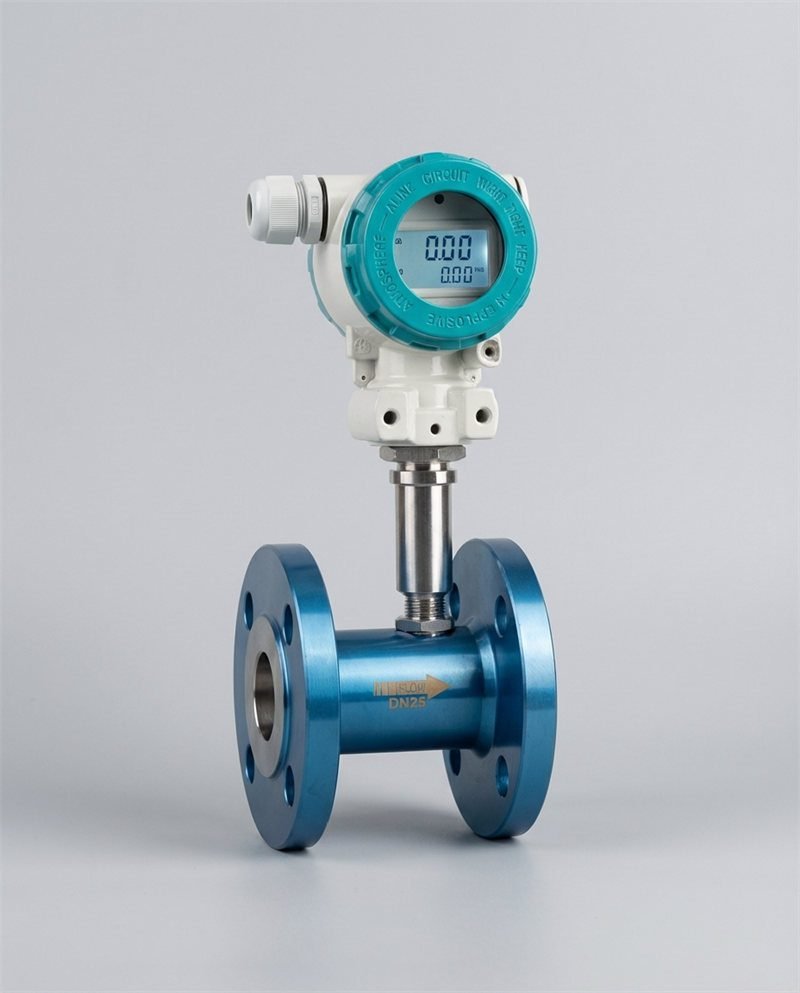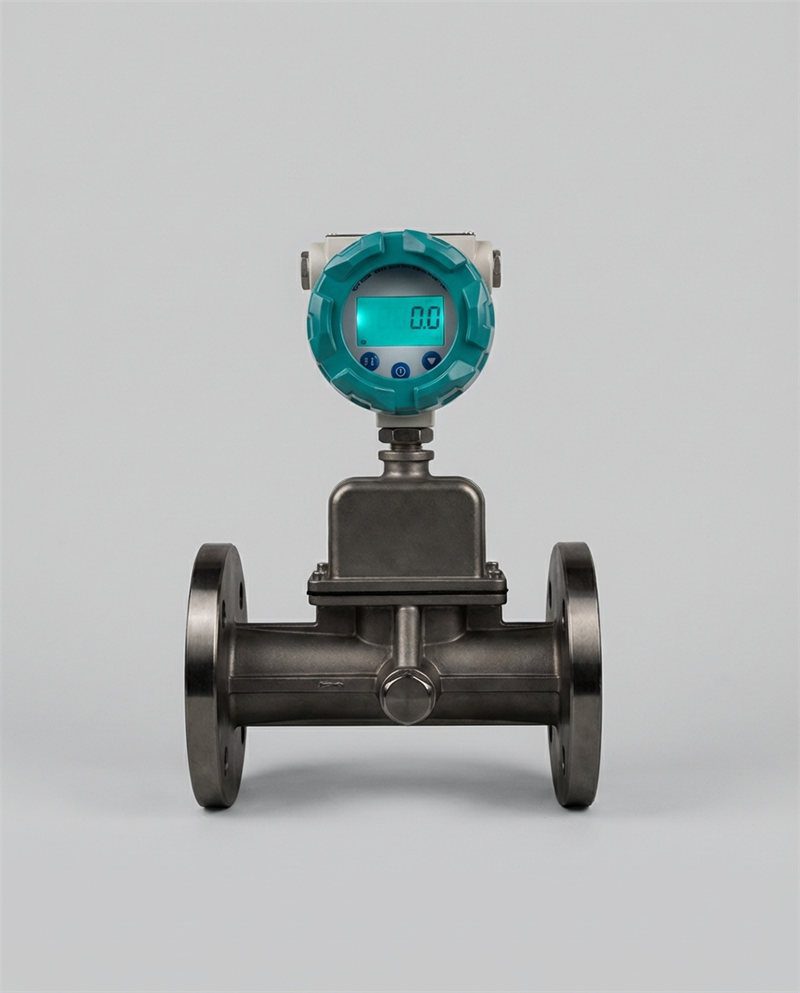
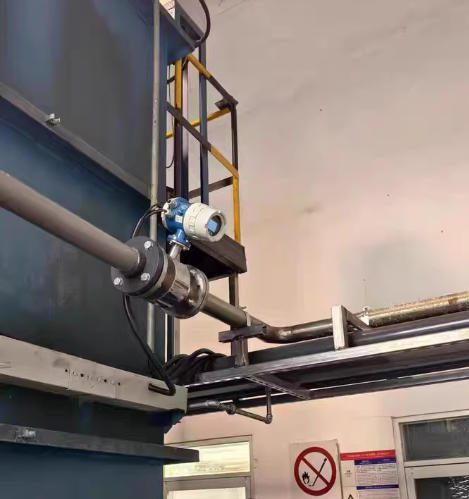
In a global flow meter market worth USD 12.14 billion in 2026 and projected to reach USD 19.46 billion by 2034 at 6.08 % CAGR (Fortune Business Insights), air flow measurement occupies a critical — and frequently under-invested — segment. A 2026 analysis by KMC Controls found that inaccurate airflow measurement in commercial buildings wastes 10–20 % more energy, translating to $8,400–$16,800 per year on a 100-ton rooftop system. The National Institute of Standards and Technology (NIST) has confirmed that poor HVAC installation — including incorrect airflow metering — can increase energy use by up to 30 %.
This guide exists because choosing an air flow meter is not just a procurement task; it is a decision that touches energy cost, indoor air quality, process yield, and regulatory compliance for years. We will walk through system requirements, technology types, process variables, installation rules, accuracy factors, compliance standards, maintenance protocols, and a concrete decision-making framework — following the same methodology that Jade Ant Instruments applies when engineering airflow measurement solutions for HVAC campuses, chemical plants, pharmaceutical cleanrooms, and power-generation facilities.
The scope covers both HVAC (building ventilation, demand-controlled ventilation, AHU monitoring) and industrial (compressed-air auditing, flare-gas measurement, furnace outlet monitoring, process off-gas) contexts. We will address common misconceptions — for example, the belief that a pitot tube is “good enough” for any duct, or that an ultrasonic meter eliminates all installation headaches — and replace them with data-driven guidance grounded in ASHRAE, ISO, and real project experience.

1. Understand Your System Requirements
1.1 Identify HVAC vs. Industrial Objectives and Constraints
HVAC and industrial air-flow applications differ in three fundamental ways that shape every downstream decision: velocity range, cleanliness, and consequence of measurement error.
HVAC ductwork typically operates between 500 and 2,500 feet per minute (fpm), with clean filtered air at near-ambient temperature and atmospheric pressure. The primary objective is verifying that the AHU delivers the outdoor-air volume required by ASHRAE Standard 62.1 — typically 5–20 CFM per person depending on occupancy category. Measurement accuracy of ±5–10 % is often acceptable because the ventilation rate table already includes safety margins. Installation space is constrained by ceiling plenums and shaft dimensions; the meter must not create excessive pressure drop that would force fan speed increases and energy waste.
Industrial air-flow measurement, by contrast, may involve compressed air at 100–150 psig, furnace exhaust at 400–850 °F, flare-header gas with variable composition, or cleanroom supply air where ±2 % accuracy is mandatory to maintain ISO 14644 particle counts. The consequence of under-measurement in a compressed-air system is not just discomfort — it is $0.20–$0.30/1,000 SCF of wasted compressor energy that goes untracked. In a pharmaceutical cleanroom, a 15 % airflow shortfall during production can trigger a batch rejection worth $50,000–$500,000.
Before opening a single meter catalog, document the following for every measurement point: fluid (air, nitrogen, mixed gas), pressure range, temperature range, duct or pipe diameter, available straight-run, acceptable pressure drop, required accuracy, output signal (4–20 mA, BACnet, Modbus), and the business consequence of a 5 % measurement error. Jade Ant Instruments’ 5-factor selection guide provides a downloadable worksheet for this exercise.
1.2 Determine Target Flow Ranges, Accuracy Needs, and Operating Conditions
Air flow meters are specified by three interlocking parameters: flow range (minimum to maximum), accuracy at a specific point in that range, and the temperature–pressure envelope. A meter rated ±1 % of reading at 1,000–10,000 fpm may degrade to ±5 % at 200 fpm because the signal-to-noise ratio collapses at low velocity. If your AHU modulates down to 30 % capacity during unoccupied hours, that low-end accuracy becomes the controlling specification — not the high-end number on the datasheet.
Operating conditions also dictate material and electronics choices. A rooftop AHU in Phoenix, Arizona, must handle 120 °F supply-air temperature and UV exposure on the enclosure. A flare-gas header in a Houston refinery sees 200–600 °F, H₂S traces, and Class I Division 1 hazardous-area requirements. A food-processing exhaust duct carries moisture-laden air at 95 % RH with grease particles. Each scenario eliminates certain meter types before you even consider accuracy.
1.3 Assess System Dynamics and Variability (Steady vs. Pulsed Flow)
Steady-state flow — a constant-speed AHU operating 24/7 — presents the easiest measurement challenge because any meter technology can settle and average. Variable-flow systems (VAV boxes, modulating dampers, reciprocating compressors) introduce pulsation and transient peaks that test meter response time. A pitot-tube array with a 2-second response time will under-report peak flow in a VAV system cycling at 10-second intervals. A thermal mass meter with 100-millisecond response captures those peaks accurately and reports a correct time-averaged flow.
If your system includes reciprocating compressors or pulsating fans, specify a meter with a response time at least 5× faster than the pulsation period. For a compressor cycling at 2 Hz, that means a meter response under 100 ms — ruling out most pitot arrays and differential-pressure devices, and favoring thermal or ultrasonic technologies.
2. Types of Air Flow Meters Used in HVAC and Industrial Settings
2.1 Quick Overview of Common Technologies
Four primary technologies dominate air flow measurement: Pitot tube / averaging pitot arrays, thermal mass (dispersion) meters, ultrasonic (transit-time) meters, and vortex shedding meters. Differential-pressure devices like orifice plates appear in compressed-air systems but are increasingly displaced by thermal and vortex technologies for air-specific applications. The table below provides a high-level comparison; subsequent sections unpack each technology in detail.
| Parameter | Pitot / Avg. Pitot Array | Thermal Mass | Ultrasonic (Transit-Time) | Vortex Shedding |
|---|---|---|---|---|
| Measurement Principle | Differential pressure (velocity pressure) | Heat transfer from heated sensor | Time-of-flight difference | Kármán vortex frequency |
| Typical Accuracy | ±2–5 % FS | ±1–3 % of reading | ±1–2 % of reading | ±0.75–1.5 % of reading |
| Turndown Ratio | 3:1 to 4:1 | 100:1 to 200:1 | 30:1 to 100:1 | 15:1 to 30:1 |
| Pressure Drop | Low–moderate (0.1–0.5 in. WC) | Negligible (<0.1 in. WC) | Zero (clamp-on) to low (inline) | Moderate (1–3 in. WC) |
| Response Time | 1–5 seconds | 0.05–1 second | 0.1–1 second | 0.5–2 seconds |
| Max Temperature | Up to 1,200 °F | Up to 850 °F | Up to 400 °F (inline) | Up to 750 °F |
| Moving Parts | None | None | None | None |
| Equipment Cost (4-in) | $200–$1,500 | $1,500–$8,000 | $3,000–$12,000 | $1,200–$5,000 |
| Best HVAC Use | Duct balancing, OA intake | DCV, AHU monitoring, audits | Large chilled-water pipes (air is secondary) | Compressed air, large ducts |
| Best Industrial Use | Stack testing, temporary surveys | Compressed-air audit, flare gas, process gas | Natural gas, flare headers | Steam, process air, compressed air |
2.2 Strengths, Limitations, and Typical Application Scenarios
Pitot Tubes & Averaging Pitot Arrays are the lowest-cost option and require no power supply for the sensor element itself (only the DP transmitter). They are the workhorse of duct traversing in ASHRAE 111 test-and-balance work. Limitations emerge at low velocities: below 600–800 fpm, the velocity pressure signal falls below 0.02 in. WC — within the noise floor of most DP transmitters. Accuracy degrades from ±2 % under ideal lab conditions to ±5 % or worse in field installations with poor straight-run. Because pitot arrays measure velocity pressure (proportional to v²), their output is nonlinear and more sensitive to profile distortion than other technologies.
Thermal Mass Flow Meters directly measure mass flow rate, eliminating the need for separate temperature and pressure compensation. A heated sensor element loses heat proportionally to the mass of gas flowing past it. Jade Ant Instruments’ 2026 thermal meter comparison details two sub-types: constant-temperature anemometers (CTA, ±1–2 %, response <100 ms, best for clean HVAC) and constant-power designs (CPD, ±2–4 %, operates to 850 °F, best for furnace exhaust). Thermal meters offer turndown ratios of 100:1 or better, making them the go-to technology for systems that modulate from 10 % to 100 % flow. Their weakness is sensitivity to gas composition changes; if the gas mix shifts (e.g., biogas with variable methane content), accuracy degrades unless the meter has multi-gas compensation firmware.
Ultrasonic (Transit-Time) Meters send sound pulses diagonally across the flow path; the transit-time difference between upstream and downstream pulses is proportional to velocity. Clamp-on versions install without pipe penetration — ideal for retrofit on large water mains — but their performance on air and gas is limited because acoustic impedance mismatch at the pipe wall attenuates the signal. Inline ultrasonic meters with wetted transducers perform better on gas but cost $5,000–$12,000 for a 4-inch size. Ultrasonic meters are largely a liquid-flow technology that overlaps into gas measurement at larger pipe sizes (≥6 in.) where the path length is sufficient for signal integrity.
Vortex Shedding Meters count the frequency of vortices shed behind a bluff body; frequency is proportional to velocity. Jade Ant Instruments’ vortex vs. turbine guide explains the Kármán vortex principle in depth. Vortex meters deliver excellent accuracy (±0.75–1.5 % of reading) with no moving parts and minimal maintenance, but they require a minimum Reynolds number (typically Re > 10,000–20,000) to shed vortices reliably. At low velocities — below ~600 fpm in a 4-inch pipe — vortex meters produce no signal. This minimum-velocity cutoff makes them unsuitable for VAV systems that modulate to near-zero flow but excellent for constant-volume compressed-air headers and steam lines.
2.3 Guidelines for Selecting a Technology Based on Use Case
The decision tree is straightforward when you anchor it to three questions: (a) Does the application require measurement down to very low flow rates? If yes → thermal mass. (b) Is the application at elevated temperature (>400 °F)? If yes → thermal (CPD) or vortex. (c) Is the budget under $1,500 and accuracy of ±5 % acceptable? If yes → pitot array. For everything in between, the comparison table above and the detailed cost analysis in Section 8 will narrow the field to one or two candidates.

3. Process Variables to Consider
3.1 Key Measurements: Flow Rate, Pressure, Temperature, Humidity, and Air Density
Air is not a constant. Its density at 70 °F and 14.696 psia is 0.075 lb/ft³, but at 200 °F and 80 psig it is 0.49 lb/ft³ — a 6.5× difference. Any volumetric meter (pitot, vortex, ultrasonic) that reports in actual cubic feet per minute (ACFM) must be corrected to standard conditions (SCFM) before the reading is meaningful for energy accounting or process control. Thermal mass meters bypass this issue entirely because they measure mass flow rate directly, though they require gas-specific calibration.
Humidity is a silent accuracy thief. Water vapor displaces nitrogen and oxygen, changing the gas’s thermal conductivity and specific heat. At 90 % RH and 90 °F, the moisture fraction shifts the heat-transfer coefficient of air by roughly 1.5–2 %, which directly biases a thermal meter reading if the calibration was performed on dry air. For HVAC outdoor-air intakes in humid climates, specify a thermal meter with humidity compensation or accept an additional ±2 % systematic error.
3.2 Impact of Gas Composition and Vapor Content on Accuracy
In industrial settings, “air” is rarely pure. A landfill-gas blower may handle 45–55 % methane with 35–45 % CO₂ and trace H₂S. A semiconductor fab exhaust contains nitrogen carrier gas with ppm-level silane and ammonia. Each component has different thermal conductivity, specific heat, and acoustic velocity — the very properties that thermal and ultrasonic meters rely upon. A thermal meter calibrated on nitrogen will read 8–12 % high on a 50/50 methane-CO₂ blend because methane’s thermal conductivity is 2.2× that of nitrogen. The fix is gas-specific calibration or, for variable compositions, a multi-gas algorithm that adjusts in real time based on auxiliary gas-analyzer input.
3.3 How Variable Conditions Affect Sensor Performance and Drift
Temperature cycling (e.g., a rooftop unit in a desert climate swinging from 40 °F at dawn to 120 °F at midday) induces thermal stress on sensors and electronics. Pitot tubes are largely immune because they are passive metal elements, but their DP transmitters drift if not temperature-compensated. Thermal sensors drift 0.02–0.05 % of reading per °F of ambient shift unless active compensation is built in. Vortex sensors are mechanically robust but their piezoelectric detectors lose sensitivity above 500 °F, requiring high-temperature charge amplifiers.
Over months, particulate buildup on a thermal sensor’s heated element insulates it from the gas stream, causing a gradual downward drift in reading — a Midwest data center using thermal sensors on outside-air intakes documented a 4 % drift over 18 months before cleaning restored factory accuracy. Scheduling sensor inspection at the intervals recommended in Section 9 prevents this silent degradation.
4. Installation Considerations
4.1 Optimal Placement, Straight-Run Lengths, and Avoidance of Flow Disturbances
Every air flow meter requires a certain length of straight, unobstructed duct upstream and downstream of the sensor to ensure a fully developed velocity profile. The table below summarizes straight-run requirements from manufacturers and ISO 5167.
| Meter Technology | After Single 90° Elbow | After Two Elbows (Different Planes) | After Partially Open Damper | After Expansion / Contraction |
|---|---|---|---|---|
| Pitot Array | 8D / 3D | 15D / 3D | 20D / 5D | 8D / 3D |
| Thermal Mass | 10–15D / 5D | 20–25D / 5D | 25–30D / 8D | 10D / 5D |
| Ultrasonic (inline) | 10D / 5D | 20D / 5D | 30D / 5D | 10D / 5D |
| Vortex | 15–20D / 5D | 25–30D / 5D | 30D / 5D | 15D / 5D |
When space is insufficient, install a flow conditioner (tube bundle, perforated plate, or tab-style vane) 3D upstream of the meter. A tube-bundle conditioner costs $300–$1,200 for a 12–24-inch duct and compresses the effective requirement to approximately 5D total. Jade Ant Instruments’ metering-company guide lists the standard 10D/5D rule as a starting baseline, adjustable by technology and upstream fitting.
4.2 Piping, Ducts, and Mounting Orientations to Minimize Errors
In round duct, mount insertion-type meters (thermal probes, pitot arrays) at the duct centerline, oriented so the sensor faces into the flow. In rectangular duct, multi-point averaging arrays — whether pitot or thermal — should span the full duct cross-section with at least one sensor per 4 ft² of duct area, per ASHRAE 111 traverse requirements. Avoid mounting in the first duct section after an AHU discharge plenum; the fan’s swirl pattern persists for 5–8 equivalent diameters and will bias any single-point sensor by 8–15 %.
For inline meters (vortex, ultrasonic), mount in a horizontal duct with the electronics enclosure at the 3-o’clock or 9-o’clock position. Never mount with the enclosure below the pipe in gas service — condensate pooling in the enclosure causes corrosion and electrical faults.
4.3 Impact on Pressure Drop and Energy Efficiency
Pressure drop directly translates to fan energy. Every 1 in. WC of static-pressure increase across a flow-measurement device on a 20,000-CFM AHU adds approximately 3.1 brake horsepower (2.3 kW) of fan load. At $0.12/kWh and 8,760 operating hours, that is $2,420/yr in electricity. A pitot array adds 0.1–0.3 in. WC; a vortex meter adds 1–3 in. WC; a thermal insertion probe adds <0.05 in. WC. For energy-conscious HVAC applications, the near-zero pressure drop of thermal sensors is a significant advantage that compounds over years of operation.
5. Accuracy, Range, and Calibration
5.1 Understanding Measurement Ranges and Turndown Ratios
Turndown ratio (rangeability) defines how much a system can modulate before the meter loses accuracy. A pitot array with 3:1 turndown on a duct designed for 2,000 fpm can only measure reliably down to ~667 fpm. If your VAV system modulates to 400 fpm at night, the pitot array is blind. A thermal meter with 100:1 turndown on the same duct measures accurately from 2,000 fpm down to 20 fpm — capturing the full operating envelope.
For industrial compressed-air systems, Jade Ant Instruments’ datasheet guide recommends sizing the meter so the normal operating point falls between 25 % and 75 % of the meter’s full-scale range. Sizing to 100 % of full scale leaves no headroom for surge events; sizing to 10 % of full scale puts the operating point in the lowest-accuracy zone.
5.2 Calibration Frequency, References, and Traceability
Calibration intervals depend on technology and environment. The industry baseline, confirmed by Endress+Hauser’s calibration management white paper, is annual verification for critical applications. Practical intervals by technology are: thermal CTA 6–12 months, thermal CPD 12–24 months, pitot array 24 months (transmitter cal only), vortex 24–36 months, ultrasonic 24–36 months. Lab calibration costs $150–$600; on-site calibration runs $500–$2,000+ (Flowell Corporation).
All calibration must be traceable to NIST (U.S.), PTB (Germany), or equivalent national metrology institute. Specify ISO/IEC 17025–accredited calibration when the measurement feeds custody transfer, emissions reporting, or LEED/ASHRAE compliance documentation.
5.3 Managing Drift, Repeatability, and Long-Term Stability
Drift is the gradual shift of a meter’s zero or span over time without any change in actual flow. Thermal sensors in clean air typically drift <0.5 %/year; in dusty environments, 1–3 %/year before cleaning. Vortex meters drift less (0.1–0.2 %/year) because their output is frequency-based — frequency standards are inherently more stable than amplitude-based signals. Pitot arrays do not drift per se, but their DP transmitters drift 0.1–0.25 % of span per year, which at low velocities translates to significant flow-reading error.
Repeatability — the ability to produce the same reading under the same conditions — is often more important than absolute accuracy for process control. Thermal meters typically achieve ±0.2–0.5 % repeatability; vortex meters ±0.1–0.2 %. If your application is DCV damper control, repeatability matters more than absolute accuracy because the control loop only needs to detect changes from setpoint.
6. Output Signals and Integration
6.1 Comparison of Analog, Digital, and Smart Outputs
The three dominant output standards are 4–20 mA analog, HART (digital overlay on 4–20 mA), and fieldbus protocols (Modbus RTU/TCP, BACnet MS/TP or IP, PROFIBUS). Legacy HVAC BMS systems often accept only 0–10 VDC or 4–20 mA; specifying a meter with BACnet IP output on an older Tridium JACE controller will require a protocol converter that adds $300–$600 and a potential failure point.
HART-enabled meters allow remote configuration, diagnostics, and multi-variable readout (flow + temperature + device status) over the same two-wire loop that carries the 4–20 mA signal. For new industrial installations, HART 7 is the minimum specification; it supports up to four dynamic variables and device-level diagnostics from the control room.
6.2 Compatibility with Building Management Systems (BMS) and Controls
HVAC applications overwhelmingly require BACnet or LonWorks integration. Confirm that the meter’s BACnet object definitions (analog-input objects for flow, temperature, totalized volume) align with your BMS vendor’s mapping tables. Mismatched object types are the #1 cause of “meter works but BMS shows zero” commissioning failures.
6.3 Data Logging, Diagnostics, and Remote Monitoring Capabilities
Modern thermal meters from Jade Ant Instruments include on-board data logging (30–90 days at 1-minute intervals), fault diagnostics (sensor open/short, over-range alarm, low-flow cutoff), and optional Wi-Fi or cellular gateways for cloud dashboards. For compressed-air audit programs, 30-day trend logs at 1-second resolution are essential to identify intermittent leaks that pulse-check visits miss.
Watch: How to Choose the Right Flow Meter — Liquid, Gas, Steam
This video covers the selection criteria for flow meters across liquids, gases, and steam — including thermal mass, vortex, and ultrasonic technologies relevant to air flow applications.
7. Durability and Environmental Factors
7.1 Material Compatibility, Corrosion Resistance, and Cleanability
Sensor materials must resist the chemical and thermal environment of the measured gas. Thermal sensor elements are typically platinum wire (clean air/gas), platinum RTD (industrial process), or silicon-based MEMS (low-cost OEM). Wetted parts in vortex meters are commonly 316L stainless steel (standard process) or Hastelloy C-276 (H₂S, HCl, or other aggressive gases). For sanitary HVAC applications (hospital isolation rooms, pharmaceutical suites), specify FDA-compliant 316L surfaces with electro-polished finish.
7.2 Environmental Ratings (IP, Explosion-Proof, Temperature Ranges)
Outdoor HVAC applications require at least IP65; meters in pits or flood-prone areas need IP67/68. Industrial hazardous-area classifications (Class I Div 1/2, ATEX Zone 1/2) apply to meters on natural-gas lines, paint-booth exhausts, or solvent-laden air streams. Specify the hazardous-area approval before selecting the meter model — retrofitting an explosion-proof housing to a commercial-grade meter is not possible; the entire instrument must be rated.
7.3 Vibration, Shocks, and Maintenance Implications
Vortex meters are the most vibration-sensitive air flow technology because external vibration can mimic vortex-shedding frequencies. Mount vortex meters at least 5 pipe diameters from reciprocating compressors, and use vibration-isolation mounts on the pipe support. Thermal meters are largely vibration-tolerant. Pitot arrays are immune to vibration but their impulse tubing can develop leaks from pipe-borne vibration over time.
8. Compliance and Standards
8.1 Relevant Standards and Certifications (ISO, ASHRAE, CE, UL, etc.)
The following standards are most frequently referenced for air flow meter applications: ASHRAE 62.1 (minimum ventilation rates), ASHRAE 111 (practices for measurement, testing, and balancing of HVAC systems — requires ±10 % or ±15 % of sensor output reading for outdoor airflow verification), ISO 5167 (DP flow measurement), IEC 61508 (functional safety for SIL-rated meter loops), CE marking (EU market access), UL/CSA (North American electrical safety), and ATEX/IECEx (explosive atmospheres).
8.2 Industry-Specific Requirements and Safety Considerations
Pharmaceutical production under FDA 21 CFR Part 211 requires documented calibration with certificates traceable to national standards. LEED v4.1 credits for outdoor-air delivery monitoring (EQ prerequisite) mandate permanent airflow measurement devices on all AHUs serving spaces with more than 25 people. ISO 14644-3 cleanroom qualification requires airflow measurement accuracy of ±5 % or better at each HEPA supply diffuser.
8.3 Documentation and Traceability for Audits
For audit readiness, maintain a meter register that includes: meter tag number, serial number, manufacturer model, installed location, calibration date, next-due date, calibration certificate number, and as-found / as-left data. Jade Ant Instruments’ datasheet reading guide helps you extract the key specifications that should appear in this register.
9. Maintenance and Diagnostics
9.1 Maintenance Best Practices and Calibration Schedules
| Task | Pitot Array | Thermal Mass | Ultrasonic | Vortex |
|---|---|---|---|---|
| Visual inspection | 6 months | 6 months | 12 months | 6 months |
| Sensor cleaning | 12 months (purge ports) | 3–6 months (heated element) | 12 months (transducer faces) | 12–24 months (bluff body) |
| DP transmitter / electronics cal | 12–24 months | 6–12 months (CTA) / 12–24 months (CPD) | 24–36 months | 24–36 months |
| Full factory recalibration | 24–36 months | 12–24 months | 24–36 months | 36–48 months |
| Annual calibration cost (est.) | $150–$400 | $300–$800 | $400–$900 | $200–$500 |
| Sensor replacement interval | N/A (no wear parts) | 3–5 years (CTA) / 5–7 years (CPD) | 10–15 years | 10–20 years |
9.2 Diagnostics Tools: Fault Codes, Performance Trends, and Alarms
Modern meters with HART or digital outputs provide device-level diagnostics accessible from the control room: sensor open-circuit, sensor short-circuit, electronics over-temperature, low-flow cutoff active, signal saturation (over-range), and configuration-change log. Trending the raw sensor signal over weeks reveals gradual contamination (downward drift in thermal meters) or impulse-line blockage (dampened signal in pitot arrays) before accuracy degrades to the point of process impact.
9.3 Common Failure Modes and Troubleshooting Steps
The three most common field failures are: (1) thermal sensor contamination (symptom: reading drifts low 2–5 % over months; fix: remove sensor, clean with isopropyl alcohol, verify against reference), (2) pitot impulse-line blockage (symptom: reading drops to zero or freezes; fix: purge lines with instrument air, inspect for moisture or debris), and (3) vortex low-flow cutoff (symptom: reading jumps between zero and a low value as flow modulates near minimum Reynolds number; fix: verify application flow range exceeds meter minimum, or replace with thermal meter for low-flow capability). Jade Ant Instruments’ technical-support team provides remote diagnostics via HART pass-through for any Jade Ant–supplied meter.
10. Decision-Making Checklist and Comparative Evaluation
10.1 Step-by-Step Framework to Shortlist Meters
Follow this seven-step process: (1) Define measurement objective (billing, control, monitoring, audit). (2) Document process conditions (gas type, temperature, pressure, humidity, contaminants). (3) Determine required accuracy and turndown. (4) Check available straight-run and installation space. (5) Confirm output protocol and BMS compatibility. (6) Set budget ceiling (equipment + installation + 5-year maintenance). (7) Score shortlisted meters against these criteria using the decision matrix below.
10.2 Vendor Evaluation Criteria (Support, Warranty, Lead Times)
Beyond technical specifications, evaluate vendors on: warranty coverage (standard 1–2 years; some offer 3–5), spare-parts availability (can you get a replacement sensor within 48 hours?), local service network (on-site support vs. ship-to-factory), lead time (stock vs. 6–12-week build-to-order), and engineering support (will the vendor review your piping isometric and recommend placement?). Jade Ant Instruments’ metering-company evaluation guide provides a detailed vendor-scoring template.
10.3 Sample Decision Matrix
| Criterion (Weight) | Pitot Array | Thermal Mass | Ultrasonic | Vortex |
|---|---|---|---|---|
| Accuracy (25 %) | 6 / 10 | 9 / 10 | 8 / 10 | 9 / 10 |
| Turndown (20 %) | 4 / 10 | 10 / 10 | 8 / 10 | 6 / 10 |
| Pressure Drop (15 %) | 8 / 10 | 10 / 10 | 10 / 10 | 5 / 10 |
| 5-Yr TCO (15 %) | 9 / 10 | 7 / 10 | 5 / 10 | 8 / 10 |
| Install Ease (10 %) | 8 / 10 | 7 / 10 | 9 / 10 (clamp-on) | 6 / 10 |
| Maintenance (10 %) | 9 / 10 | 6 / 10 | 8 / 10 | 9 / 10 |
| Temp. Capability (5 %) | 9 / 10 | 8 / 10 | 5 / 10 | 8 / 10 |
| Weighted Total | 7.05 | 8.35 | 7.65 | 7.20 |
In this example weighting — a VAV HVAC system prioritizing accuracy and turndown — thermal mass scores highest. Changing the weights (e.g., 5-year TCO at 30 %) shifts the winner to pitot or vortex. Customize the weights to your priorities.
11. Five-Year Total Cost of Ownership Comparison
5-Year TCO: Equipment + Installation + Calibration + Maintenance (4-in Duct, HVAC, USD)
Includes meter purchase, installation labor (4 hrs avg.), annual calibration, sensor cleaning, and one sensor replacement where applicable. Does not include energy cost of pressure drop.
If we add the energy cost of pressure drop (at $0.12/kWh, 20,000 CFM, 8,760 h/yr), vortex meters incur an additional $4,800–$14,500 over five years depending on the ΔP. This energy penalty can shift the TCO ranking significantly for large, continuously operating AHUs — making the near-zero-ΔP thermal meter the most economical choice despite its higher equipment cost.
12. Air Flow Meter Technology Adoption by Sector
Technology Adoption Share by Application Sector (2025–2026 Survey)
Pitot / DP — 25 %
Vortex — 20 %
Ultrasonic — 12 %
Other (turbine, DP orifice, etc.) — 8 %
Source: Composite of Fortune Business Insights (2026), IntelMarket Research Air Velocity Sensors Report (2026), and Jade Ant Instruments sales-order analysis (2024–2025). “Other” includes turbine, positive-displacement, and emerging MEMS-based sensors.
13. Implementation Roadmap and Best Practices
13.1 Project Planning, Risk Assessment, and Commissioning Tests
Start with a measurement-point schedule — a spreadsheet listing every location where air flow measurement is required, with columns for duct size, expected flow range, temperature, accuracy requirement, output protocol, and budget. Assign a risk tier to each point: Tier 1 (safety-critical or compliance-mandated, e.g., isolation-room pressure control), Tier 2 (energy-management or process-control), Tier 3 (monitoring or trending only). Tier 1 points justify premium meters with redundant sensors and SIL-rated loops; Tier 3 points may be served by cost-effective pitot arrays.
Commissioning tests mirror those described in the previous article on flow meter selection: zero-flow verify with the duct sealed, span check against a calibrated reference anemometer, 4–20 mA loop test from transmitter through DCS/BMS, and documented as-installed photographs.
13.2 Integration with Existing Systems and Retrofit Considerations
Retrofitting air flow meters into existing HVAC systems presents unique challenges: limited straight-run (ductwork was not designed with metering in mind), inaccessible mounting locations (above ceilings, in shaft walls), and legacy BMS protocols (some buildings still run proprietary controllers from the 1990s). Thermal insertion probes with wireless output are the most retrofit-friendly technology because they require only a single probe-insertion hole (typically ¾-in NPT), need no pipe cutting, and communicate wirelessly to a gateway that bridges to the existing BMS.
A 200,000-ft² university campus in the U.S. Midwest retrofitted 42 thermal insertion probes into existing AHU supply and return ducts over a two-week shutdown. The probes fed data to a new cloud-based energy dashboard. Within six months, the facilities team identified three AHUs operating at 140 % of design airflow due to failed economizer dampers — a condition that had been wasting an estimated $38,000/yr in fan energy. Correcting the damper faults and adjusting VFD setpoints based on real-time flow data reduced total HVAC energy consumption by 17 %, paying back the $62,000 meter investment in under 20 months.
13.3 Training, Handover, and Long-Term Sustainability
No meter installation is complete without operator training. At minimum, train building-operations staff on: how to read the meter display and interpret alarms, how to perform a zero-flow check, when to schedule sensor cleaning, and how to request recalibration. Provide a binder (or digital folder) with as-built drawings, commissioning reports, calibration certificates, and the manufacturer’s operating manual. Jade Ant Instruments includes a hands-on training module with every project installation over 10 meters.
14. Case Studies and Practical Insights
14.1 HVAC System Optimization with Precise Airflow Measurement
Problem: Energy audits showed HVAC consuming 42 % of total building energy, but no permanent airflow measurement existed on 12 AHUs ranging from 5,000 to 40,000 CFM.
Solution: Jade Ant Instruments specified and supplied 24 thermal insertion probes (CTA type, ±2 % of reading, 4–20 mA + BACnet) plus 12 averaging pitot arrays for exhaust fans where ±5 % accuracy was sufficient.
Results after 12 months: Three AHUs found running at 130–145 % design airflow; two AHUs under-ventilating by 18–22 % (ASHRAE 62.1 non-compliance). Corrections reduced annual HVAC energy by 17 % ($64,000 savings) and eliminated two recurring IAQ complaints. Total project cost: $78,000 installed. Simple payback: 14.6 months.
14.2 Industrial Process Control Improvements Using Advanced Meters
Problem: A reactor off-gas line (8-inch, 250 °F, variable composition N₂/CO₂/trace VOC) was measured with an orifice plate and DP transmitter. Accuracy was ±5–8 % due to composition shifts, causing the scrubber to be over-dosed with caustic by 22 %, costing $47,000/yr in chemical waste.
Solution: Replaced orifice plate with a thermal mass meter (CPD, Hastelloy sensor, multi-gas compensation firmware), calibrated on a simulated gas blend. Installed with 12D/5D straight-run and flow conditioner.
Results: Accuracy improved to ±1.8 % of reading. Scrubber caustic dosing reduced by 19 %, saving $41,200/yr. Process deviations (off-spec batches attributed to gas-flow measurement error) dropped from 14 per quarter to 2. Payback: 11 months on the $38,000 installed cost.
14.3 Lessons Learned from Real-World Deployments
Across hundreds of installations, three lessons recur: (1) Never assume the existing ductwork provides adequate straight-run — survey before specifying. A thermal probe vendor quoted ±1.5 % accuracy for a food-plant exhaust duct, but the only available location was 3D after a 90° elbow; actual field accuracy was ±6 %, triggering a costly rework to add a flow conditioner. (2) Specify the output protocol before selecting the meter — BACnet IP and BACnet MS/TP are not interchangeable without a router. (3) Budget for commissioning labor equal to 50–100 % of the hardware cost; rushing commissioning is the most common root cause of “meter doesn’t work” callbacks.
15. Supplier and Product Considerations (Optional but Recommended)
15.1 How to Read Datasheets Effectively
Datasheets are the single source of truth for comparing meters, but they are also where vendors hide unfavorable specs behind footnotes and asterisks. Jade Ant Instruments’ datasheet reading guide identifies the five most commonly misread specifications: accuracy (is it % of reading or % of full scale?), flow range (at what conditions — standard or actual?), pressure drop (at rated flow or minimum flow?), response time (T63 or T90?), and ambient temperature range (for the sensor alone, or the complete system including transmitter?).
15.2 Key Product Features to Compare Across Brands
Beyond the headline specs, evaluate: sensor material and replaceability, wetted-parts material for corrosion resistance, enclosure rating (IP/NEMA), hazardous-area certifications, warranty terms, availability of field-replaceable circuit boards, and whether the transmitter can be remote-mounted (important when the sensor location is inaccessible for routine display reads).
15.3 Negotiation Tips and Service Levels
For multi-meter projects (10+ units), request volume pricing and extended warranty (3 years). Negotiate factory-supervised commissioning for the first two units at no extra cost — this ensures the vendor’s application engineer validates the installation before you replicate it across the remaining points. Insist on guaranteed turnaround time for calibration services (15 business days maximum for standard meters). Jade Ant Instruments’ manufacturer comparison guide benchmarks typical service levels across top vendors.
16. Final Recommendation and Next Steps
16.1 How to Select a Meter That Aligns with Your KPIs
Map each measurement point to a business KPI: energy cost per square foot (HVAC), scrubber chemical cost per ton of product (industrial), ASHRAE 62.1 compliance status (regulatory), or process batch-reject rate (quality). The meter’s accuracy and reliability translate directly into variance reduction on that KPI. A thermal mass meter delivering ±1.5 % accuracy on an AHU supply duct gives the energy manager confidence that the 17 % energy reduction measured after a VFD retro-commissioning is real — not an artifact of measurement noise.
16.2 Quick-Start Actions for Procurement and Installation
(1) Download and complete the measurement-point schedule worksheet from Jade Ant Instruments’ selection guide. (2) Survey each duct location for straight-run, diameter, and access. (3) Request quotations from 2–3 vendors including full 5-year TCO projections. (4) Specify commissioning scope in the purchase order. (5) Schedule post-install calibration verification within 30 days.
16.3 How to Build a Long-Term Measurement Strategy
Treat air flow metering as infrastructure, not a one-time purchase. Establish a calibration management program with due dates tracked in your CMMS. Budget annually for sensor replacements ($300–$1,500 per meter depending on technology). Review measurement-point coverage every 3 years as building usage evolves — a floor converted from open-plan office to a call center may need additional OA measurement to meet the higher per-person ventilation requirement under ASHRAE 62.1.
Choosing the right air flow meter for an HVAC or industrial application is a decision that compounds over years — every percentage point of accuracy improvement translates to energy savings, compliance confidence, and process reliability. The essential decision factors are: match the technology to the velocity range and turndown required, verify that operating temperature and gas composition are within the meter’s calibration envelope, ensure adequate straight-run or install a flow conditioner, select the correct output protocol for your BMS or DCS, and commit to a maintenance cadence that prevents silent accuracy degradation.
Proper airflow measurement is not merely a metering exercise — it directly impacts energy efficiency (10–20 % of HVAC energy is at stake), occupant health and safety (ASHRAE 62.1 compliance depends on verified airflow), and industrial process reliability (batch yields, emissions compliance, and chemical-dosing accuracy all hinge on the flow reading). Investing in the right meter and installing it correctly delivers measurable ROI, typically within 12–24 months on large HVAC systems and under 12 months in industrial process applications.
Finally, adopt a structured evaluation approach — the decision matrix and vendor-scoring framework in this guide ensure that procurement decisions are driven by data rather than habit or brand loyalty. And commit to ongoing calibration and verification: a meter that was accurate on day one but has drifted 5 % by year three is giving you false confidence, not real measurement.
Frequently Asked Questions (FAQs)
Q1: What is the most common type of air flow meter for HVAC systems?
Thermal mass flow meters (specifically constant-temperature anemometer designs) are the most widely installed technology for permanent HVAC airflow measurement due to their wide turndown ratio (100:1+), negligible pressure drop, and direct mass-flow output that does not require separate temperature or pressure compensation. Pitot arrays remain common for one-time test-and-balance work but are less suitable for permanent monitoring because their 3:1 turndown cannot track VAV modulation. Jade Ant Instruments’ thermal meter comparison provides detailed application-fit guidance.
Q2: How often should air flow meters be calibrated in industrial environments?
The industry baseline is annual calibration for critical applications (Endress+Hauser). Practical intervals vary by technology: thermal CTA 6–12 months, thermal CPD 12–24 months, vortex 24–36 months, pitot (transmitter only) 12–24 months. In dusty or corrosive environments, shorten intervals by 50 %. Lab calibration costs $150–$600; on-site calibration $500–$2,000+.
Q3: How do I determine the required accuracy for my application?
Accuracy requirements are driven by the business consequence of measurement error. For ASHRAE 62.1 outdoor-air verification, ±10–15 % is acceptable per ASHRAE 111. For energy billing or LEED compliance, ±3–5 % is typical. For pharmaceutical cleanroom qualification under ISO 14644-3, ±5 % or better is required at each supply point. For custody-transfer natural gas, ±0.5–1 % is standard. Match the meter’s rated accuracy to the tightest requirement at the specific measurement point.
Q4: Can I retrofit an existing HVAC system with a new flow meter without major downtime?
Yes. Thermal insertion probes require only a ¾-inch NPT penetration drilled into the duct wall — a 30-minute task that can be done while the AHU is running at reduced capacity. Clamp-on ultrasonic meters mount externally with zero duct penetration. Only inline meters (vortex, inline ultrasonic) require duct section removal and AHU shutdown. For retrofit projects, Jade Ant Instruments recommends insertion thermal probes as the lowest-disruption option with the best accuracy-to-cost ratio.
Q5: What is the difference between ACFM and SCFM, and why does it matter for meter selection?
ACFM (actual cubic feet per minute) is the volumetric flow at actual process temperature and pressure. SCFM (standard cubic feet per minute) normalizes volume to standard conditions (typically 70 °F, 14.696 psia). A duct at 200 °F and 2 psig carrying 10,000 ACFM contains only ~7,800 SCFM of air mass. Volumetric meters (pitot, vortex, ultrasonic) report ACFM and need external T/P compensation for SCFM. Thermal mass meters report directly in mass-flow units (equivalent to SCFM), making them simpler for energy accounting.
Q6: How much energy does a flow meter’s pressure drop waste in an HVAC system?
Every 1 in. WC of pressure drop on a 20,000-CFM AHU running 8,760 h/yr at $0.12/kWh costs approximately $2,420/yr in additional fan energy. A vortex meter creating 2 in. WC costs ~$4,840/yr. A thermal insertion probe creating <0.05 in. WC costs ~$120/yr. Over a 10-year life, the ΔP energy penalty of a vortex meter exceeds $48,000 — significantly more than the meter’s purchase price.
Q7: Can thermal mass flow meters measure gases other than air?
Yes, but they must be calibrated for the specific gas or gas mixture. Thermal conductivity and specific heat vary by gas: methane’s thermal conductivity is 2.2× that of nitrogen, so a meter calibrated on air will read 8–12 % high on methane. Reputable manufacturers like Jade Ant Instruments offer multi-gas calibration (up to 10 stored gas profiles) and field-switchable gas tables. For variable-composition applications (biogas, landfill gas), specify a meter with real-time gas-composition compensation.
Q8: What straight-run pipe length do I need for an air flow meter?
Requirements vary by technology and upstream fitting. General rule: 10–20 pipe diameters upstream and 5 downstream after a single 90° elbow. Vortex meters need 15–30D upstream after complex fittings. Thermal meters need 10–25D. If space is insufficient, install a tube-bundle flow conditioner ($300–$1,200) to reduce the requirement to ~5D total. See the detailed straight-run table in Section 4 of this guide.
Q9: What are the most common air flow meter failure modes?
Three failures account for 80 % of field complaints: (1) thermal sensor contamination (gradual accuracy drift of 2–5 % over months; fix: clean sensor with IPA), (2) pitot impulse-line blockage from moisture or debris (reading drops to zero; fix: purge lines), and (3) vortex low-flow dropout when flow modulates near minimum Reynolds number (meter alternates between zero and a low value; fix: install thermal meter with better low-flow capability).
Q10: Where can I get professional help selecting and installing an air flow meter?
Jade Ant Instruments offers free application-review consultations covering duct layout, meter placement, output integration, and commissioning planning. For additional technical resources, consult Sierra Instruments (thermal mass), Fox Thermal (air/gas measurement), EBTRON (HVAC airflow stations), and Engineering Toolbox (general flow meter reference).
References: Fortune Business Insights (2026) — Flow Meter Market Report; KMC Controls (2026) — Accurate Airflow Measurement; NIST (2014) — HVAC Installation Performance Study; ASHRAE Standard 62.1-2022 — Ventilation for Acceptable IAQ; ASHRAE Standard 111 — Practices for Measurement, Testing and Balancing; ISO 5167-1:2022 — Fluid Flow Measurement; Endress+Hauser — Flow Calibration Management White Paper; Flowell Corporation — Flow Meter Calibration Cost Guide; IntelMarket Research (2026) — Air Velocity Sensors Market; Jade Ant Instruments (2024–2026) — Thermal Air Flow Meter Comparison Guide, Field Project Data; Sierra Instruments — Installation Optimization Blog; EBTRON — HVAC Airflow Measurement Technology Comparison; Purdue University — HVAC Retrofit Energy Savings Study; Air Monitor Corporation — Outside Airflow Measurement Technology Comparison.