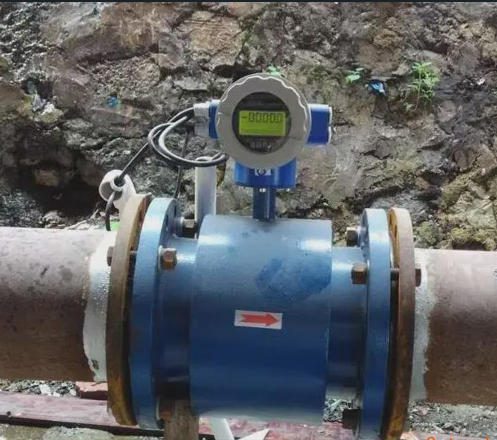
Why OEMs, EPCs, MRO Teams, and Municipal Operators Are Specifying Magmeters as a Strategic Investment — Not Just a Sensor Choice

The electromagnetic flow meter market reached approximately USD 3.99 billion in 2025 and is growing at 5.9% CAGR — driven by tightening regulations, Industry 4.0 integration, and the compounding cost advantage of a technology with no moving parts.
1. Addressing Real Industrial Flow Measurement Challenges
If you manage flow measurement across industrial systems, you are familiar with the quiet costs that nobody budgets for at the start of a project. The turbine meter that fails 14 months into a chemical service because the bearing corroded. The orifice plate on the wastewater line that reads 8% low because the tapping points are fouled with solids. The billing dispute at the municipal pumping station because the meter drifted without anyone noticing.
These are not rare events. A 2024 analysis of 1,247 flow meter service tickets across water treatment and chemical industries identified that the majority of field failures originated not from product defects but from avoidable specification decisions — wrong liner material, inadequate grounding, technology chosen for upfront price rather than lifecycle performance.
Magnetic flow meters — also called magmeters or electromagnetic flow meters — were engineered specifically to eliminate the failure modes that plague mechanical and differential-pressure technologies. No moving parts. No obstruction in the flow path. No sensitivity to fluid density, viscosity, or temperature changes. A measurement principle rooted in physics that has not changed since Michael Faraday described it in 1831.
For OEM equipment manufacturers and skid builders, magmeters provide the measurement accuracy and smart diagnostics that differentiate premium instrumented systems from commodity alternatives. For EPC firms and system integrators, they simplify piping design, reduce change orders, and meet energy efficiency benchmarks that project specifications increasingly demand. For industrial MRO and terminal operators, they eliminate the spare parts inventory and scheduled maintenance cycles that consume maintenance budget on mechanical meters. For municipal and utility operators, they deliver the billing accuracy and regulatory compliance that protect operational and financial integrity.
This guide is written for the people who specify, source, and maintain these instruments across those client segments. Every section is grounded in actual application data, field performance records, and the commercial realities of operating industrial flow measurement systems over a 10-to-20-year service horizon.
2. Unmatched Accuracy for Critical Process Control
How Magmeters Deliver Measurement Reliability That Mechanical Technologies Cannot Match
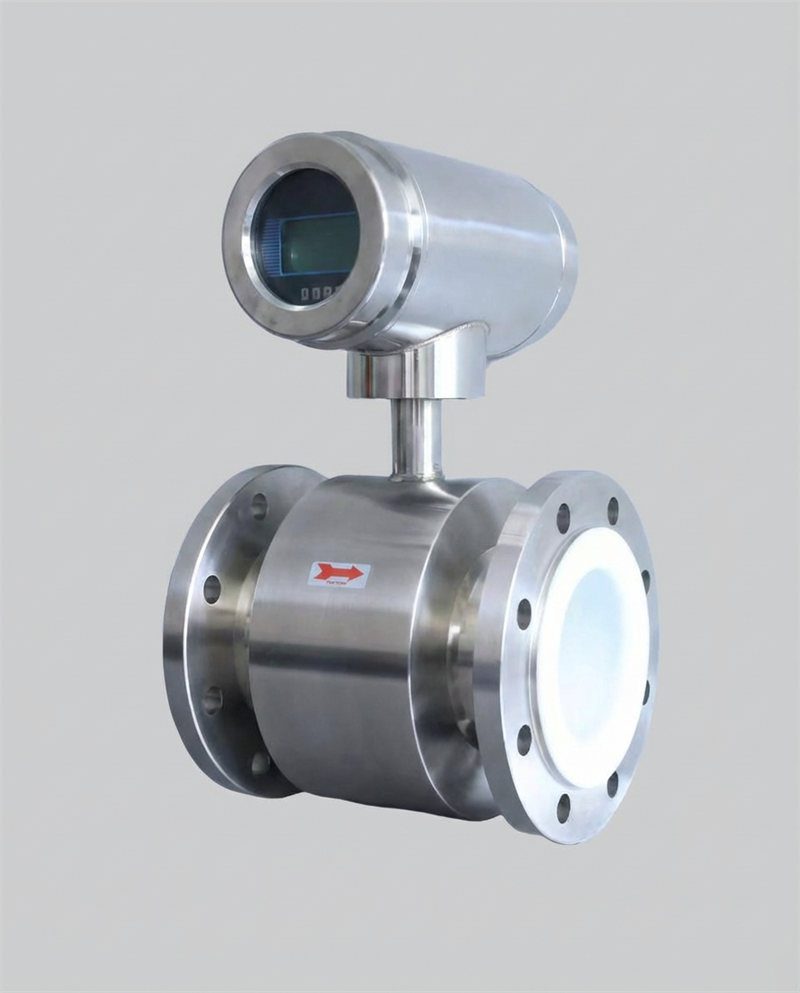
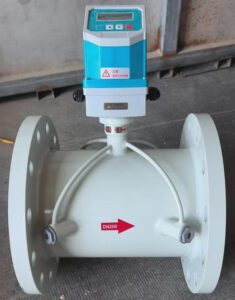
Faraday’s Law of Electromagnetic Induction — the physical principle behind every magnetic flow meter — states that a voltage is induced in a conductor moving through a magnetic field, proportional to the conductor’s velocity. In a magmeter, the “conductor” is the conductive fluid. Two electromagnetic coils generate a magnetic field perpendicular to the flow direction. Two electrodes, flush-mounted in the pipe wall, detect the induced voltage. The transmitter converts this signal into a volumetric flow rate.
The key insight for your customers: the measurement depends only on fluid velocity. Not on fluid density. Not on viscosity. Not on temperature or pressure. A magmeter calibrated on clean water at 20°C will measure a 60°C slurry at 4% solids with identical accuracy — because those physical property changes do not affect the induced voltage at a given velocity.
Standard industrial magmeters achieve ±0.5% of reading accuracy across the normal operating range. High-performance models from the leading manufacturers — including options available through Jade Ant Instruments’ electromagnetic flow meter range — deliver ±0.2% of reading, which is comparable to Coriolis meters at a fraction of the cost for larger pipe diameters.
For comparison:
| Tecnologia | Precisão típica | Peças móveis | Affected by Density/Viscosity? | Applicable Fluids |
|---|---|---|---|---|
| Magnetic (magmeter) | ±0.2–0.5% of rate | Nenhum | Não | Conductive liquids |
| Turbine meter | ±0.5–1.0% of rate | Yes (rotor) | Yes — viscosity shift | Líquidos puros |
| Placa de orifício | ±0.5–2.0% of rate | Nenhum | Yes — density shift | Gas, liquid, steam |
| Vortex meter | ±0.5–1.0% of rate | Nenhum | Yes — density required | Gas, liquid, steam |
| Ultrasonic (inline) | ±0.5–1.0% of rate | Nenhum | Não | All liquids, gas |
| Coriolis | ±0.1–0.2% of rate | No (vibrating tube) | Não | Gas and liquid |
For OEMs and system integrators, this accuracy stability means consistent data for closed-loop process control — reducing product variability, tightening batch tolerances, and supporting compliance documentation without requiring frequent recalibration to compensate for drift.
For utility operators, ±0.5% billing accuracy in a large water distribution system is the difference between recoverable revenue and systematic loss. A single DN300 transmission main flowing 15,000 m³/month, metered at ±2% instead of ±0.5%, represents a potential billing discrepancy of 225 m³/month — every month, continuously, until someone finds the problem.
3. Maintenance-Free Operation Reduces Total Cost of Ownership
The Economics of No Moving Parts
The absence of moving parts in a magnetic flow meter is not just an engineering elegance. It is a direct financial advantage that compounds over the meter’s service life in ways that upfront purchase price comparisons completely obscure.
A turbine meter installed on a municipal wastewater line will require bearing cleaning at 6-to-12-month intervals in solids-laden service. Bearing replacement at 2-to-3-year intervals. Rotor inspection after any significant debris event. Over a 10-year period, that maintenance programme for a single DN100 turbine meter typically costs $1,200–$2,800 in labour and parts — plus the downtime cost of each service intervention, typically 2–4 hours of process interruption per event.
A magnetic flow meter installed on the same line, sized correctly with the right liner and electrode material for the service conditions, requires essentially no scheduled maintenance. Periodic calibration verification (a check that confirms the meter’s output remains within its specified accuracy band — typically performed every 2–3 years for process applications, annually for custody transfer) is the primary recurring cost. Modern transmitters with built-in verification diagnostics can extend calibration intervals by providing documented evidence that the meter has not drifted between formal calibration events.
The 10-year total cost of ownership picture for a DN100 magmeter versus a turbine meter in typical industrial liquid service:
| Categoria de custo | Magnetic Flow Meter | Turbine Flow Meter |
|---|---|---|
| Purchase & installation | $2,800 | $1,400 |
| Bearing/rotor maintenance (10 yr) | $0 | $1,800 |
| Scheduled calibration (3 events) | $900 | $900 |
| Unplanned downtime events (est.) | 0–1 events | 3–5 events |
| Downtime cost per event (est.) | $800 | $800 |
| Estimated 10-year TCO | $3,700–$4,500 | $6,300–$8,500 |
That 30–50% lifecycle cost advantage is why industrial MRO and terminal operators — who manage large meter fleets and measure maintenance cost with precision — specify magmeters in conductive liquid service despite their higher purchase price.
Service life data from the field: A midwest U.S. water utility operating 14 magmeters across its headworks and secondary clarifiers reported zero unscheduled maintenance events over an 8-year operating period. At the annual calibration check, all 14 units remained within their original ±0.5% of rate specification. For MRO teams managing multiple plants, that zero-callback record is the equivalent of a permanent reduction in service staffing requirements for that meter fleet.
4. Full-Bore Design Ensures Minimal Pressure Drop
How an Unrestricted Flow Path Saves Energy Every Hour It Operates
Pressure drop (the reduction in fluid pressure caused by the flow measurement device — measured in bar or PSI — that the system pump must overcome continuously at full production rates) is a hidden operating cost that most purchasing decisions ignore entirely. For a magmeter, the pressure drop across the measurement section is essentially zero. The full bore — the complete internal pipe diameter — is unobstructed.
Compare this to the primary elements used in differential pressure measurement:
| Flow Meter Type | Typical Pressure Drop (at nominal flow) | Permanent Pressure Loss |
|---|---|---|
| Magnetic (full bore) | 0.05–0.1 bar | Negligible |
| Placa de orifício | 0.3–1.5 bar | High (permanent) |
| Venturi tube | 0.1–0.5 bar | Moderado |
| Turbine meter | 0.1–0.3 bar | Moderado |
| Vortex meter | 0.05–0.2 bar | Baixo a moderado |
The energy cost calculation is straightforward:
For a system flowing 800 GPM through an orifice plate with a 5 PSI pressure loss, operating 8,760 hours per year at $0.12/kWh with a 70% efficient pump, the annual energy penalty is approximately $2,600 per meter location. Replacing that orifice plate with a magmeter reduces the pressure loss to negligible — recovering $2,600 in annual operating cost from that single measurement point alone.
For EPC firms, eliminating pressure drop from flow metering contributes directly to plant energy efficiency benchmarks and can reduce pump sizing requirements — with knock-on savings in motor, cabling, and switchgear costs that compound across a multi-meter installation.
For skid-mount OEMs, the full-bore design simplifies hydraulic calculations and avoids the need for pressure recovery calculations in system performance guarantees. When a customer specifies a maximum allowable pressure drop across the skid, a magmeter is the measurement technology that does not consume that budget.
5. Bidirectional Flow Measurement for Complex Systems
Standard Capability That Eliminates Additional Sensors
Bidirectional flow measurement (the ability to measure flow accurately in both forward and reverse directions without modification, switching, or additional instrumentation) is a standard feature of every magnetic flow meter. The transmitter detects the polarity of the induced electrode voltage — positive for forward flow, negative for reverse — and reports both magnitude and direction to the control system.
This capability costs nothing extra. For many applications, it eliminates the need for separate reverse-flow detection hardware that would otherwise be required.
Municipal sewer and wastewater networks experience backflow conditions during storm events, pump station trips, or network pressure fluctuations. A magmeter on a pump station discharge line that also measures any reverse flow informs the SCADA system of the event in real time — enabling faster operator response, preventing sewage surcharge to upstream points, and providing the documentation that regulators require after overflow events.
Chemical OEMs managing recirculation loops need to track forward and reverse flow in batch sequences where the same pipeline serves as both feed and return at different stages of the process cycle. A single bidirectional magmeter replaces two unidirectional instruments and the associated valve logic that would otherwise manage the measurement handoff.
Tank filling and emptying operations in storage terminals and blending facilities need both total volume delivered (forward flow) and total volume withdrawn (reverse flow) for inventory reconciliation. The magmeter’s inherent bidirectionality makes it the natural fit for this application without additional hardware investment.
For system integrators, the practical benefit is simplified control logic. Instead of managing two measurement signals with direction-dependent switching, the PLC or DCS receives a single signed flow signal from the magmeter — positive for forward, negative for reverse — that the control programme can process directly.
6. Compatibility with Conductive Liquids, Including Slurries and Corrosives
Why Material Selection Is the Most Important Specification Decision
A magnetic flow meter will measure any electrically conductive fluid. The practical minimum conductivity threshold is 5 µS/cm (microsiemens per centimetre — the unit of electrical conductivity. Municipal tap water typically reads 300–800 µS/cm. Most industrial acids, bases, and process chemicals read well above 1,000 µS/cm. Non-conductive fluids such as hydrocarbons, clean oils, and deionised water below 1 µS/cm cannot be measured by magnetic meters).
Within that constraint, the application range is exceptionally broad. What makes a specific application succeed or fail is not the measurement principle — it is the material compatibility of the liner and electrode combination with the specific process fluid.
Liner material selection guide:
| Liner Material | Faixa de temperatura | Chemical Resistance | Abrasion Resistance | Best Applications |
|---|---|---|---|---|
| Hard rubber (EPDM/Neoprene) | 0°C to +80°C | Mild acids, alkalies, water | Moderado | Municipal water, wastewater, mild slurries |
| PTFE (Teflon) | −40 °C a +180 °C | Excellent — almost all chemicals | Baixa | Strong acids, bases, solvents, chemical dosing |
| PFA | −40°C to +150°C | Excellent — comparable to PTFE | Baixa | Pharma, food/beverage, ultrapure water |
| Polyurethane | −20°C to +50°C | Moderado | Very high | Mining slurries, abrasive dredging |
| Ceramic (Al₂O₃) | 0°C to +180°C | Excelente | Exceptional | High-abrasion mining, cement, ceramic slurries |
| Neoprene | −10°C to +80°C | Mild service | Ótimo | Raw water intake, cooling towers |
Electrode material follows the same logic:
| Electrode Material | Best Chemical Fit | Avoid | Typical Premium vs. 316L SS |
|---|---|---|---|
| 316L Stainless Steel | Clean water, wastewater (Cl⁻ < 200 ppm) | Chlorinated media above ambient temp | Baseline |
| Hastelloy C-276 | HCl, H₂SO₄, mixed acids, FGD scrubbing | Concentrated hot HCl | 3–4× |
| Titânio | Seawater, chlorine dioxide, bleach | Reducing acids | 4–5× |
| Tantalum | Hot concentrated HCl, chromic acid | Fluoride media | 8–12× |
| Platinum-Iridium | Maximum resistance, custody transfer pharma | Cost constraints | 15–20× |
Real application consequence of getting this wrong: A chlor-alkali plant in Texas specified 316L SS electrodes on a brine service line (approximately 3,500 ppm chloride). Within 14 months, pitting corrosion on the electrodes generated measurement drift exceeding 5%. Emergency sensor replacement plus production losses totalled $22,000 per measurement point. Titanium electrodes — which would have cost $800 more per sensor at purchase — resolved the problem. Total electrode upgrade cost across six meters: $4,800. Total cost of the failed specification: $132,000.
Magmeters handle the full range of mining slurries, municipal sewage, industrial chemicals, food-grade media, and pharmaceutical fluids — but only if the liner and electrode are correctly matched to the service. The magnetic flow meter applications guide from Jade Ant Instruments documents application-specific material configurations across 10 industries with field performance data.
For distributors: the material compatibility matrix is the single most important tool you can provide your customers when helping them specify a magmeter. Customers who receive clear, documented material recommendations for their specific fluid at operating temperature are customers who receive a product that works — and who return.
7. Advanced Diagnostics and Smart Communication Protocols
Making the Magmeter an Active Node in Your Digital Plant Architecture

Modern magmeter transmitters are not just flow sensors — they are diagnostic platforms that report electrode coating, empty-pipe status, and grounding integrity continuously alongside the flow measurement.
A magnetic flow meter with a modern digital transmitter is not only measuring flow — it is actively monitoring the health of the measurement system and communicating both the measurement result and the system status to the control infrastructure. For EPC firms and system integrators who are designing digital plant architectures, this capability is no longer optional. It is the baseline expectation for any instrumentation specified into an Industry 4.0 environment.
Communication protocols available on current magmeter transmitters:
- 4–20 mA analogue loop: The standard output for control systems requiring a continuous, hardware-independent flow signal. EMI-resistant and compatible with virtually all PLCs, DCS platforms, and SCADA systems.
- HART (Highway Addressable Remote Transducer — a protocol that overlays digital communication on the 4–20 mA analogue loop, allowing remote configuration, diagnostic reading, and multivariable data transmission without additional wiring): Available on virtually all modern industrial transmitters. Enables the control system to read both the flow rate (via the analogue signal) and transmitter diagnostic data (via the digital HART overlay) simultaneously on a single cable pair.
- Modbus RTU/TCP: Widely supported in industrial automation, particularly in water and wastewater SCADA systems and in modular skid applications where a PLC-centric architecture is standard.
- Profibus PA/DP: The standard digital fieldbus in European process industry installations, providing multi-variable digital communication on a single cable pair with intrinsic safety for hazardous area applications.
- Foundation Fieldbus: Used primarily in large petrochemical and refinery installations where Foundation Fieldbus has been standardised as the plant communication infrastructure.
- Ethernet APL (Advanced Physical Layer — a two-wire Ethernet standard that delivers 10 Mbit/s digital communication with intrinsic safety to field instruments, enabling web-based dashboards, remote firmware updates, and real-time cloud connectivity): The newest and most capable protocol, now available on leading transmitters from KROHNE, Endress+Hauser, and others, providing the connectivity bandwidth that enables true remote monitoring and predictive maintenance.
Predictive diagnostics that prevent failures before they occur:
- Empty pipe detection (EPD): Alerts operators when the pipe is not full — preventing false zero readings that could trigger inappropriate control actions or accumulate errors in flow totalisers.
- Electrode coating alert: Monitors the impedance between the two electrodes. Rising impedance indicates deposit buildup that will eventually degrade signal quality — providing early warning for scheduled cleaning before accuracy degrades.
- Grounding integrity check: Monitors the electrical path between the meter body and plant earth. Increasing earth resistance is an early indicator of grounding connection deterioration — the most common root cause of field accuracy problems.
- Coil resistance monitoring: Tracks the resistance of the electromagnetic coils that generate the magnetic field. Changes in coil resistance indicate temperature or insulation damage, allowing predictive maintenance before coil failure causes a measurement blackout.
For EPCs and integrators, these diagnostics integrate directly into DCS and SCADA alarm management systems, converting the magmeter from a passive sensor into an active asset health monitor. For MRO teams, the diagnostic visibility means that maintenance interventions are planned — not reactive — and that service resources are directed to the meters that actually need attention rather than scheduled uniformly across the entire fleet.
8. Wide Turndown Ratio Handles Variable Flow Conditions
Covering Your Entire Operating Range With a Single Instrument
Relação de redução (the ratio of a meter’s maximum measurable flow to its minimum measurable flow while maintaining its specified accuracy — expressed as, for example, 100:1, meaning the meter accurately measures from 1% to 100% of its full-scale range) is the specification that determines whether a single meter can cover the customer’s entire flow operating window or whether accuracy degrades during off-peak conditions.
Magnetic flow meters achieve 20:1 to 100:1 turndown ratios as a standard performance characteristic. The most capable models maintain ±0.5% accuracy from 0.3 m/s to 10 m/s fluid velocity — a 33:1 velocity range — with some high-sensitivity designs extending accurate measurement down to 0.1 m/s.
Compare this to the alternatives:
| Tecnologia | Typical Turndown Ratio | Low-Flow Accuracy |
|---|---|---|
| Magnetic flow meter | 20:1 to 100:1 | Maintained to ±0.5% |
| Turbine meter | 10:1 | Degrades below 10% of rated flow |
| Vortex meter | 10:1 to 20:1 | Drops off at low Reynolds number |
| Placa de orifício | 3:1 to 5:1 | Significant error at low flow |
| Coriolis | 100:1+ | Best in class |
For utility operators with fluctuating demand, the wide turndown ratio means a single magmeter covers both the night-time minimum flow and the daily peak demand without a separate low-flow meter or bypass arrangement. A municipal water district that previously needed two turbine meters — one for peak flow, one for low-flow accuracy — can replace both with a single magmeter sized for the peak flow with adequate turndown to maintain accuracy at night-time minimums.
For OEMs building multi-stage process equipment, wide turndown eliminates the need for different meter sizes at different process stages when flow rates vary significantly between stages. Fewer meter types in a system mean simpler spare parts management, fewer configuration variants, and faster service support for the end customer.
A specialty chemical manufacturer who previously operated three turbine meters of different sizes across a reactor system — sized individually for the startup, steady-state, and flush phases of the batch cycle — consolidated to a single magmeter after confirming the turndown performance. The result was simplified control logic, one fewer potential leak point, and a $4,200 reduction in per-batch instrumentation operating cost.
9. Easy Installation and Calibration Flexibility
Simpler Piping, Faster Commissioning, Lower Project Cost
The installation requirements for magnetic flow meters are among the most forgiving of any inline flow measurement technology. The standard recommendation is 5 pipe diameters (5D) of straight pipe upstream e 2–3 pipe diameters downstream. Many models, when installed with proper grounding and alignment, achieve specified accuracy with 3D upstream. Some certified models are validated for 0D/0D installation in custody-transfer water metering — meaning they can be installed immediately downstream of an elbow without any straight run penalty.
Compare this to the installation requirements of competing technologies:
| Tecnologia | Minimum Upstream Straight Run | Minimum Downstream Straight Run |
|---|---|---|
| Magnetic flow meter | 3–5D (some models: 0D) | 0–2D |
| Turbine meter | 10–20D | 5D |
| Vortex meter | 10–40D | 5D |
| Placa de orifício | 20–40D | 5–10D |
For skid-mount OEMs, this difference is the difference between a compact, manufacturable skid design and a piping layout that either exceeds the customer’s footprint constraint or requires flow conditioners that add pressure drop, cost, and assembly time. On a chemical injection skid with 12 measurement points, the difference between 5D and 20D upstream requirements across all meters represents significant piping steel, support structure, and floorspace.
Field calibration flexibility is equally important for MRO and municipal operators who manage compliance audit requirements. Modern magmeter transmitters support zero-flow verification (a field check that confirms the meter reads zero output when flow is definitively stopped — performed with the pipe full and all valves closed, providing documented evidence that the baseline measurement is stable). This can be performed without removing the meter from service — in a full pipe, with valves closed — providing the documented verification that most regulatory compliance programmes require between formal laboratory calibrations.
For systems with full-time process demands where taking the meter offline for calibration is operationally difficult, the built-in diagnostic verification available on advanced transmitters extends calibration intervals with regulatory documentation — reducing the compliance cost for MRO teams managing large meter fleets.
10. Proven ROI Across Industries: From Factories to Water Plants
What the Numbers Actually Look Like for Each Client Segment

A midwest U.S. water utility with 14 magmeters across its treatment plant reported zero unscheduled maintenance events over 8 years — with all meters remaining within their original ±0.5% specification at each annual verification.
The return on investment from magnetic flow meters is not evenly distributed across the lifecycle. The purchase price premium over a mechanical alternative appears in Year 1. The financial benefit compounds through Years 2–15 through avoided maintenance, eliminated downtime, energy savings, and the compliance value of accurate measurement data.
ROI metrics that field data consistently supports:
- 30–50% lower lifecycle cost versus mechanical meters in conductive liquid applications, based on 10-year total cost of ownership including purchase, installation, maintenance, calibration, and downtime
- Up to 20% energy savings in large pump systems from eliminating the pressure drop that orifice plates and differential pressure primaries impose on pump operating costs
- 40% reduction in batch-to-batch variability documented by a specialty chemical manufacturer after replacing rotameter-based dosing control with magmeters on reactor feed lines, directly attributable to the improvement from ±5% (rotameter) to ±0.3% (magmeter) accuracy
Value by client segment:
OEM equipment and skid-mount manufacturers benefit from integration of smart instrumentation that differentiates their systems in competitive tenders. A skid with magmeter-based flow measurement, HART communication, and built-in diagnostics commands a measurable premium over commodity alternatives because it reduces the customer’s commissioning time, provides documented performance data from day one, and integrates directly into the customer’s plant SCADA without additional engineering. The per-skid value of this differentiation varies by market segment but typically exceeds the incremental cost of the magmeter versus the mechanical alternative by a factor of 2–4×.
Instrument distributors and importers benefit from a product with demonstrably lower post-sale support requirements. A magmeter portfolio in conductive liquid service generates far fewer warranty claims, application callbacks, and field service requests than a comparable turbine meter portfolio — because the technology’s inherent reliability eliminates the most common failure modes. That lower support burden improves margins per sale and frees distributor technical capacity for revenue-generating activities rather than problem resolution.
EPC firms and system integrators benefit from simplified project execution. Fewer field calibrations during commissioning, simpler installation requirements, digital protocol integration that reduces loop testing scope, and the predictive diagnostic capability that reduces punch list items at project handover. For large industrial projects where instrument count runs into the hundreds, these per-instrument time savings accumulate into measurable project schedule compression.
Municipal and utility operators benefit most directly from the compliance and billing integrity dimensions. A magmeter’s ±0.2–0.5% billing accuracy protects revenue recovery in distribution systems. Its continuous totaliser output provides the tamper-resistant flow records that EPA NPDES compliance programmes and state utility regulators require. And its 15–20-year service life at specification means that a meter installed today will still be meeting its accuracy specification when the next capital planning cycle arrives. For a detailed look at how custody transfer applications specifically benefit from certified magmeter accuracy, the custody transfer flow meter compliance guide covers regulatory requirements, certification processes, and financial risk quantification.
Five-year ROI summary by client segment:
| Client Segment | Primary ROI Driver | Typical 5-Year Value (per meter point) | Key Risk Avoided |
|---|---|---|---|
| OEM / Skid Builder | System premium, reduced service calls | $1,200–$4,000 | Warranty liability from meter failure |
| Distributor | Margin retention, lower support burden | $400–$1,600 | Callback cost, reputation damage |
| EPC / Integrator | Project schedule, commissioning speed | $800–$2,800 | Change orders, punch list delays |
| MRO / Terminal | Maintenance cost reduction, uptime | $1,500–$5,000 | Unplanned production downtime |
| Municipal / Utility | Billing accuracy, compliance integrity | $2,000–$8,000+ | Regulatory penalty, non-revenue water |
{% include youtube.html id=”D999KDUj_QU” %} Watch: Magnetic Flow Meter Explained — Working Principles and Industrial Applications. Recommended for distributor and agent teams building technical confidence with customers on magmeter selection.

Sanitary magmeter configurations — tri-clamp connections, electropolished 316L stainless steel bodies, PFA liners — meet FDA 21 CFR and 3-A Sanitary Standards requirements for food, beverage, and pharmaceutical applications where CIP/SIP compatibility is mandatory.
Glossário de termos-chave
Faraday’s Law of Electromagnetic Induction: The physical principle that a voltage is induced in a conductor moving through a magnetic field, proportional to velocity. This is the measurement principle of every magnetic flow meter.
Conductivity (µS/cm): The ability of a fluid to conduct electrical current. Magnetic flow meters require a minimum of 5 µS/cm. Most industrial conductive fluids — water, acids, bases, wastewater, slurries — are well above this threshold.
Turndown ratio: The ratio of maximum to minimum measurable flow rate while maintaining specified accuracy. A 100:1 turndown means the meter measures accurately from 1% to 100% of its full-scale capacity.
Liner: The internal surface of the magnetic flow meter’s flow tube that contacts the process fluid. Liner material must be chemically compatible with the fluid at operating temperature. Common options: hard rubber, PTFE, PFA, polyurethane, ceramic.
Electrode: The signal pickup points — two small discs flush-mounted in the pipe wall that detect the induced voltage generated by the flowing fluid. Electrode material must resist corrosion from the specific process fluid.
HART: Highway Addressable Remote Transducer. A protocol that overlays digital communication on the standard 4–20 mA analogue loop, enabling remote configuration and diagnostic data access without additional wiring.
4–20 mA current loop: The standard analogue signal for industrial instrumentation. 4 mA represents the minimum measured value; 20 mA represents the maximum. Significantly more EMI-resistant than voltage signals.
Custody transfer: Measurement used as the legal basis for financial settlement between buyer and seller. Requires certified, type-approved instrumentation with documented calibration traceability.
Empty pipe detection (EPD): A built-in transmitter diagnostic that alerts operators when the pipe is not full — preventing false readings and protecting flow totalisers from accumulating errors during partial-fill conditions.
CIP/SIP: Clean-In-Place / Sterilize-In-Place. Cleaning and sterilisation processes performed without disassembling the equipment. Magmeter wetted materials must survive repeated CIP (caustic wash) and SIP (steam sterilisation) cycles in food and pharmaceutical applications.
Wetted materials: All internal components that contact the process fluid — liner, electrodes, and any seals. Material selection of wetted components is the primary specification decision for any conductive fluid application.
ATEX / IECEx: European and international certification frameworks for equipment used in potentially explosive atmospheres. Required for magmeter installations in chemical plants, refineries, and any area where flammable gases or dusts may be present.
Frequently Asked Questions — For Industrial Professionals
1. How does a magnetic flow meter work?
A magnetic flow meter applies Faraday’s Law of Electromagnetic Induction. Two electromagnetic coils generate a magnetic field perpendicular to the flow direction inside the meter’s non-magnetic flow tube. When a conductive fluid flows through this magnetic field, a voltage is induced proportional to the fluid’s average velocity. Two electrodes flush-mounted in the pipe wall detect this voltage, and the transmitter converts it to a volumetric flow rate. The measurement is direct and linear — double the velocity means double the induced voltage. Crucially, the induced voltage depends only on fluid velocity, not on density, viscosity, pressure, or temperature — making magmeters highly stable across varying process conditions.
2. What types of fluids can a magmeter measure?
Any electrically conductive liquid with a conductivity above approximately 5 µS/cm. This includes municipal water (300–800 µS/cm), wastewater, mining slurries, most industrial acids and bases (1,000–100,000+ µS/cm), chemical process fluids, food and beverage products, pharmaceutical process liquids, and seawater. The technology works across a broad range of fluid conditions — temperature, viscosity, and density do not affect the measurement principle — making magmeters adaptable from clean pharmaceutical water to abrasive mining tailings with the appropriate liner and electrode material selection.
3. Can magmeters measure non-conductive fluids like oil or hydrocarbons?
No. Magnetic flow meters require the fluid to be electrically conductive. Hydrocarbons, petroleum oils, clean organic solvents, and deionised water below approximately 1 µS/cm cannot be measured with electromagnetic technology because they do not generate a measurable induced voltage. For non-conductive fluids, the appropriate alternatives are Coriolis meters (which measure mass flow directly), ultrasonic flow meters (which measure transit time or Doppler shift), or turbine meters (for clean, non-corrosive hydrocarbon liquids). The flow meter technology comparison guide provides side-by-side technology selection criteria for conductive and non-conductive fluid applications.
4. Do magnetic flow meters require straight pipe runs?
Magmeters have among the lowest straight-run requirements of any inline flow meter technology. Standard installation specifications call for a minimum of 5 pipe diameters (5D) upstream and 2–3D downstream. Many models achieve specified accuracy with 3D upstream. Some specific models — particularly those designed for water metering with OIML R49 or MID MI-001 approval — are validated for 0D/0D installation. This compares favourably with turbine meters (10–20D upstream), vortex meters (10–40D), and orifice plates (20–40D). However, proper grounding is non-negotiable regardless of straight-run configuration — it is the most critical single installation requirement for accurate magnetic flow measurement.
5. Are magmeters suitable for dirty or abrasive fluids?
Yes — this is one of the technology’s primary advantages over mechanical meters. The full-bore, obstruction-free design allows particles, fibres, and solids to pass through without clogging or eroding the measurement mechanism. Magmeters routinely handle mining slurries at 40–65% solids content, raw municipal sewage at 200–400 mg/L TSS, paper pulp stock at 3–6% consistency, and food products containing fruit pulp or particulates. The critical specification decision is liner material selection: polyurethane provides the best abrasion resistance at moderate cost for mining and dredging applications, while ceramic (Al₂O₃) delivers maximum wear resistance for the most abrasive slurries at higher cost.
6. What are the key maintenance requirements for magmeters?
Virtually none in standard service. There are no rotating parts to wear, no bearings to clean or replace, no orifice plates to inspect for wear, and no turbine rotors to check for fouling. The primary recurring maintenance requirement is periodic calibration verification — typically every 2–3 years for general process applications and annually for custody transfer or regulatory compliance points. In applications with fouling fluids (high-solids wastewater, biological slurries), periodic electrode inspection and cleaning may be required — typically every 1–2 years. Modern transmitters with built-in electrode coating detection provide advance warning before coating affects measurement accuracy, enabling scheduled rather than reactive maintenance.
7. Can a magmeter detect reverse flow?
Yes — bidirectional measurement is a standard, inherent capability of every magnetic flow meter, at no additional cost. The transmitter detects the polarity of the induced electrode voltage (positive for forward flow, negative for reverse) and reports both the magnitude and direction of flow to the control system. This capability is particularly valuable in municipal pumping stations (for backflow detection), chemical batch processes (for recirculation loop management), and custody transfer applications (where net flow calculation requires accurate measurement in both directions). No additional hardware, no bypass valves, and no control system modifications are required to enable this function.
8. How accurate are magnetic flow meters compared to other technologies?
Magnetic flow meters deliver ±0.2–0.5% of reading accuracy as standard — among the highest of any flow measurement technology for conductive liquids. This accuracy is maintained across the full operating temperature and pressure range and is unaffected by changes in fluid density, viscosity, or temperature. For comparison, turbine meters typically achieve ±0.5–1.0% in their rated range but degrade at low flow and with viscosity changes. Orifice plates achieve ±0.5–2.0% depending on differential pressure measurement accuracy and fluid property stability. Coriolis meters achieve ±0.1–0.2% — better than standard magmeters — but at significantly higher cost and with higher pressure drop for larger pipe sizes.
9. What communication protocols do modern magmeters support?
Current magmeter transmitters support: 4–20 mA (universal analogue output), HART (digital overlay on 4–20 mA for remote diagnostics and configuration), Modbus RTU/TCP (widely used in water/wastewater SCADA and PLC-centric systems), Profibus PA/DP (European process industry standard), Foundation Fieldbus (large petrochemical and refinery applications), and Ethernet APL (the newest generation — 10 Mbit/s two-wire Ethernet to the field, enabling web-based monitoring, firmware updates, and cloud connectivity). Protocol selection should be driven by the customer’s existing DCS/SCADA infrastructure. Protocol mismatch that requires external converters adds $500–$1,500 per measurement point — an avoidable cost when specified correctly at the project stage.
10. Can magmeters be used in sanitary or food-grade applications?
Yes. Sanitary magmeter configurations are available with tri-clamp connections (3-A compliant), electropolished 316L stainless steel bodies (Ra ≤ 0.8 µm surface finish), and FDA-compliant liner materials (PFA or PTFE). These designs are fully CIP/SIP compatible — the wetted materials withstand repeated exposure to 2–5% NaOH caustic wash at 80°C and 1–2% HNO₃ acid rinse at 60°C without degradation. The full-bore design eliminates the internal dead zones and crevices that harbour biofilm in food and pharmaceutical applications. For pharmaceutical water systems (purified water, water for injection), magmeters with platinum electrodes and PFA liners meet USP Class VI biocompatibility requirements and support 21 CFR Part 11 electronic record compliance through HART or Modbus integration.
11. How do I verify a magmeter is working correctly in the field?
Three methods are available in field conditions without removing the meter from service. First, zero-flow verification: close isolation valves to stop flow with the pipe full, and confirm the transmitter output reads zero. Any non-zero reading indicates a drift offset or grounding problem. Second, built-in transmitter diagnostics: review electrode impedance readings (rising impedance indicates coating), coil resistance values (changes indicate insulation degradation), and signal noise levels (elevated noise indicates EMI or grounding issues). Third, cross-check with a portable reference: for larger pipe sizes, a portable clamp-on ultrasonic meter provides an independent reading for comparison without process interruption. For custody transfer verification, formal laboratory calibration against a traceable reference standard remains the regulatory requirement.
12. What is the typical lifespan of a magnetic flow meter?
In clean water and pharmaceutical service, correctly specified magmeters regularly achieve 15-25 anos of service life at specification without liner replacement or major maintenance. In chemical processing and industrial effluent monitoring, 10–15 years is typical. In abrasive slurry service (mining, pulp and paper), liner life determines service life: polyurethane liners in moderate abrasion service last 3–7 years; ceramic liners in the same service achieve 8–12 years. The transmitter electronics typically outlast the sensor body — transmitters can usually be paired with a replacement sensor body if the original liner wears out, avoiding the cost of a complete system replacement.
13. Are magmeters affected by changes in fluid density, temperature, or viscosity?
No — this is a fundamental advantage of the measurement principle. The induced voltage depends only on fluid velocity and the applied magnetic field strength, not on any physical property of the fluid. A magmeter calibrated on clean water will measure a 60°C slurry at 4% solids content with identical accuracy — without any density compensation, viscosity correction, or temperature correction required. This contrasts with differential pressure meters (which require density compensation for accurate mass or volume flow from the DP signal) and turbine meters (whose meter factor shifts with viscosity changes), making magmeters particularly valuable in applications where fluid properties vary during the production cycle.
14. Can I use a magmeter for custody transfer?
Yes, when the meter is type-approved and calibrated to the requirements of the applicable standard. Magmeters are widely accepted for custody transfer of potable water (MID Annex MI-001 in Europe, AWWA standards in North America), municipal wastewater billing, and certain chemical process fluid applications. Custody transfer magmeters must be type-approved by the relevant authority, installed by an authorised inspector, sealed after calibration, and recalibrated at the mandated interval. The measurement accuracy, continuous totaliser output, and tamper-evident electronic record capability of modern magmeters make them well-suited for this application — subject to the specific approval requirements of the jurisdiction and utility.
15. What should distributors know when selecting a magmeter for a client?
Five parameters must be confirmed before any magmeter recommendation: (1) Fluid conductivity — confirm above 5 µS/cm, verify with a conductivity meter if in doubt; (2) Liner material compatibility — cross-reference the specific fluid chemistry against the liner material’s chemical resistance data at actual operating temperature, not ambient; (3) Pipe size and flow range — calculate the flow velocity at normal operating conditions and confirm it falls between 0.3 m/s and 10 m/s in the selected bore; (4) Process temperature and pressure — confirm the selected liner’s temperature rating exceeds the maximum process temperature including any CIP/SIP cycles; (5) Output and protocol requirements — match the transmitter output to the customer’s control system architecture. Missing any of these five parameters creates a specification risk that will eventually become a field problem — and a customer relationship problem.
16. How do magmeters help reduce energy consumption?
The full-bore design creates essentially zero permanent pressure loss across the meter — the fluid passes through an unobstructed pipe cross-section. This eliminates the continuous pump energy penalty that differential pressure meters impose. In systems where an orifice plate with a 0.5-bar permanent pressure loss is replaced with a magmeter, the pump operates against 0.5 bar less head continuously. For a large water distribution pumping station handling 1,000 m³/hour at this differential, the annual energy saving at $0.12/kWh is approximately $16,000 per pump-meter combination. Across a multi-meter installation, these savings accumulate to a significant fraction of the total facility energy cost.
17. Are explosion-proof or hazardous area certifications available?
Yes. Magmeters are available with ATEX (European explosive atmosphere) certification, IECEx (international equivalent), FM (Factory Mutual, US), CSA (Canadian Standards Association), and Class I Division 1 / Class I Division 2 (North American NEC classifications). These certifications cover the transmitter electronics and the sensor body — both components must be appropriately certified for the hazardous area zone classification where the meter is installed. Always verify that the specific model number and configuration carry the certification required for your customer’s site classification — do not assume that a model certified for one zone is automatically certified for all zones.
18. Can magmeters be used in large-diameter pipes?
Yes. Magnetic flow meters are available in pipe sizes from DN6 (approximately ¼ inch) up to DN3000 (approximately 120 inches / 3 metres). At the large end, magmeters are the dominant technology for municipal water transmission mains, wastewater trunk sewers, and industrial cooling water headers — applications where the full-bore design’s pressure drop advantage is most economically significant and where the absence of internal obstructions eliminates the clogging risk that plagues smaller-bore differential pressure devices.
19. What causes noise or instability in magmeter readings?
The three most common causes of signal instability are: (1) Poor grounding — inadequate grounding of the meter body to plant earth, or the absence of grounding rings in non-conductive pipe, allows stray electrical currents from nearby VFDs, welding equipment, or cathodic protection systems to corrupt the millivolt-level electrode signal; (2) Partial pipe fill — a pipe that is not completely full exposes one or both electrodes to air (non-conductive), generating erratic signals; and (3) Electromagnetic interference (EMI) from variable frequency drives or high-power switching equipment near the meter or its signal cables. In the majority of field cases, correct grounding resolves the problem without any hardware replacement. For a detailed troubleshooting approach, the flowmeter troubleshooting guide documents diagnostic protocols for each of these failure modes.
20. How do OEMs benefit from integrating magmeters into skid systems?
OEM skid manufacturers who integrate magmeters gain four specific commercial advantages: (1) Enhanced system accuracy — ±0.2–0.5% flow measurement accuracy enables tighter process control specifications, reducing product variability and supporting the performance guarantees that differentiate premium skid systems; (2) Reduced service calls — the absence of moving parts eliminates the most common post-delivery service scenarios associated with mechanical meter technologies, reducing warranty claim exposure; (3) Easier automation integration — HART, Modbus, or Profibus output connects directly to the skid PLC without additional signal conditioning, simplifying electrical design and reducing integration engineering time; (4) Premium differentiation — a skid with smart, diagnostic-capable instrumentation commands a measurable price premium over otherwise equivalent systems with commodity measurement — because the customer’s operations team recognises the long-term operational value of lower maintenance demand and higher data reliability.
Jade Ant Instruments manufactures ISO 9001-certified electromagnetic, vortex, turbine, and ultrasonic flow meters for OEM equipment manufacturers, EPC firms, industrial distributors, MRO operators, and municipal utilities worldwide. Our electromagnetic flow meter range covers DN10 to DN2000 with PTFE, hard rubber, ceramic, and polyurethane liner options, and supports HART, Modbus, Profibus, and 4–20 mA communication. OEM/ODM customisation is available across liner material, electrode configuration, flange standard, and communication protocol. To discuss your specific application requirements, visit www.jadeantinstruments.com.