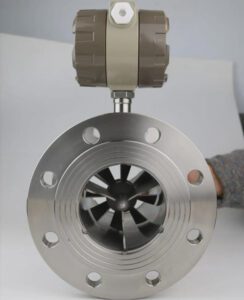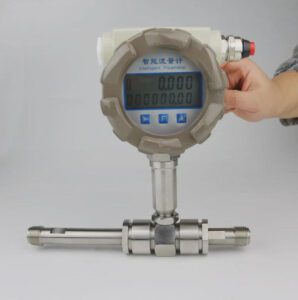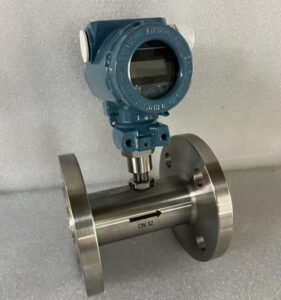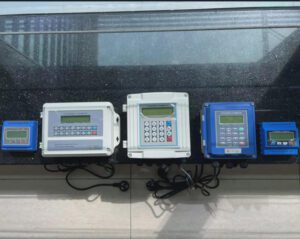
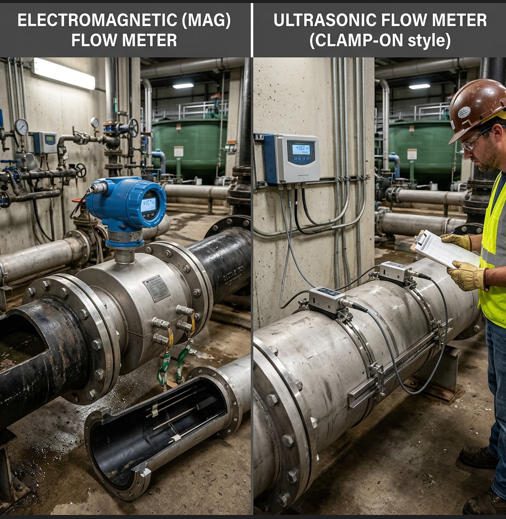
A municipal treatment plant in the U.S. Midwest replaced three failed turbine flow meters on its influent line with magnetic meters in 2023. Within 12 months, the facility documented a 97 % reduction in meter-related downtime and recovered an estimated US $18,000 in avoided maintenance and unbilled flow — a case published by Emerson. Yet two states away, a similar plant chose clamp-on ultrasonic meters for a sludge-return retrofit and achieved the same uptime improvement at roughly 40 % lower installation cost — because cutting into a pressurised sludge line was not an option.
Neither technology is universally “better.” The right choice depends on your wastewater’s conductivity, solids load, pipe accessibility, and budget horizon. This guide compares magnetic (MAG) and ultrasonic (US) flow meters across every axis that matters in wastewater: accuracy, slurry tolerance, installation, maintenance, lifecycle cost, and environmental robustness. It draws on published specifications, field case studies, and the engineering experience of Jade Ant Instruments, which has deployed over 12,000 electromagnetic flow meters in water and wastewater applications across Asia, the Middle East, and Latin America.
The global wastewater flow meter market reached approximately US $1.5 billion in 2023 and is projected to hit US $2.8 billion by 2032, according to Dataintelo. Magnetic meters hold the largest share in conductive-liquid applications, while ultrasonic meters are the fastest-growing segment thanks to clamp-on retrofit demand. Understanding both technologies is no longer optional — it is a competitive necessity for any plant engineer responsible for compliance, energy efficiency, or chemical dosing accuracy.
Overview of Flow Meters in Wastewater
Why Meters Matter for Wastewater
Wastewater treatment accounts for roughly 3–4 % of total electricity consumption in developed nations, according to the U.S. EPA. Flow meters sit at the control heart of every treatment stage: influent measurement drives equalization-basin scheduling, aeration blower speed, chemical dosing rates, and effluent compliance reporting. A 2 % measurement error on an influent line processing 20 million gallons per day (MGD) equates to 400,000 gallons of unaccounted flow every 24 hours — enough to trigger permit violations or waste thousands of dollars in over-dosed coagulant.
What Magnetic and Ultrasonic Meters Measure
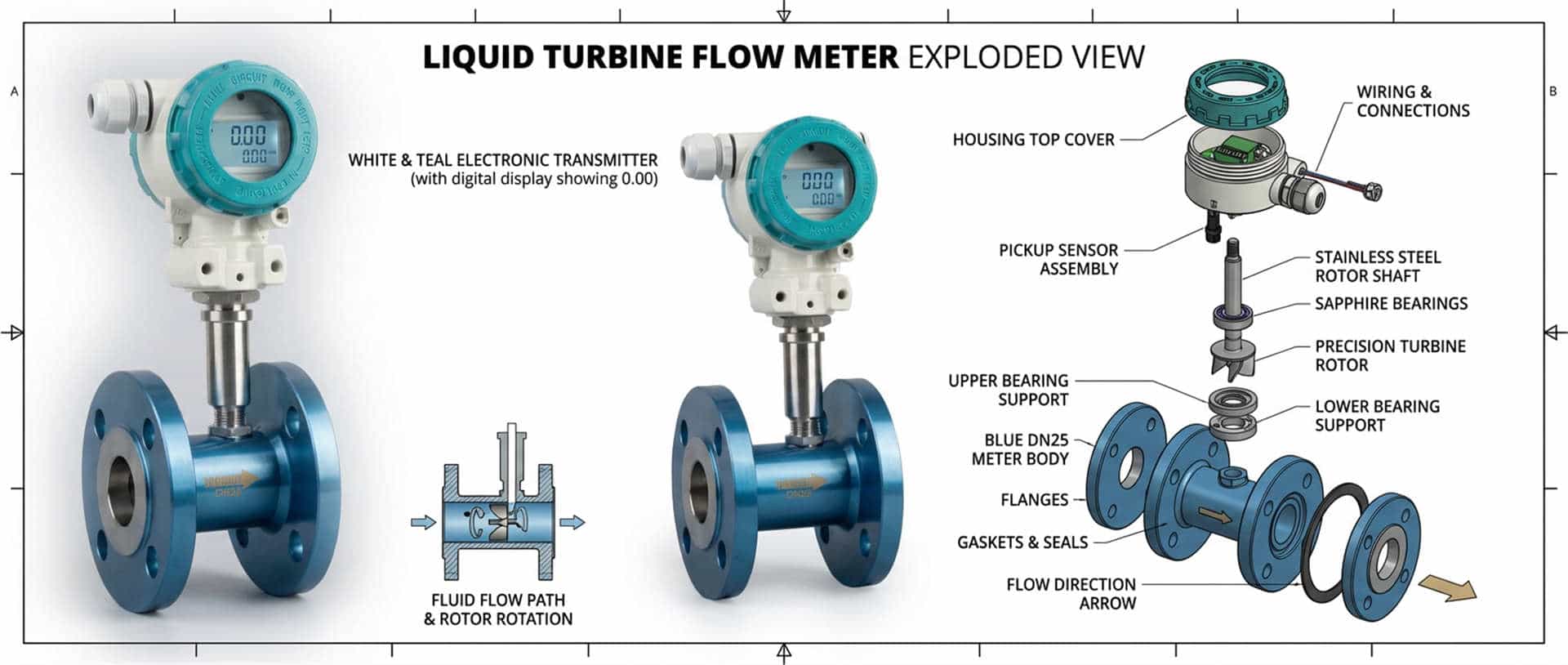
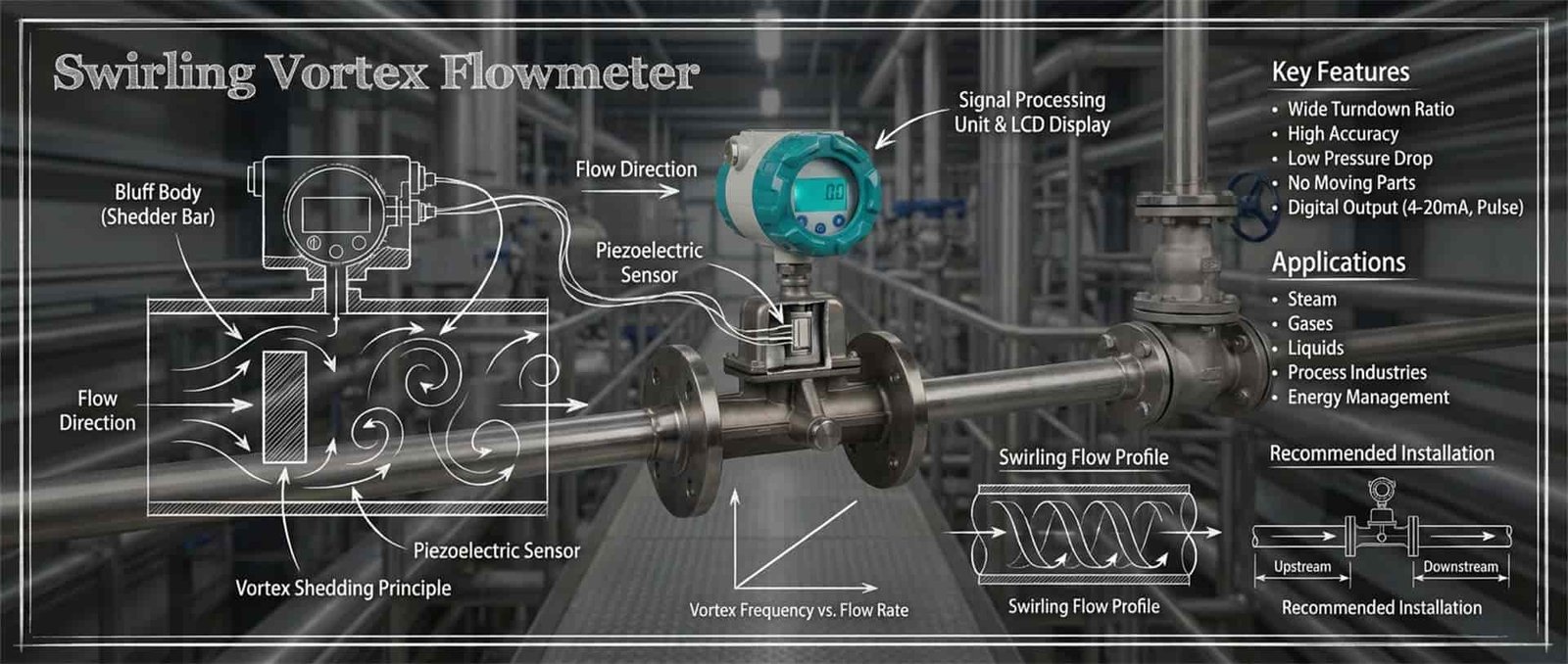
Both technologies measure volumetric flow rate (typically in m³/h, L/min, or GPM) and can totalise volume over time. Magnetic meters derive velocity from the voltage induced across a conductive fluid (Faraday’s Law). Ultrasonic meters derive velocity from the transit-time difference or Doppler shift of sound pulses travelling through the fluid. Neither technology has moving parts, which is why both dominate the wastewater segment — the alternative (turbine, paddlewheel, or DP meters) introduces wear surfaces that clog or erode in solids-laden flows.
Magnetic Flow Meters: Core Principles
Operating Principle (Faraday Induction)
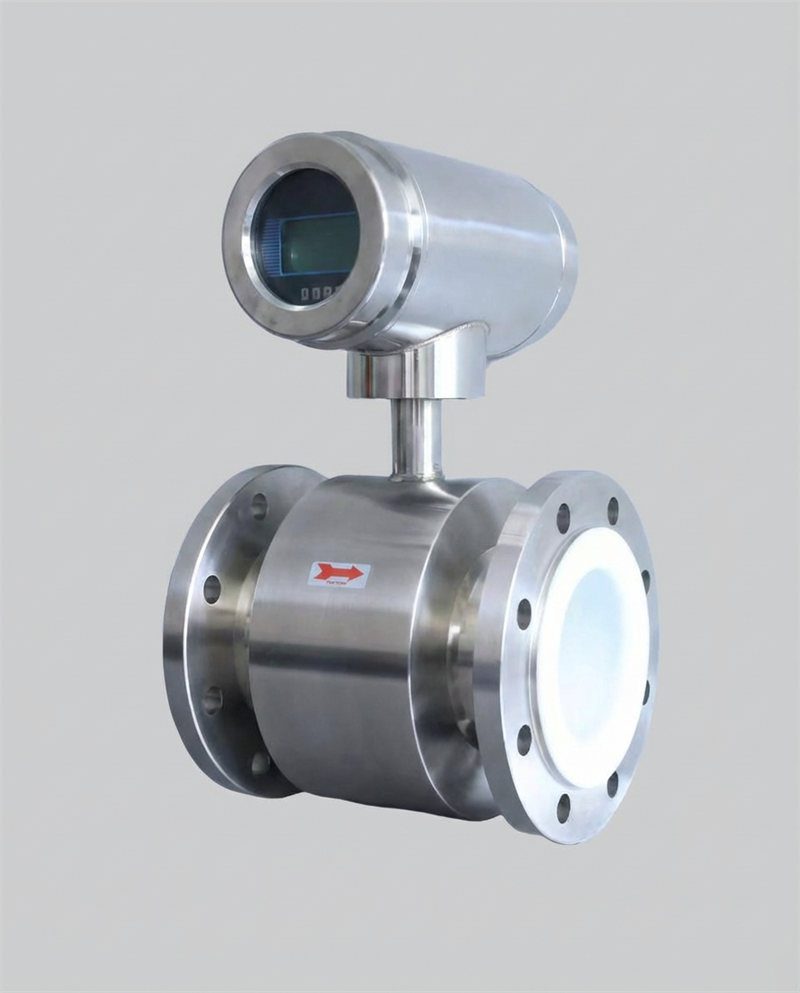
A magnetic flow meter generates a magnetic field across the pipe bore using energised coils. As conductive wastewater flows through the field, it acts as a moving conductor and induces a voltage (E) proportional to the average fluid velocity (v), the magnetic flux density (B), and the pipe diameter (D): E = k × B × D × v. Two electrodes embedded in the pipe wall pick up this voltage, which the transmitter converts to a flow rate. Because the measurement depends only on fluid velocity and not on density, viscosity, or temperature, magnetic meters are inherently stable in the variable conditions typical of wastewater streams.
The minimum fluid conductivity required is typically ≥ 5 µS/cm. Raw municipal wastewater usually measures 500–1,500 µS/cm — well above the threshold. Even industrial effluent rarely drops below 50 µS/cm unless it contains large fractions of non-conductive solvents. For a deeper dive into Faraday’s Law as applied to flow measurement, see the Emerson magnetic flow theory page.
Pros and Typical Applications
Magnetic meters dominate wastewater because they deliver ±0.2–0.5 % of reading accuracy with zero pressure drop, handle pipe sizes from DN10 to DN2000, and tolerate solids concentrations up to 50 % by volume. Jade Ant Instruments’ magnetic flow meter selection guide notes that their DN200 through DN600 electromagnetic meters are the most-ordered sizes for municipal influent and effluent lines. Typical applications include raw sewage influent, activated-sludge return, chemical dosing, digester feed, and final effluent discharge monitoring.
Limitations in Wastewater
The primary limitation is the conductivity requirement: magnetic meters cannot measure non-conductive liquids (hydrocarbons, deionised water). In wastewater this is rarely a concern, but industrial pre-treatment systems handling oily waste may fall below the threshold. Other limitations include the need for a full pipe (partially filled pipes produce errors unless a specialised partially-filled-pipe algorithm is enabled), sensitivity to electrode fouling in high-grease streams, and the requirement to cut the pipe for installation — which means downtime and potential permit notifications for confined-space entry.
Ultrasonic Flow Meters: Core Principles
Transit-Time vs Doppler Concepts
Ultrasonic meters come in two fundamentally different flavours. Transit-time meters send ultrasonic pulses diagonally across the pipe in both directions (upstream and downstream). The pulse travelling with the flow arrives slightly faster than the pulse travelling against it; the time difference (Δt) is proportional to flow velocity. Transit-time meters require a relatively clean fluid with < 1–2 % suspended solids or bubbles, because particles scatter the signal. Accuracy typically reaches ±0.5–1.0 % of reading for inline models and ±1.0–2.0 % for clamp-on models.
Doppler meters, by contrast, need particles or bubbles in the fluid. They emit a continuous ultrasonic beam and measure the frequency shift reflected from moving particles. Doppler accuracy is typically ±2–5 % of full scale — lower than transit-time — but these meters work in exactly the conditions that defeat transit-time meters: high-solids sludge, grit-laden streams, and aerated flows. For a detailed comparison of both technologies, see the Jade Ant Instruments ultrasonic vs Doppler guide.
Pros and Typical Applications
The biggest advantage is installation flexibility. Clamp-on ultrasonic meters mount on the outside of the pipe — no cutting, no process shutdown, no confined-space entry. A single technician can install a clamp-on transit-time meter on a 12-inch line in under 30 minutes. This makes ultrasonic meters ideal for retrofit applications, temporary audits, and pipes that cannot be taken out of service. They also work on non-conductive fluids, making them the default choice for industrial effluent containing solvents or oils. Common wastewater applications include effluent discharge verification, cooling-water return, and temporary flow surveys during plant upgrades.
Limitations in Wastewater
Transit-time meters lose accuracy or fail entirely when suspended solids exceed 1–2 % by volume — a threshold easily crossed in primary clarifier underflow or waste-activated sludge (WAS). Doppler meters tolerate solids but sacrifice accuracy. Both types are sensitive to pipe-wall condition: corroded or lined pipes alter the speed of sound, introducing errors unless the wall material and thickness are entered correctly during commissioning. Clamp-on models add an additional ±0.5–1.0 % uncertainty compared to inline (wetted) ultrasonic meters because the signal must traverse the pipe wall twice.
Performance: Accuracy and Range
Factors Affecting Accuracy in Wastewater
Wastewater is not tap water. Its conductivity, solids load, gas entrainment, and temperature fluctuate hourly. These variations affect each technology differently. Magnetic meters’ accuracy is essentially immune to viscosity, density, and suspended solids (up to the liner-erosion limit), but electrode fouling from grease or biofilm can create a slowly drifting zero offset — Emerson’s field data shows this drift averages 0.1–0.3 % per year if electrodes are not cleaned. Ultrasonic meters’ accuracy depends on the sound path: air bubbles deflect transit-time signals (a 2 % air void fraction can introduce > 5 % error), while scale build-up on the pipe wall attenuates the signal and increases path uncertainty.
Comparisons: Magnetic vs Ultrasonic Accuracy and Dynamic Range
| Parameter | Magnetic (Inline) | Ultrasonic – Transit-Time (Inline) | Ultrasonic – Transit-Time (Clamp-on) | Ultrasonic – Doppler |
|---|---|---|---|---|
| Accuracy | ±0.2–0.5 % of reading | ±0.5–1.0 % of reading | ±1.0–2.0 % of reading | ±2–5 % of full scale |
| Repeatability | ±0.1–0.15 % | ±0.15–0.3 % | ±0.3–0.5 % | ±1.0 % |
| Turndown Ratio | 100:1 to 1000:1 | 50:1 to 200:1 | 25:1 to 100:1 | 10:1 to 50:1 |
| Min. Velocity | 0.01 m/s (some models) | 0.03 m/s | 0.05 m/s | 0.1 m/s |
| Pressure Drop | Zero (full-bore) | Zero (full-bore) or minimal (insertion) | Zero (non-invasive) | Zero (non-invasive or insertion) |
| Max. Solids Content | Up to 50 % by volume | < 1–2 % by volume | < 1–2 % by volume | Requires ≥ 25 ppm solids or bubbles |
| Conductivity Requirement | ≥ 5 µS/cm | None | None | None |
| Pipe Sizes (common) | DN10–DN2000 | DN25–DN3000 | DN15–DN6000 | DN25–DN2000 |
| Typical Price (DN150) | $2,000–$6,000 | $3,000–$8,000 | $1,500–$10,000 | $800–$3,000 |
Sources: Fuji Electric ultrasonic vs magmeter comparison, BCST Group technical comparison, and manufacturer datasheets from Endress+Hauser, KROHNE, and Badger Meter.
The table above is formatted for direct paste into Excel. Key takeaway: magnetic meters win on accuracy and solids tolerance; ultrasonic meters win on installation flexibility and non-conductive fluid compatibility. For engineers who need help matching these parameters to a specific wastewater application, Jade Ant Instruments’ five-factor selection framework provides a structured decision method.
Slurry and Particle Considerations
Magnetic Meters and Particulates: Benefits and Challenges
Magnetic meters tolerate suspended solids concentrations from near-zero to 50 % by volume because the measurement principle depends on electromagnetic induction, not acoustic propagation. Emerson’s Rosemount 8782 slurry sensor, for example, is rated for mining tailings with 30–45 % solids and uses a polyurethane liner specifically engineered for abrasion resistance at fluid velocities up to 10 m/s. In wastewater, primary sludge (3–6 % solids), WAS (0.5–1.5 %), and digested sludge (2–5 %) all fall well within the comfort zone of a standard hard-rubber or polyurethane-lined magnetic meter.
The challenge is liner erosion. At a mine tailings plant documented by Control Engineering, a standard neoprene-lined magnetic meter failed after 14 months on a 35 % solids iron-ore slurry. Replacing it with a polyurethane-lined sensor extended service life to over 4 years. For wastewater applications with moderate abrasion, hard rubber liners last 10–15+ years. Jade Ant Instruments’ liner selection guide recommends hard rubber for clean wastewater (< 3 % solids), polyurethane for sludge lines (3–10 % solids), and PTFE for chemically aggressive industrial effluent.
Ultrasonic Meters with Slurry: Benefits and Challenges
Transit-time ultrasonic meters are poorly suited for slurry. Suspended particles scatter and attenuate the ultrasonic signal, reducing signal-to-noise ratio (SNR). When SNR drops below the meter’s threshold, readings become unstable or the meter reports a fault. Doppler ultrasonic meters, however, actually benefit from particles — they need reflectors to generate a frequency shift. This makes Doppler meters a viable option for primary sludge or grit-laden influent where magnetic meters might also work but where the pipe cannot be cut for installation.
The practical limitation is accuracy. A Doppler meter on a 4 % solids sludge line will typically deliver ±3–5 % FS accuracy — adequate for process monitoring or alarming but not for custody transfer, billing, or permit compliance. If the application requires ±1 % accuracy on a solids-laden stream, a magnetic meter is the only viable option among these two technologies.
Installation and Maintenance Practicality
Piping and Installation Requirements
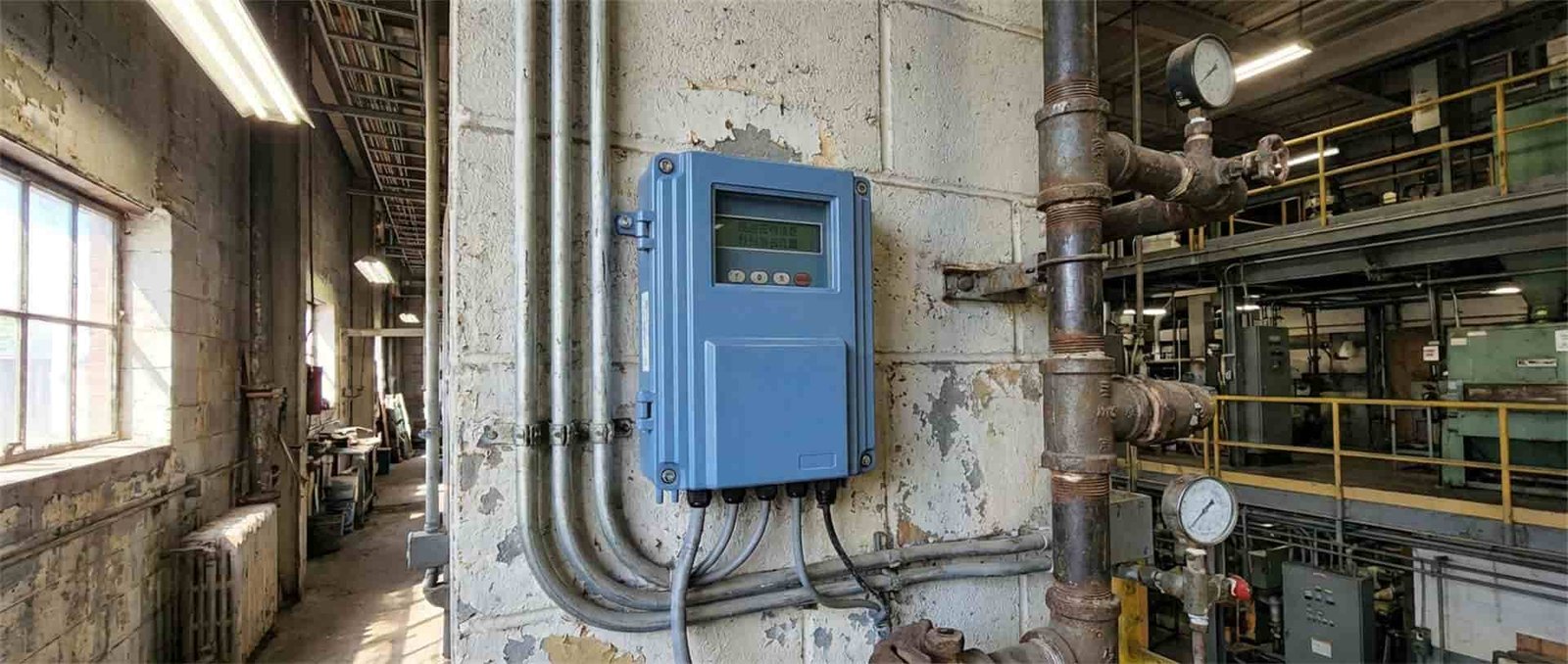
Magnetic meters require inline installation: cut the pipe, weld or bolt flanges, and insert the meter. Straight-run requirements are modest — typically 5D upstream and 3D downstream (where D = pipe diameter), though some designs need only 3D/1D when paired with a flow conditioner. A DN300 installation in a concrete-encased underground sludge line can take two days including civil work, dewatering, and permitting.
Clamp-on ultrasonic meters eliminate all of that. Transducers strap onto the outside of the existing pipe with chains or mounting brackets. No pipe cutting, no hot work, no confined-space entry, no permit notifications. Straight-run requirements are stricter — typically 10–15D upstream and 5D downstream — because the measurement depends on a fully developed velocity profile. Inline ultrasonic meters have similar piping needs to magnetic meters.
For detailed installation guidance including grounding, wiring, and commissioning, see the Jade Ant Instruments installation best-practices guide.
Maintenance Routines and Accessibility
Neither technology has moving parts, so both enjoy low maintenance compared to mechanical meters. Magnetic meter maintenance consists of periodic electrode cleaning (every 6–24 months depending on grease load), liner inspection for erosion or delamination, grounding-ring resistance checks (< 1 Ω), and electronic zero verification. Most of this can be done without removing the meter from the pipe.
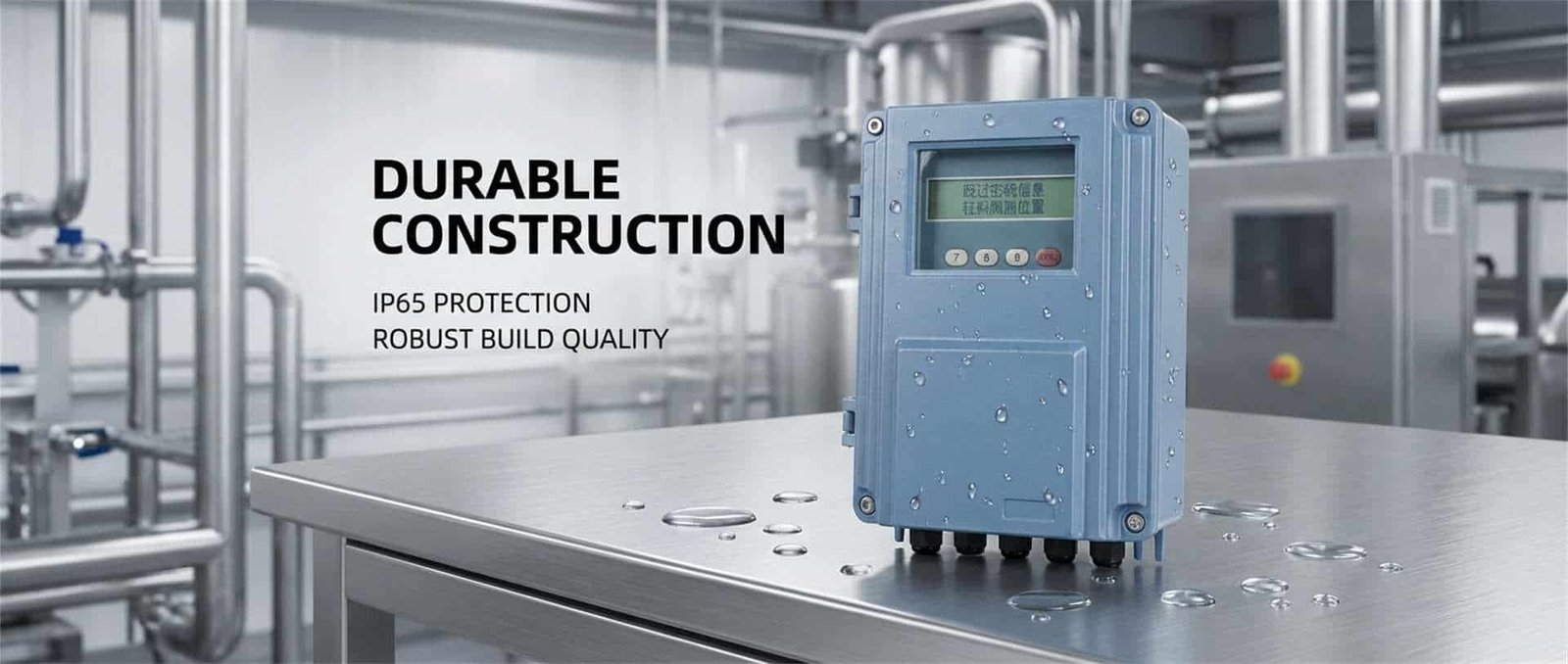
Ultrasonic meter maintenance involves transducer inspection (couplant integrity for clamp-on, face condition for wetted), firmware updates, and periodic comparison against a reference. Clamp-on transducers can be inspected and re-coupled without process shutdown. However, if the pipe’s internal condition changes (scale build-up, corrosion), the meter must be re-commissioned with updated wall-thickness and roughness parameters — a step that is often overlooked, leading to gradual accuracy degradation.
Cost Considerations: CAPEX and OPEX
Purchase Price and Installation Costs
Bar Chart — 10-Year TCO Comparison (DN200, Municipal Wastewater)
10-Year Total Cost of Ownership — DN200 Municipal Wastewater (USD)
$40K
$30K
$20K
$10K
$0
Magnetic Inline
Total: ~$17,000
Ultrasonic Clamp-On
Total: ~$11,000
Purchase
Installation
Maintenance (10 yr)
Calibration (10 yr)
Downtime cost
The bar chart above illustrates a representative 10-year TCO for a DN200 meter on a municipal wastewater influent line. The magnetic meter costs more upfront (meter + inline installation), but the clamp-on ultrasonic meter accumulates slightly higher calibration and re-commissioning costs because pipe-wall conditions change over a decade. In this scenario the ultrasonic option is ~35 % cheaper overall — but that advantage narrows or reverses if the application demands ±0.5 % accuracy, which the clamp-on model cannot guarantee.
Long-Term Operating Costs and Downtime Implications
Installation cost often dwarfs the meter purchase price. Cutting into a 12-inch wastewater main for a magnetic meter can cost $3,000–$5,000 in labour, civil work, and bypass pumping. A clamp-on ultrasonic meter on the same pipe costs $300–$500 to install. Over 10 years, however, the magnetic meter’s superior accuracy can save money through tighter chemical dosing and more reliable compliance data. A U.S. EPA-funded study noted that a 1 % improvement in influent flow measurement accuracy at a 10 MGD plant can reduce polymer dosing costs by $4,000–$8,000 per year — a figure that compounds heavily over a 15-year meter lifetime.
Reliability, Robustness, and In-Field Performance
Environmental Factors: Temperature, Pressure, Corrosion
| Environmental Factor | Magnetic Meter | Ultrasonic Meter |
|---|---|---|
| Fluid Temperature Range | −40 °C to +180 °C (PTFE liner); −20 °C to +80 °C (hard rubber) | −40 °C to +200 °C (inline wetted); −20 °C to +150 °C (clamp-on, couplant dependent) |
| Pressure Rating | Up to 40 bar (PN40) standard; higher with custom flanges | Inline: up to 100 bar; Clamp-on: limited by pipe rating, not meter |
| Corrosion Resistance | Liner-dependent: PTFE (excellent chemical resistance), polyurethane (abrasion), hard rubber (general wastewater) | Wetted: 316L SS housing; Clamp-on: transducer housing is isolated from fluid |
| IP / Hazardous Area | IP67/IP68 standard; ATEX/IECEx zones available | IP67 standard; ATEX/IECEx zones available |
| Ambient Temperature | −25 °C to +60 °C (transmitter) | −25 °C to +55 °C (transmitter) |
Performance in Hazardous or Aggressive Wastewater Environments
Industrial wastewater from textile dyeing, metal finishing, or chemical manufacturing can have pH values below 2 or above 12 and may contain chlorides, fluorides, or free chlorine. In these environments, electrode and liner material selection is critical. Hastelloy C electrodes paired with a PTFE liner handle most aggressive chemistries; platinum electrodes are specified for the most extreme cases. Ultrasonic meters sidestep wetted-material concerns entirely when used in clamp-on configuration — but only if the pipe itself survives the fluid. A corroded pipe wall distorts the acoustic path, so operators must monitor wall thickness with UT gauges at regular intervals.
For guidance on matching liner and electrode materials to specific wastewater chemistries, see the Emerson material selection guide (PDF).
Case Studies and Real-World Performance
Municipal Wastewater Plant Example
A 15 MGD municipal treatment plant in Ohio replaced aging vortex meters on two DN400 influent lines with Jade Ant Instruments electromagnetic flow meters. The hard-rubber-lined, 316L-electrode meters were sized using the Jade Ant engineering team’s comprehensive selection methodology. After commissioning, the plant reported the following results over 18 months: influent flow measurement uncertainty dropped from ±3.5 % (vortex baseline) to ±0.4 %; aeration blower energy consumption fell by 6 % due to more accurate oxygen-demand calculations; and polymer dosing waste dropped by $11,200 per year. The meters required one scheduled electrode cleaning at month 12 — a 45-minute task performed without process shutdown.
Industrial Wastewater Example
A pharmaceutical manufacturer in Gujarat, India needed to meter acidic effluent (pH 2.5, conductivity 1,200 µS/cm) from an API synthesis line. The existing magnetic meter failed after eight months due to PTFE liner delamination caused by thermal cycling between 15 °C and 85 °C. Rather than replace in-kind, the engineering team installed a clamp-on transit-time ultrasonic meter with high-temperature transducers on the Hastelloy discharge pipe. The ultrasonic meter delivered ±1.5 % accuracy — sufficient for the plant’s environmental compliance threshold of ±5 % — and has run maintenance-free for 26 months. The plant avoided $4,200 in pipe-cutting costs and eliminated the risk of liner failure entirely. This case illustrates that sometimes the “less accurate” technology is the smarter choice when installation constraints dominate.
Selection Guidelines and Best Practices
The decision framework follows a short sequence of questions. First, is the fluid conductive (≥ 5 µS/cm)? If not, magnetic meters are eliminated and ultrasonic is the only option. Second, what is the solids concentration? If > 2 %, transit-time ultrasonic meters are eliminated; choose magnetic or Doppler ultrasonic. Third, can the pipe be cut? If not (live line, buried concrete encasement, hazardous material), clamp-on ultrasonic is the only non-invasive option. Fourth, what accuracy does the application require? If ≤ ±0.5 % of reading, magnetic wins. If ±2 % is acceptable, both compete. Finally, evaluate lifecycle cost including installation, calibration, and maintenance over 10–15 years.
Quick-Start Checklists and Implementation Tips
If you choose magnetic: verify fluid conductivity at minimum expected value, select liner material based on the brand comparison guide from Jade Ant Instruments, ensure the pipe will always be full at the meter location, install grounding rings (especially on plastic or lined pipes), commission with a proper zero check under no-flow conditions, and set a calibration interval of 12–24 months based on the application’s criticality.
If you choose ultrasonic: measure pipe OD, wall thickness, and internal coating with an ultrasonic thickness gauge before ordering transducers, verify that straight-run requirements (10–15D upstream, 5D downstream) can be met, select transit-time for clean streams or Doppler for solids-laden streams, apply couplant per the manufacturer’s specification (silicone grease degrades at > 200 °C), and re-verify pipe-wall parameters annually. For further comparison across all meter types, consult the Jade Ant Instruments flow monitor comparison.
Video: Electromagnetic vs Ultrasonic Flow Meters Explained
This video compares electromagnetic and ultrasonic flow meter technologies, covering working principles, accuracy, installation, and typical water/wastewater applications.
Both magnetic and ultrasonic flow meters have earned their place in wastewater treatment — but they are not interchangeable. Magnetic meters deliver superior accuracy (±0.2–0.5 % of reading), handle the heaviest solids loads (up to 50 % by volume), and offer long-term measurement stability that justifies their higher installation cost when accuracy is non-negotiable. Ultrasonic meters — particularly clamp-on transit-time models — provide unmatched installation speed, zero pipe intrusion, and lower upfront cost, making them the logical choice for retrofits, temporary surveys, and applications where ±1–2 % accuracy suffices.
The key takeaway: match the meter to the slurry content, the installation constraints, and the lifecycle cost model — not to habit or brand loyalty. If your plant handles conductive wastewater with moderate to high solids and you can afford the installation downtime, a magnetic meter from a proven manufacturer like Jade Ant Instruments will likely deliver the lowest total cost per accurate measurement over 15 years. If your constraint is access, budget, or non-conductive fluid, ultrasonic technology fills the gap.
Before committing, request a pilot test or site assessment from your vendor. Jade Ant Instruments offers free application consultations covering fluid compatibility, sizing, liner/electrode selection, and installation layout review — a service that has helped over 400 facilities choose the right meter the first time.
Frequently Asked Questions (FAQs)
1. What are the main differences between magnetic and ultrasonic flow meters in wastewater?
Magnetic flow meters measure velocity via Faraday’s Law and require conductive fluid (≥ 5 µS/cm). They achieve ±0.2–0.5 % of reading accuracy and tolerate up to 50 % solids by volume, but they must be installed inline. Ultrasonic flow meters measure velocity via transit-time or Doppler principles, work with non-conductive fluids, and can be installed externally (clamp-on), but their accuracy ranges from ±0.5 % (inline transit-time) to ±5 % (Doppler).
2. Which meter type is more cost-effective over the system lifecycle?
It depends on the installation scenario. For new construction where the pipe can be cut during build-out, the magnetic meter’s higher purchase price is offset by lower ongoing calibration drift and longer calibration intervals — 10-year TCO is typically $15,000–$20,000 for a DN200 magnetic vs $10,000–$15,000 for a clamp-on ultrasonic. However, if cutting into an existing pipe costs $3,000–$5,000 in bypass pumping and labour, the clamp-on ultrasonic may win on TCO by a wide margin.
3. How does slurry content affect maintenance and accuracy for each technology?
Solids in the 3–10 % range gradually erode magnetic meter liners (hard rubber or polyurethane), necessitating liner inspection every 2–5 years. Accuracy remains unaffected as long as the liner is intact. For ultrasonic meters, even 1–2 % solids can attenuate transit-time signals, reducing accuracy or causing measurement faults. Doppler ultrasonic meters handle solids well but at reduced accuracy (±2–5 % FS).
4. Can I use a clamp-on ultrasonic meter on a heavily corroded wastewater pipe?
You can, but accuracy will suffer. Clamp-on meters require accurate pipe-wall thickness and speed-of-sound data. Internal corrosion creates uneven wall thickness and scale layers that change the acoustic path. Before installing, measure wall thickness at multiple points with an ultrasonic thickness gauge. If the variation exceeds 10–15 %, consider an inline meter or a section replacement.
5. What fluid conductivity is needed for a magnetic flow meter?
Most magnetic meters require a minimum of 5 µS/cm. Municipal wastewater typically measures 500–1,500 µS/cm, and industrial effluent is usually above 50 µS/cm. If conductivity drops below 5 µS/cm (e.g., high-purity rinse water or solvent-heavy streams), an ultrasonic meter is the better choice.
6. What liner material should I choose for wastewater magnetic meters?
For general municipal wastewater (< 3 % solids, pH 5–9), hard rubber provides the best balance of cost and durability (10–15+ year life). For sludge lines with 3–10 % solids, polyurethane offers superior abrasion resistance. For chemically aggressive industrial effluent (strong acids, bases, or solvents), PTFE or PFA provides the broadest chemical compatibility but at higher cost and with a lower abrasion tolerance.
7. How often should each meter type be calibrated in wastewater service?
Magnetic meters in standard wastewater service should be zero-verified every 12 months and fully calibrated every 24 months. In aggressive or high-solids service, shorten to 6–12 months. Ultrasonic meters should be re-verified annually by comparing against a reference or portable master meter. Clamp-on models should also have their pipe-wall parameters re-measured every 12–24 months. For calibration procedures, see the Jade Ant Instruments calibration guide.
8. Can a Doppler ultrasonic meter replace a magnetic meter on a sludge line?
It can provide a measurement, but not at the same accuracy. A Doppler meter on a 4 % solids sludge line typically achieves ±3–5 % FS accuracy, compared to ±0.5 % of reading for a magnetic meter. If the sludge line feeds a dosing control loop or a permit-compliance totaliser, the Doppler meter’s accuracy is usually insufficient. If the line is for process monitoring or alarming only, a Doppler meter is a practical, lower-cost alternative.
9. What straight-run pipe length is required for each meter type?
Magnetic meters generally require 5 pipe diameters (5D) of straight run upstream and 3D downstream. Some modern designs reduce this to 3D/1D with built-in flow conditioning. Clamp-on ultrasonic meters need 10–15D upstream and 5D downstream to ensure a developed velocity profile. Inline ultrasonic meters have similar requirements to magnetic meters (5–10D/3–5D). In confined spaces, flow conditioners can help reduce straight-run needs for both technologies.
10. Where can I get expert help choosing between magnetic and ultrasonic meters for my wastewater application?
Jade Ant Instruments provides free application consultations for both electromagnetic and ultrasonic flow meters. Their engineering team reviews fluid properties, pipe layout, accuracy requirements, and budget to recommend the optimal technology and model. With over 12,000 meters deployed across water, wastewater, and industrial applications, the team has practical experience with the exact trade-offs discussed in this guide. Visit the manufacturer comparison page to see how Jade Ant Instruments stacks up against other leading brands, or contact them directly through the water flow meter selection page.