Understanding the market dynamics, regulatory pressures, and technological shifts propelling ultrasonic flow meters from a $2.1B market to $3.3B by 2034—and what this means for B2B distributors and agents.
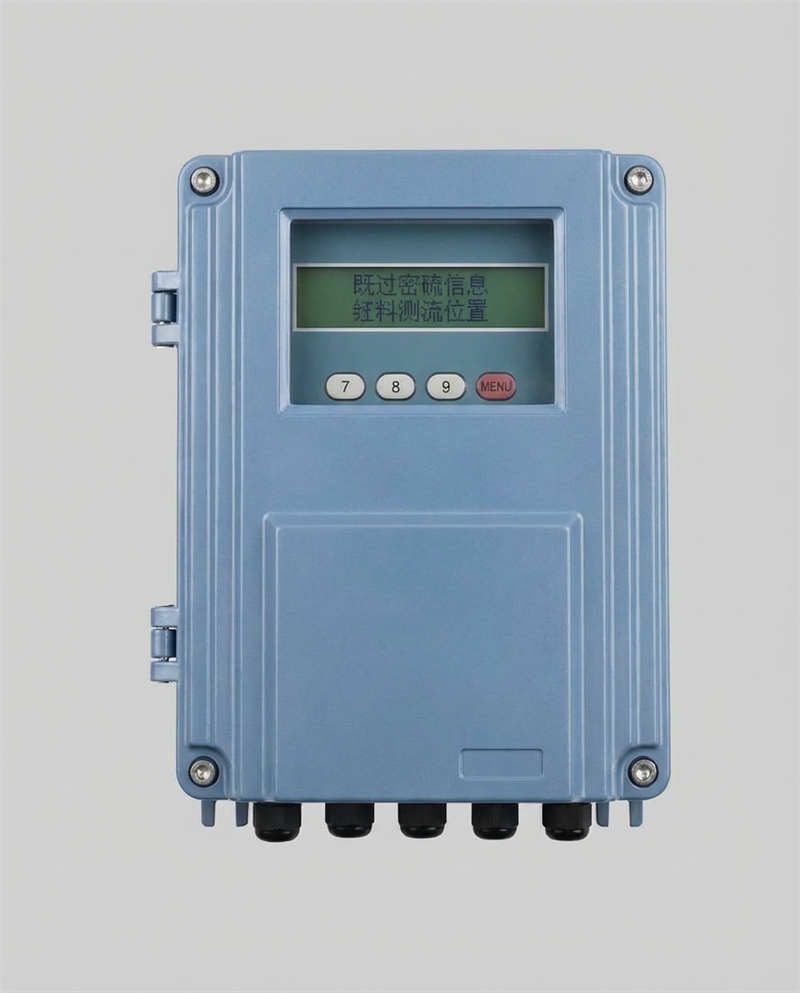
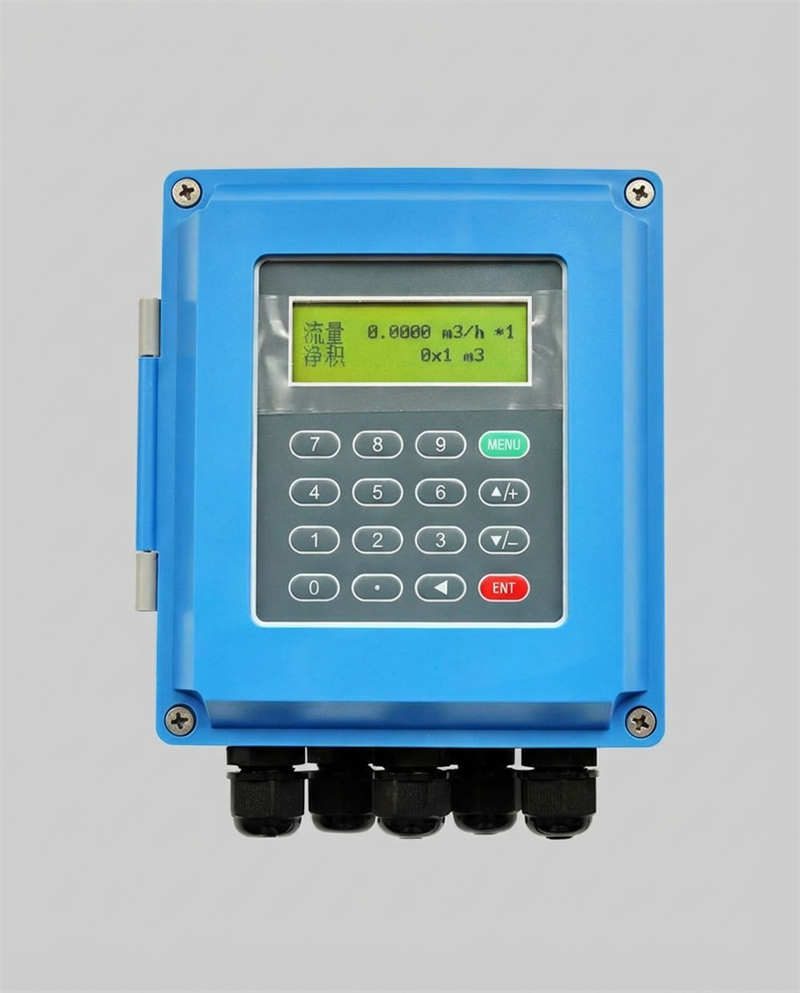
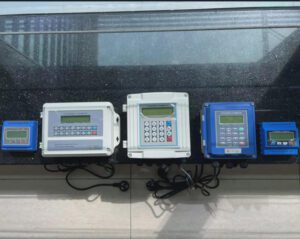
 Clamp-on ultrasonic flow meters eliminate pipe cutting — one of the key installation advantages driving adoption in retrofit projects.
The global flow measurement industry is entering one of its most consequential growth phases in decades. The 超音波流量計 market — currently valued at $2.1 billion in 2025 — is projected to reach $3.3 billion by 2034, expanding at a compound annual growth rate (CAGR) of 5.05% according to IMARC Group’s latest market intelligence. That’s not headline noise. For B2B distributors and agents who trade in flow instrumentation, this trajectory represents more than $1.2 billion in incremental addressable revenue generated over the next decade.
What separates this growth cycle from previous market expansions is the breadth and simultaneity of its drivers. This is not a single-variable story. Regulatory pressure, digital transformation, sustainability mandates, and the opening of entirely new application verticals are converging at the same time, in multiple geographic markets, across industries that have historically had little overlap. For distributors managing portfolio strategy and agents navigating customer conversations, understanding these drivers — not just acknowledging them — is the difference between capturing market share and watching it flow to competitors.
This article delivers a structured, ground-level analysis of every major force shaping the ultrasonic flow meter market through 2034, with actionable intelligence oriented specifically toward B2B channel partners.
1. The Market Growth Snapshot: From $2.1B to $3.3B
Current Market Valuation and Timeline
Breaking down the $2.1B baseline
The $2.1 billion baseline figure for 2025 reflects a market that has already undergone significant maturation. Ultrasonic flow meters — instruments that use sound waves transmitted through a fluid to calculate volumetric or mass flow rates — have displaced mechanical and turbine-based technologies across many industrial segments over the past two decades. The current installed base spans water and wastewater utilities, oil and gas pipelines, chemical processing facilities, HVAC systems, and a growing roster of specialized applications.
Within this $2.1 billion, two distinct product architectures dominate: transit-time ultrasonic meters (which measure the difference in travel time of ultrasonic pulses moving with and against the flow direction, suitable for clean liquids and gases) and Doppler ultrasonic meters (which rely on the frequency shift of reflected signals from particles or bubbles in the fluid, suited to slurries and mixed-phase flows). Transit-time technology commands the majority of market value, particularly in custody transfer, water distribution, and industrial process applications where measurement accuracy is non-negotiable.
Projecting to $3.3B by 2034 — what the numbers reveal
The $3.3 billion projection is not a straight-line extrapolation. Market growth is expected to accelerate in the second half of the forecast window (2029–2034) as infrastructure replacement cycles in North America and Europe peak, as Asia-Pacific industrial buildout intensifies, and as IoT-enabled “smart” meter configurations transition from premium options to standard specifications. The table below contextualizes this growth trajectory within the broader flow measurement industry.
| メートル法 | 価値 |
|---|---|
| Ultrasonic Flow Meter Market (2025) | $2.1 Billion |
| Projected Market Size (2034) | $3.3 Billion |
| CAGR (2025–2034) | 5.05% |
| Incremental Revenue Opportunity | ~$1.2 Billion |
| Overall Flow Meter Market (2025) | ~$11 Billion |
| Ultrasonic Share of Flow Meter Market | ~19% (growing) |
| Clamp-On Segment CAGR | ~7.2% (outpacing overall) |
Particularly notable is the clamp-on ultrasonic segment, which is growing at approximately 7.2% CAGR — meaningfully faster than the overall ultrasonic market. The reason is straightforward: clamp-on installation requires no pipe cutting, no process shutdown, and no welding, making it the dominant choice for the replacement and modernization projects that constitute roughly 60% of total market demand.
The 5.05% CAGR: What It Means for Your Business
How consistent growth translates to inventory planning opportunities
A 5.05% annual growth rate may appear modest in isolation. But for B2B channel partners, the consistency of this trajectory is precisely what makes it operationally valuable. Unlike cyclical commodity markets, where demand spikes and collapses in response to energy prices or construction booms, ultrasonic flow meter demand is being driven by regulatory mandates and infrastructure replacement timelines — forces that are fundamentally non-cyclical.
Practical implication: a distributor carrying $500,000 in ultrasonic meter inventory today can reasonably project roughly $52,500 in incremental baseline demand per year from market growth alone, before accounting for market share gains. That predictability changes the calculus on inventory financing, warehouse capacity planning, and SKU rationalization.
Revenue forecasting strategies for distributors managing portfolio expansion
The 5.05% CAGR should inform a tiered forecasting model. High-growth segments (clamp-on configurations, IoT-enabled models, cryogenic applications) will outperform this average; legacy inline mechanical replacement plays will track closer to the mean. Distributors who segment their revenue forecasts by product type, installation method, and end-user vertical — rather than treating “ultrasonic meters” as a single category — will generate more accurate forward projections and more defensible purchasing decisions with their manufacturing partners.
Market Segmentation Opportunities for B2B Partners
The ultrasonic flow meter market is not monolithic. Value concentration differs dramatically by segment, as illustrated below:
| Market Segment | Estimated Share | Growth Outlook | Key Buying Trigger |
|---|---|---|---|
| 上下水道 | ~35% | Strong | Regulatory compliance, aging infrastructure |
| 石油・ガス | ~25% | Moderate-Strong | Custody transfer accuracy, leak detection |
| 化学処理 | ~15% | 中程度 | Process safety, traceability regulations |
| HVAC & Building Systems | ~10% | Strong | Smart building integration, energy efficiency |
| Food & Beverage / Pharma | ~8% | 高 | Hygienic design requirements, FDA compliance |
| Renewable Energy / Other | ~7% | Very High (emerging) | New technology adoption, ESG investment |
Distributors who concentrate portfolio development on water/wastewater and oil/gas can protect volume, but agents who develop early expertise in food & beverage, pharma, and renewable energy will enjoy significantly higher margin positioning in high-growth niches where technical complexity limits competition.
2. Regulatory Drivers: Compliance as a Growth Engine
Global Environmental Regulations Fueling Demand
ISO standards and international flow measurement compliance requirements
Regulation is the single most reliable demand-creation engine in the ultrasonic flow meter market. Unlike technology-driven adoption, which depends on customer awareness and budget cycles, regulatory mandates create non-negotiable replacement deadlines that translate directly into purchase orders. The international standards framework governing flow measurement has become progressively more demanding, with ISO 4064 (water meters for cold potable water), ISO 6817 (flow measurement of conductive liquids using electromagnetic flowmeters), and OIML R49 (utility water meters) establishing performance thresholds that many older metering installations simply cannot meet.
For distributors, the key insight is that ISO certification is increasingly a market access requirement rather than a differentiator. End-customers — particularly utilities, municipal authorities, and publicly traded industrial operators — face audit risk when their flow measurement infrastructure falls below certified standards. This means your product portfolio must be fully certified before the customer conversation begins.
How stricter regulations create consistent customer demand for accurate metering
Consider a practical case: a mid-sized European water utility operating 1,200 distribution points. Under the EU Water Framework Directive and the revised Drinking Water Directive (2021/2115), utilities face legally binding requirements for leakage reduction and water accounting. A measurement accuracy shortfall of even ±2% across a large distribution network can mean thousands of cubic meters of unaccounted-for water per day — a liability in both regulatory reporting and revenue recovery terms. Switching to high-accuracy ultrasonic meters that achieve ±0.5% or better accuracy directly addresses both problems. The decision is not discretionary; it is compliance-driven.
Industry-Specific Compliance Mandates
Water and wastewater treatment facility requirements
Municipal water authorities globally are operating under tightening regulatory environments. In the United States, EPA National Pollutant Discharge Elimination System (NPDES) permits require accurate effluent flow monitoring. In the UK, Ofwat’s regulatory framework mandates that water companies demonstrate leakage reduction and consumption accuracy. In China, the Ministry of Water Resources has implemented national smart water management standards that explicitly require electronic metering with data transmission capability — a specification that legacy turbine meters cannot meet.
Oil and gas sector measurement accuracy standards
In the oil and gas sector, custody transfer applications — where fluid changes ownership between parties — demand measurement traceability under standards including API MPMS (Manual of Petroleum Measurement Standards) Chapter 5 and ISO 17089. The financial stakes are direct: in a high-volume pipeline transferring 10,000 barrels per day at $80/barrel, a 0.1% measurement error represents an $80,000/day discrepancy. Ultrasonic multipath meters, capable of achieving custody transfer accuracy at ±0.1% or better, are rapidly replacing older technologies in these high-value applications.
Chemical and pharmaceutical industry traceability demands
The pharmaceutical sector adds a further compliance dimension: 21 CFR Part 11 (FDA electronic records requirements) and EU GMP Annex 11 mandate that process measurement data — including fluid flow — be electronically captured, time-stamped, and audit-trailed. Non-invasive ultrasonic measurement is particularly valued in pharmaceutical applications because it eliminates the risk of product contamination from measurement device components in contact with the process fluid.
Regional Regulatory Variations and Market Opportunities
European Union directives driving technology adoption
The EU represents the world’s most regulation-dense market for flow instrumentation. The Measuring Instruments Directive (MID 2014/32/EU), the Water Framework Directive, and the Industrial Emissions Directive collectively create a compliance architecture that effectively mandates modern flow measurement technology. EU-based distributors and agents who develop deep knowledge of MID certification requirements — including Module B (type examination) and Module D (quality assurance of production) conformity assessments — are positioned to provide genuine technical value to customers navigating the certification process.
North American environmental standards creating distributor opportunities
In North America, the combination of EPA Stormwater Phase II rules, state-level water metering mandates (particularly in water-stressed Western states), and FERC (Federal Energy Regulatory Commission) requirements for pipeline custody transfer creates a distributed but substantial compliance demand. The American Water Works Association (AWWA) Standards C700–C707 govern water meter specifications, and the ongoing upgrade cycle from older mechanical meters to electronic ultrasonic devices is expected to sustain strong demand in the municipal segment through at least 2030.
3. Digitalization and Industry 4.0: The Technology Shift
 IoT-enabled flow meters transmit real-time data to SCADA systems and cloud platforms — transforming flow measurement from a passive record into an active operational intelligence tool.
Smart Flow Metering Integration
IoT-enabled ultrasonic flow meters transforming data collection
The term IoT (Internet of Things) in the context of flow measurement refers to the integration of network connectivity, onboard data processing, and standardized communication protocols — HART 7, Modbus RTU/TCP, PROFIBUS, OPC-UA, WirelessHART, or NB-IoT — into the flow meter itself. The result is a device that does not merely measure flow; it generates, transmits, and contextualizes a continuous stream of operational data.
For B2B distributors and agents, this shift from “dumb instrument” to “connected node” fundamentally changes the customer conversation. An end-customer installing an IoT-enabled ultrasonic flow meter from a supplier like ジェイド・アント・インストゥルメンツ is not purchasing a standalone device; they are purchasing an entry point into their plant’s digital data infrastructure. The initial sales conversation must therefore address integration compatibility, data security architecture, and software ecosystem fit — not just flow range and accuracy class.
Real-time monitoring capabilities and customer value propositions
A chemical processing plant that previously read flow totals from a mechanical register once per shift now receives continuous real-time data at 1-second intervals, automatically logged, time-stamped, and accessible via a web dashboard from any device. In practice, this means leak events that previously went undetected for hours are flagged within minutes. Process deviations that caused product quality failures are identified before the batch is completed rather than during quality testing. The measurable value proposition — reduced waste, lower energy consumption, fewer batch failures — is not theoretical; it is quantifiable in customer operating reports.
Cloud Connectivity and Remote Diagnostics
How connected devices create recurring service revenue streams
This is one of the most important business model shifts in the flow instrumentation channel. Traditional meter sales are transactional — customer buys meter, distributor receives margin, relationship ends until the next replacement cycle. Connected ultrasonic meters break this model by creating ongoing service touchpoints. Remote diagnostics, firmware updates, calibration verification via cloud portal, and annual data subscription services represent recurring revenue opportunities that did not exist in the analog metering world.
For distributors with the technical capability to offer managed monitoring services, margins on the service layer can significantly exceed margins on the hardware. A mid-sized industrial customer managing 50 ultrasonic meters across a facility paying a modest annual service fee per meter represents meaningful recurring revenue — plus the relationship lock-in that prevents competitive hardware displacement at the next equipment refresh.
Predictive maintenance features reducing downtime for end-customers
Modern ultrasonic flow meters incorporate onboard signal quality diagnostics — monitoring acoustic coupling quality, signal-to-noise ratio, pipe wall condition indicators, and internal electronics health. When these diagnostics detect degradation trends before they cause measurement failure, maintenance can be scheduled during planned downtime rather than responding to an emergency. In a manufacturing context where an unplanned line shutdown costs $50,000–$200,000 per hour depending on industry, the value of a meter that predicts its own maintenance needs is immediately quantifiable.
Data Analytics and Decision-Making
Flow measurement data informing operational efficiency improvements
In an Industry 4.0 plant architecture, individual flow meter data feeds into broader process optimization systems — SCADA (Supervisory Control and Data Acquisition), DCS (Distributed Control System), MES (Manufacturing Execution System), and ERP platforms. Flow data becomes an input to energy balance calculations, yield analysis, process efficiency benchmarking, and automated control loop tuning. The meter, in this context, is infrastructure for operational intelligence.
For distributors positioning to sophisticated industrial customers, this systems integration perspective is essential. The question is not “which meter measures most accurately?” but “which meter integrates most cleanly into our client’s existing plant data architecture?”
Positioning your offerings around data intelligence benefits
Agents selling to plant managers and operations directors — not just procurement teams — need to articulate the operational intelligence value of modern ultrasonic meters, not just their technical specifications. The conversation shifts from “this meter has ±0.5% accuracy” to “this meter’s continuous data feed reduced our last client’s pump energy consumption by 12% within 90 days of installation.” That framing is compelling to a budget holder in a way that accuracy specifications alone are not.
Cybersecurity Considerations in Smart Metering
Security features as a competitive differentiator
As flow meters become network-connected nodes, they become potential attack surfaces for industrial cyber threats. The 2021 Oldsmar, Florida water treatment attack — where a threat actor remotely manipulated chemical dosing levels — demonstrated that operational technology (OT) cybersecurity in utilities is not a theoretical concern. Modern premium ultrasonic meters address this through encrypted communication protocols, certificate-based device authentication, role-based access controls, and audit logging of configuration changes.
Addressing customer concerns about connected device vulnerabilities
For distributors serving utilities, municipal water authorities, and critical infrastructure operators, cybersecurity certification — NERC CIP compliance for energy sector, IEC 62443 for industrial automation security — is increasingly becoming a procurement filter. Agents who can navigate these requirements with customers, and who carry products certified to relevant cybersecurity standards, occupy a significantly stronger competitive position.
4. Sustainability Demands: The ESG Imperative
Water Conservation and Efficiency Initiatives
Municipal water system optimization driving ultrasonic meter adoption
Globally, the World Health Organization estimates that 30–50% of water is lost in distribution networks through leakage — in some developing market systems, losses exceed 60%. For utilities operating under regulatory leakage targets, measurement accuracy is not incidental; it is the foundation of loss control. A utility that cannot accurately measure flow at the distribution zone level cannot identify where losses are occurring, let alone quantify them for regulatory reporting.
Badger Meter’s documented case studies show that facilities deploying high-accuracy ultrasonic metering with AMR (Automatic Meter Reading) or AMI (Advanced Metering Infrastructure) communication have achieved water consumption reductions of 15–25% within 12 months of system commissioning. These numbers, when translated into utility operating cost terms and regulatory compliance documentation, make a compelling investment case that distributors can bring directly to municipal procurement discussions.
Industrial water recycling programs requiring precise measurement
Semiconductor fabs, pharmaceutical manufacturers, and food processing facilities are under increasing pressure to reduce freshwater withdrawal and maximize internal water recycling. Ultrasonic flow meters in these applications must handle challenging fluid characteristics — ultra-pure water, high-temperature condensate, process water with variable conductivity — while maintaining measurement accuracy across wide flow ranges. The non-invasive clamp-on configuration is particularly valued in ultra-pure applications where any wetted sensor material could introduce contamination risk.
Energy Efficiency and Carbon Reduction Goals
How accurate flow measurement supports net-zero commitments
Corporate net-zero commitments — now standard for listed companies in most developed markets, driven by stakeholder pressure, investor ESG ratings, and regulatory climate disclosure requirements — create a direct demand pathway for precision flow measurement. Scope 1 emissions calculations (direct operational emissions from fuel combustion, process heating) and Scope 2 calculations (purchased energy) both depend on accurate flow data for fuel, steam, and heat transfer fluids. A net-zero roadmap built on inaccurate flow data is a regulatory liability.
Corporate sustainability reporting creating compliance demand
The EU’s Corporate Sustainability Reporting Directive (CSRD), which came into force in 2024, mandates that large EU companies and significant non-EU companies operating in Europe report environmental data — including energy consumption, water use, and emissions — to auditable standards. This creates a direct instrument procurement trigger: where existing flow measurement infrastructure cannot provide the measurement accuracy required for CSRD-compliant reporting, replacement is not optional.
Circular Economy Applications
Flow metering in waste reduction and resource recovery systems
District energy systems — networks distributing hot water or steam for heating and chilled water for cooling across urban areas or industrial complexes — represent one of the fastest-growing application segments for ultrasonic heat meters. Accurate flow measurement combined with temperature differential measurement quantifies the thermal energy transferred at each delivery point, enabling fair allocation of energy costs and verification of heat exchanger efficiency. In Copenhagen, Stockholm, and Helsinki — cities with among the world’s most developed district heating systems — ultrasonic heat meters are standard infrastructure.
Emerging markets for ultrasonic technology in sustainability-focused industries
Biogas plants, landfill gas recovery facilities, and industrial wastewater treatment systems generating energy from organic waste streams all require precise gas flow measurement as part of their operational and regulatory accounting. Clamp-on ultrasonic technology is increasingly being adapted for these applications, offering measurement capability in corrosive, gas-laden, or particle-laden flows where traditional metering technologies struggle.
ESG Reporting and Customer Accountability
Ultrasonic meters as tools for environmental impact measurement
The framing matters here: ultrasonic flow meters, in the current ESG environment, are not merely operational instruments. They are environmental accountability infrastructure. When a manufacturing facility installs connected ultrasonic meters across its water and energy systems and integrates that data into its sustainability management platform, it acquires the measurement foundation for credible, auditable ESG reporting. This is a positioning conversation that distributors and agents can have at C-suite level — not just with plant engineering.
Marketing sustainability benefits to your B2B customer base
Agents working with manufacturing customers should develop value proposition materials that quantify sustainability impact in ESG-relevant terms: liters of water recovered, MWh of energy optimized, kg of CO₂ avoided through precise steam and heat measurement. These metrics speak directly to the corporate sustainability officers and investor relations teams who are increasingly influential in capital expenditure approval for instrumentation projects.
5. Emerging Applications Expanding Market Reach
Non-Traditional Industries Adopting Ultrasonic Technology
Food and beverage processing applications
In food and beverage manufacturing, ultrasonic flow meters must navigate unique constraints: hygienic design requirements, CIP (Clean-In-Place) compatibility, and in many jurisdictions, FDA 21 CFR or EU Regulation 1935/2004 compliance for food-contact materials. The non-invasive clamp-on configuration sidesteps many of these material compliance concerns entirely — there is no wetted element to certify. Major beverage producers have validated clamp-on ultrasonic meters for measurement of water, CIP solutions, sugar syrup, and CO₂ dosing water, with measurement accuracy typically within ±1% under optimized installation conditions.
Pharmaceutical manufacturing and precision dosing
Pharmaceutical fluid handling demands measurement precision that few technologies can match in clean-in-place environments. Ultrasonic transit-time meters, with no moving parts, no seal materials exposed to process fluid, and zero pressure drop contribution, are particularly well-suited to sterile fluid transfer, solvent distribution, and water-for-injection (WFI) loop monitoring. Key distributors in pharma have found that the ability to supply meters with full validation documentation — including FAT (Factory Acceptance Test) reports, material certifications, and calibration traceability to NIST — commands significant margin premiums over commodity-spec instrumentation.
Renewable energy systems requiring flow measurement
Geothermal energy plants require precise measurement of geothermal brine — a chemically aggressive, high-temperature fluid — at both extraction and reinjection points. Solar thermal concentrating plants need accurate fluid flow measurement in heat transfer fluid circuits operating at temperatures up to 400°C. Ultrasonic technology, particularly transit-time configurations using high-temperature transducers and signal processing optimized for the challenging acoustic properties of hot, low-viscosity fluids, is increasingly the technology of choice in these applications. The renewable energy sector represents one of the highest-growth emerging segments for ultrasonic flow meter manufacturers and their distribution partners.
Specialized Measurement Challenges
Bidirectional flow applications in district heating systems
District heating systems require meters that can accurately measure flow in both directions — during peak demand periods, some network segments reverse flow direction as system pressure dynamics change. Ultrasonic transit-time meters are inherently capable of bidirectional measurement without hardware modification, whereas many alternative technologies require dedicated bidirectional configurations at additional cost.
Custody transfer applications in energy trading
Custody transfer — the metrologically certified measurement of energy commodities as they change ownership — represents the highest-value, highest-accuracy application segment in the ultrasonic flow meter market. Meters used in fiscal metering applications must carry national measurement institute type approval (e.g., PTB in Germany, NIST in the USA, NMI in Australia) and operate within legally defined uncertainty limits. Custody transfer meters command price premiums of 3–5× over standard measurement-grade instruments, and the associated service and calibration revenue streams are substantial.
Cryogenic and extreme-temperature fluid measurement
Liquefied natural gas (LNG) custody transfer, liquid oxygen/nitrogen distribution, and cryogenic process applications represent a technically demanding frontier for ultrasonic flow measurement. Cryogenic fluid temperatures (-160°C to -196°C) require transducer materials and acoustic coupling methods engineered specifically for thermal stress resistance. Manufacturers investing in cryogenic-grade ultrasonic meter product lines are accessing a market segment where technical differentiation commands significant margin and competitive entry barriers are high.
Building Systems and HVAC Integration
Smart building technology incorporating flow metering
Modern commercial buildings — particularly LEED-certified, BREEAM-certified, or WELL-certified properties — require comprehensive metering of all utility streams as a condition of their sustainability rating. Water, heating, cooling, and in some standards, individual tenant submetering, are all mandated data points. The integration of ultrasonic heat and water meters with BMS (Building Management Systems) platforms — communicating via Modbus, BACnet, or M-Bus protocols — makes them the natural specification choice for new smart building construction and major retrofits.
Thermal comfort systems requiring precise fluid measurement
Variable flow HVAC systems — where pump speed and valve positions are modulated in response to building zone demands — depend on accurate flow measurement to calculate thermal energy delivery and optimize system efficiency. In variable flow systems, ultrasonic meters’ low pressure drop (particularly in clamp-on configuration, where there is literally zero intrusion into the fluid path) preserves pump efficiency in a way that differential pressure-based flow measurement fundamentally cannot.
6. Geographic Market Expansion: Regional Growth Hotspots

Asia-Pacific: The Fastest-Growing Region
Infrastructure development driving water management investments
Asia-Pacific is projected to hold the largest single regional market share at approximately 39.2% in 2026, and its growth rate is the highest globally. The underlying driver is straightforward: China, India, and Southeast Asian economies are simultaneously building new water infrastructure and upgrading legacy systems that are decades old. China’s 14th Five-Year Plan allocated over ¥6 trillion to water infrastructure investment, with smart water metering explicitly identified as a national strategic requirement.
In India, the AMRUT 2.0 (Atal Mission for Rejuvenation and Urban Transformation) scheme is funding urban water and sewerage system upgrades in 500 cities, with electronic flow metering as a mandatory component. For distributors with established or emerging regional presence, these government-funded infrastructure programs represent large-volume procurement opportunities with multi-year tender frameworks.
Industrial manufacturing growth in China, India, and Southeast Asia
Beyond water infrastructure, the ongoing industrialization of Southeast Asia — driven by supply chain diversification away from single-country manufacturing concentration — is creating new demand for flow measurement in chemical, petrochemical, food processing, and electronics manufacturing facilities. Vietnam, Indonesia, Thailand, and Malaysia are all seeing greenfield manufacturing facility investment at rates that will sustain industrial instrumentation demand through the decade.
Distribution opportunities in emerging markets
Emerging markets often have underdeveloped distributor networks for precision instrumentation, creating first-mover advantages for channel partners willing to invest in technical capability and local customer support infrastructure before the market reaches full maturity.
Europe: Regulatory Leadership and Technology Innovation
EU environmental directives accelerating adoption
Europe combines the world’s most demanding flow measurement regulatory environment with the highest average willingness-to-pay for technically advanced instrumentation. The combination creates a premium market where accuracy class, certification credentials, cybersecurity compliance, and digital integration capability are all buying criteria — not just price. EU distributors who position around technical expertise and compliance support consistently achieve higher margins than those competing on cost.
Premium market positioning for advanced ultrasonic solutions
European industrial customers — particularly in Germany, the Netherlands, Scandinavia, and France — are sophisticated buyers who understand the total cost of ownership argument for premium ultrasonic meters. Distributors who can clearly articulate the 10-year TCO (Total Cost of Ownership) advantage of a high-accuracy, maintenance-free ultrasonic meter versus a lower-cost alternative will find receptive audiences among procurement and engineering teams who face both regulatory accountability and operational efficiency pressure.
North America: Aging Infrastructure Replacement
Water system modernization creating bulk procurement opportunities
The American Society of Civil Engineers’ 2021 Infrastructure Report Card gave U.S. drinking water infrastructure a grade of C-minus, estimating that over 6 million miles of aging water mains require replacement or rehabilitation. The Bipartisan Infrastructure Law (2021) allocated $55 billion specifically for water infrastructure, with provisions supporting smart metering, leak detection, and water system modernization. This federal funding is flowing into municipal procurement budgets in a way that directly supports bulk ultrasonic meter procurement at scale.
Industrial sector investments in flow measurement accuracy
North American oil and gas, chemical, and petrochemical operators continue to invest in flow measurement accuracy upgrades driven by API and ASME measurement standards, EPA air quality regulations (which require accurate gas flow data for emissions reporting), and the broader ESG disclosure movement. Distributors serving these sectors face well-informed procurement teams who require thorough technical documentation and compliance certification support.
Latin America and Middle East: Emerging Opportunities
Growing industrialization and water management investments
Brazil’s water utility sector — undergoing privatization and modernization under the 2020 New Water Framework law — represents a significant near-term opportunity. Saudi Arabia’s Vision 2030 infrastructure development program includes major investments in non-oil industrial manufacturing, desalination, and water distribution that require modern flow measurement infrastructure. For distribution partners willing to navigate the commercial complexity of these markets, first-mover positioning in underpenetrated geographies offers both volume and margin advantages unavailable in mature markets.
Positioning strategies for underpenetrated markets
In markets where technical awareness of ultrasonic technology advantages is lower, distributor and agent investment in customer education — technical seminars, site demonstrations, application engineering support — delivers disproportionate return. The customer who understands why transit-time ultrasonic measurement is superior to turbine metering for their specific application becomes a loyal account; the customer who received only a price sheet remains perpetually vulnerable to the next low-cost bid.
7. Competitive Landscape: What Distributors Need to Know
Market Consolidation and Major Players
Key manufacturers and their market positioning
The global ultrasonic flow meter manufacturing landscape is dominated by a tier of large instrument conglomerates — Emerson (Daniel, Micro Motion), Endress+Hauser, Siemens, KROHNE, and Yokogawa command the majority of the high-accuracy, custody transfer, and process control segments. Below this tier, a significant second tier of manufacturers — including specialized ultrasonic-focused companies and Asia-Pacific based manufacturers — compete on value, application flexibility, and lead times in the general industrial and utility segments.
For distributors, the critical implication of this structure is that your competitive positioning relative to large OEM direct channels matters. The Emersons and Endress+Hausers of the world increasingly sell direct to large-account end customers; the distributor’s value must be clearly articulated in terms of technical support, application expertise, inventory availability, and responsiveness — not price competitiveness against the manufacturer.
How consolidation affects distributor partnerships and margins
Industry consolidation through acquisition — which has continued in the instrumentation sector — reduces the number of viable manufacturing partners available to distributors. This argues for proactive relationship development with manufacturers like ジェイド・アント・インストゥルメンツ who offer channel-first go-to-market models, OEM/ODM flexibility, and distribution-friendly commercial terms, rather than concentrating portfolio exclusively on brands whose direct sales ambitions will eventually compete with your accounts.
Product Innovation and Differentiation
Advanced features distinguishing premium offerings
The features that command premium pricing in the current market include multipath acoustic measurement (4-path or 5-path transducer arrays that dramatically improve accuracy in non-ideal flow conditions), integrated data logging with on-board storage and cellular transmission, ATEX/IECEx explosion-proof certification for hazardous area applications, and factory calibration with NIST/PTB traceability documentation. Distributors who thoroughly understand the operational significance of these features — and who can explain them to application engineers in end-customer organizations — justify premium pricing in a way that pure specification comparison cannot.
Technology gaps creating opportunities for agent education and upselling
In many industrial segments, the installed base of ultrasonic meters deployed 10–15 years ago lacks modern communication protocols, digital diagnostics, and connectivity features. This technology gap creates a straightforward upsell narrative: “Your existing meter measures flow accurately, but it cannot talk to your new SCADA system, cannot report to your ESG platform, and cannot alert your maintenance team before it fails. Here’s what the upgrade looks like, and here’s the ROI calculation.”
Pricing Strategies in a Growing Market
Value-based pricing versus cost-plus approaches
In a market growing at 5.05% CAGR with measurable regulatory and operational ROI drivers, cost-plus pricing is a structural concession of margin that distributors can avoid. The customer installing an ultrasonic meter in a custody transfer application is not buying a $3,000 device; they are buying measurement accuracy that protects $80,000/day in revenue accountability. Value-based pricing — anchored to the quantified operational or compliance benefit, not the bill of materials — is both defensible and margin-protective.
Managing margin pressure while capitalizing on growth
The competitive intensity of a growing market inevitably attracts lower-cost competitors, particularly from Asia-Pacific manufacturing. Distributors who compete purely on hardware price will face permanent margin compression. The margin protection strategy is service layer development: installation, calibration, training, remote monitoring, and technical consultation services that lower-cost competitors cannot provide and that customers will pay for because they reduce their own operational risk.
Channel Dynamics and Distribution Network Evolution
Direct sales versus distributor-agent models
The fundamental channel tension in the instrumentation industry is the manufacturer’s economic incentive to capture distributor margin by selling direct to large accounts, versus the practical reality that local technical support, inventory, application engineering, and customer relationship depth cannot be replicated cost-effectively from a centralized direct sales force. The best-positioned distributors are those who have made themselves genuinely irreplaceable through technical expertise, inventory strategy, and customer intimacy — not simply resale convenience.
Strategies for maintaining competitive positioning against manufacturer direct channels
Vertical specialization is the most defensible moat. A distributor who has certified engineers specializing in pharmaceutical instrumentation validation, who maintains shelf stock of FDA-documentation-ready meter configurations, and who has active relationships with 50 pharma plant managers in their region, is extremely difficult for a manufacturer’s direct sales team to displace — even if the manufacturer’s pricing is lower. Depth beats breadth in channel competition.
8. Customer Pain Points: Building Solutions Around Market Needs
Accuracy and Reliability Concerns
How ultrasonic technology addresses measurement inconsistencies
The most common technical objection to upgrading from mechanical or turbine metering is uncertainty about ultrasonic accuracy under non-ideal installation conditions — short upstream straight runs, residual swirl or asymmetry in the flow profile, or fluids with variable acoustic properties. Modern multipath ultrasonic meters address this directly: a 4-path transit-time meter with signal processing algorithms that correct for flow profile distortion can maintain ±0.2% accuracy in installations where a single-path meter would produce ±1.5% errors. Understanding and communicating this distinction — with specific accuracy data from calibration certificates — is the foundation of a credible technical sales conversation.
Positioning accuracy improvements as ROI drivers for end-customers
For an oil refinery measuring fuel gas consumption at $8/MMBTU, a measurement accuracy improvement from ±2% to ±0.5% on a 10,000 MMBTU/day flow represents a daily measurement value uncertainty reduction from ±$1,600/day to ±$400/day — or $438,000/year in reduced billing dispute exposure. When distributors frame the upgrade decision in these terms, it changes from a capital expenditure to a financial risk mitigation investment, typically with payback periods under 12 months.
Installation and Maintenance Complexity
Non-invasive installation advantages reducing customer downtime
Clamp-on ultrasonic installation requires no pipe cutting, no process shutdown, and no isolation valve operation. An experienced technician can install a clamp-on meter on a DN200 pipeline in under two hours, including commissioning and data communication verification. The same pipeline installation using a flanged inline meter requires process shutdown, pipe section removal, flange welding, pressure testing, and recommissioning — a multi-day operation with significant production loss cost implications.
For customers in continuous-process industries — refineries, chemical plants, paper mills — where planned shutdowns are infrequent and unplanned shutdowns are extremely costly, the no-shutdown installation advantage of clamp-on ultrasonic meters is often the single most compelling buying argument, independent of any other technical or commercial consideration. Explore Jade Ant Instruments’ clamp-on ultrasonic flow meter guide for a detailed breakdown of installation configurations.
Training and support services as value-add offerings
Ultrasonic flow meter performance depends significantly on installation quality — transducer spacing, acoustic coupling compound application, pipe wall condition assessment, upstream/downstream straight run verification. Customers whose technical teams lack installation expertise frequently experience poor measurement performance that they attribute to the meter rather than the installation. Distributors who provide certified installation training — either as a paid service or as a premium added-value offering with large orders — dramatically reduce post-sale support incidents and build the technical credibility that earns preferred supplier status.
Total Cost of Ownership Challenges
Demonstrating long-term savings versus alternative metering technologies
A properly installed and maintained ultrasonic flow meter has a service life of 15–25 years with essentially zero scheduled maintenance (no moving parts to replace, no seals to renew). A turbine meter in comparable service requires impeller replacement typically every 3–5 years, plus seal maintenance, plus recalibration after mechanical service. Over a 20-year period, the TCO of a premium ultrasonic meter — despite a higher initial purchase price — is typically 30–50% lower than a turbine meter alternative in moderate-wear applications. This TCO analysis should be a standard component of every distributor’s proposal process.
| Cost Element | Turbine Meter (20yr) | Ultrasonic Meter (20yr) |
|---|---|---|
| Initial Purchase | より低い | より高い |
| Impeller Replacement (3 cycles) | $800–2,400 | $0 |
| Seal Maintenance | $300–600 | $0 |
| Recalibration (4 cycles) | $1,200–2,400 | $800–1,200 |
| Downtime for Maintenance | 4–8 days | <1 day |
| Total 20yr TCO (typical) | ~$15,000–25,000 | ~$10,000–18,000 |
Figures are indicative for a standard DN100 industrial installation at average energy costs. Actual values vary by application, fluid, and installation conditions.
Financing and service packages to improve customer adoption
For customers where initial purchase price is the primary adoption barrier, bundled financing options — lease-to-own, performance-based contracts, or operational expenditure models where the meter is priced as a service subscription — can convert what would be a deferred capital purchase into an immediate sale. Leading distributors in the European market have found that TCO-based financing proposals increase close rates by 20–35% in price-sensitive customer segments.
Integration with Existing Systems
Compatibility concerns with legacy infrastructure
Many end-customers have SCADA or DCS systems built on legacy communication protocols — 4–20mA analog, HART 5, or older Modbus implementations — that cannot natively communicate with modern digital field devices. Distributors who stock meters with broad protocol flexibility, or who offer integration engineering services that bridge legacy and modern communication architectures, solve a technical problem that prevents many customers from making upgrade decisions. The ultrasonic vs. Doppler flow meter comparison guide at Jade Ant Instruments provides useful reference for agents navigating application-specific technology selection discussions.
Solutions for seamless system upgrades and modernization
Protocol converters, edge computing gateways that aggregate field device data and present it in modern formats (MQTT, OPC-UA) to enterprise systems, and phased upgrade approaches that allow customers to modernize one measurement loop at a time without requiring a complete control system replacement are all viable solutions. Distributors who understand and can specify these integration architectures offer a level of systems thinking that hardware-only resellers cannot match.
9. Strategic Opportunities for B2B Distributors and Agents
 Distributor technical teams who can navigate compliance requirements, integration architecture, and application engineering are the hardest to displace in any competitive sales environment.
Portfolio Diversification Strategies
Expanding beyond traditional flow measurement into adjacent markets
The strongest distributor positions in the instrumentation industry are built on full measurement loop capability — not just flow, but pressure, temperature, level, and analytical measurement — because most customers need all of these parameters measured in the same application. A distributor who can supply and support a complete measurement package (ultrasonic flow + temperature transmitters + pressure sensors + data communication infrastructure) creates a switching cost that a flow-meter-only supplier cannot match.
Building complementary product offerings around ultrasonic technology
Ultrasonic heat meters — which combine flow measurement with temperature differential sensing to calculate thermal energy — are a natural portfolio expansion for distributors already serving HVAC, district energy, and smart building customers with ultrasonic flow meters. The incremental product knowledge required is manageable, the customer relationships are already established, and the market is growing faster than standard flow measurement alone.
Value-Added Services and Support
Technical consultation services differentiating your offerings
The single most effective distributor differentiation strategy in the current market is technical depth that goes beyond product knowledge into genuine application engineering capability. This means having certified engineers on staff who can review P&IDs, assess flow measurement installation requirements, specify appropriate meter configurations for challenging fluid characteristics, and provide written application reports that give customers confidence in their specification decisions.
Installation, calibration, and maintenance service revenue streams
Field service capability — whether provided by in-house technicians or through certified service partner networks — creates revenue streams that are structurally different from hardware sales. Service revenue is higher margin, more recurring, and builds customer dependency that protects hardware business. A distributor who performs annual calibration verification on 300 ultrasonic meters installed across their customer base has 300 annual touchpoints where equipment performance, upgrade opportunities, and adjacent product needs are visible — intelligence that is completely invisible to competitors without service relationships.
Training programs for customer technical teams
Structured training programs — covering ultrasonic measurement principles, installation best practices, configuration and commissioning procedures, diagnostic interpretation, and data integration — can be offered as standalone paid services or as premium value-adds with equipment purchases. Customers whose technical teams are trained by a distributor’s experts develop loyalty to that distributor’s product recommendations and technical guidance that is difficult for competitors to penetrate. Consider hosting ジェイド・アント・インストゥルメンツ product training sessions as a platform for customer technical education.
Market Segmentation and Vertical Specialization
Developing deep expertise in high-growth verticals
The distributors capturing disproportionate share of the ultrasonic flow meter market’s growth are those who have chosen specific verticals and developed genuine domain expertise — not just product knowledge, but understanding of the customer’s process engineering challenges, regulatory compliance requirements, capital project timelines, and operational performance metrics. A distributor known as the specialist in pharmaceutical fluid handling instrumentation will be shortlisted for every pharma project in their region; a generalist may be shortlisted for none.
Account-based marketing strategies for major end-customers
For key accounts — large industrial facilities, major utilities, prominent engineering firms — account-based marketing (ABM) approaches that personalize technical communication, proactively share application-relevant intelligence, and invest in relationship development at multiple organizational levels (procurement, engineering, operations, management) create account protection that transactional selling cannot replicate.
Digital Transformation of Sales and Operations
E-commerce platforms and online ordering for efficiency
B2B e-commerce for instrumentation is growing, driven by the same procurement efficiency pressures that have driven industrial MRO (Maintenance, Repair, Operations) purchasing online. Distributors with product configurators, live inventory visibility, and online technical documentation accessible to customer procurement and engineering teams reduce friction in the purchasing process and win the time-sensitive spot orders that competitors without digital infrastructure miss entirely.
CRM and inventory management systems optimizing distributor operations
For agencies managing large product portfolios across multiple end-user accounts, CRM systems that track opportunity pipeline, equipment installed base, service due dates, and customer preference history are not optional sophistication — they are baseline competitive infrastructure. Distributors operating from spreadsheets and email threads are at a structural disadvantage in responsiveness, opportunity visibility, and customer intelligence compared to CRM-enabled competitors.
Partnership and Channel Strategies
Collaborating with system integrators and consultants
Engineering procurement construction (EPC) firms, automation system integrators, and independent consulting engineers are gatekeepers to major capital project flow measurement specifications. A specification written by a trusted engineering consultant — naming specific meter configurations by manufacturer part number — is extraordinarily difficult for a competing distributor to displace at the procurement stage. Investing in relationships with these specifiers, educating them on your product portfolio’s technical advantages, and positioning your technical team as a resource for their project engineering work is among the highest-ROI distributor channel investments available.
Building relationships with OEMs and equipment manufacturers
Pump OEMs, heat exchanger manufacturers, modular process skid builders, and HVAC equipment manufacturers all specify flow measurement instruments in their packaged systems. A distributor relationship with these OEMs — where your instruments are specified at the OEM design stage and follow-on parts and service needs flow back to your business — creates annuity-style revenue that is independent of end-user direct selling activity.
Creating referral networks in complementary industries
Electrical panel builders, industrial automation suppliers, safety system integrators, and process control valve manufacturers all serve the same plant engineering customer base as flow measurement distributors, without directly competing. Referral network relationships with these complementary suppliers — where you refer flow measurement opportunities to them in exchange for reciprocal referrals — extend your market reach without proportional investment in direct sales headcount.
10. Future Outlook: Preparing for Market Evolution Through 2034
Technology Roadmap and Innovation Trends
AI-powered diagnostics and predictive analytics in flow measurement
The integration of machine learning algorithms into ultrasonic flow meter signal processing is moving from R&D prototype to commercial product. AI-driven acoustic signal analysis can detect subtle changes in fluid composition, pipe wall condition, and transducer performance that rule-based diagnostic algorithms miss. These capabilities, when communicated effectively to operations and maintenance teams, create tangible value that justifies premium hardware investment and annual software subscription fees.
For a useful overview of current ultrasonic flow meter technology evolution and market trends, this industry analysis video provides a helpful visual context:

▶ Ultrasonic Flowmeter Market — Analysis of Size, Share, Demand, and Forecast Trends
Advanced materials improving meter durability and performance
PEEK (polyether ether ketone), ceramic transducer housings, and advanced polymer acoustic coupling compounds are extending the operating temperature range and chemical resistance of ultrasonic meter transducers — opening applications in high-temperature steam systems, aggressive chemical service, and cryogenic environments that were previously inaccessible to ultrasonic technology. These material advances will progressively erode the application niches where alternative metering technologies (Coriolis, vortex, differential pressure) currently hold advantages.
Next-generation connectivity standards enabling new applications
5G private networks in industrial facilities, edge computing devices that process sensor data locally before selective cloud transmission, and time-sensitive networking (TSN) Ethernet protocols that enable sub-millisecond control loop integration are collectively building the infrastructure for a new generation of industrial IoT applications. Flow meters operating in this infrastructure will be real-time, always-connected process control elements — not just monitoring instruments. Distributors who develop expertise in industrial connectivity architecture will be positioned to specify flow meters as components of larger digital transformation projects.
Regulatory Evolution and Anticipatory Compliance
Emerging standards in water quality and environmental monitoring
The trajectory of environmental regulation globally is consistently toward more demanding measurement accuracy requirements, more comprehensive parameter coverage, and more rigorous data integrity standards. Distributors who track regulatory development in their key sectors — subscribing to standards body publications, attending industry association conferences, maintaining regulatory counsel relationships — can provide their customers with advance warning of compliance requirements before they become urgent, building the trusted advisor relationship that drives long-term account retention.
Preparing inventory and training for regulatory changes ahead
When a new regulation is published requiring a specific measurement accuracy class or communication protocol, the customers who prepared in advance secure competitive installation timelines and avoid compliance penalties. The customers who wait for the deadline drive demand spikes that create lead time pressure and supply constraints. Distributors who communicate regulatory timelines proactively and offer pre-compliance inventory planning assistance create genuine, demonstrable customer value.
Sustainability Acceleration and Green Technology Demand
Increasing corporate sustainability commitments driving adoption
Corporate sustainability commitments are accelerating rather than plateauing. The science-based targets initiative (SBTi), which requires corporate emissions reduction commitments validated against Paris Agreement pathways, has over 7,000 corporate signatories globally and is growing. Every one of these companies needs accurate, auditable measurement of their energy and resource consumption — a requirement that directly drives instrumentation investment. For distributors serving industrial end-customers, sustainability-driven capital projects are increasingly a primary procurement driver.
Positioning your business as a sustainability solutions partner
The distributors who will capture the sustainability-driven capital wave are those who position not as hardware suppliers but as measurement-based sustainability enablement partners — who can show how their instrumentation portfolio creates the data foundation for credible ESG reporting, regulatory compliance, and operational efficiency improvements. This positioning requires investment in sustainability domain knowledge and customer communication capability, but it creates account relationships at budget decision-making levels that pure product suppliers cannot access.
Workforce Development and Technical Expertise
Building team capabilities to support a growing customer base
The technical complexity of modern ultrasonic flow metering — spanning measurement physics, digital communication protocols, data integration architecture, regulatory compliance documentation, and application engineering — requires a higher baseline of technical competency than was expected of distributor sales and support teams a decade ago. Investment in structured training programs, technical certification (PROFIBUS certified engineer, HART certified professional, ISA Certified Automation Professional), and hiring strategies that prioritize application engineering background over pure sales experience will determine which distributors can deliver the customer value that justifies non-commoditized margin.
Recruitment and training strategies for technical sales roles
The most effective distributor technical sales professionals combine instrumentation application knowledge with commercial communication skills — a combination that is genuinely scarce and commands compensation accordingly. Distributors who build reputations as technically excellent organizations tend to attract better technical talent, which in turn reinforces their technical differentiation with customers.
Investment Priorities for Long-Term Growth
Technology infrastructure investments supporting digital sales channels
Distributor digital infrastructure — product configurator tools, live inventory APIs, technical documentation management systems, e-commerce platforms — requires capital investment to build and ongoing investment to maintain. Distributors who treat digital infrastructure as a cost center rather than a customer experience and operational efficiency investment will find themselves at increasing competitive disadvantage relative to digitally capable competitors.
Geographic expansion strategies into high-growth regions
For distributors with the financial capacity to expand geographically, the relative attractiveness of the Asia-Pacific market — particularly Vietnam, Indonesia, and India — for flow instrumentation distribution represents a multi-decade opportunity. First-mover positioning in markets that are building distributor ecosystems for industrial instrumentation, combined with exclusive or preferred supplier relationships with manufacturers like ジェイド・アント・インストゥルメンツ who offer flexible OEM/ODM capability, creates sustainable market positions.
Acquisition and partnership opportunities consolidating market position
The distributor landscape for industrial instrumentation is fragmented in most markets, with numerous regional specialists who lack the scale to invest in digital infrastructure, service capability, or geographic expansion independently. For distributors with access to capital, selective acquisitions of complementary regional specialists — bringing new customer relationships, vertical expertise, or geographic coverage — can accelerate the market position consolidation that organic growth alone would take a decade to achieve.
 Proper installation and commissioning — areas where technical distributor support creates measurable customer value — directly impact measurement accuracy and long-term meter reliability.
Capitalizing on the $2.1B to $3.3B Growth Opportunity
The ultrasonic flow meter market’s journey from $2.1 billion to $3.3 billion by 2034 is being written by forces that are structural, not cyclical. Regulatory mandates are creating non-discretionary upgrade demand. Digital transformation is turning flow meters into strategic infrastructure nodes. Sustainability commitments are elevating measurement accuracy from operational nice-to-have to ESG compliance requirement. And the opening of new application verticals — renewable energy, pharmaceutical manufacturing, smart buildings — is expanding the total addressable market beyond the traditional water, oil, and chemical segments.
For B2B distributors and agents in the flow instrumentation channel, the $1.2 billion in incremental market value being generated over the next decade does not distribute itself equally. It flows to channel partners who understand the drivers deeply enough to have the right product portfolio, who have the technical credibility to engage customers at the engineering and management level, and who have built the service and digital infrastructure to deliver value beyond hardware resale.
The distributors who will capture disproportionate share of this growth are those who begin their strategic positioning now — not when the growth is already visible in their order books. Regulatory preparedness, vertical specialization, service capability development, and digital infrastructure investment are all long-lead projects. The time to start is before the demand arrives, not after.
Whether you are evaluating your product portfolio mix, considering geographic expansion, or building the technical training program that will differentiate your team over the next decade, the analytical framework in this article provides a structured foundation for those decisions. For partners looking to deepen their ultrasonic flow meter product capabilities, Jade Ant Instruments’ full instrumentation portfolio — spanning ultrasonic, electromagnetic, vortex, and turbine flow meter technologies with full OEM/ODM flexibility — offers the manufacturing partnership model that serious growth-oriented distributors need.
📥 Download our comprehensive B2B Distributor Strategy Guide to learn how leading flow instrumentation partners are capturing market share in this $1.2B growth opportunity. Contact Jade Ant Instruments today →
主要用語集
| 用語 | Definition |
|---|---|
| CAGR | Compound Annual Growth Rate — the annualized growth rate of a value over a specified time period, assuming growth occurs at a steady rate. |
| Transit-Time Ultrasonic Meter | A flow meter that measures the time difference of ultrasonic pulses traveling with and against the fluid flow to calculate velocity. Best for clean liquids and gases. |
| Doppler Ultrasonic Meter | A flow meter using the frequency shift of ultrasonic signals reflected by particles or bubbles in the fluid. Best for slurries and mixed-phase flows. |
| Clamp-On Meter | An external-mount ultrasonic transducer configuration requiring no pipe cutting or process shutdown. |
| Custody Transfer | High-accuracy metrological flow measurement at the point where fluid ownership changes between parties — the highest-stakes measurement application. |
| IoT (Internet of Things) | The integration of network connectivity into physical devices, enabling remote monitoring, data transmission, and control. |
| TCO | Total Cost of Ownership — full lifecycle cost accounting including purchase price, installation, maintenance, calibration, and downtime costs. |
| SCADA | Supervisory Control and Data Acquisition — plant-level control and monitoring system that integrates data from field instruments. |
| ESG | Environmental, Social, and Governance — corporate accountability framework increasingly driving capital investment decisions. |
| MID | Measuring Instruments Directive (EU) — European regulatory framework governing the legal accuracy requirements for measuring instruments including flow meters. |
| ATEX | European Directive governing equipment used in potentially explosive atmospheres — certification required for flow meters in hazardous industrial areas. |
| OEM/ODM | Original Equipment Manufacturer / Original Design Manufacturer — customization models where a manufacturer produces equipment to another company’s specification. |
よくある質問
What specific industries will drive the most growth in ultrasonic flow meter demand through 2034?
Water and wastewater treatment represents the largest single segment at approximately 35% of total market value, driven by regulatory compliance mandates and aging infrastructure replacement globally. Oil and gas accounts for roughly 25%, with custody transfer accuracy requirements and pipeline integrity monitoring driving upgrades. Chemical and pharmaceutical processing (combined approximately 23%) are growing at above-average rates due to traceability regulations and hygienic design requirements. Emerging high-growth segments include renewable energy (geothermal, solar thermal), food and beverage manufacturing, and smart building HVAC systems, all of which are growing from smaller bases but at rates of 8–12% annually.
How does the 5.05% CAGR compare to other flow measurement technologies, and what does this mean for market share shifts?
Ultrasonic flow meters are growing faster than the overall flow meter market average (approximately 4.2% CAGR) and significantly faster than mechanical turbine and differential pressure technologies. Magnetic (electromagnetic) flow meters are growing at a comparable rate to ultrasonic, but their addressable application space is limited to electrically conductive liquids. The clamp-on ultrasonic segment is growing at approximately 7.2% CAGR — the fastest of any major flow meter configuration — driven by the retrofit and modernization market where non-invasive installation is the decisive factor. This differential growth implies that ultrasonic technology will increase its share of the total flow meter market from approximately 19% in 2025 to roughly 24–26% by 2034.
Which geographic regions offer the best growth opportunities for distributors and agents?
Asia-Pacific leads in absolute volume growth opportunity, holding approximately 39.2% of the global market in 2026 and growing fastest due to infrastructure investment in China, India, and Southeast Asia. Europe offers the best margin opportunity — a regulation-dense premium market where advanced technical features command significant price premiums. North America presents the most concentrated short-to-medium term volume opportunity through federal-funded water infrastructure replacement programs. For distributors with risk tolerance for complex market entry, Latin America (particularly Brazil) and the Middle East (Gulf Cooperation Council countries) offer first-mover positioning advantages in underpenetrated markets with strong underlying growth drivers.
What is the breakdown of market growth between new installations and replacement of existing meters?
Market research estimates suggest approximately 60% of demand in the 2025–2034 period will come from replacement and modernization of existing metering infrastructure — driven by aging equipment, compliance certification requirements for legacy devices, and functional upgrades to digital/IoT-capable instruments. The remaining 40% represents new installations in expanding industrial facilities, infrastructure buildout in emerging markets, and adoption in new application verticals. For distributors, this split is strategically significant: it means the primary competitive battle is for existing customer relationships and installed base replacement cycles, not just greenfield project wins.
How are changing environmental regulations affecting customer demand for ultrasonic flow meters?
Regulatory pressure is the most reliable and least cyclical demand driver in the flow meter market. The EU Water Framework Directive, revised Drinking Water Directive, Corporate Sustainability Reporting Directive, and industrial emissions regulations collectively require utilities and industrial operators to demonstrate measurement accuracy to auditable standards that many legacy meter installations cannot meet. In North America, EPA NPDES permits and state-level water metering mandates create similar compliance timelines. In Asia-Pacific, China’s smart water management standards and India’s AMRUT 2.0 program are driving government-mandated metering upgrades. Regulatory compliance is converting discretionary equipment upgrades into mandatory procurement events with firm deadline pressure.
What compliance certifications should distributors ensure their ultrasonic meter offerings include?
ISO 4064 is the essential water meter standard for utility applications. ISO 6817 covers electromagnetic flow measurement (relevant context for comparative applications). OIML R49 addresses utility water meters and is widely referenced in European and international procurement specifications. For custody transfer applications, API MPMS Chapter 5 (USA) and ISO 17089 are the governing standards. Explosion-proof applications require ATEX (EU) and IECEx (international) certifications. For smart/IoT-enabled meters, IEC 62443 cybersecurity certification is increasingly required in critical infrastructure applications. For pharmaceutical applications, FDA 21 CFR Part 11 compliance of the associated data systems is essential. Distributors should verify the complete certification portfolio of every product line they carry before targeting regulated application segments.
What digital and IoT features are becoming standard expectations in ultrasonic flow meters?
As of 2025–2026, the following features have transitioned from premium differentiators to baseline expectations in the mid-to-high specification market: HART 7 or Modbus TCP communication as a minimum; onboard data logging with at least 30 days of storage; integrated diagnostic outputs including signal quality indication and meter health status; and web-accessible configuration interfaces. Cloud connectivity, predictive maintenance algorithms, and integration with IoT platform ecosystems (AWS IoT, Azure IoT Hub, OSIsoft PI) remain differentiating premium features but are expected to be standard specifications in the 2028–2030 timeframe. Distributors should actively assess whether their product portfolios meet current customer digital expectations and plan portfolio upgrades accordingly.
How does non-invasive installation of ultrasonic meters create competitive advantages for distributors?
In continuous-process industries where scheduled maintenance windows are measured in hours per year and unplanned shutdowns cost $50,000–$200,000 per hour, the ability to install, replace, or verify a flow meter without stopping the process is not a convenience — it is a primary technical requirement. Clamp-on ultrasonic meters satisfy this requirement inherently. The competitive advantage for distributors is a dramatically expanded retrofit addressable market: every inline mechanical or electromagnetic meter installed in a facility without convenient isolation capability is a potential clamp-on replacement candidate. Additionally, clamp-on meters can be used for commissioning verification, energy auditing, and temporary measurement without permanent installation commitment — creating rental and on-loan service offerings that generate revenue from customers not yet ready to purchase.
What role does artificial intelligence play in next-generation ultrasonic flow measurement?
AI and machine learning are being applied in three primary areas in ultrasonic flow measurement. First, acoustic signal analysis: ML algorithms trained on large datasets of meter acoustic signals can identify fluid composition changes, entrained gas, pipe coating buildup, and transducer degradation with higher sensitivity than traditional threshold-based diagnostics. Second, predictive maintenance: time-series analysis of meter performance data can forecast maintenance needs with sufficient lead time to schedule interventions during planned downtime. Third, flow profile correction: AI models trained on computational fluid dynamics simulation data can improve measurement accuracy in non-ideal installation conditions without requiring additional physical measurement paths. For distributors, AI-enabled meters create the technical foundation for recurring software subscription revenue models.
How can distributors differentiate their offerings in an increasingly competitive ultrasonic meter market?
The distributors achieving sustainable differentiation in 2025–2026 are doing so through three combined capabilities: technical depth (certified application engineers who can specify the right meter for complex applications and provide written technical justification that procurement teams can defend), service infrastructure (installation, calibration, training, and remote monitoring services that competitors without field capability cannot match), and vertical specialization (deep domain knowledge in one to three industry verticals where technical complexity limits competition from generalist channel players). Price competition is a commodity trap; technical and service differentiation is the sustainable margin protection strategy in a growing market.
What service revenue opportunities exist alongside product sales of ultrasonic flow meters?
Service revenue streams that leading distributors have successfully monetized include: field installation and commissioning services ($800–3,000 per installation depending on meter size and installation complexity); annual calibration verification and compliance documentation ($300–1,200 per meter per year); preventive maintenance inspection programs ($500–2,000 per site visit for multi-meter facilities); remote monitoring service subscriptions ($50–200 per meter per month for connected device monitoring); system integration engineering for SCADA/DCS connectivity projects; and technical training programs for end-customer engineering teams. A distributor with 500 meters under recurring service contracts at an average of $600/year/meter generates $300,000 in annual recurring service revenue — largely independent of annual hardware sales volatility.
Should distributors invest in building direct relationships with end-customers, or focus on channel partnerships?
The evidence from leading instrumentation distributors supports a hybrid approach, with the allocation depending on market maturity and customer segment. For large-volume, technically demanding end-customers (major utilities, large industrial facilities, key pharmaceutical manufacturers), direct engineering-level relationships are essential — these customers will not outsource their technical decision-making to an intermediary who lacks application engineering capability. For small-to-medium end-customers in fragmented markets, leveraging channel partnerships with system integrators, OEM equipment manufacturers, and EPC contractors extends reach more efficiently than direct coverage. The critical success factor is ensuring that direct end-customer investment is concentrated on accounts where technical differentiation is valued and margin is defensible.
What inventory and forecasting strategies should distributors implement to capitalize on the projected 5.05% CAGR growth?
Effective inventory strategy in a growing market requires segmentation by demand type: regulatory-driven replacement demand follows predictable timelines aligned with compliance deadlines and can be forecasted from regulatory watch monitoring; infrastructure project demand can be tracked through project pipeline intelligence from engineering firm and utility procurement contacts; emergency replacement demand requires strategic stock of the highest-volume SKUs to capture spot orders that competitors without inventory lose. Lead time management is increasingly critical as supply chain pressures affect premium instrumentation manufacturing; distributors who maintain strategic buffer stock of key configurations reduce customer lead time risk and capture orders that competitors on allocation miss. Quarterly demand reviews segmented by vertical, product type, and geography — rather than annual total forecasting — provide the granularity needed to make proactive inventory adjustments.
How can agents and distributors effectively communicate the sustainability benefits of ultrasonic flow meters to B2B customers?
The most effective sustainability communication strategy is quantification, not assertion. Rather than stating “our meters support sustainability,” provide specific ROI calculations: a water utility deploying ultrasonic meters across a 50,000-connection distribution zone recovering 15% of previously unaccounted-for water translates directly into cubic meters recovered, regulatory compliance value, and operating cost reduction — all quantifiable in currency terms. For industrial customers, connect meter investment to specific ESG KPIs: water intensity ratio reduction, Scope 1/2 emissions measurement accuracy improvement, and CSRD/GRI reporting data quality enhancement. Sustainability benefits that are expressed in the same language as corporate ESG reporting — and that directly contribute to metrics that sustainability directors are publicly accountable for — are far more compelling than general environmental claims.