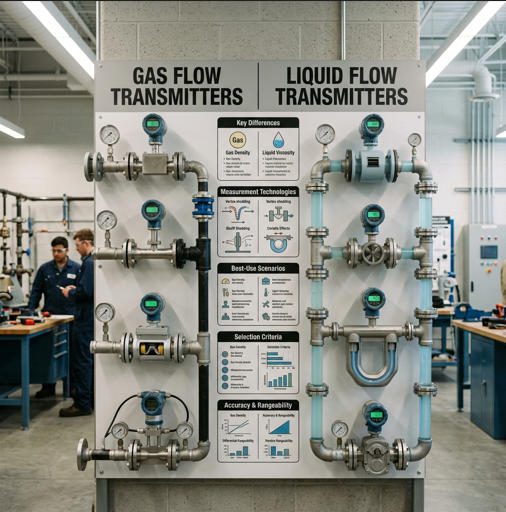
Guide to Gas Flow Meter Types and Their Industrial Applications
For OEMs, EPCs, Distributors, and Industrial and Municipal Operators
 A multipath ultrasonic gas meter. These are common at utility and pipeline custody transfer points. (Image: Wikimedia Commons, public domain)
1. Why Accurate Gas Flow Measurement Is Mission-Critical
Gas is costly to buy, hard to see, and dangerous when you lose track of it. A meter that reads 1% high or low sounds harmless. Now run the numbers.
Take a mid-size plant that burns 10 million cubic meters of natural gas a year at $0.35 per cubic meter. A 1% error moves $35,000 a year into or out of someone’s pocket. At a utility city-gate station moving 500 million cubic meters a year, the same 1% is $1.75 million. Nobody signs off on that.
Accuracy is only one of three risks you’re managing:
- Money. Billing disputes, fuel bills that don’t add up, and lost gas in distribution networks all come back to measurement.
- Safety. Burner control, purge verification, and flare monitoring depend on a live reading you can trust. When a flow signal drifts on a combustion skid, you get nuisance trips, and in the worst case an unsafe fuel-to-air ratio.
- Compliance. Emissions reports, custody transfer contracts, and hazardous-area rules all ask for documented, traceable measurement.
Industry insight: In our experience, most field failures don’t come from a “bad meter.” They come from a good meter in the wrong job. Think of a turbine meter on wet biogas, a thermal meter on saturated air, or an orifice plate squeezed into a skid with 3D of straight pipe. Choosing the right technology at the design stage costs far less than fixing it after commissioning.
This guide is written for the people who make those choices: OEM design engineers, EPC specification teams, distributors building a product line, MRO maintenance leads, and utility metering managers. The team at ジェイド・アント・インストゥルメンツ put it together from years of supporting these projects. If you’d like a shorter, step-by-step version, see our flow meter selection guide.
2. Gas Flow, Volumetric vs. Mass Flow, and Standard Conditions
Engineering and procurement need to use the same terms. When they don’t, the purchase order ends up describing a different meter than the P&ID calls for.
What Is Gas Flow Rate?
Gas flow rate is how much gas passes a point in the pipe per unit of time. You can state it as a volume (m³/h) or a mass (kg/h).
The catch is that gas compresses. One cubic meter of gas at 7 bar holds about 8 times as many molecules as one cubic meter at atmospheric pressure. So a volume reading only means something once you know the conditions behind it.
SCMH vs. NCMH: Know Your Reference
| Unit | Full Name | Reference Temperature | Reference Pressure | 一般的な用途 |
|---|---|---|---|---|
| Am³/h | Actual cubic meters per hour | Line conditions | Line conditions | Sizing the meter body |
| Nm³/h (NCMH) | Normal cubic meters per hour | 0 °C | 101.325 kPa | Europe, Asia, industrial gases |
| Sm³/h (SCMH) | Standard cubic meters per hour | 15 °C (sometimes 20 °C) | 101.325 kPa | Natural gas trade, ISO contexts |
| SCFM | Standard cubic feet per minute | 60 °F (sometimes 70 °F) | 14.696 psia | North American compressed air and gas |
Watch this trap: The same gas quantity reads about 5.5% higher in Sm³ (15 °C) than in Nm³ (0 °C), because 288.15 ÷ 273.15 = 1.055. We’ve seen RFQs where one party meant “normal” and the other meant “standard.” That’s a built-in 5% error before anything is installed. Write the reference conditions on every datasheet.
Volumetric vs. Mass Flow Meters
Volumetric meters measure how fast gas moves or how much space it fills at line conditions. Turbine, vortex, ultrasonic, rotary, and diaphragm meters all work this way. To report standard volume or mass, they need a pressure and temperature (P&T) correction.
Mass flow meters respond to the mass of the gas itself:
- コリオリ式流量計 measure true mass directly from the forces on a vibrating tube.
- Thermal dispersion meters measure how much heat the gas carries away. Heat transfer depends on molecular mass flow, so they report mass or standard volume without separate P&T correction.
Some older references put thermal dispersion under “volumetric” because the output is usually shown as Nm³/h or SCFM. In practice, the reading is mass-based and already normalized. That’s why thermal meters are popular for compressed air and fuel-gas skids. You can see how thermal sensing compares with other methods in our article on thermal mass flow controllers vs. conventional meters.
Why P, T, and Gas Composition Matter
For a volumetric meter, a 10 °C change in gas temperature shifts density by about 3.5%. A 1 bar change at 5 barg shifts it by about 17%. Without correction, those shifts show up directly as error.
Gas composition matters too. Biogas can swing from 50% to 70% methane depending on the feedstock. Thermal meters are calibrated for a specific gas mix, so composition changes cause them to drift. Coriolis and ultrasonic meters handle these changes much better.
Quick Glossary
| Term | Plain-English Meaning | Example |
|---|---|---|
| Turndown ratio | Maximum flow ÷ minimum accurate flow | 30:1 means a 1,500 m³/h meter stays accurate down to 50 m³/h |
| Custody transfer | Measuring gas where ownership changes and money moves | Utility billing a factory |
| Straight run (D) | Length of straight pipe before or after a meter, in pipe diameters | 10D on a DN100 pipe = 1 meter |
| Pressure drop | Pressure the meter “consumes” as gas flows through it | An orifice may cost 25–50 kPa; an ultrasonic meter close to zero |
| 再現性 | How closely the meter repeats the same reading under the same conditions | ±0.1% repeatability with ±1% accuracy |
| Flow computer | Device that applies P, T, and composition corrections | Converts actual m³ into billable Sm³ |
| K-factor | Pulses per unit volume from a meter’s calibration | 1,000 pulses/m³ on a turbine meter |
3. Classification Framework: 4 Primary Categories of Gas Flow Meters
Nearly every industrial gas meter fits one of four families. Start with the right family and your shortlist shrinks from eight technologies to two or three.
- Differential Pressure (DP) Meters: Orifice, Venturi, Pitot. These restrict or sample the flow and calculate flow from the pressure difference.
- Velocity-Based Meters: Turbine, Ultrasonic, Vortex. These measure how fast the gas travels.
- Positive Displacement (PD) Meters: Diaphragm, Rotary. These trap and count fixed “packets” of gas.
- Mass Flow Meters: Thermal and Coriolis. These respond to mass directly.
Comparative Matrix
| メーターの種類 | Family | Typical Accuracy (Gas) | 圧力降下 | メンテナンス | Dirty/Wet Gas Tolerance | 相対的なコスト |
|---|---|---|---|---|---|---|
| オリフィスプレート | DP | ±1–2% of reading (system) | 高 | Low (inspect edge) | 中程度 | $ |
| Venturi | DP | ±0.75–1.5% | Low–Moderate | 低 | いいね | $$ |
| Averaging Pitot | DP | ±1–2% | Very low | 低 | 中程度 | $ |
| タービン | Velocity | ±0.5–1% | 中程度 | Medium–High (bearings) | Poor | $$ |
| 超音波(マルチパス) | Velocity | ±0.1–0.5% (calibrated) | Near zero | 低 | 中程度 | $ |
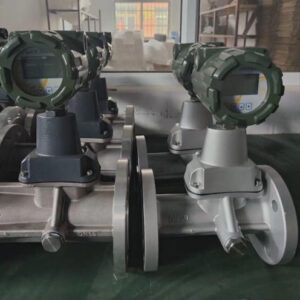
| Vortex / Swirl | Velocity | ±1–1.5% | 中程度 | 低 | いいね | $$ |
| ダイヤフラム | PD | Class 1.5 (±1.5%) | 低 | 低 | 中程度 | $ |
| Rotary | PD | ±1% | Low–Moderate | Medium (filter needed) | Poor | $$ |
| Thermal dispersion | Mass | ±1–2% of reading | Very low | 低 | Poor (moisture) | $ |
| コリオリ | Mass | ±0.25–0.5% | Moderate–High | Very low | いいね |
Industry insight: Datasheet accuracy is a lab number. Installed accuracy depends on straight run, gas condition, and P&T correction, and is often 2 to 3 times worse. Compare meters on installed accuracy in your conditions. For the high-end options, our comparison of Coriolis vs. PD meter accuracy and cost shows how the gap narrows or widens in practice.
4. In-Depth Technology Breakdown: How Each Meter Works and Where It Excels
This video from The Engineering Concepts walks through the main flow meter principles covered below:
https://www.youtube.com/watch?v=la4cUCm6jLU

オリフィスプレート (DP)
 A precision-bored orifice plate. The sharp upstream edge is what makes the calculation work. (Image: Wikimedia Commons)
How it works: A thin plate with a machined hole narrows the pipe. Gas speeds up through the hole and pressure drops. A DP transmitter measures that drop, and flow follows from a well-known square-root equation.
Where it excels: Clean, steady gas in skid-mounted systems where cost and simplicity matter most. The geometry and equations are defined in ISO 5167-1. That means you can often validate the plate by measuring it, with no wet flow calibration needed.
Watch out for: Turndown is only about 3:1 to 4:1 with a single DP transmitter. Permanent pressure loss is high. And a rounded or dirty edge can quietly shift readings by 2% or more.
Turbine Meters
How it works: Gas spins a multi-blade rotor. Each blade passes a pickup sensor, and each pulse equals a fixed volume.
Where it excels: Clean natural gas and air, and custody transfer where ±0.5% matters. Our gas turbine flow meter offers ±0.5% as standard and a ±0.2% high-precision option, with 4–20 mA, pulse, and Modbus RTU outputs.
Watch out for: Bearings wear, and particulates chew up rotors. Swirl from upstream elbows biases the reading. Always install a filter upstream.
Ultrasonic Meters
How it works: Transducers send sound pulses with and against the flow. Gas moving downstream speeds up the “with-flow” pulse. The time difference tells you gas velocity. This is called the transit-time method.
Where it excels: Large pipes (DN100 and up), bidirectional flow, and utility networks where pressure drop costs real compression energy. There are no moving parts, and diagnostics are built in. Our article on ultrasonic flow meter industrial applications covers where they pay back fastest.
Watch out for: Higher upfront cost. Also, some control valves and regulators generate noise that can interfere with the signal.
Thermal Mass Meters
 Insertion and inline thermal dispersion configurations. (Image: Wikimedia Commons)
How it works: One sensor is heated and another reads gas temperature. The more gas mass flows past, the more heat it carries away. The meter converts that heat loss into mass flow.
Where it excels: Compressed air, dry natural gas, nitrogen, and treated biogas. Turndown of 100:1 is common, pressure drop is almost zero, and no P&T correction is needed. For air systems, see our 2026 thermal air flow meter comparison.
Watch out for: Water droplets cool the sensor and cause false high readings. The meter is also calibrated for a specific gas composition.
Coriolis Meters
 A Coriolis mass flow meter. Twisting of the vibrating tubes shows true mass flow. (Image: Wikimedia Commons)
How it works: Gas passes through vibrating tubes. Mass flow makes the tubes twist slightly, and sensors measure the twist.
Where it excels: Gas blending, reactor feed, CNG and hydrogen dispensing, and any job with changing density. It measures true mass with no straight run needed.
Watch out for: Premium price, and meaningful pressure drop at high gas velocities. Most sizes top out around DN150–DN200.
Vortex Meters
 A flanged vortex flow meter installed in process piping. (Image: Wikimedia Commons)
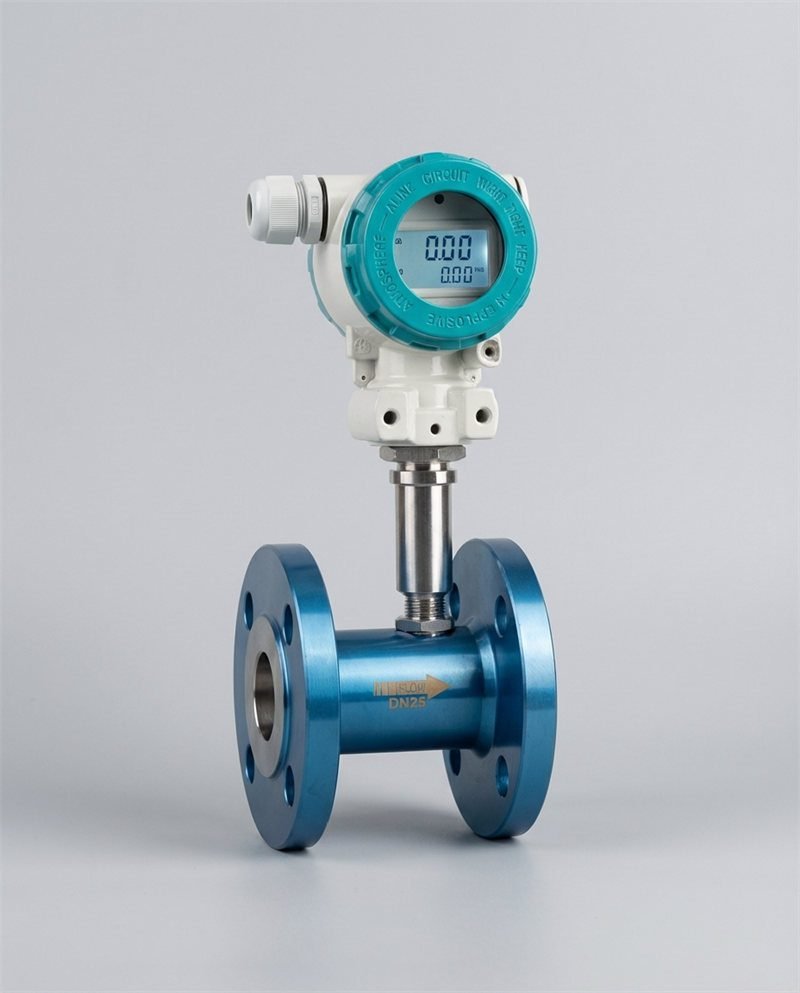
How it works: A bluff body (a flat bar placed across the flow) sheds vortices alternately from each side, like a flag flapping in the wind. How often they shed is proportional to velocity.
Where it excels: Steam, compressed air, and industrial gases in rough plant conditions. Our vortex flow meter with built-in T&P compensation outputs mass or standard volume directly. That removes the need for a separate flow computer on many MRO retrofits.
Watch out for: At low velocity, vortices stop forming reliably. Pipe vibration can also add noise. See our vortex vs. turbine working principle guide for a side-by-side comparison.
Diaphragm Meters
 A diaphragm (bellows) gas meter, the standard for residential and small commercial billing. (Image: Wikimedia Commons)
How it works: Flexible chambers fill and empty in turn. Each cycle moves the counter.
Where it excels: Homes, restaurants, and small commercial users. It handles low flow at low pressure, often with 150:1 rangeability, and needs no power for the mechanical version.
Watch out for: Limited capacity and bulky size above small commercial loads.
Rotary PD Meters
 A rotary gas meter. Two figure-eight impellers trap and count fixed gas volumes. (Image: Wikimedia Commons)
How it works: Two lobed impellers rotate and trap a fixed volume of gas with each turn.
Where it excels: Commercial and industrial gas distribution from roughly 15 to 1,000+ m³/h. Accuracy holds well even at low flow.
Watch out for: Tight clearances. Pipe scale or welding slag can lock the impellers, so upstream filtration is mandatory.
5. Industry-Specific Applications and Use Cases
Each client type we serve feels a different pain point. Here’s how the technology maps to real jobs.
OEM / Skid-Mount Manufacturers
Pain point: Space. A burner management skid or gas blending panel rarely has room for 20D of straight pipe.
Best fit: Compact thermal meters for combustion air and fuel gas. Coriolis for blending and reactor feed where density changes. Turbine meters also fit well on clean-gas skids thanks to fast pulse response. See our write-up on turbine flow meters in skid manufacturing.
例: An OEM building 40 packaged boiler skids a year that switches from orifice runs to inline thermal meters can remove the DP transmitter, impulse lines, and separate P&T transmitters from every skid. That’s fewer parts to stock, fewer leak points, and a shorter frame.
EPC / System Integrators
Pain point: Proving performance at handover and meeting custody transfer rules.
Best fit: Multipath ultrasonic meters for pipeline and city-gate custody transfer. Turbine meters for mid-size fiscal points. DP and vortex meters for plant-wide utility monitoring where ±1–2% is acceptable.
Instrument Distributors / Importers
Pain point: Covering a wide range of customer requests without holding stock that doesn’t sell.
Best fit: A core portfolio of vortex, turbine, and ultrasonic meters, plus thermal meters for compressed air. Pair it with local calibration and fast spare-parts support. Our list of must-have flow meter products for distributors shows which lines bring repeat orders.
Industrial / MRO Companies
Pain point: Rough service, limited maintenance staff, and meters that must survive compressor vibration and dirty headers.
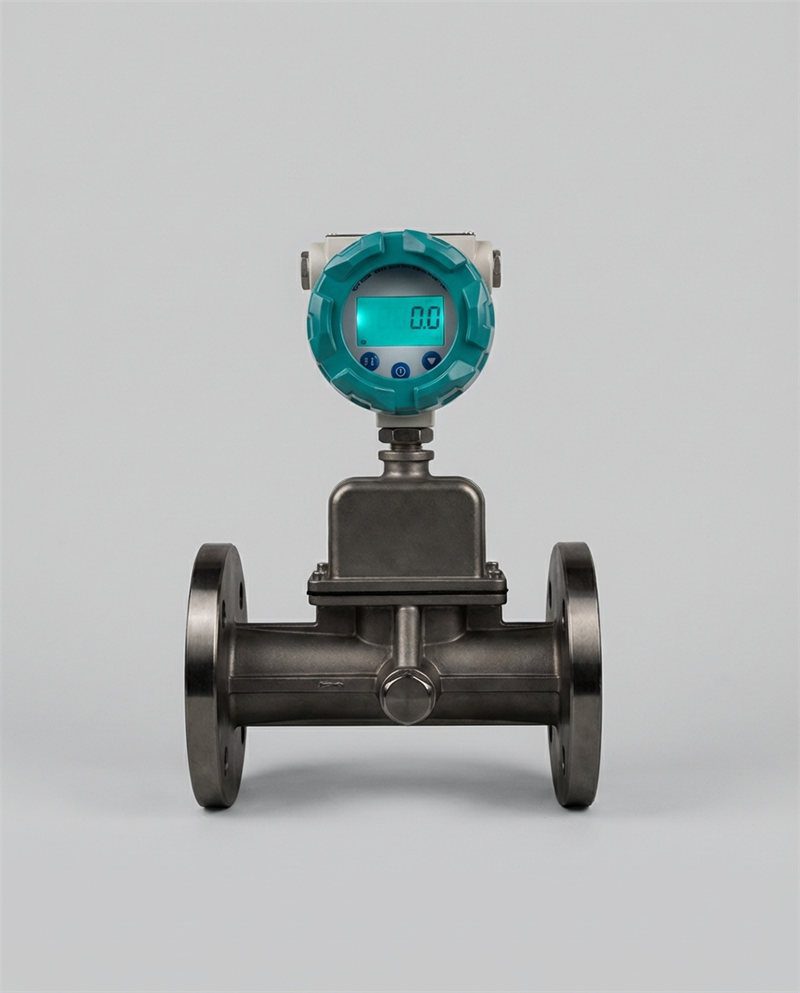
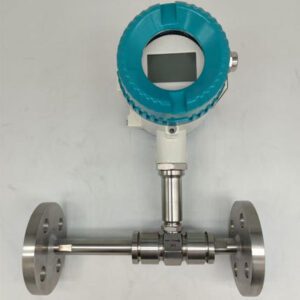
Best fit: Vortex or DP meters for compressed air, nitrogen, and flare gas. Swirl (precession) vortex meters where straight run is short. Our swirling vortex gas flow meter needs only 5D upstream and 2D downstream, and 3D upstream with its optional conditioner. It gives 30:1 turndown and runs up to 3–5 years on its internal battery.
Municipal / Utility Companies
Pain point: Billing accuracy, unaccounted-for gas (UFG), and thousands of meters spread across a city.
Best fit: Diaphragm meters for residential and small commercial customers. Rotary and turbine meters for larger commercial users. Ultrasonic meters at city gates and district stations.
| Client Type | Top Priority | First-Choice Technology | Runner-Up |
|---|---|---|---|
| OEM / Skid | Compact size, fast response | Thermal, Coriolis | タービン |
| EPC / Integrator | Certified accuracy | 超音波 | タービン |
| Distributor | Broad coverage, service | Vortex, Turbine | 超音波 |
| Industrial / MRO | Durability, low upkeep | Vortex / Swirl | DP (orifice, Pitot) |
| Municipal / Utility | Billing accuracy, scale | Diaphragm, Ultrasonic | Rotary |
6. Selection Criteria: Matching Meter Type to Application Requirements
Use this five-step framework before you request quotes.
- Define the process envelope. Minimum, normal, and maximum flow. Operating pressure and temperature. Gas type, composition, moisture, and particulates.
- Set the accuracy target. ±0.5% for custody transfer, or ±2% for energy monitoring. Don’t pay for accuracy you don’t need.
- Check installation limits. Available straight run, orientation, pipe size, and access.
- Estimate lifecycle cost (TCO). Include calibration, spare parts, pressure-drop energy, and downtime, not just the purchase price.
- Confirm integration. Output signals, protocol, power, and hazardous-area rating.
Turndown Matters More Than Most RFQs Admit
A process that runs at 100% by day and 8% at night needs at least 15:1 turndown. An orifice plate would read that night flow poorly, or not at all.
Selection Quick-Reference
| Requirement | Good Choices | Avoid |
|---|---|---|
| ±0.5% or better | Coriolis, ultrasonic, turbine | Thermal, orifice |
| Low pressure drop | Ultrasonic, thermal, Pitot | Orifice, small Coriolis |
| Wet or dirty gas | Vortex, Venturi, Coriolis | Thermal, turbine, rotary |
| Short straight run | Coriolis, swirl vortex, PD | Orifice, insertion thermal |
| Large pipe (>DN300) | Ultrasonic, insertion thermal, Pitot | コリオリ |
| Remote, no power | Diaphragm, battery swirl vortex | コリオリ |
Output Signals and Integration
- 4–20 mA: A simple analog signal that almost every PLC or DCS reads.
- Pulse: Best for totalizing and batching.
- HART: Digital data sent over the same 4–20 mA wires, useful for diagnostics.
- Modbus RTU/TCP: Multi-variable data (flow, total, P, T, alarms) over RS485 or Ethernet, ideal for SCADA.
Before you order, check the datasheet for units, K-factor, and reference conditions. Our guide on how to read flowmeter datasheets shows where the fine print hides. For high-pressure service, also check the high vs. low pressure selection guide.
7. Integration and Installation Best Practices
Poor installation causes more gas measurement error than poor meters do. Get these five items right.
Upstream and Downstream Piping
| メーターの種類 | Typical Upstream Straight Run | Typical Downstream | 注記 |
|---|---|---|---|
| オリフィス | 10–44D (depends on beta and fittings) | 4–8D | Per ISO 5167 tables |
| タービン | 10D (with straightening vanes) | 5D | Per AGA-7 guidance |
| 超音波 | 10D (with conditioner) | 3–5D | Check against manufacturer data |
| ボルテックス | 15~20D | 5D | More after control valves |
| Swirl vortex | 3–5D | 1–2D | Built-in swirler conditions flow |
| Thermal (insertion) | 15~20D | 5D | Profile-sensitive |
| コリオリ | 0D | 0D | Unaffected by flow profile |
| Diaphragm / Rotary | ミニマル | ミニマル | Filter required for rotary |
Flow Conditioning and Filtration
A flow conditioner is a perforated plate or tube bundle that removes swirl and flattens the velocity profile. It can cut the required straight run by half or more. Pair it with a 100-micron filter ahead of turbine, rotary, and swirl meters. On gas that may be wet, add a drip leg or separator.
P&T Sensor Placement
Place the pressure tap upstream of the meter, usually at the meter’s reference port. Place the temperature sensor downstream, typically 2–5D, so the thermowell doesn’t disturb the flow profile.
Grounding and Signal Shielding
Use twisted, shielded pair cable. Ground the shield at one end only to avoid ground loops. Keep signal cables away from VFD motor leads, which commonly cause “ghost flow” readings on vortex and ultrasonic meters.
Calibration Validation
Record as-found and as-left values at the factory and after installation. Run a zero check on Coriolis and ultrasonic meters under no-flow conditions. Our thermal, Coriolis, and vortex calibration guide walks through each method.
8. Maintenance, Calibration, and Long-Term Reliability
Calibration Intervals at a Glance
| 申し込み | Typical Interval | Driver |
|---|---|---|
| Custody transfer (fiscal) | 6-12ヶ月 | Contract or regulator |
| Utility billing (diaphragm/rotary) | Sample testing or 5–10+ year replacement | Local metrology law |
| Process control | 1-2年 | Internal quality system |
| Energy monitoring | 2~3年 | Energy management system (ISO 50001) |
| No-moving-part meters with diagnostics | 2–5 years with verification | Condition-based |
For regulated work, calibration must be traceable to a national lab such as NIST calibration services in the US, or its equivalent in your country.
Smart Diagnostics for Predictive Maintenance
Modern ultrasonic meters report per-path velocity, signal gain, and speed of sound. If the measured speed of sound drifts away from the value calculated for your gas composition, a transducer may be fouled. Coriolis meters offer tube-health checks that confirm calibration without taking the meter out of the line.
Common Failure Modes
| Meter | Failure Mode | Early Warning Sign | Fix |
|---|---|---|---|
| タービン | Bearing wear, blade damage | Reading drifts low, noisy pulses | Cartridge replacement, better filtration |
| Thermal | Sensor fouling or moisture | Rising reading at constant load | Clean probe, add dryer |
| オリフィス | Edge wear, deposits | Gradual DP shift | Inspect or replace plate |
| Rotary | Impeller lock or scoring | Rising differential across meter | Clean, filter upgrade |
| 超音波 | Transducer fouling | Falling signal strength | Clean transducers |
| ボルテックス | Vibration noise | Flow at zero load | Low-flow cutoff, better supports |
遠隔監視
Utilities and MRO providers increasingly log meter data through Modbus-to-cellular gateways. A 3 a.m. flow reading on a compressed-air header that should be idle is an easy leak alarm, and leaks often waste 20–30% of compressor output.
An illustrative model. Actual splits vary by site. The main point holds: purchase price is often only about a quarter of lifetime cost.
9. Regulatory Compliance and Standards
Key Standards by Technology
| テクノロジー | Primary Standards |
|---|---|
| オリフィス | AGA Report No. 3 / API MPMS Ch. 14.3, ISO 5167 |
| タービン | AGA Report No. 7, EN 12261 |
| 超音波 | AGA Report No. 9, ISO 17089-1 |
| コリオリ | AGA Report No. 11, ISO 10790 |
| ダイヤフラム | EN 1359, OIML R137 |
| Rotary | EN 12480, OIML R137 |
| Gas meters (general, fiscal) | OIML R137-1&2 |
For background, see this review of API MPMS 14.3 / AGA-3 orifice metering and this overview of the AGA-9 ultrasonic meter standard.
Custody Transfer and Hazardous-Area Certifications
In the EU, the Measuring Instruments Directive (MID) covers fiscal meters. One correction worth flagging: gas meters and volume conversion devices fall under Annex MI-002, not MI-001, which covers water meters. We regularly see the wrong annex in tender documents.
For explosive atmospheres, look for ATEX in Europe and the IECEx certification system internationally. SIL (Safety Integrity Level) ratings matter when a flow signal feeds a safety instrumented function, such as low fuel-gas flow shutting down a burner.
Emissions Monitoring
Flare gas and fugitive emissions are under tighter scrutiny every year. In the US, operators follow the EPA’s leak detection and repair best practices and report under EPA GHGRP Subpart W. Flare meters must cover both tiny purge flows and huge upset events. That’s why ultrasonic flare meters with very wide turndown dominate this niche.
Audit Documentation Checklist
- Calibration certificate with traceability chain
- Material certificates (EN 10204 3.1) for pressure parts
- Pressure test report
- Hazardous-area certificate and marking
- Configuration printout (units, K-factor, reference conditions)
10. Future Trends and Smart Metering Evolution
IIoT connectivity. More meters now ship with Modbus TCP, MQTT, or OPC UA, so data can flow straight to cloud dashboards. That lets you move from monthly reads to hourly analytics.
Energy and carbon tracking. ISO 50001 energy programs and Scope 1 carbon reporting need submetering at the process-line level, not just the plant fence. Expect far more thermal and vortex meters on individual furnaces and compressors.
Better low-flow sensitivity and multi-gas algorithms. Newer thermal meters store calibration curves for dozens of gases and mixtures. Hydrogen blending into natural gas networks (often 5–20% H₂) is pushing ultrasonic and Coriolis makers to validate performance on blends.
Wireless, battery-powered meters. Utilities want meters that run 5–10 years on batteries and report over NB-IoT or LoRaWAN. Battery-powered swirl and ultrasonic meters are filling gaps at remote district stations where running power cable costs more than the meter.
Industry insight: The next differentiator isn’t a tenth of a percent of accuracy. It’s diagnostics that tell you when a meter can no longer be trusted. When you write specifications, ask for them explicitly.
Need help matching a meter to your project? Talk to our application engineers with your gas type, flow range, and pressure. We’ll send back a sizing sheet you can drop straight into your datasheet package.
よくある質問 (FAQ)
1. What is the most accurate gas flow meter for custody transfer applications? Coriolis and multipath ultrasonic meters offer the highest accuracy, typically ±0.1–0.5% when flow-calibrated. Coriolis suits smaller lines up to about DN150. Ultrasonic dominates larger pipelines.
2. Can thermal mass flow meters measure wet or dirty gases? It’s not recommended. Moisture and particulates cool or coat the sensor and cause drift. Use thermal meters only on dry, filtered gas.
3. How do I compensate for temperature and pressure variations in gas flow measurement? Add P&T sensors with a flow computer, or choose a meter with built-in compensation, such as a multivariable vortex or swirl meter. Thermal and Coriolis meters don’t need separate correction for mass flow.
4. What are the advantages of ultrasonic over turbine meters in natural gas pipelines? Ultrasonic meters have no moving parts, near-zero pressure drop, bidirectional capability, wider turndown, and built-in diagnostics. Turbine meters cost less upfront for mid-size lines.
5. Which gas flow meter is best for low-flow, low-pressure applications? Thermal mass meters or variable-area meters (rotameters) work best for low-flow precision in labs, analyzers, and control panels. Diaphragm meters cover low-flow billing.
6. Do Coriolis meters require straight pipe runs? No. Coriolis meters are largely unaffected by flow profile, which makes them ideal for space-constrained skids.
7. How often should gas flow meters be calibrated? Typically every 1–2 years. Critical custody transfer points may need annual or semi-annual checks.
8. Can vortex flow meters measure biogas or landfill gas? Yes, if the gas is reasonably clean and velocity stays above the meter’s minimum. For low-velocity biogas, consider swirl vortex, thermal (with drying), or ultrasonic meters.
9. What output signals do modern gas flow meters support? 4–20 mA, pulse, HART, and Modbus are standard. Wireless options like WirelessHART, NB-IoT, and LoRaWAN are growing fast.
10. Are there ATEX/IECEx-certified gas flow meters for hazardous areas? Yes. Most technologies are available as intrinsically safe (Ex ia) or flameproof (Ex d) versions for oil and gas and chemical plants. Specify the rating when you order, because it can’t be added later.
11. How do I reduce pressure drop in high-flow gas systems? Use full-bore ultrasonic meters, or thermal and Pitot insertion meters. Avoid orifice plates and undersized turbine or Coriolis meters where pressure loss matters.
12. Can one flow meter handle multiple gas types? Some thermal and ultrasonic meters offer gas-select or multi-gas calibration. Coriolis meters measure mass on any gas. Confirm with the manufacturer’s specs.
13. What is turndown ratio, and why does it matter? Turndown is the ratio between maximum and minimum accurate flow, for example 100:1. It decides whether one meter can cover both your peak and night-time loads.
14. How do I detect and correct flow meter drift in the field? Use built-in diagnostics, periodic zero checks, and comparisons against a master meter or portable ultrasonic reference. Trend the results over time.
15. Do OEMs need NIST-traceable calibration for skid-mounted systems? Yes, especially in regulated industries such as pharma, food, energy, and custody transfer. Make sure your supplier provides certified, traceable calibration documents with each meter.
This guide is for professionals who engineer, specify, distribute, or maintain gas flow systems. Each section tackles a real-world problem, from integration bottlenecks to compliance risks, to help you make well-informed decisions.