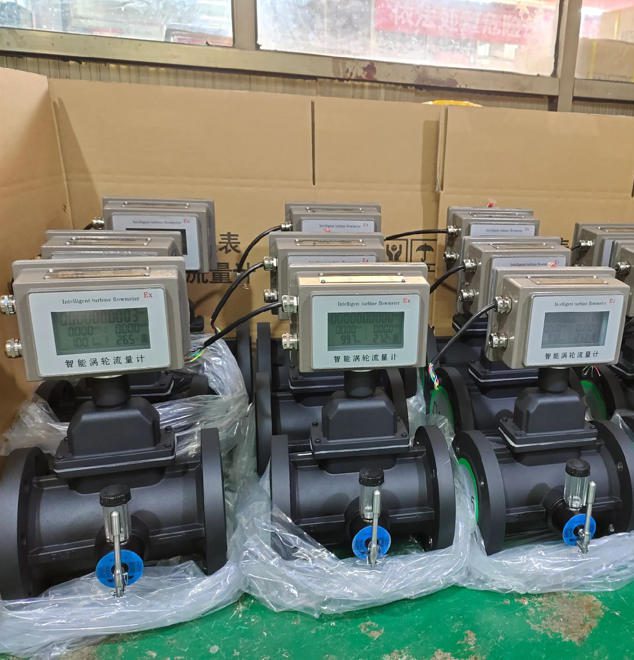
What Gas Meter Flow Means for Business Energy Costs: A Strategic Guide for Industrial Buyers
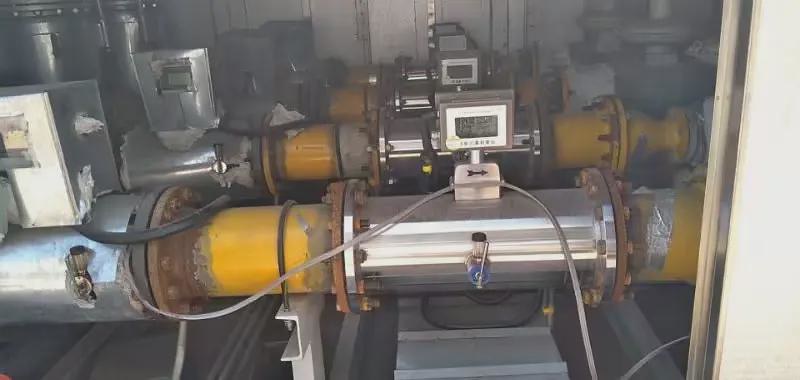
When gas flow readings are wrong, the financial and operational consequences arrive before anyone knows what happened.
Here is a number worth sitting with: a 2–3% measurement error in gas meter flow — a range that falls within the tolerance of many aging industrial meters — translates to $120,000–$180,000 in annual billing discrepancy on a site consuming $5 million of gas per year. That is not a theoretical risk. It is a documented pattern that instrument distributors, EPC firms, and municipal utility teams encounter every year, often buried in energy KPIs and quarterly variance reports until someone finally traces it back to the meter.
This guide is written specifically for the people who buy, specify, integrate, and maintain gas flow metering systems — OEM skid manufacturers, instrument distributors, EPC/system integrators, industrial terminal and MRO companies, and municipal/utility operators. It addresses the real questions: what causes measurement drift, what it costs, how to choose the right technology, and how to build a metering strategy that holds up under financial audit and regulatory scrutiny.
1. Executive Summary: Gas Meter Flow Accuracy Is a Bottom-Line Issue
Most procurement decisions for gas meters focus on purchase price. That logic collapses the moment you account for what inaccurate metering actually costs.
The core problem is systematic. An aging diaphragm meter that has drifted 3% from its original calibration does not announce itself. It keeps outputting readings. It keeps feeding the SCADA system. It keeps generating invoices. The error accumulates silently, month after month, until an energy audit, a supplier dispute, or an emissions compliance review forces the issue.
For industrial operators, the financial stakes depend on volume. A large food processing plant consuming 8,000 SCFM (Standard Cubic Feet per Minute — volumetric gas flow corrected to a defined reference temperature and pressure) pays $8,000–$12,000 in additional gas costs per month for every 1% of measurement error that goes uncorrected. For a municipal utility operating a distribution network with 200 industrial metering points, the aggregate underbilling from meters running below calibration specification can represent seven-figure annual revenue gaps.
Three categories of impact matter most:
- Financial integrity — accurate billing, revenue protection, and custody transfer compliance
- Operational performance — combustion efficiency, process control, and load balancing
- Regulatory compliance — emissions reporting, audit readiness, and certification requirements
Accurate gas meter flow is not a technical preference. It is a strategic asset that affects financial reporting, regulatory standing, and operational efficiency simultaneously.
2. What Gas Meter Flow Actually Measures: A Practical Technical Explanation
Before selecting or specifying a meter, every engineer and procurement team needs clarity on exactly what is being measured — because there are three fundamentally different answers.
Volumetric Flow Rate measures the volume of gas passing through the meter per unit time — for example, cubic feet per minute (CFM) or cubic meters per hour (m³/h). The problem: gas volume changes with temperature and pressure. A pipe running at 10 bar contains roughly ten times as many gas molecules per cubic meter as the same pipe at 1 bar. A pure volumetric reading without compensation tells you volume in the pipe — not the actual amount of gas transferred.
Corrected (or Standardized) Flow Rate applies a mathematical correction to bring the volumetric measurement back to a defined reference condition. The most common reference standards are:
| Reference Standard | Temperature | Pressure | Common Usage |
|---|---|---|---|
| SCFM / SCFH (US standard) | 60°F (15.6°C) | 14.696 psia | Oil & gas, US industrial |
| Nm³/h (ISO normal) | 0°C | 1.01325 bar | European gas distribution |
| Sm³/h (standard) | 15°C | 1.01325 bar | Many international applications |
Why this distinction matters: A gas flow meter reporting in Nm³/h and a billing system expecting Sm³/h will show a 5.5% systematic discrepancy — every hour, every day — without either system flagging an error. This is one of the most common and most expensive configuration mismatches in multi-vendor EPC projects.
Mass Flow Rate measures the actual mass of gas per unit time — typically in kg/h, kg/min, lb/h, or g/s. Mass flow is independent of temperature and pressure. It does not change when the line pressure fluctuates or when ambient temperature drops in winter. For custody transfer, combustion control, and emissions reporting, mass flow is the most financially and technically reliable measurement basis.
The formula that connects them:
$$\dot{m} = Q \times \rho$$
Where $$\dot{m}$$ is mass flow rate, $$Q$$ is volumetric flow rate, and $$\rho$$ is gas density at the measurement conditions.
What this means in practice:
For a natural gas boiler application, a 15°C ambient temperature drop between summer and winter changes the volumetric flow reading by approximately 5% at constant mass flow — if the meter is not temperature-compensated. In a combustion control loop, that 5% discrepancy translates directly into fuel-air ratio errors, reduced combustion efficiency, and increased NOx emissions.
3. How Flow Accuracy Directly Impacts Billing and Revenue Allocation
The financial mathematics of gas meter flow inaccuracy are straightforward and uncomfortable.
A concrete scenario: A medium-scale industrial terminal purchases natural gas at $6.50/MMBTU and consumes approximately 15,000 MMBTU per month. A meter reading 2% low means 300 MMBTU goes unbilled every month — $1,950/month, $23,400/year — vanishing silently into the gap between actual consumption and metered consumption.
Scale that across a utility serving 150 industrial metering points with a mix of aging meters, and the aggregate revenue leakage can easily exceed $2–3 million annually — a figure that consistently appears in utility revenue audit studies, including research published by Utah State University’s digital commons examining meter replacement ROI for utility operators.
Custody Transfer: Where Accuracy Has Legal Weight
Custody transfer (the point where ownership of a gas commodity changes between parties — typically from a supplier to a buyer) demands the highest accuracy class in flow measurement. The governing standards are explicit:
- AGA-7 (Turbine meters for natural gas custody transfer) requires measurement uncertainty of ±0.5% or better
- API MPMS Chapter 5.4 specifies uncertainty within ±0.25% for fiscal metering applications
- OIML R137 (International standard for gas meters used in trade) mandates Class 1.0 or better for high-flow custody applications
A meter operating outside these tolerances is not just inaccurate — it is non-compliant for custody transfer purposes, creating legal exposure in billing disputes and regulatory audits.
Audit Readiness as a Business Requirement
For industrial energy managers subject to ISO 50001 energy management audits, Scope 1 GHG emissions reporting, or regional carbon trading compliance, gas flow data is primary evidence. Meters without documented calibration certificates, traceable to NIST (National Institute of Standards and Technology) or an A2LA-accredited laboratory, represent an audit gap that auditors flag immediately.
The best instrument distributors and EPC firms understand this — and specify meters that come with calibration documentation ready from day one, not as an afterthought.
4. Operational Risks of Poor Flow Measurement in Industrial Systems
Inaccurate gas meter flow data does not stay isolated in the billing department. It propagates through every system that uses the flow signal.

Combustion systems fed by inaccurate flow data operate with systematic fuel-air ratio errors — raising fuel costs and NOx emissions simultaneously.
Combustion and Boiler Applications
A natural gas boiler operates at maximum efficiency when the fuel-air ratio is precisely controlled — typically near stoichiometric combustion (the theoretically ideal ratio where all fuel burns completely with no excess air). When the gas flow meter feeding the combustion controller reads 4% high, the controller reduces gas flow to hit its setpoint, resulting in fuel-lean combustion. Lean combustion runs hotter in localized zones, increasing NOx formation and reducing burner component lifespan.
Conversely, a meter reading 4% low allows excess gas through the combustion loop — fuel-rich combustion — which produces CO, increases fuel consumption, and in some systems triggers safety interlock trips.
For a 10 MMBtu/h industrial boiler running 6,000 hours per year, a 3% measurement error in the gas flow input translates to approximately $12,000–$18,000 in excess fuel consumption annually — before accounting for maintenance costs from the combustion imbalance.
OEM Skid Manufacturers: Design Assumptions vs. Field Reality
When an OEM engineer sizes a burner management system or heat treatment furnace for a skid, they do so based on specific gas flow parameters — range, accuracy, and response time. If the installed meter cannot deliver accuracy within the assumed specification, the PID control loop (Proportional-Integral-Derivative — the standard industrial algorithm for maintaining a process variable at its setpoint) hunts continuously, overshoots the setpoint, and drives unnecessary actuator cycles.
This is one of the most common root causes of field service calls on skid-mounted systems: the control system is blamed, the installation is rechecked, and eventually someone discovers the flow meter has drifted 5% from factory calibration — a problem that calibration would have caught and corrected.
EPC Projects: Flow Specification Errors Become Rework
For EPC (Engineering, Procurement, and Construction) firms, a flow meter that does not perform to specification during commissioning is not just a line item cost — it is a timeline cost. Meter changeouts during commissioning typically require loop isolation, instrument removal, restoring, retesting, and documentation updates. On a mid-size gas processing project, a single meter rework involving a custody-transfer-grade ultrasonic meter and associated instrumentation can cost $80,000–$120,000 in combined materials, labor, and schedule impact.
This is why leading EPC firms now require pre-commissioning digital simulation and witnessed factory acceptance testing (FAT) for all custody-transfer instruments before they leave the manufacturer’s facility.
5. Common Signs Your Gas Meter Flow Readings Are Misleading
Field engineers and MRO teams who know what to look for can catch metering problems before they become financial events. These are the five patterns that should trigger an immediate investigation:
Pattern 1: Persistent One-Directional Discrepancy The meter consistently reads high or low compared to the supplier’s billing meter or a check meter — by a stable amount, across multiple billing periods. This is calibration drift, not process variation. Erratic readings point to electrical or installation issues; steady systematic bias points to meter calibration.
Pattern 2: SCADA vs. Local Display Disagreement If the meter’s local display reads 340 Nm³/h and the DCS/SCADA is showing 325 Nm³/h, the problem is in the output signal or its scaling — not in the measurement itself. This is a configuration issue, not a meter failure, but it produces the same operational impact.
Pattern 3: Increasing Calibration Frequency A meter that was calibrated annually for five years and now needs recalibration every four months is not having a bad year — it is telling you that something in the process environment is causing accelerated sensor degradation. Contamination, pressure cycling, and thermal stress are the usual suspects.
Pattern 4: Energy KPI Variance Without Process Changes If your specific energy consumption (energy input per unit of product output) is increasing by 3–5% quarter-over-quarter without any documented process change, flow meter drift is one of the first things to investigate. Energy benchmarking programs routinely uncover metering errors that have been hiding in performance data for years.
Pattern 5: Billing Disputes That Can’t Be Resolved When a supplier and an industrial customer agree on their respective meters’ accuracy but cannot reconcile their billing totals, the culprit is almost always a reference condition mismatch — one meter reporting in SCFM, the other in Nm³/h, with neither team aware that the two units are not directly interchangeable.
6. The Hidden Costs of “Good Enough” Metering: A Total Cost of Ownership Perspective
Purchase price is the only gas meter cost that appears in the capital budget. Every other cost is operational — and operational costs run for a decade or more.
TCO (Total Cost of Ownership) Framework
| Catégorie de coûts | Low-Cost Diaphragm Meter | Smart Thermal/Ultrasonic Meter |
|---|---|---|
| Initial purchase price | $150–$400 | $1,200–$4,500 |
| Annual calibration cost | $180–$350 | $250–$500 |
| Average calibration interval | 12 months | 24 à 36 mois |
| Annual maintenance labor | $200–$400 | $80–$150 (remote diagnostics) |
| Mean unplanned downtime (hrs/yr) | 8–15 | 1–3 |
| Accuracy class over 10 years | Degrades to ±3–5% | Maintains ±0.5–1.5% |
| 10-year total cost estimate | $7,000–$12,000 | $9,000–$16,000 |
| Financial risk (billing error) | HIGH (no diagnostics) | LOW (diagnostic alerts) |
The TCO gap narrows significantly when billing error risk is factored in. A low-cost diaphragm meter running at ±3% accuracy on a $300,000/month gas account generates $9,000/month in potential billing discrepancy — eliminating the “savings” of the lower purchase price within the first billing cycle.
ROI on Metering Upgrades: Three Real-World Benchmarks
According to analysis from Jade Ant Instruments’ ultrasonic flow meter ROI guide, upgrading from mechanical meters to smart ultrasonic or thermal mass meters in high-value gas applications typically delivers:
- Maintenance cost reduction of 40–70% through elimination of mechanical wear parts and predictive diagnostics
- Payback period of 2–4 years on the capital investment, driven by reduced calibration frequency, lower downtime, and billing accuracy recovery
- 10-year NPV positive in the overwhelming majority of industrial gas applications above 500 SCFM
7. Selecting the Right Flow Technology for Your Application: A Decision Framework
No single gas meter technology wins across all applications. The right technology is the one whose technical characteristics match the specific demands of the application — not the one with the lowest unit price or the most familiar brand name.

Selecting the wrong meter technology is a specification error — and specification errors show up in commissioning, not in the purchase order.
Technology Comparison Matrix
| Technologie | Précision | Rapport de réduction | Perte de charge | Des pièces mobiles ? | Best For | Watch Out For |
|---|---|---|---|---|---|---|
| Masse thermique | ±0.5–2% | 100:1 to 1000:1 | Très faible | Non | Low-flow gas, purge lines, compressed air, biogas | Gas composition sensitivity; not for wet or dirty gas |
| Ultrasons | ±0.5–1% | 50:1 to 300:1 | None (non-intrusive) | Non | Custody transfer, large-diameter pipes, non-invasive retrofit | Contaminated gas, liquid dropout |
| Turbine | ±0.5–1% | 10:1 to 30:1 | Modéré | Oui | Clean, dry natural gas; high-flow applications | Bearing wear; cannot handle wet or dirty gas |
| Diaphragme | ±1–2% (new) / ±3–5% (aged) | 4:1 to 6:1 | Faible | Oui | Low-pressure residential and light commercial | Rapid accuracy degradation; no diagnostics; limited turndown |
| Coriolis | ±0.1–0.5% | 100:1+ | Élevé | No (tubes vibrate) | Highest-accuracy mass flow; LNG; specialty gas billing | High cost; limited pipe size range; pressure drop |
| Vortex | ±0.5–1% | 20:1 to 40:1 | Modéré | No (no bearing) | Steam and high-temperature gas; robust applications | Minimum flow sensitivity; vibration interference |
Rapport de réduction (also called rangeability): The ratio of maximum to minimum measurable flow rate at stated accuracy. A meter with a 100:1 turndown can measure accurately from 1% to 100% of its rated maximum — critical in applications where flow varies dramatically between start-up, production, and shutdown.
Matching Technology to Client Type
For OEM Skid Manufacturers: Compact form factor, stable zero-point over temperature cycling, and direct 4–20mA or Modbus RTU output are the dominant requirements. Thermal mass flow meters with integrated temperature and pressure compensation are widely specified for burner management and gas distribution skids. Their high turndown ratio handles the wide flow range common in start-up and ramp-down conditions that skid systems must accommodate.
For Instrument Distributors and Importers: Technology breadth matters more than technology depth. Distributors carrying thermal, ultrasonic, and turbine options — all with available AGA, MID, and OIML certifications — can serve the widest range of end-user specifications. Certification documentation availability and manufacturer technical support response time are the practical differentiators in competitive tender situations.
For EPC and System Integrators: Communication protocol support is non-negotiable. HART (Highway Addressable Remote Transducer — a protocol that overlays digital diagnostic data on the standard 4–20mA signal), Modbus RTU/TCP, and FOUNDATION Fieldbus/PROFIBUS PA compatibility determines whether a meter can integrate into the project’s control architecture without custom interface hardware. Meters that are communication-ready from the factory reduce commissioning engineering hours.
For Municipal and Utility Companies: Custody-transfer grade certification, tamper-evidence features, and the ability to withstand multi-year field deployment without manual intervention are the defining requirements. Ultrasonic meters dominate new utility metering installations because they have no moving parts to wear, their multi-path measurement architecture provides built-in self-diagnostics, and their accuracy holds over time in a way that diaphragm meters demonstrably cannot.
For Industrial Terminal and MRO Companies: Retrofit compatibility — the ability to replace an aging meter with a modern equivalent in the same pipe flanges without major piping modifications — is the first screening criterion. Wafer-body or insertion-type ultrasonic meters are frequently the solution here, as they accommodate a wide range of existing flange ratings and pipe schedules.
8. Calibration, Certification, and Compliance: Ensuring Long-Term Accuracy
A gas meter without a documented calibration history is, from a regulatory and commercial standpoint, a gas meter without a credible reading.
Calibration Intervals: A Starting Framework
Calibration frequency should be driven by application criticality, not by organizational convenience.
| Demande | Fréquence d'étalonnage recommandée |
|---|---|
| Custody transfer (AGA, API grade) | Every 6–12 months |
| Emissions reporting / carbon compliance | Every 12 months minimum |
| Industrial process control | Every 12–24 months |
| Utility distribution (general) | Every 12–36 months |
| Low-stakes utility monitoring | Every 36 months with in-situ checks |
These are baseline intervals for clean gas service. Contaminated gas streams — biogas with variable H₂S content, compressed air with entrained oil, or natural gas with liquid dropout — should trigger inspection intervals approximately 50% shorter than the baseline.
What NIST-Traceable Calibration Actually Means
NIST (National Institute of Standards and Technology) maintains primary gas flow calibration standards against which all downstream calibration laboratories trace their measurements. An A2LA-accredited calibration lab (American Association for Laboratory Accreditation) has been independently audited to confirm that its measurement processes are traceable to NIST through an unbroken chain of calibration references.
When a meter’s calibration certificate states “NIST-traceable,” it means the calibration uncertainty is quantified and can be defended to a regulatory auditor or in a commercial dispute — rather than being a claim without a verifiable basis.
In-Situ Verification vs. Laboratory Calibration
Full recalibration requires removing the meter from service and testing it against certified reference standards — a process that creates downtime and requires a spare meter or process shutdown. For many industrial operators, in-situ verification using a portable clamp-on ultrasonic check meter placed on the same pipe section is a practical intermediate step that confirms whether the installed meter remains within specification without requiring removal.
A discrepancy of more than 1% between the portable reference and the installed meter should trigger a full laboratory recalibration.
Remote Diagnostics: Reducing Calibration Surprises
Modern gas flow meters — thermal mass, ultrasonic, and Coriolis types — provide diagnostic parameters accessible via HART or Modbus communication that reveal the meter’s health status without physical inspection. Key diagnostic indicators include:
- Signal-to-noise ratio (for ultrasonic meters): degrading SNR is an early warning of transducer fouling
- Sensor element resistance (for thermal meters): deviation from the baseline RTD curve indicates contamination or degradation
- Zero-point reading at known no-flow conditions: drift from zero is the earliest indicator of calibration shift
Integrating these diagnostic outputs into a SCADA historian creates a continuously updated calibration health record — transforming periodic calibration from a scheduled event into a continuously monitored condition.
9. Case Studies: How Clients Solved Real Flow Measurement Problems
These three cases illustrate the actual financial and operational consequences of metering decisions — and what resolution looked like.
Case Study 1: OEM Reduced Field Service Calls by 40% with Thermal Mass Meters
A skid-mount manufacturer supplying combustion air metering systems to industrial heat treatment plants was experiencing an average of 2.3 field service calls per installed skid per year — mostly for calibration re-verification and sensor cleaning. The original specification used differential pressure orifice meters (DP meters) because they were familiar and priced competitively.
After a system-level analysis, the manufacturer switched to thermal mass flow meters with built-in sensor diagnostics — outputs that indicate sensor health, contamination level, and calibration status. Field service teams could now remotely assess whether a site visit was actually required before mobilizing.
Result: field service calls dropped to 1.4 per skid per year — a 40% reduction. At $850 per site visit average cost, across a fleet of 60 installed skids, the annual savings were $47,500 — all attributable to specifying a meter with diagnostic capability rather than the lowest-cost option.
Case Study 2: Municipal Utility Recovered $180,000/Year in Underbilled Industrial Gas
A regional natural gas utility discovered during an infrastructure audit that its 12 largest industrial meters — all diaphragm technology installed between 8 and 14 years prior — had drifted an average of 2.8% below their original calibration accuracy. The meters remained within their original accuracy class at installation, but mechanical wear, temperature cycling, and occasional liquid condensate had progressively degraded their performance.
The utility upgraded all 12 metering points to multi-path ultrasonic meters. Post-upgrade comparison against a temporary reference standard at each site confirmed that the replaced meters had, in aggregate, been under-reading by the equivalent of $15,000–$18,000 per month in unbilled gas across all 12 points.
First-year revenue recovery after the upgrade: $181,200. Capital cost of the 12 meter replacements: $94,000. Net first-year financial benefit: $87,200, with ongoing annual recovery thereafter.
Case Study 3: EPC Firm Avoided $500,000 in Rework by Specifying Digital Commissioning Support
An EPC firm managing a gas compression and metering facility project specified thermal mass flow meters from a manufacturer that provided factory acceptance testing (FAT) reports, digital commissioning files (containing pre-loaded tag numbers, engineering unit configurations, and communication address maps), and a remote commissioning support engineer available during start-up.
On a comparable project from the previous year — where commissioning support was not included in the specification — the team had encountered 11 meter-related configuration errors during start-up, requiring 3 days of additional commissioning labor and two meter replacements due to spec-range mismatches.
On the current project with digital commissioning support: zero meter-related delays during the 5-day commissioning window. The project team’s independent cost estimate of the avoided rework, based on the prior project’s costs, was $490,000–$520,000.
🎬 Video: Custody Transfer Metering Explained — API, OIML, and Flow Meter Standards

This technical briefing covers the core requirements of custody transfer gas metering — AGA, API MPMS, and OIML R137 standards, metering uncertainty budgets, and flow computer integration. Recommended viewing for EPC engineers, procurement teams, and utility metering managers.
10. Action Plan: Audit and Optimize Your Gas Flow Measurement
If you have read this far, you already have a working thesis: your current metering situation may have financial and operational gaps that a structured audit would reveal. Here is the starting framework.

A structured flow meter audit — starting with the highest-volume or highest-risk metering points — is the fastest path to understanding where your measurement gaps are.
Step 1: Inventory All Gas Metering Points Build a complete list: meter type, manufacturer, model, installation date, last calibration date, accuracy class, communication protocol, and application (billing, process control, emissions, custody transfer). This list almost never exists in one place — it is usually distributed across P&IDs, instrument indexes, and maintenance records.
Step 2: Classify by Financial and Operational Risk Rank each meter by: (a) gas volume/value passing through it, (b) time since last calibration, and (c) application criticality. Custody transfer meters and high-volume process meters go to the top of the priority list. Low-flow monitoring meters with recent calibration records go to the bottom.
Step 3: Compare Technology Against Application Requirements For your top-priority meters, use the technology comparison matrix in Section 7 to assess whether the current technology is the right fit for the application. A diaphragm meter on a 4,000 SCFM industrial billing connection is an immediate red flag regardless of its calibration status.
Step 4: Commission an Independent Metering Verification For any meter that has not been calibrated in over 24 months and is handling gas valued above $100,000/month, a portable ultrasonic check meter installed temporarily on the same line provides immediate, independent evidence of whether the installed meter is reading accurately.
Step 5: Prioritize Upgrades by ROI Calculate the annual billing discrepancy risk for each out-of-specification meter and compare it against the cost of upgrade. Any upgrade paying back in less than 18 months should go directly to the capital plan.
Step 6: Standardize Communication Protocols Across All Metering Points Replacing an aging meter is an opportunity to standardize on a single communication architecture — HART, Modbus, or Fieldbus — that integrates cleanly with your existing SCADA or EMS. Mixing protocols creates long-term maintenance complexity.
Step 7: Integrate Flow Data into Your Energy Management System Accurate flow data that lives only in a local meter display is wasted. Connecting meter outputs to your energy management system (EMS) or historian creates the continuous monitoring baseline needed to catch calibration drift between formal calibration intervals — and to satisfy ISO 50001 and emissions reporting documentation requirements.
Step 8: Establish a Calibration Management Workflow A spreadsheet with calibration due dates is not a calibration management system. Assign ownership, set advance-notice triggers (e.g., 60-day alert before calibration due), and document the as-found and as-left condition on every calibration event. This record is what survives an energy audit or a billing dispute.
Step 9: Build a Supplier Relationship That Includes Application Support The right gas meter supplier is not just a hardware vendor. Jade Ant Instruments works with distributors, OEMs, and EPC firms to support application engineering, certification documentation, and pre-commissioning verification — not just equipment supply. The difference in project outcomes between a transactional meter purchase and a supported application specification is measurable in commissioning hours saved and field service calls avoided.
Step 10: Pilot Before System-Wide Rollout Before upgrading an entire metering network, validate the selected technology, configuration, and communication integration on two or three high-priority pilot points. A six-month pilot generates real-world performance data — accuracy maintenance, calibration interval confirmation, and integration reliability — that reduces the risk of the full-scale rollout.
📖 Technical Glossary
| Terme | Définition |
|---|---|
| SCFM | Standard Cubic Feet per Minute — volumetric gas flow corrected to 60°F and 14.696 psia reference conditions (US standard) |
| Nm³/h | Normal Cubic Meters per Hour — volumetric gas flow corrected to 0°C and 1.01325 bar (ISO Normal reference) |
| Mass Flow Rate (ṁ) | The mass of gas passing through a point per unit time (kg/h, lb/min) — independent of temperature and pressure |
| Rapport de réduction | The ratio of maximum to minimum measurable flow rate at stated accuracy; a 100:1 meter can measure from 1% to 100% of its rated range |
| Calibration Drift | Gradual deviation of a meter’s output from its original calibration, caused by wear, contamination, or thermal cycling |
| NIST-Traceable | Calibrated against standards that are traceable in an unbroken chain to NIST primary measurement standards |
| Custody Transfer | The point where gas ownership changes between parties — requires the highest accuracy class and certified metering |
| HART Protocol | Highway Addressable Remote Transducer — a communication standard that overlays digital data on a standard 4–20mA signal |
| TCO | Total Cost of Ownership — the full lifecycle financial cost of an instrument, including purchase, calibration, maintenance, and downtime |
| PID Control Loop | Proportional-Integral-Derivative — the standard industrial control algorithm that adjusts a process variable (like gas flow) to maintain a defined setpoint |
| AGA-7 | American Gas Association Standard 7 — defines accuracy, installation, and testing requirements for turbine meters in natural gas custody transfer |
| OIML R137 | International Organisation of Legal Metrology Recommendation 137 — governs gas meters used in legal trade measurement globally |
| A2LA | American Association for Laboratory Accreditation — accredits laboratories performing NIST-traceable calibration services |
| FAT | Factory Acceptance Testing — witnessed testing of instruments at the manufacturer’s facility before shipment, confirming compliance with specifications |
| In-Situ Verification | Checking a meter’s accuracy against a portable reference standard without removing the meter from the process line |
Questions fréquemment posées
1. How does gas meter flow accuracy affect my billing in custody transfer applications?
A meter reading 2% low in a custody transfer application unbills the buyer’s gas consumption — the supplier absorbs the 2% they cannot recover. On a $400,000/month gas supply contract, that is $8,000 per month — $96,000 per year — lost to measurement error rather than to market price. Custody transfer meters must meet AGA-7 or API MPMS Chapter 5 accuracy requirements (typically ±0.25–0.5%) and require calibration traceability documentation to support any billing dispute.
2. What is the difference between volumetric and mass flow, and which should I use?
Volumetric flow measures the volume of gas passing through per unit time — a number that changes as temperature and pressure change. Mass flow measures actual gas mass per unit time — a number that stays constant regardless of process conditions. For combustion control, custody transfer, and emissions reporting, mass flow is the correct basis. For general distribution monitoring at stable operating pressure, corrected volumetric flow (Nm³/h or SCFM) is typically sufficient if reference conditions are correctly specified and consistently applied.
3. How often should industrial gas meters be calibrated?
Custody transfer and emissions-reporting meters: every 6–12 months. Industrial process control meters: every 12–24 months. Low-priority monitoring meters: every 24–36 months with in-situ checks at 12 months. These intervals shorten significantly in contaminated gas service — meters handling biogas, wet natural gas, or gas with entrained compressor oil should be inspected every 3–6 months for sensor condition regardless of their calibration interval.
4. Can a gas meter be mechanically functional but still give misleading readings?
Absolutely — and this is the most dangerous type of metering failure because it generates no alarms and no visible symptoms. A meter with correct power supply, communication output, and local display can deliver readings that are systematically 4% high due to: incorrect reference conditions programmed in the configuration, a temperature compensation sensor that has drifted, an upstream velocity profile distortion from insufficient straight-pipe run, or a change in gas composition that the meter’s configuration does not reflect. All of these produce confident-looking wrong numbers.
5. What are the most common causes of gas meter drift over time?
The primary causes, in rough order of frequency: (1) mechanical wear in meters with moving parts (diaphragm, turbine, rotary), (2) sensor contamination in thermal mass meters from oil vapor, moisture, or particulate, (3) transducer fouling in ultrasonic meters from hydrocarbon liquid dropout or pipe scale, (4) thermal cycling in outdoor installations causing dimensional changes in vortex meter bluff bodies, and (5) pressure transducer hysteresis drift in meters with integrated pressure compensation. For a systematic diagnosis guide, Jade Ant Instruments’ gas flow meter troubleshooting guide covers each failure category in detail.
6. How do I know if my current meter is suitable for my application?
Evaluate four parameters against your actual process conditions: (1) Flow range and turndown — does the meter’s specified range cover your minimum and maximum flow, including start-up conditions? (2) Accuracy class — is the stated accuracy achievable at your actual operating pressure and temperature, not just at calibration reference conditions? (3) Gas compatibility — is the meter designed for your gas composition (methane, biogas, compressed air, CO₂)? (4) Installation requirements — are the specified upstream and downstream straight-pipe runs achievable in your piping layout? If any of these four checks fails, the meter is not suitable regardless of its brand or price.
7. Are smart gas meters worth the investment for industrial applications?
For any metering point handling more than $50,000/month in gas value, yes — the economics are consistently favorable. Remote diagnostics reduce site visits by 40–70% (based on documented fleet management data). Continuous calibration health monitoring allows evidence-based calibration scheduling rather than fixed intervals. Alarm outputs for abnormal conditions (flow spikes, sensor health warnings, communication faults) enable intervention before the problem becomes a billing event or process upset. The payback period in high-value applications is typically 2–4 years, and the ongoing operational savings are permanent.
8. What standards should I look for when sourcing gas meters for international projects?
The key standards to verify, by application type:
- Natural gas custody transfer: AGA-7 (turbine), AGA-3 (DP/orifice), API MPMS, chapitre 5 (general custody transfer)
- European legal metrology: MID (Measuring Instruments Directive) et OIML R137
- Emissions reporting: EPA 40 CFR Part 75 (US), EU ETS MRR (Europe)
- High-pressure gas service: ASME B31.8 (pipelines), NACE MR0175 (sour gas)
- Safety instrumented systems: IEC 61511 (for meters in safety-critical applications)
Request actual certification documentation — not catalog claims — from your supplier before committing to specification.
9. How can EPC firms avoid gas flow meter rework during commissioning?
Three practices eliminate the majority of commissioning meter issues: (1) Lock specifications early — specify meter range, accuracy, communication protocol, and engineering units during FEED (Front-End Engineering and Design), before procurement. (2) Require Factory Acceptance Testing — witnessed FAT with actual process gas or certified substitution gas, generating documented as-built performance data. (3) Use pre-loaded commissioning files — require that meters arrive on site with tag numbers, engineering units, alarm limits, and communication addresses pre-configured and documented, not configured in the field under time pressure.
Le flow meter selection guide for distributors and agents at Jade Ant Instruments provides a practical EPC specification framework.
10. Can poor gas flow measurement impact my facility’s emissions reporting?
Directly and materially. Fuel gas consumption — measured by gas flow meters — is the primary input for Scope 1 GHG emissions calculations under the GHG Protocol, ISO 14064, and most national carbon reporting frameworks. A meter reading 3% high produces a 3% overstatement of fuel consumption and, consequently, a 3% overstatement of CO₂ emissions. This can misrepresent a facility’s carbon credit position, distort emission reduction benchmarks, and — in regulated markets — create a compliance liability if the error is later discovered during a third-party verification audit.
11. What should instrument distributors look for in a gas meter supplier to meet client demands?
Five capabilities distinguish a strong supplier from a catalog provider: (1) Application engineering support — the ability to advise on technology selection for specific gas types, pressures, and flow ranges. (2) Certification documentation — calibration certificates, ATEX/IECEx approvals, AGA/OIML compliance letters available at the time of order, not weeks after shipment. (3) Communication protocol breadth — HART, Modbus RTU, FOUNDATION Fieldbus, OPC UA — covering the full range of control architectures your clients use. (4) Lead time reliability — the ability to commit to and consistently meet delivery dates, including for custom configurations. (5) After-sale technical support — a named technical contact who understands instrumentation, not a generic customer service desk.
12. How do I troubleshoot inconsistent gas flow readings across multiple meters on the same system?
Work through this diagnostic sequence: First, confirm all meters are reporting in the same engineering units with the same reference conditions — a Nm³/h vs. SCFM mismatch across meters on the same system creates apparent discrepancies that are purely unit-conversion artifacts. Second, verify communication configuration for each meter — HART device addresses, Modbus register maps, and scaling factors should be independently documented and verified. Third, check installation compliance for all meters — do all have sufficient upstream straight-pipe runs? Fourth, review calibration dates — meters installed at different times may have drifted by different amounts relative to their original calibration.
13. Is thermal mass flow metering suitable for high-pressure natural gas lines?
Modern thermal mass flow meters are rated for operating pressures to 300 bar depending on the model, with NACE MR0175 and ASME B31.8 compliance available from leading manufacturers for sour gas and high-pressure pipeline service. Confirm with your supplier that the specific model’s pressure rating includes an appropriate safety factor above your maximum operating pressure, that the sensor materials are compatible with your gas composition (particularly for H₂S-containing streams), and that the meter’s calibration was performed at or near your operating pressure — because gas density affects the thermal measurement and calibration at ambient pressure does not directly represent performance at 50 bar.
For a detailed comparison of thermal mass flow meter options and specifications, Jade Ant Instruments’ thermal mass flow meter brands comparison provides a practical reference across 10 leading manufacturers.
14. What role does gas metering play in energy efficiency programs?
Accurate, granular gas flow data is the foundation of any meaningful energy efficiency program. Without accurate metering at the point of consumption — not just at the plant boundary — it is impossible to determine where gas is being used, how efficiently, and whether efficiency measures are producing the predicted results. ISO 50001 (Energy Management Systems standard) requires documented energy monitoring, including metered consumption data with stated uncertainty. The most successful industrial energy management programs use sub-metering (meters at individual equipment or department level, not just the plant gate) to create the visibility needed to set benchmarks, measure improvement, and qualify for government energy efficiency incentives.
15. How can MRO teams reduce unplanned downtime related to gas meter failure?
The highest-impact practice is implementing condition-based maintenance using the diagnostic outputs available from modern smart meters — rather than time-based maintenance driven by a fixed calendar interval. A meter that reports sensor health status, signal-to-noise ratio, calibration zero-point trend, and flow stability index gives an MRO team the data to plan intervention at a convenient, scheduled time — before the meter fails in service. For meters without built-in diagnostics, portable clamp-on check meters used during scheduled plant walks provide an equivalent early-warning capability at low cost. The predictive maintenance guidance from Endress+Hauser’s learning center is a practical reference for MRO teams building condition-based maintenance programs for instrumentation.
Gas meter flow accuracy is not a background specification. It is a financial variable that shows up in monthly billing statements, quarterly energy reports, annual compliance audits, and the maintenance budget every time a degraded meter causes an avoidable process upset or requires emergency replacement.
For OEM skid manufacturers, the right meter choice reduces field service costs and protects the performance guarantees built into their equipment. For instrument distributors, technical depth on metering accuracy and certification is what differentiates a trusted advisor from a catalog reseller. For EPC firms, accurate metering specifications and commissioning rigor are what separate on-schedule project closings from costly rework. For utilities and industrial terminal operators, the economics of proactive metering upgrades consistently outperform the economics of running aged equipment to failure.
The technology exists — thermal mass, ultrasonic, Coriolis — to measure gas flow with the accuracy, reliability, and diagnostic transparency that modern industrial operations require. The standards exist — AGA, API, OIML, NIST — to certify that accuracy in a way that survives financial and regulatory scrutiny.
The remaining question is not whether to invest in metering quality. It is how quickly to act before the next billing discrepancy, emissions audit flag, or commissioning delay answers that question for you.
Explore gas flow meter solutions, application support, and certification documentation at Jade Ant Instruments — a manufacturer and supplier working directly with distributors, OEMs, EPCs, and utility teams on the technical and commercial requirements that matter most.
References and further reading:
- NIST Gas Flow Standards Laboratory
- AGA / API Fiscal Gas Metering Requirements
- Jade Ant Instruments — Gas Flow Meter Selection Guide for Distributors
- Jade Ant Instruments — Mass Flow Meter Brands Comparison 2026
- Jade Ant Instruments — Thermal Air Flow Meter Types Comparison
- Flow Meter Calibration — Hidden Costs of Inaccurate Gas Measurement
- Flowell — Industrial Flow Meter Service Intervals
- Fluenta — Thermal Mass vs. Ultrasonic Technology Comparison
- Wikipedia — Custody Transfer
- Silver Instruments — Ultimate Guide to Gas Flow Rate Units