
Discover how ultrasonic flow meter technology eliminates contact-based measurement risks while delivering superior accuracy for chemical, pharmaceutical, and corrosive fluid applications—enabling your clients to enhance operational safety, reduce maintenance costs, and maintain regulatory compliance without sacrificing data integrity.

Every distributor who has quoted a flow measurement project for a chemical or pharmaceutical client has run into the same wall: the fluid itself is the obstacle. Hydrochloric acid dissolves electrodes. Sulfuric acid attacks PTFE liners within 18 to 24 months. Sterile pharmaceutical water cannot tolerate a single wetted fitting without triggering a revalidation cycle that costs six figures in laboratory testing. In each of these situations, the instrument that is supposed to protect the process becomes the weak point in it.
This is the core problem that non-invasive, or “non-contact,” ultrasonic flow measurement was built to solve. Rather than inserting a sensor, electrode, or rotor directly into the fluid stream, an ultrasonic flow meter reads velocity from outside the pipe wall using sound waves. No wetted parts. No breach in the pipe. No new leak point on a line carrying a substance that could injure a worker, contaminate a batch, or trigger an environmental incident report.
Why Non-Invasive Measurement Matters in Hazardous Fluid Industries
For distributors and agents selling into chemical, pharmaceutical, and industrial hazmat markets, the safety argument is rarely abstract. Every wetted-parts flow meter installed on a corrosive or toxic line represents a maintenance event that will, at some point, require a technician to open a live process connection. OSHA’s Hazard Communication Standard exists precisely because that exposure risk is real and quantifiable, not theoretical. Clamp-on ultrasonic sensors remove that exposure event from the maintenance schedule entirely, because there is no wetted component to service in the first place.
The Safety and Operational Challenges of Traditional Flow Measurement
Turbine meters, orifice plates, and electromagnetic meters have served industrial plants well for decades, but they all share a structural vulnerability: they touch the fluid. In a plant handling 30% hydrochloric acid at elevated temperature, a turbine bearing or electromagnetic electrode is not a matter of if it fails, but when. Field data from specialty chemical facilities puts the cost of each wetted-sensor replacement event at somewhere between $15,000 and $80,000, once parts, labor, and lost production are added together. Multiply that across a plant with 20 to 40 metering points, and the maintenance budget for flow instrumentation alone can exceed the original capital cost of the equipment within a few years.
How Ultrasonic Technology Addresses Industry Pain Points
Ultrasonic flow meters resolve this problem at the physics level rather than through incremental material upgrades. Piezoelectric transducers mounted on the outside of the pipe transmit sound pulses through the pipe wall and into the moving fluid, then read the resulting signal to calculate velocity. Because the sensor never contacts the process fluid, corrosion, chemical attack, and abrasive wear on the measuring element are removed as failure modes entirely. That single design decision is what has made ultrasonic technology the fastest-growing segment of industrial flow measurement, and it is the foundation for everything that follows in this guide.
Understanding Ultrasonic Flow Meter Technology
The Science Behind Non-Contact Measurement
An ultrasonic flow meter works by sending high-frequency sound pulses, typically between 0.5 and 4 megahertz, through the pipe wall using a thin acoustic coupling gel or pad that eliminates the air gap between the sensor and the pipe surface. Air is effectively an acoustic insulator; even a 0.1 millimeter air gap can attenuate the signal by 20 decibels or more, which is why proper coupling is the single most important variable in a successful installation.
Quick definition — Piezoelectric Transducer: A component that converts electrical energy into mechanical vibration (sound) and back again. It is the sensing element in every ultrasonic flow meter, and in clamp-on configurations it never touches the process fluid.
How Ultrasonic Signals Travel Through Fluids
Once inside the fluid, the sound pulse behaves in one of two measurable ways, and which one a meter exploits determines whether it is a transit-time or Doppler device. In transit-time meters, two transducers send pulses diagonally across the pipe in opposite directions — one traveling with the flow, one against it. The pulse moving with the flow arrives fractionally sooner. That time difference, often just a few dozen microseconds, is directly proportional to the average fluid velocity. In Doppler meters, a continuous beam reflects off particles or bubbles suspended in the fluid, and the frequency shift of that reflection — the same effect that makes a passing ambulance siren change pitch — reveals the particle’s velocity, and therefore the fluid’s.
Doppler vs. Transit-Time Technologies: Which Works Best for Your Clients
The choice between the two is dictated by fluid cleanliness, not by preference or price point. Clean, particle-free fluids — treated water, most acids and caustics, pharmaceutical process water, refined chemicals — favor transit-time technology, which delivers 0.5% to 1.0% accuracy on a well-installed clamp-on meter. Fluids carrying suspended solids or entrained gas above roughly 80 mg/L, such as wastewater, mining slurry, or pulp stock, require Doppler technology, which typically delivers 2% to 5% accuracy but functions where transit-time cannot. Jade Ant Instruments’ transit-time versus Doppler selection guide provides a structured decision checklist distributors can walk through with a client in a few minutes.
Table 1: Transit-Time vs. Doppler Quick Reference
| Parameter | Transit-Time | Doppler |
|---|---|---|
| Ideal fluid | Clean liquids (acids, caustics, purified water) | Particle-laden or aerated fluids (slurry, sludge) |
| Typical accuracy | 0.5%–1.0% | 2%–5% |
| Requires reflectors? | No — performs best without them | Yes — minimum ~80 mg/L solids or bubbles |
| Common hazardous-fluid use | Corrosive chemical transfer, sterile pharma water | Contaminated wastewater, reactive slurry lines |
Key Advantages Over Invasive Measurement Methods
Zero product contact eliminates contamination risk. Because the transducer sits outside the pipe, there is no wetted fitting, crevice, or dead leg for bacteria, particulates, or reactive byproducts to accumulate in — a requirement explicitly addressed in food and pharmaceutical hygiene regulation.
Reduced maintenance burden and extended equipment lifespan. With no bearings, seals, or electrodes exposed to the fluid, a well-installed clamp-on meter in a protected environment routinely runs 10 to 15 years with maintenance limited to an occasional couplant check.
Superior data integrity in corrosive environments. A mechanical or electromagnetic meter degrades gradually as its wetted components corrode, producing slow measurement drift that is easy to miss until a mass-balance audit exposes it. A non-contact ultrasonic meter has no corrosion-driven drift mechanism, which keeps the data trustworthy for longer without recalibration.
Safety Benefits in Chemical and Corrosive Fluid Applications

Eliminating Hazardous Fluid Exposure
Every pipe penetration on a line carrying a toxic, corrosive, or reactive substance is a designed point of failure risk — a gasket that can degrade, a flange that can loosen, a fitting that can crack under thermal cycling. Non-contact ultrasonic measurement removes the need for that penetration on the metering point itself. In a plant with 20 metering locations on flammable or corrosive lines, switching from inline turbine meters to clamp-on ultrasonic sensors eliminates roughly 40 flanged connections (two per meter) from the piping system — 40 fewer places where a leak can start.
How Non-Contact Measurement Protects Personnel
The safety benefit compounds during maintenance, not just during normal operation. A wetted meter eventually needs to be pulled for inspection or replacement, which typically means isolating the line, depressurizing it, and exposing a technician to residual fluid in the housing. A clamp-on ultrasonic transducer is replaced by unclamping it from the pipe exterior — a 20-minute task performed without ever breaking the process boundary.
Compliance with OSHA and Chemical Safety Regulations
OSHA’s overview of chemical hazards requires employers to control exposure at the source wherever feasible, not simply respond to it with personal protective equipment. Non-invasive measurement is a textbook example of engineering-level exposure control: it reduces the number of tasks that require an employee to physically interact with a hazardous substance, which supports a facility’s broader hazard communication and exposure control program rather than sitting outside it.
Reducing Environmental and Spillage Risks
El EPA’s Spill Prevention, Control, and Countermeasure framework places direct responsibility on facilities to minimize the risk of hazardous material release. Every wetted flow meter fitting is technically a spill risk during both normal service life and eventual replacement. Removing those fittings from a facility’s corrosive-fluid lines is a concrete, auditable step toward reducing that risk profile, and it is a talking point that resonates strongly with EHS (environmental, health, and safety) managers evaluating instrumentation upgrades.
Case Study: Pharmaceutical Manufacturing Safety Transformation
A European vaccine manufacturer retrofitting its Water for Injection (WFI) distribution loop in 2023 replaced 24 wetted flow sensing points with clamp-on ultrasonic meters. Because the new sensors created no new wetted connection to the validated piping, the project avoided the full revalidation protocol that installing any new wetted device would have triggered under GMP requirements.
Before and After: Operational Improvements
| Metric | Before (Wetted Sensors) | After (Clamp-On Ultrasonic) |
|---|---|---|
| Revalidation required per sensor swap | Yes — full protocol | No — no new wetted connection |
| Average installation downtime per point | 2–3 days | Under 2 hours |
| Sensor-related contamination events (annual) | 3–5 flagged incidents | 0 |
| Estimated validation engineering saved | — | Approximately €180,000 |
Quantifiable Risk Reduction Metrics
Beyond the direct cost avoidance, the facility reported zero contamination-related batch holds attributable to flow instrumentation in the two years following the retrofit, compared with several flagged incidents per year under the previous wetted-sensor configuration. For a distributor, this is the kind of before-and-after data point that converts a technical specification sheet into a business case a plant manager can take to their own leadership.
Pharmaceutical Industry Applications and Compliance

Meeting Strict Purity and Contamination Standards
Purified water and Water for Injection systems in pharmaceutical manufacturing cannot tolerate wetted fittings that create dead legs, crevices, or non-drainable volumes. These geometric features are exactly what a flanged inline meter, a turbine housing, or an electrode assembly introduces into an otherwise smooth validated pipe run. Non-contact ultrasonic sensors sidestep this problem entirely because the pipe interior remains geometrically unchanged after installation.
Maintaining Product Integrity Without Invasive Sensors
For batch manufacturing, the practical consequence is that flow data can be collected from every relevant point in a purified water loop or reactor charge line without expanding the set of surfaces that must be validated as part of the cleaning and sterilization protocol. This is a meaningful simplification for quality assurance teams, who otherwise have to treat every wetted instrument as a potential contamination vector requiring its own cleaning validation study.
FDA and GMP Compliance Through Non-Contact Technology
FDA’s current Good Manufacturing Practice regulations set the baseline expectation that manufacturing equipment must not introduce contamination risk into the process. Non-contact flow measurement directly supports this expectation by design rather than through compensating controls, which is a materially easier position to defend during an FDA inspection than explaining why a wetted sensor’s cleaning validation is adequate.
Documentation and Traceability Advantages
Modern ultrasonic transmitters log flow rate, totalized volume, signal quality, and diagnostic alarms automatically, with timestamps that create a tamper-resistant audit trail. This kind of continuous, automated record generation aligns closely with the data integrity expectations described in FDA’s process validation guidance, which calls for objective, traceable evidence that a process consistently delivers a quality product.
Real-World Implementation: Sterile Fluid Monitoring
In sterile fluid applications, the non-contact principle extends beyond flow rate to cleaning verification. Because a clamp-on meter is fully transparent to the Clean-in-Place (CIP) cycle — the cleaning solution flows through the unmodified pipe exactly as the product does — there are no internal meter components to shield or trap residue during the cleaning validation. This CIP transparency is one of the more underappreciated technical selling points a distributor can raise with a pharmaceutical prospect.
Critical Applications in Biopharmaceutical Production
Biopharmaceutical manufacturing frequently involves single-use bioreactor systems and disposable tubing sets, where any sensor that must be sterilized along with the fluid path adds cost and complexity. Clamp-on ultrasonic sensors mounted on the outside of even flexible tubing (in specialized configurations) allow flow verification without touching the sterile fluid path at all, preserving the single-use system’s integrity.
How Ultrasonic Meters Support Batch Validation
Bidirectional measurement capability, inherent to transit-time ultrasonic technology, is particularly valuable in batch reactor charging, where reagents may be added and partially recovered within the same session. Capturing both the forward charge and any reverse recovery flow with the same instrument supports the precise material balance accounting that batch validation records require.
Chemical Processing and Industrial Hazmat Monitoring

Measuring Aggressive and Corrosive Substances Safely
Chemical plants routinely handle fluids that destroy conventional flow sensors from the inside: hydrochloric acid corrodes stainless steel electrodes, concentrated sulfuric acid attacks PTFE liner welds within 18 to 24 months, and organic solvents swell the elastomeric seals in turbine bearings until they fail. A clamp-on ultrasonic meter measuring 30% HCl at 60°C through a carbon steel pipe never contacts the acid at all — the transducers couple acoustically to the outside of the pipe while the sensor housing sees only ambient air.
Handling Acids, Bases, and Reactive Chemicals
For applications where higher accuracy is required — batch dosing, recipe control, regulatory reporting — inline spool-piece ultrasonic meters remain an option, using wetted transducer faces matched to the specific chemical: Hastelloy C-276 for hydrochloric acid service, titanium for oxidizing acids, PVDF for concentrated caustics. Jade Ant Instruments’ chemical industry meter comparison walks through this material-selection logic in more depth.
Preventing Sensor Degradation and Measurement Drift
The most expensive failure mode in a wetted meter is not the outright breakdown — it is the slow, unnoticed drift that occurs as a corroded electrode or a swollen seal alters the measurement without triggering an alarm. Because non-contact ultrasonic transducers have no corrosion-driven degradation pathway, their accuracy tends to remain stable across the full service interval rather than eroding gradually, which is a meaningful advantage for any process depending on flow data for mass balance or regulatory reporting.
Cost Savings from Reduced Sensor Replacement
Field data compiled across multiple chemical plant deployments shows the lifetime maintenance cost advantage of clamp-on ultrasonic technology over conventional wetted-meter technology in aggressive chemical service typically exceeds 40% over a seven-year horizon, once avoided replacement events, avoided downtime, and avoided disposal of chemically contaminated parts are all included.
Multi-Point Monitoring Systems for Complex Chemical Plants
Large chemical facilities often need dozens of measurement points across a plant with decades of mixed piping specifications. A single clamp-on meter platform covering a wide diameter range — commonly DN25 through DN1000 in clamp-on form — can instrument this entire mixed-specification environment without requiring a separate spool-piece design for each pipe type, which materially simplifies both the initial specification process and long-term spare parts management.
Distributed Measurement Networks Without Intrusive Installations
Because clamp-on installation requires no process shutdown, a phased rollout across dozens of measurement points can proceed while the plant continues operating, rather than waiting for a scheduled turnaround. This is a scheduling flexibility that plant engineers consistently rank as one of the top three decision factors in the specification process.
Real-Time Hazard Detection and Process Control
Modern transmitters continuously track diagnostic indicators beyond raw flow rate, including signal quality trends and the measured speed of sound in the fluid. A shift in speed of sound without a corresponding temperature change can indicate a change in fluid composition — a useful early warning signal in concentration-critical or reactive chemical processes where an unplanned composition shift could represent a safety event in the making.
Installation and Integration Advantages
Simplified Deployment in Existing Infrastructure
A two-person technician team can complete a clamp-on ultrasonic installation on a mid-size industrial pipe in 60 to 120 minutes — no welding permit, no confined space entry, no pressure testing, and no production loss. The same measurement point instrumented with an inline spool-piece meter typically requires two to five days of scheduled downtime once pipe cutting, flanging, and pressure testing are included.
Non-Invasive Installation Minimizes Production Downtime
In a facility generating meaningful hourly output value, this downtime differential is not a minor convenience — it is often the deciding factor in whether a flow measurement upgrade project gets budget approval at all. A four-hour shutdown window on a high-output line can carry an opportunity cost well into six figures before a single contractor invoice is issued.
Compatibility with Various Pipe Materials and Sizes
Clamp-on ultrasonic sensors work reliably across carbon steel, stainless steel (304, 316, duplex), copper, PVC, HDPE, PVDF, and most common thermoplastics, spanning pipe diameters from roughly DN25 up to DN6000 depending on configuration. The main incompatible conditions are internally rubber-lined pipe, heavily bitumen-coated walls, and severely corroded steel with wall thickness variation above about 15% of nominal — all of which can be identified in advance with a short field signal-quality test.
Retrofit Solutions for Legacy Systems
The largest addressable opportunity in this market is not new construction — it is the enormous installed base of aging mechanical and electromagnetic meters across water utilities, chemical plants, and industrial facilities built decades ago. Jade Ant Instruments’ industrial application case studies document retrofit programs across mixed-material piping networks that would have been prohibitively expensive to instrument with spool-piece meters.
Integration with Industry 4.0 and Data Management Systems
The distinction between a “field instrument” and a “connected data node” has largely disappeared for modern ultrasonic meters. Embedded Modbus TCP/IP or OPC UA connectivity lets a transmitter publish flow rate, totalized volume, temperature, signal quality, and alarm status directly to a plant’s data historian or cloud analytics platform over standard Ethernet, without a protocol converter.
IoT Connectivity and Remote Monitoring Capabilities
Cellular-connected clamp-on meters with embedded 4G modems extend this capability to remote or unmanned sites — a rural pump station, a remote compressor station, or a distributed monitoring point — that would previously have required an expensive hardwired infrastructure project to instrument at all.
Seamless Integration with SCADA and Process Control Systems
Protocol support on modern ultrasonic transmitters typically spans 4–20 mA analog for universal legacy compatibility, HART for asset management integration, and Modbus RTU/TCP for direct SCADA and industrial IoT connectivity, with PROFIBUS/PROFINET available on premium platforms for Siemens-ecosystem plants.
Predictive Analytics and Anomaly Detection
Because clamp-on meters generate continuous diagnostic data rather than a single flow value, the transmitter firmware can flag a declining signal quality trend weeks before it would cross an accuracy threshold — detectable evidence of couplant degradation or changing pipe conditions that allows planned maintenance instead of an unplanned failure.
Cost-Benefit Analysis for B2B Distributors and Agents

Total Cost of Ownership: Ultrasonic vs. Traditional Methods
The purchase price comparison between a clamp-on ultrasonic meter and a traditional wetted meter often understates the real economic gap, because it excludes installation, maintenance, and downtime costs that accumulate over the asset’s service life. When those elements are added together, the total cost of ownership picture changes substantially.
Table 2: Illustrative 5-Year TCO Comparison (DN100 Corrosive Chemical Line)
| Cost Element | Ultrasonidos con sujeción por abrazadera | Wetted Inline Meter |
|---|---|---|
| Equipment purchase | $2,200 | $5,500 |
| Installation + process shutdown | $300 | $8,000 |
| 5-year maintenance & replacement | $500 | $6,500 |
| Downtime risk during service events | Mínimo | Significant |
| 5-Year TCO Total | ≈ $3,000 | ≈ $20,000 |
Values are illustrative, compiled from industry benchmarking and application data referenced throughout this guide; actual figures vary by pipe size, fluid, and region.
Initial Investment Comparison
Clients evaluating quotes side by side will often fixate on the purchase-order line item alone. Reframing the conversation around the five-year total, using the client’s own contractor rates and production value per hour, is the single most persuasive tool available in a distributor’s sales process — and it typically takes no more than a spreadsheet and thirty minutes to build.
Long-Term Operational Savings and ROI Timeline
Across well-documented case studies, payback periods for switching from wetted to non-contact ultrasonic measurement in corrosive or hazardous service fall consistently between 12 and 30 months, driven primarily by avoided maintenance events and avoided production interruption rather than by any single large saving.
Maintenance and Replacement Cost Reductions
Because a clamp-on meter has no wearing parts in fluid contact, its only routine maintenance activity — checking and occasionally refreshing acoustic couplant — costs a small fraction of what a wetted meter’s bearing, seal, or electrode replacement schedule requires over the same period.
Margin Opportunities and Customer Value Propositions
Premium Pricing Justification for Non-Invasive Solutions
Non-contact measurement is not a commodity feature; it is a risk-reduction and compliance-support capability that justifies a premium over a basic mechanical meter. Distributors who present the safety, compliance, and TCO case together — rather than competing purely on unit price — consistently protect higher margins in hazardous-fluid segments.
Competitive Differentiation in Your Market
Vertical specialization pays off here. A distributor who understands pharmaceutical validation requirements, chemical material compatibility, and hazardous area certification in depth wins specifications on technical grounds that a generalist competitor cannot match on price alone.
Upselling Strategies for Enhanced Monitoring Packages
Portable clamp-on audit kits, multi-point monitoring networks, and IoT-connected transmitters all represent natural upsell paths once a client has confidence in the core non-contact measurement technology on their most hazardous lines.
Regulatory Compliance and Industry Standards
Meeting Global Safety and Environmental Regulations
ATEX, IECEx, and Hazardous Area Certifications
Any instrument installed in a classified explosive atmosphere must carry the appropriate certification for that zone. ATEX and IECEx frameworks define the European and international requirements respectively, distinguishing Zone 1 (explosive atmosphere likely in normal operation) from Zone 2 (only under abnormal conditions). A significant practical advantage of clamp-on ultrasonic sensors in these environments is that installation adds zero new pipe penetrations to the hazardous line — every penetration eliminated is a potential ignition or leak source removed, which is why certified clamp-on sensors from suppliers verified against the IECEx certification registry are increasingly the default specification on flammable-fluid lines in Zone 1 and Zone 2 areas.
Environmental Protection Agency (EPA) Requirements
For facilities subject to spill prevention and containment rules under EPA regulation, reducing the number of wetted connections on hazardous-fluid lines is a documented step toward lowering release risk, supporting the facility’s overall compliance posture with minimal additional engineering effort.
International Standards for Flow Measurement Accuracy
Ultrasonic flow measurement accuracy and installation practice are governed by a set of internationally recognized standards, including ISO 9104 for performance evaluation of ultrasonic meters and the historic ISO 6416 standard originally developed for transit-time discharge measurement. Custody transfer applications additionally reference API measurement standards for liquid hydrocarbons and AGA Report No. 9 for natural gas.
Documentation and Audit Trail Benefits
Automated Compliance Reporting
Modern transmitters generate continuous, timestamped logs of flow rate, totalized volume, and diagnostic status without manual data entry, which materially simplifies the evidence-gathering process during a compliance audit.
Simplified Regulatory Inspections and Certifications
Inspectors reviewing a facility’s flow measurement program respond well to systems that produce automated, tamper-resistant records rather than manually transcribed logbooks, because the former requires less follow-up verification to establish confidence in the data.
Risk Mitigation Through Transparent Data Logging
Continuous diagnostic logging — signal quality, temperature compensation status, alarm history — creates a defensible record that a measurement point was operating within specification throughout a reporting period, which is valuable evidence in the event of a regulatory inquiry or an internal incident investigation.
Selecting the Right Ultrasonic Solution for Your Clients
Evaluating Fluid Properties and Application Requirements
Assessing Fluid Viscosity, Temperature, and Pressure Ranges
The starting point for any specification is a clear picture of the fluid: is it clean or particle-laden, what temperature range does it operate across, and what pressure is the line rated for. Temperature matters more than most first-time buyers expect — the speed of sound in water shifts by roughly 10% between 0°C and 100°C, and an uncompensated meter would convert that shift directly into a proportional reading error. Quality meters embed a temperature sensor in the transducer housing and apply continuous correction, but confirming this feature is present is an essential specification checklist item.
Determining Optimal Sensor Placement and Configuration
Sensor placement requires a section of pipe that stays consistently full, with adequate straight, unobstructed run both upstream and downstream of the measurement point — commonly cited as a minimum of ten pipe diameters upstream and five downstream. Skipping this assessment is the single most common cause of underperformance in field installations, not any deficiency in the meter hardware itself.
Accounting for Pipe Geometry and Flow Characteristics
Pipe outside diameter should always be measured directly with a tape rather than assumed from nominal specification, since a one-millimeter measurement error on a mid-size pipe can introduce a two-percent velocity offset. Wall thickness should similarly be measured at multiple points around the circumference, since corrosion is rarely uniform.
Vendor Selection and Technical Support Considerations
Evaluating Manufacturer Expertise and Track Record
Technical specifications are only part of the vendor evaluation. The commercially significant differentiators are application engineering depth, documentation quality, and response time on warranty claims — a supplier whose engineering team can generate a site-specific transducer spacing calculation from a customer’s pipe drawing before a purchase order is even raised delivers more real value than a marginally cheaper competitor with no pre-sales technical support. Jade Ant Instruments’ flow meter manufacturer comparison resource outlines the criteria worth applying to any vendor shortlist.
Warranty, Calibration, and Ongoing Support Services
Confirm calibration traceability to a recognized national standard, warranty terms on both electronics and transducers, and the availability of regional calibration or repair services before committing to a long-term distribution relationship — these details matter far more over a 10-year asset life than they appear to during initial quoting.
Training and Certification Programs for Your Team
A distributor’s own team benefits directly from structured training on pipe measurement technique, transducer spacing calculation, and signal quality interpretation. Clients whose installers received this kind of training report first-installation success rates above 90%, compared with roughly 60% for installers relying solely on the printed manual.
Implementation Best Practices and Deployment Strategies
Planning Your Client’s Transition to Ultrasonic Monitoring
Conducting Site Assessments and Feasibility Studies
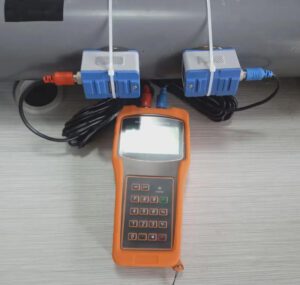
A pre-installation site survey is the highest-value technical service a distributor can offer. The essential data set includes measured pipe outside diameter, wall thickness at several circumferential points, confirmed pipe material and lining, fluid temperature and pressure range, and available straight-run distance to the nearest flow disturbance. A ten-minute field signal-quality test at the proposed mounting location, performed with a portable meter before finalizing the specification, resolves most uncertainty definitively.
Phased Rollout Approaches for Large Facilities
For plants with dozens of measurement points, a phased rollout that prioritizes the highest-risk hazardous-fluid lines first — rather than attempting a simultaneous facility-wide changeover — allows the client to validate performance and build internal confidence before committing budget to the full program. Jade Ant Instruments’ 5-factor flow meter selection framework provides a structured way to sequence this kind of phased evaluation.
Staff Training and Change Management
Operators accustomed to mechanical meters sometimes distrust a device with no visible moving parts. A short onboarding session explaining what the signal quality indicator means and how to interpret basic diagnostic alarms goes a long way toward building the operational confidence needed for a smooth transition.
Troubleshooting Common Implementation Challenges
Addressing Signal Interference and Acoustic Obstacles
The most frequent field issue is not a hardware fault but a configuration error: nominal pipe diameter entered instead of measured diameter, wall thickness taken from the wrong pipe schedule, or transducer spacing calculated for the wrong mounting geometry. Each of these introduces a persistent, systematic offset the meter cannot self-correct, which is why a disciplined installation checklist matters more than any single feature on a datasheet.
Optimizing Sensor Calibration for Maximum Accuracy
Periodic verification against a portable reference meter or a known volumetric test catches accuracy drift before it becomes financially significant, particularly on measurement points feeding into mass-balance reporting or regulatory documentation.
Managing Expectations and Setting Performance Baselines
Setting a clear, written performance baseline immediately after commissioning — expected accuracy range, signal quality threshold, and diagnostic alarm behavior — gives both the client and the distributor an objective reference point for any future performance discussion, rather than relying on subjective impressions months later.
Future Trends and Technology Evolution

Emerging Innovations in Ultrasonic Flow Measurement
Advanced Signal Processing and AI-Driven Analytics
The intelligent flow meter category — devices with embedded analytics and predictive capability — is one of the fastest-growing subsegments in industrial instrumentation. Edge-computing firmware that analyzes signal quality trend data to predict couplant degradation weeks in advance, and anomaly detection algorithms that flag unusual flow patterns before they become process incidents, are moving from premium options to standard features across the product category.
Multi-Parameter Sensors and Integrated Diagnostics
Next-generation transmitters increasingly combine flow, temperature, and fluid composition indicators (via speed-of-sound tracking) in a single non-contact package, giving hazardous-fluid operators a broader process safety picture from one installation point rather than three separate instruments.
Miniaturization and Wireless Deployment Options
Smaller transducer footprints and cellular or LoRaWAN wireless connectivity are extending non-contact measurement to smaller pipe diameters and remote sites that were previously uneconomical to instrument, expanding the addressable retrofit market considerably.
Positioning Your Business for Next-Generation Solutions
Market Growth Projections and Demand Forecasting
The global ultrasonic flow meter market has been valued at over a billion dollars and is projected to continue growing at a compound annual rate well above the broader flow measurement industry average, according to Fortune Business Insights market research, driven by chemical plant modernization, pharmaceutical compliance demands, and the industrial push toward digitalization.
Strategic Partnerships and Manufacturer Relationships
Distributors who build a genuine technical partnership with a manufacturer — rather than a purely transactional purchasing relationship — gain earlier access to application engineering support, OEM/ODM customization options, and product roadmap visibility that strengthens their own competitive position with end clients.
Building Expertise to Lead Your Market Segment
The distributors who will lead this market over the next decade are not necessarily the ones with the lowest price, but the ones who can explain the physics clearly, quantify the total-cost-of-ownership case with real client numbers, and support an installation through to a confirmed, documented commissioning result.
The Competitive Advantage of Non-Invasive Monitoring
Why Ultrasonic Flow Meters Are the Industry Standard for Hazardous Applications
Non-contact ultrasonic measurement did not become the preferred technology for hazardous fluid monitoring by accident. It solves the structural problem that every wetted flow meter carries into a corrosive, toxic, or sterile application: the fluid itself is what eventually destroys the instrument, and every maintenance event on that instrument is a moment of avoidable exposure risk.
Recap of Safety, Compliance, and Operational Benefits
Across chemical processing, pharmaceutical manufacturing, and industrial hazmat monitoring alike, the pattern repeats: fewer wetted connections mean fewer leak points, fewer exposure events, and a measurement record that supports rather than complicates regulatory compliance. The operational savings — often 40% or more in lifetime maintenance cost on aggressive chemical service — are a direct consequence of removing corrosion and wear from the failure equation, not a marketing claim layered on top of an otherwise conventional product.
Long-Term Strategic Value for Your Distribution Business
For distributors and agents, the strategic opportunity is to move the sales conversation from unit price to total risk and cost picture, using real client-specific numbers rather than generic claims. That conversation, backed by genuine technical depth, is what turns a single meter sale into a long-term account relationship.
Ready to Transform Your Hazardous Fluid Monitoring Solutions?
Contact the Jade Ant Instruments team today to explore how ultrasonic flow meter technology can differentiate your offerings, strengthen client relationships, and unlock new revenue streams in the chemical, pharmaceutical, and industrial hazmat markets. Our application engineers can help you build a site-specific specification and cost comparison for your next hazardous-fluid project.
Glosario de términos clave
Transit-Time Measurement: Calculates fluid velocity from the time difference between ultrasonic pulses sent upstream and downstream through a clean fluid. Requires no suspended particles. Typical accuracy: 0.5%–1.0% on a well-installed clamp-on meter.
Doppler-Shift Measurement: Calculates fluid velocity from the frequency shift of ultrasonic signals reflected off particles or bubbles moving with the fluid. Requires a minimum concentration of reflectors. Typical accuracy: 2%–5%.
Clamp-On Configuration: An installation method where transducers attach to the outside of an existing pipe without cutting, welding, or process shutdown. The standard approach for hazardous, corrosive, or sterile fluid applications where pipe penetration is undesirable or prohibited.
Signal Quality Index (SQI): A real-time percentage indicator of received ultrasonic signal strength. Above roughly 60% confirms reliable measurement; below 50% signals a need to investigate pipe condition, couplant quality, or transducer alignment.
ATEX / IECEx: European and international certification frameworks respectively for equipment installed in explosive atmospheres. Zone 1 covers atmospheres that are explosive in normal operation; Zone 2 covers atmospheres explosive only under abnormal conditions.
Total Cost of Ownership (TCO): The full cost of a meter over its operational life, including purchase, installation, maintenance, calibration, and eventual replacement — the metric that most accurately reflects the economic advantage of non-contact measurement over wetted alternatives.
Watch: How Ultrasonic Flow Meters Work
https://www.youtube.com/watch?v=JRKlR4YgMHw
A clear breakdown of ultrasonic flow measurement principles, comparing transit-time and Doppler technology and explaining why non-contact measurement performs the way it does across different fluid types.
Preguntas frecuentes
1. What is the primary difference between ultrasonic and traditional invasive flow meters? Ultrasonic flow meters use sound waves to measure fluid velocity without making contact with the substance being measured, while traditional invasive meters insert sensors directly into the flow stream. This non-contact approach eliminates contamination risks, reduces maintenance, and extends equipment lifespan — particularly important for hazardous, corrosive, and sterile applications.
2. Are ultrasonic flow meters accurate enough for pharmaceutical and chemical applications requiring strict compliance? Yes. Modern ultrasonic flow meters achieve accuracy rates of ±0.5% to ±2% depending on the model and application, meeting or exceeding FDA, GMP, and international standards. Their non-contact design actually enhances data integrity by eliminating sensor fouling and drift common in invasive systems, making them well suited to regulated industries.
3. How do Doppler and transit-time ultrasonic technologies differ, and which should I recommend to clients? Doppler technology measures frequency shifts in ultrasonic signals reflected by particles in the fluid — ideal for opaque or particle-laden liquids. Transit-time technology measures the time difference between upstream and downstream signals — better for clean, clear fluids. Transit-time generally offers superior accuracy for pharmaceutical and chemical applications where fluid clarity is maintained.
4. Can ultrasonic flow meters handle highly corrosive chemicals without sensor degradation? Absolutely. Since ultrasonic sensors don’t contact the fluid, they’re immune to corrosion and chemical attack. The transducers are mounted externally on the pipe, eliminating the need for expensive exotic materials or frequent replacements. This makes ultrasonic technology exceptionally cost-effective for aggressive chemical environments.
5. What installation advantages do ultrasonic flow meters offer compared to invasive alternatives? Ultrasonic meters require no pipe cutting, no product shutdown during installation, and no internal modifications — reducing deployment time to hours rather than days. They retrofit seamlessly into existing infrastructure and work with virtually any pipe material, making them ideal for retrofitting legacy systems.
6. How do ultrasonic flow meters support regulatory compliance and documentation requirements? Ultrasonic systems provide automated, tamper-resistant data logging with timestamps, integrated diagnostics, and real-time alerts. This generates comprehensive audit trails that simplify regulatory inspections, support batch validation in pharmaceutical manufacturing, and demonstrate compliance with EPA, OSHA, and international standards without heavy manual intervention.
7. What is the typical ROI timeline for switching to ultrasonic flow measurement? Most clients achieve ROI within 2–4 years through reduced maintenance costs, eliminated sensor replacements, minimized production downtime, and avoided environmental incidents. Savings accelerate in hazardous-fluid applications where traditional sensors require frequent replacement due to corrosion or contamination.
8. Can ultrasonic flow meters be integrated with existing SCADA and Industry 4.0 systems? Yes. Modern ultrasonic meters feature Modbus, PROFIBUS, and wireless connectivity options, integrating seamlessly with SCADA platforms, IoT networks, and cloud-based analytics. This enables real-time remote monitoring, predictive maintenance, and advanced process optimization — capabilities that support premium positioning with your clients.
9. Are there any applications or fluid types where ultrasonic flow meters are not suitable? Ultrasonic technology has limitations with very high-viscosity fluids, extremely low-conductivity gases, or fluids containing excessive air bubbles that scatter acoustic signals. For standard chemical, pharmaceutical, and corrosive liquid applications, however, ultrasonic meters are highly effective. Always conduct a site assessment to confirm suitability before finalizing a specification.
10. How do ultrasonic flow meters reduce environmental and safety risks in hazardous fluid operations? By eliminating invasive sensors, ultrasonic technology removes potential leak points and contamination sources. Non-contact measurement prevents accidental exposure of personnel to toxic, corrosive, or reactive substances, and the absence of moving parts or internal obstructions reduces the risk of blockages that could cause pressure buildup or spills.
11. What certifications and standards should I verify when recommending ultrasonic flow meters for hazardous areas? Verify ATEX (European), IECEx (international), and equivalent regional certifications for hazardous area compliance. Confirm adherence to relevant ultrasonic measurement standards, API standards for petroleum applications, and industry-specific requirements such as FDA guidance for pharmaceuticals or EPA rules for chemical facilities. Request calibration certificates and traceability documentation from the manufacturer.
12. How should I position ultrasonic flow meters to price-sensitive clients concerned about upfront costs? Frame the conversation around total cost of ownership rather than initial purchase price. Quantify savings from eliminated sensor replacements, reduced downtime, avoided environmental incidents, and improved operational efficiency using the client’s own numbers. Emphasize the competitive differentiation and premium service capabilities that justify the investment.
13. What training and support should I provide to clients implementing ultrasonic flow meters? Offer comprehensive onboarding including site assessment, installation supervision, calibration verification, and staff training on operation and diagnostics. Provide technical documentation, troubleshooting guidance, and clear support contacts. Establish preventive maintenance schedules and periodic recalibration checkpoints to build your team’s credibility with the client.
14. How can I identify which of my existing clients would benefit most from upgrading to ultrasonic technology? Prioritize clients handling corrosive chemicals, sterile pharmaceuticals, or hazardous fluids; those with frequent sensor replacement costs; operations requiring regulatory compliance documentation; or facilities with strict production downtime constraints. A simple cost-benefit walkthrough for your top prospects, highlighting safety improvements and long-term savings, is usually enough to justify the upgrade conversation.
15. What competitive advantages can I leverage by specializing in ultrasonic flow measurement for hazardous applications? Position yourself as a safety and compliance expert rather than a commodity supplier. Develop industry-specific expertise in pharma, chemicals, or petrochemicals, build a genuine relationship with a manufacturer that provides real application engineering support, and create documented case studies from your own client base. This differentiation supports premium pricing and builds the kind of customer loyalty that outlasts price competition.