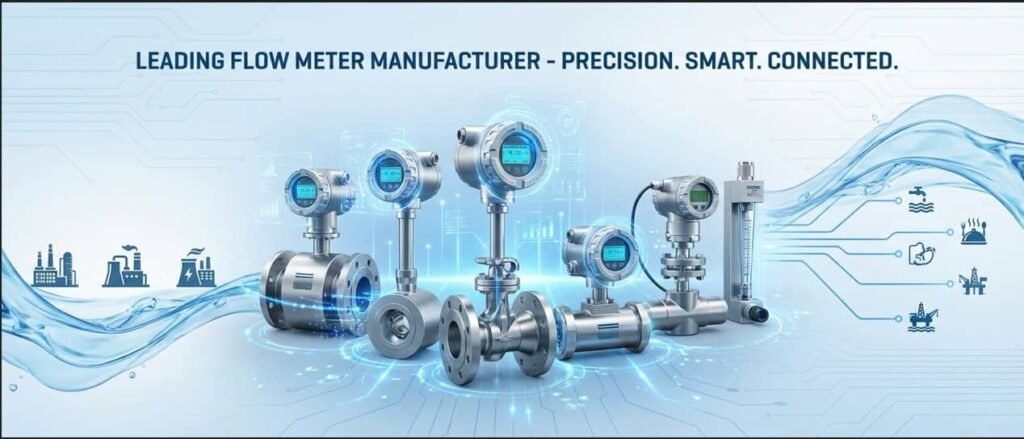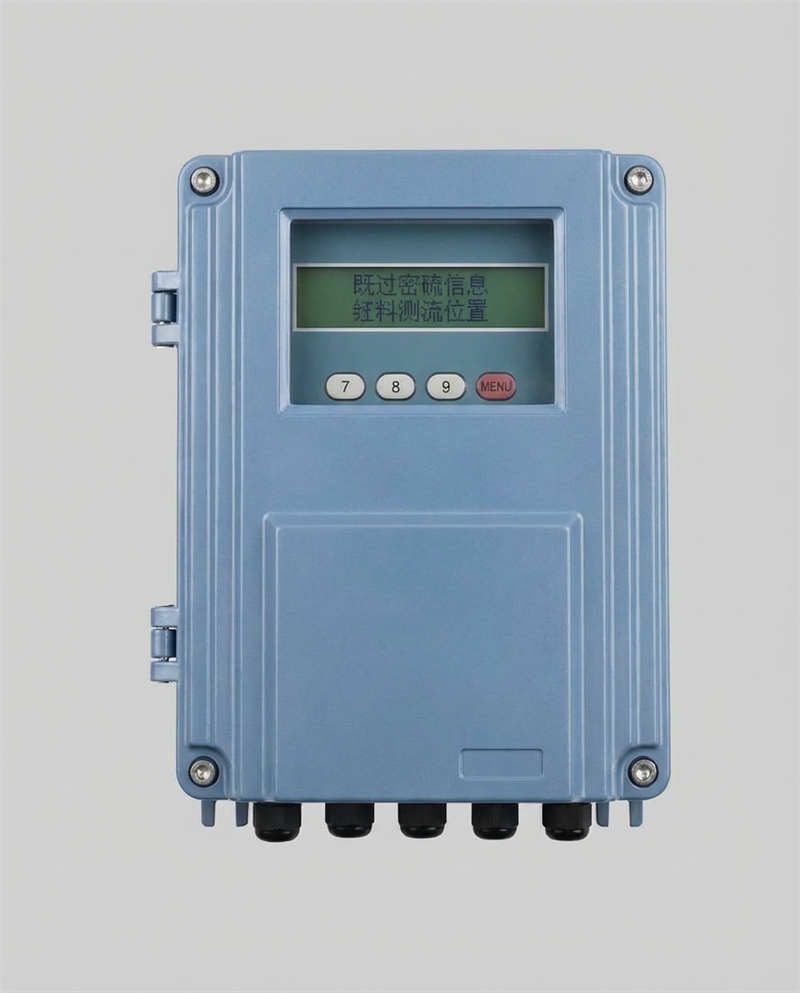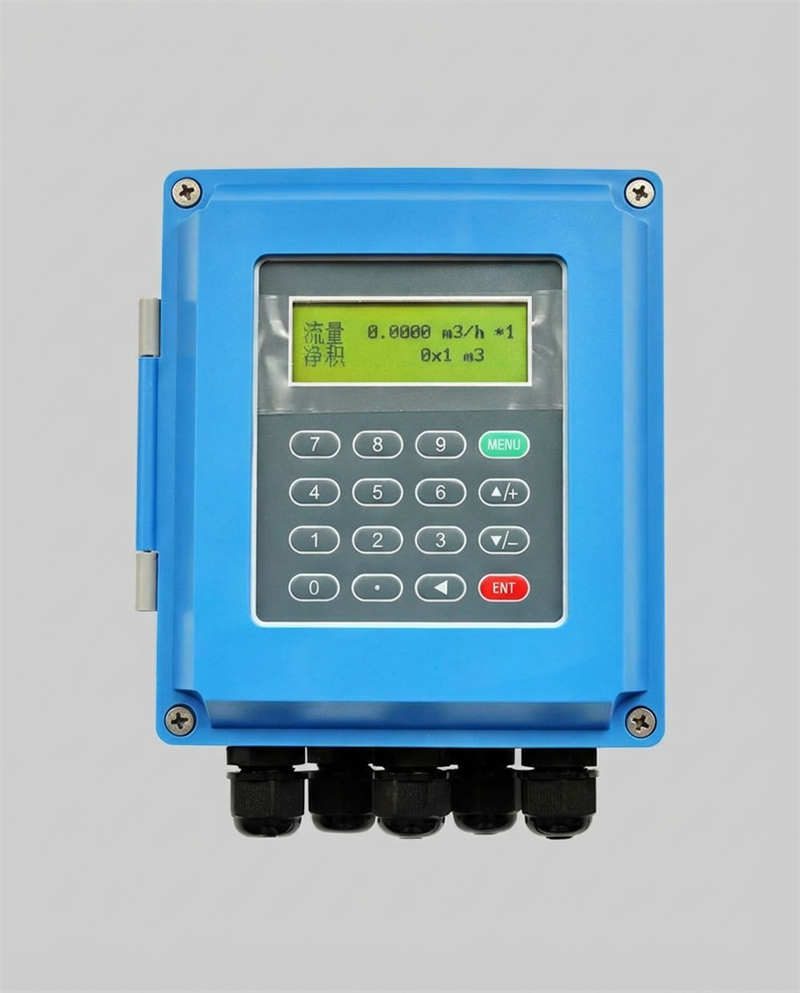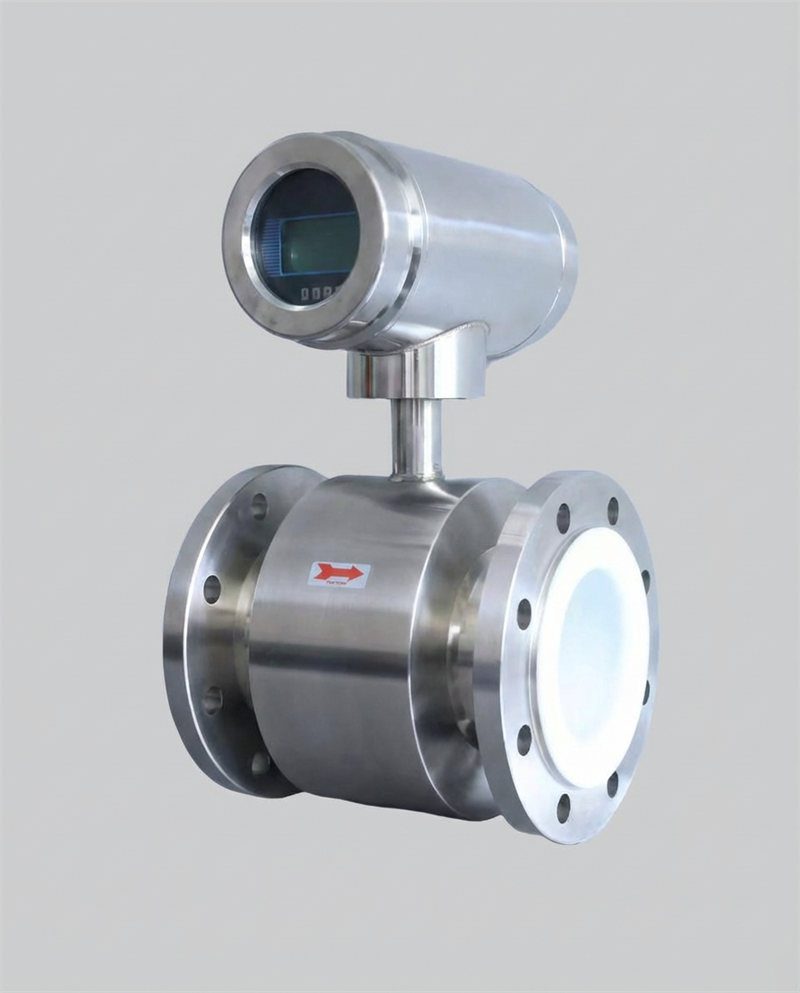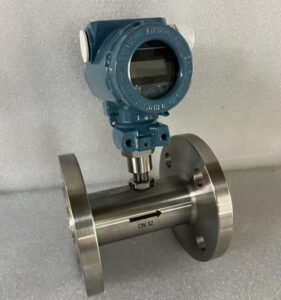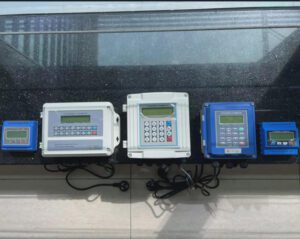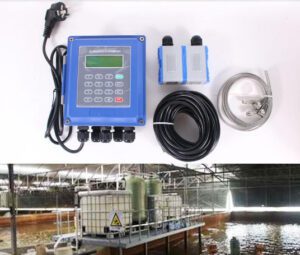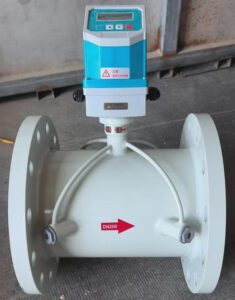
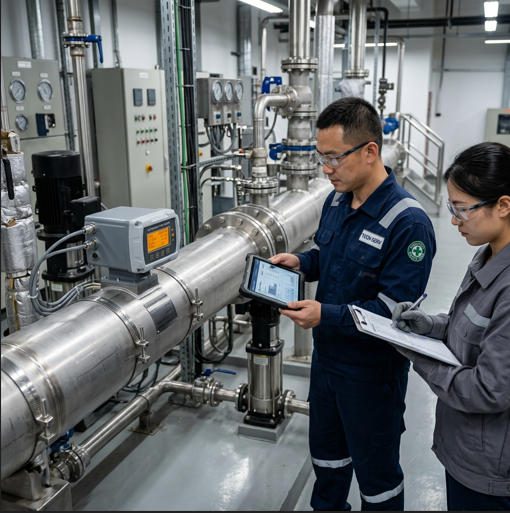

A visual explainer breaking down the science behind non-intrusive measurement technology — and why it’s reshaping industries from water utilities to chemical processing, one clamp-on sensor at a time.
Every flow meter decision your B2B customers make carries a hidden second cost — the cost of installation. For most of industrial history, measuring flow meant interrupting production, cutting pipe, welding flanges, and waiting. A single inline meter installation in an operating chemical plant can absorb 2–5 days of process downtime, $8,000–$30,000 in contractor labour, and the full opportunity cost of stopped production. In a refinery generating $60,000/hour of output, a 4-hour installation window costs $240,000 before a single bolt is tightened.
Ultrasonic flow meters solve this problem at the physics level. By transmitting acoustic waves through pipe walls via externally mounted clamp-on sensors, they measure flow with ±0.5%–±2% accuracy without any pipe penetration, process shutdown, or fluid contact. The global clamp-on ultrasonic market reached USD 3.8 billion in 2025 and is forecast to hit USD 6.2 billion by 2033 at a 7.2% CAGR — the fastest-growing segment in industrial flow measurement. For distributors and agents, this article is your technical and commercial playbook.
1. The Fundamental Problem: Why Traditional Flow Meters Fall Short
The Limitations of Contact-Based Measurement Technologies
Mechanical, differential-pressure, and inline electromagnetic meters all share one structural weakness: they physically enter the process. Every wetted surface — an orifice edge, a turbine bearing, a magnetic electrode — is a liability. Understanding exactly where those liabilities hit your customers’ bottom line is the first step in positioning non-intrusive measurement as a solution rather than an upgrade.
Mechanical Wear and Maintenance Burden
A turbine flow meter in a municipal water main runs approximately 8,760 hours per year. At typical flow velocities, the rotor bearings accumulate wear that degrades accuracy measurably within 18–24 months and requires physical replacement every 3–5 years. Each replacement on a pressurised line requires isolation, dewatering, contractor attendance, and system restart — a sequence documented by facilities managers to cost $15,000–$80,000 per event in parts, labour, and downtime, depending on pipe size and plant criticality.
The Hidden Costs of Frequent Replacement and Downtime
A 2025 Frost & Sullivan study found that non-invasive flow measurement reduces total installation costs by up to 30% compared to inline alternatives — and that gap widens to 85% on some brownfield retrofit projects when production shutdown time is included. Most plant managers only see the meter purchase price on the PO; the true cost of ownership sits in maintenance records, shutdown logs, and contractor invoices that rarely get consolidated into a single number. Distributors who do that consolidation for their clients win the specification.
Contamination Risks in Sensitive Applications
In pharmaceutical purified water systems, food-grade process lines, and semiconductor ultrapure water circuits, any instrument that penetrates the pipe creates a compliance problem. FDA 21 CFR Part 110 and EU Regulation 852/2004 require food-contact surfaces to be non-contaminating and cleanable. An inline meter electrode, a turbine shaft seal, or an orifice plate crevice is a microbial harborage point — and in many applications the FDA inspector’s concern alone is sufficient to require removal.
Pressure Drop and Energy Efficiency Losses
Orifice plates — the most widely deployed differential-pressure flow meter — introduce a permanent pressure loss of 5%–25% of line pressure, according to comparative field data published by Eureka/Patsnap (2024). For a pump system operating at 10 bar with a 10% pressure drop across the meter, the pump must work continuously harder to compensate — a parasitic energy cost that runs 365 days a year. At industrial energy prices of $0.08–$0.12/kWh, a DN200 main line can easily waste $8,000–$20,000 annually in excess pumping energy attributable entirely to the measurement device. Clamp-on ultrasonic meters introduce zero pressure drop — the pipe wall is unobstructed.

2. The Science Behind Ultrasonic Flow Measurement
Understanding Acoustic Doppler Principles
Ultrasonic flow measurement exploits the interaction between high-frequency sound waves and a moving fluid. Piezoelectric transducers — devices that convert electrical signals into mechanical vibrations at frequencies of 0.5–4 MHz — are mounted on the outside of the pipe. They transmit ultrasonic pulses through the pipe wall and into the fluid using a thin layer of acoustic couplant (a gel or solid-state pad) to eliminate the signal-blocking air gap between sensor and pipe surface.
How Sound Waves Interact with Flowing Fluids
When an ultrasonic pulse enters a flowing fluid, two measurable physical effects occur simultaneously. First, particles or bubbles in the fluid reflect part of the acoustic energy back toward the source at a shifted frequency (the Doppler effect). Second, the transit time of acoustic pulses travelling upstream and downstream through the fluid differs by an amount proportional to the fluid velocity. Ultrasonic meters are designed to exploit one of these two effects as their primary measurement mechanism, depending on the fluid characteristics.
The Doppler Effect Explained for Flow Applications
The Doppler effect — the same phenomenon that makes a passing ambulance siren sound higher-pitched as it approaches — applies to ultrasonic reflections from moving particles. A stationary particle would reflect the signal at the same frequency it arrived. A particle moving with the fluid reflects it at a slightly higher or lower frequency depending on whether it is moving toward or away from the sensor. The frequency shift (Δf) is directly proportional to particle velocity, and therefore to fluid velocity. This is the operating principle of Doppler ultrasonic meters, which require suspended particles or bubbles (≥80 mg/L, ≥75 μm) to function reliably.
Transit-Time Technology versus Doppler Methods
Table 1: Transit-Time vs. Doppler Ultrasonic — Quick Selection Reference. Source: Jade Ant Instruments Clamp-On vs. Transit-Time Guide.
Multi-Path Technology for Enhanced Accuracy
Single-path clamp-on meters sample fluid velocity along one diagonal chord through the pipe. Because the velocity profile across the pipe cross-section is non-uniform (faster at the centre, slower near the walls — the classic parabolic Poiseuille profile), a single measurement path introduces velocity profile correction uncertainty. Dual-path meters use two acoustic chords at different positions, providing more representative cross-sectional averaging and typically reducing profile-related error by 40%–60%, improving accuracy from ±1.5%–±2.0% to ±0.5%–±1.0% on the same pipe.
Real-Time Data Processing and Signal Interpretation
Modern clamp-on transmitters sample the received ultrasonic signal at 20–200 MHz and pass the raw data through digital signal processing (DSP) chains: bandpass filtering to isolate the carrier frequency from pipeline vibration noise, cross-correlation algorithms to determine signal arrival time with nanosecond precision, and multi-measurement averaging combining 10–100 measurements per second to reduce timing jitter. The result is a stable, low-noise flow reading updated up to 10 times per second — fast enough for process control loops and energy metering alike.
▲ Doppler vs. Transit-Time Ultrasonic Flow Meters — A clear technical comparison of when to recommend each technology to your industrial customers.
3. Non-Intrusive Installation: A Game-Changer for Your Customers
Clamp-On Sensor Advantages
Clamp-on sensors represent the most commercially significant installation advantage in modern flow measurement. A single instrument technician completes the full installation — pipe survey, transducer spacing calculation, surface preparation, sensor mounting, couplant application, parameter entry, signal quality verification, and 4–20 mA loop check — in 1 to 2 hours on a typical industrial pipe. No welding permit. No process isolation. No confined space entry. No pressure testing. No production loss.
Zero Pipe Modification Required
The pipe wall remains completely intact. No taps, no penetrations, no new weld zones — meaning no post-weld inspection, no holiday testing on coated pipe, and no compromise to the structural integrity of high-pressure or safety-critical lines. For applications where pipe modification would require a Management of Change (MOC) process, a pressure systems written scheme review, or an insurance survey, eliminating the pipe penetration eliminates the entire administrative burden.
Cost Savings on Infrastructure Changes
Table 2: Total Installed Cost Comparison — Clamp-On vs. Inline (Brownfield, DN100 Line). Values are illustrative based on industry benchmarks and Jade Ant Instruments TCO data.
Retrofit Applications Across Legacy Installations
The addressable retrofit market is enormous. Water utilities built in the 1960s–1990s run concrete-encased cast-iron mains, asbestos-cement pipes, and unlined ductile iron distribution networks — all compatible with clamp-on acoustic measurement provided the wall is solid and the fluid is clean. Chemical plants with decades of piping archaeology — dozens of materials, specifications, and standards mixed across the same facility — can be instrumented with a single clamp-on meter kit covering DN25 to DN1000, without requiring a separate spool-piece design for each pipe specification.
Safety Benefits in Hazardous Environments
In ATEX/IECEx Zone 1 and Zone 2 classified areas — refineries, solvent handling facilities, LPG terminals — any pipe penetration on a flammable fluid line requires a Hot Work Permit, fire watch, gas testing, and formal safety isolation. A clamp-on meter installation creates none of these requirements. ATEX-certified clamp-on sensors, available from manufacturers including Jade Ant Instruments, can be installed during normal operations in Zone 1 classified areas — a regulatory advantage that makes them the only viable measurement solution on certain safety-critical lines where pipe penetration would require a full SIL (Safety Integrity Level) assessment.

Chemical processing facilities handling corrosive, toxic, or flammable fluids benefit most from clamp-on measurement — sensors remain fully external, eliminating every leak point and compliance risk associated with traditional wetted-meter installations.
4. How Ultrasonic Signals Navigate Different Fluid Types
Acoustic Behavior Across Industry-Specific Applications
Clean Liquids and Optimal Performance
Transit-time meters perform at their best in clean, single-phase liquids with no suspended solids above 50 mg/L and no entrained gas above 2%. Municipal drinking water, pharmaceutical purified water (PW) and water-for-injection (WFI), process cooling water, demineralised water in power plants, and most clear chemical streams are all in this category. Under these conditions, a properly installed dual-path clamp-on meter on a well-characterised DN100 stainless steel pipe routinely achieves ±0.5%–±1.0% — equivalent to a quality inline electromagnetic meter, without any pipe contact.
For water utilities, the accuracy advantage is directly quantifiable. The Badger Meter field study on clean water applications found that ultrasonic meters maintain a stable ±0.5% rating against the ±1.5% drift of aging mechanical meters — a 1% accuracy improvement that, on a 10 MLD (megalitres per day) distribution zone, recovers approximately 36,500 cubic metres of billable water annually.
Challenging Fluids: Slurries and Particle-Laden Streams
Doppler clamp-on meters are purpose-designed for slurries, activated sludge, pulp stock, and mineral concentrate streams — applications where particle content is consistent enough to provide reliable acoustic reflectors. A pulp mill measuring bleached kraft pulp stock at 3.5% consistency (35 g/L suspended fibres) achieves Doppler measurement accuracy of ±2%–±3%, which is fully adequate for pump speed control, flow ratio control, and process mass balance monitoring. The alternative — an electromagnetic meter — requires stainless steel electrodes in contact with the abrasive pulp, resulting in electrode wear, coating, and calibration drift requiring quarterly site visits.
High-Temperature and Cryogenic Applications
Standard clamp-on transducers operate from −40°C to +160°C (extended-temperature versions to +200°C) with continuous temperature compensation applied to the transit-time calculation. The speed of sound in water varies from ~1,408 m/s at 0°C to ~1,555 m/s at 100°C — a 10% variation that an uncompensated meter would convert directly into reading error. All quality transit-time meters embed a temperature sensor in the transducer housing and apply real-time velocity-of-sound correction, maintaining specified accuracy across the full temperature range. For steam condensate return lines, hot water recirculation, and district heating distribution, this compensation makes clamp-on meters the most practical measurement solution on lines too hot for most inline meter sealing materials.
5. Accuracy Specifications: What Your Clients Need to Know
Understanding Measurement Precision and Repeatability
Table 3: Ultrasonic Flow Meter Accuracy by Configuration. Source: compiled from manufacturer specifications, ISO 9104, and independent field studies. See the full Jade Ant Instruments Flow Meter Selection Guide for application-specific guidance.
Factors Affecting Measurement Reliability
The most common cause of clamp-on meter underperformance in the field is not a hardware deficiency — it is a configuration error made during installation. The meter was given the nominal pipe OD instead of the measured OD. Wall thickness was taken from a datasheet for a different pipe schedule. Transducer spacing was set for V-mode geometry but Z-mode was actually used. Each of these errors introduces a systematic, persistent offset that the meter cannot self-correct. A 1 mm OD measurement error on a DN100 pipe introduces approximately 2% velocity offset — entirely avoidable with a pi tape and 5 minutes of care.
ISO and International Compliance Requirements
Key standards applicable to clamp-on meters include ISO 6416 (ultrasonic measurement of streamflow), ISO 9104 (performance evaluation of ultrasonic flow meters), and OIML R 49 for water meters under the EU Measuring Instruments Directive (MID). For custody transfer of natural gas, AGA Report No. 9 applies; for liquid hydrocarbons, API MPMS Chapter 5.8. Both custody transfer standards currently mandate inline multi-path configurations — clamp-on meters serve custody transfer applications as independent check meters, not as primary fiscal instruments. For a detailed breakdown of how to match certification requirements to your clients’ applications, Jade Ant’s flowmeter datasheet guide covers the complete compliance picture.
6. Cost-Benefit Analysis: ROI for Your B2B Customers
Total Cost of Ownership Comparison
Table 4: 5-Year Total Cost of Ownership Comparison — DN100 Brownfield Process Line (USD, illustrative). Orifice plate energy costs based on 5%–25% permanent pressure loss at industrial pump energy rates. Source: compiled from Flowell TCO analysis and Jade Ant Instruments application data.
Elimination of Maintenance-Related Expenses
Clamp-on meters have no moving parts — no bearings, rotors, impellers, seals, or electrodes in fluid contact. The only physical maintenance that ever requires hands-on intervention is transducer replacement, which takes 20 minutes and does not require stopping the process. Annual inspection consists of a visual check and an SQI (Signal Quality Index) verification — a 30-minute task performed by an instrument technician without any specialised calibration equipment. Compare this to the quarterly recalibration, bearing inspection, and seal replacement schedules required for turbine and positive-displacement meters in critical applications, and the maintenance cost differential over 5 years typically exceeds $2,000–$5,000 per measurement point.
Extended Service Life Versus Traditional Meters
Well-installed clamp-on meters in protected environments routinely achieve 10–15+ year operational lifespans. Turbine and positive-displacement meters typically require complete replacement or major overhaul every 3–5 years in continuous service. Across a 15-year asset life, this means the inline meter gets replaced 2–3 times — each replacement event reincurring the full installed cost including process downtime. The clamp-on meter is serviced with a $200–$500 transducer replacement. The 15-year cost asymmetry is the most powerful argument in the distributor’s TCO toolkit, and it is almost never presented to procurement teams who focus exclusively on purchase-price comparisons.
7. Industry-Specific Applications and Success Stories

Municipal water utilities globally lose 30%–40% of treated water to non-revenue water (NRW). Affordable clamp-on measurement across Distribution Metered Areas (DMAs) is the primary technical strategy for recovering billable volume — and represents one of the largest addressable markets for ultrasonic flow meter distributors worldwide.
Water Utilities and Municipal Systems
Large-Scale Distribution Network Monitoring
Municipal water utilities globally lose an average of 30%–40% of treated water to non-revenue water (NRW) — the gap between water produced and water billed, accounting for leakage, meter errors, and unbilled consumption. Reducing NRW requires metering every District Metered Area (DMA) inlet and major transmission main. A utility with 200 such monitoring points installing clamp-on meters at $3,500 per point versus inline meters at $12,000 per point commits $700,000 versus $2.4 million — a $1.7 million capital difference that often determines whether the NRW programme gets budget approval at all.
Multi-point clamp-on monitoring creates a continuous mass balance across the network: total flow entering each zone versus total flow measured at consumption and export points. Any persistent divergence identifies a leak zone for priority investigation, directing rehabilitation spend to the highest-impact areas without expensive district-by-district manual surveys. Real-world deployment data across 8 key industrial applications confirms that clamp-on monitoring programmes consistently recover 3%–8% of previously unaccounted-for water within the first 12 months of operation.
Chemical and Petrochemical Processing
Hazardous Fluid Handling Without Contact
Chemical plants processing hydrochloric acid, sulfuric acid, chlorine compounds, and organic solvents face a core instrumentation paradox: the most important flow measurements are on the most corrosive lines, where conventional wetted sensors fail fastest. Electromagnetic meters have electrodes that dissolve. Turbine meters have shaft seals that swell and bearings that corrode. Even the most chemical-resistant inline materials eventually fail when continuously immersed in concentrated acid at elevated temperature.
Clamp-on meters resolve this by keeping all active instrumentation outside the pipe. A plant measuring 30% HCl at 60°C through a PVDF-lined carbon steel pipe installs a standard clamp-on meter without material compatibility concerns — the transducers couple acoustically through the pipe wall and never contact the acid. Application data across chemical plant deployments shows that the lifetime maintenance cost advantage of clamp-on versus conventional wetted-meter technology in aggressive chemical service typically exceeds 40% over a 7-year horizon.
Food and Beverage Production
Hygienic Measurement Without Contamination Risk
Food and beverage facilities face a compliance equation that inline meters fail almost by definition: FDA 21 CFR Part 110 and EU Regulation 852/2004 require food-contact surfaces to be non-contaminating, fully cleanable, and free of crevices that harbour bacteria. An orifice plate in a dairy pasteurisation line has a sharp upstream face that traps milk solids in the low-velocity shadow zone — a classic biofilm harborage point. A clamp-on meter has no food-contact surface at all, and the pipe wall remains as cleanable as the day it was installed.
For CIP (Clean-in-Place) systems — the automated pipe-cleaning cycle used in dairy, beverage, and pharmaceutical facilities — clamp-on meters are fully transparent. The CIP cleaning solution flows through the pipe in exactly the same way as the product, and the clamp-on meter measures the CIP flow without any configuration change. No gaskets to swell, no electrodes to passivate, no internals to mask the cleaning effect. This CIP compatibility means the hygienic validation of the pipe system does not need to account for the meter internals — a significant regulatory simplification that food safety auditors consistently cite as a major advantage of non-intrusive measurement.
8. Integration with Digital Monitoring and IoT Systems
Smart Flow Measurement for Modern Operations
The transition from field instrument to connected data node is the defining trend in industrial instrumentation through 2025–2035. Clients who invested in SCADA infrastructure a decade ago are now investing in cloud analytics, digital twin models, and AI-based predictive maintenance — and they need flow measurement data to feed those platforms in real time, from every relevant point, reliably and without maintenance intervention. Modern clamp-on transmitters with embedded Modbus TCP/IP or OPC UA connectivity publish flow rate, totalised volume, temperature, speed of sound, SQI, and alarm status to plant data historians or cloud analytics platforms directly over Ethernet.
Table 5: Standard Communication Protocols on Industrial Clamp-On Ultrasonic Flow Meters. See Turbines Inc. protocol guide for full integration specifications.
Cloud-Based Monitoring and Predictive Maintenance
Cellular-connected clamp-on meters with embedded 4G/LTE modems enable measurement at remote or unmanned sites that would previously require expensive hardwired infrastructure projects. A water utility meter at a rural pump station, a gas pipeline check meter at a remote compressor station, or a district energy substation monitoring point can be deployed and monitored remotely at a total project cost of $3,000–$8,000 per point versus $20,000–$50,000 for equivalent wired infrastructure.
Modern transmitter firmware continuously monitors SQI trends, fluid sound velocity, and flow profile symmetry indices. A declining SQI trend over months indicates couplant degradation — detectable 30–60 days before measurement accuracy is compromised, allowing planned maintenance to replace unplanned failure. A shift in measured sound velocity without a corresponding temperature change can indicate fluid composition drift — a useful early warning in concentration-critical processes. These predictive capabilities transform the clamp-on meter from a passive measurement device into an active asset health monitor.
9. Selecting the Right Ultrasonic Meter: A Buyer’s Guide for Distributors

Pre-installation site survey — measuring actual pipe OD, wall thickness, and available straight run — is the highest-value technical service a distributor can provide and the most reliable method for preventing post-sale specification problems.
Key Technical Specifications to Evaluate
Table 6: Application Requirements vs. Recommended Clamp-On Configuration. For full decision-tree guidance, see the Jade Ant Instruments Flow Meter Selection Guide.
Vendor Selection Criteria
When evaluating ultrasonic flow meter suppliers for your distribution portfolio, technical specifications are only part of the picture. The commercially significant differentiators are application engineering depth, technical documentation quality, local spare parts availability, and response time on warranty claims. A supplier whose engineering team can generate a site-specific transducer spacing calculation and SQI estimate from your customer’s pipe drawing before the PO is raised is worth significantly more than a supplier with a marginal price advantage but no pre-sales technical support.
Jade Ant Instruments, with 15+ years of application engineering experience and an ISO-certified manufacturing base, provides distributors and agents with the product range (DN32–DN6000 clamp-on), technical documentation, OEM/ODM customisation options, and HART / Modbus / 4–20 mA output configurations needed to serve the full spectrum of industrial measurement demand. The combination of factory-direct pricing and genuine application engineering support is the commercial proposition that serious distribution partners require.
10. Overcoming Common Objections and Implementation Challenges
Addressing Client Concerns About Accuracy
The most persistent client objection to clamp-on meters is: “Can they really be as accurate as an inline meter if they don’t touch the fluid?” The answer requires precision: clamp-on meters in ideal conditions — clean fluid, well-characterised pipe, proper installation, adequate straight run — deliver ±0.5%–±1.0% accuracy, which equals or exceeds single-path inline meter performance. Where clamp-on cannot match inline is in fiscal custody transfer (which requires ±0.15%–±0.25% from multi-path inline meters certified under AGA-9 or API MPMS 5.8) and in highly demanding process control applications requiring sub-100 ms response times.
For the 80%–90% of industrial measurement points where process monitoring, energy metering, or flow balance tracking is the objective, clamp-on accuracy is entirely adequate. The distributor’s job is to help clients identify which category their application falls into — and to have both the clamp-on and the inline solution ready when the answer is confirmed. See the 5-factor flow meter selection framework for a structured approach to this conversation.
Managing Installation and Integration Risks
Pre-installation site assessment eliminates the most common post-sale disputes. The essential data to collect at each measurement point: actual pipe outside diameter (measured with a pi tape, not taken from the nominal specification), wall thickness measured with an ultrasonic thickness gauge at 3–4 circumferential positions, pipe material and any internal lining confirmation, fluid characteristics including temperature, pressure, and particle/gas content, and available straight run distance to the nearest flow disturbance upstream and downstream. A SQI field test with a portable meter at the intended installation location, before committing to the specification, takes 10 minutes and definitively confirms whether the location will work.
Staff Training and Knowledge Transfer
Distributor-provided installation training — even a half-day session covering pipe measurement technique, transducer spacing calculation, couplant application, and SQI interpretation — measurably improves field accuracy outcomes. Clients who receive structured training report first-installation success rates above 90%; those relying solely on the manual report rates closer to 60%. This training investment also positions your team as the authoritative technical resource in the customer’s organisation — a commercial advantage that outlasts any single project and builds the long-term relationship that protects against competitive displacement.
The Future of Non-Contact Flow Measurement

Why Ultrasonic Technology Is Becoming the Industry Standard
The shift toward non-intrusive measurement is not a technology trend — it is an economics trend driven by the compounding reality that every installation, maintenance, and replacement event with an inline meter carries hidden costs that clamp-on technology eliminates entirely. A market growing at 7.2% CAGR from a $3.8 billion base does not sustain that trajectory without structural demand. The demand is structural: driven by the world’s largest retrofit opportunity (the installed base of aging mechanical meters across water utilities, chemical plants, and industrial HVAC systems), by ISO 50001 energy management mandates requiring affordable sub-metering infrastructure, and by corporate sustainability commitments that require more measurement points than any existing inline programme can deliver economically.
Your Role as a Distributor in This Transition
The distributor’s commercial advantage in this market is not price — it is technical depth. Clients who have spent years frustrated by inline meter installation costs, maintenance schedules, and calibration intervals are receptive to a better solution. What they need is a distributor who can explain the physics clearly, quantify the TCO savings with real numbers from their specific application, and support the installation through to a confirmed SQI reading and commissioning sign-off. That level of engagement turns a meter sale into a long-term technical partnership — the only durable commercial position in a market that commodity suppliers will eventually enter at the low end.
Long-Term Value Proposition for Your Customers
Jade Ant Instruments supports distribution partners with an ISO-certified product range covering clamp-on meters from DN32 to DN6000, portable audit kits, inline spool-piece meters for fiscal applications, and complete heat meter assemblies for district energy and HVAC — everything required to serve the full spectrum of non-intrusive measurement demand across the industries growing fastest in the ultrasonic flow meter market. The combination of factory-direct access, OEM/ODM customisation capability, and application engineering support creates the foundation for a distribution partnership built on genuine technical value rather than price competition.
Ready to Empower Your Customers with Next-Generation Flow Measurement?
Contact the Jade Ant Instruments technical sales team to explore ultrasonic flow meter solutions tailored to your distribution network. Access technical specifications, application guides, and schedule a personalised consultation with our flow measurement engineers.
Key Terms Glossary
- Non-Intrusive / Clamp-On Measurement
- Any flow measurement method that requires no pipe penetration or fluid contact. Clamp-on transducers couple acoustically to the outside pipe wall. Example: Sensors strapped to a DN200 stainless steel acid line without any process isolation.
- Transit-Time Principle
- Calculates fluid velocity from the time difference (Δt) between ultrasonic pulses sent upstream and downstream through the fluid. Best accuracy: ±0.5%–±1.0% on clean, particle-free liquids.
- Doppler-Shift Principle
- Measures the frequency shift of ultrasonic signals reflected from particles or bubbles moving with the fluid. Requires minimum ≥80 mg/L particle content. Typical accuracy: ±2%–±5%. Used for wastewater, slurry, and aerated liquid applications.
- Signal Quality Index (SQI)
- A real-time 0–100% indicator of received ultrasonic signal strength and quality. Above 60%: reliable measurement confirmed. Below 50%: investigate pipe condition, couplant, and transducer alignment before commissioning.
- Turndown Ratio
- The ratio of maximum to minimum measurable flow at specified accuracy. A 150:1 turndown on a 10 m/s max-velocity meter means reliable measurement down to 0.067 m/s — critical for systems with highly variable demand profiles.
- Agua no facturada (NRW)
- Water produced by a utility that is not billed to customers — lost to leakage, unauthorised use, or metering errors. Global average: 30%–40% in developing markets. Clamp-on meters on District Metered Area (DMA) inlets are the primary measurement tool for NRW reduction programmes.
- Total Cost of Ownership (TCO)
- The complete cost of a meter installation over its full operational life: equipment purchase + installation (including process shutdown) + maintenance + calibration + energy cost (pressure drop) + eventual replacement. For most brownfield applications, clamp-on TCO over 5 years is 70%–80% lower than equivalent inline installations.
- CIP (Clean-in-Place)
- Automated pipe-cleaning cycle used in food, beverage, dairy, and pharmaceutical facilities. Clamp-on meters are fully transparent to the CIP cycle — the cleaning solution flows through the unmodified pipe exactly as the product does, with no meter internals to shield, trap, or invalidate the cleaning protocol.
Preguntas frecuentes
Comprehensive answers for distributors, agents, and procurement teams evaluating ultrasonic flow meter solutions for industrial B2B applications.
About Jade Ant Instruments: Jade Ant Instruments is an ISO-certified flow meter manufacturer and solution provider with 15+ years of precision measurement experience. Our product portfolio covers clamp-on ultrasonic flow meters, electromagnetic flow meters, vortex flow meters, turbine meters, and thermal mass flow meters — supporting OEM/ODM customisation with HART, Modbus, and 4–20 mA outputs. We partner with distributors and agents worldwide to deliver technical depth alongside competitive factory-direct pricing. Contact us at info@jadeantinstruments.com or through our contact page.