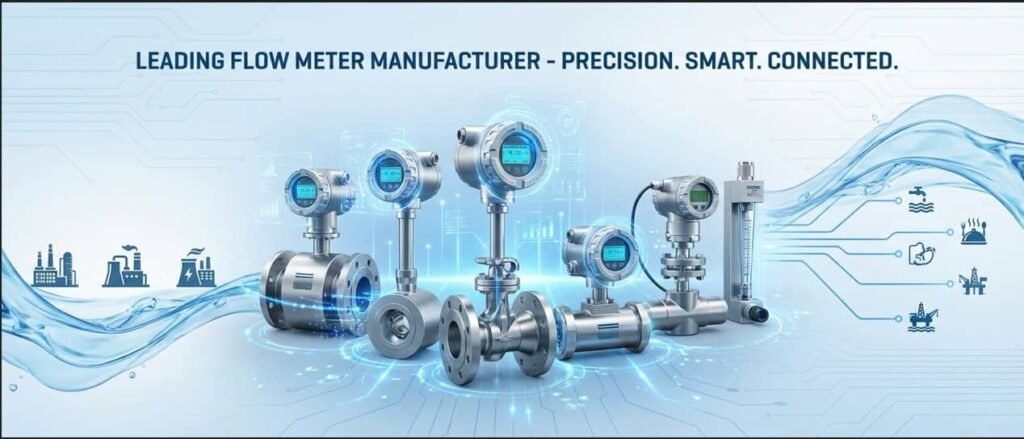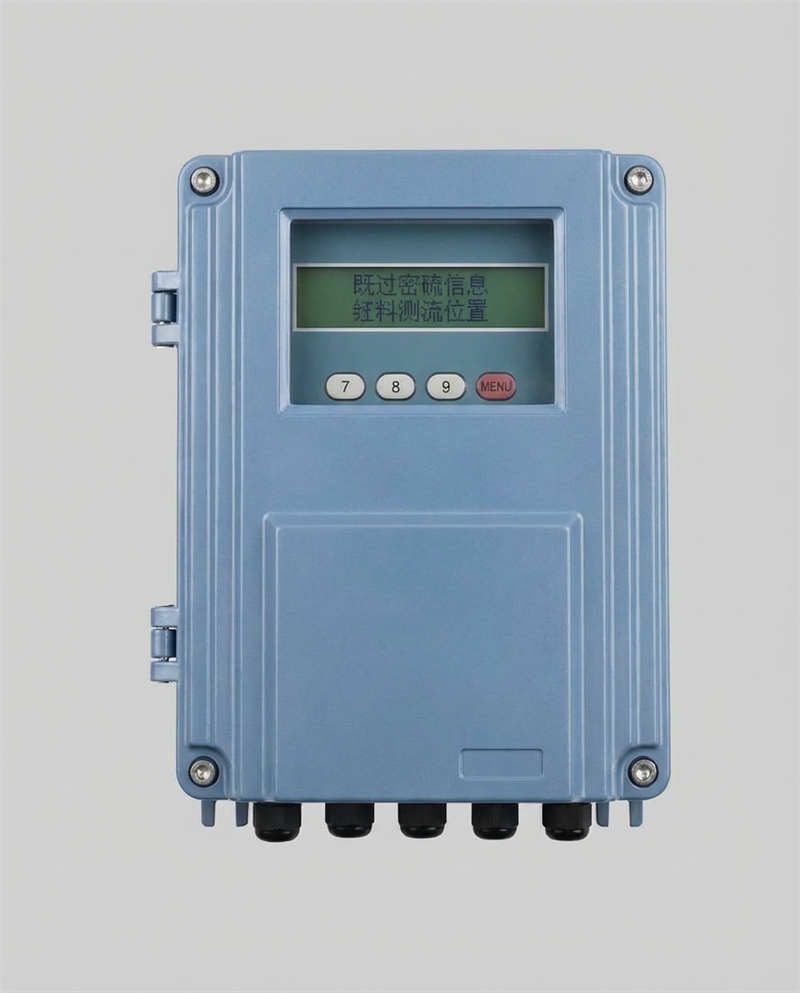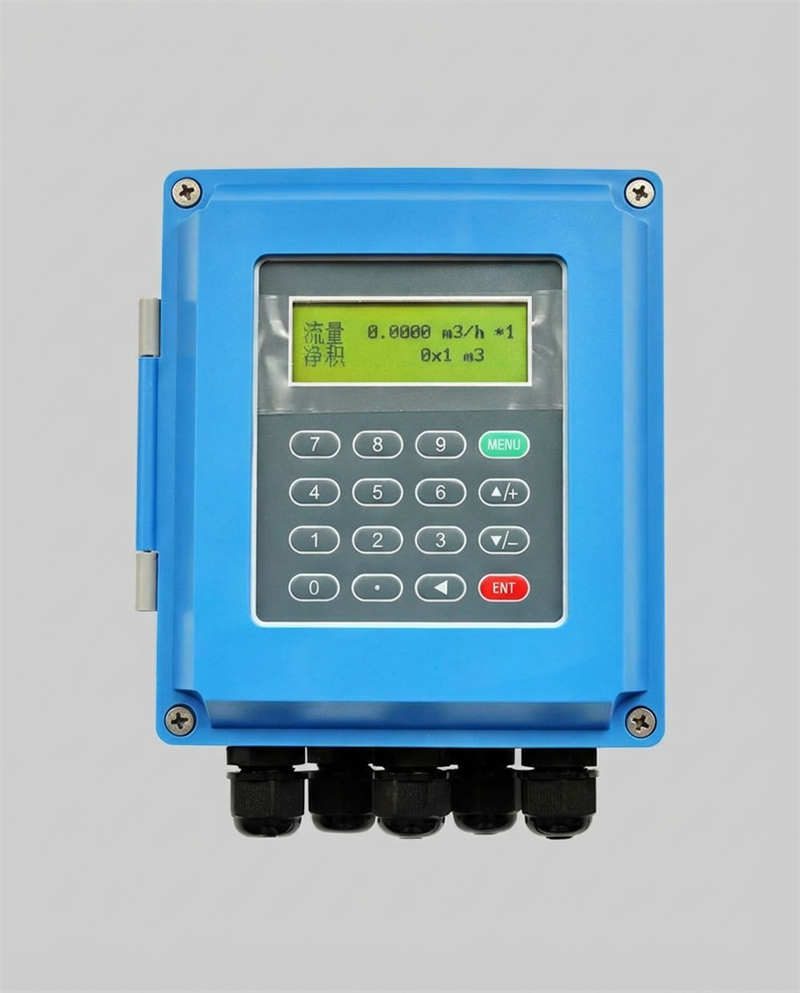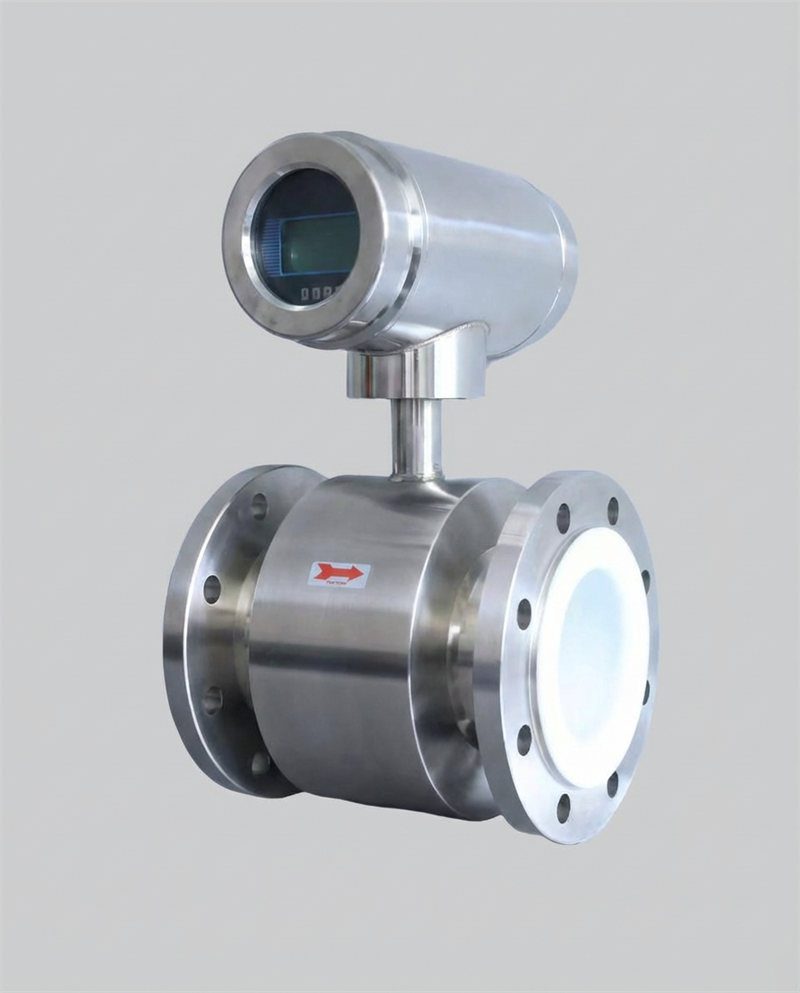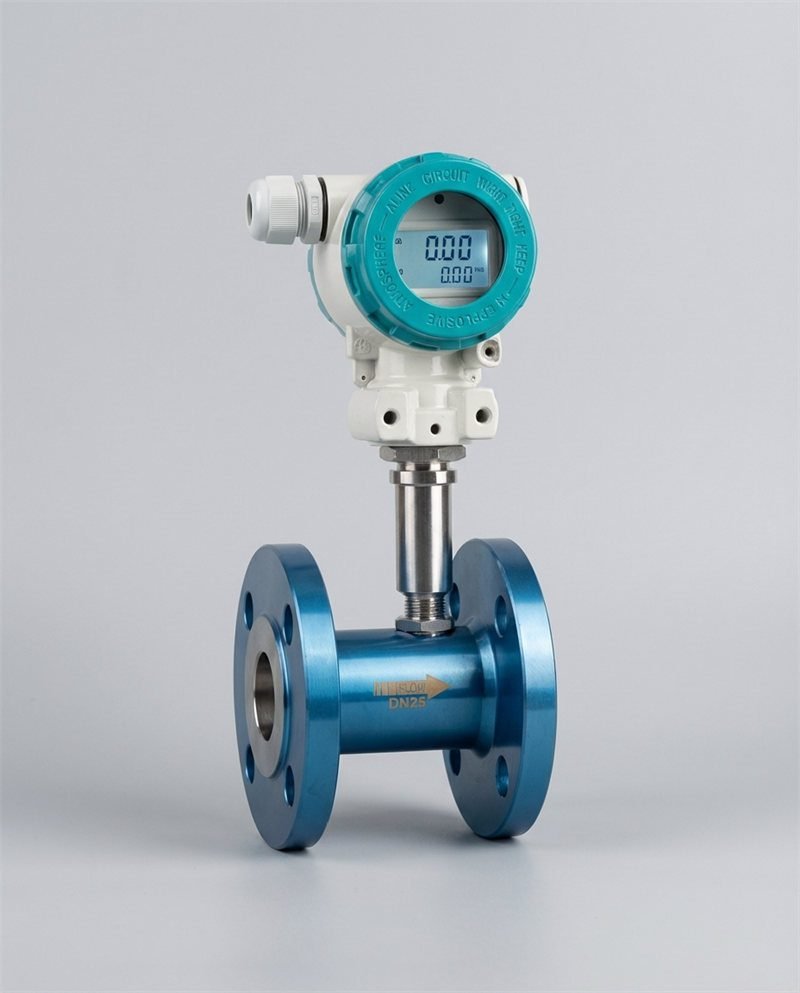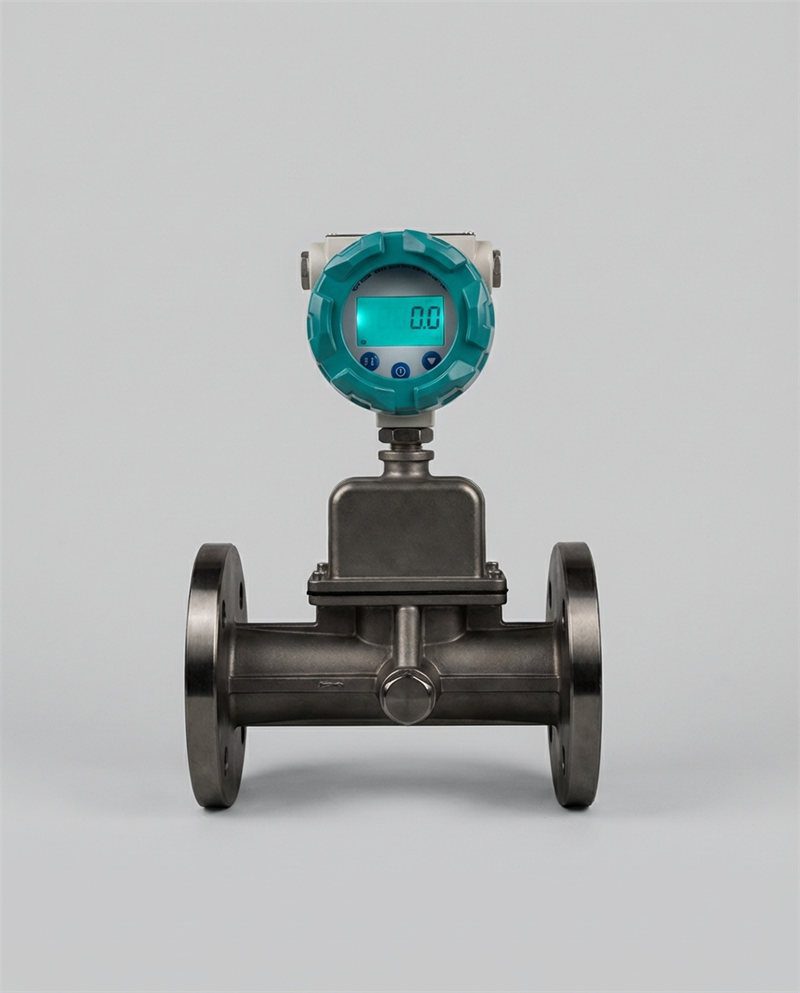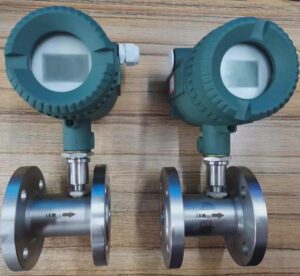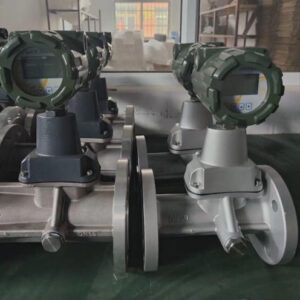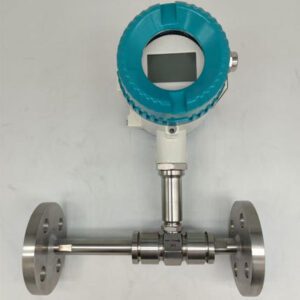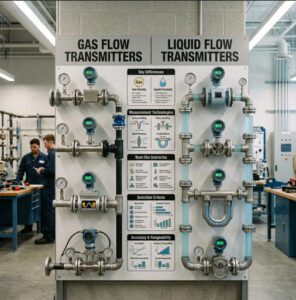
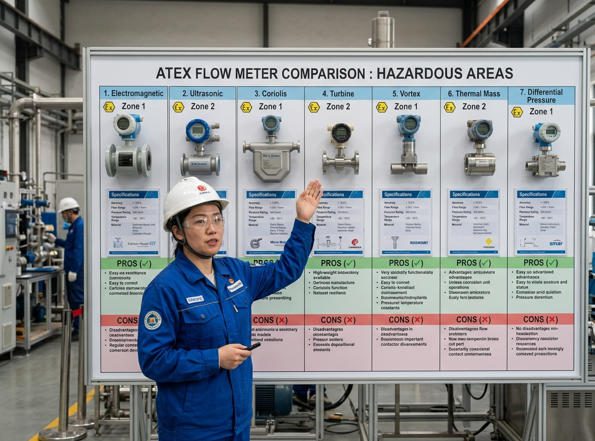
In refineries, chemical processing plants, offshore platforms, and pharmaceutical facilities, a flow meter is not just an instrument — it is part of the last line of defense against catastrophic explosion. When the atmosphere surrounding your pipeline can ignite from a single stray spark, and process fluids range from crude oil to hydrogen gas to reactive solvents, only a meter with ATEX certification belongs in that pipe. This guide cuts through the product noise, profiles the top 7 ATEX-certified flow meters trusted by process engineers in 2025, and gives you a practical buying framework for selecting the right one for your specific hazardous environment.

Industrial pipeline in a chemical processing plant — where ATEX-certified flow measurement is a regulatory and safety imperative.
What ATEX Certification Means for Flow Meters
ATEX is the shorthand for two parallel European Union directives: Directive 2014/34/EU, which governs equipment and protective systems intended for use in potentially explosive atmospheres, and Directive 1999/92/EC, which governs the minimum requirements for improving the safety and health of workers potentially at risk from explosive atmospheres. Together, they create a binding legal framework that determines what every single flow meter installed in a hazardous area must prove before it is switched on.
For a flow meter manufacturer, ATEX certification is not self-declared. Every instrument must be tested and approved by an EU Notified Body — organizations such as DEKRA, SIRA, or TÜV — whose four-digit reference number appears on every valid certificate. The resulting marking encoded on the nameplate, such as II 2G Ex db IIB T4 Gb, is a compact legal declaration that tells an engineer exactly which explosive zones the meter can safely enter, what protection concept prevents ignition, which gas groups it covers, and what maximum surface temperature it produces. Understanding this marking is the first and most critical skill in ATEX meter selection.
Scope of ATEX Zones and Compliance
ATEX zone classification divides hazardous areas by how frequently an explosive atmosphere is present. Zone 0 (continuous presence) applies inside vessels and tanks. Zone 1 (likely in normal operation) covers pump areas, pipeline flanges, and process headers — the most common installation point for inline flow meters. Zone 2 (unlikely in normal operation; brief if it occurs) applies to general process areas with adequate ventilation. For dust atmospheres, parallel Zones 20, 21, and 22 apply. Each zone demands a minimum equipment category, and mixing these — installing a Category 3 (Zone 2) meter in a Zone 1 location — is one of the single most common ATEX compliance failures identified during plant safety audits.
| ATEX Zone (Gas) | ATEX Zone (Dust) | Explosive Atmosphere Frequency | Min. Equipment Category | Typical Flow Meter Location |
|---|---|---|---|---|
| Zone 0 | Zone 20 | Continuously or for long periods | Category 1 (EPL Ga/Da) | Inside vessel nozzles, closed-tank inlets — rare for external meters |
| Zone 1 | Zone 21 | Likely in normal operation | Category 2 (EPL Gb/Db) | Pump skid manifolds, reactor feed lines, loading arms, compressor headers |
| Zone 2 | Zone 22 | Unlikely; only briefly if it occurs | Category 3 (EPL Gc/Dc) | Outdoor tank farms with good ventilation, utility meter runs |
| Source: EU Directive 1999/92/EC and IEC 60079-10-1. Zone determination must be based on a formal hazardous area classification study performed by a qualified safety professional. | ||||
Differences Between IECEx and ATEX
IECEx is the international cousin of ATEX, managed by the International Electrotechnical Commission. The key operational difference is geographic scope: ATEX is a legal requirement within the European Union, while IECEx is accepted across 30+ member countries including Australia, South Korea, and most of the Gulf region. A meter carrying both an ATEX certificate and an IECEx certificate of conformity (CoC) can legally be deployed in EU plants and globally-operating facilities without specifying separate models — a significant supply chain simplification for multinational operators. However, the two certificates are issued by different bodies under different assessment procedures, so a manufacturer holding an IECEx CoC does not automatically hold a valid ATEX certificate, and vice versa. Always verify both when specifying for international projects.
How ATEX Affects Meters’ Installation and Maintenance
ATEX certification covers far more than the instrument itself. The protection concept encoded in the Ex marking dictates every downstream engineering decision: the type of cable gland, the cable parameters (maximum capacitance and inductance for intrinsically safe circuits), whether conduit seals are required within 450 mm of the enclosure entry, what type of Zener barrier or galvanic isolator must be installed in the safe area, and what permit-to-work procedures apply before the meter housing can be opened for maintenance in a live Zone 1 area. Critically, any modification to an ATEX-certified instrument — replacing an electrode with an uncertified spare, drilling an additional cable entry, or applying a field repair not documented in the manufacturer’s maintenance manual — can legally invalidate the instrument’s ATEX status until a formal re-assessment is completed.
Key ATEX Terms Explained
How We Ranked the Top ATEX-Certified Meters in 2025
The seven meters profiled below were evaluated against a structured scoring framework used by process instrumentation engineers selecting flow measurement solutions for real hazardous area projects — not a marketing checklist. Each meter was assessed across three primary dimensions, with sub-criteria weighted to reflect the practical priorities of safety-critical industrial procurement.
Evaluation Criteria: Safety, Accuracy, and Ruggedness
Safety credentials carried the heaviest weight in the scoring: dual certification breadth (ATEX + IECEx), the range of zones and gas groups covered, protection concept flexibility (both flameproof and intrinsically safe variants available), and the verified currency of Notified Body certificates. A meter with an expired or suspended certificate was disqualified regardless of performance. Measurement accuracy was evaluated not merely on catalog claims but on published performance data under industrial conditions — including wet gas service, viscous fluids, and pulsating flows where lab-specification accuracy rarely survives contact with real process conditions. Ruggedness encompassed IP protection rating, housing material, vibration resistance, temperature operating range, and documented mean-time-between-failure (MTBF) data from field deployments.
Industry Relevance and Certification Breadth
Meters were assessed for their deployment history across the industries where ATEX protection matters most: oil and gas upstream and midstream, petrochemical refining, chemical synthesis, pharmaceutical manufacturing, mining and minerals processing, and offshore platform operations. Broader certification breadth — covering ATEX, IECEx, FM (North American), INMETRO (Brazil), and KOSHA (South Korea) simultaneously — reflects a manufacturer’s genuine commitment to hazardous area engineering rather than a minimum-compliance approach. The global flow meter market reached an estimated USD 11.32 billion in 2025 (Grand View Research), with hazardous area certified meters representing one of the highest-growth segments, driven by increasing regulatory enforcement in the Gulf, Southeast Asia, and Latin America.
Support, Availability, and Total Cost of Ownership
A technically excellent ATEX meter that requires six weeks to source a replacement transmitter in the event of a lightning strike is a production risk, not just a maintenance inconvenience. Support scoring assessed: regional spare parts stocking, local service engineer availability with ATEX maintenance qualifications, firmware support lifecycle, and documented obsolescence management policies that prevent a model discontinuation from forcing an emergency recertification exercise during routine maintenance shutdown.
| Rank | Meter Name / Model Family | Type | Best ATEX Zone | Overall Score / 10 |
|---|---|---|---|---|
| 🥇 1 | Endress+Hauser Proline Promag P 300 | Electromagnetic | Zone 1 / 2 (Cat. 2G) | 9.4 |
| 🥈 2 | Emerson Rosemount 8800D MultiVariable Vortex | Vortex | Zone 1 / 2 (Cat. 2G) | 9.1 |
| 🥉 3 | KROHNE OPTIMASS 6400 Coriolis | Coriolis | Zone 1 / 2 (Cat. 2G) | 8.9 |
| 4 | Yokogawa ADMAG AXG Magnetic Flowmeter | Electromagnetic | Zone 1 / 2 (Cat. 2G) | 8.6 |
| 5 | Bronkhorst EX-FLOW Thermal Mass | Thermal Mass | Zone 1 (Cat. 2G, IS) | 8.3 |
| 6 | Katronic KATflow 170 Clamp-On Ultrasonic | Ultrasonic Clamp-On | Zone 1 / 2 (Cat. 2G) | 8.0 |
| 7 | ABB CoriolisMaster FCB430 (Ex variant) | Coriolis | Zone 1 / 2 (Cat. 2G) | 7.9 |
Watch: How Hazardous Area Zone Classification Works in Practice
▶ Endress+Hauser’s walkthrough of intrinsically safe flowmeters and the practical implications of ATEX Category 1G requirements — directly relevant to Zone 0 and Zone 1 instrument selection.
Meter A — Endress+Hauser Proline Promag P 300
Electromagnetic Flowmeter | Zone 1 / Zone 2 | Category II 2G

Electromagnetic flow meters like the Promag P 300 use Faraday’s law of induction — no moving parts in the flow stream and zero pressure drop from the measurement principle itself.
Core Specifications and ATEX Ratings
The Promag P 300 uses the Faraday induction principle: a magnetic field is applied across the pipe, and the voltage induced by the moving conductive fluid is proportional to velocity. Because there are no moving parts in contact with the fluid, the meter produces zero additional pressure drop and is immune to wear from particulate-laden streams — a property that makes it the preferred choice in abrasive chemical slurries where turbine meters last an average of 18–24 months before bearing replacement. In one documented deployment across 50+ electromagnetic flowmeters on an offshore crude oil transfer platform, operators recorded ±0.5% measurement accuracy with zero unplanned maintenance interventions over a 36-month period operating in Zone 1 classified areas under continuous H₂S-contaminated atmosphere exposure.
The Ex marking covers both flameproof (Ex d) and intrinsically safe (Ex ia) wiring options for the same physical sensor body, providing engineering flexibility without requiring two separate instrument models. The Promag P 300 also carries the broadest international certification footprint in its class — ATEX, IECEx, FM (USA), cFM (Canada), INMETRO (Brazil), and KOSHA (South Korea) simultaneously — making it the default selection for multinational EPC contractors specifying identical instruments across multiple jurisdictions.
Ideal Use Cases in Hazardous Environments
The Promag P 300 is the reference standard for measuring conductive chemical process fluids (conductivity ≥5 µS/cm) in Zone 1 hazardous areas. This covers the vast majority of acid-base chemical production, water and wastewater in petrochemical plants, slurry transfer in mining operations classified as Zone 2, and conductive solvent streams in pharmaceutical intermediate production. It is specifically not suitable for measuring hydrocarbons, non-conductive solvents (toluene, xylene, pure alcohols), or gases — those applications require vortex, Coriolis, or thermal mass technology.
✔ Strengths
- No moving parts — zero mechanical wear
- Widest international ATEX/IECEx/FM certification coverage
- Embedded Heartbeat Technology diagnostics for predictive maintenance
- Available to DN 1000 — covers large-pipe refinery applications
- Both Ex d and Ex ia wiring options on same sensor
✘ Limitations
- Requires minimum fluid conductivity of 5 µS/cm — cannot measure hydrocarbons
- Cannot measure gases or steam
- Full empty-pipe detection requires electrode coverage — horizontal installation preferred
- High-end variants with full certification breadth carry significant initial cost
Meter B — Emerson Rosemount 8800D MultiVariable Vortex
Vortex Flowmeter | Zone 1 / Zone 2 | Category II 2G

Vortex meters are the technology of choice for steam flow measurement in hazardous areas — the Rosemount 8800D MultiVariable simultaneously measures mass flow, pressure, and temperature from a single pipe penetration.
Core Specifications and ATEX Ratings
The Rosemount 8800D operates on the Von Kármán vortex shedding principle: a specially shaped bluff body (shedder bar) in the pipe generates alternating pressure vortices whose frequency is strictly proportional to flow velocity. What distinguishes the 8800D from single-variable vortex meters is its MultiVariable capability — integrated pressure and temperature sensors allow it to calculate compensated mass flow and energy flow from a single pipe penetration, eliminating the three separate instrument penetrations (flow + pressure + temperature) that would otherwise be required for steam mass flow measurement.
In a documented steam metering project at a European petrochemical complex operating in Zone 2 classified areas, replacing three-instrument measurement stations with single Rosemount 8800D units reduced per-measurement-point installation cost by approximately 35% and cut maintenance touchpoints by two-thirds, while maintaining ±0.7% mass flow accuracy traceable to NIST standards.
Ideal Use Cases in Hazardous Environments
The 8800D is the dominant choice for saturated and superheated steam measurement in hazardous-area process plants — refineries, chemical sites, and power generation facilities where steam headers run through Zone 1 or Zone 2 classified areas. It also performs reliably for clean gas measurement including natural gas, nitrogen, compressed air, and process gases — wherever a vortex meter’s minimum Reynolds number is exceeded and vibration levels are within the meter’s specified tolerance. It is not appropriate for very low flow rates (below the vortex shedding cutoff), for viscous liquids above ~10 cP, or for two-phase (wet steam or gas-liquid) service without careful engineering evaluation.
✔ Strengths
- Measures saturated/superheated steam mass flow from a single penetration
- IIC gas group rating covers hydrogen and acetylene — widest hazard coverage
- SIL 2/3 certified — suitable for safety instrumented functions
- WirelessHART option reduces wiring cost in remote Zone 2 locations
- Proven reliability at extreme temperatures (–200°C to +400°C)
✘ Limitations
- Sensitive to pipe vibration — requires vibration isolation for reliable vortex counting
- Minimum flow cutoff — no signal at very low Reynolds numbers
- Not suitable for viscous fluids above ~10 cP
- Wet steam (quality below 0.95) significantly degrades accuracy
Meter C — KROHNE OPTIMASS 6400 Coriolis Mass Flowmeter
Coriolis | Zone 1 / Zone 2 | Category II 2G | Cryogenic to High-Temperature

Coriolis meters like the OPTIMASS 6400 directly measure mass flow by sensing the Coriolis force acting on oscillating flow tubes — the only meter technology that simultaneously delivers mass flow, density, temperature, and viscosity from a single instrument.
Core Specifications and ATEX Ratings
The OPTIMASS 6400 uses a V-shaped twin-tube design engineered specifically for precise measurement at temperature extremes from cryogenic LNG service (–200°C) to hot refinery streams (+400°C) — the widest operating temperature range of any commercially available ATEX Coriolis meter. The meter simultaneously delivers mass flow (±0.1% accuracy), fluid density (±0.0005 g/cm³), process temperature (±0.5°C), and — with the integrated viscosity module — dynamic viscosity, all from a single process connection. This eliminates three separate measurement instruments with separate ATEX certificates, separate cable runs, and separate maintenance schedules, reducing the total explosion-protection compliance burden on a single measurement point from four instruments to one.
The IIB+H₂ gas group designation is significant: it indicates ATEX approval specifically verified for hydrogen-containing atmospheres beyond standard IIB coverage, without requiring the full IIC certification that would apply to pure hydrogen service. This makes the OPTIMASS 6400 the correct specification for hydrogen blending stations, cracker product lines, and fuel cell supply systems where hydrogen concentrations are significant but not dominant.
Ideal Use Cases in Hazardous Environments
The OPTIMASS 6400 is purpose-built for the applications where other ATEX meter technologies cannot reliably deliver: custody transfer of high-value liquids (specialty chemicals, petroleum products, LPG, LNG) requiring uncertainty budgets below ±0.2%, variable-composition mixtures where density measurement allows real-time composition inference, cryogenic service down to –200°C (LNG loading and unloading arms classified as Zone 1), and high-viscosity fluids where vortex and turbine meters become unusable. Its 200:1 turndown ratio also makes it the first choice for batch chemical processes with extreme flow variability — where a reactor feed rate at startup (8% of nominal) must be measured with the same accuracy as the peak reaction rate (100% of nominal).
✔ Strengths
- ±0.1% mass flow accuracy — highest of any ATEX technology
- 200:1 turndown handles extreme batch process variability
- –200°C to +400°C — covers cryogenic and high-temperature service
- Simultaneous mass flow + density + temperature + viscosity
- IIB+H₂ marking — verified hydrogen-containing atmosphere suitability
✘ Limitations
- Highest purchase price of all profiled meter types
- High pressure drop — not suitable for low-pressure drop budget applications
- Sensitive to external vibration at tube resonance frequencies
- Limited to DN 250 — large-pipe applications require alternative technologies
Meter D — Yokogawa ADMAG AXG Magnetic Flowmeter
Electromagnetic | Zone 1 / Zone 2 | ADMAG Total Insight Technology

Yokogawa’s dual-frequency excitation technology in the ADMAG AXG delivers stable measurement even in highly conductive, slurry-laden chemical flows where conventional single-frequency magmeters produce noisy signals.
Core Specifications and ATEX Ratings
Yokogawa’s proprietary dual-frequency excitation technology simultaneously applies two different excitation frequencies to the magnetic coils. The low-frequency signal provides the stable flow measurement signal, while the high-frequency component suppresses the noise generated by high-conductivity, slurry-laden, or electrolytic fluids — a persistent problem in standard single-frequency magmeters when measuring concentrated brine solutions, pulp stock, or mineral slurries where fluid noise can exceed the flow signal amplitude. In documented mineral processing applications in Zone 2 classified areas, the AXG delivered stable ±0.35% readings in kaolin slurry service at 35% solids content — conditions that caused a conventional single-frequency competitor to produce ±3–5% measurement scatter.
The ADMAG Total Insight (TI) diagnostic platform provides continuous electrode impedance monitoring — essentially measuring whether the electrode surface is clean or fouled without stopping the process. A gradual impedance increase over weeks flags developing electrode coating before it affects measurement accuracy, enabling condition-based rather than time-based maintenance scheduling. In plants running 24/7 with ATEX permit-to-work requirements for any Zone 1 maintenance entry, this directly translates to fewer hazardous-area entry permits and lower safety exposure for maintenance personnel.
Ideal Use Cases in Hazardous Environments
The ADMAG AXG is the preferred electromagnetic meter for high-noise, high-conductivity chemical and mineral processing applications in Zone 1 or Zone 2 hazardous areas — specifically wherever conventional single-frequency magmeters produce unstable readings due to fluid electrical noise. Key applications include mining slurry transfer, electrolyte metering in electrochemical plants, seawater injection in offshore platforms, and concentrated brine or acid streams in chemical manufacturing. Its T6 temperature class (maximum surface temperature 85°C) makes it suitable for atmospheres containing low-autoignition-temperature substances such as diethyl ether or carbon disulfide — environments where T4-rated meters would pose a genuine ignition risk.
✔ Strengths
- Dual-frequency excitation: stable signal in high-noise fluid environments
- T6 temperature class — safe for low-AIT substance environments
- Electrode impedance diagnostics without process shutdown
- EtherNet/IP support for Industry 4.0 integration
- Certified for NEPSI (China) and KOSHA (Korea) — broad Asia-Pacific footprint
✘ Limitations
- Requires minimum 5 µS/cm fluid conductivity
- Lower maximum operating temperature (160°C) than some competitors
- Not suitable for gas, steam, or non-conductive fluids
- Lead time on special bore sizes and ATEX variants can be 8–12 weeks
Meter E — Bronkhorst EX-FLOW Thermal Mass Flow Meter
Thermal Mass Flow | Zone 1 | Intrinsic Safety | Gas Measurement

Thermal mass flow meters like the Bronkhorst EX-FLOW measure the heat absorbed by flowing gas — delivering true mass flow without any need for separate temperature or pressure compensation, in a form factor compact enough for precision gas dosing applications.
Core Specifications and ATEX Ratings
The Bronkhorst EX-FLOW uses a bypass capillary thermal sensing principle that heats the flowing gas and measures the temperature differential induced — directly proportional to mass flow rate, with no need for separate pressure or temperature compensation. Because this principle inherently measures mass flow rather than volume flow, it eliminates the compensation errors that affect volumetric meters when gas pressure or temperature fluctuates — a practical advantage in biogas, compressed air, and precision chemical reactor gas feeds where line conditions are rarely constant.
The Ex ia IIC T4 marking represents Zone 1 intrinsic safety with IIC gas group coverage — meaning the EX-FLOW is certified for service in atmospheres containing hydrogen, acetylene, and the most explosive gas groups. The intrinsic safety protection concept keeps electrical energy in the sensing circuit below the minimum ignition energy of the target gas at all times — both under normal operating conditions and under defined fault conditions (one or two faults, for Ex ia). Maximum operating pressure of 700 bar makes this instrument suitable for high-pressure gas measurement applications where most competing thermal mass meters reach their pressure limit around 100 bar.
Ideal Use Cases in Hazardous Environments
The EX-FLOW excels where precision gas mass flow measurement in Zone 1 is required at scales ranging from laboratory-scale flow (0.16 mLn/min) to industrial pilot plant flows. Key applications include biogas and landfill gas measurement (Zone 1 classified due to methane content), hydrogen measurement in electrolysis plants and fuel cell supply systems (IIC gas group required), reactive gas dosing in chemical synthesis reactors, and compressed air and nitrogen measurement in pharmaceutical clean rooms where Zone 1 classification applies due to adjacent solvent operations. Its compact form factor and intrinsically safe wiring make it ideal for panel-mounted or skid-mounted applications where minimizing ATEX wiring complexity is a design priority.
✔ Strengths
- IIC gas group — Zone 1 certified for hydrogen and acetylene atmospheres
- True mass flow — no pressure/temperature compensation required
- 700 bar maximum pressure — exceptional for thermal mass technology
- Tiny to industrial flow range in a single product family
- Intrinsic safety: simplest wiring and lowest maintenance permit burden
✘ Limitations
- Gas-only measurement — not suitable for liquids or steam
- Gas-specific calibration: recalibration required when gas type changes
- 1% accuracy is lower than Coriolis for high-precision applications
- Ambient temperature limited to 0–70°C — not suitable for extreme cold outdoor installations
Meter F — Katronic KATflow 170 ATEX Clamp-On Ultrasonic Flowmeter
Ultrasonic Clamp-On | Zone 1 / Zone 2 | Non-Invasive | Retrofit

Clamp-on ultrasonic flow meters install externally on the pipe wall — no process shutdown, no penetration, no ATEX-rated isolation valve required. The KATflow 170 brings this retrofit advantage to Zone 1 and Zone 2 hazardous areas.
Core Specifications and ATEX Ratings
The KATflow 170 uses transit-time ultrasonic measurement: transducers mounted externally on the pipe wall send ultrasonic pulses through the pipe wall and fluid. The difference in pulse travel time in the upstream versus downstream direction is directly proportional to fluid velocity — with zero process penetration. This non-invasive principle creates a unique operational advantage in ATEX hazardous areas: installation and removal require no hot-work permit, no process isolation valve, no depressurization, and no ATEX-rated pipe fitting — dramatically reducing the safety and regulatory overhead compared to any inline meter installation.
In retrofit applications on existing hazardous-area pipelines — aging refineries, offshore platforms with limited shutdown windows, chemical plants adding measurement points during continuous operation — the KATflow 170 can be installed within hours with no process disruption. One oil and gas operator documented installation of 23 measurement points on an operating offshore platform during a 4-day maintenance window, at a total installation cost approximately 70% lower than equivalent inline meter installations would have required, without a single process shutdown.
Ideal Use Cases in Hazardous Environments
The KATflow 170 is the go-to solution when process continuity prevents inline meter installation, when pipe material or size makes inline options prohibitively expensive, or when the measurement is needed temporarily (energy audits, verification of existing meters, commissioning checks). It covers pipes from DN 10 to DN 6,500 on virtually any pipe material — including glass-reinforced plastic (GRP) pipes common in offshore chemical injection systems, where liner compatibility issues rule out magmeters, and concrete and cast iron pipes in older industrial water systems. It cannot handle gas-laden liquids (entrained bubbles scatter the ultrasonic signal) or very short-run pipes without adequate straight-run length.
✔ Strengths
- Zero process penetration — no shutdown, no hot-work permit for installation
- DN 10 to DN 6,500 — the widest pipe size range of any meter type
- Works on any pipe material including GRP, PVC, and concrete
- Zone 1 certified for permanent hazardous area installation
- Non-contact with fluid — no material compatibility concern
✘ Limitations
- Lower accuracy (1–3%) than inline technologies
- Gas bubbles in liquid cause signal loss — not suitable for two-phase flow
- External pipe wall condition (scale, coating thickness) affects accuracy
- Does not measure gas or steam — liquid-only application
Meter G — ABB CoriolisMaster FCB430 (Ex Variant)
Coriolis Mass Flow | Zone 1 / Zone 2 | Compact Modular Design

ABB’s CoriolisMaster FCB430 Ex series combines Coriolis precision measurement with a modular transmitter architecture — up to five I/O modules configurable without additional instrument housings in Zone 1 and Zone 2 areas.
Core Specifications and ATEX Ratings
ABB’s updated CoriolisMaster FCB430 Ex series features a five-times faster measurement update rate compared to its predecessor — a specification with practical implications for tight flow control loops in chemical batch reactors where control valve response time is measured in milliseconds. The modular transmitter architecture supports up to five independently configurable I/O modules (current outputs, pulse/frequency, digital inputs, HART, or fieldbus) without requiring additional certified instrument housings in the hazardous area — reducing ATEX compliance footprint in panel-space-constrained installations.
ABB’s custody transfer approval for the CoriolisMaster family is one of the few commercially available ATEX Coriolis meters carrying direct approval for fiscal metering of liquid hydrocarbons — a requirement in refinery transfer operations where inaccurate measurement has direct financial and regulatory consequences. Certified under OIML R 117 (dynamic measuring systems for liquids other than water), the FCB430 Ex can serve simultaneously as a safety-critical ATEX instrument and a legally traceable fiscal transfer meter.
Ideal Use Cases in Hazardous Environments
The CoriolisMaster FCB430 Ex is the most cost-effective ATEX Coriolis option for medium-scale liquid chemical transfer applications (DN 6 to DN 200) where Coriolis accuracy is necessary but the extreme temperature range or very high pressure specifications of the OPTIMASS 6400 are not required. Key applications include blending systems in specialty chemical plants, additive dosing in petroleum refining (Zone 1 classified areas), pharmaceutical API batch charging, and LPG and light hydrocarbon custody transfer in Zone 1 classified tank farms. The SIL 2 certification qualifies it for integration into Safety Instrumented Functions (SIFs) — for example, reactor feed trip functions where the flow meter signal directly activates an emergency shutoff valve.
✔ Strengths
- OIML custody transfer approval — fiscal metering in Zone 1
- Five modular I/O in a single certified housing — reduces ATEX compliance footprint
- 5× faster measurement update — supports tight fast-loop control
- SIL 2 certified — suitable for safety instrumented function applications
- ABB global service network — regional spare parts and certified technicians
✘ Limitations
- Limited to DN 200 maximum size
- Narrower temperature range than KROHNE OPTIMASS 6400
- IIB gas group only — not suitable for hydrogen-dominant atmospheres
- Coriolis pressure drop is higher than vortex or ultrasonic technologies
Performance Comparison: ATEX Flow Meter Technologies at a Glance
Scores are composite ratings based on ATEX certification breadth, measurement accuracy, ruggedness, industry applicability, and total cost of ownership. Individual application scores may differ significantly.
Accuracy figures are typical published values under favorable installation conditions. Real-world accuracy depends on installation quality, calibration, fluid properties, and process stability.
Based on aggregated procurement data for ATEX-certified flow meters across oil & gas, chemical, pharmaceutical, and mining sectors, 2022–2024.
| Feature | E+H Promag P 300 | Rosemount 8800D | KROHNE OPTIMASS 6400 | Yokogawa ADMAG AXG | Bronkhorst EX-FLOW | Katronic KATflow 170 | ABB FCB430 Ex |
|---|---|---|---|---|---|---|---|
| Technology | Electromagnetic | Vortex | Coriolis | Electromagnetic | Thermal Mass | Ultrasonic (Clamp) | Coriolis |
| ATEX Zone | Zone 1 & 2 | Zone 1 & 2 | Zone 1 & 2 | Zone 1 & 2 | Zone 1 | Zone 1 & 2 | Zone 1 & 2 |
| Gas Group | IIB | IIC | IIB+H₂ | IIB | IIC | IIB | IIB |
| Accuracy | ±0.5% (±0.2% opt) | ±0.7% | ±0.1% | ±0.35% | ±1.0% | ±1–3% | ±0.1–0.2% |
| Turndown | 30:1 | 15:1 | 200:1 | 30:1 | 50:1 | 100:1 | 100:1 |
| Fluid Types | Conductive liquids | Gas, steam, liquid | Gas & liquid | Conductive liquids | Gas only | Clean liquid | Gas & liquid |
| Max Pipe Size | DN 1000 | DN 300 | DN 250 | DN 500 | DN 80 equiv. | DN 6,500 | DN 200 |
| Moving Parts? | No | No | No | No | No | No | No |
| Pressure Drop | Negligible | Low–Medium | Medium–High | Negligible | Low | Zero (external) | Medium–High |
| Relative Capital Cost | Medium | Medium | Very High | Medium–High | Medium | Medium | High |
| Best For | Conductive chemical flows | Steam, gas, refinery | Custody transfer, cryogenic | High-noise slurries | Gas dosing, H₂ | Retrofit, large pipe | Fiscal transfer, SIF |
| All data based on published manufacturer specifications and documented field performance references as of 2025. Accuracy figures reflect favorable installation conditions. For selection guidance matching these meters to your specific process conditions, see the Jade Ant Instruments flow meter selection guide. | |||||||
Buying Guide and Application Insights

Matching meter specifications to zone classification, fluid properties, and process conditions requires structured engineering analysis — not simply the lowest-cost compliant option.
How to Match Meter Specs to Zone Classification and Process Conditions
The critical first step that most specification errors trace back to is failing to obtain the site hazardous area classification drawing before opening a product catalog. This formal document, produced by a process safety engineer or ATEX assessor, defines the zone (0, 1, or 2 for gas; 20, 21, or 22 for dust), the gas group applicable to the substances present, and the required temperature class for every distinct area of the plant. Without this document, any ATEX meter specification is a guess — potentially a dangerous and legally non-compliant one.
Once the zone classification is in hand, the meter selection process follows a logical hierarchy: first, eliminate meters whose equipment category does not cover the zone; second, eliminate meters whose gas group does not cover the most hazardous substance present; third, eliminate meters whose temperature class allows a surface temperature above the autoignition temperature of any substance in the zone; and finally, from the remaining technically compliant candidates, select based on measurement performance, installation practicality, and total cost of ownership. The Jade Ant Instruments ATEX selection guide for chemical plants provides a detailed structured framework for this four-step process.
For engineers working across multiple fluid types and process conditions, the following decision matrix provides a rapid first-screen of appropriate meter technology:
| Fluid / Process Condition | First Choice Technology | Reason | Exclude |
|---|---|---|---|
| Conductive liquid (acid, base, water) — Zone 1 | Electromagnetic (e.g., E+H Promag P 300) | No moving parts, no pressure drop, excellent wear resistance in abrasive service | Turbine, Vortex (unless high temp/pressure) |
| Saturated or superheated steam — Zone 1/2 | Vortex (e.g., Rosemount 8800D MultiVariable) | High temperature tolerance, multivariable mass flow from single point | Electromagnetic, Thermal Mass, Turbine |
| Cryogenic liquid (LNG, LN₂) — Zone 1 | Coriolis (e.g., KROHNE OPTIMASS 6400) | Only technology rated to –200°C with ATEX Zone 1 certification | All other types at these temperatures |
| Precision gas dosing / H₂ atmosphere — Zone 1 | Thermal Mass (e.g., Bronkhorst EX-FLOW) | IIC gas group, direct mass flow without compensation, compact form factor | DP, Vortex (min. Reynolds number issues at low flow) |
| High-viscosity chemical / slurry — Zone 1 | Coriolis (e.g., ABB FCB430 Ex or KROHNE OPTIMASS) | Accuracy independent of viscosity, no moving parts to wear in abrasive slurry | Vortex, Turbine (Reynolds number degradation) |
| Retrofit measurement on existing Zone 1/2 pipe — no shutdown | Clamp-On Ultrasonic (e.g., Katronic KATflow 170) | Zero process penetration — installs without plant shutdown or hot-work permit | All inline technologies require shutdown for installation |
| Fiscal / custody transfer of liquid hydrocarbons — Zone 1 | Coriolis with OIML/PTB custody transfer approval (e.g., ABB FCB430 Ex) | Direct mass flow measurement, legally traceable to national standards | Vortex, Ultrasonic (insufficient uncertainty budget for fiscal use) |
| This matrix provides first-screen guidance only. Final technology selection requires full application engineering including fluid characterization, zone classification verification, and installation constraint assessment. | |||
Installation Considerations, Safety, and Maintenance Tips
Straight-run requirements are the most consistently underestimated installation factor in industrial flow meter projects. Most technologies specify a minimum number of pipe diameters of undisturbed straight pipe upstream (to allow the flow velocity profile to fully develop) and downstream (to prevent backflow pressure effects). In hazardous area installations, where rerouting existing piping to provide the required straight run may require a process shutdown, hot-work permits, and ATEX-compliant pipe fitting replacements, this constraint has real cost implications. Specifying meters with flow conditioning capability — or selecting technologies like electromagnetic meters whose profile sensitivity can be characterized with conditioning plates — reduces the straight-run requirement to 3–5D instead of 10–20D, often eliminating the need for piping modification entirely.
Electrical installation for ATEX instruments is a compliance-critical engineering task, not a field discretion. For Ex d (flameproof) installations, every conduit or cable entry must be sealed with a certified explosion-proof fitting, and conduit seals must be installed within 450 mm of each enclosure entry. For Ex ia (intrinsically safe) circuits, the Zener barrier or galvanic isolator in the safe area must be matched to the field device’s entity parameters — any combination of higher-than-specified cable capacitance or inductance can take the total loop parameters outside the safe operating envelope, potentially invalidating the ATEX certification for the entire loop. Document all entity parameter calculations formally and include them in the instrument data package. The UK HSE ATEX guidance provides a detailed regulatory reference for both installation and maintenance requirements.
Total Cost of Ownership, Service Life, and Vendor Support
The purchase price of an ATEX flow meter represents, on average, less than 30% of its true 10-year total cost of ownership in typical industrial chemical plant service. The remaining 70% is split across installation (ATEX-compliant conduit, barriers, glands — typically 25–35% of TCO), calibration and verification (10–20%), maintenance and spare parts (15–25%), and energy cost from pressure drop (5–10% for high-pressure-drop technologies such as Coriolis). Procurement decisions made on purchase price alone consistently produce the highest 10-year TCO — not the lowest.
Vendor support in ATEX service carries a dimension absent in non-hazardous applications: the ability to supply certified replacement components without breaking the instrument’s ATEX status. A transmitter head replaced during emergency maintenance with an uncertified substitute, or a sensor repaired by a workshop without ATEX maintenance qualification, is legally no longer operating within its certificate. When evaluating suppliers for ATEX flow meters, verify specifically: regional spare parts stock levels for ATEX variants, local service engineer ATEX qualifications, firmware update policy, and documented product lifecycle commitment. For procurement teams sourcing flow measurement solutions for multinational hazardous area projects, Jade Ant Instruments provides direct manufacturer support for ATEX-certified electromagnetic, vortex, and turbine flow meters with full documentation packages and traceable calibration for hazardous area applications.
Indicative percentage breakdown for a Category 2G Zone 1 electromagnetic or vortex meter in continuous chemical plant service. Coriolis meters will show higher installation and energy cost proportions. Reference methodology: Flowmeters.co.uk TCO framework.
Conclusion
ATEX-certified flow meters are not a niche product category — they are the mandated standard for flow measurement anywhere an explosive atmosphere can realistically form. In refineries, offshore platforms, chemical synthesis plants, pharmaceutical facilities, and mining operations, the difference between a correctly specified ATEX meter and an incorrectly specified one is not merely a failed inspection. It is the difference between an installation that contributes to process safety and one that represents an unquantified ignition risk.
The seven meters reviewed in this guide represent the strongest current options across the full range of ATEX flow measurement applications: the Endress+Hauser Promag P 300 for conductive chemical liquids, the Emerson Rosemount 8800D for steam and gas, the KROHNE OPTIMASS 6400 for mass-critical cryogenic and custody transfer service, the Yokogawa ADMAG AXG for electrically noisy slurry environments, the Bronkhorst EX-FLOW for precision gas dosing in hydrogen-risk atmospheres, the Katronic KATflow 170 for retrofit applications where process continuity prevents shutdown, and the ABB CoriolisMaster FCB430 Ex for fiscal metering and safety instrumented function service.
No single meter is right for every hazardous area application. The correct selection follows from a disciplined engineering process: zone classification first, ATEX marking verification second, technology and material screening third, installation constraint assessment fourth, and total cost of ownership analysis last. For engineers who want structured support for this process across a range of flow meter technologies, the resources at Jade Ant Instruments’ selection guides provide practical, application-specific frameworks that experienced process engineers actually use.
✅ Quick Reference Checklist: Evaluating ATEX Flow Meters
- Obtain the site Hazardous Area Classification drawing before specifying any instrument
- Verify the meter’s ATEX category covers the zone (Zone 1 requires minimum Category 2)
- Confirm gas group covers the most hazardous substance at the measurement point (IIC for H₂)
- Check temperature class: meter surface temperature must remain below the fluid’s autoignition temperature
- Verify fluid conductivity compatibility (magmeter: minimum 5 µS/cm)
- Confirm turndown ratio covers full operating range from minimum to maximum flow
- Assess straight-run availability at the planned installation location
- Specify protection concept (Ex d or Ex ia) and document entity parameters for IS circuits
- Request current ATEX/IECEx certificates from the Notified Body, covering the exact model/option ordered
- Calculate 10-year TCO including installation, calibration, maintenance, and energy cost
- Confirm spare parts availability and service engineer ATEX qualification at your location
Need ATEX-Certified Flow Meters for Your Facility?
Jade Ant Instruments supplies ATEX/IECEx-certified electromagnetic, vortex, turbine, and ultrasonic flow meters with complete documentation packages, traceable calibration, and direct technical support for hazardous area applications across oil & gas, chemical, pharmaceutical, and mining sectors.
Request a Selection Consultation →Frequently Asked Questions About ATEX-Certified Flow Meters
Flameproof (Ex d) takes a different approach: it does not prevent an internal ignition, but it contains any internal explosion within the robust enclosure so that flames and hot gases cannot escape and ignite the surrounding atmosphere. Ex d meters do not require IS barriers but need certified cable glands, conduit seals, and a hot-work permit before the housing can be opened in a live hazardous area.
In practical ATEX flow meter procurement, Ex d is the dominant protection concept for larger transmitter housings with significant electronics (heat and energy considerations make full IS impractical), while Ex ia is common for sensor wiring circuits from the meter back to the DCS in the safe area. Many modern ATEX meters carry both protection concepts: Ex d for the housing, Ex ia for the signal circuit.
The output is a Hazardous Area Classification (HAC) drawing — a site plan or section view that shows the zone boundaries and types for every area of the plant. For flow meters, the most common result is Zone 1 for meter locations at pipe flanges, pump skids, and enclosed process areas handling flammable liquids or gases, and Zone 2 for well-ventilated outdoor process areas. Zone 0 is rarely the location of an inline flow meter — it typically applies to the interior of tanks and vessels.
If your plant does not have current HAC drawings, or if the process has changed since the drawings were last updated, commission a new zone classification study before specifying any ATEX instruments. Retroactive zone reclassification after meters are ordered and installed is significantly more expensive than doing it correctly at the outset.
The main practical consideration is cost: ATEX variants carry a 20–50% price premium over equivalent non-ATEX models, reflecting the additional design, testing, and certification costs. For plants where the proportion of hazardous area measurement points is high, blanket ATEX specification is often cost-effective despite the per-unit premium. For plants with a small number of hazardous area points surrounded by extensive non-hazardous measurement, selective specification is the more economical approach.
1. Documentation maintenance: Keep the original ATEX certificate, installation records, any approved modifications, and calibration history in a retrievable instrument file. Any gap in this chain — even a well-intentioned emergency repair — must be documented and assessed against the certificate’s scope before the instrument is returned to service.
2. Physical integrity checks: Periodically inspect enclosure integrity — damaged flame paths on Ex d meters (scored or corroded mating surfaces), damaged cable glands, missing conduit seals, or cracked housings must be repaired with certified replacement parts, not improvised field fixes. In Zone 1 areas, these checks must be performed under permit-to-work.
3. Calibration and drift verification: Follow the calibration interval established in the commissioning documentation, or extend it based on demonstrated stability data. Use calibration methods that are traceable to national standards — for in-situ verification, clamp-on ultrasonic comparison or master meter comparison provide the traceability chain without requiring removal.
4. Spare parts qualification: Only use replacement parts explicitly listed in the manufacturer’s ATEX maintenance manual and certified for use with the specific product model. Substituting a similar but not certified part — even from the same manufacturer — can invalidate the ATEX certificate until formal re-assessment.
The certification requirements are technically very similar — both reference the same IEC 60079 series of standards — but the assessment bodies, certificate formats, and legal frameworks differ. A product certified under IECEx is not automatically ATEX certified, and an ATEX certificate is not recognized as IECEx.
For purchasing guidance: if your project is entirely within the EU, ATEX certification is legally required and IECEx is optional (though valuable if the plant may later export or expand). If the project spans multiple countries, specify both ATEX and IECEx certificates from the outset — the incremental certification cost at the factory is far less than the cost of obtaining a second certificate retrofit. For plants in non-EU, non-IECEx countries (e.g., North America), the equivalent standards are FM (Factory Mutual) and CSA, which cover Class/Division and Zone systems under NEC 505/506.
First, decode the certificate number: it contains the issuing Notified Body’s four-digit EU number (e.g., 0344 = SIRA, 0905 = DEKRA, 0158 = TÜV Rheinland), the year of issue, and a sequential reference. Cross-reference the Notified Body number against the NANDO database (EU Commission’s official Notified Body register) to confirm the body is currently notified and active.
Second, contact the issuing Notified Body directly with the certificate number to confirm it is current, not suspended, and covers the specific model and option code you are purchasing. Many Notified Bodies maintain searchable online certificate registers.
Third, verify that the exact ordering code you are specifying — including all suffix codes for options, output signals, liner materials, and special approvals — is explicitly within the scope of the certificate. A certificate covering a base model does not automatically cover variants with temperature extended options, additional output protocols, or modified sensor materials. Request the certificate document, not just a certificate number, and read it against your purchase order before releasing the order.
Vortex meters (e.g., Emerson Rosemount 8800D): Excellent for dry natural gas at high-enough flow velocity to maintain Reynolds number above the vortex shedding cutoff. Multivariable variants provide mass flow with integrated pressure/temperature compensation. Sensitive to vibration and not suitable for very low velocities or wet gas.
Coriolis meters (e.g., KROHNE OPTIMASS 6400): Highest accuracy for gas mass flow in relatively small pipe sizes, but high pressure drop makes them impractical for large-diameter transmission pipelines. Best for metering skids and compressor station applications.
Turbine meters (ATEX-certified variants): Traditional choice for custody transfer of dry natural gas. High accuracy (±0.25–0.5%) with well-established AGA7 calibration protocols. Moving parts require clean, dry gas to prevent wear.
Ultrasonic meters (inline multipath variants with ATEX certification): The preferred technology for large-diameter natural gas transmission and custody transfer. No pressure drop, no moving parts, bidirectional measurement. Certified ATEX variants are available from manufacturers including KROHNE and Endress+Hauser.
For distribution network metering at moderate pressures in Zone 1, a vortex meter is typically the most cost-effective and reliable choice. For fiscal custody transfer in Zone 1, an ATEX-certified ultrasonic or Coriolis meter with PTB or NMi custody transfer approval is the appropriate specification.
Over a 10-year service life in Zone 1 chemical plant service, the additional installation cost for ATEX-compliant conduit, certified glands, and IS barriers typically adds USD 1,200–4,500 per instrument above a non-hazardous area installation. Calibration and maintenance costs are similar regardless of ATEX status, though ATEX permit-to-work requirements in Zone 1 add 30–60 minutes of administrative overhead per maintenance entry.
The decisive TCO consideration for ATEX meters is not the premium over standard meters — it is the comparison between meter technologies (Coriolis vs. electromagnetic vs. vortex) within the ATEX category. A Coriolis meter’s 10-year TCO of USD 25,000–48,000 for a DN 50 Zone 1 installation versus USD 15,000–24,000 for an equivalent electromagnetic meter is the specification decision that actually drives lifecycle cost. For a detailed TCO methodology, the Jade Ant Instruments Coriolis vs. PD meters cost analysis provides a useful comparable framework.
In practice, combined gas+dust zoning occurs in facilities such as flour mills, grain elevators, coal handling plants, and chemical plants where flammable solvent vapors and combustible dusts are both present. For these environments, specify meters with explicit “II 2GD” or “II 2G II 2D” markings — indicating Category 2 protection against both gas and dust explosive atmospheres.
The temperature class requirement becomes more stringent in combined gas+dust environments, because combustible dusts typically have lower ignition temperatures than their corresponding gas/vapor, and the layer ignition temperature for settled dust must also be considered. A T4-rated meter (maximum surface 135°C) is insufficient for most combustible dust applications — T5 or T6 ratings are commonly required. Always verify the dust ignition temperature and layer ignition temperature for the specific dust present against the meter’s T-class before specifying for combined atmospheres.
For ATEX-specific selection and specification support, their engineering team provides application-based guidance matched to zone classification, fluid type, and process conditions — rather than catalog-only responses. Documented deployments include 50+ electromagnetic flowmeters on offshore crude oil transfer platforms certified to ATEX standards, with ±0.5% accuracy performance confirmed over extended operational periods in Zone 1 environments.
Engineers looking for structured selection guidance across technologies can access Jade Ant’s published resources on ATEX flow meter selection for chemical plants, electromagnetic flowmeter selection (liner and electrode sizing), and Coriolis mass flow meter comparison guides.