Ultrasonic vs Turbine Gas Flow Meters: Which Fits Your Site?

Choosing the wrong gas flow meter technology costs more than the meter. It costs you commissioning delays, billing disputes, unplanned maintenance, and in custody transfer applications, direct revenue loss that can take months to surface and years to reconcile.
For OEM skid-mount manufacturers, EPC system integrators, instrument distributors, MRO maintenance teams, and municipal utility operators, the turbine-versus-ultrasonic decision sits at the intersection of engineering, economics, and operational reality. This guide cuts through the marketing language and delivers a structured, data-driven framework built on field performance data — so you can select with confidence, integrate cleanly, and operate without surprises.
📌 How to use this guide: Each section addresses a specific decision dimension. Read end-to-end for a complete picture, or jump to the section most relevant to your current project challenge.
1. Executive Summary: What the Choice Actually Costs You
Before comparing specifications, consider what a misapplied technology decision costs in the real world.
A mid-sized gas distribution utility in the Midwest operated a fleet of 4-inch turbine meters on their high-volume industrial accounts. After six years, internal audit data showed that three accounts — each consuming over 12,000 MMBtu per month — were being under-billed by 3.2% on average. Root cause: bearing wear in aging turbine rotors had shifted their K-factors (the calibration constants relating pulse output to actual flow) by that margin without triggering any alarm. The annual revenue loss from those three accounts alone: approximately $210,000.
That is the financial version of a misapplied technology choice. There is also the operational version: an OEM fabricator who specified turbine meters on a biogas skid watched two sets of rotors fail within 14 months from hydrogen sulfide-induced corrosion on the bearing surfaces — a failure mode that would not have occurred with a non-contact ultrasonic installation.
This guide exists to help you avoid both scenarios.
The global ultrasonic flow meter market was valued at approximately $4.8 billion in 2025 and is projected to reach $9.7 billion by 2034 (Dataintelo, 2026), growing at CAGR above 7%. That growth is not speculative — it is driven by measurable performance advantages in specific applications. But turbine meters are not obsolete. They remain the right answer for specific, well-defined use cases. The key is knowing which is which.
2. Core Technologies: How Each One Actually Works
Ultrasonic Gas Flow Meters — The Transit-Time Principle
An ultrasonic flow meter measures gas velocity by comparing how long it takes for a sound pulse to travel com the gas flow versus against it. This is called the transit-time method (also known as time-of-flight).
Here is how it works in practical terms:
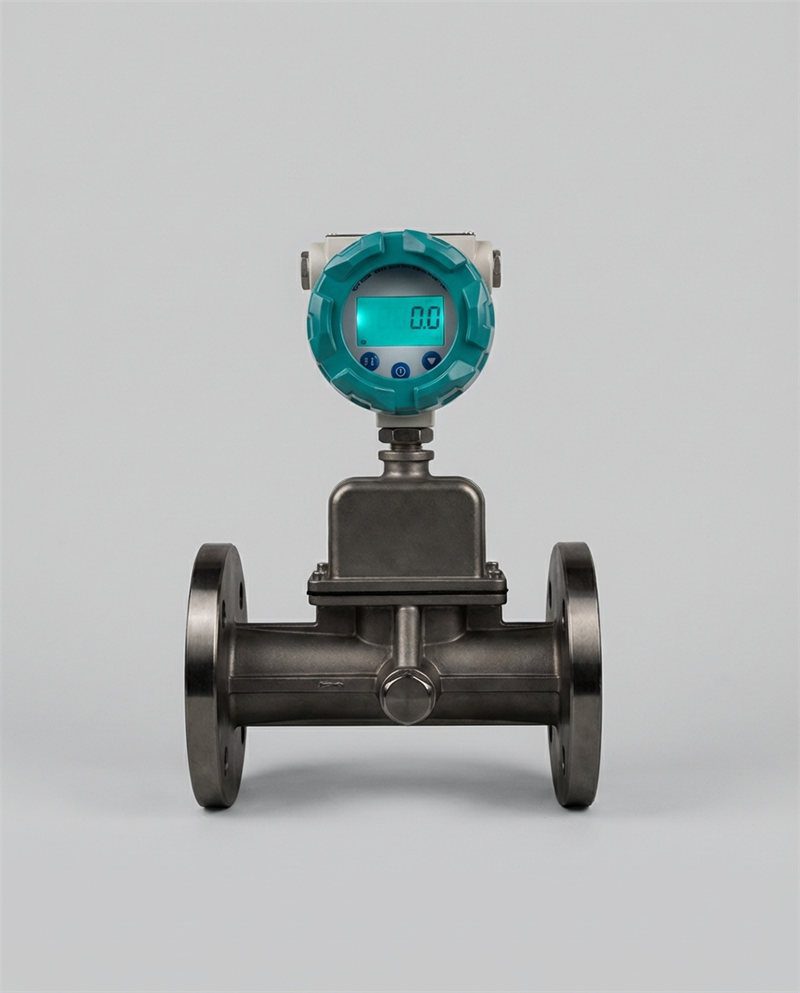
Two piezoelectric transducers — devices that convert electrical signals to ultrasonic pulses and back — face each other at an angle across the pipe. One transmits upstream, one downstream. Gas moving through the pipe carries sound faster in the downstream direction than upstream. The processor measures the time difference (Δt) between the two paths and calculates the average gas velocity along that acoustic path.
$$Q = A \times \frac{D}{2 \cdot \cos\theta} \times \frac{\Delta t}{t_{up} \times t_{down}}$$
Where Q is volumetric flow, A is pipe cross-sectional area, D is pipe diameter, and θ is the transducer angle.
Multi-path designs use 2, 4, or 8 acoustic paths at different chordal positions across the pipe cross-section. More paths mean better velocity profile compensation — which is why AGA Report No. 9 (the governing standard for custody transfer ultrasonic gas meters) requires multipath designs of typically four or more paths for fiscal applications.
Key characteristics:
- No moving parts — measurement is entirely acoustic
- Fully bidirectional without hardware changes
- Turndown ratios of 30:1 to 100:1 on quality instruments
- Accuracy of ±0.5% of reading (multipath, AGA-9 compliant)
- Negligible pressure drop — the pipe bore is completely unobstructed
Turbine Gas Flow Meters — Mechanical Rotation
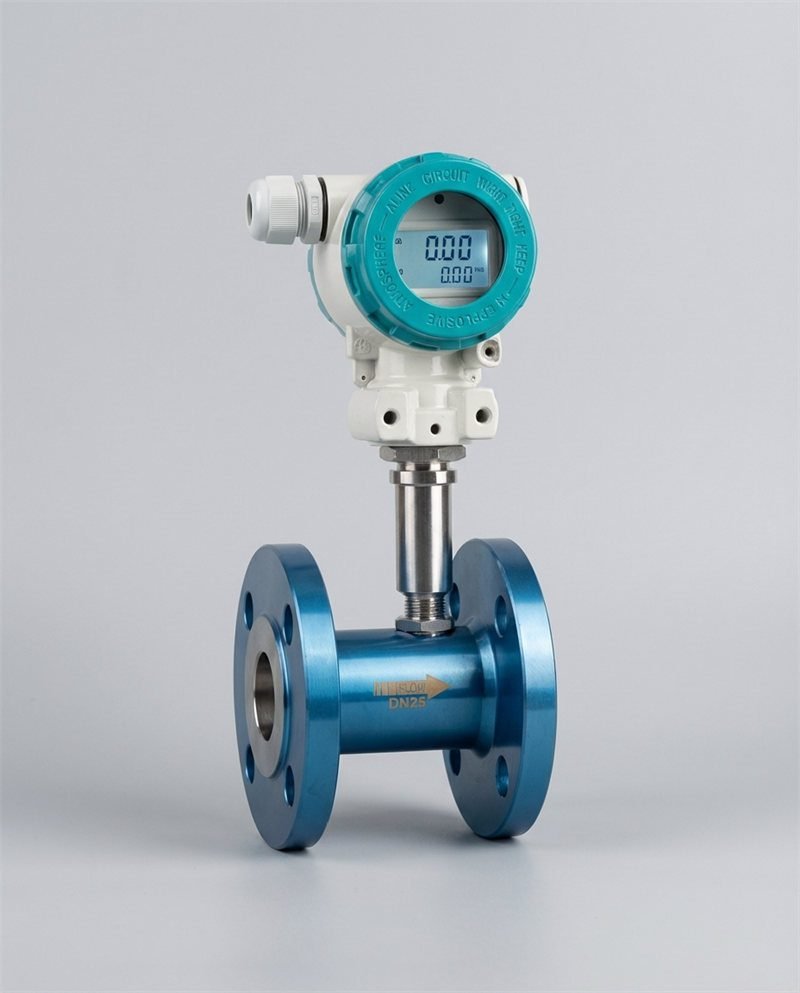
A turbine gas flow meter places a multi-blade rotor in the gas stream. Gas flow exerts a hydrodynamic force on the angled blades, spinning the rotor at a speed proportional to the average gas velocity. A magnetic or RF pickup external to the flow path detects each blade pass and generates a pulse output — where pulse frequency is directly proportional to volumetric flow rate.
The relationship between pulse count and volume is captured in the Fator K — expressed as pulses per cubic meter or pulses per cubic foot. The K-factor is established at the time of factory calibration and must be periodically verified because bearing wear progressively alters the relationship between rotor speed and actual gas velocity.
Key characteristics:
- Mechanically simple, well-understood failure modes
- Excellent pulse output for totalization (batching and custody applications)
- Accuracy of ±0.5% to ±1.0% of reading when properly maintained
- Turndown ratio typically 10:1 to 20:1
- Pressure drop of 0.03 to 0.15 bar depending on size and flow rate
- Sensitive to gas cleanliness — particulates, condensate, and corrosive gases accelerate bearing wear
3. Real-World Performance: Field Data Across Application Types
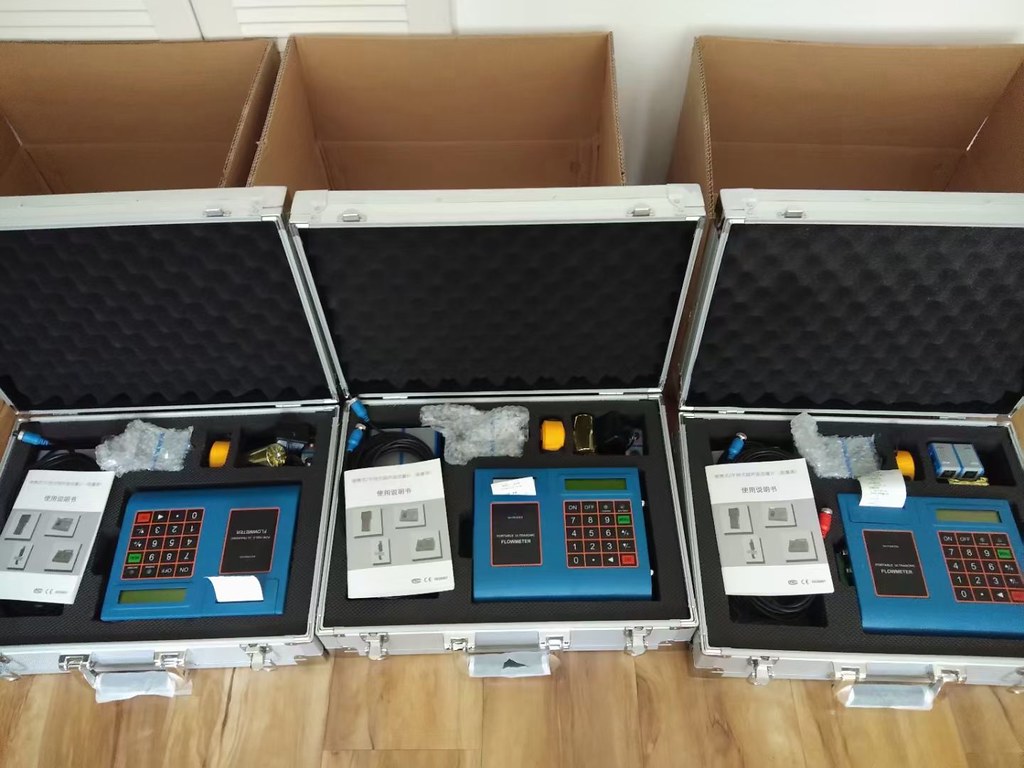
Compressor station metering runs: a demanding environment where ultrasonic meters deliver stable measurement under variable load and pulsating flow conditions.
Accuracy Across the Flow Range
The most important accuracy comparison is not at rated flow — it is at the low-flow end of the range, where many applications actually spend significant operating time. Industrial combustion systems, variable-load process heaters, and distribution networks all operate well below peak flow for extended periods.
| Parâmetro | Ultrasonic (Multipath, AGA-9) | Turbine (Clean Gas, Good Bearing Condition) |
|---|---|---|
| Accuracy at 100% flow | ±0,51 TP3T de leitura | ±0,51 TP3T de leitura |
| Accuracy at 50% flow | ±0,51 TP3T de leitura | ±0,51 TP3T de leitura |
| Accuracy at 10% flow | ±0.5–1.0% of reading | ±1.0–2.0% of reading |
| Accuracy at 5% flow | ±1.0–2.0% of reading | ±3.0–5.0% or below cutoff |
| Relação de redução | 30:1 to 100:1 | 10:1 to 20:1 |
| Accuracy after 5 years (clean gas) | ±0.5% (no mechanical wear) | ±1.0–2.5% (bearing degradation) |
| Accuracy after 5 years (wet/dirty gas) | ±0.5–1.0% | ±3.0–8.0% or meter failure |
Data sources: AGA Report No. 9, Jade Ant Instruments application engineering records, Control Engineering (natural gas meter selection guide), field calibration records across 45 industrial installations.
Performance Under Variable Conditions
A peak-shaving storage facility in Texas operates ultrasonic meters on their injection/withdrawal lines. These meters see flow rates that swing from near-zero during standby to full-rated flow within minutes during demand spikes — a dynamic that would produce systematic measurement error from a turbine meter operating below its reliable minimum flow threshold. The ultrasonic meters’ 50:1 turndown ratio handles the full operating envelope without configuration changes or accuracy compromise.
Compare this to a compressor station in the Gulf Coast that operated turbine meters on three measurement runs. After each compressor start — which generates a momentary pressure surge — the turbine rotors were subjected to flow overshoot. Over 36 months, rotor bearing life at that station was consistently 14–18 months, versus 24–30 months rated by the manufacturer. The K-factors were drifting by 0.8–1.4% between annual calibrations. Switching two of the three runs to multipath ultrasonic meters eliminated the bearing failure issue and reduced annual calibration costs on those runs by $7,200.
4. Total Cost of Ownership: A 10-Year Financial Comparison
The purchase price gap between ultrasonic and turbine meters — typically 25–45% in favor of the turbine — is real. But it is the only financial advantage turbine meters consistently hold. Every other cost category over a 10-year lifecycle either favors the ultrasonic meter or is equal.
Cost Component Breakdown
| Elemento de custo | Turbine Meter (4″, Gas Service) | Ultrasonic Meter (4″, Inline, Multipath) |
|---|---|---|
| Initial purchase price | $2,800–$5,500 | $6,500–$12,000 |
| Installation cost | $1,500–$3,000 | $1,800–$3,500 |
| Annual calibration cost | $800–$1,800/yr (removal + lab) | $400–$900/yr (in-situ diagnostic + 5-yr physical) |
| Bearing replacement (per event) | $350–$900 (every 1–2 years) | Not applicable |
| Energy cost (pressure drop) | $2,000–$8,000/yr | $200–$600/yr |
| Downtime per service event | 4–12 hours (isolation, removal, reinstall) | 0–2 hours (in-situ, mostly digital) |
| 10-Year Estimated TCO | $52,000–$88,000 | $22,000–$38,000 |
Assumptions: Continuous gas service (8,760 hr/yr), clean natural gas, electricity at $0.10/kWh, pump/compressor efficiency 75%, calibration every 12 months for turbine and 24 months physical recalibration for ultrasonic.
Industry insight: The purchase price differential between a turbine meter and an equivalent ultrasonic meter is typically 20–40% in favor of the mechanical option. But the energy savings from eliminating pressure drop alone — particularly on large-diameter, high-flow gas lines — often recover the entire price premium within 24–36 months of operation. On a 12-inch high-pressure transmission line, the permanent pressure drop across a turbine meter represents an energy cost of $15,000–$40,000 per year at typical compression energy rates. An inline ultrasonic meter on the same line: near zero.
For a deeper analysis of how these figures scale to your specific application, Jade Ant Instruments’ ultrasonic flow meter ROI guide provides a configurable TCO model with application-specific variables.
5. Application Suitability: Choosing Based on Your Actual Conditions
This is the section that determines the decision for most projects. Both technologies work. Neither is universally superior. The question is: which fits your application’s operating conditions, not the idealized conditions in the data sheet?
When Turbine Meters Are the Right Answer
Choose a turbine meter when:
- The gas is dry, clean, and single-phase — natural gas from a dry processing train, clean propane, or instrument air where filtration is confirmed and maintained
- The flow conditions are stable and predictable — base-load combustion, steady-state process gas, utility supply with minimal variation
- The project has firm CAPEX constraints and the lifecycle cost difference can be offset by shorter project duration or lower initial asset value
- The installation is compact and accessible — skid designs with adequate straight-run and planned maintenance windows every 12–18 months
- The application is not custody transfer — process control monitoring where ±1.0% accuracy is acceptable and drift is managed by scheduled calibration
Turbine meters excel in: fuel gas supply to turbines and boilers under stable load, compressed air distribution in clean facilities, dry natural gas distribution at intermediate pressure, and budget-constrained projects where the 10-year TCO penalty is accepted in exchange for lower upfront cost.
When Ultrasonic Meters Are the Right Answer
Choose an ultrasonic meter when:
- Custody transfer, fiscal metering, or utility billing accuracy is required — AGA-9 compliant multipath ultrasonic meters are the dominant technology for these applications
- The gas is wet, dirty, or variable in composition — biogas, landfill gas, biomethane, or field gas with entrained liquids or moisture
- Wide turndown is needed to capture the full operating envelope — variable-load burners, peak-shaving storage, industrial processes that idle and ramp
- The site is remote or hard to access — reducing the number of required service visits from 10 over a 10-year period to 3–5 has a compounding impact on total maintenance cost
- Long-term accuracy stability is a contractual or regulatory requirement — ultrasonic meters with no mechanical wear maintain their factory calibration specifications for 15–20 years in clean gas service
Ultrasonic meters excel in: city gate stations, LNG vaporizer metering, pipeline compressor station bypass measurement, biogas production and upgrading plants, industrial peak shaving, and any custody transfer point where AGA-9 compliance is specified.
Application Matrix
| Use Case | Tecnologia recomendada | Reason |
|---|---|---|
| Dry natural gas, custody transfer (large diameter) | Ultrasonic (AGA-9 multipath) | Long-term accuracy, non-intrusive, wide turndown |
| Clean propane/fuel gas, stable load, skid integration | Turbina | Compact, cost-effective, well-proven |
| Biogas / landfill gas with moisture | Ultrasonic (inline or clamp-on) | No bearings to corrode, no rotor damage from condensate |
| Industrial variable-load burner system | Ultrassônico | 30:1+ turndown handles full operating range |
| Remote wellhead gas metering | Ultrasonic (battery-powered) | No site visits for bearing maintenance |
| Urban utility gas distribution, fiscal metering | Ultrasonic (AGA-9 / OIML R137) | Audit-ready, tamper-detectable, certified accuracy |
| Budget skid, clean gas, short lifecycle | Turbina | Lowest CAPEX, simple spare parts |
| Compressor station measurement runs | Ultrasonic (pulsation-tolerant multipath) | Handles flow surges without rotor damage |
| Bidirectional flow (storage, reversal operations) | Ultrassônico | Native bidirectional without added hardware |
| Hazardous area (Class I Div 1 / ATEX Zone 1) | Ultrasonic (ATEX/IECEx certified) | Available in certified designs; turbine also available but harder to access for maintenance |
6. Installation and Integration: What Your Field Team Needs to Know

Straight-run requirements are the most frequently underestimated installation constraint in gas flow meter projects — turbine meters demand 3–4× more space than ultrasonic equivalents.
Straight-Run Requirements
Turbine meters are sensitive to velocity profile disturbance. An asymmetric flow profile — caused by an upstream elbow, valve, or tee too close to the meter inlet — causes the rotor to spin at a rate that does not represent the true average gas velocity across the pipe cross-section. The result is a systematic measurement error that cannot be corrected by recalibration.
| Upstream Condition | Turbine Meter (Upstream D) | Turbine Meter (Downstream D) | Ultrasonic Multipath (Upstream D) | Ultrasonic Multipath (Downstream D) |
|---|---|---|---|---|
| Single elbow | 10–15D | 5D | 5–10D | 3–5D |
| Double elbow (same plane) | 15–20D | 5D | 10D | 5D |
| Double elbow (out-of-plane) | 20–25D | 5D | 15D | 5D |
| Partially open valve | 20+ D | 5D | 15–20D | 5D |
| Control valve upstream | 20+ D | 5D | 15D | 5D |
Note: Multipath ultrasonic meters with advanced signal processing can reduce these requirements further. Always confirm with the specific model’s installation manual.
For a 6-inch (DN150) line, 20D upstream = 3 meters of dedicated straight pipe. In a brownfield retrofit where that space does not exist, the ultrasonic meter’s smaller footprint requirement — or the use of a flow conditioner — is not a preference but a necessity.
Signal Output and Protocol Compatibility
Both technologies offer standard industrial outputs, but the integration story differs:
| Output Type | Turbine Meter | Ultrasonic Meter |
|---|---|---|
| Pulse/frequency | ✅ Native | ✅ Available |
| 4–20 mA analog | ✅ With transmitter | ✅ Native |
| Modbus RTU/TCP | ✅ With flow computer | ✅ Native in most models |
| HART | ✅ With smart transmitter | ✅ Native in most models |
| Foundation Fieldbus / PROFIBUS | ⚠️ Requires additional hardware | ✅ Available in premium models |
| IIoT / cloud connectivity | ⚠️ Requires external gateway | ✅ Some models have embedded IIoT |
| Built-in diagnostics | ❌ Not typically available | ✅ Signal quality, transducer health, gain monitoring |
For EPC system integrators working with existing DCS (Distributed Control System) infrastructure, the native Modbus and HART support in ultrasonic meters simplifies configuration and reduces commissioning time. For instrument distributors advising clients on SCADA integration, the Jade Ant Instruments flow meter selection guide for distributors covers protocol mapping and integration scenarios across common PLC and DCS platforms.
Skid Footprint for OEM Manufacturers
For OEM skid-mount builders, straight-run requirements directly impact skid dimensions — and therefore fabrication cost, transport weight, and on-site installation complexity. A turbine meter requiring 20D upstream on a 4-inch line needs 2.1 meters of dedicated straight pipe. An ultrasonic meter on the same pipe needing 10D requires 1.05 meters — a footprint saving that compounds across a multi-meter skid with four or five measurement points.
Ultrasonic meters also eliminate the need for flow conditioners (devices installed upstream to reshape a disturbed velocity profile) in many skid configurations, removing an additional component, an additional pressure drop source, and an additional calibration variable.
7. Maintenance and Serviceability: The Numbers Behind “Low Maintenance”
Every gas flow meter vendor claims their product requires “minimal maintenance.” Here is what that actually means when converted into hours, dollars, and schedule disruptions.
Turbine Meter Maintenance Reality
A turbine meter on continuous industrial gas service accumulates maintenance events as follows:
- Bearing inspection and replacement: Every 12–24 months for clean gas service; every 6–12 months for gas with entrained moisture, particulates, or H₂S. Each event requires: process isolation (block valves), depressurization, flange breaking (with gas-free certification), removal, disassembly, bearing replacement or rotor swap, reassembly, reinstallation, leak testing, and re-verification. Elapsed time: 6–12 hours including permitting.
- Recalibration: After every bearing change, the K-factor must be verified against a calibrated reference. Lab calibration costs $400–$1,200 per meter plus $200–$400 shipping each way, and typical turnaround is 3–6 weeks. In-field calibration using a master meter or prover is faster but adds field engineering costs of $800–$2,000 per event.
- Rotor inspection for blade erosion: On gas containing particulates (compressor dust, pipe scale), rotor blade edges erode and alter the meter’s aerodynamic characteristics. This is not always visible as K-factor shift; it can manifest as increased turbulence and flow noise at high velocities.
Over 10 years, a single turbine meter on a demanding industrial gas application will require approximately 8–12 bearing events, 10 calibrations, and 2–3 rotor inspections — a maintenance labor load that is easy to underestimate during specification and hard to absorb during operation.
Ultrasonic Meter Maintenance Reality
An inline multipath ultrasonic gas meter’s maintenance profile is fundamentally different:
- No scheduled parts replacement — with no bearings, no rotor, and no mechanical wear surfaces, there is no maintenance event driven by component fatigue
- Built-in diagnostics monitor meter health continuously — signal strength, signal-to-noise ratio, acoustic path gain, and transducer balance are all trended by the meter’s own processor and available via HART or Modbus
- Remote zero verification — many models support zero-flow verification (confirming the meter reads zero under locked-valve conditions) without physical site visit, reducing the number of on-site calibration events to every 3–5 years
- Physical recalibration when required typically involves confirming the meter’s factory calibration curve is still valid — not replacing worn components — and can often be performed with a clamp-on reference meter in bypass rather than meter removal
What this means for MRO planning: Instead of budgeting for 10 turbine meter calibrations over a decade at $1,000–$2,200 each (plus bearing replacements), an ultrasonic meter fleet on the same applications requires 2–3 physical verifications at $400–$900 each, supplemented by continuous digital diagnostic data that provides confidence between physical events.
Spare Parts Inventory Considerations
Turbine meters require on-site stock of: rotor assemblies, bearing kits, O-ring/gasket sets, and for custody transfer applications, a spare complete meter for quick swap. These are relatively inexpensive individually ($200–$800 per part kit) but multiply across a fleet of 20–50 meters.
Ultrasonic meters require on-site stock of: spare transducer pairs (the most likely failure component after 10+ years) and coaxial cable assemblies. Transducers are model-specific and should be purchased with the initial meter order for critical applications.
8. Regulatory Compliance and Accuracy Standards
Governing Standards by Technology
| Padrão | Tecnologia | Scope |
|---|---|---|
| AGA Report No. 7 | Turbina | Turbine metering of natural gas — design, installation, testing |
| AGA Report No. 9 | Ultrassônico | Multipath ultrasonic metering of natural gas — custody transfer requirements |
| API MPMS Chapter 5 | Both | Metering uncertainty for custody transfer — ±0.25% target |
| OIML R137 | Both | Gas meters — metrological and technical requirements (fiscal metering) |
| ISO 17089 | Ultrassônico | Measurement of fluid flow in closed conduits — ultrasonic meters |
| EN 12261 | Turbina | Gas meters — turbine gas meters (EU markets) |
| ATEX / IECEx | Both | Explosion-proof and intrinsically safe certifications for hazardous areas |
| Class I Div 1 (FM) | Both | US hazardous area certification |
Industry insight: AGA-9 compliance has become the de facto requirement for new custody transfer installations on natural gas transmission and distribution networks in North America. Utilities and operators specifying turbine meters for new fiscal measurement points often face pushback from downstream buyers and regulatory auditors who expect multipath ultrasonic measurement to the AGA-9 standard. In Europe, OIML R137 and EN 12261 both apply — but the trend toward ultrasonic for large-diameter custody applications mirrors the North American direction.
Audit Readiness and Documentation
Ultrasonic meters provide a continuous audit trail that turbine meters cannot match without additional external equipment:
- Permanent record of signal quality, path gain, and velocity profile symmetry — deviations from baseline are electronically flagged
- Bidirectional measurement with independent totalization registers for forward and reverse flow
- Configurable alarm logs for process events, communication faults, and meter health degradation
- Data logging at user-defined intervals (typically 15-minute or hourly records) for regulatory reporting
For utility billing applications — where metering accuracy disputes can result in regulatory enforcement or commercial arbitration — this level of documentary evidence is not a luxury. It is operational protection.
9. Future-Proofing: Digital Readiness, Renewables, and Obsolescence Risk

Modern ultrasonic flow meters double as intelligent diagnostic platforms — their data streams drive predictive maintenance programs and support IIoT infrastructure in smart gas networks.
IIoT and Digital Infrastructure Integration
The global flow meter market is moving toward intelligent, connected instrumentation. Emerson enhanced its Daniel ultrasonic meter lineup in July 2025 with predictive diagnostic firmware and cloud-connected analytics (Fact.MR, 2026). This trend reflects a broader shift: flow meters are no longer just measurement devices — they are data sources for energy management, predictive maintenance, and digital twin programs.
Ultrasonic meters are architecturally positioned for this transition. Their embedded processors already calculate diagnostic parameters — signal quality, acoustic path ratios, velocity profile symmetry — that are the inputs for predictive maintenance algorithms. Adding cloud connectivity or edge analytics is typically a firmware or gateway addition, not a hardware replacement.
Turbine meters, as mechanical pulse-counting devices, require external flow computers and signal conditioning hardware to participate in IIoT architectures. Retrofitting a turbine meter fleet for digital integration is not impossible, but it is a capital project — not a firmware update.
Renewable Gas and Hydrogen Blending
As biomethane injection into gas grids expands and hydrogen blending trials move toward commercial scale, flow meter performance with variable gas compositions becomes a selection criterion.
Turbine meters are relatively insensitive to gas composition within a defined density range — the rotor responds to fluid momentum, and composition effects are absorbed in the flow computer’s calculation. However, higher hydrogen fraction lowers gas density significantly, which can reduce the aerodynamic force on the rotor below its minimum reliable operating threshold at low flow rates.
Ultrasonic meters measure the transit-time difference, which is affected by gas composition through changes in the speed of sound. For variable-composition streams, the flow computer must apply AGA-8 (the equation of state for natural gas mixtures) calculations using accurate gas composition inputs. When gas composition is stable and known, this works well. When composition varies (fluctuating biomethane injection ratios, early-stage hydrogen blending programs), pairing the ultrasonic meter with an online gas chromatograph provides the most robust measurement — a combination that is already standard practice at fiscal gas measurement points.
For a detailed guide on gas flow meter technology selection aligned with current industry trends, the Jade Ant Instruments how-to-choose-a-flow-meter guide covers composition effects, pressure-temperature compensation, and future-proofing strategies across all major meter technologies.
10. Selection Framework: A Decision Matrix for Your Projects
Use this weighted scoring matrix to structure your technology decision. Score each criterion from 1 (poor match) to 5 (excellent match) for each technology based on your specific application conditions. Weight the criteria according to your project priorities.
| Decision Criterion | Weight | Turbine Score (1–5) | Ultrasonic Score (1–5) | Notas |
|---|---|---|---|---|
| Initial CAPEX | 15% | 5 | 2–3 | Turbine typically 25–45% lower purchase price |
| 10-Year TCO | 20% | 2–3 | 4–5 | Ultrasonic advantage grows with line size and runtime |
| Long-term accuracy | 20% | 2–3 | 5 | No mechanical wear = stable calibration |
| Relação de redução | 10% | 2–3 | 5 | 10:1 turbine vs. 30:1–100:1 ultrasonic |
| Gas quality tolerance | 10% | 2 | 4–5 | Wet/dirty gas eliminates turbine from contention |
| Installation constraints | 10% | 2 | 4 | Ultrasonic requires less straight-run space |
| Regulatory compliance | 10% | 3 | 5 | AGA-9 preferred for custody transfer |
| Digital integration / IIoT | 5% | 2 | 5 | Ultrasonic native; turbine requires external hardware |
How to use this matrix: Multiply each score by its weight, sum across all criteria, and compare totals. A score above 3.5 (weighted average) in any column indicates strong technology fit for your application profile.
Quick Decision Checklist
Before finalizing your specification, confirm the following:
- ☐ Gas composition confirmed: dry, clean gas → turbine viable; wet, variable, or corrosive gas → ultrasonic required
- ☐ Straight-run space measured and documented — don’t assume; go to the site
- ☐ Custody transfer or fiscal metering requirement: AGA-9 compliance required → multipath ultrasonic
- ☐ Turndown ratio calculated from actual min/max flow data, not process design basis
- ☐ 10-year TCO modeled including calibration, maintenance, energy, and downtime
- ☐ Protocol compatibility confirmed with existing SCADA/DCS before meter specification is finalized
- ☐ Hazardous area classification checked — ATEX/IECEx certification confirmed for both meter and transmitter
- ☐ Vendor support capability verified: calibration traceability, regional service, spare parts availability
🎬 Video: Turbine Flow Meter Operation and Calibration — How It Works in Gas Service
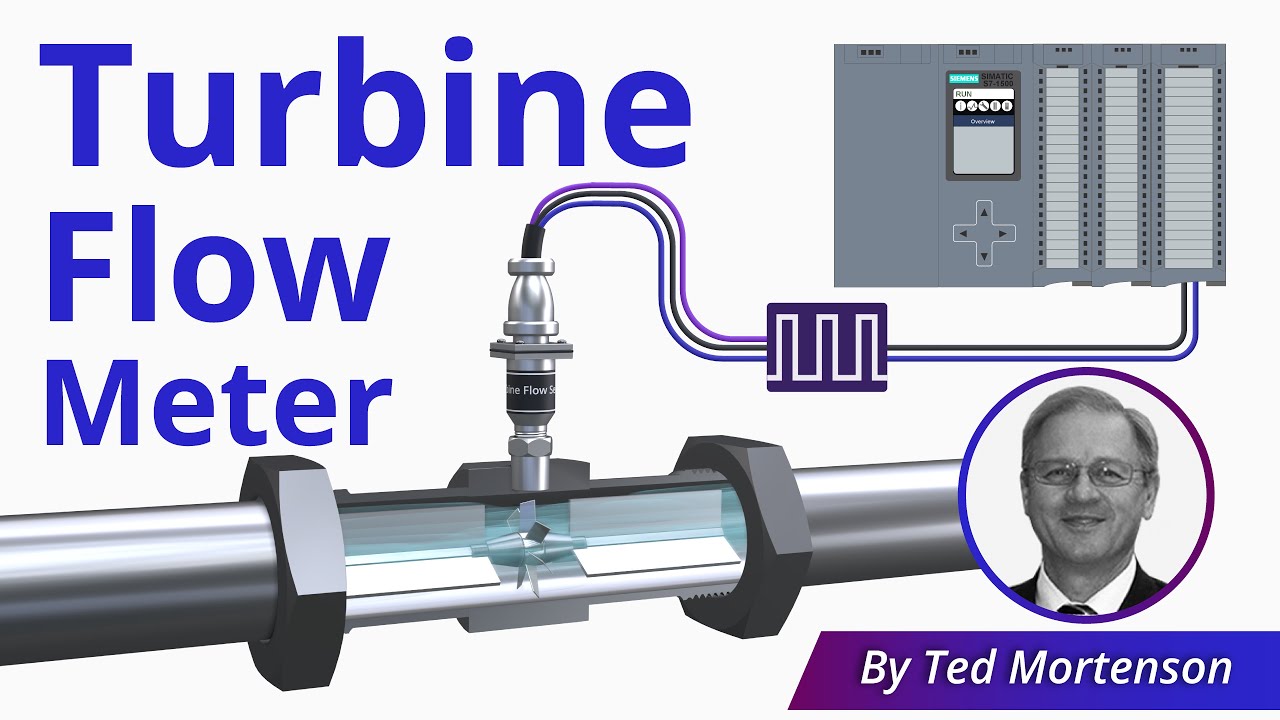
This practical video explains how turbine flow meters measure gas flow, how the K-factor calibration works, and how bearing wear affects long-term measurement accuracy — essential viewing before specifying turbine meters for industrial gas applications.
The Jade Ant Instruments Perspective: Supporting Both Technologies
Instrumentos Jade Ant supplies both turbine and ultrasonic gas flow meters for OEM skid integration, EPC system projects, instrument distribution, MRO fleet management, and utility metering programs. The application engineering team regularly works through technology selection at the design phase — reviewing gas composition data sheets, P&IDs, and operating profiles to recommend the technology that will deliver the lowest total cost and highest measurement confidence across the full asset lifecycle.
For OEM manufacturers building standardized gas measurement skids, Jade Ant Instruments’ turbine flow meter guide for instrument distributors covers specification, integration, and calibration traceability for turbine-based designs. For EPC teams specifying ultrasonic meters on custody transfer or high-accuracy measurement points, the ultrasonic vs traditional flow meters buyers guide provides a structured comparison framework with performance data from real installations.
Glossário de termos-chave
| Term | Definition |
|---|---|
| AGA-9 | American Gas Association Report No. 9 — the governing standard for multipath ultrasonic gas meters used in custody transfer applications |
| AGA-7 | American Gas Association Report No. 7 — the governing standard for turbine gas meters |
| AGA-8 | American Gas Association Report No. 8 — the equation of state for calculating the thermodynamic properties of natural gas mixtures |
| Relação de redução | The ratio of maximum to minimum flow rate within the meter’s specified accuracy. A 30:1 turndown means the meter maintains spec from full scale down to 1/30th of full scale |
| Fator K | The turbine meter calibration constant — expressed as pulses per unit volume — that converts raw pulse output to flow rate. Changes as bearings wear |
| Transit-time (time-of-flight) | The ultrasonic measurement principle: gas velocity is calculated from the difference in acoustic pulse travel time upstream versus downstream |
| Ultrassom multipath | An ultrasonic meter that uses multiple acoustic paths at different chordal positions to sample the velocity profile — required by AGA-9 for custody transfer |
| Custody transfer | A measurement point at which ownership of gas changes between parties — requires the highest accuracy and regulatory certification |
| OIML R137 | International Organization of Legal Metrology standard for gas meters used in regulated (fiscal) measurement applications |
| Pressure drop | The permanent reduction in gas pressure caused by flow resistance in the meter body — creates compressor energy cost |
| ATEX / IECEx | European (ATEX) and International (IECEx) explosion protection certification schemes for instruments in hazardous gas atmospheres |
| IIoT | Industrial Internet of Things — the integration of field instruments with digital networks for remote monitoring, analytics, and predictive maintenance |
| DCS | Distributed Control System — a process control platform that receives signals from field instruments and manages process operations |
| Flow conditioner | A device installed upstream of a flow meter to reshape a disturbed velocity profile — used when adequate straight-run piping is not available |
Perguntas frequentes
1. Which flow meter offers better long-term accuracy for natural gas custody transfer?
Multipath ultrasonic meters are the dominant technology for new custody transfer installations and are specifically governed by AGA Report No. 9. They maintain ±0.5% accuracy over 15–20 years without mechanical wear degradation. Turbine meters — governed by AGA-7 — are accurate when properly maintained but require annual calibration verification and bearing replacement to sustain their original K-factor. For long-term fiscal metering without recurring calibration events, ultrasonic is the industry-preferred choice.
2. Can turbine meters be used in biogas applications with moisture and particulates?
This is one of the clearest disqualifying conditions for turbine meters. Biogas — whether from landfills, anaerobic digesters, or agricultural waste — contains hydrogen sulfide, water vapor, siloxanes, and particulate matter. H₂S corrodes bearing surfaces, condensate damages mechanical components, and siloxane deposits can seize rotors. Turbine meters deployed in biogas applications without upstream gas conditioning (filtration, drying, H₂S scrubbing) typically fail within 6–18 months. Ultrasonic meters — particularly inline transit-time designs with no moving parts — handle biogas conditions with significantly greater durability.
3. What are the installation requirements for ultrasonic meters in limited-space skids?
Multipath ultrasonic meters typically require 5–10 pipe diameters of straight run upstream and 3–5 diameters downstream — roughly half the requirement of a comparable turbine meter. Some compact designs with advanced signal processing reduce upstream requirements further. For OEM skid builders with constrained footprints, ultrasonic meters offer the realistic path to compliant installation. Flow conditioners can further reduce straight-run requirements for both technologies, but each conditioner adds pressure drop and another calibration variable.
4. How often do turbine meters require recalibration in industrial gas service?
AGA-7 recommends calibration verification intervals based on operating conditions and criticality. In practice, most industrial gas applications calibrate turbine meters every 12 months for custody or fiscal applications, and every 24 months for process control applications with clean, stable gas. Any bearing replacement event requires an immediate post-replacement K-factor verification — because bearing wear is the primary mechanism that shifts the calibration. High-contamination environments (wet gas, H₂S, particulates) require shorter intervals, sometimes every 6 months.
5. Do ultrasonic meters work well with variable flow rates and low gas pressures?
Ultrasonic meters with high turndown ratios (30:1 to 100:1) perform well across variable flow rates. However, at very low gas pressures — below approximately 0.5 bar absolute — the acoustic signal attenuates more strongly, and some single-path designs may lose signal coherence at low flow. Multipath meters with higher transducer power and advanced signal processing handle low-pressure gas better than single-path designs. For applications with pressures below 1 bar, confirm the specific model’s minimum operating pressure specification with the manufacturer before specifying.
6. What is the typical lifespan of a turbine meter vs. an ultrasonic meter?
A well-maintained turbine meter body can last 15–25 years in clean gas service, but the rotor and bearings are wear items that require replacement every 1–3 years depending on gas quality. The effective operational lifespan — meaning time between major interventions — is limited by bearing durability. Ultrasonic meters have no mechanical wear components. Transducers — the primary long-service replacement item — typically last 15–20 years with signal strength trending available to provide early warning of degradation. Electronics and firmware are the other aging factor, with transmitter replacement typically at 10–15 years.
7. Are ultrasonic meters compatible with Modbus RTU for SCADA integration?
Yes — virtually all modern industrial ultrasonic gas flow meters include native Modbus RTU (RS-485) and Modbus TCP support. Many also offer HART (for 4–20 mA loops), Foundation Fieldbus, and PROFIBUS PA. The register map for primary variables (flow rate, velocity, acoustic path data, diagnostic parameters) is accessible directly without external flow computers in most designs. For turbine meters, native Modbus output requires either a smart transmitter with built-in protocol conversion or an external flow computer.
8. Can turbine meters be retrofitted with digital diagnostics?
Partially. Smart transmitters can be paired with existing turbine meter pickups to add HART or Modbus output, totalization registers, and basic alarm functions. However, the fundamental limitation remains: turbine meters have no internal diagnostic capability regarding their own mechanical health. Bearing wear, rotor damage, and K-factor drift are invisible until the next calibration event or until the discrepancy becomes large enough to surface in process data. External add-ons cannot compensate for the absence of internal condition monitoring.
9. How does gas quality affect turbine meter performance over time?
Gas quality has a direct, compounding impact on turbine meter longevity and accuracy. The primary mechanism is bearing degradation: any gas containing entrained liquids, particulates above 100 microns, or corrosive compounds (H₂S, CO₂ in humid conditions) accelerates bearing wear. As bearings degrade, the rotor spins with increasing friction, which shifts the K-factor — the meter reads progressively lower than actual flow. In a 2% per year drift scenario on a fiscal gas meter, a mid-size utility account may accumulate $50,000–$150,000 in underbilling before the next scheduled calibration catches the deviation.
10. What are the TCO differences between meter types in a 10-year utility distribution project?
Based on aggregated field data for a 4-inch gas flow meter in continuous utility distribution service: a turbine meter accumulates approximately $52,000–$88,000 in total 10-year cost (purchase, installation, calibration, bearing maintenance, and energy). A comparable inline multipath ultrasonic meter accumulates approximately $22,000–$38,000. The crossover point where the ultrasonic meter recovers its higher purchase price through lower operating costs typically falls between 24 and 48 months depending on gas cleanliness, calibration frequency, and local energy rates. For utility operators managing fleets of 50–200 meters, this per-meter difference represents a material budget impact across the asset lifecycle.
11. Do ultrasonic meters require flow conditioners or straight pipe runs?
Flow conditioners are not always required for ultrasonic meters, but straight-run requirements still apply. Multipath designs with 4 or more acoustic paths are inherently better at compensating for velocity profile distortion than single-path meters, often reducing the minimum straight-run requirement by 30–50%. Compact ultrasonic designs with built-in flow conditioning sections (integral conditioners in the meter body) can reduce upstream requirements to as few as 3–5 pipe diameters. Turbine meters, lacking this self-compensation capability, require flow conditioners more frequently and at higher cost.
12. Which meter type is easier to integrate into OEM-designed gas blending skids?
Both can be integrated, but the integration story is different. Turbine meters offer a smaller body at equivalent flow rates (turbine meter bodies are typically more compact than inline ultrasonic equivalents), simpler wiring (pulse output to flow computer), and lower component cost — which makes them attractive for CAPEX-sensitive OEM designs. Ultrasonic meters require more straight-run space on the skid (though less than turbines on a proportional basis), but deliver built-in diagnostics, digital protocol outputs, and no moving parts — reducing the downstream service exposure that OEMs face during warranty periods. For high-value, long-lifecycle skid programs, the ultrasonic meter’s service cost reduction during the warranty period often justifies the higher purchase price.
13. Can ultrasonic meters detect flow disturbances or installation errors automatically?
Yes — this is one of the most operationally valuable features of multipath ultrasonic meters. Acoustic path ratios (comparing measured velocity on each individual path) reveal asymmetric flow profiles caused by installation disturbances. If upstream piping has changed (new valve added, bypassed conditioner, changed pipe configuration), the path ratio imbalance appears in the diagnostic data before the overall measurement accuracy is significantly impacted. Turbine meters provide no equivalent internal check — a distorted flow profile reads as a simple flow rate, with no flagging that the profile is non-uniform.
14. Are there cost-effective ultrasonic options for mid-scale industrial applications?
Yes — the market has evolved significantly. Entry-level two-path inline ultrasonic gas meters for pipe sizes DN50–DN100 (2–4 inches) are now available in the $3,500–$7,000 range, overlapping with the upper end of equivalent turbine meter pricing. While these two-path designs do not achieve AGA-9 custody transfer accuracy (which requires 4+ paths), they deliver ±0.5–1.0% accuracy suitable for most process control and utility monitoring applications — with all the maintenance and reliability advantages of the ultrasonic technology. For distributors and OEM builders looking for an ultrasonic entry point without custody transfer pricing, these mid-range designs represent the most cost-competitive option.
15. How do environmental factors — temperature and vibration — affect each meter type?
Temperature affects both technologies, but differently. In turbine meters, temperature changes alter gas viscosity, which changes the drag on the rotor blades and shifts the K-factor for viscosity-sensitive flow ranges. Correction curves exist, but they require accurate temperature input to the flow computer. In ultrasonic meters, temperature changes alter the speed of sound, which is compensated in the AGA-8 calculation using a temperature input — provided the temperature sensor is accurate and properly calibrated.
Vibration is more problematic for turbine meters. Mechanical vibration coupling into the rotor or bearing assembly can cause physical wear acceleration and, in severe cases, phantom pulse generation (vibration-induced rotor movement that registers as flow). Vortex shedding from nearby process equipment can also excite the rotor. Ultrasonic meters are generally more vibration-tolerant, though severe structural vibration can affect transducer coupling in clamp-on designs. Flexible pipe connections and vibration-isolated meter supports benefit both technologies in high-vibration environments such as compressor station headers.
External references used in this guide:
- AGA Report No. 9 Overview — What Is AGA-9? (Merobix)
- Control Engineering — Selecting Flow Meters for Natural Gas
- Jade Ant Instruments — Turbine vs Ultrasonic Flow Meters for Chemical Plants
- Jade Ant Instruments — Ultrasonic vs Traditional Flow Meters Buyers Guide
- Turbines Incorporated — Total Cost of Ownership Analysis
- Jade Ant Instruments — Ultrasonic Flow Meter Cost Savings ROI Guide
- Endress+Hauser — Biogas Ultrasonic Flowmeter Application Note
- Fact.MR — Ultrasonic Flow Meter Market Report 2025
- Kobold USA — Straight Run Requirements for Flow Meters
- Flowell — How Much Does Flow Meter Calibration Cost?