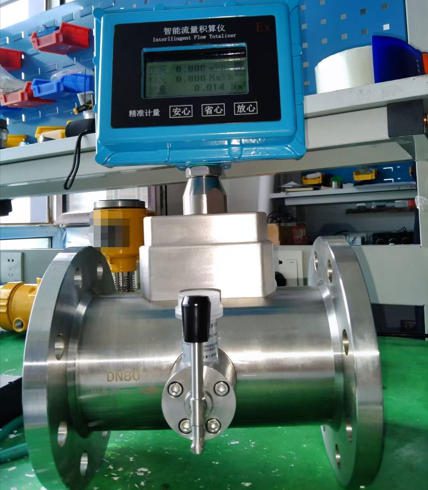
Gas Meter Flow: Fixed Metering vs Smart Monitoring for Businesses — A Strategic Guide for Industrial & Utility Decision-Makers

Every unmonitored cubic metre of gas is either a cost you haven’t tracked or a leak you haven’t found. The metering strategy you choose determines which it is.
1. Executive Summary: Why This Matters to Your Business
The global smart gas meter market was valued at USD 2.44 billion in 2026 and is on track to reach USD 3.78 billion by 2031, growing at 9.1% per year (Mordor Intelligence). That growth is not driven by regulatory mandate alone — it is driven by the financial reality that fixed metering leaves real money on the table every day it is in operation.
For OEM equipment and skid-mount manufacturers, instrument distributors and importers, EPC and system integrators, industrial terminal and MRO companies, and municipal and utility companies, the choice between fixed and smart gas metering is not just a technical procurement decision. It determines your operational visibility, your compliance posture, your maintenance costs, and — in a market where gas prices move fast — how quickly you can detect when those costs are drifting out of control.
This guide gives you a structured framework for making that decision with eyes open. Not to sell you a specific product, but to equip your engineering and procurement teams with the right questions, the right data, and the right structure for evaluating what your site actually needs.
2. The Core Challenge: Limited Visibility Equals Lost Value
Here is a scenario that repeats itself across industrial facilities worldwide. A production plant has 40 gas metering points spread across three process buildings. Readings are collected manually, once per shift, by a technician with a clipboard. The data is transcribed to a spreadsheet, aggregated monthly, and compared against supplier invoices.
By the time anyone notices a discrepancy — an anomalous consumption spike in Building C that correlates with a valve packing failure — the leak has been running for 22 days. The unaccounted gas represents approximately USD 18,000 in product loss. The maintenance repair takes four hours.
This is not an unusual story. It is the predictable outcome of a measurement strategy that treats gas flow as a billing input rather than an operational signal.
Fixed metering — traditional mechanical or basic electronic meters without real-time output — provides cumulative volume totals. What it cannot provide is context: the rate at which consumption is changing, the moment a deviation begins, or the pattern that precedes a failure.
Smart monitoring provides all of that — but not every site needs all of it, and not every investment in smart metering pays back at the same rate. That is the central tension this guide is designed to resolve.
Where the Blind Spots Cost the Most
| Scenario | With Fixed Metering | With Smart Monitoring |
|---|---|---|
| Valve packing failure (gas leak) | Detected at next manual read — days to weeks later | Detected via flow anomaly within minutes to hours |
| Consumption spike during startup | Noted in monthly report | Real-time alert triggers investigation immediately |
| Billing dispute with gas supplier | Cumulative data only, limited audit trail | Timestamped records with resolution down to minutes |
| Compliance reporting (GHG emissions) | Manual calculation from cumulative reads | Automated, audit-ready time-series data |
| Scheduled maintenance visit | Calendar-based, regardless of meter health | Condition-triggered, based on self-diagnostic output |
3. Fixed Metering: Strengths, Limitations, and Ideal Use Cases
Fixed metering has served industrial gas measurement reliably for decades. It is not obsolete — but it is increasingly misapplied to environments that require more than it can deliver.
What Fixed Metering Does Well
A properly specified and calibrated fixed meter — whether a diaphragm, turbine, or rotary positive displacement type — gives you an accurate cumulative volume total at low cost. It requires no communication infrastructure, no data historian, no IT integration, and no cybersecurity policy. Installation is straightforward, spare parts are widely available, and any field technician can read it.
Para stable, low-variability applications — a single-tenant commercial building, a small process line with constant throughput, or a low-criticality utility branch — fixed metering does its job without unnecessary complexity.
Where Fixed Metering Falls Short
The limitations surface when the operating environment becomes dynamic. Fixed metering cannot:
- Flag a flow rate change in real time
- Generate an alarm when consumption exceeds a defined threshold
- Detect gradual meter drift between calibration intervals
- Integrate automatically with a DCS, SCADA, or cloud platform
- Provide the timestamped, high-resolution data required for GHG and EPA emissions reporting
- Support remote reading across a geographically distributed network without costly manual labor
For any site with multiple metering points, variable loads, regulatory reporting requirements, or integration with process control systems, fixed metering is no longer the lowest-cost option — it is just the lowest upfront price.
When to Default to Fixed Metering
- Very low-risk, low-criticality utility branches where a monthly manual read is operationally acceptable
- Temporary installations (construction sites, pilot plants) where the infrastructure investment is not justified
- Sites with no communication infrastructure and no near-term IIoT roadmap
- Budget-constrained retrofit situations where a smart upgrade is planned in 18–24 months
4. Smart Monitoring: Real-Time Control, Predictive Insights, and Remote Management

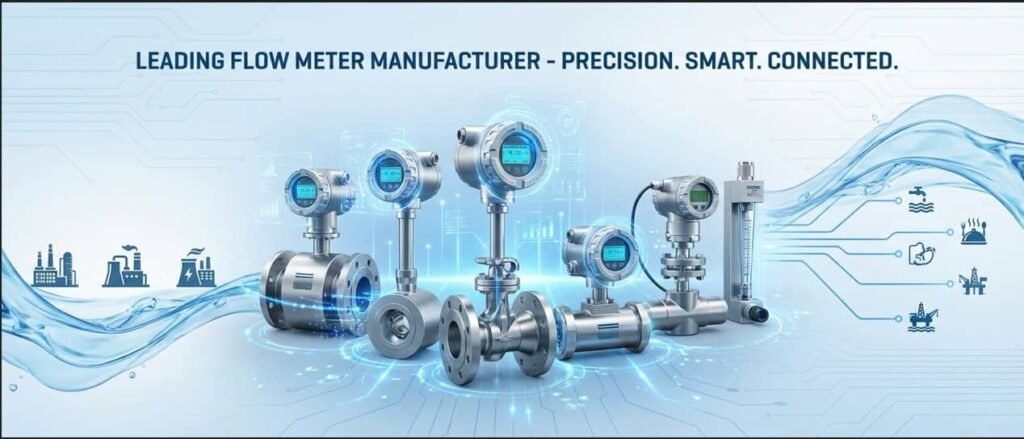
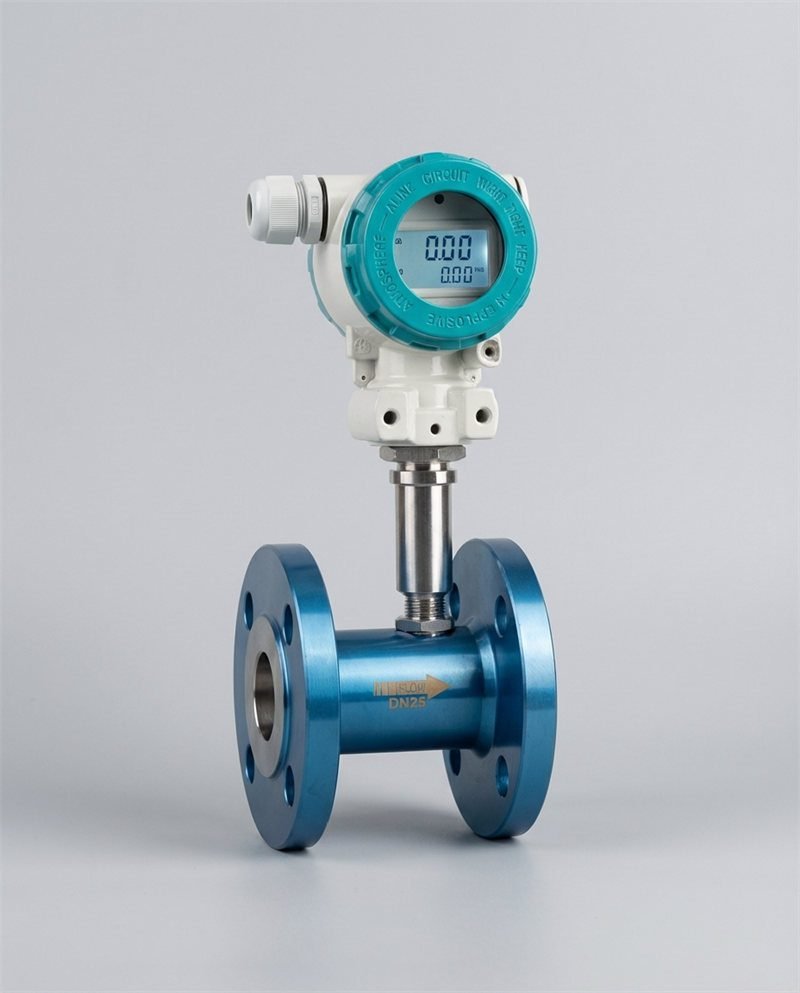
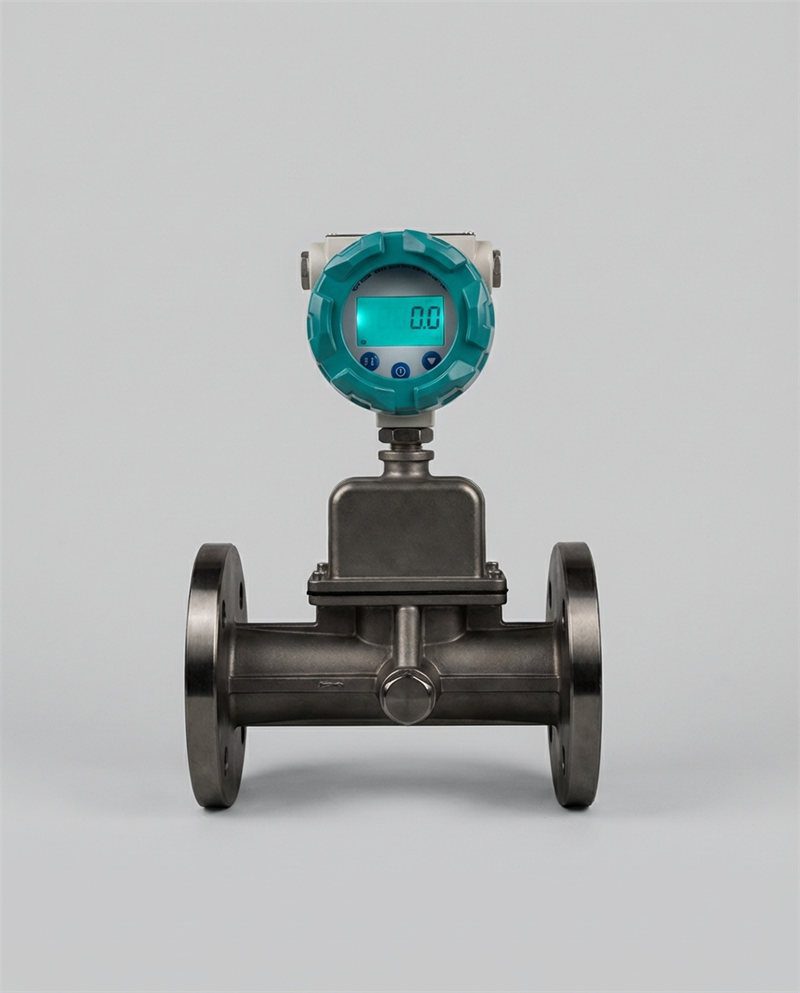
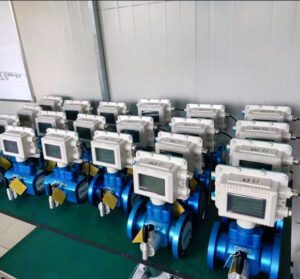
A smart gas flow transmitter does more than count cubic metres — it streams diagnostic data, flags anomalies, and integrates directly with SCADA and DCS platforms.
Smart gas metering systems combine a high-accuracy flow sensor with an intelligent transmitter that outputs real-time data via digital communication protocols. The sensor measures flow. The transmitter processes, stores, and communicates that data continuously — to a local PLC, a plant DCS, a SCADA historian, or a cloud analytics platform.
What “Smart” Actually Means in Practice
Smart is not a marketing label — it refers to a specific set of functional capabilities:
Smart meter (definition): A flow measurement device that transmits real-time flow data digitally, supports remote configuration and diagnostics, generates process alarms, and integrates with enterprise data systems via standard communication protocols (Modbus, HART, OPC UA, or wireless equivalents).
A smart metering system delivers four things a fixed meter cannot:
1. Granular, timestamped flow data. Not just “how much gas passed through last month” but “how much gas passed through between 14:30 and 14:45 on Tuesday, and how does that compare to the same window yesterday.” That resolution is what makes anomaly detection, process optimization, and regulatory reporting possible.
2. Built-in diagnostics. Modern smart transmitters monitor their own performance — flagging sensor fouling, signal degradation, zero drift, and wiring faults — before those conditions affect measurement accuracy. A vortex flow meter with integrated self-diagnostics can alert an MRO team that a calibration check is warranted weeks before the meter drifts outside its accuracy specification.
3. Remote access and configuration. A field engineer can check meter status, adjust damping settings, review historical logs, or reconfigure alarm setpoints from a laptop at the control room — or from a tablet at a remote site — without physically accessing the instrument. For distributed utility networks with hundreds of metering points, this reduces travel costs significantly.
4. Process alarm generation. When flow rate crosses a defined high or low threshold, the meter generates an alarm — instantly — through the DCS, the SCADA historian, or a cloud notification system. That alarm is what turns a 22-day undetected leak into a same-day response.
Why EPCs and System Integrators Are Specifying Smart by Default
EPC firms and system integrators who specify smart metering in new builds are not doing it because it is trendy. They are doing it because the engineering economics have shifted. A smart transmitter that costs USD 400–600 more than a fixed meter at the point of purchase saves that premium within the first calendar year through reduced manual reading labor alone — before accounting for the value of anomaly detection, compliance automation, or predictive maintenance.
5. Matching Technology to Site Type: A Decision Framework
Not every metering point justifies a smart transmitter. The right decision depends on site complexity, communication infrastructure, regulatory exposure, and how much the measurement point matters to your operation.
Site-Specific Scoring Model
Use this scoring table to evaluate each metering point. Total the score and use the guide below to determine the appropriate technology.
| Evaluation Criterion | Score 1 | Score 2 | Score 3 |
|---|---|---|---|
| Flow variability | Stable/constant | Moderate variation | Highly variable |
| Criticality to operations | Low (non-process) | Moderate (secondary process) | High (primary process/custody) |
| Regulatory exposure | Nenhum | Periodic reporting | Continuous/real-time required |
| Communication infrastructure | None available | Available (RS485/Ethernet) | Fully integrated DCS/SCADA |
| Number of meters at site | 1–3 | 4–15 | 16+ |
| Manual reading cost/year | <USD 500 | USD 500–2,000 | >USD 2,000 |
| Consequence of undetected leak | Minimal | Moderado | High (safety/financial) |
Score interpretation:
- 7–11: Fixed metering is likely sufficient. Review in 12–18 months or if site conditions change.
- 12–17: Hybrid approach — smart monitoring on high-criticality points, fixed on low-criticality branches.
- 18–21: Smart monitoring is the correct specification. Calculate specific ROI to support the capital case.
Technology Match by Customer Type
High-throughput industrial plants (chemicals, refining, power generation): Smart monitoring is the baseline expectation. Multi-path ultrasonic meters or Coriolis units at custody-transfer points; vortex with integrated temperature and pressure compensation for steam and gas distribution headers; thermal mass flow for compressed air and inert gas.
Distributed utility networks: Smart monitoring with wireless or LoRaWAN communication for remote endpoints; centralized SCADA aggregation; NB-IoT for very remote or underground vault installations.
OEM skid packages: Smart transmitters with pre-configured Modbus or HART output allow the skid to plug directly into the end-user’s DCS without custom engineering. The skid manufacturer provides a register map and wiring documentation; the integrator connects and reads.
Import-dependent distribution hubs: Fixed or smart at the custody-transfer point (accuracy drives billing); smart at internal distribution headers (anomaly detection drives loss reduction).
6. Integration Readiness: How Metering Fits Your Existing Infrastructure
The most capable smart meter in the world delivers nothing if it cannot communicate with your control system. Integration readiness is where projects fail — not because the technology is wrong, but because the compatibility assumptions were never verified.
Communication Protocol Landscape
| Protocol | Common Use | Max Distance | DCS/SCADA Support | OEM Skid Fit |
|---|---|---|---|---|
| 4–20 mA + HART 7 | Legacy DCS, general process | 1,500 m | Universal | Excelente |
| Modbus RTU (RS-485) | PLC, multi-drop networks | 1,200 m | Very broad | Excelente |
| Modbus TCP (Ethernet) | Modern DCS, IIoT gateways | Unlimited (LAN) | Broad | Good |
| PROFIBUS DP | Siemens/ABB DCS environments | 1,200 m | DCS-specific | Good |
| Foundation Fieldbus | High-integrity process loops | 1,900 m | DCS-specific | Moderado |
| OPC UA | Cloud, enterprise, edge computing | Unlimited | Growing rapidly | Good |
| LoRaWAN / NB-IoT | Remote/wireless utility metering | 10–15 km | Cloud-first | Specialized |
Integration checklist before specifying any smart meter:
- What protocol does the target PLC or DCS natively support?
- Is the engineering team familiar with the meter’s register map or GSD file?
- Does the transmitter support the baud rate, parity, and slave address format the DCS expects?
- Are there existing tags in the historian for this metering point, and what scaling format do they expect?
For EPC and system integrators, verifying these four questions before procurement eliminates the majority of commissioning delays attributed to instrumentation.
Plug-and-Play Performance for OEM Skids
OEM skid manufacturers face a specific integration challenge: the skid ships to an end user whose DCS brand and configuration they may not know in advance. The solution is to specify smart transmitters with multi-protocol support — meters that can communicate via Modbus RTU, HART, and 4–20 mA simultaneously, so the end user connects via whichever channel their system supports without requiring a transmitter change.
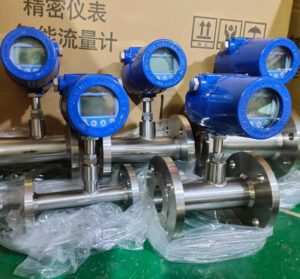
Instrumentos Jade Ant manufactures vortex flow meters and gas turbine flow meters with exactly this architecture — Modbus RTU, HART, PROFIBUS, and 4–20 mA as standard outputs, with integrated temperature and pressure compensation for gas and steam applications. That means skid builders get a single-SKU transmitter that covers the majority of customer DCS environments without special ordering.
7. Total Cost of Ownership: Beyond the Initial Price Tag
The capital cost of a smart meter versus a fixed meter is the most visible number in any procurement comparison. It is also the least important one over a 10-year asset lifecycle.
10-Year TCO Comparison: Single DN100 Gas Metering Point
| Cost Component | Fixed Metering | Smart Monitoring | Notas |
|---|---|---|---|
| Preço de compra | 400–900 dólares americanos | 1.200–2.800 dólares | Smart includes transmitter |
| Instalação | USD 600–900 | USD 800–1,200 | Smart requires communication wiring |
| Manual reading labor (10 yr) | USD 4,800–9,600 | 400–800 dólares | Smart: remote read, periodic verification |
| Calibration (10 yr) | USD 3,200–6,000 | USD 1,600–3,000 | Smart self-diagnostics extend intervals |
| Undetected leak cost (avg) | 8.000–25.000 dólares | USD 800–3,000 | Based on mean time to detection |
| Compliance rework/fines | USD 2,000–15,000 | USD 200–500 | Smart generates audit-ready data |
| Downtime (meter failure) | 4.000–12.000 dólares americanos | USD 800–2,400 | Smart flags degradation early |
| 10-Year Total | USD 23,000–69,500 | USD 5,800–13,700 |
These are illustrative estimates based on industry benchmarks. Actual figures vary by site, fluid, and operating environment.
The payback period for upgrading a single metering point from fixed to smart typically falls between 6 and 18 months — primarily driven by reduced manual reading labor and earlier leak detection. Sites with high gas prices, multiple metering points, or significant compliance exposure see the shorter payback periods.
The Hidden Cost That Most TCO Models Miss
Fixed metering generates data that is already stale when it is recorded. A monthly manual read tells you what happened last month. It cannot tell you what is happening now, or what will happen next week. The cost of that latency — in slow leak detection, in missed process optimization opportunities, in manual data consolidation labor — accumulates invisibly across every month of operation.
Smart monitoring eliminates that latency. The flow reading at 10:47:23 is available to the SCADA historian at 10:47:23. That is not a convenience feature — it is the foundation of every downstream value: anomaly detection, compliance reporting, demand forecasting, and predictive maintenance.
8. Compliance & Reporting: Automate to Reduce Risk

Regulatory compliance in gas measurement is no longer about reading meters — it is about generating continuous, verifiable data streams that meet increasingly stringent reporting standards.
Gas measurement sits at the intersection of three regulatory frameworks that are all becoming more demanding simultaneously: custody transfer accuracy standards (AGA, API, ISO), environmental emissions reporting (EPA GHGRP, EU ETS), and utility billing accuracy requirements (OIML, national metrology standards).
Custody Transfer: Where Accuracy Has a Dollar Value
Custody transfer — the measurement of gas as it changes ownership between buyer and seller — is where metering inaccuracy has the most direct financial consequence. A 0.5% measurement error on a gas line moving 100,000 MMBTU per day at USD 4.00/MMBTU represents USD 2,000 in billing error every single day.
The relevant standards are:
- AGA-7: Turbine meters for natural gas custody transfer
- AGA-9: Multipath ultrasonic meters for natural gas fiscal measurement
- AGA-3: Orifice plate differential pressure meters for gas
- ISO 17089: Ultrasonic flow meters for gas — performance requirements
Smart metering systems that comply with these standards maintain calibration traceability, generate tamper-evident audit logs, and flag any measurement anomalies in the data stream — exactly what regulators and commercial counterparties require for dispute resolution.
GHG and EPA Emissions Reporting
The EPA Greenhouse Gas Reporting Program (GHGRP) requires large industrial facilities to report annual GHG emissions from fuel combustion and process vents — including natural gas. The reporting calculation requires accurate, time-stamped flow data at specific measurement points.
Fixed metering cannot generate this data automatically. Manual reads introduce transcription errors and gaps. Smart metering with integrated data logging generates a continuous, audit-ready record — reducing the compliance reporting burden from a multi-day manual exercise to an automated export.
Billing Accuracy for Municipal and Utility Operators
For municipal gas utilities operating distribution networks with dozens to hundreds of service points, billing accuracy is both a revenue issue and a regulatory one. A smart metering network enables:
- Automated meter reading (AMR): Eliminates manual reading labor and transcription errors
- Non-revenue gas (NRG) tracking: Real-time mass balance between supply input and customer billing output identifies losses immediately
- Tamper detection: Abnormal flow patterns flag potential unauthorized consumption or meter bypass
According to a Honeywell smart gas metering analysis, utilities that deploy smart metering networks typically reduce non-revenue gas losses by 3–8 percentage points within the first 24 months — a figure that translates to millions in recovered revenue for mid-size distribution companies.
9. Vendor Evaluation: 12 Critical Questions to Ask Before You Buy
This section is for procurement and engineering teams conducting vendor assessments. These twelve questions are designed to expose capability gaps, interoperability risks, and support deficiencies before a purchase order is issued — not after a startup failure.
The 12-Question Framework
1. What communication protocols does the transmitter support, and can it output to multiple protocols simultaneously? The answer reveals integration flexibility. A meter limited to a single proprietary protocol creates long-term dependency risk.
2. What is the accuracy class, and under which standard was it verified? Require a specific accuracy statement (e.g., ±0.5% of reading) referenced to a named standard (AGA-9, ISO 17089), with a calibration certificate traceable to a national metrology body.
3. What self-diagnostic parameters does the transmitter monitor and report? Ask for a list: signal-to-noise ratio, drive gain, zero stability, sensor temperature, wiring fault detection. A vendor who can give you a specific list has built diagnostics into the product. A vendor who says “it has self-diagnostics” has not.
4. What is the ATEX/IECEx certification scope — zone and group? Confirm the certification matches your hazardous area classification. Zone 1 (ATEX Ex d IIB T4) is not the same as Zone 2 (Ex nA IIC T6). Do not assume.
5. What is the calibration interval recommendation, and what triggers an early calibration flag? Smart meters with self-diagnostics can extend calibration intervals from 12 months to 24–36 months — but only if the diagnostics are monitored and the triggering parameters are defined.
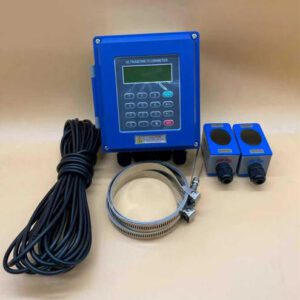
6. Can the meter be retrofitted to an existing pipeline without process shutdown? Clamp-on ultrasonic meters allow non-intrusive retrofit. Insertion vortex and thermal mass meters require a hot-tap or process isolation. Inline meters require a full shutdown. Know which you need before you specify.
7. What cybersecurity features are implemented? The minimum acceptable standard for a networked industrial meter includes TLS 1.2 or higher for data transmission, role-based access control, firmware signing, and audit logging of configuration changes. Any vendor who cannot describe their security architecture in these terms is not ready for ICS/SCADA integration.
8. What is the data storage capacity, and what happens to data during a communication outage? Smart meters should store a minimum of 10,000 time-stamped records locally, downloadable when the communication link is restored. Meters that lose data during outages create gaps in compliance records.
9. Does the vendor provide a register map or GSD file, and is it in standard format? For Modbus RTU meters, request a complete register map with data types and scaling. For PROFIBUS, request the GSD file. A vendor who cannot provide these before the purchase order is signed will cause significant commissioning delays.
10. Is OEM or private-label branding available for the display, firmware, or documentation? Relevant for skid manufacturers and distributors who need the instrument to carry their brand identity, not the component supplier’s.
11. What is the spare parts availability and lead time for critical components? For MRO teams managing aging installations, spare parts availability five to ten years after purchase is a real operational concern. Ask specifically about sensor replacements, display modules, and transmitter boards.
12. What commissioning support is included, and how is remote support delivered for international clients? Ask specifically: Is there a remote commissioning protocol? What is the average response time for a technical support request? Is multilingual support available? For importers and integrators deploying meters in markets far from the manufacturer, this matters enormously.
10. Strategic Recommendations by Customer Type
OEM Equipment and Skid-Mount Manufacturers
Your challenge is designing a metering solution that works in environments you will never see, connected to control systems your customer chose, operated by technicians your manual needs to guide.
Prioritize these specifications:
- Multi-protocol transmitters (Modbus RTU + HART + 4–20 mA as minimum) — gives your skid the broadest possible DCS compatibility
- Integrated temperature and pressure compensation for gas applications — eliminates the need for separate T and P instruments on the skid
- ATEX/IECEx certification where any hazardous area classification is possible — do not limit your addressable market by specifying a non-Ex transmitter
- Pre-configured register maps included in the skid documentation package — reduces end-user commissioning time and support calls
- Private-label or OEM branding options for the display and documentation — supports your brand identity on the installed base
The Jade Ant Instruments gas and steam turbine flow meter and vortex flow meter product lines are both designed with OEM skid integration in mind — ATEX certified, multi-protocol, and available with factory-configured register maps and calibration certificates traceable to national standards.
Instrument Distributors and Importers
Your business model depends on recommending instruments that work reliably in the field and generate repeat business — not warranty claims and support calls.
Focus on:
- Product families with extended calibration intervals (reduces your customer’s maintenance burden and service call frequency)
- Vendor technical support that is accessible in your time zone and language
- Training availability — your sales team needs to understand what they are selling at an application level, not just a catalog level
- Margin structure on smart systems — the USD 600–800 price premium over a fixed meter is a 25–35% margin improvement opportunity if positioned correctly
- Documentation quality — a distributor who can hand a customer a complete commissioning package (wiring diagram, register map, calibration certificate, installation guide) wins repeat business
EPC and System Integrators
You are specified the meter, you are delivering the project, and you own the commissioning. The meter either works on day one or the punchlist grows.
Non-negotiables:
- Verified protocol compatibility with the target DCS before procurement — not during commissioning
- Complete I&M (Installation and Maintenance) documentation in the project language
- Factory acceptance test (FAT) capability for critical metering loops
- API and data export format compatibility with the project historian (OSIsoft PI, AspenTech, Ignition, or equivalent)
- Confirmed lead time against your project schedule — a 14-week lead time on a critical metering package that your schedule shows as a 10-week window is a project risk, not a procurement preference
Industrial Terminal and MRO Companies
Your priority is keeping the process running. Unplanned meter failures are more expensive than the meters themselves.
Design your metering strategy around:
- Condition-based maintenance triggered by smart meter diagnostics — not calendar-based intervals that either change meters too early (waste) or too late (failure)
- Spare meter inventory at the skid level for critical points — a pre-configured spare that can be swapped in 30 minutes is worth more than a 6-week vendor delivery
- Calibration traceability documentation maintained in your CMMS (Computerized Maintenance Management System) — this is increasingly required for regulatory audits
- Retrofit feasibility assessment — not every fixed meter at your facility needs replacement; use the scoring model in Section 5 to prioritize
Municipal and Utility Companies
You manage geographically distributed infrastructure, serve regulated customers, and face increasing pressure to reduce non-revenue gas, automate reporting, and demonstrate cybersecurity compliance.
Your metering architecture needs:
- Centralized SCADA or AMR (Automated Meter Reading) platform capable of aggregating data from hundreds of endpoints
- Smart meters with local data storage — critical for underground vault installations where communication may be intermittent
- Cybersecurity compliance: confirm vendor support for TLS encryption, role-based access, firmware signing, and IEC 62443 alignment
- Mass balance calculation tools — comparing input at custody transfer points against billed consumption across the distribution network identifies non-revenue gas losses in near real-time
- Regulatory audit trail: timestamped, tamper-evident records for billing disputes and regulatory submissions
Embedded Video: Gas Metering Technologies Explained
▶ Watch: Gas Metering Technologies in Natural Gas Pipelines — Transit-Time Ultrasonic, Turbine, Vortex, and Differential Pressure Meters Compared for Industrial and Utility Applications
Compliance Standards Quick Reference

| Padrão | Tipo de medidor | Aplicativo | Requisito fundamental |
|---|---|---|---|
| AGA-3 | Orifice plate | Natural gas custody transfer | Bore condition, differential pressure accuracy |
| AGA-7 | Turbina | Natural gas fiscal measurement | Calibration, installation straight-run |
| AGA-9 | Multipath ultrasonic | Natural gas custody transfer | Path configuration, diagnostic parameters |
| ISO 17089 | Ultrassônico | Gas measurement | Performance classes A, B, C |
| OIML R 137 | All types | Legal-for-trade gas metering | Pattern approval, accuracy class |
| API MPMS 14.3 | Orifice | Gas measurement | Calculation methods, uncertainty |
| EPA 40 CFR Part 98 | All types | GHG reporting | Measurement frequency, data retention |
| IEC 62443 | Smart/networked | Industrial cybersecurity | Security levels, zone architecture |
Glossary of Key Terms
Fixed Metering: A gas measurement system that records cumulative volume without real-time digital output, remote access, or built-in diagnostics. Requires manual reading for data collection.
Smart Monitoring: A gas metering system that transmits real-time flow data digitally, supports remote configuration and diagnostics, generates alarms, and integrates with DCS/SCADA platforms via standard protocols.
SCADA (Supervisory Control and Data Acquisition): A control system architecture that collects real-time data from field instruments, presents it to operators, and allows remote control of process equipment. The backbone of most smart metering networks.
DCS (Distributed Control System): A plant-level control architecture that integrates all process measurements and control loops into a unified operator interface. Smart meters feed data into DCS via Modbus, HART, PROFIBUS, or Fieldbus.
HART (Highway Addressable Remote Transducer): A digital communication protocol that runs on top of a standard 4–20 mA signal, allowing simultaneous analog flow measurement and digital diagnostics without additional wiring.
OPC UA (Open Platform Communications Unified Architecture): An open, platform-independent communication standard for industrial automation. Increasingly used to connect smart meters directly to cloud analytics platforms and digital twins.
Custody Transfer: The measurement of gas as it moves between commercial parties — buyer and seller. Requires the highest accuracy class, certified calibration traceability, and tamper-evident audit records.
Non-Revenue Gas (NRG): The difference between the volume of gas injected into a distribution network and the volume billed to customers. The gap represents losses from leaks, theft, meter error, and unbilled consumption.
ATEX/IECEx: European (ATEX) and international (IECEx) certification frameworks for equipment used in potentially explosive atmospheres. Gas metering in refineries, chemical plants, and natural gas facilities typically requires ATEX or IECEx certification.
AGA-9: The American Gas Association’s standard for multipath ultrasonic transit-time meters used in natural gas custody transfer — defining performance requirements, installation criteria, and diagnostic parameter minimums.
Self-Diagnostics: Built-in monitoring functions within a smart transmitter that continuously evaluate measurement integrity — checking signal strength, zero stability, sensor temperature, and wiring status — and flag deviations without operator intervention.
Perguntas frequentes
1. What are the main differences between fixed and smart gas metering?
Fixed meters provide cumulative volume totals — the total amount of gas that has passed through the meter since the last reset. Smart metering systems provide real-time flow rates, timestamped data records, self-diagnostic outputs, process alarms, and digital communication to DCS, SCADA, or cloud platforms. The functional difference is not primarily about accuracy — well-calibrated fixed meters can be very accurate — it is about how quickly you can see, react to, and document what is happening in your process. Fixed metering tells you what happened. Smart monitoring tells you what is happening now and flags what may happen next.
2. Can smart monitoring reduce gas theft or leakage losses in utility networks?
Yes — and the financial case is well-documented. Continuous flow monitoring detects abnormal consumption patterns that manual reading cannot: sustained micro-leaks at fittings, periodic draw patterns consistent with meter bypass, or sudden zero-flow events that indicate line breaks. Honeywell’s connected gas metering platform reports that utilities deploying smart metering networks typically recover 3–8 percentage points of non-revenue gas within 24 months of full deployment. For a mid-size utility distributing 500 million cubic feet per year, recovering 3% of non-revenue gas at USD 4.00/MMBTU represents approximately USD 600,000 in annual recovered value.
3. How do smart meters integrate with existing SCADA or DCS systems?
Via standard industrial communication protocols — most commonly Modbus RTU over RS-485 for legacy PLC systems, Modbus TCP over Ethernet for modern DCS environments, and HART for systems that already have HART-capable I/O cards. OPC UA is increasingly used for cloud and edge computing integration. The integration process requires: (1) verifying the DCS supports the meter’s protocol, (2) obtaining the meter’s register map or GSD file, (3) configuring the DCS tag database with the correct scaling and engineering units, and (4) verifying the live reading against a known flow condition. For guidance on ultrasonic meter integration across industrial applications, the Jade Ant Instruments ultrasonic flow meter applications guide covers SCADA and DCS integration in detail.
4. Are smart gas meters suitable for hazardous (Class I Div 2 or ATEX Zone 1) environments?
Yes — but the specific certification must match the site hazardous area classification. ATEX Zone 1 (continuous or frequent explosive atmosphere) requires Ex d (flameproof) or Ex e (increased safety) certified equipment. Zone 2 (occasional explosive atmosphere) permits a wider range of protection concepts including Ex nA. In North America, Class I Division 1 and Division 2 classifications apply. For OEM skid designers, specifying a meter certified for Zone 1 / Class I Div 1 covers all downstream site classification possibilities — future-proofing the skid for the widest range of end-user environments. The Jade Ant Instruments vortex flow meter carries ATEX Ex d IIB T4–T6 and IECEx certification as a standard configuration option.
5. What ROI can we realistically expect when upgrading from fixed to smart metering?
Payback periods of 6–18 months are typical, based on three primary value drivers: eliminated manual reading labor (typically USD 400–1,200 per metering point per year depending on accessibility), earlier leak or loss detection (the financial value depends on how much gas is typically lost between manual reads), and reduced calibration costs enabled by self-diagnostic extension of calibration intervals. The business case is strongest at sites with many meters, high labor costs for manual reading, high gas prices, or significant regulatory compliance burden. Use the TCO table in Section 7 as a starting point and adjust the labor and loss figures to your actual site conditions.
6. Do smart meters require external power, or can they operate on battery?
Both configurations exist. Most inline smart transmitters for industrial process applications operate on 24VDC loop power or external AC supply, drawing 1–15 W depending on the display and communication active. Battery-powered versions using 3.6V lithium battery packs exist for remote sites without electrical infrastructure — these typically support LoRaWAN or NB-IoT communication, transmitting interval data (every 15–60 minutes) to extend battery life to 5–10 years. For remote utility metering points in distribution networks, solar-assisted battery systems are increasingly used to power Ethernet-connected smart transmitters without mains power infrastructure.
7. How often do smart meters need calibration compared to fixed meters?
Fixed meters in gas service typically require calibration every 12–24 months, depending on the operating standard and regulatory requirement. Smart meters with active self-diagnostics — monitoring zero stability, signal integrity, and sensor health continuously — can extend calibration intervals to 24–36 months for non-custody-transfer applications, because the diagnostic output provides early warning of any drift before it exceeds the accuracy specification. For AGA-9 custody-transfer applications, calibration requirements are defined by the measurement agreement and the relevant regulation, regardless of self-diagnostics — typically annually with flow calibration at a certified laboratory.
8. Can we retrofit smart monitoring to existing fixed meters without a full replacement?
It depends on the meter type and the current transmitter design. Clamp-on ultrasonic smart transmitters can be added to existing pipelines entirely non-invasively — no process shutdown required. For existing vortex or turbine meters with 4–20 mA outputs, a HART-enabled smart transmitter can sometimes replace the existing transmitter head without replacing the sensor body. For mechanical diaphragm or positive displacement meters with no electronic output, full replacement is typically required. Orifice plate installations require a differential pressure smart transmitter to be added; the plate itself may be retained if it meets the dimensional specifications of AGA-3 or ISO 5167.
9. Is cybersecurity a real concern with networked smart meters?
Yes — and it is an underestimated one in the instrumentation industry. A networked gas meter that lacks basic cybersecurity controls is a potential entry point into your plant network or utility SCADA system. The minimum acceptable cybersecurity baseline for an industrial smart meter includes: TLS 1.2 or higher encryption for all data transmission, role-based access control with separate read/write/admin credentials, firmware signing (preventing unauthorized firmware updates), and audit logging of all configuration changes with timestamps. The IEC 62443 standard for industrial cybersecurity provides the framework most commonly referenced by EPC firms and utilities for specifying security requirements on networked instrumentation.
10. How does smart metering support sustainability and ESG reporting?
Smart metering provides the measurement foundation for scope 1 GHG emissions reporting — direct fuel combustion and process vents. The EPA Greenhouse Gas Reporting Program requires large industrial facilities to report annual natural gas consumption and derived GHG emissions. Smart metering generates the continuous, timestamped flow data required for this calculation automatically, with an audit trail that satisfies regulatory verification requirements. For carbon trading and voluntary ESG commitments, smart metering data also provides the measurement basis for carbon intensity calculations, reduction tracking, and third-party verification.
11. What data storage and cloud integration options are available?
Most modern smart transmitters include internal data logging capable of storing 10,000–100,000 timestamped records — sufficient to cover 30–90 days of 15-minute interval data without communication. For cloud integration, options range from on-premise edge computing (a local gateway aggregates meter data and forwards it to an AWS, Azure, or Google Cloud historian) to direct cloud connection via cellular (NB-IoT, LTE-M) for remote applications. When evaluating cloud integration, confirm: data ownership (who holds the data and under what terms), latency (how quickly does a field event appear in the cloud dashboard), and uptime SLA (what is the guaranteed availability of the cloud platform, and what happens to meter data during an outage).
12. Can smart meter interfaces and firmware be branded for OEM or private-label applications?
Leading manufacturers offer this. OEM branding options typically include custom display splash screens and menu headers, branded documentation (datasheets, wiring diagrams, calibration certificates), and in some cases firmware customization for specific default configurations. For distributors building a private-label instrument business, this requires a formal OEM agreement with the manufacturer that defines IP ownership of the configuration profiles and documentation, minimum order commitments, and support structure.
13. What commissioning support should we expect, especially for international deployments?
At minimum: a remote commissioning protocol (video-guided startup with a factory application engineer), complete wiring and configuration documentation in the project language, and a defined response time for technical support requests — ideally within 4 business hours for critical loop commissioning issues. For importers and integrators deploying meters internationally, multilingual technical support and locally available calibration service are significant differentiators. Contact Jade Ant Instruments directly for project-specific commissioning support requirements — rush quotations and technical coordination can typically be arranged within 12–24 hours.
14. Which industry standards must we follow for gas metering compliance?
The applicable standard depends on the meter technology and the measurement purpose. For custody transfer of natural gas: AGA-7 (turbine), AGA-9 (multipath ultrasonic), or AGA-3 (orifice) in North America; ISO 17089 or EN 12261 for ultrasonic in European markets. For legal-for-trade metering in commercial applications: OIML R 137 and applicable national pattern approvals. For GHG emissions measurement: EPA 40 CFR Part 98 (USA) or EU ETS MRR (Europe), both of which specify measurement uncertainty requirements. Engage your vendor before meter selection to confirm which standards apply to your specific application and what certification documentation is required for your regulatory authority.
15. How scalable are smart monitoring systems across multiple sites?
The scalability of a smart monitoring network depends on the communication architecture and the data management platform. Top-tier SCADA platforms — including Ignition, OSIsoft PI, and Wonderware — are designed to aggregate data from hundreds to thousands of metering endpoints with configurable dashboards, alarms, and reports per site, per region, or across the full portfolio. For multi-site utilities and industrial operators, the investment in a scalable data architecture at the outset — including a communication standard that does not require custom engineering for each new site — is what determines whether the tenth site costs as much to integrate as the first, or significantly less. A comparison of leading flow meter manufacturers and their SCADA integration capabilities provides a useful starting reference for multi-site architecture planning.
Published by the editorial team at Jade Ant Instruments | Serving OEM equipment and skid-mount manufacturers, instrument distributors and importers, EPC and system integrators, industrial terminal and MRO companies, and municipal and utility companies worldwide.
For product specifications, application engineering support, and project quotations, visit www.jadeantinstruments.com.
Sources: Mordor Intelligence Smart Gas Meter Market Report (2026), Markets and Markets Smart Gas Meter Analysis (2025), EPA Greenhouse Gas Reporting Program, Honeywell Connected Gas Metering Platform, AGA Report No. 9 (Ultrasonic Meters), merobix AGA-9 Reference Guide, OPC UA Security Guide (Integration Objects), Sage Metering GHG Emissions Monitoring Reference.