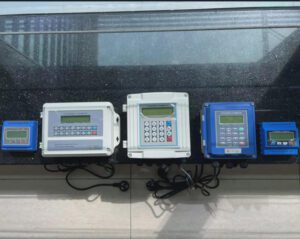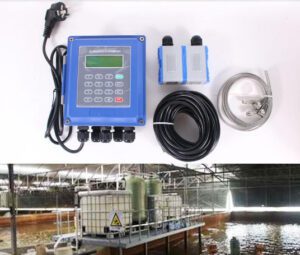

Understanding the market shift toward clamp-on technology and making the right call for your clients through real cost data, installation complexity comparisons, and sector-specific use cases.
A distributor we spoke with last year described the moment a client called back three weeks after receiving an inline meter quote: the plant’s next shutdown window wasn’t for another fourteen months, and the project had quietly died on the shelf. That story repeats itself across water utilities, chemical plants, and food processing lines every week — and it is exactly why the split between clamp-on and inline ultrasonic flow meters has become one of the highest-stakes specification decisions in industrial instrumentation.
Recent market analyses put clamp-on configurations at somewhere between 54% and 58% of the global ultrasonic flow meter market, with several 2025-2026 industry reports converging close to 57% (Mordor Intelligence, 2025; Fact.MR, 2026). That dominance is not a marketing narrative — it reflects a structural shift in how process plants, municipal utilities, and manufacturing facilities are adding measurement infrastructure to systems that were never designed with flow metering in mind.
For distributors and agents, this is not an academic comparison. Recommend the wrong architecture and you either lose the quote to a competitor who understood the client’s shutdown constraints, or you win the order and then absorb the cost of a return when accuracy requirements weren’t met. This guide walks through the technology fundamentals, the installation and cost realities, the sector-by-sector use cases, and the decision framework your sales team needs to confidently steer every client toward the configuration that actually fits their application — not just the one with the lower sticker price.
Understanding Ultrasonic Flow Meter Technology Fundamentals
Both clamp-on and inline ultrasonic meters rely on the same underlying physics: medição do tempo de trânsito, in which two piezoelectric transducers exchange ultrasonic pulses diagonally across the pipe, one downstream (with the flow) and one upstream (against it). The difference in arrival time between the two pulses is directly proportional to the average fluid velocity along that acoustic path. What separates the two architectures is not the physics — it is where the transducers physically sit relative to the pipe wall.
What Are Clamp-On Ultrasonic Flow Meters?
Core technology and operational principles
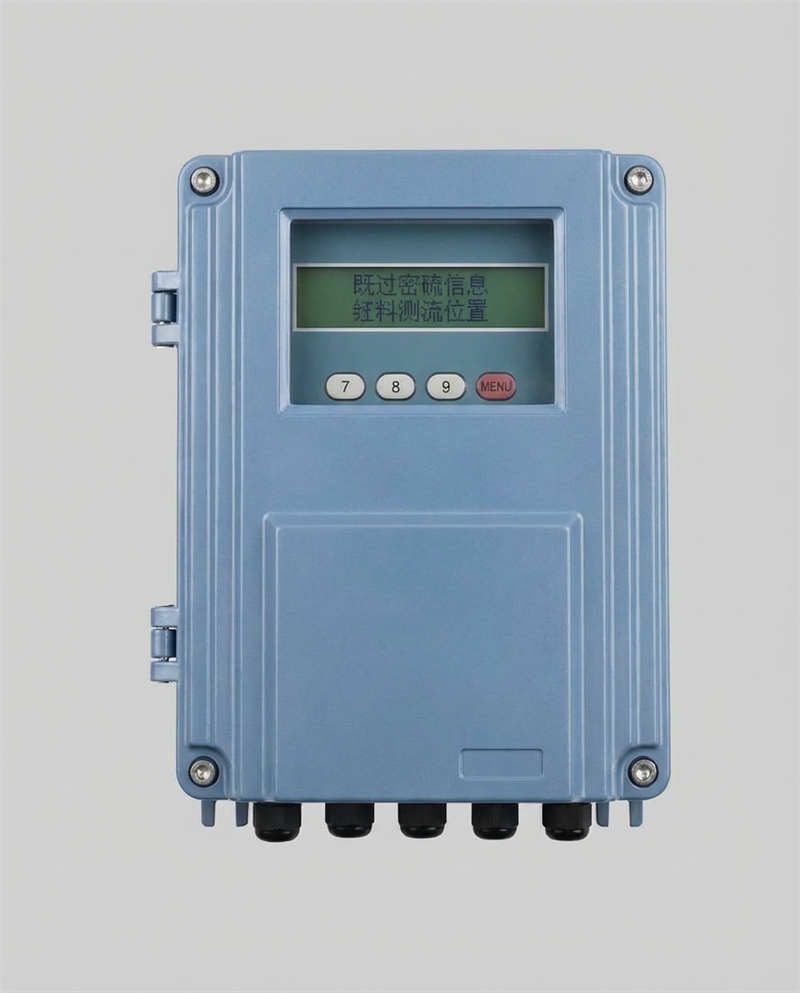
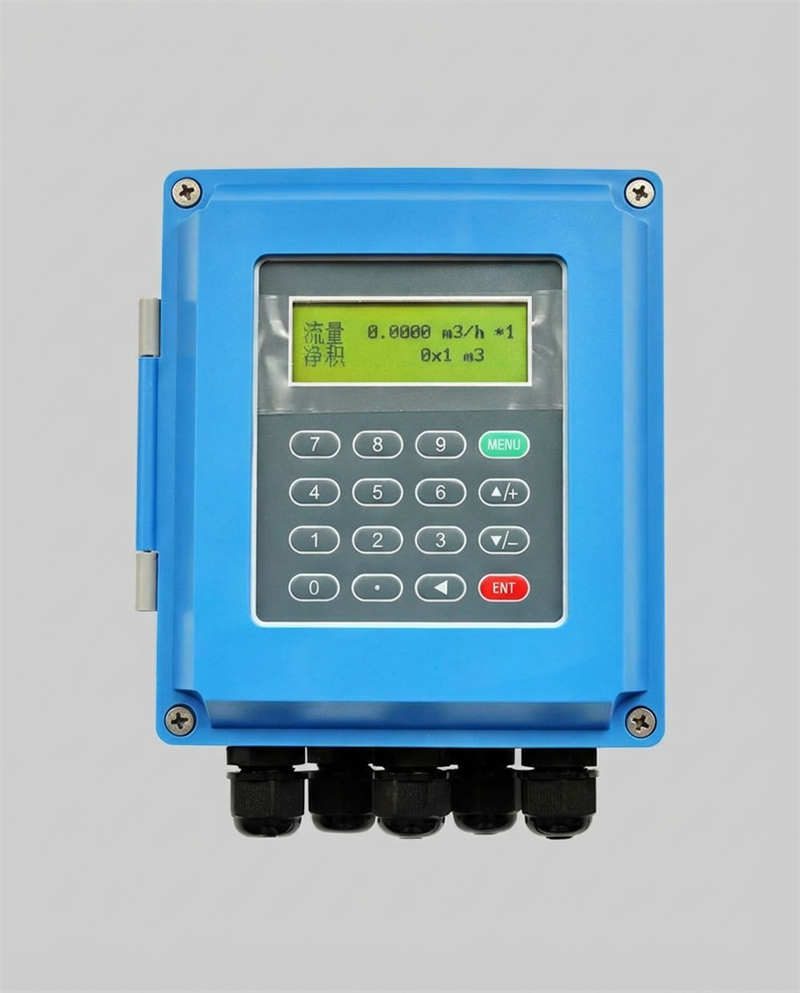
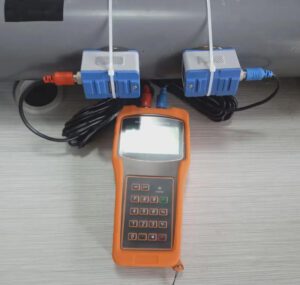
Clamp-on meters position their transducers on the outside surface of an existing pipe. An acoustic couplant compound — a gel or solid-state pad — bridges the small air gap between the transducer face and the pipe surface so the ultrasonic pulse can pass through the pipe wall and into the fluid without excessive attenuation. The transducers never touch the process fluid; the measurement happens entirely inside the pipe while the instrumentation stays outside it.
This non-contact characteristic is the entire commercial case for the technology. A dual-path clamp-on configuration can now reach 0.5% to 1.0% accuracy under good installation conditions — a level that was unheard of in clamp-on products a decade ago, when 3-5% was considered normal.
How they attach to existing pipe infrastructure
Attachment uses a rail-and-strap or chain-clamp mounting system that wraps around the pipe circumference, holding the transducer pair at a calculated separation distance determined by pipe diameter, wall thickness, and the selected measurement mode (V-mode for smaller pipes, Z-mode for larger or acoustically difficult ones). No cutting, no welding, and no pipe modification of any kind is required — the pipe stays exactly as it was before the meter arrived.
What Are Inline Ultrasonic Flow Meters?
Installation methodology and integration requirements
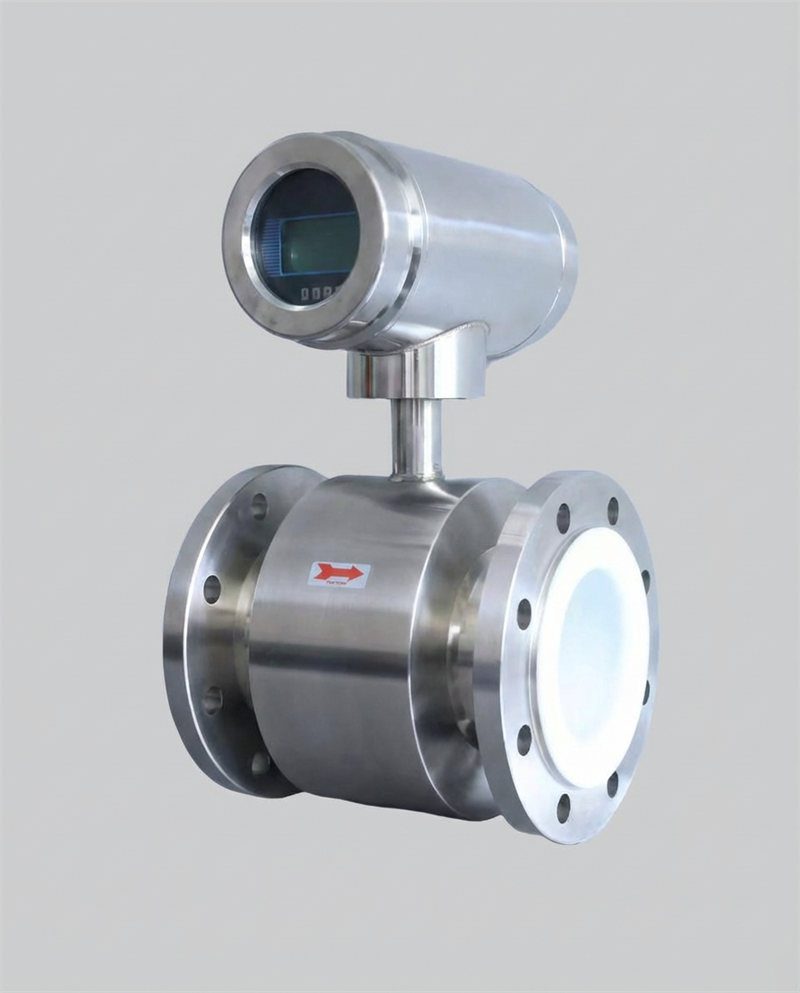
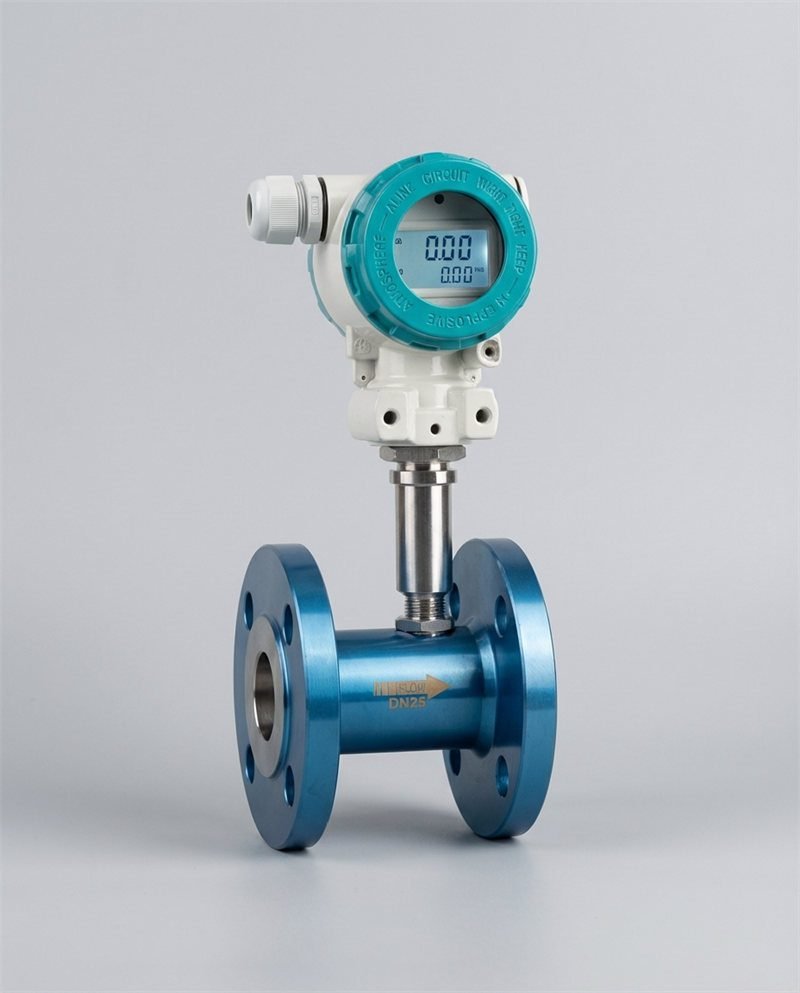
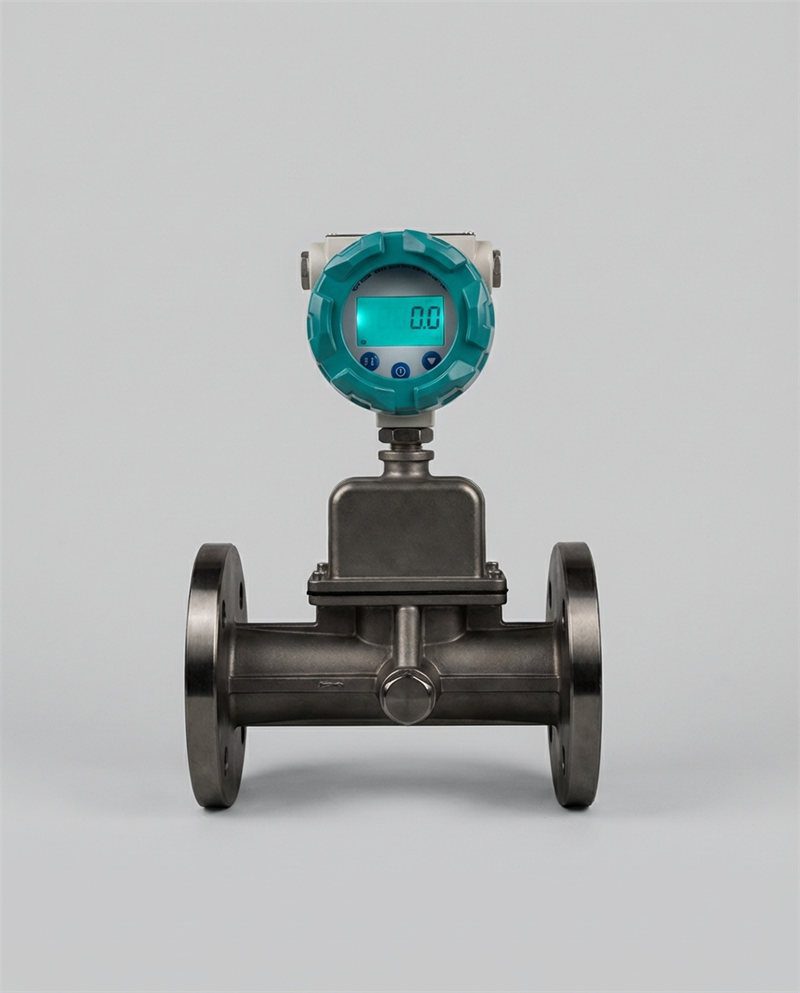
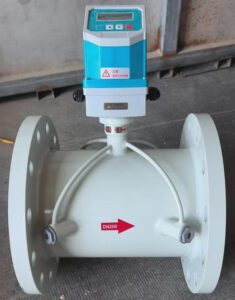
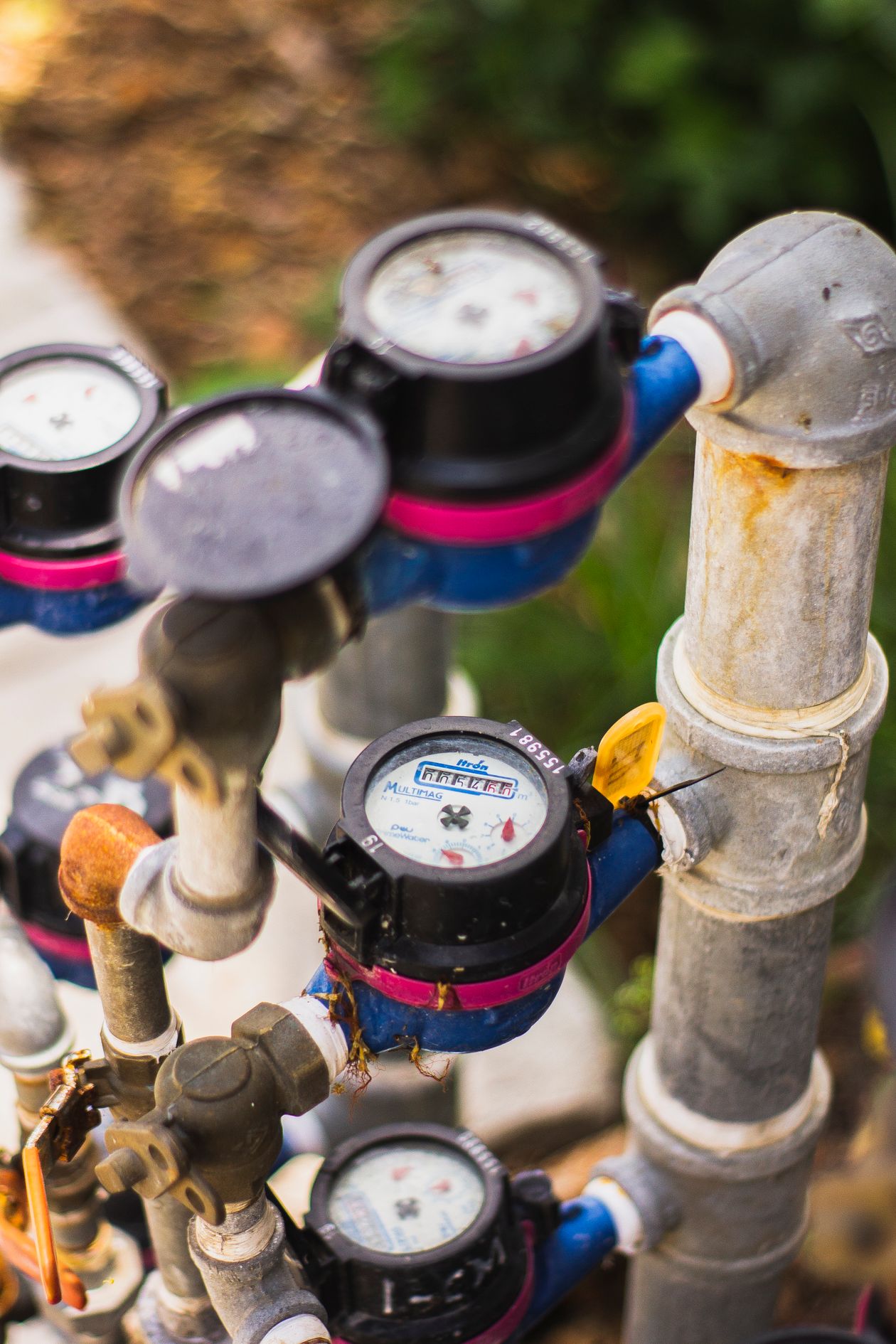
Inline meters — sometimes called spool-piece meters — replace a defined section of the existing pipe, typically 5 to 10 pipe diameters long, with a pre-fabricated metering section containing permanently installed, wetted transducers. Because the transducers sit in a factory-verified, fixed geometric relationship to the pipe bore, the meter arrives with a traceable wet-flow calibration certificate from the manufacturer, referenced against a national calibration standard.
Getting that spool piece into an operating pipeline means isolating the line, draining it, cutting the existing pipe, welding or bolting in the new section to the correct flange standard (ASME B16.5, EN 1092-1, or JIS B 2220 depending on the market), pressure-testing the new joints, and restarting the process. In a live plant, that sequence typically requires a formal shutdown permit and 4 to 8 hours of planned downtime for a single DN100-DN200 measurement point — longer for larger diameters or complex piping layouts.
Operational advantages and limitations
The trade for that installation burden is measurement stability that clamp-on cannot fully match. There is no dependency on an installer’s transducer positioning skill, no couplant degradation over time, and no acoustic uncertainty introduced by variable pipe wall condition. This is precisely why fiscal custody transfer standards such as AGA Report No. 9 for natural gas and API MPMS Chapter 5.8 for liquid hydrocarbons mandate multi-path inline configurations rather than clamp-on units.
Key Technology Differences That Impact Your Clients
Signal transmission and accuracy variations
Signal transmission in a clamp-on meter must pass through three interfaces — transducer face, couplant layer, and pipe wall — before it ever reaches the fluid. Each interface introduces a small acoustic loss and a source of variability. An inline meter’s transducers sit in direct contact with the fluid, eliminating two of those three interfaces entirely. That structural difference is why single-path clamp-on meters typically settle around 1.0% to 2.0% accuracy while single-path inline meters at the same pipe size often reach 0.5% to 1.0%.
Measurement reliability across different fluid types
Clean, particle-free fluids favor the transit-time principle used by both architectures. When fluids carry suspended solids or entrained gas bubbles — wastewater sludge, mining slurry, aerated process streams — a different principle, Doppler-shift measurement, becomes necessary. Doppler meters emit a continuous ultrasonic beam and measure the frequency shift reflected back from particles moving with the fluid, and they are available in clamp-on form factor almost exclusively; inline Doppler configurations are rare because the wetted transducer would face the same fouling and abrasion problems as any other wetted instrument. For a deeper technical breakdown of when to specify each principle, see the transit-time vs. Doppler selection guide.
The Market Dominance of Clamp-On Technology—Why It Matters
Market Share Analysis and Industry Trends
Historical growth trajectory of clamp-on adoption
A decade ago, clamp-on ultrasonic meters were largely viewed as audit and troubleshooting tools — useful for a one-time energy survey, but not trusted for permanent process instrumentation. That perception has reversed. Digital signal processing improvements, dual-path velocity profile correction, and IP68-rated transducer housings rated for continuous outdoor service have pushed clamp-on accuracy into a range that satisfies 80-90% of real industrial measurement points. The result: the clamp-on segment of the ultrasonic flow meter category has grown from a niche share to the majority position it holds today, with the global clamp-on ultrasonic flow meter market alone estimated at USD 3.8 billion in 2025, forecast to reach USD 6.2 billion by 2033 at a 7.2% CAGR — the fastest-growing segment in the entire flow measurement industry.
Factors driving distributor preference
Three factors compound to drive this preference. First, the addressable market for clamp-on is overwhelmingly the retrofit and upgrade segment — the enormous installed base of pipe that was never metered when it was built. Second, distributors who can close a sale, schedule an installation, and invoice within the same week (because there is no shutdown coordination required) turn inventory faster than those managing multi-month inline projects. Third, and perhaps most persuasive to procurement departments, the total installed cost gap between the two architectures is large enough to change project approval decisions outright, not just adjust the margin.
Why Industries Are Choosing Clamp-On Solutions
Non-invasive installation advantages
A two-person technician team can install a fixed clamp-on meter on a DN200 pipeline in under 90 minutes — no welding permits, no pressure testing, no production loss. For a facility running at $50,000 per hour of production value, that difference alone frequently exceeds the entire meter’s purchase price before any operational benefit from the measurement data is even counted.
Retrofit capability in existing systems
Existing plants built without flow measurement in mind — a common condition in pre-2000 industrial facilities — need metering added to operating pipelines without disrupting production. In one documented energy management project at a mid-sized Southeast Asian petrochemical complex, 47 clamp-on meters were installed across 14 process units over three weeks with zero production interruptions. Total project cost: roughly $70,000, against an estimated $290,000-$340,000 for equivalent inline installations that would have required planned shutdowns. The savings funded additional monitoring points and two years of distributor support contracts, with ROI achieved within 8 to 11 months from energy optimization alone.
Understanding the Competitive Positioning
Where inline meters maintain market share
Inline meters retain a durable position in three categories that clamp-on cannot currently serve: fiscal custody transfer (where AGA-9 and API MPMS 5.8 mandate multi-path inline configurations), high-precision batch and dosing control below DN50 (where 0.2-0.5% accuracy is a regulatory requirement, particularly in pharmaceutical manufacturing under FDA 21 CFR Part 211), and greenfield new construction, where there is no existing pipe to disrupt and the installation cost gap largely disappears.
Emerging trends affecting future market dynamics
The next competitive shift is happening at the accuracy boundary. Dual-path and multi-path clamp-on configurations with in-situ calibration verification are closing the gap that used to separate clamp-on from inline in the 0.5%-1.0% accuracy band — the range that covers most energy sub-metering and district heating billing applications. As that gap narrows, inline’s remaining advantage concentrates further into the small number of applications that genuinely require sub-0.5% accuracy or fixed-geometry regulatory certification.
Installation Complexity: A Detailed Comparison for Your Sales Team
Clamp-On Installation Process
Step-by-step installation requirements and timelines
The clamp-on installation workflow follows a consistent five-step sequence that a single trained technician can complete without specialist contractors:
- Pipe survey — measure outside diameter with a pi tape or vernier caliper (not nominal pipe size, which varies between schedules), confirm wall thickness with an ultrasonic thickness gauge, and identify a section with adequate straight run (typically 10 diameters upstream, 5 downstream of any valve, elbow, or pump).
- Transducer spacing calculation — enter the pipe parameters into the meter’s built-in calculator to determine the correct separation distance for the chosen measurement mode.
- Surface preparation — clean the mounting area of loose paint, scale, or corrosion, then apply a thin, uniform layer of acoustic couplant.
- Transducer mounting — attach transducers using the rail-and-clamp system and confirm signal quality on the transmitter display.
- Commissioning — configure pipe parameters, verify the zero-flow reading, and connect to the plant’s 4-20 mA, HART, or Modbus communication loop.
Minimal downtime and operational disruption
The entire sequence above, on a typical DN100-DN300 pipeline, takes between 30 minutes and two hours — and at no point does the process need to stop. That single fact reframes clamp-on installation from a capital project requiring budget committee sign-off into a routine instrumentation task that a maintenance department can schedule on any normal working day.
Inline Installation Requirements
System shutdown necessities and planning
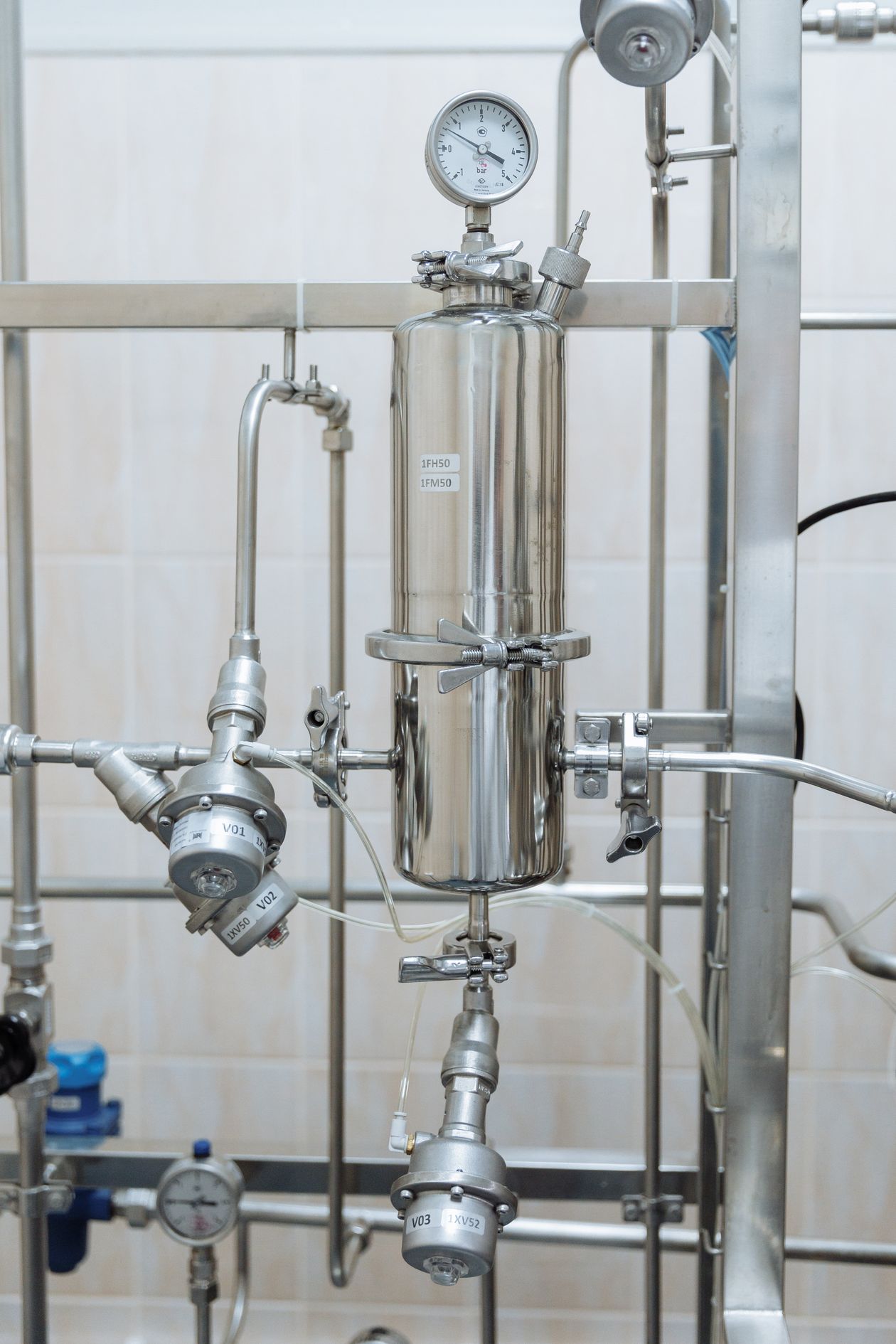
Inline spool-piece installation requires isolating and depressurizing the relevant section of pipeline, a formal lockout-tagout procedure, and a planned shutdown window. For a DN100-DN200 process line, a realistic budget includes 4 to 8 hours of total outage time; complex piping layouts, larger diameters, or hazardous-area permitting requirements can extend that to 2-5 days once safety approvals, bypass arrangements, and restart procedures are included.
Piping modifications and integration challenges
Beyond the shutdown itself, the distributor must confirm the exact flange standard, pressure class, and pipe schedule before ordering — a DN100 Class 150 ASME flange and a DN100 PN16 EN flange are not interchangeable, and a mismatch discovered on-site turns a planned installation into an emergency delay.
Total Installation Cost Implications
Labor costs across installation types
The labor cost gap is the single most persuasive number in most sales conversations. A clamp-on technician completes the full survey-to-commissioning sequence in 1-2 hours at a labor cost of roughly $150-$400. The same measurement point specified as inline requires a two-person mechanical contractor crew for pipe cutting and flanging (4-8 hours at $80-$150 per person-hour), an instrument technician for wiring (2-4 hours), and a QA inspector for pressure testing and sign-off (1-2 hours) — a total labor bill of $1,200 to $3,500, before the meter itself is even counted.
Equipment and materials required for each approach
The complete clamp-on field kit fits in a single instrument carry case: transmitter, transducer pair, signal cable, couplant compound, wall thickness gauge, and a laptop or tablet for configuration. Inline installation additionally requires flange gasket kits, stud bolts, welding consumables or bolted-joint hardware, and — depending on the process environment — insulation jackets or surface protection, none of which are typically included in the base meter price.
Table 1: Total Installed Cost Comparison — Clamp-On vs. Inline Ultrasonic (Brownfield, DN100 Line)
| Elemento de custo | Clamp-On | Inline (Spool-Piece) | Saving with Clamp-On |
|---|---|---|---|
| Meter purchase price | $1,200 – $3,500 | $3,000 – $8,000 | $1,500 – $4,000 |
| Installation labour | $150 – $400 (1-2 hrs) | $1,200 – $3,500 (4-8 hrs) | $1,050 – $3,100 |
| Pipe cutting & flanging | $0 | $600 – $2,000 | $600 – $2,000 |
| Process shutdown cost | $0 | $2,000 – $15,000+ | $2,000 – $15,000+ |
| Pressure testing & sign-off | $0 | $200 – $800 | $200 – $800 |
| Commissioning | $100 – $300 | $300 – $800 | $200 – $500 |
| Total Installed Cost | $1,450 – $4,200 | $7,300 – $30,100 | Up to 85% lower |
Illustrative USD ranges for a DN100 brownfield retrofit scenario. Compiled from manufacturer data sheets and the Jade Ant Instruments clamp-on vs. inline buyer’s guide.
Training and Expertise Requirements
Skill levels needed for clamp-on deployment
A half-day classroom session covering pipe measurement technique, transducer spacing calculation, couplant application, and signal quality interpretation is generally sufficient to bring a maintenance technician to installation competency. Clients who receive this training report first-installation success rates above 90%; those relying solely on the printed manual report closer to 60% — a gap distributors can close by offering structured installation training as a value-added service.
Specialized knowledge for inline system integration
Inline meter specification requires cross-referencing flange standards, pressure classes, and material compatibility against the client’s process conditions — work that typically involves closer technical dialogue between the distributor, the manufacturer’s application engineers, and the client’s own engineering department before an order is placed.
Comprehensive Cost-Benefit Analysis for B2B Decision-Making
Initial Capital Investment Breakdown
Equipment procurement costs comparison
Entry-level portable clamp-on units for pipe sizes up to DN200 start around $500-$1,500 and are used primarily for energy audits and commissioning verification. Fixed single-path clamp-on meters for permanent monitoring on DN50-DN600 pipes run $1,200-$4,500, while dual-path configurations offering 0.5% accuracy on larger pipes range from $4,000-$10,000+. On the inline side, small single-path meters for DN15-DN50 process lines cost $800-$2,500, mid-range two-path DN50-DN200 meters run $3,000-$12,000, and high-accuracy four-to-eight-path fiscal custody transfer meters for DN200 and above meeting AGA-9 or API MPMS 5.8 certification are priced from $15,000-$50,000 or more, reflecting the factory wet-flow calibration and third-party certification embedded in the price.
Hidden costs in each installation type
For inline meters, the hidden costs typically show up in delivery lead time (4-16 weeks for custom-flanged spool pieces), gasket and stud bolt kits that aren’t always included, and surface insulation where the process environment demands it. For clamp-on meters, the ongoing hidden cost is couplant compound supply and replacement scheduling — a minor recurring expense, but one that belongs in any multi-year maintenance contract quoted to a client.
Operational Cost Considerations
Maintenance and servicing expenses
Clamp-on meters have no wetted, wearing components. The primary maintenance task is a quarterly-to-annual couplant inspection taking about 15 minutes, plus an annual cable integrity check — realistically $50-$200 per year, almost entirely technician time rather than parts. Inline meters in scaling or fouling-prone services may need internal inspection and transducer cleaning every 18-36 months at $1,500-$4,000 including the associated production shutdown, and fiscal metering applications typically mandate annual or biennial wet-flow calibration at an ISO 17025-accredited laboratory, costing $2,000-$8,000 per meter.
Long-term reliability and replacement cycles
Both technologies report similar mean time between failures — often exceeding 100,000 operating hours. What differs is the cost structure when something does fail. A degraded clamp-on transducer is unclamped and replaced in under 20 minutes without stopping the process, at a parts cost of $200-$500. A failed inline meter requires the full installation sequence to be repeated: isolation, cutting, flanging, pressure testing. That asymmetry compounds significantly over a 10+ year measurement horizon.
ROI Calculation Framework
Payback period analysis for different applications
The fastest documented paybacks occur in energy monitoring retrofits — the Southeast Asian petrochemical case referenced earlier achieved full ROI in 8-11 months through avoided shutdown costs and downstream energy optimization. In most brownfield retrofit scenarios generally, clamp-on installation cost is recovered within 12-18 months through avoided costs alone, before any benefit from improved measurement data is factored in.
Total cost of ownership over 5-10 year cycles
Table 2: 5-Year Total Cost of Ownership — Clamp-On vs. Inline (Illustrative USD, DN100 Brownfield Line)
| Categoria de custo | Clamp-On | Em linha |
|---|---|---|
| Equipment purchase | $2,200 | $5,500 |
| Installation + process shutdown | $300 | $7,500 – $8,000 |
| 5-year maintenance & calibration | $500 | $2,500 |
| 5-Year TCO Total | ~$3,000 | ~$15,500 – $16,000 |
Source: compiled from manufacturer data sheets and Jade Ant Instruments TCO comparison data. Values are illustrative for a typical brownfield installation.
Cost Advantages by Application Type
When clamp-on delivers superior ROI
Retrofit projects, multi-point energy or water audits, corrosive fluid service where wetted parts would otherwise fail, and any measurement point where the next planned shutdown is more than a few months away are the scenarios where clamp-on’s cost advantage translates directly into faster project approval.
Scenarios where inline justifies premium pricing
Custody transfer, high-precision batch dosing, greenfield construction, and any application above roughly 150°C or 100 bar where standard clamp-on couplants and mounting hardware reach their operating limits are the scenarios where the inline premium is not a cost to be minimized — it is the price of a measurement the client legally or commercially cannot get any other way.
Real-World Use Cases Across Industrial Sectors
Water and Wastewater Management Applications
Clamp-on solutions for municipal systems
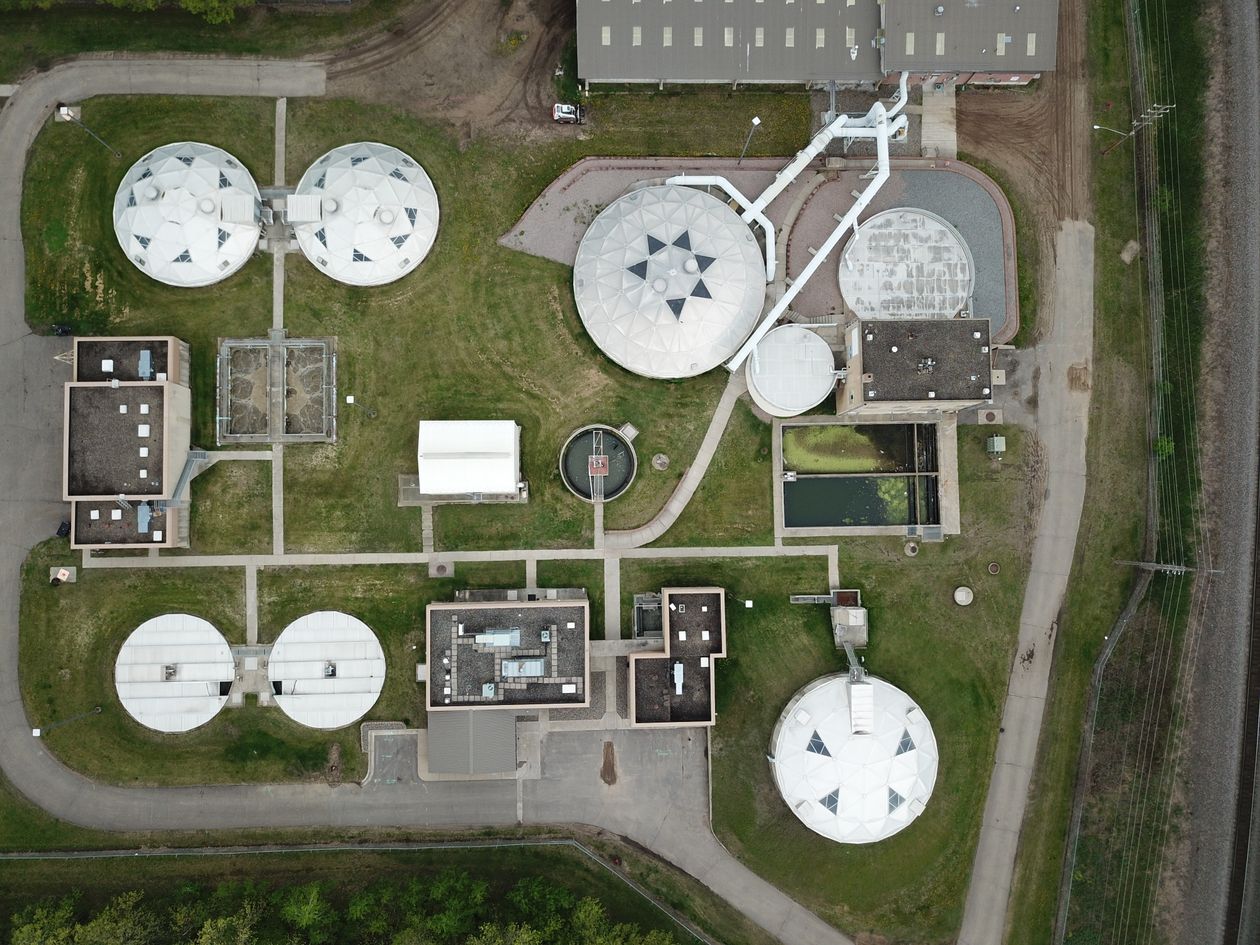
Municipal water utilities globally lose an average of 30-40% of treated water to non-revenue water — the gap between water produced and water billed to customers, driven by leakage, meter errors, and unbilled consumption (EPA flow measurement guidance). Reducing that loss requires metering every District Metered Area inlet and major transmission main. A utility with 200 such points installing clamp-on meters at roughly $3,500 per installed point, versus $12,000 per point for inline, commits $700,000 versus $2.4 million — a $1.7 million difference that frequently determines whether the non-revenue-water program gets approved at all.
Inline meters in treatment facility operations
Within treatment facility process control — chemical dosing lines, custody-transfer billing points between municipal and industrial customers, and precision blending applications — inline meters retain their position because the accuracy and calibration traceability requirements exceed what clamp-on can certify.
HVAC and Building Systems
Retrofitting existing chilled water loops
District cooling and heating operators billing tenants for thermal energy must measure flow accurately enough to support valid invoices. A DN300 chilled water header carrying 800 m³/h at a 6°C supply/return differential represents roughly 5.6 MW of cooling load; at a $0.08/kWh district cooling tariff, a 2% metering error generates $78,000 in annual billing discrepancy — more than the cost of upgrading to dual-path clamp-on accuracy. Because the fluid in these systems is almost universally clean, treated water, this is an ideal application for transit-time clamp-on measurement, particularly when paired with clamp-on temperature sensors to form a complete non-invasive heat meter that meets EN 1434 Class 2 requirements.
New construction integration strategies
For new building services infrastructure where the piping is being drawn fresh, inline meters installed during initial erection avoid the retrofit cost differential entirely and deliver the stronger long-term calibration stability that facility owners typically prefer for permanent billing infrastructure.
Oil, Gas, and Petrochemical Industries
Custody transfer requirements and accuracy demands
Any application where flow measurement forms the basis of a financial transaction — natural gas billing, crude oil pipeline transfers, refined product terminal operations — requires a meter certified to the applicable custody transfer standard: AGA Report No. 9 for gas, API MPMS Chapter 5.8 for liquid hydrocarbons. Both standards mandate multi-path inline meters with factory wet-flow calibration traceable to national standards; clamp-on meters are not currently certified for custody transfer under any major international standard, a hard technical boundary distributors need to communicate clearly rather than a commercial preference to negotiate around.
Hazardous environment considerations
Where clamp-on meters do earn a strong role in oil and gas is as independent check meters — installed alongside fiscal custody transfer meters to provide a continuous cross-check of primary meter performance. When the clamp-on reading diverges from the primary meter by more than a defined threshold, typically 0.5-1%, an alert triggers early investigation before measurement drift accumulates into a significant reconciliation dispute between trading parties.
Food and Beverage Processing
Sanitary requirements and product contact concerns
Food and beverage facilities operate under FDA 21 CFR Part 110 in the US and EU Regulation 852/2004 in Europe, both of which require food-contact surfaces to be cleanable and non-contaminating. Any instrument that penetrates a food-product line creates a potential contamination point — a crevice, a leaching seal, or a dead leg that traps residue between Clean-in-Place cycles.
Clamp-on advantages in sensitive applications
Clamp-on meters eliminate all of those risks by design: the pipe wall stays intact, no new connections are created, and the CIP cycle is unaffected by the meter’s presence. For dairy processing, beverage filling, and purified water systems, this non-contact characteristic is often the only compliant way to add flow measurement without revalidating the production line.
Pharmaceutical and Chemical Manufacturing
Regulatory compliance and documentation needs
USP purified water and Water for Injection systems cannot tolerate wetted fittings that create dead legs or non-drainable volumes — both FDA 21 CFR Part 211.65 and European GMP Annex 1 prohibit flow devices that introduce contamination risk. When a European vaccine manufacturer retrofitted 24 clamp-on meters on its WFI distribution loop, it avoided the full revalidation process that installing any wetted device would have triggered, saving an estimated €180,000 in validation engineering and laboratory testing.
System validation requirements
Where batch dosing accuracy below 0.5% is a regulatory requirement — for example, active ingredient charging under FDA process validation guidelines — inline meters at DN25-DN50 remain the correct specification, because no clamp-on meter at that pipe size reliably meets the required tolerance.
HVAC and Renewable Energy Systems
Solar thermal system monitoring
Solar thermal loops circulate glycol-water mixtures through collector arrays and storage tanks, typically at moderate pressure and temperatures well within standard clamp-on operating ranges. Because these systems are frequently retrofitted onto existing building infrastructure and rarely justify the cost of a dedicated shutdown, clamp-on measurement is the practical default for performance monitoring and efficiency verification.
Geothermal application requirements
Geothermal loops, particularly on the production side of deep closed-loop or enhanced geothermal systems, can run at temperatures and pressures that exceed standard clamp-on couplant tolerances (generally above 150-200°C). In these higher-severity applications, inline meters with high-temperature transducer materials become the more reliable long-term specification.
Accuracy, Reliability, and Performance Metrics
Measurement Accuracy Comparison
Typical accuracy ranges for each technology
Table 3: Clamp-On Ultrasonic Flow Meter Key Technical Specifications by Configuration
| Parâmetro | Single-Path Clamp-On | Dual-Path Clamp-On | Inline Multi-Path |
|---|---|---|---|
| Accuracy (% of reading) | 1.0 – 2.0% | 0.5 – 1.0% | 0.15 – 0.5% |
| Repetibilidade | Better than 0.5% | Better than 0.3% | Better than 0.1% |
| Relação de redução | 100:1 | 150:1 | 400:1 |
| Pipe diameter range | DN25 – DN6000 | DN50 – DN3000 | DN15 – DN3000+ |
| Process temperature | -40°C to +160°C (std) / +200°C (HT) | -40°C to +200°C | Up to +450°C |
| Custody transfer certified? | No (monitoring only) | Marginal (some jurisdictions) | Yes (AGA-9, API MPMS 5.8) |
Factors affecting measurement precision
A 2022 independent field study published in Flow Measurement and Instrumentation tested seven clamp-on transit-time meters under real industrial conditions (ScienceDirect, 2022). Meters on clean, well-characterized pipes delivered around 1.0% of reading consistently; those on pipes with wall thickness variation above 15% from corrosion showed errors up to 2-5% — a clear reminder that pipe condition assessment matters as much as meter specification when quoting clamp-on solutions.
Reliability in Challenging Conditions
Performance with different fluid types
Clean fluid applications — water, treated chemicals, refined hydrocarbons — favor transit-time measurement in either architecture. Wastewater, mining slurry, and other particle-laden fluids require Doppler-shift measurement, which is almost exclusively available in clamp-on form because a wetted Doppler transducer would face the same abrasion and fouling problems any wetted instrument encounters in that service.
Temperature and pressure extremes
Standard clamp-on couplants and mounting hardware operate reliably up to roughly 160-200°C and moderate pressure ranges. Above that envelope — supercritical steam lines, high-pressure hydrocarbon processing — inline meters with ceramic or metallic waveguide transducer designs routinely handle 300-450°C and up to 400 bar, ranges completely outside any standard clamp-on product’s operating window.
Signal Quality and Data Integrity
Noise immunity and signal processing
Modern digital signal processing applies bandpass filtering, cross-correlation timing, and multi-measurement averaging (10-100 measurements per second) to separate the flow signal from pump, compressor, and valve-induced pipeline noise. Both architectures benefit from this processing, but inline meters’ fixed geometry gives the DSP a more stable baseline to work from.
Consistency across varying flow rates
Turndown ratio — the ratio of maximum to minimum measurable flow at rated accuracy — is where inline meters hold a clear numerical edge (400:1 versus 100:1-150:1 for clamp-on), though for the vast majority of process monitoring and energy metering applications, clamp-on’s turndown range is more than adequate to cover normal operating variation.
Regulatory Compliance and Industry Standards
Custody Transfer and Fiscal Metering
Approved technologies for commercial transactions
No current international custody transfer standard certifies clamp-on ultrasonic meters for fiscal measurement of gas or liquid hydrocarbons. The reason is geometric, not commercial: custody transfer standards require a known, stable, factory-verified measurement path, and clamp-on’s field-positioned transducers can shift with thermal expansion or vibration in ways that a factory-set inline geometry cannot.
Certification requirements and standards
The governing standards are AGA Report No. 9 for North American natural gas custody transfer, API MPMS Chapter 5.8 for liquid hydrocarbon custody transfer, and ISO 17089-1 for general gas metering calibration traceability. All three currently point exclusively to inline multi-path configurations.
Environmental Monitoring Requirements
EPA and regulatory body preferences
For wastewater discharge monitoring under NPDES permit programs, the EPA’s flow measurement guidance accepts both ultrasonic architectures depending on the specific accuracy and documentation requirements of the permit — the deciding factor is usually fluid cleanliness (favoring Doppler clamp-on in sludge-heavy lines) rather than a blanket technology preference.
Documentation and reporting capabilities
Regulatory reporting increasingly expects digital data trails — flow rate, totalized volume, and diagnostic status published via Modbus TCP/IP or HART to a plant data historian. Both clamp-on and inline meters support this integration depth on premium transmitter models.
Industry-Specific Standards
ASME, ISO, and international compliance
Beyond custody transfer, ISO 6416 governs ultrasonic transit-time discharge measurement in open channels and large conduits, ISO 9104 covers general performance evaluation methods for ultrasonic flow meters, and AWWA C750 governs transit-time flowmeters in full closed conduits for the North American water industry.
Third-party verification requirements
Custody transfer and fiscal metering applications typically require periodic wet-flow verification at an accredited flow calibration laboratory, plus a meter proving program capable of checking in-situ performance against a portable reference prover — a capability inline meters support through conventional pipeline prover systems, but that clamp-on meters cannot currently integrate into.
Strategic Recommendations for Distributors and Agents
Evaluating Your Client’s Specific Needs
Questionnaire framework for needs assessment
Before recommending either technology, your sales team needs five pieces of information from every client: pipe outside diameter and wall thickness, pipe material and internal lining condition, fluid type and particulate content, the required accuracy class (process monitoring versus billing versus custody transfer), and the client’s shutdown tolerance — specifically, when their next planned maintenance window falls and what an hour of unplanned downtime costs their operation.
Matching technology to application requirements
Table 4: Application Requirement vs. Recommended Configuration
| Client Requirement | Recommended Configuration | Why |
|---|---|---|
| Process flow monitoring, 1-2% acceptable | Single-path clamp-on, transit-time | Lowest cost, zero shutdown |
| Energy/BTU sub-metering, 1-2% | Dual-path clamp-on + temperature sensors | Meets EN 1434 Class 2 sub-metering requirements |
| Revenue/billing metering, 0.5-1% | Dual-path clamp-on + in-situ calibration | Achievable with proper installation |
| Wastewater / sludge monitoring | Single-path Doppler clamp-on | Particles provide reflectors; transit-time fails |
| Custody transfer (gas/hydrocarbons) | Inline multi-path (AGA-9 / API MPMS 5.8) | Clamp-on not currently certifiable |
| Corrosive / aggressive chemical service | Clamp-on (no fluid contact) | Zero contamination risk, no wetted parts |
Portfolio Positioning Strategy
When to recommend clamp-on solutions
Default to clamp-on whenever the client cannot tolerate a shutdown, the pipe is an existing (not new) installation, the fluid is corrosive or high-purity, or the accuracy requirement is at or above 1%. This covers the majority of retrofit, monitoring, and energy audit inquiries a distributor receives.
Scenarios requiring inline meter specification
Escalate to inline whenever the measurement feeds a financial transaction, the pipe is being installed fresh in new construction, the process runs above roughly 150°C or 100 bar, or the client’s regulatory framework (FDA, EPA fiscal reporting, custody transfer contracts) explicitly names a certification that only inline meters currently hold.
Building Customer Confidence
Case studies and performance data
Site-specific numbers close more deals than product brochures. Build a simple five-row spreadsheet with equipment cost, installation labor, shutdown cost, 5-year maintenance cost, and 5-year calibration cost, using the client’s own contractor rates and production value per hour. In most brownfield scenarios, this model shows clamp-on at 25-60% of inline’s total cost of ownership — a difference that reframes the conversation from a price objection into a financial argument the client’s own procurement team can carry into a budget meeting.
Risk mitigation strategies
For borderline pipe conditions — older cast iron mains, heavily corroded steel — recommend a field Signal Quality Index test with a portable clamp-on unit before committing to a permanent specification. The 10-minute test either confirms the site will work or flags the need for inline or hot-tap insertion instead, avoiding a costly post-installation return.
Competitive Differentiation
Value-added services for your client base
Distributors offering complimentary application audits — walking a client’s plant with a portable clamp-on kit to identify unmetered flow points and quantify the energy or water waste at each one — build a project pipeline that extends well beyond a single meter sale, and position the distributor as an engineering partner rather than a commodity supplier.
Technical support and training programs
A half-day installation training session, offered as part of the sale rather than an afterthought, measurably improves field accuracy outcomes and creates long-term dependence on the distributor’s technical expertise rather than a competitor’s price list.

Implementation Roadmap and Decision Framework
Pre-Purchase Assessment Checklist
Critical questions for system evaluation
Is the measurement used for financial transactions, regulatory reporting, or process control? Can the process be shut down within the client’s operational timeline? Is the fluid clean, particle-laden, corrosive, or ultra-pure? Each answer eliminates part of the technology decision tree before a product is ever quoted.
Site-specific considerations and constraints
Confirm pipe material and lining compatibility, available straight-run length (10 diameters upstream, 5 downstream as a baseline), and — where relevant — hazardous area classification requiring ATEX/IECEx or NEC certification on the transmitter and transducers.
Vendor Selection Criteria
Quality standards and warranty considerations
Prioritize manufacturers who hold ISO 9001 certification and provide traceable factory calibration documentation acceptable to industrial quality management systems. A meter without this documentation trail cannot be specified into most fiscal or regulated applications regardless of price.
Support infrastructure and service availability
Confirm the vendor’s firmware update policy, transducer interchangeability across product generations, and access to regional calibration services — an ultrasonic meter installed today will likely still be measuring flow fifteen years from now, and the support infrastructure needs to last that long too.
Post-Installation Support Strategy
Calibration and verification protocols
For process monitoring, biennial verification with a portable reference meter is generally sufficient. For fiscal or custody transfer applications, annual wet-flow calibration at an accredited laboratory is the minimum standard most trading partners will accept.
Ongoing maintenance planning
Build couplant inspection and cable integrity checks into a standing maintenance contract for clamp-on installations, and schedule internal inspection intervals for inline meters in scaling-prone services before problems compound into unplanned production loss.
For a full walkthrough of how these decision points connect to broader flow meter selection strategy across all technologies — not just ultrasonic — the 5-factor flow meter selection framework is a useful companion reference for your technical team.
Watch: The Ultrasonic Flow Measuring Principle — a clear explanation of how clamp-on and inline transducer placement changes measurement behavior: https://www.youtube.com/watch?v=Bx2RnrfLkQg
Making the Right Choice for Your Industrial Clients
The clamp-on versus inline decision ultimately reduces to three questions your sales team should be asking on every inquiry: what accuracy does this specific measurement point actually require, can the process tolerate a shutdown, and is this measurement feeding a financial or regulatory transaction. Get those three answers, and the technology choice becomes close to self-evident rather than a debate.
What the market data makes clear is that clamp-on’s rise to majority market share is not a temporary trend — it reflects the sheer scale of the retrofit opportunity sitting in aging industrial infrastructure worldwide, and the fact that modern dual-path clamp-on technology now genuinely satisfies the accuracy requirements of 80-90% of industrial measurement points. Inline meters aren’t disappearing; they are consolidating into the applications — custody transfer, high-precision dosing, extreme temperature and pressure service — where their structural advantages are not optional.
For distributors and agents, the long-term win is not picking a side in this comparison. It’s being the technical partner who can walk into any client site, correctly qualify the application in fifteen minutes, and recommend the configuration that will still be performing to specification five years later. Instrumentos Jade Ant supports that positioning with a product range spanning clamp-on meters from DN32 to DN6000, portable audit kits, and inline spool-piece meters for fiscal applications — giving distribution partners the full technical toolkit to serve every measurement point a client brings them, rather than forcing every application into whichever single technology happens to be in stock.
FAQs: Addressing Common Distributor and Agent Questions
1. Why do clamp-on meters dominate over half the ultrasonic flow meter market if inline meters exist? Clamp-on meters offer non-invasive installation, reduced downtime, and retrofit capability — critical advantages for the enormous installed base of existing piping that drives most purchasing decisions in this category.
2. Can clamp-on meters achieve the same accuracy as inline meters? Modern dual-path clamp-on technology achieves 0.5-1.0% accuracy, comparable to single-path inline meters, for most process monitoring and energy metering applications. Inline meters retain a clear advantage only in custody transfer and high-precision batch dosing situations requiring accuracy below 0.5%.
3. What’s the typical payback period for clamp-on versus inline installation? Clamp-on systems typically achieve ROI 30-40% faster than inline, due to lower installation costs and the complete absence of production disruption during commissioning.
4. Are there applications where inline meters are absolutely necessary? Yes — custody transfer applications under AGA-9 or API MPMS 5.8, high-temperature/pressure extremes above roughly 150-200°C or 100 bar, and precision batch dosing under regulatory validation requirements typically mandate inline configuration.
5. How do installation costs differ between the two technologies? Clamp-on installation typically runs 60-85% lower in total installed cost, since it eliminates piping modifications, pressure testing, and process shutdown entirely — costs that dominate the inline installation budget.
6. What maintenance requirements differ between clamp-on and inline systems? Clamp-on meters require minimal maintenance — mainly periodic couplant inspection — due to their non-intrusive design. Inline meters need periodic internal inspection and potential cleaning of wetted components, particularly in scaling or fouling-prone services.
7. Can existing clamp-on systems be upgraded to inline configuration? Generally no — this requires complete pipe section redesign. However, an inline system can be supplemented with a parallel clamp-on installation for check-metering without disturbing the existing spool piece.
8. Which technology is better for hazardous or corrosive environments? Clamp-on meters have a clear advantage in corrosive service since the transducer never contacts the fluid. Inline meters require specialized wetted materials — Hastelloy, titanium, or PVDF transducer faces — that add cost and complexity for aggressive chemical duty.
9. How do regulatory requirements impact technology selection? Custody transfer and fiscal metering applications carry specific inline-only certification requirements. Most other applications — process monitoring, energy sub-metering, environmental compliance reporting — accept either technology as long as the accuracy specification is met.
10. What’s the lifespan difference between clamp-on and inline ultrasonic meters? Both technologies typically offer 10-15+ year operational lifespans when properly maintained. Clamp-on systems often outlast inline meters in practice, since they have no wetted components subject to scaling, erosion, or corrosion wear.
11. How do temperature and pressure variations affect each technology? Inline meters handle extreme conditions better, with high-temperature transducer materials rated to 300-450°C and 400 bar. Standard clamp-on systems perform reliably in moderate ranges but require special couplant and mounting considerations above roughly 150-200°C or 100 bar.
12. Can clamp-on meters be used for all fluid types? Clamp-on works well with most clean liquids using transit-time measurement, but requires Doppler-shift technology for slurries or aerated fluids. Inline meters generally handle a wider variability of fluid types within a single transit-time configuration, though at the cost of wetted-parts exposure.
13. What’s the difference in data logging and connectivity options? Both technologies offer similar digital integration — 4-20 mA, HART, and Modbus RTU/TCP as standard, with PROFIBUS and Foundation Fieldbus available on premium models. Connectivity depth depends more on the specific meter model than on the installation architecture.
14. How important is technical support when choosing between these technologies? Critical. Proper installation and configuration significantly impact clamp-on performance in particular, so prioritizing vendors who offer comprehensive installation training and application support meaningfully reduces post-installation accuracy complaints.
15. What emerging technologies should distributors monitor? Watch for hybrid systems combining clamp-on flexibility with inline-grade signal processing, AI-assisted installation guidance apps that reduce field configuration errors, and IoT-connected transmitters enabling predictive maintenance through signal quality trend analysis — all of which are already reaching commercial deployment.
Ready to optimize your flow meter portfolio and better serve your B2B clients? Reach out to our technical team at Instrumentos Jade Ant for application-specific guidance on both clamp-on and inline ultrasonic specification — or explore our full ultrasonic flow meter product range to see how our DN32-DN6000 coverage can support every measurement point your clients bring you.