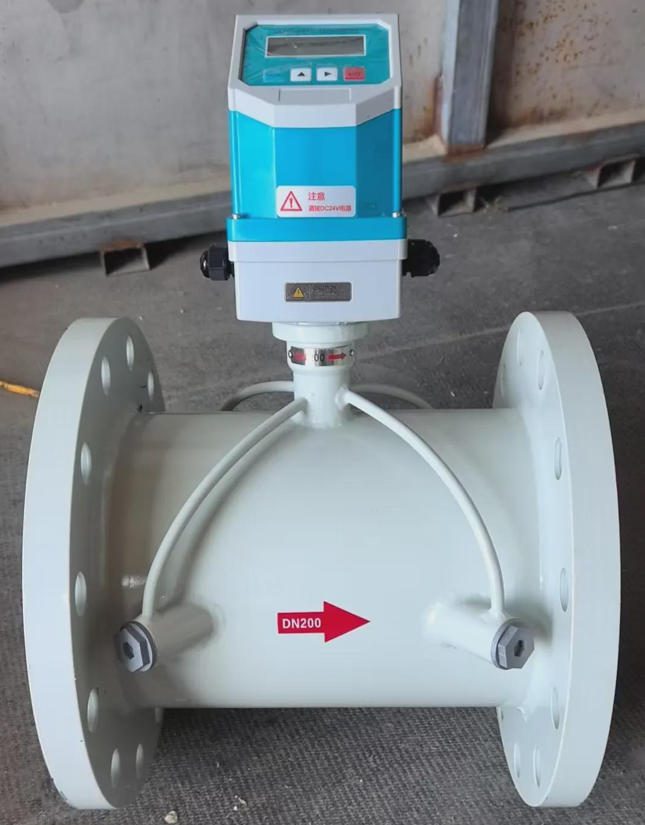
Ultra Flow Meter: A Practical Guide to Lower Downtime, Less Drift, and Lower Lifetime Cost
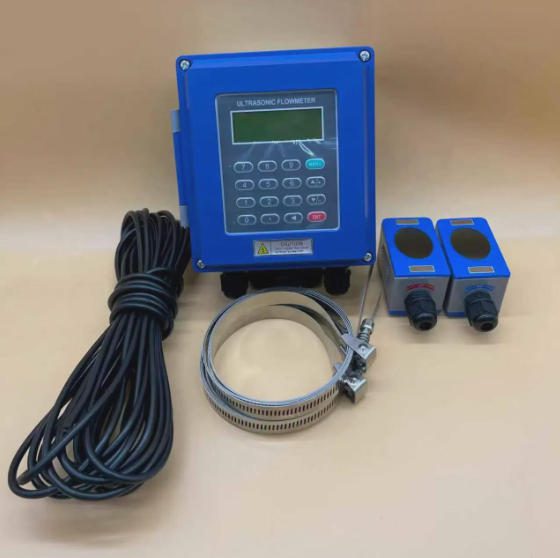
Quick answer: The Ultra Flow Meter is a flow meter with no moving parts in the flow path. It measures how fast fluid moves by timing sound pulses, so there are no bearings to wear and no obstruction to cause pressure loss. The main benefits are stable readings over time, fewer shutdowns, lower pumping energy, and simpler installation. In the 10-year example in this guide, that cut the cost per measurement point from 38,000 USD to 9,600 USD.
I. Introduction
Every skid, pipeline, and pumping station depends on one number: how much fluid is moving. If that number is off by 2%, the error shows up in your chemical use, your billing, and your compliance reports.
Flow measurement means finding out how much liquid, gas, or steam passes a point in a pipe over time. Plants use it to control processes. Utilities use it to bill customers and find leaks. Regulators use it to check permits.
What is the Ultra Flow Meter?
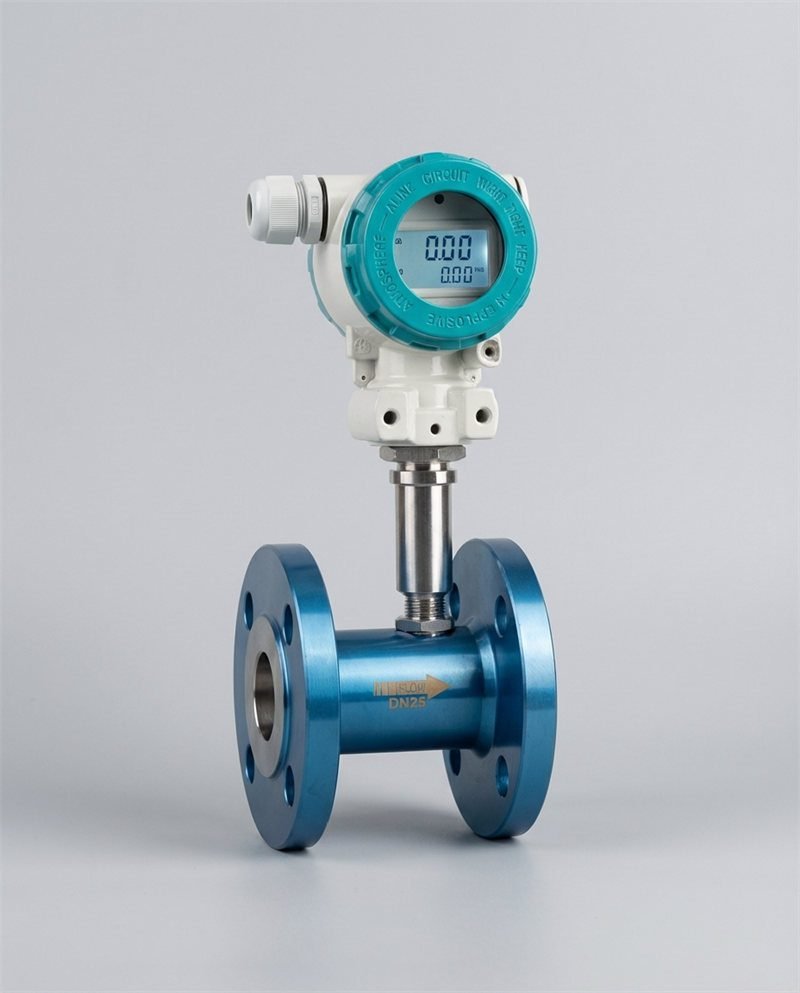
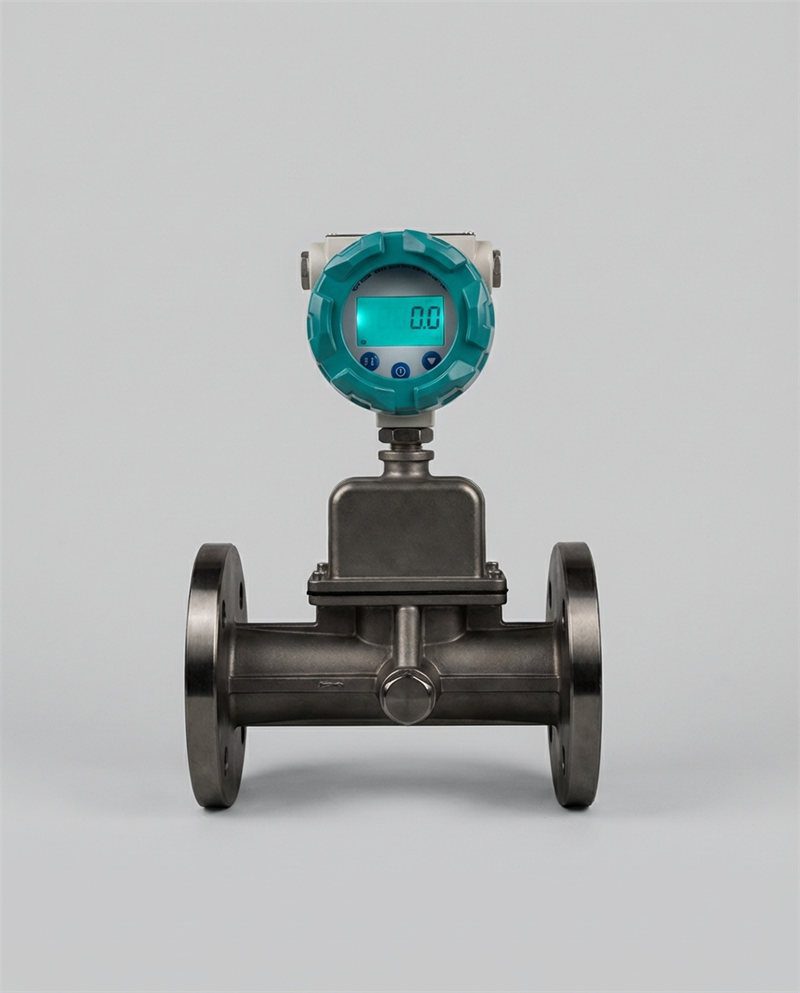
The Ultra Flow Meter is a high-performance meter built for demanding fluids. It measures velocity with ultrasonic pulses instead of a spinning rotor or an object placed in the pipe. That design choice is behind most of the benefits covered below.
The pain points it is built to solve
If you buy, build, install, or maintain flow meters, these will sound familiar:
- Signal drift. The meter still shows a number, but it creeps away from the truth. A worn turbine bearing, for example, makes the rotor read low.
- Frequent recalibration. Every calibration pull means isolating the line, removing the meter, and paying for lab time.
- Costly field failures. A cheap part fails on a Friday night, and the shutdown costs more than the meter.
In Jade Ant’s published comparison, a 1% error on a crude oil line moving 50,000 barrels a day is roughly 35,000 USD of unaccounted product every 24 hours. Nobody sees it, because the meter keeps reporting.
What this guide covers
This guide is for OEM and skid-mount manufacturers, instrument distributors, EPC and system integrators, industrial terminal and MRO teams, and municipal utilities. It covers how the meter works, where it fits each type of buyer, how it compares with other technologies, and what the economics look like. ジェイド・アント・インストゥルメンツ builds magnetic, vortex, turbine, and ultrasonic meters, so the comparisons below include the cases where another technology is the better choice.
Plain-English term: TCO (Total Cost of Ownership). The full cost of a meter over its life: purchase, installation, calibration, maintenance, downtime, and the cost of bad readings. It is the price you pay after the price you were quoted.
II. The Measurement Principle: Simplifying Complex Fluid Dynamics
You do not need a physics degree to choose the right meter. You do need to know how the meter senses flow, because that decides which fluids it can handle and where it fails.
How the sensing works, in plain language
Picture two people standing on opposite banks of a river, each shouting to the other. The shout that travels with the current arrives a hair sooner than the one fighting it.
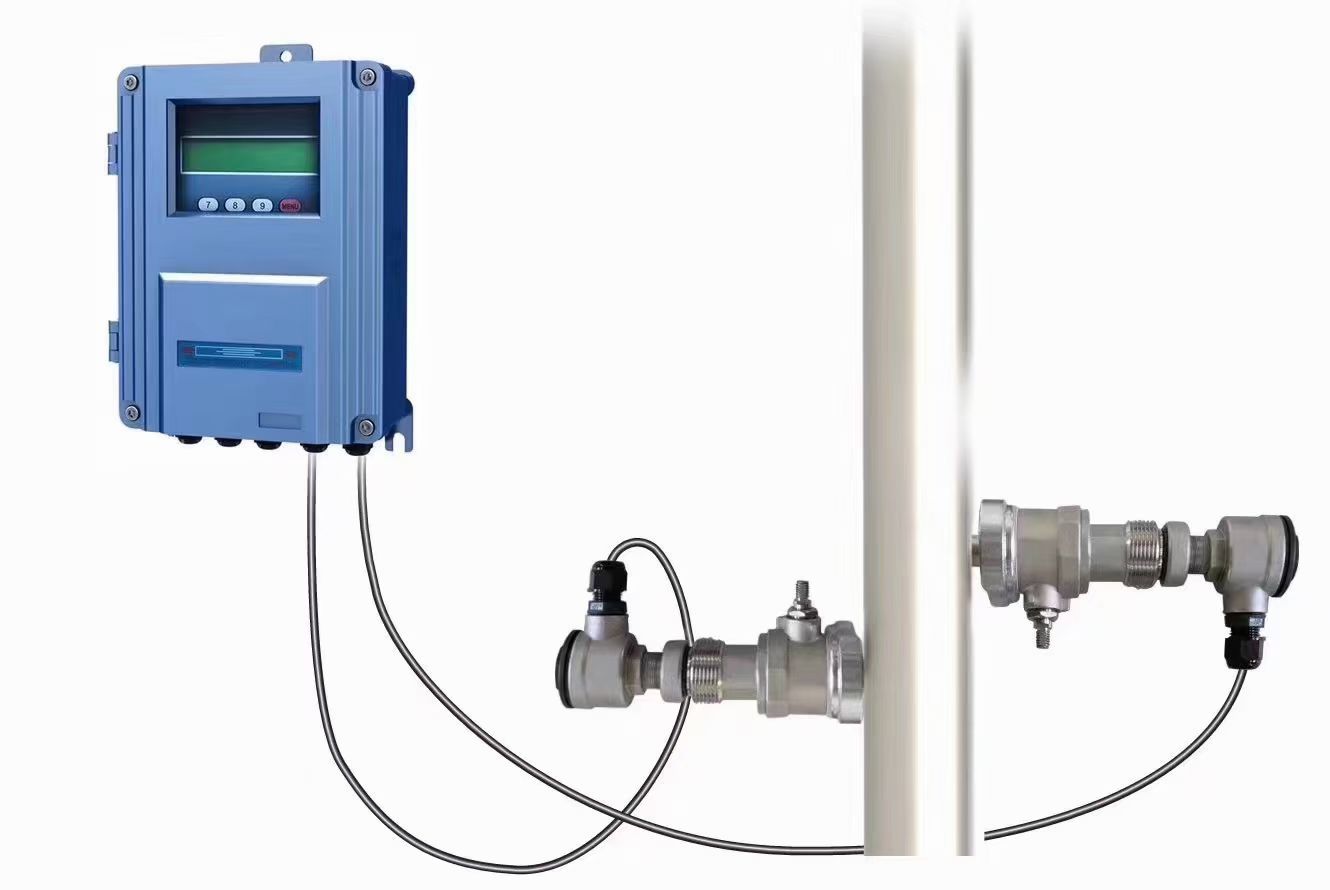
An ultrasonic meter does the same thing with sound. Two sensors, called transducers, send high-frequency pulses across the pipe, one with the flow and one against it. The tiny gap in arrival times tells the meter how fast the fluid is moving. This method is called transit-time measurement. The transit-time and Doppler methods differ, and transit-time suits clean fluids best.
From velocity to volume to a digital signal
The meter turns time difference into speed, speed into volume, and volume into a signal your PLC can read.
Here, v is fluid velocity, K is a constant fixed by the sensor geometry, Δt is the time difference between the two pulses, and T_L is the travel time at zero flow. Then:
Q is volumetric flow and A is the pipe’s cross-section. For a DN100 pipe, A is about 0.00785 m². At 1.5 m/s, that gives:
The electronics then send that value out as 4–20 mA, pulses, or a digital protocol such as Modbus or HART.
Why there is no pressure drop to speak of
A turbine meter puts a rotor in the stream. An orifice plate puts a plate with a hole in the stream. Both take energy from the fluid, and your pump pays for that energy every hour it runs. This lost pressure is called pressure drop.
A full-bore ultrasonic body leaves nothing in the way. Jade Ant’s published figures put inline ultrasonic loss at about 0.01 bar, against 0.1–0.8 bar for a turbine meter at full flow. Clamp-on versions add no loss at all, since nothing enters the pipe.
Industry insight: Most “bad meter” complaints are not caused by the sensing technology. They come from installation choices: wrong pipe data, poor coupling, or air in the line. A meter with no moving parts removes one failure category, but good commissioning still decides the result.
III. Strategic Application: OEM and Skid-Mount Integration
If you build skids, the flow meter is a small part of your bill of materials. It is also one of the most common sources of warranty calls.
Ease of installation inside tight skid dimensions
Space on a skid is measured in centimeters. Straight pipe is the first thing to go. Straight run is the length of undisturbed pipe a meter needs before and after it so that swirl from elbows and valves can settle.
| Meter type | Upstream straight run | Downstream straight run |
|---|---|---|
| タービン | 15–20 diameters | 5 diameters |
| Ultrasonic (single path) | About 10 diameters | 5 diameters |
| Magnetic (full-bore) | About 5 diameters | 2–3 diameters |
Source: Jade Ant’s ultrasonic vs magnetic vs turbine comparison.
On a DN50 line, 15 diameters is 750 mm of pipe. Ten diameters is 500 mm. Dual-path designs average two readings across the pipe, which softens the effect of nearby bends and can shorten the upstream pipe you need. Confirm the exact figure on the Ultra Flow Meter datasheet for your line size.
A modular transmitter helps too. You can panel-mount the display in a convenient spot while the sensor stays on the process pipe.
Signal compatibility for a clean handover
Your end customer’s PLC team does not want surprises. The Ultra Flow Meter connects through the outputs most plants already use:
- 4–20 mA connects to almost any PLC analog card made in the last 40 years.
- HART adds remote setup and diagnostics over the same two wires.
- Modbus carries flow, totals, and alarms to your HMI or the customer’s SCADA.
Jade Ant’s smart ultrasonic flow meter range adds a touchscreen and a built-in web page for setup. In one published example, a chemical skid manufacturer cut commissioning from 14 hours to 8.4 hours per skid, a 40% reduction. At 65 USD per hour, that is about 364 USD saved per skid.
Fewer warranty claims
Warranty calls usually come from three sources: worn mechanical parts, clogged sensors, and setup mistakes. Removing moving parts takes out the first two. Clear menus and saved configuration files take out most of the third.
If you need custom connections, liner materials, or protocols, Jade Ant supports OEM/ODM changes. Typical custom development takes 4–6 weeks, according to the Jade Ant contact page.
IV. Infrastructure Optimization for EPCs and System Integrators
On an EPC project, the meter’s price is rarely the big cost. Engineering hours, site visits, and delays are.
Versatility across pipe materials and diameters
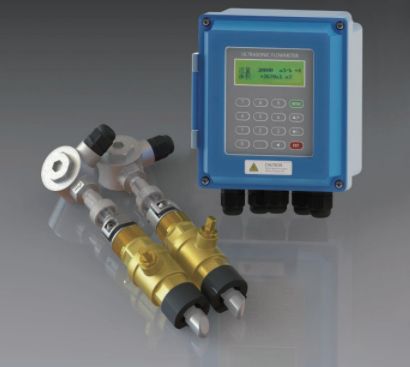
Clamp-on ultrasonic models cover pipe sizes from DN15 to DN6000. They work on carbon steel, stainless steel, PVC, HDPE, copper, and cast or ductile iron. That means one meter family can cover a whole plant.
There are limits. Rubber-lined pipes, bitumen-coated cast iron, and heavily corroded walls weaken the signal. Jade Ant’s own data shows a clamp-on meter on clean DN200 carbon steel reads within 1–1.5%, but the same meter on a 40-year-old corroded main may reach 3–5% error. Test the coupling before you commit to a measurement point.
Fewer piping modifications
Clamp-on installation needs no pipe cutting, no welding permit, and no isolation. Jade Ant’s published figures show a two-person team can mount a clamp-on meter on a DN300 pipe in under 90 minutes. A spool-piece meter at the same point typically takes 2–3 days of planned downtime.
For the full trade-offs, see this clamp-on and transit-time comparison.
Long-term stability means fewer return trips
A meter that drifts brings you back to site. One that holds its reading lets you hand over the plant and leave.
Here is a worked example for a 35-meter water treatment expansion (assumptions are yours to replace):
| Item | Typical wired setup | Pre-configured setup | Change |
|---|---|---|---|
| Commissioning per meter | 4.0 h | 0.75 h | −3.25 h |
| Total, 35 meters | 140 h | 26.25 h | −113.75 h |
That is about 114 hours, nearly three working weeks for one engineer. Jade Ant cites a similar integrator example, with about 180 hours saved on a 35-meter project when moving to wireless smart meters.
V. Operational Reliability for Industrial Terminals and MRO
For maintenance teams, the goal is simple: no surprises. Every unplanned stop costs more than the part that caused it.
Maintenance cycles compared
| Item | Traditional turbine meter | Ultra Flow Meter (ultrasonic) |
|---|---|---|
| Bearings and rotor | Replace every 18–36 months in clean liquid; every 6–9 months with sand in the line | なし |
| Calibration | Every 1–2 years | Every 3–5 years, or annual in-situ check |
| Couplant (clamp-on only) | Not applicable | Inspect every 2–3 years |
| Process shutdown for service | Usually required | Usually not required |
Source: Jade Ant comparison guide and its ultrasonic applications data. Intervals vary by fluid and site.
A clamp-on couplant check takes about 30 minutes and under 50 USD in materials.
Wear, corrosion, and abrasive media
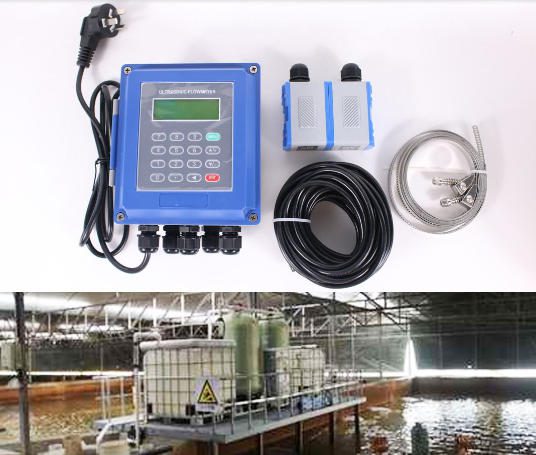
With a clamp-on design, the transducers sit outside the pipe. Acid, caustic, and slurry never touch them. In a Jade Ant example, a mining operator ran magnetite slurry at 35% solids. The clamp-on Doppler meters installed in 2019 were still in service five years later without maintenance. The magnetic meter they replaced needed electrode replacement every 14 months at 2,800 USD per event.
Inline designs do have wetted transducer faces, so match the material to the fluid. Share the exact chemical, concentration, and temperature with your supplier.
Diagnostics that warn you early
A diagnostic is a self-check the meter runs on itself. Good ones track signal strength, signal-to-noise ratio, and electronics temperature. If signal strength falls over several weeks, you can schedule a planned visit instead of reacting to a process trip.
Industry insight: Moving from calendar-based inspections to condition-based ones reduced maintenance events by 30–50% in documented predictive-maintenance studies. The key is to trend the data, not just alarm on it.
VI. Municipal and Utility Scale Deployment
Utilities live on small percentages. A 1% bias on a large billing meter means thousands of unrecovered cubic meters every year.
Scaling precision across high-volume flows
On large mains, cutting pipe and installing a flanged meter is expensive and disruptive. Jade Ant’s data shows that on a DN600 main, the cost of cutting, flanging, and restoring service can pass 30,000 USD. Clamping two transducers onto the existing pipe takes one technician about half a day.
Long-term drift resistance for consistent reporting
A turbine bearing wears the longer it runs. A meter with nothing wearing in the flow path does not have that mechanism. For billing and district metering, that means year-three readings can still be compared with year-one readings.
Low-flow detection matters just as much. ターンダウン is the ratio between the highest and lowest flow a meter can measure accurately. Say a meter cannot read below 0.3 m/s. On a DN100 pipe:
A steady 3 m³/h night leak sits below that floor and never appears in the data. A meter that reads down to 0.03 m/s sees flows from about 0.85 m³/h. Over a year, that leak is:
At an assumed production cost of 0.50 USD per m³, that is about 13,140 USD a year from one hidden leak. Jade Ant also cites an industry estimate that non-revenue water costs the global water sector about 6.8 billion USD every year.
Energy efficiency: less flow resistance, lower pump bills
Pump power depends on flow, pressure loss, and efficiency:
Take a line moving 100 m³/h (0.0278 m³/s) with a combined pump and motor efficiency of 70%, running 8,760 hours a year at 0.10 USD per kWh. A 0.5 bar loss across an orifice plate:
Chart values use the same 100 m³/h calculation. Pressure loss figures follow Jade Ant’s published ranges. Your pump and tariff will change the numbers, but not the order.
That is roughly 1,700 USD a year on a single measurement point, or about 17,000 USD over ten years.
VII. The Buyer’s Dilemma: Ultra Flow Meter vs. Conventional Alternatives
Procurement teams compare CAPEX (the one-time purchase cost) against OPEX (the yearly cost of running it). Quotes show CAPEX. Your budget pays OPEX.
Ultra Flow vs. magnetic, vortex, and turbine
| パラメータ | Ultra Flow (ultrasonic) | Magnetic | ボルテックス | タービン |
|---|---|---|---|---|
| Principle | Sound-pulse transit time | Induced voltage in a magnetic field | Swirls shed behind a blunt object | Spinning rotor |
| Typical accuracy | 0.5–1.0% (inline) | 0.2–0.5% | 0.75–1.5% | 0.25–0.5% |
| Moving parts | なし | なし | なし | はい |
| Pressure drop | None to very low | なし | 中程度 | 中程度 |
| Needs conductive fluid | いいえ | Yes (5 µS/cm or more) | いいえ | いいえ |
| Handles gas | Yes (special transducers) | いいえ | はい | はい |
| Best fit | Clean liquids, large pipes, retrofits | Conductive liquids, slurry | Steam, gas | Clean fuels, batching |
Sources: Jade Ant’s ultrasonic vs magnetic vs turbine comparison, Wikipedia on Faraday’s law in magnetic meters, and its page on the vortex-shedding principle. Accuracy is typical, not guaranteed.
If your fluid is conductive and you need the best accuracy, a magnetic meter is often the right call, and Jade Ant’s intelligent electromagnetic flow meters are built for that. For steam, see Jade Ant’s vortex flow meters.
The accuracy vs. cost trap: when is the premium justified?
Ask what a 1% error costs you per year. Take a chemical feed of 2 tonnes an hour at 120 USD per tonne:
Cutting error from 2% to 0.5% saves about 31,500 USD a year on that one line. In that case, the premium is easy to justify. On a cooling-water loop where a 2% error costs almost nothing, a simpler meter may be enough.
Decision matrix: viscosity, conductivity, and temperature
| If your fluid is… | Lean toward | Watch out for |
|---|---|---|
| Clean water or thin liquid, any conductivity | Ultra Flow (ultrasonic) | Pipe condition, air bubbles |
| Conductive, dirty, or abrasive | Magnetic | Liner and electrode choice |
| Oil, solvent, or deionized water (non-conductive) | Ultra Flow (ultrasonic) | Fluid sound speed settings |
| Thick (above about 5 cP) | Magnetic or ultrasonic | Turbine and vortex lose accuracy |
| Steam or hot gas | ボルテックス | Straight run, vibration |
| Temperature swings of 60 °C or more | Ultrasonic with built-in compensation | Speed of sound changes about 5% |
VIII. Overcoming Common Implementation Challenges
Most field problems can be prevented in the design phase. Here are the three that come up most.
Signal interference in electrically noisy plants
EMI (electromagnetic interference) is electrical noise from variable-speed drives, motors, and welders. It can scramble weak signals. Follow these steps:
- Keep signal cables at least 300 mm away from power cables.
- Use shielded cable and ground the shield at one end only.
- Give the transmitter a clean, dedicated earth connection.
- Compare the reading with the drive running and stopped. If it jumps, the cause is electrical.
Positioning and straight-run requirements
Put the meter where the pipe stays full. Even 0.5% air by volume can scatter an ultrasonic signal enough to trigger a “no signal” alarm. A low point, or a vertical section with upward flow, is usually safest. Keep it away from pump suctions, vents, and partly open valves.
Calibration strategies for specialized or hazardous fluids
For fluids that are dangerous to handle, avoid pulling the meter. Use an in-situ check instead. Jade Ant’s calibration tips explain the 4:1 rule: your reference should be at least four times more accurate than the meter under test. For traceability, NIST’s guidance on metrological traceability explains why a certificate needs an unbroken chain of comparisons.
In explosive atmospheres, the meter must carry the right certificate. The IECEx system lists approved certification bodies worldwide. Always match the meter’s marking to the zone on your drawing.
IX. Economic Impact and ROI Analysis
Switching to Ultra Flow technology is a financial decision, not just a technical one. The figures below come from Jade Ant’s published 10-year model for a DN100 process line.
Quantifying the savings
| Cost category (10 years, USD) | Turbine meter | Ultra Flow (ultrasonic) |
|---|---|---|
| Purchase | 1,200 | 2,800 |
| インストール | 1,800 | 1,200 |
| Calibration | 8,000 | 2,000 |
| メンテナンス | 9,000 | 400 |
| Unplanned downtime | 6,000 | 800 |
| Measurement error | 12,000 | 2,400 |
| Total | 38,000 | 9,600 |
Illustrative figures from Jade Ant’s smart ultrasonic guide. Swap in your own crew rates and downtime cost.
The purchase price is about 3% of the turbine meter’s total. Calibration, maintenance, downtime, and measurement error are 82%.
Less waste and better yield
When dosing is accurate, you use less chemical and make less off-spec product. The 31,500 USD yearly figure in Section VII shows how fast a better reading pays back on a continuous feed line.
Payback period from downtime and labor
The ultrasonic option costs 1,600 USD more to buy but 600 USD less to install, so the net extra upfront cost is 1,000 USD. Its yearly operating savings are:
That is the optimistic end. Jade Ant reports typical payback of 12–18 months across industrial and utility sites, and 18–30 months where drift does little financial damage. A single unplanned 4-hour stop on a line earning 5,000 USD per hour costs 20,000 USD, which is far more than the price gap.
X. Conclusion
A meter that is cheap on the quote and costly in the field is the most expensive item on the bid. In the numbers above, purchase price was a small slice of total cost. Calibration, maintenance, downtime, and bad readings were the big slices.
The Ultra Flow Meter targets those slices. It keeps moving parts out of the flow path, adds almost no pressure loss, and connects through the signals your plant already uses.
What this means for each buyer
| Buyer | What matters most | Your first step |
|---|---|---|
| OEM / skid builder | Compact piping, easy handover, fewer warranty calls | Count sensors and straight pipe on your current skid and test one redesign |
| EPC / system integrator | Commissioning hours, pipe variety, certificates on file | Request the register map and certificate pack before award |
| Industrial terminal / MRO | Calibration interval, diagnostics, spare parts | Ask for the verification procedure and a recommended spares list |
| Distributor / importer | A clear story against low-cost brands | Sell lifetime cost, not unit price |
| Municipal / utility | Low-flow sensitivity, drift, pumping energy | Run a night-flow study on your worst district |
Move from reactive replacement to strategic flow management
A commodity mindset asks, “What is the lowest price for a DN100 meter?” A value-engineered mindset asks, “What will this point cost over ten years, and what does a wrong reading cost me?”
If you are comparing meters right now, send your fluid, pipe size, flow range, and site conditions to the Jade Ant Instruments engineering team. A reply with a quotation typically follows within 24–48 hours. For a structured way to compare options first, use the five-factor selection framework. You can also browse more guides on the Jade Ant flow meter blog.
Here is a short video showing the basic working principle:

Video: “Ultrasonic Flow Meter Basics” by The Engineering Mindset. Click the image to watch on YouTube.
主要用語集
CAPEX / OPEX: CAPEX is money spent once, on buying and installing equipment. OPEX is the recurring cost of running it.
Clamp-on: A meter whose sensors attach to the outside of an existing pipe. Example: strapping two transducers onto a DN300 water main without a shutdown.
Diagnostics: Self-checks a meter runs on its own signal and electronics. Example: a slow fall in signal strength that tells you to inspect the coupling.
Doppler: An ultrasonic method that reads the frequency shift of sound bouncing off particles or bubbles. It suits dirty fluids and is less accurate than transit-time.
EMI: Electrical noise from motors, drives, and welders that can disturb weak signals.
HART / Modbus: Digital communication methods. HART rides on 4–20 mA wiring. Modbus connects meters to PLCs and SCADA systems.
Pressure drop: Pressure lost as fluid moves through a device. Example: a 0.5 bar loss across an orifice plate adds about 1,738 USD a year in pumping cost at 100 m³/h.
Straight run: The length of straight pipe a meter needs before and after it so the flow profile settles.
TCO (Total Cost of Ownership): All costs over the meter’s life, not only the purchase price.
Transit-time (Δt): The tiny difference in travel time between a sound pulse sent with the flow and one sent against it. The meter turns it into velocity.
ターンダウン: The ratio between the highest and lowest flow a meter can measure accurately. Example: 100:1 means the meter still works at 1% of full flow.
よくある質問
1. How does the Ultra Flow Meter handle multi-phase fluids (gas and liquid mixes)?
No flow meter is fully immune to mixed gas and liquid flow. Even 0.5% air by volume can weaken a transit-time signal. The most reliable fixes are in the piping: mount the meter where the pipe always runs full, keep it away from pump suctions and vents, and add a deaerator if air is constant. If your fluid really does carry solids or bubbles, a Doppler design may fit better. Jade Ant’s transit-time vs Doppler guide has a checklist for borderline cases. Ask for test data on a similar fluid before you buy.
2. What is the typical lifespan of the sensor compared to mechanical alternatives?
Turbine bearings typically need replacing every 18–36 months in clean liquid and every 6–9 months with sand present. Ultrasonic transducers have no wearing parts in the flow path, and Jade Ant’s data cites a typical transducer MTBF above 100,000 hours, about 11 years of continuous running. Ask for the Ultra Flow Meter’s stated figure and how it was derived.
3. Does this meter require a specific straight-run distance for accurate readings?
Yes, every meter does. A typical single-path ultrasonic meter needs about 10 pipe diameters upstream and 5 downstream. Dual-path designs average two readings across the pipe, which softens the effect of nearby bends and can allow shorter runs. If your layout cannot meet the manual’s minimum, move the meter, add a flow conditioner, or check the reading against a clamp-on reference during commissioning.
4. Which communication protocols are supported, and can it work with legacy SCADA?
Standard outputs include 4–20 mA, pulse, HART, and Modbus (RS-485). Profibus is available on some configurations, so confirm it when you order. The 4–20 mA output connects to any analog input card, so legacy PLCs need no hardware overhaul, only scaling. If a protocol does not match, a small gateway usually costs less than replacing the controller.
5. How does the device perform with high-viscosity fluids, and with conductive vs. non-conductive liquids?
Ultrasonic measurement does not depend on conductivity. It reads oil, solvent, and deionized water, which magnetic meters cannot. Viscosity has a moderate effect, and the meter needs the right sound-speed settings for the fluid. Above roughly 5 cP, turbine and vortex meters lose accuracy faster. For very thick or non-Newtonian fluids, test on a sample before you specify.
6. What is the accuracy across flow rates and temperature changes?
Inline transit-time meters typically reach 0.5–1.0% of reading, and multi-path designs can do better. Temperature matters because sound travels faster in warmer water. Between 20 °C and 80 °C, the speed shifts by about 5%. Meters with built-in temperature compensation correct this automatically. Ask for the accuracy curve across your minimum, normal, and maximum flow.
7. Are there specific certifications for hazardous areas (ATEX/IECEx)?
Jade Ant lists ATEX and IECEx explosion-proof designs for oil and gas service. Hazardous-area approval applies to a specific model and zone, so request the certificate for the exact configuration you plan to buy. You can verify certification bodies at iecex.com.
8. What are the calibration requirements, and can they be performed in-situ?
A practical plan is a yearly in-situ verification using the meter’s diagnostics, plus a bench calibration every three to five years or when verification fails. Most clamp-on and inline ultrasonic meters support in-situ checks. These typically confirm performance within 1–2% rather than lab-grade accuracy, so use a lab calibration where a certificate is required.
9. How does the Ultra Flow Meter reduce pressure drop compared to orifice plates?
An orifice plate works by forcing fluid through a small hole, so some pressure loss is permanent. Jade Ant’s figures put orifice loss at 0.5 bar or more, against about 0.01 bar for a full-bore inline ultrasonic body. On a 100 m³/h line, that gap is worth roughly 1,700 USD a year in pump energy, using the calculation in Section VI.
10. What is the lead time for custom configurations for skid-mount OEMs?
According to Jade Ant, standard models ship in 1–2 weeks for 1–10 units and 2–3 weeks for 11–50 units. Custom models need a 3–5 day engineering review, about 3–4 weeks of production, and 3–5 days of testing and calibration. Typical custom development takes 4–6 weeks. Lead times are confirmed in writing with your quotation.