Optimizing Mass Flow Rate Units for EPC Systems: Best Practices and Strategies

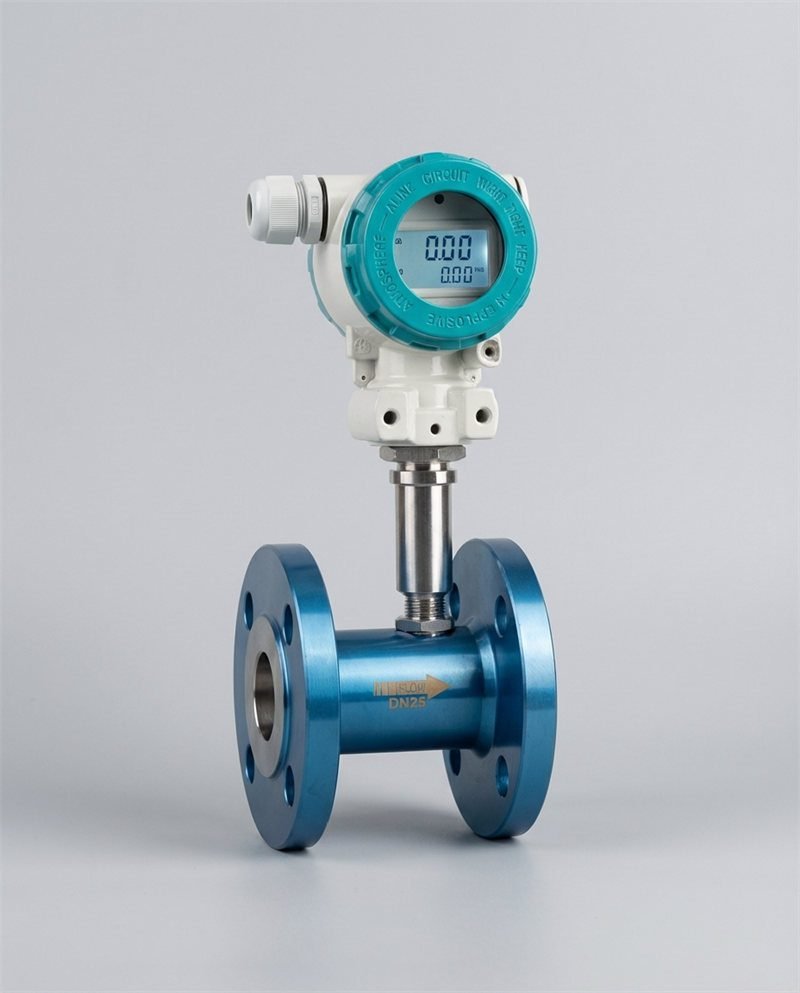
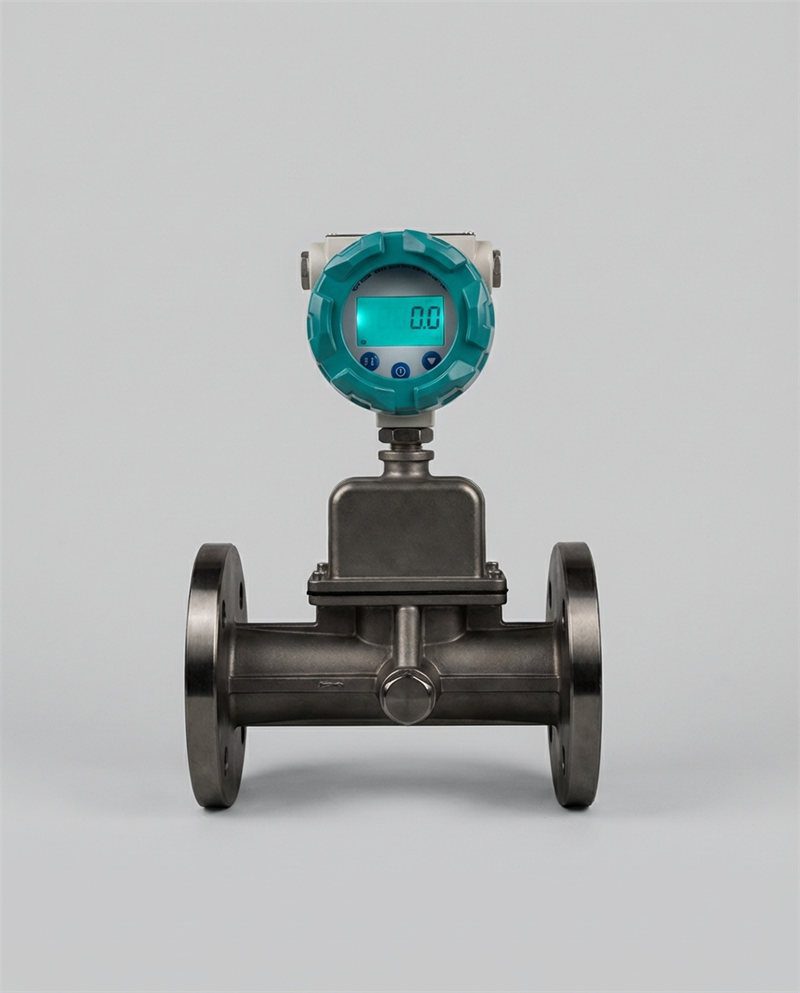
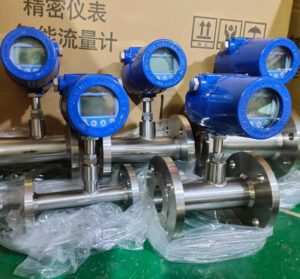
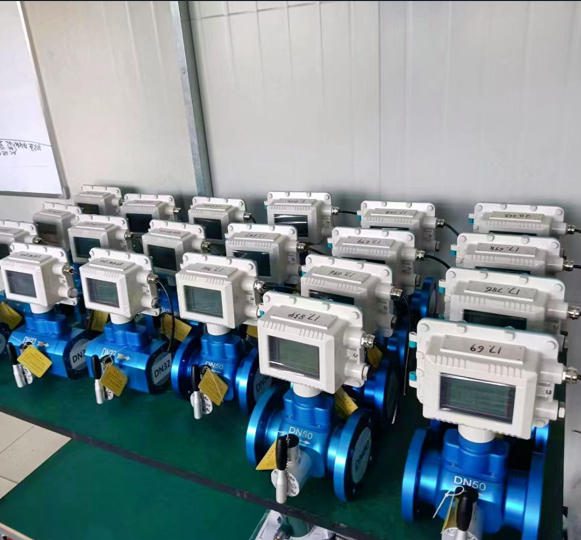
A Coriolis mass flow meter on an industrial EPC skid — accurate unit configuration starts before the first pipe is welded.
Here is a scenario that happens more often than anyone in EPC engineering wants to admit: a chemical skid ships from the OEM manufacturer with flow transmitters configured in SCFM. The EPC contractor’s DCS expects Nm³/h. The control logic fires alarms from the first moment the system is energized. Commissioning — scheduled for three days — stretches into three weeks.
No one made a catastrophic mistake. The meters were accurate. The wiring was clean. But a unit mismatch, buried in the instrument data sheet, cascaded into $80,000 in delay costs and a frustrated end client.
Mass flow rate units are not a back-office documentation detail. They are a critical engineering decision that affects measurement accuracy, control system behavior, regulatory compliance, and project handover timelines.
This guide is written for OEM equipment and skid-mount manufacturers, instrument distributors and importers, EPC and system integrators, industrial terminal and MRO companies, and municipal and utility companies. It covers what mass flow rate units actually mean, where they are most commonly misused, and what your team can do right now to eliminate unit-related project risk.
Understanding Mass Flow Rate: Why It Matters in Industrial Systems
質量流量 is the amount of mass — measured in kilograms, pounds, or other mass units — passing through a pipe or vessel per unit of time. It is expressed as kg/h, lb/min, t/day, or similar combinations.
It is not the same as volumetric flow rate, which measures the volume of fluid passing a point per unit time (m³/h, GPM, L/min). The difference matters because volume changes with temperature and pressure; mass does not.
Consider natural gas flowing through a pipeline. At 20°C and 1 atm, a given volume of gas has one mass. Heat that same gas to 80°C under process conditions, and the volume expands — but the mass remains exactly the same. If your control system is reading volumetric flow without pressure and temperature correction, it is reading a number that shifts with every process change. Your billing, dosing ratios, safety interlocks, and efficiency calculations are all affected.
The Real-World Cost of Getting It Wrong
The financial impact of inaccurate mass flow measurement is not hypothetical. A 1% measurement error on a pipeline moving 50,000 barrels per day of crude oil translates to roughly $35,000 in unaccounted product — every single day. On a 200-tonne/day chemical production line, a 0.3% error equals approximately 600 kg of off-spec or untracked product per day.
In water treatment, incorrect chemical dosing — caused by a volumetric meter misread as mass — can result in under-dosed water reaching consumers or over-dosed water triggering regulatory violations. Municipal utilities in several regions have faced fines exceeding $150,000 for exceedances tied back to dosing control errors.
In oil and gas, regulatory frameworks like API MPMS Chapter 5 require custody-transfer measurement to meet strict accuracy thresholds. A unit-configuration error that causes a meter to read in SCFM when the system expects Nm³/h is not just a commissioning inconvenience — it is a compliance failure.
Where Mass Flow Rate Measurement Is Most Critical
Mass flow rate accuracy is non-negotiable in these sectors:
- Oil and gas — custody transfer, pipeline balancing, allocation metering, flare gas measurement
- Chemical processing — reagent dosing, reaction stoichiometry, batch recipe control
- Water and wastewater — chemical dosing (chlorine, coagulant, polymer), pump performance monitoring
- Power generation — fuel gas measurement, steam flow, combustion optimization
- Food and pharmaceutical — CIP/SIP validation, ingredient batching, FDA/GMP compliance
Each of these sectors uses different preferred units, different regulatory references, and different accuracy expectations. That is exactly why unit standardization must start at the design phase — not at commissioning.
Common Challenges in Mass Flow Rate Management
If mass flow measurement were simple, EPC contractors would not lose an estimated 10–15% of commissioning time to instrument-related rework. The problems are real, repeatable, and often preventable.

Control room operators see the downstream effects of upstream unit mismatches — alarm floods, incorrect totals, and failed loop checks.
Fluctuating Process Conditions
Most flow meters are calibrated under stable reference conditions: fixed temperature, fixed pressure, fixed fluid composition. Real processes do none of these things consistently.
A gas flow meter calibrated at 15°C and 1 atm will read differently at 45°C and 6 bar — unless the transmitter applies active pressure-temperature (PTZ) compensation. Without compensation, the displayed value can drift by 5–12% from the true mass flow rate, depending on process conditions. For control loops with tight setpoints, that is enough to cause oscillation, overshoot, or false alarms.
Unit Inconsistencies Across Project Teams
In a typical EPC project, five or more organizations touch the flow measurement design: the process licensor, the FEED contractor, the detailed engineering firm, the OEM skid manufacturer, and the end client’s operations team. Each group may have a preferred unit system — some metric, some imperial, some industry-specific (SCFM vs. Nm³/h, kg/h vs. lb/min).
When unit preferences are not enforced in the instrument specification and tag register from day one, the inconsistencies compound. A P&ID showing “FT-101: 0–500 kg/h” and a transmitter shipped with factory default units of “lb/min” creates a scaling error in the DCS that produces readings off by a factor of approximately 1.36 — large enough to trigger high-flow shutdowns on startup.
Sensor Drift and Calibration Errors
Even well-selected and correctly configured meters drift over time. Thermal mass flow meters can drift 0.5–2% of full scale per year under harsh conditions. Turbine meters suffer bearing wear. Differential pressure meters accumulate impulse line errors. If calibration intervals are not tied to criticality — and if calibrations are performed at conditions different from actual process conditions — the drift is never caught.
Kytola’s industrial flow troubleshooting guide identifies calibration errors, installation mistakes, and fluid property changes as the three leading causes of flow meter problems in the field. All three are preventable with the right upfront specification and commissioning discipline.
Integration Failures in Multi-Vendor Skids
An EPC project often integrates ten, twenty, or fifty skids from different OEM suppliers. Each skid arrives with its own flow meter brand, transmitter firmware version, communication protocol, and default unit settings. Without a project-wide instrument specification that mandates unit uniformity, the system integrator inherits a patchwork of configurations that must be resolved one instrument at a time — during commissioning, under schedule pressure.
Selecting the Right Mass Flow Units for Your Application
Not all mass flow units are equal — and choosing the wrong one for your application is not just an academic concern.
The Core Unit Options
| Unit | Full Name | Best Used For | Region / Standard |
|---|---|---|---|
| kg/h | Kilograms per hour | Liquids, gases (metric), custody transfer | Global (SI) |
| lb/min | Pounds per minute | Liquids, high-flow gas (imperial) | USA, UK |
| t/day | Metric tonnes per day | Pipeline allocation, bulk transfer | Oil and gas, global |
| Nm³/h | Normal cubic metres per hour | Gas measurement at 0°C, 1 atm | Europe, ISO standard |
| SCFM | Standard cubic feet per minute | Gas measurement at 60°F, 14.696 psia | USA, ANSI/API standard |
| SCFH | Standard cubic feet per hour | Building HVAC, gas boilers | USA |
| MSCFD | Thousand standard cubic feet per day | Natural gas pipeline, wellhead | Oil and gas (USA) |
| kg/s | Kilograms per second | Steam, high-speed process | Thermal/power |
Source: Sage Metering — Mass Flow Rate Units of Measure
Important note on Nm³/h vs. SCFM: These two units are often treated as interchangeable. They are not. Nm³/h uses 0°C and 101.325 kPa as reference conditions. SCFM uses 60°F (15.6°C) and 14.696 psia. The conversion factor for air is approximately 1 SCFM ≈ 1.589 Nm³/h. Mixing them in a control system without correction introduces a permanent 37% scaling error.
Matching Units to Media and Application
For liquids (water, chemicals, hydrocarbons): Use kg/h または t/h in metric systems. Use lb/min または lb/h in imperial systems. Volumetric units (m³/h, GPM) are acceptable when density is stable and well-known — but mass units are always preferred for custody transfer and dosing accuracy.
For gases (air, natural gas, nitrogen, process gases): Always prefer mass units (kg/h, lb/h) or standardized volumetric units (Nm³/h, SCFM) that reference fixed conditions. Never use actual volumetric units (m³/h at line conditions) without explicit pressure and temperature compensation, because the same pipe can carry dramatically different mass flow rates at different operating pressures.
For steam: Use kg/h または kg/s. Steam density changes significantly with pressure and temperature, making actual volumetric units meaningless without compensation.
Decision Matrix for OEMs and System Integrators
| 申し込み | Media | Recommended Unit | メーター・テクノロジー | Compensation Needed? |
|---|---|---|---|---|
| Chemical dosing skid | Liquid acids/bases | kg/h | Coriolis, magnetic | No (Coriolis = direct mass) |
| Natural gas pipeline (USA) | Gas | SCFM or MSCFD | Thermal mass, Coriolis | Reference conditions must match |
| Natural gas pipeline (Europe) | Gas | Nm³/h | Thermal mass, Coriolis | Reference conditions must match |
| Compressed air system | Air | SCFM or kg/h | Thermal mass | Yes (T/P compensation) |
| Steam boiler | Steam | kg/h or kg/s | Vortex + T/P comp, Coriolis | はい |
| Municipal water dosing | Water, chlorine | kg/h or L/min (±density known) | Coriolis, magnetic | Minimal |
| Custody transfer (oil) | Crude oil | t/day or kg/h | Coriolis, turbine | Yes (API MPMS reference) |
Best Practices for Unit Standardization Across Projects
Unit standardization is not just about consistency — it is about removing a class of error that shows up reliably, late in projects, when it is most expensive to fix.

Skid-mounted flow measurement systems benefit most from early unit standardization — before fabrication begins.
Start With a Project Instrument Specification
Every EPC project should have an instrument specification document that defines, at minimum:
- The default engineering unit for each media type (liquid, gas, steam)
- The reference conditions for standardized volumetric units (temperature, pressure)
- The expected HMI display format and decimal precision
- The DCS/PLC tag naming convention and scaling range
- Which transmitter protocols are acceptable (HART, Modbus, PROFIBUS)
This document must be issued and signed off before any instrumentation is procured. Distributing it only during detailed engineering is too late — OEM skid manufacturers will already have made configuration decisions.
Enforce Consistency in P&IDs
The P&ID is the single source of truth for process instrumentation. Every flow element (FE, FT, FI, FC) should show its engineering unit in the instrument tag or data sheet reference. Do not leave units ambiguous. A tag reading “FT-201: 0–1000” without a unit label is an invitation for a mismatch.
について ISA 5.1 standard for Instrumentation Symbols and Identification provides the framework for consistent P&ID notation used across EPC projects globally.
Align All Stakeholders Before Procurement
OEM skid manufacturers, the EPC detailed engineering team, the client’s operations group, and the DCS/SCADA vendor all need to agree on unit conventions before any purchase orders are placed. A one-page unit convention table distributed at the project kickoff meeting eliminates more rework than a hundred commissioning punch items.
Skid manufacturers who work with ジェイド・アント・インストゥルメンツ have found that pre-aligning unit configurations during instrument selection — not after delivery — is one of the most effective ways to reduce pre-shipment FAT failures.
Use Bulk Configuration Tools
Modern flow transmitters support bulk configuration via USB, Bluetooth, or network-based tools. For projects with 20 or more flow instruments, investing one day in bulk configuration setup saves two weeks of field rework. Pre-configure every transmitter with the correct unit, range, damping, and protocol before it ships. Tag each unit with the instrument number, configuration version, and commissioning checklist.
Ensuring Measurement Accuracy: Calibration, Compensation, and Installation
Choosing the right unit is necessary — but not sufficient. The unit must reflect an actual, accurate measurement. That requires correct installation, active compensation, and a disciplined calibration program.
Temperature and Pressure Compensation for Gas Flow
When measuring gas flow in volumetric units (Nm³/h or SCFM), the transmitter must correct the actual flow reading to the standard reference conditions using real-time temperature and pressure inputs. This is called PTZ compensation (pressure-temperature-compressibility correction).
Without PTZ compensation, a thermal mass flow meter reading in Nm³/h will give different values for the same actual gas flow rate at different process pressures. For a natural gas line operating between 3 and 8 bar, the uncorrected error can exceed 60%. This is not a sensor malfunction — it is a configuration gap.
As Bronkhorst notes in their flow control reference, real-time pressure and temperature compensation is essential for accurate flow control when operating conditions change.
Proper Sensor Placement and Straight-Run Requirements
Every flow meter technology requires a minimum length of straight, undisturbed pipe upstream and downstream of the sensing element — known as straight-run requirements. Flow profiles distorted by elbows, valves, reducers, or pumps produce systematic measurement errors that no calibration can fix.
| メーター・テクノロジー | Upstream Straight Run | Downstream Straight Run |
|---|---|---|
| コリオリ | 0–2 × DN (minimal) | 0–2 × DN |
| Magnetic (electromagnetic) | 5 × DN | 2–3 × DN |
| タービン | 15–20 × DN | 5 × DN |
| ボルテックス | 15–20 × DN | 5 × DN |
| Thermal mass | 10–15 × DN | 5 × DN |
| Differential pressure (orifice) | 20–50 × DN | 5 × DN |
DN = pipe nominal diameter. Example: a DN50 turbine meter needs 750 mm of straight run upstream.
On congested skids where straight-run space is not available, a flow conditioner can restore the velocity profile — but must be accounted for in the pressure drop budget. Coriolis meters, which measure mass directly via tube vibration rather than velocity profile, are largely immune to straight-run constraints, making them the preferred choice for tight skid layouts.
Calibration Protocols and Traceability
A flow meter is only as accurate as its most recent valid calibration. For regulated industries, calibration must trace to national or international standards — typically NIST (National Institute of Standards and Technology) in the USA, PTB in Germany, or OIML-recognized bodies elsewhere.
Calibration frequency by application criticality:
| 申し込み | Recommended Interval | Standard Reference |
|---|---|---|
| Custody transfer (oil/gas) | Every 6–12 months | API MPMS Chapter 4/5 |
| Pharmaceutical/food (GMP) | Every 12 months or process validation schedule | FDA 21 CFR Part 11 |
| Chemical dosing (safety-critical) | Every 12 months | OIML R 117 |
| General industrial process | Every 24–36 months | ISO/IEC 17025 |
| HVAC / utilities (non-critical) | Every 36–60 months | Manufacturer recommendation |
Calibration should always be performed — wherever possible — at conditions matching the actual process: same fluid, same temperature and pressure range, same flow rates. Calibrating a gas flow meter at 20% of its actual operating pressure produces a certificate that does not reflect field performance.
Commissioning Checklist for EPC Teams
Before any flow measurement loop is signed off at commissioning:
- Transmitter unit matches DCS tag unit and range
- Reference conditions documented in tag database (for Nm³/h or SCFM)
- PTZ compensation enabled and sensor wiring verified (gas applications)
- Straight-run requirements met or flow conditioner installed and documented
- Zero check performed with process isolated and pipes full (for liquid meters)
- NIST-traceable calibration certificate attached to instrument loop folder
- Signal wiring verified: 4–20 mA span, Modbus register map, or HART primary variable
- High/low alarm setpoints confirmed in engineering units
- DCS scaling confirmed: 4 mA = 0 kg/h, 20 mA = full-scale value
Integrating Mass Flow Devices in Skid-Based Systems
For OEM skid manufacturers, mass flow unit configuration is a pre-shipment responsibility — not a field commissioning job.

A Coriolis meter in a skid-mount configuration — dual-tube design provides direct mass measurement with minimal installation constraints.
Design Guidelines for OEM Skid Builders
When you ship a skid with pre-configured flow instruments, you are handing your client a plug-and-play unit — or a source of day-one startup failures. The difference depends on decisions made during engineering, not during assembly.
Unit pre-configuration checklist for OEM skid builders:
- Define the unit standard (kg/h, SCFM, Nm³/h) before the instrument BOM is finalized
- Specify the configuration in the purchase order — not just the meter model number
- Request factory acceptance test (FAT) verification that every transmitter reads the correct unit, range, and output
- Provide a configuration record sheet with every skid that documents: meter tag, unit, full-scale range, protocol, baud rate or IP address, and firmware version
- Use digital communication protocols (Modbus RTU/TCP, HART, PROFIBUS DP) to allow remote verification and reconfiguration without opening junction boxes
Communication Protocol Comparison for Skid Integration
| プロトコル | 最適 | Max Distance | Unit Configuration | Diagnostics |
|---|---|---|---|---|
| 4–20 mA + HART | Simple loops, legacy DCS | 1,500 m | HART secondary variable | 基本 |
| Modbus RTU (RS-485) | Multi-drop to PLC/SCADA | 1,200 m | Register-mapped units | Moderate |
| Modbus TCP (Ethernet) | High-speed DCS, IIoT | Unlimited (LAN) | Full register access | Good |
| PROFIBUS DP | Large DCS systems, European plants | 1,200 m | GSD file configuration | Good |
| ハート7 | Smart instruments, field diagnostics | 1,500 m | HART command set | Excellent |
| EtherNet/IP / PROFINET | High-end DCS, real-time control | LAN | Full configuration | Excellent |
Case Example: Chemical Dosing Skid with Unified Mass Flow Units
A specialty chemical OEM supplying sodium hypochlorite dosing skids to municipal water clients standardized all flow instruments to kg/h via Modbus TCP in 2023. Previously, different skid batches had shipped with instruments in L/min, GPM, and kg/h — depending on which distributor supplied the meters.
After standardization, the client’s control team could apply a single DCS import template to every skid. Commissioning time for the flow loops dropped from an average of 4.5 hours per skid to 1.8 hours. Over a 24-skid project, that saved approximately 64 engineer-hours — or roughly $9,600 in commissioning labor at $150/hr. More importantly, the client reported zero unit-related alarms during the first month of operation, compared to 11 such alarms on the previous project.
Role of Instrument Distributors in Supporting Unit Optimization
Instrument distributors are often the first technical contact an OEM or EPC team reaches when specifying flow equipment. That makes distributors uniquely positioned to prevent unit-related problems — or to inadvertently contribute to them.
What Distributors Can Do That Manufacturers Cannot
A manufacturer’s sales team explains what a meter can do. A knowledgeable distributor explains what it should do in your specific application — including which unit to use, how to configure it, and what the DCS expects to receive.
When a procurement engineer asks for “a 2-inch Coriolis meter for natural gas service,” the right distributor response is not to quote the cheapest available model. It is to ask: What is the operating pressure and temperature range? What unit does your DCS expect — kg/h, SCFM, or Nm³/h? What protocol does your PLC support? Is this a custody-transfer point or a process control point?
Distributors who supply instruments pre-configured to project specification — with factory certificates and configuration records — reduce the integrator’s commissioning burden measurably. This is a value-added service, not an extra cost.
Training and Technical Support Offerings
Distributors who invest in application engineering capability develop long-term relationships with EPC contractors, OEM skid builders, and utilities — because those clients return for every project. Training offerings that create lasting value include:
- Flow unit conversion workshops for procurement and control engineers
- Pre-commissioning configuration services (transmitter setup, loop check documentation)
- Unit consistency audits during project instrumentation review
- Reference material: unit conversion tables, protocol wiring guides, straight-run requirement charts
について Jade Ant Instruments manufacturer comparison guide is one example of the kind of technical content that helps distributors educate their customers and support selection decisions with data rather than guesswork.
Unit Conversion Tools and Pre-Commissioning Verification
Providing clients with a simple, accurate unit conversion reference eliminates a common source of field error. The table below covers the most common conversions for gas flow:
| From | To | Multiply By | Notes |
|---|---|---|---|
| SCFM | Nm³/h | × 1.6990 | Based on air; varies by gas |
| Nm³/h | SCFM | × 0.5886 | Based on air |
| SCFM | kg/h (air) | × 2.081 | At standard air density |
| SCFM | kg/h (natural gas) | × 1.154 | Typical methane-rich gas |
| Nm³/h | kg/h (air) | × 1.293 | At 0°C, 1 atm |
| kg/h | lb/h | × 2.2046 | Universal |
| lb/min | kg/h | × 27.2155 | Universal |
Source: Sage Metering — Gas Mass Flow Rate Units of Measure
Overcoming Data Integration Challenges in SCADA and DCS Platforms
Even when every flow meter in the field is correctly configured, a single wrong engineering unit mapping in the SCADA historian can corrupt months of production data.
How Unit Mismatches Create SCADA Problems
A SCADA system does not know that FT-301 is sending kg/h when the tag is scaled for SCFM. It accepts the 4–20 mA signal, applies the programmed scaling, and displays a number. If that number is 37% too low because of a SCFM-to-Nm³/h mix-up, the historian records 37% too low — forever — until someone notices a discrepancy in the monthly mass balance.
In a refinery processing 10,000 tonnes per day, a 2% mass balance error from flow unit mismatches represents 200 tonnes/day of unaccounted product. Over a year, that is 73,000 tonnes — a figure that triggers both internal audits and regulatory attention.
Configuration Best Practices for PLCs and Historians
At the PLC or DCS level:
- Assign every AI (analog input) channel a documented engineering unit during configuration, not at commissioning
- Store the engineering unit, full-scale value, and reference conditions in the tag description field — not just the tag name
- Use named constants for unit conversions in control logic rather than hardcoded numbers (makes future changes auditable)
- Implement range checking: if a flow tag reads below 0 or above 110% of full scale, generate a diagnostic alarm, not a process alarm
At the historian level:
- Tag names should include the unit abbreviation (e.g., FT301_KGH, not just FT301)
- Document reference conditions for standardized volumetric tags in the historian configuration
- Archive the configuration record alongside the raw data so future engineers can verify scaling
Engineering Unit Mapping During System Integration
When integrating a multi-vendor skid system into a plant DCS, the system integrator should produce an I/O and unit mapping table before any wiring begins. This table documents:
- Tag number → Instrument model → Configured unit → DCS tag unit → Scaling (4 mA value → 20 mA value)
- Any unit conversion multipliers applied in the DCS
- Protocol and register address (for Modbus instruments)
This table becomes a living document — updated at FAT, SAT, and commissioning — and serves as the audit trail if a measurement discrepancy is ever investigated.
Embed: Mass Flow Measurement Explained

▶ Watch: How Mass Flow Meters Work — Industrial Applications and Unit Selection | YouTube
Case Studies: Real-World Success in Unit Optimization
These case studies are based on composite field experiences from engineering teams working with Coriolis, thermal mass, and magnetic flow meters in EPC and OEM skid environments.
Case 1: EPC Firm Reduces Commissioning Time by 30%
A mid-size EPC contractor working on a gas processing facility in Southeast Asia had experienced persistent commissioning delays on two previous projects — both traced to flow unit mismatches between OEM-supplied skids and the plant DCS.
Before the third project, the engineering manager issued a mandatory instrument unit specification as part of every skid purchase order. All gas flow instruments were required to ship pre-configured in Nm³/h with HART communication enabled. The system integrator was provided with a Modbus register map template for every transmitter type.
Result: commissioning of 34 flow loops took an average of 1.6 hours per loop, compared to 2.3 hours on the previous project. Total commissioning time for flow instrumentation dropped by 31%. The project delivered one week ahead of schedule — a first for that contractor on a project of that scale.
Case 2: Municipal Water Plant Improves Chemical Dosing Accuracy
A municipal water authority operating a surface water treatment plant in the UK was experiencing inconsistent chlorine residuals in the distribution network. Investigation revealed that the sodium hypochlorite dosing control loop was using a magnetic flow meter configured in L/min, while the DCS recipe management system calculated dosing ratios in kg/h — without any conversion.
The effective dosing rate varied by up to 18% from setpoint, depending on the time of day (temperature affected chlorine solution density). After switching the transmitter to kg/h output and validating with a Coriolis reference check, the dosing accuracy improved to within ±1.5% of setpoint. Chlorine residuals in the network stabilized, and the authority avoided a potential regulatory notice.
As Blue-White Industries notes, even minor deviations in chemical metering accuracy can lead to severe consequences in water treatment — both for public health and regulatory compliance.
Case 3: Skid Manufacturer Eliminates Field Rework
An Australian OEM building gas compression skids for the LNG sector was receiving an average of 2.3 corrective site visits per skid during the first six months of operation. Analysis of field tickets showed that 61% of those visits were related to flow instrument configuration — unit errors, range mismatches, and protocol conflicts.
The company introduced a pre-shipment flow instrument verification protocol: every transmitter was configured, loop-tested, and documented before skid assembly. Configuration records — including unit, range, protocol, and firmware version — shipped with each skid as a digital file.
Field corrective visits dropped to 0.6 per skid in the first year after the change. The OEM recalculated the cost savings: at AUD 2,800 per site visit (labor, travel, parts), the reduction of 1.7 visits per skid across a 40-skid production year saved approximately AUD 190,400 annually — and preserved client relationships worth far more.
Future-Proofing Your Systems: Trends and Digital Transformation
The flow measurement landscape is changing faster than most procurement cycles. The decisions your team makes today about meter technology, communication protocols, and data architecture will determine whether your systems can participate in the next generation of industrial intelligence — or require expensive retrofits.

IIoT and Real-Time Flow Data
The Industrial Internet of Things (IIoT) is transforming flow measurement from a local loop function into a plant-wide intelligence layer. Modern Coriolis and thermal mass flow transmitters can stream mass flow, density, temperature, and diagnostic data simultaneously via MQTT or OPC UA to cloud historians, analytics platforms, and enterprise resource planning (ERP) systems.
For EPC firms designing plants that will be commissioned between 2025 and 2030, specifying IIoT-capable transmitters now — even if the IIoT infrastructure is not yet deployed — protects the client’s investment. A HART-7 or Modbus TCP transmitter is field-upgradeable to IIoT gateways without replacing the sensor. A 4–20 mA-only transmitter is not.
について digital twin market was valued at USD 29.3 billion in 2025 and is projected to reach USD 223.6 billion by 2034, at a CAGR of 25.3%. Flow meters are among the most critical physical-to-digital bridge points in any industrial digital twin — because without accurate, timestamped mass flow data, the twin cannot model material and energy balances correctly.
Predictive Maintenance and Embedded Diagnostics
Smart mass flow transmitters now offer embedded diagnostic outputs that go far beyond a simple 4–20 mA signal. Parameters like:
- Tube drive gain (Coriolis) — rising drive gain indicates coating, fouling, or tube erosion
- Zero stability — drift from the factory zero is an early indicator of installation stress or seal degradation
- Signal-to-noise ratio (ultrasonic and thermal) — declining SNR predicts sensor fouling before accuracy is affected
- Self-verification results — some meters perform periodic internal checks and flag deviations without process interruption
When these diagnostics are streamed to a SCADA historian and trended over time, maintenance teams can schedule interventions based on actual meter health — not fixed calendar intervals. One large chemical plant reported reducing unplanned flow meter failures by 47% after implementing trend-based maintenance for 120 Coriolis instruments.
Unit-Agnostic Data Architectures
As plants integrate flow data into analytics platforms, data lakes, and AI-driven optimization engines, the engineering unit becomes a metadata attribute — not just a display label. Modern data historians like OSIsoft PI and AspenTech IP.21 store engineering units as part of the tag metadata, enabling automatic unit conversion during reporting and analysis.
For this to work correctly, the unit must be correctly defined at the source — in the transmitter configuration and the DCS tag database — from day one. Retrofitting unit metadata into a historian with ten years of incorrectly labelled data is a data governance project that can cost more than the original instrumentation.
The practical takeaway: invest in unit discipline now, and your data infrastructure will compound the value over the system’s entire lifecycle.
Glossary of Key Terms
Mass Flow Rate: The amount of mass passing through a cross-section of pipe per unit time. Expressed in kg/h, lb/min, t/day, etc. Does not change with temperature or pressure.
Volumetric Flow Rate: The volume of fluid passing a point per unit time (m³/h, GPM, L/min). Changes with temperature and pressure — must be corrected to standard conditions for meaningful comparison.
SCFM (Standard Cubic Feet per Minute): A volumetric gas flow unit referenced to 60°F (15.6°C) and 14.696 psia (USA/ANSI standard).
Nm³/h (Normal Cubic Metres per Hour): A volumetric gas flow unit referenced to 0°C and 101.325 kPa (European/ISO standard).
PTZ Compensation: Pressure-Temperature-Compressibility correction applied to volumetric gas flow readings to correct for operating conditions differing from the reference standard.
Custody Transfer: A flow measurement used as the basis for commercial transactions — buying, selling, or allocating product between parties. Requires highest accuracy and regulatory traceability.
Straight-Run Requirement: The minimum length of undisturbed straight pipe upstream and downstream of a flow meter needed for accurate measurement. Expressed as multiples of pipe nominal diameter (DN).
HART (Highway Addressable Remote Transducer): A digital communication protocol superimposed on a 4–20 mA loop, enabling simultaneous analog and digital signal transmission for configuration and diagnostics.
Coriolis Meter: A mass flow meter that measures flow by detecting the phase shift in a vibrating tube caused by fluid momentum — providing direct mass flow, density, and temperature from a single instrument.
Thermal Mass Flow Meter: A meter that measures gas mass flow by detecting the rate of heat transfer from a heated sensor element to the flowing gas. Requires no pressure/temperature compensation for direct mass flow output.
NIST Traceability: The ability to link a calibration result to national measurement standards through an unbroken chain of comparisons — required for custody-transfer and regulated-industry applications.
よくある質問
1. What is the difference between mass flow rate and volumetric flow rate, and why does it matter?
Mass flow rate measures how much mass (kg, lb, tonnes) passes through a pipe per unit time. Volumetric flow rate measures how much volume (m³, gallons, litres) passes per unit time. The key difference is that volume changes with temperature and pressure, while mass does not. For applications like custody transfer, chemical dosing, and combustion control — where you need to know exactly how much material moved, regardless of process conditions — mass flow rate is the only reliable measure. Using volumetric flow without pressure and temperature correction in gas systems can introduce errors of 5–60% depending on operating conditions.
2. Which mass flow units are most commonly used in oil and gas vs. water treatment applications?
In oil and gas, the dominant units are kg/h or t/day for liquid hydrocarbons and MSCFD or Nm³/h for gas — depending on whether the project follows North American (API) or European (ISO) standards. In water treatment, kg/h is preferred for chemical dosing (chlorine, coagulant, polymer) because it eliminates density variation effects. L/min or m³/h are used for raw water flow where density is effectively constant, but kg/h is always safer for dosing control loops.
3. How do temperature and pressure affect mass flow rate measurements?
They don’t affect mass — but they significantly affect volumetric measurements. If you are using a volumetric meter to infer mass flow, a 30°C temperature rise in natural gas at 5 bar can cause an uncorrected volumetric reading to be 10% higher than the actual mass flow rate. For direct mass flow meters (Coriolis, thermal mass), temperature and pressure compensation is built into the measurement principle — but installation stress, temperature changes at the sensor, and fluid density changes can still introduce secondary errors if not managed.
4. What are the risks of mixing different flow units in a single control system?
Mixing units creates silent errors — the system continues to operate, but the readings are wrong. A 37% error from an SCFM/Nm³/h mix-up in a gas flow control loop will not trigger an alarm. It will shift your mass balance, your fuel efficiency calculations, and your emissions reports — quietly — until a manual audit catches it. In custody transfer, mixed units can result in financial disputes. In chemical dosing, they can create safety and regulatory risks.
5. How can EPC firms ensure consistency in flow units across multiple subcontractors and vendors?
Issue a mandatory instrument unit specification document at project kickoff, before any procurement. Define the required unit for each media type, the reference conditions for standardized volumetric units, and the protocol requirements. Include unit verification in the FAT (factory acceptance test) checklist for every supplier. Assign one instrumentation engineer on the EPC team the specific responsibility of verifying unit consistency across all instrument data sheets before purchase orders are released.
6. What should OEM skid manufacturers do to pre-configure flow instruments for global clients?
Define the unit standard in the purchase order, not verbally. Request factory configuration records from the instrument supplier. Perform a pre-shipment functional verification — not just a continuity check — that confirms the transmitter displays the correct unit and outputs the correct signal at known flow conditions. Ship configuration records as a digital file with each skid, listing every instrument’s unit, range, protocol settings, and firmware version. For global clients, offer both metric (kg/h, Nm³/h) and imperial (lb/min, SCFM) configuration options as a factory service.
7. Can mass flow meters automatically convert between units, and how reliable is this?
Yes — most modern transmitters can display and output multiple units simultaneously. A Coriolis meter, for example, can display kg/h on the local display, output SCFM via 4–20 mA, and transmit lb/min via Modbus — all from the same physical measurement. The conversion is done in firmware using fixed factors or user-defined gas properties, and is highly reliable as long as the reference conditions are correctly set. The risk is that a meter configured for air SCFM but used on natural gas will apply the wrong density conversion. Always specify the gas composition and reference conditions in the instrument data sheet.
8. What calibration standards should we follow for mass flow devices in regulated industries?
For custody transfer in oil and gas: API MPMS Chapters 4 and 5, with NIST-traceable wet-flow calibration certificates. For pharmaceutical and food: FDA 21 CFR Part 11, with calibration intervals defined by your validation plan. For chemical dosing in water treatment: OIML R 117 and ISO/IEC 17025 accredited calibration bodies. For general industrial: ISO/IEC 17025 is the baseline. Always calibrate at or near actual operating conditions — same fluid, temperature, and pressure range — because a certificate obtained at different conditions has limited value for field performance verification.
9. How do I troubleshoot inconsistent flow readings across my SCADA system?
Start with the unit map: verify that every flow tag in the DCS has a documented engineering unit, full-scale value, and scaling record. Check the 4–20 mA span against the as-configured transmitter output (4 mA = 0 flow, 20 mA = full scale). For Modbus instruments, verify the register address and scaling factor. Compare the DCS reading against the local meter display — if they disagree, the problem is in the scaling or wiring, not the meter. If the local display and DCS agree but the reading is wrong relative to a reference, the problem is in the transmitter configuration, the installation, or the calibration.
10. What role do instrument distributors play in helping end-users select the right flow units?
Distributors are the bridge between catalog specifications and real-world application requirements. A knowledgeable distributor will ask the right questions during pre-sales — media type, operating conditions, DCS protocol, regulatory requirements — and configure or specify instruments to match. The best distributors provide unit conversion guides, pre-commissioning configuration services, and training for end-user technicians. They also maintain enough technical depth to catch unit mismatches during instrument data sheet review — before equipment is ordered, not after it arrives on site.
11. Are there industry guidelines (e.g., ISA, API, ISO) for specifying mass flow units in P&IDs?
Yes. ISA 5.1 (Instrumentation Symbols and Identification) provides the framework for tagging and notation in P&IDs, but does not mandate specific engineering units. API MPMS defines units for hydrocarbon custody transfer. ISO 5167 covers differential pressure measurement. For gas flow, ISO 17089 covers ultrasonic meters, and AGA-9 and AGA-7 apply to specific gas meter technologies. The practical answer: most EPC firms define their own project unit convention as a supplementary specification that references the applicable standards. Without this document, the standards leave too much ambiguity for multi-vendor projects.
12. How can we future-proof our flow measurement systems for digital integration and data analytics?
Specify IIoT-compatible transmitters from the start — HART 7, Modbus TCP, or EtherNet/IP — even if you are not deploying IIoT gateways immediately. Ensure that every flow tag in the historian has unit metadata stored alongside the raw data. Design your DCS tag database to support engineering unit fields, not just tag names. Choose meter families from suppliers with active firmware development and published upgrade paths. And standardize on open communication protocols (MQTT, OPC UA) for any new installations — proprietary protocols create long-term lock-in that limits your ability to integrate new analytics tools. For a practical starting point on technology selection, the Jade Ant Instruments flow meter selection guide covers key criteria across meter technologies and communication protocols.
Published by Jade Ant Instruments | Serving OEM equipment manufacturers, instrument distributors, EPC system integrators, industrial MRO companies, and municipal utilities worldwide.
For product specifications, application support, or distributor inquiries, visit www.jadeantinstruments.com.