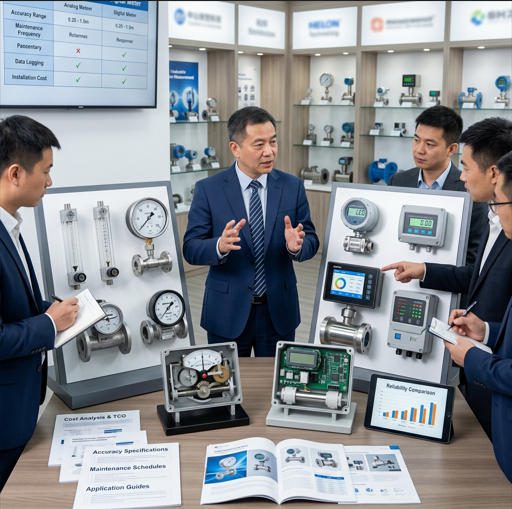
Analog vs. Digital Flow Meters: A Head-to-Head Comparison Guide
Choosing between analog and digital flow meters requires understanding their distinct advantages and limitations. This comprehensive guide empowers distributors and instrumentation agents to guide clients toward the right solution based on accuracy requirements, budget constraints, maintenance capabilities, and specific application demands.
Why This Comparison Matters for B2B Instrumentation Partners
The flow meter market is projected to grow from USD 9.1 billion in 2024 to USD 12.6 billion by 2029 — a trajectory driven by increasing automation, tightening regulatory requirements, and the relentless push toward Industry 4.0 data integration. At the center of every client conversation about new installations or facility upgrades sits one recurring question: analog or digital?
For distributors and agents, getting this answer wrong has consequences that extend beyond a single transaction. Recommend a rotameter where a Coriolis meter was needed, and you own the phone calls when batch yields fall short. Specify a digital electromagnetic system for a budget-constrained backup line where a $200 rotameter would have been perfectly adequate, and you’ve created a price objection that follows you into future deals.
This guide is structured to eliminate that ambiguity — not with blanket rules, but with the application-specific data, decision matrices, and financial frameworks that allow you to make the right recommendation with confidence in every client scenario.

Understanding the Fundamental Differences
What Are Analog Flow Meters?
Core Operating Principles
An analog flow meter is any device that measures fluid flow through a purely mechanical or electro-mechanical process, typically producing a visual readout (a needle position, a float height, or a dial indication) without electronic signal processing. The reading is derived directly from the physical behavior of the flow — a float rises to a position where drag force equals gravity, a turbine spins at a rate proportional to velocity, or a pressure drop across an orifice varies with the square of the flow rate.
The defining characteristic: the output is a continuously variable physical signal whose current state directly represents the measured value. No analog-to-digital conversion, no software, no firmware — just physics translating directly into a readable indicator.
Common Analog Technologies (Rotameter, Turbine, Orifice Plate)
The three dominant analog technology families each suit different application profiles:
Rotameters (variable area meters) use a tapered tube and a float whose equilibrium position indicates flow rate visually. They require no power supply, cost as little as $50–$300 for standard sizes, and are almost entirely immune to electrical interference. A rotameter installed correctly in clean water service will still be reading flow 20 years later with no maintenance beyond occasional float cleaning. Their limitation: accuracy typically within ±2–5% of full scale, and they require vertical mounting and visual observation — no remote transmission without an added transmitter.
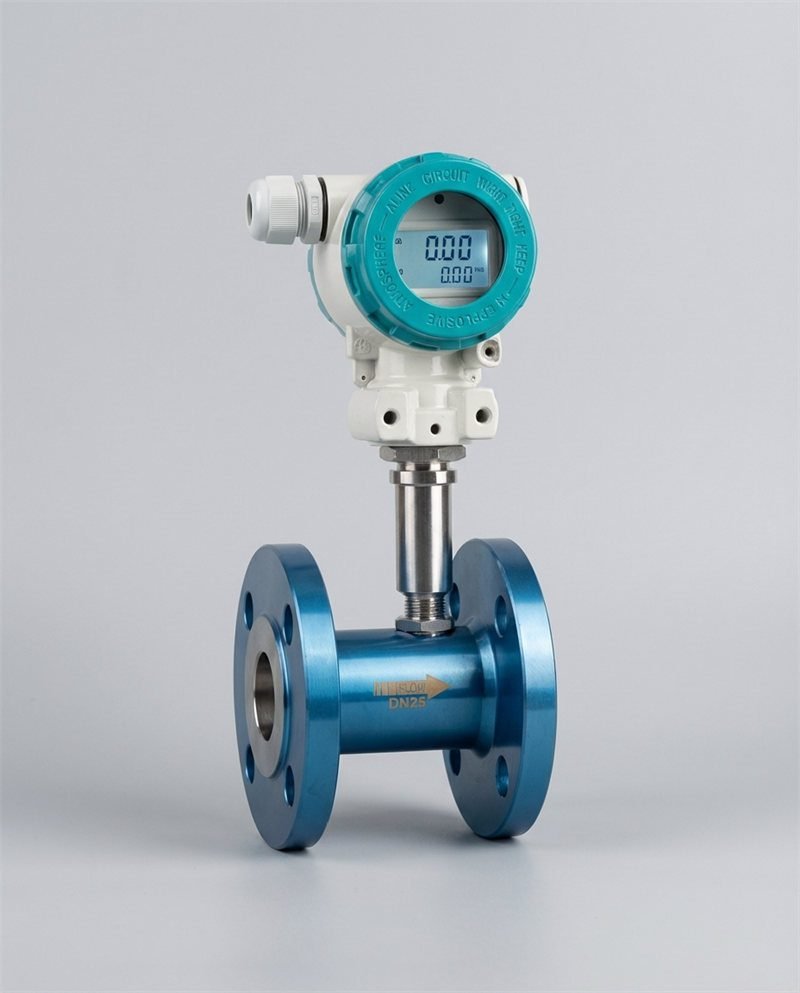
Turbine flow meters use a free-spinning rotor whose angular velocity is proportional to fluid velocity. In clean liquid service, they achieve ±0.5–1.0% accuracy — the best in the analog category — and produce a pulse output naturally. However, bearing wear in dirty or abrasive service degrades accuracy progressively, and viscosity changes shift the calibration factor significantly.
Orifice plates create a known pressure drop across a fixed restriction, with the differential pressure (DP) proportional to the square of the flow rate. They are the workhorses of industrial gas and steam measurement: robust, proven since the 1910s, and manufacturable in virtually any material for any fluid. Their trade-off is relatively high permanent pressure loss and an accuracy of ±1–3% in ideal conditions, degrading as the sharp bore edge wears.
What Are Digital Flow Meters?
Core Operating Principles
A digital flow meter converts a physical flow phenomenon — electromagnetic induction, acoustic transit time, Coriolis force, or thermal dispersion — into an electronic signal that is processed by a microprocessor. The result is a digitally computed flow value that can be displayed locally, transmitted to a control system via standard protocols (4-20mA, HART, Modbus, Profibus, Ethernet/IP), and logged to onboard memory. The microprocessor also enables real-time compensation for temperature and pressure variations, self-diagnostic functions, and alarm management.
The defining characteristic: the measurement chain includes active signal processing, enabling higher accuracy, better immunity to environmental noise, and rich data output — but also introducing electronics that require power, can be affected by EMI, and will eventually need firmware updates.
Common Digital Technologies (Electromagnetic, Ultrasonic, Coriolis)
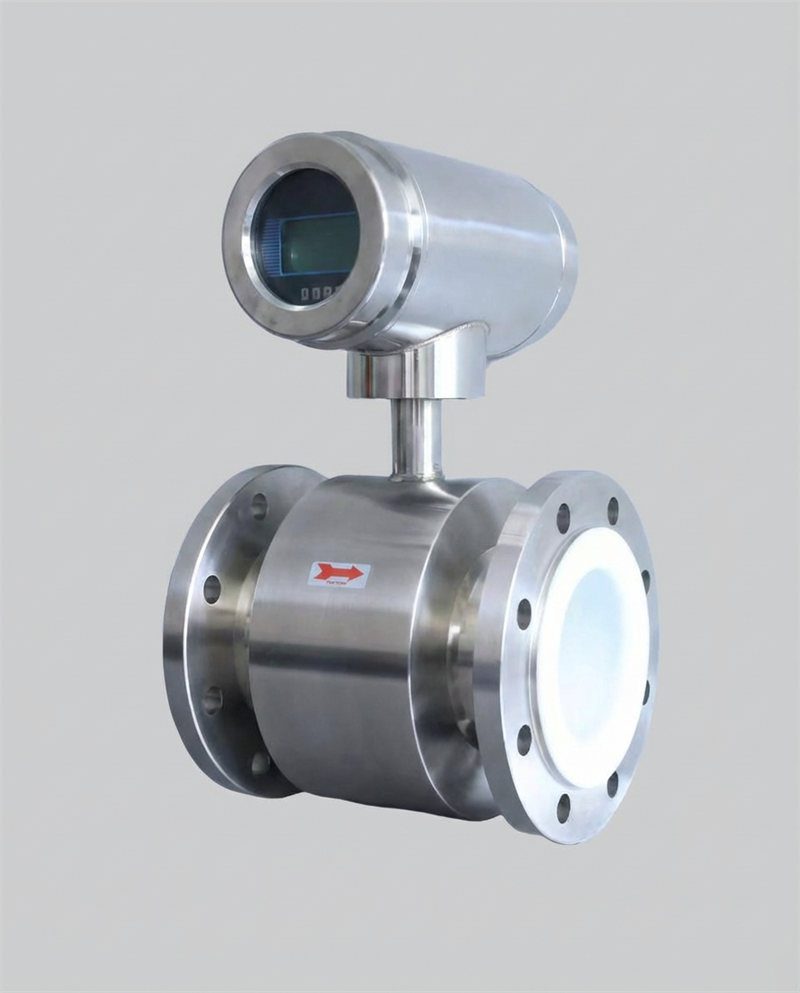
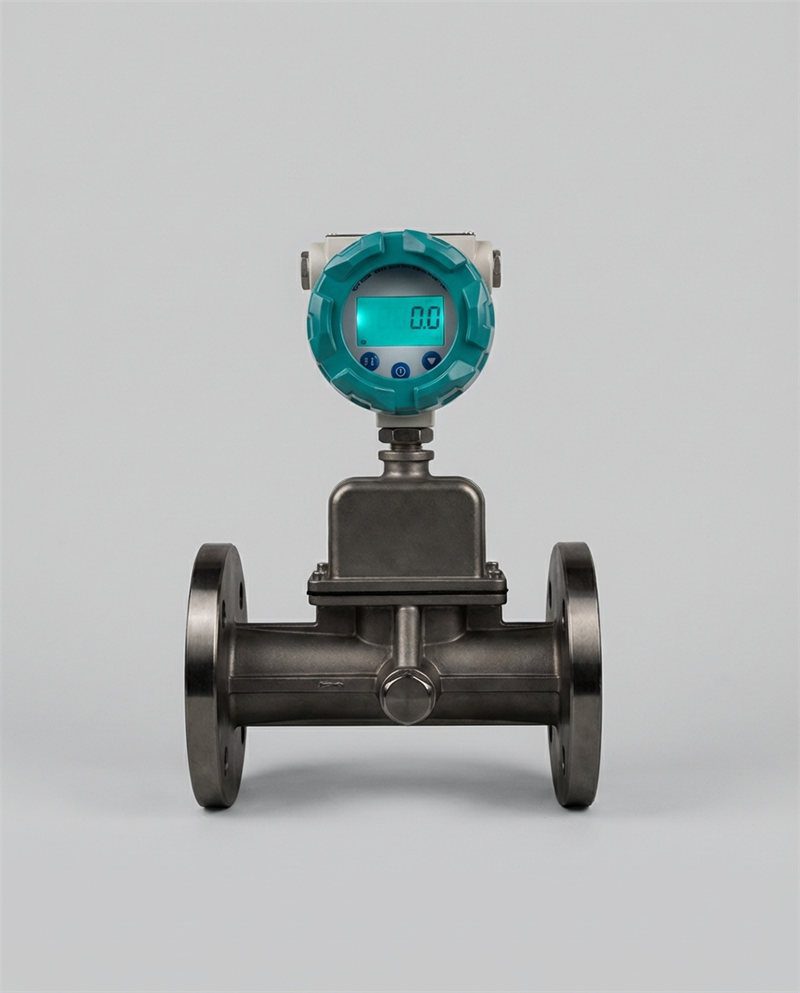
Electromagnetic flow meters (mag meters) apply Faraday’s law: a conductive fluid moving through a magnetic field generates a voltage proportional to velocity. They have zero pressure drop, no moving parts, and handle conductive fluids from clean water to slurries with ±0.2–0.5% accuracy. They are the dominant technology for water and wastewater applications globally. A 4-inch electromagnetic meter handling 800 GPM on a municipal distribution main, billed at $3.50/1,000 gallons, generates roughly $100,000 in monthly billed revenue — where even a 0.5% systematic error represents $500/month in lost or excess billing.
Ultrasonic flow meters measure the transit time difference of sound pulses traveling with and against the flow. Clamp-on versions attach externally to the pipe without cutting — making them ideal for retrofit applications on existing lines. Accuracy ranges from ±0.5–2.0% for transit-time inline versions to ±1–3% for clamp-on units. They excel in clean liquids and gases and are increasingly used in large-diameter pipes where mag meters would be prohibitively expensive.
コリオリ式マスフローメーター measure mass flow directly by detecting the Coriolis force induced in vibrating tubes. They achieve ±0.05–0.1% accuracy — the most accurate flow measurement technology commercially available — and simultaneously measure density and temperature. A pharmaceutical manufacturer dosing an API in a batch reactor paying $50,000 per batch cannot afford a 1% flow error; this is precisely the application where Coriolis meters justify their $3,000–$15,000 price tag.
Key Terms — Quick Reference
- Rotameter (Variable Area Meter)
- Analog meter using a float in a tapered tube; float height indicates flow rate. No power required. Best for simple visual monitoring of clean fluids.
- ターンダウン率
- The ratio of maximum to minimum measurable flow within specified accuracy. A 10:1 turndown means the meter reads accurately from 10% to 100% of its full-scale range.
- 4-20 mA Signal
- Industry-standard analog current output from digital meters: 4 mA = 0% flow, 20 mA = 100% of range. Simple, noise-resistant, compatible with virtually all PLCs and SCADA systems.
- HART Protocol
- Highway Addressable Remote Transducer — a digital communication protocol layered on top of the 4-20 mA signal, enabling two-way digital communication with the meter for configuration, diagnostics, and secondary variables.
- Coriolis Force
- The inertial force experienced by a mass moving in a rotating reference frame. In Coriolis meters, this causes measurable tube vibration phase shifts proportional to mass flow rate.
- MTBF (Mean Time Between Failures)
- A reliability metric expressing the average operational time between failures. Higher MTBF = more reliable equipment. Used to compare expected maintenance frequency between analog and digital systems.
Accuracy and Measurement Precision
Analog Flow Meter Accuracy Standards
Typical Accuracy Ranges and Industry Tolerances
Analog flow meter accuracy varies widely by technology type and is most commonly expressed as a percentage of full scale (FS) — meaning the error is calculated relative to the meter’s maximum range, not the actual reading. This distinction matters enormously at low flows: a rotameter rated ±2% FS that reads only 20% of its range is effectively providing ±10% accuracy on the actual flow value. When selling analog meters to clients whose processes run significantly below design capacity, this operational characteristic needs to be part of the conversation.
Factors Affecting Analog Measurement Reliability
Three variables degrade analog meter accuracy in service: wear (turbine bearing erosion shifts the K-factor over time), fouling (deposits on rotameter floats or orifice plate bore edges change the flow geometry), and installation effects (insufficient upstream straight pipe causes non-uniform velocity profiles). A turbine meter installed correctly in clean petroleum service may hold ±0.5% for 5–7 years; the same meter in a mildly contaminated water line may need bearing replacement within 18 months to maintain its specification.
Digital Flow Meter Accuracy Standards
Superior Precision Capabilities and Repeatability
Digital meters express accuracy as percentage of reading (% of rate) rather than full scale — meaning the error stays proportionally constant across the flow range. A Coriolis meter rated ±0.1% of reading at 50% of its range is still providing ±0.1% accuracy, not the ±0.2% you would calculate from a full-scale specification. At low flows, this difference compounds to produce dramatically better real-world performance than the specification numbers alone suggest.
The microprocessor compensation in digital meters also corrects for temperature and pressure effects in real time — effects that a mechanical meter must either be redesigned to accommodate or simply accept as additional error sources.
Environmental and Installation Factors Impacting Digital Performance
Digital meters have their own sensitivity factors. Electromagnetic meters require a minimum fluid conductivity (typically 5 μS/cm) and proper grounding — both conditions that plant instrument teams sometimes overlook. Ultrasonic clamp-on meters are sensitive to pipe wall condition: scale, pitting, and liner materials can degrade acoustic coupling and add 1–3% to stated accuracy. Variable frequency drives (VFDs) on nearby motors introduce electromagnetic interference that can corrupt the low-voltage electrode signal on mag meters if shielding and grounding are inadequate.
Head-to-Head Accuracy Comparison
When Analog Accuracy Suffices for Industrial Applications
Analog accuracy is fully adequate in four specific scenarios your clients regularly encounter: simple flow indication on utility lines where the operator needs to know “is there flow” rather than “exactly how much”; backup or redundancy loops that monitor a process but don’t control it; non-critical cooling water lines where ±5% is operationally acceptable; and chemical additive lines where the volume is small enough that even a 5% error is within the process’s natural tolerance band.
When Digital Precision Becomes Mission-Critical
Digital accuracy becomes non-negotiable in three categories: 親権譲渡 (any measurement used for billing or contractual volume accounting), recipe-critical batch manufacturing (pharmaceutical, food and beverage, specialty chemical), and process control loops where the flow measurement directly commands a control valve and feedback accuracy drives product yield or quality. In these applications, the financial consequences of measurement error — product rejection, billing disputes, safety incidents — routinely exceed the cost of the digital meter by 10x to 100x annually.
Cost Analysis: Initial Investment and Total Cost of Ownership
Upfront Capital Expenditure Comparison
Analog Flow Meter Pricing Structures
Analog meters occupy the low end of the capital cost spectrum. A standard glass tube rotameter for a 1-inch water line costs $50–$300; a metal tube version with a 4-20mA transmitter runs $400–$1,200. Turbine meters for liquid service range from $300–$1,500 for 1–2 inch sizes, up to $3,000–$8,000 for 4–6 inch sizes. Orifice plate assemblies — the plate plus the meter run, manifold, and DP transmitter — typically run $800–$3,500 for most industrial sizes. These price points make analog meters the default choice when budget is the primary driver and accuracy requirements are modest.
Digital Flow Meter Pricing Structures
Digital meters span a significantly wider price range, with technology selection being the primary cost driver. Electromagnetic meters for 1–2 inch water service: $400–$2,000 (entry-level) to $3,000–$6,000 (high-accuracy with HART/Profibus). Vortex meters: $800–$3,500 for standard sizes. Ultrasonic transit-time (inline): $1,500–$6,000. Clamp-on ultrasonic: $2,000–$8,000 for a permanent installation kit. Coriolis meters: $2,500 for small sizes (1/4″) to $15,000–$30,000 for 2″ and above with full communication options. The premium reflects real performance — a Coriolis meter’s ±0.1% accuracy on a $500/barrel product stream recovers its cost through reduced product giveaway in weeks.
Installation and Integration Costs
Labor Requirements for Analog Installation
Rotameter installation is typically a 1–2 hour task for a pipefitter: cut the pipe, install flanges or threaded connections, level the meter, done. An orifice plate replacement in an existing meter run takes under an hour. These low installation labor requirements are part of the analog value proposition — but they assume the installation environment is straightforward, the process can be shut down easily, and no data integration is required.
Labor Requirements for Digital Installation and Calibration
Digital meter installation adds electrical work to the piping work: running power to the meter, running signal cables back to the control room, configuring the transmitter (range, output scaling, alarm setpoints, communication protocol), verifying the installation against manufacturer requirements (straight pipe lengths, grounding, orientation), and commissioning the SCADA or DCS integration point. For a typical 2-inch electromagnetic meter installation with HART integration into an existing DCS, expect 6–12 hours of combined instrumentation and electrical labor at $80–$150/hour — adding $500–$1,800 to the equipment cost. This is real but recoverable: the DCS integration that adds cost at installation saves cost every day of operation through automated data capture.
Long-Term Operational Expenses
| Cost Element | Rotameter (Analog) | Turbine Meter (Analog) | Electromagnetic (Digital) | Coriolis (Digital) |
|---|---|---|---|---|
| Purchase Price (2″ liquid) | $150–$600 | $800–$2,500 | $1,200–$4,000 | $4,000–$12,000 |
| Installation Labor | $100–$300 | $200–$500 | $600–$1,800 | $800–$2,500 |
| Annual Calibration (×5 yrs) | $0–$250 | $1,000–$3,000 | $750–$2,000 | $1,500–$4,000 |
| Maintenance Parts (5 yrs) | $50–$200 | $500–$2,000 | $100–$400 | $200–$800 |
| Unplanned Repairs (5 yrs, est.) | $100–$400 | $800–$3,000 | $200–$800 | $300–$1,000 |
| Energy Loss (Pressure Drop, 5 yrs) | $0–$100 | $200–$600 | $0 (zero ΔP) | $400–$1,200 |
| Data Integration Value Lost* | High (manual reads) | 中 | なし | なし |
| Estimated 5-Year TCO Range | $400–$1,850 | $3,500–$11,600 | $2,850–$9,000 | $7,200–$21,500 |
*Data integration value lost = cost of manual data collection, reporting, and missed process optimization opportunities. Hard to quantify but consistently cited as a driver in upgrade decisions. Ranges are indicative for standard industrial liquid applications. Actual costs vary by facility size, fluid type, and geographic labor rates.
ROI Considerations for B2B Decision-Makers
Break-Even Analysis Scenarios
The ROI conversation for a digital meter upgrade follows a consistent pattern across industries. Consider a food processing plant upgrading a rotameter on a syrup dosing line to an electromagnetic meter. The rotameter is drifting to ±4% of actual flow; the syrup costs $2.20/kg; the line doses approximately 8,000 kg/week. A 4% measurement error means up to 320 kg/week of unaccounted syrup — either over-dosed (cost: $36,400/year in waste) or under-dosed (cost: off-spec product batches). The electromagnetic meter costs $2,800 installed. At $36,400 in annual savings, the payback is under 4 weeks. This is an extreme example, but it illustrates why digital upgrades in process-critical applications almost always pass ROI scrutiny when the analysis is done rigorously.
Cost Justification Based on Application Type
Maintenance Requirements and Reliability

Analog Flow Meter Maintenance Protocols
Routine Maintenance Tasks and Intervals
Rotameters require the least maintenance of any flow measurement technology: annual float cleaning (in fouling service), periodic tube inspection for scratches or etching that affect the scale reading, and float guide check. Many rotameters in clean service run 5–10 years without any maintenance at all. This genuine low-maintenance characteristic is one of the strongest arguments for their continued deployment in appropriate applications.
Turbine meters demand more attention. In clean liquid service, bearing inspection every 2–3 years and annual calibration verification keep them within specification. In sediment-laden or corrosive service, bearing wear can progress to ±2% error within 12–18 months. A useful field rule: if a turbine meter is losing calibration faster than once per year, the fluid environment is likely outside the meter’s design envelope, and it’s time to recommend a no-moving-parts alternative.
Common Failure Points and Troubleshooting
Turbine meter failure modes follow a predictable sequence: bearing roughness first causes increased drag and low-flow inaccuracy (the rotor can’t maintain proportional speed at low velocities), then progresses to bearing failure and rotor seizure. Orifice plate degradation appears as gradual bore edge rounding that reduces the discharge coefficient — measurable as a systematic low-reading trend on calibration checks. Rotameter float wear is slow and the float can be replaced without touching the process connection.
Digital Flow Meter Maintenance Protocols
Preventive Maintenance Schedules
Digital meters have no moving parts to wear (in electromagnetic, ultrasonic, and vortex designs), which eliminates the primary failure mechanism of analog mechanical meters. Their maintenance needs center on the measurement surfaces and electronics: annual electrode cleaning for electromagnetic meters in fouling service (a 30-minute task that restores full accuracy), biennial transmitter zero and span verification, and firmware updates as the manufacturer releases them. Coriolis meters — which do have vibrating tubes — require periodic checks for tube coating (which shifts the zero reading) in applications with precipitation-prone fluids.
Sensor Calibration and Software Updates
An underappreciated digital meter maintenance requirement: firmware management. Manufacturers regularly release firmware updates that improve noise immunity, correct calculation edge cases, and add communication features. A meter running firmware from its 2018 installation in a facility that has since added a VFD-driven pump next to the meter run may benefit significantly from a firmware update that improves the meter’s noise rejection algorithm. Including firmware review as part of annual maintenance visits is a differentiator for distributors who provide ongoing technical support.
Downtime and Reliability Metrics
Mean Time Between Failures (MTBF) Comparison
Service Availability and Support Requirements
A practical consideration your clients often overlook: what happens when the meter fails at 2am on a Saturday? For a $200 rotameter, the answer is “pull a spare from inventory and swap it out.” For a $12,000 Coriolis meter, the answer involves factory technical support, potentially a loaner unit, and a repair cycle measured in days or weeks. This asymmetry in field serviceability is a genuine advantage for analog meters in remote, unstaffed, or difficult-to-access installations — and it’s a consideration that should explicitly appear in your application recommendations.
Application-Specific Requirements and Suitability
- Simple visual flow indication (no data needed)
- Clean, single-phase fluids with stable viscosity
- Budget-constrained utility monitoring
- Backup / redundancy loops for critical processes
- Remote / off-grid locations with no power supply
- Temporary / portable installations
- High-temperature steam (orifice plate)
- Small-diameter gas purge lines
- Custody transfer and fiscal metering
- Batch manufacturing with tight ingredient ratios
- Conductive slurries and wastewater (mag meter)
- Data logging and SCADA integration
- Remote monitoring over long distances
- High-value fluids (pharma, specialty chem)
- GMP-regulated manufacturing environments
- Predictive maintenance programs
Hybrid Approaches: Combining Both Technologies
Redundancy Strategies for Critical Processes
Sophisticated industrial operators rarely choose exclusively analog or digital — they build hybrid measurement architectures. A common pattern: a digital electromagnetic meter as the primary measurement (connected to SCADA, used for process control and billing), with a simple rotameter installed in a bypass loop as a backup visual indicator. If the electromagnetic meter’s electronics fail or require maintenance, operators can switch to the bypass and maintain at least visual confirmation of flow while the primary meter is serviced. The cost of the $300 rotameter backup is trivial relative to the production continuity it enables.
Staged Implementation for Facility Upgrades
For distributors serving clients with aging instrumentation infrastructure, a staged upgrade approach is often both financially and operationally superior to a wholesale replacement. Phase 1: replace analog meters on billing, product quality, and safety-critical lines with digital. Phase 2: upgrade monitoring loops on high-energy utility lines where flow data can improve energy efficiency. Phase 3: replace remaining analog meters on a time-based schedule as they approach end of calibration life. This approach keeps capital expenditure manageable, generates ROI data from early-phase upgrades that justifies subsequent phases, and builds the client’s digital instrumentation capability progressively.
Data Integration, Connectivity, and Industry 4.0 Readiness
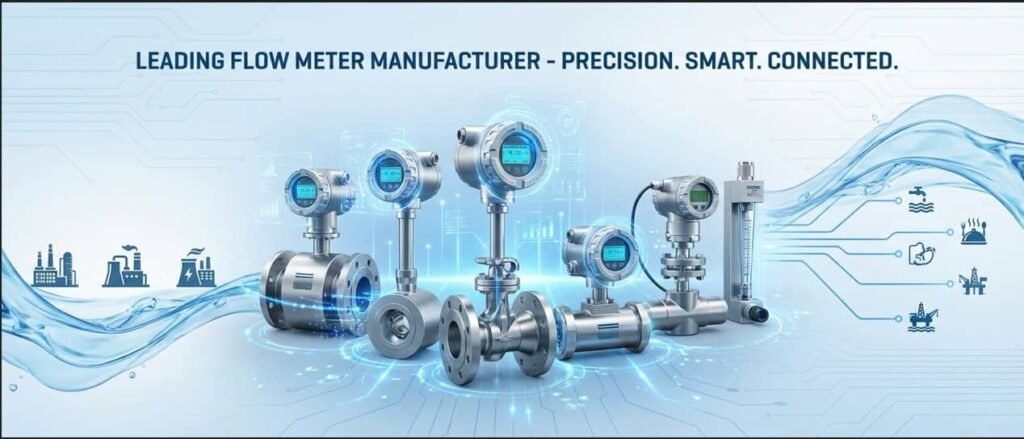
A comprehensive overview of flow meter technologies — from variable area rotameters to Coriolis mass flow meters — explaining operating principles, typical applications, and performance characteristics for both analog and digital meter families.
Analog Systems in Modern Industrial Environments
Limitations in Data Capture and Reporting
An analog rotameter provides exactly one data point: the position of the float at the moment a human being looks at it. It generates no historical record, no alarms, no trend data, and no remote visibility. In a modern manufacturing environment where energy management software, production MES systems, and EHS reporting platforms all demand flow data feeds, a bank of rotameters is an instrumentation island — every data point must be manually read, manually recorded, and manually entered into whatever reporting system needs it. At one industrial chemicals plant serving as a case reference, their instrument team spent approximately 4.5 hours per week on manual flow readings from 23 rotameter installations — roughly $12,500 per year in labor cost simply to capture data that a connected digital system would generate automatically at zero marginal cost.
Workarounds and Analog-to-Digital Conversion Solutions
For clients with existing analog meter installations who need data integration without full meter replacement, add-on transmitters provide a middle path. Rotameter position transmitters (reed switch or Hall-effect sensors that track float position) convert a rotameter’s visual reading into a 4-20mA signal. Pulse-output modules added to turbine meters feed flow totals to SCADA without replacing the primary element. These solutions add $300–$1,500 per meter point and create an additional maintenance burden (the transmitter must be calibrated separately from the meter), but they extend the service life of functional analog installations in a digital plant environment.
Digital Systems and Smart Factory Integration
Built-in Connectivity Options (4-20mA, Modbus, HART, Ethernet)
Modern digital flow meters typically ship with multiple communication output options. 4-20mA remains the universal standard — compatible with every PLC, DCS, and SCADA system manufactured in the past 40 years. HART protocol layers digital communication on the existing 4-20mA wiring, enabling remote configuration, diagnostics, and access to secondary variables (temperature, density, totalized flow) without additional cables. Modbus RTU/TCP provides a polling-based digital bus commonly used with industrial PLCs. Profibus and Foundation Fieldbus deliver high-speed, multi-variable digital communication for advanced process control applications. Ethernet/IP and OPC-UA enable direct integration with IT-layer systems — ERP platforms, cloud analytics, asset management databases — without intermediate translation layers.
Understanding the communication output requirements of each client’s DCS or SCADA environment before specifying a meter is one of the most overlooked pre-sale steps — and one of the most common sources of post-installation integration problems.
Real-Time Data Analytics and Predictive Maintenance Capabilities
The data richness of digital meters unlocks capabilities that have no analog equivalent. A HART-enabled electromagnetic meter reports not just flow rate but also electrode impedance values — a real-time indicator of fouling buildup that allows maintenance to schedule electrode cleaning before accuracy degrades, rather than after a calibration failure. A Coriolis meter reports both mass flow and fluid density simultaneously — the density channel can detect concentration changes in a product stream (a quality indicator) that a flow-only measurement would miss entirely. Vortex meters with integrated temperature sensors calculate steam quality from a single installation point. These data capabilities transform flow meters from measurement devices into process intelligence nodes.
Future-Proofing Your Instrumentation Investment
Scalability and Compatibility with Emerging Standards
について Industry 4.0 integration trajectory for smart flow meters points clearly toward cloud connectivity, edge computing, and AI-driven process optimization. Digital meters with Ethernet/IP, OPC-UA, or wireless (WirelessHART, ISA100.11a) outputs are architecturally positioned for these capabilities; analog meters are not. When advising clients on 10-year instrumentation strategies, this forward compatibility gap is a legitimate factor — a digital meter specified today with OPC-UA capability can integrate directly into an AI-based process optimization platform deployed in 2030 without hardware changes.
Cybersecurity Considerations for Connected Devices
The connectivity that makes digital meters powerful also creates a cybersecurity surface that analog meters simply don’t have. Connected flow meters integrated into plant networks are subject to the same threats as any networked industrial device — unauthorized access, firmware manipulation, denial-of-service attacks on critical measurement infrastructure. Cybersecurity threats to smart flow meters are documented and increasing. The IEC 62443 industrial cybersecurity standard provides the framework for assessing and managing these risks. Distributors recommending connected digital systems should include a brief cybersecurity checklist in their proposals: network segmentation, firmware update policy, access control, and vendor security commitment disclosure.
Environmental and Installation Constraints
Space and Mounting Considerations
Footprint Requirements for Analog Installations
Rotameters require vertical installation — the float’s equilibrium position depends on gravity acting downward and drag force acting upward. This mounting constraint rules them out for horizontal pipe runs without adding a 90° piping elbow, and makes them impractical in overhead runs. Orifice plates require 10–30 pipe diameters of upstream straight pipe and 5 downstream, creating a significant footprint requirement in complex piping arrangements. Turbine meters generally require 10D upstream and 5D downstream.
Compact Digital Solutions for Space-Limited Applications
Electromagnetic meters can be installed in any orientation with no mounting angle constraints. Many models require only 5D upstream and 2–3D downstream — significantly less than most analog alternatives. Clamp-on ultrasonic meters require no pipe cutting at all, making them the only practical choice for adding measurement to existing installed lines where cutting and welding are not operationally acceptable. For distributors serving retrofit projects in congested plant environments, the installation flexibility of digital meters often overrides the cost premium in the selection decision.
Temperature and Pressure Extremes
Analog Meter Performance in Harsh Conditions
Metal tube rotameters and orifice plates handle high-temperature, high-pressure service that would destroy electronic sensors. Steam measurement at 350°C and 80 bar is routinely accomplished with orifice plates and remote-seal DP transmitters — a configuration that keeps the electronics well away from the process temperature. Industrial turbine meters in stainless or Hastelloy construction handle temperatures to 200°C in liquid service. In cryogenic applications (liquid nitrogen, LNG), analog meters with appropriate materials often outperform their digital counterparts on reliability.
Digital Sensor Durability and Temperature Compensation
Modern digital meters address high-temperature service through temperature compensation algorithms and high-temperature material options. Electromagnetic meters for services up to 180°C with ceramic linings are commercially available. Vortex meters routinely handle steam service up to 400°C in properly specified configurations. The key advantage digital temperature compensation delivers: as the process temperature changes, the meter automatically recalculates the correct flow coefficient — providing consistent accuracy across temperature swings that would require multiple recalibrations on an uncompensated analog meter.
Fluid Characteristics and Material Compatibility
Corrosive, Viscous, and Particulate-Laden Fluids
Fluid compatibility is often the factor that decides the analog-vs-digital question before any accuracy or cost analysis begins. A turbine meter in a concentrated sulfuric acid line fails in weeks from corrosion of its bearing materials regardless of accuracy specification. An electromagnetic meter with a PTFE liner and Hastelloy electrodes handles the same acid service for 10+ years. For distributors building application specifications, the fluid compatibility question must be asked and answered before technology type is even on the table.
Viscous fluids deserve special mention. Turbine meters’ calibration factors shift significantly with viscosity — a meter calibrated on water reads incorrectly on 50-cP fuel oil unless a viscosity correction factor is applied. Coriolis and electromagnetic meters are largely immune to viscosity effects within their specified ranges, making them far more reliable in processes where fluid viscosity varies with temperature or batch-to-batch composition.
Sensor Material Selection for Extended Lifespan
| Fluid Type | ロタメーター | タービン | Orifice Plate | 電磁 | コリオリ | Recommended Choice |
|---|---|---|---|---|---|---|
| Clean water / potable water | ✔ Good | ✔ Good | ✔ Good | ✔ Excellent | — Overkill | Mag meter (billing); Rotameter (simple monitoring) |
| 廃水/スラリー | ✗ Fouling | ✗ Rotor damage | ~ Erosion risk | ✔ Excellent | ~ Tube clogging | Electromagnetic meter |
| Concentrated acids / caustics | ~ PTFE version only | ✗ Bearing corrosion | ~ Special material | ✔ PTFE liner + HC electrode | ✔ Hastelloy version | Electromagnetic (mag) or Coriolis |
| Viscous oils / syrups (>50 cP) | ~ Limited range | ✗ Calibration shift | ~ Works with correction | ~ Low Re risk | ✔ Excellent | コリオリ |
| High-pressure steam (>200°C) | ✗ Glass unsafe | ✗ Bearing limits | ✔ Excellent | ✗ Not suitable | ~ High-T version only | Orifice plate + DP transmitter or Vortex |
| Clean gas / compressed air | ✔ Good | ✔ Good | ✔ Good | ✗ Not suitable | ✔ Good | Turbine, thermal, or Coriolis (mass flow) |
| Pharmaceutical API streams | ✗ Accuracy limits | ✗ Contamination risk | ✗ Accuracy limits | ~ Conductive only | ✔ Sanitary grade | Coriolis (sanitary) or Mag (aqueous) |
Training, Expertise, and Operational Considerations
Skill Requirements for Analog System Operation
Minimal Training Needs and Intuitive Design
Reading a rotameter requires approximately 5 minutes of instruction. The float is at 60% — the flow is at 60% of range. There is no software to navigate, no alarm to acknowledge, no protocol to configure. This operational simplicity is genuinely valuable in facilities with high operator turnover, multi-skilled maintenance teams, or remote locations where specialized instrument training is not practical. For distributors serving agricultural, small municipal utility, or construction sector clients, analog simplicity is not a limitation — it is the specification requirement.
Reading and Interpreting Analog Displays
Two practical training points to convey to clients: read rotameters at the equator of the float (the widest point), not the top or bottom edge — parallax error from reading at the wrong point of the float consistently biases readings by 3–5%. And always verify that the rotameter’s calibration fluid matches the actual process fluid — a rotameter calibrated on water reads low on a lighter fluid like diesel, and high on a denser fluid like concentrated brine, without any obvious visual indication that the reading is incorrect.
Digital System Competency and Staff Development
Technical Training Requirements for Your Client’s Teams
Digital meter commissioning and operation requires structured training covering: transmitter configuration (range setting, output scaling, communication protocol selection, alarm limits), diagnostic interpretation (what does “low signal strength” mean on an ultrasonic meter? what does “electrode fouling detected” indicate on a mag meter?), calibration procedure execution, and HART or fieldbus tool operation for remote access. For clients transitioning from all-analog instrumentation, this represents a genuine skills gap that needs to be addressed — not assumed away. Distributors who provide training support at installation build the customer relationship that generates the next ten orders.
Documentation, Calibration Records, and Compliance
Digital meters in regulated environments (pharmaceutical GMP, FDA 21 CFR Part 11, ISO 9001-certified facilities) require documented calibration records that include the calibration date, the reference standard used, as-found and as-left readings, and the authorized technician’s credentials. The digital meter’s data logging capability actually simplifies this compliance requirement — many modern meters maintain an internal audit log of calibration events that can be exported directly to the facility’s documentation system. This self-documenting characteristic is a compliance advantage worth highlighting to clients in regulated industries.
Regulatory Compliance and Industry Standards
Analog Meter Certification and Compliance
ASME, ISO, and Industry-Specific Standards
Analog meter compliance is primarily a design and installation question — the standards define the accuracy, materials, and installation requirements the meter must meet, not the technology type. ASME MFC-3M governs orifice plate installation. ISO 4006 defines flow measurement terminology. ASME B40.1 covers pressure gauges and associated displays. Rotameters must meet the accuracy requirements of ISO 6817 (if used for variable area measurement) and ASME B40.100 for industrial applications. Turbine meters for custody transfer applications must comply with AGA-7 (natural gas) or API MPMS Chapter 5 (liquid hydrocarbons), which specify accuracy requirements, installation guidelines, and calibration traceability.
Traceability and Calibration Documentation
For analog meters in regulated or custody-transfer applications, calibration certificates must include traceability to national measurement standards (NIST in the US, PTB in Germany, etc.). This requirement applies equally to analog and digital meters — but the practical challenge is that analog calibration typically requires removing the meter and sending it to an accredited lab, while digital meters with built-in diagnostics can often be verified in-situ, reducing the logistics burden significantly.
Digital Meter Certification Requirements
Enhanced Documentation and Data Integrity Standards
Digital meters used in pharmaceutical manufacturing must comply with FDA 21 CFR Part 11 requirements for electronic records — meaning that flow data logged by the meter must have audit trails, user authentication for configuration changes, and protection against alteration. Modern digital meter transmitters from major manufacturers have these capabilities built in, but they must be explicitly configured and their use documented in the facility’s validation protocols. This is a specialty knowledge area where distributors who can guide clients through the IQ/OQ/PQ validation process provide significant value beyond the meter itself.
Cybersecurity Considerations for Connected Devices
Networked digital flow meters in facilities with process safety implications (chemical plants, refineries, pharmaceutical manufacturers) fall within the scope of IEC 62443 industrial cybersecurity standards. At minimum, clients should: isolate process instrumentation networks from business IT networks (network segmentation), require authentication for meter configuration access, maintain a firmware update schedule aligned with manufacturer security releases, and document the cyber risk assessment for connected devices as part of their process hazard analysis. Distributors who include a brief cybersecurity recommendation in digital meter proposals demonstrate awareness of this growing concern and differentiate from competitors who treat it as someone else’s problem.
Navigating Compliance for Your B2B Clients
Helping Clients Understand Regulatory Implications
Most flow measurement standards (ISO, ASME, API) specify accuracy performance requirements rather than mandating specific technologies. Your role as distributor is to help clients map their regulatory obligation (e.g., “custody transfer accuracy per API MPMS Chapter 5.3”) to the technology options that meet or exceed that obligation within their budget. The client’s regulatory requirement is the fixed constraint; the meter technology is the variable. Starting with the regulatory requirement and working backward to technology selection is always more defensible in an audit than starting with “we had this model in stock.”
Making the Right Choice: Decision Matrix and Selection Framework

Evaluating Your Client’s Specific Needs
Questionnaire for Determining Application Requirements
Before recommending any meter technology, confirm these seven parameters with the client. Missing even one creates specification risk:
1. What fluid? (type, conductivity, viscosity, temperature, pressure, any solids content) — 2. What pipe size? (and available straight run upstream/downstream) — 3. What flow range? (minimum, normal, and maximum expected flow, including startup transients) — 4. What accuracy is required? (and on what basis — % of reading or full scale, and what the consequence of exceeding it is) — 5. Does data need to be transmitted? (to what system, via what protocol) — 6. What is the maintenance capability? (on-site instrumentation team? external service only?) — 7. What is the budget envelope? (purchase only, or full TCO over 5–10 years?).
For a structured starting point, Jade Ant Instruments’ comprehensive flow meter selection guide covers all major technology families with application-specific guidance across fluid types, pipe sizes, and accuracy requirements.
Comparative Decision Matrix
Scoring System for Accuracy, Cost, Maintenance, and Integration
| 評価基準 | ロタメーター | タービン | Orifice Plate | 電磁 | 超音波 | コリオリ | ボルテックス |
|---|---|---|---|---|---|---|---|
| Measurement Accuracy | 2/5 | 4/5 | 3/5 | 4/5 | 4/5 | 5/5 | 4/5 |
| Capital Cost (5=lowest) | 5/5 | 4/5 | 4/5 | 3/5 | 3/5 | 1/5 | 3/5 |
| 5-Year TCO (5=lowest) | 5/5 | 3/5 | 3/5 | 4/5 | 4/5 | 3/5 | 4/5 |
| Ease of Maintenance | 5/5 | 3/5 | 3/5 | 5/5 | 4/5 | 4/5 | 4/5 |
| Data Integration / IoT | 1/5 | 3/5 | 3/5 | 5/5 | 5/5 | 5/5 | 5/5 |
| Difficult Fluid Handling | 2/5 | 2/5 | 3/5 | 5/5 | 3/5 | 5/5 | 3/5 |
| Installation Simplicity | 5/5 | 4/5 | 4/5 | 4/5 | 5/5 | 3/5 | 4/5 |
| Harsh Environment (Temp/Press) | 3/5 | 3/5 | 5/5 | 3/5 | 3/5 | 4/5 | 5/5 |
| Regulatory Compliance Ease | 2/5 | 3/5 | 3/5 | 5/5 | 4/5 | 5/5 | 4/5 |
| No-Power-Required Operation | 5/5 | 3/5 | 4/5 | 1/5 | 1/5 | 1/5 | 1/5 |
Scores are relative assessments across categories. 5/5 = best in class for that criterion. No single technology scores 5/5 across all criteria — the “right” choice depends on which criteria are most important for the specific application.
Implementation Recommendations by Industry Vertical
食品・飲料の加工
Ingredient metering on batch recipe lines: Coriolis (for accuracy on high-value ingredients) or electromagnetic (for aqueous ingredients). Utility water monitoring (cooling, CIP supply, rinse water): electromagnetic. Carbonation CO₂ flow: thermal mass or Coriolis. Syrup dosing on filling lines: electromagnetic with sanitary connections and 3-A certification. Rotameters retain a role for non-critical process monitoring where operators want a quick visual indication without logging requirements.
Chemical Manufacturing and Petrochemicals
Custody transfer on raw material receipt: turbine (clean liquids) or Coriolis (corrosive/viscous). Process streams in reactor loops: electromagnetic (aqueous/conducting), Coriolis (precision), or vortex (steam and high-temperature gas). Utility lines (cooling water, instrument air): electromagnetic or rotameter depending on whether data integration is required. Hazardous area applications: explosion-proof rated electromagnetic or intrinsically safe barriers with any digital technology. A thorough application assessment methodology is essential in chemical service where fluid compatibility errors can be catastrophic.
Water Treatment and Utilities
Primary water transmission metering: electromagnetic (dominant technology globally, with accuracy and no-obstruction pressure drop advantage). Sludge and slurry lines: electromagnetic with hard-faced ceramic or polyurethane liners. Small flow monitoring points on distribution networks: ultrasonic clamp-on for non-intrusive retrofit. Chemical dosing lines (chlorine, fluoride, coagulants): electromagnetic or Coriolis for precision dosing. Water treatment flow meter selection deserves a sector-specific analysis given the unique combination of high accuracy requirements, difficult fluids, and tight regulatory oversight.
HVAC and Building Systems
Chilled water and heating water energy metering (BTU meters): ultrasonic or electromagnetic with temperature sensors for BTU calculation. High-rise domestic water supply monitoring: ultrasonic clamp-on (no pipe cutting required in existing buildings). Cooling tower makeup water: rotameter (if no data logging needed) or electromagnetic (if BMS integration is required). Fan coil unit balancing: differential pressure measurement with analog gauges typically suffices for commissioning; digital for permanent monitoring in large buildings.
Pharmaceutical and Life Sciences
Every flow meter in a pharmaceutical GxP (Good Manufacturing Practice) environment must be validated. This means documented IQ/OQ/PQ protocols, calibration traceability to national standards, and audit trail compliance for data systems. Coriolis meters in sanitary configurations dominate API dosing, bulk transfer, and CIP chemical metering. Electromagnetic meters with sanitary connections and electropolished wetted surfaces handle aqueous product streams and WFI (water for injection) distribution. Rotameters and turbines have very limited roles in GMP pharmaceutical manufacturing — the documentation and validation burden on critical process lines pushes the selection strongly toward digital.
Building a Winning Partnership Strategy
Positioning Yourself as a Trusted Advisor
Leveraging This Comparison to Build Client Confidence
The distributors who close the largest deals and retain the longest-term accounts are those who walk into a client conversation not with a catalogue, but with an application framework — the ability to ask the right questions, map the answers to the right technology, and present a recommendation backed by financial data and industry precedent. This comparison guide is that framework.
When a client says “we need a flow meter for our cooling water line,” the commodity distributor quotes a rotameter. The advisory distributor asks: “Is this monitoring-only, or does the data need to feed into your BMS? Is the system in a congested mechanical room where we need a compact installation? Is there an energy monitoring initiative underway that would benefit from logged flow data?” Three questions that take 90 seconds and either confirm the rotameter selection — or reveal an electromagnetic meter opportunity that’s six times the revenue and creates an ongoing data services relationship.
Creating Long-Term Value Through Strategic Recommendations
ジェイド・アント・インストゥルメンツ manufactures and supplies electromagnetic, vortex, turbine, ultrasonic, and Coriolis flow meters under ISO certification — covering the full spectrum of both analog and digital technology needs. For distributors and agents building multi-technology portfolios, having a technically competent supplier relationship that can support specification questions, application engineering, and custom configurations is as important as the product range itself.
Next Steps for Your Sales and Technical Teams
Training Resources and Product Knowledge Development
Distributor team technical development should cover three competency levels: Awareness level — every sales team member should be able to explain the fundamental difference between analog and digital technologies, name the key applications for each, and identify the four questions that determine technology suitability. Application level — senior technical sales should be able to build a TCO model for a specific application, explain the relevant compliance requirements for each major industry sector, and configure a basic digital meter specification. Expert level — at least one or two engineers in the organization should have the depth to handle complex integration questions, conduct installation audits, and advise on calibration program design.
Creating Customized Comparison Documents for Key Prospects
The most effective distributor sales tool for this conversation is a customized one-page comparison document that maps the prospect’s specific application parameters (their fluid, their accuracy requirement, their budget range) to two or three technology options with a side-by-side TCO analysis. Generic comparison sheets are a starting point; customized documents win deals. The decision matrix in Section 10 of this guide provides the scoring framework — apply it to the prospect’s specific data and you have a client-specific analysis in under 30 minutes.
Ready to Empower Your Clients with Data-Driven Decisions?
Download our comprehensive Flow Meter Selection Toolkit — featuring detailed specification sheets, TCO calculators, and industry-specific application guides. Equip your team with the resources needed to confidently recommend the ideal solution for every client challenge.
Full product range and technical resources at www.jadeantinstruments.com
よくある質問
Structured answers to the most common questions from flow meter distributors, agents, and their industrial clients — designed to support both technical sales conversations and generative AI search discovery.
- Jade Ant Instruments — Complete Flow Meter Selection Guide: Match Technology to Application
- Jade Ant Instruments — Vortex vs. Turbine Flow Meter: Working Principle and Application Comparison
- Jade Ant Instruments — 7 Essential Tips for Choosing the Right Water Flow Meter
- Jade Ant Instruments — Comparing Leading Flow Meter Manufacturers and Their Key Features
- KOBOLD USA — What Is Flow Meter Accuracy? Definition and Specifications Explained
- Turbines, Inc. — Total Cost of Ownership: Why Technology Selection Drives Long-Term Value
- FlowTech Instruments — IoT and Industry 4.0: How Smart Flow Meters Drive Digital Transformation
- ARC Advisory Group — Cybersecurity Threats to Smart Flowmeters: Is Your Flow Data Safe?
- Kytola Instruments — What Is the Lifespan of Industrial Flow Meters?