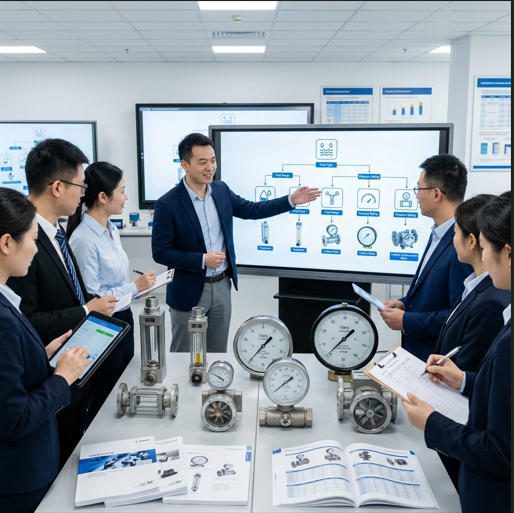

Why Analog Flow Meter Selection Matters for Your Business
The global flow meter market reached USD 9.7 billion in 2025 and is projected to hit USD 14.9 billion by 2034 at a CAGR of roughly 5.5% (IMARC Group, 2025). Within that market, analog flow meters — including variable area rotameters, turbine meters, oval gear meters, and differential-pressure devices — continue to account for a significant share of active industrial installations worldwide, particularly in process industries where legacy infrastructure, hazardous-area ratings, and tight capital budgets remain everyday realities.
For B2B distributors and agents, the ability to quickly and confidently recommend the right analog meter is a core commercial skill. Recommending an undersized turbine meter for a viscous heating oil line, for example, is not merely a technical error — it typically means accuracy drift of 3–8% from true flow, which translates directly into billing disputes, product loss, or, in custody-transfer contexts, regulatory non-compliance. A single misspecified meter on a mid-size chemical injection skid can wipe out the entire margin on the sale and damage the customer relationship for years.
This guide provides flow meter distributors and agents with a structured, interactive selection framework: checklists, decision trees, comparison tables, and a TCO calculator — covering every step from fluid characterisation through to post-installation compliance documentation. Throughout the guide, you will also find links to ジェイド・アント・インストゥルメンツ product and technical pages, where you can access datasheets and request quotations for the meter types discussed.
Section 1: Understanding Analog Flow Meter Fundamentals
What Are Analog Flow Meters and Why They Still Matter
An analog flow meter is any flow-measurement device that produces a continuous, proportional output signal — typically 4–20 mA, 0–10 VDC, pulse, or frequency — or a direct visual indication, rather than a digital communication protocol (Modbus, HART, PROFIBUS, etc.) as the primary output. The category includes:
- Variable area flow meters (rotameters): a float rises inside a tapered glass or metal tube; float position gives a direct visual reading proportional to flow rate.
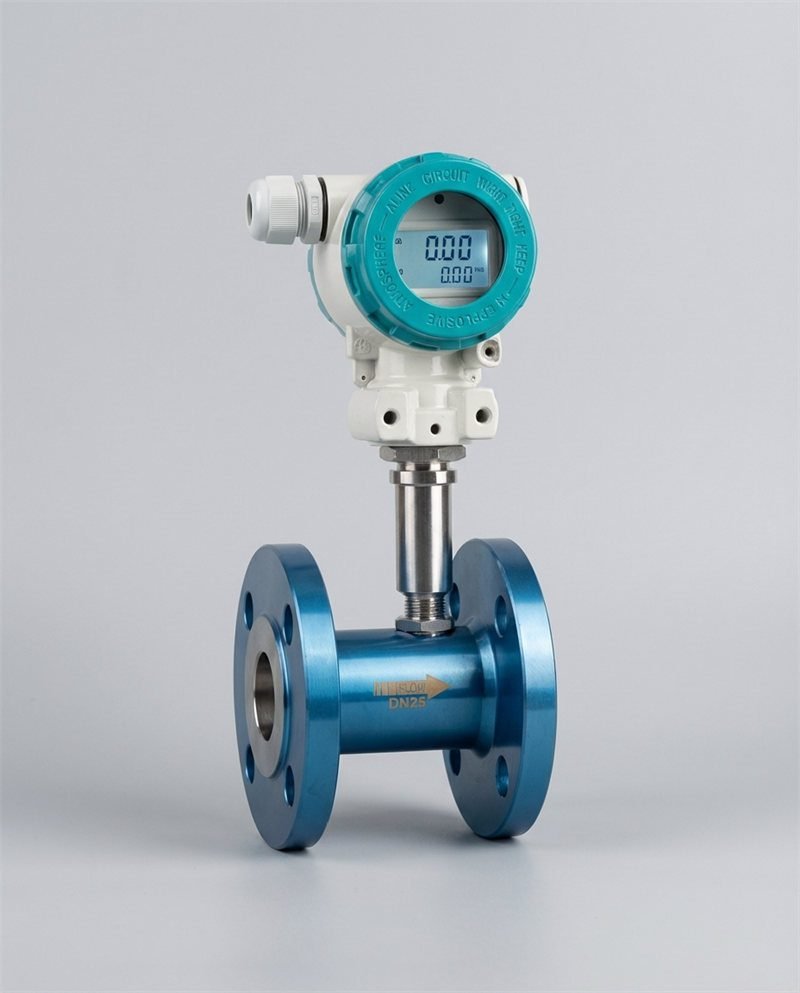
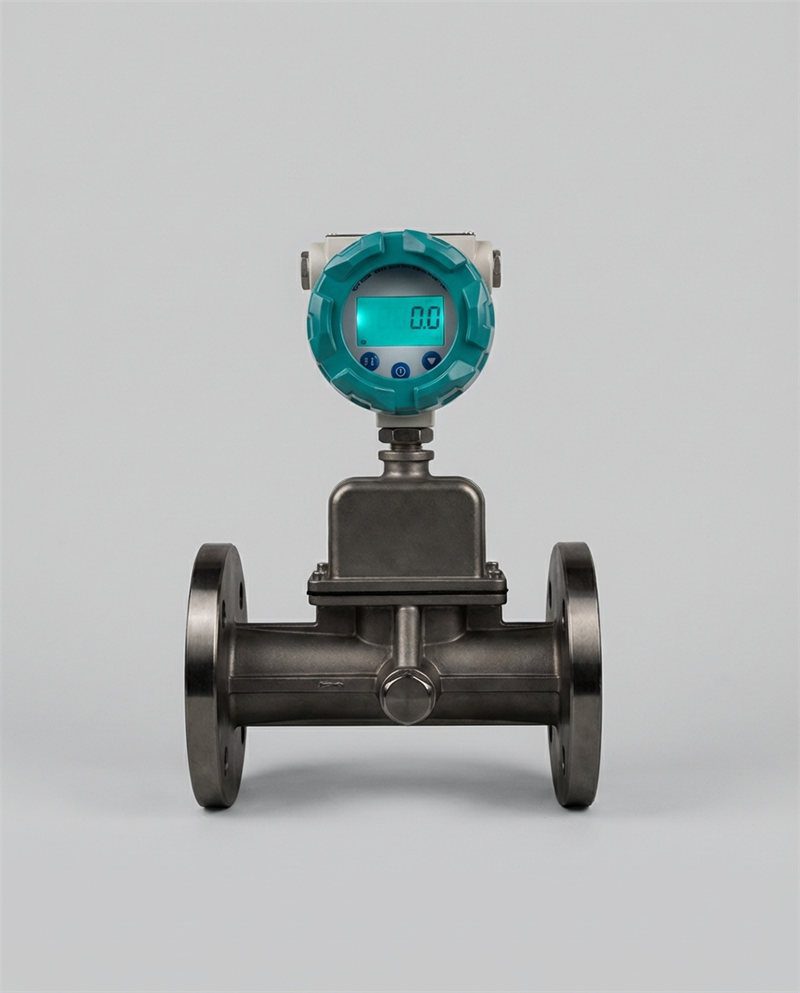
- Turbine flow meters: a freely spinning rotor’s rotational frequency is proportional to fluid velocity; converted to a pulse or analog output via a magnetic pickup.
- Positive displacement (PD) meters — including oval gear meters: fluid fills and empties precisely shaped chambers to give a volumetric count independent of velocity profile.
- Differential pressure (DP) meters — orifice plates, flow nozzles, venturi tubes: pressure drop across a restriction is related to flow rate via the Bernoulli equation.
- Paddle wheel / insertion meters: low-cost velocity sensors with analog 4–20 mA or pulse output, suitable for larger pipes.
The misconception that “analog means outdated” is worth addressing directly. Analog output signals integrate directly with any SCADA or PLC without a gateway or protocol converter — a practical advantage in brownfield plants where the control system may be 15–20 years old. In five-factor flow meter selection, output signal compatibility is one of the most commonly overlooked criteria.
Key Advantages for B2B Applications
- Cost-effectiveness: A glass-tube rotameter for a 1-inch water line costs USD 80–250 ex-works; an equivalent electromagnetic meter starts at USD 600–900.
- Reliability in harsh environments: metal-tube rotameters and oval gear meters have no electronics to fail in extreme heat, vibration, or washdown environments.
- Compatibility with legacy systems: standard 4–20 mA output works with any analog input card manufactured since the 1980s.
- Intrinsic safety: passive visual rotameters require no power source, making them naturally safe in ATEX/IECEx hazardous zones.
When to Recommend Analog Over Digital Solutions
Video: How to Choose the Right Flow Meter — covering analog vs. digital output, fluid types, and installation requirements.
Section 2: Identifying Fluid Type Requirements
How Fluid Characteristics Impact Meter Selection

Process fluid characteristics — viscosity, temperature, corrosivity, and solids content — are the primary filters in any flow meter selection process.
Fluid type is not simply “water vs. oil.” Every process fluid carries a combination of properties — viscosity, density, temperature, pressure, conductivity, pH, solid particle loading, and gas entrainment — each of which limits or enables specific meter technologies. Recommending a turbine meter for a hydraulic oil that reaches 500 cSt at cold-start will result in immediate inaccuracy because the turbine’s velocity-to-rotor-speed relationship breaks down at high viscosity.
The table below summarises how the most common fluid properties map to analog meter suitability.
| Fluid Property | Rotameter (VA) | タービン式流量計 | Oval Gear (PD) | DP / Orifice | Paddle Wheel |
|---|---|---|---|---|---|
| Clean Water / Thin Liquids | 素晴らしい | 素晴らしい | いいね | いいね | いいね |
| High Viscosity (100–10,000 cSt) | Fair (metal tube) | Not Suitable | 素晴らしい | Fair | Not Suitable |
| Corrosive Acids / Alkalis | Fair (PTFE lining) | Fair (316SS / Hastelloy) | Fair (316SS) | Fair (316SS) | 限定 |
| Slurry / Abrasive Solids >0.5% | Not Suitable | Not Suitable | Not Suitable | Wedge / Annubar only | Not Suitable |
| High Temp (>150 °C) | Good (metal tube) | Fair (up to ~200°C) | Fair (up to ~120°C) | 素晴らしい | 限定 |
| Gas / Steam | Good (gas rotameter) | いいね | Not Suitable | Excellent (steam) | Not Suitable |
| Hygienic / Sanitary (FDA/3A) | Fair (polished) | Fair (sanitary end) | Good (CIP compatible) | Fair | 限定 |
Assessing Fluid Properties — Distributor Checklist
- Fluid phase: liquid, gas, steam, or slurry — determine single-phase or multiphase
- Operating temperature: minimum, maximum, and typical in °C or °F
- Operating pressure: minimum, maximum, and typical in bar/g or psi/g
- Viscosity at operating temperature in cSt (centistokes) or cP
- Density / specific gravity at operating temperature
- Chemical composition: check material compatibility for wetted parts
- pH value (acidic, neutral, alkaline)
- Solids content: concentration (%) and particle size (µm)
- Gas entrainment or vapour bubble risk
- Hygienic/sanitary requirements (FDA, 3A, EHEDG)
- Electrical conductivity (relevant for electromagnetic meters as alternative)
Section 3: Determining Flow Rate Range and Capacity
Calculating Optimal Flow Rate Parameters
The single most frequent sizing mistake is matching meter size to pipe size rather than to actual measured flow rate. A 2-inch turbine meter may be installed in a 2-inch pipe, but if typical flow is only 15% of the meter’s full-scale capacity, accuracy degrades severely — most turbine meters specify accuracy only above 10–20% of full scale.
The concept of turndown ratioTurndown ratio (also called rangeability) = maximum measurable flow ÷ minimum measurable flow at stated accuracy. A 10:1 turndown on a meter rated to 100 L/min means accurate measurement down to 10 L/min. is essential here. A 4:1 turndown means the meter is only reliable between 25% and 100% of its rated capacity. If your customer’s process swings between 8% and 100%, a 4:1 meter will lose accuracy at low flow — a 10:1 unit is required.
- Normal operating flow rate: _______ GPM / LPM / m³/h
- Minimum expected flow rate (including startup): _______ (same units)
- Maximum expected flow rate (including surge): _______
- Required turndown ratio = max ÷ min: _______:1
- Acceptable accuracy at minimum flow: ±_______ %
- Future capacity expansion (% increase in 5 years): _______ %
- Pipe nominal diameter (NPS / DN): _______
- Target meter operating range = 20–80% of rated capacity: _______ to _______
Turndown Ratio Comparison by Analog Meter Type
📊 Typical Turndown Ratio by Analog Flow Meter Technology
Source: Compiled from manufacturer specifications (KOBOLD, Turbines Inc., GPI, Bronkhorst, 2024–2025). Actual values depend on specific model and calibration.
Right-Sizing Recommendations for Distributors
- Never size by pipe diameter alone. Calculate flow velocity at normal operating conditions first. For turbine and paddlewheel meters, optimal velocity is typically 1–5 m/s (3–16 ft/s).
- Account for pressure drop. Every inline meter adds resistance. For viscous fluids and oval gear meters, pressure drop increases significantly — confirm the system pump can handle it at maximum flow.
- Plan for expansion. If the customer expects 30% capacity growth in 3 years, size the meter for future max flow in the 70–80% range today.
- Oversizing penalty: A rotameter operating at 10% of full scale will have an accuracy of ±10–15% — effectively useless for process control. Operating range should stay within 30–90% of full scale for most VA meters.
Section 4: Evaluating Output Options and Signal Requirements
Analog Output Signals Explained

Output signal selection determines how the flow meter integrates with PLCs, SCADA systems, and data loggers. Match the signal type to the control system input card specification.
The output signal is the interface between the flow meter and the customer’s control or monitoring system. Recommending a meter with the wrong output type creates integration costs that can dwarf the equipment price itself — an RS-485 to 4–20 mA converter, for instance, adds USD 150–400 and a potential failure point. The four primary analog signal types are:
| Signal Type | Range | Max Cable Distance | Noise Immunity | Best Use Case | Common Meter Types |
|---|---|---|---|---|---|
| 4–20 mA | 4 mA = 0% flow 20 mA = 100% flow |
Up to 1,000 m | 素晴らしい | Process control loops, long-distance transmission, SCADA input | Turbine (with transmitter), rotameter (with transmitter), DP cell |
| 0–10 VDC | 0 V = 0% flow 10 V = 100% flow |
Up to 100 m | 中程度 | Local panel displays, short-run instrumentation, data loggers | Rotameters with local indicator, paddle wheel |
| Pulse / Frequency | 1 pulse = defined volume (e.g., 1 litre/pulse) | Up to 500 m (shielded) | いいね | Totalization (batching), billing meters, PLC counting | Turbine meter, oval gear, paddlewheel |
| Relay / Switch | Open/close at setpoint | Wiring-dependent | 素晴らしい | High/low flow alarms, pump control, safety interlocks | Rotameter (with magnetic switch), paddlewheel (alarm output) |
Output Selection Decision Tree
🔀 Output Signal Selection — Quick Decision Tree
Section 5: Pipe and Installation Requirements
Understanding Piping Specifications and Constraints
Installation constraints are where technically sound meter recommendations most frequently fail in the field. A turbine meter may be perfectly matched to the fluid and flow range, but if the available straight pipe run upstream is only 3 diameters rather than the required 10–20, the velocity profile at the rotor will be asymmetric, and accuracy will be degraded by 2–8% regardless of calibration quality.
For a detailed overview of best practices, including pipe orientation, grounding, and commissioning procedures, refer to the Jade Ant Instruments installation best practices guide.
| メーターの種類 | Orientation | Upstream Straight Run | Downstream Straight Run | Connection Types | Special Requirements |
|---|---|---|---|---|---|
| Rotameter (Glass) | Vertical only (upward flow) | 3–5 D | 3 D | NPT, BSP, flange | Must be plumb vertical; avoid vibration |
| Rotameter (Metal Tube) | Vertical preferred; horizontal possible with float design | 5 D | 3 D | Flange, screwed | Check float orientation for horizontal; purge valve for solids |
| タービン式流量計 | Horizontal preferred; vertical possible (downward flow) | 10–20 D (15 D typical) | 5 D | Wafer, flange, NPT | Upstream strainer mandatory; no partial flow; degas liquid |
| Oval Gear (PD) | Horizontal or vertical (check manufacturer) | None required | None required | Flanged, screwed | Upstream strainer essential; slippage increases at low viscosity |
| DP / Orifice Plate | Any (with correct tap positioning) | 15–50 D (ISO 5167) | 5–8 D | Flanged (orifice flanges) | Correct impulse line routing; condensate pots for steam |
| Paddle Wheel | Horizontal or vertical (full-pipe only) | 10 D | 5 D | Tee-fitting, wafer | Pipe must run full; avoid air pockets; centre insertion depth critical |
Installation Compatibility Checklist
- Available upstream straight pipe length: _______ mm (_____ pipe diameters)
- Available downstream straight pipe length: _______ mm (_____ pipe diameters)
- Pipe nominal diameter (NPS / DN): _______ and schedule / wall thickness
- Pipe material (carbon steel, SS, PVC, CPVC, HDPE, copper)
- Connection type available: NPT / BSP / flanged (ANSI Class ___) / wafer / triclamp
- Flow direction: horizontal / vertical upward / vertical downward
- Orientation constraints (e.g., physical obstructions, space for maintenance)
- Presence of control valves, pumps, elbows within straight-run zone
- Vibration level at installation point (low / moderate / high)
- Bypass requirement (for in-line meters that require pipe cut for removal)
- Electrical area classification (safe area / ATEX Zone 1 / Zone 2 / Div 1 / Div 2)
- Ambient temperature range at installation point
Section 6: Accuracy, Repeatability, and Calibration Considerations
Understanding Accuracy Specifications and Standards

Calibration traceability to NIST or national metrology standards is a contractual requirement for custody-transfer and billing applications. Photo: metrology lab flow calibration rig.
精度Accuracy = the maximum deviation of the meter reading from the true flow value, expressed as ±% of reading (% RD) or ±% of full scale (% FS). Example: ±1% FS on a 100 L/min meter = ±1 L/min error at any flow rate. そして repeatabilityRepeatability = how consistently the meter produces the same reading when measuring the same flow under the same conditions, even if that reading is not perfectly accurate. Critical for process control and ratio control loops. are distinct specifications that serve different customer needs.
For a billing meter on a product transfer line, accuracy is paramount — an error of ±1.5% on a 500 m³/day flow at USD 2/litre product means USD 15,000/day discrepancy. For a reagent ratio-control loop, repeatability may matter more than absolute accuracy, since the ratio is what drives product quality, not the absolute volume.
| メーターの種類 | Typical Accuracy (% RD) | Typical Repeatability | Turndown at Rated Accuracy | Calibration Interval | ISO / ASME Standard |
|---|---|---|---|---|---|
| Glass Rotameter | ±2% – ±4% FS | ±0.5% – ±1% FS | 3:1 – 4:1 | Annual visual check; 2–3 yr calibration | ISO 11631 / OIML R49 |
| 金属管式ロータメーター | ±1.5% – ±2% FS | ±0.5% FS | 4:1 – 6:1 | 2–3 yr (clean fluids) | ISO 11631 |
| タービン式流量計 | ±0.5% – ±1% RD | ±0.1% – ±0.2% RD | 10:1 (clean liquid) | Annual (liquid); 6 months (custody transfer) | AGA-7; API MPMS 5.3; ISO 9951 |
| Oval Gear (PD) | ±0.2% – ±0.5% RD | ±0.05% – ±0.1% RD | 10:1 – 100:1 (high viscosity) | 1–2 yr (general); 6 months (custody) | OIML R117; API MPMS 5.2 |
| DP / Orifice Plate | ±0.5% – ±2% RD (ideal) | ±0.1% – ±0.5% RD | 4:1 (3:1 at accuracy spec) | 2–5 yr (plate); annual (DP cell zero check) | ISO 5167-2; API MPMS 14.3 |
| Paddle Wheel | ±1% – ±3% FS | ±0.5% FS | 3:1 | Annual | No international standard; manufacturer spec |
Accuracy Requirements Assessment — Distributor Framework
- What is the regulatory or contractual accuracy tolerance? (e.g., ±0.5% for custody transfer, ±2% for process monitoring)
- Is the application billing / revenue metering? (If yes → OIML or API MPMS certification required)
- Is calibration traceability to NIST or national standard required? (e.g., for pharmaceutical, food safety)
- What is the customer’s internal calibration capability? (In-house vs. third-party lab)
- What is the calibration cost budget? (Higher accuracy = higher calibration cost)
- Has drift over time been quantified in the spec sheet? (Important for long intervals between calibrations)
- Does the accuracy specification apply across the full operating range, or only at a reference condition?
Section 7: Budget and Total Cost of Ownership Analysis
Pricing Strategies for Distributor Margin Optimization
Many distributors focus exclusively on equipment purchase price when competing on a bid. This approach systematically undervalues meters that carry lower long-term costs. The Total Cost of Ownership (TCO)TCO = initial equipment price + installation cost + annual maintenance × years + annual calibration × years + cumulative energy cost + estimated downtime cost. Compare TCO at 5 and 10 years, not just at purchase. model is a powerful sales tool for justifying premium meters to customers who habitually buy on price alone.
🥧 10-Year TCO Breakdown — Typical Turbine Flow Meter (DN50, Water Service)
- Equipment Cost — 28% (USD 700–1,400)
- Installation — 12% (USD 300–600)
- Calibration — 25% (USD 600–1,250 over 10 yr)
- Maintenance — 20% (USD 500–1,000 over 10 yr)
- Downtime Risk — 15% (USD 375–750 estimated)
Indicative figures for a DN50 turbine meter in clean water service, USD basis, 2025 pricing. Actual costs vary by region, application, and service frequency.
Total Cost of Ownership Calculator
| Cost Element | Option A: Basic Rotameter | Option B: Turbine Meter | Option C: Oval Gear PD |
|---|---|---|---|
| Equipment (USD) | 150–400 | 700–1,500 | 900–2,200 |
| Installation (USD) | 50–200 | 250–600 | 250–600 |
| Annual Calibration (USD) | 0–100 (visual) | 150–300 | 200–400 |
| Annual Maintenance (USD) | 20–50 | 80–200 | 80–200 |
| Expected Lifespan | 10–15 yr (clean) | 8–12 yr | 10–15 yr |
| 5-Year TCO (USD) | 600–1,350 | 2,100–5,100 | 2,550–6,200 |
| 10-Year TCO (USD) | 900–2,150 | 3,300–8,200 | 4,000–10,200 |
| 精度クラス | ±2–4% FS | ±0.5–1% RD | ±0.2–0.5% RD |
Use this table as a starting framework. For a specific customer application, populate actual local labour rates, calibration service costs, and product-loss calculations.
Section 8: Industry-Specific Applications and Recommendations
Tailored Solutions for Key B2B Markets

Different industries impose radically different requirements on flow meters. A meter that excels in municipal water billing may be entirely unsuitable for pharmaceutical dosing or crude oil custody transfer.
Water and Wastewater Treatment
In water utilities and industrial water treatment, the priority is typically long-term reliability with minimal maintenance, combined with OIML or local regulatory compliance for billing purposes. Rotameters find widespread use for chemical dosing lines (chlorination, pH adjustment) where visual indication is sufficient and low cost matters. For main billing lines, higher accuracy is required — a large-bore rotameter or turbine meter with 4–20 mA output and data logging is common.
Oil and Gas Operations
Custody transfer of crude oil, refined products, and LPG requires OIML R117 or API MPMS Chapter 5 compliant positive displacement or turbine meters with calibration certificates. Oval gear meters dominate viscous oil batching applications (fuel oil, lubricants, asphalt) precisely because their accuracy is nearly independent of viscosity changes — a turbine meter in the same service would require re-calibration with every product grade change. All meters in this sector must carry appropriate ATEX or IECEx hazardous-area ratings.
Chemical and Pharmaceutical Manufacturing
Chemical plants require material compatibility above all else. A 316L stainless steel rotameter handles most mild acids and alkalis, while PTFE-lined or Hastelloy C-276 meters are required for hydrofluoric acid or concentrated chlorine service. Pharmaceutical applications additionally require FDA-compliant materials, surface finishes ≤0.8 µm Ra, and CIP (clean-in-place) capability. Consult the complete flow meter selection guide before specifying meters for aggressive chemical service.
Food and Beverage Production
3A sanitary standards mandate smooth interior surfaces, no dead legs, and full drainability. Oval gear meters with sanitary end connections (tri-clamp) and EPDM seals are widely used for edible oils, syrups, and dairy products. Temperature stability matters for cream and chocolate applications where viscosity varies significantly with temperature — the oval gear meter’s viscosity immunity is a key advantage over turbine designs in these scenarios.
HVAC and Building Systems
Chilled water and heating water loops typically use paddle wheel or vortex meters for steam service in combination with energy meters (BTU meters). For glycol-water mixtures (typical in cold-climate HVAC systems), rotameters are suitable for low-flow monitoring branches, while turbine meters with glycol-compatible seals serve the main loop monitoring. Accuracy requirements are typically modest (±2–3% is acceptable for energy monitoring), making analog solutions highly cost-competitive in this sector.
| Industry / Application | Recommended Meter Type | 主要要件 | Watch-Out |
|---|---|---|---|
| Water treatment chemical dosing | Glass or PTFE rotameter | Chemical compatibility, low flow, visual indication | Must be vertical installation; avoid vibration |
| Municipal water billing (main line) | Turbine meter (OIML certified) or PD meter | OIML R49 accuracy; tamper-evident; remote readout | Upstream strainer essential; pulsating flow errors |
| Viscous oil custody transfer (fuel oil, lubricants) | Oval gear positive displacement meter | API MPMS 5.2 / OIML R117; viscosity-independent accuracy | Upstream strainer critical; thermal expansion at high temp |
| Natural gas metering (industrial) | Turbine gas meter or DP orifice plate | AGA-7 / ISO 9951 compliance; temperature compensation | Pulsation from compressors degrades turbine accuracy |
| Pharmaceutical batch dosing | Oval gear (sanitary) or PD meter | FDA 21 CFR; surface finish ≤0.8 µm Ra; CIP/SIP | No elastomers incompatible with WFI/solvents; crevice-free |
| Chemical injection (offshore / upstream) | Metal tube rotameter or DP transmitter | ATEX Zone 1 rating; high pressure (up to 350 bar); remote readout | Float guidance failure at high vibration; impulse line blocking |
| HVAC chilled / hot water energy metering | Paddlewheel + BTU integrator, or turbine | Long-term stability; glycol compatibility | Air pockets at high points cause false readings |
| Food-grade syrup / dairy dosing | Oval gear (tri-clamp, 316L SS, EPDM seals) | 3A/EHEDG sanitary; viscosity tolerance; batch accuracy ±0.5% | Viscosity must be <10,000 cSt for standard PD meter range |
Section 9: Interactive Selection Tool and Digital Checklist
Step-by-Step Interactive Selection Wizard
Use the six-section wizard below as a structured conversation guide with your customer. Complete each section in sequence. The output of each section feeds into the next, progressively narrowing the list of suitable analog meter types. For applications where you have completed this wizard and still face uncertainty, the five-factor engineering selection methodology from Jade Ant Instruments provides additional technical depth.
Section A — Application Basics
- Project name / customer reference: _______________________
- Industry vertical (see Table 5 above): _______________________
- Primary application purpose: billing / process control / monitoring / safety interlock / batch dosing / other
- Required implementation timeline: _______________________
- Any existing meter type currently in service (if replacement): _______________________
Section B — Fluid Properties
- Fluid name and composition: _______________________
- Phase: liquid / gas / steam / slurry / two-phase
- Normal operating temperature: _______ °C and pressure: _______ bar/g
- Viscosity at operating temperature: _______ cSt
- Density at operating temperature: _______ kg/m³
- Any corrosive, abrasive, or hygienic classification: _______________________
- Material compatibility constraint (PTFE required? 316L required? Hastelloy?): _______________________
Section C — Flow Requirements
- Minimum flow rate: _______ (GPM / LPM / m³/h / SCFM)
- Normal operating flow rate: _______
- Maximum / peak flow rate: _______
- Required turndown ratio (max ÷ min): _______:1
- Required accuracy: ±_______ % at normal operating conditions
- Custody transfer or billing application? Yes / No
Section D — Output and Integration
- Control system type: DCS / PLC / standalone indicator / manual local read
- Required output type: 4–20 mA / 0–10 VDC / pulse / relay / none (local only)
- Signal transmission distance: _______ metres
- Data logging required? Yes / No. If yes, protocol: _______ (Modbus/HART/other)
- Power available at installation point: 24 VDC / 110 VAC / 230 VAC / none (passive only)
Section E — Installation Constraints
- Pipe size (NPS / DN): _______ and pipe material: _______
- Connection type: NPT / BSP / flange (ANSI Class ___) / tri-clamp / wafer
- Upstream straight pipe available: _______ diameters
- Downstream straight pipe available: _______ diameters
- Orientation: horizontal / vertical upward / vertical downward
- Electrical area classification: safe area / ATEX Zone ___ / Div ___
- Bypass valve required for maintenance? Yes / No
Section F — Compliance and Standards
- Regulatory standard required: OIML / API MPMS / AGA / ISO 5167 / FDA / 3A / PED / none
- Calibration certificate required at delivery? Yes / No (NIST traceable?)
- Material test report (MTR) required for wetted parts? Yes / No
- Hazardous-area certificate required (ATEX / IECEx / FM / CSA)? Yes / No
- Documentation package required (datasheet, O&M manual, as-built drawing)? Yes / No
Automated Recommendation Engine — Scoring Guide
| Criterion | ロタメーター | タービン | Oval Gear | DP / Orifice | Paddle Wheel |
|---|---|---|---|---|---|
| Fluid = clean liquid, low viscosity | 3 | 3 | 2 | 2 | 2 |
| Viscosity > 50 cSt | 2 (metal tube) | 0 | 3 | 1 | 0 |
| Gas or steam measurement | 2 (gas rotameter) | 2 | 0 | 3 | 0 |
| Accuracy ≤ ±1% required | 0 | 3 | 3 | 2 | 0 |
| Turndown > 6:1 required | 0 | 3 | 3 | 0 | 0 |
| Budget < USD 500 per unit | 3 | 1 | 0 | 2 | 3 |
| Hazardous area, no power | 3 | 1 | 2 | 2 | 0 |
| No straight pipe available | 3 | 0 | 3 | 0 | 1 |
| Custody transfer / billing | 0 | 2 | 3 | 2 | 0 |
| High temp > 150 °C | 2 (metal tube) | 1 | 0 | 3 | 0 |
| TOTAL (example clean liquid, ≤±1%, 10:1 TD, USD >500 OK) | — | — | — | — | — |
Section 10: Troubleshooting Guide and Decision Support
Common Selection Mistakes and How to Avoid Them
| # | Common Mistake | Consequence | Corrective Action |
|---|---|---|---|
| 1 | Sizing by pipe diameter, not flow rate | Meter operates at <20% of range; accuracy ±10–20% in practice | Always calculate actual flow velocity and match to meter’s optimal operating band |
| 2 | Turbine meter on viscous fluid | Accuracy drift 3–15% as viscosity changes with temperature | Switch to oval gear or positive displacement meter; viscosity-immune |
| 3 | Insufficient upstream straight pipe | Asymmetric velocity profile; 2–8% accuracy error for turbine / DP meters | Add a flow conditioner, or switch to PD or rotameter which are less affected |
| 4 | Wrong output signal for PLC input card | Expensive signal converter needed; potential failure point added | Confirm input card spec (mA, VDC, pulse frequency) before ordering |
| 5 | No upstream strainer on turbine / PD meter | Particulates damage rotor bearings; premature failure in 2–6 months | Always bundle strainer (Y-type, 100 µm mesh) in the recommendation |
| 6 | Glass rotameter in vibrating pipeline | Float oscillation causes false high readings; glass breakage risk | Switch to metal tube rotameter with dampened float or alternative technology |
| 7 | Ignoring future capacity growth | Customer needs to replace meter after 2 years; distributor bears blame | Ask about 5-year capacity plan; size for 70–80% of projected max flow today |
| 8 | Selecting meter without hazardous-area certificate | Insurance void; regulatory non-compliance; potentially life-threatening | Always confirm area classification first; specify certified ATEX/IECEx variant |
Expert Consultation — When to Escalate
Not every application is straightforward. The following conditions are red flags that warrant escalation to a manufacturer’s technical engineer before finalising the recommendation:
- Two-phase or mixed-phase flow (liquid + gas, steam + condensate)
- Cryogenic service below −50 °C
- Ultra-high pressure above 250 bar/g
- Custody transfer where a calibration error of 0.3% has measurable financial impact
- Unusual fluid mixtures with variable composition
- Pulsating flow from reciprocating pumps or compressors
- Sanitary applications requiring USP / FDA / EHEDG validation documentation
For complex applications, Jade Ant Instruments offers direct technical consultation for distributors, including application review, sizing calculations, and documentation support.
主要用語集
- Accuracy (% FS vs. % RD)
- % Full Scale (FS) = error as proportion of maximum range. % Reading (RD) = error as proportion of actual measured value. A 1% FS error on a 100 L/min meter = ±1 L/min at any flow. A 1% RD error = ±0.1 L/min at 10 L/min — far more stringent.
- Turndown Ratio (Rangeability)
- Max measurable flow ÷ min measurable flow within stated accuracy. A turbine meter rated 10–100 L/min at ±1% has a 10:1 turndown. Rotameters typically offer 3:1 to 6:1.
- Viscosity (cSt / cP)
- Resistance of a fluid to flow. Water at 20°C ≈ 1 cSt. Motor oil at 40°C ≈ 100 cSt. Honey ≈ 2,000–10,000 cSt. High viscosity disqualifies turbine and paddlewheel meters.
- Positive Displacement (PD) Meter
- A meter that physically traps and counts discrete fluid volumes as gears or pistons rotate. Accuracy is nearly independent of velocity profile and viscosity — making oval gear meters ideal for viscous or variable-viscosity service.
- 4–20 mA Signal
- A current-loop signal where 4 mA = 0% flow and 20 mA = 100% full scale. The 4 mA live-zero distinguishes “zero flow” from “broken wire” (0 mA), providing built-in fault detection.
- ATEX / IECEx
- European (ATEX) and international (IECEx) certifications confirming that electrical equipment is safe for use in explosive atmospheres. Zone 1 = hazardous area where explosive gas is likely during normal operation. Zone 2 = not likely during normal operation but possible.
- Beta Ratio (β)
- For DP meters (orifice, flow nozzle): β = throat diameter ÷ pipe diameter. Typical range 0.3–0.75. A lower β creates a larger pressure differential for the same flow — easier to measure, but increases permanent pressure loss.
- CIP (Clean-in-Place)
- A method of cleaning the interior surfaces of a meter without dismantling it, by circulating cleaning agents through the installed meter at elevated temperature. Required for hygienic applications in food, beverage, and pharmaceutical sectors.
- OIML R117 / R49
- International Organisation of Legal Metrology recommendations governing meters for custody transfer of liquids (R117) and water (R49). Compliance is required for legally binding commercial measurement in most countries.
- K-Factor
- A turbine or paddlewheel meter’s calibration constant expressed in pulses per unit volume (e.g., pulses per litre). The transmitter divides the pulse count by the K-factor to calculate flow rate. Detailed explanation available at Jade Ant’s datasheet reading guide.
Empowering Confident Recommendations
Analog flow meter selection is not a commodity transaction — it is an engineering decision that carries financial, operational, and regulatory consequences for your customer across a 10- to 15-year service life. Distributors and agents who approach the sale with a structured framework — fluid characterisation, flow rate sizing, output matching, installation validation, and TCO analysis — consistently achieve higher close rates, lower return rates, and stronger long-term customer relationships than those who compete purely on price.
The interactive wizard in Section 9, the material compatibility matrix in Section 2, and the TCO calculator in Section 7 are tools you can use in every customer conversation to demonstrate technical authority and add visible value. Use them — and your recommendations become trusted rather than questioned.
For product specifications, datasheets, and pricing across the full range of rotameters, turbine meters, oval gear meters, and differential pressure flow measurement solutions, visit ジェイド・アント・インストゥルメンツ — an ISO-certified manufacturer supplying distributors in over 40 countries with meters that meet IEC, ATEX, CE, and application-specific standards.
Ready to Simplify Your Flow Meter Selection Process?
Access technical datasheets, request customised quotations, and talk to an application engineer — all through Jade Ant Instruments’ distributor support portal.
📋 Open Selection Guide 📞 Request Consultation 🔍 Compare Manufacturers