Introduction
Choosing a laminar flow meter is not about finding the “best” device on the market — it is about matching a specific instrument’s specifications to your fluid type, flow conditions, and operational requirements. A laminar differential pressure (DP) meter that delivers ±0.8 % accuracy on dry nitrogen at 25 °C can produce readings 5–8 % off-target when exposed to a wet, corrosive gas mixture it was never designed to handle. The meter did not fail; the selection process did.
Laminar flow meters work by forcing incoming turbulent flow through a laminar flow element (LFE) — an array of thin, parallel channels — and measuring the differential pressure drop across it. Using the Poiseuille equation, the instrument calculates volumetric flow from this pressure drop and the fluid’s known viscosity, then applies temperature and pressure corrections to derive standardized mass flow. This four-step process (convert → measure → calculate → correct) makes laminar DP meters exceptionally fast (response times under 100 ms), capable of wide turndown ratios (up to 10,000:1), and compatible with multiple gases without hardware changes.
But these advantages depend entirely on proper selection. This guide walks through every factor that determines whether a laminar flow meter will perform to specification in your application — from fluid chemistry and viscosity to pressure ratings, installation constraints, output signals, certifications, and total cost of ownership. Whether you are specifying a meter for a semiconductor fab, pharmaceutical cleanroom, engine test stand, or industrial gas blending system, these tips will help you avoid the selection errors that turn a precision instrument into an expensive source of measurement uncertainty.
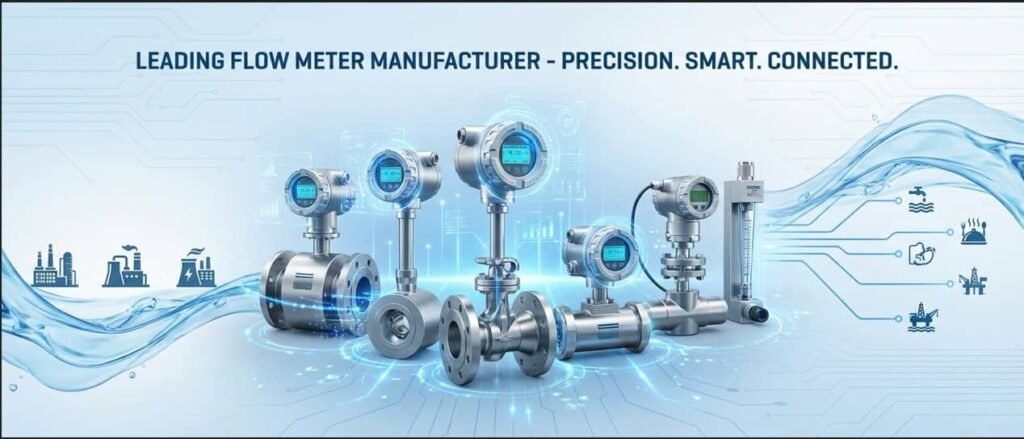
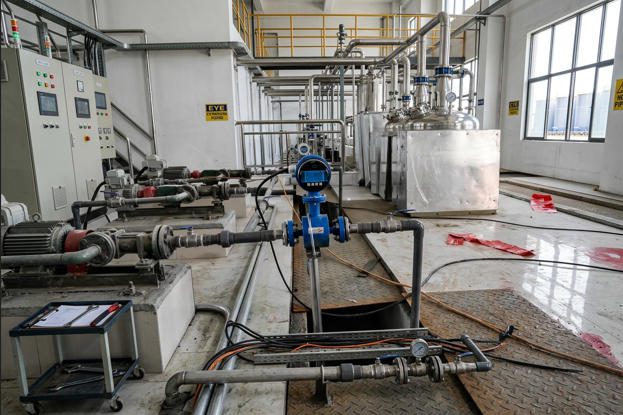
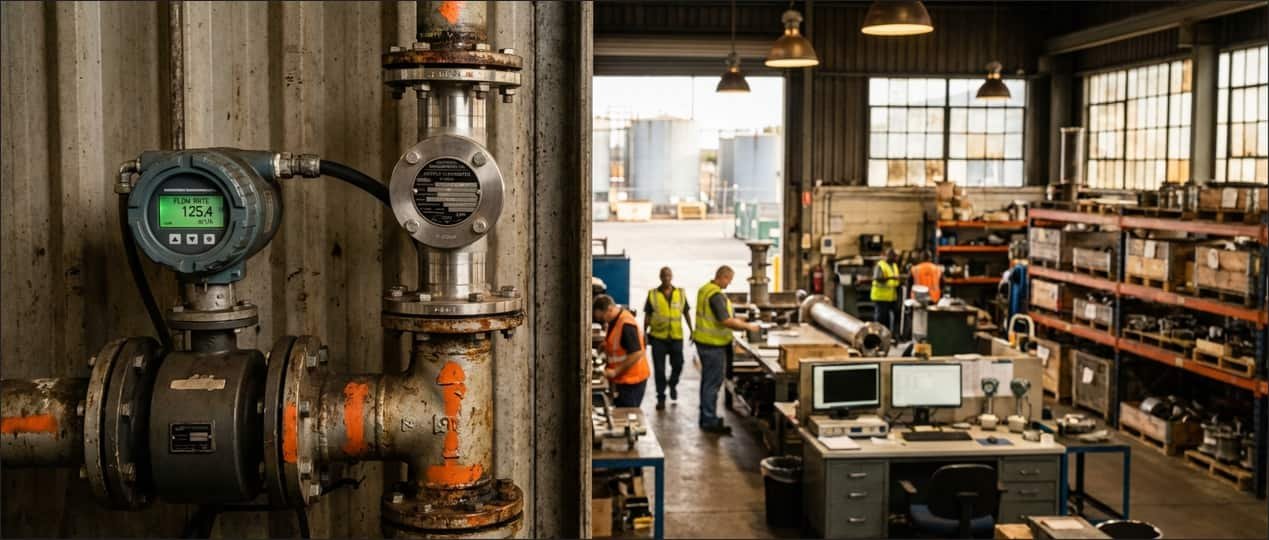
For engineers who work primarily with liquids rather than gases, many of the same selection principles apply to choosing any industrial flow meter — electromagnetic, vortex, or ultrasonic. The fundamentals of fluid compatibility, flow range sizing, and installation constraints are universal.
Fluid Type and Compatibility
State and Cleanliness
Laminar flow meters are designed primarily for clean, single-phase gas applications. The LFE’s internal structure — hundreds of narrow parallel channels typically 0.1–0.5 mm in hydraulic diameter — creates the laminar flow regime required for the Poiseuille equation to hold. This geometry also makes the LFE highly sensitive to contamination. Particles, condensed moisture, oil aerosols, or polymerized residues that deposit on channel walls change the effective hydraulic diameter, shifting the calibration and degrading accuracy.
A semiconductor equipment manufacturer documented a 3.1 % measurement shift on a laminar DP meter used to control silane (SiH₄) delivery after only four months of operation — caused by sub-micron silicon deposits accumulating inside the LFE channels. The meter’s ±0.8 % calibration accuracy was meaningless because the flow element’s geometry had physically changed.
Before selecting a laminar flow meter, confirm the following about your fluid:
- Phase: Must be single-phase gas or clean liquid. Two-phase flow (gas with entrained droplets, or liquid with bubbles) produces erratic DP readings.
- Particulate content: Any particles larger than approximately 20 % of the LFE channel diameter risk clogging. For a standard LFE with 0.25 mm channels, that means particles above 50 µm are problematic. Pre-filtration (5–10 µm) upstream of the meter is standard practice.
- Moisture and condensation: If the gas can reach its dew point at any point inside the meter (during startup, shutdown, or ambient temperature swings), condensation will accumulate in the LFE. Heated enclosures or upstream heaters may be necessary.
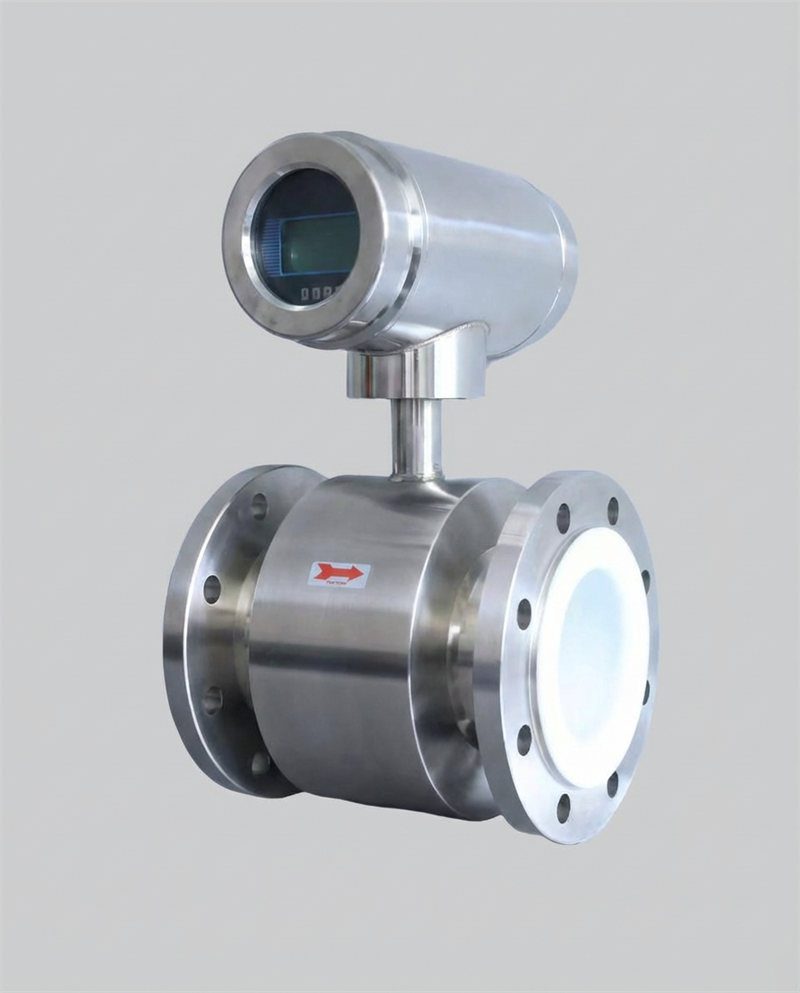
For liquid applications requiring flow measurement but involving particles, slurries, or corrosive media, electromagnetic flow meters — such as those offered by Jade Ant Instruments — are the standard alternative. Electromagnetic meters have no internal obstructions and handle solids up to 30 % concentration.
Chemical Compatibility
The wetted materials of a laminar flow meter — the LFE stack, body, seals, and pressure sensor diaphragms — must be chemically compatible with the process gas over the full operating temperature and pressure range. Standard wetted materials include 316L stainless steel (compatible with most inert and mildly corrosive gases), Hastelloy C-276 (for chlorine, HCl, and mixed acids), and PTFE or Kalrez seals (for broad chemical resistance).
A critical consideration: chemical compatibility must be evaluated at operating conditions, not just at room temperature. A seal material rated “excellent” for ammonia at 25 °C may degrade rapidly at 80 °C. The Cole-Parmer chemical compatibility database is a useful starting reference, but always confirm compatibility with the meter manufacturer for specific wetted-path materials and operating conditions.

Image: Laboratory environment with precision gas handling. Laminar DP flow meters are the standard for gas flow measurement in research and semiconductor applications where response time and multi-gas flexibility are critical. (Credit: Pexels)
Viscosity and Flow Profile
Viscosity Impact on Flowmeter
Viscosity is not a secondary parameter for laminar flow meters — it is the central variable in the Poiseuille equation that governs their operation. The equation states that volumetric flow Q = K × (ΔP) / η, where K is a geometric constant of the LFE, ΔP is the measured differential pressure, and η is the absolute (dynamic) viscosity of the fluid. This means the meter’s flow calculation is only as accurate as its knowledge of the fluid’s viscosity at the actual operating temperature and pressure.
For pure gases at known conditions, viscosity can be accurately modeled using established correlations (Sutherland’s formula, NIST REFPROP data). Modern laminar DP meters from manufacturers like Alicat Scientific store viscosity models for over 130 gases in their onboard firmware, automatically applying the correct viscosity value based on the gas selection and real-time temperature/pressure readings.
The challenge arises with gas mixtures and varying compositions. If a process gas stream shifts from 95 % nitrogen / 5 % oxygen to 90 % nitrogen / 10 % oxygen, the mixture viscosity changes — and the meter’s accuracy degrades unless the composition is updated in the instrument’s configuration. For applications with variable gas composition, Coriolis meters (which measure mass directly, independent of viscosity) may be more appropriate, though they sacrifice the laminar DP meter’s response speed and turndown ratio.
Laminar vs. Turbulent Flow
The entire operating principle of a laminar flow meter depends on maintaining a laminar flow regime inside the LFE. In laminar flow, fluid moves in smooth, parallel layers with a predictable parabolic velocity profile. The Poiseuille equation — and therefore the meter’s calibration — is valid only under these conditions.
If the flow velocity through the LFE exceeds the laminar regime and transitions to turbulent flow, the linear relationship between ΔP and flow rate breaks down. The meter continues to produce readings, but those readings are increasingly inaccurate. This is why laminar flow meters have a defined maximum flow rate — it corresponds to the highest flow at which the LFE can maintain laminar conditions.
Reynolds Number Considerations
The Reynolds number (Re = ρvD/μ, where ρ is density, v is velocity, D is hydraulic diameter, and μ is dynamic viscosity) determines whether flow through the LFE remains laminar. For flow inside the narrow channels of an LFE, the critical Reynolds number is approximately 2,000 — though most manufacturers design for Re < 1,000 to ensure a safety margin well below the laminar-turbulent transition zone.
Practically, this means that lower-viscosity gases (helium, hydrogen) reach the Reynolds number limit at lower volumetric flow rates than higher-viscosity gases (sulfur hexafluoride, argon). A meter rated for 500 SLPM on nitrogen may only be valid to 300 SLPM on helium, because helium’s lower viscosity allows turbulence to develop at a lower flow rate. According to Meriam’s LFE technical bulletin, the Reynolds number inside the flow element should not exceed 1,000 for reliable laminar operation.
Always verify with the manufacturer that your specific gas at your operating conditions (temperature, pressure) will maintain Re < 1,000 at your maximum required flow rate.
Flow Rate Range for Laminar Flow Meter
Minimum and Maximum Flow Rates
Laminar DP flow meters offer one of the widest turndown ratios in the flow measurement industry. Alicat’s M-series, for example, specifies a 10,000:1 turndown ratio — meaning a meter with a 10 SLPM full scale can accurately measure flows as low as 0.001 SLPM. This is achievable because the Poiseuille equation produces a linear relationship between ΔP and flow rate throughout the laminar regime, unlike orifice-plate DP meters where the square-root relationship severely limits low-flow accuracy.
However, the practical minimum flow rate is limited by the differential pressure sensor’s resolution. At extremely low flows, the ΔP signal becomes so small that sensor noise dominates the reading. Most manufacturers specify a “zero stability” or “zero offset” value (e.g., ±0.01 % of full scale) that defines the lowest meaningful measurement.
The maximum flow rate is constrained by the Reynolds number limit discussed above. Exceeding the rated maximum pushes the LFE into transitional or turbulent flow, invalidating the calibration. Some manufacturers offer “extended range” options with larger LFE channels, but these trade maximum flow capacity for reduced sensitivity at the low end.
Sizing the Flowmeter
The cardinal rule of laminar flow meter sizing: select a full-scale range where your normal operating flow falls between 10 % and 90 % of full scale. Operating consistently below 10 % degrades accuracy (sensor resolution limits dominate). Operating consistently above 90 % leaves no headroom for process upsets or flow spikes that could push the LFE into turbulent conditions.
A worked example: if your process requires nitrogen flow between 2 and 18 SLPM, a 20 SLPM meter would have your maximum at 90 % of full scale — acceptable. But a 50 SLPM meter would have your normal operating range at 4–36 % of full scale — unnecessarily sacrificing low-end accuracy. A 25 SLPM meter (normal range at 8–72 % of full scale) offers a better balance of accuracy and headroom.
| Operating Range (SLPM) | Recommended Full Scale (SLPM) | Normal Operating % of FS | Sizing Notes |
|---|---|---|---|
| 0.01 – 0.1 | 0.1 – 0.2 | 10 – 100 % | Micro-flow; verify DP sensor resolution at minimum flow |
| 0.5 – 5 | 5 – 10 | 10 – 100 % | Lab-scale; standard LFE sizes available |
| 2 – 18 | 20 – 25 | 8 – 90 % | Typical process gas; good accuracy/headroom balance |
| 50 – 400 | 500 | 10 – 80 % | Industrial scale; verify pressure drop at max flow |
| 200 – 4,000 | 5,000 | 4 – 80 % | Large-scale; consider bypass or parallel configurations |
Sizing recommendations based on maintaining ±(0.8 % of reading + 0.2 % of full scale) accuracy across the operating envelope. Always confirm with the specific manufacturer’s datasheet.
Pressure and Temperature Ratings
Operating Pressure
Laminar flow meters contain an absolute pressure sensor used for the density correction that converts volumetric flow to mass flow. The meter’s pressure rating defines the maximum safe operating pressure for the flow body, seals, and sensor — typically ranging from 145 PSIG (10 bar) for standard units to 3,000 PSIG (207 bar) for high-pressure models used in rocket propulsion test stands and supercritical fluid applications.
Two pressure-related parameters must be verified during selection:
Maximum working pressure: the highest process pressure the meter body can safely withstand continuously. This is a mechanical safety limit, not a measurement parameter. Operating above this pressure risks seal failure, body deformation, or sensor damage.
Pressure drop across the LFE: the differential pressure consumed by the meter at maximum flow. This is the “cost” of measurement — the energy the meter extracts from the flow to generate its DP signal. Laminar DP meters are designed for low pressure drop (typically 0.5–2 inches of water column at rated flow), but this must still be accounted for in system pressure budgets. A process running at 2 PSIG with a meter consuming 1 inch H₂O (0.036 PSI) of pressure drop loses nearly 2 % of its available pressure — significant in low-pressure applications.
Temperature Limits
Temperature affects laminar flow meter performance in three ways: it changes the gas viscosity (directly impacting the Poiseuille calculation), it changes the gas density (affecting the mass flow correction), and it affects the meter’s electronics and sensor accuracy.
Standard laminar DP meters typically operate over a gas temperature range of 0 °C to 50 °C (32 °F to 122 °F). Extended-temperature models support -40 °C to 200 °C. The temperature sensor inside the meter compensates for viscosity and density changes automatically — but only within its calibrated range. Operating outside this range produces uncorrected errors.
Ambient temperature affects the electronics enclosure. Most instruments are rated for 0–50 °C ambient. In outdoor installations, direct sunlight, or environments near furnaces or cryogenic equipment, thermal management (sunshades, insulation, or remote-mounted electronics) may be required.
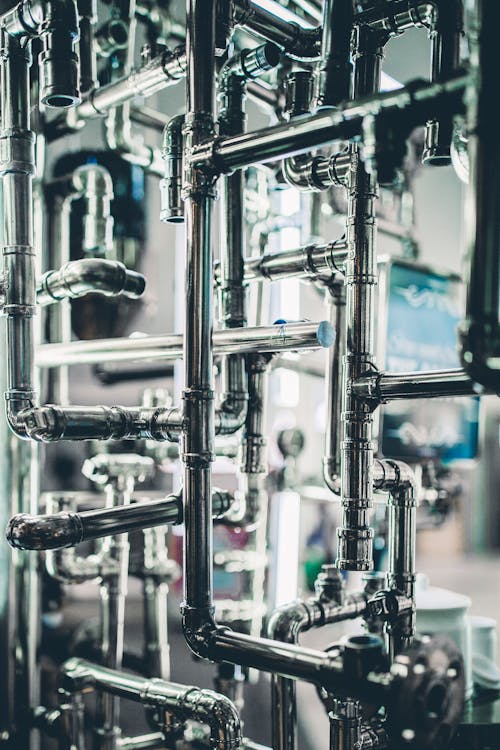
Image: Industrial piping network. Every flow meter in a system like this must be rated for the actual process pressure and temperature — not just the nominal design conditions. (Credit: Pexels / Jiawei Cui)
Accuracy and Reliability Needs
Measurement Precision
Laminar DP flow meters typically specify accuracy as ±(0.8 % of reading + 0.2 % of full scale) for standard models, with high-accuracy versions achieving ±(0.4 % of reading + 0.2 % of full scale). The Meriam LFE technical bulletin cites standard calibration accuracy of ±0.72 % to ±0.86 % of reading, traceable to NIST standards.
This accuracy structure is important to understand: the “% of reading” component stays proportional to the actual flow, while the “% of full scale” component becomes increasingly dominant at low flows. On a 100 SLPM meter at 10 SLPM (10 % of full scale), the total uncertainty is ±(0.08 + 0.2) = ±0.28 SLPM, or ±2.8 % of reading. At 90 SLPM, the uncertainty is ±(0.72 + 0.2) = ±0.92 SLPM, or ±1.02 % of reading. This is why proper sizing matters.
The following bar chart shows how laminar DP accuracy compares to other flow metering technologies:
Bar Chart: Accuracy comparison across six flow metering technologies (% of reading, lower = better). Laminar DP meters deliver ±0.8 % — better than thermal mass and vortex, comparable to electromagnetic, and outperformed only by Coriolis. (Sources: Alicat, Meriam, Endress+Hauser, Emerson published specifications)
Repeatability and Linearity
Laminar DP meters excel at repeatability — the ability to produce the same output for the same flow conditions on successive measurements. Typical repeatability specifications are ±0.2 % of reading, significantly tighter than the accuracy specification. For process control applications where the absolute value matters less than the consistency of the reading (closed-loop control, trend monitoring), repeatability is often the more important metric.
Linearity is inherent to the technology. The Poiseuille equation produces a linear relationship between ΔP and flow — unlike orifice-plate DP meters that follow a square-root relationship (ΔP ∝ Q²). This linearity means that a laminar DP meter’s accuracy is relatively uniform across its entire range, without the severe low-flow accuracy degradation that plagues square-root-law DP meters.
Installation and Environmental Factors
Space and Orientation
Laminar DP flow meters are compact relative to their flow capacity — a typical laboratory unit measuring 0–20 SLPM occupies roughly 150 × 75 × 50 mm (L × W × H). Industrial units for higher flow ranges are proportionally larger but still far more compact than equivalent Coriolis or vortex meters. This compactness makes them practical for space-constrained installations inside gas cabinets, analytical enclosures, and semiconductor tool frames.
Orientation matters for liquid applications but is generally less critical for gases. For gas service, most manufacturers allow horizontal or vertical mounting. For liquid service, the meter should be mounted vertically with flow upward to prevent air pockets from accumulating in the LFE channels — trapped air creates a two-phase condition that corrupts the DP reading.
Straight-run requirements are minimal. Unlike vortex meters (15–20 D upstream) or electromagnetic meters (5 D upstream), laminar DP meters function correctly with as little as 3–5 pipe diameters of straight run upstream because the LFE itself forces the flow into a fully developed laminar profile.
Piping Connections
Standard connection types include compression fittings (Swagelok-type, 1/8″ to 1″ tube OD), NPT/BSP threaded ports, VCR/VCO fittings (for semiconductor and ultra-high-purity applications), and flanged connections (for larger industrial units). The connection type must match the existing piping and purity requirements. VCR fittings with metal gaskets provide leak-tight, particle-free connections required for semiconductor-grade gas delivery; NPT fittings are adequate for general industrial service but may introduce particles from tape sealant.
For engineers who need flow measurement on larger liquid pipe systems (DN50 and above), where laminar DP meters are not applicable, electromagnetic or ultrasonic flow meters from Jade Ant Instruments offer flanged and wafer connections in standard DIN/ANSI sizes with liner options (PTFE, rubber, ceramic) matched to the process fluid.

Image: Complex piping connections in an industrial environment. The fitting type, orientation, and available straight run directly impact flow meter installation feasibility and measurement accuracy. (Credit: Pexels)
Output, Indication, and Compliance
Display and Signal Options
Modern laminar DP meters provide multiple simultaneous outputs. A typical instrument displays mass flow, volumetric flow, absolute pressure, and temperature on an integrated screen while simultaneously transmitting data via one or more communication protocols. Common output options include:
Analog: 0–5 V or 4–20 mA (industry standard for DCS/PLC integration). The 4–20 mA loop is preferred for noise immunity over long cable runs in industrial environments.
Digital serial: RS-232 (point-to-point lab use), RS-485/Modbus RTU (multi-drop industrial networks with up to 127 devices on a single bus).
Industrial fieldbus: PROFIBUS, EtherNet/IP, EtherCAT, PROFINET, and Modbus TCP/IP for integration with modern DCS and automation platforms. Alicat, for example, offers all of these as factory-configurable options.
For engineers integrating flow data into plant-wide SCADA systems alongside Jade Ant Instruments electromagnetic or vortex meters (which support HART, Modbus, and 4–20 mA), ensuring protocol compatibility between the laminar DP meter and the existing control infrastructure is a critical selection checkpoint.
Certifications and Approvals
Regulatory compliance requirements vary by application and geography. The most commonly required certifications for laminar flow meters include:
- ATEX / IECEx: mandatory for installation in explosive atmospheres (Zone 0/1/2 gas, Zone 20/21/22 dust). Required in oil and gas, chemical processing, and paint-spray applications.
- CE marking: required for sale in the European Economic Area. Confirms compliance with EU safety, health, and environmental directives.
- UL / CSA: common requirements for installation in North American industrial facilities.
- NIST traceability: calibration traceable to the National Institute of Standards and Technology (US) or equivalent national metrology institute. Essential for quality-system compliance (ISO 9001, ISO 17025).
- FDA 21 CFR Part 11: relevant for pharmaceutical and biotech applications where electronic records and signatures must be controlled.
What Factors Matter Most? Selection Priority
Pie Chart: Relative weight of selection factors for laminar flow meters. Fluid type compatibility and flow range sizing dominate — these are the factors that eliminate entire technology categories before accuracy, cost, or installation are even discussed. (Source: analysis of selection-criteria frequency in published flow meter specification guides from Alicat, Meriam, Sensirion, and industry forums)
Video: How a Laminar DP Flow Meter Works
Video: “How a Laminar Flow Differential Pressure Meter Works” — a visual walkthrough of the four-step measurement process: flow conversion, DP measurement, volumetric flow calculation, and mass flow correction.
Cost and Brand Reputation in Choosing a Flow Meter
Budget Considerations
Laminar DP flow meters range from approximately $1,500 for basic laboratory units to $8,000+ for industrial-grade, high-accuracy, multi-protocol instruments with hazardous-area certifications. This positions them between thermal mass meters ($800–$3,000) and Coriolis meters ($3,000–$25,000+) in the price hierarchy.
However, purchase price is only part of the total cost equation. Laminar DP meters offer several cost advantages over alternatives:
| Criterion | Laminar DP | Thermal Mass | Coriolis | Electromagnetic |
|---|---|---|---|---|
| Best For | Clean gases, multi-gas flexibility | Single gas, low cost | Liquids, mass flow, mixed fluids | Conductive liquids, slurries |
| Typical Accuracy | ±0.8 % of reading | ±1.5 % of reading | ±0.1 % of reading | ±0.5 % of reading |
| Response Time | < 100 ms | 1–30 seconds | < 100 ms | < 1 second |
| Turndown Ratio | Up to 10,000:1 | 50:1 – 100:1 | 80:1 – 100:1 | Up to 1,000:1 |
| Multi-Gas Capable | Yes (130+ gases, firmware-selectable) | Limited (requires gas correction factors) | Yes (direct mass measurement) | N/A (liquid only) |
| Warmup Time | < 1 second | 15–30 minutes | < 5 minutes | < 1 minute |
| Pressure Drop | Very low (0.5–2 in H₂O) | Low–Moderate | Moderate–High | None |
| Purchase Price (typical) | $1,500 – $8,000 | $800 – $3,000 | $3,000 – $25,000+ | $500 – $15,000 |
| 10-Year Maintenance Cost | Low (annual calibration only) | Low–Medium (drift recalibration) | Low (no moving parts) | Low (no moving parts) |
Sources: compiled from Alicat, Meriam, Endress+Hauser, Emerson, and Jade Ant Instruments published specifications.
A research laboratory that switched from thermal mass meters to laminar DP instruments for a multi-gas test stand (cycling between N₂, Ar, He, and CO₂) documented the following results: calibration drift reduced from 4.2 % over 6 months (thermal mass) to 0.3 % over 6 months (laminar DP); gas-switching time reduced from 30+ minutes (thermal mass warmup per gas change) to effectively zero (laminar DP, firmware gas selection); and annual calibration cost remained comparable ($200–$400 per meter per year for both technologies).
Evaluating Manufacturer Support
The three largest laminar DP flow meter manufacturers are Alicat Scientific (Tucson, Arizona), Meriam (a subsidiary of Scott Fetzer, now part of Berkshire Hathaway), and CME (Consulting, Measurement & Engineering). Key support factors to evaluate:
- Calibration turnaround: Alicat offers FastTrack instruments built and shipped in 3–5 business days. Standard lead times for most manufacturers are 2–4 weeks.
- Multi-gas configuration: can the manufacturer pre-load your specific gas mix into the firmware, or are you limited to standard pure-gas selections?
- NIST-traceable calibration: is the calibration laboratory ISO 17025-accredited? Can you get calibration certificates with uncertainty budgets?
- Repair and recalibration service: is there a service center within your region, or must instruments ship internationally?
For liquid flow measurement needs that fall outside the laminar DP meter’s scope, Jade Ant Instruments provides ISO 9001-certified electromagnetic, vortex, turbine, and ultrasonic flow meters with OEM/ODM customization, documented QC at every production stage, and same-week spare-parts dispatch. When a facility’s instrumentation plan includes both gas flow meters (laminar DP for process gases) and liquid flow meters (electromagnetic for water, wastewater, chemicals), having reliable suppliers for each technology category ensures consistent measurement quality across the entire plant.
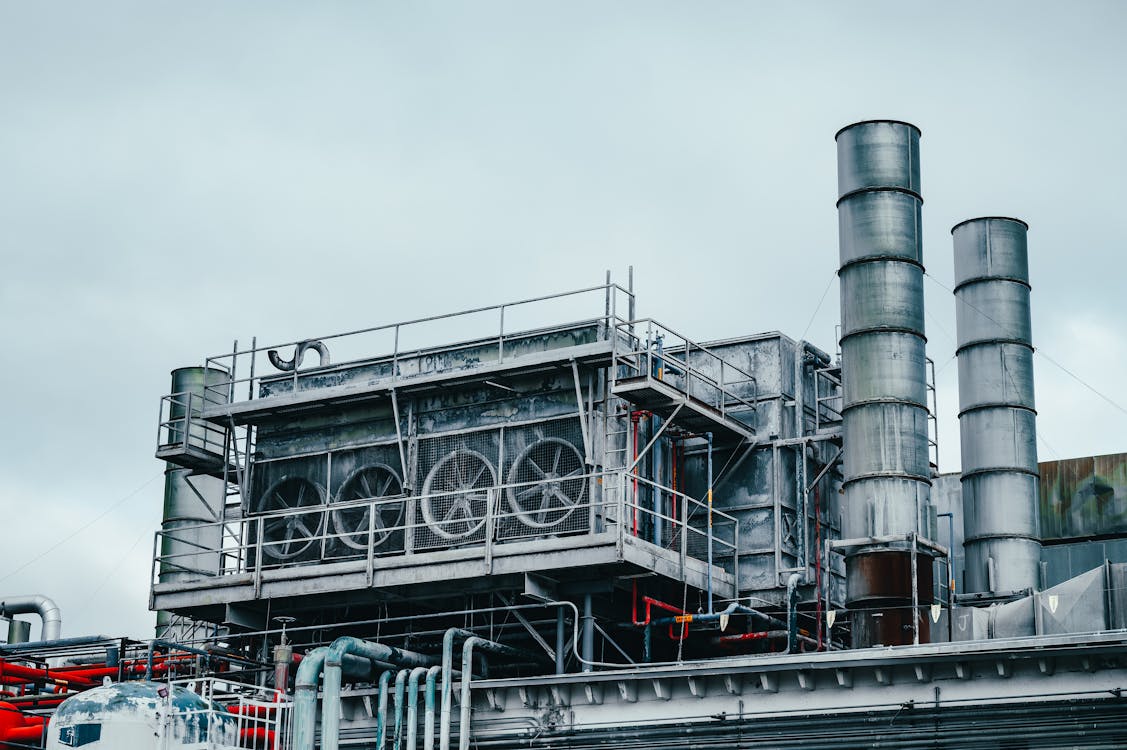
Image: Industrial facility. Flow meter selection is a plant-wide decision — gas meters (laminar DP, thermal mass) and liquid meters (electromagnetic, Coriolis) must all be specified to match their respective process conditions. (Credit: Pexels / Brett Sayles)
Selecting the right laminar flow meter requires evaluating every factor in a deliberate sequence: first confirm fluid compatibility (type, cleanliness, chemical attack on wetted materials), then size the flow range (operating point at 10–90 % of full scale, Reynolds number below 1,000), verify pressure and temperature ratings against actual — not nominal — process conditions, define accuracy requirements against the “% of reading + % of full scale” specification structure, assess installation constraints (space, orientation, piping connections, straight-run requirements), specify output signals and certifications, and finally evaluate total cost including calibration, maintenance, and the operational cost of measurement errors.
Laminar DP meters are the right choice when you need fast response (<100 ms), wide turndown (up to 10,000:1), multi-gas flexibility, low pressure drop, and near-instant warmup. They are not the right choice for dirty gases, two-phase flow, or applications where the gas composition varies unpredictably — in those cases, Coriolis meters may be more appropriate despite their higher cost and slower response.
For liquid flow measurement in the same facility — whether water treatment, chemical processing, or HVAC systems — Jade Ant Instruments offers a comprehensive selection guide and a full range of electromagnetic, vortex, turbine, and ultrasonic meters. When both gas and liquid measurement decisions are made with the same rigor described in this guide, the result is a plant instrumentation system that delivers reliable data from every measurement point.
Need help matching a flow meter to your specific application? Contact Jade Ant Instruments for a free technology-selection consultation — including fluid-to-technology matching, sizing calculations, and installation-layout review for liquid flow applications. Request a consultation today →
Frequently Asked Questions (FAQs)
1. What is a laminar flow meter and how does it work?
A laminar flow meter (also called a laminar differential pressure meter or laminar flow element meter) measures gas or liquid flow by forcing the fluid through an array of narrow parallel channels called a laminar flow element (LFE). This converts turbulent flow into laminar flow. The instrument then measures the differential pressure drop across the LFE and applies the Poiseuille equation — Q = K × ΔP / η — to calculate volumetric flow. Onboard temperature and pressure sensors provide density corrections to convert volumetric flow to standardized mass flow. This four-step process (convert → measure → calculate → correct) enables response times under 100 milliseconds and turndown ratios up to 10,000:1.
2. What fluids can a laminar flow meter measure?
Laminar flow meters are designed primarily for clean, single-phase gases. They can measure air, nitrogen, oxygen, argon, helium, hydrogen, CO₂, methane, propane, SF₆, and many specialty gases. Some models also measure clean, low-viscosity liquids. The key requirement is that the fluid must be free of particles, condensed moisture, and contaminants that could deposit inside the LFE channels. For dirty or multi-phase fluids, electromagnetic or Coriolis meters are more appropriate alternatives.
3. How accurate are laminar flow meters compared to other technologies?
Standard laminar DP meters achieve ±(0.8 % of reading + 0.2 % of full scale), with high-accuracy models reaching ±(0.4 % of reading + 0.2 % of full scale). This is better than thermal mass meters (±1.5 % of reading) and comparable to electromagnetic meters (±0.5 % of reading), but less accurate than Coriolis meters (±0.1 % of reading). The technology’s linear response (Poiseuille equation) provides more uniform accuracy across the flow range than square-root-law DP meters (orifice plates), which suffer severe accuracy degradation at low flows.
4. What is the Reynolds number limit for a laminar flow meter?
The flow inside the LFE must remain laminar, which requires a Reynolds number below approximately 2,000 — though most manufacturers design for Re < 1,000 to maintain a safety margin. This limit determines the meter’s maximum flow rate for each gas: lower-viscosity gases (helium, hydrogen) reach the Reynolds limit at lower flow rates than higher-viscosity gases (argon, SF₆). Always verify with the manufacturer that your gas at your operating conditions will maintain laminar flow at your maximum required flow rate.
5. How do I size a laminar flow meter correctly?
Select a full-scale range where your normal operating flow falls between 10 % and 90 % of full scale. Below 10 %, DP sensor resolution limits degrade accuracy. Above 90 %, there is insufficient headroom for process upsets. For example, if your process requires 2–18 SLPM of nitrogen, a 20–25 SLPM meter provides the optimal balance of accuracy and headroom. Also verify that the meter’s pressure drop at maximum flow is acceptable for your system’s pressure budget.
6. Can laminar flow meters handle multiple gases without recalibration?
Yes — this is one of the technology’s key advantages. Because the Poiseuille equation relates flow to DP and viscosity, changing the gas selection in the instrument’s firmware (which updates the viscosity model) allows the same meter to measure different gases without physical recalibration. Alicat instruments store viscosity models for over 130 gases. However, accuracy depends on the correctness of the viscosity model for each gas, so custom gas mixtures may require manufacturer assistance to configure.
7. What maintenance does a laminar flow meter require?
Routine maintenance is limited to annual calibration verification (recommended) and replacement of inlet filtration elements. The LFE itself has no moving parts, no consumables, and no degradation mechanism under normal operating conditions (clean gas, within rated pressure and temperature). Contamination from particles or condensation is the primary maintenance concern — prevented by proper upstream filtration and keeping the gas above its dew point throughout the meter.
8. When should I choose a different flow meter technology instead of laminar DP?
Choose Coriolis if you need direct mass measurement independent of gas composition, if the gas mixture varies unpredictably, or if you need simultaneous density measurement. Choose thermal mass if budget is the primary constraint and you measure a single known gas. Choose electromagnetic meters (such as those from Jade Ant Instruments) if you measure conductive liquids, slurries, or wastewater — applications entirely outside the laminar DP meter’s scope. Choose vortex for steam and high-temperature gas applications where the laminar DP meter’s temperature limits are exceeded.
This article was published by Jade Ant Instruments, a leading China-based flow meter manufacturer offering electromagnetic, vortex, turbine, and ultrasonic flow meters with ISO 9001 certification and OEM/ODM customization. While Jade Ant’s product line focuses on liquid and steam flow measurement, this guide was developed to help engineers across all flow measurement disciplines make better selection decisions — because the principles of matching technology to application are universal. Visit jadeantinstruments.com for liquid flow measurement solutions →