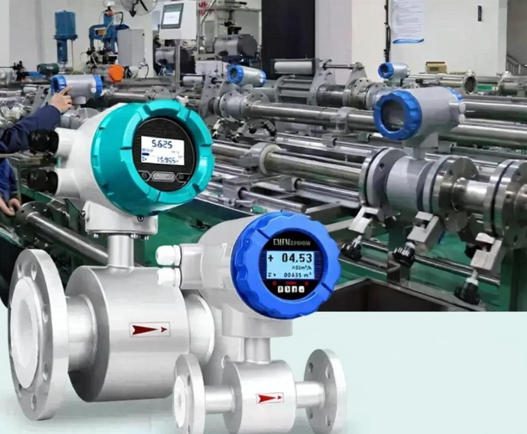
10 Expert Tips for Choosing a Flow Metering Company
Selecting a flow metering company for oil and gas projects is not a catalog-browsing exercise — it is a risk-management decision. A single poorly matched meter on a custody transfer point can generate measurement errors worth $50,000–$200,000 per year in lost product accounting, according to field data from upstream operators in the Permian Basin and North Sea. A wrong material choice in a sour gas application can cause sensor failure within 90 days.
The ten tips in this guide are drawn from real procurement cycles and field commissioning experience across water utilities, chemical processing, and oil and gas operations. They form a practical checklist that covers every stage — from defining your application needs through to evaluating after-sales support and verifying vendor references. Whether you are specifying meters for a new FEED package or replacing aging instruments during a turnaround, these criteria will help you build a defensible shortlist and avoid the mistakes that turn “good specs on paper” into “bad data in the field.”
Throughout this guide, we reference resources from Jade Ant Instruments — an ISO-certified flow meter manufacturer specializing in electromagnetic, vortex, turbine, and ultrasonic technologies — alongside external industry standards and references.
Watch: How to Choose a Flow Meter in 7 Steps
Before diving into the checklist, this concise video walks through the fundamental selection logic:
Video: How to Choose a Flow Meter in 7 Easy Steps. Watch on YouTube
Tip 1: Define Application Needs
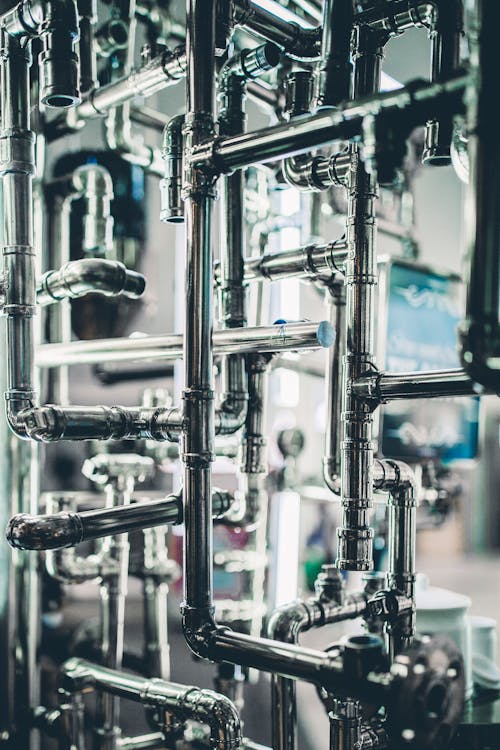
Source: Pexels / jiawei cui (free to use).
Fluid Type and Properties
Every flow meter selection begins with one question: what exactly is flowing through the pipe? A conductive water-glycol mixture at 25°C behaves nothing like a multiphase crude oil stream at 80°C with 5% entrained gas and 200 ppm H₂S. The fluid’s conductivity determines whether an electromagnetic meter is viable (minimum ~5 µS/cm). Its viscosity affects whether a turbine meter can produce reliable readings (turbine meters typically require viscosity below 30 cP for accurate measurement). Its corrosiveness dictates wetted material choices — 316L stainless for mild services, Hastelloy C-276 or tantalum for aggressive acids.
Document these properties explicitly: fluid name, phase (liquid/gas/steam/multiphase), density range, viscosity range, conductivity, temperature range, pressure range, and any solids content or entrained gas percentage. A well-prepared fluid data sheet saves weeks of back-and-forth with suppliers. For guidance on matching fluid properties to meter types, the Jade Ant Instruments Flow Meter Selection Guide provides a structured mapping.
Operational Requirements
Beyond the fluid itself, define what the measurement must accomplish. Is this a rate measurement for process control (where ±1% repeatability matters more than absolute accuracy)? A totalized volume for custody transfer billing (where traceable ±0.15% accuracy is non-negotiable)? A safety-interlock input (where SIL-rated instruments and fail-safe outputs are required)? Each operational role changes which technologies qualify and which vendors can deliver the necessary certifications.
Tip 2: Match Flow Meter to Flow Range
Minimum and Maximum Flow Rates
One of the most expensive mistakes in flow meter procurement is sizing the meter to match the pipe diameter rather than the actual flow rate. A DN100 Coriolis meter installed on a DN100 pipe that only sees 15% of the meter’s maximum rated flow will operate in a region where zero stability dominates the error budget — and real-world accuracy can deteriorate from the published ±0.1% to over ±5%. This exact scenario cost a chemical plant in Texas $38,000 in off-spec batching losses before the root cause was identified (per an ISA analysis of flowmeter sizing errors).
Always specify the normal operating flow rate, the minimum turndown you need, and the maximum excursion flow. Then select a meter size — not a pipe size — that places your normal operating point in the upper third of the meter’s range.
Scalability for Future Needs
If your facility plans to expand production by 30% within 5 years, factor that future flow rate into the sizing envelope now. Replacing a meter during an expansion shutdown costs 3–5× more than specifying slightly more turndown capacity at initial procurement. Electromagnetic meters offer turndown ratios up to 1000:1, making them a natural choice when future capacity is uncertain. Jade Ant Instruments’ 5-factor guide discusses how to balance current needs with future scalability.
Tip 3: Focus on Flow Meter Accuracy
Precision and Repeatability
Accuracy tells you how close the measurement is to the true value. Repeatability tells you how consistently the meter produces the same output under identical conditions. In process control, repeatability often matters more — a meter that is consistently 0.3% high can be compensated for, but a meter that drifts ±1.5% randomly makes stable control impossible.
For reference, Bronkhorst’s technical guide explains the distinction clearly: if a meter reads 100.2, 100.3, and 100.1 GPM under identical conditions, it has excellent repeatability regardless of whether the true flow is 99.5 or 100.5 GPM.
Industry Standards
Match the accuracy class to the application. Custody transfer typically requires ±0.15%–±0.5% of reading with traceable calibration per ISO 20456 or API MPMS standards. Process monitoring can often accept ±1%–±2%. Environmental discharge reporting accuracy requirements vary by jurisdiction but typically fall in the ±2%–±5% range.
Typical Accuracy by Flow Meter Technology (Bar Chart)
Bar Chart: Lower numbers indicate higher accuracy. Coriolis leads for mass flow; electromagnetic meters offer the best accuracy-to-cost ratio for conductive liquids. Source: Industry specifications compiled from manufacturer data sheets.
Tip 4: Consider Installation Constraints
Space and Piping Requirements
The standard rule of thumb for most flow meters is 10 pipe diameters of straight run upstream and 5 diameters downstream (10D/5D) from any disturbance — elbows, valves, pumps, or reducers. In reality, many existing plants simply do not have this space. In offshore platforms and compact skid packages, available straight run may be as little as 3D–5D.
This is where technology choice matters. Coriolis meters have virtually no straight-run requirements. Electromagnetic meters typically need only 5D upstream. Ultrasonic (multi-path) meters can tolerate shorter runs with flow conditioners. Vortex and turbine meters are the most sensitive to upstream disturbances and should be avoided in tight installations unless flow conditioners are budgeted.
Integration with Existing Systems
Verify that the physical connection type (flanged, wafer, threaded, tri-clamp), pressure rating (ASME class 150/300/600/900), and face-to-face dimension match your existing piping. Also confirm the transmitter’s power supply requirements (24 VDC loop-powered vs. line-powered), enclosure rating (NEMA 4X / IP67 for outdoor installations, ATEX/IECEx for hazardous areas), and whether the weight requires additional pipe supports. For compact installations, Jade Ant Instruments’ ultrasonic clamp-on meters eliminate the need for any pipe cutting or process shutdown.
Tip 5: Check Environmental Conditions
Pressure and Temperature Limits
Every flow meter has a published operating temperature and pressure envelope. Operating outside these limits — even briefly during a process upset — can permanently damage sensors, crack ceramic liners, or deform tube geometry. For high-temperature steam applications (>200°C), vortex meters with high-temperature sensor cartridges are the standard choice. For cryogenic LNG service (-162°C), specialized Coriolis meters with Invar alloy tubes are required. Always specify the maximum process upset conditions, not just the normal operating range.
Durability and Protection
Environmental factors beyond the process fluid itself can degrade meter performance. Coastal installations face salt spray corrosion; desert installations see extreme temperature cycling (−10°C to +55°C ambient); vibrating skids near compressors or pumps create mechanical noise that vortex and Coriolis meters may interpret as flow signal. Specify IP68 protection for submerged or flooded vault installations. Require vibration testing data (per IEC 68-2-6) if the meter will be mounted near rotating machinery.

Harsh industrial environments demand flow meters with robust protection ratings and corrosion-resistant materials. Source: Pexels (free to use).
Tip 6: Review Signal Output Options
Data Communication Compatibility
The most common flow meter output is 4–20 mA analog with HART digital overlay — still the dominant protocol in legacy DCS systems and many new installations. However, modern plants are increasingly specifying Modbus RTU/TCP, PROFIBUS PA, PROFINET, or EtherNet/IP for richer diagnostic data and faster polling rates. Before issuing your RFQ, confirm which protocol(s) your control system supports. A Turbines Inc. protocol comparison guide provides a clear breakdown of the options.
Integration with Data Acquisition
Beyond the base protocol, consider whether you need pulse output for totalization (common in custody transfer and batch systems), frequency output for turbine meter applications, or dedicated alarm relay contacts for high/low flow setpoints. Also verify that the transmitter supports the number of process variables you need — a Coriolis meter can output mass flow, volume flow, density, and temperature simultaneously, but only if the transmitter is configured and the host system has enough register addresses mapped. Jade Ant Instruments supplies meters with 4–20 mA, pulse, and RS485 Modbus outputs as standard configurations across their electromagnetic and vortex product families.
Tip 7: Evaluate Maintenance Needs
Routine Service Requirements
Flow meters require calibration every 6–12 months for critical applications, or every 1–4 years for general monitoring, depending on process conditions and regulatory requirements (Fluke calibration best practices). Technologies differ dramatically in maintenance burden: electromagnetic meters have no moving parts and can operate for 10+ years without mechanical service; turbine meters require periodic bearing replacement (typically every 2–3 years in clean service); positive displacement meters need regular seal and rotor inspection.
Spare Parts Availability
Before committing to a vendor, verify spare parts lead time and local availability. A flow meter with a 16-week lead time for a replacement sensor is effectively a single point of failure for your process. Request the vendor’s recommended spare parts list and pricing at the quotation stage — this should include sensors, gaskets, transmitter boards, and any wear components. Manufacturers like Jade Ant Instruments that maintain regional stocking programs can significantly reduce replacement lead times compared to vendors who ship everything from a single factory.
Maintenance Comparison by Technology
| Technology | Moving Parts | Typical Calibration Interval | Common Wear Items | Expected Sensor Life | Relative Maintenance Cost |
|---|---|---|---|---|---|
| Electromagnetic | None | 1–4 years | Electrodes (rarely), liner | 15–20+ years | Low |
| Coriolis | None (vibrating tubes) | 1–5 years | Tubes (rare failure) | 15–20+ years | Low |
| Ultrasonic (clamp-on) | None | 1–2 years | Coupling compound, transducers | 10–15 years | Low–Medium |
| Vortex | None | 1–3 years | Sensor cartridge (rarely) | 10–15+ years | Low |
| Turbine | Yes (rotor, bearings) | 6–12 months | Bearings, rotor, pickup coil | 5–10 years | Medium–High |
| DP (Orifice Plate) | None (but impulse lines) | 6–12 months | Orifice plate edge, impulse tubing | 5–15 years | Medium |
Table: Maintenance comparison across flow meter technologies. Technologies without moving parts (electromagnetic, Coriolis, vortex) consistently deliver the lowest lifecycle maintenance costs.
Tip 8: Compare Costs and Value
Upfront vs. Lifecycle Costs
A Coriolis meter at $8,000 may look expensive next to a DP orifice plate system at $2,500 — until you calculate the lifecycle costs. The DP system requires impulse line maintenance, periodic orifice plate inspection and replacement (edge sharpness degrades over time, increasing permanent pressure loss), and ongoing transmitter calibration. Over 10 years, a facility operating 50 DP metering points reported aggregate maintenance costs of $4,200 per point versus $1,100 per point for electromagnetic meters on comparable services (PokCen maintenance cost analysis).
Performance vs. Budget
Not every measurement point needs the highest-accuracy technology. A general process monitoring point that feeds a trend display may only need ±2% accuracy — perfectly served by a DP or variable-area meter at a fraction of the cost of a Coriolis unit. Reserve premium technologies for custody transfer, safety-critical, and regulatory compliance points. The Jade Ant Instruments 5-factor selection guide helps engineers match performance requirements to appropriate technology tiers without over-specifying.
10-Year Total Cost of Ownership Breakdown (Pie Chart)
Pie Chart: Purchase price represents only 30% of total 10-year ownership cost. Calibration, installation, and energy costs collectively exceed the initial investment. Source: Industry lifecycle cost analysis.
Tip 9: Assess Flow Metering Company Support
Supplier Reputation
A flow metering company’s reputation is built on decades of field performance, not on brochure claims. Check how long the company has been manufacturing (not just reselling) flow meters. Verify whether they hold ISO 9001 quality management certification and whether their calibration facilities are ISO 17025 accredited. Look for published case studies with named end users, not anonymous testimonials. Publicly traded companies file annual reports that reveal R&D investment, warranty reserves, and customer concentration — all useful signals.
After-Sales Service
The real test of a supplier relationship begins after the purchase order is placed. Evaluate: commissioning support availability (on-site or remote?), technical hotline response time (24-hour or business-hours-only?), firmware update policy (free or paid?), and whether the company offers long-term service agreements that include periodic verification and recalibration. Manufacturers that invest in after-sales infrastructure — like Jade Ant Instruments, which provides dedicated application engineering support and regional spare parts stocking — tend to deliver lower total lifecycle costs than vendors who compete solely on upfront price. For a deeper evaluation framework, read the flow meter distributor selection mistakes guide.

Evaluating a manufacturer’s production facility is one of the most reliable ways to assess quality capability. Source: Pexels (free to use).
Tip 10: Request References and Case Studies
Proven Performance
Ask for at least three reference contacts in your specific industry and region. A manufacturer with 500 installations in water utilities may have zero experience in offshore gas lift metering — and vice versa. When speaking with references, ask about initial commissioning issues, measurement drift over time, calibration experience, spare parts availability, and how the vendor handled any warranty claims or technical disputes.
Application Examples
Request documented application examples that match your specific conditions — not just the same industry, but the same fluid, similar pipe sizes, comparable operating conditions, and equivalent accuracy requirements. A vendor who can provide a case study showing their electromagnetic meter maintaining ±0.3% accuracy on a DN200 line carrying 45°C treated wastewater with 500 mg/L suspended solids for 3+ years gives you far more confidence than a vendor who says “our meter works for wastewater” without specifics.
Vendor Evaluation Checklist Summary
| Tip # | Evaluation Area | Key Questions to Ask | Red Flags |
|---|---|---|---|
| 1 | Application Needs | Can vendor provide a meter rated for your specific fluid, temperature, and pressure? | Generic “one size fits all” recommendations |
| 2 | Flow Range | Does the meter size match your actual flow rate (not just pipe size)? | Meter sized only to pipe diameter |
| 3 | Accuracy | Is stated accuracy per reading or per full scale? At what flow range? | Accuracy quoted only at ideal conditions |
| 4 | Installation | What straight-run requirements? What happens with shorter runs? | No mention of installation constraints |
| 5 | Environment | What is the max temperature, pressure, and IP rating? | Specs only cover “standard” conditions |
| 6 | Signal Output | Which protocols are supported? 4–20 mA, HART, Modbus, Ethernet? | Only one output option with no expansion |
| 7 | Maintenance | Spare parts lead time? Recommended calibration interval? | No spare parts list provided at quotation |
| 8 | Cost & Value | Can vendor provide a 5-year or 10-year TCO estimate? | Only quotes unit price, ignores lifecycle costs |
| 9 | Support | Commissioning support? Hotline hours? Warranty terms? | No local service, import-only with long lead times |
| 10 | References | Can vendor provide named references in your specific industry? | Only anonymous testimonials or unrelated industries |
Table: Use this checklist to structure your vendor evaluation conversations. Red flags in any category should trigger deeper investigation before proceeding.
Choosing a flow metering company is a decision that compounds over the next 10–20 years of your plant’s operating life. The purchase price is just 30% of the story — the remaining 70% is written by installation quality, calibration discipline, spare parts availability, and how well the manufacturer supports you when something unexpected happens at 2 AM on a Saturday.
Use these ten tips as a procurement checklist: define your application precisely, match the meter to the actual flow range, demand verifiable accuracy data, verify installation compatibility, confirm environmental ratings, specify your signal output requirements, evaluate lifecycle maintenance, calculate total cost of ownership, assess the supplier’s support infrastructure, and request documented references. A thorough evaluation using these criteria ensures optimal performance and a reliable long-term partnership.
For a manufacturer that covers all ten criteria — from ISO-certified production through flexible output configurations to responsive after-sales support — Jade Ant Instruments offers a portfolio of electromagnetic, vortex, turbine, and ultrasonic flow meters designed for oil and gas, water, chemical, and general industrial applications. Request a consultation to discuss your project requirements.

Source: Pexels / Pixabay (free to use).
Frequently Asked Questions (FAQ)
1. What factors matter most when choosing a flow metering company for oil and gas?
The most critical factors are technology fit (matching the meter principle to your fluid properties), accuracy class (custody transfer vs. process monitoring), environmental ratings (temperature, pressure, hazardous area certification), and the vendor’s service infrastructure (spare parts lead time, calibration support, commissioning assistance). For a detailed comparison framework, see the Jade Ant Instruments selection guide.
2. How do I decide between electromagnetic, Coriolis, and ultrasonic flow meters?
Electromagnetic meters require conductive fluid (≥5 µS/cm) and excel in water, wastewater, and chemical applications with ±0.2%–0.5% accuracy. Coriolis meters directly measure mass flow with ±0.05%–0.1% accuracy and work on virtually any fluid, but cost 3–5× more. Ultrasonic clamp-on meters offer non-invasive installation but with lower accuracy (±0.5%–2.0%). Start with the fluid properties, then match to the technology that naturally fits.
3. What is the difference between flow meter accuracy and repeatability?
Accuracy measures how close the meter’s output is to the true flow value. Repeatability measures how consistently the meter produces the same output under identical conditions. For process control applications, repeatability (typically ±0.1%–0.5%) is often more important than absolute accuracy because control systems can compensate for a consistent offset but not for random variation.
4. How often should industrial flow meters be calibrated?
Calibration intervals depend on application criticality, process conditions, and regulatory requirements. Custody transfer meters typically require annual calibration. General process monitoring meters can often extend to 2–4 year intervals. Electromagnetic and Coriolis meters with no moving parts tend to maintain calibration longer than turbine or DP meters. Always follow the manufacturer’s recommendation and your facility’s quality management system.
5. What signal output should I specify for my flow meter?
For most industrial applications, 4–20 mA with HART remains the standard. If your facility runs a modern DCS or PLC with digital bus capability, consider Modbus RTU/TCP, PROFIBUS, or EtherNet/IP for richer diagnostics. For custody transfer and batch systems, add pulse output for totalization. Verify protocol compatibility with your control system before finalizing the specification.
6. Why is 10D/5D straight run important for flow meters?
The 10D upstream / 5D downstream straight-run rule ensures that the flow profile entering the meter is fully developed and symmetrical. Upstream disturbances (elbows, valves, reducers) create swirl and asymmetry that degrade measurement accuracy. If straight run is limited, use flow conditioners, select technologies with lower sensitivity (Coriolis, electromagnetic), or install a clamp-on ultrasonic meter that can be repositioned for optimal signal quality.
7. How does Jade Ant Instruments compare with major flow meter brands?
Jade Ant Instruments offers ISO-certified electromagnetic, vortex, turbine, and ultrasonic meters at competitive price points with flexible OEM/ODM configurations. While global brands like Emerson and Endress+Hauser provide broader portfolios and advanced in-situ verification ecosystems, Jade Ant Instruments excels in responsive application engineering, shorter lead times, and strong total cost of ownership performance for standard industrial and water utility applications.
8. What are the most common flow meter selection mistakes in oil and gas?
The five most frequent mistakes are: sizing the meter to the pipe diameter instead of the actual flow rate, ignoring entrained gas or multiphase conditions, failing to specify the correct hazardous area certification (ATEX/IECEx), selecting the cheapest meter without calculating lifecycle costs, and not requesting installation supervision from the vendor. Each of these can result in $10,000–$100,000+ in rework, lost product, or safety incidents.
9. Can one flow meter technology work for all my measurement points?
In theory, no. In practice, electromagnetic meters cover the widest range of liquid applications due to their 1000:1 turndown, absence of moving parts, and negligible pressure drop. However, they require conductive fluid. For gas measurement, steam metering, non-conductive liquids, or mass flow requirements, other technologies (vortex, Coriolis, ultrasonic) will be necessary. Most facilities operate a mixed fleet of 2–3 technology types.
10. What should I expect from a flow metering company’s after-sales support?
At minimum: a technical hotline with documented response time, commissioning guidance (on-site or remote), firmware updates, a published spare parts list with pricing and lead times, and calibration support (either in-house or through accredited third-party labs). Superior vendors also offer long-term service agreements, periodic verification visits, and training programs for your operations and maintenance teams.