
Choosing the wrong flow meter distributor is one of the most costly — yet entirely preventable — decisions an engineer or procurement manager can make. The consequences extend far beyond the initial purchase price: inaccurate readings, frequent downtime, poor after-sales support, and incompatible equipment can drain hundreds of thousands of dollars from a project over its lifecycle. According to industry research published by Pumps & Systems, typical technical errors in flow meter selection involve fluid characteristics, flow profiles, accuracy requirements, and mechanical restrictions — many of which trace back to working with the wrong distributor.
Despite these high stakes, many buyers overlook critical technical and service factors when evaluating distributors. They focus narrowly on upfront cost, skip due diligence on certifications, or assume that every distributor has the same depth of application knowledge. This article highlights the most common mistakes and provides actionable guidance on how to avoid them. Whether you are specifying flow meters for water treatment, oil and gas, chemical processing, or HVAC systems, the advice here will help you make a confident, informed decision — and ultimately protect your measurement investment.
1. Ignoring Flow Meter Distributor Credentials

Missing Certifications and Authorizations
A distributor’s credentials are the foundation of trust. ISO 9001 certification, for instance, confirms that a distributor follows a recognized quality management system — an essential baseline when dealing with precision instruments. Beyond ISO, industry-specific certifications matter enormously. If you are in a hazardous area environment, your distributor should understand and carry products with proper ATEX, IECEx, or FM approvals. For custody-transfer applications, API standards compliance (such as the API Manual of Petroleum Measurement Standards) is non-negotiable.
Distributors like Jade Ant Instruments, an ISO-certified flow meter manufacturer and supplier, maintain comprehensive certification documentation across their product lines — including electromagnetic, vortex, turbine, and ultrasonic flow meters. Working with a distributor who can readily provide certificates of conformance, calibration traceability records, and material test reports saves weeks of back-and-forth during project commissioning.
Overlooking Reputation and Reviews
Certifications tell you about systems and processes, but reputation tells you about execution. Before committing to a distributor, take time to investigate their track record. Look for verified customer testimonials, case studies from your industry, and references from projects of similar scope. Online platforms such as ThomasNet and industry-specific forums can reveal patterns — both positive and negative — that a sales brochure will never show. A distributor with five years of consistent positive feedback on delivery timelines and technical accuracy is worth far more than one offering a 10% discount with no verifiable history.
2. Skipping After-Sales Support Evaluation
Lack of Technical Support
A flow meter is a long-term asset, not a one-time purchase. According to Turbines, Inc., flow meters might be installed in systems that run for 5, 10, or even 20 years. Over that lifetime, you will inevitably need technical support — whether it is troubleshooting a zero-drift issue on a magnetic flow meter, configuring HART communication protocols, or diagnosing unexpected readings after a process change.
A good distributor provides responsive, knowledgeable technical support staffed by engineers who understand flow measurement — not just order-takers. Before signing a purchase order, ask pointed questions: What is your average response time for technical inquiries? Do you have field service engineers available for on-site commissioning? Can you provide remote diagnostics support? The answers will tell you whether this distributor is a long-term partner or merely a transaction point.
Inadequate Training and Maintenance
Proper installation and maintenance are responsible for a significant share of flow meter performance. As noted by industry experts, regular maintenance ensures accurate flow measurements, optimized process control, minimized waste, and regulatory compliance. A distributor who offers operator training sessions, installation guidance documentation, and preventive maintenance programs adds measurable value. Ask whether they provide training on calibration procedures, sensor cleaning protocols, and diagnostic software — these are the elements that protect your measurement accuracy long after the meter ships.
Distributor Evaluation Scoring Matrix
Use the following table as an Excel-ready scoring matrix when evaluating potential flow meter distributors. Rate each criterion from 1 (poor) to 5 (excellent).
| Evaluation Criterion | Distributor A | Distributor B | Distributor C | Weight (%) |
|---|---|---|---|---|
| ISO / Industry Certifications | 15% | |||
| Product Range & Compatibility | 15% | |||
| Technical Support Responsiveness | 15% | |||
| Training & Maintenance Programs | 10% | |||
| Application Engineering Expertise | 15% | |||
| Accuracy & Calibration Capabilities | 10% | |||
| Warranty Terms & Coverage | 10% | |||
| Total Cost of Ownership (Value) | 10% | |||
| TOTAL WEIGHTED SCORE | 100% |
3. Neglecting Flow Meter Compatibility
System Compatibility Checks
One of the most frequently overlooked steps in distributor selection is verifying whether the meters they offer are truly compatible with your existing infrastructure. Compatibility goes well beyond pipe size. It encompasses communication protocols (4–20 mA, HART, Modbus, Profibus), power supply requirements, flange standards (ANSI, DIN, JIS), liner and electrode materials for corrosive environments, and integration with your SCADA or DCS systems.
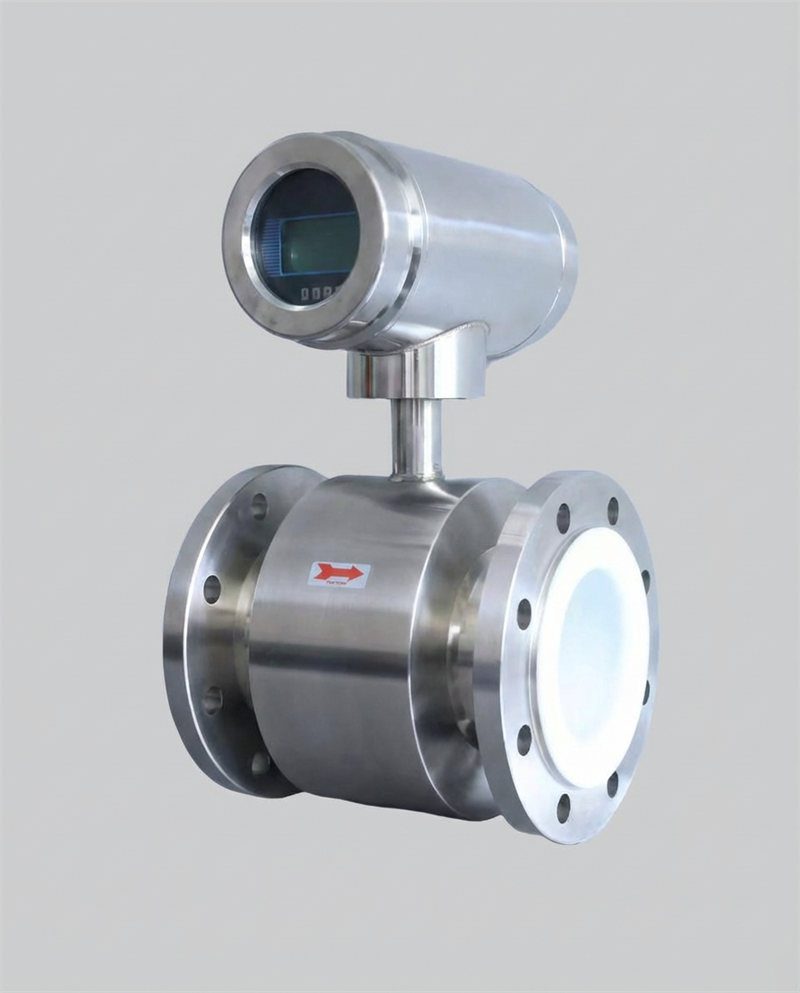
A distributor who stocks only a narrow product range may push you toward a technology that doesn’t optimally match your process. By contrast, Jade Ant Instruments offers a comprehensive portfolio — including electromagnetic flow meters, vortex flow meters, turbine flow meters, and ultrasonic flow meters — with OEM/ODM customization for flexible connection types, liner materials, and communication protocols. This breadth allows engineers to select based on application requirements rather than distributor limitations.
Application-Specific Needs
Every industry brings unique measurement challenges. A water treatment plant measuring conductive wastewater has fundamentally different requirements than a natural gas custody transfer station or a pharmaceutical batch process. Your distributor should be able to articulate why a specific meter technology fits your application — not simply offer whatever is in stock. The Jade Ant Instruments Flow Meter Selection Guide is an example of the kind of application-focused resource a competent distributor should provide: a structured methodology that matches performance requirements to fluid physics and installation reality.
4. Overlooking Accuracy Requirements

Sizing for Flow Range and Media
A common and expensive mistake is selecting a flow meter based solely on pipe diameter rather than the actual flow range. A meter sized for the pipe rather than the flow can operate well outside its optimal accuracy window — particularly at low-flow conditions that are common during startup, night shifts, or seasonal demand variations. According to Fuji Electric, rangeability (the ratio between maximum and minimum measurable flow with acceptable uncertainty) is a critical specification that many buyers overlook.
Your distributor should help you define the actual operating flow window — minimum, normal, and maximum — and then verify that the selected meter can deliver acceptable uncertainty across that entire range. This is especially important for applications with highly variable flow, such as HVAC chilled water systems, batch chemical processes, or irrigation networks.
Discussing Accuracy, Repeatability, and Rangeability
These three terms are frequently confused, yet each plays a distinct role in measurement performance. Accuracy describes how close the meter’s reading is to the true value. Repeatability describes how consistently the meter reproduces the same reading under identical conditions. Rangeability defines the operational bandwidth where the meter maintains its stated performance.
For process control applications, repeatability often matters more than absolute accuracy — because the control system reacts to changes, not absolute values. For custody transfer or billing, proven accuracy stability and verification methods are paramount. A knowledgeable distributor will guide this conversation rather than simply quoting a headline accuracy number from a datasheet. As noted by Bronkhorst, understanding the difference between these specifications is fundamental to making an informed selection.
Flow Meter Type Accuracy Comparison (Bar Chart Data)
The following dataset can be used to generate a bar chart in Excel or any data visualization tool. Values represent typical accuracy ranges expressed as ± percentage of reading.
| Flow Meter Type | Typical Accuracy (± % of Reading) | Typical Rangeability (Turndown Ratio) |
|---|---|---|
| Coriolis | 0.1 – 0.5% | 100:1 |
| Electromagnetic | 0.2 – 0.5% | 40:1 |
| Ultrasonic (Multi-path) | 0.5 – 1.0% | 50:1 |
| Vortex | 0.75 – 1.5% | 20:1 |
| Turbine | 0.1 – 0.5% | 10:1 – 100:1 |
| Differential Pressure (Orifice) | 1.0 – 3.0% | 3:1 – 5:1 |
| Positive Displacement | 0.1 – 0.5% | 70:1 |
| Thermal Mass | 1.0 – 2.0% | 100:1 |
How to read this chart: A lower accuracy percentage means higher precision. Note that published specifications represent ideal laboratory conditions; field accuracy depends heavily on installation quality, fluid characteristics, and maintenance. This is precisely why your distributor’s application engineering expertise matters so much.
5. Failing to Consider Installation Environment
Indoor vs. Outdoor Placement
The physical environment where a flow meter operates can dramatically affect its performance and lifespan. Indoor installations generally benefit from stable temperatures, protection from weather, and easier access for maintenance. Outdoor installations introduce an entirely different set of challenges: UV degradation of enclosures, temperature extremes affecting electronics and signal stability, rain and water ingress, and exposure to dust, sand, or corrosive atmospheric conditions.
According to installation guidelines published by Tameson, when flow meters must be installed outdoors, measures should be taken to prevent sun exposure and rain damage, including protective covers, sunshades, and drainage provisions for enclosures. Your distributor should proactively discuss IP/NEMA ratings, recommend appropriate enclosure protection levels, and advise on cable and gland specifications suited to your site conditions.
Ambient and Process Conditions
Beyond the indoor/outdoor distinction, ambient conditions including humidity, electromagnetic interference (EMI), and proximity to vibration sources must be evaluated. High humidity accelerates corrosion and can degrade electrical insulation. EMI from variable frequency drives (VFDs), large solenoids, or power distribution panels can corrupt low-level signals from flow sensors. Vibration from pumps and compressors can create false readings in vortex and Coriolis meters.
A thorough distributor will ask about your site environment during the specification process — not after problems emerge. This is an area where experienced distributors distinguish themselves. For hazardous areas, compliance with IEC 60079 standards for explosive atmospheres adds another layer of complexity that requires genuine expertise, not guesswork.
Watch: How to Choose the Right Flow Meter
This video provides an excellent overview of the key considerations when selecting a flow meter for industrial applications:
6. Not Comparing Pricing and Warranties
Focusing Only on Upfront Cost
Perhaps the single most damaging mistake in distributor selection is treating the purchase price as the total cost. In reality, the initial meter price is often the smallest fraction of total cost of ownership (TCO). The true cost equation includes installation and commissioning labor, pipe modifications, energy costs from pressure drop, periodic calibration and verification, maintenance labor and spare parts, and the financial impact of downtime caused by equipment failure.
A distributor offering the lowest quote may be cutting corners on calibration quality, providing minimal technical documentation, or offering meters without proper certification — all of which create hidden costs that surface months or years later. The smart approach is to request a TCO comparison, not just a unit price quote.
Total Cost of Ownership Breakdown (Pie Chart Data)
Use this dataset to generate a pie chart illustrating the typical distribution of flow meter lifecycle costs.
| Cost Category | Typical Share of TCO (%) |
|---|---|
| Initial Purchase Price (Meter + Accessories) | 15% |
| Installation & Commissioning | 20% |
| Energy Cost (Pressure Drop) | 18% |
| Calibration & Verification | 12% |
| Maintenance & Spare Parts | 20% |
| Downtime & Production Loss | 15% |
Key insight: The initial purchase price accounts for only about 15% of the total lifetime cost. Distributors who help you optimize installation, reduce maintenance frequency, and minimize downtime deliver far greater value than those who simply offer the cheapest meter.
Ignoring Warranty Terms
Warranty terms vary significantly between distributors and manufacturers — and the details matter. A 12-month warranty that excludes sensor failure is fundamentally different from a 24-month comprehensive warranty that covers electronics, sensors, and liner integrity. Key questions to ask include: What is the warranty duration? Does it cover parts only, or parts and labor? Are there exclusions for specific failure modes? What is the process for warranty claims — must the meter be shipped back to the factory, or can repairs be handled locally? Does the warranty transfer if the end user is different from the purchaser?
Jade Ant Instruments, for example, provides transparent warranty documentation with clearly defined coverage scope, making it easier for procurement teams to compare on a level playing field. Always request written warranty terms before finalizing any purchase decision.
7. Overestimating Distributor Expertise

Assuming Equal Knowledge
Not all distributors possess the same level of technical knowledge. Some are essentially logistics companies that move boxes — they can quote prices and ship products, but they cannot advise you on whether a PTFE-lined electromagnetic meter is appropriate for your concentrated sulfuric acid application, or whether your 3-meter straight run is sufficient upstream of a vortex meter in a 6-inch steam line.
True application engineering expertise means the distributor can evaluate your process conditions, recommend the appropriate technology, specify the correct sizing, and anticipate potential installation issues before they become field problems. As Yokogawa notes, the retirement of experienced instrumentation engineers in many organizations makes this distributor knowledge gap even more critical — the expertise that used to exist in-house must now come from your supply chain partners.
Missing Application Guidance
A distributor who cannot provide application-specific guidance is a liability, not a partner. For challenging applications — slurries with abrasive solids, two-phase wet steam, high-viscosity fluids that change behavior with temperature, or corrosive chemicals that limit material options — the right distributor acts as an extension of your engineering team. They should bring knowledge from hundreds of similar installations, awareness of failure modes specific to your industry, and direct access to manufacturer engineering resources.
Before committing to a distributor relationship, test their knowledge. Describe your most challenging application and evaluate the quality of their response. Do they ask probing technical questions about fluid properties, pipe configuration, and operating conditions? Or do they jump straight to a product recommendation without understanding your constraints? The quality of this initial interaction is one of the best predictors of long-term partnership value.
8. Rushing the Flow Meter Selection Process
Skipping Due Diligence
Project timelines create pressure, and that pressure often leads to shortcuts in the selection process. Skipping due diligence on a flow meter distributor — whether that means not verifying certifications, not checking references, or not comparing technical capabilities — can result in equipment that underperforms, fails prematurely, or requires costly rework. The time invested in thorough evaluation during the specification phase is a fraction of the time and money required to fix problems after installation.
A structured evaluation process should include: verifying distributor credentials and certifications, requesting and contacting customer references, obtaining detailed technical proposals (not just price quotes), comparing warranty and support terms side by side, and evaluating the distributor’s understanding of your specific application. The Jade Ant Instruments engineering team recommends using a formal evaluation checklist — like the scoring matrix provided earlier in this article — to ensure consistent, objective comparison across all candidates.
Not Requesting References
References are arguably the most underutilized tool in distributor evaluation. A distributor who has successfully served customers in your industry, with similar applications, at a comparable scale, has already navigated the pitfalls you are about to face. Ask for at least three references, and actually contact them. Inquire about delivery performance, technical support quality, how warranty claims were handled, and whether they would choose the same distributor again.
If a distributor hesitates or refuses to provide references, treat it as a significant red flag. Reputable distributors are proud of their customer relationships and eager to demonstrate their track record.

Watch: Flow Meter Selection Webinar
This comprehensive webinar from the National Engineering Laboratory covers the science and best practices behind flow meter selection:
Conclusion
Selecting a flow meter distributor is not a purchasing decision — it is a partnership decision that will affect your measurement accuracy, operational efficiency, and total cost of ownership for years to come. The mistakes outlined in this article — ignoring credentials, skipping support evaluation, neglecting compatibility, overlooking accuracy requirements, failing to consider the installation environment, fixating on upfront cost, overestimating distributor expertise, and rushing the selection process — are all avoidable with a disciplined, methodical approach.
The takeaway is straightforward: invest the time upfront. Verify credentials and certifications. Evaluate technical support depth and responsiveness. Confirm flow meter compatibility with your process, system, and environment. Understand accuracy, repeatability, and rangeability requirements in the context of your actual application. Compare total cost of ownership — not just price tags. And demand references.
At Jade Ant Instruments, we encourage every buyer to use a structured evaluation checklist and consult with experienced engineers before making a final decision. Our team is available to provide application-specific flow meter selection guidance, detailed technical proposals, and transparent documentation — because we believe the right distributor relationship is built on expertise, not just inventory.
Take the time to choose wisely. Your measurement system — and your bottom line — will thank you.
Frequently Asked Questions (FAQ)
1. What certifications should I look for in a flow meter distributor?
At a minimum, look for ISO 9001 certification for quality management. Depending on your industry, you may also need distributors who carry products with ATEX/IECEx certifications for hazardous areas, API compliance for petroleum applications, NSF certification for food and beverage, or MCERTS for environmental monitoring. A reputable distributor like Jade Ant Instruments will readily provide all relevant certification documentation upon request.
2. How do I evaluate a flow meter distributor’s technical expertise?
Present your most challenging application scenario and evaluate the quality of their response. A knowledgeable distributor will ask detailed questions about your fluid properties, operating conditions, pipe configuration, accuracy requirements, and installation constraints before recommending a solution. If they jump straight to a product without understanding your process, they likely lack the depth of expertise you need.
3. What is the difference between accuracy and repeatability in flow meters?
Accuracy measures how close a flow meter’s reading is to the true flow rate, while repeatability measures how consistently the meter produces the same reading under identical conditions. For process control, repeatability is often more important; for custody transfer or billing, proven accuracy and its stability over time are critical. A good distributor will help you determine which specification matters most for your application.
4. Why is total cost of ownership more important than purchase price?
The initial purchase price of a flow meter typically represents only about 15% of the total lifetime cost. Installation, commissioning, energy costs from pressure drop, calibration, maintenance, spare parts, and downtime risk collectively account for the remaining 85%. A meter that costs 20% less upfront but requires twice the maintenance and creates higher pressure drop can cost significantly more over a 10-year lifecycle.
5. Can a flow meter distributor help with installation support?
Yes, and they should. A quality distributor provides installation guidelines, straight-run requirements, orientation specifications, and may offer on-site commissioning support. Some distributors, including Jade Ant Instruments, also offer operator training and preventive maintenance programs that help ensure optimal long-term performance.
6. What flow meter type is best for corrosive fluid applications?
For conductive corrosive liquids, electromagnetic flow meters with appropriate liner materials (such as PTFE or PFA) and corrosion-resistant electrodes (such as Hastelloy or Tantalum) are commonly selected. For non-conductive corrosive fluids, clamp-on ultrasonic meters can be attractive because the sensors never contact the fluid. The best choice depends on your specific fluid chemistry, temperature, pressure, and accuracy requirements. Consult the Jade Ant Instruments selection guide for detailed guidance.
7. How often should industrial flow meters be calibrated?
Calibration frequency depends on the application criticality, regulatory requirements, and the specific meter technology. For custody-transfer applications, annual or semi-annual calibration is common. For process control, every 1–3 years is typical. Some modern flow meters offer built-in diagnostic verification features that can extend calibration intervals. Your distributor should help you establish an appropriate calibration schedule based on your specific needs.
8. What questions should I ask a flow meter distributor before purchasing?
Key questions include: What certifications do you hold? Can you provide customer references in my industry? What is your technical support response time? Do you offer on-site commissioning and training? What are your warranty terms and exclusions? Can you provide a total cost of ownership analysis? Do you support multiple flow meter technologies, or only one? What is your lead time for standard and custom orders?
9. Why does installation environment matter when selecting a flow meter distributor?
The installation environment — including temperature extremes, humidity, vibration, electromagnetic interference, and hazardous area classification — directly affects flow meter performance and lifespan. A distributor with genuine environmental expertise will proactively recommend appropriate IP/NEMA ratings, cable specifications, mounting configurations, and protection measures, preventing costly failures that arise when site conditions are overlooked during selection.
10. How do I verify a flow meter distributor’s claims about product quality?
Request certificates of conformance, calibration certificates with traceability to national standards (such as NIST), and material test reports. Ask for references and contact them directly. If possible, visit the distributor’s facility or request a virtual tour. Legitimate distributors welcome scrutiny because transparency builds trust. Organizations like the International Organization for Standardization (ISO) maintain databases where you can verify certification claims.