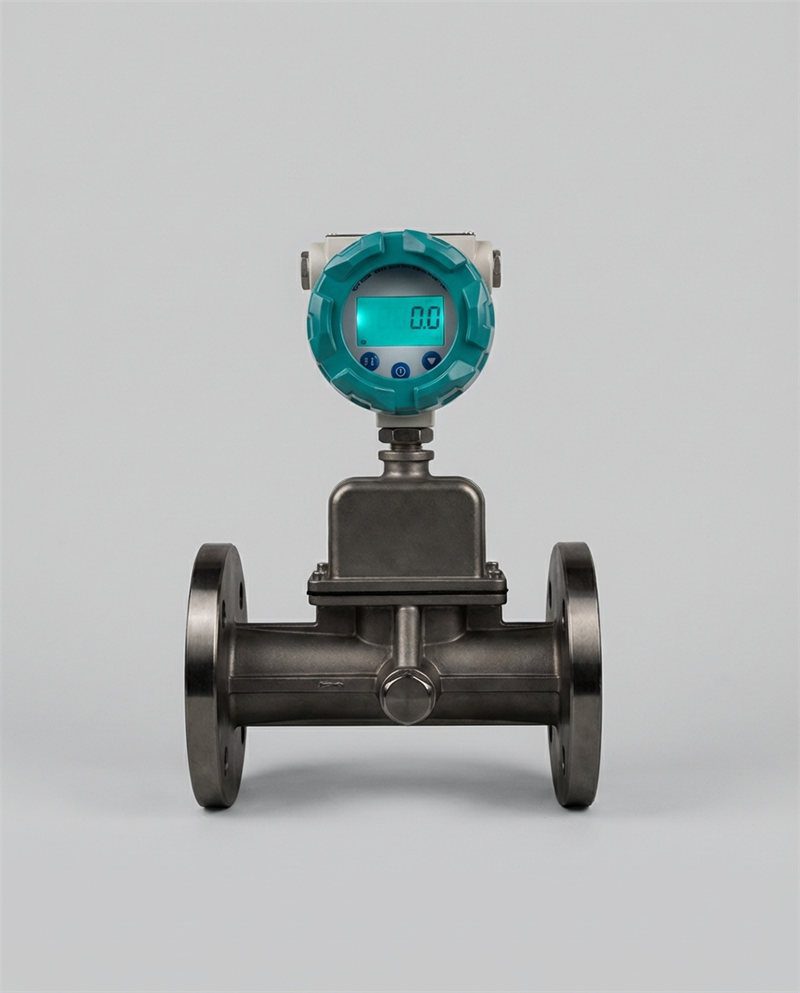
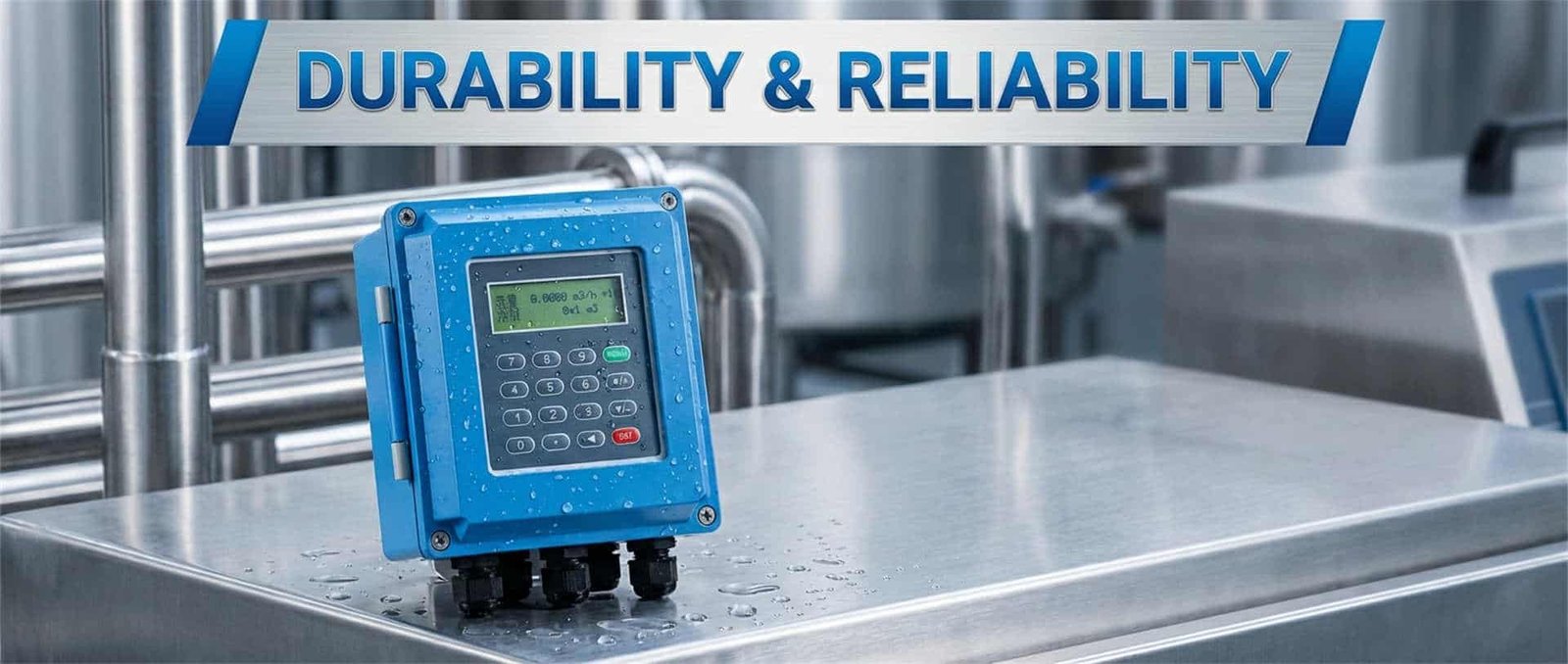
Choosing the right ultrasonic water flow meter can feel overwhelming. With dozens of models, multiple technologies, and a wide range of specifications on the market, even experienced engineers sometimes struggle to match the right meter to the right application. According to Fortune Business Insights, the global ultrasonic flow meter market was valued at USD 2.08 billion in 2025 and is projected to reach USD 3.56 billion by 2034 — a clear sign that demand for accurate, non-invasive flow measurement is surging across industries.
This guide provides a concise, actionable checklist for selecting the perfect ultrasonic water flow meter. Whether you are managing a municipal water system, running an HVAC installation, or monitoring industrial process water, the tips below will help you match meter features to your application needs — including fluid type, flow rate, pipe size, and installation requirements. We will also highlight common mistakes that waste budgets and cause headaches, so you can avoid them entirely.
At Jade Ant Instruments, we have helped thousands of engineers and facility managers find the right flow measurement solution. The selection framework below reflects that real-world experience.
Choosing the Right Flow Meter for Your Application
Define Measurement Goals
Before browsing product catalogs, take a step back and define exactly what you need from your flow meter. Are you simply verifying that flow exists, or do you need highly accurate volumetric data for billing, compliance reporting, or process control? The answer fundamentally shapes your selection.
For basic flow verification — confirming that water is moving through a pipe — a standard clamp-on ultrasonic meter with ±2% accuracy may be more than sufficient. However, if you are using flow data for revenue-grade billing in a district energy system or for precise chemical batching, you will need a meter rated at ±0.5% or better, often an inline transit-time model with factory calibration traceable to ISO 17089 standards.
Consider also whether you need totalizing (cumulative volume), instantaneous flow rate, or both. Some applications, such as irrigation monitoring, primarily need totalized volume over a season. Others, like chiller plant optimization, require real-time instantaneous flow rate data fed into a building management system. Defining these goals upfront prevents overspending on unnecessary features or, worse, selecting a meter that cannot deliver the data you actually need.
Fluid Type and Properties
Ultrasonic flow meters are not all created equal when it comes to fluid compatibility. Clean water — including chilled water, hot water, and domestic potable water — is the easiest and least expensive medium to measure ultrasonically. The acoustic properties of clean water are well-characterized, and virtually every ultrasonic meter on the market handles it without issue.
However, the picture changes quickly when the fluid deviates from clean water. Fluids containing suspended solids, such as raw wastewater or slurries, scatter or absorb ultrasonic signals. In these applications, Doppler-type ultrasonic meters perform far better than transit-time meters because they rely on signal reflections from the particles themselves. Conversely, fluids with entrained air or gas bubbles can cause erratic readings in both meter types, so de-aeration may be required upstream.
Temperature also matters significantly. Standard transducers work well from roughly 0°C to 130°C (32°F to 266°F). If your application involves superheated water, thermal oil, or cryogenic fluids like liquid nitrogen, you will need high-temperature or cryogenic transducers, which typically add to cost. Fluid viscosity plays a role as well — highly viscous fluids slow ultrasonic propagation and can reduce measurement accuracy. Always provide your meter supplier with complete fluid data: composition, temperature range, pressure, and viscosity. The experts at Jade Ant Instruments routinely help customers match fluid properties to the correct transducer and meter configuration.
Ultrasonic Water Flow Meter Types
Clamp-On vs. Inline
One of the first decisions you will face is whether to choose a clamp-on (external) or inline (wetted) ultrasonic flow meter. Each design has distinct advantages, and the right choice depends on your priorities.
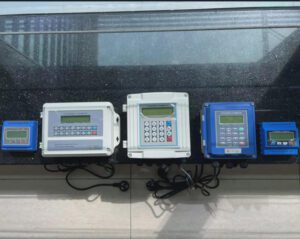
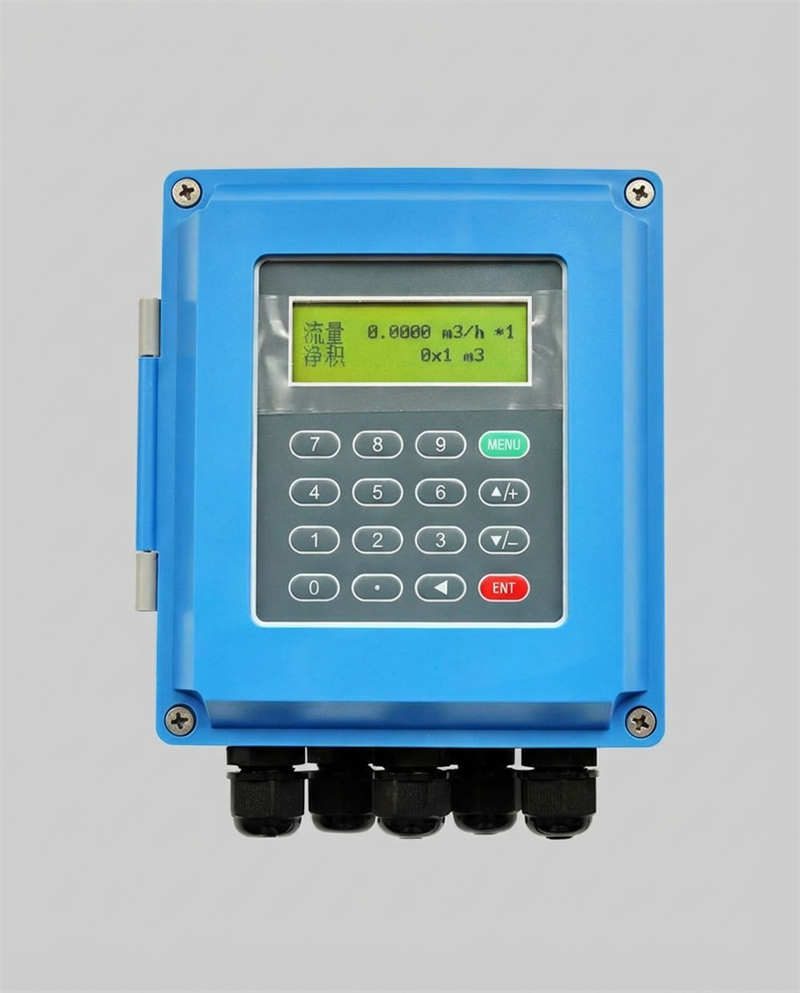
Clamp-on ultrasonic flow meters mount on the outside of the pipe. They require no pipe cutting, no process shutdown, and no direct contact with the fluid. This makes them ideal for retrofit installations, temporary measurement campaigns, and applications where the pipe cannot be interrupted — such as a critical cooling water loop in a data center. Installation is fast, often under an hour, and the meter can be repositioned to other pipes if needs change. The trade-off is that clamp-on meters are generally less accurate than inline meters, especially on pipes with heavy scale buildup, non-standard wall thicknesses, or liners that attenuate ultrasonic signals.
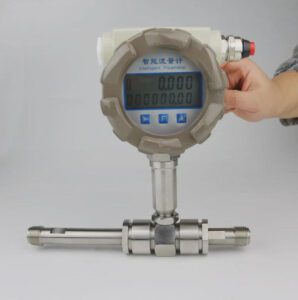
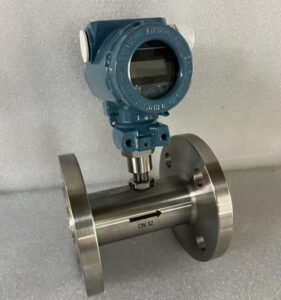
Inline ultrasonic flow meters are installed directly in the pipe, with transducers in contact with the flowing fluid. They deliver superior accuracy (often ±0.5% or better) and excellent repeatability because the ultrasonic path geometry is fixed and precisely manufactured. Inline meters are the preferred choice for custody transfer, revenue metering, and applications requiring the highest confidence in data. The downside is that installation requires cutting the pipe, welding flanges, and shutting down the process — which adds cost and downtime.
| Feature | Clamp-On | Inline |
|---|---|---|
| Installation | Non-invasive, no pipe cutting | Requires pipe cutting and flanging |
| Typical Accuracy | ±1% to ±3% | ±0.2% to ±0.5% |
| Downtime Required | None | Process shutdown needed |
| Pipe Size Range | DN15 to DN6000+ | DN25 to DN3000 (typical) |
| Best For | Retrofits, temporary surveys, HVAC | Custody transfer, billing, precision process control |
| Cost (Relative) | Lower upfront | Higher upfront, lower long-term uncertainty |
| Maintenance | Minimal (external sensors) | Periodic inspection of wetted parts |
| Portability | Can be repositioned | Permanently installed |
Transit-Time vs. Doppler
Beyond the mounting style, you must also choose between the two fundamental ultrasonic measurement principles: transit-time and Doppler.
Transit-time ultrasonic flow meters work by sending ultrasonic pulses in both the upstream and downstream directions through the fluid. When the fluid is flowing, the downstream pulse arrives slightly faster than the upstream pulse. The time difference between the two is directly proportional to the flow velocity. Transit-time meters require a relatively clean fluid — one with less than roughly 1–2% suspended solids by volume — because particles and bubbles scatter the ultrasonic signal and degrade accuracy. For clean water, chilled water, and most potable or process water applications, transit-time is the gold standard and delivers the best accuracy.
Doppler ultrasonic flow meters operate on a fundamentally different principle. They transmit an ultrasonic beam into the fluid and measure the frequency shift of the signal reflected back by particles, bubbles, or other discontinuities in the flow. The frequency shift (the Doppler effect) is proportional to the velocity of those reflectors. This means Doppler meters actually require suspended solids or gas bubbles to function — they will not work in perfectly clean water. Doppler meters are the right choice for raw sewage, sludge, mining slurries, and other “dirty” fluids where transit-time meters would struggle.
| Parameter | Transit-Time | Doppler |
|---|---|---|
| Ideal Fluid | Clean water, process liquids (<1-2% solids) | Dirty fluids, slurries, wastewater (>2% solids or bubbles) |
| Measurement Principle | Upstream/downstream pulse time difference | Frequency shift from reflectors in fluid |
| Accuracy | ±0.5% to ±2% (high) | ±2% to ±5% (moderate) |
| Requires Particles? | No — particles reduce accuracy | Yes — needs reflectors to function |
| Common Applications | HVAC, potable water, energy metering | Wastewater, mining, sludge processing |
| Cost Range | $1,000 – $12,000+ | $800 – $5,000+ |
For a clear visual explanation of how both technologies work, watch this video from RealPars:
Installation and Site Requirements
Pipe Size and Material
Pipe size and material are among the most critical factors in ultrasonic flow meter selection — and, unfortunately, among the most commonly overlooked. Ultrasonic signals must pass through the pipe wall (in clamp-on installations) or propagate reliably through the fluid within a precisely manufactured spool piece (in inline installations). Both scenarios are heavily influenced by what the pipe is made of and how large it is.
Standard pipe materials — carbon steel, stainless steel, copper, and PVC — transmit ultrasonic signals well and are compatible with virtually all ultrasonic meters. However, cast iron and ductile iron pipes present challenges because of their granular microstructure, which scatters ultrasonic energy. Pipes with internal linings (such as cement-lined ductile iron or rubber-lined steel) add another layer of acoustic complexity. If your installation involves lined pipes, inform your meter supplier so they can select transducers with the correct frequency and signal processing algorithms. The Jade Ant Instruments product range includes transducer options specifically engineered for challenging pipe materials.
Pipe size determines the transducer spacing and installation configuration. Most clamp-on meters support pipe diameters from DN15 (½ inch) up to DN6000 (236 inches), while inline meters are typically available from DN25 (1 inch) to DN3000 (120 inches). Crucially, the pipe must be completely full of liquid for an ultrasonic meter to provide accurate readings. Partially filled pipes create air pockets that block or distort ultrasonic signals. If your application involves gravity-flow pipes that may not always be full, consider an open-channel flow measurement approach instead, or install the meter on a pressurized section of the line.
| Pipe Material | Ultrasonic Compatibility | Notes |
|---|---|---|
| Carbon Steel | Excellent | Most common industrial pipe; well-characterized acoustics |
| Stainless Steel | Excellent | Clean signal; ideal for food, pharma, and chemical applications |
| Copper | Excellent | Common in HVAC; thin walls transmit ultrasound easily |
| PVC / CPVC | Good | Lower signal strength; avoid thick-walled Schedule 80 if possible |
| Ductile Iron | Fair to Difficult | Granular structure scatters signals; requires high-power transducers |
| Cement-Lined Pipe | Difficult | Liner thickness varies; field calibration often necessary |
| FRP / GRP | Good | Fiberglass-reinforced plastic; signal attenuation varies with lay-up |
| Concrete Pipe | Poor | Generally not suitable for clamp-on; inline or insertion meters preferred |
Space and Accessibility
Even the best ultrasonic flow meter will underperform if installed in a cramped, inaccessible location without adequate straight pipe runs. The physics of ultrasonic flow measurement demand a fully developed, symmetric velocity profile at the measurement point. Flow disturbances — valves, elbows, tees, reducers, and pumps — create turbulence, swirl, and asymmetric profiles that directly corrupt measurement accuracy.
The industry-standard guideline is a minimum of 10 pipe diameters (10D) of straight, unobstructed pipe upstream of the meter and 5 pipe diameters (5D) downstream. For example, on a DN100 (4-inch) pipe, that translates to 40 inches of straight pipe upstream and 20 inches downstream. After a double elbow out of plane (the worst common disturbance), the requirement can increase to 30D or more upstream. Some advanced multi-path inline meters and meters with built-in signal conditioning algorithms can tolerate shorter straight runs, but this always comes at the expense of either cost or a degree of accuracy.
Physical accessibility matters for both installation and future maintenance. Ensure there is room to mount the transducers, route signal cables, and access the display or transmitter for configuration and data retrieval. In outdoor installations, consider environmental factors such as direct sunlight exposure (which can degrade transducer coupling compounds over time), flooding risk, and ambient temperature extremes.
Accuracy and Performance of Ultrasonic Flow Meters
Accuracy Specs
Accuracy is typically the headline specification buyers look at first, and rightly so — but it is important to understand what the numbers actually mean. Ultrasonic flow meter accuracy is almost always stated as a percentage of the measured value (% of reading), not as a percentage of full scale. This is a significant distinction. A meter rated at ±1% of reading will provide ±1% accuracy whether you are measuring 10 gallons per minute or 1,000 gallons per minute. By contrast, a meter rated at ±1% of full scale would have an effective error of ±10% when measuring only 10% of its range.
For clean water applications, transit-time clamp-on meters typically offer ±1% to ±2% of reading accuracy. High-end inline transit-time meters, particularly multi-path designs, can achieve ±0.2% to ±0.5% of reading. Doppler meters are inherently less precise, typically ±2% to ±5% of reading, because accuracy depends on the consistency and distribution of reflective particles in the fluid.
Always confirm the accuracy specification with the manufacturer under your actual operating conditions. A meter may be factory-calibrated to ±0.5% on clean water at 20°C in a DN100 pipe, but that accuracy figure may degrade when the meter is installed on a DN500 pipe carrying 80°C process water with a 7D upstream straight run. Reputable suppliers like Jade Ant Instruments provide application-specific accuracy estimates rather than just catalog numbers.
Response Time and Repeatability
Response time refers to how quickly the meter updates its flow reading after a change in actual flow. For most water applications, a response time of 0.5 to 2 seconds is typical and sufficient. However, in applications involving rapid flow changes — such as water hammer protection, surge detection, or fast-acting control valves — a faster response time (under 100 milliseconds) may be essential. Multi-path inline meters generally offer faster response times than single-path clamp-on meters because they sample the velocity profile more completely with each measurement cycle.
Repeatability is arguably even more important than absolute accuracy for many process control applications. Repeatability measures how consistently the meter reports the same reading under the same conditions. A meter with ±1% accuracy and ±0.15% repeatability will always report readings within a very narrow band for a given flow rate, even if the absolute value has a 1% offset from the true flow. This consistency is critical for trending, leak detection, and closed-loop control. High-quality ultrasonic meters typically deliver repeatability of ±0.1% to ±0.3% of reading.
Connectivity and Integration Options
Data Logging and Remote Monitoring
Modern ultrasonic flow meters are far more than simple analog instruments. Today’s meters are data-rich devices capable of logging flow rate, totalized volume, diagnostic signals, and alarm events internally, often storing weeks or months of data in onboard memory. This built-in data logging is invaluable for commissioning verification, troubleshooting flow anomalies, and providing an audit trail for compliance purposes.
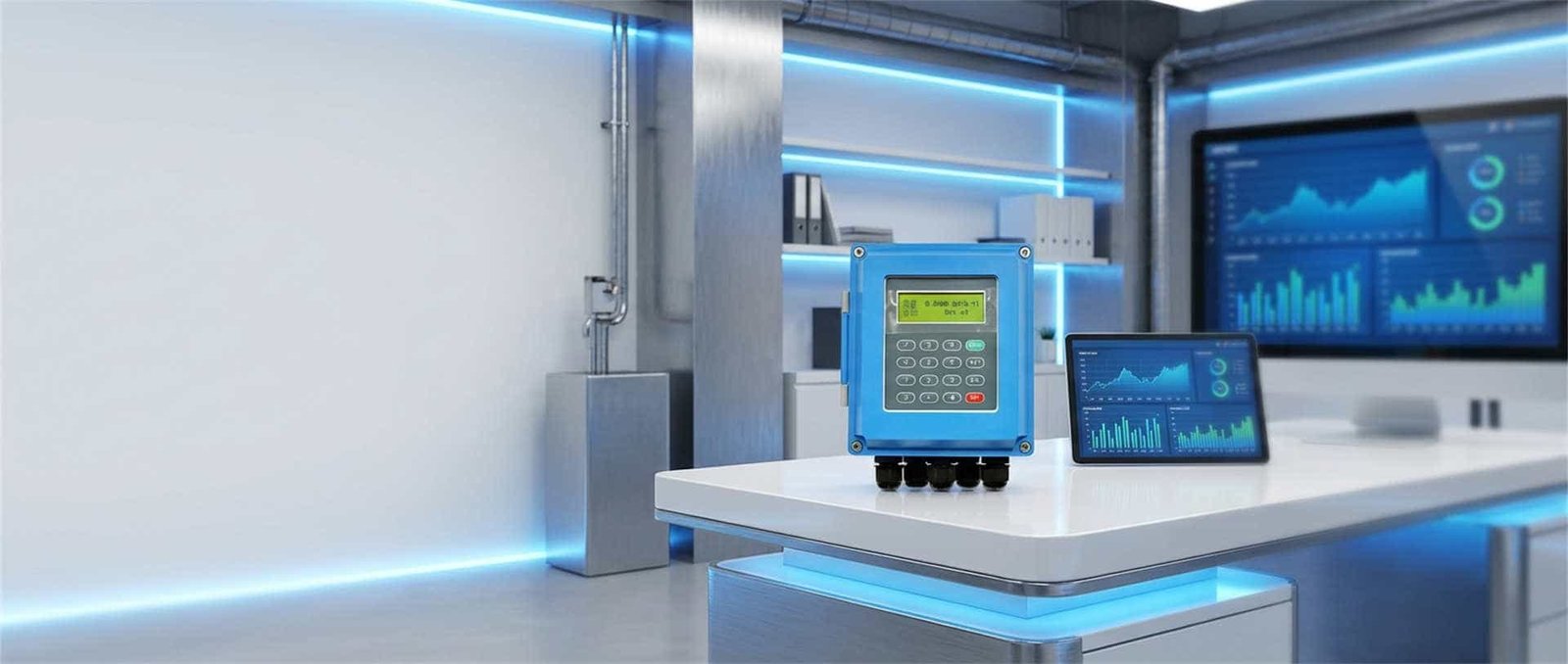
Remote monitoring capabilities have evolved rapidly. Many meters now support wireless communication protocols — including Wi-Fi, Bluetooth, cellular (4G/5G), and LoRaWAN — enabling operators to access real-time flow data from anywhere without physically visiting the meter. Cloud-based platforms allow centralized monitoring of multiple meter locations on a single dashboard, with automated alerts for abnormal flow conditions such as no-flow events, reverse flow, or readings outside expected ranges. This is particularly valuable for distributed water networks, district energy systems, and multi-site industrial operations.
System Integration
For integration into existing control and automation systems, ultrasonic flow meters offer a range of output options. The most common include 4-20 mA analog output (universally compatible with PLCs and SCADA systems), pulse output (for connecting to totalizer counters or energy calculators), and digital communication protocols such as Modbus RTU/TCP, HART, Profibus, and BACnet. Selecting the right output protocol at the time of purchase avoids costly adapter modules or protocol converters later.
If you are integrating flow data into a Building Management System (BMS) for HVAC applications, BACnet compatibility is typically essential. For industrial process automation, Modbus or HART are the standard choices. Some advanced meters also support OPC-UA for direct integration with modern IIoT (Industrial Internet of Things) platforms. The Jade Ant Instruments product line supports a comprehensive range of communication protocols to ensure seamless integration into virtually any system architecture.
Communication Protocol Adoption in Ultrasonic Flow Meters (Industry Survey)
| Protocol | Adoption Rate | Visual |
|---|---|---|
| 4-20 mA Analog | 78% | |
| Modbus RTU/TCP | 62% | |
| HART | 51% | |
| Pulse Output | 47% | |
| BACnet | 29% | |
| Profibus | 18% | |
| Wireless (IoT/LoRa) | 22% |
Maintenance and Support for Ultrasonic Flow Meters
Maintenance Needs
One of the most compelling advantages of ultrasonic flow meters — and a primary reason for their growing market share — is their exceptionally low maintenance requirement. Because there are no moving parts, no mechanical wear occurs during normal operation. There are no bearings to replace, no impellers to clean, and no pressure-drop-inducing obstructions to manage. For many installations, ultrasonic meters operate reliably for years with nothing more than periodic visual inspections.
That said, “low maintenance” does not mean “zero maintenance.” For clamp-on meters, the acoustic coupling compound between the transducer and the pipe surface should be checked annually. Over time, coupling gel can dry out — especially in high-temperature or outdoor installations — causing signal degradation. Pipe surface corrosion or new scale buildup can also attenuate signals gradually. For inline meters, although the transducers are in direct contact with the fluid, they have no moving parts and rarely require cleaning unless the fluid deposits scale or biological fouling on the transducer face.
Calibration verification is recommended every 1–3 years depending on the application criticality. This can often be performed in-situ using a portable reference meter, avoiding the need to remove the meter from service. Firmware updates from the manufacturer may also improve performance or add features over time. Establishing a simple preventive maintenance schedule — even for a “maintenance-free” technology — protects your measurement investment and ensures long-term data integrity.
Technical Support and Warranty
When evaluating ultrasonic flow meter suppliers, do not overlook the quality of after-sales technical support. Flow measurement is an application-specific discipline. Pipe conditions change, fluids vary with seasons or process shifts, and installation constraints sometimes force compromises. Having access to knowledgeable application engineers who can help with remote troubleshooting, configuration optimization, and field commissioning support is extremely valuable.
Warranty terms vary widely across manufacturers. A standard warranty of 1–2 years on electronics and 3–5 years on transducers is common in the industry. Some manufacturers, including Jade Ant Instruments, offer extended warranty options and dedicated technical support hotlines staffed by flow measurement specialists. Always clarify what the warranty covers (parts only versus parts and labor), whether it includes calibration drift, and whether firmware support is included.
Cost and Value When You Choose a Flow Meter
Initial vs. Long-Term Costs
The purchase price of an ultrasonic flow meter is only the beginning of the total cost of ownership. A thorough cost analysis considers installation labor, commissioning, calibration, maintenance, downtime, and replacement parts over the expected service life of the meter (typically 15–25 years for a quality ultrasonic meter).
Clamp-on meters generally have a lower initial cost (ranging from approximately $1,000 for basic portable units to $6,000–$12,000 for high-accuracy fixed installations). Installation costs are also lower because no pipe cutting or process shutdown is required — a significant savings in industrial environments where downtime can cost thousands of dollars per hour. Inline meters have a higher upfront cost ($3,000–$15,000+ depending on size and specification) plus significant installation costs for pipe modification, but they offer superior long-term accuracy and lower measurement uncertainty.
When viewed over a 10- to 20-year lifecycle, ultrasonic meters typically deliver a lower total cost of ownership than mechanical meters (turbine, positive displacement) because of their drastically lower maintenance requirements. Research suggests that ultrasonic flow measurement reduces maintenance costs by roughly 25% compared to mechanical alternatives. The absence of moving parts eliminates the progressive accuracy degradation that plagues mechanical meters, meaning ultrasonic meters maintain their calibration stability far longer.
Typical Total Cost of Ownership Breakdown for an Ultrasonic Flow Meter (20-Year Lifecycle)
| Cost Category | Percentage of Total Cost |
|---|---|
| Initial Purchase Price | 35% |
| Installation & Commissioning | 20% |
| Calibration & Verification | 15% |
| Maintenance & Repairs | 10% |
| Downtime Costs | 8% |
| Software & Connectivity | 7% |
| Training & Documentation | 5% |
Hidden Costs
Several costs often go unaccounted for in the initial budgeting process. Pipe preparation is one — for clamp-on installations on old, corroded pipes, surface grinding and cleaning may be required before transducers can be coupled, adding labor hours. For inline installations on large-diameter pipes, custom spool pieces and heavy-duty flanges can add thousands of dollars to the project.
Signal cable runs between remote transducers and the transmitter electronics can be surprisingly expensive in large facilities, especially if explosion-proof conduit is required. Protocol converter modules — needed when the meter’s native communication protocol does not match the facility’s control system — add both cost and potential failure points. Calibration costs should also be budgeted: laboratory flow calibration typically runs $150–$600 per meter, while on-site calibration services range from $500–$2,000+ per visit.
Perhaps the most significant hidden cost is the cost of choosing the wrong meter. An undersized meter, a meter incompatible with your pipe material, or a meter that cannot meet your accuracy requirements will either need to be replaced entirely — wasting the original investment — or will deliver inaccurate data that leads to poor decisions downstream. Investing time in proper selection upfront, or working with an experienced supplier like Jade Ant Instruments, eliminates this risk.
Common Mistakes in Choosing Ultrasonic Flow Meters
Compatibility Issues
The single most common mistake in ultrasonic flow meter selection is failing to match the meter technology to the fluid characteristics. Choosing a transit-time meter for a fluid containing significant suspended solids, or a Doppler meter for clean water, will result in unreliable or non-functional measurement. This mistake often stems from incomplete fluid data at the time of purchase — either because the buyer assumed the fluid was “just water” without investigating seasonal particulate variations, or because the meter was specified by someone unfamiliar with ultrasonic measurement principles.
Pipe material and size incompatibilities are equally problematic. Specifying a standard clamp-on meter for a cement-lined ductile iron pipe, or failing to account for non-standard pipe wall thickness, will result in weak signals, poor accuracy, or total measurement failure. Always verify the exact pipe schedule, material, lining, and outer diameter — do not assume. Measure the pipe with calipers if necessary.
Communication protocol mismatches are another frequent compatibility issue. Ordering a meter with only a 4-20 mA output when your control system requires Modbus TCP, or specifying BACnet when your BMS uses LonWorks, creates integration headaches and added costs after the meter arrives.
Ignoring Installation Environment
Even when the meter itself is perfectly matched to the application, ignoring the installation environment can undermine performance. Insufficient straight pipe runs are the number one environmental cause of poor accuracy. Installing a meter immediately downstream of a pump, a partially open valve, or a double elbow will produce turbulent, asymmetric flow that no single-path ultrasonic meter can measure accurately.
Extreme ambient temperatures — both hot and cold — affect electronics reliability and transducer coupling integrity. Vibration from nearby machinery can introduce noise into ultrasonic signals. Electromagnetic interference (EMI) from variable frequency drives (VFDs), high-voltage cables, or welding equipment near the meter can corrupt digital signal processing. Submersion risk in below-grade vaults or flood-prone areas must also be evaluated, with appropriate IP-rated enclosures selected.
The lesson is straightforward: always conduct a thorough site survey before specifying a meter. Photograph the proposed installation location, measure available straight runs, note nearby equipment and potential interference sources, and share this information with your meter supplier. Taking these steps eliminates the vast majority of installation-related problems.
Selecting the right ultrasonic water flow meter is not about finding the most expensive or most feature-packed model — it is about matching the meter to your specific application, site conditions, and data requirements. The essential tips covered in this guide form a practical checklist: define your measurement goals, understand your fluid, choose between clamp-on and inline mounting, select transit-time or Doppler technology, verify pipe compatibility, confirm accuracy and connectivity specifications, plan for maintenance, and honestly evaluate total cost of ownership.
Use this guide as a structured checklist when evaluating options. Print it out, walk through each section for your specific project, and involve your meter supplier in the conversation early. The time invested in proper selection pays for itself many times over in reliable data, lower lifecycle costs, and fewer headaches.
At Jade Ant Instruments, matching meter features to real-world application needs is what we do every day. Whether you need a simple clamp-on meter for HVAC energy monitoring or a multi-path inline meter for custody transfer, our application engineers are ready to help you make the right choice. Contact us today to discuss your project.
Frequently Asked Questions (FAQ)
1. What is an ultrasonic water flow meter and how does it work?
An ultrasonic water flow meter measures the velocity of water flowing through a pipe using ultrasonic sound waves. Transit-time models send pulses upstream and downstream and calculate flow from the time difference, while Doppler models measure the frequency shift of signals reflected off particles in the water. Both types convert the measured velocity into volumetric flow rate. For a detailed explanation, the Wikipedia article on ultrasonic flow meters provides an excellent technical overview.
2. What is the difference between a clamp-on and an inline ultrasonic flow meter?
A clamp-on ultrasonic flow meter mounts externally on the pipe with no pipe cutting or process interruption required, making it ideal for retrofits and temporary measurements. An inline ultrasonic flow meter is installed directly within the pipe, with transducers in contact with the fluid, delivering higher accuracy (typically ±0.5% or better). The choice depends on whether you prioritize ease of installation or maximum measurement precision. Jade Ant Instruments offers both clamp-on and inline models to suit different project requirements.
3. Can ultrasonic flow meters measure dirty water or wastewater?
Yes, but the technology must be matched to the fluid. Transit-time ultrasonic meters are designed for clean fluids and will lose accuracy in dirty water. Doppler ultrasonic meters, on the other hand, require suspended particles or bubbles to function and are specifically suited for raw wastewater, sludge, and slurries. Always specify your fluid composition when requesting a meter recommendation.
4. What pipe materials are compatible with clamp-on ultrasonic flow meters?
Carbon steel, stainless steel, copper, PVC, CPVC, and FRP/GRP pipes are all well-suited for clamp-on ultrasonic measurement. Ductile iron and cement-lined pipes are more challenging but can often be measured using high-power transducers and specialized signal processing. Concrete pipes are generally not suitable for clamp-on meters. Always verify compatibility with the meter manufacturer before purchasing.
5. How much straight pipe is needed for an ultrasonic flow meter?
The standard recommendation is a minimum of 10 pipe diameters (10D) of straight, unobstructed pipe upstream and 5 pipe diameters (5D) downstream of the meter. After severe flow disturbances such as double elbows out of plane, 20D to 30D upstream may be required. Some advanced meters with built-in flow conditioning can tolerate shorter runs, but this should be confirmed with the manufacturer.
6. How accurate are ultrasonic water flow meters?
Accuracy varies by type and installation quality. Clamp-on transit-time meters typically achieve ±1% to ±2% of reading. High-end multi-path inline transit-time meters can reach ±0.2% to ±0.5% of reading. Doppler meters are generally accurate to ±2% to ±5% of reading. Actual field accuracy depends on proper installation, pipe condition, fluid properties, and adequate straight pipe runs.
7. Do ultrasonic flow meters require regular maintenance?
Ultrasonic flow meters have very low maintenance requirements because they have no moving parts. Clamp-on models should have their acoustic coupling compound checked annually, and all types should undergo calibration verification every 1–3 years depending on application criticality. Compared to mechanical flow meters, ultrasonic meters reduce maintenance costs by approximately 25% over their lifecycle.
8. How much does an ultrasonic water flow meter cost?
Prices range from approximately $1,000 for basic portable clamp-on units to $15,000 or more for high-accuracy multi-path inline meters with advanced connectivity. The total cost of ownership should also include installation, commissioning, calibration, and integration costs. For a detailed quote matched to your specific application, request a consultation from Jade Ant Instruments.
9. Can I integrate an ultrasonic flow meter with my SCADA or BMS system?
Yes. Modern ultrasonic flow meters support a wide range of communication protocols including 4-20 mA analog, pulse output, Modbus RTU/TCP, HART, Profibus, BACnet, and increasingly wireless IoT protocols. Ensure you specify the required protocol at the time of purchase to avoid the added cost and complexity of protocol converters.
10. What are the biggest mistakes people make when selecting an ultrasonic flow meter?
The most common mistakes include choosing transit-time technology for dirty fluids (or Doppler for clean water), ignoring pipe material and wall thickness compatibility, failing to provide adequate straight pipe runs at the installation location, not considering communication protocol requirements, and focusing solely on purchase price without evaluating total cost of ownership. Using a structured selection checklist — like the one in this guide — eliminates the majority of these errors.