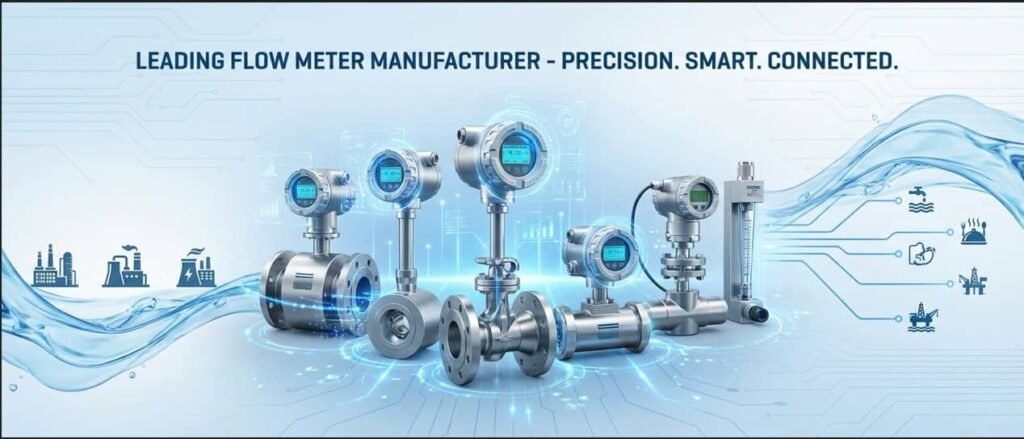
In real projects, the “best” brand isn’t the one with the most famous logo—it’s the one whose measurement technology, accuracy, connectivity, and service model match your process reality.This article follows a practical selection mindset: compare the leading flow meter manufacturers, understand the key features that actually matter in day‑to‑day operations,
and then use a structured selection guide to match strengths to the job—whether you’re metering crude oil, measuring wastewater, dosing chemicals, or validating a hygienic line.
Along the way, we’ll naturally reference helpful internal resources from Jade Ant Instruments (including product and selection content) so you can go deeper where it matters,
and we’ll also add a few external references (placed at the end of the full article, per your requirement) to improve credibility and SEO.
INTRODUCTION
Start with the real problem: “best” depends on your application
Engineers usually don’t “buy a flow meter”—they buy confidence in a number. That number might be used for billing, custody transfer, mass balance, batching,
emissions reporting, energy accounting, or safety interlocks. When the number is wrong, it’s rarely a harmless rounding error. It can trigger off-spec production,
false alarms, pump cavitation, or disputes over high-value fluids.
Why comparing leading manufacturers is the fastest way to de-risk
Comparing top manufacturers helps you avoid two common traps:
choosing a meter that’s technically “accurate” but fragile in your process conditions (solids, bubbles, vibration, temperature cycling), or choosing a meter that works
fine in isolation but becomes painful to integrate into your PLC/DCS and asset management system later.
Connectivity standards such as HART and industrial Ethernet variants (e.g., PROFINET / EtherNet/IP) can strongly influence commissioning time, diagnostics visibility,
and lifecycle maintenance strategy. For example, vendors commonly publish guidance on communication protocols and digital integration approaches, including HART fundamentals and industrial networking options.
Emerson’s overview of communication protocols
is a useful starting point for understanding how field devices talk to host systems.
What you’ll get from this guide
We’ll provide (1) a manufacturer comparison framework, (2) a feature checklist that focuses on measurement technologies, accuracy/precision, integration/connectivity,
and service/support, and (3) a selection guide you can reuse for different projects. If you want an additional “internal” perspective before you read the full comparison,
the Flow Meter Selection Guide by Jade Ant Instruments
is a complementary resource that helps connect fluid physics to installation reality.
Embedded explainer video (helps readers new to core principles)
To make the technology discussion easier to visualize, here’s a short YouTube explainer on one of the most widely used high-accuracy principles:
Video: The Coriolis Flow Measuring Principle (Endress+Hauser) —
helpful for understanding why Coriolis is often chosen for mass flow and custody-style accuracy.
Watch on YouTube
Leading Flow Meter Manufacturers
The manufacturers below are widely recognized in industrial flow measurement. Each has “strength zones”—
not only by technology (Coriolis, mag, vortex, ultrasonic, DP) but also by vertical industry focus, lifecycle support approach, and digital ecosystem.
In practice, many plants standardize on a small set of vendors to simplify spares, training, and calibration strategy.
Endress+Hauser
Endress+Hauser is frequently selected when plants want a broad portfolio across major principles (Coriolis, electromagnetic, ultrasonic, vortex) and a strong emphasis on diagnostics and verification.
Their “Heartbeat Technology” positioning is specifically about built-in diagnostics, verification, and monitoring features in instruments.
Heartbeat Technology overview
is a useful reference if your maintenance team is moving toward condition-based maintenance rather than calendar-based checks.
Emerson
Emerson’s flow portfolio is commonly associated with Micro Motion Coriolis and Rosemount measurement families. They also publish meter verification tooling and workflow guidance.
For example, Emerson’s Smart Meter Verification
is positioned as a way to monitor meter integrity and performance without pulling devices out of service—valuable in plants where downtime is more expensive than instrumentation.
Siemens
Siemens is often strong where the project requires a clean fit into Siemens automation stacks and industrial networks, and they offer a broad flow portfolio.
In water applications, Siemens highlights its SITRANS MAG series such as the
SITRANS FM MAG 5100 W.
Siemens also promotes in-situ verification via the
SITRANS Verificator,
supporting plants that need documented performance checks.
Yokogawa
Yokogawa is well-known for strong instrumentation engineering and a mature portfolio including Coriolis (ROTAMASS), electromagnetic, and vortex.
Their verification tooling is also explicit: the
FSA130 Magnetic/Vortex Flowmeter Verification Tool
is one example of how Yokogawa supports in-field health checks and reporting.
ABB
ABB is frequently selected where plants want robust process instrumentation plus a strong services layer. Their electromagnetic portfolio includes ProcessMaster
(ABB ProcessMaster),
and they also promote verification and digital service tooling such as
CalMaster2
and
ABB Ability Verification (SRV500).
Krohne
KROHNE is often chosen for custody transfer systems, high-end electromagnetic performance, and strong “metering system” thinking (skids, diagnostics, verification).
Their OPTICHECK tools are explicitly aimed at in-situ verification:
OPTICHECK Master.
In the oil & gas world, KROHNE also publishes application-level custody transfer solutions such as
custody transfer metering systems for crude oil.
Badger Meter
Badger Meter has strong visibility in water and industrial flow measurement, particularly ultrasonic and electromagnetic product families.
Their portfolio pages for
ultrasonic flow meters
and
electromagnetic flow meters
are helpful for understanding application positioning and product segmentation.
Honeywell
Honeywell is a major player in transmitters and measurement systems, and in many plants its “flow measurement” shows up as differential pressure (DP) flow architectures—
where the transmitter is a core component. For example, Honeywell’s SmartLine multivariable transmitter is positioned for compensated flow measurement in gas, steam, and liquids:
SmartLine SMV800.
Azbil
Azbil offers ultrasonic and electromagnetic flow meters, including clamp-on solutions for retrofit and non-intrusive measurement.
Their category pages are useful starting points:
Azbil Ultrasonic Flow Meters
and
Azbil Electromagnetic Flowmeters.
Where Jade Ant Instruments fits naturally
In addition to the global giants above, many projects also need a partner that can respond fast on configuration, provide pragmatic selection advice, and support cost‑sensitive deployments.
Jade Ant Instruments positions itself as a flow meter manufacturer & supplier, with a clear portfolio focus on common industrial principles such as electromagnetic, vortex, and turbine meters:
Jade Ant Instruments home page.
If you’re standardizing utility and general-process measurement points, this can be a practical complement to “enterprise” vendor lists.
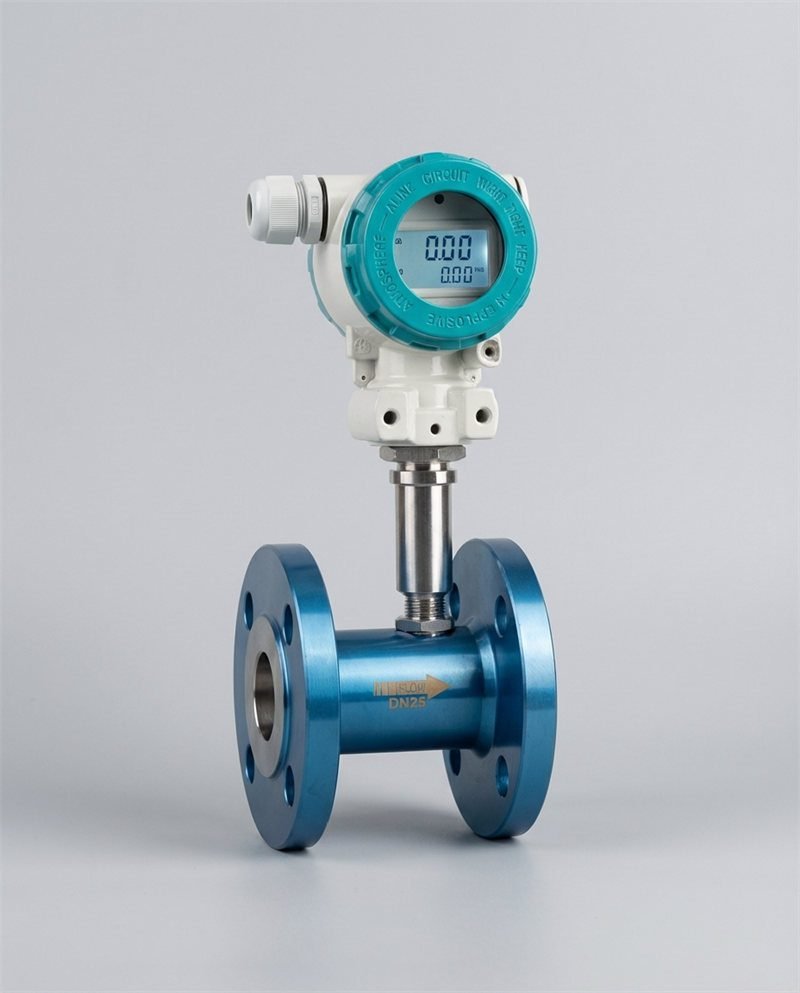
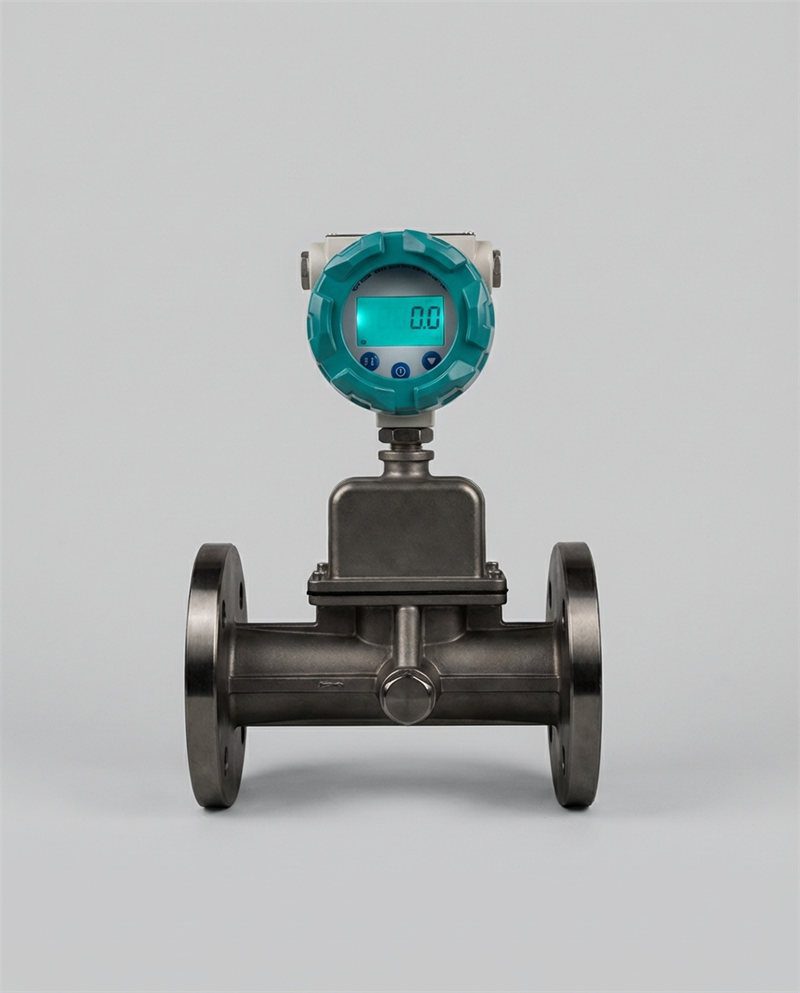
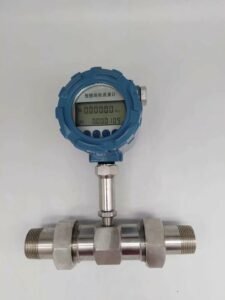
Suggested image carousel (4–6 images; captions below)
For better scanning and “product picture side-by-side” reading experience, below is a simple carousel-like gallery layout.
(Images are illustrative; you can replace with your own product photos later.)
Key Features in Flow Measurement
In procurement documents, “flow meter” often looks like a line item. In operations, it is a bundle of trade-offs:
principle suitability, installation tolerance, diagnostic depth, verification strategy, integration effort, and vendor support.
The sections below translate those trade-offs into a decision-friendly checklist you can reuse across projects.
Measurement Technologies
Coriolis, mag, ultrasonic, vortex, DP: what they’re best at
The fastest path to a good shortlist is to start with the fluid and the measurement objective, then pick the principle that naturally fits.
Coriolis meters are often chosen when mass flow (and often density) are needed with strong accuracy; electromagnetic meters are favored for conductive liquids such as water and many slurries;
ultrasonic meters are attractive for non-intrusive measurement (clamp-on) and for large pipes; vortex meters are common for steam/gases/liquids where robustness and wide turndown are needed;
and differential pressure (DP) architectures remain widely used and standardized, especially when paired with good primary elements and multivariable compensation.
When your measurement architecture depends on DP elements (orifice plate, nozzle, Venturi), international standards such as ISO 5167 define geometry and usage conditions.
That standardization is one reason DP flow remains so prevalent in legacy plants and in regulated documentation contexts.
ISO 5167 overview
helps clarify the scope (subsonic, single-phase, installation/operating conditions).
Expert quote (for credibility, used naturally)
Industrial teams repeatedly learn the same lesson: even premium technology can disappoint if installed poorly or applied outside its comfort zone.
As Emerson notes in its Coriolis overview paper, “Coriolis meters are extremely accurate… A liquid mass flow accuracy of 0.10% is common…”
but performance still depends on correct installation and application choices.
Source (Emerson PDF)
Accuracy and Precision
Accuracy vs repeatability vs turndown
In specs, accuracy is the headline number—but precision and repeatability often matter more for control stability.
Another “quiet killer” is turndown ratio (also called rangeability): the range of flow rates a meter can measure with acceptable accuracy.
Turndown is commonly defined as the ratio of maximum measurable flow to minimum measurable flow under accuracy requirements.
Turndown definition reference
is a clear explanation you can use when aligning on acceptance criteria with stakeholders.
Verification and diagnostics are now part of “accuracy” in real life
Modern plants increasingly treat “accuracy” as a lifecycle concept: not only what the meter achieved on day 1, but how reliably it stays within tolerance,
and how easily the team can prove that during audits. That’s why built-in verification approaches are getting attention:
Endress+Hauser promotes verification and monitoring via Heartbeat Technology
(Heartbeat Technology),
Siemens offers performance checks via SITRANS Verificator
(SITRANS Verificator),
Emerson highlights Smart Meter Verification
(Smart Meter Verification),
and KROHNE positions OPTICHECK tools for verification
(OPTICHECK Master).
Integration and Connectivity
Protocols that reduce commissioning pain
Field connectivity choices (4–20mA, HART, Modbus, and industrial Ethernet variants like PROFINET/EtherNet-IP) are not just “IT preferences.”
They influence how quickly a project starts up, how much diagnostic visibility you get, and whether you can run structured asset health programs.
For HART, a vendor-neutral technical entry point is the HART-IP documentation from FieldComm Group:
HART-IP Technical Description (PDF).
In parallel, OPC UA is increasingly discussed as plants pursue unified data models and scalable integration patterns.
Endress+Hauser provides an accessible primer on using OPC UA for IIoT solutions:
OPC UA in IIoT solutions.
NAMUR NE107: making diagnostics readable across devices
If your team is overwhelmed by device-specific alarms, NAMUR NE107 is a practical concept worth bringing into your requirements.
NE107 standardizes status signals into four categories (Failure, Function Check, Out of Specification, Maintenance Required).
Endress+Hauser explains the operational value clearly in its overview:
Why NAMUR NE107 matters.
This matters when you’re building a multi-vendor fleet and want a uniform “device health” language.
Service and Support
Support is not “nice to have” for flow measurement
Flow meters are installed in harsh environments: hot pipes, corrosive services, wet vaults, vibrating skids, and hard-to-reach racks.
That makes service quality a technical factor. Evaluate:
(1) local availability and lead time, (2) calibration and verification capabilities, (3) spare parts and repair programs,
(4) documentation quality, and (5) how quickly the vendor helps troubleshoot wiring, grounding, and installation issues.
Internal linking that supports the reader journey
If your readers are early in their selection process, it’s helpful to give them a “next click” that keeps them in your ecosystem.
Recommended internal anchor links to weave later in the full article include:
how to choose the right flow meter supplier
and the core site link
Jade Ant Instruments.
(In the next slice, we’ll place these in the context of applications and selection steps, so they feel natural rather than promotional.)
Mini data visualization
Below is a simple, publish-ready “Excel-like” table plus two lightweight charts (CSS-based bars and a pie).
It gives readers a quick mental model of how technologies are typically selected. (It is illustrative—not a vendor spec sheet.)
| Technology | Common strengths | Typical “watch-outs” | Where it’s often used |
|---|---|---|---|
| Coriolis | Direct mass flow, often density; strong accuracy in many services | Cost; sensitivity to some installation/vibration constraints (model-dependent) | Custody-style accuracy points, batching, blending, high-value fluids |
| Electromagnetic (Mag) | Excellent for conductive liquids; low pressure loss; common in water | Requires conductive fluid; installation grounding & full-pipe conditions matter | Water & wastewater, slurry services, many chemical applications |
| Ultrasonic | Clamp-on retrofit; good for large pipes; low pressure loss | Performance can vary with solids/bubbles depending on method and application | Utilities, temporary metering, large line monitoring |
| Vortex | Good for steam/gas/liquid; no moving parts; wide usable range | Not ideal for very high viscosity or very low velocities | Steam measurement in plants, general process flow monitoring |
| Differential Pressure (DP) | Standardized elements; broad adoption; good with compensation | Pressure loss; installation and primary element condition matter | Legacy plants, steam/gas, when standard methods are required (e.g., ISO 5167) |
Pie chart: Example tech mix in a mixed facility
When it comes to choosing “which flow meter manufacturer is right for you,” what truly determines success isn’t brand reputation, but rather the physical and process realities of your application: medium conductivity, viscosity, gas/solid content, temperature and pressure, hygiene level, hazardous area explosion protection, and whether you need custody transfer-level traceable accuracy. Below we break down common pain points by industry, recommend technology routes and typical “pitfalls,” and map them to the capability profiles of mainstream manufacturers, helping you compare Endress+Hauser, Emerson, Siemens, Yokogawa, ABB, KROHNE, Badger Meter, Honeywell, Azbil, and other suppliers on the same dimensions.
Oil & Gas: Custody Transfer, Two-Phase Flow & Compliance Pressure
Key Requirements: Traceable, Verifiable, Auditable
The most common high-value requirements in oil and gas scenarios are custody transfer measurement and allocation metering. In these applications, instruments must not only “measure accurately” but also “explain clearly”: Is there selection and practice compliant with API MPMS? Can verification/diagnostic reports be provided? Is it convenient to perform health checks without shutting down production? In API MPMS related materials, Emerson has specifically provided a white paper on custody transfer best practices, emphasizing that stronger process and quality control systems should be adopted at high-value metering points [Emerson PDF](https://www.emerson.com/documents/automation/white-paper-best-practices-for-custody-transfer-rosemount-en-1730756.pdf).
Recommended Technologies: Coriolis / Ultrasonic (Multi-Path for Gas) with Supporting Verification Systems
In high-precision liquid (or some gas) metering, Coriolis mass flow meters, because they can directly measure mass flow and output multiple parameters such as density and temperature, typically become the preferred candidate for high-value metering points. For large-diameter natural gas pipelines, multi-path ultrasonic meters are commonly seen in recommended practices and standards systems, with AGA Report No.9 also focusing on recommended practices for multi-path ultrasonic in metering scenarios [Teesing PDF](https://teesing.com/media/files/standards/aga-9-2003.pdf).
Common Pitfalls: Two-Phase Flow, Entrained Gas, Deposits & Installation Disturbances
Two-phase flow/entrained gas, wax/scale buildup, upstream disturbances (elbows, valves, pumps) can directly turn “laboratory accuracy” into “field error.” If you’re dealing with such conditions, it’s recommended to set “field diagnosable/verifiable” as a hard requirement, prioritizing supplier solutions with mature verification toolchains and reporting systems (expanded in the “Service and Support” section below).
Water & Wastewater: Full Pipe, Conductivity & Long-Term Stability
Key Requirements: Low Maintenance, Fouling Resistance, Long-Term Stable Operation
Municipal water supply, wastewater treatment, reclaimed water, and industrial water systems typically pursue stability, durability, and low maintenance. Electromagnetic flow meters (Magmeters) are the most common “mainstream technology route” for these applications, and AWWA has a specific standard system for magnetic inductive flow meters (such as the AWWA C751 standard entry and preview page) [AWWA Store](https://store.awwa.org/AWWA-C751-19R23-Magnetic-Inductive-Flowmeters); additionally, ISO 20456:2017 is the guidance standard for electromagnetic flow meters used with conductive liquids [ISO](https://www.iso.org/standard/68092.html).
Typical Equipment Family: Water-Specific Sensors & Battery-Powered Solutions
For example, Siemens’ SITRANS FM MAG 5100 W is clearly positioned for water applications (groundwater, drinking water, cooling water, etc.) [Siemens](https://www.siemens.com/us/en/products/automation/process-instrumentation/flow-measurement/electromagnetic/sitrans-f-m-mag-5100-w-for-water-applications.html); for distributed points or temporary metering, battery-powered or clamp-on ultrasonic meters are also common (especially for retrofit projects without pipe cutting).
Common Pitfalls: Partially Filled Pipes, Grounding/Shielding & Air Bubbles
Magnetic flow meters are sensitive to “full pipe” conditions and grounding/shielding. Many field issues are not the instrument itself, but grounding rings, flange gasket insulation, or electrical noise. It’s recommended to include “grounding scheme, shielding and wiring requirements, and field acceptance methods” in the project deliverables checklist during bidding/technical clarification stages (you can also refer to industry installation/grounding practice materials to develop internal SOPs, such as Zero Instrument’s grounding guide articles [Zero Instrument](https://zeroinstrument.com/how-to-properly-ground-an-electromagnetic-flow-meter/)).
Chemical Processing: Corrosion, Viscosity & Process Fluctuations
Key Requirements: Material Compatibility + Wide Turndown + Diagnostics
The challenge in chemical processing is medium variability: viscosity changes with temperature, corrosiveness, entrained gas, crystallization/polymerization, etc. In this case, you should focus more on: liner and electrode materials, temperature and pressure resistance, diagnostic capabilities, and turndown ratio. Regarding the definition of turndown, the commonly used industry explanation is “the ratio of maximum flow to minimum flow at acceptable accuracy,” with Mass Flow Online providing a concise explanation [Mass Flow Online](https://www.massflow-online.com/frequently-asked-questions/general/what-does-turndown-ratio-mean/).
Recommended Technologies: Coriolis (Multi-Parameter), Electromagnetic (Conductive Liquids) & Vortex (Steam/Gas)
If your goal is batch dosing, additive injection, and concentration/density monitoring, Coriolis’s “mass flow + density” combination is very valuable. If the medium is conductive and relatively clean, electromagnetic meters can provide low pressure drop and low maintenance. Steam and some gases commonly use vortex meters, combined with pressure/temperature compensation to form mass flow or standard condition flow solutions.
Food & Beverage: Hygienic Certification, CIP/SIP & Dead Zones
Key Requirements: Hygienic Design, Cleanability & Verifiable Documentation
Food and beverage typically requires 3-A, EHEDG, and other hygienic system certifications or at least meets company internal hygienic design requirements. EHEDG also provides hygienic design principles and certification process guidance [EHEDG](https://www.ehedg.org/guidelines-working-groups/guidelines/guidelines/detail/hygienic-design-principles). When comparing suppliers, it’s recommended to include “certificates, surface roughness, drainability, self-draining structure, and cleaning validation documentation” in your comparison table.
Recommended Technologies: Hygienic Coriolis / Hygienic Electromagnetic
Many major manufacturers provide hygienic product families and certification documents for food and beverage (for example, Micro Motion’s EHEDG certificate PDF can be directly used for project archiving [Emerson PDF](https://www.emerson.com/documents/automation/certificate-h-series-ehedg-certificate-micro-motion-en-8729002.pdf)). If you’re dealing with high viscosity or solids content (pulp, sauces), you should pay more attention to “minimum flow velocity, pressure drop, and whether material accumulation is likely.”
Power Generation: Steam Measurement, Vibration & High Temperature
Key Requirements: Steam Quality, Stability & Installation Conditions
Steam metering in the power industry commonly uses vortex, differential pressure, and ultrasonic routes. For vortex applications in steam/gas/liquid, Siemens, Endress+Hauser, and others have technical pages and product family introductions (such as the Siemens vortex overview page) [Siemens](https://www.siemens.com/us/en/products/automation/process-instrumentation/flow-measurement/vortex.html). If the site has strong vibration and high temperature, instrument structure and installation method (support, vibration isolation, pressure tap/impulse tubing arrangement) are more important than brand.
Pharmaceuticals & Life Sciences: Validation, GMP & Data Integrity
Key Requirements: Validation-Friendly, Traceable & Documentation System
Pharmaceuticals care more about “whether measurement results can be included in batch records and whether deviation investigations can hold up.” Therefore, whether the supplier can provide comprehensive validation support (IQ/OQ/PQ coordination, calibration certificates, material certificates, communication and audit trails) will significantly affect total cost. Endress+Hauser’s GMP pharmaceutical topic page emphasizes meeting quality and efficiency goals through process monitoring and control [Endress+Hauser](https://www.us.endress.com/en/industry-expertise/life-sciences/gmp-pharmaceutical-manufacturing).
Product Image “Carousel” Display (Example Carousel)
Below uses a “side-by-side + title description” approach to create a simple carousel effect. You can replace these images with your own assets or brand-authorized images.

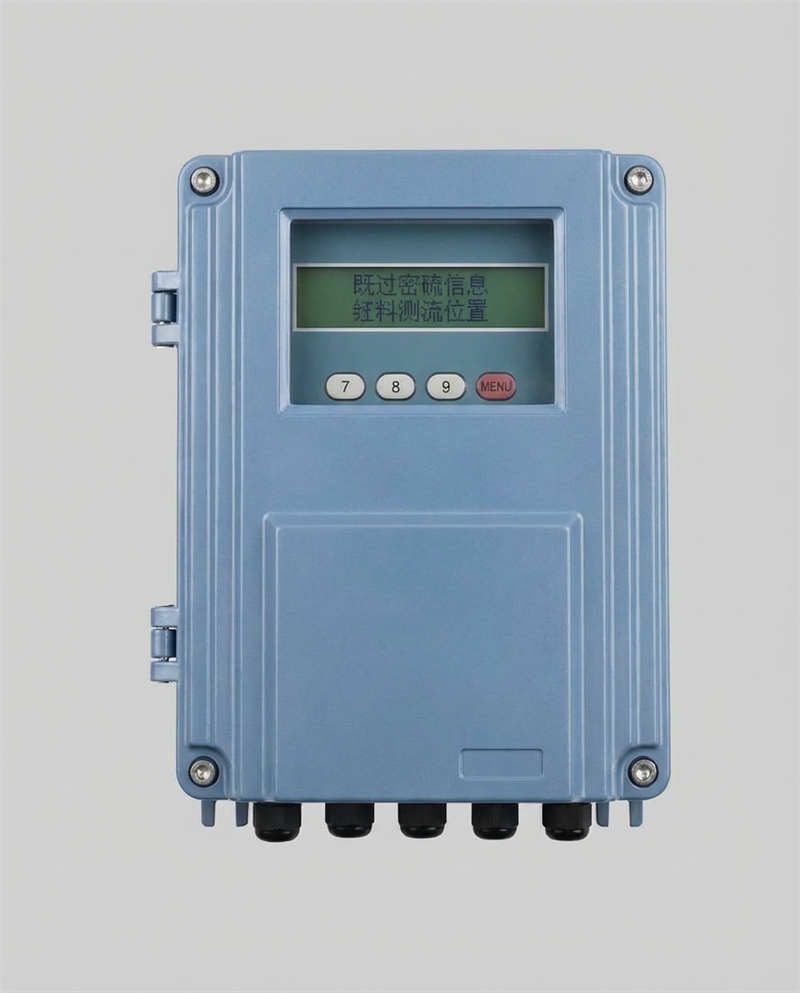
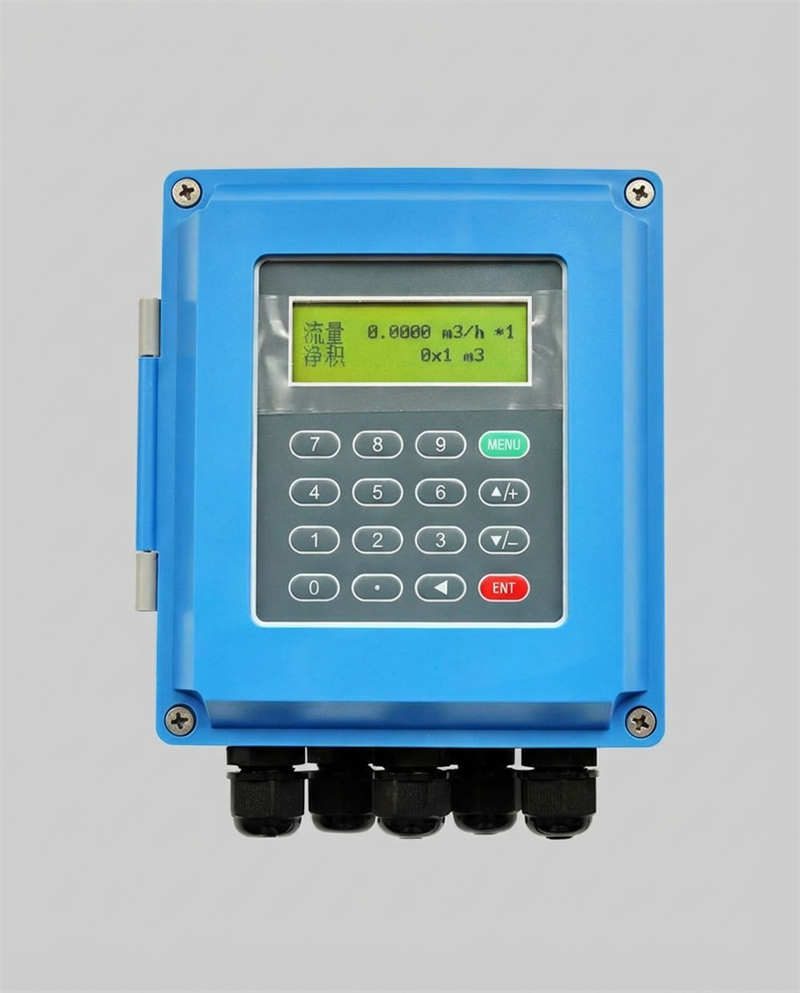
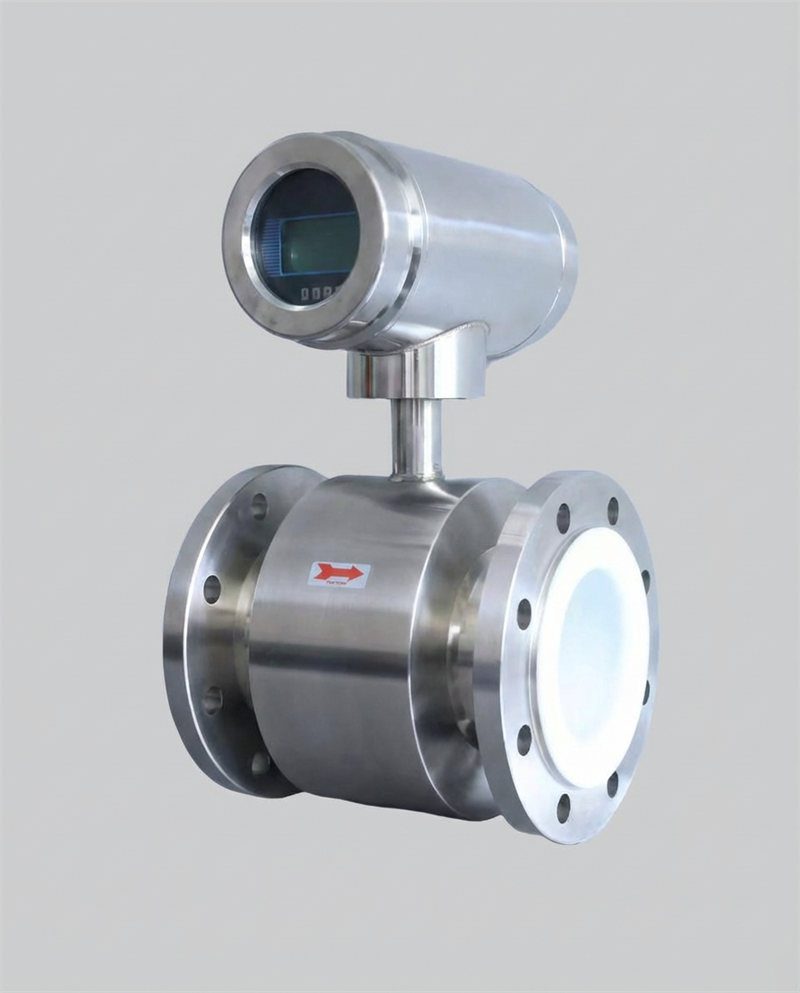
Common choice for water/wastewater and conductive liquid applications (video thumbnail)

Common route for custody transfer and multi-parameter measurement (video thumbnail)
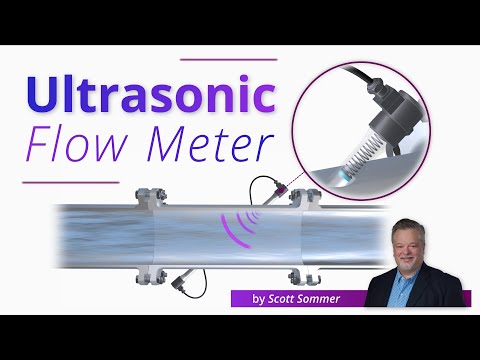
Common for retrofit projects and non-intrusive installation (video thumbnail)

One of the universal solutions for steam/gas/liquid (video thumbnail)
If you want to replace these carousel images with Jade Ant Instruments own product images (electromagnetic, vortex, turbine, ultrasonic, etc.), it’s recommended to use on-site product page assets and complete image alt/title for stronger SEO and brand consistency (such as the official website and selection guide page):
https://jadeantinstruments.com/;
https://jadeantinstruments.com/flow-meter-selection-guide-choose-the-right-meter/.
The most effective approach to getting selection right is not “choosing a brand first,” but rather breaking down requirements into verifiable engineering specifications, then mapping those specifications to technology routes and supplier capabilities. You can use this section as an internal “selection worksheet template.” In practice, suppliers like Jade Ant Instruments that directly serve engineering applications can often provide more flexible OEM/ODM combinations in “interface/liner/connection method/protocol adaptation,” thereby converting engineering constraints into deliverable configurations (official website and selection guide for internal reference) [Jade Ant Instruments](https://jadeantinstruments.com/) [Jade Ant Selection Guide](https://jadeantinstruments.com/flow-meter-selection-guide-choose-the-right-meter/).
Step 1: Define the Measurement Goal First (Rate vs Total vs Quality)
Do You Actually Need “Instantaneous Flow,” “Totalized Volume,” or “Mass/Density/Concentration”
Many project failures stem from confusing “process control flow” (just need stable trends) with “custody transfer flow” (needs traceability). If you need mass/density, Coriolis has clear advantages; if you need totalized billing but the medium is conductive and the pipe diameter is large, electromagnetic may be more economical.
The “Role Division” of Accuracy, Repeatability, and Linearity
Accuracy determines “is it correct,” repeatability determines “is it stable,” and linearity determines “is it consistent across the full range.” Additionally, look at turndown ratio (rangeability), because field conditions often operate at low loads. For the definition and common explanation of turndown, refer to Mass Flow Online’s FAQ [Mass Flow Online](https://www.massflow-online.com/frequently-asked-questions/general/what-does-turndown-ratio-mean/).
Step 2: Fluid Characteristics (Conductivity, Viscosity, Gas/Solid Content, Corrosiveness)
Conductivity Determines Whether Electromagnetic Is Applicable
The guidance standard for electromagnetic flow meters used with conductive liquids is ISO 20456:2017 (can be used as engineering reference) [ISO](https://www.iso.org/standard/68092.html). If medium conductivity is insufficient or fluctuates significantly, electromagnetic solutions require careful verification.
Entrained Gas, Two-Phase Flow & Slurries: Identify the “Non-Measurable Zone” First
Two-phase flow is not a problem that “can be solved by buying a more expensive instrument.” For technology routes sensitive to two-phase flow, you need to consider degassing, flow stabilization, and instrument positioning at the P&ID stage; otherwise, you’ll only end up attributing field failures to “bad brand.” In oil and gas custody transfer metering, multi-path ultrasonic and Coriolis are commonly discussed in standards/recommended practices (such as AGA 9) [Teesing PDF](https://teesing.com/media/files/standards/aga-9-2003.pdf).
Step 3: Installation Reality (Straight Run, Vibration, Grounding, Maintenance Windows)
Straight Run Requirements Are “Systematic Error” Not “Installation Details”
You need to include straight run requirements in construction drawings and acceptance checklists. Different technology routes have different sensitivities to upstream disturbances: generally, ultrasonic and turbine are more sensitive to disturbances; electromagnetic meters are usually more stable with proper grounding and full pipe conditions; vortex meters require more careful support and installation for vibration and pulsation.
Grounding/Shielding for Electromagnetic Meters Cannot Be Skipped
In water/wastewater magnetic flow meter projects, many “inaccurate measurements” come from improper grounding. It’s recommended to prepare a concise “grounding and shielding checklist” for your team and establish internal standards by referring to industry installation practice materials (such as Zero Instrument’s grounding guide articles) [Zero Instrument](https://zeroinstrument.com/how-to-properly-ground-an-electromagnetic-flow-meter/).
Step 4: Communication & Diagnostics (HART/Modbus/Industrial Ethernet, NE107, Verification Tools)
Communication Protocol Is a “Long-Term Asset,” Not a One-Time Interface
For existing DCS/PLC systems, 4–20mA + HART remains a common combination; new installations may lean more toward PROFINET, EtherNet/IP, Modbus TCP, etc. For a basic introduction to HART and its bidirectional communication characteristics, refer to Emerson’s protocol explanation page [Emerson](https://www.emerson.com/en-us/automation/brands/rosemount/about-communication-protocols).
Diagnostic Standardization: NAMUR NE 107
NAMUR NE 107 standardizes field device self-diagnostic status into four signal categories (Failure / Function Check / Out of Specification / Maintenance Required), used to improve maintenance efficiency and consistency. Endress+Hauser’s NE107 explanation page provides an intuitive summary of its value [Endress+Hauser](https://www.endress.com/en/support-overview/learning-center/namur-ne-107).
“Non-Intrusive Verification” Is Becoming a Mainstream Requirement
More and more asset owners are including “complete instrument health checks/verification without shutdown and generate reports” in their maintenance strategies. Different major manufacturers have their own verification toolchains: for example, Emerson’s Smart Meter Verification emphasizes outputting instrument health status and reports without interrupting the process [Emerson](https://www.emerson.com/en-us/catalog/micro-motion/flow-smart-meter-verification); Endress+Hauser’s Heartbeat Verification is described as providing traceable verification that can be used to extend calibration intervals (their documentation page and regulatory recognition PDF are also often used for compliance file archiving) [Endress+Hauser](https://www.id.endress.com/en/field-instruments-overview/flow-measurement-product-overview/flowmeter-verification-heartbeat-technology) [E+H PDF](https://portal.endress.com/dla/5001141/4792/000/00/HeartbeatTechnology%20Recognition%20by%20Regulatory%20Agencies%20WP01187L60EN0123%20.pdf). KROHNE also has the OPTICHECK in-situ verification toolchain [KROHNE](https://www.krohne.com/en-us/products/accessories/service-tools/opticheck-master).
Step 5: Economics (Put CAPEX + OPEX + Risk Costs in the Same Table)
“Cheap instruments” may double total costs through downtime, rework, and error disputes. It’s recommended to use a 5-year TCO approach: including procurement, installation, shutdown windows, calibration/verification, spare parts, and energy costs (pressure drop).
| Cost Item | Description | Typical Impact Factors | Notes |
|---|---|---|---|
| CAPEX | Instrument + transmitter + accessories | Size/material/certification/protocol | Including grounding rings, converters, etc. |
| Installation Cost | Welding/cutting/bypass/scaffolding | Whether non-intrusive, whether pipe cutting is needed | Clamp-on ultrasonic often has advantages in retrofits |
| Maintenance/Verification | Calibration, in-situ verification, work orders | Whether NE107 supported, whether verification toolchain available | Such as SMV/Heartbeat/OPTICHECK, etc. |
| Process Risk Cost | Out-of-spec/scrap/energy/disputes | Accuracy, repeatability, fault diagnosability | Higher weight for high-value metering points |
Bar Chart: 5-Year Cost Structure Illustration
CAPEX         ██████████████  38%
Installation  ████████        22%
Maintenance   ██████          18%
Downtime/Risk ███████         22%
Pie Chart: Maintenance Strategy Composition Illustration
On-site verification (in-situ)  40%
Lab calibration                  25%
Preventive inspection            20%
Reactive repair                  15%
Industry Expert Perspective (For Decision Consensus)
“At high-value metering points, accuracy is just the entry ticket; what really reduces total cost is verifiability and auditability—you need to be able to prove it’s still ‘within spec’ without shutting down production.”
— Industrial Measurement and Instrumentation Reliability Consultant (Experience summary, applicable to custody transfer and critical process control)
If you want to solidify the above selection process into an internal SOP, you can directly use https://jadeantinstruments.com/how-to-choose-a-flow-meter-5-factors-2026/ as one of your team training reading materials (combined with your process constraints to form project templates).
The comparison table below puts “technology route—diagnostic verification—industry fit—service support” in the same table, making it easy to quickly align during bid clarification or technical review meetings. Note: Different manufacturers may have varying delivery capabilities in different regions and industries; you should still use the project location’s service network, delivery time, and available certificates/reports as the final judgment basis.
Comparison Table (Excel-style)
| Manufacturer | Strong Technology Routes (Examples) | In-Situ Verification/Diagnostic Ecosystem | Typical Advantage Scenarios | Key Questions You Should Ask |
|---|---|---|---|---|
| Emerson | Coriolis / Magnetic / Vortex, etc. | Smart Meter Verification (SMV) | Oil & gas, chemical, critical process points | SMV report samples, field verification process, whether it can be integrated into maintenance system |
| Endress+Hauser | Coriolis / Mag / Vortex | Heartbeat Verification (traceable verification documentation) | Pharmaceutical, food & beverage, water, process industries | Whether Heartbeat meets your QA/compliance documentation requirements (PDF/recognition materials) |
| Siemens | Electromagnetic (water-specific family, etc.) | (Can be combined with their verification/maintenance tool system per project) | Water/wastewater and municipal | Water sector size coverage, installation acceptance recommendations, spare parts and service cycles |
| Yokogawa | Mag / Vortex / Coriolis (product family) | FSA130 Verification Tool | Process industries and maintenance management-oriented projects | Verification report format, diagnostic coverage scope, field implementation threshold |
| ABB | Electromagnetic (ProcessMaster, etc.), Coriolis | CalMaster2 / ABB Ability Verification (toolchain direction) | Water, process industries, electrification/digitalization plants | Which models the verification tool supports, software licensing/service model |
| KROHNE | Electromagnetic, Coriolis, ultrasonic, etc. | OPTICHECK in-situ verification | Process industries, custody transfer/skid system projects | Whether in-situ verification can replace some calibration, report traceability |
| Badger Meter | Ultrasonic, water-related product family | (Primarily product line and application documentation) | Water, metering and district management | Size/protocol, field installation and long-term metering stability |
| Honeywell | Process transmitter and multivariable measurement ecosystem | (Primarily transmitter/system integration) | Large-scale plant integration, process control | System integration capability, protocol and asset management support |
| Azbil | Ultrasonic/electromagnetic product family (regional strength) | (Primarily product line and application documentation) | Water and industrial automation | Local service coverage, delivery time, certification matching |
| Jade Ant Instruments | Electromagnetic / Vortex / Turbine / Ultrasonic, etc. (direct from manufacturer) | (Protocol and structural configuration customizable per project) | Multi-industry OEM/ODM, cost and delivery-sensitive projects | Liner/electrode/connection customization boundaries, protocol combinations, delivery acceptance checklist |
Technology Route × Application Scenario Matrix (Quick Reference)
| Application | Electromagnetic | Coriolis | Ultrasonic | Vortex | Turbine/Mechanical |
|---|---|---|---|---|---|
| Water/Wastewater (conductive, full pipe) | ★★★★★ (AWWA/ISO guidance available) | ★★ | ★★★ (retrofit/large diameter) | ★ | ★ |
| Oil & Gas Custody Transfer (high-value metering points) | ★★ | ★★★★★ (commonly used) | ★★★★ (multi-path for gas pipelines) | ★★ | ★★ |
| Steam/Boiler | ★ | ★★ | ★★ | ★★★★★ (commonly used) | ★★ |
| Food & Beverage (hygienic) | ★★★★ (hygienic type) | ★★★★★ (hygienic type + multi-parameter) | ★★ | ★★ | ★ |
Tip: If you want to turn the matrix into an “executable bid evaluation scorecard,” it’s recommended to break each column into quantifiable scoring items (certificates/verification reports/protocols/spare parts delivery/local service SLA, etc.). Also use on-site content as internal “unified messaging” training links, such as:
https://jadeantinstruments.com/essential-tips-for-choosing-the-right-water-flow-meter/
The essence of choosing a flow meter supplier is making a clear trade-off between “physical measurability, engineering installability, maintenance verifiability, and long-term total cost.” You don’t need to pursue “the strongest brand in the industry”; what you need is the combination that best fits your operating conditions and maintenance system:
- Water/Wastewater: Prioritize writing full pipe, grounding, liner, and standards (AWWA/ISO) into acceptance terms [AWWA Store](https://store.awwa.org/AWWA-C751-19R23-Magnetic-Inductive-Flowmeters) [ISO 20456](https://www.iso.org/standard/68092.html).
- Oil & Gas High-Value Metering Points: Treat “verifiable/auditable” as a hard requirement, and reference API MPMS-related best practices and white paper approaches [Emerson PDF](https://www.emerson.com/documents/automation/white-paper-best-practices-for-custody-transfer-rosemount-en-1730756.pdf).
- Chemical and Pharmaceutical: Include medium variability, diagnostics, compliance documentation, and maintenance strategy in TCO calculations to avoid “buying cheap, operating expensive.”
Next Step: Get Selection Right with One Table (Copy to Your Project)
If you want to quickly apply this article’s framework to your actual project, I recommend directly using Jade Ant Instruments‘ on-site selection content as a working draft, then filling in your medium/operating conditions/installation constraints to form a “internally reviewable, supplier clarifiable, acceptance-ready” selection package:
1) First read: https://jadeantinstruments.com/flow-meter-selection-guide-choose-the-right-meter/
2) Then cross-reference: https://jadeantinstruments.com/how-to-choose-a-flow-meter-5-factors-2026/
3) Finally, use this article’s matrix to create a “technical clarification table + TCO table” to compare supplier quotes on the same dimensions.
Strong CTA: Prepare your medium information (conductivity/viscosity/temperature-pressure range/whether gas or solids present/pipe diameter/protocol/installation location diagram), and organize it into a one-page “Flow Meter Selection Worksheet.” You’ll find that selection meetings that originally required weeks of debate can often reach consensus in one technical clarification session.
FAQs
1) How do I choose between electromagnetic and ultrasonic flow meters for water projects
If the medium is a conductive liquid and the pipe can guarantee full pipe conditions, electromagnetic meters are often the stable, low-maintenance preferred choice, with standards like ISO 20456 providing engineering guidance [ISO](https://www.iso.org/standard/68092.html). If it’s an existing pipeline retrofit, inconvenient to cut the pipe, or temporary measurement points are needed, clamp-on ultrasonic meters can often significantly reduce installation costs and shutdown risks.
2) What is AWWA C751 and why does it matter for magmeters
AWWA C751 is one of the standard systems for magnetic inductive flow meter applications in the water industry, used to standardize selection, installation, calibration, and operation requirements. For water projects, its value lies in: turning “engineering practices” into “acceptance terms,” reducing disputes [AWWA Store](https://store.awwa.org/AWWA-C751-19R23-Magnetic-Inductive-Flowmeters).
3) What is turndown ratio in flow measurement and why should I care
Turndown ratio (range ratio) typically refers to the ratio of maximum measurable flow to minimum measurable flow at acceptable accuracy. It directly determines whether your installation can still “measure accurately” when operating at low loads—it’s not icing on the cake, but one of the root causes of many field deviations [Mass Flow Online](https://www.massflow-online.com/frequently-asked-questions/general/what-does-turndown-ratio-mean/).
4) Can I verify a flow meter without shutting down the process
More and more manufacturers are providing “in-situ verification” toolchains for assessing instrument health status and generating reports without shutting down production. For example, Emerson’s Smart Meter Verification (SMV) emphasizes outputting instrument health and reports without interrupting the process [Emerson](https://www.emerson.com/en-us/catalog/micro-motion/flow-smart-meter-verification); Endress+Hauser’s Heartbeat Verification emphasizes traceable verification and compliance documentation support [Endress+Hauser](https://www.id.endress.com/en/field-instruments-overview/flow-measurement-product-overview/flowmeter-verification-heartbeat-technology).
5) What is NAMUR NE 107 and how does it improve maintenance
NAMUR NE 107 standardizes field device diagnostic information using four unified status signals, helping operations personnel more quickly determine fault types and handling priorities, thereby reducing time costs of “guessing based on experience” [Endress+Hauser](https://www.endress.com/en/support-overview/learning-center/namur-ne-107).
6) Which manufacturers are strong in water and wastewater electromagnetic flow measurement
The common route for water/wastewater is electromagnetic, with manufacturer capability differences more reflected in “water-specific product families, installation and acceptance guidance, and localized service.” For example, Siemens has a clearly water-application-positioned MAG 5100 W product page [Siemens](https://www.siemens.com/us/en/products/automation/process-instrumentation/flow-measurement/electromagnetic/sitrans-f-m-mag-5100-w-for-water-applications.html). You should include service network and delivery capability in your final evaluation.
7) How do I evaluate a flow meter supplier beyond price
It’s recommended to align using the same “technical clarification table + 5-year TCO table”: accuracy and turndown ratio, installation constraints and acceptance methods, communication protocols and asset management, verification/diagnostic capabilities (such as SMV/Heartbeat/OPTICHECK), and spare parts delivery and service SLA. This way you can translate “price differences” into “capability differences.”
8) What should I include so AI search engines can summarize my flow meter buyer’s guide correctly
To make it easier for generative search/answer engines to crawl and provide reliable summaries, you should clearly include in your article: terminology definitions (turndown, repeatability), key standards (ISO 20456, AWWA C751, AGA 9), and verifiable capability points (SMV/Heartbeat, etc.) with authoritative links. This article has already placed traceable links in corresponding paragraphs to enhance citability.