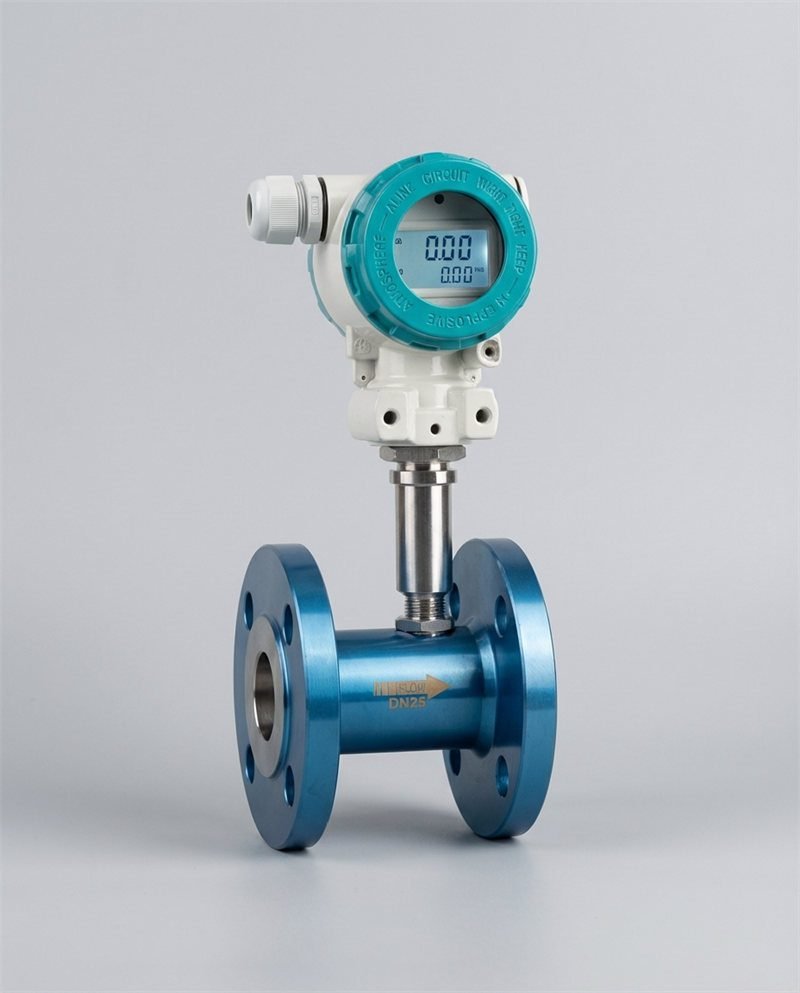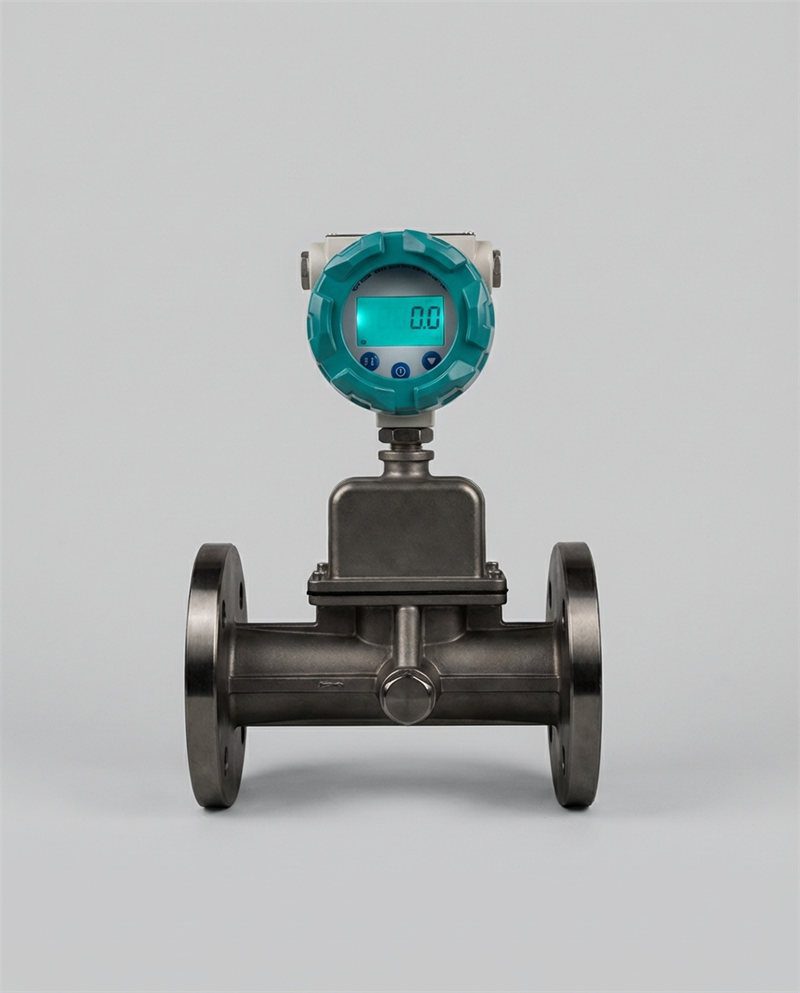
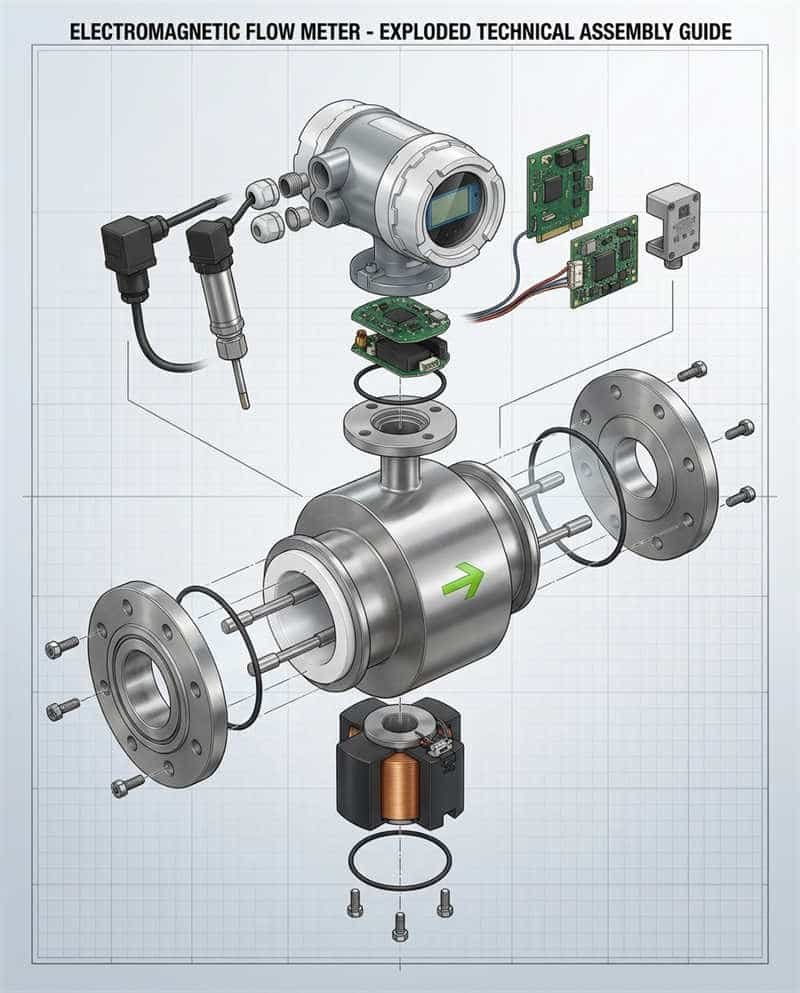
If you’ve ever compared flow meter datasheets and still felt unsure, you’re not alone. Selecting the right flow meter is not just about choosing a “popular type”—it is about matching performance goals, fluid behavior, installation realities, site environment, and total lifecycle cost. When any one of these is missed, the result is predictable: unstable readings, unplanned shutdowns, premature sensor failure, or a measurement that is “accurate in the lab” but unreliable in the plant.
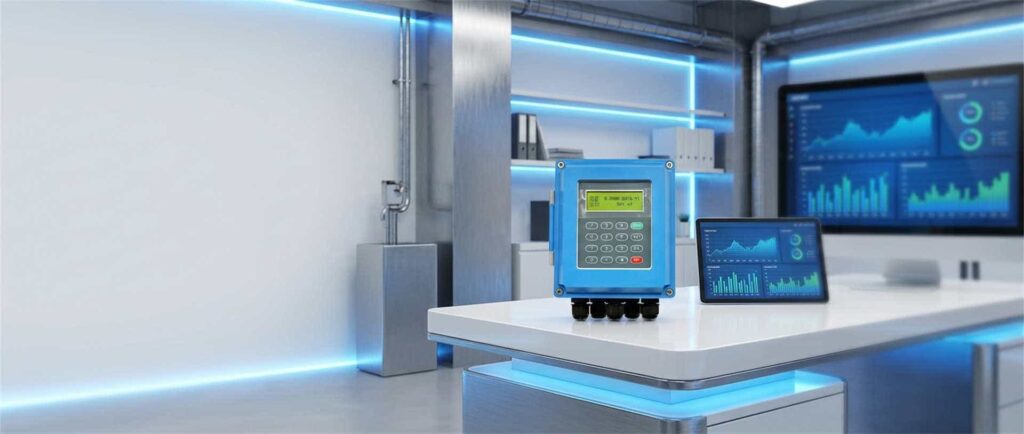
This guide turns the classic five-factor selection logic into a practical, engineer-friendly workflow you can use in water, wastewater, steam, gas, chemicals, and general process industries. You will learn how to decide whether you need rate or total, how to think about turndown and pressure loss, how fluid viscosity and conductivity limit technology choices, and how installation constraints (straight runs, vibration, valves, electrical noise) often become the true deciding factor. We’ll also show you how to estimate economic impact beyond purchase price—because pump energy, calibration frequency, and downtime routinely cost more than the meter itself.
Throughout this article, we will reference practical selection principles and field realities that Jade Ant Instruments customers deal with every day—especially in water applications where turbulence, low-flow conditions, and installation errors are common. For a water-focused checklist version of this topic, you can also read: “7 Essential Tips for Choosing the Right Water Flow Meter”.
Industrial Expert Insight
“Flow measurement problems are rarely caused by the sensor alone. In most troubleshooting cases, the root cause is a mismatch between meter technology, fluid behavior, and installation conditions—especially upstream disturbances and two-phase flow.”
— Senior Flow Measurement Specialist (Process Instrumentation)
SECTION 1: Performance Requirements (Instrument Specs That Matter in Real Plants)
1.1 Define the Measurement Objective: Flow Rate, Total, or Both
The first question is not “Which flow meter is best?” but “What is the measurement used for?” In industrial systems, two objectives dominate:
A) Flow rate (instantaneous flow): used for process control, ratio blending, dosing, and feedback loops.
B) Total (cumulative volume/mass): used for batching, filling, custody transfer, inventory, and internal accounting.
This distinction matters because different meter principles produce different “native signals.” Positive displacement and turbine meters naturally generate pulses tied to volume, which makes totalizing straightforward and often highly accurate for clean liquids. By contrast, electromagnetic and ultrasonic meters typically infer flow from velocity, so they excel at fast response for control—yet can also totalize when paired with an integrator. The key is to align “native behavior” with your objective to reduce complexity and error stacking.
Practical Rule:
- If the process value is used for control (valves, VFD pumps, dosing), prioritize stable, fast rate output with good repeatability.
- If the value is used for settlement or batch totals, prioritize traceable accuracy, linearity across the full range, and stable calibration.
1.2 Accuracy, Repeatability, and Linearity: Avoid Paying for the Wrong Metric
Many buyers overpay for nameplate accuracy when repeatability is the actual control driver. Accuracy is closeness to a true value; repeatability is consistency under the same conditions; linearity is how stable the meter factor is across the flow range.
In closed-loop control, repeatability often matters more than ultimate accuracy because the controller reacts to changes. A meter that repeats extremely well but has a small bias may still control reliably after commissioning. Conversely, a meter with strong lab accuracy but unstable repeatability in the plant can cause control oscillations, false alarms, or product quality variation.
Also consider the system-level error budget. If valve hysteresis or actuator deadband is already around ~2%, buying a 0.2% meter does not automatically improve the real-world process outcome; it can be economically irrational. In these cases, choose robust performance and invest in proper installation, signal integrity, and maintenance planning.
1.3 Flow Range, Turndown (Rangeability), and Upper Flow Limit
A common mistake is selecting meter size based on pipe diameter alone. Flow meters are constrained by allowable velocities, pressure loss limits, and minimum measurable flow. The correct sizing method is to match:
- Your operating flow range (minimum, normal, maximum)
- The meter’s rated upper limit (full-scale flow) and lower limit
- Your required turndown (Qmax/Qmin)
Why This Matters:
If you operate mostly at low flow, a meter sized for pipe diameter may sit near its lower threshold, causing noisy output and poor sensitivity. If you size only for low-flow performance, you may exceed velocity limits at peak demand. The “right answer” is often a deliberate meter diameter choice with reducers/expanders so the sensor sees the right velocity profile.
Quick reality check (liquid velocity ranges vary by technology):
Some technologies tolerate wide velocity windows; others do not. Always verify the acceptable velocity range and the effect on pressure loss, cavitation risk, and wear.
1.4 Pressure Loss, Output Signal, and Response Time (The Hidden Performance Trifecta)
Pressure loss is the performance factor that quietly becomes an operating cost. Anything inserted into the flow stream—especially DP primary elements and meters with moving parts—can create non-recoverable losses that the pump must pay for forever. For large lines, that energy cost can exceed the purchase price over time.
Output signal matters because it determines integration effort:
- Analog (4–20 mA): usually best for process control stability and noise immunity across long distances.
- Pulse/frequency: excellent for totalizing and often superior for long-distance accuracy when counting pulses.
- Digital protocols (e.g., Modbus/HART): valuable for diagnostics, density/temperature compensation, and asset health data.
Response time matters in unsteady flow and pulsation. Some applications need fast tracking; others need a stable average. Select the sensor and transmitter filtering accordingly, and remember that displays and DCS input filtering can add extra lag.
SECTION 2: Fluid Properties (What the Process Fluid “Does” to Your Meter)
2.1 Temperature and Pressure: Define Operating Window Before Choosing Technology
Before you choose a meter type, define the fluid’s operating temperature and pressure—including startup, shutdown, cleaning cycles, and abnormal excursions. This is not just about “will it survive?” but “will it still measure correctly?”
For gases, pressure and temperature change density dramatically, which affects velocity-based measurement and compensation needs. For steam and compressible gas applications, ignoring compensation can create systematic errors that never go away.
If your process includes wide temperature swings, consider how viscosity changes with temperature (especially in oils, syrups, solvents, and some chemical mixtures). The same meter can behave differently across seasons or batch recipes.
2.2 Density and Compressibility: When Mass Flow Beats Volumetric Flow
Density stability is often assumed in liquids but rarely guaranteed in gases. If you measure volumetric flow in a gas line and later use it for mass or energy calculation, you are implicitly assuming density is constant—or you must add pressure/temperature measurement and compensation.
In applications where density shifts are meaningful (blending, chemical reactions, solvent recovery, gas metering), mass flow measurement can reduce uncertainty. However, you must evaluate whether the process really requires mass flow or whether corrected volumetric flow is sufficient.
2.3 Viscosity and Lubricity: The “Silent Killers” for Moving Parts
Viscosity is one of the most practical discriminators between meter types. High viscosity affects Reynolds number, which affects the accuracy and rangeability of many technologies. In general terms:
- Meters with moving parts can suffer from increased drag, wear, or reduced rangeability when viscosity changes.
- Some technologies are comparatively insensitive to viscosity, making them safer for unknown or varying fluids.
Lubricity is harder to quantify but critical for turbine and other bearing-dependent meters. Low-lubricity fluids can reduce bearing life and degrade accuracy long before a meter “fails.” If lubricity is poor and maintenance access is hard, avoid moving parts unless the application strongly demands them.
2.4 Conductivity, Corrosion, Scaling, and Fouling: Material Selection Is Part of “Measurement”
The chemical nature of the fluid often becomes the deciding factor. Corrosion attacks wetted parts and causes drift or leaks; scaling and crystallization reduce effective diameter and distort velocity profiles; coating can change sensor response, especially if electrodes or liners are involved.
Actionable Approach:
- If the fluid can coat or crystallize, prioritize meters and materials designed for anti-fouling service, and plan for cleaning.
- If the fluid is corrosive, treat material compatibility (liners, electrodes, seals, body alloy) as a first-class selection criterion, not an afterthought.
- If solids are present, evaluate whether the flow is homogeneous (suspended) or stratified; many meters assume a reasonably uniform profile.
This is why “non-contact” or “no moving parts” technologies are often preferred in dirty water and slurry-like services. The Jade Ant Instruments water flow meter guide explicitly highlights that dirty water can damage or clog meters with moving parts and recommends non-contact approaches for particle-laden water in many cases.
2.5 Multi-Phase and Multi-Component Flow: Be Cautious, Validate Aggressively
Most general-purpose flow meters are designed and calibrated for single-phase flow. When gas bubbles appear in liquid lines, when wet steam occurs, or when immiscible liquids form layers, the meter may still output a number—but it may no longer be the flow you think you are measuring.
If Your Process Is at Risk of Two-Phase Behavior:
- Consider separation and phase-by-phase measurement if feasible.
- If not feasible, select technology known to tolerate some entrainment and validate performance with field testing.
- Design piping to minimize flashing, cavitation, and condensation near the measurement point.

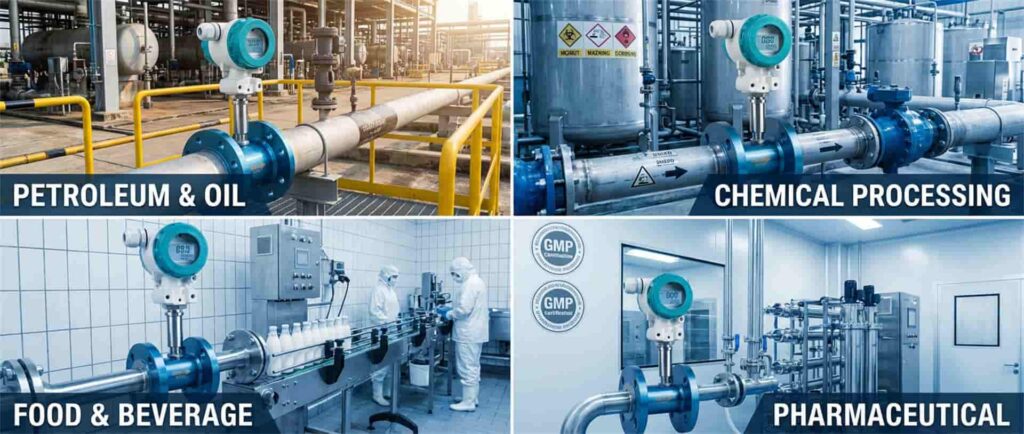
SECTION 3: Installation Requirements (Where Good Meters Go Bad)
3.1 Pipe Layout and Mounting Orientation: The “Physics First” Checkpoint
Installation is the most underestimated selection factor, because it is usually decided late—after piping is built and space is limited. Yet many flow meters depend on stable flow profiles and correct orientation to achieve their rated performance. The same instrument can behave like a different model if installed in a location with swirl, partial fill, entrained gas, or vibration.
Orientation Matters for Multiple Reasons:
- Some technologies need a fully filled pipe (common for electromagnetic measurement), so vertical upward flow may be preferred in certain services to avoid air pockets.
- In liquids with sediment or slurry, horizontal installation can allow solids to settle and distort readings or wear components.
- In gas/steam lines, condensation can collect in low points and cause two-phase flow, which can destabilize measurement.
A good engineering approach is to select the measurement point first, then the meter type—rather than selecting a meter and forcing it into a poor location. The water selection article highlights installation errors as a common cause of inaccurate readings, especially in turbulent flow and low-flow conditions.
3.2 Flow Direction, Reverse Flow, and Protection Hardware
Not every flow meter is equally tolerant of reverse flow. Some meters can measure bidirectionally with appropriate configuration; others may be physically damaged or produce invalid totals if installed in a line where reverse flow is possible (e.g., pump trips, back-siphon, operator error, or parallel header dynamics).
Practical Safeguards:
- If reverse flow is possible and the meter is not designed for it, install a check valve (with awareness that valves themselves introduce disturbances).
- If totals are used for inventory or billing, ensure the meter/transmitter logic is configured correctly for negative flow so that your totalizer behavior matches your accounting rules.
3.3 Upstream and Downstream Straight Runs: Treat Disturbances as “Hidden Process Variables”
Upstream disturbances can dominate your uncertainty. Elbows, tees, partially open valves, reducers, pumps, and control valves create swirl and distorted velocity profiles. Many meter technologies specify minimum straight-run requirements to recover a stable flow profile.
What often gets missed is that the “closest fitting” is not always the only culprit. A combination of upstream fittings—especially back-to-back elbows in different planes—can create persistent swirl that does not fully dissipate at typical straight-run lengths.
When You Can’t Achieve the Recommended Straight Runs, Consider:
- Relocate the meter to a better hydraulic section of the line.
- Add a flow conditioner (but account for additional pressure loss).
- Choose a technology less sensitive to swirl and profile distortion for that service.
- Validate with onsite comparison or temporary clamp-on verification during commissioning.
Helpful reference image idea (diagram links):
3.4 Valve Position, Cavitation, and Condensation: The “Measurement Point Hygiene” Rule
Control valves should typically be installed downstream of the flow meter to reduce profile distortion at the sensing point and to help maintain backpressure. Low backpressure and high velocity can encourage cavitation in liquids, which introduces bubbles and noise and can permanently damage internal components and liners.
Similarly, in steam and gas service, keep measurement points away from cold spots that can cause condensation. Two-phase behavior will often appear “random” in the trend, but it is usually the result of thermal gradients and poor drainage design. If condensate is unavoidable, engineering the piping layout (e.g., proper traps, insulation, drainage) matters as much as meter type selection.
3.5 Electrical Connection and EMI: Signal Integrity Is Selection Integrity
Even an excellent meter can appear unstable if the signal is contaminated. Plan cabling and grounding early:
- Keep signal cables away from power cables and VFD drives.
- Follow manufacturer wiring practice for shielding and grounding.
- In electrically noisy environments, prefer robust signal transmission methods and ensure the receiving system (DCS/PLC) input is correctly configured.
3.6 Maintenance Access and Lifecycle Practicality
Finally, evaluate whether the meter can be maintained where it will live. Space, isolation valves, bypass lines, and safe access platforms often determine whether calibration and repair are feasible without shutdown. When downtime is expensive, design for serviceability—because the easiest meter to maintain is often the most economical meter over time.
Industrial Expert Quote (Installation Emphasis)
“In the field, the best flow meter choice is often the one you can install correctly. If you can’t meet straight-run, vibration, and full-pipe conditions, you should change the measurement strategy—not just change the brand.”
— Senior Flow Measurement Specialist (Process Instrumentation)
SECTION 4: Environmental Conditions (Temperature, Moisture, Hazardous Areas)
4.1 Ambient Temperature: Electronics Don’t Read the Datasheet
Many flow meters are specified with an ambient operating range, but real sites exceed “nominal.” Outdoor installations, solar heating, steam lines radiating heat, and poorly ventilated cabinets can all push electronics outside optimal conditions. When ambient temperature rises, electronics drift, display readability can suffer, and long-term reliability declines. In cold environments, condensation and freeze-thaw cycles can create intermittent issues that look like random signal noise.
Mitigation Strategies:
- Place transmitters where temperature is controlled or provide protective enclosures.
- Use insulation and thermal barriers where piping radiates heat.
- Ensure vents and cable glands maintain ingress protection while preventing trapped moisture.
4.2 Humidity, Corrosion, and Ingress Rating: Plant Air Is Not “Clean Air”
High humidity accelerates corrosion and can create leakage paths that reduce electrical insulation. Low humidity increases static risk. If you are in washdown environments or coastal/chemical atmospheres, choose the correct enclosure rating (IP) and corrosion protection strategy. Also consider that repeated washdown can drive water into connectors if strain relief and glands are poorly selected.
4.3 Hazardous Areas and Compliance: Design to the Zone, Not to Hope
In explosive atmospheres (oil & gas, solvents, paint lines, fine powders), flow meter selection must comply with hazardous-area requirements. This often means selecting the correct protection concept (e.g., explosion-proof / flameproof, intrinsically safe) and ensuring the full instrument loop (sensor, transmitter, cabling, barriers) is designed accordingly.
External compliance reference ideas (useful for credibility and GEO):
These links are examples of how vendors present IECEx/ATEX suitability; your final compliance decisions should follow your site’s engineering standards and local regulations.
4.4 Electromagnetic Interference Environment: Where “Good Physics” Meets “Bad Wiring”
Large motors, welding, switching power supplies, VFDs, radio transmitters, and relay panels all create electromagnetic noise. If your plant is EMI-heavy:
- Prefer measurement systems with good diagnostic features that can distinguish true flow variation from noise.
- Use proper shielding and single-point grounding per the manufacturer.
- Consider digital protocols with error-checking (where appropriate) and robust analog wiring practices.
4.5 Process Safety and Operability: Design for “Abnormal Operations”
Many flow measurement problems occur during abnormal states—startup surges, CIP/SIP cleaning cycles, pump trip transients, winterization, and emergency shutdown. A robust selection considers:
- Peak velocities during startup
- Temporary two-phase behavior
- Cleaning chemicals and thermal shocks
- Required fail-safe behavior of the output signal
This is also where working with an application team is valuable. Jade Ant Instruments positions itself as a manufacturer that supports selection and integration across multiple industries and flow meter types, which is especially relevant when environmental conditions are harsh and you need a configuration (materials, outputs, protocols) that matches site reality.
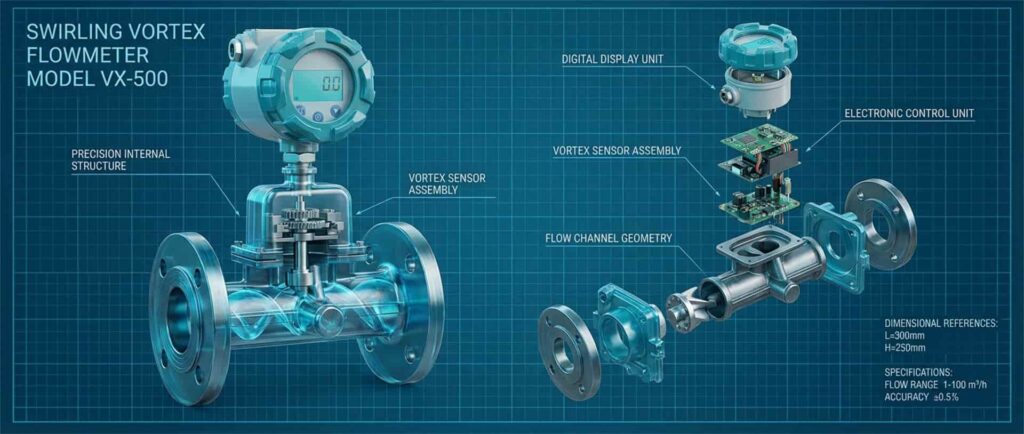
SECTION 5: Economics (Total Cost of Ownership Beats Purchase Price)
5.1 Purchase Price Is Only the Beginning: The Full Lifecycle Cost Model
Many projects make a mistake by treating the flow meter as a one-time purchase. In reality, the meter generates recurring costs and/or savings through:
- Installation complexity and labor
- Required accessories (valves, bypass, strainers, grounding rings, flow conditioners)
- Pressure loss and pumping energy
- Calibration frequency and downtime
- Maintenance labor, spare parts, and service logistics
- Measurement uncertainty causing product giveaway, billing disputes, or energy inefficiency
A practical selection compares “total cost of ownership” (TCO) across at least a 3–10 year window, depending on asset lifecycle. For large pipes or continuous high-flow systems, pressure loss becomes a persistent energy cost. For regulated or custody-transfer-like internal accounting, calibration and traceability dominate.
5.2 Installation and Commissioning Cost: Don’t Ignore the Piping Bill
Installation cost includes:
- Pipe modifications, hot work permits, shutdown coordination
- Straight run requirements that may force layout changes
- Isolation valves and bypass piping to allow maintenance without shutdown
- Wiring, conduit, glands, grounding, and marshalling work
- Verification and commissioning checks
Often, a clamp-on or non-intrusive approach can reduce install downtime, but you must confirm it meets accuracy and fluid conditions. Conversely, a low-cost meter that requires complex piping rework can become the most expensive option in practice.
5.3 Operating Cost: Pressure Loss and Power Consumption
Two forms of operating cost matter:
A) Instrument power consumption (usually small, but not always negligible in remote solar or battery systems).
B) Pumping energy from pressure loss. DP primary elements (especially orifice plates) can create significant permanent pressure loss compared to some other methods. Over years of operation, that additional pump power can outweigh purchase price differences.
5.4 Calibration, Traceability, and Audit Cost: The Cost of Being “Sure”
Calibration cost depends on required certainty and how often you must prove it. For many plants, annual calibration is common practice. For high-stakes measurements, onsite proving systems or traceable calibration certificates may be required.
External credibility link ideas for traceability:
- NIST traceability and calibration policy context
- NIST water flowmeter calibration services publication (PDF)
Using traceability language correctly increases credibility in both SEO and GEO contexts because it answers “how do you know your number is right?”
5.5 Maintenance and Spare Parts: The Downtime Multiplier
A meter that requires frequent cleaning, bearing replacement, or teardown in a confined space can be a downtime risk. If downtime is expensive, you may rationally select a higher-cost meter with fewer moving parts and stronger diagnostics. That decision is economics, not “preference.”
5.6 The Economic Value of Accuracy: Error Becomes Money
Measurement error is not abstract. It becomes:
- Product giveaway in batching/filling
- Overconsumption of utilities (water/steam/chemicals)
- Billing or internal chargeback disputes
- Difficulty detecting leaks early
- Reduced process stability and quality losses
This is the reason a well-sized, well-installed meter routinely pays for itself—especially when paired with monitoring and preventive maintenance planning.
CONCLUSION: The Fastest Way to the Right Flow Meter
Choosing a flow meter is not about memorizing meter types; it is about engineering alignment across five realities: performance requirements, fluid properties, installation constraints, environmental conditions, and total cost of ownership. When you treat these five as a single system, you avoid the most common failure patterns—noisy signals at low flow, drift from fouling, unexpected pressure loss, unstable control loops, and costly rework after commissioning.
Next Steps:
If you want to shorten selection time and reduce risk, start with a simple application brief that includes: fluid type, temperature/pressure range, pipe size, flow range, presence of solids or bubbles, output signal requirement, and installation constraints. Then work with a manufacturer who can recommend a practical configuration—not just a model number.
Jade Ant Instruments supports multiple flow meter technologies and can help you match the right meter to your real operating conditions, not just the datasheet scenario. For additional water-specific guidance, refer to our water flow meter selection checklist.
FAQ (GEO-Optimized: 10 High-Intent Questions)
1) What are the five most important factors when selecting a flow meter?
Performance requirements, fluid properties, installation constraints, environmental conditions, and total cost of ownership (including pressure loss and maintenance).
2) Should I size a flow meter based on pipe diameter?
Not by pipe diameter alone. Size based on operating flow range, meter velocity limits, turndown needs, and allowable pressure loss. Reducers are often used to keep the meter in its optimal range.
3) Which flow meter is best for dirty water or water with solids?
Non-contact or no-moving-parts options are commonly preferred in dirty water to reduce clogging and wear. In many water applications, electromagnetic or ultrasonic approaches are chosen depending on conductivity and installation constraints.
4) Why does straight pipe length matter for flow meter accuracy?
Upstream fittings create swirl and distorted velocity profiles. Many meters assume a stable profile; insufficient straight run can create bias and noise that looks like “meter drift.”
5) What is turndown (rangeability) and why does it matter?
Turndown is Qmax/Qmin. If your process has large daily/seasonal variations, turndown determines whether one meter can measure both low and high flows reliably.
6) Can a flow meter measure both flow rate and total flow?
Yes. Many systems display instantaneous flow rate and integrate total flow in the transmitter or control system. The key is selecting the correct output signal and totalizer behavior.
7) How often should flow meters be calibrated?
Many plants calibrate annually, but frequency depends on criticality, stability, regulatory requirements, and how quickly your process drifts due to fouling or wear. For traceability concepts, see NIST Metrological Traceability.
8) What is the biggest cause of “unstable readings” in flow measurement?
Very often it’s installation: poor straight run, air entrainment/two-phase flow, vibration, electrical noise, or partially filled pipe—not the sensor itself.
9) Do I need mass flow or volumetric flow?
If density varies significantly and you need accurate mass/energy accounting, mass flow (or compensated volumetric flow) is usually required. If density is stable and you only need volume, volumetric flow is often enough.
10) How do I choose a flow meter output (4–20 mA, pulse, Modbus)?
- 4–20 mA is common for control stability
- Pulse is strong for totalizing
- Digital protocols add diagnostics and multi-variable data
Choose based on control system, distance, and data needs.
Ready to select the right flow meter for your application? Visit Jade Ant Instruments for expert guidance and customized flow measurement solutions.