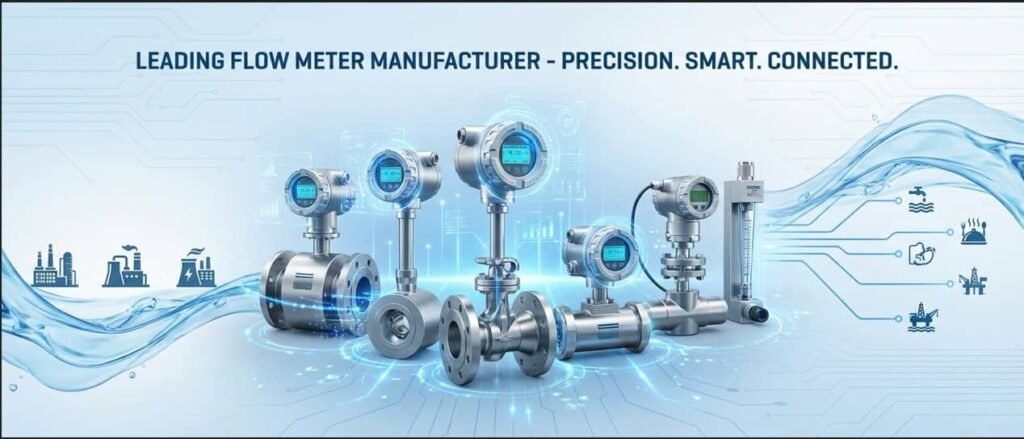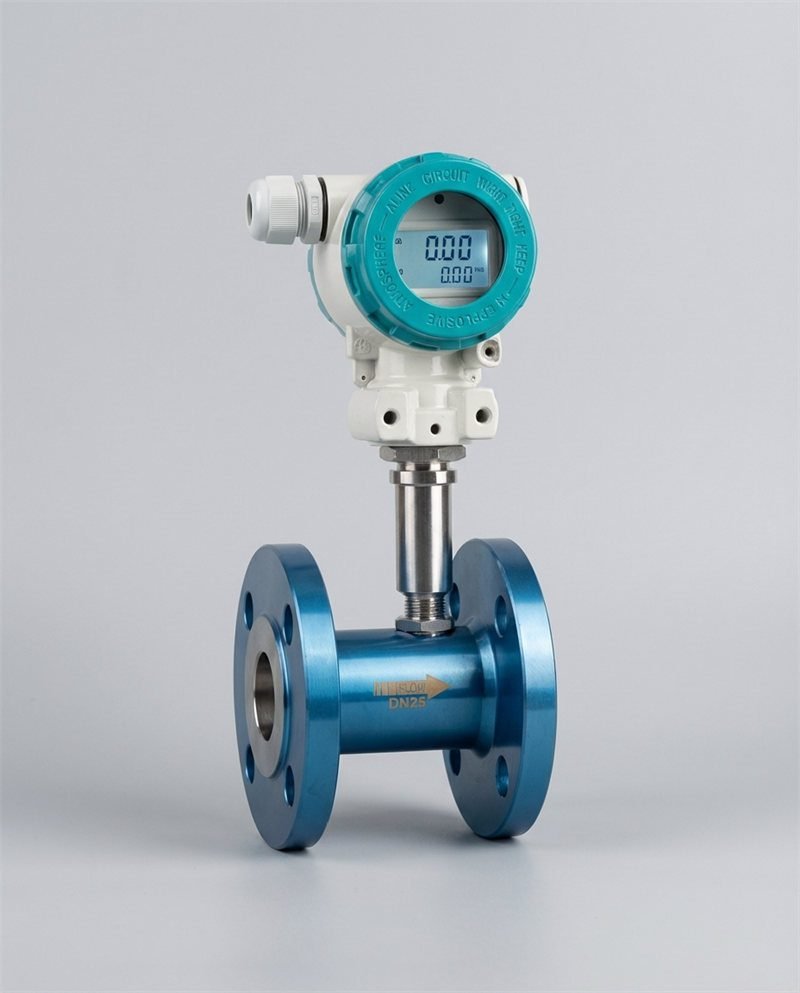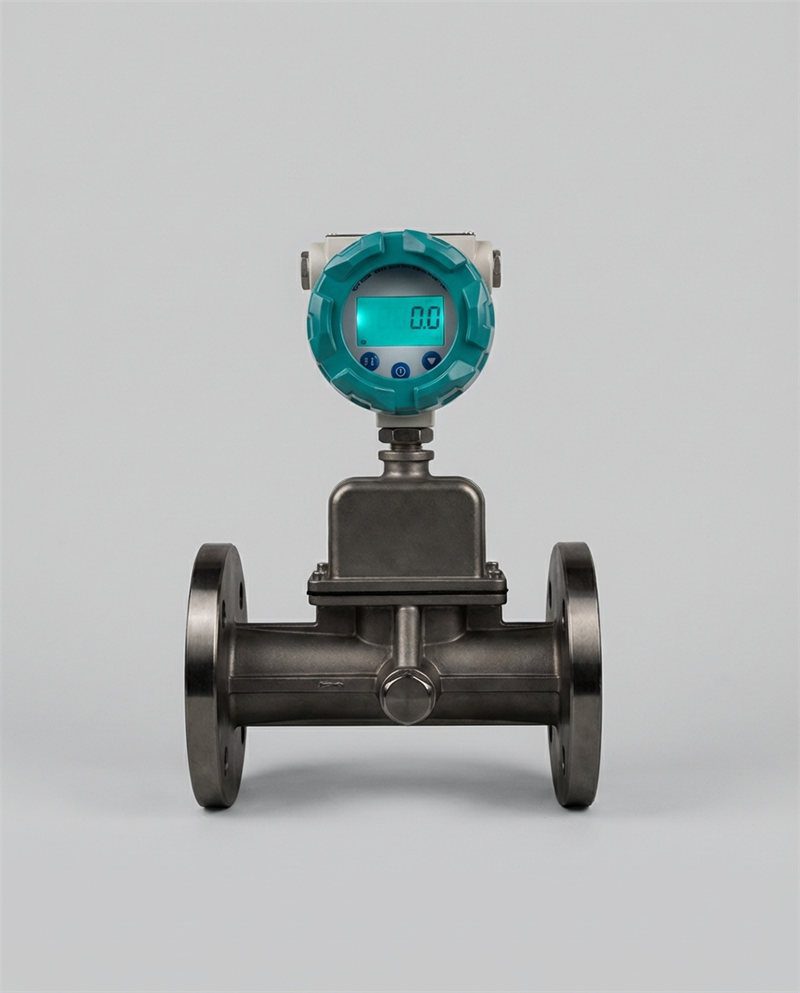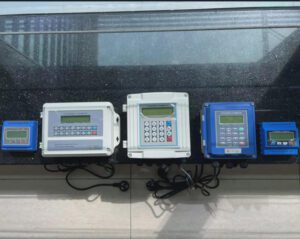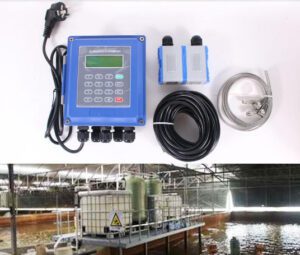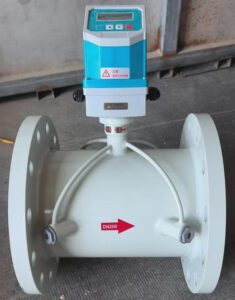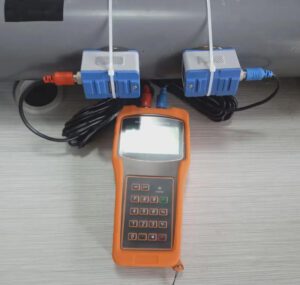

Leading enterprises are replacing legacy measurement systems with ultrasonic solutions, delivering ±0.5% accuracy, significant maintenance savings, and measurable ROI improvements that justify the investment.
 Image credit: Forest Guardians, via Wikimedia Commons (CC BY-SA 3.0)
The Measurement Crisis Behind the Switch
Procurement teams at large industrial operators rarely make wholesale equipment changes for cosmetic reasons. When Fortune 500 manufacturers, refiners, and utilities start replacing thousands of installed flow meters across dozens of plants, it’s because the old measurement infrastructure has become a quantifiable liability rather than a neutral piece of hardware.
That is exactly what has been happening across chemical processing, oil and gas, food and beverage, water utilities, and pharmaceutical manufacturing over the past several years. Legacy mechanical meters, orifice plates, and aging turbine and positive-displacement devices are being pulled out and replaced with ultrasonic flow meters, a technology that measures fluid velocity using sound waves instead of moving parts.
For distributors and instrumentation agents who sell into these accounts, understanding why this shift is happening, and being able to quantify it for a client’s finance team, is quickly becoming a core competency rather than a nice-to-have. This guide walks through the cost drivers, the accuracy math, the ROI models, and the practical objections you’ll need to answer when a procurement committee asks “why now.”
1. The Hidden Costs of Traditional Flow Meter Systems
Understanding Total Cost of Ownership for Legacy Solutions
A flow meter’s purchase price is a small fraction of what it actually costs a plant over its service life. Total cost of ownership, or TCO, is the sum of the purchase price plus installation, calibration, maintenance, spare parts, and the downtime incurred every time the device is serviced or fails. When distributors quote against TCO instead of sticker price, the ultrasonic case becomes much easier to make.
Mechanical meters such as turbine, positive-displacement, and vane meters rely on internal moving parts that sit directly in the flow stream. Bearings wear. Rotors pick up scale, wax, or fouling deposits. Seals degrade from chemical exposure and thermal cycling. Every one of those failure modes eventually shows up as a maintenance ticket, and industry benchmarking consistently places mechanical meter maintenance overhead in the range of 15% to 25% of the original equipment cost every year. Over a ten-year service life, that overhead alone can exceed the price of the meter itself.
Why Maintenance Expenses Spiral
Three cost categories compound on top of each other in a mechanical meter fleet. First, calibration drift means the meter’s readings slowly diverge from actual flow as bearings and rotors wear, which forces regular recalibration to stay within tolerance. Second, replacement cycles mean that bearings, seals, and sometimes entire rotor assemblies need periodic swapping, typically every 18 to 36 months in moderate-duty service and considerably more often in abrasive or corrosive applications. Third, every maintenance event requires a qualified technician, often a contractor, plus the inventory carrying cost of keeping spare rotors, seals, and bearing kits on the shelf for dozens of meter models across a multi-site operation.
A single mid-size chemical plant running 40 to 60 mechanical meters can easily spend $150,000 to $300,000 per year just keeping those meters in calibration and running, before counting the cost of the downtime those maintenance events cause.
The Downtime Problem
Downtime is where the real money disappears. Servicing an inline mechanical meter usually means isolating the pipe section, draining or purging the line, pulling the meter, and reinstalling it, a process that can take a production line offline for hours. In continuous-process industries like chemical manufacturing, refining, or food processing, an hour of unplanned downtime frequently costs more than the flow meter itself.
One manufacturing facility documented in a 2024 process improvement review reduced meter-related downtime by 73% within the first year of switching to clamp-on ultrasonic meters, simply because the new meters required no line breaks for installation or servicing. That single change freed up enough production capacity to absorb a seasonal demand spike without adding a shift.
2. Why Accuracy Matters: The ±0.5% Advantage
How Ultrasonic Technology Achieves Superior Precision
An ultrasonic flow meter, sometimes called a transit-time meter, works by sending sound pulses diagonally across a pipe in both the upstream and downstream direction. Because sound travels slightly faster when moving with the flow and slightly slower moving against it, the meter calculates fluid velocity from that timing difference, called the transit-time difference. There is no rotor, no bearing, and in clamp-on configurations, no contact with the fluid at all. That absence of moving parts is the entire reason accuracy holds steady over the meter’s life instead of drifting the way a mechanical meter does.
Multi-path ultrasonic meters, which use four to eight sound paths across the pipe cross-section instead of just one, routinely achieve accuracy in the 0.15% to 0.5% of reading range. Traditional mechanical and differential-pressure meters, by comparison, typically run 1.5% to 3% once wear and installation effects are accounted for, and that error tends to grow over time rather than staying fixed.
What ±0.5% Accuracy Is Actually Worth
The abstraction of “half a percent” becomes concrete quickly once you apply it to real volumes. A facility measuring 1,000,000 gallons per day with a ±2% error margin has an uncertainty band of roughly 20,000 gallons daily, compared to just 5,000 gallons at ±0.5%. For a specialty chemical operation, that 15,000-gallon daily gap, multiplied by product value, frequently runs into tens of thousands of dollars a month in unaccounted product, batch rework, or regulatory reporting discrepancies.
A pharmaceutical manufacturer that migrated its formulation dosing lines from mechanical to ultrasonic metering documented an estimated $2.3 million in annual savings, driven mostly by eliminated batch failures and reduced product giveaway on ingredient dosing where dosing tolerances had previously required over-filling to stay compliant with minimum-content regulations.
Accuracy Gains Across Industries
The accuracy advantage plays out differently depending on the sector. In chemical processing, tighter dosing precision reduces batch failures and rework, which is often the single largest quality cost line item on a plant’s P&L. In oil and gas custody transfer, where ownership of product changes hands based on the meter reading, even fractional accuracy improvements translate directly into disputed-volume reductions between buyer and seller, and multi-path ultrasonic meters that comply with API MPMS Chapter 5.8 and Отчет AGA № 9 are now the default specification for new fiscal metering points. In food and beverage, consistent accuracy supports FDA compliance documentation without the recalibration lag that mechanical meters introduce between product changeovers. In municipal water utilities, ultrasonic metering on distribution mains has been credited with reducing unaccounted-for water losses by 8% to 12%, a figure with direct budget implications given how tightly utilities are scrutinized on non-revenue water.
3. ROI Metrics: The Financial Case for Ultrasonic Conversion
Direct Cost Savings Breakdown
The capital cost of an ultrasonic meter is typically 20% to 40% higher than a comparable mechanical meter. That premium disappears quickly once ongoing costs are factored in. Maintenance costs on ultrasonic meters typically run 60% to 80% lower annually than on mechanical alternatives, largely because there is nothing mechanical to wear out. Clamp-on meters, which mount to the outside of an existing pipe, add zero calibration drift from wetted-parts wear because the transducers never touch the process fluid, and periodic verification replaces the recalibration cycles that mechanical meters require.
The table below illustrates a representative ten-year total cost of ownership comparison for a DN100 process line, based on compiled industry maintenance and field-service data.
| Категория затрат | Clamp-On Ultrasonic Meter | Turbine (Mechanical) Meter |
|---|---|---|
| Покупная цена | $3,500 | $2,200 |
| Установка | $800 (no pipe cutting) | $2,500 (line isolation required) |
| Calibration, 10-year total | $600 | $2,400 |
| Maintenance events, 10-year total | 1 (couplant check) | 4-5 |
| Maintenance cost, 10-year total | $250 | $9,500 |
| Downtime cost exposure | Минимальный | $4,000-6,000+ |
| Estimated 10-year TCO | ~$12,500 | ~$28,000 |
Figures compiled from industry field-maintenance benchmarking and manufacturer service records; actual costs vary by application and pipe size.
Indirect Revenue Generation
Beyond direct cost avoidance, accurate metering compounds into revenue-side benefits that are easy to overlook in a pure cost comparison. Better process control from real-time, drift-free flow data allows operators to run closer to optimal setpoints instead of padding for measurement uncertainty. Inventory accuracy improves because raw material and finished product volumes reconcile more closely with what was actually produced or consumed. And regulatory compliance risk drops because audit trails and calibration records from ultrasonic systems tend to be more defensible than mechanical meter logs that show drift between service intervals.
A Fortune 500 petrochemical company that converted its plant-wide custody transfer and process metering to ultrasonic technology reported a 340% return on investment over three years, driven by the combination of maintenance savings, reduced product loss, and avoided downtime across more than 200 metering points.
Payback Period Analysis
Payback periods for ultrasonic conversion typically fall between 18 and 36 months, depending on application intensity and the cost profile of the meter being replaced. High-throughput operations with expensive product streams, custody transfer points, or aggressive maintenance schedules on the incumbent meters tend to see payback at the faster end of that range. This is the number distributors should lead with in any capital-budget conversation, because it converts a large upfront number into a timeframe a CFO can model against depreciation schedules.
4. The Maintenance Revolution: From Reactive to Predictive
 Image credit: Bitjungle, via Wikimedia Commons (CC BY-SA 3.0)
The Maintenance-Free Advantage
Because ultrasonic meters have no rotor, no bearing, and in clamp-on configurations no wetted parts at all, there is simply nothing inside the device to wear out under normal operation. This is the single biggest structural difference between ultrasonic and mechanical technology, and it is what drives every downstream benefit in this section. Calibration drift, which is caused by physical wear changing the relationship between rotation speed and flow rate, does not occur in a device with no moving parts to wear.
Smart Diagnostics and Remote Monitoring
Modern ultrasonic transmitters continuously self-check signal strength, signal quality, and internal diagnostics, flagging anomalies like partial signal loss from air entrainment or transducer fouling long before they would cause a measurement failure. This shifts maintenance from a reactive, calendar-based model to a predictive one, where technicians respond to actual conditions instead of servicing equipment on a fixed schedule regardless of need.
A municipal water utility that deployed ultrasonic meters with remote diagnostic capability across its distribution network reported an 85% reduction in service calls within the first eighteen months, because field technicians only needed to visit meters that the diagnostic system had actually flagged, rather than performing routine inspections on every unit.
Inventory and Supply Chain Simplification
Mechanical meter fleets require a warehouse of spare bearings, seals, rotors, and gaskets sized to match every meter model and size in service, an inventory carrying cost that grows every time a plant adds a new meter type. Ultrasonic meters largely eliminate that burden. There are no rotating wear parts to stock, procurement simplifies to occasional transducer or electronics module replacement, and the expected service life of 15 to 20 years compares favorably to the 5 to 8 years typical of mechanical meters in moderate-duty service, meaning fewer replacement cycles across the asset’s lifetime and a more predictable capital planning horizon.
5. Case Study Deep Dive: Fortune 500 Manufacturing Transformation
The Challenge
A Fortune 500 industrial manufacturer operating a high-volume chemical blending facility was running its custody transfer and process metering on a mix of aging turbine and orifice-plate meters, some in service for over fifteen years. Accuracy had drifted to roughly ±1.8% across the fleet, well outside the tolerance the plant’s quality system required for batch consistency, and maintenance costs had climbed steadily as parts availability for the oldest meter models became harder to source.
Competitive pressure from newer entrants running tighter cost structures forced the operations team to build a business case for a plant-wide metering upgrade rather than continuing to patch the existing fleet meter by meter.
The Solution
The company ran a phased rollout, starting with the highest-value custody transfer points and process-critical dosing lines, then expanding to general process monitoring points over eighteen months. Technology selection prioritized multi-path inline ultrasonic meters for fiscal and dosing applications, with clamp-on units specified for retrofit points where taking a line offline for a spool-piece installation would have been prohibitively disruptive. Integration with the existing SCADA system used standard Modbus TCP connectivity, avoiding the need for protocol converters, and operations staff received structured training on the underlying transit-time measurement principle rather than just button-level operation, which reduced troubleshooting escalations during the transition.
Quantified Results
By the end of the first full year, measured accuracy across the converted fleet had improved from ±1.8% to ±0.5%. Annual maintenance costs dropped by $1.2 million across the plant. Downtime attributable to meter servicing fell by 847 hours in year one alone, freeing production capacity that would otherwise have required capital investment to recover. Product waste from dosing inaccuracy declined by 12%, directly improving batch yield. Over a three-year horizon, the project delivered a 285% return on investment, with the maintenance and yield savings continuing well beyond the initial payback window since the meters carry no scheduled wear-part replacement.
6. Industry-Specific Applications: Where Ultrasonic Excels
Chemical and Petrochemical Processing
Corrosive and aggressive fluids destroy the wetted components of mechanical and even electromagnetic meters over time. Clamp-on ultrasonic transducers never contact the process fluid, eliminating that failure mode entirely, while transducer material options like Hastelloy and titanium extend inline meter compatibility to some of the harshest acid and caustic services in the plant. This is covered in more depth in Jade Ant Instruments’ turbine vs ultrasonic comparison for the chemical industry, which quantifies the lifetime maintenance advantage in aggressive-liquid service.
Нефтегазовая деятельность
Custody transfer metering under API and AGA standards increasingly specifies multi-path ultrasonic technology because measurement uncertainty translates directly into disputed revenue between trading partners. Subsea and remote installations benefit from the absence of moving parts that would otherwise require diver or ROV intervention to service, and modern gas ultrasonic meters apply pressure-temperature-compressibility correction automatically to stay accurate as line conditions vary.
Food and Beverage Manufacturing
Sanitary processing lines cannot tolerate flow devices that introduce dead legs or crevices where product can harbor bacteria. Non-contact clamp-on measurement sidesteps that risk entirely, while rapid changeover between product recipes is supported without the recalibration lag that mechanical meters typically require after a fluid property change.
Управление водными ресурсами и сточными водами
Large-diameter distribution mains, often 24 inches or larger, are prohibitively expensive to retrofit with spool-piece meters. Clamp-on ultrasonic installation on existing pipe avoids the excavation and pipe replacement that would otherwise be required, which is a major reason utilities have driven such a large share of ultrasonic market growth. Non-contact measurement also holds up well in the environments typical of lift stations and treatment plants, where corrosion and biofilm buildup are constant maintenance concerns for wetted-parts instruments.
 Image credit: Dmitry Makeev, via Wikimedia Commons (CC BY-SA 4.0)
Pharmaceutical and Life Sciences
Water-for-injection and purified water systems fall under FDA 21 CFR Part 211 and European GMP Annex 1 rules that prohibit any device introducing contamination risk into validated piping. Clamp-on ultrasonic meters measure through the pipe wall without creating a new wetted connection, which means they can often be added to an existing validated loop without triggering a full revalidation cycle, a detail that matters enormously to a pharmaceutical quality and compliance team evaluating a metering upgrade.
7. Technology Comparison: Ultrasonic vs. Traditional Methods
Distributors positioning ultrasonic technology against incumbent meters need a clear, defensible comparison table they can walk a client through. The table below summarizes the key performance and cost dimensions across the most common industrial flow measurement technologies.
| Технологии | Типичная точность | Движущиеся детали | Перепад давления | Max Temp. (°C) | Best Fit |
|---|---|---|---|---|---|
| Ultrasonic (multi-path inline) | 0.15%-0.5% | Нет | Нет | 250+ | Custody transfer, gas, large pipes |
| Ультразвуковой (накладной) | 1.0%-2.0% | Нет | Нет | 160+ | Retrofit, corrosive fluids, monitoring |
| Кориолис | 0.1%-0.2% | None (vibrating tube) | Высокий | 400 | Mass flow, high-value liquids |
| Электромагнитный | 0.2%-0.5% | Нет | Нет | 180 | Conductive liquids, water/wastewater |
| Турбина | 0.5%-1.0% | Yes (rotor) | Low-moderate | 150 | Clean liquids, low-cost fuel metering |
| Orifice plate (DP) | 1.0%-3.0% | Нет | High (permanent) | 600+ | Gas, steam, well-developed flow |
Installed cost, calibration frequency, and rangeability vary significantly by pipe size and application; figures represent typical field performance rather than laboratory ideals.
The operational takeaway for a distributor’s proposal is straightforward: ultrasonic technology wins on the combination of accuracy, zero pressure drop, and minimal maintenance, while Coriolis remains the reference standard for highest-accuracy mass flow on smaller lines and orifice plates remain the low-cost legacy default in applications where accuracy requirements are loose enough to tolerate the tradeoff. For a deeper technical breakdown across these categories, see the ultrasonic vs magnetic vs turbine flow meter comparison.
8. Implementation Strategy: Guiding Clients Through Transition
Assessment and Planning
Every successful conversion starts with a system audit that maps every existing metering point against its actual accuracy requirement, fluid characteristics, and installation constraints. Not every meter in a plant needs the same level of precision, and matching technology to actual requirement, rather than defaulting to the highest-spec option everywhere, keeps the project’s capital cost proportional to its benefit. ROI modeling should be run per-application rather than as a single blended number, since custody transfer points and high-value dosing lines will show dramatically faster payback than low-criticality monitoring points.
Procurement and Installation
Specification development should explicitly call out installation method (clamp-on, inline, or hot-tap insertion), required accuracy class, communication protocol compatibility, and any hazardous-area certification requirements before quotes go out, since these variables drive most of the price variance between competing bids. Installation timelines differ enormously by method: clamp-on retrofits can often be completed by a two-person crew in under two hours per point with zero process interruption, while inline spool-piece replacement requires planned downtime for pipe cutting and pressure testing.
Integration and Data Management
Most modern ultrasonic transmitters support 4-20mA analog output for universal compatibility, HART for remote diagnostics, and Modbus RTU/TCP for direct SCADA and data historian integration, meaning most plants can integrate new meters into existing control infrastructure without protocol converters. Data migration from legacy systems should preserve historical trend data where possible, since operators use that history to validate that the new readings make sense against known process behavior.
Training and Change Management
Staff training that explains the underlying transit-time or Doppler measurement principle, not just button-level operation, dramatically reduces troubleshooting escalations once the system goes live. Operators who understand why a signal-quality alarm is firing can often resolve it themselves rather than calling for service, which is where much of the long-term maintenance savings actually gets realized in practice.
9. Overcoming Implementation Barriers
“The Upfront Cost Is Too High”
A TCO analysis, not a purchase-price comparison, is the correct framing for this objection. Combined with flexible financing or lease structures and a phased rollout that starts with the highest-ROI applications, the capital hurdle typically resolves once the finance team sees the 18-to-36-month payback window modeled against their actual maintenance spend.
“Our Current System Still Works”
The honest answer is that a mechanical meter running within spec today is on a known drift trajectory. Framing this as a risk-timing question rather than a binary works-or-doesn’t-work question, paired with the regulatory exposure of aging custody transfer equipment, usually reframes the urgency.
“Integration Will Be Too Complex”
Standard protocol support (4-20mA, HART, Modbus) covers the vast majority of existing control system architectures. Proven phased-migration case studies, where a handful of pilot points run in parallel with the legacy system before full cutover, address the risk-aversion underlying this objection more effectively than a technical spec sheet.
“Staff Training Will Be Difficult”
Ultrasonic transmitters are generally simpler to operate day-to-day than mechanical meters, since there is no mechanical calibration to manage, but the transition does require unlearning some mechanical-meter habits. A structured training program covering the measurement principle, not just the interface, closes this gap quickly.
“Measurement Reliability Concerns”
Third-party validation data, warranty structures, and historical field-reliability figures from already-deployed systems are the most persuasive evidence here, particularly when a prospective client can see reliability data from a comparable application in their own industry.
10. Future-Proofing the Measurement Infrastructure
 Image credit: Shivashishpandey35, via Wikimedia Commons (CC BY-SA 4.0)
IoT Integration and Smart Metering
Ultrasonic meters lend themselves naturally to Industry 4.0 integration because their digital measurement principle already produces clean, high-resolution data suitable for cloud analytics and remote monitoring, without the noise and drift that would otherwise complicate predictive-maintenance modeling on a mechanical meter’s output.
Advanced Analytics and Sustainability Reporting
Because ultrasonic diagnostics continuously report signal quality alongside the flow measurement itself, machine-learning-based anomaly detection can flag developing issues, like transducer fouling or entrained air, well before they degrade measurement accuracy. That same data stream increasingly feeds ESG and sustainability reporting requirements, where accurate energy and water consumption metering is now a documentation requirement rather than an optional nice-to-have.
Cybersecurity and Scalability
Modern ultrasonic transmitters support encrypted data transmission and secure authentication in line with industrial cybersecurity frameworks like IEC 62443, and their standard-protocol architecture makes multi-site rollouts straightforward, letting an enterprise standardize on a single meter platform across dozens of facilities rather than managing a patchwork of legacy technologies with inconsistent data formats.
Conclusion: The Inevitable Shift to Ultrasonic Technology
The evidence across chemical processing, oil and gas, food and beverage, water utilities, and pharmaceutical manufacturing points in the same direction. Ultrasonic flow measurement delivers ±0.5% accuracy where mechanical alternatives run 1.5% to 3%, cuts annual maintenance spend by 60% to 80%, and pays back its capital premium within 18 to 36 months in most industrial applications, with 15 to 20 years of low-maintenance service life afterward.
For flow instrumentation distributors and agents, this represents a genuine market opportunity rather than just a product-line update. Enterprise clients are already under pressure to cut operating costs, tighten measurement accuracy, and reduce compliance risk, and ultrasonic technology addresses all three simultaneously. Jade Ant Instruments works directly with distributor and agent partners to provide the technical specification support, OEM/ODM customization, and documentation needed to bring this case to enterprise accounts with confidence, whether the application calls for a clamp-on retrofit or a fiscal-grade multi-path inline installation.
The question your key accounts are asking is no longer whether to move to ultrasonic measurement. It’s when, and with which partner.
Watch: How Ultrasonic Flow Meters Actually Work
https://www.youtube.com/watch?v=avm9vN09C0k
Глоссарий основных терминов
Transit-time measurement: The core ultrasonic measurement principle, calculating fluid velocity from the time difference between sound pulses sent upstream and downstream through the flow. Requires relatively clean fluid; typical accuracy 0.15%-2.0% depending on path count.
Multi-path meter: An inline ultrasonic meter using four to eight sound paths across the pipe to measure the full velocity profile rather than just the centerline. Required for fiscal, custody-transfer-grade accuracy under API and AGA standards.
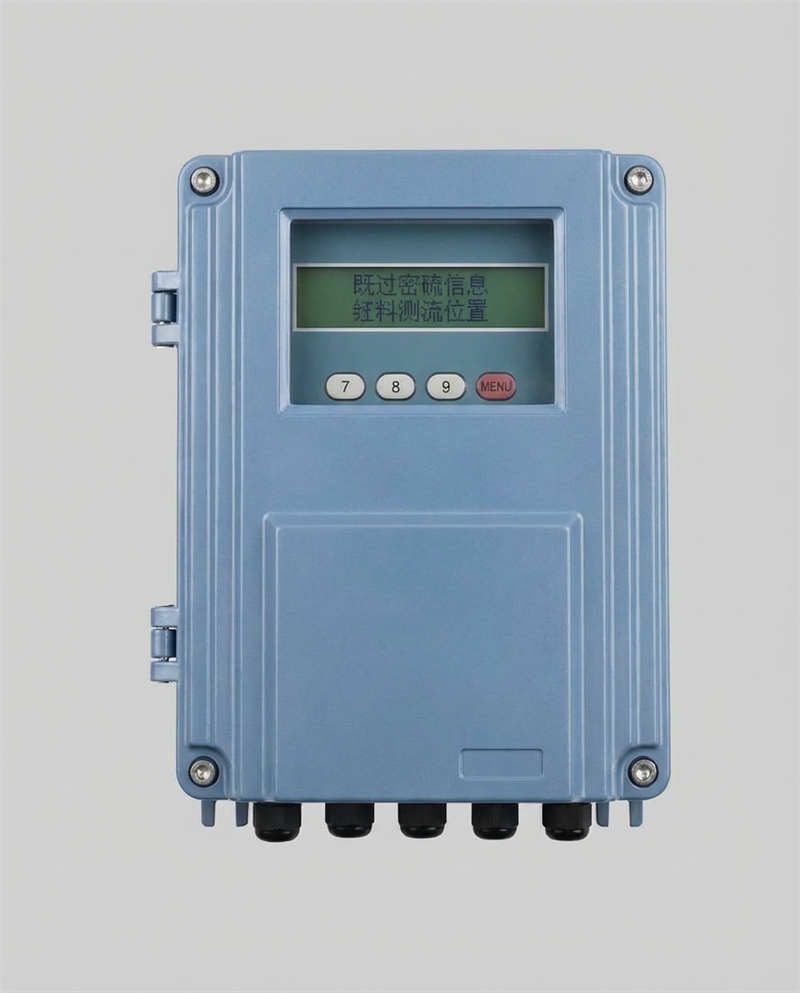
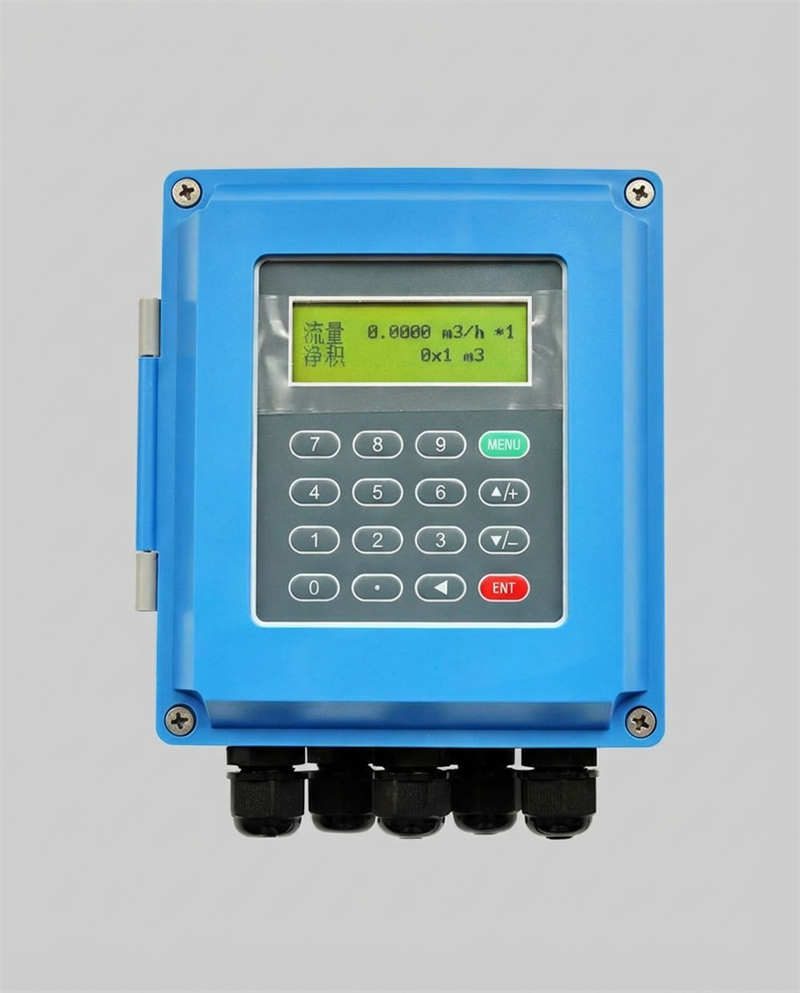
Clamp-on configuration: Transducers mounted to the outside of an existing pipe, requiring no cutting, welding, or process shutdown. The standard retrofit solution for corrosive fluids and monitoring applications where downtime is unacceptable.
Custody transfer: Flow measurement used to determine ownership transfer of a product, such as crude oil moving from a pipeline operator to a buyer. Requires certified, auditable accuracy under standards like API MPMS Chapter 5.8.
Total cost of ownership (TCO): The full lifetime cost of an asset, including purchase price, installation, calibration, maintenance, spare parts, and downtime, as opposed to just the sticker price.
Часто задаваемые вопросы
1. How does ultrasonic flow measurement actually work, and why is it more accurate than traditional methods?
Ultrasonic meters measure flow by timing how long sound pulses take to travel upstream and downstream through the fluid. Because there’s no rotor or bearing in the flow path, there’s no mechanical wear to cause calibration drift, which is why ultrasonic meters hold ±0.5% accuracy over their service life while mechanical meters typically drift toward 1.5%-3% as components wear.
2. What does ±0.5% accuracy actually mean in terms of cost savings?
On a 1,000,000-gallon-per-day operation, ±0.5% accuracy narrows the daily uncertainty band to about 5,000 gallons compared to roughly 20,000 gallons at ±2%. For a chemical or food processing line, that gap frequently represents $15,000 to $50,000 a month in unaccounted product or dosing inefficiency, depending on product value.
3. Can ultrasonic meters handle slurries or fluids with particulates?
Yes, using Doppler-principle ultrasonic meters rather than transit-time meters. Doppler meters measure the frequency shift of sound reflected off particles or bubbles, making them well suited to wastewater, mining slurry, and pulp applications where clean-fluid transit-time meters would struggle. For a decision framework, see the ultrasonic vs Doppler transducer selection guide.
4. What is the typical service life of an ultrasonic meter compared to a mechanical one?
Ultrasonic meters typically run 15 to 20 years with minimal intervention, compared to 5 to 8 years for mechanical meters in moderate-duty service, largely because there are no rotating wear parts to replace.
5. Do ultrasonic meters require cutting into existing pipes to install?
Clamp-on ultrasonic meters attach externally and require no pipe modification at all. Inline spool-piece meters, which deliver the highest accuracy for fiscal metering, do require a section of pipe replacement, but hot-tap insertion designs can achieve near-inline accuracy without a full process shutdown.
6. How do ultrasonic meters integrate with existing SCADA and control systems?
Most ultrasonic transmitters support standard protocols including 4-20mA, HART, and Modbus RTU/TCP, which cover the vast majority of existing industrial control architectures. Integration typically requires days rather than weeks of programming effort, and often avoids the need for protocol converters entirely.
7. What is the typical payback period for switching to ultrasonic flow meters?
Payback periods generally fall between 18 and 36 months, driven mainly by avoided maintenance costs and reduced downtime. High-throughput operations or applications with expensive product streams tend to see faster payback, sometimes under a year.
8. Are ultrasonic meters approved for custody transfer in oil and gas?
Yes. Multi-path ultrasonic meters that meet API MPMS Chapter 5.8 for liquids and Отчет AGA № 9 for gas are widely used and accepted for fiscal custody transfer metering, though specific regulatory approval should always be verified for the jurisdiction and application in question.
9. How much maintenance do ultrasonic meters actually require day to day?
Very little. Clamp-on meters generally need only periodic couplant inspection every two to three years. Inline meters need occasional diagnostic verification but no wear-part replacement, which is why documented maintenance cost reductions of 60% to 80% versus mechanical meters are common across industries.
10. What should distributors present to a client with a tight capital budget who is hesitant about the upfront cost?
Lead with a ten-year total cost of ownership comparison rather than a purchase-price comparison, present the 18-to-36-month payback timeframe, and offer a phased rollout starting with the highest-value metering points, such as custody transfer or high-value dosing lines, so the client sees measurable savings before committing to a full-fleet conversion.
Looking to bring ultrasonic flow measurement solutions to your Fortune 500 accounts? Jade Ant Instruments supports distributor and agent partners with technical specification assistance, OEM/ODM customization, and documentation for both clamp-on and inline ultrasonic systems. Explore the full range of flow meter solutions или request a technical quote for your next project.