Turbine vs Magnetic Flow Meter: How to Choose in 2026
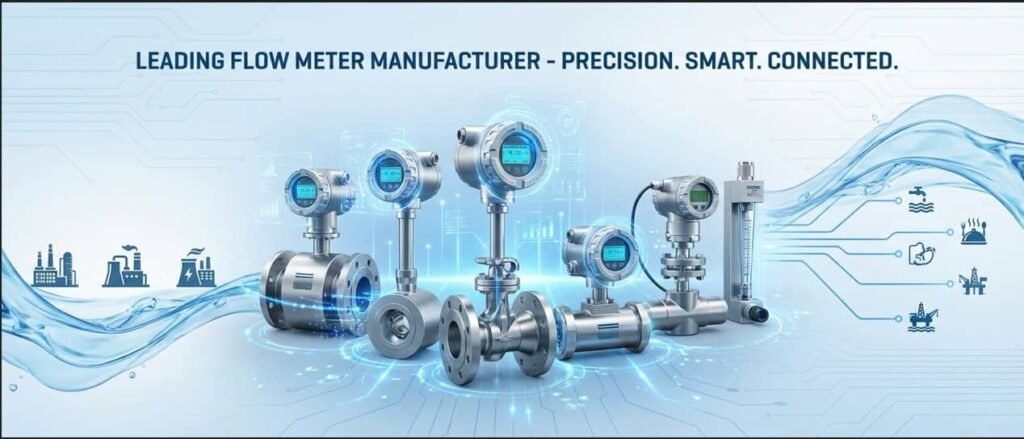
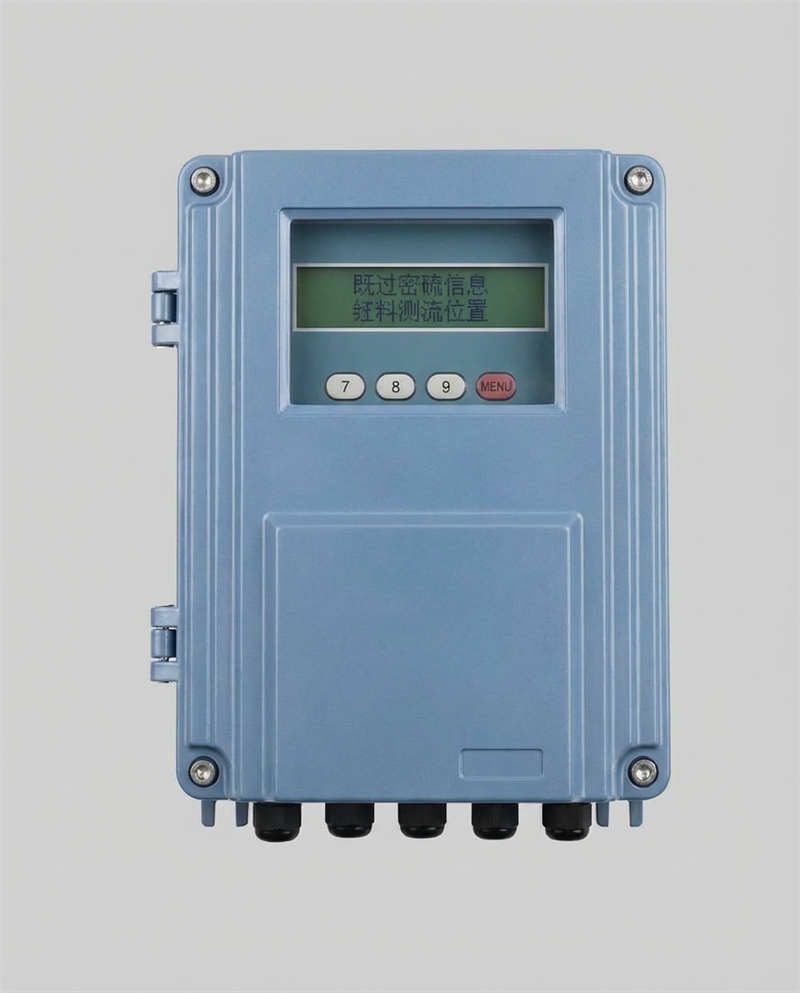
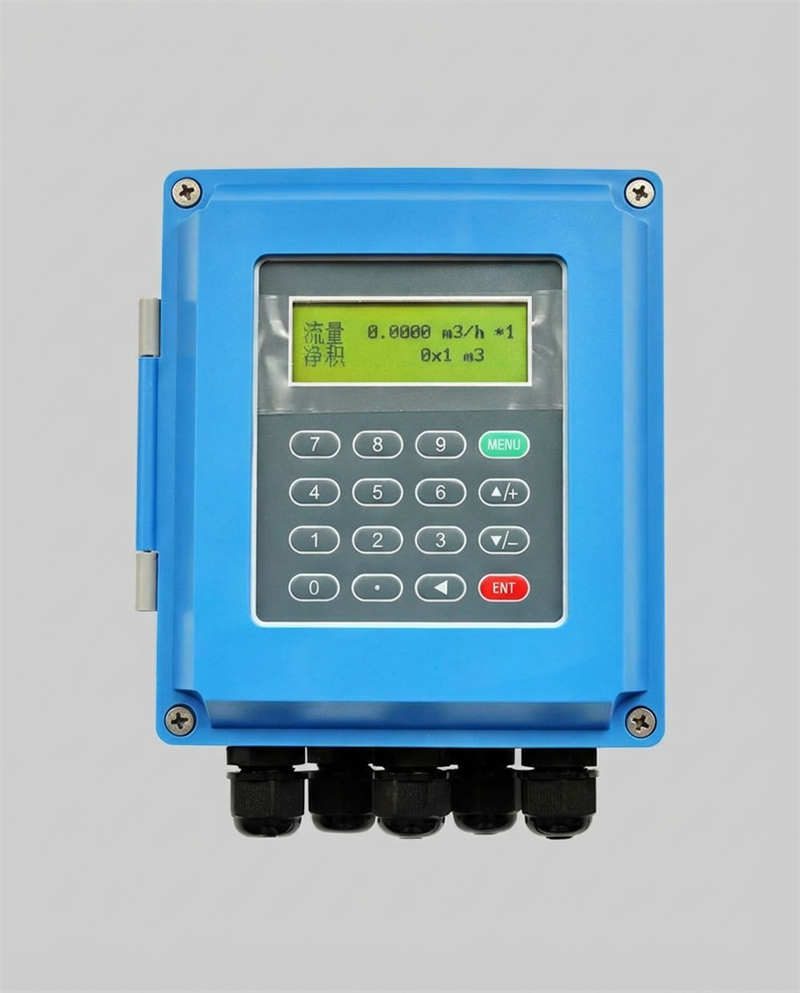
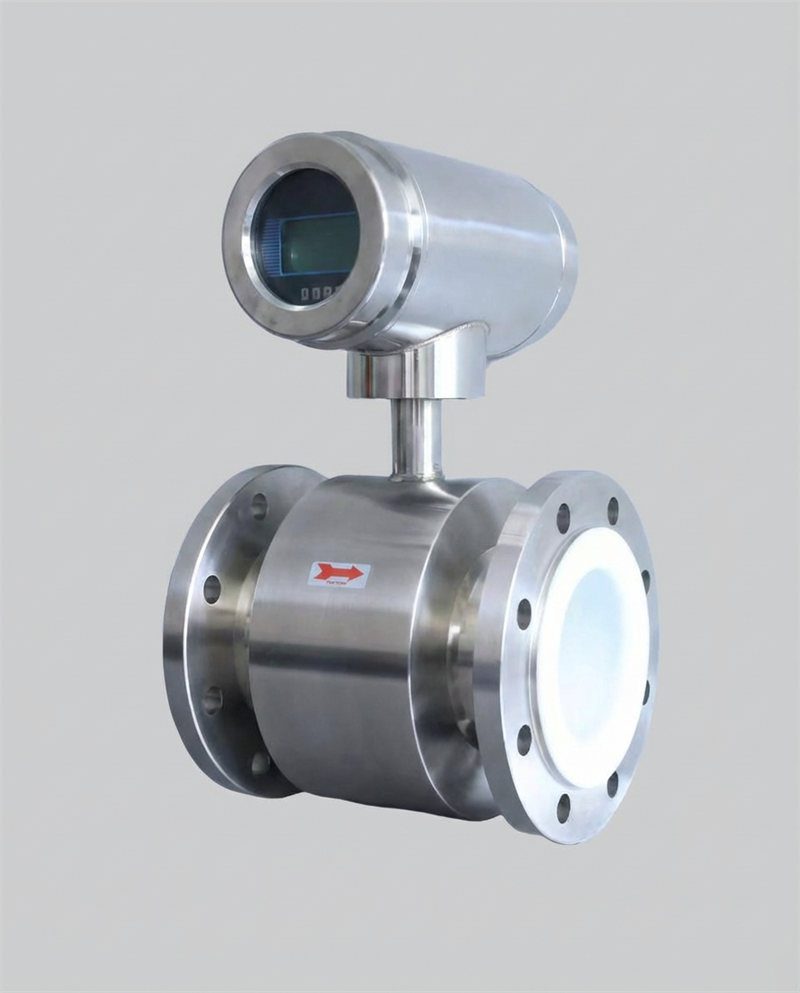
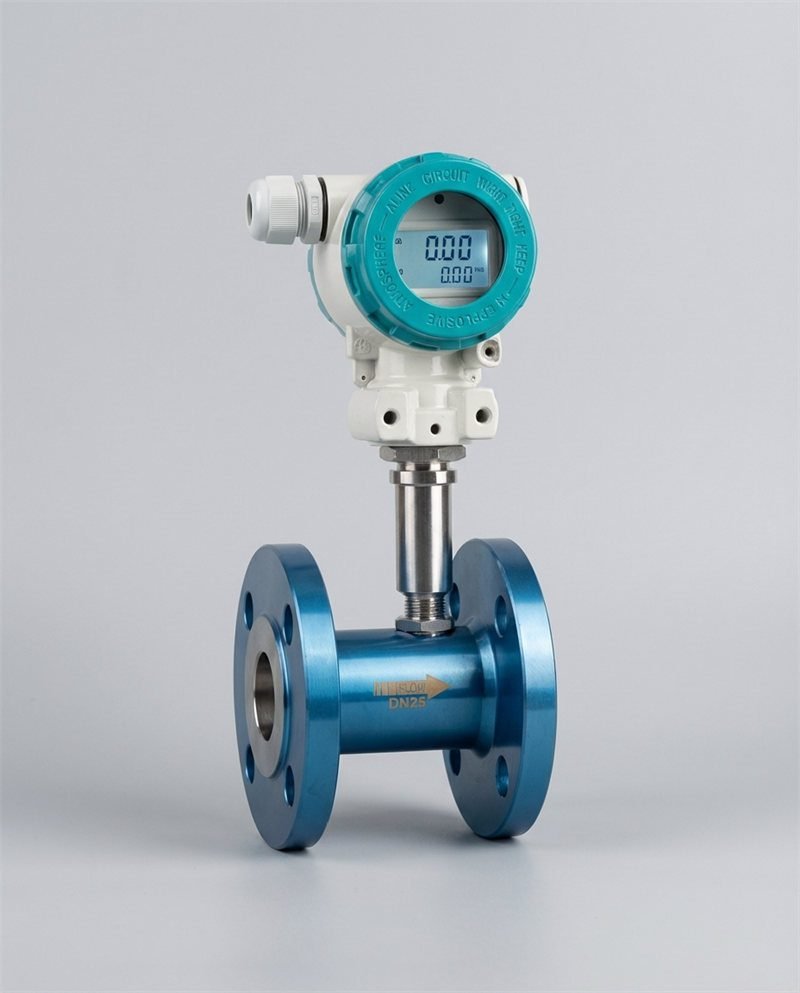
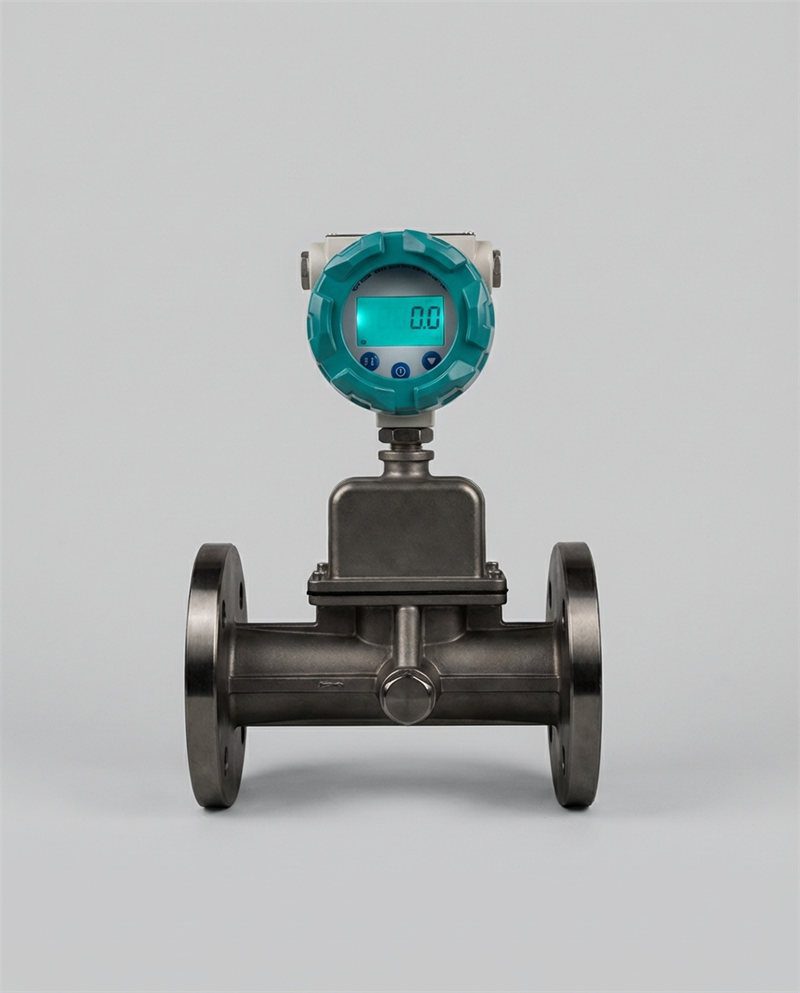
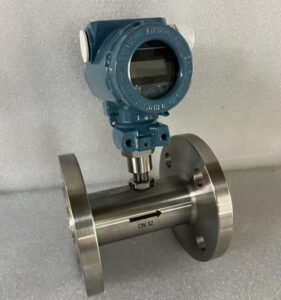
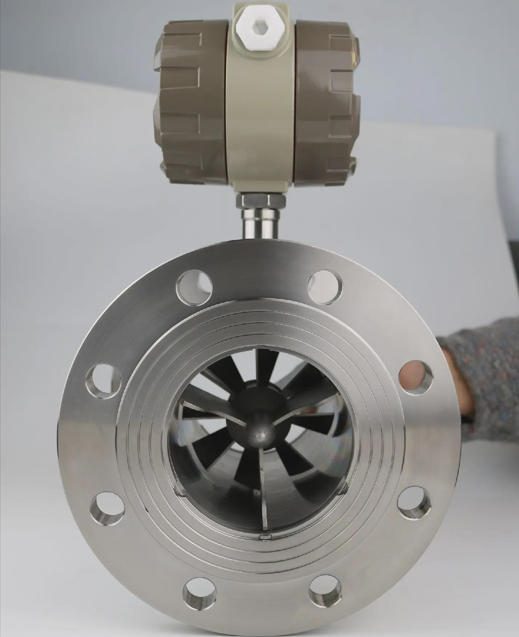
Image: Jade Ant Instruments product photo.
Quick answer: Pick the magnetic flow meter if your liquid conducts electricity (at least about 5 µS/cm), carries solids, or runs in a tight layout. Pick the turbine meter if the liquid is clean, thin, and non-conductive, such as diesel, solvents, or very pure water. When both would work, the magnetic meter usually costs less to own over ten years.
I. The critical role of precise flow measurement in industrial process control
Every dosing pump, blending skid, and distribution main runs on one number: how much fluid moved. If that number is off by 2%, the error flows into your chemical use, your billing, and your compliance reports.
Flow measurement means finding out how much liquid passes a point in a pipe over time. The two meters this guide compares do it in very different ways. Picking the wrong one is a quiet mistake. The meter keeps showing a number, and nobody questions it until a batch fails or an audit flags a gap.
A high-level look at both technologies
A turbine flow meter puts a small spinning wheel (a rotor) in the pipe. The faster the fluid moves, the faster the wheel spins. A sensor counts each blade as it passes. See this turbine flow meter overview for the basic design.
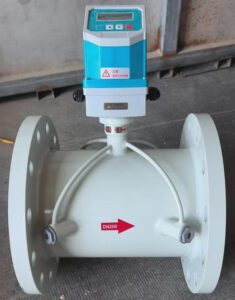
A magnetic flow meter (also called a magmeter or electromagnetic meter) has nothing inside the pipe. It makes a magnetic field across the pipe and reads a tiny voltage created by the moving liquid. It follows Faraday’s law as applied to flow.
The cost of a wrong choice
A wrong pairing rarely fails loudly. It drifts, jams, or reads zero.
| Wrong pairing | What you will see | Typical cost |
|---|---|---|
| Magnetic meter on diesel or oil | Reads zero or jumps around | Failed commissioning, rework |
| Magnetic meter on deionized water | Weak, unstable signal | Swap-out after startup |
| Turbine meter on slurry | Rotor jams or wears fast | Emergency callout, lost batch |
| Turbine meter on thick fluid | Reads low, loses range | Under-dosing, customer complaints |
Jade Ant Instruments’ skid-mount magmeter guide describes a water-treatment dosing skid builder that moved from turbine to electromagnetic meters. Service calls about measurement accuracy fell by 40% over 24 months. The same guide says turbine bearings were losing roughly 0.3% accuracy per month, which is too slow to spot in a weekly check but large enough to ruin a dosing batch.
Objective of this guide
This guide gives OEM skid builders, EPC and system integrators, instrument distributors, industrial MRO teams, and municipal utilities a clear path. You will check the fluid first, then accuracy, installation, and ten-year cost. You will finish with a checklist for your next purchase.
II. Fundamental Measurement Principles: How They Work
Turbine flow meters: velocity becomes rotation
Fluid hits angled blades and spins the rotor. A pickup coil outside the flow path creates one electrical pulse each time a blade passes.
Сайт K-factor is the number of pulses the meter makes for each unit of volume, for example pulses per liter. It is set during factory calibration and stamped on the data plate. K-factor explained by Turbines Incorporated goes deeper if you want the theory.
In words: flow rate equals pulse frequency divided by the K-factor, and volume equals pulse count divided by the K-factor.
Example: A meter has K = 1,000 pulses per liter and your PLC sees 2,500 Hz.

Image: Ruben Castelnuovo, CC BY-SA 3.0, via Wikimedia Commons.
Magnetic flow meters: Faraday’s law of electromagnetic induction
Coils create a magnetic field across the pipe. When a conductive liquid moves through it, a small voltage appears. Two electrodes pick it up. Jade Ant’s published formula for this is:
Here E is the signal voltage, B is the magnetic field strength, D is the pipe diameter, and v is the fluid speed. Because the pipe size and field are fixed, voltage tells you speed, and speed tells you flow.
Example: A DN100 pipe (inner diameter 0.1 m) has a cross-section of about 0.007854 m². At 2 m/s:
The key difference: moving parts vs. no moving parts
| Характеристика | Турбина | Magnetic |
|---|---|---|
| Inside the pipe | Rotor, shaft, bearings | Nothing but the lined tube and two electrodes |
| What wears out | Bearings, rotor blades | Liner, electrodes (slowly) |
| What it needs from the fluid | Clean, thin, single-phase | Conductive (about 5 µS/cm or more), full pipe |
| Signal | Pulses | Voltage turned into 4–20 mA, pulse, or digital |

Image: Alfaomega, CC BY-SA 3.0 DE, via Wikimedia Commons.
Want to see the turbine principle in motion? This short video explains operation and calibration.
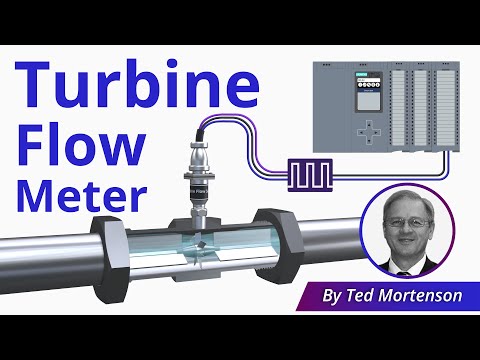
Video: “Turbine Flow Meter Explained | Operation and Calibration” by RealPars. Click the image to watch on YouTube.
III. Fluid Compatibility and Application Constraints
Start here. The fluid decides more than any datasheet does.
Conductivity: why magmeters need conductive liquids
Conductivity shows how well a liquid carries electric current, measured in microsiemens per centimeter (µS/cm). A magnetic meter creates its signal from the liquid itself, so the liquid must conduct.
- Tap water, wastewater, acids, bases, and most slurries are well above the limit.
- Oils, fuels, solvents, and gases are far below it.
- Distilled and deionized water usually sit near or below the limit. Check your meter’s stated minimum.
Raw municipal wastewater typically measures 500–1,500 µS/cm, according to Jade Ant’s magnetic vs ultrasonic wastewater comparison. That is far above the 5 µS/cm threshold.
Viscosity and purity: where turbine meters struggle
Viscosity is how thick a fluid is. Honey is thick and water is thin. Jade Ant’s chemical-plant comparison notes that standard turbine designs work best below about 10–15 cSt. Above that, bearing drag rises and the usable flow range can shrink by 30–50%.
Purity matters just as much. Particles larger than about 100 microns can damage bearings and blade edges. The damage builds slowly, so the K-factor drifts and nobody notices for months.
Slurries and corrosives: the magmeter’s strength
A magnetic meter has an open, full-bore tube. Solids pass through, and nothing inside can jam.
For aggressive liquids, the liner and electrode materials do the work. Jade Ant’s liner and electrode selection guide maps materials to chemicals.
Industry insight: In one mining example Jade Ant cites, a neoprene-lined magnetic meter on a 35% solids iron-ore slurry failed in 14 months. A polyurethane liner on the same duty lasted more than 4 years. The meter type was right. The liner was wrong.
Clean water and light hydrocarbons: the turbine’s strength
Turbine meters respond fast and give clean pulse signals. Jade Ant’s published range for them is ±0.25% to ±1.0% of reading on clean, thin liquids. Fuels, light solvents, and filtered water suit them well. The same fluids that rule out a magmeter are often the ones a turbine handles best.
Fluid fit at a glance
| Fluid | Magnetic | Турбина | Better first pick |
|---|---|---|---|
| Clean tap or treated water | Works | Works | Magnetic (lower upkeep) |
| Raw wastewater, sludge | Works well | Бедный | Magnetic |
| Slurry, abrasive solids | Works (match liner) | Not suitable | Magnetic |
| Acids and bases (conductive) | Works with the right liner | Ограниченный | Magnetic |
| Diesel, gasoline, light oils | Does not work | Works well | Турбина |
| Solvents (alcohols, acetone) | Does not work | Works | Турбина |
| Distilled or deionized water | Often too low | Works | Турбина |
| Thick fluids (above about 15 cSt) | Works if conductive | Loses range | Magnetic, or another technology |
IV. Accuracy, Precision, and Repeatability
Точность is how close a reading is to the true value. Повторяемость is how closely repeated readings agree under the same conditions.
Turbine meters: high precision for clean, stable fluids
On clean, thin liquids, a turbine meter repeats very well. That is why it is common in fuel batching.
The catch is that the K-factor changes with viscosity and with bearing wear. Jade Ant gives an example: a meter calibrated on water at 20 °C and then used on glycol at 80 °C can shift its K-factor by 0.5–1.5% unless a viscosity correction is applied. Viscosity correction for turbine meters explains the idea.
Density also matters if you bill by weight. Turbine and magnetic meters both measure volume. If density changes with temperature or product grade, feed a live density value into your flow computer or accept the error.
Magnetic meters: steady accuracy across profiles and viscosities
Jade Ant’s published accuracy for magnetic meters is 0.2–0.5% of reading. Its intelligent electromagnetic flow meter lists 0.5% as standard and 0.2% as an option, across DN10 to DN3000. The reading does not depend on viscosity, density, or temperature, as long as the pipe is full and the fluid conducts.
Turndown: which meter handles wide flow ranges better
Подготовка номера ко сну is the ratio between the highest flow and the lowest flow a meter reads within its stated accuracy.
| Meter | Typical turndown | Source |
|---|---|---|
| Турбина | About 10:1 | Jade Ant comparison guide |
| Magnetic | 100:1 and above | Jade Ant wastewater guide |
Worked example (DN50 pipe, cross-section about 0.001963 m²):
- A magnetic meter with a 100:1 range, from 0.1 to 10 m/s, covers about 0.71 to 70.7 m³/h.
- A turbine meter with a 10:1 range, say 2 to 20 m³/h, cannot see anything below 2 m³/h.
If your line idles at 1 m³/h overnight and peaks at 20 m³/h by day, the turbine meter loses the night readings. A skid that sees wide swings is a strong reason to lean toward magnetic.
V. Installation Requirements and System Integration
Straight-run requirements: the turbine meter’s strict demands
Straight run is the length of straight pipe a meter needs before and after it so the flow settles. Elbows, valves, and pumps make the fluid swirl, and swirl makes the rotor read wrong. The unit is D, the pipe’s inner diameter.
| Condition | Турбина | Magnetic |
|---|---|---|
| Upstream (typical) | 10–15D | About 5D |
| Upstream after two elbows or a half-open valve | 20D or more | Check the manual, often still short |
| Ниже по течению | About 5D | 2–3D |
| Extra part needed | Upstream strainer for solids | Grounding rings on plastic or lined pipe |
Based on Jade Ant’s chemical-plant comparison and its magmeter documentation. Always confirm against your exact model’s manual.
On a DN50 line, D is 50 mm. Here is what that means in metres of pipe:
That is 600 mm saved per measuring point. On a skid with four meters, it is 2.4 m of pipe, plus the supports and frame to hold it.
Flexibility of magmeters: integration into existing skids
Сайт turbine meter installation and calibration guide from Jade Ant lists small mistakes that move a turbine meter off its calibration: a gasket sticking into the bore, a missing strainer, or a poorly shielded pulse cable. Magnetic meters have their own traps, mainly grounding and full-pipe conditions.
Image: Jade Ant Instruments.
For output signals, both types connect to a PLC. A turbine meter gives raw pulses, and a magnetic meter usually gives 4–20 mA, pulse, Modbus, HART, or Profibus. Jade Ant’s EM meter lists RS-485 (Modbus), HART, and Profibus-DP options.
Pulse trap to avoid: If a turbine meter makes 1,200 Hz at full flow and your PLC counter stops at 1,000 Hz, the totals will read low at high flow. Check the counter spec before you order.
Impact on skid footprint and cost
For OEMs, every metre of straight pipe adds steel, supports, welds, and test time. A shorter run, no strainer, and no flow conditioner all make the skid smaller. Jade Ant’s skid-mount guide covers this trade-off in detail. Tight layouts are the point where magnetic meters often win the OEM argument, even before cost is counted.
VI. Total Cost of Ownership (TCO) Analysis
TCO (total cost of ownership) is the full cost of a meter over its life: purchase, installation, calibration, maintenance, energy, and downtime.
Initial capital expenditure (CAPEX)
CAPEX is what you pay once. Jade Ant’s comparison guide lists representative price ranges, and they overlap heavily:
| Line size | Turbine (USD) | Magnetic (USD) |
|---|---|---|
| DN50 (2 inch) | 800–3,000 | 800–3,500 |
| DN100 (4 inch) | 1,500–5,000 | 1,500–6,000 |
| DN200 (8 inch) | 4,000–10,000 | 4,000–12,000 |
Source: Jade Ant Instruments’ Coriolis, magnetic, turbine and ultrasonic comparison. Sanitary, exotic alloy, and hazardous-area versions cost more.
The takeaway: purchase price rarely separates these two. The real gap shows up after installation.
Operating expenditure (OPEX)
OPEX is what you pay every year to keep the meter working. Here is a 10-year model for one DN50 line with a conductive liquid, so both meters are technically valid. The inputs are my assumptions. Replace them with your own quotes.
Assumptions: 8 verification or calibration pulls for the turbine meter (annual, with removal) at 700 USD each, plus 4 bearing and rotor services at 650 USD. Each pull or service stops the line, with 6 stops at 500 USD in lost time. The magnetic meter gets 5 in-situ verifications at 400 USD, one bench calibration at 800 USD, and 3 electrode cleanings at 150 USD, with 2 stops at 500 USD. Energy assumes 20 m³/h, 4,000 h per year, 0.10 USD/kWh, 70% pump efficiency, and a 0.3 bar turbine drop.
| Cost (USD, 10 years) | Турбина | Magnetic |
|---|---|---|
| Purchase | 1,800 | 2,200 |
| Установка | 1,000 | 1,200 |
| Calibration and verification | 6,300 | 2,800 |
| Maintenance (bearings, electrode cleaning) | 2,600 | 450 |
| Downtime | 3,000 | 1,000 |
| Pump energy from pressure drop | 952 | 0 |
| Total | 15,652 | 7,650 |
The turbine meter’s purchase price is only 11.5% of its total. Calibration, service, and downtime together are about 76%.
Industry insight: This comparison only applies when the fluid allows both meters. On diesel or solvents, a magnetic meter is not an option, and a well-chosen, well-maintained turbine meter is the right answer. TCO is a tie-breaker, not a trump card.
Energy cost of pressure drop
Pressure drop is the pressure a fluid loses as it passes through a device. The pump must make it up. Jade Ant lists 0.3–0.7 bar for a 4-inch turbine meter on water, and close to zero for a full-bore magnetic meter.
Example: 100 m³/h (0.02778 m³/s), a 0.5 bar (50,000 Pa) drop, and 70% efficiency:
Over ten years, that is about 17,380 USD on one measuring point. A full-bore magnetic meter avoids almost all of it.
Calibration cycles
| Задача | Турбина | Magnetic |
|---|---|---|
| Routine check | Annual calibration is common | In-situ verification about every 12 months |
| Полная калибровка | Often annual, with the meter removed | About every 24 months, or 3–5 years in stable clean water |
| Trigger to act sooner | K-factor drift above about 0.3% | As-found error above about 0.3%, or rising electrode impedance |
Jade Ant’s magnetic flow meter calibration tips explain the in-situ method. For good practice on any meter, see Fluke flowmeter calibration practices. For why certificates must trace to a national standard, read metrological traceability.
VII. Maintenance and Reliability in Harsh Environments
Wear and tear: turbine erosion vs. magmeter liner degradation
Turbine meters wear where metal touches metal: bearings and blade edges. Wear changes the K-factor in one direction, usually toward a low reading.

Magnetic meters wear on the surfaces that touch the liquid: the liner and the electrodes. In Jade Ant’s wastewater guide, hard rubber liners last 10–15+ years in clean wastewater. Polyurethane is the pick for sludge, and PTFE for aggressive chemicals.
Troubleshooting common failures
| Симптом | Turbine: likely cause | Magnetic: likely cause |
|---|---|---|
| Reads low | Bearing wear, fouled rotor | Electrode coating, partly empty pipe |
| Reads high | Air or gas in the liquid, pulsation | Rare, check scaling and zero |
| Erratic or noisy | Electrical noise on pulse cable, vibration | Poor grounding, noise from a drive |
| No signal | Flow below minimum, pickup gap too wide | Empty pipe, coil or cable fault |
| Counts at zero flow | Electrical noise or vibration | Zero offset, grounding fault |
Grounding is the single most common magnetic meter problem. Jade Ant’s calibration guide quotes a field analysis finding that 50% of magmeter accuracy complaints trace to improper grounding. Their magnetic flow meter troubleshooting guide walks through the fixes. For routine care, the magnetic water flow meter maintenance guide is a good checklist for MRO teams.
This video covers five common magmeter problems and how to isolate them.

Video: “Magnetic Flow Meter Troubleshooting: 5 Common Problems” on YouTube. Click the image to watch.
MTBF expectations
MTBF (mean time between failures) is the average operating time between breakdowns. Jade Ant’s chemical-plant comparison gives a turbine MTBF of about 5–8 years, depending on bearings. A magnetic meter has no wearing parts in the flow path. Its life depends on the liner, electrodes, and electronics, so ask the supplier for a stated MTBF and how it was calculated.
For industrial terminals and utilities, this changes spare-part strategy. Turbine meters need a bearing and rotor kit on the shelf. Magnetic meters need a spare transmitter or coil driver and a plan for electrode cleaning.
VIII. Industry-Specific Use Cases (The Solution Matrix)
| Customer type | Typical fluid | First pick | Why |
|---|---|---|---|
| OEM / skid builder | Water-based dosing, utility water | Magnetic | Short straight run, no wear parts, fewer callbacks |
| Municipal / utility | Raw water, wastewater, sludge | Magnetic | Handles solids, sizes up to DN3000, no pressure loss |
| Chemical / pharmaceutical | Acids, bases, aqueous streams | Magnetic with matched liner | Full-bore, no jam points |
| Chemical / pharmaceutical | Solvents, very pure water | Turbine (or another technology) | Non-conductive fluids |
| Oil and gas / MRO | Diesel, gasoline, light oils | Турбина | Magnetic meters cannot read non-conductive fluids |
OEM and skid builders. Balance precision and cost by standardizing on one meter family. Jade Ant’s five-factor selection framework is a quick way to check whether a standard pick still fits a new customer’s fluid.
Municipal and utility. Magmeters are the usual choice for wastewater and raw water because solids and low velocities are normal. A worked example: a 3 m³/h overnight leak on a DN100 feed is 26,280 m³ a year. At 1.00 USD per m³ of treated water, that is 26,280 USD. A meter that cannot read below that flow will never show it. Low-flow capability matters more than headline accuracy here.
Chemical and pharmaceutical. For corrosive but conductive fluids, a magnetic meter with PTFE or PFA liner and a matched electrode is the common path. For highly purified water, check the meter’s stated minimum conductivity. Many pure-water systems sit below 5 µS/cm, which rules a magmeter out.
Oil and gas and MRO. Turbine meters are the usual choice for clean fuels. Lubricants are different. Many are thicker than 15 cSt, which pushes standard turbine meters outside their comfort zone. For thick oils, ask your supplier about meters built for viscous service or a different technology.
IX. Procurement Checklist for Distributors and EPCs
Critical questions to ask before you order
| Question | Why it matters | Rules out |
|---|---|---|
| What is the fluid’s conductivity at the lowest point? | Magmeters need about 5 µS/cm or more | Magnetic, if too low |
| What is the viscosity at the coldest startup? | Turbine range shrinks above about 10–15 cSt | Standard turbine, if too thick |
| Are there solids above about 100 microns? | Particles damage bearings | Turbine, unless filtered |
| What is the flow range, minimum and maximum? | Подготовка номера ко сну | Turbine, if range exceeds about 10:1 |
| How much straight pipe is available? | 1,000 mm vs 400 mm on DN50 | Turbine in tight layouts |
| What pressure drop can the pump tolerate? | Energy cost | Turbine on marginal pumps |
| Is the pipe always full at the meter? | Magmeters need a full pipe | Magnetic at high points |
| What accuracy is truly needed? | Avoid paying for unused accuracy | Over-specified meters |
| What budget covers 10 years, not just purchase? | TCO | Cheapest-at-quote meters |
Jade Ant’s flow meter selection guide follows a similar order.
Material selection: liners, electrodes, and rotors
| Part | Common options | Typical use |
|---|---|---|
| Magmeter liner | Neoprene, polyurethane, PTFE, F46, PFA | Neoprene for water, polyurethane for abrasion, PTFE or PFA for chemicals |
| Magmeter electrode | SS316L, Hastelloy B/C, titanium, tantalum, platinum-iridium | Match to acid, base, or chlorinated fluid |
| Turbine body and rotor | Stainless steel (common), special alloys, some plastic designs for mild service | Match to fluid chemistry and temperature |
| Turbine bearings | Hard materials such as tungsten carbide or ceramic (ask the supplier) | Wear life in clean vs. dirty service |
Send your supplier the exact fluid, concentration, cleaning agents, and temperature peaks. A liner failure on a chemical line often costs more in downtime than the gap between a standard and a better liner.
Certification needs and connection standards
Ask for these documents in writing before award:
- Factory calibration certificate with a traceability statement, with the calibration lab accredited to ISO/IEC 17025
- ISO 9001 quality system certificate
- A CE declaration of conformity (the CE marking page explains what it covers)
- ATEX or IECEx certificates for hazardous areas, which you can cross-check through the IECEx certification system
- OIML R49 for water meters used in billing
- Flange standard to match your site: ANSI, DIN, or JIS
Certification belongs to a specific model, not a product family. Ask for the certificate for your exact part number.
X.Summary comparison: turbine vs. magnetic
| Критерий | Турбина | Magnetic |
|---|---|---|
| Fluid requirement | Clean, thin, single-phase | Conductive, full pipe |
| Works on oils and solvents | Да | Нет |
| Works on slurry | Нет | Да |
| Accuracy (Jade Ant published range) | ±0.25–1.0% | 0.2–0.5% |
| Подготовка номера ко сну | About 10:1 | 100:1 and above |
| Straight run (DN50 example) | About 1,000 mm | About 400 mm |
| Pressure drop | 0.3–0.7 bar (4 inch) | Near zero |
| Moving parts | Rotor, bearings | None in the flow path |
| Calibration | Often annual, meter removed | About 12 months in-situ, 24 months full |
| 10-year cost (our DN50 model) | About 15,650 USD | About 7,650 USD |
Final recommendation: match the pain point
Use this short path:
- Is the fluid conductive? If no, go to turbine (or another technology). If yes, go on.
- Does it carry solids, or is it corrosive? If yes, magnetic with the right liner.
- Is space tight or flow range wide? If yes, magnetic.
- Is the fluid clean, thin, and billed by volume with pulse equipment already in place? Turbine may be the better fit.
- When both work, compare 10-year cost. Magnetic usually wins.
Do not guess on a new line. Send your fluid, conductivity, viscosity, line size, flow range, and site conditions to the Jade Ant contact page. Application engineers at Jade Ant Instruments can check the fit, the straight run, and the liner before you release a drawing. For more guides like this one, browse the Jade Ant flow meter blog.
Глоссарий основных терминов
Conductivity: How well a liquid carries electric current, in µS/cm. Example: raw wastewater is often 500–1,500 µS/cm. Diesel is effectively zero.
CAPEX / OPEX: CAPEX is one-time spending on buying and installing equipment. OPEX is the yearly cost of running it.
K-factor: Pulses a turbine meter makes per unit of volume. Example: 1,000 pulses per liter.
Liner: The coating on the inside of a magnetic meter tube. Example: PTFE for chemicals, polyurethane for abrasive sludge.
MTBF: Mean time between failures. The average operating time between breakdowns.
Pressure drop: Pressure lost as fluid passes through a device. Example: 0.5 bar across a meter on a 100 m³/h line costs about 1,738 USD a year in pump energy.
Straight run: The straight pipe a meter needs before and after it so the flow settles. Measured in pipe diameters (D).
TCO: Total cost of ownership. Purchase, install, calibration, maintenance, energy, and downtime.
Turndown: The ratio between the highest and lowest flow a meter reads accurately. Example: 10:1 means a range of 2 to 20 m³/h.
Вязкость: How thick a fluid is, often shown in cSt. Higher means thicker.
Часто задаваемые вопросы
1. Can a magnetic flow meter measure oil or distilled water?
Not oil. Oils, fuels, and solvents do not conduct electricity, so a magmeter has no signal to read. Distilled and deionized water are borderline. They often sit near or below the 5 µS/cm minimum that many magnetic meters need. If you must measure them, check your meter’s stated minimum conductivity, or pick a turbine or another technology.
2. How do air bubbles and small particulates affect a turbine meter?
Both cause trouble, in different ways. Air or gas in the liquid makes the rotor spin faster, so the meter tends to read high, and it may not raise an alarm. Particles larger than about 100 microns can damage bearings and blade edges, so the K-factor drifts over months. Add a vent or air eliminator, and install an upstream strainer sized for your fluid.
3. Which meter causes a higher pressure drop, and which is more sustainable over time?
The turbine meter. Jade Ant lists 0.3–0.7 bar for a 4-inch turbine meter, against close to zero for a full-bore magnetic meter. On a 100 m³/h line, a 0.5 bar drop costs about 1,738 USD per year in pump energy. Over ten years that is a lot of electricity, plus the extra parts and trips to service bearings. For a conductive liquid, the magnetic meter is usually the lower-energy, lower-waste choice.
4. Do magnetic flow meters need periodic recalibration?
They need less than turbine meters, but not none. In-situ verification about every 12 months is a good habit. Full calibration is often every 24 months, or every 3–5 years in stable clean water. Shorten the interval if past as-found errors exceed about 0.3%, or if electrode impedance keeps rising. Jade Ant’s calibration guide explains the steps.
5. How do I choose the correct liner material for a magmeter in a corrosive environment?
Start with the fluid, its concentration, and its peak temperature, including cleaning cycles. PTFE or PFA handle most acids and bases. Polyurethane or ceramic suit abrasive slurry. Hard rubber suits clean water and wastewater. Pair the liner with a matching electrode, such as Hastelloy for acids or titanium for chlorinated fluids. Send the full fluid list to your supplier before you order.
6. Can turbine meters be used for bidirectional flow?
Some designs can, but most are calibrated and built for one direction. Reverse flow can spin the rotor backward, stress bearings, and give a wrong total. If reverse flow is possible, ask the supplier whether your model supports it, or add a check valve upstream. Magnetic meters read both directions by design.
7. What is the typical lifespan of a turbine meter in a high-flow industrial application?
The body can last many years, but bearings are the wear item. Jade Ant’s chemical-plant comparison gives an MTBF of about 5–8 years for turbine meters, depending on bearings, with bearing inspection every 12–24 months in clean service. Dirty or low-lubricity fluids shorten that. Plan a bearing and rotor kit as a standard spare.
8. How does temperature fluctuation affect the readings of both meter types?
Temperature mostly affects a turbine meter through viscosity. Jade Ant gives an example where a meter calibrated on water at 20 °C and used on glycol at 80 °C can shift by 0.5–1.5% without correction. A magnetic meter’s reading does not depend on temperature, but the liner and electronics have limits. Jade Ant’s intelligent EM meter lists −20 to +60 °C for the compact version and up to +160 °C with a remote transmitter.
9. Which technology is easier to integrate into a PLC or SCADA system?
Magnetic meters are usually easier, because many offer 4–20 mA, pulse, and Modbus RS-485 or HART on one unit. Turbine meters give raw pulses, so you need a counter card or flow computer that handles the maximum frequency. Both work with older systems: wire the 4–20 mA or pulse output to an existing input and scale it.
10. Are there piping layouts that can ruin a turbine meter’s performance?
Yes. The worst are an elbow or a partly open valve right before the meter, two elbows in different planes, and a pump outlet close upstream. Each creates swirl. Jade Ant lists 10–20D of upstream straight pipe for turbine meters. Also avoid gaskets that stick into the bore, and a meter placed where air collects. If you cannot meet the straight run, move the meter, add a flow conditioner, or switch to a meter with a shorter requirement.