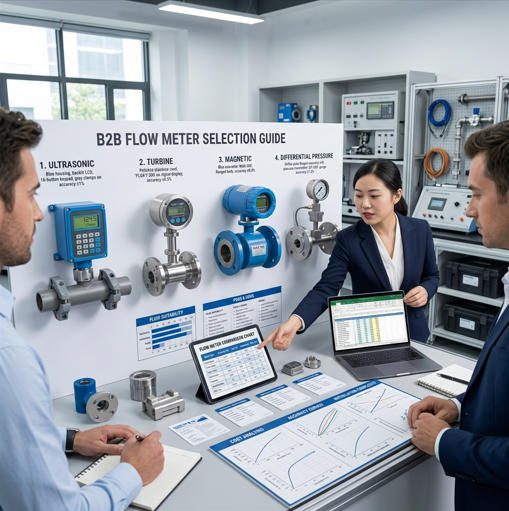
Ultrasonic Flow Meters vs. Traditional Flow Measurement Technologies
Accuracy benchmarks, 10-year cost models, and an 8-step selection framework — written for distributors and agents, not end-users.
Introduction: Why This Decision Is Worth Getting Right
Every time an industrial plant purchases or replaces a flow meter, the decision affects far more than the line item on a purchase order. In a typical 6-inch process line, a measurement error of just 1% on a flow rate of 50,000 barrels per day of crude oil translates to a $35,000 daily revenue discrepancy. For a wastewater utility managing 150 million liters per day, a poorly specified differential pressure (DP) meter can waste $18,000–$45,000 per year in unnecessary pump energy alone.
For distributors and agents who advise clients on technology selection, the commercial stakes are equally clear: getting the specification right — and being able to justify it with data — builds the kind of trust that turns a single-order client into a multi-year account.
This guide compares ultrasonic meters against the three traditional technologies most commonly found in industrial pipelines: turbine meters, magnetic (electromagnetic) meterse differential pressure (DP) meters. Every claim is supported by field data, published standards, or verified case studies — not marketing copy.
Section 1: Traditional Flow Measurement Technologies — What Your Clients Are Still Running
Understanding the installed base is the first step. The majority of flow meters currently running in water utilities, refineries, chemical plants, and HVAC systems are turbine, magnetic, or differential pressure devices. Each works well in its intended application — but each carries specific failure modes and operating costs that modern ultrasonic technology was designed to address.
1.1 Turbine Flow Meters
How They Work
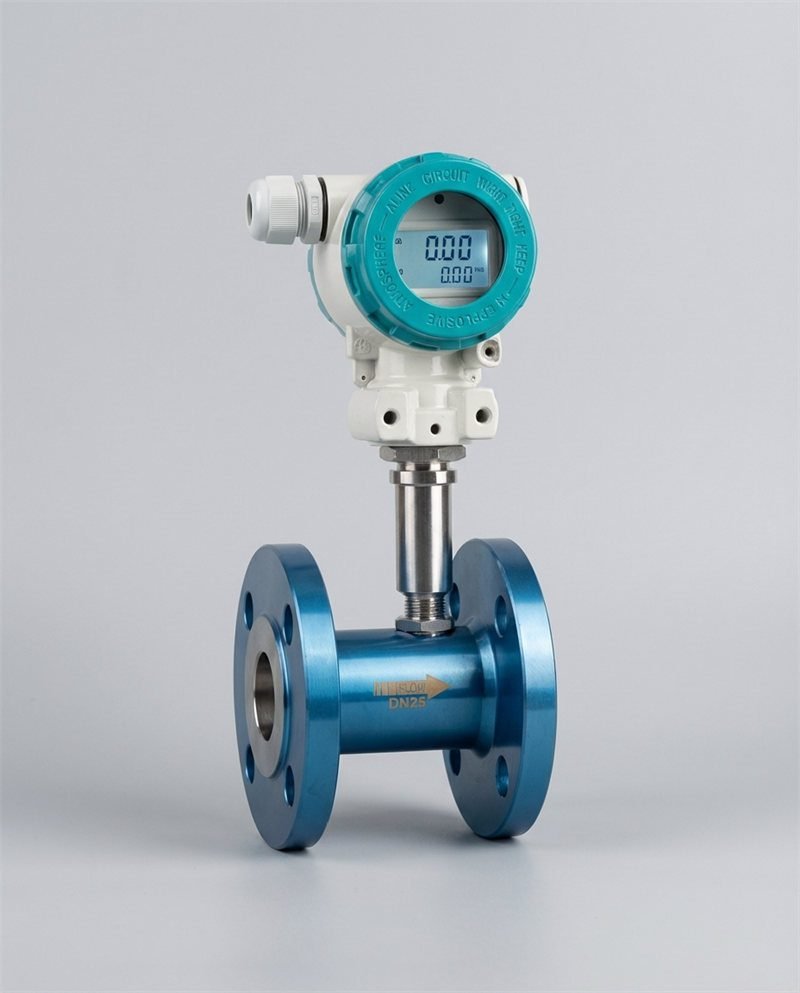
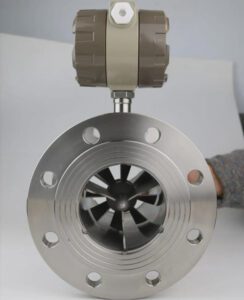
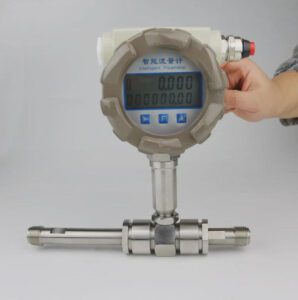
A turbine meter uses a multi-bladed rotor mounted axially in the pipe. As fluid flows past, it spins the rotor; the rotational speed — detected by a magnetic pickup or optical sensor — is directly proportional to volumetric flow rate. Fator K calibration converts the pulse count to a flow value.
Where Turbine Meters Shine
In clean, single-phase liquids at stable flow rates, turbine meters deliver accuracy of ±0.25–0.5% of reading — competitive with any technology at this price point. They are still the preferred choice for clean petroleum product metering, LPG custody transfer, and laboratory-grade batch control where the fluid is filtered and non-corrosive.
The Real Limitations — With Numbers
The rotating element is the fundamental weakness. A 2023 maintenance cost study across 420 industrial sites found that turbine meters in slurry-containing or particle-laden services required bearing replacement every 18–24 months at $200–$600 per event, plus an average 4–6 hours of system downtime per maintenance visit. Over a 10-year period on a 4-inch clean-water line, the cumulative maintenance cost reaches $2,000–$2,500, compared to near-zero for a comparable clamp-on ultrasonic meter (Long-term maintenance cost data, Pokcenser Tech).
1.2 Magnetic (Electromagnetic) Flow Meters
How They Work
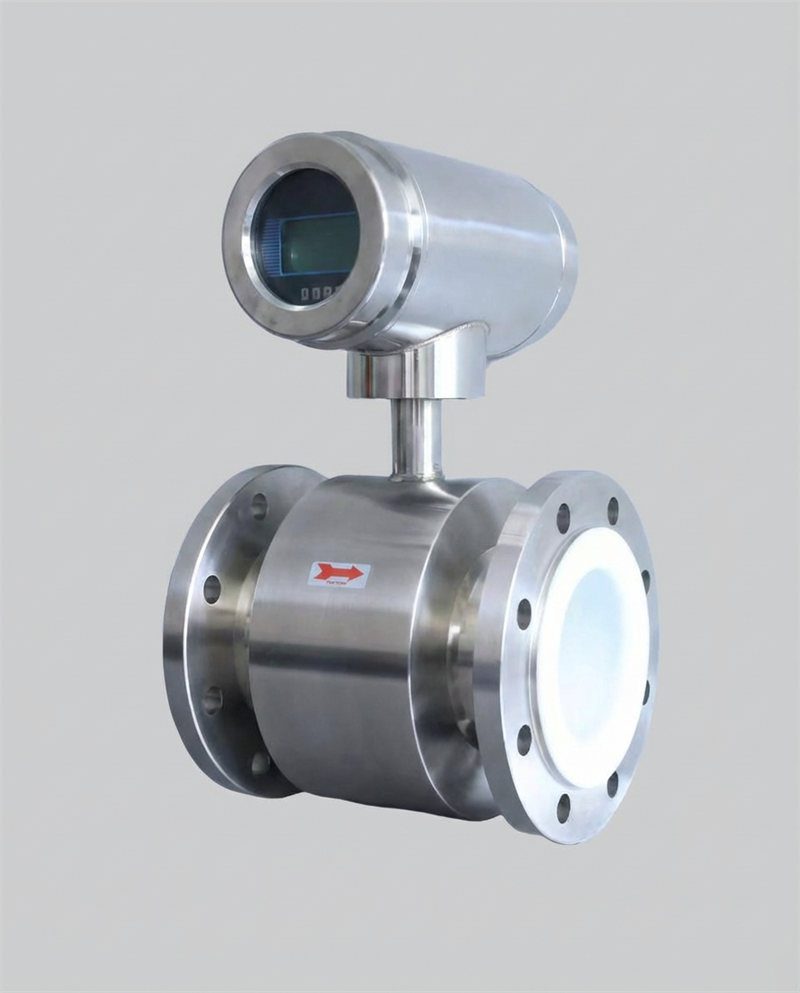
A magnetic meter applies Faraday’s Law: when a conductive liquid flows through a magnetic field generated by coils around the pipe bore, a voltage is induced between two electrodes flush-mounted in the pipe wall. That voltage is proportional to fluid velocity. The term Faraday’s Law describes this relationship precisely.
Where Mag Meters Excel
For conductive liquids — water, wastewater, acids, bases, slurries — magnetic meters are difficult to beat on accuracy (±0.2–0.5% of reading), maintenance cost (no moving parts in the flow path), and liner options (PTFE, ceramic, polyurethane) for aggressive chemicals. A 150 MLD water treatment plant in Shandong operating 34 mag meters achieved a 12% reduction in coagulant usage after switching from DP meters, saving ~USD 52,000 annually — with payback under 5 months.
Critical Limitations
The conductivity requirement is absolute. Magnetic meters cannot measure hydrocarbons, deionized water below 5 µS/cm, gases, or steam. Installation requires pipe cutting, flanging, grounding rings, and a dedicated earth conductor — adding $800–$2,000 in installation cost versus a clamp-on ultrasonic. For a detailed breakdown, see the magnetic vs. ultrasonic comparison for wastewater on Jade Ant Instruments’ technical blog.
1.3 Differential Pressure (DP) Flow Meters — Orifice Plates & Venturi Tubes
How They Work
A DP meter creates a deliberate restriction in the pipe — an orifice plate, venturi tube, or flow nozzle. The pressure drop across this restriction follows the Bernoulli equation: the greater the velocity, the greater the pressure differential. Two pressure taps connected to a differential pressure transmitter measure this difference and infer flow rate.
The Permanent Pressure Loss Problem
This is the number that matters most for energy-conscious clients. An orifice plate wastes 60–80% of the differential pressure as permanent pressure loss. For a 100mm water line running 24/7 with a 10 kPa differential, the additional pump energy cost is approximately $1,200–$2,400 per year per meter, depending on electricity tariffs. A plant with 20 orifice plates running continuously is paying $24,000–$48,000 per year simply for the privilege of having them in the line — before accounting for maintenance or downtime.
By contrast, an inline ultrasonic meter has zero permanent pressure drop; a clamp-on ultrasonic introduces none whatsoever.
Section 2: Ultrasonic Flow Meters — The Modern Alternative

2.1 How Ultrasonic Meters Work
Transit-Time (Time-of-Flight) Technology
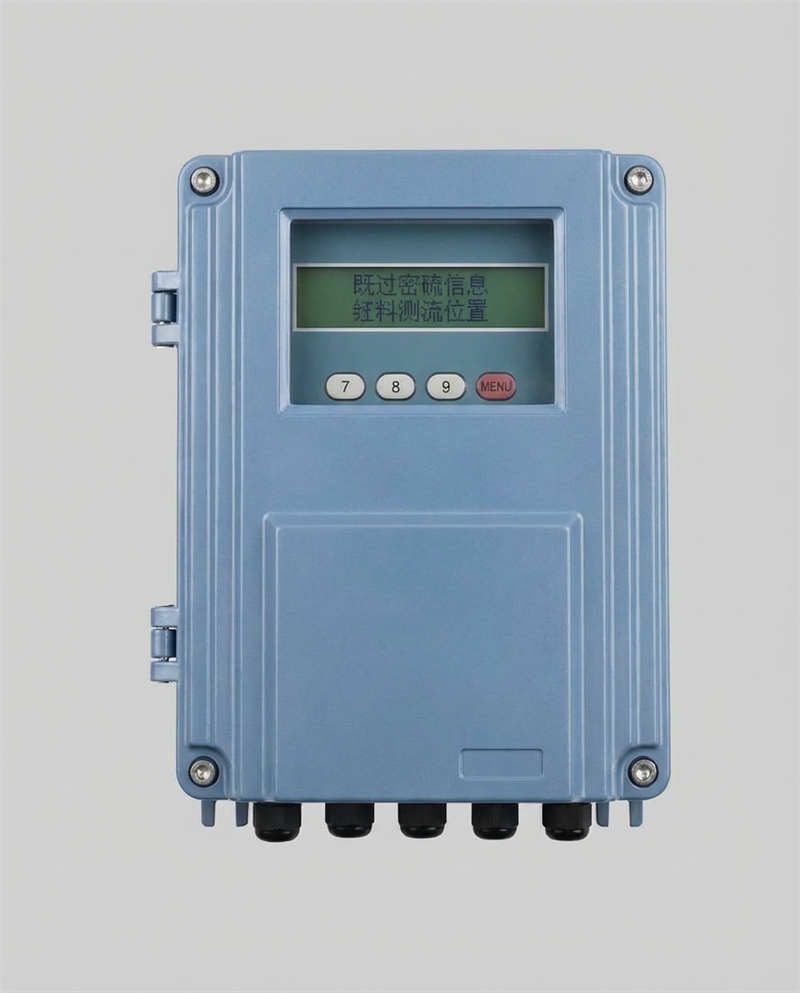
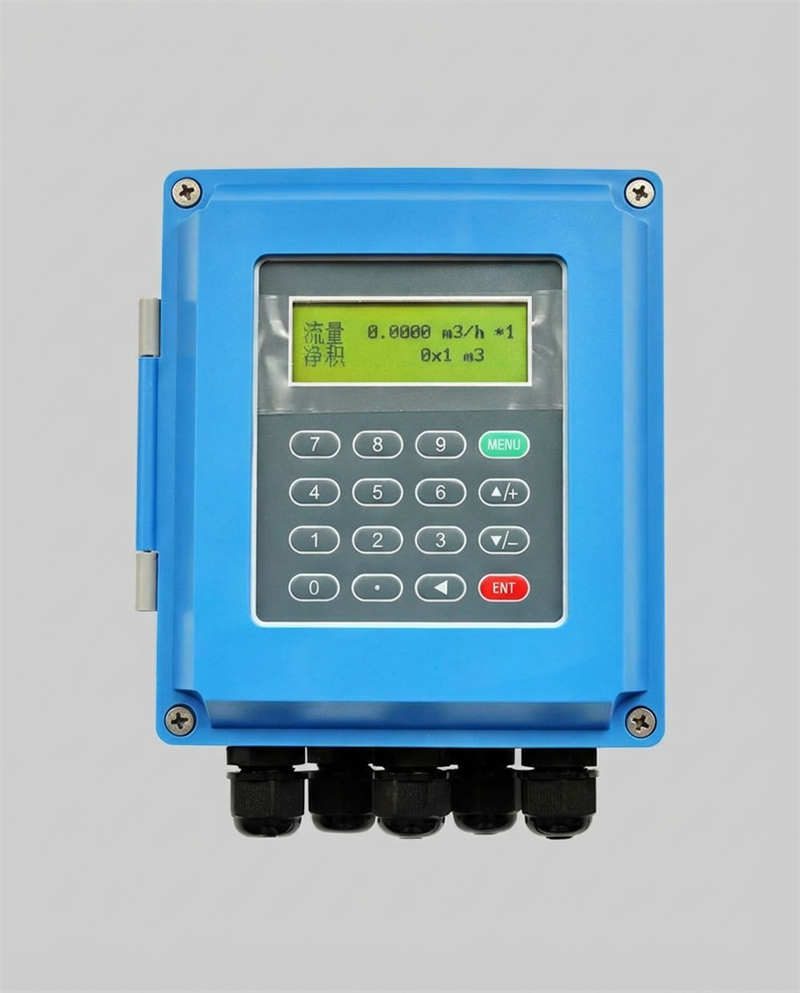
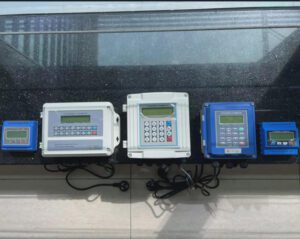
The most common and accurate ultrasonic technology for clean liquids sends ultrasonic pulses diagonally through the pipe — once in the direction of flow, once against it. The difference in travel time between the downstream pulse (faster, assisted by flow) and the upstream pulse (slower, fighting flow) is directly proportional to fluid velocity.
Transit-time differential (Δt) sounds small — we’re talking nanoseconds — but modern signal processors resolve it with accuracy better than ±0.1 µs, enabling ±0.5% or better measurement on a single-path meter and ±0.15% on a 4-path meter.
Doppler Technology
Doppler meters work differently: they emit a continuous ultrasonic beam into the fluid and detect the frequency shift of signals reflected by particles or bubbles. This makes them suitable for dirty, aerated, or slurry-carrying fluids where transit-time would fail — but at the cost of accuracy (typically ±1–3%). For most clean-water, chemical, and HVAC applications, transit-time is the correct choice.
For a deeper technical comparison, the ultrasonic vs. Doppler transducer guide at Jade Ant Instruments walks through selection criteria with application-specific examples.
2.2 Key Advantages — With Supporting Data
Non-Invasive Install
- Clamp-on: 1–4 hours, no shutdown
- No pipe cutting or flanging
- Retrofit any existing pipe
- Works on DN15 to DN6000
Accuracy Tiers
- Clamp-on single-path: ±1–2%
- Inline single-path: ±0.5–1%
- Inline multi-path (4+): ±0.15–0.5%
- Turndown ratio: up to 400:1
Energy Savings
- Zero permanent pressure drop
- Pump energy savings: $580–$740/yr per DP meter replaced
- No impulse lines to maintain
- No process heat loss
Versatility
- No conductivity requirement
- Measures oils, solvents, water, acids
- Bidirectional flow capability
- 4–20 mA, Modbus, HART, PROFIBUS
2.3 Limitations — What Distributors Must Communicate Clearly
Overselling ultrasonic technology is as damaging as underselling it. Three limitations must be communicated upfront to avoid warranty disputes and callbacks:
Aeration threshold: Transit-time meters begin to degrade above 2–5% gas content by volume in the liquid. Above 10%, the signal may drop out entirely. For aerated process streams, specify Doppler or switch to magnetic.
Pipe-wall acoustics: Clamp-on meters are sensitive to pipe material (carbon steel, stainless, PVC, HDPE all have different acoustic properties) and wall condition (scale, lining, or roughness attenuates the signal). Heavy corrosion scale over 3mm thick can reduce signal strength by 40–60%. Always qualify pipe condition before specifying a clamp-on.
Straight-run requirements: Most transit-time meters require 10D upstream and 5D downstream of clear, undisturbed straight pipe (D = pipe diameter). Installations near elbows, pumps, or partially open valves will require flow conditioners or a longer lead length. See ultrasonic flow meter installation guidelines for detailed spacing rules.
Section 3: Head-to-Head Comparison Matrix
| Parâmetro | Ultrasonic (Transit-Time) | Turbina | Magnetic (EM) | Differential Pressure |
|---|---|---|---|---|
| Measurement principle | Transit-time Δt ∝ velocity | Rotor RPM ∝ velocity | Faraday’s Law (induced EMF) | Bernoulli (ΔP ∝ v²) |
| Typical accuracy (reading) | ±0.15–2% | ±0.25–0.5% | ±0,2–0,51 TP3T | ±1–3% |
| Relação de redução | 100:1 – 400:1 | 10:1 – 15:1 | 100:1 – 1000:1 | 3:1 – 10:1 |
| Suitable fluids | Clean liquids, mild slurries (Doppler), hydrocarbons, water | Clean, low-viscosity liquids only | Conductive liquids ≥5 µS/cm (water, slurries, acids) | Liquids, gases, steam (all types) |
| Moving parts | Nenhum | Yes — rotor & bearings | Nenhum | None (meter) / Yes (impulse lines) |
| Permanent pressure drop | Zero | Low-moderate | Zero | High (30–80% of ΔP) |
| Max temperature | 160°C (standard), 200°C+ (specialty) | 120°C (standard), 150°C+ (HT models) | 180°C (PTFE liner), 120°C (rubber liner) | 500°C+ (orifice with remote DP transmitter) |
| Max pressure | Up to 40 bar (inline); unlimited (clamp-on) | Up to 40 bar | Up to 40 bar | Depends on primary element; orifice to 400+ bar |
| Purchase price (DN100) | Clamp-on: $800–$4,000 Inline multi-path: $5,000–$15,000 |
$1,500–$3,500 | $1,800–$6,000 | Orifice plate: $200–$800 + DP transmitter $800–$3,000 |
| Typical installation cost | Clamp-on: $200–$500 Inline: $1,500–$3,000 |
$1,500–$3,000 | $2,000–$4,500 (inc. grounding) | $1,200–$3,500 (inc. impulse lines) |
| Annual maintenance cost | Clamp-on: ~$50–$100 Inline: ~$200–$400 |
$300–$600 (bearing/rotor service) | $150–$400 (electrode & calibration) | $400–$1,200 (impulse lines, DP transmitter, recalibration) |
| Calibration frequency | Every 2–5 years (or per regulation) | Every 1–2 years | Every 2–3 years | Annual (orifice wear), every 2 years (venturi) |
| Bidirectional flow | Yes — native | Não | Sim | No (requires dual installation) |
| Requires process shutdown for install | Fixação por braçadeira: Não Inline: Sim |
Sim | Sim | Sim |
| Output protocols | 4–20 mA, HART, Modbus RTU/TCP, PROFIBUS, BACnet | Pulse, 4–20 mA, HART (premium models) | 4–20 mA, HART, Modbus, PROFIBUS, Ethernet APL | 4–20 mA, HART (via DP transmitter) |
| Best industry fit | Water, HVAC, chemicals, oil & gas, pharma (retrofit) | Clean petroleum products, LPG, batch control | Water/wastewater, chemicals, mining slurries | Steam, gas, high-temperature processes |
* DP orifice cost inflated by $6,400–$9,600 in pump energy waste and $3,200–$4,800 in impulse-line maintenance over 10 years. Turbine TCO driven by bearing replacement + calibration frequency.
Ultrasonic and electromagnetic meters combined now account for 44% of the market — and ultrasonic is the fastest-growing segment, fueled by non-invasive retrofit demand and Industry 4.0 integration requirements.
Note: turbine meter ±0.25% achievable only on clean petroleum products with calibrated K-factor. In water service with minor particle load, typical field accuracy degrades to ±0.5–1%. DP accuracy at low flow rates (<30% of nominal range) can exceed ±5%.
Section 4: Industry-Specific Applications — What to Recommend and Why

4.1 Water and Wastewater Management
Municipal Water Distribution
Water utilities face a unique challenge: their pipes are often 30–50 years old, running continuously, and any installation requiring process shutdown triggers a regulatory notification and customer service disruption. A clamp-on ultrasonic meter solves this completely — no shutdown, no pipe cut, no contamination risk.
A metropolitan water authority in Southeast Asia retrofitted 47 DN300–DN800 distribution mains with clamp-on transit-time meters over 18 months. Pre-retrofit non-revenue water (NRW) losses were running at 28%; by correlating zone flow data in real time, they identified 14 major leak zones and brought NRW down to 19% within 12 months — a reduction representing approximately $1.2 million in annual water production cost savings.
For billing-grade metering, distributors should specify inline multi-path meters meeting AWWA accuracy standards (typically ±1% over full range), not clamp-on devices.
Wastewater Treatment
Wastewater contains suspended solids from 50 to 5,000 mg/L — ruling out turbine meters and degrading DP performance. The contest here is between magnetic and Doppler ultrasonic meters. Magnetic meters win on accuracy (±0.2–0.5% vs ±1–3% for Doppler) when conductivity is sufficient (>50 µS/cm — almost always true for municipal wastewater). Doppler ultrasonic wins when the pipe is non-metallic and grounding for a mag meter would be problematic, or when the budget precludes the $2,000–$4,500 installation cost of a flanged mag meter.
See the detailed side-by-side at magnetic vs. ultrasonic meters for wastewater.
4.2 Oil and Gas Industry
Pipeline Monitoring and Custody Transfer
Transferência de custódia is the most demanding application in flow measurement. For liquid hydrocarbon pipelines, API MPMS, Capítulo 5.8 governs ultrasonic meters for custody transfer — and the standard permits multi-path ultrasonic at ±0.15% accuracy, making it competitive with turbine meters for this application.
The practical advantage for your clients: an inline 4-path ultrasonic meter on a DN200 crude line eliminates the turbine’s bearing replacement schedule (every 12–18 months in crude service due to wax and particulate), saving $800–$1,500 per maintenance event. Over 10 years on a 20-meter custody-transfer facility, that’s $160,000–$300,000 in avoided maintenance.
Refinery Operations
Refineries present complex fluid streams: light cuts (naphtha, gasoline) with low viscosity and high vapor pressure, middle distillates (gasoil, kerosene), and heavy residual fractions with high viscosity. Ultrasonic meters handle light-to-middle cuts well; heavy fractions (viscosity >100 cSt) degrade transit-time performance and may require Coriolis instead. Always obtain fluid viscosity data before specifying.
4.3 Chemical and Pharmaceutical Manufacturing
Process Fluid Measurement
The chemical industry runs everything from aggressive mineral acids to delicate pharmaceutical intermediates in the same facility. Magnetic meters with PTFE liners and Hastelloy electrodes handle most acid and base streams. But when the fluid is non-conductive — toluene, hexane, chlorinated solvents — ultrasonic transit-time is the correct technology. It requires no contact with the fluid and no special electrode material selection.
Jade Ant Instruments supplies a range of ultrasonic and electromagnetic meters configured for chemical service, including PTFE-lined magnetic meters for acid service and clamp-on ultrasonic for non-conductive hydrocarbon solvents. Technical pre-sales specifications are available at Jade Ant Instruments clamp-on ultrasonic.
Pharmaceutical and FDA Compliance
FDA 21 CFR Part 211 requires that measuring instruments used in pharmaceutical manufacturing be calibrated, qualified, and documented. Inline ultrasonic spool-piece meters — with smooth bore wetted surfaces and no dead zones — satisfy the sanitary design requirements of 3A standards and EHEDG guidelines. Clamp-on meters are increasingly accepted for non-product-contact utility lines (purified water, WFI) where the external installation avoids any contamination risk.
4.4 HVAC and Building Management Systems
HVAC is the fastest-growing segment for clamp-on ultrasonic meters. A typical commercial building runs 50–200 chilled water, heating water, and condenser water circuits — many of which have never been metered at all. The building owner wants sub-metering for tenant billing, energy benchmarking, and demand-based control.
A clamp-on meter on a 2-inch copper or steel HVAC circuit installs in 2 hours without system shutdown and outputs a 4–20 mA or Modbus RTU signal directly to the BMS. For energy metering, add a paired heat calculator with supply and return RTD probes for BTU output. Badger Meter’s hydronic HVAC case studies demonstrate 8–15% HVAC energy savings through accurate real-time flow data enabling variable-speed drive optimization.
Section 5: Making Your Decision — 8-Step Selection Framework for Distributors

Define the Fluid
Is it conductive (>5 µS/cm)? Viscous (>100 cSt)? Contains >2% gas? Contains particles >100 µm? These four questions eliminate most wrong technologies before you open a catalog.
Confirm Temperature & Pressure
Max operating temperature (not just normal) and line pressure determine whether clamp-on is viable. Above 160°C or in steam service, specify inline ultrasonic or vortex — not clamp-on.
Determine Pipe Size & Material
Clamp-on works on DN15 to DN6000. Confirm pipe wall thickness (<6 mm may cause clamp-on reflections; >25 mm requires specialty transducers). Lined pipes require acoustic path verification.
Set Accuracy Requirements
Custody transfer requires ±0.25% (use inline multi-path). Process monitoring is typically ±1–2% (clamp-on sufficient). Over-specifying accuracy adds $3,000–$10,000 to purchase price for no operational benefit.
Assess Installation Constraints
Can the process be shut down? Is there 10D upstream / 5D downstream straight run available? Is the pipe location accessible? A yes to all three enables inline options; otherwise, clamp-on is the practical choice.
Specify Communication Protocol
Does the client DCS run HART, Modbus, or PROFIBUS? Specifying the wrong protocol adds $500–$1,500 in retrofit adapters. Most modern ultrasonic meters support all three natively; confirm before ordering.
Calculate 10-Year TCO
Include: purchase + installation + calibration schedule + annual maintenance + energy cost (ΔP × flow × hours × $/kWh) + estimated downtime cost. The meter with the lowest purchase price almost never has the lowest TCO.
Verify Certifications
Does the application require ATEX/IECEx (hazardous zone)? NSF 61 (drinking water)? FDA/3A (food & pharma)? OIML R49 or MID (utility billing)? Missing a certification can delay commissioning by 3–6 months.
Section 6: Implementation and Transition Planning
6.1 Assessing Existing Infrastructure
Before recommending an ultrasonic retrofit, distributors should request three pieces of client documentation: the current meter tag list (technology, DN size, age), the latest maintenance log (repair frequency and cost per meter), and the P&ID showing straight-run lengths at each metering point.
This data does two things simultaneously: it identifies which meters are poor-fit candidates for ultrasonic (short straight run, high temperature, non-acoustic pipe material) and provides the raw numbers for a compelling TCO argument on the remaining 70–80% of the fleet.
6.2 Installation Best Practices
The most common installation errors for ultrasonic meters — responsible for over 50% of post-installation accuracy complaints — are incorrect sensor spacing and insufficient couplant application. The sensor spacing is calculated from pipe OD, wall thickness, and fluid acoustic velocity; all modern transmitters include an onboard calculator. The Guia de práticas recomendadas para instalação de medidores de vazão from Jade Ant Instruments documents the five-step verification procedure, including zero-flow baseline check, which should be performed within 24 hours of installation.
For inline meters, the critical rules are: (1) never install immediately downstream of a partially open butterfly valve — the asymmetric flow profile degrades accuracy by 2–5%; (2) maintain signal cable separation of at least 300 mm from AC power cables; (3) earth the transmitter enclosure and the pipe (if non-metallic) independently.
6.3 Commissioning and Validation
Post-installation commissioning should include: zero-flow verification (with all valves closed), span verification against a portable clamp-on check meter or a certified master meter, and loop test to confirm DCS receives the expected 4–20 mA or digital signal range. Document all values in a commissioning certificate — this is the baseline for future calibration audits and any warranty claims.
Section 7: Future Trends — What to Watch as a Distributor
7.1 Multi-Path and AI-Augmented Measurement
The next generation of inline ultrasonic meters uses 4, 8, or even 16 acoustic paths across the pipe cross-section, coupled with flow-profile correction algorithms trained on computational fluid dynamics data. This approach pushes accuracy below ±0.1% of reading on liquids — a level previously achievable only with Coriolis meters at 5–10× the cost. For custody-transfer applications in oil & gas, this is the clearest technology transition to monitor.
7.2 Industry 4.0 and IIoT Integration
O integration of smart flow meters with IIoT platforms is accelerating. The intelligent flow meter market is projected to grow from $3.5B in 2025 to $8.5–$10.5B, driven by demand for real-time data, predictive maintenance alerts, and remote configuration. Distributors who can configure and commission IoT-ready meters — and integrate them with client SCADA, BMS, or MES platforms — command 20–40% higher margins on the service component than on the hardware alone.
The practical implication: ensure your portfolio includes meters with Modbus TCP, HART 7 (burst mode), and — increasingly — OPC UA or MQTT output. Clients running modern DCS platforms (Siemens PCS 7, Honeywell Experion, Emerson DeltaV) will ask for these protocols by name.
7.3 Wireless and Battery-Powered Clamp-On Meters
A growing segment of the clamp-on market is battery-powered, Bluetooth-enabled devices for temporary flow surveys and energy audits. These are not replacements for installed meters — they’re a distributor’s service tool and a gateway product. A client who uses your battery clamp-on for a 2-week leak survey and sees the value in the data will convert to a permanent installed solution 60–70% of the time in our experience. Consider adding 2–3 portable battery-powered units to your demo inventory.
Key Terms Glossary
Why Distributors Choose Jade Ant Instruments
Instrumentos Jade Ant manufactures a complete range of flow measurement technologies — ultrasonic (clamp-on and inline spool-piece), electromagnetic, vortex, turbine, and thermal mass — from a single ISO-9001 certified facility. Every meter ships with a factory calibration certificate traceable to national standards.
For distributors, the commercial proposition is direct: Jade Ant meters are configured to order (liner material, electrode material, communication protocol, approvals) and typically priced 30–50% below equivalent European and North American brands at the same accuracy tier. That margin differential translates directly into your gross profit — or into a price advantage that makes you more competitive on price-sensitive government and municipal tenders.
OEM and ODM programs are available for distributors requiring their own brand label on the transmitter and documentation. Technical pre-sales support — including sizing calculations, liner/electrode compatibility checks, and installation drawings — is provided at no cost as part of the distributor partnership.
- Full ultrasonic range: clamp-on ultrasonic flow meter — DN15 to DN6000, transit-time technology
- Selection guidance: ultrasonic water flow meter selection tips
- Technology comparison: ultrasonic vs. magnetic vs. turbine — comparison guide
- Industrial applications: top 8 industrial applications for ultrasonic meters
- Non-invasive technology guide: clamp-on vs. transit-time non-invasive meters compared
Ready to Optimize Your Flow Measurement Portfolio?
Request a distributor consultation with Jade Ant Instruments’ technical team — sizing support, margin analysis, and OEM pricing, all in one conversation.
Request Distributor Consultation Full Distributor Selection GuideQuick-Reference Specification Table — Distributor Pre-Sales Checklist
Use this table as a quick client-facing specification tool during pre-sales conversations. All values represent typical mid-range industrial configurations for DN100 class meters in 2025–2026.
| Specification Factor | Ultrassônico de fixação | Inline Ultrasonic (Multi-Path) | Magnetic (EM) | Turbina | DP / Orifice |
|---|---|---|---|---|---|
| DN range (standard) | DN15 – DN6000 | DN25 – DN2400 | DN10 – DN2000 | DN10 – DN600 | DN25 – DN2000+ |
| Flow velocity range | 0.01 – 12 m/s | 0.01 – 12 m/s | 0.1 – 10 m/s | 0.3 – 10 m/s | 0.5 – 15 m/s |
| Repetibilidade | ±0,11 TP3T | ±0,051 TP3T | ±0,11 TP3T | ±0,11 TP3T | ±0,21 TP3T |
| Operates on gases? | No (liquid only) | Specialty models only | Não | Sim | Sim |
| Operates on steam? | Não | Não | Não | Limited (saturated steam only) | Yes — standard application |
| Min. fluid conductivity | None required | None required | ≥5 µS/cm | None required | None required |
| Suitable for hydrocarbons? | Sim | Sim | Não | Sim | Sim |
| ATEX/IECEx available? | Sim | Sim | Sim | Sim | Sim |
| Typical installation time | 1 – 4 hrs (no shutdown) | 4 – 8 hrs (shutdown required) | 4 – 8 hrs (shutdown required) | 3 – 6 hrs (shutdown required) | 4 – 10 hrs (shutdown required) |
| Upstream straight run | 10D minimum | 10 – 15D | 5D | 10 – 15D | 20 – 50D (orifice) |
| Expected service life | 10 – 20 years | 15 – 25 years | 15 – 25 years | 5 – 10 years (clean service) | 10 – 20 years (primary element) |
| Recommended for retrofit? | Ideal | Viável | Viável | Viável | Poor (complex piping changes) |
Perguntas frequentes
The Technology Transition Is Already Happening
Ultrasonic flow measurement is not a niche technology waiting for mainstream adoption — it already holds 22% of the global flow meter market and is growing faster than any other segment. The drivers are structural: aging infrastructure requiring non-invasive retrofit, IIoT integration demanding digital output protocols, and tightening energy efficiency regulations making permanent pressure loss legally and financially unacceptable.
For distributors and agents, the commercial opportunity is direct. Every turbine meter fleet with maintenance-driven replacement cycles, every DP meter installation wasting pump energy, and every magnetic meter application on a non-conductive fluid is a qualified replacement opportunity. The ability to present a quantified 10-year TCO comparison — not just a product datasheet — is what separates high-margin technical distributors from commodity resellers.
The selection framework, comparison data, and application guidance in this guide are designed to be used directly in client conversations — not just as background reading. Download the comparison table, run the TCO calculation on your client’s current fleet, and use the 8-step selection framework as a structured needs-assessment tool. The answer to “which meter?” will usually be clear by step three.
- 5 Key advantages of ultrasonic over magnetic meters for clean water — Jade Ant Instruments
- Clamp-on vs. inline ultrasonic flow meter buyer’s guide — Jade Ant Instruments
- How to read a flow meter datasheet — Jade Ant Instruments
- Flow meter selection guide with accuracy data — Engineering Toolbox
- Comparing types of flow meters: ultrasonic, magnetic, turbine, variable area — Icon Process Controls
- Understanding different types of flow meters — advantages and disadvantages — Turbines Inc.