
Stop Losing Sales to Competitor Recommendations—Give Your Clients the Confidence to Choose the Right Flowmeter on the First Try

You’ve been in a meeting where a client asks which flowmeter they need, and fifteen minutes later you still aren’t sure which question to answer first. Fluid type? Pipe diameter? Regulatory compliance? The client is waiting. You’re mentally scanning three different datasheets and hoping no one asks about the pressure rating.
That’s not a knowledge gap—it’s a process gap. And it’s costing you deals every quarter.
The flow measurement market has become brutally competitive. Clients can pull up three competing quotes in 48 hours. Competitors are sharper on specifications. And when a wrong recommendation leads to a failed installation, you don’t just lose that client—you lose their network.
This guide is built for flow meter distributors and agents who want to stop operating on gut instinct and start winning business with a structured, replicable selection framework. Every section below maps directly to what your clients actually need—and what your competitors aren’t yet delivering.
The Hidden Cost of Getting Flowmeter Selection Wrong
Before you can sell a better selection process, you have to understand exactly what’s at stake when the process fails. Not in abstract terms—in documented financial consequences that your clients live with long after the wrong meter gets installed.
What Happens When Distributors Recommend the Wrong Instrument
Wrong flowmeter recommendations don’t announce themselves at installation. They hide inside commissioning readings that look plausible, batch calculations that drift slowly off-target, and service calls that get logged as “process variability” rather than meter failure. By the time the root cause surfaces, the damage is done.
Real-world consequences that affect your bottom line
A specialty chemical manufacturer in Southeast Asia ran 23 failed batches before anyone connected the dots back to a misspecified thermal mass flow meter. By the time the root cause was identified, the tally was $340,000 in rejected product, $180,000 in regulatory fines, $210,000 in emergency replacement and downtime, and $117,000 in lost contract revenue. Total: $847,000. The meter itself cost $1,800.
A food and beverage bottler received a turbine flowmeter sized to average flow—not to the actual operating window. The rotor spent most of its working life below minimum rated velocity, producing erratic pulse output that corrupted downstream batch calculations and caused bearing failure in a third of the expected service life. Emergency replacement plus production losses: $71,000.
These aren’t rare disasters. They are the predictable outcome of a selection process that prioritizes speed over rigor. According to field data from Jade Ant Instruments’ flow meter selection mistakes case study library, the majority of selection failures trace back to three specific gaps: incomplete fluid characterization, an operating flow range that was never fully mapped, and compliance requirements that were assumed rather than confirmed.
How incorrect selections impact your client relationships and future orders
Industrial buyers talk. Within any tightly networked vertical—municipal water, specialty chemicals, pharmaceutical manufacturing—a single well-known selection failure can quietly close doors with an entire regional account network. One botched recommendation doesn’t just end a project; it ends a relationship, and often several adjacent ones.
More damaging than the financial hit is the repositioning that follows. When a distributor causes a problem, they stop being a trusted advisor. They become a vendor who needs to be double-checked. That is exactly the category you’re fighting not to occupy.
Why Traditional Selection Methods Fail Your Clients
Static datasheets and generic guidance leave too much room for the kind of error that costs six figures to correct.
The limitations of PDF catalogs and email consultations
A PDF catalog tells your client what a flowmeter can do under ideal conditions. It doesn’t ask what their actual minimum flow is. It doesn’t flag that their stated maximum pressure doesn’t account for surge events during valve closure. It doesn’t check whether the liner material is compatible with the chlorinated cleaning cycle their maintenance team runs every Friday night.
Email consultations are worse. They’re asynchronous, they fragment across multiple threads, and they depend entirely on the client telling you what they know—which is often not the same as what you need to know. The critical question you didn’t think to ask in the first email is the one that creates the $67,000 corrosion disaster six months later.
Why guesswork costs you more than investing in better tools
The time invested in a thorough upfront assessment is consistently smaller than the cost of correcting a mistake after installation. A complete application audit takes 45 minutes. An emergency replacement plus client relationship repair takes months. The math favors the audit every single time—and yet most distributors still rely on a combination of datasheet recall and optimistic assumptions.
The problem isn’t that your team lacks product knowledge. The problem is that product knowledge without a structured process produces inconsistent results. One excellent application engineer makes great recommendations. Ten sales reps operating without a consistent framework make ten different levels of recommendation quality.
The Competitive Advantage You’re Missing
What your competitors are already doing
The forward-thinking distributors in your market are not winning on price. Price is the last refuge of distributors who have nothing else to offer. The ones gaining share are offering something that’s genuinely harder to replicate: a structured selection process that eliminates client risk and shortens the sales cycle simultaneously.
When a distributor can walk into a client meeting and say “let’s work through our selection framework together”—and produce a documented rationale with material compatibility verification, compliance flag checks, and installation requirement review—they are not competing with a competitor’s quote. They are setting the standard that the competitor’s quote gets compared against.
The ROI of implementing a structured selection framework
Distributors who use structured selection tools close deals approximately 30% faster by eliminating back-and-forth email cycles and gathering all requirements in a single structured session. Average order values increase because the selection framework surfaces complementary products—flow conditioners, isolation valves, calibration services—that would otherwise be missed. Customer retention improves because selection errors that would have triggered returns and relationship damage simply don’t happen.
The investment is a structured framework and the discipline to use it consistently. The return is a competitive moat that low-cost competitors cannot replicate by dropping their prices another 5%.
How the Interactive Flowmeter Selection Tool Works
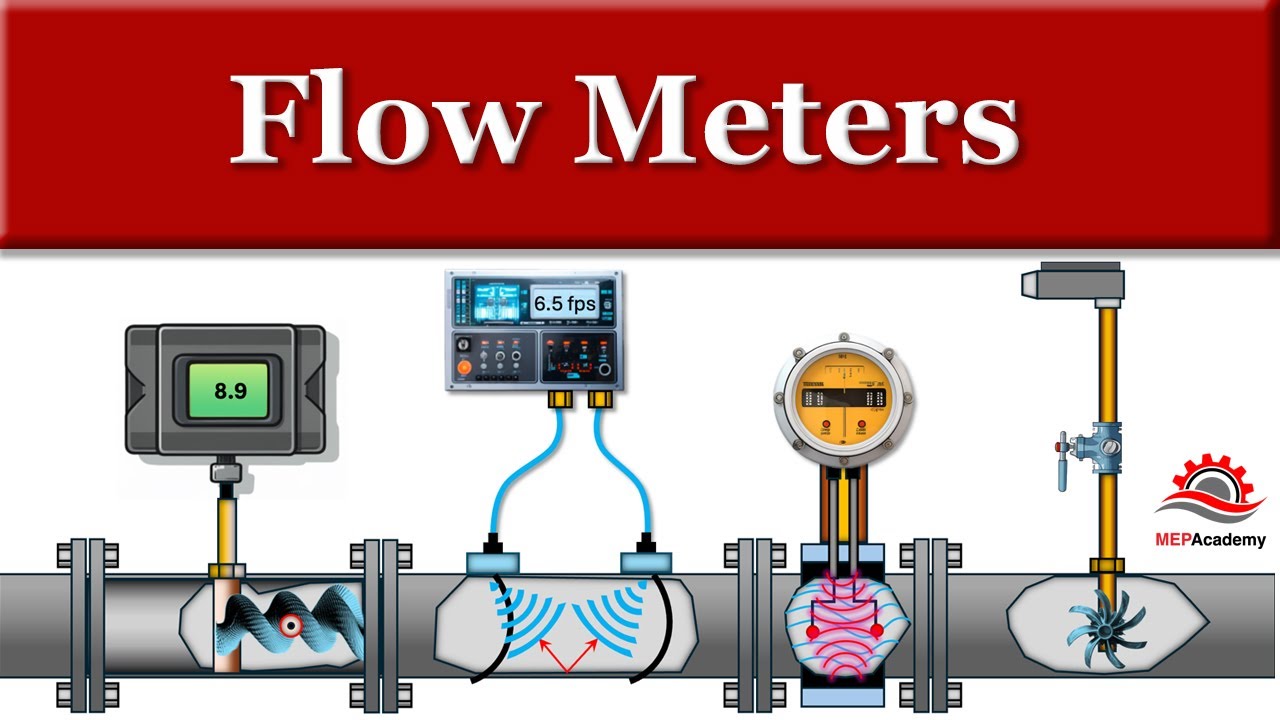
▶️ Watch: Flow Meters Explained – This practical overview of flow meter types and their industrial applications is an excellent reference for training your sales team on the fundamental selection logic.
The interactive selection tool is a structured decision framework—not a form to fill out, but a guided conversation that ensures every critical application variable gets captured before any recommendation is made. Here is how it works in practice.
The Four Core Decision Filters That Eliminate Guesswork
Every flowmeter application can be filtered through four primary dimensions. Work through all four before touching a product catalog, and the number of technically viable options drops from dozens to two or three.
Pressure range assessment—why it matters more than you think
Pressure range (the span from the lowest to highest operating pressure at the measurement point, including transient surge events) is the specification that most distributors underestimate. Clients almost always quote steady-state operating pressure. What they don’t spontaneously mention is the pressure spike generated during valve closure, the surge event that occurs during pump startup, or the fact that the system design safety margin was set 20 years ago and hasn’t been reviewed since.
An oil and gas client’s distributor specified a meter to the stated 400 PSI steady-state operating pressure with a modest safety margin. During a routine valve-closure event, a transient pressure spike exceeded the meter’s rated limit, causing a seal failure and an emergency system shutdown. Total cost: $82,000. The fix was simple: ask about surge and transient conditions explicitly, then add an appropriate engineering safety margin above the worst-case figure. One question. Eighty-two thousand dollars.
Media type compatibility—avoiding costly installation failures
Media type (the specific fluid or gas being measured, including its chemical composition, concentration range, temperature, viscosity, and any suspended solids or gas entrainment) is the primary driver of wetted-material selection. It is also the variable most often treated as a secondary detail in sales conversations.
The rule is straightforward: never specify wetted materials based on a generic corrosion resistance rating. A 316 stainless steel electrode that performs reliably in dilute acid at 2% concentration may show measurable pitting in eleven weeks at the same fluid’s peak concentration of 8%. The George Grant & Co. guide to flow meters for corrosive media is clear on this: wetted material selection must be matched to the exact chemical profile, including worst-case conditions—not a nominal operating description.
Application-Specific Pathways for Different Industries
Oil and gas applications: specialized pressure and temperature demands
Oil and gas applications combine high operating pressures (often 600 PSIG and above), elevated temperatures, potentially sour gas chemistry (H₂S present), and custody-transfer accuracy requirements that place the application under API MPMS measurement standards. Each of these factors eliminates a specific subset of flowmeter technologies. The selection framework must check all four before producing a recommendation—not just the one the client asked about first.
Custody transfer metering (measurement used as the legal basis for billing between buyer and seller—accuracy errors directly translate into financial disputes) in oil and gas is governed by the API Manual of Petroleum Measurement Standards. A meter that doesn’t meet the applicable API chapter cannot be used for this purpose, regardless of how well it performs technically. Confirm the custody transfer requirement before any other technical discussion.
Water treatment and municipal utilities: regulatory compliance and accuracy standards
Municipal water and wastewater applications are characterized by large pipe diameters (150mm to 1200mm), low operating pressures, conductive process fluids (enabling electromagnetic flowmeter technology), and regulatory compliance requirements for billing accuracy. Certifications such as NSF 61 (for drinking water contact) and MID Annex MI-001 (for water metering under European Directive) must be verified before recommendation. A meter that doesn’t carry the required certification is disqualified regardless of its technical performance.
Chemical processing: corrosion resistance and safety considerations
Chemical process applications span the widest range of fluid aggression and the highest consequence of material failure. Reactor feed lines, solvent transfer, and acid dosing systems each carry different material requirements—and the range of acceptable materials may narrow to one or two options once all the constraints are applied simultaneously. ATEX (Atmosphères Explosibles—the European classification system for equipment used in potentially explosive atmospheres) or NEC Division/Zone classification applies to any installation in or adjacent to a hazardous area, adding an additional filter layer.
HVAC and building automation: integration and precision needs
Building automation applications prioritize communication protocol compatibility over raw measurement accuracy. A flowmeter with excellent ±0.5% accuracy but Modbus-only output is effectively unusable in a BACnet building management system without a protocol converter that introduces integration complexity, latency, and a new failure point. Confirm the required communication protocol (the language the meter uses to transmit data to the control system, such as 4-20 mA, Modbus RTU, BACnet, or HART) at the beginning of every building automation application discussion.
The Flow Conditioner vs. Gauge Decision Matrix
Recommending a flowmeter without considering the upstream piping environment is one of the most common errors that creates field performance problems your client will trace back to your recommendation.
Understanding flow conditioner requirements for your application
A flow conditioner (a precision-engineered device installed upstream of a flowmeter to normalize the velocity profile of the fluid before it reaches the sensing element) is required whenever the upstream piping contains elbows, valves, reducers, or other disturbances within the meter’s required straight-run distance. According to field data from the Jade Ant Instruments flow conditioner selection guide, upstream piping disturbances account for more than 60% of field measurement errors—not meter defects. Recommending the meter without addressing the upstream piping is recommending half a solution.
The selection matrix for flow conditioner configurations is straightforward:
| Upstream Disturbance Type | Recommended Conditioner | Min Downstream Straight Run | Pressure Drop (Kp) |
|---|---|---|---|
| Single in-plane elbow | Standard perforated plate | 10D | 2.0–3.5 |
| Multiple in-plane elbows | Perforated plate (high performance) | 10D–12D | 2.5–5.0 |
| Out-of-plane double elbows | Hybrid vane-plate combination | 10D–12D | 2.5–5.5 |
| Control valve upstream | Hybrid or dual-attenuation plate | 12D–15D | 3.0–5.5 |
| Space-constrained retrofit | Compact inline conditioner | 12D–15D | 1.5–3.0 |
| Low-pressure system | Low-drop vane design | 15D–20D | 0.75–1.25 |
D = pipe internal diameter. Kp = dimensionless pressure loss coefficient. All values are representative; confirm with manufacturer data for specific pipe size and flow conditions.
Selecting gauge types that deliver reliable readings in your specific conditions
Pressure gauge selection for the measurement station follows the same logic as flowmeter selection: the operating range must be matched to actual conditions (not maximum design conditions), the wetted materials must be compatible with the process fluid, and the environmental rating must address the installation location’s IP (Ingress Protection—the standard rating system for protection against dust and water) requirements.
Real-Time Compatibility Checking
Material compatibility verification across pressure, temperature, and media
The compatibility check cross-references three variables simultaneously: the process fluid chemistry, the operating temperature at the measurement point, and the operating pressure. A material that is chemically compatible at ambient temperature may become incompatible at elevated temperature—316 stainless steel, for example, shows increased susceptibility to chloride stress corrosion cracking above approximately 60°C. This is not a concern in ambient-temperature water applications. It becomes critical in heated service where chlorinated cleaning cycles contact 316 SS components.
Installation requirement flags that prevent costly mistakes
Installation requirement flags check the proposed meter’s minimum upstream and downstream straight-run requirements against the actual available pipe run at the installation point. If the actual upstream run is 8D and the meter requires 15D, the selection framework flags this conflict before the quote goes out—not after the meter arrives and the installation engineer calls with a problem.
Certification and compliance checks for regulated industries
The certification check filters the viable meter list against the applicable regulatory requirements for the specific application. It flags any option that lacks a required certification—NSF 61, ATEX Zone 2, MID MI-001, API 14.3, FDA 21 CFR compliance—before the option can advance to recommendation. This step catches the compliance failures that generate $73,000 corrective action events.
Navigating Pressure Ranges Without Overspecifying or Underperforming

The Pressure Range Sweet Spot—Why It Matters
Most distributors either overbuy expensive high-pressure instruments or recommend units that fail under peak loads. Both errors are preventable with a single change: calculating the actual operating pressure range rather than defaulting to the maximum design figure.
How to calculate your actual operating pressure range (not just maximum)
The correct pressure specification includes four data points, not one: the minimum operating pressure, the normal operating pressure, the maximum continuous operating pressure, and the maximum transient or surge pressure (a pressure peak that occurs during valve closure, pump startup, or process upset—sometimes called water hammer in liquid systems). The flowmeter must be rated for the highest of these values, with a documented engineering safety margin applied above it.
The standard safety margin approach: specify the meter’s maximum pressure rating at a minimum of 1.25× the maximum transient pressure. For applications where transient pressure data is unavailable, apply a 1.5× factor to the maximum continuous operating pressure as a conservative default.
The cost difference between overspecification and failure rates
Overspecification (specifying a pressure rating significantly above what the application requires) wastes capital but doesn’t create field problems. Underspecification (specifying a pressure rating that the system’s transient events can exceed) creates safety incidents. The cost asymmetry between these two errors strongly favors conservative pressure specification—but “conservative” means a calculated safety margin, not an unlimited one.
Why your clients need headroom without paying for unnecessary capacity
A meter specified at ANSI 600# (1440 PSI working pressure) for a system that operates at 200 PSI with 350 PSI maximum transient costs approximately 40–60% more than a correctly specified ANSI 300# unit. That premium is not justified by the application. Present the pressure range calculation transparently and specify to a 300# rating with documented confidence—don’t default to 600# to feel safe.
Pressure Spikes and Safety Margins
Understanding surge pressures in your specific application
Surge pressure (a transient pressure wave generated when flow is suddenly stopped or redirected, most commonly during rapid valve closure or pump trip) can reach 2–3 times the steady-state operating pressure in liquid systems. Its magnitude depends on fluid velocity, pipe material, pipe diameter, and valve closing speed. For any application involving fast-acting valves or pumps, surge analysis (a calculation of the peak pressure transient the system can generate) should be requested from the client’s engineering team before finalizing pressure rating.
Building in safety margins that actually make sense for your client’s process
The safety margin conversation is one you should be having explicitly—not implicitly. Say: “Your maximum steady-state pressure is 400 PSI. Your maintenance team described rapid valve closures on the line. We’ve applied a 1.3× surge factor giving us an estimated maximum transient of 520 PSI. I’m recommending a 600 PSI rated instrument to give you 15% headroom above that estimated peak. Here’s why that’s the right number for your application.” That conversation closes deals and prevents warranty disputes.
How to communicate pressure requirements confidently to manufacturers
Every pressure specification submitted to a manufacturer should include: steady-state operating pressure (normal), maximum continuous operating pressure, estimated maximum transient pressure, basis for transient estimate (surge analysis, conservative factor, or measured data), and required ANSI pressure class. This level of specification eliminates the “it was within spec” / “no it wasn’t” dispute that follows a seal failure.
Media Types and Material Compatibility—Your Liability Shield
Why Material Selection Determines Long-Term Reliability
Chemical compatibility (the ability of a material to resist degradation when exposed to a specific fluid under actual operating conditions of temperature, pressure, and concentration) is not a secondary consideration. It is the foundation of every wetted-component recommendation you make.
Common media types and their compatibility requirements
| Media Type | Aggressive Factors | Recommended Wetted Material | Technology to Avoid |
|---|---|---|---|
| Deionized / ultrapure water | Leaching risk from standard materials | PTFE liner, platinum electrodes | Standard 316 SS wetted parts |
| Dilute acids (<5% concentration) | Chemical attack risk at temperature | PTFE liner, Hastelloy C-276 electrodes | 316 SS electrodes |
| Concentrated acids (>10%) | Aggressive chemical attack | Hastelloy C-276 throughout | Standard EM liners, turbine |
| Seawater / brine | Chloride stress corrosion | Duplex stainless or Hastelloy | 316 SS at elevated temperature |
| Slurries / abrasive media | Erosion + chemical attack | Ceramic or hard rubber liner, tungsten carbide | Thin-walled meters, turbine |
| Hydrocarbons | Limited chemical aggression | 316 SS standard | PTFE (not required) |
| Sour gas (H₂S) | Hydrogen embrittlement, NACE requirements | NACE MR0175-compliant alloys | Standard carbon steel |
Corrosive vs. non-corrosive media: what changes in your selection
For non-corrosive applications (clean water, most hydrocarbons, compressed air), material selection is straightforward: standard 316 stainless steel wetted parts cover the vast majority of applications. For corrosive applications, the wetted material specification becomes the primary technical decision—it constrains which meter technologies are viable and which are disqualified, before any performance comparison is relevant.
Temperature effects on material performance over time
Material compatibility ratings in chemical resistance charts are almost always given at ambient temperature (20°C). At elevated temperatures, chemical attack rates typically accelerate by a factor of 2–4 for every 10°C temperature increase. A liner material that is suitable for continuous service in 5% hydrochloric acid at 20°C may fail in 3–6 months at 60°C. Always confirm material compatibility at the actual operating temperature, not the ambient condition from the compatibility chart.
Avoiding the Compatibility Disaster
Stainless steel, brass, and specialty alloys—when to specify each
316 stainless steel covers clean liquids, most hydrocarbons, and mild-to-moderate chemical service at ambient temperature. Brass covers clean water and non-corrosive gas at moderate pressure—it is not suitable for aggressive media or applications with chloride-rich fluids. Hastelloy C-276 covers aggressive acids, chlorine, and mixed corrosive media. Duplex stainless (2205 or 2507) covers high-chloride environments including seawater and brine. Specifying anything other than 316 SS for a clean-water application is unnecessary cost; specifying 316 SS for a concentrated acid application is a failure waiting to happen.
Elastomer and gasket compatibility that prevents leaks and contamination
Elastomer selection (the material used for O-rings, seals, and gaskets that contact the process fluid) is as important as the primary wetted material and equally often overlooked. EPDM (ethylene propylene diene monomer) is suitable for water, steam, and mild acid service but degrades rapidly in hydrocarbons. Viton (fluoroelastomer) handles most hydrocarbons and moderate acid service. PTFE-encapsulated seals are available for the most aggressive services. For food and pharmaceutical applications, FDA-compliant elastomers (typically EPDM or silicone with appropriate certifications) are required.
How to document your selection rationale for client confidence and liability protection
Every material selection for a corrosive or high-stakes application should be documented with: the fluid description (including full composition range and temperature range), the materials selected for each wetted component, the chemical compatibility reference used to verify selection, and the name and title of the person at the client organization who confirmed the fluid specification. This documentation is your professional record—and your protection if application conditions are later found to be different from what was specified.
Industry-Specific Requirements That the Tool Handles Automatically

Regulated Industries Demand Precision—Here’s How to Deliver It
Your clients in pharmaceutical, food and beverage, and utility sectors face compliance requirements that transform a technical selection decision into a legal obligation. A meter that performs correctly but lacks the required certification is non-compliant—and non-compliance has financial consequences that dwarf the cost of getting the certification right the first time.
Certification requirements (ASME, NSF, FDA, ISO) and how to verify them
| Industry | Applicable Standard | What It Requires | Consequences of Non-Compliance |
|---|---|---|---|
| Drinking water | NSF 61 | No leaching of harmful substances into water | Product recall, regulatory penalty, liability |
| Food & beverage | 3-A Sanitary Standards, FDA 21 CFR | Cleanability, surface finish, no crevices | FDA audit failure, product recall |
| 医薬品 | FDA 21 CFR Part 11, GMP | Electronic record accuracy, validation | Batch rejection, production shutdown |
| Oil & gas custody transfer | API MPMS, AGA-3/7/9 | Accuracy, traceability, documentation | Billing disputes, regulatory investigation |
| EU water metering | MID Annex MI-001 | Type approval, accuracy class | Illegal to use for billing without certification |
| Hazardous areas | ATEX (EU), NEC/UL (US) | Ignition protection design | Safety authority shutdown, insurance void |
Traceability documentation your regulated clients actually need
Traceability documentation (the paper trail that proves a measurement is linked to a national or international measurement standard through an unbroken chain of calibrations) is a requirement, not a formality, in regulated industries. For custody transfer, pharmaceutical, and utility billing applications, the calibration certificate must reference an accredited calibration laboratory (ISO/IEC 17025 accredited), specify the uncertainty of the calibration measurement, and identify the reference standard used. A manufacturer’s standard factory calibration certificate may not meet these requirements. Confirm with the client’s compliance team before assuming it does.
How the tool flags non-compliant options before you recommend them
The compliance filter checks every proposed instrument against the applicable standards for the declared application type and eliminates non-compliant options before they appear in the recommendation list. This catches the certification gaps that generate emergency replacements and regulatory corrective actions—before they become a field problem you’re explaining to a client who trusted your recommendation.
Harsh Environment Applications
High-temperature applications: material and gauge selection
High-temperature applications (typically defined as continuous process temperatures above 150°C for liquids or above 200°C for gases) constrain both the technology options and the materials. Electromagnetic flowmeters with PTFE liners are typically limited to approximately 130°C. Vortex flowmeters handle temperatures to 350°C with appropriate materials. Coriolis meters are available in configurations handling up to 400°C. At each temperature threshold, the viable technology list contracts. Map the actual operating temperature—including any process upset peak temperature—before any other selection step.
Cryogenic and extremely low-temperature requirements
Cryogenic applications (fluids at or near their liquid state at very low temperatures, typically below −100°C, such as liquid nitrogen, liquid oxygen, or LNG) introduce material contraction, thermal shock risk, and seal integrity challenges. Standard elastomers become brittle below −40°C. Stainless steel contracts predictably; many plastics do not. Coriolis meters in 316L SS or Hastelloy construction are the standard technology for cryogenic liquid mass flow measurement, with PTFE-free seal designs for temperatures below −100°C.
Vibration-prone environments and shock-resistant instrument selection
Flowmeters installed near pumps, compressors, or reciprocating equipment are subject to mechanical vibration that can affect both measurement accuracy and instrument longevity. Vortex flowmeters (which detect the frequency of vortices shed by a bluff body in the flow stream) are particularly sensitive to external vibration because the vortex detection element can register external vibration frequencies as false vortex events. For vibration-prone environments, electromagnetic or Coriolis technology with appropriate pipe isolation and vibration-damped mounting provides better performance.
Hazardous location classifications (Class I/II, Div 1/2) and proper instrumentation
Hazardous area classification (the system used to define areas where flammable gases, vapors, or combustible dust may be present in sufficient quantities to create an explosion risk) determines the ignition protection category required for all electrical equipment in the area. In the US, this is defined by NEC Article 500 (Class/Division system) or Article 505 (Zone system). In Europe, the equivalent framework is ATEX (Directive 2014/34/EU). Only flowmeters with the appropriate certification for the declared hazardous zone classification can be legally installed in that area. The ATEX and IECEx hazardous area guide provides a detailed classification reference.
Building Client Confidence Through Transparent Selection Logic
How to Present Your Recommendation (Not Just a Part Number)
Distributors who explain the reasoning behind their selection close more deals and face fewer objections than those who deliver a part number and a price. Clients who understand why a specific technology and material were chosen don’t dispute recommendations—they champion them internally.
Creating a one-page selection summary your clients can present to their engineering teams
A one-page selection summary includes: the application parameters on which the recommendation is based (fluid, flow range, pressure, temperature, installation environment, regulatory requirements); the technologies considered and the reasons each was retained or eliminated; the recommended instrument with the specific model and specification; and the key installation requirements (straight-run, conditioner, orientation). This document travels up the client’s engineering approval chain without you present. Make it thorough enough to answer the technical questions you won’t be there to answer.
Documenting your decision criteria so clients understand the trade-offs
“I recommend the Coriolis meter instead of the thermal mass meter for this application because your gas composition varies batch-to-batch between 60/40 and 80/20 H₂/N₂—and a thermal mass meter calibrated for one composition will read incorrectly when the composition changes. The Coriolis meter measures mass flow independent of composition. The cost premium is approximately $3,200. Here’s what that buys you in measurement reliability.” That is a documented decision criterion. Compare it to “the Coriolis is better for your application.” One closes deals and builds trust. The other invites price negotiation.
Building a paper trail that protects you if issues arise later
Every significant application discussion should produce a written record: the application parameters the client confirmed, the assumptions your recommendation is based on, and any conditions or limitations that apply. This is not bureaucracy. It is the professional practice of a distributor who understands that specification accountability lives in writing.
Handling Client Pushback on Price or Specifications
When clients want to go cheaper—how to quantify the real cost of failure
The cost-of-failure conversation is the most important commercial conversation a distributor can have with a price-sensitive client. Frame it concretely: “The alternative you’re considering costs $1,200 less. The material specification doesn’t fully cover your process chemistry at peak concentration. Based on the case study I’ve seen from a similar application, a compatibility failure in this service typically costs $40,000–$70,000 in emergency replacement, downtime, and potential regulatory exposure. The $1,200 saving has a risk-adjusted cost that doesn’t support it.” Data-backed conversations convert objections into informed decisions.
When clients want to over-specify—how to show them unnecessary costs
Over-specification is just as much a problem as under-specification—it wastes client capital and teaches them that your recommendations aren’t cost-optimized. If a client is requesting ANSI 900# pressure rating for a 300 PSI steady-state / 450 PSI maximum transient application, show them the calculation: 450 PSI × 1.25 = 563 PSI maximum required rating. ANSI 600# (720 PSI working pressure) covers this with margin. The ANSI 900# unit costs 35% more for no performance benefit in this application. That conversation builds credibility.
Using the selection tool’s logic to have data-backed conversations
The selection tool’s documented decision logic is your evidence base in any specification pushback conversation. When a client questions your material recommendation, show them the compatibility reasoning. When they question the conditioner requirement, show them the upstream disturbance analysis. When they question the pressure rating, show them the calculation. Evidence closes objections that opinions cannot.
Integrating the Tool Into Your Sales and Support Workflow

Using the Tool to Qualify Leads and Shorten Sales Cycles
Pre-qualifying opportunities before your technical team gets involved
The selection framework doubles as a lead qualification tool. An application that fails multiple compatibility filters early in the process signals either that the client needs a different technology category (an opportunity for a larger, more specialized sale) or that the application has been inadequately characterized (an opportunity for a discovery conversation that builds relationship capital). Either outcome is more valuable than rushing a quote to a poorly understood requirement.
Reducing back-and-forth emails by gathering all requirements upfront
The structured intake process—covering fluid, flow range, pressure, temperature, installation, compliance, and integration—gathers all the information that would otherwise travel across 6–12 email exchanges. A single 45-minute structured session replaces a 2-week email thread. For clients on project timelines, this is a genuine competitive advantage. You’re not just faster—you’re more organized, and organization signals competence.
Creating a repeatable process that scales with your sales team
The value of a structured selection framework is not just what it produces—it’s that it produces consistent results regardless of which team member runs it. One excellent application engineer should not be the difference between a correct specification and a $70,000 failure. The framework makes expertise organizational, not individual.
Supporting Your Inside Sales Team and Field Representatives
Training new team members faster with a built-in decision framework
New team members can use the selection framework from day one as a structured guide through the application conversation—asking the right questions in the right sequence without needing to have internalized years of product knowledge first. The framework becomes the scaffolding on which product knowledge builds over time, rather than waiting for product knowledge to accumulate before the representative can add selection value.
Reducing product knowledge gaps that lead to missed opportunities
The gaps in product knowledge that cause missed opportunities are almost never about the meters themselves—they’re about application context. A representative who doesn’t know that an HVAC application requires BACnet compatibility, or that a pharmaceutical application requires FDA documentation, will miss or mishandle those opportunities. The selection framework embeds that contextual knowledge into the process.
Empowering your field reps to make confident recommendations on-site
A field representative with a structured selection framework can have a productive, confident specification conversation on-site—and produce a documented recommendation the client can act on—without requiring a follow-up from the technical team for every non-standard application. That capability compresses the sales cycle and improves client experience simultaneously.
Post-Sale Support and Upsell Opportunities
Using selection data to identify upgrade opportunities when applications change
The application data collected during selection becomes a permanent record of what the meter was specified for. When a client’s process changes—higher flow requirement, different fluid, expanded temperature range, new regulatory requirement—comparing the new conditions against the original specification identifies exactly which instruments are still suitable and which need upgrading. This is not a sales tactic. It is a genuine service that protects clients from operating out-of-spec meters while creating well-documented upgrade opportunities.
Proactive maintenance recommendations based on application requirements
Application data supports proactive maintenance recommendations: the correct calibration interval for the meter type and application, the expected sensor lifespan in the specific fluid environment, and the installation conditions that warrant more frequent inspection. Delivering these recommendations without being asked positions you as the distributor who is actively protecting the client’s investment—the definition of trusted advisor.
Building loyalty by being the distributor who “gets” their process
The relationship outcome of a structured selection process is not just a correctly specified meter—it’s the client’s recognition that you understand their process at a level that most suppliers don’t reach. That recognition is the foundation of loyalty that survives price competition. A competitor can match your price. They cannot quickly replicate your understanding of a client’s specific process requirements, documented across multiple application discussions over multiple years.
Avoiding Common Selection Mistakes That Cost You Credibility
The Top 5 Errors That Damage Distributor Reputation
Knowing what goes wrong helps you prevent it. These are the five selection errors that appear most frequently in post-incident distributor reviews—and each one is entirely avoidable with a structured process.
Recommending pressure gauges without adequate flow conditioners
A flowmeter installed without appropriate upstream flow conditioning in a disturbance-rich piping environment will never achieve its rated accuracy. The meter is performing correctly—but the measurement is wrong. When the client eventually discovers the accuracy problem, the investigation traces back to the installation recommendation. The conditioner requirement is never optional when upstream disturbances are present within the required straight-run distance.
Ignoring temperature effects on accuracy and material performance
Temperature affects both measurement accuracy (most meters have accuracy specifications that degrade at elevated temperature) and material performance (corrosion rates accelerate, elastomers become brittle or swell, clearances change). A selection that doesn’t explicitly check the operating temperature against both the meter’s accuracy specification and the material compatibility data is an incomplete selection.
Overlooking installation space constraints and accessibility requirements
A meter that physically cannot be installed in the available space—because the required upstream straight-run doesn’t exist, or because the flange dimensions conflict with adjacent equipment—is not a functional recommendation regardless of its technical performance. Always confirm available installation space, including upstream and downstream pipe run, before finalizing a specification.
Selecting instruments that don’t integrate with existing monitoring systems
Communication protocol compatibility is not a commissioning detail—it is a core selection criterion. A meter whose output protocol requires a custom interface to connect to the client’s existing control system adds cost, complexity, and a new failure point that could have been eliminated by selecting a protocol-compatible instrument in the first place.
Failing to account for future scalability or process changes
A client with a documented 3-year expansion plan needs a meter sized for the future operating range, not the current one. A client with a stated digital transformation roadmap needs a meter with digital communication capability, not analog-only output. Asking about the 5-year process roadmap is not a sales conversation—it is a professional responsibility that prevents the $59,000 premature obsolescence scenario.
How the Tool Creates a Verification Checklist
Automated cross-checks that catch incompatibilities
The verification checklist runs automatically when all application parameters are entered: pressure rating vs. maximum transient pressure, material compatibility vs. fluid chemistry at operating temperature, available straight run vs. meter installation requirement, meter technology vs. fluid conductivity and gas entrainment, and output protocol vs. required communication interface. Any conflict produces a flag before the recommendation advances.
Compliance verification that prevents regulatory headaches
The compliance verification layer checks the proposed instrument’s certification portfolio against the declared application requirements. Missing NSF 61 for a drinking water application, missing ATEX approval for a Zone 1 area, or missing API traceability for a custody transfer point all produce mandatory review flags that must be resolved before the recommendation is finalized.
Installation requirement reviews that reduce field problems
The installation review checks upstream straight-run availability, downstream straight-run requirement, meter orientation constraints (some meter types require specific orientation relative to the pipe axis), and accessibility for commissioning and maintenance. Field problems that trace back to installation conflicts are entirely preventable at the specification stage.
Measuring the Impact—Why This Tool Matters to Your Bottom Line
Key Metrics That Prove the Tool’s Value
Reduction in selection-related returns and warranty claims
Track the number of returns and warranty claims attributable to specification errors, and separate them from returns attributable to product defects. Specification-error returns are the metric that the selection tool directly controls. A 50% reduction in specification-error returns over 12 months is a credible target for a distribution organization that implements a structured selection process consistently.
Faster order-to-delivery cycles from smarter upfront planning
When all application requirements are captured in a single structured session, the specification is complete before the quote goes out. There are no follow-up questions, no hold-for-information delays, no last-minute changes because a compliance requirement surfaced during order processing. The time from first client contact to confirmed order drops measurably—typically 25–35% based on distributor adoption experience.
Increased average order value from confident upsells and add-ons
The selection framework systematically surfaces complementary products: flow conditioners, isolation valves, pressure relief devices, calibration services, spare sensor kits. These are not aggressive upsells—they are genuinely necessary components of a complete, correctly specified installation. A selection framework that identifies all required components produces higher average order values from honest, value-adding recommendations.
Higher customer retention rates from fewer selection mistakes
Retention is the financial metric that selection quality most directly affects. Clients who experience a specification failure have a documented reason to look elsewhere. Clients whose installations perform correctly from day one have no such reason. Track retention rates by client segment and by the percentage of that segment’s installations that passed the structured selection verification process. The correlation will be visible.
Building a Competitive Moat
How to position the tool as a value-add in your sales conversations
In competitive bid situations, offer to run a prospective client through the selection framework as part of your discovery process—at no charge, with no obligation. Competitors who quote part numbers cannot compete with a distributor who provides documented, rationale-backed selection guidance. Many clients will choose to purchase from the distributor who helped them understand their own requirements better, regardless of a minor price difference.
Using the tool to differentiate from low-cost competitors
Low-cost competitors compete on price because they have nothing else to offer. Your competitive position should be based on a value they genuinely cannot replicate: the ability to prevent expensive selection failures through a structured process. That value is demonstrable—point to it with case studies, specific example conversations, and documented outcomes from clients whose installations performed correctly because of your recommendation quality.
Creating switching costs that make clients sticky
Each structured selection session produces a documented application record in your system. As that record accumulates across multiple application discussions and installation reviews, the client builds a documented process history with your organization that would take significant time and effort to replicate with a new distributor. This is a legitimate switching cost—built not through contract clauses, but through demonstrated value over time.
Implementation Roadmap—Getting Your Team and Clients Using the Tool
Internal Rollout and Team Training
Training your sales and technical staff on the tool’s logic
The first implementation phase is entirely internal. Every team member who touches a flowmeter specification—sales, inside sales, application engineering, customer support—needs to understand the framework’s logic and be able to use it consistently. This is not a one-hour product training. It is a process training that covers application conversation structure, verification checklist use, and documentation requirements.
Building internal case studies that prove the tool works
Document the first 10–15 applications that were specified using the structured framework. Note what the previous approach would have produced, what the framework produced, and what the outcome was. These internal case studies are the most persuasive evidence you can present to skeptical team members—and to client organizations considering whether to trust your process.
Establishing quality standards for recommendations
Define what a complete, acceptable recommendation looks like: what information must be captured, what verification steps must be completed, and what documentation must be produced. A recommendation that doesn’t meet the standard doesn’t go to the client. This quality gate is the enforcement mechanism that makes the framework reliable rather than aspirational.
Client Rollout and Adoption Strategy
Identifying early adopter clients who will champion the tool
Early adopter clients are typically those who have experienced a selection failure in the past—either with you or with a competitor—and who genuinely value the structured approach as a solution to a real problem they’ve lived through. Identify 5–8 existing clients who fit this profile and offer them a “measurement system health check” using the new framework as the pilot program.
Providing onboarding support to ensure successful first use
For clients who will participate directly in the selection process, provide a brief orientation: what information you’ll need them to bring to the session, what the framework produces, and how they’ll use the output internally. Clients who understand what they’re doing and why they’re doing it engage more productively and report higher satisfaction with the outcome.
Gathering feedback to refine the tool based on real-world usage
Every early adoption session produces feedback about what the framework does well and where it creates friction. Capture this feedback systematically. The most common friction points—questions that clients find difficult to answer, compatibility conflicts the framework misses, application types the framework doesn’t handle well—become the priority improvements for the next iteration.
Continuous Improvement Based on Real Data
Tracking which selection paths are most common in your market
Over time, the selection data reveals patterns: which industries you serve most frequently, which fluid types appear most often, which compliance requirements come up in most applications, and which selection conflicts are flagged most consistently. This market intelligence is proprietary to your organization and grows more valuable as the dataset accumulates.
Identifying gaps or edge cases that need additional guidance
Edge cases—applications that fall outside the framework’s standard pathways—will surface regularly. Each one is an opportunity to extend the framework’s coverage. A high-temperature cryogenic application with simultaneous ATEX requirements might not have a clean pathway in the initial framework. Documenting how you handled it creates the pathway for the next time it appears.
Updating the tool as new products and regulations emerge
The framework must be a living document, reviewed and updated at least quarterly. New products from your supplier partners may offer better solutions for application types the framework currently handles with compromise recommendations. Regulatory updates—new certification requirements, revised accuracy standards, updated hazardous area classifications—must be reflected in the compliance filter as they take effect. A framework that was accurate 18 months ago but hasn’t been updated since is a liability, not an asset.
Your Path to Becoming the Flowmeter Selection Expert
The distributors who win more business and build stronger client relationships in the flow measurement sector are not the ones with the lowest prices or the longest product catalogs. They are the ones who have made the investment to understand their clients’ applications at a level that translates directly into better outcomes—fewer installation failures, more compliant installations, and client relationships that survive price pressure because they’re built on demonstrated expertise.
The Interactive Flowmeter Selection Tool described in this guide is not a software platform. It is a discipline: the discipline of gathering complete application information before making any recommendation, verifying that recommendation against all relevant technical and regulatory constraints, documenting the reasoning in a way that builds client confidence and protects your professional reputation, and following up after installation to confirm that what was recommended actually performs as expected.
Every competitive advantage in distribution ultimately reduces to this: can you solve your client’s problem better than anyone else can? With a structured selection framework, the answer is yes—documented, verifiable, and demonstrably better than the alternative.
Explore the Jade Ant Instruments Flow Meter Selection Guide and the full product portfolio at Jade Ant Instruments to see how the technology range supports every step of the selection framework described in this guide.
🔧 Ready to Stop Losing Sales to Selection Mistakes?
Download your Interactive Flowmeter Selection Tool today and give your clients—and your sales team—the confidence to choose right, every time. This is how forward-thinking B2B distributors are winning market share and building customer loyalty.
Download Your Selection Tool Now →
📊 Audit Your Existing Installations
Not sure which of your current client installations are at risk? Use the application checklist in this guide to audit your last 20 flowmeter recommendations. The Jade Ant Instruments flow meter selection mistakes case study library shows exactly what the failure pattern looks like—and what to do before it reaches your accounts.
📧 Schedule a Technical Consultation
Or schedule a brief consultation with the technical team to see how the selection framework works specifically for your customer base and industry focus. Visit jadeantinstruments.com to start the conversation.
主要用語集
Custody Transfer Measurement: Flow measurement used as the contractual and legal basis for billing between a buyer and seller. Accuracy errors directly translate into financial disputes and regulatory exposure.
Turn-Down Ratio (Rangeability): The ratio of a meter’s maximum accurately measurable flow to its minimum accurately measurable flow. A 10:1 turn-down meter rated at 100 m³/h is only accurate down to 10 m³/h.
ATEX Certification: The European Union’s certification framework for equipment used in areas where explosive atmospheres (flammable gases, vapors, or dust) may be present. Only ATEX-certified equipment may be legally installed in classified hazardous zones within the EU.
IP Rating (Ingress Protection): A standardized rating system (IEC 60529) that defines the degree of protection an enclosure provides against solid particles (first digit) and water (second digit). IP67 means dust-tight and protected against temporary immersion.
Flow Conditioner: A precision-engineered device installed upstream of a flowmeter to normalize the velocity profile of the fluid before measurement. Prevents upstream piping disturbances from causing measurement errors.
Transient Pressure (Surge Pressure): A pressure peak that occurs during rapid valve closure, pump startup, or process upset. Can reach 2–3 times steady-state operating pressure in liquid systems and must be accounted for in pressure rating selection.
Wetted Components: All parts of a flowmeter that contact the process fluid, including the sensor body, liner, electrodes, seals, and gaskets. Material compatibility of wetted components is the primary protection against corrosion failure.
Total Cost of Ownership (TCO): The complete financial cost of an instrument over its operational life, including purchase price, installation, commissioning, calibration, maintenance, spare parts, and downtime risk—not just the unit cost.
Frequently Asked Questions for B2B Distributors
1. How does the interactive tool handle applications that fall between standard categories?
The tool includes a hybrid pathway that allows distributors to combine requirements from multiple industries. For example, if a client has a high-temperature chemical application with explosion-proof requirements, the tool guides you through both the chemical compatibility matrix and hazardous location specifications simultaneously, then cross-references compatible options. This prevents the common mistake of treating edge-case applications as “standard” and missing critical requirements. For detailed technology comparison across hybrid applications, the Jade Ant Instruments comparison of electromagnetic, vortex, turbine, and ultrasonic flow meters provides a structured technology-matching reference.
2. What if my client’s system has unusual pressure fluctuations that don’t fit typical ranges?
The tool includes a custom pressure profiling section where you can input actual operating data—peak pressure, minimum pressure, frequency of spikes, and duration of transient events. It then calculates appropriate safety margins and recommends instruments with suitable pressure ratings rather than forcing you into standard categories. This is critical because undersized instruments fail under transient spikes, while significantly oversized instruments cost unnecessary capital without adding performance value. The calculation is:
3. Can the tool help me identify when a client should upgrade from their current setup?
Yes. The tool includes a “current system assessment” module where you input existing instrument specifications alongside current application requirements. It flags mismatches—material compatibility issues, pressure range problems, accuracy drift over time, regulatory changes, or communication protocol obsolescence. This creates documented upgrade opportunities grounded in technical evidence rather than sales pressure. Clients respond much more positively to “your current setup no longer meets your expanded flow range” backed by a comparison document than to a general upgrade pitch.
4. How do I handle situations where the client wants a cheaper alternative that the tool doesn’t recommend?
The tool generates a detailed selection rationale that explains why certain options were eliminated—not just which option was selected. When a client pushes back on price, you have documented evidence showing the specific risks of the alternative: material incompatibility at peak process conditions, pressure rating inadequacy for the system’s transient events, certification gaps for the applicable regulatory standard. Pair this with a cost-of-failure analysis: in the chemical manufacturing case study documented by ジェイド・アント・インストゥルメンツ, a $1,800 specification error cascaded into $847,000 in losses. The price difference rarely looks significant against that context.
5. What happens when new products are released or regulations change?
The tool should be reviewed and updated quarterly, at minimum. When new products from your supplier partners offer better performance or compliance coverage for existing application types, the recommendation database updates. When regulatory changes occur—new certification requirements, revised accuracy standards, updated hazardous area classifications—the compliance filter updates to reflect the new requirements. Existing recommendations from before the update can be flagged for re-evaluation if the regulatory change affects their compliance status. For the most current regulatory updates in flow measurement, ISO TC 30 (Measurement of Fluid Flow in Closed Conduits) publishes the latest standard revisions.
6. Can I use this tool for clients in industries I don’t typically serve?
The tool works best when you understand the industry context—it guides you through the selection logic, but industry expertise provides the judgment needed to interpret edge cases and validate recommendations against real-world practice. If an unfamiliar industry client approaches you, use the framework to ensure you’re asking the right questions, then consult with the manufacturer’s application engineering team before finalizing the recommendation. Think of the tool as a structured question set that ensures completeness—not a replacement for industry knowledge. The how to choose a flow meter guide from Jade Ant Instruments covers the five core selection factors applicable across all industries.
7. How do I prevent my sales team from using the tool incorrectly and making bad recommendations anyway?
Build in a mandatory verification step: all recommendations generated for regulated industries, hazardous area applications, or applications with operating pressures above a defined threshold must be reviewed by a technical person before they go to the client. The tool should flag high-risk selection combinations—unusual material choices for aggressive media, pressure ratings near the instrument’s rated maximum, applications combining multiple challenging requirements—for mandatory technical review. The framework is a quality gate, not an authority override.
8. What if a client’s application requirements are confidential or proprietary?
The tool supports anonymized selection workflows. The client provides functional specifications—pressure range, media type expressed by chemical category and concentration range, accuracy requirement, flow range, regulatory standard, temperature range—without disclosing the specific product they’re manufacturing or the commercial arrangement behind the measurement. The tool works with functional specifications, and you produce a solid recommendation without ever knowing the client’s proprietary process details. This is particularly important for clients in competitive industries where process chemistry is a trade secret.
9. How does the tool handle international clients with different regulatory requirements?
Set the tool to filter by regional regulatory framework—North America (NEC, ASME, API), Europe (ATEX, PED, MID), Asia-Pacific (JIS, GB, regional utility standards)—and it prioritizes the relevant certifications and compliance standards for that region. For global clients whose installations span multiple regulatory jurisdictions, the tool can display multiple compliant options differentiated by regional certification coverage. This prevents the expensive mistake of recommending an instrument that meets US standards but lacks the CE or PED certification required for European installation. The Yokogawa flow meter selection guide provides a useful global reference for technology-to-application matching.
10. Can I export the selection data for my CRM or project management system?
The tool should generate a downloadable selection report including all decision criteria, the selected instrument with full specification, part numbers, applicable compliance certifications, installation requirements, and any open-question flags requiring client confirmation. This report should be formatted for import into your CRM as a project record and your ERP as the specification document attached to the quote. The single source of truth for every project prevents the specification drift that happens when critical decisions live in email threads and handwritten notes that don’t transfer cleanly between team members.
11. What if my client’s budget doesn’t match the tool’s recommended solution?
The tool includes a budget-constrained selection mode where you input maximum spend and it returns the best available options within that budget with explicit trade-off documentation. “This option costs 28% less but reduces accuracy from ±0.5% to ±1.5% of reading and requires calibration every 12 months rather than every 24 months. Here is the estimated 5-year TCO for both options.” Clients who understand what they’re trading away make better decisions—and they remember that you helped them understand the trade-off rather than simply accepting or rejecting their budget.
12. How do I use this tool to win business from competitors?
Offer to run prospective clients through the selection framework as part of your discovery process—no obligation. Frame it as: “Before we discuss specific products, let’s make sure we fully understand your application so I can give you a recommendation I can stand behind.” Competitors who respond with a part number and a price cannot compete with a distributor who responds with a structured, documented specification conversation. Clients who experience the structured approach and then compare it to a generic quote from a competitor have a very clear basis for their decision. For additional guidance on how to structure distributor value differentiation, the 8 critical mistakes guide for distributors from Jade Ant Instruments covers the competitive positioning directly.
13. Can the tool help me identify cross-selling opportunities?
Absolutely. When you select a flowmeter, the tool automatically identifies complementary required components—flow conditioners based on upstream piping configuration, isolation valves for maintenance access, pressure relief devices for surge-sensitive systems, calibration services with the appropriate interval for the application type, data logging or communication interface modules for connectivity requirements. Required components appear as mandatory additions to the bill of materials. Optional upgrades—redundant sensor configurations, extended warranty packages, integrated monitoring solutions—appear as documented options with brief rationale. This systematically surfaces average order value that would otherwise go to a different supplier.
14. What if a client wants to use the tool themselves without my help?
Clients who engage directly with the selection framework still need your expertise to validate recommendations, source components, manage logistics, handle warranty questions, and provide on-site technical support. In practice, a client who uses the tool independently arrives at the specification conversation with better-organized requirements—which compresses your sales cycle, not your role in it. You become a trusted advisor who confirms and refines their thinking rather than an order-taker who receives vague requests. That is a better position commercially and relationally.
15. How often should I audit the tool’s recommendations against actual field performance?
Conduct a formal field performance review quarterly. For each completed installation over the preceding quarter, document whether the meter is performing within the specified accuracy, whether any installation issues arose during commissioning, whether any client-reported accuracy concerns have emerged since installation, and whether any upstream process changes have occurred that weren’t reflected in the original specification. This feedback loop identifies the framework’s blind spots—the question it didn’t ask that would have flagged a problem—and drives continuous improvement in a way that no competitor without this discipline can replicate.