
Selecting the wrong flow meter distributor can cost you thousands in lost margins, customer dissatisfaction, and operational headaches. This comprehensive guide reveals the eight mistakes that keep distributors awake at night—and exactly how to avoid them when vetting your next supplier partnership.

Why Distributor Selection Matters More Than You Think
The global flow meter market was valued at approximately USD 11 billion in 2025 and is projected to grow at a 7% CAGR through 2035, according to Global Market Insights. That growth sounds like opportunity. But for flow meter distributors and agents, the picture is more complicated than the headline number suggests.
You’re not just selling hardware. You’re selling measurement certainty — the assurance that a chemical plant knows exactly how much solvent is moving through a pipe at 3 a.m., that a municipal water authority’s billing reconciles to within ±0.5%, that a food processing line never shuts down because a meter threw a spurious error. When your supplier fails, you fail — visibly, financially, and in front of the customers it took years to build.
Bad distributor partnerships don’t always announce themselves loudly. Sometimes it’s a slow bleed: a 6-week lead time that your customer calls “unacceptable,” a calibration certificate that doesn’t hold up under a customer’s internal audit, a support engineer who gives conflicting answers. By the time the damage is visible on your P&L, the relationship has already broken.
The eight mistakes outlined in this guide are patterns that experienced distributors encounter repeatedly — each one avoidable with the right vetting framework. This guide is written specifically for distributors and agents who buy flow meters to resell, not for end-users. The dynamics are different: your margins, your reputation, and your customer relationships sit squarely in the middle of every supplier decision you make.
Mistake #1: Prioritizing Price Over Total Cost of Ownership
Why the Cheapest Option Isn’t Always the Best Deal
Let’s be specific about what “cheap” actually costs. Suppose you source electromagnetic flow meters at $280 per unit versus a competitor’s $340. On a 200-unit annual run, that’s a $12,000 saving that looks attractive on paper. But if that cheaper meter carries a ±1.5% accuracy specification rather than ±0.5%, your customers in water metering or chemical dosing will see billing disputes, process deviations, and — in regulated industries — compliance flags. A single warranty return, including diagnostic time, freight, and a replacement unit, can consume the entire $12,000 margin advantage in a single incident.
The real Total Cost of Ownership (TCO) for a flow meter sourcing relationship includes five layers that most distributors undervalue: the acquisition cost (what you actually pay), the installation friction cost (compatibility issues, non-standard connections, rework), the operational reliability cost (failure rates, mean time between failures), the support burden cost (how many hours your team spends handling customer complaints traced to supplier quality), and the opportunity cost of lost accounts when a recommendation goes wrong.
A flow measurement error of just 0.5% can cause a chemical plant to waste hundreds of tons of raw materials annually — this is a documented industry reality, not a hypothetical. When your customer traces that waste back to the meter you sold them, they don’t blame the meter. They blame you.
The True TCO Calculation for Flow Meters
Use this framework when comparing supplier pricing:
| TCO Component | Low-Cost Supplier Scenario | Quality-Tier Supplier Scenario |
|---|---|---|
| Unit purchase price (per meter) | $280 | $340 |
| Warranty return rate (industry avg.) | 4–6% | <1% |
| Cost per warranty incident (labor + freight + replacement) | ~$180 | ~$180 |
| Annual support call volume (per 100 units sold) | 12–18 calls | 3–5 calls |
| Customer churn risk (per 100 units) | High — 8–12% reorder loss | Low — <2% reorder loss |
| Estimated 3-year TCO per 100 units | ~$32,400 | ~$37,200 |
| Net difference when churn cost is factored in | Negative | Positive |
The math changes dramatically once you price in customer retention. Losing a resale account worth $50,000/year to a competitor because of one recurring delivery problem doesn’t show up on a unit-price comparison spreadsheet. It shows up in your annual revenue review.
Actionable Checklist: Evaluating Real Cost Impact
When evaluating a supplier’s pricing structure, work through these specific verification points before committing:
- Request the supplier’s published warranty return rate or MTBF data — not marketing language, but actual field return percentages by product category
- Ask for the accuracy specification at both rated flow and at 10% of rated flow, since low-cost meters often maintain spec at nominal flow but drift badly at low-end conditions
- Verify whether the quoted price includes calibration certificates or whether those are billed separately (this is a common hidden cost structure in the industry)
- Confirm the minimum order quantity and whether volume discounts are tiered at realistic purchase levels for your business size
- Clarify whether technical support calls are free, time-limited, or billable — this becomes a significant operational cost at scale
Red Flags: When Low Price Signals Trouble
Be cautious when a supplier cannot explain why their price is lower. Legitimate cost advantages come from manufacturing scale, supply chain efficiency, or simplified product lines. Illegitimate cost advantages come from thinner calibration processes, cheaper wetted materials, or reduced QC sampling rates. If a supplier is vague about their manufacturing process or deflects questions about quality control procedures, the low price is telling you something important.
Mistake #2: Failing to Verify Technical Accuracy and Calibration Standards
The Accuracy Crisis: Why Your Customers’ Operations Depend on It
Calibration isn’t a formality. In a refinery’s custody transfer application, a 0.3% meter error on a 10,000 barrel/day flow stream translates to 30 barrels per day of unaccounted oil — roughly $2,100/day at current market prices, or over $750,000 per year. When that discrepancy surfaces during a monthly reconciliation, the question your customer asks isn’t “which meter manufacturer is at fault?” The question is: “Who sold us this meter and what are they going to do about it?”
The calibration quality of the meters you source is the single most direct determinant of your downstream customer relationships. And yet it’s one of the least scrutinized elements in the average distributor’s supplier evaluation process.
Industry Standards You Must Understand
Three standards frameworks define calibration integrity in industrial flow measurement:
ISO/IEC 17025 is the gold standard for calibration laboratory competence. A supplier whose calibration lab holds ISO/IEC 17025 accreditation has been independently audited for technical competence and measurement traceability — meaning their calibration results can be traced back to national or international measurement standards. This is the credential to prioritize above all others when vetting a supplier’s calibration claims.
ISO 9001 governs quality management systems. It matters for consistency of process but does not specifically accredit calibration capability. A supplier can hold ISO 9001 without operating a traceable calibration facility. Many distributors conflate these two certifications — don’t.
API MPMS (Manual of Petroleum Measurement Standards) and ASME MFC standards govern specific measurement methods for petroleum custody transfer and flow measurement practice. If any of your customers operate in oil & gas or custody transfer applications, your supplier must be familiar with these frameworks, not just aware of them.
A2LA (American Association for Laboratory Accreditation) accreditation is another strong third-party indicator — suppliers who voluntarily seek A2LA accreditation are demonstrating a commitment to calibration rigor that goes beyond minimum compliance.

How Calibration Errors Cascade Through Your Customer Base
Calibration errors don’t stay contained. When a poorly calibrated batch of meters ships from a supplier, the errors propagate across every installation your customers make. By the time pattern failures surface — usually 6 to 18 months into deployment — you’re managing multiple simultaneous customer complaints, each requiring individual diagnosis. The reputational damage compounds because customers compare notes. In tight industry verticals like water utilities or pharmaceutical processing, word travels fast.
Actionable Checklist: Technical Verification Protocol
- Request a sample calibration certificate for a current product in their line — not a template, but an actual certificate from a recent calibration batch — and verify that it references a traceable standard
- Ask directly: “Is your calibration lab ISO/IEC 17025 accredited, and can you provide the accreditation scope document?”
- Verify whether calibration is performed in-house or outsourced — outsourced calibration isn’t inherently bad, but it introduces another layer of variability and the supplier should be transparent about it
- Ask about their calibration rig’s measurement uncertainty — a reputable supplier will be able to tell you the uncertainty of their test rig, not just the accuracy specification of their product
- Request references from distributors who have had meters independently verified in a third-party lab — what were the findings?
Red Flags: Signs of Inadequate Quality Control
Walk away — or proceed with extreme caution — when a supplier cannot produce third-party calibration certificates on request, when their stated accuracy specifications contain no uncertainty qualifiers, when they reference only ISO 9001 while avoiding discussion of calibration lab accreditation, or when they cannot explain the difference between accuracy, repeatability, and linearity when pressed.
Mistake #3: Overlooking Post-Sale Support and Technical Expertise
Support Gaps That Turn Customers Into Competitors
Your customer’s maintenance engineer calls at 7:15 a.m. with a vortex flow meter showing erratic readings on a steam header. They need an answer within 20 minutes or a production line goes cold. In that moment, the quality of your supplier’s technical support team is the quality of your company’s response. If your supplier’s support line goes to voicemail, or the engineer who picks up has to “check and call back,” or the answer they give is generic troubleshooting advice from a manual that the customer already read — you’ve just demonstrated to your customer that they’d be better served going direct to a manufacturer.
This is how distributors lose accounts. Not in one dramatic failure, but in a series of moments where the support infrastructure wasn’t there.
The Hidden Cost of Poor Technical Support
When distributors audit their operational costs, support-related activities are almost always underrepresented. Consider a 12-month period for a distributor handling 150–200 flow meter installations across a mixed customer base. The support overhead typically includes customer diagnostic calls that require escalation to the supplier (average: 45–90 minutes each), field visits to investigate unexplained errors (often attributed to the meter before installation issues are ruled out), firmware or configuration questions that require specialized knowledge, and warranty administration — each claim requiring documentation, coordination, and follow-up.
If your supplier cannot answer 80% of technical questions within 4 business hours, you’re absorbing that time internally. At a fully loaded cost of $85–$120/hour for a competent technical resource, that overhead becomes material quickly.
Why Your Distributor’s Knowledge Is Your Competitive Advantage
The distributors who win in this market consistently are the ones whose customers call them first when there’s a problem — not last. That instinct doesn’t happen automatically. It’s built by demonstrating, repeatedly, that you have the technical depth to diagnose problems accurately and the supplier relationships to get them resolved. That depth requires a supplier who invests in making you knowledgeable — through training, application documentation, and accessible engineering support.
Actionable Checklist: Assessing Support Infrastructure
- Ask the supplier: “Who is my named technical contact, what is their background, and what is their direct line?” — if they cannot name a specific person, the answer is structural, not a staffing gap
- Request their stated SLA (Service Level Agreement) for technical support responses — and then test it before committing by submitting a real technical question and timing the response
- Verify whether field commissioning support is available and whether it is included or separately priced — knowing this in advance prevents surprises during customer installation projects
- Ask about their escalation process for complex applications — who is the second tier, and what are their qualifications?
Red Flags: Warning Signs of Inadequate Support Systems
A single support email address with no named contacts. Response times measured in days rather than hours. Support staff who read product manuals to you rather than interpreting your specific situation. An inability to discuss field installation variables — pipe orientation, straight-run requirements, grounding practices — with any specificity. These are structural indicators, not bad days.
Mistake #4: Neglecting Product Line Breadth and Application Expertise
Why Limited Product Offerings Shrink Your Market Opportunity
A water utility asks you to quote on a combined project: electromagnetic meters for their main distribution network, ultrasonic clamp-on meters for temporary flow monitoring on bypass lines during infrastructure work, and vortex meters for their steam heating system. If your supplier only manufactures one technology type, you’re either turning down a third of the project, sourcing from three different suppliers with three different quality standards, or — most damaging — recommending an inappropriate technology for an application it doesn’t suit well.
Technology mismatches are one of the most common causes of distributor-customer relationship damage in flow measurement. A turbine meter recommended for a mildly abrasive slurry application because it was the only product available is a service call waiting to happen, usually within 8 months as bearing wear begins to affect accuracy.
The global flow meter market across its technology segments — electromagnetic, vortex, ultrasonic, Coriolis, turbine, differential pressure, thermal — exists because different measurement principles are genuinely better suited to different applications. A supplier who only offers two or three of these technologies is telling you something about the range of customers you can effectively serve.
The Business Case for Multi-Technology Distributor Partnerships
Distributors who partner with suppliers offering a full technology portfolio consistently report higher average order values and stronger account retention. The logic is straightforward: when a customer’s application mix changes — and it always does, over 3–5 year relationship cycles — a single-technology supplier forces them to look elsewhere. That contact with a competitor, even for a secondary product, opens a relationship that can displace you entirely.
Actionable Checklist: Evaluating Product Portfolio Fit
- Map your top 10 customer applications against the supplier’s product portfolio and identify coverage gaps before you sign any agreement
- Ask the supplier for documented application case studies across industries — not just product datasheets, but actual deployment scenarios with performance data
- Verify that their technical team can provide application engineering guidance (helping you select the right technology for a specific customer problem) versus just product information
- Ask specifically about their capability in the high-growth technology segments: electromagnetic, vortex, and ultrasonic meters are where the market is expanding fastest through 2030, according to current analyst projections

Mistake #5: Ignoring Supply Chain Reliability and Inventory Management
When Your Distributor Can’t Deliver, Neither Can You
A pump failure on a municipal water treatment line at 2 p.m. on a Thursday requires a replacement electromagnetic meter before the weekend to avoid a compliance breach. Your customer calls expecting delivery in 48 hours. You call your supplier and are told the standard lead time is 6–8 weeks.
That single interaction — however it resolves — defines your customer’s perception of your reliability for the next 12 months. And it’s entirely a function of your supplier’s inventory management, not yours.
Lead Time Realities and Customer Expectations
Standard lead times for common flow meter models in 2025 range from 2 to 4 weeks for non-configured standard products, and 4 to 10 weeks for customized specifications (special liners, flanges, or communication protocols). Customers in operational industries — water, food & beverage, chemical processing — routinely expect 2–3 week delivery on common models. Any supplier quoting 6+ weeks for catalog products without explanation is signaling inventory constraints or supply chain fragility.
The COVID-era supply chain disruptions produced a generation of procurement professionals who now treat supplier lead time reliability as a primary evaluation criterion. The customers you serve have institutional memory around stockout pain. Your ability to deliver predictably is a competitive differentiator — and it’s built on your supplier’s inventory depth, not your own.
The Inventory Gamble: Stock Depth vs. Cash Flow
Experienced distributors manage this tension by requiring their primary suppliers to maintain what the industry calls “distributor stock” programs — pre-built inventory held in regional warehouses, accessible on short notice. Ask potential suppliers specifically whether they offer: stocking programs for high-velocity SKUs, emergency order protocols (what is their actual fastest-possible ship time?), and transparent inventory visibility — ideally through an online portal — so you can check real-time availability before confirming customer commitments.
Actionable Checklist: Supply Chain Due Diligence
- Request the supplier’s documented lead time by product category — not a verbal estimate but a written commitment you can reference
- Ask about their emergency or expedited order process — what is the fastest they have shipped a standard product, and what was the premium cost?
- Verify whether they maintain regional or local warehouse inventory or operate exclusively from a central manufacturing location
- Ask about inventory visibility tools — can you check stock availability online before calling your sales rep?
- Understand their minimum order quantities and whether these are flexible for initial trial orders
Red Flags: Chronic Stockouts and Unreliable Delivery
Request references from current distributors specifically about delivery reliability. If multiple references mention “occasional” stockouts or “sometimes” missing quoted lead times, the reality is likely worse than the characterization. Consistent delivery performance is binary in the customer’s experience: you either showed up or you didn’t.
Mistake #6: Skipping Compatibility and Integration Assessments
Why System Integration Matters to Your Bottom Line
Your customers are not buying isolated instruments. They’re buying measurement data that feeds SCADA systems, building management platforms, DCS networks, and cloud-based process analytics. A flow meter that delivers accurate measurement but cannot communicate cleanly with the customer’s existing infrastructure creates integration friction that your technical team — or theirs — ends up absorbing.
Modern industrial customers increasingly expect flow meters to support HART (Highway Addressable Remote Transducer), Modbus RTU/TCP, PROFIBUS, or FOUNDATION Fieldbus protocols, depending on their installed base. Customers investing in IIoT (Industrial Internet of Things) infrastructure also expect 4–20mA with HART, or digital-native communication options.
Legacy Systems vs. Modern Data Management
Not all customers are on modern platforms. A significant segment of industrial users — particularly in older municipal infrastructure, legacy chemical plants, and smaller food processing facilities — still operate control systems from the 1990s or early 2000s. Your supplier’s products need to communicate with both worlds without requiring expensive protocol converters or middleware.
Suppliers using outdated communication architectures create a specific kind of friction: the meter works, but the data doesn’t flow reliably to where decisions get made. When your customer’s SCADA system shows intermittent data gaps traced to a protocol incompatibility, the meter gets blamed regardless of measurement accuracy.
Actionable Checklist: Technical Integration Review
- Verify the supplier’s supported communication protocols across their entire product line, not just their flagship product
- Ask whether they can provide integration documentation compatible with your customer’s most common platforms (Siemens TIA Portal, Rockwell FactoryTalk, ABB System 800xA are common references)
- Clarify their position on custom integration requests — do they have engineering resources to support non-standard integration, or does every deviation from standard require a 12-week customization process?
- Ask specifically about their OEM/ODM customization capability — suppliers who support custom communication configurations can serve specialized customer applications that commodity suppliers cannot
Red Flags: Partners Using Outdated Technology Stacks
A supplier who cannot support HART 7 on their electromagnetic meters in 2025 is behind the market. A supplier who has no digital protocol documentation, or whose technical team cannot explain the difference between Modbus RTU and Modbus TCP, is a liability in conversations with your technically sophisticated customers.
Mistake #7: Underestimating Training and Onboarding Gaps
The Knowledge Transfer Problem That Haunts Your Sales Team
Your sales team walks into a meeting with an instrumentation engineer at a large food processing facility. The engineer asks: “What’s the minimum upstream straight-run requirement for your 3-inch electromagnetic meter after a 90-degree elbow?” If your sales representative’s answer is “I’ll check and get back to you,” that instrumentation engineer has already mentally moved on to the next vendor on their list.
Technical credibility in industrial flow measurement sales is not built at the customer level — it’s built at the supplier relationship level, through training programs that give your team the depth to hold real application conversations. Distributors who underinvest here find themselves competing on price because they can’t compete on expertise.
Why Your Team Needs Distributor-Backed Education
The average industrial flow meter installation involves decisions across fluid physics, piping geometry, electrical wiring, communication protocol configuration, and commissioning verification. No distributor sales or technical team will know all of these topics deeply without structured training. And no supplier who genuinely wants a productive long-term partnership will leave that training to chance.
The ROI on comprehensive training programs is measurable. Distributors who can provide application engineering guidance — recommending the right meter technology for a specific installation, not just quoting catalog numbers — consistently achieve 15–25% higher average order values because they solve problems, not just fulfill purchase orders.
Actionable Checklist: Training and Development Assessment
- Ask the supplier: “What formal training programs do you offer for distributor teams, and what does the curriculum cover?” — get specifics, not a general description
- Verify whether training is included in the partnership agreement or separately priced — this is a negotiation point with real financial implications
- Ask about online or on-demand training resources that your team can access between formal sessions, particularly for new product introductions
- Clarify whether they offer product certification programs that give your sales team credentials they can reference in customer conversations
- Ask how training is updated when products evolve — a supplier who trained you on a product that was then discontinued without notifying you has shown you something about how they manage the relationship

Mistake #8: Neglecting Long-Term Partnership Alignment and Growth Strategy
Building vs. Transacting: The Partnership Philosophy Gap
There are two fundamentally different types of supplier relationships in the flow meter industry. The first is transactional: you place an order, they ship product, the interaction ends. Price is the primary language, and the relationship has no depth beyond the purchase order. The second is a genuine partnership: the supplier invests in your growth, shares market intelligence, supports your customer development efforts, and sees their commercial success as structurally linked to yours.
The distinction matters enormously over a 3–5 year time horizon. Transactional suppliers will shift pricing, change allocation priorities, or discontinue products without adequate notice. Partner suppliers will give you advance notice, help you manage customer transitions, and work with you to protect margin during market disruptions.
Strategic Alignment Indicators That Predict Success
The most reliable predictor of partnership quality is how a supplier behaves in the first 6 months before they’ve earned significant volume from you. A supplier who invests in your onboarding — providing technical training, connecting you with application engineers, supporting your first customer proposals — is demonstrating the partnership model in action. A supplier who provides a price list and a catalog and waits for you to call with orders is demonstrating the transactional model, regardless of what their sales presentation said.
Ask specifically about territory exclusivity, co-marketing investment, and joint business planning — these three elements distinguish partners from vendors.
Actionable Checklist: Partnership Viability Assessment
- Ask for their customer retention data for distributor relationships — how many distributors who have been with them for 3+ years are still active and growing?
- Request a joint business planning session as part of the evaluation process — their willingness to engage in this exercise before you’ve committed is itself a strong signal
- Verify their financial stability through commercial credit reference sources — a supplier who cannot maintain stable operations creates supply risk for your business
- Ask directly: “What does a successful distributor partnership look like for you, and how do you measure it?” — listen for whether the answer focuses on their sales volume or on your business outcomes
Red Flags: Signs of a Misaligned Relationship
High distributor turnover is the clearest red flag. Ask how many distributors they’ve lost in the past 24 months, and why. Aggressive minimum volume commitments in Year 1 before your market is developed. Pricing that’s uncompetitive but defended by exclusivity promises that aren’t contractually guaranteed. Sales representatives who know your order history but not your business strategy.
The Master Evaluation Framework: Your Complete Supplier Vetting Checklist
The 30-Point Distributor Assessment Tool
Use this scoring matrix when evaluating potential flow meter supplier partnerships. Score each element 1–3 (1 = unsatisfactory, 2 = meets basic requirements, 3 = exceeds expectations). A total score below 60 warrants serious reconsideration; above 80 indicates a viable partnership candidate.
| Assessment Category | Evaluation Element | Score (1–3) |
|---|---|---|
| Financial Stability | Company age and ownership structure | |
| Revenue stability / growth trend | ||
| Credit terms and payment flexibility | ||
| Distributor turnover rate | ||
| Technical Capability | ISO/IEC 17025 calibration accreditation | |
| Product accuracy specifications with uncertainty | ||
| Technology breadth (3+ measurement principles) | ||
| Application engineering resources | ||
| Supply Chain | Standard lead time documentation | |
| Emergency order capability | ||
| Regional inventory availability | ||
| Inventory visibility tools | ||
| Support Infrastructure | Named technical contact | |
| Documented SLA for support response | ||
| Field commissioning support | ||
| Escalation process clarity | ||
| Compatibility & Integration | Protocol support breadth (HART, Modbus, etc.) | |
| Integration documentation quality | ||
| Custom configuration capability | ||
| OEM/ODM support | ||
| Training & Development | Structured training curriculum | |
| Certification programs | ||
| Online/on-demand training resources | ||
| Training update process for new products | ||
| Partnership Alignment | Territory and exclusivity terms | |
| Co-marketing investment | ||
| Joint business planning willingness | ||
| Long-term growth strategy articulation | ||
| Reference quality from existing distributors | ||
| Transparency of pricing and terms |
Red Flags Reference Guide: What to Watch For at Every Stage
Pre-Negotiation Red Flags
Before you’ve entered formal discussions, the way a supplier presents themselves reveals a great deal. Vague or unverifiable accuracy claims — “market-leading precision” without a specification number — indicate either marketing-first culture or a reluctance to be held to measurable standards. An inability to provide third-party calibration certificates on initial request is a critical indicator: legitimate manufacturers have these ready and share them readily. Reluctance to provide customer references, or references who give answers that feel scripted or rehearsed, suggests the supplier is managing perceptions rather than demonstrating performance.
Financial instability indicators at this stage include: no verifiable company history on commercial credit databases, recently changed ownership without clear explanation, or an unusually aggressive push for large initial commitments before any track record is established. Pressure to decide quickly — “we only have capacity for one more distributor in your region” — is a classic scarcity manipulation tactic and rarely reflects reality in a competitive supplier market.
During Negotiation Red Flags
Inflexible contract terms that strongly favor the supplier on all key variables — payment terms, minimum volumes, price change notice periods — signal a transactional philosophy dressed in partnership language. Unwillingness to provide written calibration guarantees or warranty terms in clear, specific language is a major concern. Gaps between the capabilities claimed in marketing materials and what the technical team can actually describe in detail are especially revealing: the application engineer who can’t explain installation requirements for their own electromagnetic meter has shown you the actual depth of their technical organization.
Post-Agreement Red Flags
Delayed response times to routine inquiries, especially in the first 90 days when service levels should be at their best. Frequent personnel changes in your account management team — particularly if the person who sold you the relationship is replaced within 6 months — indicate internal instability. Difficulty accessing resources that were explicitly promised during the evaluation process: training materials that “haven’t been finalized yet,” technical documentation that’s “being updated,” and support commitments that require re-escalation every time suggest the promises were sales tools rather than operational commitments.
Critical Questions to Ask Every Potential Flow Meter Distributor
Technical and Product Questions
“Can you provide third-party calibration certifications for your entire product line?” — This is a non-negotiable question. The answer tells you both about their calibration rigor and their transparency culture.
“How do you handle application engineering for complex installations?” — Listen for whether they describe a specific process and named resources, or give a general answer about “our team” being available.
“What’s your process for managing product obsolescence and end-of-life transitions?” — Products become obsolete. How a supplier manages that transition tells you how they value your customer relationships versus their own production simplification.
“Do you maintain inventory for emergency/expedited orders, and what’s your typical lead time?” — Ask for a written lead time document, not a verbal commitment.
Support and Service Questions
“Who will be my primary technical contact, and what are their qualifications?” — If they cannot name a specific person in the first conversation, escalate the question before signing anything.
“What’s your average response time for technical support inquiries?” — Follow this with a test: submit a real technical question via their support channel before committing, and measure the response.
“Do you offer field commissioning or installation support services?” — And at what cost? Knowing this prevents surprises when your customer needs on-site help.
“How do you handle warranty claims and what’s your typical resolution timeline?” — Get this in writing and ensure the warranty process is documented, not handled case-by-case at the supplier’s discretion.
Compatibility and Integration Questions
“What systems do you integrate with, and how current is your technology stack?” — A credible answer references specific protocols and versions. A vague answer (“we support all major systems”) means they probably don’t have documentation ready.
“Can you provide API documentation for data integration with our systems?” — The existence and quality of this documentation is a proxy for the overall technical sophistication of their organization.
Training and Development Questions
“What training programs do you offer for our sales team?” — Get a curriculum, not a description.
“How often do you conduct training updates as products evolve?” — Annual is a reasonable minimum; quarterly for fast-moving product lines is better.
Partnership and Growth Questions
“Can you share your vision for supporting growth in our market segments?” — You’re listening for whether they’ve thought about your geography and customer vertical specifically, or whether they’re giving a generic answer.
“What metrics do you use to measure partnership success?” — A partner-oriented supplier measures distributor revenue growth, customer satisfaction, and joint account development. A transactional supplier measures purchase volume only.
“Are you willing to invest in joint marketing or co-selling initiatives?” — This isn’t about the budget commitment; it’s about whether they see the relationship as a platform for mutual growth.
Financial and Terms Questions
“What’s your pricing structure, and how transparent are volume discounts?” — Pricing tiers should be written, not negotiated ad hoc every quarter.
“Are there hidden fees for technical support, training, or other services?” — This question, asked directly, prevents a large category of surprises.
“How do you handle pricing changes, and what’s your notice period?” — 60-day minimum notice for price changes is a reasonable industry standard; anything less creates planning problems for your customer-facing pricing.
Industry-Specific Considerations: Flow Meters Across Applications
Oil & Gas and Petrochemical Applications
In oil & gas, measurement is not just operational — it’s legal and financial. Custody transfer measurement, where ownership of hydrocarbons changes hands based on metered volume, requires compliance with API MPMS standards and third-party metering verification. Distributors serving this vertical need suppliers with explicit API experience, not just ISO certifications. The application environment — high pressures, aggressive hydrocarbons, potential explosive atmospheres requiring ATEX or IECEx certification — demands products engineered for those conditions.
The support requirement is correspondingly intense. A meter problem on a fiscal metering station doesn’t wait for normal business hours, and the technical questions that arise require genuine expertise in custody transfer methodology, not general instrumentation knowledge.
Water and Wastewater Management
Municipal water markets are dominated by long-term relationships and are often procurement-driven, with formal tender processes and strict compliance requirements. Accuracy requirements under AWWA (American Water Works Association) guidelines and regional regulatory frameworks create clear product specifications that your supplier must meet by documentation, not just claim.
The long infrastructure cycles in municipal markets — meters that will be in service for 15 to 20 years — mean that obsolescence risk and long-term spare parts availability are critical supplier evaluation criteria. A supplier who cannot commit to 10-year parts support for major product lines is misaligned with municipal procurement realities.
Food and Beverage Processing
Sanitary design isn’t optional in food processing — it’s regulatory. The FDA 21 CFR Part 177 (material compliance) and EHEDG (European Hygienic Engineering & Design Group) guidelines govern wetted surface materials and cleanability requirements. Your supplier must be able to provide documentation of materials compliance, not just assurance. CIP (Clean-In-Place) compatibility, hygienic connections (tri-clamp, SMS), and surface finish specifications (typically Ra ≤ 0.8 μm for product-contact surfaces) are specific, verifiable requirements.
Rapid response capability matters enormously in food processing because production stoppages are expensive — a single production line outage in a beverage filling facility can cost $10,000–$50,000 per hour depending on volume and product margins.
HVAC and Building Systems
HVAC applications are increasingly driven by energy monitoring and building decarbonization initiatives. BACnet and Modbus integration with BMS (Building Management System) platforms is often a hard requirement. Meters deployed in chilled water, hot water, and steam distribution systems face installation constraints (often in crowded mechanical rooms) and energy metering standards (including ASHRAE and local utility requirements for BTU metering).
The growing demand for M&V (Measurement & Verification) in building performance contracts creates a market segment where meter accuracy certification and data logging capability are primary purchase criteria — not just flow measurement, but integrated energy quantity measurement.

The YouTube Resource: Flow Meter Selection Explained
Before your next supplier evaluation meeting, invest 10 minutes in this foundational video. It covers flow meter technology selection from first principles — giving your team a shared technical vocabulary that makes supplier evaluation conversations far more productive:
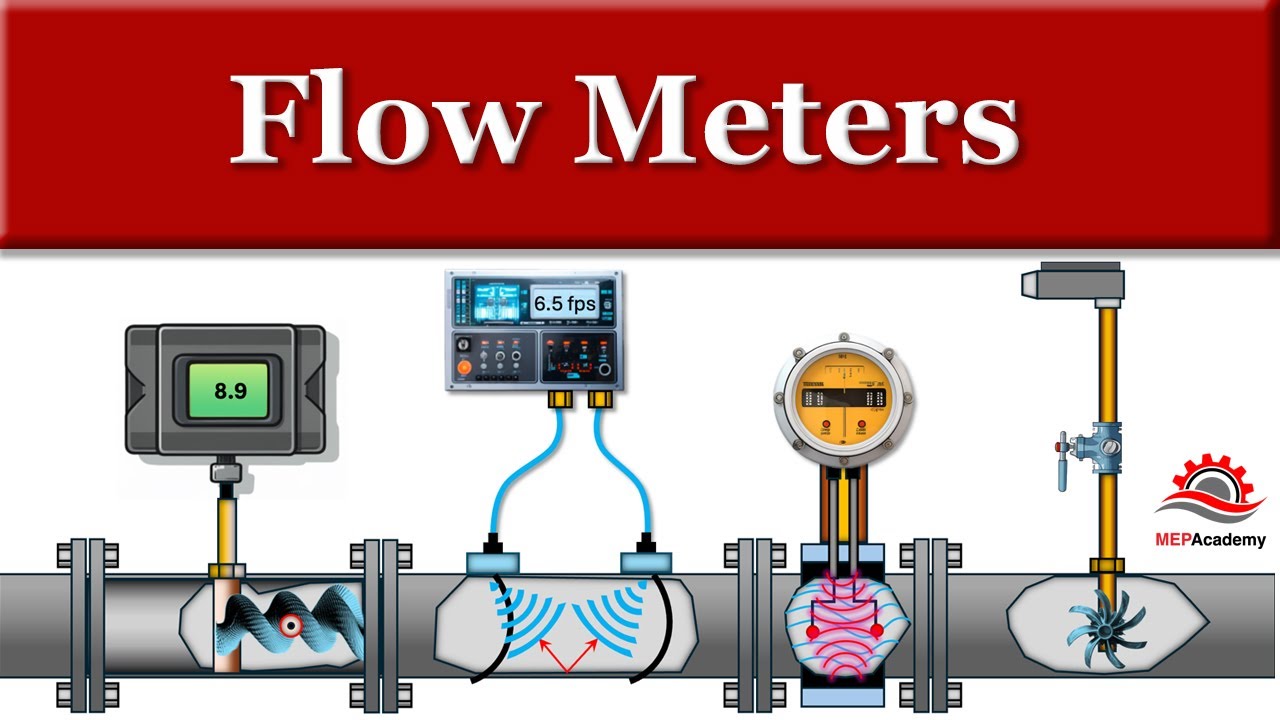
▶️ Flow Meters Explained — YouTube
Understanding the underlying physics of each measurement technology — why electromagnetic meters require a conductive fluid, why vortex meters need minimum velocity thresholds, why Coriolis meters measure mass directly — lets you ask better questions during supplier evaluations and make more defensible technology recommendations to your customers.
Making Your Decision With Confidence
The Partnership Difference: Why Selection Matters
The distributor landscape for industrial flow meters is consolidating. Customers with complex, multi-technology needs are rationalizing their supply base — moving toward a smaller number of distributor relationships with broader capability rather than many fragmented supplier relationships. This trend rewards distributors who can serve as genuine measurement partners: technically credible, broadly capable, and reliably supported by the suppliers behind them.
The eight mistakes in this guide are not hypothetical scenarios. They’re patterns that surface in real distributor operations — sometimes as single painful events, more often as a slow accumulation of friction that erodes margins and customer confidence over time. The distributors who avoid these mistakes share a common approach: they evaluate suppliers the way their best customers evaluate them. With rigorous questions, real evidence requirements, and a clear-eyed view of what partnership actually means versus what it’s claimed to mean in a sales presentation.
Your Distributor as a Strategic Asset
Your supplier relationship should be a competitive advantage, not a cost management exercise. The right partner — one who provides technically accurate, consistently available products, backs them with genuine application expertise and responsive support, and invests in your team’s capability — is a force multiplier for your business. Conversely, the wrong supplier is an anchor: pulling margin down through returns, pulling attention away from growth through support escalations, and pulling customers away through reliability failures.
Jade Ant Instruments works specifically with flow meter distributors and agents — providing electromagnetic, vortex, turbine, ultrasonic, Coriolis, and thermal flow meters backed by ISO-certified manufacturing, traceable calibration, and application engineering support designed for resale partners. You can explore the full product range and partnership framework at www.jadeantinstruments.com.
Glossary of Key Terms
| Term | Definition |
|---|---|
| TCO (Total Cost of Ownership) | The complete financial cost of a product or supplier relationship over its full lifecycle, including purchase price, operational costs, maintenance, and opportunity costs |
| ISO/IEC 17025 | International standard specifying requirements for the competence and impartiality of testing and calibration laboratories — the key accreditation for calibration credibility |
| ISO 9001 | International standard for quality management systems — governs process consistency but does not specifically accredit calibration capability |
| API MPMS | American Petroleum Institute Manual of Petroleum Measurement Standards — governs custody transfer measurement in oil & gas applications |
| ASME MFC | American Society of Mechanical Engineers Measurement of Fluid Committees standards — covers specific flow measurement methods and device performance |
| HART | Highway Addressable Remote Transducer — a communication protocol widely used in industrial instrumentation for transmitting digital data over 4-20mA analog wiring |
| Modbus | A widely used serial communication protocol for industrial electronic devices — RTU (serial) and TCP (Ethernet) are the most common variants |
| Calibration traceability | An unbroken chain of comparisons linking a measurement result back to recognized national or international standards |
| A2LA | American Association for Laboratory Accreditation — a third-party accreditation body that provides ISO/IEC 17025 accreditation |
| ATEX/IECEx | Certification standards for equipment used in potentially explosive atmospheres — required for flow meters deployed in flammable hydrocarbon environments |
| BMS | Building Management System — centralized platform controlling and monitoring HVAC, energy, and building services |
| MTBF | Mean Time Between Failures — a reliability metric indicating expected operational time between failures |
| SLA | Service Level Agreement — a documented commitment to specific service performance standards, typically including response times and resolution timelines |
FAQ Section: Your Most Pressing Distributor Questions Answered
1. How much weight should I give to price when choosing a flow meter distributor?
Price matters as one input in a multi-variable decision, but it should never be the primary filter. The more useful metric is total cost of ownership — which accounts for calibration reliability, warranty return rates, support quality, and the long-term cost of customer relationship damage when product quality fails. A distributor who is 5% more expensive but delivers ±0.3% accuracy with ISO/IEC 17025 traceable calibration and 4-hour technical response typically saves you money over a 3-year period through reduced customer issues, lower return handling costs, and stronger account retention.
2. What certifications should I verify before partnering with a flow meter distributor?
Prioritize ISO/IEC 17025 for calibration laboratory accreditation — this is the standard that specifically verifies calibration competence and measurement traceability, not just quality process documentation. ISO 9001 matters for manufacturing consistency but should not be mistaken for calibration accreditation. For specific applications, verify API MPMS familiarity for oil & gas, ASME MFC compliance for differential pressure devices, and ATEX/IECEx certification for explosive atmosphere installations. Ask for third-party calibration certificates for products you plan to stock, not just company-level certification documents.
3. How can I assess whether a distributor’s technical team actually knows flow measurement?
Request a technical consultation with their application engineer before committing, and bring specific application scenarios from your actual customer base. The quality of the conversation tells you more than any credential list. A knowledgeable supplier will ask clarifying questions — about pipe diameter, fluid conductivity, installation constraints, temperature range — before recommending anything. A supplier whose first instinct is to send you a catalog without asking about your application conditions has shown you the depth of their application knowledge.
4. What’s a reasonable lead time expectation for flow meters, and when should I be concerned?
Standard lead times for catalog-configuration flow meters range from 2 to 4 weeks. Custom specifications — special materials, non-standard flange sizes, unique communication protocols — typically require 6 to 10 weeks. If a supplier is quoting 8+ weeks for standard electromagnetic or turbine meters, ask specifically why. Long lead times on standard products usually indicate inventory constraints, supply chain fragility, or production capacity limitations — all of which will affect your ability to serve customers reliably.
5. How important is having multiple technology types from one distributor?
Very important for growth and account retention. Applications vary: conductive wastewater calls for electromagnetic technology, high-accuracy chemical batching may require Coriolis, steam flow monitoring is typically best served by vortex technology, and non-invasive monitoring uses ultrasonic clamp-on. A supplier with only one or two technology types limits your ability to serve evolving customer needs. Technology breadth also signals R&D investment and engineering depth — indicators of a supplier who is building for the long term.
6. What should I expect in terms of training and ongoing education from my distributor?
Expect a documented training curriculum, not vague promises of “support.” Minimum baseline expectations include annual product training covering new introductions, access to technical documentation in accessible formats, and support for your team’s professional development. The strongest supplier partnerships include structured sales training on application consulting methodology, product certification programs that give your team credentials, and webinar or online learning resources for self-directed study. Get specifics on what’s included in the partnership versus what costs extra — this is an important financial element of the agreement.
7. How do I verify that a distributor’s calibration process meets industry standards?
Request their calibration procedure documentation and accreditation scope certificate. Verify that their calibration standards are NIST-traceable or traceable to an equivalent national metrology institute. Ask about their calibration rig’s own uncertainty — a well-managed lab knows its rig uncertainty and can explain how it relates to the product accuracy specification. Third-party accreditation from A2LA, NVLAP, or equivalent bodies is a strong independent verification. If they claim to have traceable calibration but cannot provide the documentation within 24 hours, treat that as a material finding.
8. What red flags should I watch for during initial conversations with potential distributors?
Vagueness is the most pervasive red flag — vague accuracy claims, vague support commitments, vague territory terms. Reluctance to provide references from current distributors. Pressure to make a volume commitment before you’ve had time to evaluate their technical capabilities. Sales representatives who cannot answer basic application questions or who consistently defer to documentation rather than engaging directly. An inability to discuss their calibration process beyond “we’re ISO certified.” Each of these individually might have an innocent explanation; multiple together is a pattern.
9. How can I test a distributor’s responsiveness before making a long-term commitment?
Submit a genuine technical question through their standard support channel — not to your sales contact, but through the channel a customer would use — and measure response time and quality. Request a small trial order of a standard product and evaluate every touchpoint: order acknowledgment speed, shipping accuracy, documentation quality, and the proactiveness of communication if any issue arises. Their behavior on a low-stakes trial order is highly predictive of their behavior when you’re a significant volume customer.
10. Should I use multiple distributors, or is exclusive partnership better?
This depends on your business model, geographic coverage needs, and risk tolerance. Exclusive partnerships — with the right supplier — typically provide better pricing, priority inventory allocation, and stronger technical investment. Multiple supplier strategies reduce single-source supply risk and provide competitive leverage on pricing. A practical approach for most distributors: designate a primary supplier for 70–80% of volume where you expect the deepest investment, and maintain a secondary relationship for risk diversification and competitive benchmarking. Review the balance annually as your volume and the supplier’s performance data accumulates.
11. How do I evaluate whether a distributor’s pricing is truly competitive?
Request quotes on identical specifications from two or three qualified suppliers and compare total landed cost — unit price plus shipping, minimum order premium or discount, and payment terms value. Ask about volume discount structures and whether they’re contractual or discretionary. Beware of quotes with unusually low unit prices that include hidden costs for calibration certificates, compliance documentation, or technical support. The most reliable competitive pricing benchmark comes from distributors in non-competing geographies who are willing to share their experience — these conversations are invaluable.
12. What should I ask about a distributor’s inventory management practices?
Ask what percentage of their product line is held in finished goods inventory versus built-to-order. Ask about their inventory turnover rates — a supplier with very low turnover may be overstocked with slow-moving items while being understocked on popular models. Understand their MRO (Maintenance, Repair, and Operations) parts availability, not just complete meter inventory — spare parts availability for installed products is a significant customer relationship factor. Ask about just-in-time delivery programs and whether they can reserve inventory against your forecasted demand.
13. How important is it that my distributor uses modern software systems?
Critical for operational efficiency and customer experience. Modern order management systems enable real-time inventory visibility, faster order processing, accurate delivery tracking, and easier integration with your own ERP or purchasing systems. Ask specifically whether they offer online ordering with real-time stock visibility, electronic documentation delivery (calibration certificates, compliance documentation, packing lists), and API integration for automated order processing if your volume warrants it. Legacy order systems mean more manual touchpoints, slower processing, and higher error rates — all of which your team absorbs.
14. What questions should I ask about a distributor’s warranty and return policies?
Get the warranty policy in writing before you commit, not after. Key elements to clarify: warranty duration by product category, what constitutes a warranty claim versus an application error (this boundary is often disputed), the return authorization process and typical resolution timeline, restocking fees for non-defective returns, and whether the warranty covers replacement, repair, or credit only. Ask specifically how they handle situations where multiple units from the same production batch exhibit similar failures — a competent supplier has a documented batch failure response protocol.
15. How can I assess long-term viability and avoid partnering with a distributor who might fail?
Check commercial credit information through Dun & Bradstreet or equivalent services. Ask about customer and revenue diversification — a supplier whose top 3 customers represent 60%+ of revenue has significant concentration risk. Verify the ownership structure: family-owned businesses with stable succession planning, private equity-backed businesses with defined investment horizons, and publicly traded companies each carry different risk profiles. Ask about their experience through the 2020–2022 supply chain disruptions specifically — how they managed that period reveals their operational resilience and financial reserves.
Take Control of Your Distributor Selection
Don’t Let Another Bad Partnership Cost You
Every distributor reading this has at some point absorbed the cost of a supplier relationship that didn’t deliver on its promises — in returned stock, in customer complaints, in hours spent managing problems that a better-vetted partnership would have prevented.
The framework in this guide is designed to make the next partnership decision a disciplined one. Use the 30-point assessment matrix before your next evaluation conversation. Ask the specific questions in Section 5 rather than accepting general assurances. Test responsiveness before you commit to volume.
If you want to understand what a manufacturer-backed distributor partnership looks like in practice — with the technical depth, supply chain reliability, and calibration standards this guide describes — start the conversation with Jade Ant Instruments.
→ Request Your Free Distributor Evaluation Guide | → Schedule a 30-Minute Strategy Call
Your next partnership could be the one that transforms your business — or the one that quietly drains your margins, one missed delivery and one unresolved technical call at a time. The difference comes down to how rigorously you evaluate it before you sign.
Further reading and technical resources:
- Flow Meter Selection Guide for Distributors & Agents — Jade Ant Instruments
- Hidden Cost of Flow Measurement Errors — Jade Ant Instruments
- ISO/IEC 17025 Calibration Laboratory Accreditation — ISO
- API Manual of Petroleum Measurement Standards — api.org
- Flow Meter Calibration Best Practices — Bronkhorst