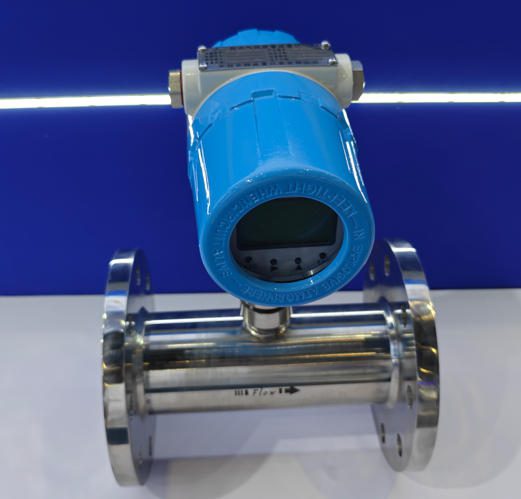
Help Your Customers Choose the Right Flow Meter Technology — Without the Guesswork

The pressure on distributors and agents to recommend the right flow meter solution is real. Your customers need accurate specifications, your margins depend on proper sizing, and one wrong recommendation can damage your reputation for years.
Generic product sheets don’t close technical deals. What closes deals is a distributor who can walk into a customer meeting, ask the right three questions, and match the right technology to the application in real time — before a competitor does.
This guide gives you exactly that: a complete, interactive framework for comparing every major flow meter technology side-by-side, matched to real applications, with the sales tactics to convert technical conversations into confirmed orders.
Why Flow Meter Selection Matters to Your Bottom Line
The distributor’s dilemma: why generic product sheets don’t cut it
A food processing plant in Southeast Asia recently purchased twelve turbine meters for a new production line based on a competitor’s catalog recommendation. Within four months, three meters had failed — not because they were defective, but because the customer’s cleaning-in-place (CIP) cycles pushed low-conductivity chemical solutions through instruments that weren’t specified for it. The replacement cost, including downtime and emergency labor, exceeded USD 38,000.
That sale belonged to a competitor. But the service call, the replacement order, and the long-term relationship came to the distributor who showed up knowing why the first meters failed and what should have been specified instead.
This is the commercial reality of the B2B flow meter market: the distributor who leads with technical depth closes deals that catalog sellers lose. According to internal data compiled by instrumentation sales teams across Southeast Asia and the Middle East, distributors who provide application engineering support at the point of sale achieve 28–42% higher average order values and retain customers for 3–5× longer than those competing purely on price.
How the right comparison tool saves you time and increases customer trust
The problem isn’t that distributors lack product knowledge. It’s that the selection process is genuinely complex — and customers often don’t know their own requirements well enough to ask the right questions.
An interactive comparison framework solves both problems simultaneously. It gives you a structured discovery process that uncovers what the customer actually needs, while simultaneously positioning you as the expert who guides them through it. By the time you’ve walked a plant engineer through fluid type, accuracy requirements, and installation constraints, you haven’t just made a recommendation — you’ve built the case for it together, which means the customer defends your recommendation internally rather than shopping it around.
Jade Ant Instruments supports distributors and agents with exactly this kind of application engineering depth — because a well-specified sale is better for everyone involved: the customer’s process performs correctly, the warranty claim rate drops, and your reputation compounds.
The Five Flow Meter Technologies Explained (For Real)
Ultrasonic Flow Meters — When You Need Non-Invasive Accuracy

How ultrasonic technology actually works in your customer’s pipes
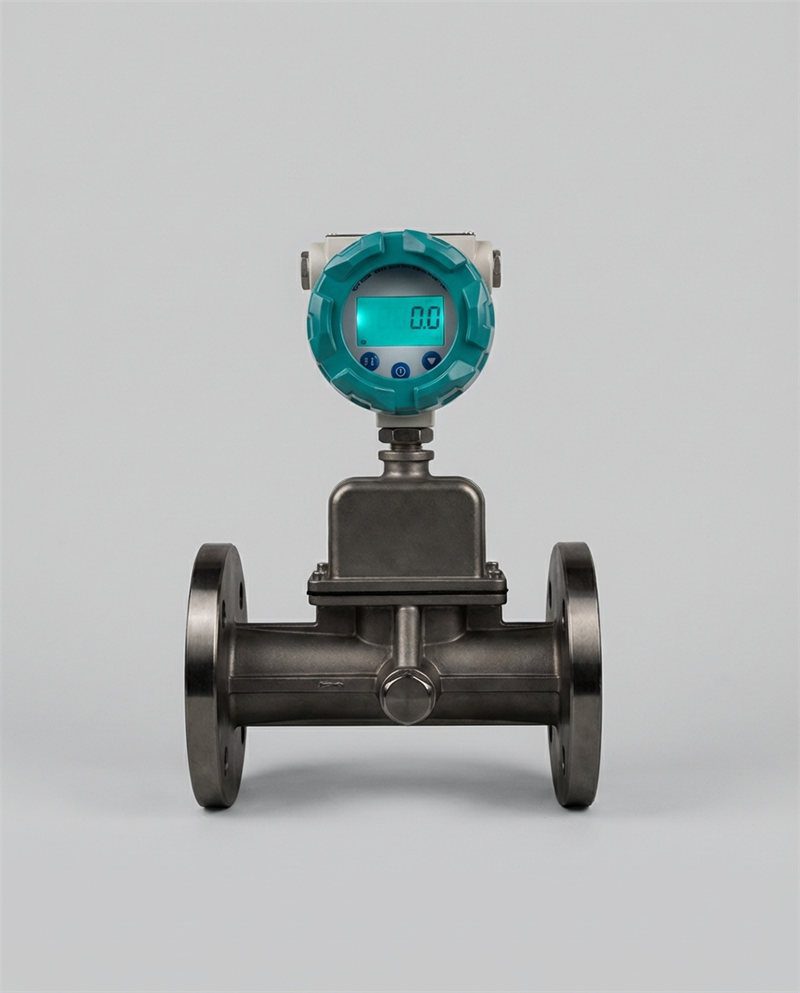
Ultrasonic flow meters measure flow by transmitting high-frequency sound waves through the fluid and calculating the velocity difference between signals traveling with the flow versus against it — a principle called transit-time measurement (also called time-of-flight). When the fluid moves faster, sound traveling in the same direction arrives earlier than sound traveling in the opposite direction. The meter calculates flow velocity from this time difference.
The key commercial advantage is physical: in clamp-on configurations, the transducers are mounted entirely outside the pipe. There is nothing inserted into the process fluid, nothing to corrode or foul, and no process shutdown required for installation. For a large-bore water main or a pharmaceutical clean-room line, that means zero contamination risk and zero production interruption.
In inline (wetted) configurations, ultrasonic meters use internal transducers with full-bore measurement, typically delivering ±0.5–1.0% accuracy — suitable for custody transfer applications where the metering point cannot use clamp-on transducers.
Why ultrasonic wins (and loses) against other technologies
Ultrasonic wins when the customer needs retrofit measurement without pipe cutting, has corrosive or ultra-pure fluids, is measuring large-diameter pipes where a full-bore electromagnetic meter would cost significantly more, or needs a portable check meter to verify existing installations.
It loses when the fluid contains significant gas bubbles (the ultrasonic signal scatters and the reading becomes unreliable), when pipe wall condition is poor (heavy scale or pitting degrades signal coupling in clamp-on applications), or when the customer needs the lowest possible capital cost and a less sophisticated measurement will suffice.
For a detailed breakdown of how ultrasonic compares in niche industrial contexts, the guide on ultrasonic flow meters across 8 industrial sectors is worth reviewing before your next customer conversation.
Turbine Flow Meters — The Workhorse for High-Speed Applications
When turbine meters deliver the accuracy your customers demand
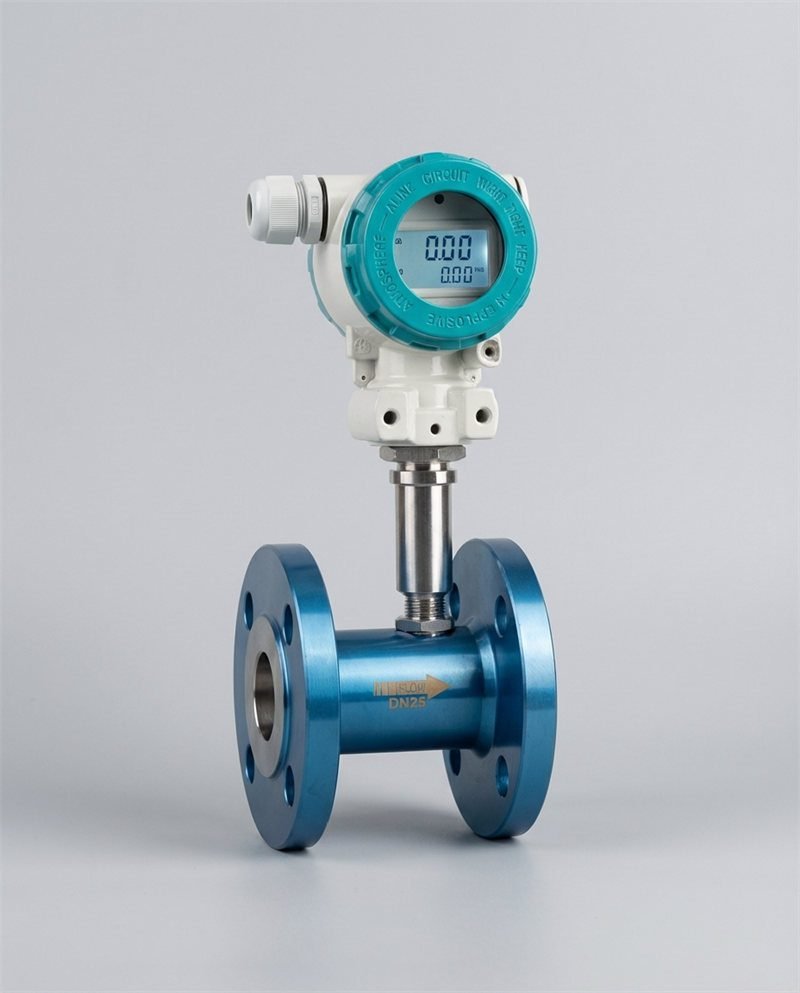
A turbine flow meter places a multi-bladed rotor directly in the flow stream. As fluid passes through, the rotor spins at a speed proportional to flow velocity. A magnetic or optical pickup sensor counts the blade passes and converts them to a flow rate. The elegance of the design is in its directness: rotor speed is flow velocity, and the relationship is linear across a wide operating range.
That linearity gives turbine meters a significant accuracy advantage in clean-liquid and clean-gas applications. In well-maintained, clean-liquid service, turbine meters regularly achieve ±0.25–0.5% of reading accuracy with 10:1 turndown ratios — performance that magnetic or ultrasonic meters struggle to match at equivalent price points.
For the comparative technical details between turbine and other high-precision options, the ultrasonic vs. magnetic vs. turbine flow meter guide provides the engineering basis your team needs.
The maintenance reality your customers need to understand before buying
The rotor bearings are the turbine meter’s Achilles heel. In clean water or refined hydrocarbons, bearing wear is minimal and service intervals can be 12–24 months. In fluids with even trace particulate contamination, bearing wear accelerates dramatically. A turbine meter on a partially filtered river water supply may need bearing replacement every 3–6 months — a maintenance cost that the initial capital price comparison completely obscures.
The honest distributor conversation isn’t “turbine meters need maintenance.” It’s: “Tell me about your filtration upstream. Because if you have particles above X microns in your process, let’s look at what that bearing replacement cycle costs over five years versus a slightly higher initial investment in a non-contact technology.”
Magnetic Flow Meters — The Specialist for Conductive Fluids
Why magnetic meters dominate in water and wastewater applications
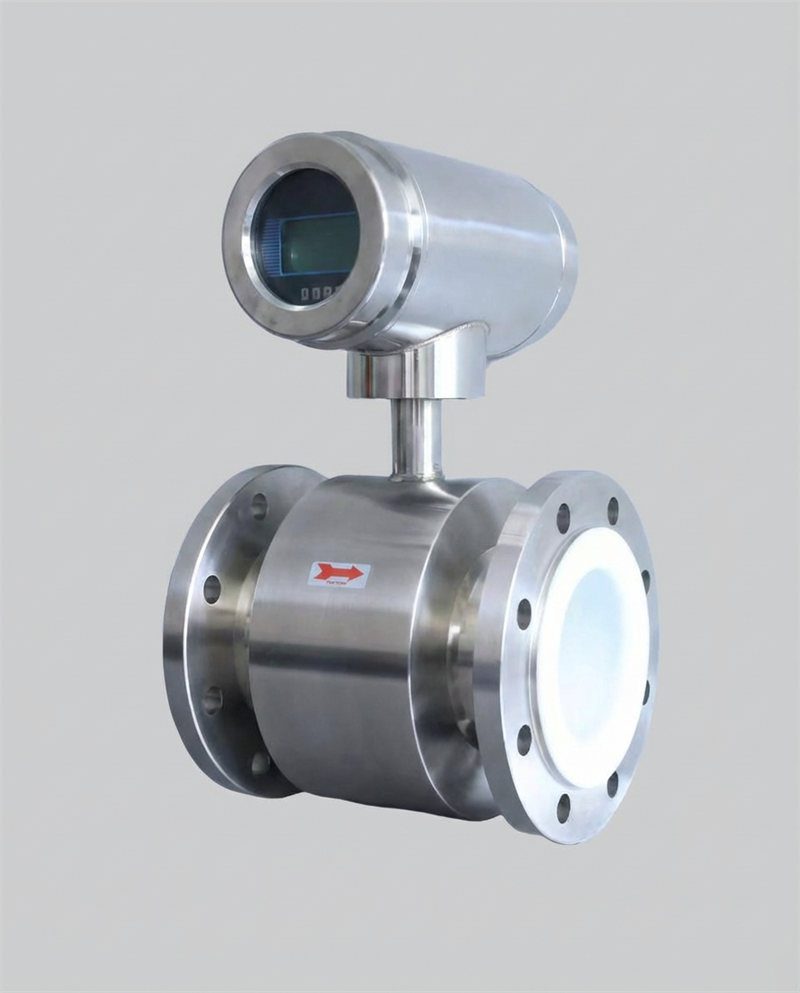
Magnetic flow meters (universally called “mag meters” in the field) operate on Faraday’s law of electromagnetic induction: a conductive fluid flowing through a magnetic field generates a voltage proportional to its velocity. The faster the fluid flows, the higher the voltage. The meter measures this voltage and calculates volumetric flow rate.
The key word is “conductive.” The fluid must carry an electrical charge — which water, most chemical solutions, acids, bases, slurries, and many food products do. If the fluid is conductive, a mag meter is almost always the first technology to evaluate, because the advantages stack up quickly: full-bore measurement with near-zero pressure loss, no moving parts, excellent resistance to fouling on rubber or PTFE liners, and bidirectional measurement capability.
In water and wastewater, mag meters are so dominant that in many municipal projects the technology isn’t discussed — it’s assumed. The real selection conversation is about liner material (rubber vs. PTFE vs. ceramic for abrasive slurries), electrode material (316L stainless vs. Hastelloy vs. platinum for aggressive chemistry), and grounding configuration for plastic-lined piping.
For a complete engineering reference on magnetic meter specification, the electromagnetic flow meter selection guide for engineers covers liner and electrode selection in detail.
The conductivity challenge and how to navigate it with your customers
The single deal-killer for mag meters is fluid conductivity below approximately 5 μS/cm (microsiemens per centimeter — a measure of the fluid’s ability to conduct electricity). Demineralized water, many organic solvents, petroleum products, and gases are all non-conductive. If a customer asks for a mag meter on a hydrocarbon product line, that’s your cue to redirect to turbine, ultrasonic, or Coriolis depending on their other requirements.
The practical approach in customer conversations: “Before we go further on specifications, let’s confirm your fluid conductivity. If it’s below about 5 μS/cm, a mag meter won’t work and we need to look at alternatives. Do you have a lab analysis, or would it help if I told you what to test for?”
Paddle Wheel Flow Meters — The Budget-Friendly Option With Real Limitations
When paddle wheel meters make sense (and when they don’t)
A paddle wheel flow meter uses a small wheel with paddles (also called a propeller or impeller) mounted in a housing that inserts into the pipe or fits in-line. As fluid flows past, the wheel spins and the rotation rate is converted to flow velocity. It’s mechanically simple, inexpensive to manufacture, and easy to install — which is exactly why it sells in high volumes in irrigation, HVAC, building management, and light industrial applications.
The commercial reality is that paddle wheel meters occupy the price bracket below $300 where no other technology competes. For a facilities manager measuring cooling water in a building HVAC loop, a paddle wheel meter at $120 does the job adequately. For a food plant measuring ingredient dosing at ±0.5% accuracy requirements, it does not — and the distributor who quotes a paddle wheel for that application will own the warranty claim.
The detailed comparison between paddle wheel and its close alternatives is covered in the propeller vs. paddle wheel vs. electromagnetic flow meter guide.
Accuracy trade-offs that affect your customer’s ROI
Paddle wheel meters typically deliver ±1–3% of full scale accuracy under ideal conditions — meaning clean water, steady flow, correct installation with adequate upstream straight pipe, and a flow velocity in the middle of their rated range. In real-world HVAC and light industrial conditions, accuracy often drifts to ±3–5% as the paddle wears, minor fouling accumulates, or installation conditions aren’t ideal.
For applications where measurement accuracy feeds into billing, energy accounting, or process dosing, that drift matters. A 3% measurement error on a building that consumes 50,000 cubic meters of chilled water annually at $0.80/m³ represents a $1,200 annual billing variance — enough to trigger disputes with tenants and justify an upgrade to a more accurate technology. The distributor who flags this proactively turns an HVAC sale into a consulting conversation.
Rotameter Technology — The Mechanical Alternative Still Worth Considering
Why some distributors still recommend rotameters in 2024
A rotameter (also called a variable area flow meter) consists of a tapered vertical tube containing a float. As flow increases, the float rises; as flow decreases, the float drops. The float position indicates the flow rate — no electronics required, no power supply needed, no signal to integrate into a control system. You look at it and you know.
That simplicity is not obsolescence. For laboratory sample lines, chemical dosing bypass loops, gas cylinder outlet monitoring, and any application where the customer needs a quick visual indication with no instrumentation budget and no electrical infrastructure, a rotameter is the right tool. In remote locations without reliable power, in explosion-proof environments where electronics add complexity and cost, and in simple process bypass lines, the rotameter earns its place in every distributor’s portfolio.
The variable area flow meter versus turbine and electromagnetic comparison maps out exactly where rotameter technology is and isn’t appropriate.
The fluid type restrictions that limit your selling opportunities
Rotameters are sensitive to fluid density changes (because the float rises or falls based on buoyancy), so a meter calibrated for water will read incorrectly for a lighter or heavier fluid without recalibration or correction factor application. They require vertical installation (the tube must be vertical for the float to indicate correctly), limiting placement options. And they provide only visual indication — unless fitted with an optional transmitter, they generate no electrical signal for data logging or remote monitoring.
For distributors building a high-value technical service model, rotameters are a commodity product in a crowded market. They belong in your portfolio for completeness, but they shouldn’t be your growth technology.
The Interactive Comparison Framework — Use This With Every Customer
Filter by Fluid Type — The First Question You Should Ask
The fastest way to narrow five technologies down to two or three is to understand the fluid first. Before discussing accuracy, price, or brand, ask: “What fluid are you measuring, and what’s in it?”
How fluid viscosity, conductivity, and particle content narrow your options
Viscosity (resistance to flow — water has low viscosity, honey has high viscosity) is the primary filter for turbine and paddle wheel meters. Both use moving parts that interact directly with the fluid; if viscosity is high or variable, bearing wear accelerates and meter accuracy degrades. Magnetic and ultrasonic meters don’t have this problem because they have no moving parts in the flow stream.
Conductivity determines whether a mag meter is viable. If the fluid conducts electricity (water, chemicals, acids, bases, most food products), a mag meter is a strong first candidate. If it doesn’t (hydrocarbons, ultrapure water below 5 μS/cm, most gases), you’re working with turbine, ultrasonic, Coriolis, or rotameter depending on the other requirements.
Particle content rules out turbine and paddle wheel meters for anything more than trace contamination, and challenges ultrasonic clamp-on meters where particles scatter the acoustic signal. Magnetic meters handle slurries well — many wastewater applications run with significant suspended solids with no adverse effect on measurement — making them the first choice when the fluid is conductive and dirty.
Building customer conversations around their specific application
The discovery sequence that works in distributor sales conversations:
- “What fluid are you measuring? Is it water, a chemical, a hydrocarbon, gas, or a slurry?”
- “Do you know the conductivity? Or can you tell me if it’s basically water-based or oil-based?”
- “Any solids, fibers, or gas bubbles in the fluid?”
Those three questions eliminate at least two technologies before you’ve touched a catalog.
Match Technologies to Accuracy Requirements — Stop Over-Specifying
One of the most consistent mistakes in distributor sales is over-specifying accuracy. A customer who needs ±2% accuracy for a cooling water circuit doesn’t benefit from a ±0.3% Coriolis meter — they pay a premium for performance they can’t use, and they remember that the price was high without remembering why.
Why your customer’s accuracy needs (not your inventory) should drive recommendations
The correct accuracy question is not “what’s the most accurate meter I have?” but “what accuracy does this application actually require, and what happens if we miss that target?”
For process control applications (opening and closing valves based on flow feedback), repeatability matters more than absolute accuracy. A meter that consistently reads 2% high is still useful for control as long as it’s consistent. For billing, custody transfer, or regulatory reporting, absolute accuracy and traceability to a national standard are required. For general process monitoring where the data informs decisions but doesn’t drive direct financial transactions, ±2–3% is typically sufficient.
The cost difference between ±2% and ±0.5% accuracy — and when it matters
| Accuracy Class | Typical Technology | Typical Price Range (DN50) | Best Application Fit |
|---|---|---|---|
| ±0.1–0.3% of reading | Coriolis, high-end turbine | $3,500–$8,000+ | Custody transfer, high-value batching |
| ±0.3–0.5% of reading | Quality mag meter, inline ultrasonic | $1,800–$4,500 | Regulated reporting, API billing |
| ±0.5–1.0% of reading | Standard mag meter, turbine | $800–$2,500 | Process control, general metering |
| ±1–3% of reading | Paddle wheel, basic ultrasonic | $120–$600 | HVAC, irrigation, building services |
| ±3–5% of reading | Rotameter | $50–$400 | Visual indication, laboratory, bypass |
The ROI calculation your customer should understand: if a ±2% meter on a chemical dosing line causes 2% over-dosing of a chemical that costs $50,000 per year to purchase, the measurement error costs $1,000 per year. If the accuracy upgrade costs $800 extra upfront, the payback is less than 12 months — and the customer saves money every year thereafter.
Budget Constraints Without Sacrificing Performance — Your Negotiating Tool
Every distributor has customers who open the conversation with “what’s the cheapest option?” The distributors who lose on price are the ones who respond to that question with a price. The distributors who win respond with a question.
Total cost of ownership versus upfront capital — what distributors need to calculate
Total Cost of Ownership (TCO) for a flow meter installation typically includes:
| Cost Category | What’s Included | Who Usually Underestimates This |
|---|---|---|
| Capital cost | Meter + transmitter + accessories | Almost nobody |
| Installation | Pipe modifications, shutdown, labor | Budget-focused buyers |
| Commissioning | Configuration, zero calibration, loop test | Engineering teams pressed for time |
| Energy cost | Pressure drop across the meter × pump energy | Nearly everyone |
| Maintenance | Bearing replacement, cleaning, recalibration | Customers with tight OpEx budgets |
| Downtime risk | Production loss when the meter fails or needs service | High-output continuous plants |
A paddle wheel meter at $150 that requires $400 in labor every 18 months due to bearing wear, plus $200 in recalibration costs, plus causes one $3,000 production quality incident in five years, has a 5-year TCO of approximately $6,550. A mag meter at $1,200 with $0 maintenance and $0 recalibration cost over the same period, if the application fits, has a 5-year TCO that’s roughly $5,000 lower.
How to position premium solutions when customers want the cheapest option
The framing that works: “I can absolutely give you the lower-cost option — but I want to make sure we’re comparing total cost, not just sticker price. Let me show you what the maintenance and calibration cost looks like over five years for each option. Then you decide.”
That approach does two things: it positions you as the advisor protecting the customer’s interests, and it gives the customer a framework to justify the higher purchase price internally.
Building Your Sales Strategy Around the Comparison Tool
How to Use This Tool in Customer Meetings (Practical Tactics)
The comparison framework in this guide isn’t a brochure to email and wait. It’s a discovery and qualification tool to use live in customer meetings — in person, on a video call, or on a plant walk.
Walking customers through the decision tree without sounding like you’re selling
The structure that works: start with the customer’s problem, not your product. “Tell me about this measurement point. What’s the fluid, what happens downstream with this data, and has the current measurement ever caused you a problem?” Those questions surface the actual requirement — not the requirement the customer thinks they have.
Once the fluid and application are established, introduce the comparison framework as a structured way to evaluate options together: “Based on what you’ve told me, we’re down to three technologies that fit your fluid and accuracy requirement. Let me show you how they differ on installation, maintenance, and total cost.” That’s a co-discovery process, not a sales pitch.
Handling objections when customers want a technology you don’t recommend
The situation comes up constantly: the customer’s engineer specified an ultrasonic meter because they used one at a previous plant, but the new application has high particle content that will make the clamp-on measurement unreliable. Or the procurement team specified a paddle wheel because it’s the cheapest option for a chemical dosing line where ±1% accuracy is actually required.
The response that maintains credibility: “I understand that’s what the spec sheet says, and I want to make sure it works as expected. Can I show you two data points on why I’d recommend we look at an alternative for this specific fluid and accuracy requirement?” Then show the failure mode concisely — one example, one data point, one clear consequence — and let the customer make an informed decision.
You will not win every objection. But the distributors who make technically sound recommendations, document their reasoning, and maintain their position respectfully are the ones customers call first when the original specification causes exactly the problem they were warned about.
Positioning Yourself as the Technical Expert Your Customers Trust
The commercial reality of industrial instrumentation distribution is that technical credibility and price competition rarely coexist in the same customer relationship. The customers who call asking for “the cheapest flow meter” are not the customers who sustain a 35% margin business. The customers who call asking “which meter should I use for this application” are.
Why product knowledge beats price competition every time
A distributor who knows the 5 key factors in flow meter selection — performance requirements, fluid properties, installation constraints, environmental conditions, and economics — can walk into any plant conversation and add value that no online catalog can replicate. That value doesn’t show on a datasheet, which means it doesn’t get price-matched.
The competitive dynamic in technical instrumentation sales consistently favors the knowledgeable distributor over the cheaper one, because the customer who has been burned by a wrong specification doesn’t go back to the cheapest provider — they go to the most reliable advisor.
The questions to ask before you ever show a comparison chart
Before any product discussion, always establish:
- What is the fluid, and is it clean, dirty, or chemically aggressive?
- What is this measurement used for — process control, billing, safety, or general monitoring?
- Has there been a previous measurement solution? What happened to it?
- Is there a shutdown window for installation, or does it need to be installed live?
- Are there compliance or certification requirements for this application?
Five questions. Five minutes. The answers cut the comparison table from five technologies to one or two before you’ve mentioned a price.
Converting Comparison Conversations Into Orders
The follow-up sequence that keeps customers from shopping around
The common distributor mistake after a strong technical presentation: sending the quote and waiting. Customers who’ve had a good technical conversation will shop that recommendation to verify the pricing. The follow-up sequence that prevents this:
Day 1 (same day as the meeting): Send a brief email summarizing the recommendation with three bullet points explaining why this technology fits their specific application. Not a catalog page — a custom paragraph referencing what they told you about their fluid and requirements.
Day 3–5: Follow up with one additional value-add: a relevant case study, a technical note on a specific concern they raised, or a link to a calibration guide relevant to their industry.
Day 7–10: Confirm next steps specifically — installation timeline, delivery requirements, or whether they need support documentation for internal approval.
Customers who receive this kind of structured follow-up rarely shop the recommendation further, because you’ve already done the work they would need to do to evaluate alternatives.
How to document your recommendation so customers feel confident in their choice
The documentation that builds confidence is a one-page application summary: fluid properties, accuracy requirement, installation constraints, technology recommended, reasoning, and the specific model with key specifications. Not a 40-page datasheet — a single page that the customer’s engineer can hand to their procurement team as the technical basis for the purchase.
Jade Ant Instruments provides distributors with application engineering support for exactly this kind of documentation — because a well-documented recommendation doesn’t just close one sale, it becomes the reference document for every future project at that plant.
Technology Comparison by Common Applications
Here’s the full technology comparison matrix — designed for use as a reference in customer meetings and internal team training:
| Application | Fluid Characteristics | Recommended Technology | Runner-Up | Avoid |
|---|---|---|---|---|
| Municipal water supply | Conductive, often dirty | Magnetic | Ultrasonic (inline) | Turbine, paddle wheel |
| Wastewater treatment | Conductive, high solids | Magnetic (PTFE liner) | Coriolis (smaller pipes) | Turbine, paddle wheel, rotameter |
| Crude oil pipeline | Non-conductive, clean | Turbine or Coriolis | Ultrasonic (multi-path) | Magnetic, paddle wheel |
| Natural gas distribution | Gas, custody transfer | Ultrasonic (multi-path) | Turbine | Magnetic, rotameter |
| Chemical dosing | Often corrosive, variable | Magnetic or Coriolis | Ultrasonic | Turbine, paddle wheel |
| Food & beverage (hygiene) | Conductive, sanitary | Magnetic (sanitary) | Coriolis | Rotameter, turbine |
| Pharmaceutical (WFI) | Ultra-pure, non-contact | Ultrasonic (clamp-on) | Coriolis | Turbine, magnetic (contact) |
| HVAC cooling water | Clean water, budget | Paddle wheel or mag | Ultrasonic (clamp-on) | Turbine (if dirty) |
| Steam measurement | Gas/two-phase | Vortex + compensation | DP orifice | Turbine, magnetic |
| Slurry / mining | Conductive, abrasive | Magnetic (ceramic liner) | Coriolis | Turbine, rotameter, paddle wheel |
| Irrigation / agriculture | Clean water, low budget | Paddle wheel | Turbine | Coriolis (oversized) |
| Biogas / gas fuel | Gas, trace corrosion | Thermal mass or vortex | Ultrasonic | Magnetic |
Water and Wastewater Treatment — Where Magnetic Dominates
Why your water utility customers almost always choose magnetic
Water and wastewater are the home court of the magnetic flow meter for one simple reason: the fluid is conductive, often dirty, and flowing through large pipes where any pressure drop translates directly into pumping energy cost. A full-bore mag meter in a DN200 water main adds essentially zero pressure loss, handles grit and suspended solids without fouling, and delivers ±0.3–0.5% accuracy that exceeds most utility billing requirements.
The practical selling point for water utility customers: mag meters don’t require strainers upstream, they don’t have mechanical parts that wear with debris, and their liners (rubber for general service, PTFE for chemical dosing, ceramic for abrasive slurries) can be matched to nearly any water chemistry. For the depth on maintenance considerations, magnetic water flow meter maintenance best practices is the technical reference.
The alternative technologies that occasionally win in this market
Ultrasonic clamp-on meters win in two specific scenarios in water treatment: when the customer needs to retrofit measurement onto an existing main without a shutdown window, or when the pipe diameter is above DN600 where the cost difference between an inline mag meter and a clamp-on ultrasonic system becomes significant. In temporary or portable measurement applications — flow surveys, leak detection checks, commissioning verification — clamp-on ultrasonic is often the only practical option.
Oil and Gas — When Turbine and Ultrasonic Battle for Dominance

Temperature and pressure challenges that eliminate some technologies
Oil and gas applications routinely operate at elevated temperatures and pressures — crude oil lines at 150°C and 50 bar, natural gas transmission at -20°C and 100 bar, offshore gas lift at temperatures and pressures that would destroy most standard industrial instruments. These conditions immediately eliminate magnetic meters (non-conductive hydrocarbons) and paddle wheel meters (inadequate pressure ratings and too low accuracy for high-value fluid measurement).
Turbine meters survive well in clean hydrocarbon service with appropriate materials, but their bearings are sensitive to contamination — a single slug of sand or pipe scale can damage a turbine meter in a custody transfer station and trigger an expensive recalibration and incident investigation. Multi-path ultrasonic meters avoid this problem entirely with no internal moving parts, but require clean pipe and sufficient straight run for the acoustic paths.
Custody transfer accuracy requirements that drive premium pricing
Custody transfer — measurement of fluid quantity for the purpose of commercial handover between parties — is the highest-stakes measurement in the oil and gas industry. A 0.1% error on a pipeline delivering 100,000 barrels per day at $80/barrel represents $80,000 per day in billing discrepancy. At that scale, spending $50,000 on a Coriolis or multi-path ultrasonic meter instead of $8,000 on a turbine meter is not a luxury — it’s risk management.
Distributors who understand custody transfer requirements can access a pricing tier that commodity competitors can’t reach. The technical knowledge required includes API MPMS compliance, flow computer integration, and meter proving requirements — all areas where a well-prepared distributor can justify not just higher hardware prices but also installation and commissioning service fees.
Chemical Processing — The Complexity That Justifies Premium Solutions
Corrosive fluid handling that requires specific technology choices
Chemical processing presents the widest variety of fluid challenges of any industry segment: concentrated sulfuric acid at 98% concentration, caustic soda at 50%, chlorinated solvents, reactive organics, slurries with crystallizing solids. Each of these fluids rules out certain meter materials and creates specific requirements for wetted parts.
The technology decision for chemical applications almost always starts with material compatibility rather than measurement principle. A mag meter with a PTFE liner and Hastelloy C-276 electrodes handles most aggressive mineral acids. The same meter with rubber liner and 316L electrodes would dissolve in the same service. Understanding liner and electrode material selection — not just meter type — is the expertise that wins chemical processing accounts.
Why your chemical customers need your expertise most
Chemical plant engineers typically have very specific process knowledge but often lack the instrumentation expertise to translate fluid chemistry requirements into meter specifications. A chemical plant engineer who knows they’re handling 40% hydrofluoric acid at 80°C may not know that this combination requires PTFE or PVDF liner rather than rubber, titanium electrodes rather than standard 316L, and a specific grounding strategy because HF changes the conductivity behavior of the fluid.
The distributor who arrives at that conversation prepared — with a specific material recommendation and the engineering rationale — is the distributor who gets the specification, the project, and the relationship.
Food and Beverage Production — Hygiene Requirements That Matter
Sanitary design specifications that limit your options
Food and beverage applications add a dimension that industrial applications don’t have: the meter is part of the product safety infrastructure. Any sensor that contacts the product must be hygienic — meaning smooth internal surfaces with no dead zones, materials approved for food contact (typically 316L stainless or PTFE), and a design that can be fully cleaned-in-place without disassembly.
This requirement immediately eliminates turbine meters (rotors create dead zones), paddle wheel meters (similar issue plus inadequate accuracy for recipe dosing), and any meter with rubber gaskets or standard industrial materials in the flow path. Viable technologies in food and beverage are hygienically designed magnetic meters (for conductive products), Coriolis meters (for density-sensitive applications like sugar concentration or alcohol measurement), and clamp-on ultrasonic meters where zero product contact is required.
How to position solutions that meet regulatory requirements
EHEDG (European Hygienic Engineering and Design Group) certification and 3-A sanitary standards are the benchmarks food plant engineers look for. Positioning your recommendation around these certifications — “this meter carries EHEDG certification, which means it’s already accepted by most European and Asian food safety auditors” — addresses procurement risk concerns that often delay approval of unfamiliar products.
For distributors serving food and beverage customers, having the certification documentation readily available is as important as having the product. A procurement manager who can attach a certification PDF to an internal approval request processes faster than one who has to chase the supplier for paperwork.
HVAC and Building Systems — Where Budget Pressure Is Highest
Why paddle wheel and rotameter technologies still sell in this segment
Building systems and HVAC represent the highest-volume, lowest-specification segment of the industrial flow meter market. A building with 200 tenant sub-metering points, 50 HVAC loop measurement points, and 30 domestic hot water meter locations doesn’t have the budget or the technical justification for mag meters on every circuit. Paddle wheel meters — properly specified for the application pressure, temperature, and flow range — are a legitimate and commercially sound solution for the majority of these points.
The distributor opportunity in HVAC isn’t in fighting the budget constraints. It’s in identifying the 10–15% of measurement points within a building project where the measurement consequence (billing disputes, energy optimization, regulatory compliance) justifies an upgrade from paddle wheel to magnetic — and quoting those specifically. One well-justified technology upgrade on a 200-point building project can triple the margin on the whole job.
The performance compromises your HVAC customers accept
HVAC engineers who specify paddle wheel meters for cooling tower water measurement are accepting ±2–3% accuracy with quarterly maintenance, knowing that their energy optimization models work with that uncertainty. That’s a rational engineering decision for a non-critical measurement point. The distributor’s role is to know which measurement points in an HVAC system are actually critical — tenant billing meters, primary chiller flow measurement, heat exchanger efficiency monitoring — and to spec those appropriately while keeping the bulk installation cost competitive.
The Hidden Factors Your Competitors Aren’t Discussing
Installation Complexity and Your Service Revenue Opportunity
Most competitive distributors discuss price, accuracy, and brand. The distributors with the highest margins discuss installation.
Which technologies require professional installation (and which don’t)
Clamp-on ultrasonic meters can, in principle, be installed by a plant maintenance technician with a coupling guide and half an hour. Magnetic meters require precise grounding configuration, correct flange alignment, and often pipe section cutting with weld-neck flanges — work that requires instrumentation expertise, not just mechanical labor.
Coriolis meters require vibration isolation, careful pipe alignment to minimize installation stress on the meter tubes, and software configuration for density and temperature compensation. Turbine meters in custody transfer service need downstream flow computers, sometimes certified meter proving, and potentially witness testing for custody handover.
The commercial implication: every high-complexity meter you sell is a service revenue opportunity. Installation and commissioning, calibration and verification, annual maintenance contracts, and system integration support — each of these is a revenue stream that’s bundled into the meter purchase if you position it correctly and impossible for online competitors to replicate.
How to build recurring service contracts into your recommendations
The language that builds service contracts: “Our installation service includes the initial calibration certificate, a 90-day performance verification, and our annual service plan which covers one recalibration per year, remote diagnostics support, and a guaranteed 48-hour emergency response. The annual plan is $[X] — want me to include that in the quotation?”
Presented as a package at the point of sale, service contracts close at much higher rates than when offered later as an add-on.
Maintenance Requirements That Affect Customer Lifetime Value
Turbine meters need more attention — and that’s a selling point
Counter-intuitively, a turbine meter’s maintenance requirements can be a sales advantage for a service-oriented distributor. A customer who has five turbine meters on clean hydrocarbon lines, each requiring annual bearing inspection and periodic calibration, is a customer with a regular, predictable service engagement. That regular touchpoint keeps your relationship current, gives you visibility into the customer’s upcoming projects, and generates recurring revenue.
The distributors who treat turbine meter maintenance as a burden lose this advantage to the customer’s in-house maintenance team. The distributors who offer structured annual service programs — scheduled visits, calibration documentation, bearing replacement with parts supply, and performance trend reporting — turn turbine maintenance into a competitive moat.
Why ultrasonic’s low maintenance appeals to cost-conscious customers
Clamp-on ultrasonic meters have no moving parts, no wetted surfaces, and in many installations require only periodic signal coupling verification rather than full calibration removal. For customers whose primary concern is minimizing instrumentation-related downtime and maintenance labor, this is a strong selling point — especially in pharmaceutical, food, and chemical applications where process access is constrained.
The distributor conversation: “This clamp-on ultrasonic has essentially zero mechanical maintenance. The only scheduled service is an annual signal coupling check, which takes about 20 minutes with a laptop and doesn’t require any process shutdown. For your production schedule, that’s $X in avoided downtime per year compared to your current maintenance routine.”
Calibration and Certification — The Compliance Issue Customers Often Overlook

When your customers need third-party verification (and when they don’t)
Calibration requirements vary enormously by application and jurisdiction. A general process flow meter monitoring cooling water consumption in a factory has no regulatory calibration requirement — it’s maintained according to internal maintenance schedules. A flow meter billing a municipal water authority’s industrial customers for water consumption may require annual third-party calibration with a certificate traceable to a national standard. A custody transfer meter in an oil and gas terminal may require proving against a certified prover after every maintenance intervention.
The distributor who can explain these distinctions — and provide the relevant calibration documentation service for each tier — captures the compliance premium that customers in regulated industries are required to pay and prefer to pay to a trusted single supplier.
How to position calibration services as part of your solution
“Does your quality system require traceable calibration certificates for this meter? I ask because we offer a calibration service that includes a full NIST-traceable certificate — we can include that at commissioning and provide annual recalibration as part of a service plan. For most regulated applications, that documentation is worth more than the meter itself during a quality audit.”
That framing converts a $1,500 meter sale into a $2,200 package and a recurring annual calibration revenue stream.
Environmental and Temperature Limitations — The Deal-Killer Nobody Mentions Until Too Late
Fluid temperature ranges that eliminate entire technology categories
This table is the one to review before every application conversation:
| Technology | Fluid Temperature Range | Key Limitation |
|---|---|---|
| Magnetic (rubber liner) | -10°C to +80°C | Rubber liner maximum temperature |
| Magnetic (PTFE liner) | -20°C to +130°C | PTFE softens above ~130°C |
| Magnetic (ceramic liner) | -20°C to +150°C | Ceramic maximum |
| Turbine (standard) | -20°C to +120°C | Bearing material limits |
| Turbine (high-temp) | Up to +250°C | Special bearing grades |
| Ultrasonic (clamp-on, standard) | -40°C to +200°C | Transducer coupling compound |
| Ultrasonic (high-temp) | Up to +600°C | Specialized coupling, extended cable |
| Paddle wheel (standard) | 0°C to +80°C | Sensor housing and rotor material |
| Rotameter (glass tube) | 0°C to +200°C | Glass pressure limits |
| Rotameter (metal tube) | -50°C to +400°C | Metal body construction |
| Coriolis | -200°C to +400°C | Depends on model and material |
The deal-killer scenario: a customer specifies a standard magnetic meter with rubber liner for a hot water system that runs at 95°C steam-heated supply. A rubber liner mag meter will begin delaminating within months at that temperature. The distributor who catches this specification error before delivery saves the customer a failed installation and themselves a warranty claim.
Outdoor installation challenges and how they affect your recommendations
Outdoor installations in tropical climates add humidity and solar heating to electronics specifications. A transmitter rated IP67 handles occasional submersion but may still overheat in direct tropical sun in a non-ventilated enclosure. Outdoor installations in cold climates require heat trace on impulse lines, antifreeze protection for transmitter enclosures, and cable management rated for freeze-thaw cycling.
These are not edge cases — they’re the reality of a significant portion of industrial installations in Asia, the Middle East, and sub-Saharan Africa. The distributor who includes “outdoor installation package” (sunshade, heat trace option, appropriate enclosure rating) as a default discussion item for outdoor measurement points wins specifications that competitors miss.
Frequently Asked Questions From Distributors and Agents
FAQ #1: How do I know which technology to recommend when the customer doesn’t know their own requirements?
Your answer strategy: ask these three questions first
When the customer says “I need a flow meter” with no further specification, that’s not a problem — it’s an opportunity. Start with: “What fluid are you measuring?” Then: “What will this measurement be used for — process control, billing, or just general monitoring?” Then: “Do you have any existing problems with your current measurement, or is this a new installation?”
The discovery process that builds customer confidence in your recommendation
Three questions surface roughly 80% of the information you need for a first-pass technology recommendation. The customer who says “cooling water, general monitoring, new installation” has just told you they need a paddle wheel or mag meter at a moderate price point with no compliance documentation required. The customer who says “chemical dosing, recipe accuracy for a regulated product, replacing a meter that kept giving bad batches” has just told you they need a traceable, accurate technology with proper material selection and calibration documentation.
FAQ #2: What’s the real difference in accuracy between ±2% and ±0.5%? Does it matter?
The ROI calculation your customer should understand
It depends entirely on what the measurement controls and what the consequence of error is. For a $500,000/year ingredient dosing application where 2% over-dosing wastes $10,000 in materials annually, improving from ±2% to ±0.5% through a $2,000 meter upgrade has a 2.4-month payback. For a $20,000/year cooling water monitoring circuit where 2% error has no commercial consequence, the same upgrade has no measurable ROI.
When accuracy upgrades pay for themselves
Accuracy upgrades pay for themselves when: (1) the fluid being measured is expensive, (2) the measurement drives direct commercial transactions or regulatory reporting, (3) the process is sensitive enough that measurement error causes quality failures or safety incidents, or (4) the calibration cost of a less accurate meter exceeds the capital premium for a more accurate one over the product life.
FAQ #3: Can I substitute one technology for another if I don’t have the customer’s first choice in stock?
The honest answer about cross-technology substitution
Sometimes yes, sometimes no — and the “no” cases are the dangerous ones. Substituting a quality mag meter for an ultrasonic on a conductive water application is usually straightforward with minor installation changes. Substituting a paddle wheel for a mag meter on a chemical dosing application with ±1% accuracy requirements is not — the paddle wheel will deliver different accuracy under identical conditions, and if the customer’s process specification depends on that accuracy, the substitute will fail.
How to position alternatives without damaging your credibility
The language that works: “I don’t have the [original technology] in stock, but I have an equivalent that will actually perform better for your specific fluid conditions. Let me explain why. If after hearing my reasoning you still want to wait for the original, I completely understand — but I think once you see the comparison, you’ll prefer this option.” Then make the technical case. Customers respect honest technical reasoning far more than they respect “we’re out of stock.”
FAQ #4: Why do some customers insist on ultrasonic when magnetic seems cheaper?
The non-price factors driving technology preferences
Non-contact measurement is a genuine technical requirement in some applications — not a preference. Pharmaceutical WFI lines, ultra-pure semiconductor process water, and high-purity chemical applications where any metal-fluid contact risks contamination cannot use a magnetic meter regardless of price. In retrofit applications where pipe cutting would require a shutdown the customer can’t schedule, clamp-on ultrasonic is the only viable option regardless of preference.
How to validate customer preferences instead of arguing against them
When a customer insists on ultrasonic, the first move is understanding why. “I see you’ve specified ultrasonic — can you tell me more about the application? I want to make sure we configure it correctly for your pipe and fluid conditions.” That question either confirms the preference is technically justified (and you configure correctly) or reveals it’s a misunderstanding you can address before it becomes a field problem.
FAQ #5: What’s the typical lifespan of each flow meter technology?
Durability expectations by technology type
| Technology | Typical Service Life | Primary Wear Mechanism | Extends Life By |
|---|---|---|---|
| Magnetic | 15–25 years | Liner wear, electrode fouling | Correct liner selection, no abrasive slurry |
| Ultrasonic (inline) | 15–20 years | Transducer degradation | Clean fluid, no thermal cycling |
| Ultrasonic (clamp-on) | 10–15 years | Coupling compound degradation | Annual coupling check |
| Turbine | 5–12 years | Bearing wear | Clean fluid, filtration, regular maintenance |
| Paddle wheel | 3–8 years | Paddle and bearing wear | Clean fluid, correct velocity range |
| Coriolis | 15–25 years | Flow tube fatigue (in corrosive service) | Material selection, vibration isolation |
| Rotameter | 10–20 years (metal), 5–10 (glass) | Float wear, corrosion | Correct float material |
How to frame longevity in your sales conversations
“This mag meter has a 15–20 year expected service life in your application — that means one purchase versus potentially three paddle wheel replacement cycles over the same period. When you factor in the replacement cost plus installation labor each time, the mag meter is cheaper over the plant’s lifecycle even though it costs more today.”
FAQ #6: How do I explain the difference between insertion and inline meters to my customers?
Installation implications that affect your project timeline
Inline meters (also called full-bore) require the pipe to be cut and the meter to be installed in-line with flanged or wafer connections. This requires a process shutdown, flange gaskets, bolt torquing, and a pressure test before restart. The meter measures the entire pipe cross-section, which typically gives better accuracy for velocity profile reasons.
Insertion meters (also called probe or wetted-probe meters) insert a probe through a hot tap or isolation valve into the pipe without cutting it. Flow is measured at one or more points in the cross-section and the average velocity is inferred. Insertion meters are attractive for very large pipes (where a full-bore meter would be prohibitively expensive) and for retrofit measurement without shutdowns.
When each configuration makes sense for your customer’s application
Inline: when accuracy is primary, when pipe size is DN15–DN300, when the process can tolerate a brief installation shutdown.
Insertion: when the pipe is DN300+, when no shutdown is possible, when the measurement is for general monitoring rather than custody transfer, or when budget constraints make a full-bore meter at large diameter impractical.
FAQ #7: Are there any flow meter technologies I should stop recommending?
The honest assessment of rotameter viability in modern applications
Rotameters are not obsolete — but their use cases are narrowing. In applications where the customer needs remote monitoring, data logging, SCADA integration, or calibration documentation, a rotameter can’t deliver any of those without additional accessories that rapidly erode its price advantage. In hazardous area applications, a standard glass-tube rotameter is often prohibited. In any application where the customer’s process is moving toward digital transformation, a purely mechanical meter with no electronic output is a dead end.
Which technologies are genuinely becoming obsolete
The rotameter is the most visible case of declining relevance in new installations. Mechanical oval gear positive displacement meters are facing pressure from Coriolis in high-accuracy batching applications. Differential pressure (orifice plate) systems are losing share in new installations to more accurate technologies, though they remain widespread in legacy plants. The paddle wheel is holding its position in low-budget applications but faces increasing competition from falling prices for quality ultrasonic sensors.
FAQ #8: How do I handle price negotiations when customers compare my quotes to online retailers?
The value conversation beyond product cost
The customer comparing your $1,800 mag meter quote to a $950 version on an online marketplace is comparing the wrong things. Your quote includes: the correct liner and electrode material selected for their specific fluid, configuration for their output signal and power supply, calibration documentation if required, installation support, commissioning assistance, warranty management in-region, and application support if the meter performs unexpectedly.
How to position your expertise as the differentiator
“I understand there are cheaper options online. The risk with those is that the liner material may not be specified for your fluid chemistry, the output may not match your control system without additional configuration, and if there’s a problem three months after installation, the support channel is an overseas email queue. What I’m providing is the right meter for your application, configured correctly, with local support when you need it.”
For the customer who insists on the lowest price regardless: let them buy the online meter. When the liner fails because the fluid chemistry wasn’t accounted for, or the configuration doesn’t match the DCS, you will receive a service call at a premium rate — and you’ll have earned the relationship for the replacement project.
FAQ #9: What certifications or standards should I know about for different industries?
Industry-specific compliance requirements by application
| Industry | Key Standards / Certifications | Why It Matters |
|---|---|---|
| Oil & Gas (custody transfer) | API MPMS, OIML R117 | Commercial handover, legal billing |
| Municipal water | AWWA standards, MID (EU) | Regulated metering, public billing |
| Food & Beverage | 3-A Sanitary, EHEDG | Food safety certification |
| Pharmaceutical | FDA 21 CFR Part 11, EU GMP | Audit trails, batch records |
| Hazardous areas | ATEX (EU), IECEx (international), FM (USA) | Explosion protection, safety |
| General process (EU) | PED (Pressure Equipment Directive) | Pressure-containing equipment safety |
| Gas measurement | OIML R137, EN 1359 | Utility billing, gas fiscal metering |
How to use standards knowledge to build customer trust
Citing a specific standard in a customer conversation — “For your utility billing application, MID certification is required under EU regulations, and this meter carries MID Class 2 approval” — signals expertise that a catalog competitor can’t replicate. Standards knowledge is the foundation of technical credibility in regulated industries.
FAQ #10: Can I use this comparison tool directly with customers, or should I customize it?
The white-label strategy for building customer relationships
Using this framework directly with customers works — but customizing it to your specific product portfolio and regional application context works better. A comparison tool that references specific models you stock, regional compliance requirements you know, and case studies from your own installed base is more credible and more useful than a generic framework.
How to position the tool as a service you provide, not a product you sell
The framing that builds the strongest relationships: “I’ve put together an application assessment framework we use with all our customers — it takes about 20 minutes and gives us the basis for a specific, technically justified recommendation. Want to run through it together?” That positions the assessment as a service you’re providing, not a sales process you’re running.
FAQ #11: What happens when a customer’s application doesn’t fit neatly into one technology?
The hybrid approach and when to recommend multiple meter types
Some applications genuinely require multiple technologies. A large industrial facility may need magnetic meters on water and chemical service, turbine meters on clean hydrocarbon products, ultrasonic clamp-on meters for temporary verification and retrofit, and Coriolis for a high-accuracy custody transfer point. Recommending the right technology for each measurement point — rather than standardizing on one brand or type for the entire facility — is technically correct and commercially advantageous because it expands the project scope.
How to document mixed solutions professionally
A mixed-technology recommendation requires a one-page application matrix: each measurement point, the recommended technology, the specific model, and a two-sentence explanation of why that technology was chosen for that point. This document becomes the customer’s technical justification for procurement, and it demonstrates a level of application depth that builds genuine trust.
FAQ #12: How often should I update your technology comparisons as products evolve?
Staying current without constantly retraining your team
The core technology principles in flow measurement don’t change year to year — the physics of electromagnetic induction, ultrasonic transit time, and turbine rotation don’t evolve. What changes is: pricing structures, new product options within technology categories, updated software capabilities in transmitters, and emerging compliance requirements.
A practical update cadence: review the comparison framework once per year against your current product portfolio, update pricing benchmarks quarterly, and flag any new compliance requirements as they emerge from industry bodies. The fundamental decision logic in this guide will remain valid for the foreseeable future.
The competitive advantage of being the most knowledgeable distributor in your region
The distributors who dominate their regional markets aren’t the ones with the biggest catalogs. They’re the ones whose customers call them first when a new project starts, because they’ve consistently demonstrated that their recommendation is more reliable than a catalog search. Staying current with technology developments is how you maintain that position over time.
Building Your Interactive Tool — The Implementation Strategy
What Data You Need to Gather for Accurate Comparisons
The customer information that drives accurate recommendations
For every application assessment, you need:
- Fluid identity, including any trace contaminants or phase changes
- Conductivity (for magnetic meter viability)
- Viscosity range across operating temperature
- Temperature and pressure — normal, minimum, maximum
- Pipe material, size, and schedule
- Flow range — minimum, typical, maximum
- Required accuracy class and any regulatory requirements
- Available installation space and shutdown schedule
- Output signal and communication protocol required
How to structure your database for quick, confident recommendations
A simple spreadsheet with the above fields, sorted by technology, lets you cross-reference customer requirements against technology capabilities in minutes rather than hours. For the full framework on structuring this selection process, the flow meter selection guide from Jade Ant Instruments provides the foundational engineering logic.
Creating the User Experience That Keeps Customers Engaged
The decision tree structure that guides without overwhelming
A good in-meeting decision tool starts with the question the customer can always answer — “What’s the fluid?” — and progresses through conductivity, accuracy requirement, and installation constraint in a sequence where each answer narrows the options. By the time you’ve asked four questions, you should be down to one or two viable technologies with clear reasoning for each.
Visual comparisons that make technology differences obvious
Side-by-side visual comparison tables (like the application matrix above) communicate technology differences faster and more convincingly than paragraph descriptions. The most effective format for customer meetings is a simple table on a single page or screen that the customer can point to and ask “what about this one?” — because that conversation is exactly where your expertise adds value.
Integrating Your Inventory Into the Comparison Process
Real-time availability that prevents customer disappointment
Nothing undermines a strong technical recommendation faster than “but we don’t have it in stock.” Real-time inventory visibility in your recommendation process — knowing at the point of recommendation whether you can deliver in one week versus eight weeks — prevents the situation where the customer is fully convinced and then told they need to wait two months.
How to highlight what you have in stock without limiting options
The balanced approach: always make the technically correct recommendation first, then note availability. “Based on your application, my first recommendation is [technology X]. I have that in stock and can deliver in 5 days. If your timeline is urgent and you need delivery this week, there’s an equivalent model that also fits your requirements — want me to include both options in the quotation?”
Competitive Positioning — How This Tool Becomes Your Secret Weapon
Why Your Competitors Don’t Have This Level of Technical Depth
The distributor and agent market for industrial flow meters stratifies very clearly: a small group of technically deep specialists who command 28–40% margins, a large middle group of general distributors competing on price and speed at 15–22% margins, and commodity online sellers at 8–12% margins. The difference between the first group and the second is almost never product access — it’s application knowledge.
The investment in expertise that separates premium distributors from commodity resellers
Building and maintaining the technical depth described in this guide requires investment: time spent on manufacturer training programs, field experience commissioning installations, reading the standards that your regulated-industry customers live by, and deliberately debriefing every sales outcome — including the deals you lose — to understand what specification knowledge would have changed the result.
That investment is not a cost. It’s a barrier to entry that your competitors are unwilling to clear, which means it’s a durable competitive advantage once built.
How to communicate this advantage to customers without sounding arrogant
The language that communicates expertise without arrogance: “I’ve worked on a lot of [industry] applications, so I know where these measurements typically go wrong. Before we finalize the spec, can I ask a few questions about your installation conditions? There are a couple of factors that might affect the recommendation.” Positioning your expertise as service-oriented — you’re asking questions to help them, not to demonstrate knowledge — is more persuasive than claims of expertise.
Using Comparison Data in Your Marketing and Sales Outreach
Content ideas that showcase your technical authority
The most effective content for B2B instrumentation distributors:
- Application-specific technical guides: “Flow Meter Selection for Chemical Dosing Applications” targeting the exact conversation your customers are having
- Case studies with documented ROI figures from actual installations: real data beats general claims every time
- Comparison articles that answer the questions customers search for: “magnetic vs. ultrasonic for water treatment” or “turbine meter bearing life in hydrocarbon service”
For reference, the approach used by Jade Ant Instruments in comparing flow meter manufacturers demonstrates how technical comparison content builds credibility with engineering audiences.
How to build your reputation as the flow meter specialist in your market
A systematic content strategy: one application-specific technical article per month, one case study per quarter, and regular participation in industry associations in your target verticals. Within 18–24 months, distributors who maintain this output consistently report that customers arrive in meetings already knowing them — because they found the content first.
Training Your Team to Use the Tool Effectively
The internal processes that ensure consistent, accurate recommendations
Consistency in technical recommendations doesn’t happen automatically when different team members handle different customers. Establish a standard application assessment template that every sales conversation documents: fluid, accuracy, installation, environment, and economics. Review completed assessments in monthly team meetings to catch specification errors before they become field problems.
How to measure whether your team is actually using the tool to improve sales
The metrics that reveal whether the selection framework is working:
| Metric | Baseline to Establish | Target After 6 Months |
|---|---|---|
| Average quote-to-order conversion rate | Track for 3 months | Increase by 10–15% |
| Warranty claims per 100 units shipped | Track for 6 months | Reduce by 20%+ |
| Average order value | Track for 3 months | Increase by 15–25% |
| Customer repeat purchase rate | Track 12-month cohort | Increase by 10%+ |
| Time from inquiry to quote | Track for 3 months | Reduce by 25%+ |
Real-World Application Examples — How Distributors Are Winning With This Approach
Case Study: The Water Utility That Needed Certainty, Not Just a Catalog
A regional water utility in Southeast Asia was preparing to upgrade 47 flow measurement points across its distribution network. Three distributors quoted the project. Two quoted from the technical specification as written, offering standard magnetic meters at competitive prices. The third — a Jade Ant Instruments regional agent — conducted a site assessment and discovered that 11 of the specified measurement points were on plastic-lined pipes without the grounding rings specified in the design. Standard magnetic meters on those locations would have experienced signal instability due to stray currents.
How the comparison tool closed a six-figure contract
The agent’s quotation included the standard 36 magnetic meters plus specific recommendations for the 11 plastic-pipe locations: grounding ring kits for 8 points where retrofitting was feasible, and an alternative technology recommendation for 3 points where grounding was not practical. The quotation included a one-page technical justification for each deviation from the original specification.
The utility’s engineering department awarded the full contract to this agent at a 12% price premium over the lowest bid. The justification in the award letter: “Technical submission demonstrated superior application knowledge and identified installation issues not identified by other tenderers.”
The follow-up strategy that turned a one-time sale into an ongoing relationship
Post-commissioning, the agent provided a 90-day performance report on all 47 meters with trend data. That report identified three meters showing early signal drift linked to process turbulence — caught before they caused billing errors. The utility subsequently appointed the agent as their preferred instrumentation supplier for a 3-year period, covering ongoing network expansion projects.
Case Study: The Chemical Distributor Who Became the Technical Authority
A chemical plant in the Middle East was experiencing persistent batch quality variations in a specialty chemical production process. The plant’s instrumentation team had replaced the flow meter on the dosing line three times in 18 months — always the same model — and each replacement provided good initial accuracy that degraded within 3–4 months.
How mastering flow meter technology changed the customer conversation
A Jade Ant Instruments distributor who called on the account for a routine quotation request asked a question the previous suppliers hadn’t: “What does the dosing line run — what exactly is in the fluid?” The answer revealed a process where the base chemical carried trace crystallizing impurities that were depositing on the meter’s electrodes and progressively degrading the signal. Every replacement meter was working correctly — it was being destroyed by the application.
The distributor’s recommendation: a magnetic meter with ceramic liner (crystallization-resistant) and Hastelloy electrodes (corrosion-resistant), combined with a pulsed DC excitation system that reduces electrode fouling through electrochemical action. The price was 2.3× the original meter. The plant accepted the recommendation.
The premium pricing that becomes possible when customers trust your expertise
The correct solution cost $4,200 versus $1,800 for the repeatedly failing unit. With three replacements in 18 months, the plant had spent $5,400 on a solution that didn’t work. The $4,200 long-term solution was actually cheaper — and the distributor who identified that was invited to conduct a facility-wide instrumentation audit.
Case Study: The Regional Agent Who Used Comparison Data to Compete Against National Distributors
A regional agent in a tier-2 industrial city was competing against a national distributor with a larger portfolio and lower prices for a food processing plant’s expansion project — 32 flow measurement points across multiple application types.
Why local expertise beats national scale in technical sales
The regional agent spent three hours walking the plant with the maintenance engineer before submitting a quote. The result was a specification that identified three application types requiring different technologies: sanitary magnetic meters for product lines, clamp-on ultrasonic for CIP verification circuits (non-product-contact requirement), and paddle wheel for utility water circuits. The national distributor quoted a single technology for all 32 points.
How to position yourself as the specialist they can’t get elsewhere
The plant awarded the project to the regional agent with a note in the purchase order: “Selection reflects technical specification appropriate to each application area.” The project value was 23% higher than the competitor’s single-technology quote — but the justification was documented, the customer understood it, and the plant’s engineering team approved it because it solved their specific requirements rather than just meeting a general specification.
Measuring Success — How to Know If Your Comparison Tool Is Actually Working
The Metrics That Matter to Your Business
The comparison framework in this guide is an investment in your sales process. Like any investment, it should be measured.
Sales cycle length — how the tool accelerates your deals
Structured application assessment conversations typically reduce sales cycle length by shortening the “information gathering” phase. Instead of three rounds of back-and-forth clarification emails, one 20-minute structured conversation surfaces all the specification information needed for a complete quotation. Track the time from initial customer inquiry to accepted purchase order for deals where the assessment framework was used versus deals handled conventionally.
Customer confidence scores — how to measure if recommendations are sticking
A simple post-installation survey: “On a scale of 1–5, how confident are you that you received the right recommendation for your application?” Scores below 4 reveal specification or expectation gaps that need addressing. Scores consistently at 5 reveal the conversations and documentation practices that should be standardized across your team.
Repeat business rates — the ultimate indicator of customer trust
The metric that matters most: what percentage of customers who placed one order place a second order within 24 months? In B2B instrumentation distribution, repeat business rates above 60% indicate a trusted-advisor relationship. Below 40% indicates the relationship is transactional — and transactional relationships are always vulnerable to price competition.
Continuous Improvement — Updating Your Tool Based on Real Customer Feedback
The customer conversations that reveal gaps in your comparison framework
Every time a customer asks a question that your framework doesn’t address, write it down. Every time a meter performs differently than your recommendation predicted, debrief the installation conditions. Every time a customer raises an objection you haven’t encountered before, add it to your FAQ. The gap analysis from real customer conversations is more valuable than any market research for keeping your comparison framework current and comprehensive.
How to evolve your recommendations as technologies and markets change
Schedule a quarterly review of your comparison framework with your technical team. The questions to answer at each review: Has any technology category seen significant price changes that affect the TCO comparison? Have any new compliance requirements emerged for your key markets? Have any field failures revealed specification gaps that need to be corrected in the framework? Has any manufacturer introduced capabilities that change the competitive positioning of their products?
Your Path to Becoming the Flow Meter Authority in Your Market
The investment in this approach pays dividends in customer relationships, not just immediate sales
The distributors who build application engineering depth into their sales process don’t see results in the first week. They see results in the 12th month, when customers start calling them first for new projects rather than sending RFQs to five suppliers simultaneously. The commercial compounding of trust — each correctly specified installation building the credibility for the next — is the most durable competitive advantage available to a B2B instrumentation distributor.
Your competitive advantage isn’t your product line — it’s your ability to match the right technology to the right application
Every flow meter technology in this guide is available from multiple suppliers. Your product line is not unique. Your ability to ask the right questions, interpret the answers correctly, and recommend the solution that actually works for the customer’s specific fluid, installation, and compliance requirements — that is unique, and it cannot be replicated by an online catalog.
Start with one application category, master it, then expand your expertise systematically
You don’t need to master all five technologies in all ten industry segments simultaneously. Pick one — water utilities, or chemical processing, or food and beverage — where you have existing customer relationships and begin there. Learn the standards, learn the failure modes, build one case study, and use it to open conversations in the next account. Then expand to the next vertical. Within three years, that systematic expansion builds the kind of market-specific expertise that becomes genuinely difficult for competitors to match.
Build Your Advantage Today
Ready to stop losing deals to better-informed competitors?
The framework in this guide works because it starts with the customer’s problem — not your product catalog. It builds technical credibility through a structured conversation — not a features pitch. And it converts that credibility into closed deals and long-term relationships that sustain your margins regardless of online price competition.
Your next steps:
1. Download the full flow meter selection framework from Jade Ant Instruments — the engineering basis for every recommendation in this guide.
2. Review the ultrasonic vs. magnetic vs. turbine comparison in detail at the technology comparison guide to deepen your technology knowledge before your next major customer conversation.
3. Watch this flow meter technology explainer video — 10 minutes that covers the principles behind all major technologies in plain language, perfect for briefing your sales team:
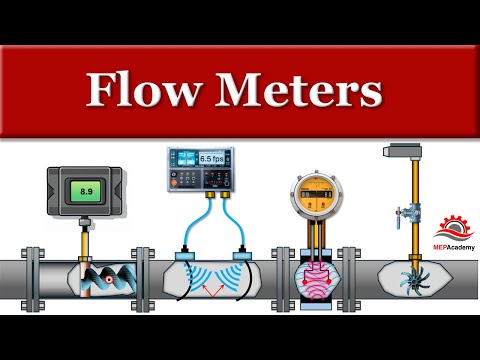
▶ Watch: Flow Meters Explained — Types, Working Principles, and Applications
4. Contact Jade Ant Instruments for application engineering support, distributor pricing, and technical partnership discussions: www.jadeantinstruments.com
Glossary of Key Terms
Accuracy (% of Full Scale vs. % of Reading): % of Full Scale means the error is a fixed fraction of the meter’s maximum range. % of Reading means the error is a fraction of the actual measured value. A meter with ±1% FS accuracy at 10% of range effectively has ±10% of reading accuracy — a critical distinction for customers operating at low flow.
Conductivity: A fluid’s ability to conduct electrical current, measured in microsiemens per centimeter (μS/cm). Required for magnetic flow meters to function. Pure water is approximately 0.055 μS/cm; tap water is typically 200–800 μS/cm.
Custody Transfer: Commercial measurement of fluid quantity for the purpose of transferring ownership or billing between parties. Requires traceable accuracy and often third-party verification.
IP Rating (Ingress Protection): Standardized rating (e.g., IP67) describing how well an enclosure resists dust and water ingress. IP67 = dust tight + submersion to 1 meter for 30 minutes.
Rangeability / Turndown Ratio: The ratio of maximum to minimum measurable flow at acceptable accuracy. A meter with 10:1 rangeability measuring a maximum of 100 m³/h can accurately measure down to 10 m³/h.
Straight Run: The length of unobstructed, undisturbed pipe required upstream and downstream of a flow meter to ensure stable, symmetric flow profile for accurate measurement.
TCO (Total Cost of Ownership): All costs associated with an asset over its operating life: purchase, installation, energy consumption, maintenance, calibration, downtime, and eventual replacement.
Viscosity: A fluid’s resistance to flow. Water has low viscosity (~1 cP at 20°C); heavy fuel oil has high viscosity (100–600 cP). High viscosity degrades turbine and paddle wheel meter accuracy and reduces their effective range.
Wetted Parts: Components of a flow meter that contact the process fluid. Material compatibility of wetted parts with the fluid is a primary selection criterion, particularly for corrosive, high-purity, or sanitary applications.
For application engineering support, distributor partnership inquiries, and technical documentation on specific flow meter technologies, visit Jade Ant Instruments or explore the how to choose a flow meter guide for a structured selection workflow your team can use immediately.
External References: