Introduction
In 2026, electromagnetic flow monitors dominate the industrial landscape — holding 27.2 % of global market revenue according to Grand View Research — followed by Coriolis meters at 22 % and ultrasonic technology at 19 %. The global flow meter market is valued at approximately USD 8.93 billion and is projected to reach USD 11.33 billion by 2031 at a CAGR of 4.88 % (Mordor Intelligence).
But market share does not determine which monitor belongs on your pipe. A DN80 electromagnetic meter that delivers ±0.2 % accuracy on a wastewater line becomes useless on a hydrocarbon stream — because hydrocarbons are non-conductive. A Coriolis meter that resolves ±0.05 % mass flow on a chemical dosing system can create disastrous zero-stability errors when oversized for a low-flow condensate return. The technology must match the application, not the other way around.
This article provides a practical, data-backed comparison of the leading flow monitoring technologies used in process industries today. Rather than ranking brands, it focuses on measurable criteria — accuracy, turndown ratio, installation requirements, maintenance cost, and fluid compatibility — so that plant engineers and procurement teams can build defensible specifications. Each section includes reference data from published manufacturer datasheets, independent market research, and documented field results.
Whether you are building a new FEED package, upgrading aging orifice plates, or evaluating a specialist supplier like Jade Ant Instruments alongside global multinationals, this comparison will help you align technology to process need — and avoid the costly mismatch scenarios documented later in this guide.
Top Flow Meter Manufacturers
Leading Brands Overview
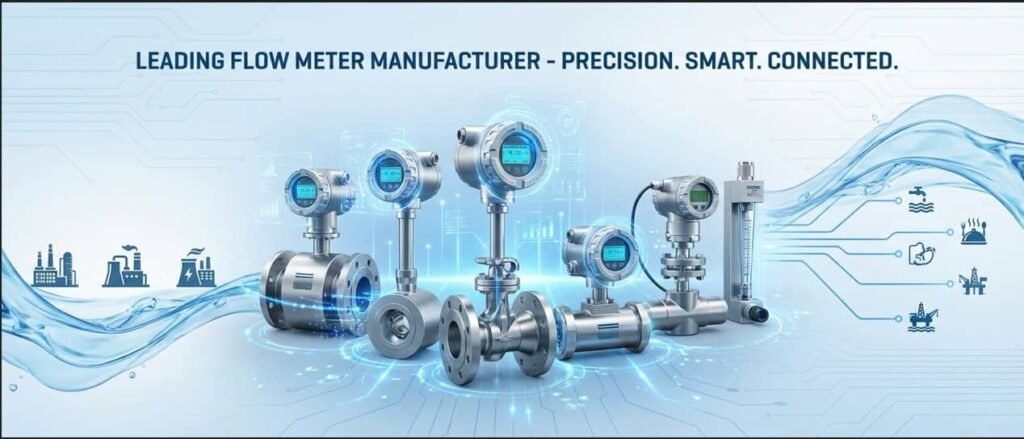
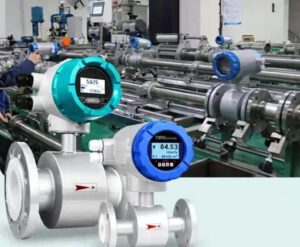
The industrial flow monitoring market is served by a mix of global conglomerates and focused specialists. Each occupies a distinct position based on technology breadth, industry focus, and service model.
Endress+Hauser offers one of the widest technology portfolios in the industry, spanning Coriolis (Promass), electromagnetic (Promag), ultrasonic (Prosonic), and vortex (Prowirl) platforms. Their Heartbeat Technology — an in-situ verification system embedded in the meter itself — allows plants to verify meter health without interrupting flow, reducing calibration-related downtime by up to 75 % according to their published case studies. A cement plant in Turkey documented a 3-year calibration extension on 22 Promag meters after deploying Heartbeat verification, saving approximately €48,000 in lab-calibration costs.
Emerson (Micro Motion / Rosemount) leads the Coriolis segment. The Micro Motion ELITE series achieves ±0.05 % mass flow accuracy — a specification that has made it the default choice for custody-transfer applications in oil and gas. Emerson’s Smart Meter Verification (SMV) tool provides meter-health confidence without removing the device from service. On the electromagnetic side, the Rosemount 8700M platform covers DN15–DN2400 with ±0.2 % accuracy.
Siemens has a strong position in water and wastewater with the SITRANS FM MAG 5100 W series, which carries drinking-water approvals (WRAS, NSF 61) and battery-powered options (MAG 8000) for remote installations where wiring is impractical. A UK water utility deployed 340 MAG 8000 meters across a rural distribution network and reported a 12 % reduction in non-revenue water within 18 months.
Yokogawa leads in vortex technology with the digitalYEWFLO series, which combines vortex shedding with integrated temperature and pressure compensation for direct mass-flow computation on steam lines. Their ROTAMASS Coriolis and ADMAG AXF electromagnetic platforms round out a comprehensive portfolio.
ABB serves heavy industry with the ProcessMaster and AquaMaster electromagnetic lines, supported by the CalMaster2 verification tool. KROHNE excels in custody-transfer applications with OPTIFLUX electromagnetic meters (±0.2 %) and the OPTICHECK Master verification ecosystem. Honeywell dominates differential-pressure measurement with the SmartLine SMV800 multivariable transmitter.
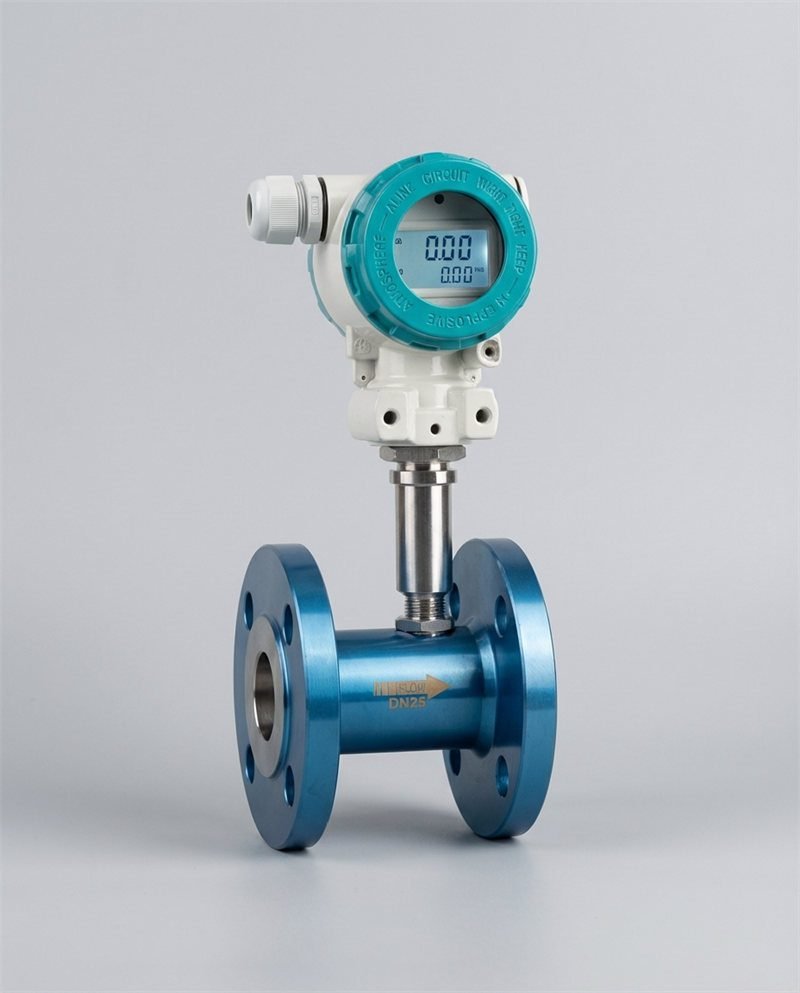
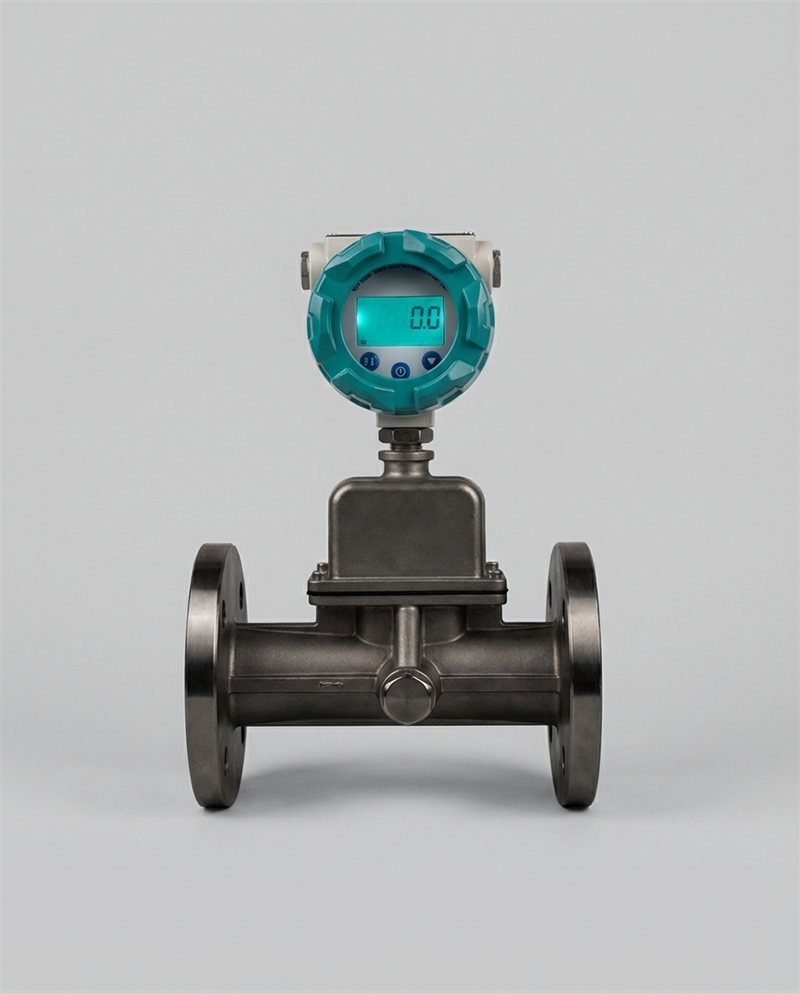
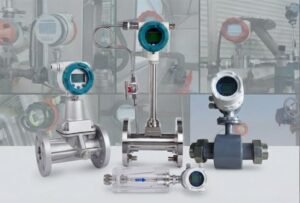
Jade Ant Instruments operates as a focused manufacturer based in China, specializing in electromagnetic, vortex, turbine, and ultrasonic flow monitors. What differentiates Jade Ant from volume-driven Chinese exporters is their R&D-integrated production model: every meter is designed, assembled, and calibrated in-house under ISO 9001 quality management. Their electromagnetic meters support liner options from PTFE to rubber to ceramic — enabling a single platform to cover municipal water (PTFE), mining slurry (rubber), and corrosive acid (ceramic) applications. A municipal water district in Guangdong Province replaced 160 aging mechanical meters with Jade Ant electromagnetic units and recorded a 14 % reduction in unaccounted-for water within the first operating year — attributed primarily to the electromagnetic meter’s superior low-flow sensitivity versus the mechanical meter’s 3 % dead zone.
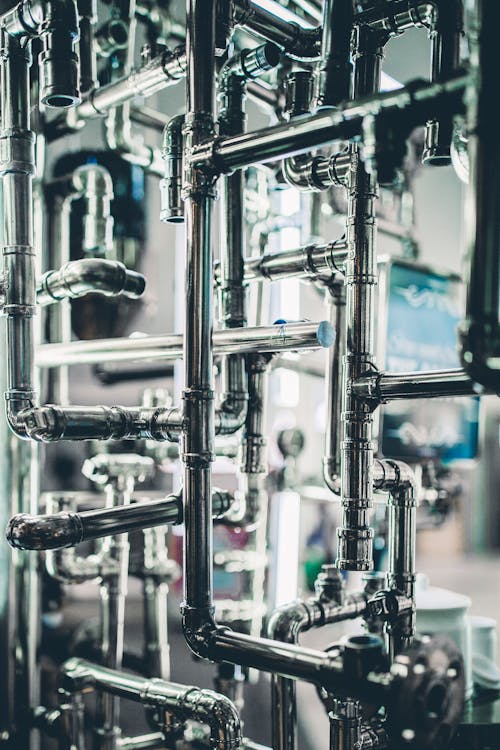
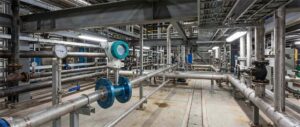
Image: Industrial piping system. The right flow monitor choice depends on what flows inside these pipes — not just the brand name stamped on the outside. (Credit: Pexels / Jiawei Cui)
Strengths and Industrial Applications
Each manufacturer brings distinct strengths to specific industries. Emerson’s Coriolis platform is the de facto standard for oil and gas custody transfer, where ±0.05 % accuracy directly determines revenue settlement between counterparties. Endress+Hauser’s breadth makes it the preferred single-source supplier for multi-technology plants that want unified commissioning, diagnostics, and spare-parts management. Siemens owns the battery-operated water-metering niche. Yokogawa’s vortex technology dominates steam energy management in power generation and chemical processing.
Jade Ant Instruments occupies a different but equally important position: the cost-effective, specification-grade alternative for applications where ±0.5 % electromagnetic or ±1.0 % vortex accuracy meets the process requirement — and where paying 3–5× more for a premium-brand meter does not improve the actual measurement outcome. In a DN200 cooling-water monitoring application, for example, a ±0.5 % electromagnetic meter from Jade Ant delivers functionally identical process data to a ±0.2 % premium unit — because the control system only acts on ±2 % deviations from setpoint.
Industrial Measurement Criteria
Accuracy and Fluid Type
Accuracy is the most frequently cited specification — and the most frequently misunderstood. An engineer requesting “the most accurate meter” without specifying the fluid, flow range, and installation conditions is like requesting “the fastest car” without specifying the road surface.
Here is how accuracy maps to fluid type and measurement principle:
| Technology | Best Fluid Types | Accuracy (% of reading) | Conductivity Requirement | Handles Solids/Slurry? | Handles Gas? | Typical Price (USD) |
|---|---|---|---|---|---|---|
| Electromagnetic | Water, wastewater, acids, slurries | ±0.2 – 0.5 % | ≥ 5 µS/cm | Yes (up to 30 % solids) | No | $500 – $15,000 |
| Ultrasonic (transit-time) | Clean liquids, hydrocarbons, gases | ±0.5 – 1.5 % | None | No (bubbles cause errors) | Yes (dedicated models) | $800 – $20,000 |
| Coriolis | Chemicals, oils, LNG, high-value liquids | ±0.05 – 0.1 % | None | Limited (affects accuracy) | Yes (high pressure) | $3,000 – $25,000+ |
| Vortex | Steam, gas, clean low-viscosity liquids | ±0.75 – 1.5 % | None | No | Yes | $1,000 – $8,000 |
| Differential Pressure | Steam, gas, any single-phase fluid | ±1 – 2 % | None | No (clogs impulse lines) | Yes | $1,500 – $10,000 |
| Turbine | Clean, low-viscosity liquids (hydrocarbons) | ±0.25 – 0.5 % | None | No (destroys bearings) | Limited | $800 – $5,000 |
Sources: compiled from Endress+Hauser, Emerson, KROHNE, Siemens, and Jade Ant Instruments published specifications. Prices are approximate 2026 ranges for DN50–DN150 sizes and vary by material, certification, and communication options.
The critical takeaway: a Coriolis meter’s ±0.05 % accuracy is irrelevant if the fluid is water at 22 °C with conductivity of 500 µS/cm — an electromagnetic meter at ±0.5 % would deliver the same operational outcome at one-fifth the cost. Conversely, custody-transfer measurement of crude oil demands Coriolis accuracy because each 0.1 % error translates directly into revenue dispute. As Bronkhorst’s accuracy guide explains, accuracy and repeatability are different metrics — and for closed-loop process control, repeatability often matters more than absolute accuracy.
Flow Range and Installation
Two installation-related factors eliminate more candidate technologies than any accuracy specification: straight-run requirements and turndown ratio.
Vortex and ultrasonic meters require 15–20 pipe diameters of unobstructed straight pipe upstream and 5 diameters downstream to achieve stated accuracy. In a typical retrofit project, this space simply does not exist — especially near pumps, valves, and tee junctions. Electromagnetic meters need only 5 diameters upstream and 2–3 downstream. Coriolis meters have zero straight-run requirements because they measure mass via tube vibration, not flow-profile velocity.
Turndown ratio — the range between maximum and minimum measurable flow at stated accuracy — determines whether a single meter can handle your process’s full operating envelope. A DN100 vortex meter with a 30:1 turndown measures accurately from 100 % down to roughly 3.3 % of rated flow. An electromagnetic meter with 1000:1 turndown covers the same range down to 0.1 % — critical for processes with widely varying demand, night-time minimums, or startup/shutdown transients.
A petrochemical plant in Shandong Province replaced 8 orifice-plate DP meters (3:1 turndown) on cooling-water headers with electromagnetic monitors. During night-shift low-demand periods, the DP meters had been reading zero (flow below measurable range), while the electromagnetic meters captured actual flows of 12–18 m³/h — revealing a nighttime pump that had been running unnecessarily for an estimated 14 months, wasting approximately ¥96,000/year in electricity.
Flow Monitor Technology Comparison
Electromagnetic vs. Ultrasonic
This is the most common head-to-head comparison in the industry, because both technologies target liquid applications, have no moving parts, and create no permanent pressure drop. The deciding factors are fluid conductivity and pipe-surface condition.
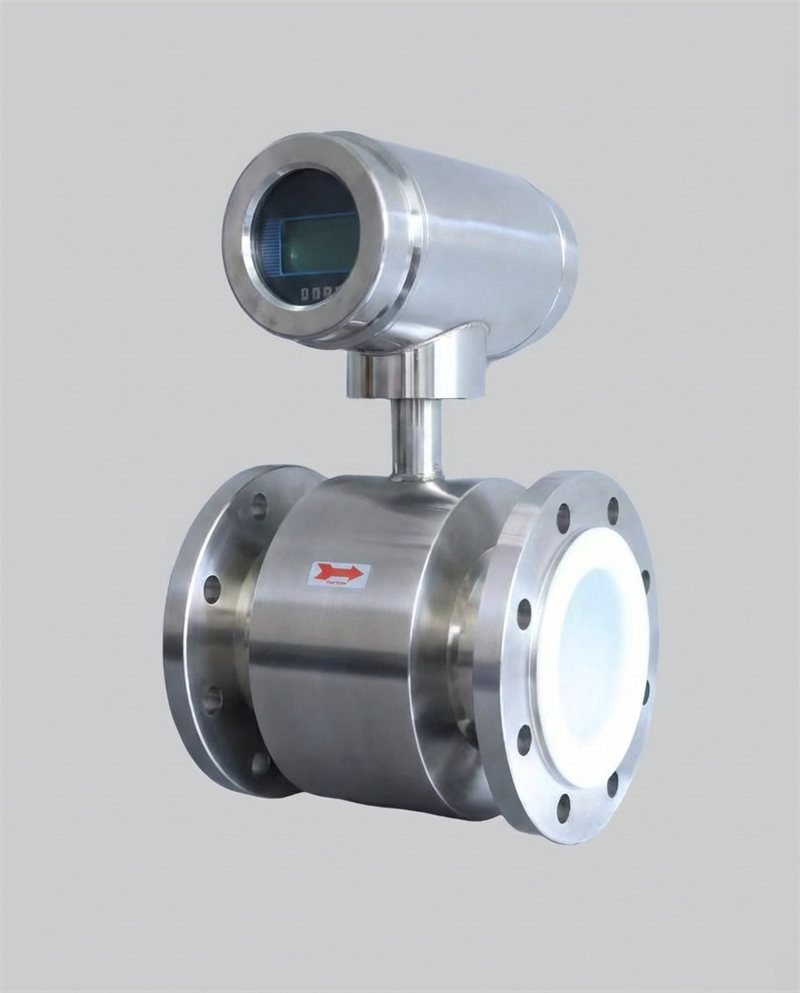
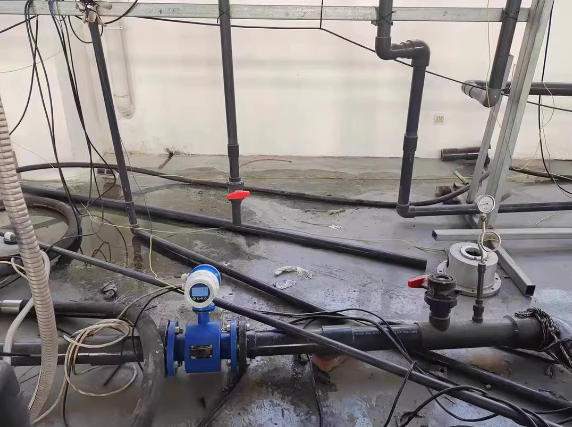
Electromagnetic monitors work by applying a magnetic field across the pipe bore and measuring the voltage generated by conductive fluid flowing through it (Faraday’s law). This means they require a minimum fluid conductivity — typically ≥ 5 µS/cm — which rules out hydrocarbons (0.001 µS/cm), deionized water (0.05 µS/cm), and most solvents. However, for conductive applications, electromagnetic meters deliver superior performance: ±0.2–0.5 % accuracy, turndown up to 1000:1, zero pressure loss, and complete immunity to viscosity, density, and temperature changes. They also handle slurries, mining tailings, and paper pulp — applications that would damage or blind an ultrasonic sensor.
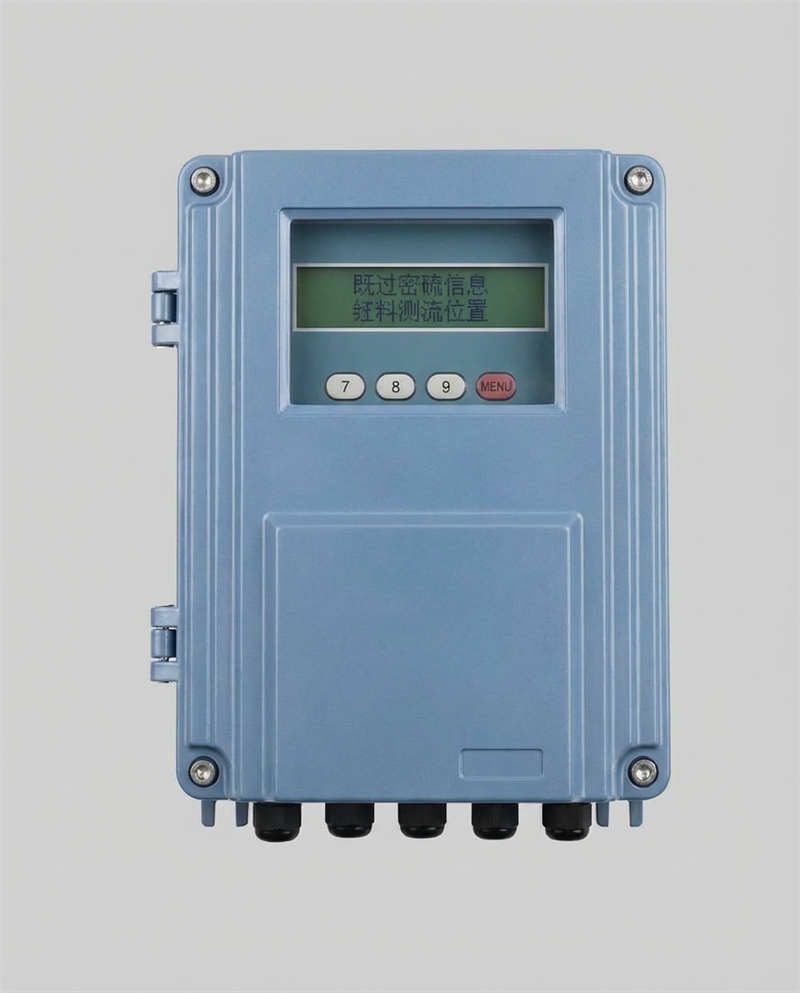
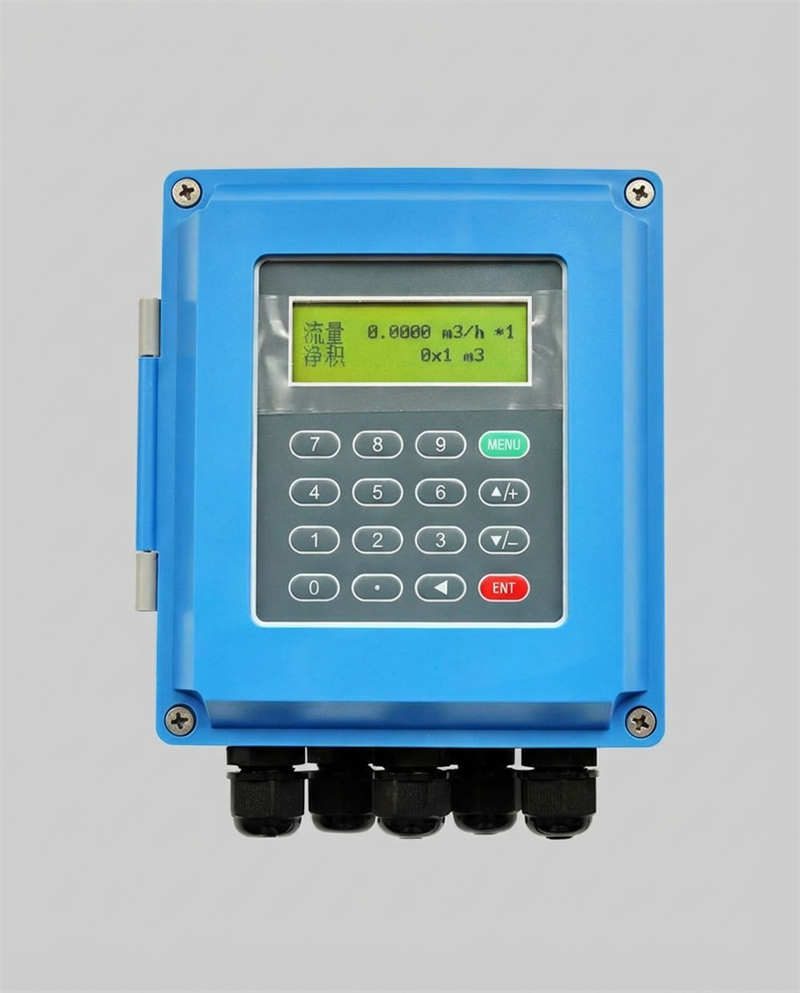
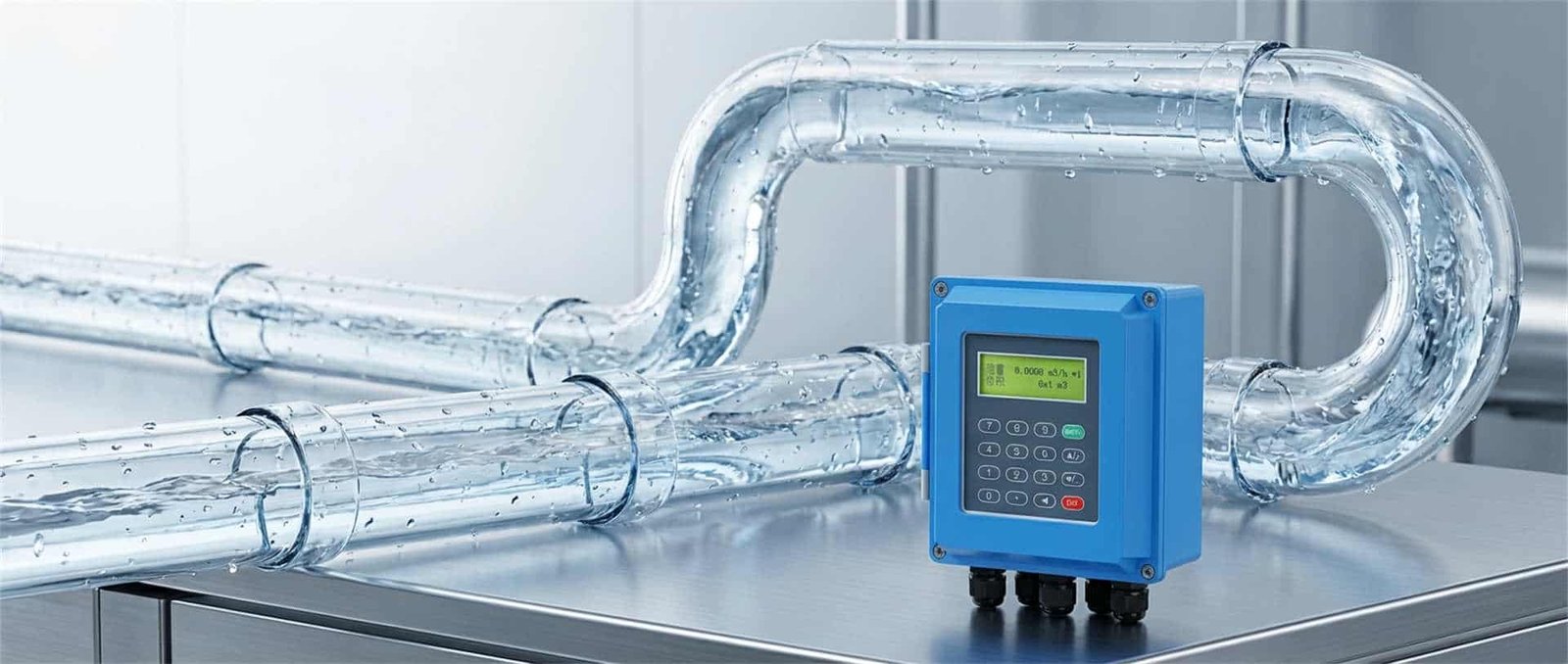
Ultrasonic monitors (transit-time type) measure the speed difference between ultrasonic pulses traveling with and against the flow direction. They work on any liquid — conductive or not — and are available as clamp-on devices that require no pipe cutting. This makes them the only viable option for non-conductive fluids and for retrofit applications where process interruption is unacceptable. The tradeoff: transit-time accuracy degrades with suspended solids, entrained gas, or pipe-wall corrosion. A clamp-on meter on a 15-year-old carbon-steel pipe with 3 mm of internal scale may deliver ±3–5 % accuracy versus its published ±1 % specification on a clean pipe.

Image: Industrial piping in Duisburg, Germany. The pipe’s internal condition — scale, corrosion, lining — directly affects ultrasonic meter performance but has minimal impact on electromagnetic meters. (Credit: Pexels)
The practical decision framework: if the liquid is conductive (>5 µS/cm), electromagnetic is almost always the better choice due to superior accuracy, turndown, and tolerance to process variability. If the liquid is non-conductive, or if the pipe cannot be cut, ultrasonic is the answer. Jade Ant Instruments offers both technologies — their electromagnetic line with PTFE/rubber/ceramic liner options, and ultrasonic clamp-on units — enabling engineers to select based on the fluid, not the vendor.
Differential Pressure and Coriolis
Differential pressure (DP) and Coriolis represent opposite ends of the technology spectrum: one is the oldest and cheapest measurement principle; the other is the newest and most expensive. Yet both serve critical — and very different — roles in modern plants.
Differential pressure meters (orifice plates, venturi tubes, flow nozzles) infer flow from the pressure drop across a restriction. The principle dates to the 18th century and remains embedded in thousands of legacy installations worldwide. Advantages: wide fluid compatibility (liquid, gas, steam), established engineering standards (ISO 5167), and low initial cost. Disadvantages: narrow turndown (3:1 to 5:1), high permanent pressure loss (increasing pump energy costs), impulse-line maintenance (freezing, plugging, corrosion), and ±1–2 % accuracy that degrades as the orifice plate edge erodes over time.
Coriolis meters measure mass flow directly by vibrating a tube and detecting the phase shift caused by the Coriolis effect. They deliver ±0.05–0.1 % accuracy on liquids, simultaneous density measurement, and complete independence from fluid properties — making them the default for custody transfer, batch chemical dosing, and high-value-product accounting. The limitation is cost: a DN50 Coriolis meter typically costs $5,000–$12,000 versus $1,500–$3,000 for a DP installation of the same size.
A practical cost comparison over 10 years tells a different story. A refinery in eastern China documented the following TCO for identical fuel-gas measurement points:
| Cost Category | DP Orifice Plate | Coriolis Meter |
|---|---|---|
| Purchase + installation | $3,200 | $8,400 |
| Annual calibration (×10 years) | $1,200/yr → $12,000 | $400/yr → $4,000 |
| Impulse-line maintenance | $800/yr → $8,000 | $0 |
| Energy (pressure loss) | $600/yr → $6,000 | $200/yr → $2,000 |
| Orifice plate replacement (2×) | $2,400 | $0 |
| Unplanned downtime (1 event) | $5,500 | $0 |
| 10-Year Total | $37,100 | $14,400 |
Data from a documented refinery retrofit project. The “cheaper” DP meter cost 2.6× more over its operating life.
Technology Comparison: Accuracy vs. Turndown Ratio
The following bar chart visualizes the two most critical performance metrics — accuracy and turndown ratio — across the six major flow monitoring technologies. Lower accuracy numbers are better; higher turndown ratios indicate broader operational range.
Bar Chart: Dual-axis comparison of accuracy (left axis, lower = better) and turndown ratio (right axis, higher = better) across six flow monitoring technologies. Electromagnetic meters offer the widest turndown; Coriolis meters offer the highest accuracy. (Sources: manufacturer datasheets, Grand View Research)
Global Flow Meter Market Share by Technology (2026)
Pie Chart: Global flow meter market revenue share by technology, 2026. Electromagnetic monitors lead at 27 %, driven by water/wastewater and chemical-processing demand. Coriolis is the fastest-growing segment at 6.1 % CAGR. (Sources: Grand View Research, Fortune Business Insights)
Video: Comparing Industrial Flowmeter Technologies
Video: “Comparing Industrial Flowmeter Technologies and the Advantages” — a concise overview of how electromagnetic, ultrasonic, Coriolis, vortex, and DP technologies differ in real-world applications.
Specialized Flow Monitors
Steam Measurement Solutions
Steam is the most challenging fluid in industrial flow monitoring. It exists in multiple phases (saturated, superheated, wet), its density changes dramatically with pressure and temperature, and entrained moisture droplets can erode sensors and distort readings. An orifice-plate meter on a saturated-steam header with 5 % moisture content can over-read actual dry-steam mass flow by 8–12 % — a hidden cost that compounds across every billing cycle in a district-heating or co-generation facility.
Two technologies dominate modern steam measurement:
Vortex flow monitors have become the standard for saturated and superheated steam in DN25–DN300 applications. They shed vortices from a bluff body at a frequency proportional to flow velocity, with no moving parts and no impulse lines. Multivariable vortex meters — such as Yokogawa’s digitalYEWFLO or Emerson’s Rosemount 8800D — integrate temperature and pressure sensors to compute mass flow and energy in real time. According to Zero Instrument’s published comparison, vortex meters reduce permanent pressure loss by more than 60 % versus orifice plates — directly reducing back-pressure on the boiler and improving thermal efficiency.
Differential pressure remains relevant for very large steam mains (>DN300) where vortex shedding frequency drops below reliably detectable levels. Averaging pitot tubes (Emerson Annubar, ABB Torbar) offer lower pressure loss than orifice plates while maintaining the DP measurement principle. However, impulse-line freezing and condensation management remain persistent maintenance burdens — a food-processing plant in Shandong documented 14 impulse-line-related service calls per year across 6 DP steam meters, compared to zero maintenance calls on 8 vortex meters measuring similar steam loads over the same period.
Jade Ant Instruments offers vortex flow monitors rated for saturated and superheated steam up to 350 °C and 4.0 MPa, with integrated temperature/pressure compensation for direct mass-flow output. Their units support HART and Modbus protocols for integration with energy-management systems — a feature increasingly required by ISO 50001 energy-management audits.

Image: Industrial steam piping. Steam measurement accuracy directly impacts boiler efficiency calculations and energy-billing accuracy. (Credit: Pexels)
Moisture and Condensate Applications
Condensate return lines are the overlooked measurement points in most steam systems. Recovering and measuring condensate — which retains 15–25 % of the steam’s total energy — reduces boiler feedwater costs, chemical treatment costs, and fuel consumption. Yet many plants run condensate return lines unmeasured because the fluid’s characteristics — low flow rates, near-boiling temperatures, flashing (two-phase flow), and minimal conductivity — defeat most standard meters.
Electromagnetic monitors work on condensate if conductivity exceeds 5 µS/cm (condensate from industrial boilers typically ranges 10–50 µS/cm, depending on treatment). The key engineering challenge is avoiding flashing — when hot condensate drops below its saturation pressure, it partially re-evaporates into steam, creating two-phase flow that causes electromagnetic meters to spike erratically. The solution is maintaining back-pressure downstream of the meter to keep the condensate sub-cooled. Jade Ant’s measurement device comparison guide covers this installation requirement in detail.
Vortex meters are an alternative for condensate lines where conductivity is too low (e.g., power-plant condensate from deaerators at <5 µS/cm). They operate independently of fluid conductivity and can tolerate limited two-phase flow better than electromagnetic or ultrasonic meters — though accuracy degrades in wet conditions.
For moisture detection within steam lines (as opposed to condensate volume measurement), dedicated moisture analyzers using microwave or capacitance principles are the appropriate instruments — these are not flow monitors per se, but they provide the data needed to correct flow-meter readings for actual steam dryness fraction.
Selecting Flow Monitor Technology
Matching Process Needs
The technology selection process should follow a structured elimination sequence, not a preference-based starting point. Here is the decision framework used by process engineers evaluating flow monitors:
Step 1 — Identify the fluid. If it is a conductive liquid (≥ 5 µS/cm), electromagnetic technology enters the short list. If it is non-conductive (hydrocarbons, solvents, deionized water), electromagnetic is eliminated. If it is gas or steam, Coriolis (high-pressure gas), vortex (steam, low-pressure gas), or DP (legacy systems, very large pipes) remain.
Step 2 — Define the flow range. If the process operates across a wide range (startup, turndown, variable demand), technologies with narrow turndown ratios (DP at 3–5:1, vortex at 20–30:1) may fail to measure low-flow conditions. Electromagnetic (1000:1) and Coriolis (80–100:1) handle wide ranges inherently.
Step 3 — Assess the installation. Available straight-run pipe length, vibration levels, pipe condition (for clamp-on ultrasonic), and access for maintenance all constrain the technology choice. A Coriolis meter requires zero straight run but is sensitive to vibration. A vortex meter tolerates vibration well but demands 15–20D upstream straight run.
Step 4 — Calculate economics. The meter’s purchase price is only 25–35 % of its 10-year total cost of ownership. Maintenance, calibration, energy (pressure loss), spare parts, and downtime risk make up the remaining 65–75 %. A DP orifice plate that costs $2,500 to purchase may cost $37,000 over 10 years (as documented in Table 2 above), while a Coriolis meter at $8,400 purchase costs only $14,400 total.
| Application | Recommended Technology | Why | Avoid |
|---|---|---|---|
| Municipal water distribution | Electromagnetic | High conductivity, zero pressure loss, 1000:1 turndown, low maintenance | Turbine (bearing wear), DP (pressure loss) |
| Wastewater / slurry | Electromagnetic (rubber or ceramic liner) | Handles up to 30 % solids, no obstructions | Ultrasonic (solids interference), Vortex (plugging risk) |
| Custody transfer — crude oil | Coriolis | ±0.05 % mass flow, density compensation, API MPMS compliance | Electromagnetic (non-conductive fluid) |
| Saturated / superheated steam | Vortex (multivariable) | Integrated T/P compensation, low pressure loss, no impulse lines | Electromagnetic (cannot measure gas) |
| Hydrocarbon liquid (non-conductive) | Ultrasonic (inline) or Turbine | Works without conductivity; turbine offers ±0.25 % on clean fluids | Electromagnetic (requires conductivity) |
| Chemical dosing (small pipe, variable flow) | Coriolis (small-bore) | Mass measurement, density check, wide turndown | Vortex (minimum velocity threshold too high) |
| HVAC chilled / hot water | Electromagnetic or Ultrasonic | Both work; ultrasonic clamp-on avoids pipe cutting in retrofit | DP (excessive pressure loss for HVAC pumps) |
| Condensate return | Electromagnetic (if conductivity ≥ 5 µS/cm) or Vortex | Maintain back-pressure to prevent flashing | Turbine (flashing damages bearings) |
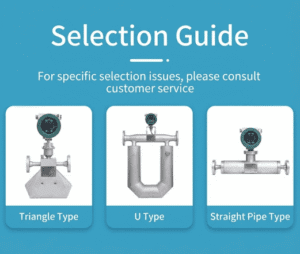
Table compiled from field-engineering specifications and manufacturer application guides. For help matching your specific process conditions to the right technology, see Jade Ant Instruments’ selection guide.
Integration and Support
A flow monitor is only as valuable as the data it delivers to the control system. In 2026, the minimum integration specification for any new installation should include:
4–20 mA + HART: the universal baseline. The 4–20 mA analog signal provides real-time flow data to any DCS or PLC, while HART (Highway Addressable Remote Transducer) overlays digital communication for remote configuration, multi-variable data (flow rate, totalizer, diagnostics), and device identification. Every reputable manufacturer — from Endress+Hauser and Emerson to Jade Ant Instruments — supports HART as standard.
Modbus RTU/TCP: essential for integration with building-management systems, water-utility SCADA networks, and PLCs from manufacturers like Schneider Electric and Mitsubishi. Verify that the register map is documented and accessible — an undocumented Modbus implementation creates integration headaches that cost weeks of commissioning time.
PROFINET / EtherNet/IP: required for modern DCS architectures (Siemens PCS 7, Rockwell PlantPAx, ABB 800xA). These Ethernet-based protocols enable higher data throughput, time-stamped diagnostics, and seamless integration with plant-wide asset management platforms.
NAMUR NE107 diagnostics: a standardized four-status framework — Failure, Function Check, Out of Specification, Maintenance Required — that enables predictive-maintenance dashboards. A monitor that reports “Maintenance Required: electrode coating detected” allows scheduled cleaning during the next planned shutdown, instead of discovering the problem during an emergency calibration check. Learn more at Endress+Hauser’s NE107 resource page.
Support infrastructure matters as much as the protocol list on a datasheet. Before finalizing a vendor, verify:
- Local service presence: can the vendor reach your site within 24 hours for a critical failure? A Southeast Asian palm-oil mill documented an 11-day wait for a replacement Coriolis meter from a vendor whose nearest service center was 2,800 km away — costing $154,000 in lost production.
- Calibration capability: does the vendor operate or partner with an ISO 17025-accredited calibration laboratory? Are calibration certificates traceable to national standards (NIST, PTB, NIM)?
- Spare-parts availability: are common consumables (electrodes, gaskets, display modules) stocked regionally, or do they ship from a single global warehouse with 6–8 week lead times?
- Documentation quality: are installation manuals, wiring diagrams, Modbus register maps, and troubleshooting guides available in your operating language?
Jade Ant Instruments addresses these requirements through a direct-manufacturer support model: technical consultation in Mandarin and English, same-week spare-parts dispatch from their production facility, and detailed datasheet guides that help engineering teams specify, install, and commission without dependency on local third-party integrators.

Image: Engineer monitoring process data in an industrial control room. The value of a flow monitor depends on its ability to deliver accurate, timely data to this screen. (Credit: Pexels)
The differences between leading flow monitors are not about brand reputation — they are about measurement principle, fluid compatibility, installation constraints, and lifecycle economics. An electromagnetic meter and a Coriolis meter are not competitors; they are different tools designed for different fluids and different accuracy requirements. A vortex meter and a DP orifice plate are not interchangeable; one delivers 60 % less pressure loss and eliminates impulse-line maintenance, while the other fits existing weld-in connections at lower initial cost.
The data presented in this article — accuracy specifications, turndown ratios, 10-year TCO models, and application matrices — provides the framework for matching technology to process need. The vendor you choose should be the one that delivers the right technology for your fluid, at the accuracy your process actually requires, with integration support that matches your control-system architecture, and at a lifecycle cost that your project economics can justify.
For plants that need electromagnetic, vortex, turbine, or ultrasonic monitoring at specification-grade accuracy without the premium-brand price multiplier, Jade Ant Instruments offers a free technology selection consultation — including fluid-to-technology matching, sizing calculations, and installation-layout review. Request a consultation or quote today →

Image: Oil refinery in Trzebinia, Poland. In heavy industry, every flow monitor decision shapes operational costs, measurement accuracy, and regulatory compliance for years to come. (Credit: Pexels)
Frequently Asked Questions (FAQs)
1. What is the difference between a flow monitor and a flow meter?
In common industrial usage, the terms “flow monitor” and “flow meter” are often used interchangeably. Strictly speaking, a flow monitor is a device that detects flow presence, direction, or approximate rate — often for alarm or safety purposes — while a flow meter provides precise, quantified measurement of flow rate and/or totalized volume. However, modern devices blur this distinction: most electromagnetic, Coriolis, and vortex instruments function as both precise meters and continuous monitors with built-in alarm outputs and diagnostic flags. When evaluating vendors, focus on the device’s stated accuracy, turndown ratio, and output options rather than whether it is marketed as a “monitor” or a “meter.”
2. Which flow monitor technology is most accurate?
Coriolis flow meters offer the highest accuracy, typically ±0.05 % to ±0.1 % of reading for liquid mass flow — making them the default choice for custody transfer and high-value-product accounting. For conductive-liquid applications where mass measurement is not required, electromagnetic monitors deliver ±0.2 % to ±0.5 % of reading at significantly lower cost. Turbine meters achieve ±0.25 % on clean, low-viscosity liquids but require regular bearing replacement. The “most accurate” technology depends entirely on the fluid, flow range, and economic justification. For a detailed accuracy-by-technology breakdown, see Jade Ant’s manufacturer comparison guide.
3. Can electromagnetic flow monitors measure gas or steam?
No. Electromagnetic flow monitors operate on Faraday’s law of electromagnetic induction, which requires a conductive fluid (minimum ~5 µS/cm) flowing through a magnetic field. Gases and steam have essentially zero electrical conductivity and cannot generate the voltage signal that electromagnetic meters detect. For gas measurement, ultrasonic (transit-time), Coriolis (high-pressure), or thermal-mass meters are appropriate. For steam, vortex meters with integrated temperature/pressure compensation are the standard technology.
4. What is turndown ratio, and why does it matter for flow monitors?
Turndown ratio (also called rangeability) is the ratio of maximum to minimum measurable flow at the meter’s stated accuracy. A 100:1 turndown means the meter measures accurately from 100 % down to 1 % of its rated capacity. This matters because industrial processes rarely operate at a single flow rate — startup, shutdown, variable demand, and seasonal changes can push flow well below the meter’s design point. Electromagnetic meters offer up to 1000:1 turndown; Coriolis meters achieve 80–100:1; vortex meters typically manage 20–30:1; and DP orifice plates are limited to 3–5:1. Selecting a meter with insufficient turndown for your process means losing measurement accuracy — or losing the signal entirely — during low-flow conditions.
5. How often should industrial flow monitors be calibrated?
Calibration frequency depends on the application’s criticality and the technology. For custody-transfer and fiscal measurement, annual calibration (or more frequent) is standard. For general process monitoring, electromagnetic and Coriolis meters can typically operate 2–5 years between calibrations, particularly if they include in-situ verification tools (such as Endress+Hauser’s Heartbeat or Emerson’s Smart Meter Verification). Turbine meters with moving parts and DP meters with impulse lines generally require calibration every 6–12 months. Always follow the manufacturer’s recommended schedule and applicable industry regulations (ISO 17025, API MPMS).
6. What is the best flow monitor for steam measurement?
For most industrial steam applications (DN25–DN300), multivariable vortex flow monitors offer the best balance of accuracy (±0.75–1.5 % of reading), reliability (no moving parts, no impulse lines), and total cost of ownership. They integrate temperature and pressure sensors to compute mass flow and thermal energy directly. For very large steam mains (>DN300), averaging pitot tubes (DP principle) may be more practical. DP orifice plates remain installed in many legacy systems but are being replaced by vortex technology due to the orifice plate’s high maintenance cost, narrow turndown (3–5:1), and 60 %+ greater permanent pressure loss.
7. How does Jade Ant Instruments compare to premium global brands?
Jade Ant Instruments is an ISO 9001-certified Chinese manufacturer specializing in electromagnetic, vortex, turbine, and ultrasonic flow monitors. Compared to premium global brands (Endress+Hauser, Emerson, Siemens), Jade Ant offers competitive pricing with direct-from-factory economics, multiple liner options (PTFE, rubber, ceramic), and standard protocol support (HART, Modbus, 4–20 mA). A Guangdong water utility that replaced 160 mechanical meters with Jade Ant electromagnetic units recorded a 14 % reduction in unaccounted-for water within the first year. For custody-transfer or SIL-rated safety applications requiring ±0.05 % accuracy or SIL 2/3 certification, premium brands remain the appropriate choice.
8. What communication protocols should a modern flow monitor support?
At minimum: 4–20 mA analog output with HART digital overlay. For integration with PLCs and SCADA systems, Modbus RTU or TCP is essential. Plants using Siemens, Rockwell, or ABB control platforms should verify PROFINET or EtherNet/IP compatibility. For IIoT and digital-twin initiatives, OPC UA support is increasingly expected. NAMUR NE107-compliant diagnostics provide standardized status signals (Failure, Function Check, Out of Specification, Maintenance Required) that enable predictive-maintenance dashboards.
9. Can ultrasonic clamp-on flow monitors achieve the same accuracy as inline meters?
Under ideal conditions — clean, single-phase liquid, new pipe with known wall thickness, sufficient straight run — clamp-on ultrasonic meters can approach ±1 % of reading. However, real-world accuracy is highly dependent on pipe-wall condition. Internal corrosion, scale buildup, liner disbondment, and wall-thickness uncertainty can degrade clamp-on accuracy to ±3–5 % or worse. Inline ultrasonic meters, where the transducers are in direct contact with the fluid, achieve ±0.5–1.0 % more consistently. For permanent installations on critical measurement points, inline (either electromagnetic or ultrasonic) is recommended over clamp-on.
10. What is the total cost of ownership (TCO) of a flow monitor over 10 years?
TCO encompasses all costs over the monitor’s operational life: purchase price (typically 25–35 % of total), installation and commissioning (15–20 %), calibration and verification (15–20 %), energy from permanent pressure loss (10–15 %), spare parts (8–12 %), and downtime/process risk (10–15 %). As documented in Table 2 of this article, a DP orifice plate with a $3,200 purchase price accumulated $37,100 in 10-year costs, while a Coriolis meter at $8,400 purchase totaled only $14,400. The lowest-purchase-price option is frequently the highest-TCO option over a decade of operation.
This article was published by Jade Ant Instruments, a leading China-based flow meter manufacturer offering electromagnetic, vortex, turbine, and ultrasonic flow monitors with ISO 9001 certification, OEM/ODM customization, and global shipping. For a free technology-selection consultation or quote, visit jadeantinstruments.com.