SIP Flow Meter Selection: Comparing Reliability, Fit, and Total Cost for Procurement Teams
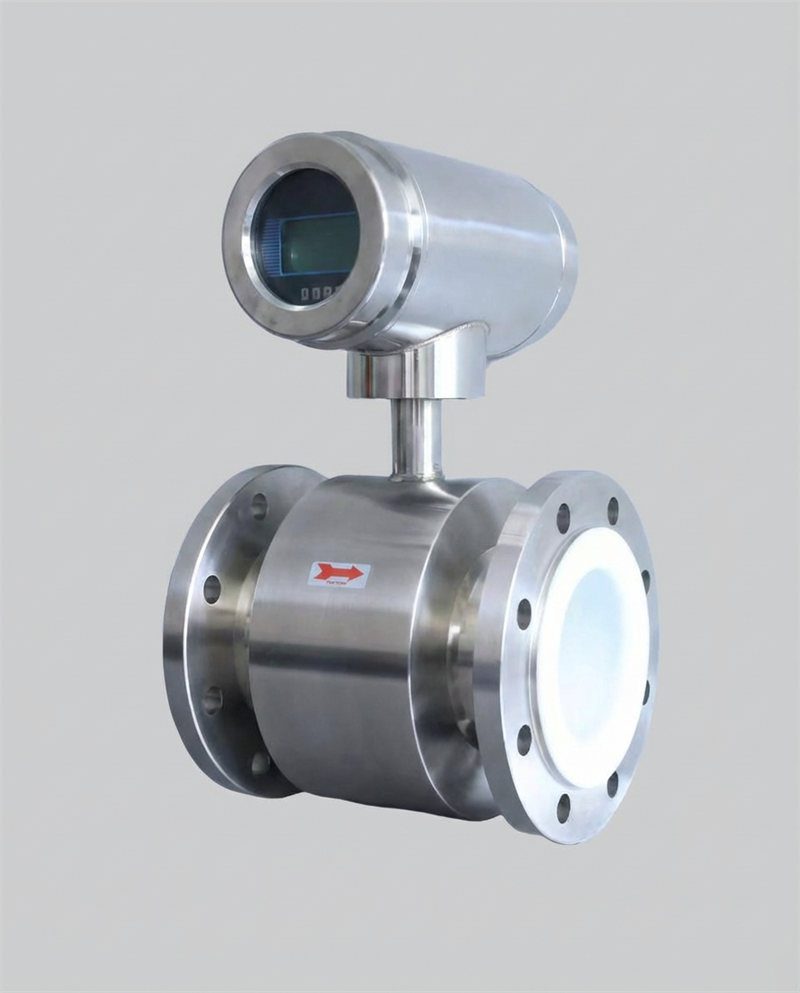
 An inline electromagnetic flow meter. On hygienic lines, the liner and gaskets inside a meter like this one are what have to survive every steam cycle. (Image: KROHNE, CC BY-SA 4.0, via Wikimedia Commons)
Picture a dairy skid that passes its factory acceptance test. It ships, and three months later the flow meter’s liner starts to lift. Nothing was wrong with the meter on the day it left the factory. The problem was that nobody asked how it would handle 140 °C steam followed straight away by a cold rinse, twice a day, every day.
The flow meter usually accounts for well under 5% of a skid’s bill of materials. Even so, it often decides whether a batch gets released, whether an invoice matches the delivery, and whether a plant runs its full shift.
What is a SIP flow meter? A SIP (Steam-In-Place) flow meter is a meter built to be sterilized inside the pipeline with saturated steam, usually at 121–145 °C for 20–60 minutes, without being taken out. SIP-rated meters are common in dairy, beverage, pharmaceutical, and biotech lines. They are also used on utility and water skids built by the same OEMs.
You can buy electromagnetic, ultrasonic, Coriolis, turbine, and positive displacement meters marketed for hygienic service. Each one handles steam, cleaning chemicals, and temperature swings differently. This guide compares them on seven factors that matter to procurement teams: reliability, application fit, maintenance cost, accuracy, environment, installation, and certifications. It then sets out the trade-offs so you can match a meter to your real duty cycle rather than to a catalog headline.
The guide is written for OEM and skid builders, instrument distributors and importers, EPC and system integrators, industrial terminal and MRO teams, and municipal and utility buyers.
Quick Glossary: Terms Used in This Guide
| Term | Plain-English Meaning | Example |
|---|---|---|
| SIP (Steam-In-Place) | Sterilizing equipment with steam while it stays installed | 30 minutes at 121 °C after each production run |
| CIP (Clean-In-Place) | Cleaning with hot caustic and acid solutions without taking equipment apart | 1.5% NaOH at 80 °C, then an acid rinse |
| البطانة | The non-conductive inner layer of a magmeter that touches the fluid | PTFE, PFA, ceramic |
| نسبة التخفيض | Highest measurable flow divided by lowest, at stated accuracy | 100:1 means 1–100 m³/h |
| % of reading | Error as a share of the actual flow value | ±0.5% at 10 m³/h = ±0.05 m³/h |
| Ra (surface roughness) | How smooth the wetted surface is, in micrometers | Ra ≤ 0.8 µm for dairy |
| الموصلية | How well a liquid carries electric current, in µS/cm | Tap water ≈ 500 µS/cm |
| TCO (Total Cost of Ownership) | Purchase price plus installation, calibration, spares, and downtime over the meter’s life | 10-year cost per measuring point |
| Thermal shock | Stress from a fast temperature change | 140 °C steam followed by a 20 °C rinse |
Reliability is the foundation of flow measurement because it sets your uptime and how well the whole system performs. In hygienic service, reliability has less to do with how a meter behaves at steady flow. It depends on how the meter holds up through hundreds of hot and cold cycles.
How Each Technology Fails Under SIP
Different technologies fail in different ways, and the differences are predictable:
| التكنولوجيا | Moving Parts | Most Common SIP-Related Failure | Typical Warranty Range* | Reliability in SIP Duty |
|---|---|---|---|---|
| Electromagnetic (magmeter) | لا شيء | Liner creep or collapse under vacuum after steam condenses | من 12 إلى 24 شهرًا | High, if the liner is chosen correctly |
| Inline ultrasonic | لا شيء | Transducer seal fatigue | من 12 إلى 24 شهرًا | عالية |
| جهاز الموجات فوق الصوتية القابل للتثبيت | None (sits outside the pipe) | Coupling gel drying out from pipe heat | من 12 إلى 24 شهرًا | Very high, because steam never touches it |
| كوريوليس | None (tubes vibrate) | Tube coating or fatigue in extreme cycling | 12–36 months | Very high |
| التوربينات | Rotor and bearings | Bearings destroyed when steam over-spins the rotor | 12 شهراً | Low to moderate |
| Positive displacement (PD) | Gears or lobes | Thermal growth shifts clearances and wears gears | 12 شهراً | معتدل |
*Warranty ranges are typical market figures. Always check the individual manufacturer’s terms.
Industry Insight: The Steam Rarely Causes the Failure
Engineers who investigate failures on hygienic lines usually find that the steam phase didn’t do the damage. The cool-down did.
When steam condenses in a closed line, it can create a partial vacuum. A PTFE liner that has been softened by heat can be pulled away from the meter body. After a few dozen cycles, the liner deforms, the electrodes start leaking, and the readings begin to drift.
Here is what that means when you buy:
- Ask for the vacuum rating at the maximum SIP temperature. The room-temperature rating doesn’t tell you what you need.
- Ask whether the liner is mechanically anchored, for example with a perforated steel grid inside it.
- Ask for a maximum temperature-change rate. A ceramic liner, for example, can crack if the temperature changes too quickly.
Turbine meters have a different weak spot. When steam is blown through a liquid turbine, the rotor can spin many times faster than its rated speed, and one cycle can wreck the bearings. This is why most SIP skid specifications avoid turbine meters in the sterilized loop.
Why Reliability Drives Your Costs
For an OEM, each field failure means a warranty trip, which can easily cost more than the meter itself. For a distributor, it means a customer who stops trusting your recommendations. For a utility, it means unbilled water. A reliable meter is the one that fails least under your duty cycle, not the one with the longest spec sheet.
Each flow meter technology has strengths that make it the right choice for certain applications and environments. Most “bad meters” in the field are really good meters installed in the wrong application.
 How a magmeter works: conductive liquid moving through a magnetic field produces a small voltage at the electrodes. If the liquid doesn’t conduct, there is no signal. (Image: Pedro.orsi, CC BY-SA 3.0, via Wikimedia Commons)
Electromagnetic Meters: Water Treatment, Dairy, and Beer
A magmeter uses Faraday’s law. A conductive liquid moving through a magnetic field creates a voltage in proportion to its speed. The bore is fully open with nothing in the flow path, so there is no pressure drop and nothing to wear out.
This is why magmeters are the default choice in municipal water and wastewater. They also work well for milk, juice, beer wort, and CIP return lines. You can see how widely they are used across sectors in this overview of magnetic flow meter applications.
Industry insight: Magmeters need a minimum conductivity, usually about 5 µS/cm. Purified water and WFI (Water for Injection) in pharmaceutical plants are often below 1.3 µS/cm. A magmeter simply can’t read them. Many pharma skid specifications have failed at FAT because of this one detail.
Ultrasonic Meters: Food, Beverage, and Pure Water
A transit-time ultrasonic meter sends sound pulses upstream and downstream. Sound travels faster with the flow than against it, and the difference in timing gives the velocity. Conductivity doesn’t matter, so ultrasonic meters handle purified water, WFI, and syrups with low conductivity.
Clamp-on versions also have an advantage in SIP duty: the sensor sits outside the pipe, so the steam never reaches it. For retrofit work, these ultrasonic meter selection tips explain how clamp-on and inline designs differ.
 The transit-time principle: sound pulses sent with and against the flow reveal the fluid’s velocity. (Image: Aurloz, CC BY-SA 4.0, via Wikimedia Commons)
Positive Displacement Meters: Oil, Gas, and Viscous Liquids
A PD meter traps fixed volumes of liquid between gears or lobes and counts them. PD meters get more accurate as viscosity goes up, which is the opposite of most other technologies. That makes them strong for lube oil, fuel oil, and crude at loading terminals, and for dosing chocolate, honey, or resins.
Most PD meters are not built for steam sterilization. Sanitary lobe versions exist, but you need to check each model for SIP temperature and clearance growth.
Coriolis Meters: The Premium Choice for Pharma and High-Value Batching
A Coriolis meter vibrates one or more tubes and measures how the moving fluid twists them. It measures mass flow and density directly. It is the most accurate option and widely used in biotech SIP lines, but it can cost 3–5 times as much as a magmeter of the same size.
Application Fit Matrix
| التطبيق | Best Fit | Good Alternative | Avoid |
|---|---|---|---|
| Municipal potable water | الكهرومغناطيسية | Inline ultrasonic | Turbine (raw water) |
| Wastewater and sludge | الكهرومغناطيسية | Doppler ultrasonic | PD, turbine |
| Milk, juice, beer (SIP) | Electromagnetic (PTFE/PFA liner) | كوريوليس | التوربينات |
| Purified water or WFI (SIP) | كوريوليس | Clamp-on or inline ultrasonic | الكهرومغناطيسية |
| Syrups and viscous food | كوريوليس | Sanitary PD (lobe) | Ultrasonic at high viscosity |
| Fuel and lube oil transfer | PD | Turbine, Coriolis | Electromagnetic (non-conductive) |
| Steam and utility gas | الدوامة | Differential pressure | الكهرومغناطيسية |
For a structured way to weigh these choices, this five-factor flow meter selection method gives your engineering team a repeatable checklist.
Maintenance needs and total cost of ownership decide whether a flow meter still makes sense over the long term. A meter that saves $600 at purchase can easily cost $6,000 in downtime.
Maintenance and Price Comparison (DN50, hygienic configuration)
| التكنولوجيا | Typical Initial Price (USD)* | Routine Maintenance | Typical Spare Parts | Maintenance Interval |
|---|---|---|---|---|
| الكهرومغناطيسية | $1,200–$3,000 | Electrode check, gasket replacement | Tri-clamp gaskets, grounding rings | من 12 إلى 24 شهرًا |
| Inline ultrasonic | $1,800–$4,000 | Transducer seal inspection | Seals, O-rings | 24 شهرًا |
| جهاز الموجات فوق الصوتية القابل للتثبيت | $1,500–$5,000 | Re-apply coupling compound | Coupling pads | 6-12 شهراً |
| كوريوليس | $6,000–$14,000 | Zero verification | Rarely needed | 24–36 شهرًا |
| التوربينات | $600–$2,000 | Bearing and rotor replacement | Bearing kits, rotors | 6-12 شهراً |
| PD (lobe or gear) | $1,500–$5,000 | Gear and seal wear check | Gears, seals | 6-12 شهراً |
*Indicative market ranges only. Prices vary with materials, certifications, and volume.
Where a Meter’s Lifetime Cost Goes
An illustrative model. On most hygienic lines, the purchase price is less than a third of the 10-year cost.
Industry Insight: Gaskets Are the Hidden Maintenance Cost
On SIP lines, the gasket at the tri-clamp joint usually wears out before anything else. EPDM gaskets harden after repeated steam exposure. FKM gaskets swell in some cleaning chemicals. Plants that replace gaskets on a schedule, rather than waiting for a leak, see far fewer contamination holds.
For electromagnetic meters, this magnetic meter maintenance guide sets out electrode cleaning, grounding checks, and cable inspection in plain steps.
Why This Matters to Your Budget
For an OEM, spares you can buy from standard stock keep your after-sales service profitable. For a distributor, a meter with an inexpensive spare kit is easier to support than one that needs a factory repair. The goal is the lowest cost per year of reliable readings, not the lowest cost on the invoice.
Accuracy is critical in flow measurement because it affects product quality and regulatory compliance. A 0.5% error sounds small until you run the numbers. On a line moving 2 million liters of milk a year at $0.45 per liter, it comes to $4,500 a year.
Typical Accuracy by Technology
Typical accuracy under reference conditions. Field accuracy depends on installation, fluid, and calibration.
| التكنولوجيا | الدقة النموذجية | تجهيز السرير | Drift Risk After SIP Cycling | Suggested Calibration Interval |
|---|---|---|---|---|
| كوريوليس | ±0.1% | 100:1 | Low (zero shift is possible) | 24–36 شهرًا |
| PD | ±0.2–0.51 TP3T | 10:1–100:1 | Medium (wear) | 6-12 شهراً |
| الكهرومغناطيسية | ±0.2–0.51 TP3T | 100:1+ | Low to medium (liner) | من 12 إلى 24 شهرًا |
| Inline ultrasonic | ±0.5–1.0% | 100:1 | منخفضة | 24 شهرًا |
| التوربينات | ±0.5% | 10:1 | High (bearings) | 6-12 شهراً |
| جهاز الموجات فوق الصوتية القابل للتثبيت | ±1–2% | 100:1 | Low (coupling) | 12 شهراً |
Calibration Frequency in Practice
Calibration means comparing a meter’s reading with a traceable reference standard and correcting the difference. How often you calibrate depends on how much a wrong reading costs you:
- Custody transfer or billing: every 6–12 months.
- Pharma batch and GMP records: every 12 months, or as your validation plan requires.
- Process control: every 12–24 months.
- Monitoring only: every 24–36 months, with in-situ verification in between.
Modern magmeters often include in-situ verification, an electronic self-check of the coil and electrodes. It won’t replace a wet calibration for billing, but it can safely extend intervals for process meters. These practical calibration tips explain the difference.
Industry insight: Buyers often forget to ask whether the factory calibration was done at the process temperature or at 20 °C. A meter calibrated with cold water and then used on 75 °C pasteurized milk may read slightly differently. Ask for the calibration conditions to be printed on the certificate.
The operating environment can change which flow meter technology is the right choice. SIP lines put meters through temperature, pressure, and chemical stress in the same day.
 A vortex meter installed on a utility line. The steam that supplies a SIP system is often measured with vortex technology. (Image: Cmarcante, public domain, via Wikimedia Commons)
Environmental Compatibility Table
| Condition | الكهرومغناطيسية | Ultrasonic (Clamp-on) | كوريوليس | التوربينات | PD |
|---|---|---|---|---|---|
| SIP at 121–145 °C | ✅ PTFE/PFA liner | ✅ Outside the pipe | ✅ | ⚠️ Over-speed risk | ⚠️ Clearance growth |
| Thermal shock (hot to cold) | ⚠️ Avoid ceramic | ✅ | ✅ | ⚠️ | ⚠️ |
| Vacuum after cool-down | ⚠️ Check liner rating | ✅ | ✅ | ✅ | ✅ |
| Caustic/acid CIP | ✅ With Hastelloy or Pt electrodes | ✅ | ✅ | ⚠️ | ⚠️ |
| Washdown (IP66/IP67/IP69K) | ✅ Stainless housing | ✅ | ✅ | ✅ | ✅ |
| High vibration | ✅ | ✅ | ⚠️ | ⚠️ | ⚠️ |
| Hazardous area (Ex zone) | ✅ Ex-rated models | ✅ | ✅ | ✅ | ✅ |
Industry Insight: The Electronics Are at Risk Too
Heat rises. A compact transmitter mounted straight onto a sensor at 140 °C can see its electronics go past 70 °C. For hot SIP lines, it’s worth paying for a remote-mount transmitter with a stainless enclosure rated IP67 or better. Washdown areas add another risk: high-pressure hoses push water past weak cable glands, which is why IP69K ratings exist.
Electrical noise is also often missed. Variable-frequency drives on pumps can disturb a magmeter’s millivolt signal. This EMI resistance guide explains how to tell interference from a genuine meter fault.
How easy a meter is to install affects the project schedule and cost. On a crowded skid frame, the meter that fits often matters more than the one with the best spec sheet.
 A turbine meter with an electronic register. It is compact, but it needs clean fluid and long straight pipe runs. (Image: Josefus2003, public domain, via Wikimedia Commons)
Installation Requirements Compared
| التكنولوجيا | Upstream / Downstream Straight Pipe | Orientation Notes | Retrofit Without Cutting Pipe? | Drainability for SIP |
|---|---|---|---|---|
| الكهرومغناطيسية | 5D / 2D | Vertical upward flow is best for full pipe and draining | لا يوجد | Good if installed vertically |
| جهاز الموجات فوق الصوتية القابل للتثبيت | 10د / 5د | Avoid top and bottom of horizontal pipes | ✅ Yes | Not affected |
| Inline ultrasonic | 10د / 5د | Horizontal or vertical | لا يوجد | Good |
| كوريوليس | None to minimal | Self-draining tube shape recommended | لا يوجد | Depends on tube geometry |
| التوربينات | 10–20D / 5D | Horizontal preferred | لا يوجد | فقير |
| PD | Minimal | Strainer upstream required | لا يوجد | معتدل |
“D” means pipe diameter. On a DN50 line, 10D is about 500 mm of straight pipe.
Industry Insight: Draining Is What Makes SIP Work
Steam sterilizes only the surfaces it reaches. Condensate that pools inside a meter creates a cold spot where microbes can survive. For this reason, many hygienic designs mount magmeters vertically with flow going up, or tilt the line so the meter drains. If you build skids, add this to your standard P&ID template.
For wiring, grounding, and commissioning, this installation best practices guide sets out each step and lists the mistakes that cost the most.
Why This Saves Labor
EPC and MRO teams that retrofit old plants often choose clamp-on ultrasonic meters because they avoid hot work permits, line shutdowns, and new welding. Skid builders tend to prefer compact magmeters that need only 5D upstream, because that space can decide whether a frame fits in a shipping container.
Meeting industry standards and holding the right certifications gives your equipment credibility and gets it accepted in the market. Missing paperwork can hold a finished skid at the port or fail it at the customer’s audit.
 A straight-tube Coriolis meter. Straight tubes drain fully, which is why they are often chosen for pharmaceutical SIP loops. (Image: KROHNE, CC BY-SA 4.0, via Wikimedia Commons)
Key Certifications by Industry
| Certification | What It Proves | Who Needs It |
|---|---|---|
| ISO 9001 | The manufacturer runs a controlled quality system | All buyers, especially distributors qualifying suppliers |
| المعايير الصحية 3-أ | Hygienic design for dairy and food contact (US) | Dairy, food, and beverage OEMs |
| EHEDG | Cleanability tested under European hygienic design rules | EU food and beverage plants |
| FDA 21 CFR 177 compliant materials | Wetted plastics such as PTFE are safe for food contact | Food, beverage, and pharma |
| ASME BPE | Bioprocessing equipment finish and design | Biotech and pharma |
| ATEX / IECEx | Safe to use in explosive atmospheres | Chemical, solvent, and oil and gas plants |
| MID / OIML | Legal metrology approval for billing | Utilities and custody transfer |
The standards bodies publish their own documents. You can check the 3-A sanitary standards list, the EHEDG hygienic design organization, the European Commission’s ATEX equipment directive, the ISO 9001 quality management standard, and the FDA regulations on food-contact polymers.
For Ex-zone projects, this ATEX-certified flow meter guide explains zone markings in plain language.
Industry Insight: Ask for the Certificate, Not Just the Logo
A 3-A or EHEDG logo in a brochure is not enough. Auditors want the certificate number, the exact model it covers, and material certificates such as EN 10204 3.1 for the wetted steel. Distributors who keep these documents on file for each model close hygienic deals faster than those who have to chase the factory after the purchase order arrives.
Counterargument
Opposing view: Some buyers argue that choosing on price gives quicker savings, especially on tight OEM budgets or tenders where the lowest bid wins.
That view has some merit. On a clean-water monitoring point with no SIP, no billing, and no audit, a basic meter can be perfectly adequate.
Rebuttal: Hygienic and SIP service is rarely that simple. Here is how a cheap choice can go wrong:
- A lower-cost magmeter with a liner not rated for vacuum fails after 200 SIP cycles.
- The OEM sends a technician abroad, which can cost more than the meter.
- The end user loses production during the replacement.
- The distributor loses the account.
The $800 saved at purchase turns into several thousand dollars of cost. Choosing on reliability, fit, and TCO costs more at the start but lowers the total over 10 years. It also protects your reputation, which you can’t get back with a discount.
A fair middle path is to spend on the risky points and save on the easy ones. Specify premium, fully certified meters inside the SIP loop and on billing points. Use cost-effective standard meters on utilities and monitoring lines.
Watch: How Electromagnetic Flow Meters Work
This short video explains the magmeter principle, which helps when training sales staff or briefing new project engineers:
https://www.youtube.com/watch?v=nd9sMUGAJeo
The right SIP flow meter is one that stays reliable and suits your application, and that is what keeps operations running well across these industries. No single technology wins everywhere:
- الكهرومغناطيسية meters are the best-value choice for conductive liquids and water, provided the liner is rated for SIP heat and vacuum.
- الموجات فوق الصوتية meters suit pure water and retrofits, and clamp-on versions never touch the steam.
- كوريوليس meters give the highest accuracy for high-value pharma and batching.
- PD meters are the right answer for viscous oils and fuels, though they are rarely SIP-rated.
- التوربينات meters are compact and inexpensive, but they generally belong outside the sterilized loop.
النقطة الأساسية: When procurement teams work through each decision factor and trade-off, they can choose meters that match their operating goals and industry requirements. Start from the duty cycle: steam temperature, cool-down rate, fluid conductivity, and the certificates your customer’s auditor will ask for. Then compare prices.
If you want a second opinion on a specific skid, tender, or retrofit, talk to the Jade Ant Instruments engineering team. Jade Ant Instruments supports OEM and ODM configurations such as custom liners, tri-clamp or flanged ends, remote transmitters, and HART or Modbus outputs, so the meter can be built for your line. You can also browse the complete range of electromagnetic, vortex, turbine, and ultrasonic meters.
For further reading, see common flowmeter mistakes that cost distributors money and a real chemical plant case study on wrong meter selection.
FAQs
1. What are the key differences between electromagnetic and ultrasonic flow meters?
Electromagnetic meters use a magnetic field and need a conductive liquid, usually above 5 µS/cm. Ultrasonic meters use sound pulses and work with any clean liquid, including purified water. Magmeters are generally more accurate inline. Clamp-on ultrasonic meters install without cutting the pipe and are unaffected by SIP steam. A side-by-side comparison of ultrasonic, magnetic, and turbine meters goes into more detail.
2. How do I determine the right flow meter for my specific application?
Start with five facts: the fluid (and its conductivity and viscosity), the flow range, the SIP or CIP temperatures, the accuracy you need, and the certifications required. Match these against the application fit matrix above. If the fluid doesn’t conduct, rule out magmeters. If it is viscous, look at PD or Coriolis.
3. What maintenance practices should I follow for my flow meters?
Replace tri-clamp gaskets on a schedule, check electrode condition and grounding each year, verify the zero at no flow, and inspect cable glands in washdown areas. For turbine and PD meters, inspect bearings and gears every 6–12 months.
4. What factors influence the accuracy of a flow meter?
The main factors are straight pipe length, a partly empty pipe, air bubbles, fluid temperature and viscosity, electrical noise, grounding, and wear or coating inside the meter. Installation errors cause more field inaccuracy than the meter’s own specification does.
5. How often should flow meters be calibrated?
Typical intervals are 6–12 months for billing and custody transfer, 12 months for GMP batch records, 12–24 months for process control, and 24–36 months for monitoring. In-situ verification can safely extend intervals for process meters.
6. What are the best practices for installing flow meters in existing systems?
Confirm the straight pipe available, keep the pipe full (vertical upward flow is ideal), ground the meter properly, keep signal cables away from VFD power cables, and make sure hygienic lines drain. For retrofits with no shutdown window, consider clamp-on ultrasonic meters.
7. How can I ensure my flow meter complies with industry standards?
Ask for certificate numbers, not just logos. Check that the certificate covers your exact model and size. Request EN 10204 3.1 material certificates and a calibration certificate that states the test conditions. Keep this document pack with the equipment file.
8. What are the environmental considerations when choosing a flow meter?
Look at the maximum steam temperature, the cool-down rate (thermal shock), vacuum after condensation, cleaning chemicals, washdown pressure (IP rating), vibration, electrical noise, and hazardous-area classification.
9. How can I assess the total cost of ownership for different flow meters?
Add purchase price, installation labor, calibration events, spare parts, and estimated downtime over 10 years. Divide by the years of service. On hygienic lines, the purchase price is often less than a third of the total.
10. What certifications should I look for in a flow meter for food processing?
Look for 3-A Sanitary Standards (US), EHEDG (Europe), wetted materials that comply with FDA 21 CFR 177, a polished surface finish (typically Ra ≤ 0.8 µm), and ISO 9001 at the factory. For pharma or biotech crossover, also check ASME BPE.
11. How do I handle flow meter failures and troubleshooting?
Before replacing a meter, run a zero-flow test with the valves closed. Check that the pipe is full and free of air. Check the grounding and cable routing. Then see whether any errors line up with pump or VFD activity. Many “failures” turn out to be installation or electrical noise problems that can be fixed on site.