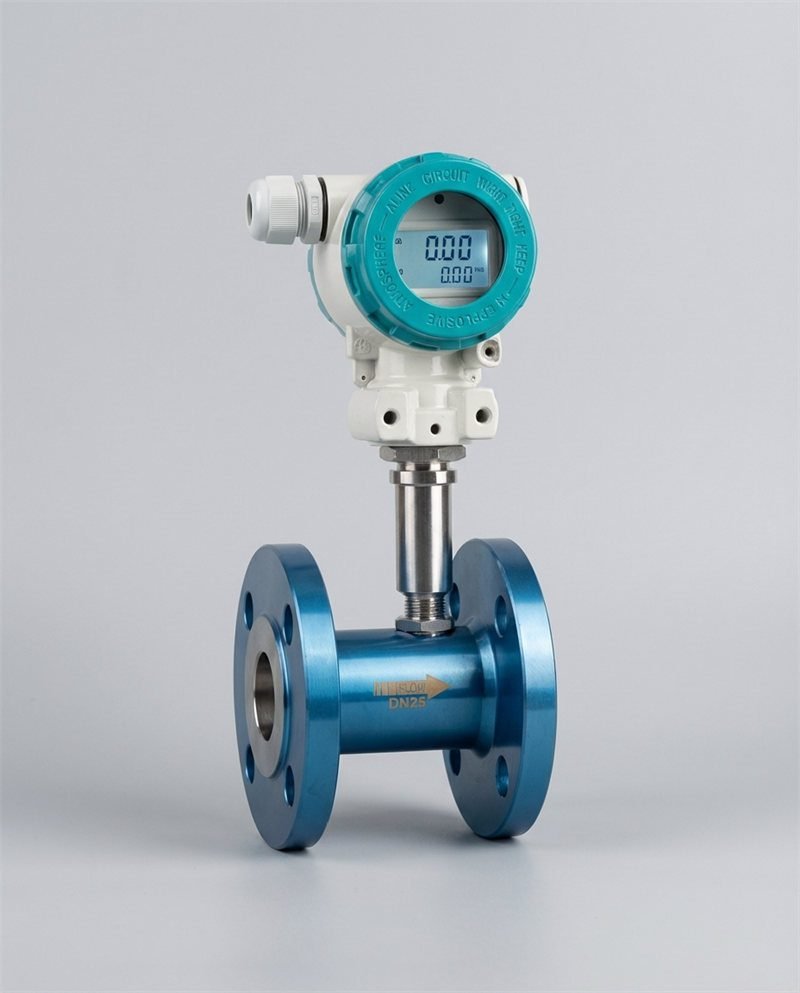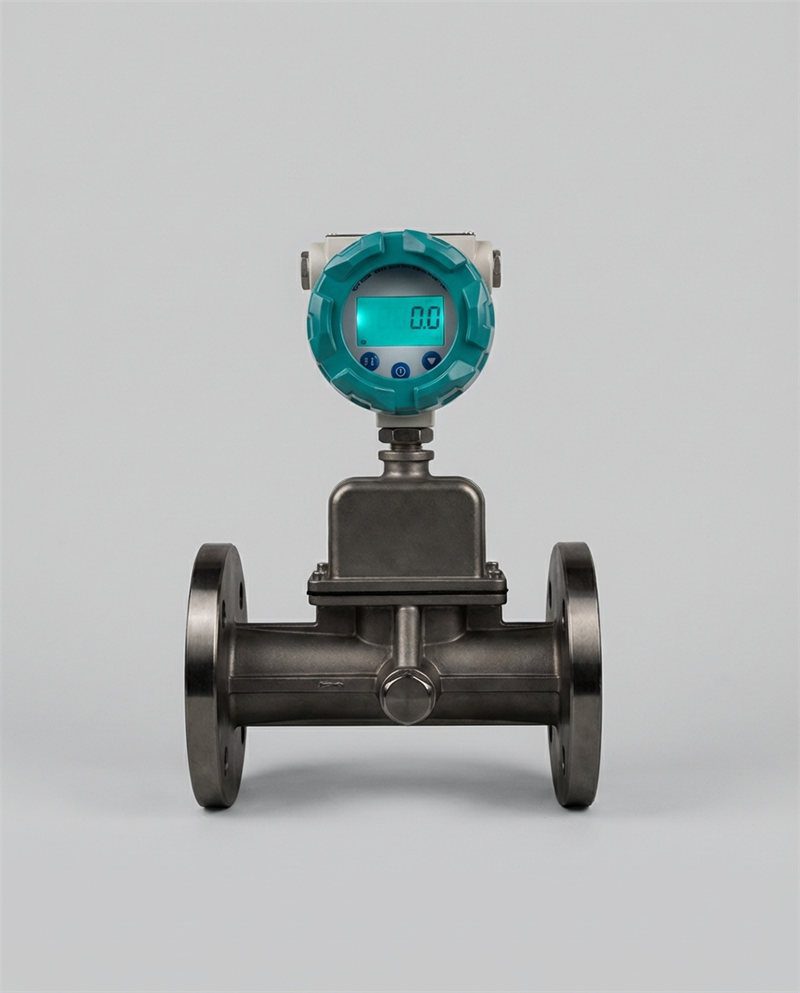
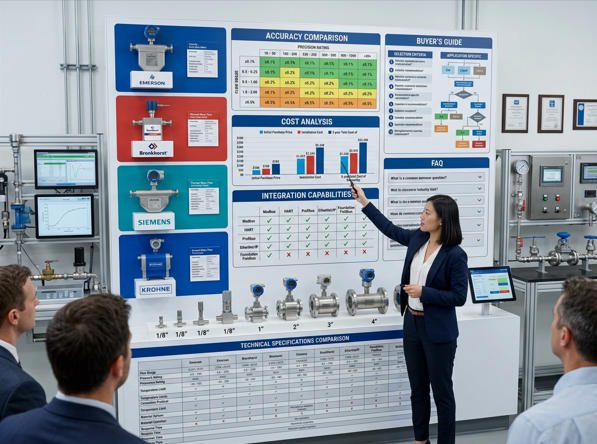
Choosing the wrong mass flow meter is rarely obvious at purchase — it reveals itself six months later as a calibration drift nobody can explain, a batch rejection costing $200,000, or a custody transfer dispute with a downstream partner. This review cuts past the brochure language to give engineers, procurement teams, and operations managers a rigorous, side-by-side analysis of four brands that appear repeatedly on project shortlists: Emerson (Micro Motion), Bronk (Bronkhorst), Siemens (SITRANS FC)و Kakuso.
A mass flow meter (MFM) — a device that measures the rate at which mass passes a fixed point per unit of time (kg/h, lb/min, g/s), rather than volumetric quantity — has become the measurement backbone of modern process industries precisely because it is immune to the density, temperature, and pressure variations that make volumetric readings unreliable. The global flow meter market was valued at 11 مليار دولار أمريكي في عام 2025 and is projected to grow at a 7% CAGR through 2035, driven largely by the uptake of Coriolis and thermal mass flow devices in pharmaceuticals, LNG, and specialty chemicals.
This review evaluates all four brands across five dimensions: performance (accuracy, repeatability, turndown), reliability (sensor durability, environmental tolerance), integration (communication protocols, DCS compatibility), support (service networks, calibration infrastructure), and application fit (which scenarios genuinely justify which brand). For teams that want a fast pre-screening tool, Jade Ant Instruments’ flow meter selection guide provides a complementary framework organized around process conditions and installation realities.
📘 Key Terms at a Glance
Emerson (Micro Motion) Mass Flow Meters: Overview and Standout Models

Emerson’s Micro Motion platform commands the world’s largest installed Coriolis base — more than 2 million units in service across oil & gas, chemical, and food & beverage sectors.
Key Models and Configurations
Emerson’s mass flow offering is organized under the Micro Motion brand, which has been synonymous with Coriolis measurement since the technology’s commercialization. The portfolio is tiered to match measurement demands to budget without compromising the diagnostic ecosystem:
| Model Series | Liquid Accuracy | التكرار | Key Use Case | Notable Feature |
|---|---|---|---|---|
| ELITE (CMF/CMFS) | ±0.05% | ±0.025% | Custody transfer, fiscal metering, dense-phase CO₂ | Smart Meter Verification (SMV); 100:1+ turndown |
| R-Series | ±0.10% – ±0.40% | ±0.05% | General process monitoring, utility metering | Low-footprint drainable design; 4 performance tiers |
| F-Series | ±0.10% | ±0.05% | Skid builders, compact installations | Remote-mount transmitter option; compact sensor |
| T-Series | ±0.25% | ±0.1% | Low-flow liquids, reagent dosing, lab processes | Straight-tube geometry for hygienic applications |
Strengths and Typical Applications
Emerson’s defining advantage is the Smart Meter Verification (SMV) system embedded across the ELITE and R-Series platforms. SMV generates an internally driven diagnostic signal that evaluates sensor tube integrity, electronics health, and zero-point stability — producing a documented pass/fail report without interrupting process flow. In a 2024 case study from a US Gulf Coast refinery, Emerson documented that remote SMV monitoring across 85 Micro Motion ELITE meters reduced unplanned calibration interventions by 62% over two years, saving approximately $340,000 in combined labor, production downtime, and prover costs.
The Micro Motion 5700 transmitter — the current flagship transmitter — supports HART, FOUNDATION Fieldbus, PROFIBUS PA, PROFINET, and EtherNet/IP simultaneously, and feeds into Emerson’s Plantweb digital ecosystem and AMS Device Manager. For operations pursuing predictive maintenance strategies, the 5700 continuously reports over 40 diagnostic parameters including drive gain, tube frequency, and pickoff signal quality, each trendable remotely to detect drift before it becomes an accuracy event.
Limitations and Considerations
Emerson’s premium positioning carries a premium price tag. A DN50 Micro Motion ELITE with a 5700 transmitter typically costs 15–25% more than comparable Endress+Hauser Promass or KROHNE OPTIMASS configurations. The full SMV diagnostic data set also requires Emerson’s AMS Device Manager or Plantweb integration to unlock its full value — plants running Siemens TIA Portal or Yokogawa CENTUM VP as their primary DCS can still use Micro Motion meters effectively, but should budget additional engineering time to map extended diagnostic parameters into their native device management tools.
✅ Strengths
- World’s largest Coriolis installed base (>2 million units)
- Patented SMV in-situ verification accepted by regulators
- 40+ continuous diagnostic parameters via 5700 transmitter
- Proven in custody transfer, pharma, O&G, and chemical
- Broadest sensor geometry range (DN6 to DN300)
⚠️ Limitations
- 15–25% price premium over comparable brands
- Full diagnostic value requires Emerson ecosystem (AMS)
- Service network strongest in North America/Europe
- Larger Coriolis sensors require robust pipe supports
Bronk (Bronkhorst) Mass Flow Meters: Overview and Standout Models
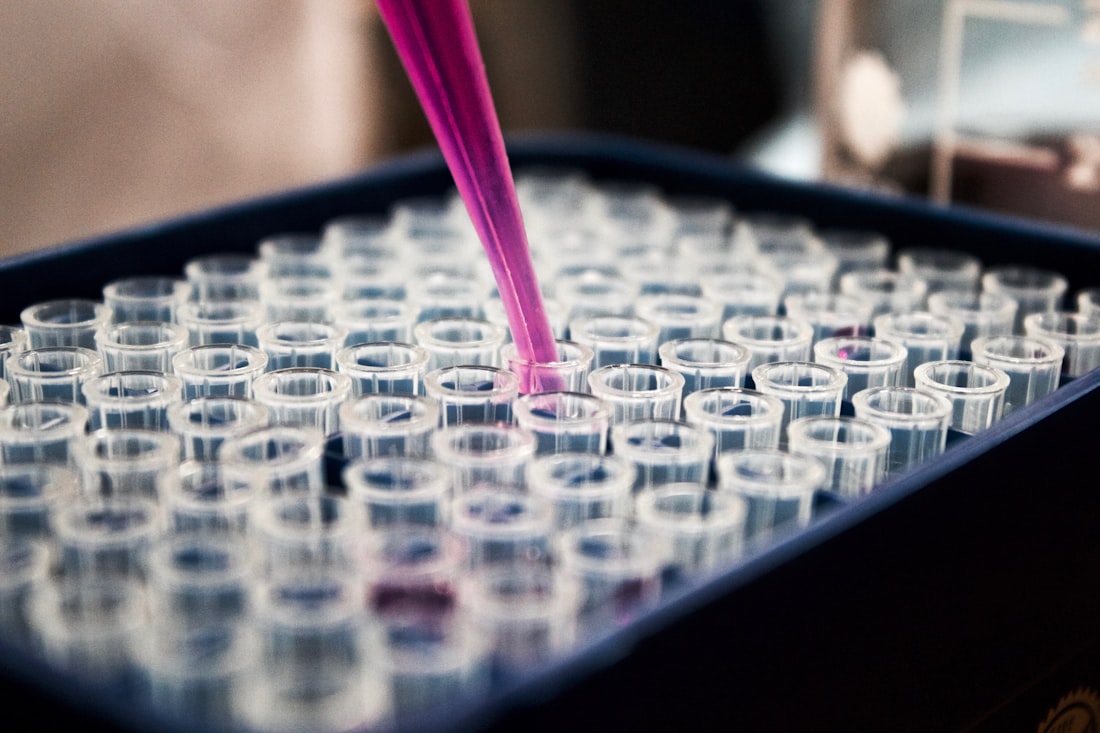
Bronkhorst occupies an irreplaceable niche: ultra-low-flow gas and liquid measurement where Coriolis and vortex technologies cannot physically operate. Their EL-FLOW Prestige series is a reference instrument in semiconductor fabs and pharmaceutical research labs worldwide.
Key Models and Configurations
Bronkhorst — commonly referred to as “Bronk” in the instrumentation community — does not compete on large-bore Coriolis meters. Instead, the company has built an unassailable position in ultra-low-flow thermal mass flow measurement for gases and precision Coriolis measurement for low-flow liquids and gases.
| Model Series | مبدأ القياس | نطاق التدفق | الدقة | Primary Application |
|---|---|---|---|---|
| EL-FLOW Prestige | Thermal (gas) | 0.014 mLn/min – 100 Ln/min | ±0.5% Rd + 0.1% FS | Semiconductor CVD/etch, analytical labs, R&D |
| EL-FLOW Select | Thermal (gas) | 0.1 mLn/min – 200 Ln/min | ±0.5% Rd + 0.1% FS | General industrial gas measurement, process control |
| CORI-FLOW (mini) | Coriolis (liquid/gas) | 0.4 g/h – 300 kg/h | ±0.2% Rd | Pharma dosing, catalyst injection, specialty chemical blending |
| LIQUI-FLOW | Thermal (liquid) | 0.1 – 1,500 g/h | ±0.5% Rd + 0.1% FS | Micro-dosing, ink-jet calibration, fuel cell research |
Strengths and Typical Applications
Bronkhorst’s thermal measurement principle works by maintaining a controlled temperature differential across a capillary sensor element: the heat carried away by the flowing gas is directly proportional to its mass flow rate. At flow rates below 1 Ln/min — where even the most sensitive Coriolis meter cannot generate a measurable tube vibration phase shift — Bronkhorst’s thermal sensors operate with full, calibrated accuracy. A major European semiconductor manufacturer documented that switching from a competing thermal MFC platform to Bronkhorst EL-FLOW Prestige units reduced gas delivery repeatability spread from 1.2% to 0.3% at 5% of full-scale flow — a critical improvement when etching feature sizes below 7 nm, where gas ratio precision directly determines yield.
الـ EL-FLOW Prestige maintains a built-in database of over 100 pre-programmed gases with automatic temperature and pressure compensation, enabling multi-gas capability without recalibration. In pharmaceutical API synthesis, where process gas feeds are frequently switched between nitrogen, argon, and specialized reagent gases in the same reactor system, this capability eliminates the instrument changeover that competing single-gas thermal meters would require.
Limitations and Considerations
Bronkhorst’s engineering focus is its boundary. The company does not manufacture meters for pipe sizes above DN25, and their thermal products are inherently limited to clean, non-condensing gases. For applications involving liquids (except the CORI-FLOW at low flow rates), dirty gases, corrosive vapors, or any pipe size DN50 and above, Bronkhorst is simply not the right tool — and no amount of price negotiation changes that physical constraint. Communication support includes RS-232, Modbus RTU, PROFIBUS DP, PROFINET, and EtherNet/IP, but field integration into mainstream industrial DCS platforms requires additional configuration compared to Coriolis-focused brands with deeper automation ecosystem partnerships.
✅ Strengths
- Unmatched ultra-low-flow capability (down to 0.014 mLn/min)
- 100+ gas database with automatic compensation
- Best-in-class repeatability for semiconductor gas delivery
- CORI-FLOW for precise low-flow liquid mass measurement
- Dominant position in semiconductor and R&D markets
⚠️ Limitations
- No large-bore industrial meter offering (max DN25)
- Thermal principle limited to clean, dry gases
- Not suitable for liquids (except CORI-FLOW low range)
- Service infrastructure optimized for lab/OEM, not plant scale
Siemens (SITRANS FC) Mass Flow Meters: Overview and Standout Models

Siemens SITRANS FC meters earn their strongest ROI when deployed in plants already running Siemens TIA Portal, PCS 7, or SIMATIC S7 infrastructure — native PROFINET integration cuts commissioning time by up to 45% versus third-party instrumentation.
Key Models and Configurations
Siemens markets its mass flow portfolio under the SITRANS FC brand, built around Coriolis measurement. The lineup targets general process applications and machine builders rather than specialized custody transfer metering, making it most competitive in mid-tier industrial applications where automation ecosystem integration is the primary driver.
| Model | Sensor | Liquid Accuracy | نطاق أحجام الأنابيب | Key Feature |
|---|---|---|---|---|
| SITRANS FC430 | FCS400 | ±0.10% | DN6 – DN150 | HART/PROFIBUS/PROFINET; compact form factor; 0.1% liquid accuracy |
| SITRANS FC410 | FCS300 | ±0.15% | DN8 – DN100 | Machine-builder optimized; ultra-compact; PROFINET native |
| SITRANS FC120/140 | FCS100 | ±0.15% | DN1 – DN8 | Low-flow precision; lab and micro-process applications |
| SITRANS FC520/540 | FCS500 | ±0.10% | DN25 – DN200 | Superior turndown; lowest pressure drop in portfolio |
Strengths and Typical Applications
Siemens’ primary competitive advantage is native automation integration. The SITRANS FC430 connects directly into Siemens SIMATIC S7 and PCS 7 architectures via PROFINET, with parameter mapping handled natively in TIA Portal — no additional configuration software, no fieldbus gateway, no EDD file loading. A Tier 1 automotive paint shop in Germany reported that commissioning time for their Coriolis-based paint flow measurement system dropped by 45% when switching from a third-party Coriolis meter to the SITRANS FC430 with PROFINET — because engineering the diagnostic integration was handled entirely within the same TIA Portal project file as the machine control logic.
For machine builders and OEM skid manufacturers, the FC410’s compact form factor and standardized PROFINET interface eliminate the custom integration work that typically consumes 15–20% of commissioning budgets when mixing instrumentation and control brands. The SITRANS FC product family also supports the SITRANS Verificator tool, which performs in-situ performance checks generating documented verification reports compatible with ISO 9001 audit requirements.
Limitations and Considerations
Siemens’ Coriolis portfolio is narrower than Emerson’s or Endress+Hauser’s — fewer sensor geometry options for very small bore (below DN6) or very large bore (above DN200) applications, and a less mature in-situ verification ecosystem compared to Emerson’s SMV or E+H’s Heartbeat Technology. Additionally, Siemens completed the sale of its process instrumentation business to a private equity consortium in 2023; some engineering procurement contractors have noted increased caution about specifying SITRANS meters on new greenfield projects with 20+ year asset lifespans until the post-acquisition product roadmap is more fully defined. Calibration turnaround times can also be longer than Emerson or E+H, both of which operate more geographically distributed calibration laboratory networks.
✅ Strengths
- Native PROFINET integration — zero gateway overhead
- 45% faster commissioning in Siemens automation environments
- Compact FC410 ideal for machine builders and skid OEMs
- SITRANS Verificator for documented in-situ checks
- Competitive pricing vs. premium Coriolis brands
⚠️ Limitations
- Narrower portfolio (no DN1–DN5 or DN250+ Coriolis)
- Post-acquisition roadmap uncertainty (since 2023)
- Verification ecosystem less mature vs. Emerson/E+H
- Fewer distributed calibration labs globally
Kakuso Mass Flow Meters: Overview and Standout Models
Kakuso positions itself as a value-tier Coriolis and thermal mass flow meter manufacturer — delivering ±0.2% accuracy in standard configurations at a price point that opens mass flow measurement to mid-tier process monitoring applications that cannot justify premium-brand CAPEX.
Key Models and Configurations
Kakuso is a China-based instrumentation manufacturer that has expanded its product range to include both Coriolis and thermal mass flow meters, targeting mid-tier industrial process monitoring, chemical dosing verification, and general utility applications where the measurement point does not require the diagnostic depth or certified accuracy of a premium Western brand.
| Model Type | مبدأ القياس | الدقة النموذجية | نطاق أحجام الأنابيب | التواصل |
|---|---|---|---|---|
| Coriolis Standard | كوريوليس | ±0.2% Rd | DN6 – DN100 | 4–20 mA, HART, Modbus RTU |
| Coriolis High-Accuracy | كوريوليس | ±0.1% Rd | DN15 – DN80 | 4–20 mA, HART, PROFIBUS DP |
| Thermal Gas MFM | Thermal (gas) | ±1.0% FS | Tube OD 3–25 mm | 4–20 mA, RS-485/Modbus |
Strengths and Typical Applications
Kakuso’s principal value proposition is cost accessibility. A DN25 Coriolis meter from a premium Western brand typically costs USD $5,000–$12,000; equivalent Kakuso Coriolis configurations are available in the $1,500–$3,500 range, making mass flow measurement economically viable for process monitoring points that previously used less accurate differential pressure or vortex meters. In chemical dosing verification, small-batch blending, water treatment additive control, and secondary utility metering — applications where ±0.2% accuracy is sufficient and in-situ verification is not a regulatory requirement — the cost argument is compelling.
Kakuso meters support standard industrial communication protocols (4–20 mA, HART, Modbus RTU, PROFIBUS DP), which means integration into most DCS or SCADA platforms follows standard fieldbus commissioning procedures without brand-specific tooling. Customization options — including non-standard wetted materials, explosion-proof (ATEX/IECEx) housings, and remote-mount transmitters — are available through direct OEM negotiation, which is a practical advantage for system integrators building skids with specific dimensional constraints.
Limitations and Considerations
Kakuso does not offer an in-situ verification system equivalent to Emerson’s SMV, Endress+Hauser’s Heartbeat Technology, or even the SITRANS Verificator. For applications where measurement performance must be demonstrably confirmed between calibration intervals — custody transfer, regulatory compliance, safety instrumented systems — the absence of documented in-situ verification is a disqualifying limitation regardless of base accuracy specification. Long-term support infrastructure, including calibration laboratory access, spare parts availability beyond the standard product life cycle, and application engineering support for unusual process conditions, is materially less developed than the major Western brands. Engineers specifying Kakuso for critical measurement points should conduct a thorough supplier qualification assessment covering calibration traceability, after-sales response SLAs, and spare parts commitment before committing to large-quantity procurement.
✅ Strengths
- 60–75% lower CAPEX vs. premium Western Coriolis brands
- ±0.1% accuracy available in high-accuracy models
- Standard protocol support (HART, Modbus, PROFIBUS)
- OEM/custom configurations via direct factory engagement
- Suitable for non-critical process monitoring and dosing
⚠️ Limitations
- No in-situ verification system (disqualifies for custody transfer/SIS)
- Less extensive global service and calibration network
- Fewer certifications (limited hygienic, SIL, custody transfer approvals)
- Diagnostic depth significantly below premium brands
🎬 How Does a Coriolis Mass Flow Meter Actually Work?
Before comparing performance numbers, it helps to understand the physics. This video explains the Coriolis effect and how tube vibration generates a direct mass flow signal — the principle behind Emerson Micro Motion, Siemens SITRANS FC, and Kakuso Coriolis meters.
Video: Coriolis Flow Meter Theory of Operation — covering tube vibration, phase shift measurement, and why the Coriolis effect produces a signal proportional to true mass flow, independent of fluid temperature and pressure.
Comparative Performance Criteria for MFM Brands
Accuracy, Repeatability, and Response Time
The table below presents a consolidated performance benchmark across the four reviewed brands, using published manufacturer specifications for each brand’s primary Coriolis mass flow meter platform (or thermal, in Bronkhorst’s case). All accuracy figures are expressed as percent of reading (% Rd) — the most meaningful specification for processes that operate across a wide flow range, because it means the proportional error is constant regardless of whether you are at 10% or 100% of the meter’s capacity.
| Brand / Platform | Best Liquid Accuracy | التكرار | نسبة التخفيض | زمن الاستجابة | In-Situ Verification |
|---|---|---|---|---|---|
| Emerson ELITE | ±0.05% Rd | ±0.025% | 100:1+ | < 100 ms | SMV (patented) |
| Emerson R-Series | ±0.10–0.40% Rd | ±0.05% | 80:1 | < 200 ms | SMV (standard) |
| Bronkhorst EL-FLOW Prestige | ±0.5% Rd + 0.1% FS (gas) | < ±0.2% Rd | 200:1+ | < 2 s | Lab calibration only |
| Bronkhorst CORI-FLOW | ±0.2% Rd | ±0.1% | 100:1 | < 100 ms | Lab calibration only |
| Siemens FC430 | ±0.10% Rd | ±0.05% | 80:1 | < 200 ms | SITRANS Verificator |
| Kakuso Standard Coriolis | ±0.20% Rd | ±0.1% | 50:1 | < 500 ms | None available |
| Kakuso High-Accuracy | ±0.10% Rd | ±0.05% | 60:1 | < 300 ms | None available |
*Chart proportional for visualization purposes. Bronkhorst EL-FLOW accuracy specification is for gas (% Rd + % FS), not directly comparable to Coriolis liquid accuracy.
Durability, Environmental Tolerance, and Maintenance
Coriolis sensors from all four brands are fundamentally mechanical instruments — vibrating tubes whose long-term integrity depends on wetted material selection, process fluid compatibility, and installation stress. Emerson and Siemens publish mean time between failure (MTBF) data exceeding 30 years in clean liquid service for their primary Coriolis sensors, with the caveat that slurry, abrasive, or highly corrosive service can reduce tube life to 5–8 years depending on wall thickness and material grade.
Bronkhorst’s thermal sensors, operating with no moving parts and no high-velocity fluid contact, typically outlast Coriolis sensors in lifespan — but the capillary sensor element is highly sensitive to contamination and plugging. A single particle large enough to partially block the capillary will immediately degrade accuracy, making Bronkhorst unsuitable for any gas stream with particulates, liquids, or adhesive vapors without appropriate upstream filtration.
Sensor Technology and Calibration Requirements
All Coriolis meters require periodic zero verification — confirming that the meter reads zero when flow is completely stopped — and traceable calibration to national or international standards (ISO/IEC 17025, NIST traceable). For premium brands like Emerson and Siemens, high-accuracy traceable calibration costs typically range from $500 to $3,000 per meter, depending on size and fluid. In-situ verification tools (SMV, SITRANS Verificator) can extend calibration intervals from the typical 12-month standard to 24–36 months when verification results demonstrate consistent meter health — a direct maintenance cost saving that partially offsets the higher initial price of premium brands.
Application Fit: Industries and Use Cases by Brand

Petrochemical custody transfer — where a 0.1% measurement error on a 100,000 BPD crude oil terminal translates to hundreds of thousands of dollars in annual revenue discrepancy — is one of the highest-stakes applications for mass flow measurement.
Petrochemical and Refining Scenarios
In petroleum refining and petrochemical processing, mass flow measurement feeds three distinct functions: custody transfer (fiscal metering at product transfer boundaries, demanding ±0.05–0.10% accuracy with regulatory certification), process control (reaction feed ratios, distillation reflux, heat exchanger duty monitoring — typically ±0.1–0.5% acceptable), and environmental compliance (flare gas measurement, VOC emissions reporting — requiring traceable calibration and documented verification). Emerson Micro Motion ELITE meters are the most widely specified Coriolis platform for refinery custody transfer, with the 5700 transmitter’s IIoT connectivity allowing remote audit access without plant entry — a significant advantage in post-COVID operating models.
For secondary monitoring loops in refinery utility networks — cooling water, steam condensate, instrument air — the cost gap between Emerson and Kakuso becomes relevant. A refinery with 60 non-critical monitoring points can save $300,000–$450,000 in instrument procurement by specifying Kakuso standard Coriolis meters at those points while reserving premium brands for fiscal and process-critical measurements. For electromagnetic volumetric flow measurement on conductive liquids, Jade Ant Instruments’ electromagnetic flow meters provide a cost-effective alternative at 0.2–0.5% accuracy where direct mass flow measurement is not required.
Pharmaceutical and Food & Beverage Applications
Pharmaceutical manufacturing represents the most stringent validation environment for any measurement instrument. USP, FDA 21 CFR Part 11, and EU GMP Annex 11 all impose requirements on measurement traceability, calibration documentation, and change control that directly affect which mass flow meter configurations are acceptable. Emerson’s ELITE F-Series with 3-A certification and full SMV verification documentation satisfies these requirements in most drug substance manufacturing contexts. A pharmaceutical batch reactor equipped with an uncalibrated or improperly maintained mass flow meter can produce an entire batch requiring rejection — at typical API batch values of $50,000–$500,000 per batch, the calibration and verification infrastructure is not an operational overhead but a core quality assurance investment.
In food and beverage, hygienic mass flow measurement requires CIP (Clean-in-Place) compatibility, materials meeting 3-A or EHEDG standards, and self-draining tube geometries. Emerson, with its dedicated hygienic G-Series, covers this requirement most comprehensively. For general ingredient dosing where CIP compatibility and hygienic certification are not required, Kakuso standard Coriolis meters provide workable accuracy at a fraction of the cost.
Power, Water, and General Process Industries
In power generation, mass flow measurement primarily serves fuel oil metering to burners, steam condensate accounting, and cooling water balance. Siemens holds particular strength here because power plants — especially combined cycle gas turbine stations — are typically built around Siemens turbines and Siemens control systems, making the SITRANS FC’s native PROFINET and SIMATIC integration the path of least resistance for instrumentation procurement. In water treatment, where the measured fluid is clean conductive liquid and the required accuracy is 0.2–0.5%, electromagnetic flow meters from manufacturers like أدوات النمل اليشم frequently offer better value than Coriolis — lower purchase cost, zero pressure drop, and simpler maintenance — unless direct mass measurement (density × volume) is explicitly required.
Installation and Integration Considerations
Electrical Interfaces and Communication Protocols
The communication protocol landscape for industrial mass flow meters has consolidated around a manageable set of options, each with distinct integration implications. The table below maps protocol support across the four reviewed brands, which matters because protocol choice determines not just how data is transmitted but what diagnostic and configuration depth is accessible from the control room.
| Protocol | Emerson | برونكهورست | سيمنز | Kakuso | Best Used When… |
|---|---|---|---|---|---|
| 4–20 mA (analog) | ✅ | ✅ | ✅ | ✅ | Legacy DCS, simple monitoring; no diagnostics |
| HART 7 | ✅ Full | ✅ Limited | ✅ Full | ✅ Basic | Existing 4–20 mA wiring + digital diagnostics overlay |
| PROFIBUS PA/DP | ✅ | ✅ | ✅ | ✅ DP only | Process plants with existing PROFIBUS PA backbone |
| PROFINET | ✅ | ✅ | ✅ Native | — | Siemens TIA Portal environments; machine builders |
| EtherNet/IP | ✅ | ✅ | — | — | Rockwell/Allen-Bradley PLC environments |
| Modbus RTU | محدود | ✅ | محدود | ✅ | SCADA/OPC-UA systems; cost-effective integration |
| FOUNDATION Fieldbus | ✅ | — | ✅ | — | Legacy fieldbus plants (refinery, chemical); being phased out |
Mechanical Fit, Sizing, and Installation Tips
Coriolis meters require correct pipe sizing to function accurately — operating a meter at less than 5% of its rated full-scale flow will degrade accuracy substantially. For variable-load processes, specifying a meter with adequate turndown (100:1 for Emerson ELITE, 80:1 for Siemens FC430, 50:1 for Kakuso standard) ensures accurate measurement across the full operating range without requiring a second smaller meter for low-flow periods.
Unlike differential pressure elements or vortex meters, Coriolis meters do not require minimum upstream/downstream straight-pipe runs because their measurement principle is independent of velocity profile. This makes them particularly valuable in plant areas where piping layout forces measurements close to elbows, pumps, or control valves — a common constraint in retrofit projects. Proper pipe supports are critical: Coriolis sensor bodies should never carry pipe weight, as mechanical stress on the sensor housing introduces zero-point errors that are difficult to diagnose without in-situ verification tools.
Commissioning and Validation Steps
A complete mass flow meter commissioning sequence — regardless of brand — should include: (1) mechanical installation verification (bolt pattern, gaskets, orientation, support adequacy), (2) electrical and protocol continuity testing (loop check, HART polling, protocol enumeration), (3) zero calibration with the process isolated and sensor full of stationary process fluid, (4) functional verification against a known flow reference or traceable field standard, and (5) documentation package completion including calibration certificate, configuration backup, and in-situ verification baseline record (for Emerson SMV or Siemens SITRANS Verificator). Skipping the zero calibration step is the single most common commissioning error — a poorly zeroed Coriolis meter will show systematic offset errors that can persist undetected for months in process control applications.
Maintenance, Calibration, and Support Ecosystems
Calibration Intervals and Methods
The appropriate calibration interval for a mass flow meter is not a fixed calendar date but a risk-based decision that depends on the consequences of undetected drift, the verification data available between calibrations, and any applicable regulatory requirements. ISO 9001 and ISO/IEC 17025 both require documented, traceable calibration at intervals justified by stability data — not arbitrary annual schedules. For Emerson and Siemens meters with active in-situ verification, operators who generate consecutive “passing” verification reports at 6-month intervals are building a documented evidence base that supports extending the formal calibration interval to 24 or 36 months — with measurable maintenance cost savings.
| العلامة التجارية | Typical Calibration Interval | In-Situ Verification Available | Extended Interval Possible | Calibration Lab Access |
|---|---|---|---|---|
| Emerson | 12 months (standard) | Yes — SMV | Up to 36 months | Extensive global network |
| برونكهورست | 12 months (gas apps) | Lab only | Limited to 24 months | Factory + regional partners |
| سيمنز | 12 months (standard) | Yes — SITRANS Verificator | Up to 24 months | Concentrated in EU/US |
| Kakuso | 12 months (standard) | لا شيء | Not supported | Factory-based (China) |
Spare Parts, Service Networks, and Warranty Terms
Emerson maintains regional calibration and repair centers in North America, Europe, Middle East, and Asia-Pacific, with a published spare parts availability commitment of 10 years post-product discontinuation. Bronkhorst operates primarily through regional distributors for calibration and repair, with factory turnaround in the Netherlands typically 3–6 weeks. Siemens’ flow meter service infrastructure — post the 2023 divestiture — is being managed through the acquiring entity’s service network, which inherits the existing Siemens service agreements but may evolve over time. Kakuso service and calibration is primarily factory-based in China; for international buyers, this translates into shipping logistics and customs clearance time that can extend instrument downtime during calibration to 6–10 weeks, a critical consideration for facilities with tight production schedules.
Software, Diagnostics, and Remote Support
The IIoT readiness of these four brands spans a wide range. Emerson’s Plantweb Insight application provides cloud-based dashboards showing real-time SMV status, drive gain trending, and tube frequency history across fleets of Micro Motion meters — enabling a maintenance team in Houston to remotely monitor meter health on 300 measurement points without leaving the office. Siemens connects through MindSphere (Siemens’ IoT platform) and the SITRANS Remote app for basic remote diagnostics. Bronkhorst supports OPC UA for laboratory SCADA integration and provides FlowDDE (a data exchange tool for Windows-based lab environments), reflecting its laboratory and OEM market orientation. Kakuso currently offers standard HART DD files and a basic PC configuration tool — functional for local setup, but without remote asset health monitoring capability.
Total Cost of Ownership and Value Assessment
Cost of Meters, Accessories, and Installation
The purchase price of a mass flow meter is typically 30–40% of its total 5-year cost of ownership. The remaining 60–70% accumulates through installation labor, integration engineering, energy costs (for technologies with pressure drop), calibration and verification, maintenance, spare parts, and downtime risk. Buyers who compare brands purely on unit price systematically underestimate the lifetime cost of lower-tier instruments that require more frequent manual calibration, generate more diagnostic alerts that require field investigation, or cause more unplanned downtime due to measurement failure.
Higher CAPEX offset by calibration interval extension, SMV-reduced maintenance, and lowest downtime risk.
Lower integration cost in Siemens plants; calibration infrastructure less distributed than Emerson.
Lowest CAPEX, but higher calibration frequency cost, longer service turnaround, and higher downtime risk without in-situ verification.
Best TCO within its low-flow niche — no viable alternative at this flow range justifies the cost comparison on a like-for-like basis.
Note: TCO scores are relative within this comparison only and depend heavily on application complexity, geographic location of service, and plant operating philosophy. Bronkhorst TCO is not directly comparable to the others as it serves a different flow range entirely.
Energy Usage, Maintenance Labor, and Downtime Impact
Coriolis meters generate a very small pressure drop — typically less than 0.5 bar at rated flow for DN25–DN100 sizes — which translates to minimal pumping energy cost. The dominant variable cost over a meter’s lifetime is calibration and verification labor. At $500–$3,000 per calibration event (including labor, travel, and calibration equipment), a 12-month interval across a fleet of 50 mass flow meters generates $25,000–$150,000 per year in calibration costs alone. Emerson’s SMV-enabled fleet at 36-month calibration intervals reduces that annual cost to $8,000–$50,000 — a savings that compounds across the asset lifecycle.
Long-Term Reliability and Vendor Support
For assets expected to remain in service for 15–25 years — the typical lifecycle of a refinery or chemical plant instrument — vendor longevity and parts commitment matter as much as initial specifications. Emerson and Bronkhorst have the clearest long-term product continuity stories: both are independent companies with flow measurement as a core revenue driver. Siemens’ flow meter business continuity is subject to the post-acquisition strategy of its new ownership. Kakuso, as an emerging brand, carries inherent uncertainty about 10-year parts availability and technical support continuity — a risk that experienced procurement teams mitigate through specific contractual commitments on spare parts stocking and support SLAs.
Buyer’s Guide and Decision Framework

The right mass flow meter decision starts not with brand selection but with a clear specification of what the measurement must achieve — accuracy class, verification requirement, integration environment, and 5-year lifecycle economics.
Criteria Checklist: Accuracy, Compatibility, Cost, Support
How to Run a Quick Vendor Comparison
For teams that need to move quickly through vendor evaluation, a structured comparison should compare no more than 3–4 brands across 6–8 weighted criteria. Suggested weights for a typical process control application: accuracy/repeatability (20%), in-situ verification capability (15%), DCS/PLC integration (15%), service network proximity (15%), total 5-year TCO (20%), certification portfolio (10%), and application engineering support quality (5%). A weighted scoring matrix with these criteria typically produces a clear differentiated ranking within 2–3 hours of datasheet review, preventing the false equivalence that happens when brands are compared on raw specification numbers alone.
For engineering teams who want a structured starting point, Jade Ant Instruments’ manufacturer comparison framework provides a cross-brand evaluation methodology developed from instrument procurement practice across multiple industries. As a manufacturer serving customers in more than 10 industry sectors, Jade Ant’s engineering team can provide application-specific recommendations on flow meter technology selection — including honest assessments of where premium Coriolis brands are genuinely necessary versus where a well-specified electromagnetic or vortex meter will serve the process equally well at lower lifecycle cost.
Bottom-Line Recommendations by Application Type
| نوع التطبيق | Recommended Brand(s) | Key Reason | Alternative If Budget-Constrained |
|---|---|---|---|
| O&G Custody Transfer | Emerson ELITE | 0.05% accuracy + SMV + OIML/API certification | Siemens FC430 (0.10%) |
| Pharma API Synthesis | Emerson ELITE / F-Series | 3-A cert, SMV for GMP, FDA-compliant documentation | Siemens FC430 with IQ/OQ package |
| Semiconductor Gas Delivery | Bronkhorst EL-FLOW Prestige | Only viable at <1 Ln/min; 100-gas database | No direct alternative at this flow range |
| Industrial Automation (Siemens PLC) | Siemens SITRANS FC430 | Native PROFINET; TIA Portal integration; no gateway | Emerson R-Series (add EtherNet/IP) |
| General Process Monitoring | Kakuso High-Accuracy / Siemens FC410 | ±0.10% sufficient; in-situ verification not required | Electromagnetic meter (if liquid, conductive) |
| Low-Flow Liquid Dosing | Bronkhorst CORI-FLOW | 0.2% accuracy at g/h ranges; no alternative | Kakuso Standard (if >1 kg/h range) |
| Secondary Utility / Water Monitoring | Kakuso Standard / Electromagnetic | Cost-effective; ±0.2–0.5% sufficient | Jade Ant EM Flow Meter |
Conclusion
This brand-by-brand review confirms what experienced instrumentation engineers already know: there is no universally superior mass flow meter brand — there are only better and worse matches between a brand’s engineering strengths and the specific demands of your application. Emerson Micro Motion earns its premium through the deepest verification ecosystem and the broadest certified application portfolio; it is the lowest-risk choice when the stakes are high and the measurement point is visible to regulators, auditors, or commercial counterparties. برونكهورست is not competing with Emerson — it owns the flow range where Emerson’s technology physically cannot operate, and within that range it has no peer. سيمنز SITRANS FC delivers its strongest value in Siemens automation environments where the native integration efficiency more than justifies the selection; outside that context, it competes on a narrower product range with a post-acquisition uncertainty that warrants project-specific supplier risk assessment. Kakuso makes economic sense for non-critical monitoring applications where ±0.2% accuracy is sufficient, the plant team understands the support infrastructure limitations, and the procurement savings are re-invested in the maintenance program rather than simply captured as cost reduction.
The decision framework presented here — fluid characterization, technology matching, ecosystem evaluation, and 5-year TCO modeling — will consistently produce more defensible instrumentation specifications than relying on brand familiarity or single-criteria comparison. And when the application is genuinely ambiguous, the most valuable resource is not a datasheet but an instrumentation partner who can map your specific process conditions to real field experience. أدوات النمل اليشم, as an ISO-certified flow meter manufacturer with direct engineering support across electromagnetic, vortex, turbine, and ultrasonic technologies, provides that application-specific guidance as a standard part of its pre-sales process — because getting the technology selection right at the specification stage costs nothing, while fixing it in the field costs everything.
For site-specific testing, vendor credibility validation, and application consultation, always engage suppliers who can provide traceable calibration documentation, verifiable reference installations in your industry vertical, and a clear after-sales service commitment — not just a competitive price on the purchase order.
الأسئلة الشائعة (FAQs)
These questions represent the most common decision-support queries from engineers evaluating mass flow meter brands — structured to support both human readers and AI-powered search engines.