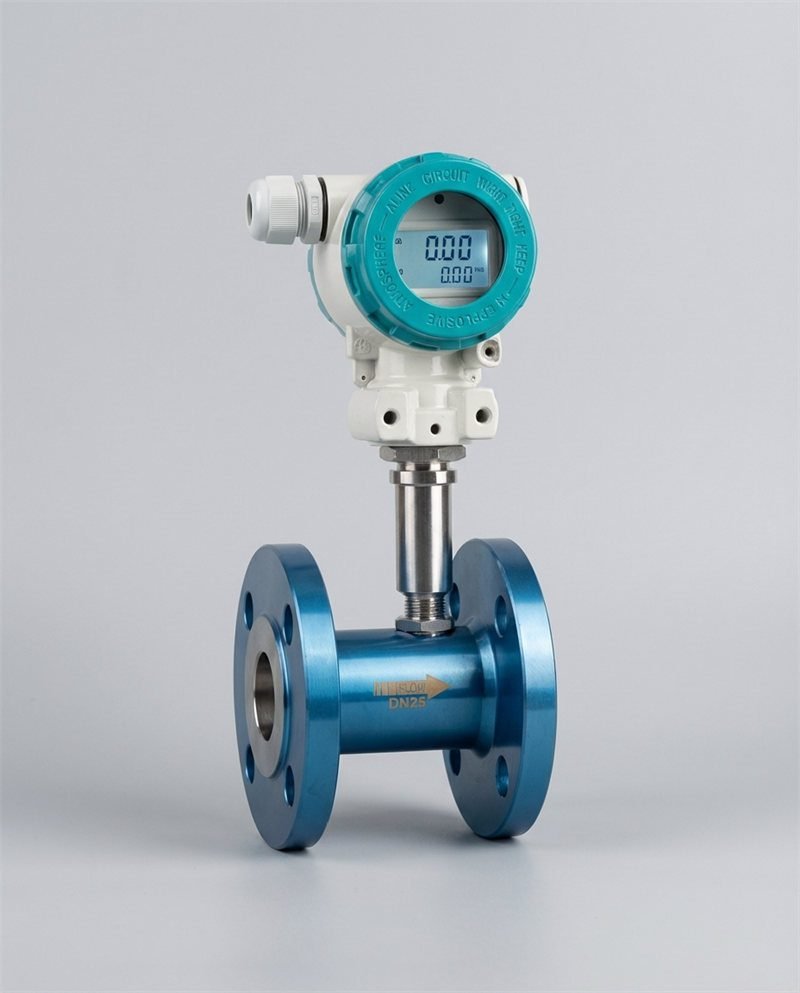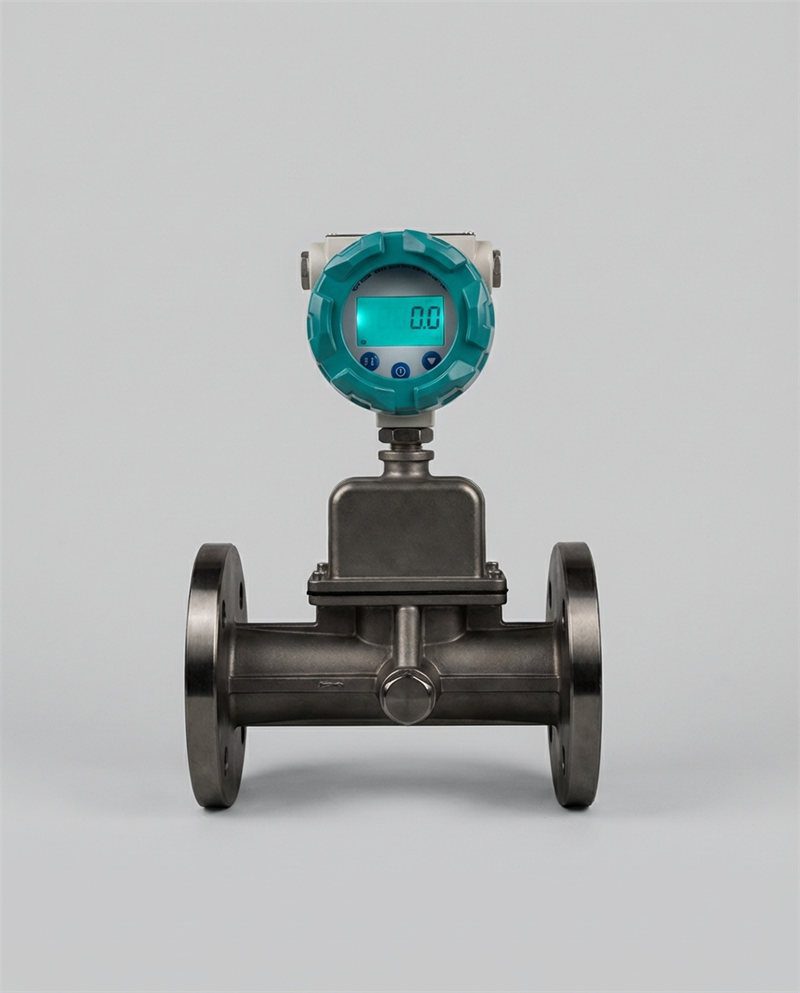

A skid-pack manufacturer in the Gulf Coast was running 22-week average lead times on critical instrumentation — electromagnetic flow meters, pressure transmitters, and control valves — across three concurrent offshore platform projects. Every week of delay cost $140,000 in liquidated damages. The procurement team was placing orders the same way they had in 2010: email RFQ, wait for quotation, issue purchase order, track manually. Their distributor relationship was transactional. The distributor held no relevant stock, provided no demand visibility, and offered no integration into the manufacturer’s project schedule.
They switched to a distributor who had implemented a shared project demand signal system — a direct data feed from the OEM’s project management platform into the distributor’s ERP. Stock of the 40 highest-velocity SKUs was pre-positioned in a regional hub within 200 miles of the fabrication yard. The distributor’s team attended monthly project progress meetings. In the first six months, average lead time on instrumentation fell from 22 weeks to 4 weeks. Project delay costs dropped by $1.8 million across the three concurrent programmes.
That story is not exceptional in 2026. It is the new baseline expectation for any distributor that wants to work with serious OEMs, EPCs, and system integrators on complex industrial projects. The distributors who cannot offer this level of supply chain integration are losing contract renewals they have held for a decade — not because their products are inferior, but because their operational model is no longer competitive.
This playbook covers ten strategies that are separating winning industrial distributors from those being replaced. The data behind each section comes from real project outcomes, published supply chain research, and the practical experience of engineering teams working at the intersection of flow instrumentation, process control, and industrial procurement.
1. The 2026 Supply Chain Reality: Why Traditional Models Are Failing
The traditional distributor model was built for a world where lead times were predictable, logistics were stable, single-source procurement was standard practice, and “inventory management” meant checking a stock level once a week. That world ended around 2020 and has not come back.
In 2026, industrial supply chains face simultaneous pressure from four directions. Geopolitical fragmentation is forcing multi-region sourcing for components that were previously single-sourced from one country. Demand volatility — driven by the stop-start nature of large capital projects — makes traditional reorder point models generate either chronic overstock or frustrating stockouts with no middle ground. Regulatory complexity, including ATEX hazardous area certification, API compliance for oil and gas applications, and NSF/ANSI 61 for drinking water equipment, means procurement cannot simply find the cheapest available equivalent when a primary source fails. And digital expectations, driven by every OEM procurement team’s experience of consumer-grade supply chain visibility (tracking a $30 parcel in real time on a smartphone), are being applied to $300,000 instrumentation orders — with justified frustration when the answer is still “we’ll check and call you back.”
According to Citrin Cooperman’s 2026 Economic Outlook for Manufacturers and Distributors, supply chain design in 2026 is increasingly predicated on resilience, agility, and geographic diversification — not cost minimisation alone. McKinsey research published in 2025 found that 39% of companies facing supply chain disruptions had already pursued dual sourcing, 45% were increasing safety inventories, and 33% were actively nearshoring critical component supply. These are not strategic experiments; they are operational responses to a supply environment that has permanently changed.
The distributors winning in this environment have made a structural transition: from order-takers to what the most advanced companies are calling supply chain-as-a-service partners. They hold project-relevant inventory on behalf of their OEM clients. They provide real-time visibility into stock, transit, and substitution status. They alert clients to potential shortages before a purchase order is raised. And they participate in project planning — not just order fulfilment.
For flow instrumentation specifically, this transition is particularly high-value because the component criticality is high, the lead times are long (8–20 weeks for custom-specified electromagnetic or Coriolis meters), and the consequence of a missing instrument on a process commissioning date is often measured in six figures. Jade Ant Instruments supports OEM and EPC partners through this model with configurable OEM/ODM instrumentation, application-specific pre-production engineering review, and inventory programmes designed around project timelines rather than catalogue lead times.
2. The New OEM-Distributor Ecosystem: From Vendor to Value Partner

The fastest way to understand the shift from vendor to value partner is to look at what the conversation actually sounds like in each model.
In the transactional model, the OEM procurement team calls the distributor when they have a purchase order ready. The distributor checks stock, quotes a price and lead time, and the transaction closes — or doesn’t, if the price is high or the lead time is wrong. The distributor has no knowledge of what the OEM is building, when they need it, or what the downstream consequence of a delay would be. The OEM has no confidence that the distributor understands their requirements well enough to flag a problem before it becomes a crisis.
In the value-partner model, the distributor is integrated into the OEM’s project planning cycle from the FEED (Front-End Engineering Design) stage. The distributor’s application engineer reviews the instrumentation schedule alongside the OEM’s project manager — typically 12–18 months before the installation date — and flags the long-lead-time items that need to be placed on order during the engineering phase rather than the procurement phase. For a water treatment plant EPC with 60 flow measurement points, identifying the 8 custom-configured items with 14–20 week lead times at the FEED stage, rather than at the procurement stage, can mean the difference between commissioning on schedule and absorbing a 6-week delay on a contract with daily penalty clauses.
The financial outcomes from this model transition are documented. A skid-pack manufacturer building chemical injection systems for the upstream oil and gas sector implemented a shared inventory planning programme with its instrumentation distributor, sharing a 12-month rolling production forecast (updated monthly) in exchange for guaranteed stock reservation on a set of 35 high-velocity SKUs. The outcome after 18 months: project delays attributable to instrumentation availability fell from an average of 12 days per project to 1.5 days. On a programme delivering 24 skids per year at $180,000 average contract value, the delay reduction had an estimated project margin impact of $420,000 — from a data-sharing arrangement that cost neither party significant capital.
The key enablers for this transition are not always technological. They are relational: regular joint planning meetings, shared project visibility, mutually agreed KPIs (on-time delivery rate, fill rate, lead time accuracy), and a willingness to structure commercial terms that reward performance rather than just transaction volume. The technology makes the collaboration more efficient — it does not replace the human commitment to making it work.
3. Digital Twin Integration: Synchronising Physical and Digital Supply Chains
A digital twin in supply chain context is a real-time virtual replica of physical inventory, logistics, and demand signals — updated continuously from IoT sensors, ERP systems, and project management platforms. It allows a supply chain team to simulate “what happens if” scenarios before they occur in the real world: what happens to material availability if a key supplier’s production line goes down for two weeks? What happens to project commissioning dates if a customs clearance is delayed by 10 days? What is the optimal reorder point for a given SKU if the project demand signal shifts by 20%?
According to research published in MDPI’s Logistics journal on AI-powered digital twins in supply chain operations, companies implementing digital twin supply chain models have achieved 15–30% reductions in inventory carrying costs while simultaneously improving service levels. The mechanism is straightforward: better demand signal accuracy means less safety stock needed to cover forecast uncertainty, while better logistics visibility means fewer emergency orders placed at premium freight cost.
For EPC firms managing large capital projects, digital twin integration solves the FEED-to-procurement gap — the period between engineering design completion and construction start, where material take-offs are finalised but purchase orders have not yet been placed. A digital twin that connects the engineering model (which defines what instruments are needed and where) with the supply chain model (which tracks what is in stock, in transit, and on order) allows procurement teams to see in real time which items are at risk of being unavailable on the required delivery date — weeks or months before the problem becomes a crisis.
The integration with PLC and SCADA systems adds a further dimension for distributors of process instrumentation: predictive replenishment based on operational wear data. A flow meter transmitter on a steam application that has logged 18,000 operating hours is approaching the end of its expected electronics service life — the digital twin can flag this proactively, generate a replenishment recommendation, and queue the replacement order before the field device fails. For MRO maintenance teams who manage critical measurement points across a large facility, this shift from reactive to predictive replenishment eliminates the most expensive category of procurement: the emergency order placed at 3× normal price to meet a 48-hour deadline.
For distributors building digital twin capability, the starting point is not a large technology investment — it is data structure. The three data inputs that make a supply chain digital twin function are: accurate product master data (item numbers, specifications, lead times, substitution options), accurate demand signal data (project schedules, production forecasts, consumption history), and accurate inventory position data (on-hand, in-transit, on-order, reserved). Many distributors have all three data sets; they just have them in three different systems that do not talk to each other. Connecting those systems — through an API layer or a cloud integration platform — is the first and most impactful step in building digital twin supply chain capability. For a practical reference on how digital twins are being applied across supply chain operations, the Digital Twin Consortium’s supply chain management guide provides a useful framework.
4. Dynamic Inventory Optimisation: Right-Part, Right-Place, Right-Time
The fundamental failure of traditional inventory management in industrial distribution is binary thinking: either a part is stocked or it is not. In reality, the correct answer to “should we stock this?” is almost always “it depends on where, in what quantity, and for which customer segment” — and that answer changes over time as project pipelines evolve.
Dynamic inventory optimisation (also called demand-driven replenishment) replaces static reorder points and economic order quantities with continuously updated stock positioning decisions based on real demand signals rather than historical averages. For a distributor serving both OEM clients on long-production-run programmes and EPC clients on intermittent project cycles, the demand pattern for any given SKU can shift dramatically within a quarter — and a static reorder model cannot respond fast enough.
A practical implementation of dynamic inventory optimisation for an instrumentation distributor might work as follows. The distributor’s planning system ingests four data streams: confirmed purchase orders (actual demand), project demand signals from OEM and EPC partners (near-term demand), project pipeline data from EPC tender tracking (medium-term demand), and historical consumption patterns by product, season, and client segment (baseline demand). The planning algorithm combines these signals with current supplier lead times and in-transit inventory positions to calculate an optimal stock target for each SKU at each stocking location — updated daily. The output is a prioritised replenishment recommendation list: what to order, how much, from which supplier, and by when.
End-to-end supply chain optimisation case studies documented by practitioners show forecast error reductions of 25% and inventory excess reductions of 40% achievable within six months of implementation. For a distributor with $3 million in instrumentation inventory, a 35% reduction in excess inventory releases $1.05 million in working capital — capital that can be reinvested in stocking the high-velocity items that actually generate revenue rather than the slow-movers that tie up cash.
| Inventory Model | Planning Basis | Response to Demand Change | Typical Excess Inventory | Stockout Risk |
|---|---|---|---|---|
| Static Reorder Point | Historical average | Slow (next review cycle) | 25–45% of total | High for volatile SKUs |
| Min-Max (periodic review) | Historical + manual adjustment | Moderate (review frequency) | 20–35% of total | Moderate |
| Dynamic Optimisation (AI-driven) | Multi-signal demand sensing | Real-time | 8–18% of total | Low (with safety stock calibration) |
| VMI 2.0 (supplier-managed) | Live consumption + project signals | Continuous | 5–12% of total | Very low |
The zone-based consignment model is particularly effective for MRO and terminal operators managing critical spare parts across multiple sites. Under this model, the distributor pre-positions a consignment stock set — ownership remains with the distributor — at or near the client’s facility. The client draws from the consignment stock as needed and is invoiced only at the point of consumption. The distributor’s system monitors consumption electronically (via barcode scan, RFID, or manual count upload) and replenishes the consignment automatically when stock falls below the agreed minimum. The client has immediate access to critical components with no capital tied up in spare parts inventory. The distributor has a guaranteed revenue stream and a physical presence at the client’s site that is extraordinarily difficult for a competitor to displace.
5. Just-in-Sequence Delivery for Skid and System Builders
Just-in-Sequence (JIS) delivery takes Just-in-Time one step further: components arrive not just at the right time but in the exact order and configuration needed for the assembly process — matched to the OEM’s production schedule at the level of individual build units rather than daily or weekly delivery batches.
In automotive manufacturing, JIS has been standard practice for two decades. In industrial instrumentation and skid assembly, it remains relatively rare — which is exactly why distributors who implement it create a switching barrier that competitors cannot easily overcome. A skid builder whose distributor delivers a pre-configured instrumentation kit — meter, transmitter, mounting hardware, process connections, calibration certificate, and wiring documentation — matched to Skid #17’s bill of materials, arriving at the fabrication bay four hours before Skid #17 enters the assembly sequence, eliminates the entire receiving, sorting, kitting, and staging process for that delivery. For a fabrication facility building 30 skids per month, this can save 3–5 hours of internal labour per skid — $2,700–$4,500 per month in direct labour cost alone, not counting the reduction in assembly errors from incorrect component staging.
The implementation requires three things from the distributor: a live feed of the OEM’s production schedule (updated at minimum weekly, ideally daily), a kitting capability that can assemble and label shipments at the SKU-unit level rather than the order level, and a delivery logistics arrangement that is reliable enough to support a zero-buffer assembly line. The last requirement is the hardest: JIS delivery to an assembly line is inherently zero-tolerance for lateness, because there is no staging stock to absorb a late delivery. For distributors who can make this commitment credibly — with track record data, penalty provisions, and contingency plans — JIS is the highest-value commercial relationship structure available in industrial distribution. For those who cannot, the honest approach is to build toward it incrementally: kitted delivery first, then timed delivery, then sequenced delivery as the data systems and logistics reliability mature.
A water utility operating a rolling infrastructure upgrade programme — replacing ageing flow meters across 180 pumping stations over a 4-year programme — implemented a JIS-adjacent model with its meter distributor. Each quarterly replacement campaign, covering 12–15 stations, was planned 8 weeks in advance. The distributor received the station-by-station schedule, pre-configured each meter to the station’s specific parameters (pipe diameter, output protocol, flow range), affixed station-specific installation documentation, and delivered to the utility’s field crew in daily batches matched to the installation sequence. The field crew’s preparation time per station dropped from 90 minutes to 25 minutes. The 4-year programme finished 6 weeks ahead of schedule.
6. Vendor-Managed Inventory 2.0: Smart, Automated, and Predictive
Traditional VMI (Vendor-Managed Inventory) — where the supplier takes responsibility for maintaining agreed stock levels at the customer’s location — was a significant step forward from purely reactive procurement. VMI 2.0 is what happens when that model is rebuilt with IoT sensors, cloud analytics, AI demand forecasting, and real-time ERP integration.
The difference in practical terms is the elimination of latency. In traditional VMI, the supplier receives a weekly or monthly consumption report, reviews it manually, and generates a replenishment order. From consumption event to replenishment order is typically 3–10 days. In VMI 2.0, an RFID reader or barcode scanner at the point of consumption generates a consumption event in real time. That event triggers an automated inventory position update. An AI forecasting engine evaluates the updated position against the demand forecast and generates a replenishment recommendation — or, if configured for straight-through processing, places the replenishment order automatically without human intervention. From consumption event to replenishment order: under 60 seconds.
The Vendor Managed Inventory for MRO market was valued at $8.7 billion in 2025 and is projected to reach $15.2 billion by 2033, according to market research compiled by Dataintelo — growth driven primarily by industrial and utilities clients who have experienced the working capital and administrative burden reduction that modern VMI delivers. The administrative saving alone is significant: a terminal operator managing 400 active spare parts SKUs across five facilities, previously generating 200+ purchase orders per month through manual replenishment, reduced to 12 exception-based orders per month after implementing VMI 2.0 — saving an estimated $38,000 per year in procurement administrative cost before accounting for any inventory carrying cost reduction.
For municipal utilities with seasonal demand patterns — where pump maintenance activity spikes in spring and autumn, chemical dosing requirements peak in summer, and emergency repair frequency correlates with winter ground frost — AI demand sensing provides the planning intelligence that human buyers simply cannot maintain across hundreds of SKUs simultaneously. The algorithm ingests historical consumption data, weather pattern correlations, project pipeline data, and even publicly available signals (construction permit data for service connection surges, for example) to generate proactively adjusted safety stock recommendations by SKU, by season, by facility.
The integration with ERP systems — SAP S/4HANA and Oracle Cloud ERP being the dominant platforms across industrial and utility clients — is what makes VMI 2.0 operationally seamless rather than just technically capable. When a VMI replenishment order generated by the distributor’s system appears as a pre-confirmed purchase order in the client’s ERP, with item master data, pricing, and lead time pre-populated from the contract database, the client’s accounts payable and receiving processes require zero manual data entry. For clients running 3-way matching on PO, receipt, and invoice, this level of ERP integration eliminates the most common source of payment delays and dispute processing cost. For more on how modern ERP integration supports supply chain agility, the NetSuite ERP integration resource provides a clear overview applicable to both distributor and OEM technology environments.
VMI 2.0 Replenishment Speed Comparison
Traditional VMI (weekly report) ████████████████████ 3–10 days lag
VMI 1.5 (daily report) ████████░░░░░░░░░░░░ 1–3 days lag
VMI 2.0 (real-time IoT trigger) █░░░░░░░░░░░░░░░░░░░ <60 seconds
Less time = less stockout risk = less emergency freight cost
7. Supply Chain Resilience: Mitigating Risk in a Volatile Market

Supply chain resilience is not a defensive strategy — it is a revenue protection strategy. Every unplanned project stoppage caused by a missing component has a cost that appears nowhere on the supply chain team’s budget but lands directly on the project P&L. For EPC firms, that cost is typically $5,000–$25,000 per day in idle construction labour and equipment standby. For OEMs running continuous production lines, it is the full production value of the halted line. For utility operators managing regulatory compliance, it is the risk of a permit violation if a required measurement system is out of service beyond the allowed downtime period.
Dual sourcing — maintaining pre-qualified, certified alternative suppliers for critical components — is the single most effective resilience strategy for instrumentation supply chains. According to BCG’s 2025 supply chain resilience analysis, companies implementing dual sourcing for critical components achieved 35–50% reductions in supply disruption impact compared to single-sourced alternatives. The qualification cost — testing, certification review, sample evaluation, and documentation — is typically $3,000–$8,000 per alternate source per product category. Against a potential disruption cost of $50,000–$500,000, the qualification investment has an obvious ROI.
The dual sourcing principle applies directly to flow instrumentation. An EPC firm specifying electromagnetic flow meters for a water treatment project that requires NSF/ANSI 61 certification and OIML R49 metrological approval has a limited field of compliant suppliers. Qualifying two or three suppliers who can meet those requirements — not just on specification but on documentation, delivery, and after-sales support — before the project enters the procurement phase means that when Supplier A has a 16-week lead time on a critical size, Supplier B’s 8-week lead time becomes immediately deployable rather than requiring a new qualification cycle under time pressure. Jade Ant Instruments supports dual-source qualification programmes with comprehensive technical documentation, NIST-traceable calibration certificates, and application-specific material test reports that satisfy the documentation requirements of most EPC project quality plans.
Regional buffer stocking addresses the geography problem. An EPC operating across remote sites in Central Asia, West Africa, and Southeast Asia cannot rely on 8-week lead time instrumentation shipped from a single warehouse. A hub-and-spoke regional stocking model — with buffer stock held at regional distribution hubs in Dubai, Singapore, and Houston for example — can reduce effective lead time from 8–12 weeks to 3–7 days for the stocked items. The carrying cost of the regional buffer stock is real and must be justified against the avoided cost of delays. For high-criticality, long-lead-time items on active projects, this calculation almost always favours regional stocking. For long-tail, low-volume items, the better solution is pre-qualified alternate sourcing rather than physical pre-positioning.
Risk scoring models for supply chain vulnerability assessment are increasingly being applied to instrumentation procurement by sophisticated OEM and EPC procurement teams. A risk score for a given component might incorporate: single-source risk (1 vs. 2+ qualified suppliers), geographic concentration (% of global supply from one country or region), lead time volatility (standard deviation of historical lead times), specification lock-in (degree to which the item is custom-configured vs. catalogue standard), and criticality (impact on project schedule if unavailable). Items with high composite risk scores receive proactive management: earlier order placement, larger safety stock, alternate source qualification, or design modification to reduce specification lock-in. Items with low composite risk scores receive standard procurement treatment. The goal is not to eliminate supply chain risk — it is to concentrate management attention on the items where risk materialises into the largest consequences.
8. Digital Transformation Roadmap: From Legacy Systems to Cloud-Native Platforms
The gap between the digital supply chain capabilities that leading industrial OEMs expect from their distributor partners and the actual capabilities of most distributors is significant — and it is closing from both ends simultaneously. OEM procurement teams are raising their expectations; distributor technology investment is accelerating. The distributors who are caught in the middle — still running manual or semi-manual supply chain processes while their clients shift to ERP-connected procurement — are the ones losing contract renewals they cannot fully explain.
The three foundational technologies for a modern distributor supply chain platform are an API-first integration layer, a cloud-based inventory management system, and a mobile field application. They are not independent systems; they are components of a connected data architecture.
An API-first integration layer means that the distributor’s inventory, pricing, lead time, and order status data is available programmatically to any authorised system — OEM ERP, EPC project management platform, SCADA system, or third-party logistics provider — without manual data extraction or re-entry. For an OEM procurement team running SAP S/4HANA, an API connection to the distributor’s inventory system means that when an engineer raises a material requisition, the SAP screen shows real-time stock availability, price, and delivery date from the distributor’s live inventory — not a catalogue from six months ago. This real-time visibility eliminates the most common cause of procurement delay: the information gap between what the client thinks is available and what the distributor actually has.
A cloud-based inventory management system provides real-time inventory visibility across all stocking locations — distributor warehouses, regional hubs, customer consignment sites, and in-transit stock — accessible from any browser or mobile device. When a field engineer at a remote construction site needs to check whether a replacement flow meter in a specific configuration is available in the regional hub, the answer should take 30 seconds, not a phone call, a hold, and a callback the next morning.
The mobile field application extends this visibility to the last mile. Field technicians can scan a failed component’s barcode, see the real-time availability of the replacement, place an order, and track the delivery — from the field, without returning to the office or calling procurement. For MRO maintenance teams managing unplanned equipment failures, this capability turns a 3-hour procurement process into a 5-minute one. According to supply chain research on digital transformation ROI, API-first platforms and mobile field ordering applications consistently deliver 30% faster order processing and 50% fewer fulfilment errors compared to phone/email-based ordering — numbers that translate directly into fewer project delays and lower administrative costs for both the distributor and the client.
The implementation sequencing matters. Starting with the API integration layer — connecting the distributor’s existing inventory system to OEM ERP environments — delivers immediate client-facing value without requiring a full system replacement. Adding cloud inventory management and mobile applications in subsequent phases allows each improvement to generate ROI that funds the next investment, rather than requiring a large upfront capital commitment for a complete system replacement that disrupts operations during the transition.
9. Sustainability and Compliance: Meeting OEM and Regulatory Demands
ESG (Environmental, Social, and Governance) compliance is no longer a public relations category for industrial distributors — it is a contract requirement. Tier-1 OEMs and EPC firms operating under corporate sustainability mandates, responding to investor ESG reporting requirements, or bidding on public procurement contracts are increasingly cascading those requirements through their supply chains. A distributor who cannot provide carbon footprint data per shipment, documented conflict minerals compliance, or ISO 14001 environmental management certification is increasingly disqualified from participation in tender processes before the technical evaluation begins.
The carbon footprint tracking requirement is the most technically demanding. Scope 3 emissions (the greenhouse gas emissions generated by a company’s supply chain activities, as defined under the GHG Protocol) include the emissions from component manufacturing, logistics, and end-of-life disposal — not just the distributor’s own warehouse operations. Suppliers holding 60–80% of a typical industrial company’s corporate Scope 3 footprint, according to analysis published by CO2AI, means that an OEM’s ability to report and reduce its Scope 3 emissions depends directly on the data quality of its distributor partners. Distributors who can provide per-shipment carbon intensity data — tonnes of CO₂e per delivery, calculated from freight mode, distance, and cargo weight — are adding measurable ESG value to every transaction.
For instrumentation distributors, certification management is a concrete and immediate compliance requirement. Flow meters for drinking water applications must carry NSF/ANSI 61 certification. Meters for hazardous area installations must carry ATEX (Europe) or IECEx (international) certification. Meters for custody transfer must carry OIML, MID MI-001, or API MPMS certification depending on the jurisdiction and application. Custody transfer meters for the US natural gas market require AGA-7 or AGA-9 compliance. Tracking which units in stock carry which certifications — and flagging when certificates are approaching expiry — is a compliance risk management function that leading distributors build into their inventory management systems rather than managing manually via spreadsheet.
The practical value for distributors is differentiation in competitive tender situations. When two distributors are competing on equivalent product and price, the one who can provide a pre-populated compliance documentation package — calibration certificate, material test report, pressure test certificate, ATEX certification, and export compliance documentation — in digital format within 24 hours of order confirmation is the one whose commercial proposal the EPC procurement team finds easiest to approve. The distributor who requires 2 weeks of document collection loses the contract not because their product is inferior but because their process is slower. Building compliance documentation as a system output rather than a manual process is a supply chain capability with a direct commercial return.
| Certification Type | Applicable Application | Issuing Body | Typical Renewal Interval |
|---|---|---|---|
| NSF/ANSI 61 | Drinking water contact | NSF International | Annual |
| ATEX / IECEx | Hazardous area (gas, dust) | Notified body (TÜV, Bureau Veritas) | 5 years |
| OIML R49 / MID MI-001 | Water custody transfer | National metrology institute | 5–7 years |
| API MPMS Chp. 5.8 | Liquid hydrocarbon custody transfer | American Petroleum Institute | Per installation |
| AGA-9 | Natural gas custody transfer | American Gas Association | Per installation |
| ISO 9001 | Quality management system | Accredited certification body | 3 years (annual surveillance) |
| ISO 14001 | Environmental management system | Accredited certification body | 3 years (annual surveillance) |
| ISO 14067 | Carbon footprint of products | Accredited certification body | Per study scope |
10. Building Strategic Alliances: The Future of OEM-Distributor Collaboration
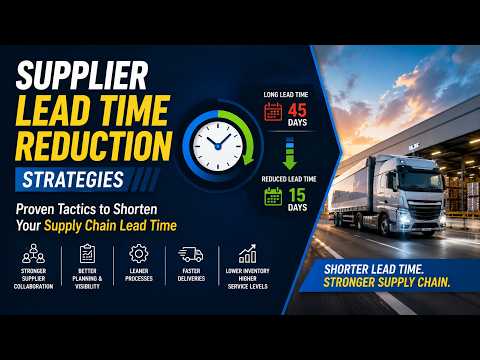
▶ Watch on YouTube: Proven tactics to shorten supply chain lead times — covering demand signal sharing, regional stocking, dual sourcing, and supplier partnership strategies directly applicable to OEM-distributor collaboration.
The highest-value supply chain partnerships between OEMs and distributors are built on shared risk and shared reward — not on spot transaction terms. A distributor who holds project-specific inventory carries real capital risk: if the project is cancelled or delayed, that inventory is stranded. A distributor who commits to JIS delivery schedules carries operational risk: if the logistics chain fails, the assembly line stops and the commercial consequence lands on the distributor. The commercial terms of a strategic partnership must reflect these risks — and when they do, the relationship creates a mutual dependency that is genuinely resistant to competitive pressure on price.
Joint business planning is the structural mechanism that converts a supply relationship into a strategic partnership. A joint business plan between an OEM and a distributor defines: the product scope of the relationship (which product categories are managed through the partnership vs. spot procurement), the volume commitment (a rolling 12-month forecast with agreed accuracy tolerances), the service level commitments (fill rate, lead time, documentation delivery time), the inventory investment (who holds what, where, and on what commercial terms), the performance measurement framework (the KPIs and the review frequency), and the escalation process (what happens when service levels are missed, and who is responsible for resolution). When these elements are documented and agreed, both parties have clarity on what the partnership requires and what it delivers — and the relationship is managed by data rather than by personal rapport, which means it survives personnel changes on both sides.
Shared KPIs are the operating system of a strategic partnership. The metrics that matter for OEM-distributor collaboration are: on-time delivery rate (target: >97% for JIS programmes, >99% for standard replenishment), order fill rate on first request (target: >95% for stocked items), lead time accuracy (variance between quoted lead time and actual delivery: target <5%), documentation delivery time (time from order to receipt of complete compliance documentation: target <24 hours), and inventory turnover at consignment or VMI locations (target: 8–12 turns per year). These metrics are reviewed monthly in joint performance meetings. When a metric falls below target, the joint review process identifies the root cause — demand forecast error, supplier lead time change, logistics failure, or specification change — and agrees a corrective action with an owner and a timeline. The performance data drives continuous improvement rather than serving as evidence in a dispute.
Performance-based contract structures align incentives explicitly. A distributor who consistently delivers >98% on-time at >99% fill rate earns preferred supplier status, guaranteed volume allocation in the OEM’s procurement plan, and the right of first refusal on new product categories. A distributor who misses targets triggers a structured improvement process — not immediate contract termination, which would itself create a supply chain disruption — but with defined consequences that escalate if performance does not recover. This structure rewards investment in service capability rather than investment in relationship management, and it creates a self-selecting dynamic: distributors who are confident in their service capability will accept performance-based terms; those who are not will prefer transactional arrangements where underperformance has no explicit consequence.
The long-term commercial outcome of a well-structured strategic partnership is captured in a single metric that most distributors under-measure: share of wallet. A distributor who is a preferred partner for an OEM typically captures 60–80% of the OEM’s procurement spend in their category. A transactional distributor competing on each purchase order typically captures 15–30%. The difference in revenue per client relationship is 3–5×, at higher margin (because preferred partner pricing includes service value rather than competing solely on product cost), with lower cost to serve (because integrated procurement processes eliminate the quoting and negotiation overhead on every transaction). The investment in building a strategic partnership capability — the technology, the people, the inventory, the process — typically pays back within 18–24 months on the revenue growth from deepening existing relationships, before accounting for the new relationships that a credible strategic partnership capability makes possible.
For instrumentation distributors, the Deloitte supply chain resilience research provides data-backed perspective on how industrial manufacturing companies are restructuring their supply chain partnerships — including the shift from single-source to multi-tier supplier relationships that is creating opportunities for technically capable distributors who can support the qualification and documentation requirements that multi-tier supply programmes demand.
Glossary of Key Terms
API (Application Programming Interface): A software bridge that allows two different systems — for example, a distributor’s inventory management system and an OEM’s ERP — to exchange data automatically without manual export/import. An API-first distributor can provide real-time stock availability, pricing, and order status to any connected client system.
Digital Twin: A real-time virtual replica of a physical system — in supply chain context, a continuously updated model of inventory positions, logistics flows, and demand signals that allows “what if” simulation before decisions are made in the real world.
ESG (Environmental, Social, and Governance): The framework by which companies and investors evaluate business sustainability and ethical impact. In supply chain context: carbon footprint tracking, ethical sourcing, labour standards compliance, and governance documentation.
FEED (Front-End Engineering Design): The early engineering phase of a capital project where process design, equipment specification, and material take-offs are defined. Instrumentation specified during FEED — but not purchased until the procurement phase — creates the long-lead-time risk that strategic distributors address through early demand visibility programmes.
JIS (Just-in-Sequence): A logistics strategy where components arrive at the point of use not just at the right time but in the exact order and configuration required for the assembly sequence. More precise than JIT (Just-in-Time), which controls timing but not sequence.
MRO (Maintenance, Repair, and Operations): The category of procurement covering consumables, spare parts, tools, and equipment used to maintain industrial facilities and assets — as distinct from direct production materials.
Scope 3 Emissions: Indirect greenhouse gas emissions from a company’s supply chain — including purchased goods and services, transportation, and upstream/downstream logistics — as defined by the GHG Protocol framework. For industrial manufacturers, Scope 3 typically represents 60–80% of total corporate carbon footprint.
VMI 2.0 (Vendor-Managed Inventory 2.0): The next generation of the traditional VMI model, incorporating IoT-enabled consumption tracking, AI-powered demand forecasting, and automated ERP integration for real-time, exception-based replenishment without manual intervention.
SKU (Stock Keeping Unit): A unique identifier for a specific product in a specific configuration — size, specification, material, certification — used to track inventory positions at the item level.
SLA (Service Level Agreement): A contractual commitment defining the performance standards that a supply chain partner must meet — typically including on-time delivery rate, fill rate, lead time accuracy, and documentation delivery time — with defined consequences for non-compliance.
The supply chain strategies in this playbook are not theoretical frameworks for future consideration — they are operational models being implemented by distributors and OEMs right now, with documented financial outcomes. The distributors who are winning the highest-value OEM and EPC relationships in 2026 are those who can demonstrate digital twin capability, VMI 2.0 integration, JIS delivery execution, dual sourcing qualification, and ESG compliance documentation — not those who can offer the lowest price on the next purchase order.
For flow instrumentation specifically, the combination of long lead times, high specification complexity, and high consequence of unavailability makes these supply chain capabilities particularly high-value. An OEM or EPC who has experienced a project delay caused by a missing electromagnetic flow meter that was available from an alternate qualified supplier — but wasn’t known to be — understands exactly why supply chain intelligence matters more than purchase price.
Explore Jade Ant Instruments’ OEM supply chain partnership programmes →
Review the full flow meter product range for OEM and EPC specification →
Access the interactive flow meter selection tool for distributor technical support →
Read the common flow meter mistakes that cost distributors money →
Contact the Jade Ant Instruments engineering team for application and supply chain support →
Frequently Asked Questions
How can industrial distributors help OEMs reduce project delays caused by part shortages? The most effective mechanism is a shared demand signal programme: the OEM shares a rolling production or project schedule with the distributor — typically 12–18 months forward — and the distributor pre-positions stock of the identified high-criticality items. When this is combined with a joint review process that flags long-lead-time items at the FEED stage of engineering rather than the procurement stage, lead time risk is converted from a reactive problem into a managed variable. Skid-pack manufacturers implementing this model with their instrumentation distributors have documented project delay reductions of 40–85% on instrumentation-related delays.
What is VMI 2.0, and how is it different from traditional VMI? Traditional VMI uses periodic consumption reports — typically weekly or monthly — to trigger manual replenishment decisions. VMI 2.0 uses IoT sensors, barcode or RFID readers at the point of consumption, AI demand forecasting, and direct ERP integration to generate replenishment orders automatically in real time. The practical difference: traditional VMI has a 3–10 day lag between consumption and replenishment order. VMI 2.0 reduces this to under 60 seconds. For MRO teams managing critical spare parts with unpredictable consumption patterns, this latency reduction eliminates the most expensive stockout scenario: the emergency order placed at premium freight cost because the weekly VMI review cycle missed a consumption spike.
Can digital twin technology really improve supply chain accuracy for system integrators? Yes — specifically for the FEED-to-procurement gap on large capital projects. A digital twin that connects the engineering model with live supply chain data allows procurement teams to see, in real time, which specified instruments are at risk of unavailability on the required delivery date — weeks or months before the problem becomes a schedule crisis. AI-powered digital twin implementations have demonstrated 15–30% reductions in inventory carrying costs and significant reductions in emergency procurement events in documented supply chain case studies.
How do we maintain inventory efficiency when project timelines are unpredictable? Dynamic inventory optimisation, powered by multi-signal demand sensing, is the answer. Instead of using historical averages as the basis for reorder calculations, these systems combine confirmed orders, project pipeline data, market signals, and historical patterns to generate daily updated stock target recommendations per SKU per location. The result is that safety stock is calibrated to actual near-term demand uncertainty rather than to historical volatility — which is particularly valuable when a project pipeline shifts significantly quarter-to-quarter.
What are the concrete benefits of consignment inventory for municipal and utility companies? Consignment inventory eliminates upfront capital tied up in spare parts, reduces administrative burden (no purchase orders until consumption), ensures immediate on-site access to critical components without emergency procurement events, and gives the distributor a physical presence at the utility’s facility that generates accurate consumption data for demand planning. Municipal utilities who have implemented consignment programmes for their critical pump and meter components typically report 60–80% reductions in emergency procurement events and 25–40% reductions in spare parts administrative cost annually.
How can EPC firms ensure material availability across multiple remote project sites? The hub-and-spoke regional stocking model — regional distribution hubs positioned within 1–3 days’ ground freight of the project sites they serve — is the most reliable solution for remote project logistics. The regional hub holds buffer stock of the high-criticality, high-velocity items for the active projects in its zone. The risk-scoring model (single-source risk × lead time volatility × criticality) determines which items justify regional buffer stocking and which are better served by pre-qualified alternate sourcing. For instrumentation with ATEX or NEC 500 certifications required for hazardous area projects, the combination of regional stocking and dual-source qualification is the minimum risk mitigation standard.
Are there scalable digital solutions for smaller industrial distributors working with OEMs? Yes — cloud-based supply chain platforms have shifted from enterprise-only, high-capital-cost implementations to modular, subscription-based models that scale from single-warehouse distributors to multi-regional networks. The most practical starting point for a smaller distributor is an API integration that exposes inventory and lead time data to client ERP systems — a capability that can be implemented in weeks, costs $500–$2,000/month on a SaaS basis, and delivers immediate client-facing value without requiring a full ERP replacement.
How do we handle dual sourcing without compromising quality or compliance? The dual sourcing qualification process follows four steps: technical equivalence assessment (comparing specifications, materials, and performance data of the proposed alternate), regulatory compliance verification (confirming that the alternate source’s certifications cover the application requirements), sample evaluation (performance testing and dimensional verification of samples from the alternate source), and documentation package assembly (material test report, calibration certificate, certification copies, and traceability records). For instrumentation with application-specific certifications — ATEX, NSF/ANSI 61, OIML — the alternate source must hold the same certifications independently, not just claim equivalence. The qualification documentation becomes part of the project quality plan and must be available for client and third-party auditor review.
Can supply chain partners help us meet ESG goals for public and private projects? Yes — through three specific capabilities. Carbon footprint data per shipment (calculated from freight mode, distance, and cargo mass, reported as kg CO₂e per delivery) supports Scope 3 emissions reporting for OEM sustainability disclosures. Ethical sourcing verification (conflict minerals compliance under the US Dodd-Frank Section 1502, due diligence documentation under the EU Conflict Minerals Regulation) satisfies public procurement ESG requirements in many jurisdictions. Packaging and logistics optimisation (consolidated shipments, returnable packaging, reduced single-use materials) reduces both Scope 3 emissions and logistics cost simultaneously — a genuinely aligned interest between distributor and client.
What role does API integration play in modern OEM-distributor collaboration? API integration is the technical foundation of real-time supply chain visibility. Without it, every data exchange between an OEM’s ERP and a distributor’s inventory system requires manual export, email, and re-import — a process that introduces both latency and error risk. With API integration, an OEM procurement engineer sees live distributor stock levels, pricing, and delivery dates inside their own ERP as they raise a material requisition — the same experience as checking Amazon inventory availability, applied to industrial instrumentation. For distributors, the additional benefit is that API-connected clients generate significantly fewer support calls and order errors than phone/email clients — reducing the cost to serve while improving the client experience.
How do we reduce excess inventory without risking stockouts on critical components? The answer is differentiated safety stock policy by component risk category. High-criticality, long-lead-time items (custom-configured meters with ATEX certification and 14-week lead time) warrant higher safety stock multiples — 60–90 days of forecast demand — regardless of historical consumption frequency. Low-criticality, short-lead-time catalogue items (standard fittings, common cable glands) can be managed to lean stock levels — 5–15 days — with aggressive reorder triggers. AI-powered demand sensing tools automate this differentiation across hundreds of SKUs, removing the manual judgement burden from planning teams while maintaining appropriate risk coverage where it matters most.
What support is available when global logistics disruptions impact lead times? Proactive disruption monitoring — tracking port congestion, carrier capacity constraints, customs clearance delays, and geopolitical events affecting key trade lanes — allows distributor logistics teams to identify developing problems 1–2 weeks before they impact in-transit orders. When a disruption is identified, the response sequence is: notify affected clients immediately with a revised delivery estimate, identify alternate routing options (different port, different carrier, air freight if the schedule impact justifies the cost), and activate regional buffer stock or alternate source supply if available. The distributors who manage disruptions most effectively are those whose client communication is proactive — reporting a problem before the client asks is qualitatively different from responding to a client complaint, even when the underlying disruption is identical.
Can distributors assist with compliance documentation for international projects? Yes — and for EPC firms managing multi-jurisdiction projects, this documentation capability is a significant commercial differentiator. Comprehensive compliance documentation for a single flow meter on an international project may include: manufacturer’s declaration of conformity, ATEX certificate of conformity, material test reports for wetted components, hydrostatic pressure test certificate, calibration certificate with NIST-traceable reference standard details, export classification (HS code, ECCN if applicable), and country-of-origin documentation. Generating this package manually for each instrument on a 60-meter project would take an EPC procurement team several days. A distributor whose system generates this package automatically at order confirmation, in a standardised format accepted by the project’s document management system, saves the EPC team 20–40 hours of administrative work per project — a saving that appears in the project margin and in the client’s willingness to pay a small premium for the administrative convenience.
How do we transition from legacy systems to modern supply chain platforms without operational disruption? The parallel-run approach is the most reliable transition methodology: the new system runs alongside the legacy system for a defined period — typically 60–90 days — with both systems processing transactions and their outputs compared daily. Discrepancies are investigated and resolved. When the new system’s outputs match or improve on the legacy system’s outputs consistently across the full range of transaction types, the legacy system is retired. The cost of running both systems in parallel for 90 days is real but predictable. The cost of a hard cutover that fails during the transition is typically 5–20× larger in operational impact and recovery time. For distributors who cannot afford parallel infrastructure, sandbox testing against a copy of live data — with mock client transactions — provides 80% of the confidence at 20% of the cost. The Ivalua supply chain strategy resource covers digital transformation sequencing and phased adoption frameworks applicable across industrial distribution environments.
What metrics should we track to measure supply chain partnership success? The five metrics that most directly correlate with supply chain partnership health are: on-time delivery rate (% of deliveries arriving on or before the committed date — target >97%), order fill rate on first request (% of orders fulfilled without backorder or substitution on the first attempt — target >95%), lead time accuracy (variance between quoted and actual delivery time — target <5% of quoted lead time), documentation package delivery time (hours from order confirmation to receipt of complete compliance documentation — target <24 hours for standard items), and inventory turnover at managed stock locations (number of times the inventory cycles per year — target 8–12 turns). A sixth metric that leading partnerships track is project margin impact: the change in project gross margin attributable to supply chain performance, tracked by the OEM or EPC partner and shared with the distributor as part of the joint business review. This metric makes the financial value of supply chain partnership explicitly visible — and makes the case for continued investment in the relationship on both sides.
Sources and further reading:
- 2026 Economic Outlook for Manufacturers and Distributors — Citrin Cooperman
- AI-Powered Digital Twins in Supply Chain Operations — MDPI Logistics
- Digital Twins in Supply Chain Management — Digital Twin Consortium
- Cost and Resilience: The New Supply Chain Challenge — BCG
- Vendor Managed Inventory: Benefits and Implementation — Ivalua
- Supply Chain Resilience in Industrial Manufacturing — Deloitte Insights
- ERP Integration Strategy and Best Practices — NetSuite
- Jade Ant Instruments — Flow Meter OEM and EPC Supply Solutions