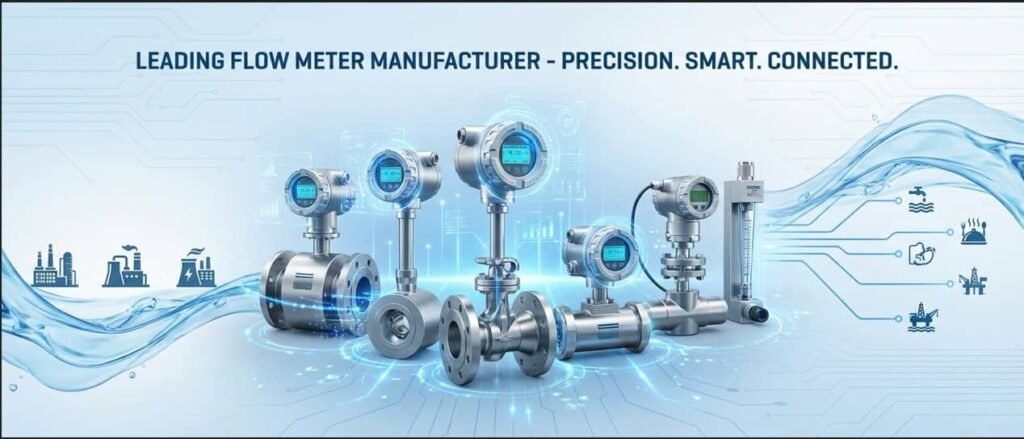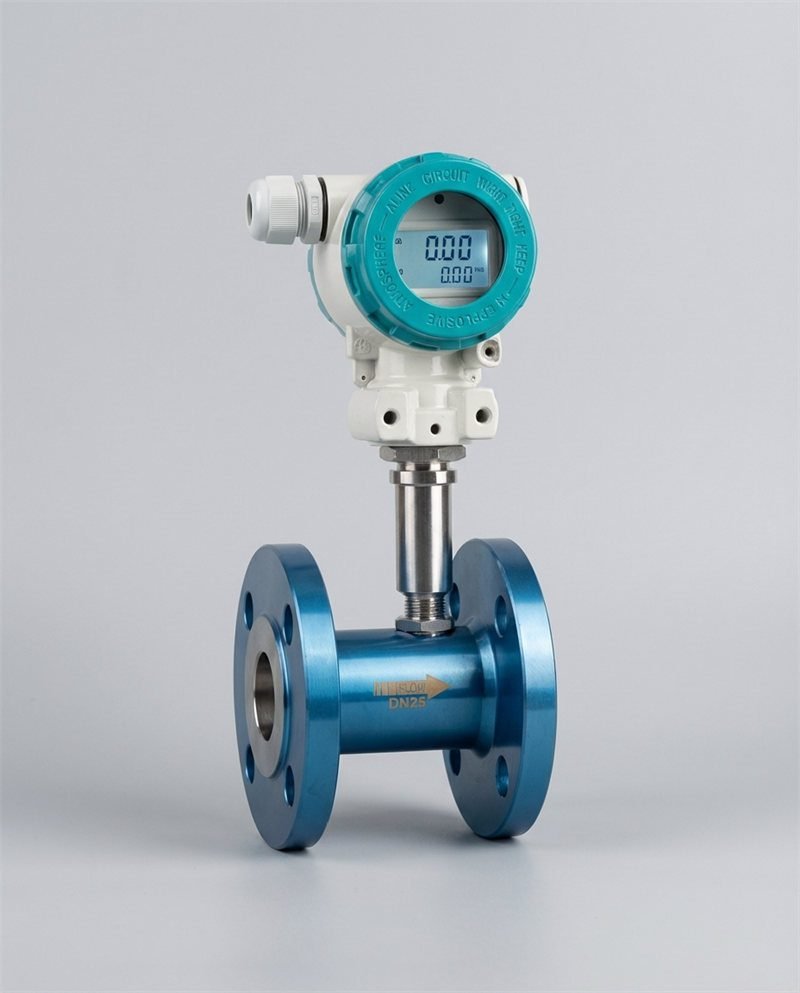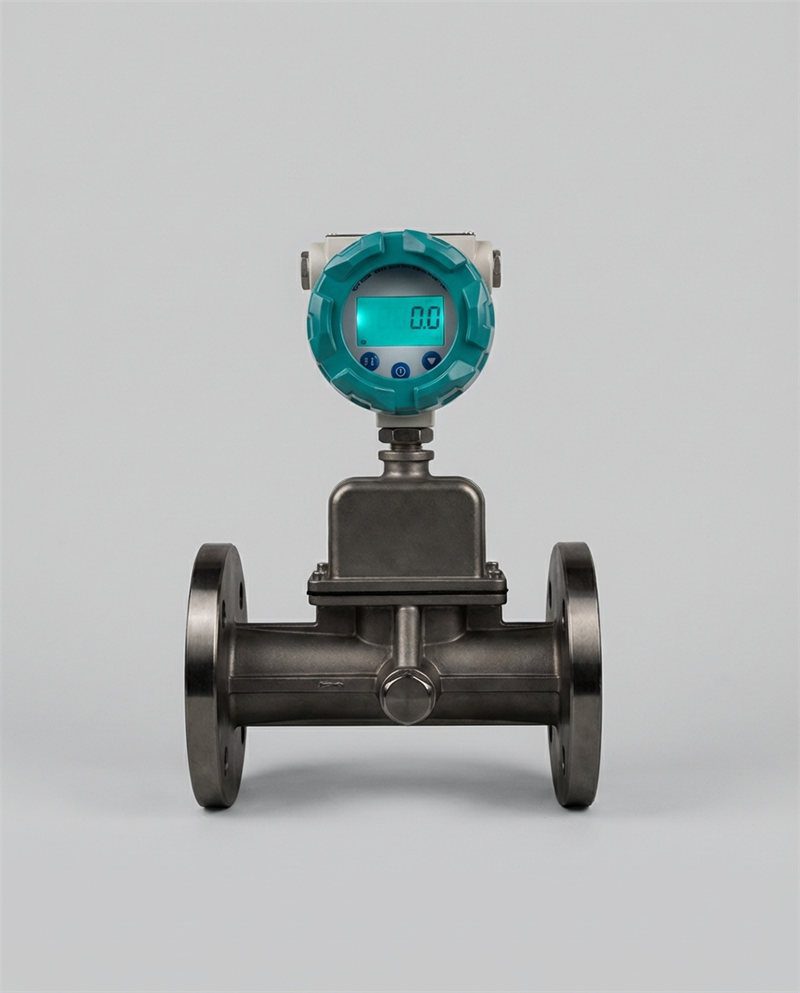
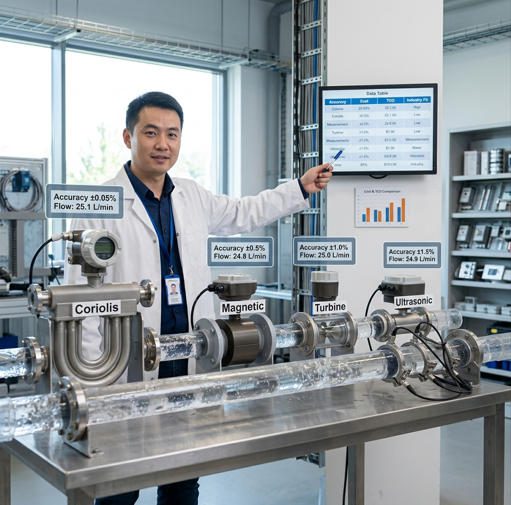
A comprehensive comparison of Coriolis, magnetic, turbine, and ultrasonic flow meters — giving distributors and agents the technical depth needed to recommend the optimal solution for every client application.
Why Flow Meter Selection Matters for Your Distributor Business
The global flow meter market was valued at $11.44 billion in 2025 and is forecast to reach $19.46 billion by 2034. That growth creates opportunity — but it also intensifies competition. Every major instrumentation brand is fighting for the same industrial procurement decisions, and the distributors who win consistently are those who can walk into an engineering conversation, understand the application, and recommend the right technology with confidence.
Here’s the uncomfortable truth: most flow meter technology decisions are made or invalidated at the specification stage — before a purchase order is even raised. If your technical team can’t articulate why Coriolis outperforms turbine in a custody transfer scenario, or when a magnetic meter is the cost-optimal answer over Coriolis, your competitors who can will write the specification that excludes your bid.
This guide builds that capability. It compares the four primary flow meter technologies — Coriolis, magnetic (electromagnetic), turbine, and ultrasonic — across every dimension that matters to B2B purchasing decisions: accuracy, fluid compatibility, installation, total cost of ownership, and industry-specific fit. Use it to train your sales team, prepare for technical client meetings, and build the application-level confidence that turns product catalog representatives into trusted instrumentation advisors.

Figure 1 — Selecting the wrong flow meter technology at the specification stage can cost an industrial plant $18,000–$45,000 per year in measurement error alone — before factoring in maintenance, recalibration, and compliance risks.
Section 1: Overview of Flow Meter Technologies in Industrial Applications
The Four Main Flow Meter Types Explained
Before comparing technologies head-to-head, it’s important to establish what each one actually measures — because this foundational difference drives nearly every downstream selection decision.
Coriolis flow meters measure fluid mass directly by detecting the Coriolis force acting on fluid moving through oscillating tubes. Because makes the measurement mass-dependent by physics, density, viscosity, temperature, and pressure don’t affect accuracy. The meter is measuring the weight of the fluid, not a proxy for it.
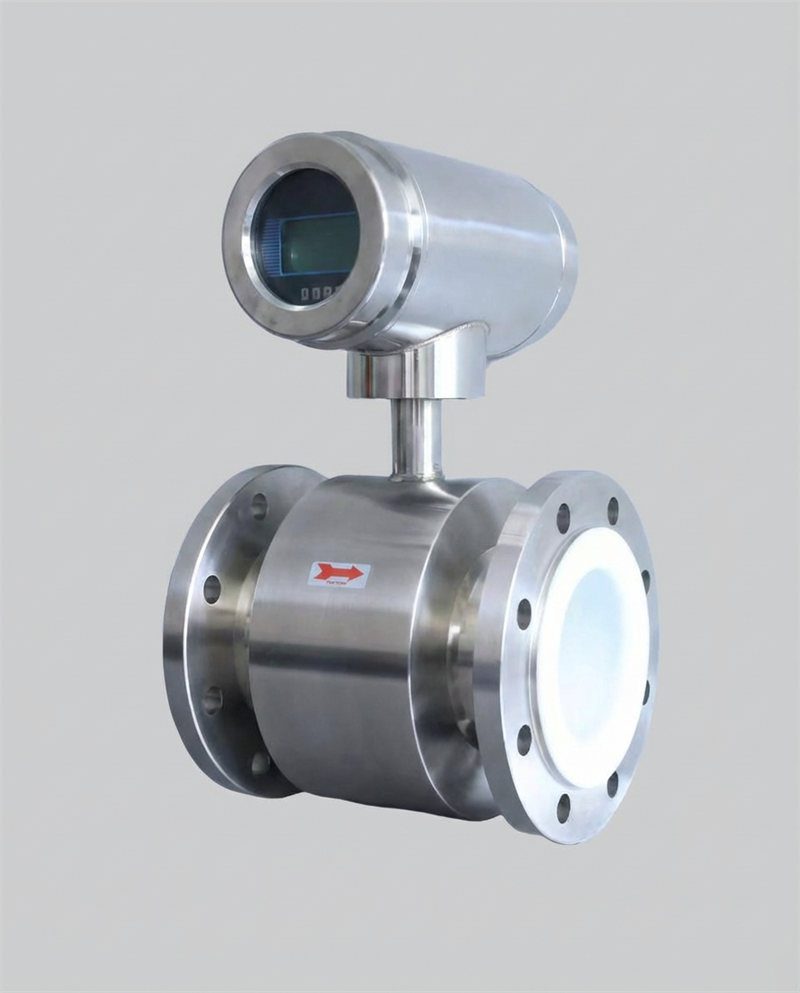
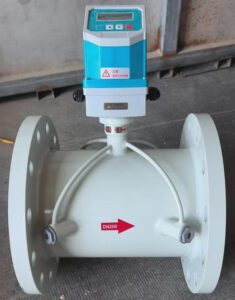
Magnetic flow meters (also called electromagnetic meters or magmeters) measure volumetric flow by applying Faraday’s Law of electromagnetic induction. A magnetic field is induced across the pipe; as conductive fluid flows through it, a voltage proportional to velocity is generated. The key constraint: the fluid must conduct electricity (minimum conductivity of 3–5 μS/cm, depending on the meter and manufacturer).
Turbine flow meters measure volumetric flow mechanically. A multi-blade rotor sits in the flow path; fluid velocity spins the rotor, and the rotational speed is proportional to flow rate. Simple, field-proven, effective for clean, low-viscosity fluids — but dependent on moving parts that wear and require maintenance.
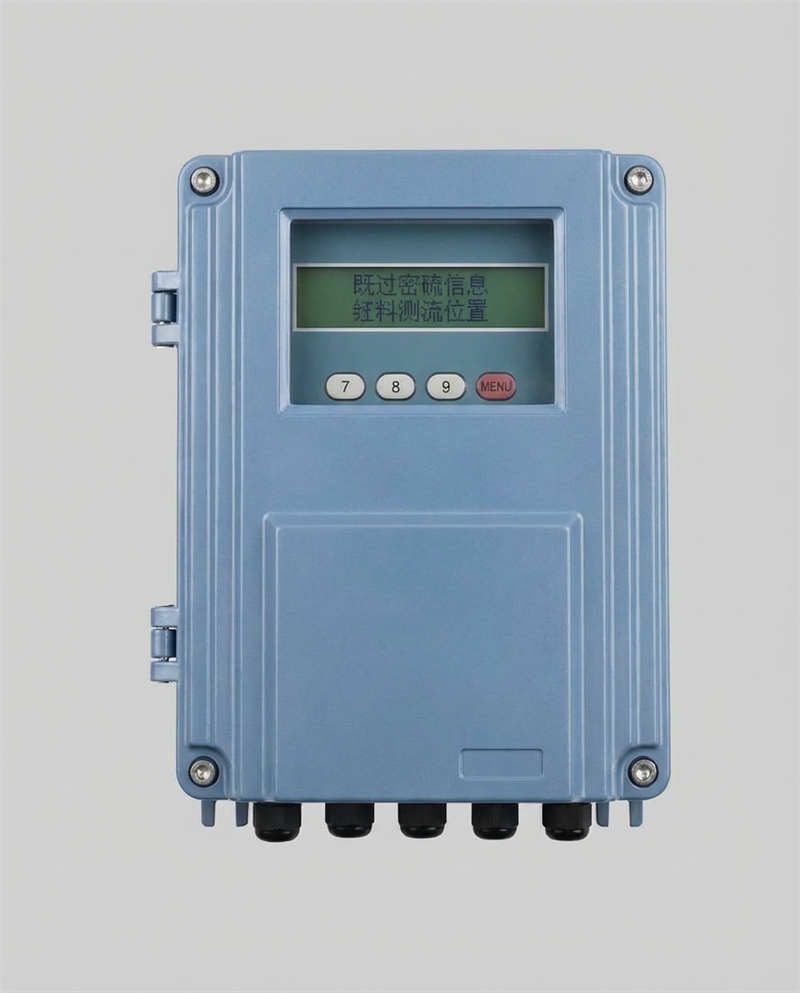
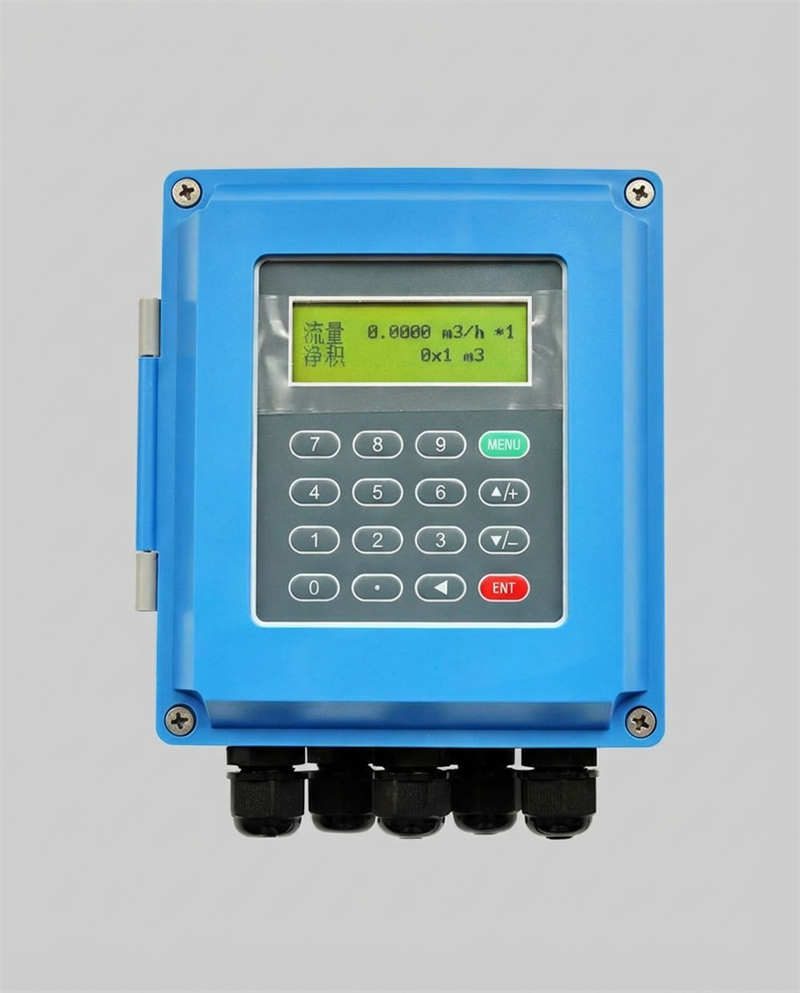
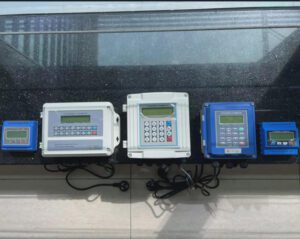
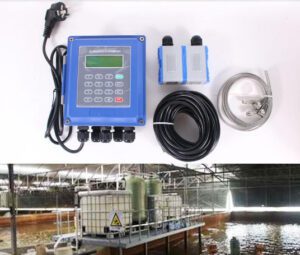
Ultrasonic flow meters measure volumetric flow by transmitting ultrasonic sound pulses through the fluid and measuring the difference in transit time between pulses sent with and against the flow direction. The key advantage: the sensor can be clamped to the outside of the pipe (clamp-on configuration), requiring zero pipe penetration. The key limitation: accuracy is sensitive to flow profile consistency, pipe wall condition, and fluid homogeneity.
Why Technology Selection Impacts Your Sales Strategy
Different technologies dominate different market segments — and understanding these dynamics tells you where your competitive energy is best directed. Magnetic meters dominate water and wastewater (the largest volume segment by unit count). Turbine meters hold strong positions in petroleum, refined products, and natural gas. Ultrasonic meters are the fastest-growing segment, driven by retrofit demand and HVAC/building automation expansion. Coriolis meters command the premium positioning in pharmaceutical, chemical, and custody transfer applications — and they represent the highest-margin segment for distributors who can justify the value proposition.
Section 2: Coriolis Flow Meters — Technology, Advantages, and Market Position
The Gold Standard for Accuracy and Versatility
Coriolis meters represent the premium tier of the flow measurement market. Understanding their capabilities — and their genuine limitations — is what separates a distributor who can defend the price from one who simply discounts.
How Coriolis Technology Works
Fluid flows through one or two tubes that are driven into oscillation at their natural resonant frequency (typically 80–1,000 Hz). As mass flows through the oscillating tube, the Coriolis force causes a phase shift — a measurable time difference between the inlet and outlet sensors. This time difference, typically measured in microseconds, is directly proportional to mass flow rate: . The transmitter calculates mass flow at update rates of 50–100 Hz per second, simultaneously calculating fluid density from the resonant frequency change and temperature from an integrated RTD sensor.
The result: four simultaneous measurements — mass flow, volumetric flow, density, and temperature — from one installation point, with no moving parts in the flow stream.
Key Advantages That Drive Customer Demand
Coriolis meters achieve mass flow accuracy of ±0.05% to ±0.5% of rate — the highest available in any commercial flow technology. This accuracy is maintained regardless of fluid density, viscosity, temperature, or pressure changes, because the physics interacts with mass directly. A Coriolis meter calibrated on water at 20°C will measure a highly viscous polymer at 120°C with identical percentage accuracy, requiring no recalibration or correction factors.
Additional advantages that resonate strongly in B2B sales conversations include zero straight-pipe-run requirements (0–5 diameters versus 10–30 for velocity-based alternatives), bidirectional flow capability without mechanical changes, and turndown ratios of 10:1 to 100:1.
Coriolis Meter Limitations and Cost Considerations
Being direct about limitations builds credibility in technical sales. Coriolis meters cost significantly more upfront — $3,000 to $25,000+ for standard industrial sizes, versus $800–$3,000 for turbine meters and $1,000–$5,000 for magnetic meters of equivalent line size. They are physically heavier and larger than most alternatives, which creates installation challenges in space-constrained applications. At very high gas void fractions (>15–20%), Coriolis meters can become destabilized, producing inaccurate readings — a known limitation in highly aerated or multi-phase flows.
For large-diameter pipe applications (>DN200/8-inch), the cost and physical mass of Coriolis meters makes them impractical in most cases, and magnetic or ultrasonic meters provide more appropriate sizing economics.
Best Application Scenarios for Coriolis Meters
Coriolis meters deliver maximum ROI in: custody transfer (where ±0.05% accuracy directly translates to revenue assurance), pharmaceutical batch dosing (where FDA 21 CFR compliance demands direct mass documentation), specialty chemical processing (where recipe accuracy is mass-based and density variation invalidates volumetric measurement), high-viscosity fluid applications (adhesives, polymers, heavy fuel oils), and any application requiring simultaneous mass flow and density measurement from a single device.
Section 3: Magnetic Flow Meters — When Conductivity Meets Cost-Effectiveness
A Proven Solution for Conductive Liquids
Magnetic meters are the workhorses of the industrial flow measurement world by unit volume. Understanding exactly where they excel — and where they fail — is critical for correct specification.
Operating Principles of Magnetic Flow Meters
Magnetic meters apply Faraday’s Law: when a conductive fluid moves through a magnetic field, it generates a voltage proportional to its velocity. The meter’s electrodes detect this voltage, the transmitter converts velocity to volumetric flow using the known pipe cross-section, and the output is updated continuously. No moving parts. No pressure drop above the baseline pipe friction. No sensitivity to particle content or suspended solids as long as conductivity requirements are met.
The fluid must have a minimum conductivity of 3–5 μS/cm — which covers water, wastewater, slurries, acids, alkalis, pulp, and most conductive process fluids. It absolutely excludes: hydrocarbons (gasoline, diesel, crude oil, lubricants), deionized or ultrapure water, alcohols, and most organic solvents. For distributors, this conductivity requirement is the single most important application filter — if the fluid fails it, no amount of price advantage makes a magnetic meter viable.
Competitive Advantages in Specific Applications
In appropriate fluids, magnetic meters offer a compelling combination: ±0.25% to ±1.0% volumetric flow accuracy, no moving parts, virtually unlimited service life in benign fluids, and installed costs that are 30–60% lower than equivalent Coriolis meters at large line sizes. They handle aggressive fluids (strong acids, caustic solutions) through appropriate liner selection (PTFE, hard rubber, polyurethane) and electrode materials (Hastelloy, titanium, platinum). Jade Ant Instruments supplies electromagnetic flow meters with PTFE, hard rubber, and ceramic liners covering pH 0–14 service across temperatures up to 180°C.
Magnetic meters also excel in large-diameter applications (DN200–DN3000) where Coriolis meters become physically and financially impractical. A magnetic meter on a 16-inch municipal water main costs a fraction of what an equivalent Coriolis installation would require, at accuracy levels fully adequate for billing and process control purposes.
Limitations That Restrict Market Opportunities
Beyond the conductivity constraint, magnetic meters do not measure mass flow or fluid density — they measure volumetric flow only. When fluid density changes with temperature or composition (as it does in virtually all real process environments), derived mass flow accuracy degrades proportionally with the density assumption error. They also require 5–10 pipe diameters of straight, unobstructed pipe upstream, limiting installation flexibility in congested plant layouts. Maximum pressure and temperature ratings are lower than Coriolis meters in extreme-service configurations, though standard industrial ratings cover the vast majority of applications.
Ideal Industries and Fluid Types for Magnetic Meters
Magnetic meters dominate: water and wastewater treatment (the largest global installed base), pulp and paper (abrasive slurry measurement), chemical processing (corrosive conductive fluids), food and beverage (aqueous ingredients, CIP fluids, dairy), and pharmaceutical manufacturing (purified water, buffer solutions, aqueous API streams). For distributors focused on municipal infrastructure and utility markets, magnetic meters represent the highest-volume, most repeatable purchasing pattern in the flow measurement space.
 Figure 2 — Magnetic flow meters are the highest-volume technology in the global flow measurement market, dominating water, wastewater, and conductive chemical fluid applications where their combination of accuracy, durability, and cost-effectiveness is unmatched.
Section 4: Turbine Flow Meters — High-Speed Applications and Legacy Systems
Reliable Performance for Hydrocarbon and Gas Applications
Turbine meters have been the preferred technology for hydrocarbon liquid and gas applications for more than 60 years. Despite competition from Coriolis and ultrasonic alternatives, they retain strong market positions in specific applications where their operational characteristics are genuinely advantageous.
Mechanical Operation and Design Considerations
A multi-blade rotor is mounted on a low-friction bearing inside the flow body, positioned coaxially with the pipe. As fluid flows, the kinetic energy of the moving fluid spins the rotor. The angular velocity of the rotor is proportional to the fluid’s average velocity, which is converted to volumetric flow rate using the pipe cross-section. A magnetic or optical pickup detects rotor blade frequency and outputs a pulse signal proportional to flow rate.
The rotor’s response to flow velocity is characterized by the K-Factor — the number of pulses generated per unit volume (e.g., pulses per liter or pulses per gallon). The K-Factor is determined during factory calibration and is specific to each meter. Critically, the K-Factor changes as bearings wear over time — which is the fundamental driver of turbine meter’s maintenance requirements and recalibration schedule.
Strengths in Oil, Gas, and Chemical Industries
Turbine meters achieve ±0.25% to ±1.0% of rate accuracy in their rated flow range with clean, low-viscosity fluids. They handle petroleum products, refined fuels, natural gas, and clean water at high flow velocities exceptionally well — the high velocity provides good rotor stability and repeatability. They’re available in designs rated to 6,000 psi and temperatures from cryogenic to 260°C, covering high-pressure gas metering and LNG applications that some other technologies can’t match in equivalent package sizes.
Turbine meters are also bidirectional in some designs, relatively compact for their line size, and produce a frequency output that integrates naturally with pulse-counting totalizers and flow computers — the historical infrastructure of petroleum measurement systems.
Maintenance Requirements and Total Cost of Ownership
This is where turbine meters’ apparent cost advantage erodes most significantly in long-term comparisons. Bearing wear — the primary failure mode — typically requires inspection every 12–18 months in clean liquid service and every 3–6 months in gas or contaminated liquid service. Each bearing replacement necessitates a K-Factor recalibration because the new bearings change the rotor’s friction characteristics. Custody transfer applications typically mandate calibration every 6–12 months regardless of condition.
For a single 4-inch turbine meter in petroleum service over a 10-year lifecycle: initial cost ($2,500–$6,000) + 5–8 calibration events ($1,500–$2,500 each) + 3–4 bearing replacements ($400–$800 each) + process downtime during service = total lifetime cost of $12,000–$25,000, significantly exceeding the upfront cost differential against Coriolis.
Application Scenarios Where Turbine Meters Excel
Turbine meters remain the optimal choice for: clean, low-viscosity hydrocarbon liquid metering where high velocity and a long track record of regulatory acceptance (API MPMS Chapter 5.3) favor them; high-velocity gas metering where the rotor’s momentum averaging produces good accuracy even in pulsating flow; temporary or portable measurement where the pulse output and compact size enable mobile measurement rigs; and large installed-base replacements where existing pulse-counting infrastructure is already in place and switching to digital-protocol meters would require significant control system changes.
Section 5: Ultrasonic Flow Meters — Non-Invasive Measurement Innovation
Emerging Technology for Challenging Installations
Ultrasonic meters are the fastest-growing flow meter segment, driven by the expanding retrofit market and the growing demand for non-invasive measurement in HVAC, building automation, and large-diameter utility applications. The ultrasonic flow meter market was valued at $2.08 billion in 2025 and is forecast to reach $3.56 billion by 2034.
Clamp-On and Insertion Ultrasonic Technology Explained
Transit-time ultrasonic meters (the dominant technology for clean liquids) work by transmitting ultrasonic pulses diagonally across the pipe — one pulse sent in the direction of flow and one against. The difference in transit time between the two pulses is proportional to the fluid’s average velocity. In clamp-on configurations, the transducers mount to the outside of the pipe with acoustic coupling gel, requiring zero pipe penetration. In inline configurations, the transducers are integrated into a spool piece that replaces a section of process piping.
Doppler ultrasonic meters work differently — they rely on sound reflecting off suspended particles, bubbles, or discontinuities in the fluid. They’re designed specifically for slurries, dirty fluids, and two-phase flows where transit-time meters would be degraded by signal scattering.
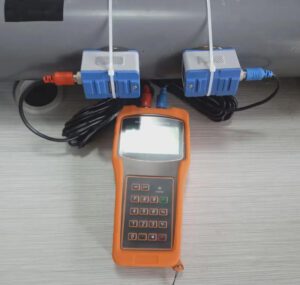
Clamp-on ultrasonic meters offer a unique capability: installation without any process shutdown, pipe cutting, or fluid contact — making them ideal for retrofitting flow measurement onto existing piping systems that can’t be taken offline, or for temporary audit and balancing measurements.
Advantages for Retrofit and Difficult Piping Configurations
The clamp-on meter’s primary commercial value proposition is installation flexibility. When a plant manager needs to add flow measurement to an existing 12-inch cooling water header that runs continuously and has no flanged isolation valves, a clamp-on ultrasonic meter can be installed in under an hour — without a process shutdown, without an isolation valve, without pipe modification. No other technology offers this capability.
For large-diameter pipes (DN300+), where Coriolis meters are physically and economically impractical and magnetic meters require significant flanged spool pieces, ultrasonic multipath inline meters provide custody-transfer-grade accuracy in sizes up to DN3000+ with manageable installation costs.
Accuracy Limitations and Environmental Factors
Clamp-on ultrasonic meters’ accuracy is inherently more variable than inline technologies because the acoustic signal must travel through the pipe wall and the coupling interface before entering the fluid. Achievable accuracy for clamp-on is typically ±1.0% to ±3.0% — adequate for energy auditing, balance verification, and process monitoring, but insufficient for custody transfer or precise batch control.
Factors that degrade clamp-on accuracy include: pipe wall corrosion or scale (which scatters the acoustic signal), heavily entrained gas (which absorbs or reflects ultrasound), highly viscous fluids (where high acoustic damping reduces signal strength), insufficient straight-pipe runs (flow profile distortion affects transit-time calculation), and inadequate coupling gel contact (a maintenance item that is commonly overlooked). The Jade Ant Instruments ultrasonic meter guide covers these installation factors in detail for distributor reference.
Growing Market Segments for Ultrasonic Solutions
The highest-growth segments for ultrasonic technology are: HVAC and building energy management (where clamp-on meters enable non-invasive energy metering on chilled water, heating water, and condenser water systems), large-diameter water infrastructure (where multipath inline meters replace aging turbine and differential-pressure installations), oil and gas fiscal metering (where multipath custody-transfer-certified inline ultrasonic meters are increasingly specified for natural gas at high-pressure transmission conditions), and temporary/portable measurement (where battery-powered clamp-on meters provide on-demand flow data without infrastructure investment).
📺 Video: How to Select the Right Flow Meter Technology for Your Application
This video provides a clear, visual walkthrough of how each major flow meter technology works — Coriolis, magnetic, turbine, vortex, and ultrasonic — with industrial application examples. Share it with your clients’ engineering teams as a reference resource for technology selection discussions.
Section 6: Comprehensive Comparison Chart — Technology Performance Matrix
Side-by-Side Technical Specifications
The following tables provide the granular comparison data your sales team needs for competitive positioning. Use these in proposal development, technical pre-sales conversations, and customer training materials.
Master Technology Comparison Table
| Parameter | Coriolis | Magnetic | Turbine | Ultrasonic |
|---|---|---|---|---|
| Measurement Principle | Direct mass flow (Coriolis force) | Volumetric (Faraday induction) | Volumetric (rotor velocity) | Volumetric (transit-time / Doppler) |
| Mass Flow Accuracy | ±0.05% – ±0.5% ✅ | Derived only (±1–3% with density error) | Derived only (±1–3% with density error) | Derived only (±1–4% with density error) |
| Volumetric Flow Accuracy | ±0.1% – ±0.5% | ±0.25% – ±1.0% ✅ | ±0.25% – ±1.0% | ±0.5% (inline) / ±1–3% (clamp-on) |
| Moving Parts in Flow Path | None ✅ | None ✅ | Rotor + bearings ⚠️ | None ✅ |
| Fluid Conductivity Requirement | None ✅ | Min. 3–5 μS/cm ⚠️ | None ✅ | None ✅ |
| Viscosity Independence | Yes ✅ | Yes (for conductive fluids) ✅ | No — requires compensation ⚠️ | Limited at high viscosity ⚠️ |
| Density Measurement | Yes (real-time, direct) ✅ | No | No | No (some models estimate) |
| Upstream Straight Pipe Required | 0–5D ✅ | 5–10D | 10–20D ⚠️ | 10–40D (clamp-on) ⚠️ |
| Process Shutdown for Installation | Yes (inline) | Yes (inline) | Yes (inline) | No (clamp-on) ✅ |
| Turndown Ratio | 10:1 – 100:1 ✅ | 20:1 – 1000:1 ✅ | 5:1 – 15:1 | 10:1 – 100:1 |
| Typical Temp Range | –200°C to +400°C ✅ | –40°C to +180°C | –200°C to +260°C | –40°C to +200°C |
| Typical Pressure Range | Up to 400+ bar ✅ | Up to 64 bar (standard) | Up to 400+ bar ✅ | Up to 160 bar (inline) |
| Slurry/Abrasive Compatibility | Good (no internal obstructions) | Excellent (full-bore, no obstruction) ✅ | Poor — rotor damage ❌ | Doppler only; moderate |
| Bidirectional Flow | Yes ✅ | Yes ✅ | Some designs | Yes ✅ |
| Maintenance Frequency | Low (3–5 yr calibration) | Low (annual verification) ✅ | High (annual calibration; bearing replacement) ⚠️ | Low–Medium |
| Typical Capital Cost (2-inch / DN50) | $3,000–$12,000 | $800–$3,500 ✅ | $800–$3,000 ✅ | $1,500–$8,000 |
| 10-Year TCO (2-inch, process service) | $12,000–$18,000 | $6,000–$12,000 ✅ | $15,000–$28,000 ⚠️ | $8,000–$18,000 |
| Custody Transfer Certification | Yes (OIML R117, API 5.6, ISO 10790) ✅ | Limited applications | Yes (API 5.3, OIML R117) ✅ | Yes (multipath inline, AGA-9) ✅ |
✅ = Notable advantage | ⚠️ = Notable limitation | ❌ = Significant restriction. Data synthesized from Turbines Inc., Emerson Automation Experts, BCST Group, Smart Measurement, DwyerOmega, and manufacturer published specifications (2024–2025).
Accuracy Ratings by Measurement Type and Fluid Class
| Application / Fluid | Coriolis | Magnetic | Turbine | Ultrasonic (Inline) |
|---|---|---|---|---|
| Clean water / low-conductivity liquid | ±0.1% | ±0.3% | ±0.5% | ±0.5% |
| Petroleum / hydrocarbon liquid | ±0.1–0.2% | ❌ Not applicable | ±0.25–0.5% | ±0.3–0.5% |
| High-viscosity fluid (>100 cP) | ±0.1–0.5% ✅ | ±0.5–1.0% | ±1–5% (degrades with viscosity) ⚠️ | ±1–3% ⚠️ |
| Slurry / suspended solids | ±0.5–1.0% | ±0.3–0.5% ✅ | ❌ Not recommended | ±1–3% (Doppler only) |
| Gas / vapor | ±0.5% | ❌ Not applicable | ±0.5–1.0% ✅ | ±0.5–1.0% ✅ |
| Cryogenic / very low temperature | ±0.2% (specialty) ✅ | Limited designs | ±0.5% ✅ | ±1.0% (specialty) |
| Custody transfer (liquid hydrocarbons) | ±0.05% ✅ | ❌ Not certified (hydrocarbons) | ±0.25–0.5% | ±0.2% (multipath) ✅ |
Section 7: Fluid Type Compatibility — Matching Meters to Applications
Critical Compatibility Matrix for Distributor Success
Recommending the wrong technology for a fluid type isn’t just a commercial error — it can damage your client’s process, violate regulatory requirements, or create a safety incident. This compatibility matrix is the primary filter for every application conversation.
| Fluid Type | Coriolis | Magnetic | Turbine | Ultrasonic | Primary Recommendation |
|---|---|---|---|---|---|
| Clean water | ✅ Excellent | ✅ Excellent | ✅ Good | ✅ Good | Magnetic (cost) or Coriolis (mass required) |
| Wastewater / sewage | ⚠️ Possible | ✅ Excellent | ❌ Poor | ⚠️ Doppler | Magnetic (dominant choice) |
| Crude oil / petroleum | ✅ Excellent | ❌ N/A (non-conductive) | ✅ Good | ✅ Good | Coriolis (custody) or Turbine (high volume) |
| Refined fuels (diesel, gasoline) | ✅ Excellent | ❌ N/A | ✅ Excellent | ✅ Good | Turbine (volume) or Coriolis (mass/density) |
| Natural gas / vapor | ✅ Good | ❌ N/A | ✅ Excellent | ✅ Excellent | Turbine or Ultrasonic (high vol); Coriolis (mass) |
| High-viscosity (>500 cP) | ✅ Excellent | ⚠️ Limited | ❌ Poor | ❌ Poor | Coriolis (only viable at high viscosity) |
| Corrosive acids / alkalis | ✅ Hastelloy/Ti | ✅ Lined designs | ⚠️ Limited | ⚠️ Limited | Magnetic (conductive) or Coriolis (non-conductive) |
| Slurry / abrasive | ✅ Good | ✅ Excellent | ❌ Rotor damage | ⚠️ Doppler only | Magnetic (standard) or Coriolis (mass needed) |
| Pharmaceutical API / injectable | ✅ EHEDG/3-A | ✅ Sanitary designs | ⚠️ Limited sanitary | ⚠️ Limited sanitary | Coriolis (mass/density) or Magnetic (aqueous) |
| Food / dairy / beverage | ✅ 3-A, EHEDG | ✅ 3-A designs | ⚠️ CIP challenges | ⚠️ Limited | Coriolis (mass/density) or Magnetic (flow only) |
| Cryogenic liquids (LNG, LN₂) | ✅ Specialty | ❌ Unsuitable | ✅ Specialty | ⚠️ Specialty | Coriolis (liquid) or Turbine (gas) |
| Ultrapure / deionized water | ✅ Excellent | ❌ Too low conductivity | ✅ Good | ✅ Good | Coriolis or Ultrasonic (non-conductive) |
Special Considerations for Pharmaceutical, Food, and Beverage Applications
Sanitary applications add a layer of regulatory compliance to the technology selection decision. In the EU and US, food-contact flow meters must meet 3-A Sanitary Standards (3-A SSI, USA) and/or EHEDG (European Hygienic Engineering and Design Group) certification requirements. These standards govern internal surface finish (Ra ≤ 0.8 μm electropolished), drainability, CIP (Clean-in-Place) and SIP (Sterilize-in-Place) compatibility, and absence of dead legs where product can stagnate.
Coriolis meters in 3-A/EHEDG sanitary configurations (such as the Emerson Micro Motion G-Series and H-Series) provide both mass flow and real-time density measurement — the density output enabling inline Brix, concentration, and product identity verification that eliminates the need for separate laboratory sampling. This capability is transformative for food and beverage customers who run multiple product types through the same line and need real-time product changeover verification.
For pharmaceutical manufacturing under FDA cGMP, magnetic meters in sanitary configuration handle aqueous buffer and WFI (Water for Injection) streams effectively. Coriolis meters are required for API (Active Pharmaceutical Ingredient) streams where mass-based dosing documentation is needed for batch records.
 Figure 3 — In pharmaceutical and food applications, flow meter selection adds a third dimension to the technology comparison: hygienic design certification. A meter that is technically accurate but not 3-A or EHEDG certified cannot be legally installed in regulated production environments.
Section 8: Cost Analysis and ROI Comparison for B2B Clients
Total Cost of Ownership vs. Initial Investment
The most common mistake in flow meter procurement is treating it as a capital equipment purchase evaluated on purchase price alone. Sophisticated industrial buyers — the ones signing the largest orders — evaluate instruments on a 10-year total cost of ownership (TCO) basis. Your ability to present a credible TCO model is a significant competitive differentiator.
Capital Equipment Costs by Technology Type
| Technology | DN25 (1-inch) | DN50 (2-inch) | DN100 (4-inch) | DN200 (8-inch) |
|---|---|---|---|---|
| Coriolis | $3,000–$7,000 | $5,000–$12,000 | $9,000–$25,000 | $25,000–$80,000+ |
| Magnetic | $600–$1,500 | $800–$3,500 | $1,500–$6,000 | $4,000–$12,000 |
| Turbine | $500–$1,500 | $800–$3,000 | $1,500–$5,000 | $4,000–$10,000 |
| Ultrasonic (clamp-on) | $1,000–$3,000 | $1,500–$4,000 | $2,000–$6,000 | $3,000–$8,000 |
| Ultrasonic (inline) | $1,500–$4,000 | $2,500–$8,000 | $5,000–$15,000 | $8,000–$25,000 |
Prices are representative ranges for standard industrial (non-hazardous, non-sanitary) configurations from 2025 market data. Sanitary, exotic alloy, high-pressure, and hazardous area designs carry significant premiums.
10-Year Total Cost of Ownership — DN50 (2-inch) Process Service
| Cost Category | Coriolis | Magnetic | Turbine | Ultrasonic (Inline) |
|---|---|---|---|---|
| Capital purchase | $8,000 | $2,000 | $2,000 | $5,000 |
| Installation (labor + fittings) | $1,500 | $1,200 | $1,200 | $1,800 |
| Calibration (10-yr total) | $2,000 (×2 events) | $3,500 (×5 verifications) | $10,000 (×7 calibrations) | $3,000 (×3 events) |
| Maintenance / bearing replacement | $0 | $0 | $3,500 (×4 events) | $500 |
| Process downtime cost (maintenance) | $500 | $500 | $5,000 | $800 |
| Product loss (measurement error, 10yr) | $800 | $3,500 | $8,500 | $4,500 |
| Total 10-Year TCO (estimated) | ~$12,800 | ~$10,700 | ~$30,200 | ~$15,600 |
Estimates are representative for moderate-value process service (e.g., chemical dosing, non-custody transfer). Values scale significantly with fluid value, throughput volume, and compliance requirements. Product loss values assume ±0.1% accuracy for Coriolis, ±0.5% for magnetic, ±1.5% for turbine (aging), ±0.8% for ultrasonic, applied to $200,000/year fluid throughput value.
Industry Insight: The turbine meter’s 10-year TCO of ~$30,200 exceeds Coriolis (~$12,800) by nearly 2.4× — despite costing 4× less at purchase. This is the single most persuasive number in the Coriolis-versus-turbine sales conversation, and it’s built from the client’s own maintenance cost data rather than manufacturer claims.
ROI Timeline by Application
Returns don’t materialize on a uniform schedule. Understanding the ROI timing helps distributors set realistic expectations and structure the business case appropriately for clients with different capital payback requirements.
In custody transfer and high-value fluid applications, payback can occur in 2–6 months because measurement accuracy improvement translates directly to commercial settlement accuracy at per-unit fluid value. A 0.3% accuracy improvement on a $50 million/year liquid transfer terminal represents $150,000 in recovered annual revenue — the Coriolis meter pays for itself in weeks.
In batch processing and pharmaceutical applications, payback typically occurs in 6–12 months, driven by reduced batch rejection rates, eliminated reprocessing labor, and compliance cost avoidance. In HVAC and building energy management, where ultrasonic meters are deployed for energy auditing and billing, payback is typically 18–36 months through energy waste reduction and accurate billing recovery.
Section 9: Industry-Specific Recommendations and Case Studies
Real-World Scenarios That Drive Purchasing Decisions
Technology selection in isolation is theoretical. Selection in the context of a specific industry’s constraints — regulatory, operational, fluid, and commercial — is practical. This section translates the comparison data above into concrete, industry-anchored recommendations.
Oil and Gas: Turbine vs. Coriolis Trade-offs
Both technologies hold legitimate positions in oil and gas, and the selection decision hinges on application type and throughput scale. For large-volume liquid custody transfer at mainline pipeline conditions — high flow velocity, clean refined products, established API metering infrastructure — turbine meters (API MPMS Chapter 5.3) remain the incumbent technology with the longest regulatory track record and the widest installed base of proving loop infrastructure. Replacing an entire terminal’s turbine meter infrastructure with Coriolis is often unjustified when the existing turbine system is well-maintained and the application is proven.
For high-stakes offshore or low-flow custody transfer where density measurement is required alongside mass flow, Coriolis meters certified to API MPMS Chapter 5.6 are increasingly specified. An offshore operator replacing aging turbine meters at individual wellheads — where precise mass allocation between reservoir zones determines royalty payments — realizes the Coriolis TCO advantage within months at current oil prices.
For distributor positioning: identify whether the client’s primary driver is volume throughput at established conditions (turbine competitive) or mass accuracy and density data at variable conditions (Coriolis required). For application guidance beyond the comparison table, see the Jade Ant Instruments flow meter selection framework.
Water and Wastewater: Magnetic Meter Dominance
Municipal water and wastewater represents the single largest flow meter market by unit volume, and magnetic meters dominate it for reasons that have nothing to do with marketing — the physics are simply optimal. Wastewater contains suspended solids and particles that would destroy turbine rotors. It’s conductive (enabling magnetic measurement). It flows at low velocities in large-diameter mains. Magnetic meters in PTFE-lined or hard-rubber-lined configurations handle raw sewage at pH 2–12, suspended solid content up to 30%, and pipe sizes from DN10 to DN3000 — all at accuracy adequate for billing and environmental compliance.
The one caveat: ultrapure water (conductivity ❤️ μS/cm) cannot be measured by magnetic meters. For ultrapure water circuits in semiconductor fabs or pharmaceutical WFI loops, Coriolis or ultrasonic meters are required. This is a reliable differentiation point when calling on facilities that have both standard process water and ultrapure water circuits.
Chemical Processing: Coriolis Advantages for Batch Operations
Chemical batch operations present conditions where Coriolis meters’ mass-direct measurement creates the most operationally critical differentiation from volumetric alternatives. In a typical specialty chemical formulation, recipe components are specified by mass ratio — because the actual chemical reaction stoichiometry is mass-based, not volume-based. When solvent density varies by ±1.2% between batches (a typical variation across seasonal ambient temperature swings), a volumetric meter introduces a proportional error into every recipe that relies on that density assumption.
The downstream consequence — off-specification batches, rework events at $8,000–$15,000 each, material write-offs — is the financial argument for Coriolis that chemistry-sector procurement managers understand immediately. For distributors calling on chemical clients, quantify their annual rework rate before presenting technology options. If they can’t tell you their rework rate with confidence, offer to help them measure it — you’ll be in a consultative role that no catalog-order competitor can replicate.
HVAC and Chilled Water: Ultrasonic and Magnetic Solutions
HVAC is the fastest-growing non-process segment for flow measurement, driven by building energy management and sustainability mandates. The primary measurement points are chilled water, heating hot water, and condenser water circuits — all of which are clean, conductive, low-viscosity liquids at relatively modest temperatures and pressures.
Ultrasonic clamp-on meters are the first choice for retrofitting flow measurement onto existing HVAC piping systems because they require no process shutdown and no pipe modification. A large commercial building with 40 air-handling units needing energy metering can have clamp-on meters installed across all circuits in a single day’s work — impossible with any inline technology. The 1–3% accuracy of clamp-on ultrasonic meters is fully adequate for energy billing and HVAC balance monitoring.
Inline magnetic meters are the preferred technology for new HVAC construction where the piping design accommodates them and higher accuracy (±0.25–0.5%) is needed for sub-metering billing and ESG reporting. Jade Ant Instruments’ ultrasonic meter range covers both clamp-on and inline configurations suitable for HVAC and building automation integration.
Pharmaceutical Manufacturing: Coriolis Precision Requirements
In pharmaceutical manufacturing, “good enough” measurement is a regulatory contradiction. FDA’s cGMP framework (21 CFR Part 211), EU GMP Annex 11, and ICH Q10 all require measurement systems to be qualified (IQ/OQ/PQ), calibrated to traceable standards, and documented with audit-trail-capable records. Magnetic meters handle aqueous process streams (buffer solutions, purified water, CIP media) effectively in sanitary configurations. Coriolis meters are required for API dosing streams — where mass-based measurement eliminates the density correction factors that regulators have historically flagged during inspections.
The EHEDG and 3-A certifications that sanitary Coriolis meters carry are prerequisites for regulatory acceptance in EU and US pharmaceutical facilities — not optional quality upgrades. A distributor who understands this distinction can engage at the level of compliance engineering rather than instrumentation procurement.
Food and Beverage: Hygienic Design and Accuracy Needs
As the Galloway dairy case study demonstrates (documented in Food Engineering Magazine), the food and beverage sector’s Coriolis value proposition is built from multiple simultaneous benefits: giveaway reduction, real-time Brix and concentration monitoring via density output, CIP/SIP compatibility, and FSMA traceability documentation. A distributor who can demonstrate that a single Coriolis installation simultaneously addresses giveaway loss, quality control, and regulatory traceability — replacing a manual fill operation, a separate lab density check, and a paper-based batch record — is presenting a business case with multiple funding sources inside the client organization.
Section 10: Decision-Making Framework — Selecting the Right Meter for Each Opportunity
A Systematic Approach for Your Sales Team
Consistent, defensible meter recommendations require a structured qualification process. Use this six-step framework in every sales conversation to ensure the recommendation is application-specific, not technology-preference-driven.
Step 1 — Assess Fluid Properties and Compatibility: This is the non-negotiable first filter. Establish: Is the fluid conductive? (If no → magnetic is eliminated.) Is it gas or liquid? Is there entrained gas or solids? What is the viscosity range? What is the density variation expected? What are the wetted material compatibility requirements? Any single-fluid-property constraint can eliminate one or more technology options before Step 2.
Step 2 — Evaluate Installation Constraints and Accessibility: Can the process be shut down for installation? Is there adequate upstream straight-pipe run for the candidate technology? What are the pipe size and connection type? Is the installation environment hazardous-area classified? For retrofit applications, clamp-on ultrasonic moves immediately to the shortlist; for new installations with no space constraints, the full technology range remains viable.
Step 3 — Determine Required Accuracy and Measurement Range: What accuracy does the application require — billing-grade (±0.1–0.5%), process control (±0.5–1.0%), or indication only (±1–3%)? What is the minimum and maximum expected flow rate, and what is the required turndown ratio? Coriolis is required when accuracy better than ±0.5% on mass flow is needed; turbine is adequate for many hydrocarbon volumetric applications; magnetic and ultrasonic serve the middle range.
Step 4 — Calculate Total Cost of Ownership: Use the TCO framework from Section 8 with the client’s actual data — their maintenance labor rates, their calibration service costs, their planned production volume, and the per-unit value of their fluid. The TCO calculation transforms the “Coriolis is too expensive” objection into a verifiable comparison that often resolves in Coriolis’ favor over a 5-year horizon in process applications.
Step 5 — Consider Regulatory and Compliance Requirements: Does the application require custody transfer certification? (→ Check API, OIML, AGA standards for each technology.) Is it a sanitary application? (→ Confirm 3-A/EHEDG certification requirements.) Is there a pharmaceutical quality system requirement? (→ Confirm IQ/OQ/PQ documentation availability.) Regulatory requirements narrow the eligible technology list independent of technical performance. Reference the comprehensive flow meter datasheet guide from Jade Ant Instruments for understanding how to decode manufacturer compliance claims.
Step 6 — Evaluate Vendor Support and Service Availability: The best meter for the application is the one your client can get calibrated locally, get spare parts for within 48 hours, and get technical support on without a 6-week wait. In emerging markets where Coriolis service infrastructure is limited, a magnetic meter that can be calibrated at a local lab may represent less business risk than a Coriolis meter requiring the manufacturer’s service team to fly in. Distributor value-add in service territory coverage is a genuine differentiator in this step. Jade Ant Instruments’ distributor partner network provides technical support specifically structured for regional distributor and agent operations.

Figure 4 — A systematic six-step selection framework transforms meter recommendations from educated guesses into defensible, client-specific specifications that increase win rates and reduce post-installation complaints.
Glossary of Key Technical Terms
K-Factor (Turbine Meter): The number of electrical pulses generated per unit volume of fluid (e.g., pulses/liter). Determined during factory calibration and changes with bearing wear — driving the need for recalibration.
Conductivity (μS/cm): The measure of a fluid’s ability to conduct electrical current. Magnetic flow meters require a minimum fluid conductivity of 3–5 μS/cm. Most aqueous fluids exceed this threshold; hydrocarbons, alcohols, and ultrapure water do not.
Turndown Ratio: The ratio of maximum to minimum measurable flow within the meter’s rated accuracy specification. A turndown of 100:1 means the meter can accurately measure flow from 1 to 100 units without configuration change.
Transit-Time Ultrasonic: A measurement principle where ultrasonic pulses are transmitted both with and against the fluid flow. The time difference between upstream and downstream transit is proportional to fluid velocity. Requires a clean, homogeneous fluid for accurate measurement.
OIML R117: The International Organization of Legal Metrology recommendation for measuring systems for liquids other than water — the primary regulatory standard for custody transfer flow measurement in non-US markets.
API MPMS: American Petroleum Institute Manual of Petroleum Measurement Standards — the regulatory framework governing flow meter selection, installation, and calibration for petroleum custody transfer applications in the United States.
3-A Sanitary Standards / EHEDG: Certification standards for hygienic equipment design governing surface finish, cleanability, drainability, and CIP/SIP compatibility for food, beverage, and pharmaceutical process equipment.
Zero-Flow Verification: A commissioning and periodic maintenance procedure where flow is stopped (confirmed by closed block valves) and the meter’s output is verified to read zero ± its specified zero-stability tolerance. The primary in-situ calibration check for Coriolis meters.
Making Confident Recommendations That Drive Revenue
The flow meter market rewards technical expertise more than product discounting. Every industrial procurement decision in this space ultimately depends on someone trusting that the recommended technology fits the specific application — and that trust is built through the depth of technical knowledge that backs the recommendation.
The comparison data in this guide makes one structural point unambiguous: there is no universally “best” flow meter technology. Magnetic meters deliver unmatched value in conductive-fluid, large-diameter, high-volume applications. Turbine meters retain legitimate advantages in established hydrocarbon metering infrastructure. Ultrasonic meters solve retrofit and non-invasive measurement challenges that no other technology can address. And Coriolis meters provide mass flow accuracy, density measurement, and viscosity independence that no alternative technology can simultaneously replicate — at the applications where these capabilities matter, no other technology is a genuine substitute.
Your competitive advantage as a distributor or agent isn’t access to these technologies — every distributor has that. It’s the ability to sit across from a plant engineer, understand their application in depth, apply the correct selection logic, and recommend with conviction the technology that actually solves their problem. That’s the service that generates repeat orders, referrals, and long-term account relationships.
Build this expertise in your team. Jade Ant Instruments’ technical resources — product specifications, selection guides, manufacturer comparisons, and installation guides — are designed to support exactly this capability at the distributor and agent level.
Ready to Strengthen Your Flow Meter Portfolio?
Use this comparison guide as the foundation for your team’s technology selection competency. The next step is applying it to the specific customer segments in your territory.
Explore the Jade Ant Instruments product portfolio to identify which technologies align with your target markets. Review the top Coriolis meter comparison guide to understand premium positioning in your highest-margin segment. Study the electromagnetic flow meter selection guide for the highest-volume technology category. And when your clients ask questions this guide doesn’t cover, the Jade Ant Instruments technical team is built to support distributors and agents — not to compete with them.
Frequently Asked Questions
1. What is the most accurate flow meter technology for industrial applications?
Coriolis meters deliver the highest mass flow accuracy available commercially — ±0.05% to ±0.5% of rate under traceable calibration conditions. This outperforms magnetic meters (±0.25–1.0% volumetric), turbine meters (±0.25–1.0% volumetric, degrading with bearing wear), and ultrasonic meters (±0.5% inline, ±1–3% clamp-on). However, accuracy must be contextualized: if an application requires only ±1% volumetric flow accuracy and the fluid is conductive, a magnetic meter at one-quarter the capital cost of a Coriolis meter is the economically rational choice. Accuracy requirements should always be defined by the application, not by the technology’s maximum capability.
2. Why are magnetic flow meters less expensive than Coriolis meters?
Magnetic meters have mechanically simpler construction — a pipe section with electrode pairs, a coil assembly, and a transmitter. There are no precision-machined oscillating tube assemblies, no high-frequency drive electronics, and no vibration-isolation requirements. The manufacturing tolerance requirements for magnetic meter components are also substantially less demanding than those for Coriolis tubes, which must achieve consistent oscillation frequency across the entire operating range. These manufacturing simplicity factors drive magnetic meter unit costs 50–80% below equivalent-size Coriolis meters. The cost gap narrows significantly in large line sizes where both technologies require custom manufacturing.
3. Can ultrasonic meters replace invasive flow measurement technologies?
In terms of installation convenience, clamp-on ultrasonic meters do replace invasive technologies for many retrofit applications — without process shutdown, pipe cutting, or fluid contact. In terms of measurement performance, they do not universally match the accuracy or stability of inline technologies. Clamp-on accuracy of ±1–3% is adequate for energy auditing, building management, and process monitoring — but insufficient for custody transfer, pharmaceutical batch dosing, or any application where measurement error directly translates to product loss or regulatory non-compliance. Inline ultrasonic meters (multipath designs) can achieve ±0.2–0.5% and carry custody transfer certifications, but they require the same pipe modification and process shutdown as any other inline technology.
4. What is the total cost of ownership difference between Coriolis and turbine meters?
For a DN50 (2-inch) meter in continuous process service, a Coriolis meter’s 10-year TCO is approximately $12,000–$18,000 versus $20,000–$30,000 for a turbine meter in the same service — despite the turbine meter costing 60–75% less at purchase. The reversal occurs because turbine meters require annual or bi-annual calibration (7–10 events over 10 years at $1,500–$2,500 each), regular bearing replacement (3–4 events at $400–$800 plus labor), and process downtime during each maintenance event. Coriolis meters require 2–3 calibration events over the same period and zero maintenance-related downtime from bearing or moving-part failure. The break-even point typically occurs at year 3–5 in moderate-value process service.
5. Are Coriolis meters suitable for measuring slurries and abrasive fluids?
Yes — with the important caveat that the meter must be selected in the appropriate material configuration. Standard Coriolis meters use smooth-bore flow tubes with no internal obstructions, which means abrasive slurry particles cannot damage a rotor (because there is no rotor). For moderate abrasion and slurry service, 316L stainless steel or Hastelloy C-22 tube materials in standard designs are sufficient. For highly abrasive slurries, straight-tube Coriolis designs (which minimize the impact of centrifugal particle deposition in curved tube bends) with hard coatings are specified. Magnetic meters with PTFE or polyurethane liners and Hastelloy electrodes are often preferred for abrasive slurries where conductivity is adequate, as they provide an unobstructed full-bore flow path with no tube curvature that could concentrate abrasive impact.
6. Which flow meter technology is best for custody transfer applications?
The answer depends on the fluid and the applicable standard. For liquid hydrocarbons (crude oil, refined products): Coriolis meters certified to API MPMS Chapter 5.6 and OIML R117 achieve ±0.05% accuracy — the highest legally recognized in fiscal metering. Turbine meters under API MPMS Chapter 5.3 are acceptable for established petroleum transfer systems. For natural gas: ultrasonic multipath meters under AGA-9 and turbine meters under AGA-7 are the primary standards; Coriolis is used for smaller gas flow applications where mass measurement is required. For any fluid in European legal metrology: OIML R117 certification is required, and both Coriolis and turbine meters carry this certification in appropriate designs.
7. How do temperature and pressure fluctuations affect flow meter accuracy?
Coriolis meters are designed to be largely insensitive to both: continuous RTD temperature compensation adjusts for tube stiffness changes, and the direct mass measurement principle is independent of density changes caused by temperature and pressure variation. Magnetic meters require temperature compensation for the fluid’s electrical conductivity, which changes with temperature — this is typically handled automatically by the transmitter’s electronics. Turbine meters are significantly sensitive to viscosity changes driven by temperature: a turbine meter calibrated at 40°C on fuel oil will read incorrectly at 15°C because the higher cold-oil viscosity changes the rotor’s friction coefficient and the K-Factor relationship. Ultrasonic meters require correction for the temperature dependency of the fluid’s acoustic velocity — a correction the transmitter handles automatically for known fluids but that can introduce error for unknown or variable fluids.
8. What are the installation space requirements for different flow meter technologies?
Coriolis meters require 0–5 pipe diameters of straight pipe upstream and 0–3 downstream — the most installation-flexible of all inline technologies. Magnetic meters typically require 5–10 pipe diameters upstream and 3–5 downstream. Turbine meters need 10–20 pipe diameters upstream (depending on the type of upstream disturbance) and 5 downstream. Ultrasonic transit-time meters need 10–40 pipe diameters upstream and 5–10 downstream for their rated accuracy — the highest straight-run requirement of any major technology. Clamp-on ultrasonic meters share the same straight-run requirements as inline ultrasonic, because the underlying measurement principle is identical; the sensor location is different but the flow profile dependence is the same.
9. Can turbine meters measure gases effectively, or should we recommend Coriolis instead?
Turbine meters are genuinely excellent for natural gas and hydrocarbon vapor measurement at high velocities — they’ve been the standard technology in natural gas fiscal metering for decades, governed by AGA-7. At high gas flow velocities, the rotor spins stably, the K-Factor is consistent, and accuracy of ±0.5% or better is achievable in calibrated systems. Coriolis meters are better for low-flow gas measurement, where gas velocities are insufficient to provide stable turbine rotor operation, and for applications where gas density measurement is required alongside mass flow (such as gas quality monitoring or custody transfer where composition varies). The choice ultimately depends on flow rate, pressure, and whether density data is needed — not on a categorical preference for either technology.
10. How often do different flow meter technologies require recalibration?
Coriolis meters typically require full traceable recalibration every 3–5 years in standard process service, or every 2 years in custody transfer applications. Magnetic meters require annual verification (confirming output against a known reference), with full factory recalibration every 3–5 years in most applications. Turbine meters require calibration annually or after every 5,000–10,000 operating hours in custody transfer service, and whenever a bearing or rotor replacement has been performed — because each maintenance event changes the K-Factor. Ultrasonic meters have no moving parts and typically require verification every 2–3 years, with full calibration every 5 years in standard service.
11. What is the impact of fluid viscosity on flow meter selection?
Coriolis meters are completely viscosity-independent: the measurement interacts with fluid mass, not fluid velocity, so viscosity changes of any magnitude have zero effect on measurement accuracy. This makes Coriolis the only viable technology for high-viscosity or highly variable-viscosity applications — polymers, heavy fuel oils, adhesives, corn syrup, and similar fluids where other technologies fail at high viscosity. Magnetic meters are also largely viscosity-independent for conductive fluids, providing good performance across viscosity ranges from water (1 cP) to moderately viscous conductive slurries. Turbine meters are significantly viscosity-sensitive: the rotor’s angular velocity–to–flow-rate relationship (the K-Factor) changes with viscosity, requiring calibration at the specific operating viscosity or continuous viscosity compensation. Ultrasonic meters can be affected by viscosity in high-viscosity fluids because acoustic damping increases with viscosity, reducing signal strength and potentially affecting accuracy at viscosities above 100–200 cP depending on the specific design.
12. Are there regulatory compliance differences between flow meter technologies?
Yes — and these differences can be decisive for specific applications. Coriolis meters meet the most stringent standards for fiscal and custody transfer metering: OIML R117 (international), API MPMS Chapter 5.6 (liquid hydrocarbons, USA), and ISO 10790 (mass flow measurement). Turbine meters meet API MPMS Chapter 5.3 (liquid hydrocarbons) and AGA-7 (gas) — standards with longer regulatory track records in established petroleum metering infrastructure but narrower fluid applicability. Ultrasonic meters meet AGA-9 (gas custody transfer) and are increasingly accepted for liquid custody transfer under API MPMS Chapter 5.8. Magnetic meters have more limited regulatory acceptance for custody transfer but are fully accepted under appropriate verification procedures for process monitoring, water billing (OIML R49), and environmental compliance reporting.
13. Which flow meter technology offers the best long-term reliability for continuous operation?
Coriolis and magnetic meters tie for the most reliable continuous-operation performance because neither has moving parts in the flow path — the primary failure mode in all other technologies. In appropriate fluids, a well-installed magnetic meter in a water/wastewater application may run for 20+ years with minimal maintenance. A Coriolis meter in clean process service has a comparable service life. Turbine meters require periodic bearing replacement — typically every 2–4 years in continuous liquid service, more frequently in gas service — making “reliability” contingent on adherence to maintenance schedules. Ultrasonic meters have improving reliability histories but shorter average track records in harsh industrial environments compared to Coriolis and magnetic technologies.
14. How does pipe material and size affect flow meter technology selection?
Magnetic meters require electrically conductive pipe or specialized grounding rings when installed on non-conductive pipe materials (PVC, HDPE, FRP). On non-conductive pipe without grounding, the floating electrical potential of the fluid corrupts the measurement signal — the most common cause of magnetic meter accuracy complaints in plastic piping systems. Coriolis meters are unaffected by pipe material because the measurement is internal to the meter body. Turbine meters work with any metallic pipe but perform best in smooth-bore steel piping that minimizes flow profile distortion. Ultrasonic clamp-on meters require pipe walls with adequate thickness (minimum 3mm typically), good external surface access for sensor placement, and absence of internal lining materials (epoxy, glass, concrete) that attenuate the acoustic signal between the external transducer and the fluid.
Article produced with technical guidance from the Jade Ant Instruments applications engineering team. For application-specific recommendations, technical specifications, and distributor partnership information, visit www.jadeantinstruments.com.
External references: Turbines Inc. flow meter comparison guides (turbinesincorporated.com); BCST Group Coriolis vs. Magnetic comparison (bcstgroup.com); Smart Measurement magnetic meter specifications (smartmeasurement.com); DwyerOmega Coriolis and magnetic flow meter resources (dwyeromega.com); Emerson Automation Experts technology comparison (emersonautomationexperts.com); Fortune Business Insights Flow Meter Market Report 2025–2034; Dataintelo Clamp-On Ultrasonic Market 2025; GAIMC Coriolis oil and gas custody transfer guide; API MPMS Chapters 5.3, 5.6, 5.8; OIML R117; AGA-7 and AGA-9 gas meter standards.