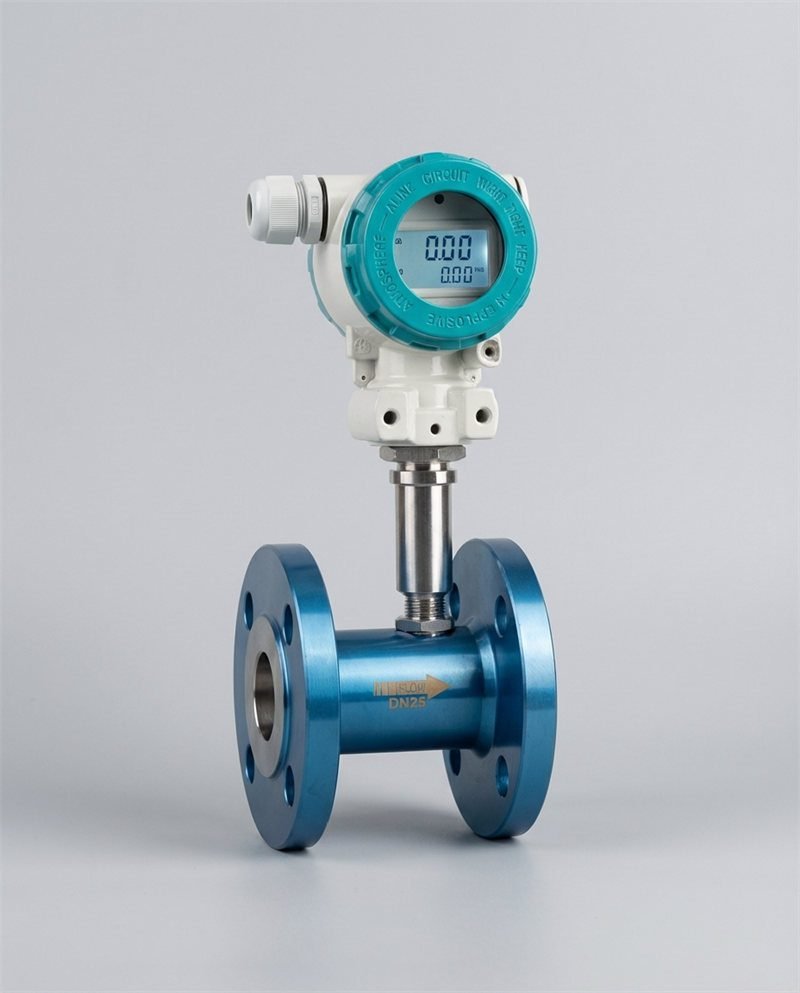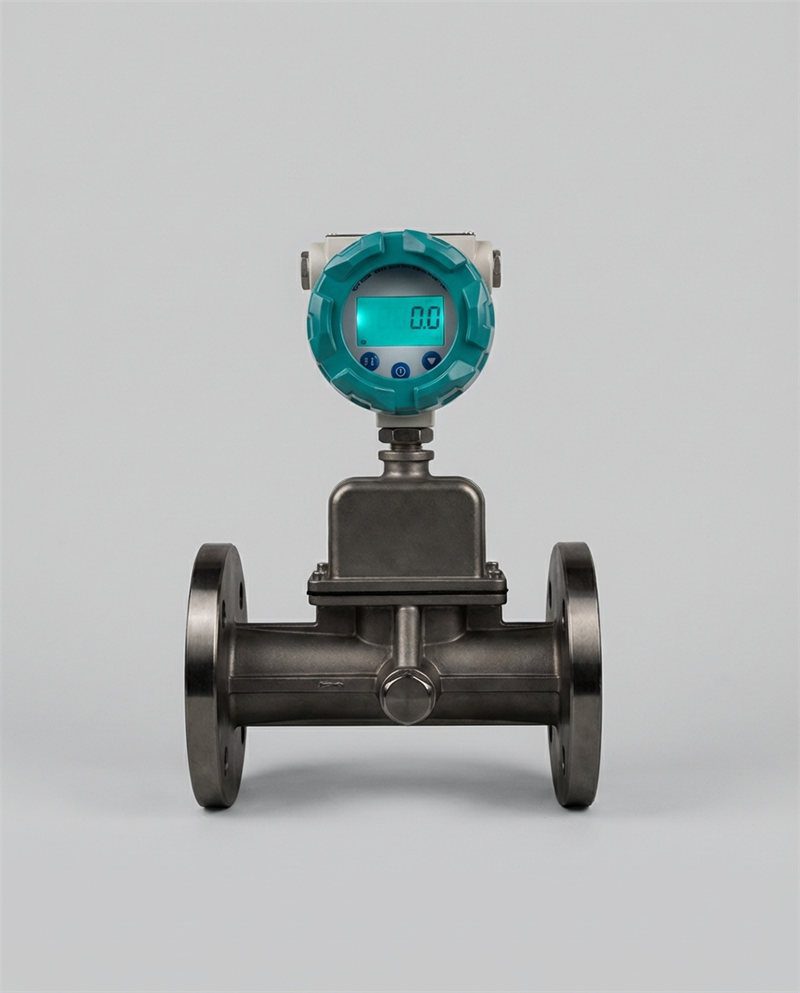
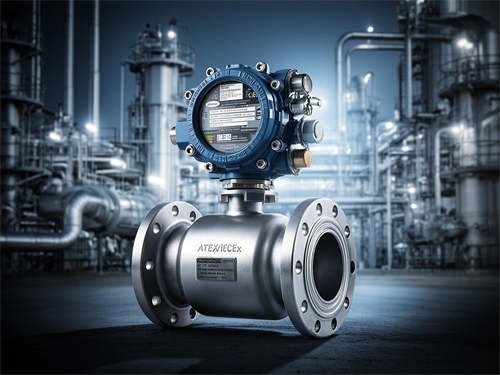

Choosing a mass flow meter is not a catalog exercise — it is an engineering decision that directly affects measurement confidence, process safety, and lifecycle cost. Whether the reading feeds a custody transfer system, a batch recipe, an emissions report, or a safety interlock, the consequences of a wrong choice go far beyond a line-item on a purchase order. In petroleum refining, a 0.15% accuracy difference on a crude oil metering skid processing 50,000 barrels per day can translate into a revenue discrepancy exceeding $200,000 per year. In pharmaceutical manufacturing, an uncaught density measurement drift of 0.5 kg/m³ can trigger an entire batch rejection worth six figures.
This guide delivers a structured, feature-by-feature comparison of nine leading mass flow meter brands — Endress+Hauser, Bronkhorst, KROHNE, Siemens, Yokogawa, Emerson, Badger Meter, Honeywell, and Parker Hannifin — evaluating each on core measurement principles, industry-specific strengths, integration readiness, and real-world limitations. Rather than ranking brands in a vacuum, we map capabilities against the criteria that actually drive selection in the field: fluid physics, installation constraints, diagnostic depth, communication protocol support, and total cost of ownership.
Before diving into brand-by-brand analysis, it helps to understand how to read this comparison. Each brand section is organized into three layers: (1) core features and measurement principles — what the technology does and how it achieves accuracy; (2) industry and application strengths — where the brand’s engineering, certification portfolio, and field track record give it a genuine advantage; and (3) limitations and considerations — honest assessment of where each brand faces trade-offs. For readers who need a structured framework to map these insights to their own projects, the Flow Meter Selection Guide by Jade Ant Instruments provides a complementary decision checklist organized around fluid characteristics, installation reality, and lifecycle economics.
By the end of this article, you will have a practical decision matrix, quantitative comparison data, and a recommended selection workflow you can bring directly into your next project specification meeting.
Video: The Coriolis Flow Measuring Principle (Endress+Hauser) — Understanding the physics behind the most accurate mass flow measurement technology available today.
Endress+Hauser (E+H)
Core Features and Measurement Principles
Endress+Hauser’s mass flow meter portfolio is anchored by the Promass family of Coriolis meters, which spans more than a dozen sensor variants covering pipe sizes from DN1 to DN400 (3/64″ to 16″). The flagship Promass F 300 delivers a published liquid mass flow accuracy of ±0.1% of reading (with an optional PremiumCal calibration achieving ±0.05%), a repeatability of ±0.05%, and a turndown ratio that comfortably reaches 100:1 in most liquid services. The Promass Q 500, engineered specifically for custody transfer in oil and gas, pushes accuracy to ±0.05% of reading and is one of the few Coriolis meters on the market certified to both OIML R117 and API MPMS Chapter 5.6 requirements simultaneously.
What distinguishes Endress+Hauser from a pure specification standpoint is Heartbeat Technology — a built-in diagnostic, verification, and monitoring architecture embedded across the Promass line. Heartbeat Verification can confirm meter health with a test coverage exceeding 95% (per TÜV SÜD assessment) without interrupting the process, generating a traceable verification report that regulatory agencies in multiple jurisdictions now accept as evidence between calibration intervals. In a 2023 case study published by E+H, a European pharmaceutical company extended its Coriolis meter calibration interval from 12 months to 36 months after implementing Heartbeat Verification — reducing annual calibration downtime by approximately 40 hours per production line while maintaining GMP compliance.
Strengths in Industries and Typical Applications
Endress+Hauser holds its strongest position in life sciences, food and beverage, and chemical processing, where its portfolio depth across Coriolis, electromagnetic, vortex, and ultrasonic principles allows plants to standardize on a single vendor ecosystem. The company holds over 300 3-A and EHEDG hygienic certifications across its flow portfolio, which matters in practice: a dairy plant in New Zealand reported cutting commissioning time by 30% after standardizing on Promass hygienic Coriolis meters because validation documentation (IQ/OQ templates, material certificates, surface finish reports) followed a consistent format across all measurement points.
In oil and gas custody transfer, the Promass Q 500 has been deployed on fiscal metering skids at several North Sea platforms, where operators specifically cited the combination of ±0.05% accuracy and in-situ Heartbeat Verification as the factors that differentiated E+H from competing bids — not because competitors lacked accuracy, but because the verification workflow reduced the need for expensive offshore prover runs.
Limitations and Considerations for Implementation
Endress+Hauser Coriolis meters generally occupy the premium price tier. For a DN50 Promass F 300 with a compact transmitter and HART communication, procurement costs commonly range from $8,000 to $15,000 depending on material specification and certifications — roughly 20–35% higher than comparable offerings from some competitors. This premium is justified when the application demands the full diagnostic and verification ecosystem, but it can be difficult to justify for general-purpose process monitoring points where ±0.5% accuracy would suffice.
Integration into non-E+H automation ecosystems requires attention: while the Promass line supports HART, PROFIBUS PA, PROFINET, EtherNet/IP, and Foundation Fieldbus, the full Heartbeat diagnostic data set is most accessible through E+H’s own Netilion IIoT ecosystem or FieldCare device management software. Users running Emerson DeltaV or Honeywell Experion as their primary DCS can still access standard HART diagnostics, but may not see the complete Heartbeat parameter set without E+H middleware.
Bronkhorst
Core Features and Measurement Principles
Bronkhorst occupies a specialized niche that most general-purpose flow meter manufacturers do not serve: ultra-low-flow thermal mass flow measurement for gases and liquids, with full-scale ranges starting as low as 0.014 mln/min (milliliters-normal per minute) for gases and 0.4 g/h for liquids. Their EL-FLOW Prestige series, which has become an industry reference instrument in semiconductor fabrication and laboratory research, achieves a standard accuracy of ±0.5% of reading plus ±0.1% of full scale — a specification that becomes uniquely meaningful at flow rates where most Coriolis or vortex meters simply cannot operate.
Bronkhorst’s thermal measurement principle works by maintaining a temperature differential across a sensor element and correlating the heat transfer rate to mass flow. Unlike Coriolis meters that need minimum fluid momentum to generate a measurable phase shift, thermal sensors can detect extremely small mass flows because even tiny amounts of gas carry detectable heat. The CORI-FLOW series extends Bronkhorst’s reach into direct Coriolis measurement for low-flow liquids and gases, with flow ranges from 0.1 g/h to 600 kg/h and accuracy of ±0.2% of reading — specifically targeting pharmaceutical dosing, catalyst injection, and specialty chemical blending where every gram matters.
Strengths in Specialized, Low-Flow, or Gas Applications
Bronkhorst dominates the laboratory-to-pilot-plant transition space. In semiconductor fabs, where process gas delivery must be controlled within fractions of a percent to maintain wafer uniformity, Bronkhorst EL-FLOW controllers are specified on more than 60% of new CVD (chemical vapor deposition) and etch tool installations globally, according to industry supply chain estimates. A major European semiconductor manufacturer reported that switching from competing thermal MFCs to Bronkhorst EL-FLOW Prestige units reduced their gas delivery repeatability spread from ±1.2% to ±0.3% at 5% of full-scale flow — a critical improvement when etching feature sizes below 7 nm.
In fuel cell research, Bronkhorst meters are the de facto standard for hydrogen flow measurement at laboratory scale, where flow rates of 0.5 to 50 SLPM must be measured with traceable accuracy to validate cell performance models.
Limitations and Considerations for Integration
Bronkhorst’s strength is also its boundary: the company does not manufacture large-bore industrial meters. Their largest Coriolis sensor handles DN25 pipe, and their thermal mass flow products are designed for tubing rather than flanged piping. For plant-scale deployment (DN50 and above), Bronkhorst simply is not the right vendor. Their communication protocol support includes RS-232, Modbus RTU, PROFIBUS DP, PROFINET, and EtherNet/IP, but most industrial DCS environments will find integration smoother with brands that natively participate in mainstream instrument asset management platforms. The price-per-measurement-point for Bronkhorst at very low flows is competitive within its niche, but can appear high when compared against the per-unit cost of general-purpose industrial meters — a misleading comparison, since general-purpose meters cannot physically measure at those flow rates.
KROHNE
Core Features and Measurement Principles
KROHNE, a German-headquartered instrumentation company with over 100 years of history in flow measurement, builds its mass flow portfolio around the OPTIMASS family of Coriolis meters. The OPTIMASS 6400 (twin bent-tube design) achieves ±0.1% accuracy for liquid mass flow and ±0.05% repeatability, while the OPTIMASS 7400 specifically targets custody transfer with MID and OIML R117 approvals. What sets KROHNE’s Coriolis engineering apart is the company’s proprietary Entrained Gas Management (EGM) technology — a signal processing approach that allows the meter to continue providing stable mass flow readings even when gas void fractions reach up to 100% (full gas), a condition that causes most competing Coriolis meters to fault or produce wildly unstable readings.
KROHNE also publishes OPTICHECK, an in-situ verification toolchain that allows operators to perform meter health checks without removing the instrument from the line. The OPTICHECK Service workflow generates a documented verification report covering sensor tube integrity, electronics health, and zero-point stability — critical for plants that must demonstrate measurement performance between calibration cycles.
Strengths in Process Industries and Challenging Environments
KROHNE has built its strongest reputation in oil and gas custody transfer, offshore metering systems, and heavy-process industries (mining, metals, pulp and paper) where measurement conditions are inherently difficult. The company’s custody transfer metering system packages — complete skid-mounted assemblies with OPTIMASS Coriolis sensors, flow computers, proving connections, and diagnostic interfaces — have been deployed on crude oil export terminals in the Middle East, North Sea platforms, and West African offshore facilities. In one documented installation at a Middle Eastern crude oil terminal handling 400,000 barrels per day, the KROHNE OPTIMASS-based system maintained measurement uncertainty within ±0.15% over a 24-month verification cycle, validated against a compact prover.
The EGM capability is particularly valuable in upstream oil and gas production, where multiphase flow and entrained gas are unavoidable realities rather than exceptional conditions.
Limitations and Considerations for Installation
KROHNE Coriolis meters, particularly the larger custody transfer models, are physically heavy instruments. An OPTIMASS 7400 in DN150 can weigh over 250 kg, requiring substantial pipe supports and careful alignment during installation. The company’s service network, while comprehensive in Europe, Middle East, and parts of Asia, has historically been thinner in certain North American and Latin American regions compared to Emerson or Endress+Hauser — though KROHNE has invested significantly in expanding US service capabilities since 2022. For applications outside of custody transfer and heavy industry, the OPTIMASS price point may be difficult to justify against more competitively priced alternatives.
Siemens
Core Features and Measurement Principles
Siemens builds its mass flow portfolio around the SITRANS FC family of Coriolis meters, most notably the SITRANS FC430 (for general process applications) and the compact SITRANS FC410 (designed for machine builders and skid-mounted systems). The FC430 delivers ±0.1% liquid mass flow accuracy, while the FC410 achieves ±0.15% in a significantly smaller package — a trade-off that makes engineering sense when the application is equipment integration rather than high-stakes fiscal metering.
Siemens differentiates through its automation ecosystem integration. The SITRANS FC family connects natively into Siemens SIMATIC PCS 7 and S7 PLC architectures via PROFINET with seamless parameter mapping, and supports SITRANS Verificator for in-situ performance checks. For plants already standardized on Siemens automation, this eliminates the integration engineering overhead that comes with introducing third-party instrumentation — a cost that is often underestimated in project budgets but regularly surfaces during commissioning.
Strengths in Automation-Friendly Ecosystems
Siemens holds a strong position in automotive manufacturing, general industrial automation, and municipal water infrastructure — sectors where the Siemens PLC/DCS ecosystem is often already the backbone of the control architecture. A Tier 1 automotive paint shop in Germany reported that commissioning time for their Coriolis-based paint flow measurement system dropped by 45% when switching from a third-party meter to SITRANS FC430 with PROFINET, because parameter configuration and diagnostic integration were handled natively within the TIA Portal engineering environment rather than requiring separate configuration software.
In water and wastewater applications, Siemens’ SITRANS FM MAG 5100 W electromagnetic flow meter (not a mass meter, but frequently deployed alongside Siemens Coriolis units) has become a widely specified solution, with the SITRANS FM MAG 5100 W product family covering DN15 to DN3000 with water-specific electrode and lining options.
Limitations and Considerations for Calibration and After-Sales
Siemens sold its flow metering business to a private equity consortium in 2023, which introduced uncertainty about long-term product roadmap continuity and after-sales service commitment. While the acquired entity continues to operate the SITRANS brand, some engineering firms have expressed caution about specifying Siemens flow meters on new 20-year-lifecycle projects until the post-acquisition strategy becomes clearer. The Coriolis portfolio is also narrower than Endress+Hauser or Emerson, offering fewer sensor geometry options for very small (below DN8) or very large (above DN150) pipe sizes. Calibration facilities are concentrated in a few global locations, which can result in longer turnaround times compared to Emerson or E+H, both of which operate more distributed calibration lab networks.
Yokogawa
Core Features and Measurement Principles
Yokogawa’s mass flow offering centers on the ROTAMASS Total Insight (TI) Coriolis meter, which represents the company’s current-generation platform. The ROTAMASS TI achieves ±0.1% liquid mass flow accuracy and ±0.05% repeatability, with a dual-tube design rated for process temperatures from -196°C to +350°C — a range that covers cryogenic LNG applications through high-temperature thermal oil circuits. Yokogawa’s “Total Insight” naming reflects the meter’s embedded diagnostic capability: continuous self-monitoring of drive gain, sensor symmetry, and signal quality, with automated alerts when parameters drift outside configurable thresholds.
Yokogawa also manufactures the ADMAG AXF and AXR electromagnetic flow meter families and the digitalYEWFLO vortex meter, allowing plants to build a multi-principle flow measurement architecture within the Yokogawa ecosystem. For operations running Yokogawa CENTUM VP or ProSafe-RS as their DCS/SIS, the integration pathway is natively optimized.
Strengths in Chemical and Energy Sectors
Yokogawa’s deepest market penetration for mass flow measurement is in chemical processing and LNG/energy, where the company’s broader control system presence creates a pull-through effect for instrumentation. In Japanese, Korean, and Southeast Asian chemical complexes, Yokogawa ROTAMASS meters are frequently specified alongside CENTUM VP DCS packages as a bundled instrumentation-and-control solution. A polycarbonate production facility in South Korea documented a 0.08% mass balance closure improvement after replacing legacy Coriolis meters with ROTAMASS TI units — attributed primarily to the improved drive control and signal stability at varying process temperatures (process range: 60°C to 280°C).
The FSA130 verification tool supports in-field health checks for both magnetic and vortex flow meters, extending Yokogawa’s lifecycle support across its flow portfolio.
Limitations and Considerations for Data Integration
Yokogawa’s Coriolis portfolio is narrower than Endress+Hauser’s or Emerson’s, with fewer sensor geometry variants for specialized applications (hygienic, high-pressure, ultra-small-bore). Outside of Asia-Pacific, Yokogawa’s service network for flow measurement is thinner than its DCS support infrastructure — meaning that plants in Europe or the Americas may experience longer response times for flow-specific calibration and troubleshooting compared to regionally dominant competitors. Data integration into non-Yokogawa DCS platforms works through standard HART, Foundation Fieldbus, and PROFIBUS PA, but the full diagnostic data set is most accessible within Yokogawa’s Plant Resource Manager (PRM) software.
Emerson

Core Features and Measurement Principles
Emerson’s Micro Motion brand is the world’s largest installed base of Coriolis flow meters, with over 2 million units deployed globally since the technology’s commercialization. The product portfolio spans from the Micro Motion ELITE (the company’s flagship, with ±0.05% liquid mass flow accuracy and a turndown exceeding 100:1) through the R-Series (a cost-optimized general-purpose line at ±0.1% accuracy), the F-Series (compact for skid builders), the T-Series (for low-flow applications), and specialized high-pressure variants rated to 689 bar.
Emerson’s defining value proposition is Smart Meter Verification (SMV) — a patented in-situ verification method that tests the sensor and transmitter integrity using internally generated diagnostic signals, producing a pass/fail report without interrupting process flow. Smart Meter Verification has been accepted by regulatory and metrology bodies in multiple jurisdictions as a valid performance check between calibrations, and Emerson reports that more than 80% of ELITE and R-Series installations now have SMV configured as part of the standard maintenance workflow.
Strengths in IIoT Readiness and Remote Monitoring
Emerson has invested more aggressively than any other flow meter manufacturer in IIoT connectivity and edge computing integration. The Micro Motion 5700 transmitter supports HART, FOUNDATION Fieldbus, PROFIBUS PA, PROFINET, and EtherNet/IP, and connects natively to Emerson’s Plantweb digital ecosystem, AMS Device Manager, and DeltaV DCS. For plants pursuing condition-based or predictive maintenance strategies, the 5700 transmitter continuously reports over 40 diagnostic parameters, including drive gain, tube frequency, and pickoff signal quality — each of which can be trended remotely to detect drift before it becomes an accuracy problem.
In a 2024 case study from a US Gulf Coast refinery, Emerson documented that remote SMV monitoring across 85 Micro Motion ELITE meters reduced unplanned calibration interventions by 62% over two years, saving approximately $340,000 in labor, production interruption, and prover costs. This kind of quantified operational impact — not just accuracy specifications — is what drives Emerson’s market position in large, asset-intensive operations.
Limitations and Considerations for Compatibility
Emerson’s premium positioning carries a premium price: a DN50 Micro Motion ELITE with a 5700 transmitter typically costs 15–25% more than comparable E+H Promass or KROHNE OPTIMASS configurations. The Emerson ecosystem also exhibits a degree of vendor lock-in: while standard HART and fieldbus protocols enable basic interoperability, the full SMV and advanced diagnostic data set requires AMS Device Manager or Plantweb integration, which may not align with multi-vendor asset management strategies. Plants running Siemens, ABB, or Yokogawa DCS platforms can still use Micro Motion meters effectively, but they should budget for additional engineering effort to map diagnostic parameters into their native device management tools.
Badger Meter
Core Features and Measurement Principles
Badger Meter approaches mass flow measurement differently from the Coriolis-focused brands above. While the company does offer Coriolis solutions through its RCT1000 line (a thermal-compensated Coriolis meter with ±0.2% liquid accuracy), Badger Meter’s primary strength lies in volumetric flow technologies — electromagnetic, ultrasonic, and turbine — that serve the water utility, HVAC, and general industrial markets. The RCT1000 is positioned for applications where the accuracy requirements fall in the ±0.2% to ±0.5% range and the pipe sizes are DN15 to DN80, making it a pragmatic choice for mid-tier process monitoring, chemical dosing verification, and fuel oil accounting rather than custody transfer.
Badger Meter’s competitive advantage is its deep integration with data analytics and water network management platforms, particularly the BEACON Advanced Metering Analytics (AMA) system, which transforms flow measurement data from individual meters into actionable network intelligence for leak detection, demand forecasting, and revenue protection.
Strengths in Water and Utility Applications
Badger Meter is a dominant player in the North American municipal water metering market, with installed bases exceeding 40 million utility meters across the continent. Their electromagnetic flow meter portfolio — including the ModMAG M-Series and M-Phase series — is designed specifically for water treatment plants, distribution networks, and industrial water/wastewater applications, with features like low-flow sensitivity, bidirectional measurement, and NSF/ANSI 61 drinking water certification. In a 2023 AWWA survey of US water utilities with populations above 100,000, Badger Meter was the most frequently cited electromagnetic flow meter brand for distribution system monitoring.
Limitations and Considerations for Broader Process Use
Badger Meter’s Coriolis offering is limited compared to Emerson, Endress+Hauser, or KROHNE — fewer sensor geometries, fewer material options, narrower size range, and less mature in-situ verification capabilities. For demanding process applications in oil and gas, petrochemicals, or high-accuracy custody transfer, Badger Meter does not compete directly with the specialist Coriolis brands. The company’s after-sales and calibration infrastructure is optimized for water utility support rather than heavy industrial instrumentation, which means that plants outside the water sector may find fewer local resources for Coriolis-specific service.
Honeywell
Core Features and Measurement Principles
Honeywell’s flow measurement portfolio is most strongly associated with differential pressure (DP) architectures and multivariable transmitters rather than dedicated Coriolis mass flow meters. The SmartLine SMV800 multivariable transmitter simultaneously measures differential pressure, static pressure, and temperature, computing compensated mass flow for gas and steam applications. This approach — pairing a high-performance transmitter with an orifice plate, nozzle, or Venturi primary element — remains the most widely deployed mass flow measurement architecture globally, particularly in legacy refineries, power plants, and gas processing facilities where the infrastructure was built around DP standards like ISO 5167 and AGA Report No. 3.
Honeywell also offers the VersaFlow Coriolis 200 and 400 series, with the VersaFlow 400 achieving ±0.1% liquid mass flow accuracy in sizes from DN15 to DN100. However, the VersaFlow Coriolis line has a smaller installed base and less extensive field documentation than Emerson Micro Motion or E+H Promass.
Strengths in Safety-Critical Applications and Global Support
Honeywell’s strongest mass flow position is in safety-critical process applications — particularly in refineries, gas plants, and petrochemical facilities — where the flow measurement feeds a safety instrumented system (SIS). The SmartLine transmitter platform is SIL 2/3 certified (IEC 61508), and Honeywell’s deep integration between the SmartLine instruments and Honeywell Experion PKS DCS / Safety Manager SIS creates a unified safety and measurement architecture. In applications where the DP-based mass flow calculation feeds a high-integrity protection function, this native integration is genuinely valuable.
Honeywell’s global after-sales network — with service centers in over 70 countries — provides response capability that few flow-specialist companies can match. For multinational operators running plants across continents, the ability to access calibration, spare parts, and technical support from a single global partner reduces procurement complexity.
Limitations and Considerations for Maintenance
DP-based mass flow measurement inherently introduces permanent pressure loss (the measurement principle depends on creating a pressure differential), which translates into ongoing pumping energy costs. In a large-bore gas pipeline (DN600) processing 50 MMSCFD, the annual energy cost attributable to an orifice plate’s permanent pressure loss can exceed $15,000 — a hidden lifecycle cost that full-bore Coriolis, electromagnetic, or ultrasonic alternatives avoid. The VersaFlow Coriolis line, while technically capable, lacks the mature verification ecosystem and field-proven installed base of Emerson or Endress+Hauser Coriolis platforms, which makes some engineering consultants hesitant to specify it for tier-one custody transfer applications.
Parker Hannifin
Core Features and Measurement Principles
Parker Hannifin, through its Precision Fluidics (formerly Porter Instruments) division, manufactures thermal mass flow meters and controllers primarily for gas measurement applications. The Series II Standard Mass Flow Meter covers flow ranges from 0.014 cc/min to 1,000 SLPM with standard accuracy of ±1% of full scale and repeatability of ±0.2% of full scale. The architecture is a classic capillary thermal bypass design, well-proven for clean gas applications in semiconductor, analytical instrumentation, and industrial gas blending.
Parker also offers the 500/600 Series II, which supports multi-gas/multi-range configurations — up to 8 pre-programmed gas type and flow range combinations per instrument with an effective turndown of 150:1. This multi-gas flexibility is particularly valuable for OEMs building gas delivery systems that must serve different process recipes without changing instrumentation hardware.
Strengths in Integrated Systems and OEM Partnerships
Parker Hannifin’s flow measurement strength is not in stand-alone instrumentation but in system-level integration. As one of the world’s largest motion and control technology manufacturers, Parker’s flow meters are typically specified as components within broader Parker gas delivery, pneumatic, or hydraulic systems. OEM equipment builders — particularly in semiconductor capital equipment, medical device manufacturing, and industrial gas mixing — benefit from single-vendor procurement for valves, regulators, tubing, fittings, and flow measurement, reducing supply chain complexity and interface compatibility risk.
Parker’s thermal mass flow controllers have been integrated into more than 200 OEM platform designs globally, according to the company’s published case reference list. The Series II Mass Flow Meter platform has become a standard specification for analytical gas chromatography systems and environmental monitoring stations where clean, low-flow gas measurement is the core requirement.
Limitations and Considerations for Non-OEM Deployments
Parker’s thermal mass flow products are designed for clean gas applications — they are not suitable for liquids, dirty gases, corrosive services, or any application involving particulates or condensable vapors. The ±1% of full scale accuracy, while adequate for many OEM and process gas applications, falls short of the ±0.5% of reading or better specifications that process engineers typically demand for metering, custody transfer, or emissions reporting. Parker does not offer Coriolis flow meters, limiting its relevance in applications requiring multi-parameter (mass flow + density + temperature) measurement. After-sales service for flow measurement is embedded within Parker’s broader industrial distribution network rather than delivered through dedicated instrumentation service centers, which can result in variable response quality depending on geography.
Brand-by-Brand Comparison: Key Specifications at a Glance
The table below consolidates the critical performance, integration, and application parameters across all nine brands, providing a decision-support reference you can bring directly into bid evaluation or technical review meetings. Data reflects published specifications for each brand’s primary mass flow meter product line as of early 2026.
| Brand | Primary Mass Flow Technology | Liquid Mass Flow Accuracy | Repeatability | Turndown Ratio | Key Industry Focus | In-Situ Verification | IIoT / Digital Ecosystem |
|---|---|---|---|---|---|---|---|
| Endress+Hauser | Coriolis (Promass) | ±0.05% to ±0.1% | ±0.025% to ±0.05% | Up to 100:1 | Pharma, F&B, Chemical, O&G | Heartbeat Technology (TÜV >95%) | Netilion, FieldCare |
| Bronkhorst | Thermal / Coriolis (low-flow) | ±0.2% Rd (CORI-FLOW) | ±0.1% | Up to 200:1 | Semiconductor, Lab, Specialty Chem | Limited (lab calibration) | Modbus, PROFINET, OPC UA |
| KROHNE | Coriolis (OPTIMASS) | ±0.05% to ±0.1% | ±0.025% to ±0.05% | Up to 100:1 | O&G Custody Transfer, Mining | OPTICHECK | PACTware, Bluetooth |
| Siemens | Coriolis (SITRANS FC) | ±0.1% to ±0.15% | ±0.05% | Up to 80:1 | Automotive, Water, General Industrial | SITRANS Verificator | TIA Portal, MindSphere |
| Yokogawa | Coriolis (ROTAMASS TI) | ±0.1% | ±0.05% | Up to 100:1 | Chemical, LNG/Energy | FSA130 Tool | PRM, CENTUM VP native |
| Emerson | Coriolis (Micro Motion) | ±0.05% to ±0.1% | ±0.025% to ±0.05% | Up to 100:1+ | O&G, Chemical, Refining, F&B | Smart Meter Verification (SMV) | Plantweb, AMS, DeltaV |
| Badger Meter | Coriolis (RCT1000) / EM | ±0.2% (Coriolis) | ±0.1% | Up to 50:1 | Water Utility, HVAC, General Process | Limited | BEACON AMA |
| Honeywell | DP-based / Coriolis (VersaFlow) | ±0.1% (VersaFlow 400) | ±0.05% | Up to 80:1 | Refining, Power, Safety-Critical | Limited (DP standard) | Experion PKS, SmartLine |
| Parker Hannifin | Thermal Mass (gas only) | N/A (gas: ±1% FS) | ±0.2% FS | Up to 150:1 (multi-gas) | OEM, Semiconductor, Analytical | N/A | Analog/RS-232/Modbus |
Table data sourced from published manufacturer specifications and datasheets. Actual performance varies by sensor model, size, fluid, and installation conditions. For application-specific guidance on matching these specifications to your process requirements, Jade Ant Instruments’ Coriolis meter comparison guide provides additional selection context.
Visual Comparison: Accuracy Specifications Across Brands
The bar chart below illustrates the published best-case liquid mass flow accuracy (% of reading) for each brand’s primary Coriolis or mass flow meter platform. Lower values indicate tighter accuracy specifications.
Best-Case Liquid Mass Flow Accuracy (% of Reading)
±0.05%
±0.05%
±0.05%
±0.1%
±0.1%
±0.1%
±0.1%
±0.15%
±0.2%
±0.2%
Note: Parker Hannifin omitted (thermal gas-only, measured in % of full scale rather than % of reading). Accuracy values shown are published best-case for liquid mass flow under reference conditions.
Industry Application Distribution: Where Mass Flow Meters Are Deployed
The pie chart below reflects the approximate distribution of Coriolis mass flow meter deployments across major industry verticals, based on aggregated data from manufacturer case study libraries and industry market reports (ARC Advisory Group, Flow Research Inc.).
Global Coriolis Mass Flow Meter Deployment by Industry
Chemical: 20%
Food & Beverage: 14%
Pharmaceutical: 12%
Water/Utilities: 10%
Power Generation: 8%
Other: 8%
Understanding Flow Meter Types: Video Guide
Video: 6 Common Flow Meter Types Explained — covers electromagnetic, ultrasonic, vortex, turbine, Coriolis, and differential pressure flow measurement principles and their typical applications.
Selecting the Right Mass Flow Meter Brand for Your Application
Key Takeaways Across Brands
No single brand dominates every application. Emerson and Endress+Hauser offer the broadest Coriolis portfolios with the most mature in-situ verification ecosystems — making them the safest choices when the measurement point is high-value, high-visibility, or regulation-driven. KROHNE leads in custody transfer metering systems and challenging multiphase conditions where its EGM technology provides genuine differentiation. Siemens and Yokogawa are strongest when the plant’s automation backbone is already theirs — the integration efficiency alone can offset specification differences. Bronkhorst owns the ultra-low-flow niche with no viable alternative at the bottom of its range. Badger Meter dominates water utility metering. Honeywell remains the DP-based mass flow measurement standard in safety-critical legacy facilities. Parker Hannifin serves OEM gas delivery systems where system-level integration matters more than stand-alone meter performance.
Guidance on Selecting a Brand Based on Application, Budget, and Ecosystem
The most reliable decision framework follows three steps: (1) define the measurement objective — is this for process control, custody transfer, safety, or compliance? (2) match the fluid physics and installation constraints to a measurement principle — Coriolis for multi-parameter mass flow with strong accuracy, electromagnetic for conductive liquids at low pressure loss, thermal for clean gas at low flows; and (3) evaluate the vendor ecosystem — diagnostics, verification, communication protocols, service network, and DCS/PLC compatibility — against your plant’s existing infrastructure and maintenance strategy.
For engineering teams navigating this selection process, having access to a responsive instrumentation partner who can quickly configure, quote, and provide application-specific recommendations significantly accelerates project timelines. Jade Ant Instruments supports this workflow through its technical engineering team, which can produce a flow meter selection worksheet covering technology recommendation, sizing, material compatibility, and installation notes within 48 hours of receiving process data — a turnaround that reflects the company’s position as a direct manufacturer rather than a distribution intermediary.
Recommended Decision Workflow Checklist
| Step | Action | Key Questions |
|---|---|---|
| 1. Define Objective | Classify the measurement point | Process control, custody transfer, safety interlock, or compliance reporting? |
| 2. Characterize Fluid | Document fluid properties | Phase, conductivity, viscosity range, corrosiveness, entrained gas, solids content? |
| 3. Map Installation | Survey the physical site | Pipe size, available straight run, vibration sources, orientation, access for maintenance? |
| 4. Select Principle | Match technology to constraints | Coriolis, electromagnetic, thermal, DP, ultrasonic, or vortex — which fits the physics? |
| 5. Evaluate Brands | Compare vendor ecosystems | Verification tools, DCS compatibility, service network, certification portfolio, price? |
| 6. Validate Economics | Build a 5-year TCO model | CAPEX + installation + energy loss + maintenance + calibration + downtime risk? |
| 7. Confirm & Procure | Issue technical specification | Does the spec cover accuracy, materials, protocols, certifications, and verification method? |
For a downloadable version of this checklist and personalized selection support, contact Jade Ant Instruments’ engineering team.
5-Year Total Cost of Ownership: Technology Comparison
The chart below compares the relative cost impact of different mass flow measurement approaches over a 5-year lifecycle for a typical DN50 liquid application. Values are normalized on a 1–10 scale, where 10 represents the highest cost impact in that category.
5-Year TCO Comparison by Technology (Relative Scale)
| Cost Category | Coriolis | Electromagnetic | DP (Orifice + Transmitter) | Ultrasonic (Clamp-on) |
|---|---|---|---|---|
| Purchase Price | 8 | 5 | 4 | 5 |
| Installation Cost | 5 | 5 | 7 | 2 |
| Energy Loss (Pressure Drop) | 3 | 1 | 8 | 1 |
| Maintenance & Verification | 3 | 3 | 6 | 4 |
| Downtime / Risk | 2 | 2 | 5 | 4 |
| Total (Sum) | 21 | 16 | 30 | 16 |
Lower total = lower 5-year lifecycle cost. DP systems score highest total cost due to energy loss and maintenance burden despite low purchase price.
Frequently Asked Questions (FAQs)
1. What criteria should drive a mass flow meter brand choice?
The primary selection criteria should be organized in priority order: measurement objective (process control vs. custody transfer vs. safety), fluid characteristics (phase, conductivity, viscosity, corrosiveness, entrained gas content), installation constraints (pipe size, available straight run, vibration environment), required accuracy and repeatability specifications, communication protocol compatibility with your existing DCS/PLC architecture, in-situ verification capability, vendor service network strength in your geographic region, and total cost of ownership over a 5 to 10 year lifecycle. Brand reputation matters only insofar as it correlates with these functional criteria. A structured selection framework helps prevent over-indexing on any single factor.
2. How do you compare accuracy, repeatability, and turndown ratio across brands?
Accuracy specifications must be compared on the same basis: percent of reading (% Rd) vs. percent of full scale (% FS) produce dramatically different real-world errors at low flows. A meter specified at ±0.1% of reading maintains that proportional accuracy across its entire operating range, while a meter specified at ±1% of full scale will show much larger proportional errors at 10% or 20% of capacity. Repeatability, which describes the consistency of readings under identical conditions, is typically 2–5× tighter than accuracy for quality Coriolis meters. Bronkhorst’s technical explanation provides an excellent primer on distinguishing these specifications. Turndown ratio defines the usable measurement range — a 100:1 turndown means the meter can measure accurately from 1% to 100% of its full scale, which matters significantly when your process operates at variable loads.
3. What installation considerations impact long-term reliability of mass flow meters?
The top installation factors that affect long-term mass flow meter reliability are: sufficient upstream and downstream straight pipe runs (typically 5D/3D minimum for Coriolis, 10D/5D for electromagnetic), proper pipe support to prevent mechanical stress on the sensor body, correct grounding and shielding (particularly critical for electromagnetic meters, where improper grounding is the single most common cause of field measurement errors), orientation that ensures the pipe remains full of liquid at the measurement point, isolation from external vibration sources (pumps, compressors, reciprocating equipment), and control valve placement downstream of the meter to avoid flow profile disturbance. ISO 5167 explicitly defines installation conditions as part of the measurement method for differential pressure elements — the same philosophy applies to all flow measurement technologies.
4. Which mass flow meter brand is best for oil and gas custody transfer?
For oil and gas custody transfer, the three most widely specified Coriolis brands are Emerson (Micro Motion ELITE), Endress+Hauser (Promass Q 500), and KROHNE (OPTIMASS 7400). All three achieve ±0.05% accuracy specifications and hold relevant metrological approvals (OIML R117, MID, API MPMS). The differentiator is typically the verification ecosystem: Emerson’s Smart Meter Verification has the largest installed base of verified custody transfer applications; E+H’s Heartbeat Verification offers the most comprehensive TÜV-validated test coverage; KROHNE’s EGM technology provides the strongest performance under entrained gas conditions. The final choice often depends on which verification workflow best aligns with the terminal operator’s existing calibration and audit procedures.
5. Can Coriolis mass flow meters handle two-phase or multiphase flow?
Standard Coriolis meters struggle with two-phase flow because gas bubbles in liquid (or liquid droplets in gas) disrupt the tube vibration pattern, causing measurement instability and errors. KROHNE’s Entrained Gas Management (EGM) technology is specifically engineered to maintain measurement stability at gas void fractions up to 100%, making the OPTIMASS series the leading Coriolis option for applications where entrained gas is expected. Emerson’s Micro Motion also offers two-phase flow handling in its ELITE platform, though typically for lower gas fractions. For severe multiphase conditions (e.g., wellhead production), dedicated multiphase flow meters from manufacturers like SLB (Schlumberger) are generally more appropriate than any standard Coriolis device.
6. What is the typical lifespan of a Coriolis mass flow meter?
A well-maintained Coriolis mass flow meter in a compatible application typically operates for 15 to 25+ years without sensor replacement. Emerson has documented Micro Motion meters in continuous service for over 30 years in clean liquid applications. The primary lifespan limiter is tube wall erosion or corrosion — an OPTIMASS sensor handling abrasive slurry may require tube replacement after 5–8 years, while the same sensor measuring clean hydrocarbons could last decades. Electronics (transmitters) typically have a functional life of 10–15 years before component obsolescence becomes a concern, though transmitter upgrades usually do not require sensor replacement.
7. How does IIoT connectivity differ across mass flow meter brands?
Emerson leads in IIoT ecosystem maturity through its Plantweb digital architecture, which connects Micro Motion meters to cloud analytics, edge computing, and AMS Device Manager for remote diagnostics. Endress+Hauser’s Netilion platform provides similar cloud-based asset health monitoring with a strong emphasis on lifecycle documentation. Siemens integrates through MindSphere and the TIA Portal. Yokogawa routes through its Plant Resource Manager (PRM). The practical difference for most plants is not the cloud platform itself but how deeply diagnostic parameters (drive gain, tube frequency, sensor symmetry) can be extracted and trended remotely — which depends on both the transmitter firmware and the middleware or gateway connecting the field device to the information layer.
8. Are there cost-effective alternatives to premium Coriolis brands for general process monitoring?
For process monitoring applications where ±0.2% to ±0.5% accuracy is sufficient and the measurement does not feed custody transfer or safety systems, several cost-effective alternatives exist. Badger Meter’s RCT1000 provides ±0.2% Coriolis measurement at a lower price point than premium brands. For conductive liquids, electromagnetic flow meters from manufacturers like Jade Ant Instruments deliver ±0.2% to ±0.5% volumetric accuracy at 30–60% lower cost than Coriolis, with near-zero pressure loss and minimal maintenance. When direct mass flow is not required and the fluid is conductive, electromagnetic meters frequently offer the best value proposition for general industrial monitoring, water treatment, and chemical dosing applications.
9. What role does the flow meter supplier play beyond the initial sale?
The supplier’s post-sale role directly impacts measurement reliability and total cost of ownership. Key after-sale services include: calibration laboratory access (turnaround time and geographic proximity matter), in-situ verification support (training, equipment, interpretation), spare parts availability, firmware updates, and technical troubleshooting for installation and integration issues. Manufacturers with direct engineering teams — rather than purely distribution-based models — typically provide faster application-specific support and more flexible customization for non-standard configurations (special materials, communication protocols, hazardous area certifications).
10. How do I build a mass flow meter specification for a bid package?
A complete mass flow meter specification for bidding should include: fluid name, composition, and phase state; operating and design temperature and pressure ranges; normal, minimum, and maximum flow rates; required accuracy (specify % of reading vs. % of full scale); required repeatability; wetted material requirements (with corrosion data if available); hazardous area classification (Zone/Division, gas group, temperature class); communication protocol and output signal requirements; required certifications (ATEX, IECEx, SIL, hygienic, custody transfer); in-situ verification requirements; and installation constraints (pipe size, orientation, available straight run). The flow meter installation guide from Jade Ant Instruments provides additional context on translating site conditions into specification language.

Selecting the right mass flow meter brand requires matching measurement science to operational reality. Use this guide as your technical reference, and reach out to Jade Ant Instruments when you need fast, application-specific engineering support for your next project.