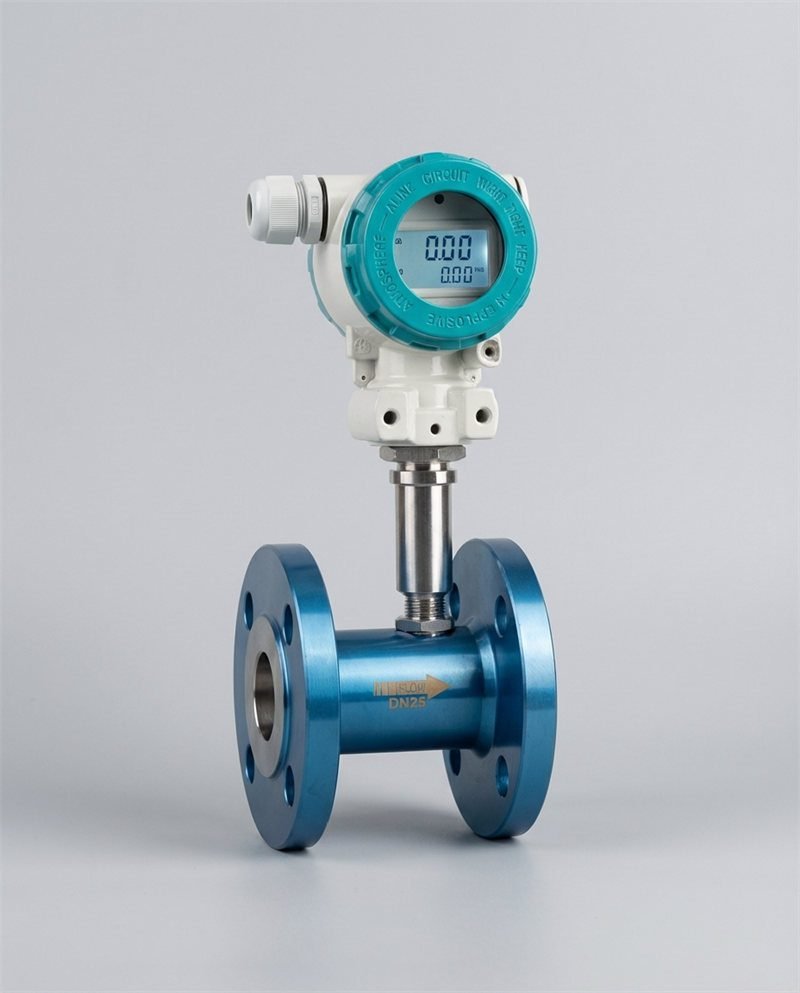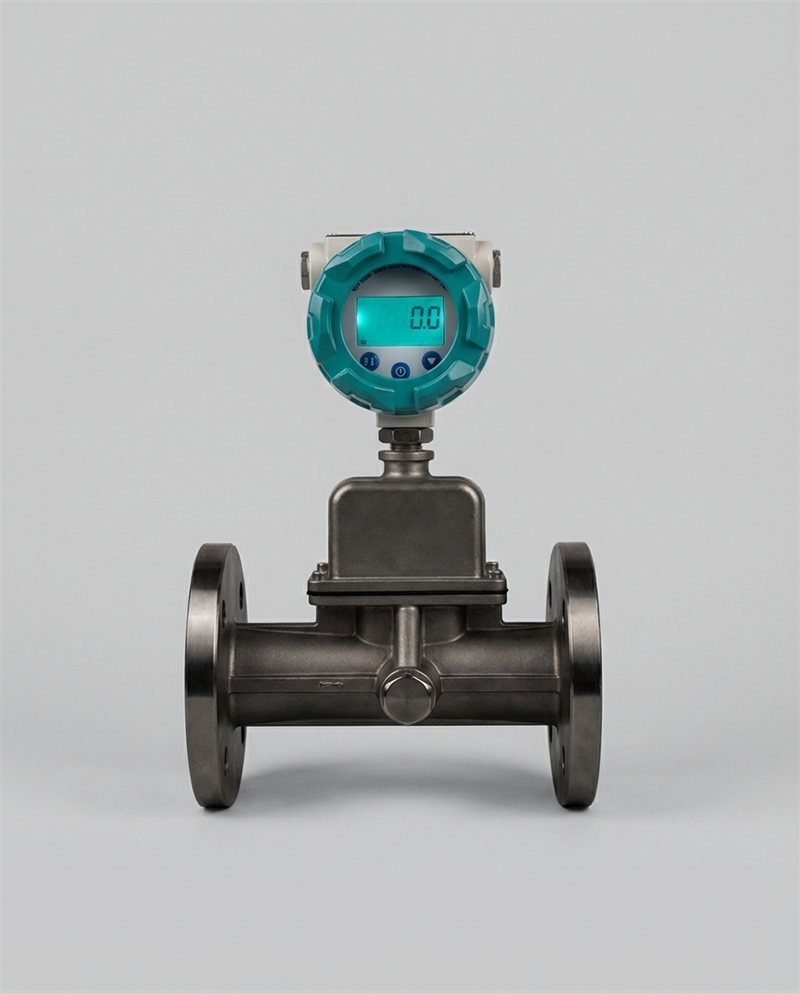
To buy the right Venturi tube flow meter, start by defining your fluid type, flow rate range, pipe diameter, operating pressure and temperature, and required accuracy — then match those parameters to a Venturi design that meets ISO 5167-4 specifications for your beta ratio and Reynolds number range. The Venturi meter you select should recover 80–95% of the differential pressure it creates, have materials compatible with your process fluid, and come from a manufacturer that provides calibration certificates and long-term support.
Getting this decision right matters because a Venturi tube flow meter is not a consumable — it is a permanent piece of infrastructure built into your pipeline. A properly sized and installed Venturi can operate for 20–30 years without replacement, maintaining its calibrated accuracy of ±0.5–1.0% of actual rate throughout that entire service life. A poorly selected one — wrong beta ratio, wrong material, wrong pressure class — can mean rework costs exceeding $10,000 on a single installation, plus ongoing measurement errors that ripple through your process control, billing, and compliance systems.
This guide covers the essential steps: understanding what a Venturi meter is and how it works, defining your selection criteria, comparing Venturi against competing technologies, evaluating manufacturers, and avoiding the most common purchasing mistakes. Where relevant, we reference practical guidance from Jade Ant Instruments, whose ISO-certified manufacturing facility produces differential pressure flow elements including Venturi tubes, orifice plates, and flow nozzles with OEM/ODM customization for pipe sizes from 1″ to 60″ and pressure ratings up to 2,500 PSI.

What Is a Venturi Tube Flow Meter?
How Venturi Flow Meters Work
A Venturi tube flow meter measures fluid flow by applying Bernoulli’s principle inside a carefully shaped constriction. As fluid enters the Venturi’s converging cone, the cross-sectional area decreases, the fluid accelerates, and — per Bernoulli’s equation — the static pressure drops. Two pressure taps, one at the upstream pipe section and one at the throat (the narrowest point), measure this pressure difference. The differential pressure (ΔP) is directly proportional to the square of the flow rate. A differential pressure transmitter converts ΔP into a calibrated flow rate signal (4-20 mA, HART, Modbus).
The fundamental flow equation is:
Where: Q = volumetric flow rate; C = discharge coefficient (0.95–0.995 for a classical Venturi per ISO 5167-4); E = velocity of approach factor = 1/√(1−β⁴); d = throat diameter; ΔP = differential pressure; ρ = fluid density; β = d/D (throat-to-pipe diameter ratio).
Key Features and Design
A properly designed Venturi tube has three critical sections. The converging cone (inlet) smoothly narrows the flow path at a taper angle of 10.5° ± 0.5° per ISO 5167-4, compressing the fluid and creating the measurable pressure drop. The throat is the narrowest section — its diameter determines the beta ratio (β = d/D), which is the single most important sizing parameter. The diverging cone (diffuser) gradually expands the flow path back toward the original pipe diameter at a taper angle of 7° to 15°, converting the kinetic energy of the accelerated fluid back into pressure — this is what gives the Venturi its characteristic high pressure recovery of 80–95%, compared to only 40–60% for an orifice plate.
The three main Venturi types defined by ISO 5167-4 are the classical Venturi (cast or welded, with rough-cast or machined convergent and a machined throat), the machined Venturi (entirely machined from a single piece, for pipe sizes 2″–10″), and the rough-welded Venturi (fabricated from sheet metal, for larger pipe sizes). Each type has a defined discharge coefficient range and Reynolds number applicability.
Common Venturi Flow Meter Applications
Venturi meters are specified where high accuracy, low permanent pressure loss, and long service life are priorities — and where the upfront investment is justified by decades of maintenance-free operation. Key applications include high-pressure steam metering in power plants (where the 80–95% pressure recovery saves substantial pumping energy over the life of the plant), natural gas custody transfer in transmission pipelines, feedwater flow measurement in boiler systems, cooling water monitoring in industrial facilities, crude oil and refined product metering in refineries, and chemical process flow control where the Venturi’s smooth internal geometry resists fouling by viscous or particulate-laden fluids.
The BCST Group’s application guide notes that Venturi meters are particularly favored in wet gas and multiphase flow applications — such as natural gas production with entrained liquids — because the smooth convergent-divergent profile handles mixed-phase flow more predictably than a sharp-edged orifice plate.

Key Criteria for Choosing a Venturi Flow Meter
Define Application and Medium
The first question is: what fluid are you measuring, and under what conditions? The answer determines nearly every downstream selection decision — material, beta ratio, pressure class, and even whether a Venturi is the right technology at all. Venturi meters work on all single-phase and most two-phase fluids: clean water, raw sewage, steam (saturated and superheated), natural gas, compressed air, crude oil, refined products, and chemical process liquids. The minimum fluid conductivity requirement of electromagnetic flow meters does not apply — Venturi meters are indifferent to electrical conductivity, making them a natural fit for hydrocarbons, gases, and non-conductive chemicals.
Document the following for your application: fluid type, operating temperature range, operating pressure range, fluid density and viscosity (at operating conditions), and whether the flow contains suspended solids, entrained gas, or multiple phases. These parameters feed directly into the sizing and material selection steps below.
Flow Rate and Sizing for Precise Flow Measurement
Venturi meter sizing revolves around the beta ratio (β = d/D), which is the ratio of throat diameter to pipe diameter. ISO 5167-4 specifies a β range of 0.30 to 0.75 for classical Venturi tubes in pipe diameters from 100 mm (4″) to 800 mm (32″). The beta ratio determines the differential pressure produced at a given flow rate — a smaller beta (more constriction) produces a higher ΔP and thus better signal-to-noise at low flows, but also creates more permanent pressure loss. A larger beta produces less ΔP, which reduces energy loss but may give insufficient measurement signal at minimum flow.
The sizing goal is to select a beta ratio that produces a ΔP within the range of your differential pressure transmitter (typically 0–250 inH₂O or 0–62 kPa) at your maximum flow rate, while still producing a readable ΔP (usually >10% of the transmitter span) at your minimum flow rate. This gives you a turndown ratio of approximately 3:1 to 5:1 — which is a fundamental limitation of all differential pressure flow meters. If your application requires a wider turndown (e.g., 10:1 or higher), consider stacked DP transmitters, a different technology (e.g., ultrasonic or Coriolis), or contact an applications engineer at Jade Ant Instruments for multi-range Venturi solutions.
How Beta Ratio Affects Permanent Pressure Loss
Permanent Pressure Loss as % of Measured ΔP — Venturi vs Orifice
Venturi β=0.30
Venturi β=0.50
Venturi β=0.75
Orifice β=0.50
Orifice β=0.75
Figure: Permanent pressure loss expressed as a percentage of measured differential pressure. Venturi meters recover 80–95% of ΔP; orifice plates recover only 40–60%.
Material and Compatibility
The Venturi body, throat, and pressure taps must be made from materials that withstand your process fluid and operating conditions for the planned service life (typically 20+ years). Common material specifications include carbon steel (A516 Gr.70) for general-purpose water and steam service; 304/316 stainless steel for corrosive chemicals, food-grade, and pharmaceutical applications; duplex stainless steel (2205/2507) for chloride-bearing fluids; Hastelloy C-276 for concentrated acids; and Inconel 625 for high-temperature, high-pressure gas applications. The pressure taps should match or exceed the corrosion resistance of the main body, as they are the most vulnerable point for blockage and erosion.
Accuracy and Performance Needs
An uncalibrated classical Venturi tube manufactured per ISO 5167-4 achieves a discharge coefficient uncertainty of ±0.7% to ±1.5% at Reynolds numbers above 200,000. A laboratory-calibrated Venturi can achieve ±0.25% to ±0.5% of actual flow rate — making it one of the most accurate differential pressure devices available. Specify calibration if your application requires accuracy better than ±1% (custody transfer, fiscal metering, boiler efficiency calculations). For general process control where ±1–2% is acceptable, an uncalibrated Venturi per ISO 5167 is sufficient and significantly less expensive.
Installation and Environment
Venturi meters require straight pipe runs upstream and downstream to ensure a fully developed, undistorted velocity profile at the measurement section. ISO 5167-4 specifies a minimum of 5.5D upstream and 4D downstream from the nearest disturbance (elbow, valve, tee) — significantly less than the 10–20D required by orifice plates, and one of the Venturi’s practical advantages in space-constrained installations. Outdoor installations must account for ambient temperature effects on the transmitter electronics and potential freezing of pressure sensing lines — heat tracing and insulation of impulse tubing is standard practice in cold climates.
Comparing Venturi Flow Meters with Other Flowmeter Types
Venturi vs. Orifice Plate Flowmeters
The orifice plate is the world’s most installed flow meter — cheaper upfront, simpler to fabricate, and easier to replace. A standard orifice plate for a 6-inch line costs $200–$800, while a Venturi for the same line costs $2,000–$8,000. But the orifice plate’s permanent pressure loss is 40–60% of the measured ΔP, compared to the Venturi’s 5–20%. On a 12-inch steam line operating 8,760 hours/year, that pressure difference can cost $3,000–$15,000/year in additional compressor or pump energy — meaning the Venturi pays for itself in 1–3 years through energy savings alone, then delivers free savings for the remaining 17–27 years of its service life. Orifice plates also wear at their sharp leading edge, degrading the discharge coefficient by 1–3% over 5–10 years in high-velocity or abrasive service, requiring periodic replacement. A Venturi’s smooth geometry resists erosion and maintains its calibration indefinitely under normal conditions.
Venturi vs. Ultrasonic Flowmeters
Ultrasonic flow meters (transit-time and Doppler types) are non-intrusive — they create zero pressure drop and can be installed as clamp-on devices without cutting the pipe. A quality transit-time ultrasonic meter achieves ±0.5–1.0% accuracy on clean liquids. However, ultrasonic meters struggle with entrained gas, heavy solids, and multiphase flow — conditions where the acoustic signal path is disrupted. A Venturi handles wet steam, multiphase hydrocarbons, and slurry-laden fluids with predictable performance. Ultrasonic meters also require power and electronics at the measurement point, whereas a Venturi is a passive device with no electrical components at the pipe — only the remote DP transmitter requires power. For high-temperature steam (400°C+) or high-pressure gas (Class 1500+), the Venturi’s all-metal construction and absence of acoustic transducers at the pipe wall make it the more robust choice.
When to Choose a Venturi Tube Flow Meter
Choose a Venturi when your application combines several of the following: high operating pressure or temperature; need for minimal permanent pressure loss (energy-critical applications); dirty, abrasive, or multiphase fluids; requirement for a passive device with no electronics at the pipe; need for extremely long service life (20+ years) without calibration drift; regulatory or standards compliance requiring ISO 5167 traceability; or large pipe diameters (12″–60″) where the cost of a Coriolis or magnetic meter would be prohibitive.
| Parameter | Venturi Tube | Orifice Plate | Ultrasonic (Transit-Time) |
|---|---|---|---|
| Measurement Principle | Differential pressure (Bernoulli) | Differential pressure (Bernoulli) | Acoustic transit time |
| Accuracy (Uncalibrated) | ±0.7–1.5% | ±0.6–2.0% | ±1.0–2.0% (clamp-on) |
| Accuracy (Calibrated) | ±0.25–0.5% | ±0.5–1.0% | ±0.5–1.0% (wetted) |
| Permanent Pressure Loss | 5–20% of ΔP | 40–60% of ΔP | Zero (non-intrusive) |
| Turndown Ratio | 3:1 to 5:1 | 3:1 to 5:1 | 20:1 to 100:1 |
| Straight Run Required | 5.5D up / 4D down | 10–44D up / 5D down | 10–20D up / 5D down |
| Dirty / Abrasive Fluids | Good (smooth geometry) | Poor (sharp edge erodes) | Poor (signal disruption) |
| Multiphase / Wet Gas | Good | Fair | Poor |
| Max Temperature | 1,500 °F (815 °C) | 1,500 °F (815 °C) | 400 °F (200 °C) typical |
| Max Pressure | 9,000 PSI (620 bar) | 6,000 PSI (414 bar) | 1,500 PSI (103 bar) typical |
| Typical Cost (6″ line) | $2,000–$8,000 | $200–$800 | $3,000–$12,000 |
| Service Life | 20–30+ years | 5–15 years (edge wear) | 10–15 years (electronics) |
| ISO Standard | ISO 5167-4 | ISO 5167-2 | ISO 17089 |
Table: Head-to-head comparison of Venturi tube, orifice plate, and ultrasonic flow meters. Data sourced from ISO 5167, DwyerOmega, BCST Group, and Badger Meter specifications.

Practical Buying Tips for Venturi Tube Flow Meters
Evaluating Manufacturers and Certifications
A Venturi tube is only as good as the precision of its internal geometry. The converging cone angle, throat diameter, surface finish, and pressure tap alignment must conform to ISO 5167-4 tolerances — deviations of even 0.5° in cone angle or 0.1 mm in throat diameter shift the discharge coefficient and introduce measurement bias. When evaluating manufacturers, verify the following: ISO 9001 quality management certification; ability to supply Venturi tubes manufactured and inspected per ISO 5167-4 (or ASME PTC 6 for power plant applications); material certificates (MTR/mill test reports) traceable to ASTM or EN standards; hydrostatic test documentation; and optional wet-calibration certificates from an accredited flow laboratory (ISO 17025).
Ask for reference installations in your industry. A manufacturer that has delivered 200 Venturi tubes to power plants in the last 5 years has a different track record than one that has delivered 5. Jade Ant Instruments’ manufacturer evaluation framework provides a structured scoring method for assessing vendor capabilities across technology, accuracy, total cost of ownership, and after-sales support.
Cost Considerations and Long-Term Value
The purchase price of a Venturi tube is the smallest component of its total cost of ownership (TCO). A 6-inch carbon steel Venturi tube costs $2,000–$5,000 at purchase. Installation (welding, alignment, impulse tubing, DP transmitter) adds $3,000–$8,000. But because the Venturi has no moving parts, no electronics at the pipe, and no consumable elements, the ongoing maintenance cost is near zero — periodic inspection of pressure taps and impulse lines is the only recurring task. Over a 20-year life, the TCO of a Venturi is often lower than an orifice plate (which requires periodic replacement of the plate and gaskets) or an ultrasonic meter (which requires periodic transducer replacement and electronics recalibration).
The energy savings from the Venturi’s high pressure recovery are an additional economic benefit that is frequently undervalued at the purchasing stage. On a 12-inch natural gas transmission line operating at 600 PSI with a flow rate of 50 MMSCFD, the permanent pressure loss difference between a Venturi (10% of ΔP) and an orifice plate (55% of ΔP) translates to measurable compression energy savings that compound year after year.
Venturi Meter Total Cost of Ownership Breakdown (20-Year Life)
After-Sales Support and Resources
A Venturi tube rarely fails — but the DP transmitter, impulse tubing, and process connections around it need periodic attention. Before purchasing, confirm that the manufacturer provides technical support for impulse line sizing and routing, replacement parts for condensate pots and drain valves, recalibration services (or guidance for in-situ verification using a reference meter), and engineering documentation (flow coefficient tables, sizing calculations, installation drawings). Manufacturers like Jade Ant Instruments bundle these support services with their differential pressure flow element products, reducing the risk of orphaned installations where the original supplier is unreachable years later.
Common Mistakes When Buying a Flowmeter
Overlooking Application Details
The most expensive mistake is specifying a Venturi meter based on pipe size alone without accounting for the actual flow range. A 6-inch pipe does not always need a 6-inch Venturi. If the actual flow rate uses only 30% of the pipe’s capacity (common in systems designed for future expansion), a Venturi sized for the full pipe diameter will produce an unreadably low ΔP at normal operating flows — resulting in poor accuracy and unstable readings. The correct approach is to size the Venturi’s beta ratio to the actual flow range, not the pipe diameter. This may mean specifying a smaller-bore Venturi with reducers — a configuration that adds cost upfront but delivers accurate measurement from day one.
Ignoring Installation Needs
A Venturi meter requires straight pipe upstream and downstream of the element to ensure a fully developed velocity profile. ISO 5167-4 specifies minimum straight-run requirements that vary by the type of upstream disturbance (elbow, reducer, valve, etc.). Ignoring these requirements — or worse, discovering them after the piping is fabricated — leads to measurement errors of 2–5% or more that no amount of transmitter calibration can correct. Before ordering, create an isometric drawing of the installation location and verify that the required straight runs are available. If not, consider a flow conditioner upstream of the Venturi, or relocate the measurement point.
Equally critical is proper impulse line design. Impulse lines connect the Venturi’s pressure taps to the DP transmitter, and their routing determines whether the measurement is reliable or plagued by bubbles, condensate, and zero drift. For steam service, impulse lines should slope consistently downward from the taps to the transmitter to ensure condensate legs remain filled. For gas service, they should slope upward to prevent liquid accumulation. Jade Ant Instruments’ flow element installation documentation includes impulse line routing guidelines for each service type.
Neglecting Maintenance Planning
While the Venturi body itself is nearly maintenance-free, the surrounding infrastructure is not. DP transmitters drift over time and need periodic recalibration (annually or semi-annually in most plants). Impulse lines can become plugged with scale, debris, or frozen condensate. Isolation valves on the impulse lines should be tested regularly to ensure they can be closed for transmitter maintenance without a process shutdown. Failing to plan for these routine tasks leads to deferred maintenance, which leads to measurement drift, which leads to billing disputes, compliance violations, or process upsets.
Watch: How a Venturi Flow Meter Works — Animated Explanation
Buying the right Venturi tube flow meter comes down to a disciplined selection process: define the fluid, the flow rate range, the operating conditions, and the accuracy requirement — then size the beta ratio to produce a measurable ΔP across your actual operating range (not just the pipe’s theoretical capacity). Match the body material to the fluid chemistry and the pressure/temperature class to the process conditions. Verify that the manufacturer builds to ISO 5167-4 and can supply calibration certificates and material traceability documentation. Confirm that the installation location provides the required straight pipe runs. And evaluate total cost of ownership — not just the purchase price — to understand why a Venturi’s higher upfront cost almost always delivers lower lifecycle cost than an orifice plate, especially in energy-intensive applications like steam and compressed gas.
If you compare the Venturi against orifice plates and ultrasonic meters on a level playing field — factoring in permanent pressure loss, maintenance burden, service life, and dirty/multiphase fluid handling — the Venturi wins decisively for high-value, long-life installations. It loses on turndown ratio (3–5:1 vs. 20–100:1 for ultrasonic) and on initial cost versus orifice plates, so it is not the right choice for every application. But for the applications where it fits — high-pressure steam, natural gas custody transfer, large-diameter water mains, and corrosive or abrasive chemical flows — nothing else matches its combination of accuracy, durability, and energy efficiency.
For complex applications or custom sizing requirements, Jade Ant Instruments‘ engineering team provides application-specific Venturi sizing calculations, material compatibility guidance, and complete flow element packages (Venturi tube + DP transmitter + impulse tubing + installation hardware) shipped as a pre-engineered kit ready for field installation. Their 5-factor flow meter selection guide can help you determine whether a Venturi, orifice plate, or alternative technology is the optimal fit for your specific process.
Frequently Asked Questions (FAQ)
1. What is a Venturi tube flow meter and how does it work?
A Venturi tube flow meter is a differential pressure device that measures fluid flow rate by forcing the fluid through a smooth, gradually narrowing constriction (the converging cone), which accelerates the fluid and drops the static pressure per Bernoulli’s principle. Pressure taps at the upstream section and at the throat (narrowest point) measure the pressure difference (ΔP), which is proportional to the square of the flow rate. A differential pressure transmitter converts this ΔP into a calibrated flow signal. The diverging cone downstream gradually decelerates the fluid and recovers 80–95% of the pressure drop, making the Venturi the most energy-efficient DP flow meter available.
2. How accurate is a Venturi tube flow meter?
An uncalibrated classical Venturi tube manufactured per ISO 5167-4 achieves an uncertainty of ±0.7% to ±1.5% of actual flow rate at Reynolds numbers above 200,000. A laboratory-calibrated Venturi can achieve ±0.25% to ±0.5% of actual rate. These accuracy levels are maintained over decades because the Venturi has no moving parts and no sharp edges to erode — the discharge coefficient remains stable as long as the internal surface condition does not change significantly.
3. What is the beta ratio and why does it matter?
The beta ratio (β) is the ratio of the Venturi throat diameter to the upstream pipe diameter (β = d/D). It determines how much the flow is constricted, which controls the differential pressure produced at a given flow rate. ISO 5167-4 specifies a β range of 0.30 to 0.75 for classical Venturi tubes. A smaller β produces a higher ΔP (better measurement signal) but more permanent pressure loss; a larger β produces less ΔP and less energy loss. Correct beta ratio selection — matching the ΔP to your transmitter span across your actual flow range — is the single most important sizing decision when buying a Venturi.
4. How much pressure does a Venturi meter lose permanently?
The Venturi’s permanent pressure loss is typically 5–20% of the measured differential pressure, depending on the beta ratio and the diffuser cone angle. This is dramatically lower than an orifice plate’s 40–60% permanent loss. For example, if a Venturi produces 100 inH₂O of ΔP at max flow, only 5–20 inH₂O is permanently lost. An orifice plate producing the same 100 inH₂O would permanently lose 40–60 inH₂O. Over years of continuous operation, this difference translates directly into pumping or compression energy savings.
5. What are the installation requirements for a Venturi flow meter?
ISO 5167-4 requires a minimum of 5.5 pipe diameters (5.5D) of straight run upstream and 4 pipe diameters (4D) downstream of the nearest flow disturbance. These requirements are shorter than orifice plates (10–44D upstream) because the Venturi’s smooth convergent section partially conditions the flow profile. The meter must be concentrically aligned with the pipe — off-center installation creates flow asymmetry and measurement error. Gaskets must not protrude into the flow path. Impulse lines must be properly sloped and free of traps.
6. When should I choose a Venturi over an orifice plate?
Choose a Venturi over an orifice plate when: (a) permanent pressure loss must be minimized (steam, compressed gas, or any energy-intensive application); (b) the fluid is dirty, abrasive, or viscous (the Venturi’s smooth geometry resists fouling and erosion far better than an orifice plate’s sharp edge); (c) you need a service life exceeding 15 years without element replacement; (d) you need shorter straight-run requirements (5.5D vs. 10–44D); or (e) the application involves multiphase or wet gas flow. Choose the orifice plate when budget is the primary constraint, the application is clean and non-abrasive, and the energy cost of higher permanent pressure loss is acceptable.
7. What is the typical cost of a Venturi tube flow meter?
A standard carbon steel Venturi for a 6-inch line costs approximately $2,000–$5,000 for the flow element alone. Stainless steel and exotic alloy versions cost more — $5,000–$15,000+ depending on material and pressure class. For large-diameter lines (24″–60″), a custom-fabricated Venturi can cost $15,000–$50,000+. Installation (welding, alignment, impulse tubing, DP transmitter, commissioning) adds $3,000–$15,000 depending on complexity. However, the 20-year total cost of ownership is often lower than competing technologies because maintenance cost is near zero and the element never needs replacement.
8. What materials are available for Venturi tube construction?
Common materials include carbon steel (ASTM A516 Gr.70 for general water and steam), 304 and 316 stainless steel (corrosive chemicals and food-grade), duplex stainless steel 2205/2507 (chloride service), Hastelloy C-276 (concentrated acids), Inconel 625 (high-temperature gas), and titanium (seawater and aggressive chloride environments). The material choice must account for both the process fluid chemistry and the operating temperature/pressure conditions over the planned service life.
9. How does Jade Ant Instruments support Venturi flow meter selection?
Jade Ant Instruments is an ISO-certified manufacturer of differential pressure flow elements including Venturi tubes, orifice plates, and flow nozzles. Their engineering team provides application-specific sizing calculations (beta ratio, ΔP range, Reynolds number verification), material compatibility recommendations, and complete engineered packages that include the flow element, DP transmitter, impulse tubing, and installation hardware. They support OEM/ODM customization for non-standard pipe sizes, pressure classes, and material specifications, and provide calibration certificates traceable to ISO 17025-accredited laboratories.
10. Can a Venturi flow meter measure gas, steam, and liquid?
Yes. Venturi tubes are one of the most versatile flow measurement technologies available — they measure clean liquids (water, chemicals, hydrocarbons), dirty liquids (slurries, raw sewage), gases (natural gas, air, CO₂, hydrogen), steam (saturated and superheated), and multiphase fluids (wet gas, oil-water mixtures). The same physical principle (Bernoulli/ΔP) applies to all fluid types; the sizing calculation simply uses the appropriate fluid density and viscosity at operating conditions. For compressible fluids (gases and steam), an expansion factor (ε) is included in the flow equation to account for the density change through the constriction.
Further Reading & Resources
Flow Nozzle Meter Advantages and Disadvantages — Jade Ant Instruments
How to Read Flowmeter Datasheets — Jade Ant Instruments
Orifice, Nozzle, and Venturi Flow Meters — Engineering Toolbox
Venturi Effect — Wikipedia
Factors That Impact Venturi Meter Accuracy — Primary Flow Signal
The Science and Art of Venturi Flow Meter Design — BCST Group