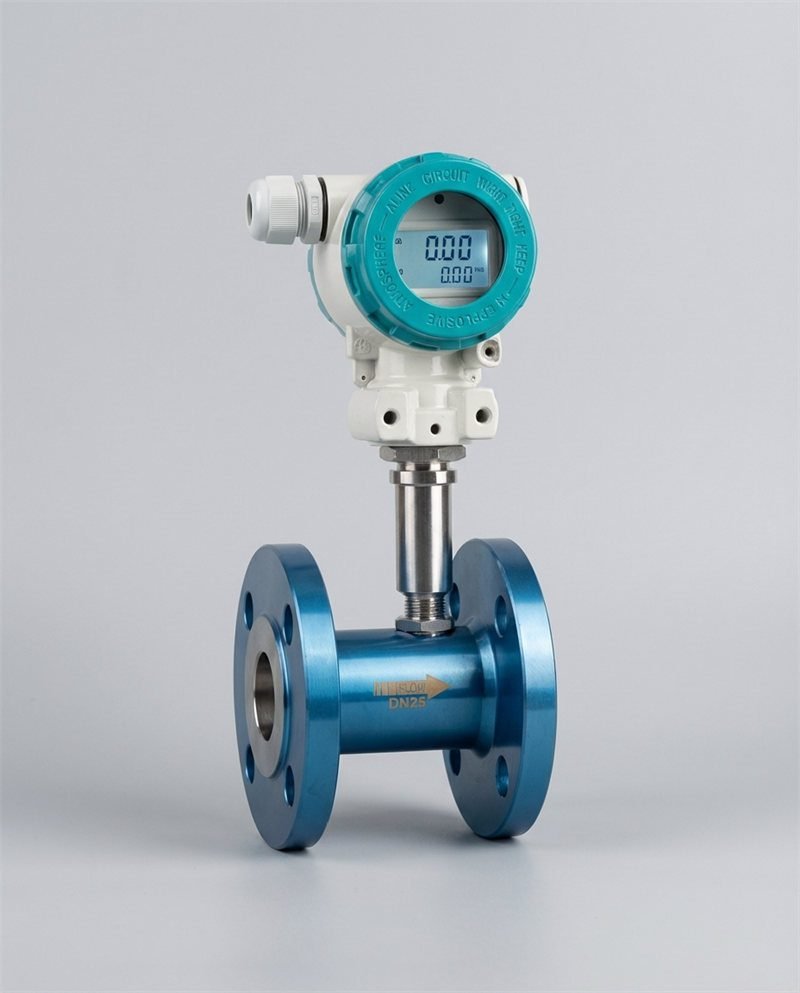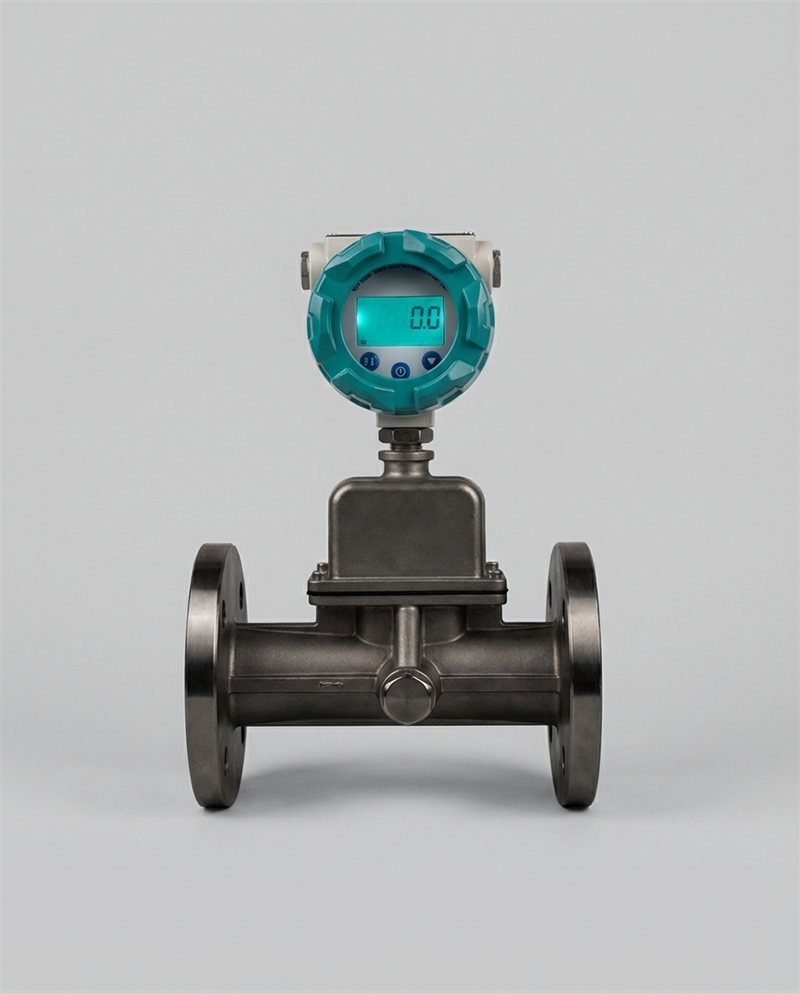
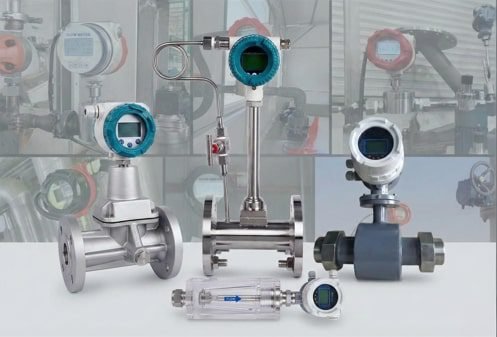
What is the science behind flow meter measurements? At its core, every flow meter relies on one or more fundamental physical principles — fluid dynamics, thermodynamics, and electromagnetic induction — to convert the invisible movement of a fluid into a quantifiable measurement. Whether a meter uses the pressure drop across an orifice plate, the voltage induced by conductive fluid moving through a magnetic field, or the Coriolis force acting on a vibrating tube, the underlying science dictates how accurately and reliably that meter will perform in a given application.
Understanding these principles is not merely academic. It is the difference between selecting a meter that delivers years of trouble-free accuracy and choosing one that drifts, fails, or produces readings that no one trusts. This article clarifies how flow meters work, the science involved, and their real-world significance across industries from water treatment to oil refining and pharmaceutical manufacturing. At Jade Ant Instruments, we’ve seen firsthand how a strong grasp of measurement science leads to better instrument selection, fewer commissioning problems, and lower lifetime costs.
How Do Flow Meters Work
Fluid Dynamics Principles
Fluid dynamics is the branch of physics that describes how liquids and gases behave when they move. Every flow meter, regardless of its specific technology, operates within the framework of fluid dynamics. The most fundamental concept is the conservation of mass — in a closed piping system, the mass of fluid entering a section of pipe per unit time must equal the mass leaving it. This is expressed by the continuity equation:
A₁ × V₁ = A₂ × V₂
Where A represents the cross-sectional area of the pipe and V represents the fluid velocity. When the pipe narrows, the velocity must increase to maintain the same mass flow rate — and this increase in velocity is accompanied by a decrease in pressure, as described by Bernoulli’s equation. This relationship is the scientific foundation for an entire family of flow meters: differential pressure meters, including orifice plates, venturi tubes, and flow nozzles.
Bernoulli’s equation states that for an incompressible, steady-state flow with negligible friction:
P₁ + ½ρV₁² + ρgh₁ = P₂ + ½ρV₂² + ρgh₂
Where P is static pressure, ρ is fluid density, V is velocity, g is gravitational acceleration, and h is elevation. In a differential pressure flow meter, the restriction (orifice plate or venturi throat) creates a predictable pressure drop that is proportional to the square of the flow velocity — measure the pressure drop, and you can calculate the flow rate. This principle, first applied to flow measurement in the early 18th century, remains one of the most widely used methods in industrial instrumentation today.
The Reynolds number is another critical fluid dynamics concept for flow measurement. It characterizes whether flow is laminar (smooth, orderly layers) or turbulent (chaotic, mixing), and it directly affects the accuracy of many meter types. Most flow meters are calibrated and specified for turbulent flow conditions (Reynolds numbers above approximately 4,000), which is the norm in most industrial piping. Understanding where your application falls on the Reynolds number spectrum is essential for predicting meter performance.
Thermodynamics in Flow Measurement
Thermodynamic principles come into play in several flow measurement technologies. Thermal mass flow meters, for example, operate by measuring the heat transfer from a heated sensor element to the flowing fluid. The rate of heat dissipation is directly related to the mass flow rate of the fluid — faster flow carries away more heat. This principle allows thermal meters to measure mass flow directly, without the need for separate temperature and pressure compensation that volumetric meters require.
Thermodynamics also governs the behavior of gases in flow measurement. The ideal gas law (PV = nRT) describes the relationship between pressure, volume, temperature, and the amount of gas. Because gas density changes significantly with pressure and temperature, gas flow measurements must be corrected to standard or normal conditions (typically 15°C and 101.325 kPa, or 20°C and 101.325 kPa depending on the standard) to be meaningful. This is why gas flow meters often incorporate integrated temperature and pressure sensors along with real-time compensation algorithms — a feature that companies like Jade Ant Instruments build into their industrial flow metering solutions.
Electromagnetic Induction (Faraday’s Law)
Michael Faraday’s 1831 discovery that a conductor moving through a magnetic field induces a voltage became the basis for one of the most important flow measurement technologies: the electromagnetic flow meter (also called a mag meter). Faraday’s Law, as applied to flow measurement, is mathematically expressed as:
E = k × B × D × V
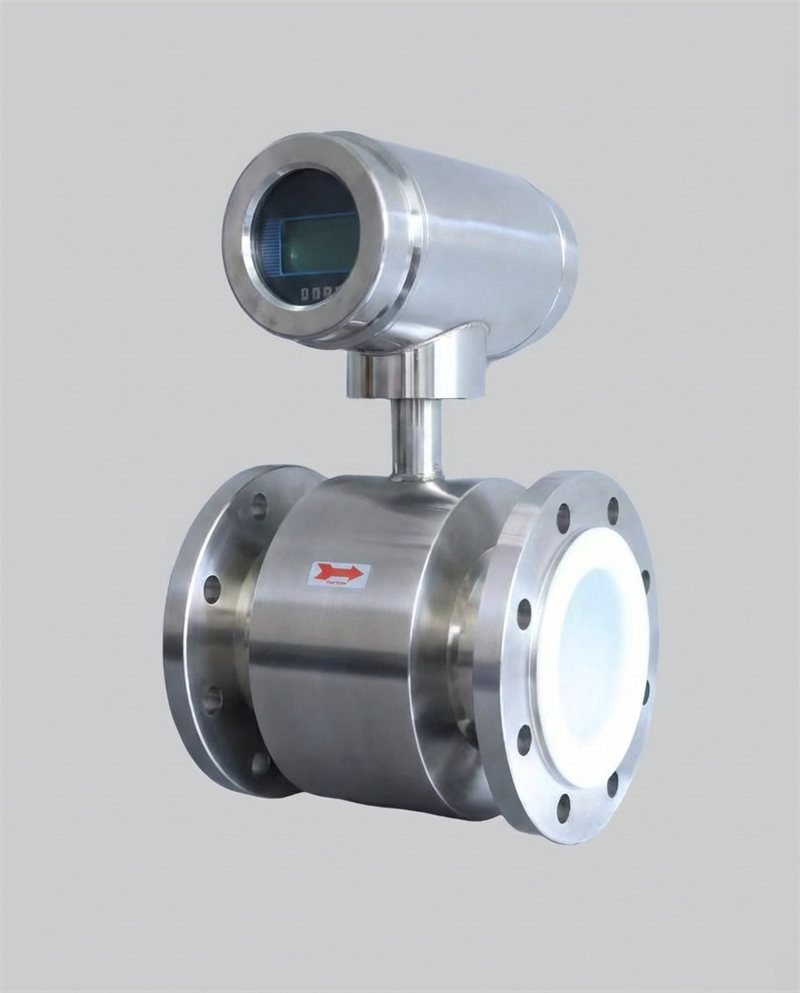
Where E is the induced voltage, k is a proportionality constant, B is the magnetic field strength, D is the pipe diameter, and V is the average fluid velocity. The conductive fluid itself acts as the moving conductor. As it passes through the magnetic field generated by coils in the meter body, a voltage is induced that is directly proportional to the fluid velocity. Electrodes mounted flush with the pipe wall detect this voltage and send it to the transmitter for processing.
The elegance of this principle lies in its simplicity and directness: the induced voltage is linearly proportional to velocity, producing a measurement that is inherently more accurate over a wider range than the square-root relationship of differential pressure meters. Electromagnetic flow meters have no moving parts, create no pressure drop, and can handle conductive fluids ranging from clean water to corrosive chemicals to wastewater with suspended solids — which is why they are among the most widely deployed flow meters in the world. According to Emerson’s theory of magnetic flow meters, accuracy of ±0.5% of flow rate or better is standard for modern mag meters.
Watch: Flow Meters Explained — Types, Working & Applications
Video credit: The Engineering Mindset — Flow Meters Explained
Flow Meter Types
Differential Pressure Meters
Differential pressure (DP) meters are the oldest and most widely installed flow measurement technology in the world. They work by introducing a known restriction into the flow path — an orifice plate, venturi tube, flow nozzle, or pitot tube — which creates a pressure drop proportional to the square of the volumetric flow rate. A differential pressure transmitter measures this drop and, combined with the known geometry of the restriction and the fluid’s density, calculates the flow rate.
Orifice plates are the most common variant: a thin plate with a precisely machined hole is installed between pipe flanges. They are inexpensive, well-understood, and covered by extensive standards (ISO 5167). However, they create a permanent pressure loss (typically 40–90% of the measured differential), require straight pipe runs upstream and downstream for accuracy, and have a limited turndown ratio of approximately 3:1 to 5:1. Venturi meters recover more pressure (only 10–25% permanent loss) and handle dirtier fluids but are bulkier and more expensive. Flow nozzles and pitot tubes offer additional options for specific applications.
Positive Displacement Meters
Positive displacement (PD) meters are the only flow meter type that directly measures volume. They work by repeatedly filling and emptying a precisely known volume of fluid. Mechanical elements — rotating gears, oscillating pistons, nutating disks, or rotary vanes — divide the flow stream into discrete, measured increments. Each rotation or cycle corresponds to a known volume, and counting the cycles over time yields the flow rate.
PD meters are inherently accurate (typically ±0.1% to ±0.5% of reading), perform well at low flow rates, and are unaffected by flow profile disturbances — they do not require straight pipe runs. This makes them the standard for custody transfer of petroleum products, LPG, and other high-value fluids. Their primary limitations are that they have moving parts subject to wear, create a pressure drop, cannot handle fluids with suspended solids (which damage the close-tolerance internals), and have upper flow rate limits compared to other technologies.
Electromagnetic Flow Meters
Electromagnetic flow meters, based on Faraday’s Law as described above, are one of the most versatile and widely used meter types for conductive liquid applications. They offer a linear measurement signal, excellent accuracy (±0.2% to ±0.5% of reading), no moving parts, no pressure drop, and a wide turndown ratio of up to 1000:1. They handle clean water, wastewater, chemicals, slurries, food products, and pharmaceutical fluids with equal ease, provided the fluid has a minimum conductivity of approximately 5 µS/cm.
The primary limitations are that electromagnetic flow meters cannot measure non-conductive fluids (hydrocarbons, deionized water, gases) and that electrode fouling can occur in some applications. Modern mag meters address the fouling issue with pulsed DC excitation, electrode cleaning systems, and advanced diagnostics. Jade Ant Instruments manufactures electromagnetic flow meters designed for demanding industrial environments, with robust lining materials and IP-rated enclosures suitable for both indoor and outdoor installations.
Ultrasonic Flow Meters
Ultrasonic flow meters use high-frequency sound waves to measure fluid velocity. The two primary technologies are transit time and Doppler. Transit time meters send ultrasonic pulses between two transducers and measure the time difference between upstream and downstream signals — the difference is proportional to fluid velocity. Doppler meters measure the frequency shift of ultrasonic waves reflected off particles or bubbles in the fluid.
The defining advantage of clamp-on ultrasonic meters is their completely non-invasive installation: sensors mount on the outside of the pipe with no cutting, welding, or process interruption. Transit time meters achieve ±0.5% to ±1.0% accuracy in clean fluids, while Doppler meters are better suited for dirty or aerated fluids at ±2% to ±5% accuracy. Both types have no moving parts, create no pressure drop, and can be installed on a wide range of pipe sizes and materials. For a deeper comparison, see the Jade Ant Instruments ultrasonic flow meter product page.
Coriolis Flow Meters
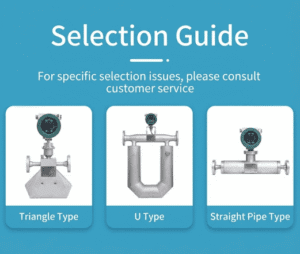
Coriolis flow meters measure mass flow directly by exploiting the Coriolis effect — the apparent deflection of a moving object within a rotating reference frame. In practice, the meter contains one or two vibrating tubes through which the fluid flows. As fluid moves through the vibrating tube, the Coriolis force causes the tube to twist proportionally to the mass flow rate. Sensors detect the phase shift between the inlet and outlet of the vibrating tube, and this shift is directly proportional to mass flow.
Coriolis meters are the gold standard for accuracy, routinely achieving ±0.1% to ±0.2% of reading for liquids and ±0.35% to ±0.5% for gases. They simultaneously measure mass flow, density, and temperature, making them invaluable for custody transfer, batch dosing, and quality control applications. Their primary drawbacks are high cost, sensitivity to entrained gas in some designs, significant pressure drop in some tube geometries, and size/weight limitations for larger pipe diameters. According to Emerson, Coriolis meters are increasingly used across oil and gas, chemical, food and beverage, and pharmaceutical industries.
Turbine Flow Meters
Turbine flow meters use a multi-bladed rotor suspended in the flow stream. The flowing fluid causes the rotor to spin at a rate proportional to the fluid velocity. A magnetic pickup or Hall-effect sensor detects each blade pass and generates a pulse output — the pulse frequency is directly proportional to the volumetric flow rate. Turbine meters offer excellent accuracy (±0.15% to ±0.5% of reading), wide turndown ratios (10:1 to 100:1), and fast response times.
They are widely used for custody transfer of clean, low-viscosity fluids such as hydrocarbons, water, and cryogenic liquids. Their primary limitation is that they have a moving part (the rotor) that is subject to wear, particularly in fluids with suspended solids or high viscosity. Upstream flow conditioning is critical — turbine meters are very sensitive to swirl and asymmetric flow profiles, typically requiring 10–20 diameters of straight pipe upstream.
| Flow Meter Type | Scientific Principle | Typical Accuracy | Moving Parts | Pressure Drop | Best Applications |
|---|---|---|---|---|---|
| Differential Pressure | Bernoulli’s equation (pressure-velocity relationship) | ±0.5% to ±2.0% | No | High | Steam, gas, general industrial |
| Positive Displacement | Direct volumetric capture | ±0.1% to ±0.5% | Yes | Moderate | Custody transfer, petroleum, LPG |
| Electromagnetic | Faraday’s Law of electromagnetic induction | ±0.2% to ±0.5% | No | None | Water, wastewater, chemicals, slurries |
| Ultrasonic | Transit time / Doppler frequency shift | ±0.5% to ±5.0% | No | None | Clean liquids, wastewater, retrofit |
| Coriolis | Coriolis effect (mass inertia) | ±0.1% to ±0.5% | No | Moderate | Custody transfer, batching, density measurement |
| Turbine | Angular momentum (rotor speed ∝ velocity) | ±0.15% to ±0.5% | Yes | Low–Moderate | Clean hydrocarbons, water, cryogenics |
Source: Industry specifications compiled from Emerson, Endress+Hauser, and Jade Ant Instruments product data. Actual specifications vary by manufacturer and model.

Flow Meter Measurement Methods
Direct vs. Indirect Measurement
Flow measurement methods fall into two fundamental categories: direct and indirect. Direct measurement means the meter physically captures and counts discrete volumes of fluid — this is the operating principle of positive displacement meters. Each cycle of the meter’s internal mechanism (a gear rotation, a piston stroke, a disk nutation) corresponds to a precisely known volume, so the flow rate is determined by counting cycles over time. Direct measurement provides inherent accuracy and requires no additional inference or computation about the fluid’s properties.
Indirect measurement, by contrast, infers the flow rate from a related physical parameter. A differential pressure meter measures a pressure drop and uses Bernoulli’s equation to calculate velocity. An electromagnetic meter measures induced voltage and uses Faraday’s Law to calculate velocity. An ultrasonic meter measures transit time differences or frequency shifts and converts them to velocity. In all indirect methods, the meter must “know” additional information — pipe geometry, fluid density, speed of sound, or conductivity — to convert the measured parameter into a meaningful flow rate. This is why proper configuration and commissioning are critical for indirect meters.
Neither method is inherently superior; each has applications where it excels. Direct measurement excels in high-accuracy custody transfer of liquids. Indirect measurement offers advantages in non-invasive installation, zero pressure drop, and the ability to handle challenging fluids and large pipe sizes.
Key Parameters: Flow Rate, Volume, Pressure
Flow measurement involves several interrelated parameters that engineers must understand and manage. Volumetric flow rate (Q) measures the volume of fluid passing a point per unit time, typically expressed in liters per minute (L/min), cubic meters per hour (m³/h), or gallons per minute (GPM). Mass flow rate (ṁ) measures the mass of fluid per unit time, expressed in kilograms per hour (kg/h) or pounds per minute (lb/min). The relationship between the two is simple: ṁ = Q × ρ, where ρ is the fluid density.
For liquids, where density is relatively constant, volumetric and mass flow are easily convertible. For gases, where density changes significantly with temperature and pressure, mass flow is generally the more useful measurement because it represents the actual quantity of substance being transported, regardless of conditions. This is why many gas flow applications use Coriolis meters (which measure mass flow directly) or volumetric meters with integrated temperature and pressure compensation.
Pressure plays multiple roles in flow measurement. It is a measured parameter in differential pressure meters, a variable that affects gas density (and therefore volumetric measurement accuracy), and a process condition that influences meter selection (some technologies are better suited to high-pressure applications than others). Understanding how these parameters interact is essential for specifying the right meter and interpreting its readings correctly.
Calibration and Accuracy
Calibration is the process of comparing a flow meter’s output against a known reference standard and adjusting or documenting the relationship between the two. It is the bridge between the meter’s scientific principle and real-world measurement accuracy. Without proper calibration, even the most sophisticated flow meter is simply generating numbers with no assured relationship to the actual flow rate.
Calibration methods include gravimetric (weighing a collected fluid sample over a measured time), volumetric (collecting fluid in a calibrated vessel), master-meter comparison (comparing the device under test against a more accurate reference meter), and prover systems (using a known-volume pipe prover, common in petroleum custody transfer). The choice of method depends on the required accuracy, the fluid type, and the regulatory or contractual requirements of the application.
Accuracy specifications for flow meters are expressed in several ways, and understanding the distinction is critical. “Percent of reading” (e.g., ±0.5% of reading) means the error is proportional to the measured value — at 100 L/min, the error is ±0.5 L/min; at 10 L/min, it is ±0.05 L/min. “Percent of full scale” (e.g., ±1.0% FS) means the error is a fixed amount based on the meter’s maximum range — regardless of actual flow, the error remains the same absolute value. Percent-of-reading specifications are generally preferable for applications with wide flow ranges, while percent-of-full-scale specifications can be misleading at low flow rates. According to Bronkhorst, understanding this distinction is fundamental to evaluating and comparing flow meter performance.
Typical Flow Meter Accuracy by Type (Bar Chart)
╔════════════════════════════════════════════════════════════════════════╗
║         TYPICAL FLOW METER ACCURACY BY TYPE                           ║
║         (% of Reading — Lower = More Accurate)                        ║
╠════════════════════════════════════════════════════════════════════════╣
║                                                                        ║
║  Coriolis              █ 0.1%                                         ║
║                                                                        ║
║  Positive Displacement █ 0.1%                                         ║
║                                                                        ║
║  Turbine               ██ 0.15%                                       ║
║                                                                        ║
║  Electromagnetic       ███ 0.2%                                       ║
║                                                                        ║
║  Ultrasonic (TT)       █████ 0.5%                                     ║
║                                                                        ║
║  Differential Pressure █████ 0.5%                                     ║
║                                                                        ║
║  Vortex                ██████ 0.75%                                   ║
║                                                                        ║
║  Ultrasonic (Doppler)  ████████████████████ 2.0%                      ║
║                                                                        ║
║  Note: Values represent best-case typical accuracy.                   ║
║  Actual accuracy depends on installation, calibration, and fluid.     ║
╚════════════════════════════════════════════════════════════════════════╝
Flow Meter Applications
Industrial Automation
In industrial automation, flow meters serve as the eyes and ears of process control systems. They feed real-time flow data to programmable logic controllers (PLCs) and distributed control systems (DCS), enabling automated batch dosing, blending, ratio control, and continuous process regulation. The accuracy, response speed, and communication capabilities of the flow meter directly affect the quality and efficiency of the automated process.
Modern flow meters increasingly feature digital communication protocols — HART, Modbus, PROFIBUS, PROFINET, and Foundation Fieldbus — that allow bidirectional data exchange between the meter and the control system. This connectivity enables not only real-time flow measurement but also remote configuration, diagnostic monitoring, and predictive maintenance. Companies like Jade Ant Instruments are integrating these communication capabilities into their electromagnetic, vortex, and turbine flow meters to meet the requirements of modern Industry 4.0 environments.
Water and Wastewater
Water and wastewater treatment represents the single largest market segment for flow meters, accounting for approximately 60% of the global ultrasonic flow meter market alone. In municipal water distribution, electromagnetic and ultrasonic flow meters monitor treated water from the treatment plant through the distribution network to consumer meters, tracking system efficiency, detecting leaks, and providing the data for revenue billing. Accuracy and long-term stability are critical — a 1% measurement error across a large distribution system can represent millions of gallons of unaccounted-for water annually.
In wastewater treatment, flow meters monitor influent and effluent flows for regulatory compliance, control chemical dosing (chlorine, alum, polymer), measure return activated sludge, and verify discharge permit conditions. The harsh environment — corrosive chemicals, suspended solids, entrained air, and outdoor exposure — demands robust meters with appropriate lining materials, IP-rated enclosures, and diagnostic capabilities to flag problems before they affect compliance. Electromagnetic meters handle most wastewater applications well, while Doppler ultrasonic meters are used for heavily loaded sludge streams.
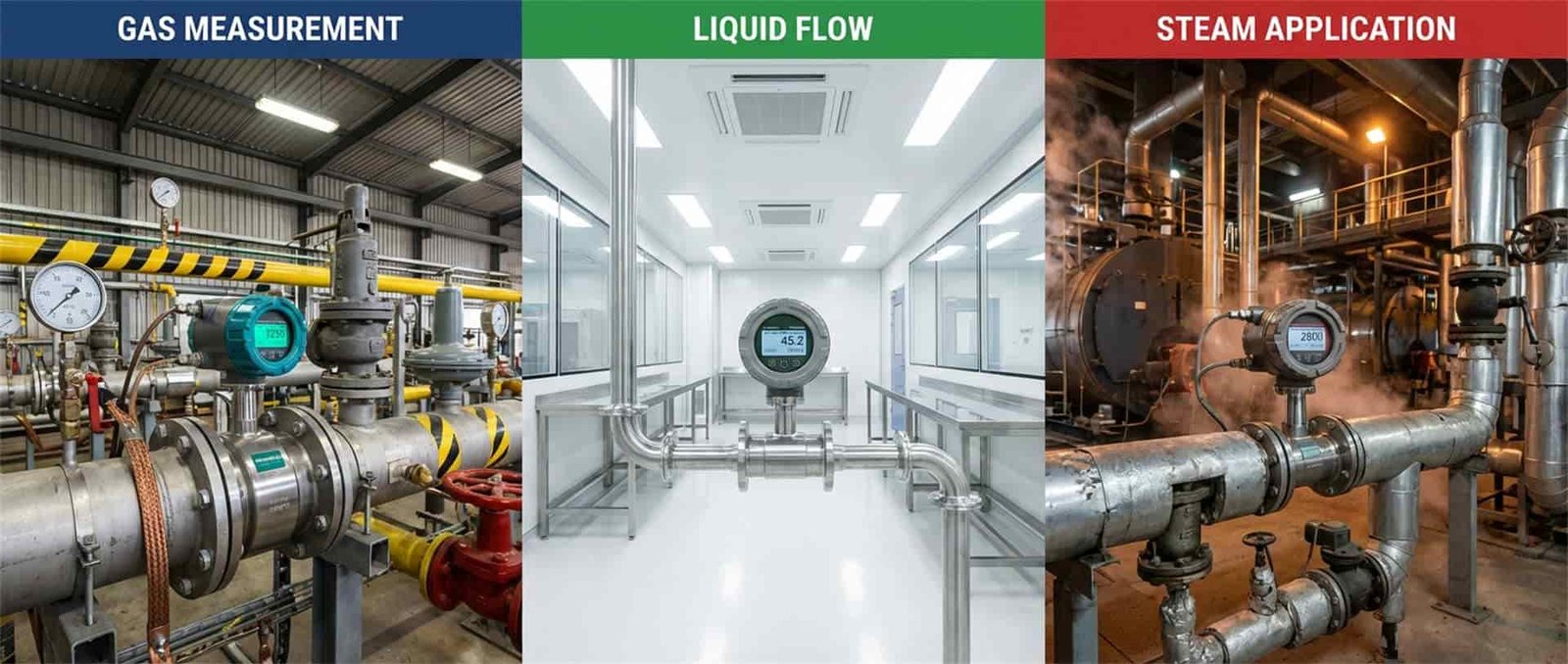
Oil, Gas, and Steam
The oil and gas industry places the most stringent demands on flow measurement accuracy because of the direct financial implications. Custody transfer — the measurement of product as it changes hands between buyer and seller — requires accuracy levels of ±0.15% to ±0.25% and is typically achieved with Coriolis meters, turbine meters, or positive displacement meters, often in conjunction with prover systems for ongoing calibration verification.
Natural gas measurement in transmission pipelines commonly uses multi-path ultrasonic meters (±0.5% accuracy or better) that measure velocity across multiple chord paths through the pipe to compensate for asymmetric flow profiles. Steam measurement, critical for energy management and billing in industrial plants, most often relies on differential pressure meters (orifice plates or averaging pitot tubes) or vortex meters, with appropriate density compensation for superheated or saturated steam conditions.
Medical and Laboratory
Flow measurement in medical and laboratory settings requires precision, cleanliness, and biocompatibility that go beyond industrial requirements. Medical flow meters monitor oxygen delivery rates to patients, measure respiratory flow for diagnostic spirometry, control anesthetic gas mixtures, and ensure accurate infusion pump rates. These meters must meet stringent regulatory standards (FDA, CE marking) and are typically based on thermal, differential pressure, or ultrasonic principles in miniaturized, low-flow configurations.
Laboratory flow meters are used in analytical chemistry (controlling carrier gas flow in gas chromatographs), biotechnology (monitoring media feed rates in bioreactors), and research applications (measuring precise fluid volumes in experimental setups). Coriolis and thermal mass flow meters are popular in laboratory settings because of their high accuracy at low flow rates and their ability to measure mass flow directly.
Environmental Monitoring
Environmental monitoring applications include measuring stormwater runoff, river and stream flow gauging, groundwater extraction monitoring, industrial discharge compliance, and air emissions monitoring. Open-channel flow measurement (using weirs, flumes, and area-velocity sensors) is commonly used where the fluid is not contained in a closed pipe. For closed-pipe applications in environmental monitoring, non-invasive clamp-on ultrasonic meters are often preferred because they can be installed quickly without modifying the piping — essential for temporary monitoring campaigns or locations where pipe modification is not permitted.
Global Flow Meter Market — Revenue Distribution by Industry (Pie Chart)
╔════════════════════════════════════════════════════════════════════╗
║   GLOBAL FLOW METER MARKET — REVENUE BY INDUSTRY SEGMENT          ║
║   (Estimated 2025, Total Market ~$11 Billion)                      ║
╠════════════════════════════════════════════════════════════════════╣
║                                                                    ║
║               ████████████████████                                 ║
║           ████     Water &          ████                           ║
║         ██      Wastewater             ██                         ║
║       ██           32%                   ██                       ║
║      ██                                   ██                      ║
║      █                                     █                      ║
║      █    ██████████████                   █                      ║
║      ██  █  Oil & Gas  █                  ██                      ║
║       ██ █    26%      █                ██                        ║
║         █████████████               ██                            ║
║           ████ Chemical 15%     ████                              ║
║               █████Power/Energy 10%██                             ║
║                    ████████████                                    ║
║              Food & Bev 7%                                        ║
║              Pharma 5%                                            ║
║              Other 5%                                             ║
║                                                                    ║
║  ████ Water & Wastewater (32%)                                    ║
║  ████ Oil & Gas (26%)                                             ║
║  ████ Chemical Processing (15%)                                   ║
║  ████ Power & Energy (10%)                                        ║
║  ████ Food & Beverage (7%)                                        ║
║  ████ Pharmaceutical (5%)                                         ║
║  ████ Other Industries (5%)                                       ║
╚════════════════════════════════════════════════════════════════════╝
Data approximation based on industry market reports from Fortune Business Insights and GM Insights. The global flow meter market was valued at approximately $11 billion in 2025 and is projected to reach $19–30 billion by 2034–2035.

Flow Meter Challenges & Innovations
Common Measurement Issues
Despite the sophisticated science underlying modern flow meters, measurement errors remain common in practice. The most frequent causes are installation-related: insufficient straight pipe runs upstream and downstream of the meter, which create asymmetric or swirling flow profiles that the meter interprets incorrectly; incorrect meter sizing (oversized meters operating at the bottom of their range where accuracy is poorest); and poor sensor mounting or coupling (particularly for clamp-on ultrasonic meters where acoustic coupling quality directly affects signal integrity).
Process-related challenges include entrained air or gas in liquid systems (which causes most meter types to read inaccurately), fluid property changes (viscosity, density, conductivity, or particulate loading) that differ from the conditions under which the meter was calibrated, and electrode fouling or sensor coating that degrades the measurement signal over time. Environmental factors — vibration, electromagnetic interference, temperature extremes, and moisture ingress — can also impair meter performance if the installation does not account for them.
Calibration drift is another persistent issue, particularly for meters with moving parts (turbine, positive displacement) or those operating in aggressive fluids. Regular calibration verification — comparing the meter’s output against a known reference — is the only reliable way to detect drift before it produces significant measurement errors. The Fluke calibration best practices guide provides a comprehensive framework for maintaining measurement integrity over time.
Recent Technological Advances
Flow meter technology has advanced significantly in recent years, driven by improvements in sensor materials, digital signal processing, and embedded computing. Multi-variable transmitters that measure flow, temperature, pressure, and density simultaneously from a single instrument are reducing installation complexity and cost. Advanced diagnostic algorithms built into modern meters can detect abnormal conditions — partially filled pipes, entrained gas, sensor fouling, electronics degradation — and alert operators before measurement quality is compromised.
Digital twin technology is emerging as a powerful tool for flow meter performance optimization. By creating a virtual model of the meter and its installation environment, engineers can simulate the effects of flow disturbances, fluid property changes, and alternative installation configurations before committing to physical changes. This reduces commissioning time, avoids trial-and-error approaches, and improves first-time-right installation rates.
Material science advances are expanding the range of fluids and conditions that flow meters can handle. Ceramic and diamond-like carbon electrode coatings resist fouling and corrosion. High-performance polymer linings withstand aggressive chemicals and elevated temperatures. Advanced piezoelectric materials improve the sensitivity and longevity of ultrasonic transducers.
Future Trends
The integration of flow meters with Internet of Things (IoT) platforms represents the most transformative trend in the industry. IoT-enabled flow meters transmit real-time data to cloud-based platforms where advanced analytics, machine learning, and artificial intelligence algorithms process the data to deliver insights beyond simple flow measurement: leak detection, predictive maintenance scheduling, process optimization recommendations, and automated regulatory reporting. According to the ABB measurement blog, IoT-enabled flow meters are already reshaping water distribution management.
The global flow meter market reflects this trajectory of innovation and growth. Valued at approximately $11 billion in 2025, the market is projected to grow to between $19 and $30 billion by 2034–2035, driven by increasing automation, tightening environmental regulations, water scarcity concerns, and the global push toward energy efficiency. Companies at the forefront of these trends — including Jade Ant Instruments — are investing in smart sensor technologies, wireless connectivity, and digital service platforms that will define the next generation of flow measurement.
Other trends to watch include non-invasive measurement technologies that eliminate process penetrations entirely, energy-harvesting sensors that eliminate the need for external power, miniaturized MEMS-based flow sensors for point-of-use and medical applications, and the increasing use of artificial intelligence for real-time measurement validation and automatic error correction.
| Year | Estimated Market Size (USD Billion) | Key Growth Drivers |
|---|---|---|
| 2025 | $11.0 | Baseline — growing demand for process automation |
| 2026 | $11.7–$12.1 | IoT adoption, smart metering mandates |
| 2028 | $13.5–$15.0 | Water infrastructure investment, Industry 4.0 |
| 2030 | $15.0–$18.0 | Energy transition, tightening emissions regulations |
| 2035 | $20.0–$30.0 | AI integration, global water scarcity, full digital transformation |
Source: Market size projections aggregated from Fortune Business Insights, GM Insights, Precedence Research, and Mordor Intelligence. Ranges reflect variation between research firms’ methodologies.
Understanding the science behind flow meter measurements — the fluid dynamics, thermodynamics, and electromagnetic principles that make each technology work — is essential for anyone involved in selecting, installing, or operating these instruments. The scientific principle determines the meter’s strengths, limitations, accuracy potential, and ideal application environment. A differential pressure meter built on Bernoulli’s equation, an electromagnetic meter grounded in Faraday’s Law, and a Coriolis meter exploiting mass inertia effects are not interchangeable tools; they are purpose-designed instruments optimized for specific measurement challenges.
The interconnection between scientific principles, technology types, and practical applications is what transforms flow measurement from a commodity purchase into an engineering decision. The right meter, correctly specified and properly installed, delivers years of reliable, accurate data that supports process control, regulatory compliance, energy management, and financial accountability. The wrong meter, or the right meter in the wrong application, produces data that is worse than useless — it is misleading.
Innovation in flow measurement is accelerating. IoT connectivity, AI-driven diagnostics, advanced materials, and non-invasive sensing are expanding what flow meters can do and where they can do it. As these technologies mature, the importance of understanding the underlying science only grows — because the more capable the instrument, the more critical it is to match that capability to the specific demands of the application.
Whether you’re specifying a flow meter for a new project, troubleshooting an existing installation, or evaluating emerging technologies, we encourage you to consider both the science and the practical aspects of your decision. For personalized guidance on selecting the right flow meter for your application, the engineering team at Jade Ant Instruments is ready to help. Request a consultation or quote today.
Frequently Asked Questions (FAQ)
1. What scientific principles do flow meters use to measure fluid flow?
Flow meters use a range of scientific principles depending on their type. Differential pressure meters use Bernoulli’s equation (the relationship between fluid velocity and pressure). Electromagnetic flow meters use Faraday’s Law of electromagnetic induction. Coriolis meters use the Coriolis effect and Newton’s second law of motion. Ultrasonic meters use the transit time of sound waves or the Doppler frequency shift. Turbine meters use angular momentum. Thermal mass flow meters use the principles of heat transfer and thermodynamics. Each principle determines the meter’s accuracy, limitations, and ideal applications.
2. What is the most accurate type of flow meter?
Coriolis flow meters are generally the most accurate, routinely achieving ±0.1% of reading for liquids. Positive displacement meters and turbine meters can also achieve very high accuracy (±0.1% to ±0.15% of reading) under ideal conditions. Electromagnetic flow meters typically achieve ±0.2% to ±0.5% of reading. The “best” accuracy depends on the specific application, fluid properties, and installation conditions — not just the meter’s rated specification. For help choosing the right accuracy level for your application, consult the Jade Ant Instruments flow meter selection guide.
3. What is the difference between volumetric and mass flow measurement?
Volumetric flow rate measures the volume of fluid passing a point per unit time (e.g., liters per minute). Mass flow rate measures the mass of fluid per unit time (e.g., kilograms per hour). For liquids with stable density, the two are easily converted using the relationship: mass flow = volumetric flow × density. For gases, where density varies significantly with temperature and pressure, mass flow is generally more meaningful because it represents the actual quantity of substance regardless of conditions. Coriolis and thermal mass flow meters measure mass flow directly; most other meter types measure volumetric flow and require density correction for mass flow reporting.
4. How does Faraday’s Law apply to electromagnetic flow meters?
Faraday’s Law states that a voltage is induced when a conductor moves through a magnetic field. In an electromagnetic flow meter, the conductive fluid serves as the moving conductor. As it flows through a magnetic field generated by coils in the meter body, a voltage is induced between two electrodes mounted on the pipe wall. This voltage is directly proportional to the average fluid velocity, expressed as E = k × B × D × V. Because the relationship is linear, electromagnetic flow meters provide excellent accuracy across a wide flow range.
5. Why is calibration important for flow meters?
Calibration ensures that a flow meter’s output accurately represents the actual flow rate. Without calibration, the meter’s readings are unverified numbers with no guaranteed relationship to reality. Calibration establishes the relationship between the meter’s signal and a known reference, documents the meter’s accuracy at specific points across its range, and detects any drift or degradation that has occurred since the last calibration. Most industrial standards and regulatory frameworks require periodic calibration to maintain measurement traceability and compliance.
6. What are the most common causes of flow meter measurement errors?
The most common causes of flow measurement errors are poor installation (insufficient straight pipe runs, incorrect orientation, improper grounding), incorrect meter sizing (typically oversizing, which forces the meter to operate at the bottom of its accurate range), process changes that differ from calibration conditions (temperature, pressure, viscosity, or particulate loading shifts), sensor fouling or electrode coating, entrained air or gas in liquid systems, and calibration drift over time. Most of these are preventable through proper specification, installation, and maintenance practices.
7. Can a single flow meter measure both liquids and gases?
Some flow meter technologies can measure both liquids and gases, but rarely with a single unit and identical configuration. Coriolis meters are the most versatile in this regard, capable of measuring both liquids and gases with high accuracy, though the calibration and sensor sizing differ. Thermal mass flow meters are primarily designed for gases. Differential pressure meters can measure both but require different sizing and configuration. Electromagnetic meters only work with conductive liquids. In practice, separate meters optimized for liquid and gas service are recommended for best accuracy.
8. How are IoT and smart technologies changing flow measurement?
IoT-enabled flow meters connect to cloud-based platforms via wireless or wired communication, enabling real-time remote monitoring, automated data logging, predictive maintenance alerts, and integration with enterprise-level analytics platforms. Smart flow meters incorporate self-diagnostic capabilities that detect and report abnormal conditions (partially filled pipes, entrained gas, sensor degradation) before they affect measurement quality. AI and machine learning algorithms are being applied to flow meter data to detect leaks, optimize process control, and predict equipment failures. The global flow meter market is projected to grow from approximately $11 billion in 2025 to $20–30 billion by 2035, with smart technologies as a primary growth driver.
9. What is the Reynolds number and why does it matter for flow meters?
The Reynolds number (Re) is a dimensionless number that characterizes whether fluid flow is laminar (smooth, orderly — Re below ~2,300) or turbulent (chaotic, mixing — Re above ~4,000). Most flow meters are calibrated and specified for turbulent flow conditions because the flow profile is more uniform and predictable. When a meter is operated in laminar or transitional flow (for example, with high-viscosity fluids or at very low velocities), its accuracy may be significantly degraded unless the meter is specifically designed and calibrated for those conditions. Checking the Reynolds number at your operating conditions is a basic but often overlooked step in flow meter selection.
10. How do I choose the right flow meter for my application?
Choosing the right flow meter requires evaluating several factors: the fluid type and properties (liquid, gas, or steam; conductive or non-conductive; clean or dirty; corrosive or benign), the required accuracy and repeatability, the flow rate range, the pipe size, the operating temperature and pressure, the available straight pipe runs, the communication and output requirements, and the total cost of ownership (purchase price plus installation, calibration, and maintenance costs). Starting with the science — understanding which measurement principles are compatible with your fluid and conditions — narrows the options quickly. For a structured approach to this decision, the Jade Ant Instruments guide on how to choose a flow meter walks through the key factors step by step.