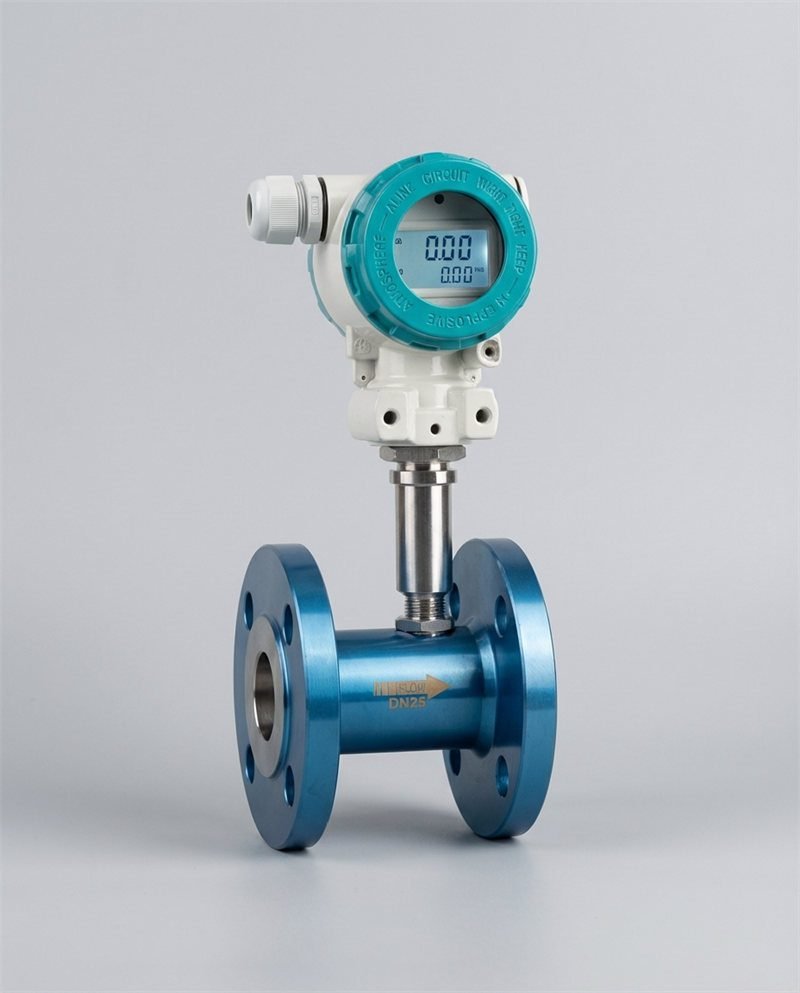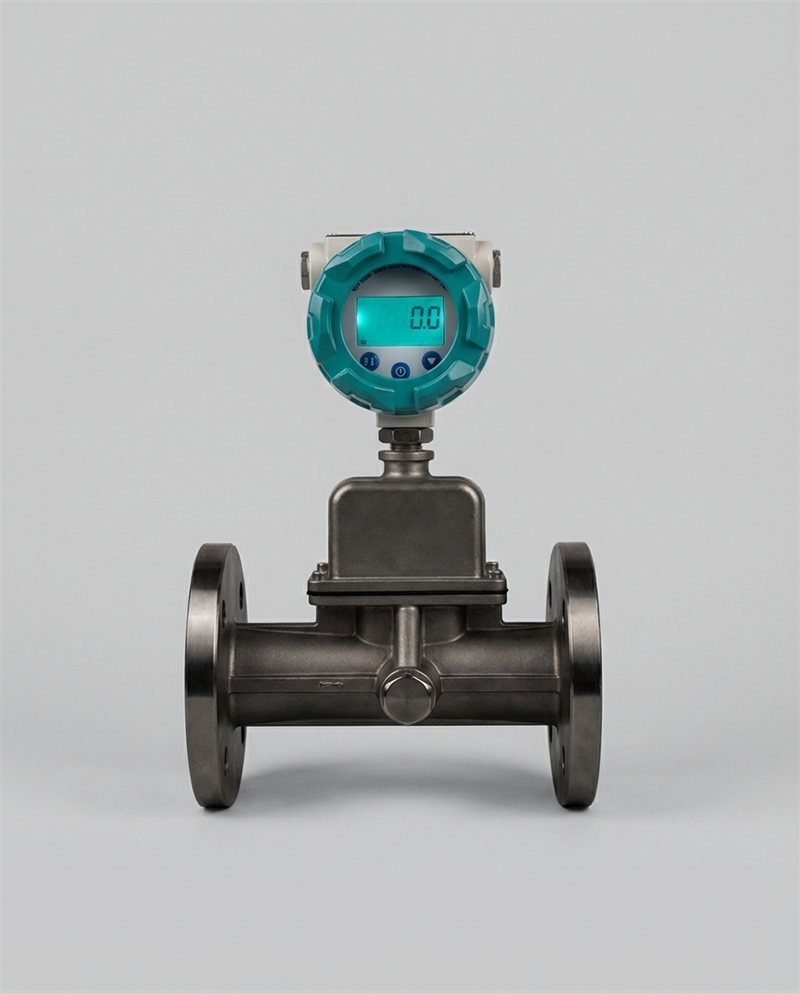
Which flow meter transducer is right for your needs — ultrasonic (transit time) or Doppler? The answer depends on factors like fluid type, application environment, accuracy requirements, and budget. Choosing the wrong transducer can cost thousands of dollars in downtime, inaccurate readings, and wasted maintenance hours.
This article provides a clear, side-by-side comparison of ultrasonic transit time and Doppler flow meter transducers, complete with practical advice, comparison tables, and a decision checklist. Whether you’re measuring clean water in a municipal system or monitoring slurry in a mining operation, you’ll find the guidance you need right here. As you read, consider your specific application and measurement goals — that’s the fastest path to making the right choice.
At Jade Ant Instruments, we’ve helped engineers across industries select the ideal transducer for their flow measurement challenges. This guide distills that experience into an actionable resource.
Flow Meter Transducer Comparison
Key Differences Overview
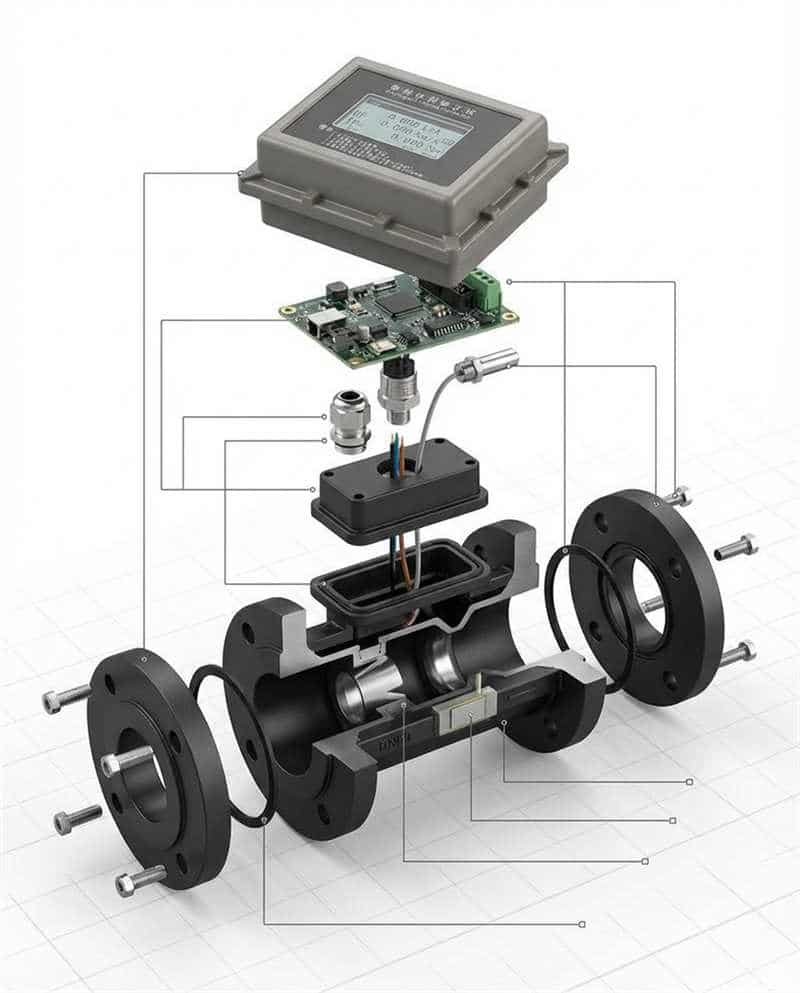
Ultrasonic transit time and Doppler flow meter transducers both use high-frequency sound waves to measure fluid flow without penetrating the pipe wall, yet they rely on fundamentally different physical principles. Transit time transducers measure the time difference it takes for an ultrasonic pulse to travel upstream versus downstream between two transducers. Doppler transducers, by contrast, emit an ultrasonic beam into the flow and measure the frequency shift caused by sound waves bouncing off suspended particles or air bubbles.
This distinction has profound implications for where and how each technology performs best. The table below summarizes the critical differences that every process engineer, plant manager, or procurement specialist should understand before selecting a transducer.
| Feature | Transit Time Ultrasonic | Doppler Ultrasonic |
|---|---|---|
| Measurement Principle | Time difference of upstream vs downstream ultrasonic pulses | Frequency shift of ultrasonic waves reflected off particles/bubbles |
| Ideal Fluid Type | Clean, homogeneous liquids (water, oils, chemicals) | Dirty, aerated, or particle-laden fluids (slurry, wastewater, sludge) |
| Accuracy | ±0.5% to ±1.0% of reading (up to ±0.1% under ideal conditions) | ±2% to ±5% of full scale |
| Repeatability | Better than 0.2% | Typically 0.5%–1.0% |
| Requires Particles/Bubbles? | No — performs best without them | Yes — minimum 80–100 mg/L solids or 100–200 mg/L bubbles |
| Pipe Diameter Range | DN15 to DN6000+ (clamp-on & insertion) | DN25 to DN3000 |
| Installation Type | Clamp-on, insertion, or inline | Clamp-on or insertion |
| Pipe Material Compatibility | Metal, plastic, lined pipes | Metal, plastic pipes |
| Flow Velocity Range | 0.01 to 12 m/s typical | 0.05 to 9 m/s typical |
| Typical Cost Range | $$ to $$$ | $ to $$ |
| Maintenance Level | Low — no moving parts, no fluid contact | Low — periodic transducer check for deposits |
| IP Rating (typical) | IP65–IP68 | IP65–IP68 |
Source: Data compiled from industry specifications. For specific product specifications, visit the Jade Ant Instruments Ultrasonic Water Flow Meter product page.
Best Use Cases
Understanding which transducer fits which scenario is the foundation of a successful flow measurement system. Transit time ultrasonic transducers are the gold standard for clean liquid applications — municipal water distribution, pharmaceutical processing, cryogenic fluids (liquid nitrogen, argon, helium), petroleum refining with clean hydrocarbons, and HVAC chilled/hot water loops. In these environments, the absence of suspended solids allows the ultrasonic signal to pass cleanly between transducers, yielding accuracy figures as tight as ±0.5% of the reading.
Doppler transducers, on the other hand, thrive where transit time technology struggles. Wastewater treatment plants, mining slurry pipelines, activated sludge systems, pulp and paper mills, and any process involving entrained gas or solid particles above 75 microns are natural homes for Doppler technology. Without those reflectors in the fluid, a Doppler transducer simply cannot function — the signal has nothing to bounce off.
Accuracy Comparison by Application Type (Bar Chart)
The bar chart below illustrates typical accuracy ranges achievable by each transducer type across common industrial applications.
╔══════════════════════════════════════════════════════════════════════╗
║         ACCURACY COMPARISON: TRANSIT TIME vs DOPPLER                ║
║         (Lower % = Better Accuracy)                                 ║
╠══════════════════════════════════════════════════════════════════════╣
║                                                                      ║
║  Clean Water         ██ 0.5%   Transit Time                         ║
║                      ██████████ N/A   Doppler (not suitable)         ║
║                                                                      ║
║  Petroleum/Oil       ██ 1.0%   Transit Time                         ║
║                      ██████████ N/A   Doppler (not suitable)         ║
║                                                                      ║
║  Wastewater          ██████████ N/A   Transit Time (not suitable)    ║
║  (with solids)       ████ 2.0%   Doppler                            ║
║                                                                      ║
║  Mining Slurry       ██████████ N/A   Transit Time (not suitable)    ║
║                      ██████████ 5.0%   Doppler                      ║
║                                                                      ║
║  Chemical (clean)    ███ 1.0%   Transit Time                        ║
║                      ██████████ N/A   Doppler (not suitable)         ║
║                                                                      ║
║  Activated Sludge    ██████████ N/A   Transit Time (not suitable)    ║
║                      █████ 3.0%   Doppler                           ║
║                                                                      ║
║  ██ Transit Time     ██ Doppler                                     ║
╚══════════════════════════════════════════════════════════════════════╝
Note: “N/A” indicates the technology is not recommended for that application. Actual accuracy varies by manufacturer, installation quality, and fluid conditions.
How Ultrasonic Flowmeters Work
Transit Time Principle
Transit time ultrasonic flowmeters use a pair of transducers positioned on opposite sides of a pipe, typically at a diagonal angle to the flow stream. Each transducer functions alternately as a transmitter and receiver. One sends an ultrasonic pulse downstream (with the flow), while the other sends a pulse upstream (against the flow). When fluid is moving through the pipe, the downstream signal arrives slightly faster than the upstream signal because the flow carries the sound wave along with it — much like a swimmer moving faster with a current than against it.
The difference in transit time between the two signals is directly proportional to the fluid velocity. The flowmeter’s processor calculates this time differential (Δt) and, knowing the pipe’s cross-sectional area and the geometry of the transducer arrangement, converts it into a volumetric flow rate.
The governing equation is:
Vf = K × Δt / TL
Where Vf is fluid velocity, K is a calibration factor, Δt is the time differential between upstream and downstream signals, and TL is the transit time at zero flow. This elegant approach means that transit time meters have no moving parts, create zero pressure drop, and never contact the fluid — making them exceptionally reliable and maintenance-friendly.
Features and Accuracy
Under ideal conditions — clean fluid, full pipe, stable temperature and density — transit time ultrasonic flowmeters can achieve accuracy of ±0.5% of reading, with some high-end laboratory-grade models reaching ±0.1%. Repeatability is typically better than 0.2%, which makes these instruments suitable for custody transfer, billing, and precision process control.
Key features that set transit time transducers apart include their ability to handle an extremely wide range of pipe diameters (from DN15 up to DN6000 with insertion-type transducers), compatibility with metal, plastic, and lined pipes, and suitability for fluids ranging from ambient-temperature water to cryogenic liquids like liquid nitrogen and helium. The Jade Ant Instruments ultrasonic water flow meter, for example, offers ±1.0% accuracy with repeatability better than 0.2% across clamp-on, insertion, and inline configurations.
Temperature compensation algorithms built into modern transit time meters correct for changes in the speed of sound caused by temperature fluctuations, maintaining accuracy across varying process conditions. However, the technology’s Achilles’ heel is its sensitivity to entrained air and suspended solids — even modest amounts of either can scatter the ultrasonic signal and degrade or eliminate the measurement entirely.
Watch: How Ultrasonic Flow Meters Work
Video credit: RealPars — Ultrasonic Flow Meter Explained | Working Principles
How Doppler Flow Meters Work
Doppler Effect Principle
Doppler flow meters are named after Austrian physicist Christian Doppler, who described the Doppler Effect in 1842 — the phenomenon whereby the frequency of a wave changes depending on the relative motion between the source and the observer. You experience this every day when an ambulance siren shifts from a higher to a lower pitch as it passes you.
In a Doppler flow meter, a transducer mounted on the outside of the pipe emits a continuous or pulsed ultrasonic signal at a known frequency into the flow stream. When this signal encounters suspended particles, gas bubbles, or other acoustic discontinuities moving with the fluid, it reflects back toward a receiving transducer. Because the reflectors are in motion, the reflected signal returns at a different frequency than the transmitted signal. The magnitude of this frequency shift is directly proportional to the velocity of the reflectors — and, by extension, the velocity of the fluid carrying them.
The fundamental equation is:
V = (f0 − f1) × K
Where V is the flow velocity, f0 is the transmitted frequency, f1 is the reflected frequency, and K is a constant based on the geometry and speed of sound. This approach requires that the fluid contain a minimum concentration of reflectors — typically 80–100 mg/L of solids larger than 75 microns or 100–200 mg/L of bubbles in the 75–150 micron range. Without sufficient reflectors, there is simply no signal to measure.
Watch: How Doppler Flow Measurement Works
Video credit: Greyline Instruments — How It Works: Doppler Flow
Features and Limitations
Doppler flow meters typically offer accuracy in the range of ±2% to ±5% of full scale — significantly less precise than transit time meters under clean-fluid conditions, but perfectly adequate for the applications where Doppler meters are most commonly deployed. In wastewater treatment, mining, and sludge processing, the objective is typically process monitoring and control rather than custody transfer, so this accuracy level meets operational requirements.
The technology offers several compelling features: non-invasive clamp-on installation with no pipe cutting or process interruption, no moving parts or pressure drop, tolerance for a wide variety of pipe materials, and robustness in harsh environments with enclosures typically rated IP65 to IP68. Additionally, Doppler meters are often less expensive than their transit time counterparts, making them an economical choice for monitoring dirty or difficult fluids.
The primary limitation is that Doppler meters cannot function in clean, particle-free fluids — they are the mirror image of transit time meters in this respect. Accuracy can also fluctuate when particle concentration or size distribution varies significantly, as this affects the strength and consistency of the reflected signal. Temperature and pressure changes have less effect on Doppler meters than on transit time meters, since the measurement relies on frequency shift rather than the absolute speed of sound through the fluid.
Ultrasonic Flowmeter Pros & Cons
Advantages
Transit time ultrasonic flowmeters offer a combination of benefits that make them the preferred choice for clean-liquid applications. Their non-invasive installation means zero contamination risk and zero pressure drop — critical in pharmaceutical, food-grade, and chemical processing environments. With no moving parts in contact with the fluid, they require minimal maintenance over lifespans that routinely exceed 10–15 years. They handle an enormous range of pipe sizes and fluid temperatures, from cryogenic (−200°C) to high-temperature process fluids (+200°C), and they can be installed on existing pipes without stopping the process.
For applications requiring high accuracy and repeatability, transit time meters are often the only non-invasive option that can deliver ±0.5% or better. This makes them suitable for revenue metering, custody transfer, and regulatory compliance — applications where measurement uncertainty translates directly into financial risk. The Jade Ant Instruments flow meter selection guide can help you determine whether transit time technology is the right fit for your specific accuracy and installation requirements.
Drawbacks
The most significant limitation of transit time ultrasonic flowmeters is their inability to handle fluids containing more than minimal amounts of suspended solids, air bubbles, or other acoustic discontinuities. Even small quantities of entrained gas can scatter the ultrasonic signal, leading to measurement errors or complete signal loss. They also require a full pipe — any air pockets at the top of the pipe will distort or block the signal path.
Proper installation is critical and somewhat demanding: sensors must be placed on straight pipe sections with adequate upstream and downstream straight runs (typically 10–20 pipe diameters upstream, 5 downstream) to ensure a fully developed flow profile. Incorrect sensor alignment or poor acoustic coupling will degrade accuracy. Additionally, pipe wall condition matters — heavy corrosion, scale buildup, or thick linings can attenuate the ultrasonic signal to the point of unreliable measurement.
Doppler Flow Meter Pros & Cons
Advantages
Doppler flow meters excel precisely where transit time meters fail — in fluids containing suspended solids, gas bubbles, or other particulate matter. This makes them invaluable for wastewater treatment plants, mining operations, pulp and paper manufacturing, dredging, and any process handling slurries, sludge, or aerated liquids. Like transit time meters, they offer non-invasive clamp-on installation, no moving parts, and no pressure drop.
Doppler meters tend to be less expensive to purchase and install than transit time meters, and their simpler measurement principle makes them somewhat less sensitive to installation imperfections. They are also less affected by changes in fluid temperature and density, since they measure frequency shift rather than the absolute transit time of sound waves. For process monitoring applications where ±2–5% accuracy is acceptable, Doppler meters offer excellent value for money.
Drawbacks
The fundamental limitation of Doppler flow meters is their absolute dependence on the presence of acoustic reflectors in the fluid. If the fluid is too clean, the meter produces no reading. Accuracy is also lower than transit time meters and can vary with changes in particle concentration, particle size distribution, and the uniformity of particle distribution across the pipe cross-section. If solids settle or bubbles rise to one side of the pipe, the Doppler signal may not represent the true average flow velocity.
Signal quality can degrade if the pipe wall or transducer face accumulates deposits over time, requiring periodic inspection and cleaning. In highly variable process conditions where the fluid alternates between clean and dirty states, a Doppler meter may provide intermittent or unreliable readings during the clean phases.
Application Suitability
Clean vs Dirty Fluids
The single most important factor in choosing between transit time and Doppler transducers is the cleanliness of the fluid. This is not a matter of preference or brand — it is dictated by physics. Transit time meters require a clear acoustic path between transducers, which means the fluid must be free of significant quantities of suspended solids, gas bubbles, or other discontinuities that could scatter or absorb the ultrasonic signal. Doppler meters require the opposite: they need reflectors in the fluid to generate a signal in the first place.
In practice, most applications fall clearly into one camp or the other. Clean water, oils, chemicals, and cryogenic fluids are transit time territory. Wastewater, slurries, sludge, activated sludge, mining tails, and aerated process liquids are Doppler territory. The challenge arises in borderline cases — lightly contaminated water, fluids with intermittent particle content, or processes where fluid quality changes over time. In these situations, consulting with an experienced instrumentation supplier like Jade Ant Instruments can help identify the right technology or, in some cases, recommend a hybrid approach.
Ultrasonic Flow Meter Market Share by Industry (Pie Chart)
╔══════════════════════════════════════════════════════════════════╗
║      ULTRASONIC FLOW METER MARKET SHARE BY INDUSTRY             ║
╠══════════════════════════════════════════════════════════════════╣
║                                                                  ║
║               ████████████████████                               ║
║           ████                    ████                           ║
║         ██  Water & Wastewater       ██                         ║
║       ██        60%                    ██                       ║
║      ██                                 ██                      ║
║      █                                   █                      ║
║      █    ████████████                   █                      ║
║      ██  █ Oil & Gas █                  ██                      ║
║       ██ █   25%     █                ██                        ║
║         █████████████               ██                          ║
║           ████  Chemical 8%     ████                            ║
║               █████ HVAC 4% ███                                 ║
║                    ████████                                      ║
║                  Other 3%                                        ║
║                                                                  ║
║  ████ Water & Wastewater (60%) — Both transit time & Doppler    ║
║  ████ Oil & Gas (25%) — Primarily transit time                  ║
║  ████ Chemical Processing (8%) — Primarily transit time         ║
║  ████ HVAC (4%) — Transit time                                  ║
║  ████ Other Industries (3%) — Mixed                             ║
╚══════════════════════════════════════════════════════════════════╝
Data approximation based on industry reports. Water/wastewater is the largest market segment, with Doppler meters dominating the wastewater sub-segment and transit time meters leading in clean water.
Industry Examples
To illustrate how transducer selection plays out in practice, consider the following industry-specific scenarios. Each one underscores the importance of matching the transducer to the fluid and the application rather than choosing based on price or brand alone.
| Industry | Application | Fluid Characteristics | Recommended Transducer | Why |
|---|---|---|---|---|
| Municipal Water | Distribution network monitoring | Clean, treated water | Transit Time | High accuracy needed for billing; clean fluid suits transit time |
| Wastewater | Influent/effluent monitoring | Solids, grit, aerated | Doppler | Particles and bubbles provide reflectors for Doppler signal |
| Oil & Gas | Crude oil custody transfer | Clean hydrocarbons | Transit Time | High accuracy for fiscal metering; clean fluid |
| Mining | Slurry pipeline monitoring | High-concentration solids | Doppler | Heavy particle load; Doppler tolerates and requires particles |
| Pharmaceutical | Purified water systems | Ultra-clean, deionized water | Transit Time | Non-invasive, no contamination risk; highest accuracy |
| Pulp & Paper | Stock consistency monitoring | Fiber-laden slurry | Doppler | Fibers act as acoustic reflectors; transit time would fail |
| HVAC | Chilled/hot water loop | Clean, closed-loop water | Transit Time | Energy metering requires accuracy; clean system water |
| Food & Beverage | CIP (Clean-in-Place) monitoring | Cleaning chemicals, clean product | Transit Time | Non-invasive, sanitary, high accuracy |
For help matching your specific process to the right transducer, explore the Jade Ant Instruments guide on how to choose a flow meter.
Installation & Maintenance
Installation Needs
Both transit time and Doppler clamp-on transducers share a significant installation advantage: they mount externally on the pipe, requiring no cutting, welding, or process shutdown. This non-invasive approach eliminates contamination risk, avoids pressure loss, and allows retrofitting to existing piping systems — a major cost and time saver compared to inline meters. However, the specific installation requirements differ between the two technologies.
Transit time transducers demand more attention to installation detail. The sensors must be mounted on a section of pipe that is consistently full of liquid (no air pockets) and free from flow disturbances. Industry best practice calls for a minimum of 10 pipe diameters of straight, unobstructed pipe upstream of the transducers and 5 diameters downstream. The transducers must be precisely aligned — for “V-method” mounting (where the signal bounces off the opposite pipe wall), both sensors are on the same side of the pipe; for “Z-method” (direct path), they are on opposite sides. Acoustic coupling gel or compound must be applied between the transducer face and the pipe wall to ensure efficient sound transmission. Pipe material, wall thickness, and liner type must be entered accurately into the meter’s configuration, as errors in these parameters directly affect measurement accuracy.
Doppler transducers are generally more forgiving. They still require a location where the pipe is full and reasonably straight, but they are less sensitive to flow profile disturbances because the measurement depends on particle velocity rather than the speed of sound through the entire fluid cross-section. A single transducer can be used (both transmitting and receiving from the same unit), which simplifies installation. That said, the transducer must still be well-coupled to the pipe and installed where the particle or bubble concentration is representative of the overall flow.
Maintenance Tips
One of the strongest arguments for ultrasonic flow measurement — whether transit time or Doppler — is the low maintenance burden. With no moving parts, no wetted components (in clamp-on configurations), and no consumable elements, these meters can run for years with minimal attention. However, “minimal” does not mean “zero.”
For transit time transducers, the most common maintenance activities include periodic verification of acoustic coupling quality (the gel or compound between the transducer and the pipe can degrade, dry out, or wash away over time), inspection of the pipe wall at the transducer location for corrosion, scale, or deposit buildup that could attenuate the signal, and checking transducer alignment (which can shift due to vibration or thermal cycling). If the meter’s diagnostic outputs show declining signal strength or increasing noise, these are the first things to investigate.
For Doppler transducers, maintenance focuses on keeping the transducer face clean and free from buildup, verifying that the process fluid still contains adequate particle or bubble concentration for a reliable signal, and checking the mounting hardware for security. In applications where the fluid composition changes over time — for example, wastewater plants where solids loading varies seasonally — periodic calibration verification is advisable.
Both transducer types benefit from periodic comparison against a reference measurement (such as a volumetric or gravimetric test) to confirm continued accuracy. Modern ultrasonic meters include extensive self-diagnostic capabilities that flag problems before they affect measurement quality. For additional guidance on installation best practices and ongoing care, consult the Endress+Hauser ultrasonic flow measurement learning center.
Decision Checklist
Key Questions
Before selecting a transducer, work through the following questions. Each one narrows the field and helps you match the technology to your process reality rather than making a choice based on incomplete information.
| # | Question | If Your Answer Is… | Recommended Direction |
|---|---|---|---|
| 1 | Is the fluid clean and free of suspended solids/bubbles? | Yes | → Transit Time |
| 2 | Does the fluid contain particles >75 µm or entrained gas? | Yes | → Doppler |
| 3 | Do you need accuracy better than ±2% of reading? | Yes | → Transit Time |
| 4 | Is the measurement for billing, custody transfer, or regulatory compliance? | Yes | → Transit Time |
| 5 | Is the primary goal process monitoring (not fiscal metering)? | Yes | → Either; Doppler if fluid is dirty |
| 6 | Is the pipe always completely full of liquid? | No | → Neither standard type; consider open-channel methods |
| 7 | Is sufficient straight pipe available (10D upstream, 5D downstream)? | No | → Doppler may be more tolerant; or use flow conditioners |
| 8 | Is budget a primary constraint? | Yes | → Doppler (typically lower cost) |
| 9 | Does the fluid alternate between clean and dirty states? | Yes | → Consult specialist; consider dual-mode meter |
| 10 | Is the pipe material compatible with ultrasonic transmission? | Uncertain | → Verify with manufacturer; concrete or heavily lined pipes may require insertion type |
Matching to Application
Once you’ve worked through the checklist, the transducer choice usually becomes self-evident. Clean fluid plus high accuracy requirement equals transit time. Dirty fluid plus process monitoring equals Doppler. The gray areas — borderline cleanliness, variable fluid quality, unusual pipe materials — are precisely the situations where it pays to consult with a knowledgeable instrumentation provider.
Jade Ant Instruments routinely helps customers navigate these decisions, drawing on extensive experience with both transit time and Doppler transducers across a wide range of industries and applications. Whether your challenge is measuring chilled water in a data center, crude oil in a pipeline, or activated sludge in a treatment plant, getting the transducer right at the selection stage prevents costly errors down the road.

The choice between ultrasonic transit time and Doppler flow meter transducers is not about which technology is “better” — it’s about which technology is right for your specific fluid, application, and performance requirements. Transit time transducers deliver superior accuracy with clean, homogeneous fluids and are the standard for billing, custody transfer, and high-precision process control. Doppler transducers are purpose-built for dirty, aerated, or particle-laden fluids where transit time technology cannot function, offering reliable process monitoring at a typically lower price point.
Use the comparison table and decision checklist in this guide to evaluate your requirements systematically. Match the transducer to the physics of your fluid, the demands of your application, and the realities of your installation environment. When in doubt, consult a flow measurement expert — the upfront investment in getting the selection right will save significant time, money, and frustration over the life of the instrument.
If you need personalized guidance, the engineering team at Jade Ant Instruments is ready to help you find the ideal transducer solution for your application. Request a consultation or quote today.
Frequently Asked Questions (FAQ)
1. What is the main difference between an ultrasonic transit time flow meter and a Doppler flow meter?
A transit time flow meter measures the time difference between ultrasonic pulses traveling upstream and downstream through a clean fluid. A Doppler flow meter measures the frequency shift of ultrasonic waves reflected off particles or bubbles in the fluid. Transit time requires clean liquid; Doppler requires particles or bubbles in the liquid. For more detail, visit the Jade Ant Instruments ultrasonic flow meter page.
2. Can a Doppler flow meter work with clean water?
No. Doppler flow meters require a minimum concentration of suspended solids (≥80–100 mg/L at ≥75 µm) or gas bubbles (≥100–200 mg/L at 75–150 µm) to generate a reflected signal. If the fluid is too clean, the meter will produce no reading or an unreliable reading. For clean water applications, a transit time ultrasonic flow meter is the correct choice.
3. Which type of ultrasonic flow meter is more accurate?
Transit time ultrasonic flow meters are significantly more accurate, typically achieving ±0.5% to ±1.0% of reading compared to ±2% to ±5% of full scale for Doppler meters. Under laboratory conditions with stable temperature and density, some transit time meters can reach ±0.1%. However, this accuracy advantage only applies in clean fluid conditions — in dirty fluids, a transit time meter may not function at all.
4. Do ultrasonic flow meters require cutting the pipe for installation?
Clamp-on ultrasonic flow meters — both transit time and Doppler — do not require cutting the pipe. The transducers mount externally and transmit/receive ultrasonic signals through the pipe wall. Insertion-type transducers require a small hole for a probe, and inline (spool-piece) types require replacing a section of pipe. Clamp-on installation is one of the biggest advantages of ultrasonic flow measurement, as explained in the Jade Ant Instruments water flow meter selection guide.
5. What industries use Doppler flow meters most?
Doppler flow meters are most commonly used in wastewater treatment (monitoring influent, effluent, and sludge), mining (slurry pipeline monitoring), pulp and paper manufacturing, dredging operations, and chemical processing involving particle-laden or aerated fluids. Any application where the liquid consistently contains suspended solids or gas bubbles is a potential Doppler application.
6. How long do ultrasonic flow meter transducers last?
Clamp-on ultrasonic transducers typically have operational lifespans of 10–20+ years because they have no moving parts, no wetted components, and no consumable elements. The primary degradation factors are acoustic coupling compound deterioration (which can be refreshed) and pipe wall condition changes. With periodic maintenance checks, ultrasonic transducers routinely outlast most other flow measurement technologies.
7. Can I use an ultrasonic flow meter on any pipe material?
Clamp-on ultrasonic flow meters work on most metal pipes (carbon steel, stainless steel, copper, cast iron) and many plastic pipes (PVC, HDPE, PP). They may not work reliably on concrete pipes, pipes with thick rubber linings, or pipes with air gaps in the wall. Heavily corroded or scaled pipe walls can also attenuate the signal. Always verify pipe material compatibility with the manufacturer — the Jade Ant Instruments team can advise on specific compatibility questions.
8. What is the minimum straight pipe length required for ultrasonic flow meters?
The general industry guideline is a minimum of 10 pipe diameters of straight, unobstructed pipe upstream of the transducers and 5 pipe diameters downstream. Some manufacturers may recommend more or less depending on the specific meter model and the type of upstream disturbance (elbows, valves, pumps). Doppler meters are generally more tolerant of shorter straight runs than transit time meters.
9. Are ultrasonic flow meters suitable for gas measurement?
Transit time ultrasonic flow meters can measure gas flow, but they require specialized transducers and configurations designed for the much lower density and acoustic impedance of gases compared to liquids. Gas ultrasonic meters are widely used in the natural gas industry for custody transfer. Doppler meters are generally not used for gas measurement because gas streams rarely contain the type of acoustic reflectors needed for the Doppler principle.
10. How do I decide between transit time and Doppler if my fluid quality varies?
If your process alternates between clean and dirty fluid states, you have several options: install one of each type and switch between them based on conditions, use a dual-mode ultrasonic meter that can operate in both transit time and Doppler modes (some advanced meters offer this capability), or choose the technology that matches your fluid’s dominant state and accept reduced performance during the other state. Consulting with an experienced supplier like Jade Ant Instruments is especially valuable in these borderline cases.