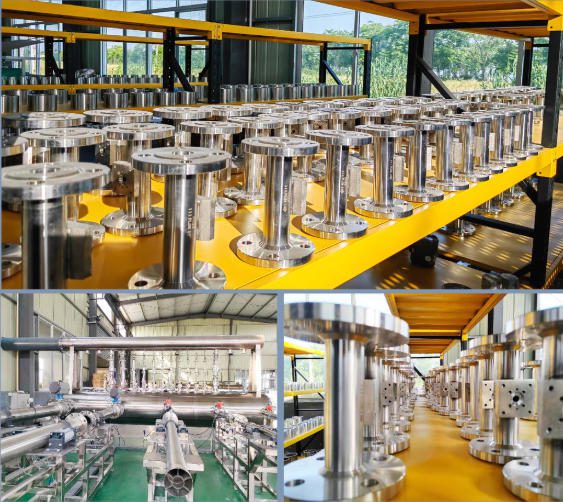
Inaccurate flowmeter readings destroy customer relationships and tank your margins. This practical troubleshooting guide reveals the costly mistakes your clients are making—and the proven solutions that keep them coming back.
 A structured pre-delivery inspection is the single most cost-effective quality control step available to distributors.
Why Flowmeter Failures Hit Your Bottom Line Harder Than You Think
You don’t need a product defect to lose a customer. A single miscalibrated meter shipped to the wrong application, a unit stored incorrectly for three months before delivery, or a flowmeter recommended without asking about the fluid’s viscosity—any one of these is enough to turn a repeat buyer into a cautionary story they share with their plant manager.
For distributors and flow instrumentation agents, the stakes are asymmetric. You earn a modest margin on each unit sold. But when a flowmeter fails in the field—whether due to obstruction, calibration drift, or media incompatibility—the downstream costs dwarf that margin: return shipping, replacement unit at cost, service call time, damaged trust, and ultimately a customer who finds another supplier.
Согласно industry research on distributor failures, inadequate quality management is one of the primary reasons distribution businesses lose market share—even when their pricing is competitive. In flow instrumentation, where the consequences of inaccurate measurement ripple through production processes, regulatory compliance, and billing accuracy, this is doubly true.
This guide is not written for engineers or end users. It’s written for you: the distributor, the agent, the regional supplier who needs to stop eating the cost of problems that are entirely preventable.
The Real Cost of Getting It Wrong
When a customer receives a miscalibrated or incompatible flowmeter, the visible cost is the unit itself—perhaps $400 to $4,000 depending on technology. But the real cost structure looks more like this:
| Категория затрат | Typical Range | Примечания |
|---|---|---|
| Replacement unit (at cost) | $400 – $4,000 | Depending on meter type and size |
| Return shipping & handling | $80 – $300 | Often absorbed by distributor |
| Engineer investigation time | $500 – $2 000 | 5–20 hours at $100/hr |
| Customer plant downtime | $1,500 – $15,000+ | Highly variable by industry |
| Lost future orders (12 months) | $3,000 – $30,000 | Based on average order frequency |
| Negative referral impact | Unquantifiable | But very real in tight industrial markets |
| Total exposure per incident | $5,500 – $50,000+ | Before reputational damage |
A single poorly handled complaint from a mid-sized industrial customer can erase six months of profitable orders. Multiply that by three or four incidents per year—which is not unusual for distributors who lack systematic quality processes—and you begin to understand why prevention is not a cost center. It’s your highest-yield investment.
Who This Guide Is For
This guide is written exclusively for flow meter distributors, regional agents, and instrumentation supply companies who:
- Source flowmeters from manufacturers and resell to industrial end users
- Handle specification, procurement, and post-sale support for flow instrumentation
- Want to reduce warranty claims, improve customer retention, and protect their margins
If you’re already technically proficient in flowmeter selection, you’ll find actionable process improvements here. If you’re newer to the instrumentation business, you’ll find a clear framework for building the kind of systematic quality culture that separates top-performing distributors from order-takers.
How to Use This Guide
This guide moves through ten structured topics—from the root causes of flowmeter failures, through calibration and compatibility protocols, to damage control when things go wrong and the preventive maintenance culture that stops them from recurring. Each section ends with a concrete action you can take within 30 days.
Work through it sequentially the first time. After that, use it as a reference document when specific problems arise.
The Three Categories of Flowmeter Mistakes That Drain Your Margins
Understanding Your Liability When Mistakes Happen
As a distributor, you occupy the link in the supply chain between the manufacturer and the end user. That position comes with significant financial liability—not always legal liability, but certainly commercial liability. When a flowmeter fails in a customer’s application, regardless of where the failure originated (manufacturing defect, misspecification, improper installation), the customer’s first call is to you.
Three categories of mistakes account for the overwhelming majority of distributor margin losses in flow instrumentation:
1. Obstruction issues — particulate contamination, sediment buildup, and debris that accumulate inside the meter body during storage, transit, or as a result of improper piping preparation. These create measurement errors that manifest as unexplained drift or sudden zero-flow readings.
2. Calibration errors — meters shipped without valid calibration certificates, meters calibrated for one fluid but used with another, or meters that have drifted beyond their stated accuracy due to improper storage conditions or excessive transit vibration.
3. Media compatibility problems — flowmeters recommended or approved for a fluid that their internal materials cannot withstand, leading to accelerated corrosion, elastomer swelling, or measurement drift driven by viscosity mismatch.
Each category has a distinct failure signature, a distinct prevention protocol, and a distinct cost profile. Understanding all three is the foundation of every other section in this guide.
The Hidden Costs Beyond the Initial Sale
The direct cost of a returned flowmeter is visible and immediate. The hidden costs accumulate invisibly and are far more damaging over time.
Reputation damage in industrial B2B markets travels fast. Plant engineers talk to each other at industry events, in LinkedIn groups, and in procurement networks. A distributor associated with “unreliable meters” or “poor calibration” will find that new accounts are harder to open and existing ones are harder to retain—even if the specific failure happened only once.
Service calls consume your highest-cost resource: your technical team’s time. When your engineer spends a day on-site troubleshooting a problem that should have been caught at pre-delivery inspection, that day is not available for sales-generating activities.
Replacement costs erode the margin on the original sale and often on several subsequent sales as well. A $200 margin on a $1,500 flowmeter disappears the moment you ship a free replacement.
The formula is stark: one preventable customer complaint typically costs between 15 and 30 times the gross margin on the original order.
Obstruction Issues—The Most Overlooked Problem in Your Supply Chain
 Particulate contamination that passes visual inspection is one of the most common—and most preventable—causes of flowmeter field failures.
Why Distributors Miss Obstruction Problems Before Installation
Obstruction problems are insidious precisely because they are often invisible. A magnetic flowmeter body can contain fine iron particles from the manufacturing process that don’t affect appearance but will coat the electrodes over months of operation. A turbine meter can accumulate machining debris in its chamber that won’t dislodge until the first high-flow surge—at which point the rotor bearing seizes.
The two most common blind spots in distributor pre-delivery processes are:
Particulate contamination that passes visual inspection. Particles smaller than 500 microns are typically invisible without magnification. Thermal mass flow sensors, ultrasonic transducer faces, and vortex bluff bodies are all susceptible to coating failures from contamination that a visual port check will never catch.
Sediment buildup during storage. Flowmeters stored horizontally in warehouse conditions allow any internal moisture, manufacturing residue, or ambient dust to settle on internal surfaces. Units stored for more than 90 days without proper cap protection are statistically more likely to present obstruction-related issues in the field.
Согласно Sierra Instruments’ analysis of common flowmeter problems, obstruction and fouling are among the leading causes of field failures—and the majority are traceable to conditions that existed before installation.
How to Implement a Reliable Pre-Delivery Screening Protocol
A 15-minute pre-delivery inspection protocol, executed consistently on every unit before shipment, eliminates the majority of obstruction-related field failures. Here is the procedure:
Step 1 — Visual port inspection with light source. Use a flashlight or inspection camera to check the internal bore for visible debris, residue, or moisture. Document findings on the order record.
Step 2 — Endpoint cap verification. Confirm that all process connection ports are capped with the original protective plugs. If caps are missing or compromised, replace before shipment.
Step 3 — Storage duration check. Flag any unit that has been in stock for more than 90 days for elevated scrutiny. For electromagnetic meters, verify electrode continuity with a basic resistance check.
Step 4 — Transit packaging review. Confirm that the original foam or anti-vibration packaging is intact. Flowmeters shipped in degraded packaging are exposed to vibration damage that can dislodge internal debris or damage calibration.
Step 5 — Documentation. Record inspector name, date, unit serial number, and pass/fail status. This record protects you if a field complaint emerges later.
To prevent buildup during storage: keep flowmeters in clean, temperature-stable environments (ideally 10–30°C with relative humidity below 75%), store in original manufacturer packaging with all protective caps in place, and rotate inventory so that older units ship first.
What Your Customers Need to Know About Their Installation Environment
Before a flowmeter ships to a customer, you have a window to prevent obstruction problems that will occur in their system—not in yours. This is where a distributor shifts from order-taker to trusted consultant.
High-risk applications for post-installation obstruction include: raw water systems with suspended solids (magnetic meters with limited strainer protection), food processing lines with CIP residue and particulate (requires smooth bore and appropriate electrode materials), and slurry or pulp applications where fiber buildup on sensors is continuous.
The conversation to have before shipment: “Before we deliver this unit, I’d like to confirm what’s upstream of the installation point. Does your system have a strainer within two pipe diameters? Are there any welding or cutting operations happening in the line before commissioning? Have you flushed the pipe section?”
These questions, taking less than five minutes, position you as a partner rather than a supplier—and prevent the call you don’t want to receive six weeks after installation.
Calibration Errors—Why Your Customers’ Readings Are Wrong (And What You Can Do About It)
The Calibration Mistake That Costs Distributors the Most
Shipping a flowmeter without verifying its calibration status is the single most expensive operational mistake a distributor can make. It is also the most common.
Here is the scenario that plays out multiple times per year for distributors who don’t have calibration verification in their pre-delivery workflow: A customer installs a batch flow meter in a chemical dosing line. Two months later, their end product fails quality control. The investigation reveals the flowmeter was reading 7% high—meaning every batch had 7% less active ingredient than specified. The cost of the batch failures, re-testing, and customer notifications to their customers runs to $40,000. They call you.
Calibration certificates from suppliers are not self-validating. A certificate stating “calibrated to ISO 17025 standards” tells you the meter was calibrated at the factory—but it does not tell you when, under what conditions, or whether the calibration has been affected by transit conditions since. Lab calibration typically costs $150 to $600 per meter; on-site calibration ranges from $500 to $2,000+. Investing $300 in calibration verification before a critical shipment is trivially cheap compared to the exposure of a calibration-related field failure.
Building a Calibration Verification System Into Your Operations
A practical calibration verification system does not require your own calibration lab. It requires three things: a reliable relationship with a certified calibration service, a spot-check policy for high-volume orders, and documentation that travels with every unit you ship.
Relationship with a certified calibration lab. Identify a local ISO/IEC 17025-accredited laboratory and establish an account. For custody-transfer grade meters, thermal mass meters for billing applications, and any meter going into a regulated process, send every unit for independent verification before first delivery. For standard process meters, implement a spot-check protocol: verify 1 in 5 units from each supplier batch.
Spot-check procedure for high-volume orders. When receiving a batch of 20 identical meters from a supplier, select 4 randomly and verify their calibration. If any fail, hold the entire batch and contact your supplier for disposition. This 20% spot-check catches systematic calibration problems before they reach 20 customer sites simultaneously.
Documentation with every unit. Every flowmeter you ship should be accompanied by its calibration certificate (original or your verified copy), the calibration date and expiry, the standard it was calibrated to (NIST-traceable or equivalent), and the name of the calibrating entity. Customers who receive this documentation without asking for it develop lasting trust in your professionalism.
Инструменты "Нефритовый муравей provides a detailed calibration setup guide covering methods, tools, intervals, and troubleshooting—a resource worth sharing with your customers and referencing in your own quality procedures.
Training Your Sales Team to Ask the Right Questions
Calibration errors don’t only come from poorly calibrated units. They come from correctly calibrated units being shipped to the wrong application. This is where your sales team’s technical training becomes a direct financial instrument.
The questions your team must ask before confirming any order involving calibration-sensitive applications:
- “What fluid will this meter measure—and is it the same fluid it will be calibrated for?” A meter calibrated for water behaves differently with a 30% glycol mixture; some technologies require gas-specific calibration.
- “What is the expected flow range—minimum, normal operating, and maximum peak?” A meter calibrated at its nominal range may have poor accuracy at the low-flow conditions where your customer actually operates.
- “Is this application custody transfer, process control, or general monitoring?” The accuracy requirement—and therefore the calibration rigor—differs dramatically across these three categories.
- “When was the last time the meter in this location was calibrated, if it’s a replacement?” A customer replacing a meter after five years without recalibration has likely become accustomed to skewed readings. They need this conversation.
Media Compatibility Problems—Why One Size Does NOT Fit All
 Recommending the wrong material for a corrosive media application is the fastest way to destroy a customer relationship—and your reputation in their facility.
The Compatibility Mistake That Destroys Customer Trust Fastest
Of all the mistake categories, media compatibility failures have the most dramatic physical consequences—and the shortest timeline to visible damage. A flowmeter with a 316L stainless steel body installed on a 30% hydrochloric acid line will show measurable corrosion within weeks. An EPDM-lined magnetic meter on a hydrocarbon service will experience elastomer swelling within days, compressing the flow bore and creating readings that look plausible but are consistently wrong.
The most common compatibility mistakes distributors make, in order of frequency:
Failing to ask about corrosive fluids. Customers sometimes describe their fluid in general terms: “it’s a cleaning chemical” or “it’s a process acid.” Without a material safety data sheet (MSDS) or a specific chemical name, you cannot verify compatibility. The default assumption—that standard materials will work—is wrong more often than you think.
Not considering viscosity ranges. Using a flow meter calibrated for water (approximately 1 cP viscosity) on a fluid with 50+ cP viscosity introduces measurement errors that can exceed 10%. According to VWR’s technical analysis of high-viscosity flow meters, the relationship between viscosity deviation and measurement error is non-linear—small viscosity increases at low flow rates produce disproportionately large errors.
Overlooking temperature effects on materials. PTFE liners are excellent chemical resistors at 20°C but their dimensional stability changes above 180°C. EPDM seals compatible with water at room temperature may not be compatible with steam. Every material compatibility assessment must include the temperature range, not just the chemical composition.
Creating a Media Compatibility Decision Tree for Your Team
A one-page compatibility decision tree, laminated and posted at every order desk, prevents 80% of compatibility mistakes. Here is the structure:
For a comprehensive material compatibility reference, the Flow Meter Glossary at IconProCon provides an A-Z of chemical compatibility considerations—a practical reference for your team.
Core material compatibility table your team should have at every sales desk:
| Fluid Type | Recommended Liner | Recommended Electrode | Avoid |
|---|---|---|---|
| Clean water, mild wastewater | Rubber, PTFE | 316L SS | Carbon steel body |
| Concentrated acids (HCl, H₂SO₄) | PTFE, PFA | Tantalum, Hastelloy C | 316L SS, rubber |
| Alkalis (NaOH >20%) | PTFE | 316L SS, Hastelloy | Rubber (may swell) |
| Hydrocarbons, oils | PTFE, FKM seals | 316L SS | EPDM seals |
| Food/beverage, pharma | PTFE, PFA | 316L SS or Platinum | Rubber (FDA compliance) |
| High-temp steam (>150°C) | Ceramic, PTFE | Hastelloy | Standard rubber, EPDM |
| Abrasive slurries | Al₂O₃ ceramic | Hastelloy | Soft rubber liners |
Positioning Yourself as the Expert Your Customers Need
The specification conversation is your highest-leverage sales opportunity. Customers who experience your team asking precise, intelligent questions about their fluid and application leave the call with more confidence in your competence than in any brochure you could send them.
Develop a standard Application Discovery Conversation template for your sales team—a five-minute structured call or email that captures: fluid name and concentration, temperature at the flow point, operating pressure, any upstream mixing or chemical injection, and the customer’s accuracy requirement. This information takes five minutes to gather and prevents weeks of problem resolution.
When your team identifies a compatibility risk, escalate immediately. Do not guess. Contact your technical resource—whether that’s an internal engineer or your manufacturer’s application team—before the quote goes out. The Jade Ant Instruments technical team supports distributors with application-specific guidance; lean on that resource proactively, not reactively.
Installation Environment Mistakes—What Happens After You Ship
Why What Happens After Delivery Is Your Responsibility (From a Reputation Standpoint)
You have no control over how your customer installs the flowmeter. But you have complete control over how well you prepare them for installation—and your reputation will be judged by what happens in their plant, not by what happened in your warehouse.
Two environmental factors cause the majority of post-installation failures:
Vibration and pulsation. Vortex flowmeters are particularly sensitive to external vibration because their measurement principle relies on detecting vortex-shedding frequency. A vortex meter installed adjacent to a reciprocating compressor without isolation will produce noisy, unreliable readings. Coriolis meters, while generally vibration-tolerant, can be affected by external vibration at frequencies near their resonant frequency. Pulsating flow from positive displacement pumps creates systematic measurement errors in turbine, oval gear, and magnetic meters unless pulsation dampeners are installed.
According to research published in Flow Measurement and Instrumentation (ScienceDirect), external vibration at specific frequencies can introduce errors of 1–5% in Coriolis meters that would otherwise achieve 0.1% accuracy. That’s a tenfold accuracy degradation from a single overlooked installation factor.
Temperature extremes. Electronics in standard flowmeter transmitters are typically rated for –20°C to +60°C ambient. An outdoor installation in northern Europe or Canada regularly hits –30°C in winter. A meter installed near a furnace or steam header may see 70–80°C ambient—above the transmitter’s operating range. These conditions degrade electronic stability, affect LCD displays, and in extreme cases cause complete transmitter failure.
Creating Installation Guidelines Your Customers Actually Follow
The gap between the installation manual that ships with the meter and the documentation your customer actually reads is enormous. Installation manuals are comprehensive; they’re also dense, technical, and formatted for engineers—not for the maintenance technician who is actually installing the meter.
Create a one-page application-specific installation quick guide for the most common flowmeter types you sell. Each guide should include:
- A simple diagram showing the correct orientation (horizontal/vertical/upflow/downflow)
- The minimum straight-pipe run required upstream and downstream (expressed in “X times pipe diameter,” e.g., 10D upstream, 5D downstream)
- A photo or icon showing the correct mounting direction relative to flow arrow
- A list of three things NOT to do (install near a pump discharge without a check valve, mount in a location with direct vibration coupling, leave protective caps off before flushing the line)
Visual installation guides—one page, one meter type, laminated—are one of the highest-return value-adds a distributor can offer. They take about two hours to create and prevent calls that take two days to resolve.
Building a Post-Installation Support System That Keeps Customers Happy
A 30-day follow-up call after installation is the single most underused tool in distributor customer retention. Here is the script:
“Hi [customer name], it’s [your name] from [your company]. We shipped the [meter model] about 30 days ago—I just wanted to check in and make sure the installation went smoothly and the readings look right to you. Are you seeing what you expected?”
This call takes three minutes. It catches 90% of installation-related problems at the point where they are still easily resolved. More importantly, it signals to the customer that you consider your responsibility to extend beyond the delivery note.
Develop a post-installation checklist customers can self-verify: Is the flow arrow aligned with the actual flow direction? Is the meter mounted in the correct orientation? Are readings within the expected range at known flow conditions? Are there any error codes or alarms on the display? Has the output signal been verified at the receiving instrument?
Provide an escalation path: a direct contact (phone and email) for technical issues that arise during the first 90 days of operation.
The Specification Phase—Where Most Mistakes Actually Begin
Why Rushing the Specification Process Costs You More Than It Saves
The specification phase is the highest-leverage point in the entire sales and delivery cycle. Thirty extra minutes during the quote phase—spent asking the right questions and reviewing the application data—prevents the majority of the problems described in every other section of this guide.
The most dangerous words in distributor sales: “It’s probably fine for that application.”
Assumptions made during specification become warranty claims after installation. Every “probably” costs money.
The questions that must be answered before recommending any flowmeter:
- What is the fluid being measured? (Name, concentration, phase—liquid/gas/steam)
- What is the operating temperature range? (Minimum, normal operating, maximum process upset)
- What is the operating pressure range?
- What are the expected flow rates? (Minimum meaningful, normal operating, maximum continuous, peak transient)
- What accuracy is required? (General monitoring ±2%, process control ±0.5–1%, custody transfer ±0.1–0.25%)
- What is the pipe size and material?
- What are the upstream and downstream straight-run distances available?
- What is the installation environment? (Indoor/outdoor, ambient temperature range, hazardous area classification)
- What output signal is needed? (4–20 mA, pulse, Modbus, HART, PROFIBUS)
- Are there any regulatory or certification requirements? (ATEX, OIML, API, FDA)
Building a Specification Template That Protects Your Margins
A standardized specification template—used for every order above a defined threshold (for example, any single unit above $800)—protects your margins by ensuring critical information is captured before you commit to a product recommendation.
The template should be a fillable PDF or online form that your customer completes before you quote. Frame it as a service: “To make sure we recommend exactly the right meter the first time, we use a quick specification form—it takes about five minutes and prevents the back-and-forth that delays your project.”
This framing simultaneously sets accurate expectations, demonstrates technical rigor, and positions your company as a partner rather than an order processor.
Specification template core fields:
| Field | Why It Matters | What Happens If You Skip It |
|---|---|---|
| Fluid name and concentration | Determines material compatibility | Corrosion, swelling, measurement error |
| Flow range (min/normal/max) | Determines meter size and technology | Under/over-range operation, poor accuracy |
| Operating temperature (min/max) | Determines material and electronics rating | Seal failure, transmitter damage |
| Operating pressure | Determines pressure rating requirement | Mechanical failure at pressure excursion |
| Required accuracy class | Determines calibration requirement | Wrong meter for custody vs. control |
| Straight-run available | Determines installation feasibility | Flow profile distortion, measurement error |
| Output signal required | Determines transmitter version | Integration failure with PLC/SCADA |
| Hazardous area classification | Determines ATEX/IECEx requirement | Compliance failure, insurance liability |
For an in-depth look at how to read and interpret flowmeter datasheets once you have the specification—including accuracy comparisons across meter types—the Jade Ant Instruments Flowmeter Datasheet Guide is a practical reference.
Training Your Sales Team on Technical Selling, Not Just Order Taking
The distinction between a distributor who grows accounts and one who loses them over time is almost entirely in how their sales team handles the specification conversation. An order-taker hears a customer say “I need a 2-inch flowmeter for water” and quotes the cheapest 2-inch water meter in stock. A technical seller hears the same statement and asks six questions.
The most important skill to train: recognizing the gap between what a customer asks for and what they actually need.
Common examples of this gap:
- Customer asks for “a flow meter for our boiler feed line.” What they need: a flowmeter suitable for high-temperature deaerated water at 120°C and 8 bar, with a turbine or electromagnetic option depending on flow range and installation space.
- Customer asks for “the same meter we had before.” What they need: a review of whether the previous meter was actually the right choice, or whether it was contributing to the problem they’re calling you about.
- Customer asks for “the cheapest option.” What they need: a conversation about what accuracy and reliability they actually need—because the cheapest meter in the wrong application is always the most expensive option in the end.
Сайт Jade Ant Instruments Flow Meter Selection Guide provides your team with a structured methodology for working through application requirements systematically—a foundation for technical sales conversations.
Supplier Relationships and Quality Control—Your First Line of Defense
Why Your Supplier’s Quality Standards Directly Impact Your Customer Satisfaction
Your customers judge your quality by what you deliver. But you can only deliver what your supplier gives you. This means your supplier’s quality management system is, from your customer’s perspective, your quality management system.
Before establishing or continuing a supply relationship for flow instrumentation, verify the following:
Calibration and testing documentation. Every flowmeter should ship with a factory calibration certificate referencing a recognized standard (NIST-traceable in the US, PTB in Germany, NPL in the UK, or equivalent national metrology institute). If a supplier cannot provide this as standard, their calibration process is not auditable—which means their claimed accuracy specifications are not verifiable.
Material traceability. For critical applications (food, pharma, chemical), you may need material test reports (MTRs) confirming the composition of wetted materials. A supplier who cannot provide MTRs on request is not suitable for regulated applications.
Testing procedure documentation. Request a copy of the supplier’s factory acceptance test (FAT) procedure. A supplier who has no documented FAT procedure is testing in an uncontrolled manner.
Distributors who represent Инструменты "Нефритовый муравей benefit from transparent documentation practices—calibration certificates, material conformance, and technical specifications provided as standard with every shipment.
Conducting Regular Audits of Your Supplier’s Compliance
A supplier audit does not require a physical factory visit (though that is ideal for major supply relationships). A structured documentation audit, conducted annually, covers:
- Current ISO 9001 certificate validity and scope
- Calibration lab accreditation (ISO/IEC 17025 or equivalent)
- Sample calibration certificates from recent production batches
- Records of any non-conformance and corrective action in the past 12 months
- Any changes to manufacturing process, materials, or subcontractors
For suppliers that represent more than 20% of your revenue, consider an on-site audit every two to three years. The goal is not to find problems—it is to confirm that the quality system you are relying on actually exists and is actively maintained.
Building Backup Supplier Relationships for Critical Applications
Single-source dependency is a risk that most distributors underestimate until a supply disruption forces a crisis decision. If your primary supplier for a critical meter type experiences a quality hold, a logistics disruption, or a production issue, and you have no qualified alternative, you will lose orders and potentially customers.
Identify the product categories where you have only one qualified source. For each of these categories, develop a relationship with at least one alternative supplier—even if you don’t actively use them for day-to-day orders. Qualify the alternative by reviewing their documentation, ordering a sample, and having it independently calibrated. When the disruption comes (and it will), you’ll have an immediate path forward rather than weeks of scrambling.
Customer Education—Turning Mistakes Into Opportunities
Why Educating Your Customers Increases Loyalty and Repeat Orders
Technical expertise is a competitive moat. Customers who learn from you—who receive value beyond the product itself—don’t comparison-shop on price with the same urgency. They come back because you make their job easier.
The highest-ROI customer education assets for flow instrumentation distributors:
Application-specific guides for the industries you serve. A one-page guide titled “Choosing and Installing a Flow Meter for Food Processing CIP Systems” is more valuable to a food plant maintenance engineer than any brochure—because it speaks to their specific constraints, not a generic product description.
Troubleshooting resources that customers can reference before calling you. A two-page “Quick Troubleshooting Guide” for the flowmeter types you sell most frequently reduces your support call volume and simultaneously positions you as the company that anticipated problems and solved them in advance.
Resources like the Jade Ant Instruments Coriolis Meter Maintenance Guide и Thermal Mass Flow Controller Calibration Guide are examples of the kind of reference material you can share with customers or use as the basis for your own application-specific content.
Building a Knowledge Base That Positions You as the Expert
The most powerful knowledge base you can build costs very little to create and compounds in value over time. Start with three content types:
Video demonstrations of correct installation for your most commonly sold flowmeter types. A three-minute screen-recorded video showing proper grounding of a magnetic meter, or the correct orientation of a thermal mass meter in a compressed-air line, is viewed and re-watched far more than any written instruction.
Case studies showing how you diagnosed and solved specific customer problems. “A chemicals distributor in Ohio was experiencing ±12% batch-to-batch variation in their caustic soda dosing. We identified the root cause as a turbine meter operating at 15% of its minimum flow threshold and replaced it with a correctly sized electromagnetic meter—variation dropped to ±0.8% within the first week.” That case study does more for your reputation than any marketing claim.
Establishing Yourself as a Trusted Advisor, Not Just a Vendor
The transition from vendor to trusted advisor happens at the intersection of technical competence and genuine customer focus. Specific practices that accelerate this transition:
Free application reviews for new customers. Offer a 30-minute technical review call for any new customer’s first application. This generates no immediate revenue and creates enormous long-term value. Customers who receive a free application review before their first order convert to repeat buyers at dramatically higher rates.
Regular check-ins for existing accounts. A quarterly call or email to your top 20 accounts—not to sell, but to ask how the meters are performing—keeps you informed of changing needs and signals a level of care that competitors who only call when they have something to sell cannot match.
Handling Mistakes When They Happen—Damage Control That Preserves Relationships
The First 48 Hours: How to Respond When a Customer Reports an Inaccurate Flowmeter
Your response in the first 48 hours after a customer complaint determines whether you keep the account. The specifics of what actually happened—whether it’s your fault, the customer’s installation, or a genuine product defect—matter less in this window than the quality of your response.
Step 1 — Acknowledge immediately, without defensiveness. The call or email comes in. Your first response: “Thank you for telling me. I want to make sure we get this resolved quickly and correctly. Let me understand exactly what’s happening.” Do not qualify, do not explain, do not suggest it might be their installation. Not yet.
Step 2 — Gather detailed information systematically. Use a standard incident information form: meter model and serial number, installation date, the symptom (zero reading, drift, fluctuation, incorrect totalizer), what the customer expected versus what they’re seeing, and any recent changes to the process or installation.
Step 3 — Commit to a timeline. Tell the customer when they will hear back with a diagnosis or next step. Then meet that timeline. Reliability in the problem-resolution process rebuilds confidence that was shaken by the original problem.
Conducting a Root Cause Analysis That Actually Solves the Problem
A root cause analysis in flow instrumentation is a systematic elimination process, not a guess. The three-category framework from Structure 1 provides the starting point:
Obstruction check first. Can the customer physically inspect the meter bore? Is there any evidence of buildup on the sensor or in the meter body? Has there been any change in upstream fluid conditions (particulate loading, chemical precipitation)?
Calibration check second. Is the meter reading consistently high or low, or is it erratic? Consistent bias (always 8% high) suggests calibration drift or a wrong calibration condition. Erratic readings suggest installation or obstruction issues.
Compatibility check third. Has anything changed about the fluid—concentration, temperature, a new additive? Has a new pump been installed upstream? Has the fluid viscosity changed seasonally?
For each possibility, define the specific diagnostic step that confirms or eliminates it. Document every step. When you arrive at the root cause, you will have a complete record that protects you in any warranty dispute and provides the data for preventing recurrence.
For specific troubleshooting procedures by meter type, the Jade Ant Instruments Magnetic Flow Meter Calibration Guide и Vortex vs. Turbine Working Principle Guide provide practical diagnostic frameworks.
Implementing a Solution That Exceeds Customer Expectations
The goal in problem resolution is not merely to fix the issue—it is to leave the customer more confident in you than they were before the problem occurred. This requires exceeding the minimum expectation at least once during the resolution process.
Expectations:
- Expedited replacement or repair (meet this)
- Clear communication throughout (meet this)
- No-hassle return process (meet this)
One step beyond expectation:
- After replacing a meter, offer a complimentary 90-day calibration check on the replacement
- Provide a written root cause summary that helps the customer explain the incident to their management
- Follow up three weeks after resolution to confirm everything is still performing correctly
That follow-up call costs three minutes and is remembered for years.
Building a Preventive Maintenance Culture in Your Organization
 Systematic quality documentation—calibration certificates, inspection records, and specification verification—is the operational foundation of a reliable distribution business.
Why Prevention Is Always Cheaper Than Correction
The ROI calculation for quality control investment is straightforward. A single customer complaint in flow instrumentation costs between $5,500 and $50,000 in total (as quantified earlier in this guide). A systematic pre-delivery inspection and specification verification process costs approximately $25–$75 per order in labor time. If that process prevents one major complaint per quarter, the ROI in year one exceeds 1,000%.
The compounding effect of reputation damage makes this calculation even more favorable for prevention. Every customer complaint you avoid is also a negative referral you avoid. In industrial B2B markets, where buying decisions are heavily influenced by peer recommendations, the lifetime value of a single prevented complaint extends far beyond the direct cost of the incident itself.
Creating a Flowmeter Quality Checklist Your Team Uses Every Single Time
A quality checklist is only valuable if it is used on every order, without exception. The way to ensure this is to make completion of the checklist a prerequisite for generating a shipping label—not a suggestion, but a process gate.
Pre-Delivery Quality Checklist:
Specification Verification
- Fluid name, concentration, and phase confirmed
- Operating temperature range verified against meter rating
- Operating pressure range verified against meter pressure rating
- Flow range (min/normal/max) confirmed and within meter’s specified range
- Required accuracy class confirmed and matched to meter calibration
- Output signal type confirmed and compatible with customer’s receiving instrument
- Hazardous area classification confirmed (ATEX/IECEx if required)
Physical Inspection
- Correct model and size confirmed against order
- Process connection type and size confirmed
- Visual inspection of bore and sensor area (no contamination, no debris)
- All protective caps present and intact
- No shipping damage to body or connections
- Nameplate information matches order and calibration certificate
Documentation
- Valid calibration certificate present with NIST-traceable reference
- Calibration date within acceptable range for application
- Material conformance certificate present (if required by application)
- Installation manual included
- Pre-delivery inspection record completed and filed with serial number
Measuring Your Success: Tracking Metrics That Matter
Quality improvement is invisible without measurement. Track these four metrics monthly:
| Metric | How to Measure | Target |
|---|---|---|
| Complaint rate by product category | Complaints per 100 units shipped | < 2 per 100 units |
| Customer retention rate | % of accounts that reordered within 12 months | > 75% |
| Time to resolution | Days from complaint to resolution confirmed | < 5 business days |
| Root cause distribution | % of complaints by category (calibration/obstruction/compatibility) | Track trend, not absolute |
The root cause distribution metric is particularly valuable. If 60% of your complaints are calibration-related, your investment priority is calibration verification. If 40% are obstruction-related, it’s pre-delivery inspection and storage conditions. The data tells you where your highest-return fix is.
Your Competitive Advantage Starts With Reliability
Why Distributors Who Get This Right Dominate Their Markets
In flow instrumentation, the technical barriers to selling a meter are low. Many distributors can source similar products at similar prices. The barrier that separates market leaders from commodity suppliers is operational reliability: consistent specification accuracy, verified calibration, proactive customer education, and a problem-resolution process that customers trust.
When plant engineers and procurement managers think of you as the distributor who “never sends us the wrong meter” and “always responds within 24 hours if something isn’t right,” you stop competing on price. You compete on the value of reduced risk—and that’s a competition you can win consistently.
A 2026 competitive landscape where buyers can source instrumentation globally, compare prices in minutes, and switch suppliers with a single email means your defensible advantage is not your product catalog. It’s your process. Your knowledge. Your reliability.
Build those, and the market position follows.
Your Action Plan for the Next 30 Days
Week 1: Download and implement the pre-delivery inspection checklist in this guide. Make it a process gate—no shipping label generated without a completed checklist.
Week 2: Review your last 10 customer complaints or returns. Categorize each by root cause: obstruction, calibration, compatibility, or specification error. Identify the most common category and assign a specific process improvement to address it.
Week 3: Create or update your specification template and brief your sales team on the 10 application questions from Structure 6. Role-play two customer specification calls per sales rep.
Week 4: Implement the 30-day post-installation follow-up call for all active orders. Calendar these calls at the point of shipment confirmation so they don’t get missed.
Day 31: Review your complaint rate from the past 30 days. Compare to the previous 30-day period. The improvement will be visible within the first month.
🎯 Don’t let preventable flowmeter mistakes cost you another customer. Start with your next 10 orders: implement the pre-delivery inspection checklist, conduct thorough specification reviews, and follow up with customers 30 days after installation. Track your results, and you’ll see both customer satisfaction and margins improve within 90 days.
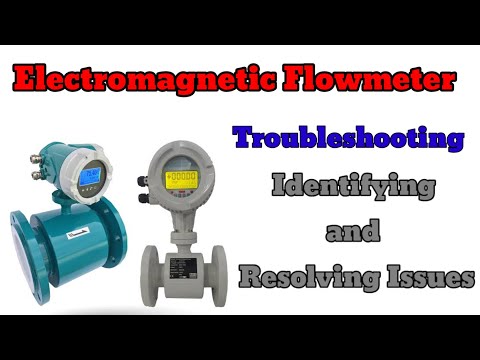
Watch: Electromagnetic Flowmeter Troubleshooting in Industrial Applications
This practical video covers identifying and resolving the most common flowmeter field problems—an excellent resource to share with your customers and to reference during your own root cause investigations.
Глоссарий основных терминов
| Term | Definition |
|---|---|
| Calibration drift | The gradual deviation of a meter’s output from its calibrated value over time, due to wear, contamination, or environmental effects. |
| Коэффициент понижения напряжения | The ratio of a meter’s maximum to minimum measurable flow while maintaining stated accuracy (e.g., 40:1 means 100 GPM max, 2.5 GPM minimum). |
| K-factor | A calibration constant expressing how many electrical pulses a turbine or vortex meter generates per unit volume (e.g., 200 pulses/liter). |
| HART protocol | A digital communication standard layered on 4–20 mA signals, allowing remote configuration and diagnostics without additional wiring. |
| ISO/IEC 17025 | The international standard for testing and calibration laboratory competence. Calibration certificates from accredited labs provide legally defensible measurement traceability. |
| Pulsating flow | Non-steady flow created by positive displacement pumps, causing systematic measurement errors in some meter types. |
| Wetted materials | The meter components that directly contact the measured fluid—liner, electrodes, body, seals. These must be chemically compatible with the fluid. |
| Straight-run requirement | The length of undisturbed, straight pipe required upstream and downstream of a flowmeter to ensure a stable velocity profile and accurate reading. |
| ATEX/IECEx | Certification standards for equipment used in potentially explosive atmospheres. Required for flowmeters installed in zones classified as hazardous. |
| Custody transfer | A metering application where the measured quantity directly determines payment or invoicing between parties—requiring the highest accuracy class and regulatory compliance. |
Frequently Asked Questions (FAQ)
1. How can I verify that flowmeters are properly calibrated before shipping them to customers?
Request calibration certificates from your supplier and verify that they reference a recognized standard (NIST-traceable or equivalent). For high-value or critical applications, establish a relationship with an ISO/IEC 17025-accredited laboratory and implement a spot-check protocol—verify 1 in 5 units from each batch. Document calibration status on every shipment record. Lab calibration typically costs $150–$600 per meter; on-site verification runs $500–$2,000. Either is trivially cheap compared to the cost of a calibration-related field complaint. For a structured approach to calibration verification, the Jade Ant Instruments Calibration Setup Guide provides methods, tools, and interval guidance.
2. What are the most common media compatibility mistakes distributors make?
The four most common: failing to get the full fluid name and concentration (not just “a cleaning chemical”); not considering viscosity at operating temperature rather than ambient; overlooking the temperature effect on seal and liner materials; and assuming that standard 316L stainless is compatible with any aqueous process stream. A laminated compatibility decision tree at every order desk, combined with a policy of requesting the fluid MSDS before quoting aggressive chemical applications, prevents the overwhelming majority of these mistakes.
3. How should I store flowmeters to prevent obstruction issues?
Store in clean, dry environments at 10–30°C with relative humidity below 75%. Keep all protective port caps in place. Maintain original anti-vibration packaging for units in storage. Implement a first-in, first-out rotation so that no unit sits in stock for more than 90 days without a targeted inspection. Flag units exceeding 90 days for pre-delivery bore inspection before they ship.
4. What questions should I ask customers during the specification phase?
The minimum ten: fluid name and concentration; operating temperature range; operating pressure range; flow rate range (min/normal/max); required measurement accuracy; pipe size and material; available straight-run upstream and downstream; installation environment (indoor/outdoor, ambient temperature, hazardous area classification); output signal required; and any regulatory or certification requirements. Capturing these in a standardized specification form before quoting prevents 80% of specification-driven complaints.
5. How often should flowmeters be recalibrated after installation?
This depends on the application criticality and technology. Custody-transfer meters: semi-annual or annual, per applicable standard (OIML R 137, API standards). Process control meters: every 1–3 years, or as determined by a site risk assessment. General monitoring: every 3–5 years in stable, clean applications. Customers’ specific regulatory requirements always take precedence over generic guidance. The recalibration interval should be defined during the specification phase and documented on the equipment record.
6. What’s the best way to handle a customer complaint about inaccurate readings?
Acknowledge within 24 hours, without defensiveness. Gather complete incident information using a standard form (serial number, installation date, symptom, expected vs. actual readings, recent process changes). Commit to a diagnostic timeline and honor it. Work through the three-category root cause framework: obstruction first, calibration second, compatibility third. Resolve with a solution that includes at least one element that exceeds the customer’s minimum expectation—a post-fix calibration verification, a root cause summary, or a proactive follow-up call.
7. How can I position myself as a technical expert instead of just a vendor?
Invest in technical training for your sales team so they can conduct application discovery conversations, not just order conversations. Create application-specific installation guides for the industries you serve. Offer free application reviews for new customers. Implement 30-day post-installation follow-up calls. Share relevant technical resources—calibration guides, troubleshooting references, selection guides—proactively rather than only when problems arise. Expertise that customers experience repeatedly becomes the reason they don’t consider switching suppliers.
8. What should be included in my pre-delivery inspection checklist?
Three categories: specification verification (fluid compatibility, flow range, temperature/pressure rating, output signal, hazardous area certification); physical inspection (model and size correct, bore clear of contamination, all port caps present, no shipping damage); and documentation (valid calibration certificate, installation manual, material conformance certificate if required). The completed checklist, filed with the unit’s serial number, protects you in any subsequent warranty dispute.
9. How do I know if a customer’s installation environment will cause problems?
Ask these five environment questions before every installation: What is the ambient temperature range at the installation point (min/max)? Is there vibration from nearby pumps, compressors, or rotating equipment? Is the installation classified as a hazardous area? Are there any sources of strong electromagnetic interference (VFDs, transformers, power distribution panels)? What is the typical humidity level and weather exposure? Cross-reference the answers against the flowmeter’s environmental specifications. Any mismatch should be resolved before the meter ships, not after it’s installed.
10. What’s the cost of not catching flowmeter mistakes before they reach customers?
The direct costs—replacement unit, return shipping, investigation time—typically range from $5,500 to $50,000 per incident depending on the application. The indirect costs are harder to quantify but often larger: lost repeat orders from a single customer over 12 months can represent $10,000–$30,000 in revenue; a negative referral in a tight industrial community can close doors that take years to reopen. The fully loaded cost of a major, poorly handled flowmeter complaint at a key account is routinely 20–50 times the gross margin on the original sale.
11. How should I handle supplier quality issues?
Establish clear written expectations around calibration documentation, testing procedures, and material traceability before formalizing any supply relationship. Implement incoming inspection procedures—document what you received and how it compared to the purchase order. For any non-conformance, issue a formal NCR (non-conformance report) to your supplier and require written corrective action. For suppliers representing significant revenue, schedule annual documentation audits and periodic facility visits. Develop qualified backup suppliers for product categories where you currently have single-source dependency.
12. What documentation should I maintain for each flowmeter sold?
At minimum: purchase order and supplier invoice (with part number and serial number); calibration certificate with traceability reference; pre-delivery inspection record (inspector, date, findings, pass/fail); customer order details (site, application, installation date); installation location and conditions (as provided by customer); and any post-installation support record (follow-up calls, complaint records, resolution documentation). This file, maintained by serial number, is your evidence in any warranty dispute and your database for detecting systematic quality patterns.
13. How can I prevent the same mistakes from happening repeatedly?
Track complaint root causes by category (obstruction, calibration, compatibility, specification error) and by product category. When a pattern emerges—for example, three complaints in six months about a specific meter model’s calibration—that’s a signal to escalate with your supplier and increase spot-check frequency for that product. Review the pre-delivery inspection checklist quarterly and update it based on what the complaint data reveals. Train your team on lessons learned from specific incidents (anonymized) so institutional knowledge accumulates rather than disappearing with individual staff.
14. What’s the best way to educate customers about proper installation?
Provide visual, application-specific installation guides—not just the manufacturer’s manual. A one-page guide for “installing a 2-inch electromagnetic meter in a horizontal wastewater line” is read; a 40-page manual is not. Supplement with short videos for the most common installation scenarios. Offer a pre-installation consultation call for first-time customers or complex applications. Follow up 30 days post-installation to confirm proper setup. Create a simple self-verification checklist customers can run in five minutes after installation.
15. How do I know if my quality control improvements are actually working?
Track four metrics monthly: complaint rate per 100 units shipped (target: below 2), customer retention rate (target: above 75% reorder within 12 months), average time to complaint resolution (target: below 5 business days), and root cause distribution across the three failure categories. Compare month-over-month and quarter-over-quarter. Quality improvements typically show measurable results within 60–90 days of consistent implementation. If metrics don’t improve, the process change is not being executed consistently—investigate the execution gap rather than revising the process.
For application-specific guidance on selecting and specifying industrial flow meters, visit jadeantinstruments.com. For a structured comparison of leading flow meter technologies and suppliers, see the Jade Ant Instruments Flow Meter Comparison Guide.