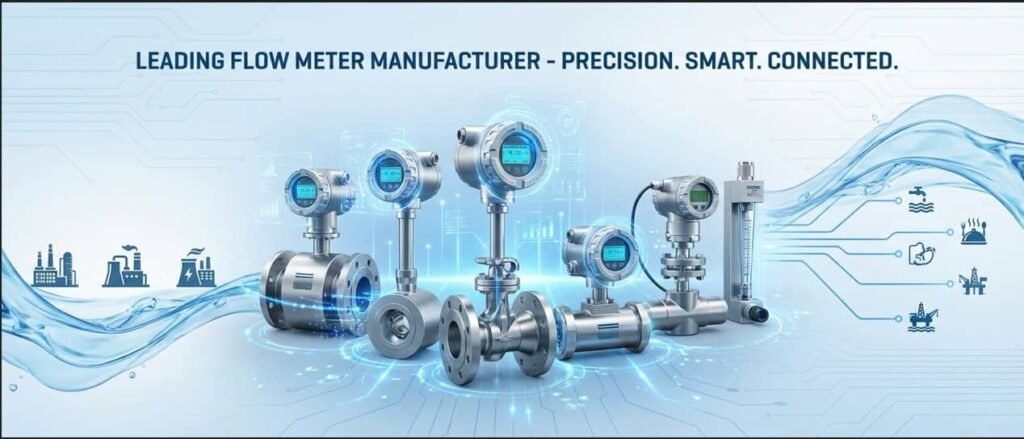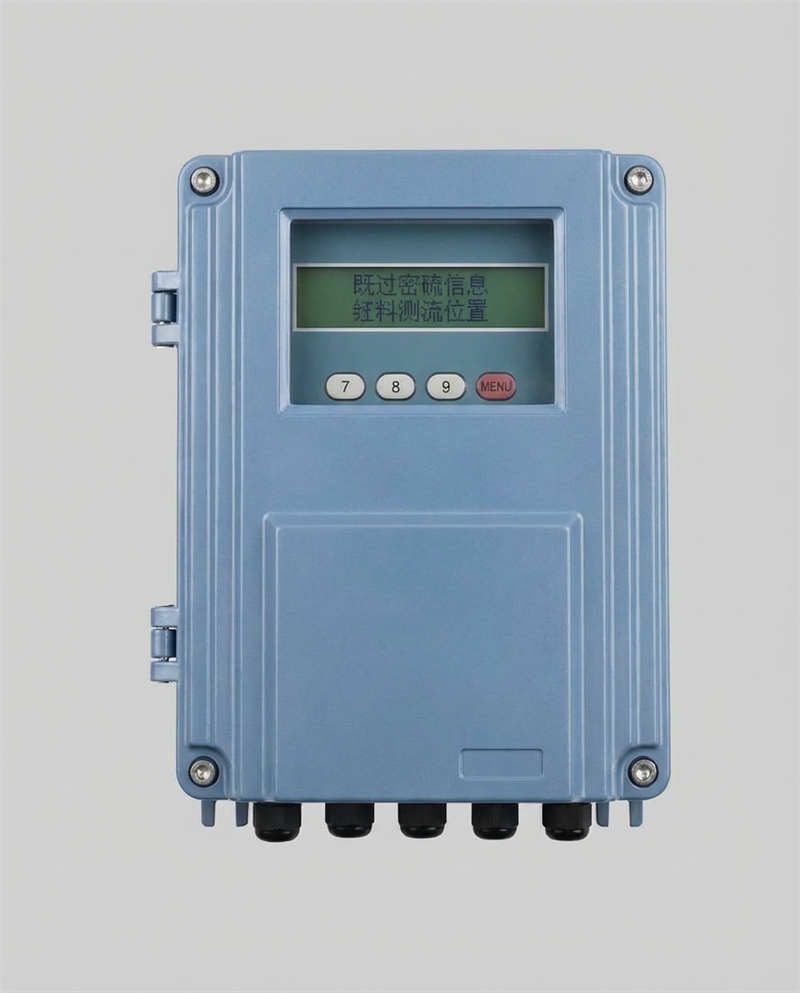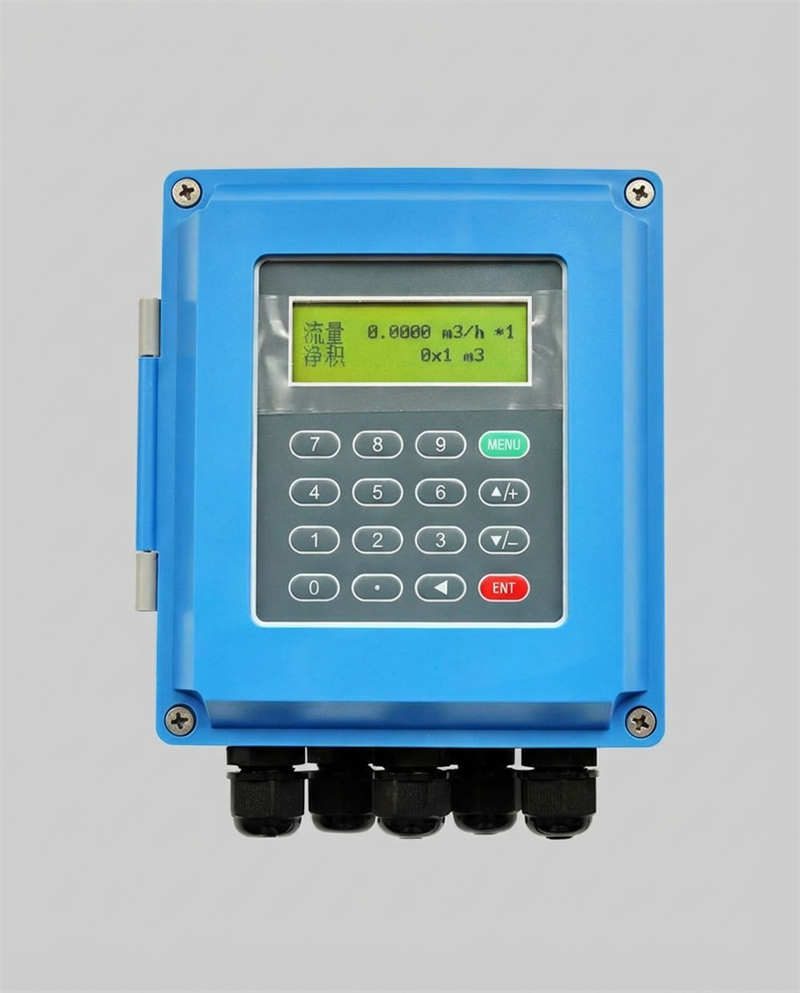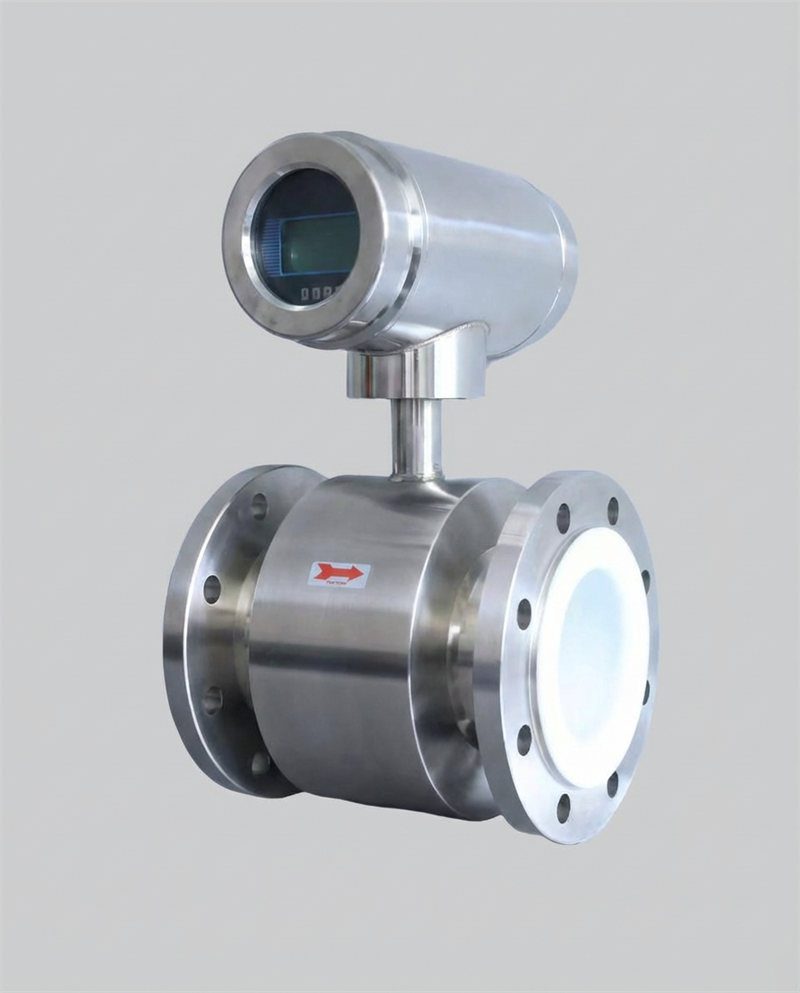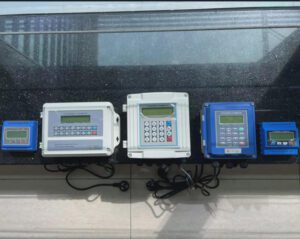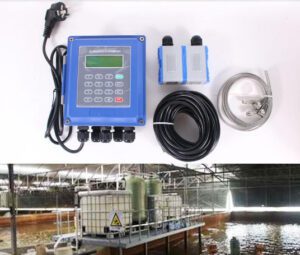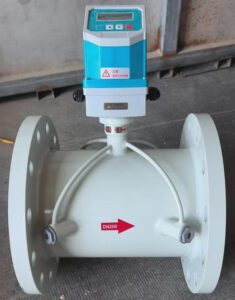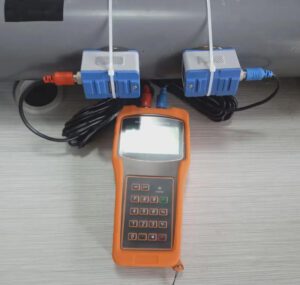
Ultra Flow Meter Comparison: Total Cost of Ownership, Installation and Reliability

Image: Cmarcante, public domain, via Wikimedia Commons
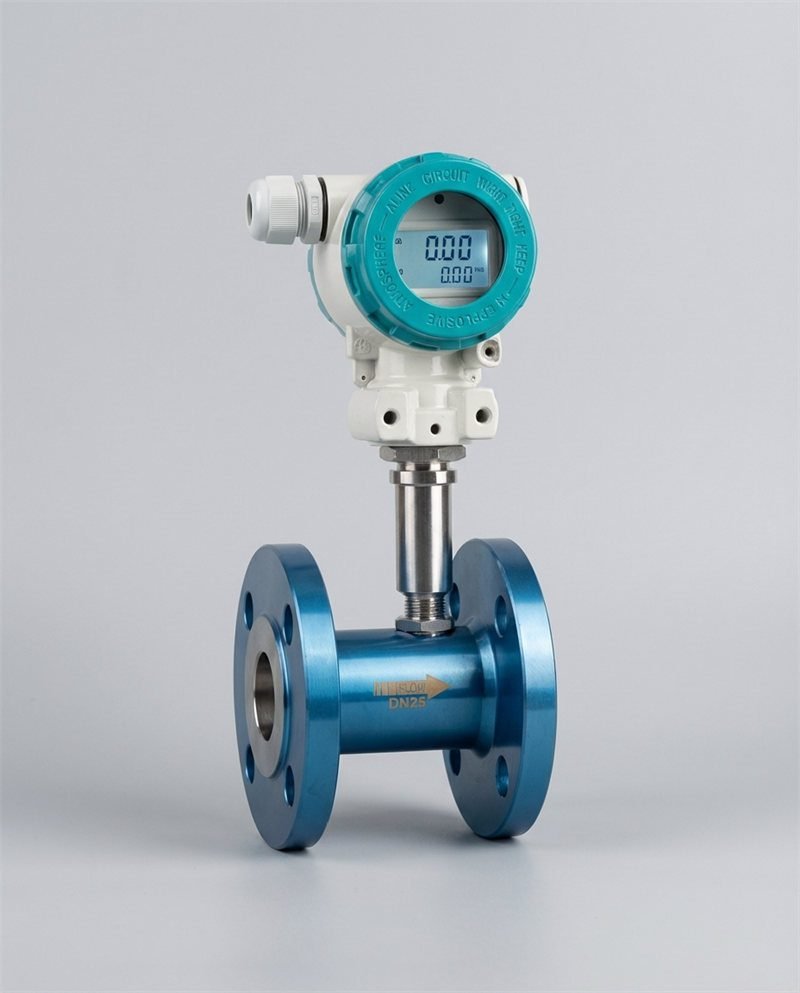
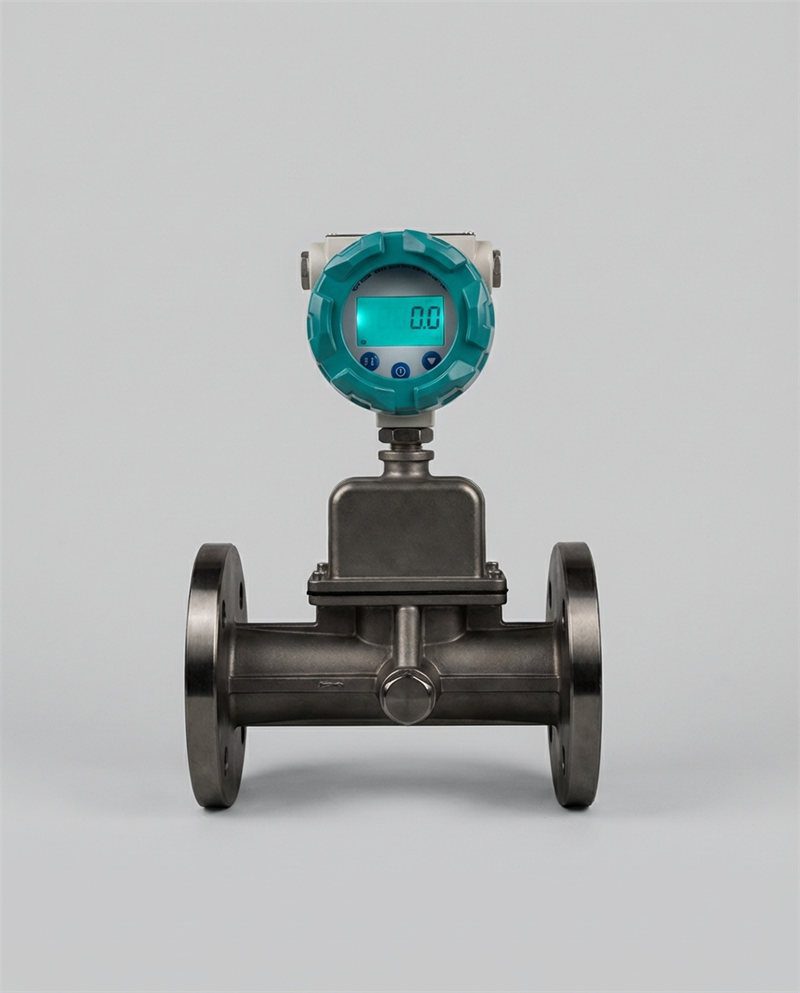
Quick answer: A flow meter is a ten-year decision, not a one-line item on a purchase order. In the 10-year example in this guide, the purchase price was about 3% of what a low-cost meter cost to own. The rest was maintenance, calibration, downtime, and measurement error. The Ultra Flow Meter is designed to cut those costs while still giving you accurate, rugged measurement.
I. The High Stakes of Flow Measurement in Industrial Infrastructure
Every pump, dosing skid, and distribution header depends on one number: how much fluid is moving. If that number is wrong by 2%, the error flows into your chemical use, your energy bill, your billing, and your compliance reports.
Flow measurement means finding out how much liquid, gas, or steam passes a point in a pipe over time. Regulators use it to check discharge permits. Operators use it to control pumps. Utilities use it to bill customers and find leaks.
If you buy or specify meters for a living, three problems probably sound familiar:
- Over-specification. You pay for 0.1% accuracy on a line where the control valve itself has 2% play. The extra accuracy never shows up in the process.
- Unexpected downtime. A meter with moving parts wears out on a Friday night, and a cheap part becomes an expensive shutdown.
- Integration failures. The meter measures well but will not talk to the PLC, so commissioning drags on for days.
This guide compares the Ultra Flow Meter with the technologies you are probably quoting against it. It is written for OEM and skid-mount builders, instrument distributors, EPC and system integrators, industrial MRO teams, and municipal utilities.
Инструменты "Нефритовый муравей builds magnetic, vortex, turbine, and ultrasonic meters, and supports OEM/ODM changes to connection types, liner materials, and protocols. That range shapes the comparison below. We know where each technology wins, so we can say plainly where it does not.
Plain-English term: TCO (Total Cost of Ownership). The full cost of a meter over its life: purchase, installation, calibration, maintenance, energy, downtime, and the cost of bad readings. Think of it as the price you pay after the price you were quoted.
II. Understanding the Competitive Landscape: Ultra Flow Meter vs. Traditional Alternatives
Each of the four common technologies measures flow in a different way. Each also fails in a different way.

Image: KROHNE OPTIMASS 7000 file page, CC BY-SA 4.0, via Wikimedia Commons
How the main technologies work
A Coriolis meter vibrates a tube and measures how the flowing fluid twists it. It reads mass flow directly. It is very accurate, but cost rises quickly on larger pipes.
Один electromagnetic meter (mag meter) uses Faraday’s law. A conductive liquid moving through a magnetic field creates a small voltage, and the voltage is proportional to speed. The magnetic flow meter principle needs a liquid that conducts electricity, such as water that contains ions.
Один ultrasonic meter sends sound pulses with and against the flow. The time difference tells you the speed. Transit-time and Doppler ultrasonic methods work differently. Transit-time suits clean fluids and Doppler suits dirty ones.
A vortex meter places a blunt object in the flow. The fluid sheds swirls behind it at a rate tied to speed. This vortex-shedding measurement is popular for steam and gas.
Side-by-side comparison
| Технологии | Типичная точность | Pressure drop | Moving parts | Typical installed cost (DN100) | Where it struggles |
|---|---|---|---|---|---|
| Кориолис | 0.1–0.2% | Высокий | None (vibrating tube) | $8,000–$30,000 | Cost on large pipes, pressure loss |
| Электромагнитный | 0.2–0.5% | Нет | Нет | $2,000–$8,000 | Needs conductive liquid (≥ 5 µS/cm) |
| Ultrasonic (multi-path) | 0.15–0.5% | Нет | Нет | $3,000–$20,000 | Air bubbles, heavy solids |
| Vortex | 0.75–1.5% | Умеренный | Нет | $1,500–$6,000 | Low flow, thick fluids, long straight pipe |
| Диафрагма | 1–3% | High (permanent) | Нет | $500–$3,000 | Energy loss, accuracy drift as the edge wears |
| Турбина | 0.5–1% | Low to moderate | Yes (rotor) | $800–$4,000 | Bearing wear, dirty fluids |
Ranges follow the technology comparison published in Jade Ant Instruments’ guide to ultrasonic flow meter industrial applications. Installed cost includes labor, pipe work, and commissioning. Your site will differ.
Where traditional meters fail
Three failure patterns show up again and again in field reports:
- Fluid sensitivity. Thick, dirty, or non-conductive fluids break the assumptions behind most designs. A mag meter cannot read diesel. A vortex meter loses accuracy in thick liquids.
- Installation limits. Many meters need 15–40 pipe diameters of straight pipe. On a compact skid, you simply do not have it.
- Drift. Bearings wear, electrodes foul, and electronics creep. The meter still shows a number, but it is the wrong one.
Industry insight: Most “bad meter” complaints are not sensor failures. Jade Ant’s published field-service data on 824 mag meters that failed their first as-found check found grounding faults (32%) and electrode fouling (26%) at the top of the list. The lesson for buyers is to ask about installation and grounding before you ask about accuracy.
The Ultra Flow Meter’s value proposition
The Ultra Flow Meter is built around three goals:
- Rugged: nothing in the flow path that wears out.
- Precise: accuracy suited to control and billing, without the price of a Coriolis meter.
- Plant-ready: outputs your control system already understands.
In short, it aims to close the gap between lab-grade accuracy and field-grade durability.
III. Performance Analysis by Use Case: Matching Technology to Application
No meter wins every application. The table below shows what usually breaks in each of the three hard cases, and what to check first.
| Заявка | What usually breaks | What to check first |
|---|---|---|
| Thick fluids and slurries | Clogging, rotor wear, liner abrasion | Full-bore body, liner material, solids content |
| High pressure / high temperature | Seals, liners, signal quality | Liner and seal temperature rating, pressure class |
| Low flow | Weak signal, “dead zones” at the bottom of the range | Minimum velocity, turndown, reducer sizing |
High-viscosity and slurry applications: solving clogging and wear
Viscosity is how thick a fluid is. Honey has high viscosity and water has low viscosity. Slurry is liquid carrying solid particles, such as mining tailings or cement slip.
Meters with parts inside the pipe, like turbine or paddlewheel meters, catch solids and wear fast. A full-bore, obstruction-free design lets solids pass through. Jade Ant’s own guidance notes that vortex meters lose performance above about 5 cP viscosity. Above that point, a magnetic or Coriolis design is usually safer.
For abrasive slurry, the liner matters as much as the sensor. In Jade Ant’s skid-mount magmeter guide, polyurethane is the pick for mining slurries and ceramic liners handle the hardest grit.
High-pressure and high-temperature environments: seal integrity and signal stability
Heat and pressure attack the soft parts first: liners, gaskets, and seals. A PTFE liner is rated to about 180 °C but can distort under full vacuum at high temperature. Steam-sterilized loops that swing from 20 °C to 140 °C stress liners through repeated cycles.
Ask these questions about any meter you quote:
- What are the liner and seal temperature limits, and do they match the worst case in your process, not just normal operation?
- What is the pressure class of the flange and the body?
- Does the signal stay stable when the pipe vibrates or the temperature swings?
For steam, a vortex meter with built-in temperature and pressure compensation is a common choice. Jade Ant’s vortex flow meter steam and gas guide covers sizing and straight-run needs.

Image: Pedro.orsi electromagnetic principle file page, CC BY-SA 3.0, via Wikimedia Commons
Low-flow precision: eliminating dead zones and measurement lag
Подготовка номера ко сну is the ratio between the highest and lowest flow a meter can measure accurately. A 100:1 turndown means the meter still works at 1% of full flow.
A “dead zone” is the bottom of the range where the signal is too weak to trust. Here is a simple calculation to show why it matters. On a DN100 pipe, the cross-section is about 0.00785 m².
So a meter that cannot read below 0.3 m/s cannot see anything under 8.5 m³/h on that pipe. A high-sensitivity design that reads down to 0.03 m/s sees flows as small as 0.85 m³/h. That is ten times lower. This difference decides whether you catch a leak or miss it (see Scenario B below).
IV. Engineering Integration: Simplifying the Installation Process for OEMs and EPCs
Footprint and space constraints
Straight run is the length of straight, undisturbed pipe a meter needs before and after it. Elbows, valves, and pumps make the flow swirl, and swirl causes error.
| Meter type | Upstream straight run | Downstream straight run |
|---|---|---|
| Диафрагма | 20–40 pipe diameters | Per standard |
| Vortex | 15–20 diameters (more after valves or pumps) | 5 diameters |
| Electromagnetic (full-bore) | About 5 diameters | 2–3 diameters |
Sources: orifice plate reference and Jade Ant’s vortex and magmeter documentation.
On a DN100 line, 15 diameters is 1.5 m of straight pipe for a vortex meter, against 0.5 m for a mag-style meter. On a compact skid, a metre of pipe is real money in steel and floor space.
The footprint argument gets stronger when one device replaces several. A meter that outputs flow plus temperature and pressure compensation removes extra process connections and extra I/O channels.
Integration ease: PLC and SCADA compatibility
The Ultra Flow Meter is designed to connect through the three protocols most plants already run:
- 4–20 mA is the analog signal almost every PLC card has accepted for decades.
- HART adds digital diagnostics on the same two wires.
- Modbus (RS-485) and Profibus carry richer data to SCADA and DCS systems.
If you are connecting to a legacy system, the 4–20 mA output means no hardware overhaul. You wire it to an existing analog input and scale it. This protocol explainer from Turbines Incorporated is a good primer for junior engineers on your team.

Image: Hondrej ultrasonic diagram file page, public domain, via Wikimedia Commons
Reducing field labor
Commissioning time is where good integration pays off. A meter with a documented Modbus register map and a clear configuration menu can be set up in minutes.
Here is an example for a 35-meter project (the numbers are assumptions you can replace with your own):
| Item | Before | After | Change |
|---|---|---|---|
| Commissioning per meter | 4.0 h | 0.75 h | −3.25 h |
| Total, 35 meters | 140 h | 26.25 h | −113.75 h |
That is about 114 hours saved, nearly three 40-hour weeks for a single engineer. With two engineers working in parallel, it is roughly a week and a half off the critical path.
V. Total Cost of Ownership (TCO) Beyond the Initial Purchase Price
CAPEX vs. OPEX: the “cheap meter trap”
CAPEX is money spent once, on purchase and installation. OPEX is money spent every year, on maintenance, calibration, energy, and downtime. Quotes show CAPEX. Your budget pays OPEX.
The pie chart below uses figures from the illustrative DN50 10-year model published in Jade Ant’s skid-mount guide. It shows where a low-cost mechanical meter’s money goes.
Purchase is 3% of the total. Maintenance, downtime, and measurement error together are 80%.
Now compare it with a value-engineered electronic meter in the same illustrative model.
| Cost category (10 years, USD) | Low-cost mechanical meter | Value-engineered electronic meter |
|---|---|---|
| Purchase | 600 | 1,400 |
| Установка | 800 | 800 |
| Calibration | 2,400 | 1,200 |
| Maintenance | 5,400 | 600 |
| Downtime | 4,000 | 800 |
| Measurement error | 6,000 | 1,200 |
| Total | 19,200 | 6,000 |
Illustrative DN50 model from Jade Ant’s skid-mount guide. Your numbers will vary by fluid, site, and crew cost, so swap in your own. The structure is what matters: the higher purchase price is a small slice of the total, and the savings sit in maintenance, calibration, and downtime.
Energy efficiency: pressure drop and pumping cost
Anything you put in a pipe takes energy to push fluid past. That lost pressure is called pressure drop, and your pump pays for it every hour it runs.
Chart uses the midpoints of ranges in Jade Ant’s magmeter guide: orifice 0.5 bar or more, turbine 0.1–0.3 bar, full-bore 0.01–0.1 bar.
Here is the math for a line moving 100 m³/h (0.0278 m³/s), with a pump-and-motor efficiency of 70% and 8,760 operating hours per year:
That is the yearly cost of a 0.5 bar loss, about 1,738 USD. At 0.05 bar, the same math gives about 174 USD. The gap is roughly 1,564 USD per year, or about 15,600 USD over ten years, on a single measurement point.
Industry insight: The orifice plate is cheap to buy and expensive to run. Its permanent loss is a share of the measured differential, which you can estimate as where β is the ratio of hole size to pipe size. At β = 0.5, about 73% of the differential is lost for good.
Lifecycle longevity
Service life and drift rate decide how many times you buy the meter. Published figures to benchmark against:
- Turbine bearings can lose about 0.3% accuracy per month under normal use, according to Jade Ant’s skid-mount guide.
- Electronic zero drift in mag meters adds roughly 0.1–0.5% bias per year (Jade Ant calibration guide).
- A well-selected mag meter body regularly exceeds 20–25 years of service. Inline ultrasonic transducers commonly last more than 15 years.
When you quote the Ultra Flow Meter, ask for the same three numbers in writing: service life, expected drift per year, and recommended verification interval.
VI. Maintenance Trade-offs and Operational Reliability
Calibration frequency
Calibration is checking a meter against a trusted reference and adjusting it if it has drifted. Verification just checks and reports, without adjusting.
Onsite recalibration is expensive because it often means a shutdown. The practical answer is a tiered plan, as set out in Jade Ant’s magnetic flow meter calibration tips:
- In-situ verification once a year (or twice a year for critical lines).
- Bench calibration every three to five years, or sooner if verification fails a 0.5% check.
- Reference equipment at least four times more accurate than the meter under test (the 4:1 rule).
Typical costs run from about 150 USD for an in-situ transmitter check to about 800 USD for lab calibration, plus removal and reinstall labor. In-situ checks that use the meter’s own diagnostics avoid most of the shutdown cost.
For traceability, NIST’s metrological traceability guidance explains why a calibration certificate needs an unbroken chain of comparisons, not just a sticker.
Wear and tear: lining and electrode materials
In a magnetic-style meter, the liner is the coating on the inside of the tube, and the electrodes are the sensing contacts that touch the fluid. Choosing these two wrongly causes most chemical-service failures.

Image: KROHNE OPTIFLUX 2000 file page, CC BY-SA 4.0, via Wikimedia Commons
| Material | Role | Best for |
|---|---|---|
| Hard rubber | Liner (0–80 °C) | Municipal water, wastewater, mild slurry |
| PTFE | Liner (−40 to 180 °C) | Strong acids, alkalis, chemical dosing |
| PFA | Liner (−40 to 150 °C) | Food, pharma, ultrapure water |
| Polyurethane | Liner (−20 to 50 °C) | Abrasive mining slurry, cement |
| Ceramic (Al₂O₃) | Liner | Highest abrasion, coarse tailings |
| 316L stainless steel | Electrode | Water, wastewater, mild chemicals |
| Hastelloy C-276 | Electrode | Hydrochloric and mixed acids |
| Titanium | Electrode | Seawater, bleach, chlorinated service |
| Tantalum | Electrode | Hot, strong acids |
Source: Jade Ant’s electromagnetic flow meter selection guide and skid-mount guide.
Standard stainless steel handles water well, but it can pit in chlorinated or acidic fluids. That is why a chemical-service meter should be specified with a matched liner and electrode, not “stainless, as standard.”
Diagnostic capabilities: predictive maintenance that prevents failure
A diagnostic is a self-check the meter runs on itself. Useful ones include empty-pipe detection, electrode impedance, coil current, and signal quality.
Here is why that matters. A rising electrode-impedance reading is an early warning of coating. If the value is up more than about 50% from the commissioning baseline, schedule cleaning before it turns into a 2–8% under-reading. You find the problem on a planned outage instead of in a quality complaint.
For ongoing care, Jade Ant’s magnetic water flow meter maintenance guide is a useful checklist for MRO teams.
VII. Risk Mitigation for System Integrators and Distributors
Certification and compliance
Missing paperwork delays projects. Before you commit, confirm which of these the supplier can provide for the exact model:
- ISO 9001 quality system certificate
- CE declaration
- ATEX or IECEx certificates for hazardous areas (the IECEx system lists approved certification bodies)
- ASME / ISO 5167 compliance statements where relevant
- OIML R49 for water meters used in billing
- Factory calibration certificate with traceability
Supply chain reliability
For MRO teams, the part you can’t get is more costly than the part that costs more. Ask for a written lead time on the meter and on a spare transmitter, and look at how many core configurations cover your sites. Jade Ant’s own guidance says three or four standard liner and electrode combinations cover over 80% of typical distributor orders. Fewer SKUs means a shorter list of spares.
Warranty and technical support
Supplier response time shows up on your schedule. When a meter reads strangely during commissioning, a same-day answer saves a day on the programme. Jade Ant offers remote diagnostic support through HART pass-through, so engineers can inspect transmitter diagnostics without a site visit.
VIII. Strategic Selection Matrix: A Decision Framework for Procurement Teams
Use these three criteria in order. Each one removes options before you get to price.
| Criteria | Question to ask | What it rules out |
|---|---|---|
| 1. Fluid chemistry and physical properties | Is it conductive? Thick? Dirty? Two-phase? Corrosive? | Mag meters on oils; vortex on thick liquids; turbines on slurry |
| 2. Accuracy grade vs. budget | What does the process actually need? | Paying for 0.1% when valve play is 2% |
| 3. Environmental conditions | Ambient temperature, vibration, electrical noise (EMI) | Electronics in unshielded, hot, noisy locations |
EMI (electromagnetic interference) is electrical noise from motors, drives, and welders that can scramble weak signals. Keep signal cables at least 300 mm from power cables and ground the shield at one end.
A simple weighted score
Give each option a score from 1 to 5 on each criterion, multiply by its weight, and add:
Here is a worked example for a conductive-water chemical dosing line, with weights of 40% for fluid fit, 30% for accuracy vs. budget, and 30% for environment:
| Option | Fluid fit (40%) | Accuracy vs. budget (30%) | Environment (30%) | Weighted score |
|---|---|---|---|---|
| Кориолис | 5 | 2 | 4 | 3.8 |
| Электромагнитный | 5 | 4 | 4 | 4.4 |
| Vortex | 2 | 3 | 4 | 2.9 |
Example scores are for illustration only. Run the same matrix with your own weights, and add the Ultra Flow Meter’s datasheet values as a row.
For a deeper checklist, Jade Ant’s flow meter selection guide walks through the same logic in more detail.
IX. Case Study Evidence: Real-World Problem Solving
A note on these scenarios: The three scenarios below are worked examples built on stated assumptions. They are not customer testimonials. Replace our assumptions with yours to size the benefit on a real project.
Scenario A: An OEM reducing skid-mount complexity by replacing three sensors with one
The situation: A dosing skid used a separate flow meter, temperature transmitter, and pressure transmitter. That meant three process connections, three cable runs, and three loop checks per skid.
The change: One meter with built-in compensation outputs flow, temperature, and pressure data together.
The math (assumptions: 3 h per device before, 3.5 h for the single meter, 85 USD per labor hour):
That saves about 467 USD per skid in labor, and across 120 skids a year, about 56,000 USD. You also remove two potential leak points and two I/O channels per skid. For more on this approach, see the skid-mount manufacturing benefits discussion.
Scenario B: A municipal utility reducing water loss with better low-flow detection
The situation: A DN100 district feed has a steady overnight leak of 3 m³/h. The existing meter has a 0.3 m/s floor, which equals 8.5 m³/h on that pipe. The leak sits below what the meter can see.
The change: A meter that reads down to 0.03 m/s shows flows of 0.85 m³/h and up, so the leak appears in night-flow data.
The math (assuming a production cost of 1.00 USD per m³):
That is real treated water and real money lost every year from one hidden leak. Utility teams comparing options will find Jade Ant’s water flow meter selection tips helpful, particularly the sections on low-flow conditions and installation errors.
Scenario C: An EPC meeting a strict project deadline
The situation: A water treatment project needs 35 meters commissioned before a handover date. At 4 hours per meter, that is 140 hours of instrument work.
The change: Pre-mapped Modbus registers, a clear menu, and bulk configuration cut commissioning to about 45 minutes per meter.
The result: About 114 hours saved, as calculated in Section IV. For an EPC, hours saved on commissioning are hours back in the schedule, and schedule is where penalties come from.
X. Future-Proofing Your Industrial Flow Systems
A meter that is cheap on the quote and costly in the field is the most expensive option on the bid. The numbers in this guide point the same way: purchase price is a small slice of TCO, and the big slices are maintenance, calibration, downtime, and measurement error.
The Ultra Flow Meter is designed to shrink those slices. It keeps moving parts out of the flow path, speaks the protocols your plant already uses, and fits tighter spaces than long-straight-run alternatives.
Final recommendation by buyer type
| Buyer | What to prioritize | First step |
|---|---|---|
| OEM / skid builder | Fewer devices per skid, low warranty exposure, compact piping | Count sensors per skid and test one consolidated design |
| EPC / system integrator | Protocol fit, commissioning hours, certificates on file | Request the register map and certificate pack before award |
| MRO / industrial terminal | Calibration interval, spare-part count, diagnostics | Ask for verification procedure and spares list |
| Instrument distributor | A small set of core configurations, low return rate | Stock three or four liner/electrode combinations |
| Municipal / utility | Low-flow sensitivity, remote power, billing-grade traceability | Run a night-flow study on your worst district |
Move from “commodity” to “value-engineered”
A commodity mindset asks, “What is the lowest price for a DN100 meter?” A value-engineered mindset asks, “What will this measurement point cost me over ten years, and what does a bad reading cost me?”
If you are comparing meters right now, send us your fluid, line size, flow range, and site conditions. The Jade Ant Instruments contact page has the email, WhatsApp number, and quote form. You can also browse the latest technical guides on the Jade Ant flow meter blog, or watch the video below for a fast overview of eight common meter types.

Video: “Types of Flow Meters in Piping (8 Types)” by HardHat Engineer. Click the image to watch on YouTube.
Глоссарий основных терминов
CAPEX / OPEX: CAPEX is one-time spending on buying and installing equipment. OPEX is the recurring cost of running it.
Calibration vs. verification: Calibration adjusts a meter to match a reference. Verification only checks whether it is still within tolerance. Example: a yearly in-situ check is verification. A lab flow rig run is calibration.
Coriolis meter: A meter that vibrates a tube and measures twisting to find mass flow. Example: measuring a viscous chemical where mass matters.
Electrode / liner: The electrode is the sensing contact in a magnetic meter, and the liner is the tube’s inner coating. Example: PTFE liner with Hastelloy electrodes for acid service.
EMI: Electrical noise from motors, drives, and welding that can disturb meter signals.
HART / Modbus / Profibus: Digital communication methods. HART rides on 4–20 mA wiring. Modbus and Profibus connect meters to PLC, SCADA, and DCS systems.
Pressure drop: Pressure lost as fluid passes through a device. Example: a 0.5 bar loss across an orifice plate raises pump power.
Slug flow / two-phase flow: A flow that carries gas and liquid together in uneven pockets. Most meters are calibrated for one phase only.
Straight run: The length of straight pipe a meter needs before and after it so the flow profile settles.
TCO (Total Cost of Ownership): All costs over the meter’s life, not only the purchase price.
Turndown: The ratio between the highest and lowest accurate flow. Example: 100:1 means a meter that works from 100% down to 1%.
Часто задаваемые вопросы
1. How does the Ultra Flow Meter reduce the overall footprint of a skid-mounted system?
It helps in two ways. First, a meter that needs about 5 pipe diameters of straight run takes far less pipe than one that needs 15–40, which matters on a compact skid. Second, if one device outputs flow plus temperature and pressure compensation, you remove separate sensors, their process connections, and their cable runs. Request the dimension drawing and straight-run table for your line size before you finalize the layout.
2. What is the actual difference in pressure drop between the Ultra Flow Meter and a standard orifice plate?
An orifice plate typically causes a permanent loss of 0.5 bar or more. Full-bore meters typically sit at 0.01–0.1 bar. On a 100 m³/h line, that gap is worth roughly 1,500 USD a year in pump energy, based on the calculation in Section V. For the Ultra Flow Meter’s exact figure, ask for the pressure-loss curve at your flow rate and compare it with the orifice’s calculated permanent loss.
3. For EPCs: does the Ultra Flow Meter require specific straight-run piping, or can it handle short-radius bends?
Every meter has a straight-run requirement, and two elbows in different planes right before the meter are the worst case for any technology. Full-bore designs usually need about 5 diameters upstream, far less than vortex or orifice designs. If your layout cannot meet the manual’s minimum, options include moving the meter, adding a flow conditioner, or checking the installed reading with a clamp-on reference during commissioning.
4. How does the sensor’s material composition handle highly corrosive chemicals compared to standard stainless steel?
Standard 316L stainless can pit in chlorinated or acidic fluids. A matched liner and electrode do better: PTFE or PFA liners with Hastelloy C-276 for acids, titanium for chlorinated or seawater service, and tantalum for hot, strong acids. Give your supplier the exact fluid, concentration, and temperature so they can check compatibility data for that combination.
5. What is the expected MTBF, and what are the calibration requirements, including in-situ options?
MTBF (mean time between failures) is the average operating time between breakdowns. Electronic meters with no moving parts commonly report MTBF above 100,000 hours, but you should ask for the Ultra Flow Meter’s stated figure and how it was derived. For calibration, a good practice is yearly in-situ verification using the meter’s diagnostics plus a reference check. Bench calibration every three to five years follows, or sooner if verification fails. In-situ checks avoid removing the meter, though they typically confirm performance within 1–2% rather than lab-grade accuracy.
6. Can the Ultra Flow Meter be integrated into existing legacy SCADA systems without a full hardware overhaul?
Yes, in most cases. The 4–20 mA output connects to any analog input card a PLC has accepted for decades, so you only need to scale the signal. If the system reads Modbus RTU over RS-485, you can bring in totals and diagnostics as well. HART adds remote configuration on the same wires. When a protocol does not match, a small gateway is usually cheaper than replacing the controller.
7. For distributors: what are the primary selling points when competing against lower-cost, generic brands?
Sell lifetime cost, not unit price. Generic meters often win on the quote, but the 10-year model shows maintenance, downtime, and measurement error dominate the bill. Three strong talking points are fewer warranty returns, a small set of core configurations (three or four liner/electrode combinations cover most orders), and quick technical answers when an installer calls. For stocking ideas, see Jade Ant’s magnetic flow meter brand comparison.
8. How does the device handle “slug flow” or two-phase fluids without losing accuracy?
No flow meter is fully immune to two-phase flow. Even 1–2% air by volume can weaken ultrasonic transit-time signals, and Coriolis and vortex meters also read differently when gas pockets arrive. The most reliable fixes are in the piping: mount the meter where the pipe is always full, keep it away from pump suctions and vents, and add a separator or deaerator if air is chronic. If your process has real slug flow, ask for test data on a comparable fluid before you buy.
9. In what ways does the Ultra Flow Meter lower operational risk for municipal water projects, including remote sites with limited power?
It lowers risk in three ways: better low-flow visibility (so hidden leaks show up in night-flow data), no moving parts to wear in dirty water, and self-diagnostics that flag problems early. For remote pump stations, check the power draw at 24 VDC and ask about battery or loop-powered options. Several meter types in the Jade Ant range offer battery or low-power modes, and wireless ultrasonic designs such as the smart ultrasonic flow meter report back without extra telemetry hardware.
10. What documentation and certification packages are provided to satisfy third-party project audits?
Ask for a package that lists the following, and get it in writing before award:
- Factory calibration certificate with traceability statement
- ISO 9001 quality certificate
- CE declaration of conformity
- ATEX or IECEx certificates, if the meter goes into a hazardous area
- Material certificates for wetted parts
- Installation, wiring, and Modbus register documentation
- Recommended verification interval and procedure
A supplier that can send these quickly usually also answers support calls quickly.