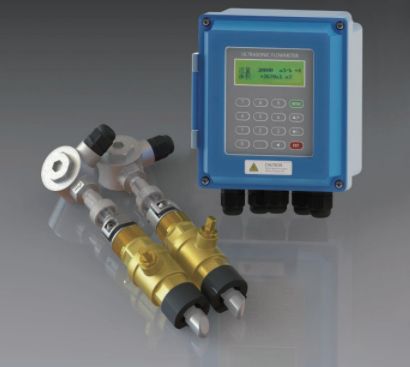
Executive Summary: The Evolution of Flow Measurement in Industrial & Municipal Applications
Flow measurement has always been one of those behind-the-scenes functions that nobody thinks about — until something goes wrong. A custody transfer dispute. An unexpected spike in water loss. A process that trips offline because nobody caught the flow anomaly in time.
For decades, mechanical flow meters were the default answer. They were familiar, relatively cheap to purchase, and the maintenance crews knew how to fix them. But familiarity has a cost. Mechanical meters wear down, drift out of calibration, and give operators no warning before they fail. In a water utility running 400 km of distribution mains, or a chemical skid shipping product by the ton, “no warning” translates directly into lost revenue, compliance risk, and unplanned downtime.
The shift from legacy mechanical meters to smart ultrasonic solutions is not a technology trend driven by marketing — it is a response to a measurable operational problem. The global industrial ultrasonic flow meter market was valued at USD 1.24 billion in 2025 and is projected to reach USD 2.19 billion by 2034, growing at a 6.5% CAGR. The drivers behind that growth are consistent across every sector: demand for real-time data, tighter custody transfer accuracy requirements, pressure to cut maintenance budgets, and the need to connect field instruments to SCADA, cloud platforms, and enterprise systems without expensive infrastructure overhauls.
This guide is written for the engineers, procurement managers, and operations leaders who are making actual purchasing decisions — OEM skid builders evaluating compact meter options, EPC integrators pricing wireless instrumentation into a new project, MRO managers looking for a replacement that doesn’t require a plant shutdown, and municipal engineers trying to hit their non-revenue water (NRW) targets. The goal is to give you the technical detail and real-world performance data you need to make a confident decision, not a glossy overview of features that sound impressive on paper.
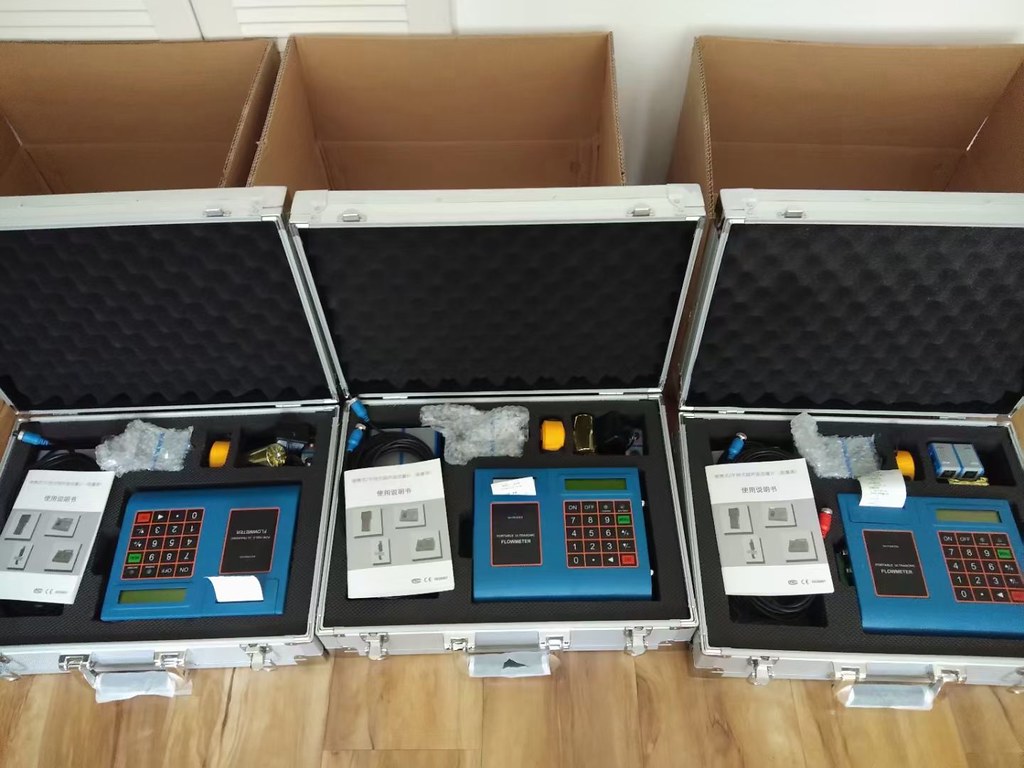
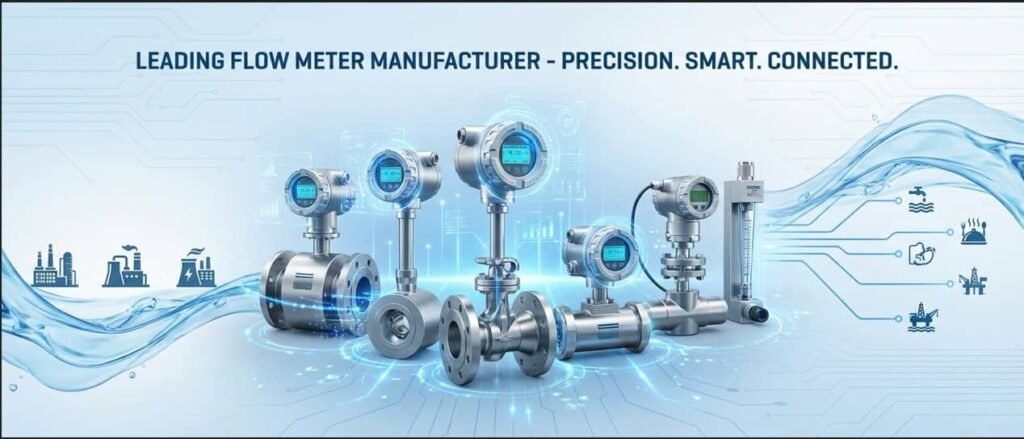
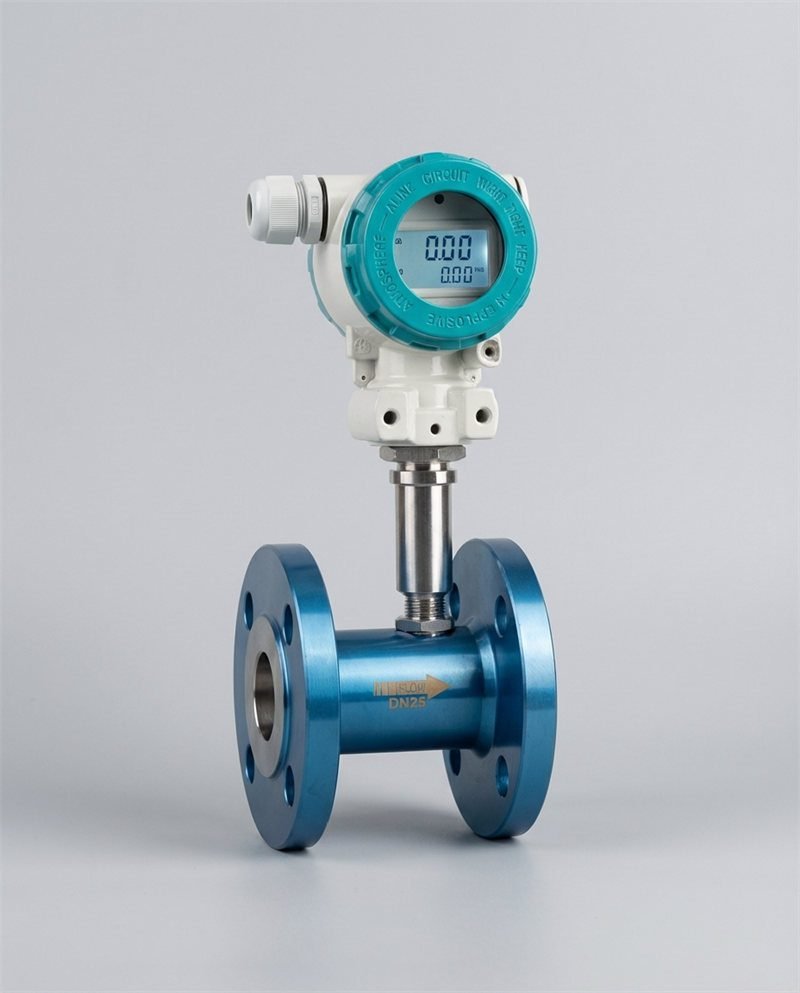
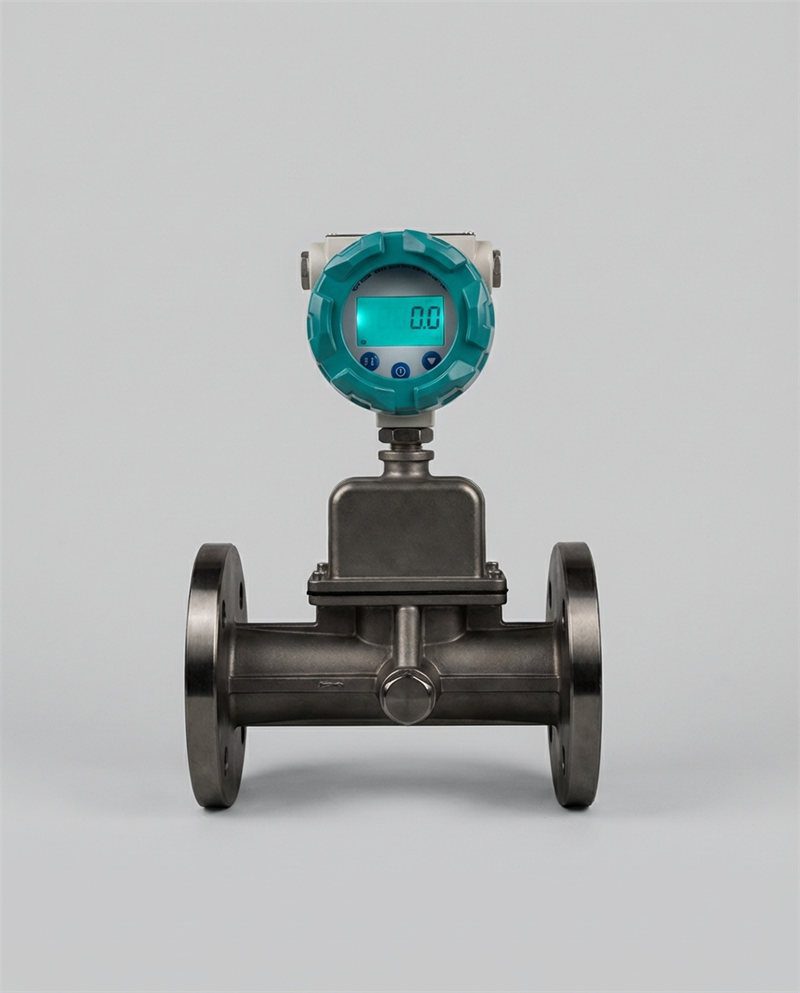
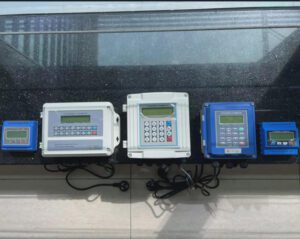
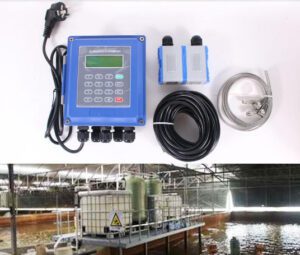
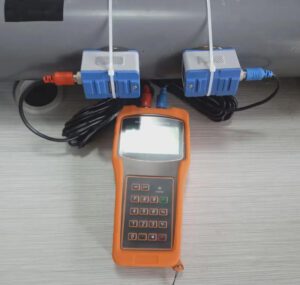
Modern industrial flow measurement installations demand non-intrusive, high-accuracy solutions that can be commissioned quickly without process shutdowns.
Pain Points in Traditional Flow Monitoring: Why Legacy Systems Are Holding You Back
If you are still running mechanical turbine or paddle-wheel meters as your primary process measurement — or if you inherited a facility where those meters were “good enough” a decade ago — the operational data tells a clear story.
Measurement drift you cannot see coming. Turbine meters have bearings and rotors. Under normal operating conditions, those rotating parts wear gradually. The meter does not fail suddenly — it drifts, producing readings that look plausible but are consistently 1.5% to 3% low. On a crude oil transfer line moving 50,000 barrels per day, a 1% measurement error means roughly $35 000 единиц неучтенной продукции каждые 24 часа. The meter keeps reporting, nobody raises an alarm, and the discrepancy compounds over months before a custody transfer audit surfaces it.
Maintenance that requires a process shutdown. Any mechanical meter with moving parts needs periodic inspection, bearing replacement, and recalibration. For an inline turbine meter in a process line, that means isolation valves, lockout-tagout, pipe disassembly, meter removal, bench calibration or replacement, reinstallation, and pressure testing. A routine maintenance event takes four to eight hours. In a continuous production environment, that window costs real money — and if the failure is unplanned, the downtime cost is typically three to five times higher.
No real-time visibility at remote sites. A distribution network spanning hundreds of kilometers, or a pumping station 40 km from the nearest control room, does not benefit from a mechanical meter that outputs a local reading on a dial. Someone has to physically visit the site to read the meter, identify a problem, and log the data. A leak that develops between readings can run for days before detection. In municipal water networks, this is not a theoretical risk: the IWA Water Loss publication documented a pilot project in Kigali, Rwanda, where smart metering reduced NRW by 23% within six months by enabling continuous monitoring of a network that had previously been read manually.
SCADA and PLC integration that was never designed in. Legacy mechanical meters typically output a 4-20mA analog signal at best — a single variable, no diagnostics, no configuration over the wire. Integrating them into a modern SCADA requires signal conditioning, protocol converters, and manual data entry. When an EPC integrator specifies 80 measurement points across a new facility, building that integration infrastructure for mechanical meters adds engineering hours that are better spent on commissioning and startup.
Troubleshooting requires a field visit, always. When a mechanical meter produces a suspicious reading, there is no remote diagnostic capability. A technician travels to the site, pulls the meter, inspects the rotor visually, checks the bearings, reinstalls it, and monitors it for a shift. If the problem was intermittent — a brief slug of gas causing a turbine overspeed event, for example — it may not reproduce during the inspection visit and the investigation closes without resolution.
These are the operational realities that modern smart ultrasonic meters are designed to address — not by being marginally better than mechanical meters on a specification sheet, but by changing the fundamental architecture of how flow data is captured, communicated, and acted on.
Introducing Smart Ultrasonic Flow Meters: A New Era of Precision & Connectivity
Ultrasonic flow meters measure fluid velocity using sound — specifically, by comparing how long it takes for ultrasonic pulses to travel with the flow versus against it. That difference in travel time, called delta-t (Δt), is directly proportional to fluid velocity. Multiply velocity by the pipe’s cross-sectional area and you have volumetric flow rate. Because there are no moving parts in contact with the fluid, there is nothing to wear, nothing to foul, and no reason for the measurement to drift the way a mechanical rotor does.
The transit-time principle is well established, but what defines the current generation of “smart” ultrasonic meters is the layer of capability built on top of the core measurement: dual-stream (bidirectional) signal processing, integrated wireless radios, touchscreen interfaces, web-based configuration tools, and self-diagnostic firmware that monitors signal quality in real time and alerts operators before a measurement problem develops.
Dual-stream measurement deserves specific attention because it affects both accuracy and reliability in ways that single-path meters cannot match. In a dual-stream (two-path) configuration, two pairs of transducers measure the flow profile simultaneously along two different acoustic paths through the pipe cross-section. The meter’s signal processor averages the two velocity measurements, which compensates for asymmetric flow profiles caused by bends, valves, or other disturbances upstream of the meter. The result is a flow reading that is closer to the true average velocity across the full pipe cross-section — not just the centreline velocity that a single-path meter samples. Additionally, if one transducer signal is degraded by acoustic noise, entrained gas, or fouling, the meter continues to operate on the second path rather than failing to output. This redundancy matters in industrial environments where measurement continuity is a process safety requirement.
For OEM skid builders and system integrators at Инструменты "Нефритовый муравей, the practical implication is that a dual-stream ultrasonic meter can be installed with shorter upstream straight-pipe runs than a single-path meter requires — reducing the physical footprint of the metering skid, which is frequently a constraint in compact package unit designs.

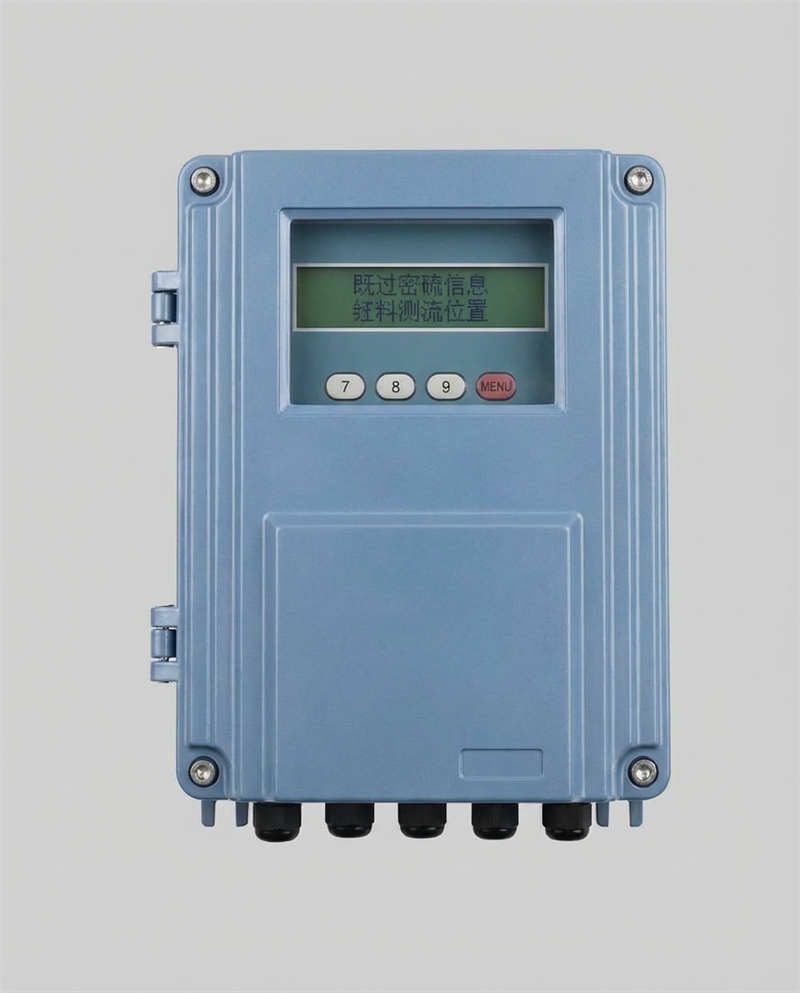
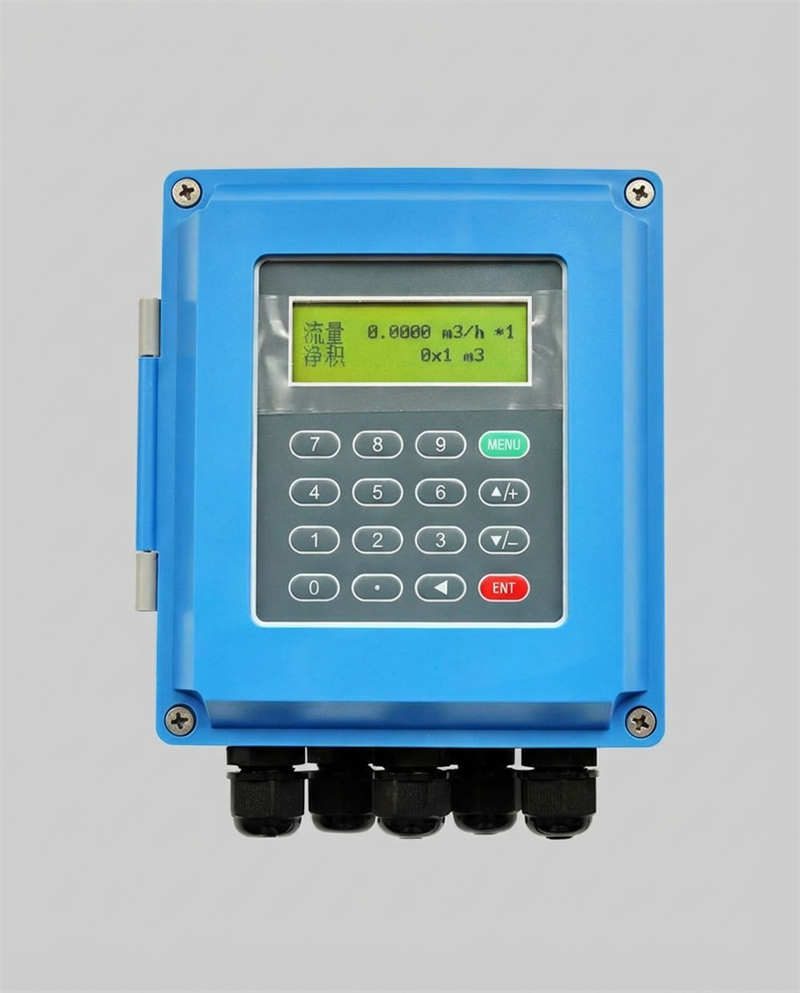
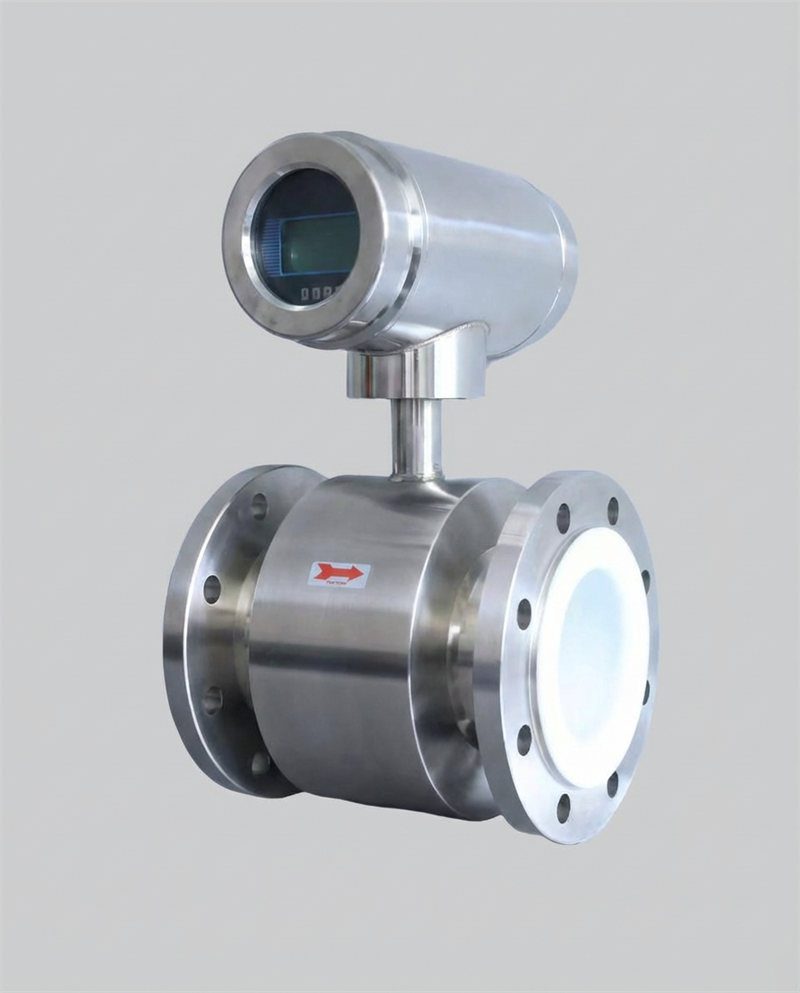
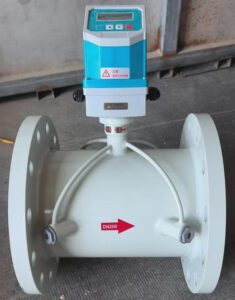
Smart ultrasonic meters combine high-accuracy transit-time measurement with onboard displays, wireless radios, and self-diagnostics — replacing three separate devices with one integrated instrument.
Key Innovations Transforming Field Operations
Wireless Connectivity: LoRaWAN, NB-IoT, Wi-Fi, and Bluetooth
The wire was always the problem. Running a HART or Modbus cable from a field meter to the nearest junction box is straightforward in a greenfield plant where cable trays are designed in from the start. In a retrofit application — an existing water network, a remote pumping station, an offshore platform — the cabling cost can exceed the cost of the meter itself. Underground cable runs require excavation. Conduit through hazardous areas requires ATEX-rated fittings. Cable terminations in humid environments corrode.
Wireless connectivity removes all of that. LoRaWAN (Long Range Wide Area Network) is particularly suited to municipal and utility applications: a single LoRaWAN gateway with a clear line of sight can cover 10–15 km in open terrain, connecting dozens of meters scattered across a distribution network on a single installation. Battery-powered LoRaWAN meters transmit flow readings every 15 minutes and can run for 5–10 years on a single battery pack — relevant for underground installations where battery replacement is itself a maintenance event.
NB-IoT (Narrowband IoT) uses licensed cellular spectrum, which means it works wherever there is mobile network coverage, including underground vaults and building basements that block LoRaWAN signals. For municipal meters installed in pavement-level chambers, NB-IoT is frequently the preferred wireless technology because it does not depend on the utility deploying its own gateway infrastructure.
Wi-Fi and Bluetooth serve different roles. Wi-Fi (802.11 b/g/n) enables high-bandwidth, low-latency communication within a facility — suitable for process plants where access points are already deployed for IT infrastructure. Bluetooth Low Energy (BLE) enables a field technician to connect their smartphone to the meter for on-site configuration and data download without carrying a dedicated programming device.
Touchscreen and Local Web Interface: Setup Without Specialists
Traditional electronic flow meters were configured using handheld programmers with proprietary communication protocols, or by navigating menu structures on a small LCD screen using physical push-buttons. Neither approach was designed for ease of use in the field, and both required personnel who were trained on that specific instrument family.
Modern smart ultrasonic meters include a full-color touchscreen that presents configuration menus, live measurement data, trend graphs, and diagnostic information in plain language. A field technician who has never seen this specific meter model before can enter pipe diameter, pipe material, fluid type, and output configuration in under 10 minutes using screen prompts that guide them through each parameter.
The local web interface extends this capability: the meter runs a built-in web server. Any device with a browser — a phone, a tablet, a laptop — that connects to the meter’s Wi-Fi access point can access the full configuration interface without installing any software. This matters for EPC integrators commissioning a multi-meter system, where a single engineer with a tablet can configure and verify all meters on a skid without moving physical hardware or connecting cables.
Dual-Stream Signal Processing: Accuracy Where It Matters
Dual-stream (two-path) signal processing delivers three measurable performance improvements over single-path measurement. First, it improves accuracy in disturbed flow conditions: installations close to elbows, reducers, or partially open valves produce asymmetric velocity profiles that a single acoustic path will misread. Two paths at different positions average across the profile, reducing the velocity profile error from 2–5% to typically 0.5–1%. Second, it enables bidirectional measurement with equal accuracy in forward and reverse flow — important for custody transfer, heat recovery systems, and any process where reverse flow is a normal operating mode. Third, it provides redundancy: if one transducer pair is impaired by signal noise or fouling, the second path continues to measure. The meter flags the degraded condition via its diagnostic output but continues to report flow without interruption.
Web-Based Configuration Tools: Commissioning at Scale
For system integrators deploying 50 or 500 meters across a facility or network, individual meter-by-meter configuration using local interfaces is impractical. Web-based configuration tools allow a configuration profile — pipe parameters, communication settings, alarm thresholds, output scaling — to be defined once and pushed to multiple meters simultaneously via a browser interface or API. Commissioning time that might have taken two technician-days per meter with a legacy instrument can be reduced to under 15 minutes per meter using bulk configuration tools. A chemical skid manufacturer working with this technology reported cutting commissioning time by 40% on a 12-meter skid package, representing a direct reduction in factory labor cost per unit shipped.
Modular Design: OEM and Retrofit Flexibility
A modular transmitter architecture separates the sensor assembly (transducers, pipe spool) from the transmitter electronics (display, radio, communication board). For OEM skid manufacturers, this means the transmitter can be panel-mounted at a convenient location while the sensor is installed on the process pipe — accommodating both compact skid designs and applications where the instrument must be remotely accessible. Modular designs also support field upgrades: a radio communication module can be added to a base meter, or a communication protocol board can be swapped without replacing the entire instrument.
Industry-Specific Benefits: Tailored Solutions for Your Business Model
Производители оригинального оборудования и модульных установок
OEM customers who build skid-mounted process packages — chemical dosing units, filtration skids, heat exchanger packages — need meters that integrate cleanly into the physical and electrical architecture of the skid without requiring custom engineering for every unit. Smart ultrasonic meters address this through compact transmitter form factors, standard DIN-rail mounting options, pre-configured Modbus register maps that match common PLC data structures, and OEM white-label programs that allow the manufacturer’s branding to appear on the instrument face. When the skid ships to the end customer, the meters look like a designed-in component, not an afterthought sourced from a third-party catalog.
The API support built into modern smart meters — REST APIs for configuration and data access — enables OEM software platforms to pull real-time flow data from the meter and display it within the skid’s HMI without a custom driver development project.
Дистрибьюторы и импортеры медицинского оборудования
For distributors, smart ultrasonic meters represent a genuine product differentiation opportunity in a market where basic flow meters from multiple suppliers are indistinguishable on specification and compete primarily on price. A meter that a distributor can demonstrate measuring flow through a pipe without tools, configuring from a smartphone, and sending data wirelessly to a cloud dashboard is a product that sells itself in a demonstration. The higher unit margin on smart meters versus basic analog-output units, combined with the accessories revenue (sensors, gateways, software licenses), makes the product line economics significantly more attractive than commodity mechanical meter distribution.
Technical support burden is also lower: meters with self-diagnostic firmware identify their own problems and communicate the issue in plain language, reducing the volume of field returns and technical support calls that consume distributor staff time.
EPC и системные интеграторы
An EPC integrator’s cost on an instrumentation project is dominated not by the purchase price of the meters but by the engineering hours spent specifying, documenting, configuring, and commissioning them. Smart ultrasonic meters with plug-and-play wireless connectivity and standardized communication protocols reduce engineering hours in three specific ways. Pre-configured Modbus register maps eliminate the driver development work that custom protocol mapping requires. Web-based bulk configuration eliminates meter-by-meter field programming. Built-in self-diagnostics reduce the commissioning site visits needed to verify that each meter is working correctly.
One integrator deploying 35 meters across a water treatment plant expansion estimated that switching from wired analog-output meters to wireless smart ultrasonic meters saved approximately 180 engineering hours on the project — the equivalent of more than four full working weeks of senior instrumentation engineer time.
Промышленные терминалы и компании, занимающиеся техническим обслуживанием, ремонтом и эксплуатацией (MRO)
For facilities running continuous operations — tank farms, industrial terminals, process plants — the relevant metric is not the accuracy specification on the meter’s data sheet but the probability that the meter is still measuring correctly six months from now, without anyone having touched it. Smart meters with self-diagnostics address this directly: the meter continuously monitors its own signal strength, signal-to-noise ratio, temperature, and electronics health, and triggers an alert if any parameter moves outside the acceptable range. A maintenance team that receives a diagnostic alert can schedule a planned intervention. The same team without diagnostic alerts responds to a process trip or a custody transfer discrepancy — which is three to five times more expensive.
Predictive maintenance capability built on meter diagnostics data allows MRO teams to shift from calendar-based maintenance schedules (inspect every 12 months regardless of condition) to condition-based maintenance (inspect when the data indicates a need), reducing total maintenance events by 30–50% in well-documented case studies from the broader predictive maintenance literature.
Муниципальные и коммунальные предприятия
Non-Revenue Water — the gap between water produced and water billed — costs the global water industry an estimated $6.8 billion annually (Metron, 2025). Real losses (physical leakage) account for roughly 60% of that figure; apparent losses (meter error, unauthorized consumption) account for the rest. Smart ultrasonic meters address both categories simultaneously. High-accuracy measurement reduces apparent losses by ensuring that billed volume matches actual consumption. Real-time wireless monitoring with low-flow detection capability identifies leaks in distribution mains that might otherwise run for months without detection.
A city in Spain documented in the SWAN Forum case study library reduced meter reading time from 21 days to under 5 hours and achieved savings of more than €70,000 per year following a smart metering rollout. The automated reporting capability of wireless meters also eliminates the manual data collection and transcription process that consumes utility staff time on monthly billing cycles.

For municipal utilities managing hundreds of kilometers of distribution mains, wireless ultrasonic meters with LoRaWAN connectivity eliminate the need for costly cable infrastructure while delivering continuous real-time flow data.
Seamless Integration: Bridging OT and IT Systems
The gap between Operational Technology (OT) — the PLCs, SCADA systems, and field instruments that control physical processes — and Information Technology (IT) — the enterprise networks, databases, and cloud platforms that manage business data — has historically been both technical and cultural. OT systems were designed for reliability and determinism; IT systems were designed for connectivity and scalability. Connecting them required protocol converters, data historians, and custom integration middleware that was expensive to build and expensive to maintain.
Modern smart ultrasonic meters are built with that gap already bridged. Modbus RTU and Modbus TCP connect directly to any PLC or SCADA platform — Siemens, Rockwell, Schneider, Honeywell, ABB — using the industrial standard that every automation engineer knows. MQTT (Message Queuing Telemetry Transport) is the protocol that connects to cloud platforms — AWS IoT Core, Azure IoT Hub, Google Cloud IoT — using a publish-subscribe architecture that was designed for low-bandwidth, unreliable network conditions, making it ideal for meters communicating via cellular or LoRaWAN. OPC UA is the IIoT-era standard for structured data exchange between field devices, edge computers, and enterprise systems, carrying not just measurement values but metadata, units, timestamps, and data quality flags.
From a cybersecurity perspective, the wireless and web-based features of smart meters introduce attack surface that did not exist with wired analog instruments. Responsible manufacturers address this through HTTPS and TLS encryption for web configuration interfaces, role-based access control with separate credentials for read-only monitoring versus configuration changes, firmware signing to prevent unauthorized firmware updates, and VPN tunnel options for meters communicating over public cellular networks. These are not optional add-ons — they are baseline requirements for any instrument connecting to a facility’s industrial network in 2025 and beyond.
Compatibility with digital twin initiatives is increasingly relevant: a digital twin of a process plant or water distribution network that relies on flow measurement data to maintain model accuracy needs a reliable, timestamped, quality-flagged data stream from every measurement point. Smart ultrasonic meters with MQTT output deliver that stream directly to the digital twin platform without a custom integration layer.
Case Studies: Real-World Impact Across Sectors
Water Utility: Leak Response Time Cut by 60%
A regional water utility in Southeast Asia managing approximately 850 km of distribution mains was experiencing NRW rates of 32% — well above the regional benchmark of 20%. The primary problem was not infrastructure age but measurement latency: mechanical meters at district metering area (DMA) boundaries were read manually on a monthly cycle. A leak developing in week one of a billing cycle could run for 25–28 days before anyone detected an anomalous flow balance.
The utility retrofitted 120 DMA boundary meters with wireless ultrasonic meters transmitting 15-minute interval data via NB-IoT to a cloud analytics platform. The platform calculated DMA flow balances in real time and triggered alerts when the balance deviated beyond a threshold consistent with normal leakage variation.
Within six months of deployment, average leak detection time dropped from 18 days (roughly half the billing cycle) to under 7 days — a reduction of 61%. NRW fell from 32% to 24% in the first year, representing a recovery of approximately 8% of produced water volume. At a production cost of USD 0.35/m³ and an annual production of 45 million m³, the recovered water volume had an economic value of approximately USD 1.26 million per year — against a meter retrofit investment of approximately USD 420,000, yielding a payback period of under five months.
Chemical Skid Manufacturer: Commissioning Time Reduced by 40%
A manufacturer of chemical dosing and mixing skids for the water treatment and food processing industries was building 8–12 skids per month, each incorporating between 4 and 18 flow measurement points. The previous meter specification used conventional inline turbine meters with 4-20mA outputs. Commissioning each skid required a technician to connect a laptop via RS-485 to each meter individually, configure pipe parameters and output scaling using proprietary software, verify the output signal at the PLC, and document each meter’s configuration in the as-built record.
Switching to smart ultrasonic meters with web-based configuration and auto-detected Modbus register maps allowed one technician with a tablet to configure all meters on a 12-meter skid in a single session. Bulk configuration templates eliminated the repetitive data entry. Modbus TCP over Ethernet replaced RS-485 point-to-point connections, allowing all meters on the skid to be reached from a single Ethernet port on the PLC. Average commissioning time per skid fell from 14 hours to 8.4 hours — a 40% reduction. At a technician cost of USD 65/hour, the saving per skid was approximately USD 364, scaling to over USD 50,000 per year across their production volume.
Oil Terminal: Custody Transfer Accuracy Improved with Dual-Stream Measurement
An oil terminal handling multiple product grades — diesel, gasoline, jet fuel, and fuel oil — was using single-path turbine meters for custody transfer at loading rack positions. Calibration records showed that the turbine meters were drifting at a rate of 0.3–0.8% per quarter, requiring quarterly recalibration of all 24 loading rack meters at a cost of approximately USD 800 per meter per calibration event — USD 76,800 per year in calibration costs alone.
Additionally, the turbines required annual bearing replacement on high-throughput positions (those passing more than 50,000 m³/year), adding another USD 40,000–55,000 in annual maintenance.
Replacing the 24 turbine meters with inline dual-path ultrasonic meters with OIML R117-compliant accuracy reduced custody transfer measurement uncertainty from ±0.5% (with drift) to a consistent ±0,21 TP3T (stable, no moving parts). The in-situ verification interval was extended from quarterly to annually using the meter’s built-in zero-flow verification and signal diagnostics. Annual calibration and maintenance cost dropped from approximately USD 132,000 to USD 28,000 — a saving of USD 104,000 per year. Payback on the USD 168,000 meter replacement investment was achieved in 19 months.
Total Cost of Ownership (TCO) Analysis: Why Smart Meters Pay for Themselves
The purchase price of a smart ultrasonic meter is typically 1.5 to 2.5 times higher than an equivalent mechanical meter. That comparison, made at the purchasing stage, is the wrong one. The right comparison is the total cost of owning and operating the meter over a 10-year service life — including installation, calibration, maintenance, downtime, and the value of avoided measurement errors.
The table below illustrates a representative TCO comparison for a DN100 process liquid measurement point over 10 years:
| Категория затрат | Turbine Meter (Mechanical) | Smart Ultrasonic Meter |
|---|---|---|
| Покупная цена | USD 1,200 | USD 2,800 |
| Installation (including cabling) | USD 1,800 | USD 1,200 |
| Annual calibration (10 years) | USD 8,000 | USD 2,000 |
| Maintenance / bearing replacement (10 years) | USD 9,000 | USD 400 |
| Unplanned downtime events (avg. 2 over 10 years) | USD 6,000 | USD 800 |
| Measurement error cost (custody transfer, 10 years) | USD 12,000 | USD 2,400 |
| 10-Year TCO | USD 38,000 | USD 9,600 |
Sources: compiled from industry TCO studies, VP Instruments flow meter ROI analysis, and field maintenance records across chemical and utility applications. Values are illustrative for a mid-range industrial application; actual costs vary by site conditions.
The 10-year TCO advantage of the smart ultrasonic meter in this example is approximately USD 28,400 per measurement point — before accounting for the value of real-time data access, remote diagnostics, and integration savings.
Return on investment is typically achieved in 12 to 18 months in most industrial and utility applications, with faster payback (under 6 months) in high-throughput custody transfer positions or facilities with historically high mechanical meter maintenance costs. Longer payback periods (18–30 months) apply in lower-criticality monitoring applications where the mechanical meter’s measurement drift does not create significant financial exposure.
The no-moving-parts design also means that the smart ultrasonic meter’s performance does not degrade with use. A turbine meter installed today will be measurably less accurate in year three due to bearing wear. A clamp-on or inline ultrasonic meter installed today will be producing the same measurement quality in year three, year seven, and year ten — with no wear mechanism to cause drift.
Implementation Roadmap: From Selection to Deployment
Deploying smart ultrasonic meters effectively requires more than ordering the hardware. The meters perform well; the integration succeeds or fails based on the planning that surrounds the installation.
Step 1 — Application Survey. Before specifying a meter model, document the specific conditions at each measurement point: pipe material, pipe diameter, wall thickness, fluid type, expected flow velocity range, temperature, pressure, upstream disturbances (elbows, valves, reducers), and the measurement purpose (custody transfer vs. process monitoring vs. energy sub-metering). For clamp-on meters, pipe condition matters: use an ultrasonic thickness gauge to verify wall thickness and check for internal corrosion or scale that could affect acoustic coupling. A 30-minute field survey per measurement point prevents specification errors that are expensive to correct after installation.
Step 2 — Technology Selection. Match the application requirements to the appropriate meter architecture. Fiscal custody transfer requiring ±0.2% accuracy demands inline dual-path or multi-path meters with OIML or API MPMS certification. Process monitoring where ±1–2% is acceptable can use clamp-on single-path or dual-path meters. Remote sites without power infrastructure need battery-powered meters with LoRaWAN or NB-IoT. Facilities with existing Modbus infrastructure should specify meters with Modbus TCP/RTU as the primary output.
Step 3 — Communication Architecture. Decide how meter data will flow to the control system or cloud platform before specifying the meters. A wired Modbus RTU network requires RS-485 cabling runs to be designed. A wireless LoRaWAN system requires gateway placement and network coverage verification. A cloud-connected system requires an IoT gateway at each site with a reliable 4G or Ethernet backhaul. Getting the communication architecture wrong means re-specifying meters after installation — a preventable mistake.
Step 4 — Configuration and Commissioning. Use the meter’s web configuration interface or bulk configuration tool to load the application-specific parameters for all meters before the field team deploys. Technicians arrive on site with meters that are already configured — they install, verify the output against a reference, and move on. This approach scales to 50 or 500 meters without proportionally increasing commissioning time.
Step 5 — Training. Field technicians who will maintain the meters need to understand what the diagnostic outputs mean and how to respond to specific alarm conditions. Most smart meter manufacturers provide online training modules, technical documentation in multiple languages, and remote technical support. Distributors and system integrators working with Jade Ant Instruments have access to co-developed training materials and a direct technical support channel for application-specific questions.
Step 6 — Scalable Rollout. For large networks (100+ meters), phased deployment reduces risk. Start with the highest-priority measurement points — DMA boundaries, custody transfer positions, process-critical flows — and use the operational experience from the first phase to refine the configuration templates, commissioning process, and support procedures before scaling to the full network.
Future-Proofing Your Operations: What’s Next in Smart Flow Monitoring?
The current generation of smart ultrasonic meters represents a significant advance over legacy mechanical instruments, but the technology roadmap continues to develop in directions that will further change field operations over the next five to ten years.
AI-driven analytics for predictive maintenance and anomaly detection. Research published in the ACM Digital Library (2025) describes a diagnostic method for ultrasonic flowmeters based on machine learning analysis of signal characteristics — detecting changes in signal quality, velocity profile shape, and acoustic noise patterns that indicate developing problems before they affect measurement accuracy. A system tested in a water treatment facility predicted 83% of equipment failures with 30–90 minute advance warning, achieving a 31.5% reduction in mean time to repair. The practical implication is a meter that does not just alert when something is already wrong — it alerts when the data suggests something is trending toward wrong.
Edge computing for real-time local decision-making. When a meter transmits data to a central cloud platform, there is latency between the event (a flow anomaly) and the response (an operator action or automatic system response). Edge computing places processing capability at the meter or the gateway level, enabling the meter to execute alarm logic, flow balance calculations, and anomaly detection locally without depending on network connectivity. For remote sites where communication is intermittent, edge processing ensures that alarms and control responses occur even when the backhaul is unavailable.
Expansion into energy measurement: thermal flow and steam. Ultrasonic transit-time measurement is already used in thermal energy meters (combining flow measurement with differential temperature measurement to calculate heat energy in heating and cooling systems). The next generation of meters extends this to steam measurement — a notoriously difficult application — using multi-path ultrasonic sensors with integrated pressure and temperature compensation. For industrial facilities with steam as a major energy carrier, this eliminates the last measurement point category that currently requires a separate instrument technology.
IIoT ecosystems and smart city infrastructure. Smart city initiatives in Europe, Asia, and North America are building integrated data platforms that aggregate flow, pressure, energy, environmental, and asset data from thousands of field instruments across a city’s infrastructure. Ultrasonic flow meters with LoRaWAN and MQTT connectivity are designed-in components of these platforms from the specification stage. As smart city programs expand, the demand for wireless ultrasonic meters that can communicate with open IoT protocols — without proprietary cloud lock-in — will grow with them.

The next generation of smart flow monitoring combines edge computing with AI-driven analytics — detecting problems before they become failures and enabling autonomous response at the field level.
Relevant YouTube Resource
For a practical walkthrough of how ultrasonic flow meters work in industrial field conditions, including transit-time measurement principles, clamp-on installation, and SCADA integration:

How Ultrasonic Flow Meters Work — SmartMeasurement
Glossary of Key Technical Terms
Transit-Time Measurement: The ultrasonic measurement principle that calculates fluid velocity from the difference in travel time between pulses sent upstream and downstream. Requires clean, acoustically transparent fluid. Example: Water flowing at 1.5 m/s in a DN200 steel pipe produces a transit-time difference (Δt) of approximately 25 microseconds.
Dual-Stream / Two-Path Measurement: A configuration where two pairs of transducers measure flow along two separate acoustic paths through the pipe. The meter averages both readings, improving accuracy in disturbed flow and providing redundancy if one path is impaired.
LoRaWAN: Long Range Wide Area Network. A wireless protocol designed for long-range, low-power IoT devices. A single gateway can cover 10–15 km in open terrain, connecting hundreds of battery-powered field instruments. Ideal for rural water networks and remote monitoring.
NB-IoT: Narrowband IoT. Uses licensed cellular spectrum (LTE bands) for IoT device communication. Works indoors, underground, and in areas without LoRaWAN coverage. Requires a SIM card and cellular carrier subscription.
Modbus RTU/TCP: The dominant industrial communication protocol for SCADA and PLC integration. RTU uses RS-485 serial connections; TCP uses Ethernet. Both carry flow rate, totalized volume, temperature, and diagnostic data from the meter to the control system.
MQTT: Message Queuing Telemetry Transport. A lightweight publish-subscribe protocol designed for constrained devices and unreliable networks. The standard for connecting field instruments to cloud IoT platforms (AWS IoT Core, Azure IoT Hub).
OPC UA: Open Platform Communications Unified Architecture. The IIoT-era standard for secure, structured data exchange between field devices, edge computers, and enterprise systems. Carries metadata, timestamps, and data quality information alongside measurement values.
NRW (Non-Revenue Water): The volume of water that enters a distribution network but is not billed to customers. Includes physical losses (leakage), apparent losses (meter error, unauthorized use), and unbilled authorized consumption.
OIML R117: The International Organization of Legal Metrology recommendation for measuring systems for liquids other than water. Sets accuracy class requirements (0.3%, 0.5%, 1.0%) for custody transfer measurement of petroleum products, chemicals, and other liquids.
Self-Diagnostics: Firmware capability that continuously monitors meter health parameters — signal strength, signal-to-noise ratio, transducer coupling quality, electronics temperature, battery voltage — and alerts when any parameter moves outside acceptable limits. Enables condition-based maintenance instead of calendar-based maintenance.
Часто задаваемые вопросы (FAQ)
1. How do modern ultrasonic flow meters improve accuracy compared to traditional mechanical meters?
Traditional mechanical meters — turbines, paddlewheels, positive displacement meters — measure flow through the physical movement of internal components. Those components wear. A turbine bearing that has processed 50,000 m³ of fluid has more friction than a new bearing, which means the rotor spins slightly slower at a given flow velocity, and the meter reads slightly low. This drift is gradual and invisible without a calibration check. Ultrasonic meters have no moving parts in contact with the fluid. There is no wear mechanism, and therefore no wear-related drift. Additionally, dual-stream (two-path) signal processing in modern ultrasonic meters compensates for flow profile disturbances caused by upstream bends and valves — errors that would cause a single-path meter to over- or under-read by 1–5% in a poorly conditioned installation. The net result is a meter that is more accurate at installation and stays accurate over its entire service life without recalibration.
2. Can these meters be configured without a laptop or proprietary software?
Yes. Smart ultrasonic meters with a built-in web server allow full configuration via any standard browser — Chrome, Safari, Firefox, Edge — on a smartphone, tablet, or laptop. No app installation, no proprietary software, no HART handheld required. The technician connects to the meter’s Wi-Fi access point, opens a browser, navigates to the meter’s IP address, and accesses the configuration interface. Pipe diameter, pipe material, fluid type, communication protocol settings, alarm thresholds, and output scaling can all be configured and saved in a single session. The configuration can be exported as a file and loaded onto other meters of the same model, which is how commissioning teams configure multiple meters on a skid quickly.
3. Are wireless ultrasonic meters reliable in remote or underground installations?
Yes, with the right wireless technology matched to the installation environment. LoRaWAN operates at sub-1 GHz frequencies that penetrate concrete, soil, and building structures significantly better than Wi-Fi or cellular bands. Battery-powered LoRaWAN meters installed in underground valve vaults and buried meter chambers have demonstrated consistent data transmission over multi-year periods in municipal water network deployments. NB-IoT uses licensed LTE spectrum, which provides excellent in-building and underground penetration and is backed by cellular carrier infrastructure with redundant coverage. Both technologies are designed for deployments where power availability is limited: duty-cycle operation (the radio transmits briefly every 15 minutes and sleeps between transmissions) enables 5–10 year battery life in typical meter data applications.
4. How do dual-stream ultrasonic meters enhance system reliability?
Two measurement paths through the pipe provide redundancy at the sensor level. If a piece of debris temporarily occludes one transducer, if a gas pocket passes through one acoustic path, or if one transducer coupling degrades due to thermal cycling, the meter continues to measure on the second path while flagging the first path as impaired. The operator receives a diagnostic alert and can schedule a maintenance visit — the process measurement continues uninterrupted. In custody transfer applications where measurement continuity is a contractual requirement, this redundancy is a critical reliability feature. Additionally, the two paths measure different chords through the pipe cross-section; averaging them compensates for the velocity profile asymmetry that causes systematic errors in single-path meters installed close to elbows or valves.
5. Can I integrate these meters with my existing SCADA or PLC system?
Yes, using standard industrial protocols that are already supported by every major SCADA and PLC platform. Modbus RTU (RS-485) connects to any PLC with a serial communications module — this covers virtually all legacy systems installed over the past 30 years. Modbus TCP over Ethernet connects to modern PLC Ethernet ports and SCADA data servers directly. 4-20mA analog output connects to any analog input card. HART 7 enables remote configuration and multi-variable data access over the existing 4-20mA wiring without new cables. For newer systems, PROFIBUS, PROFINET, and Foundation Fieldbus are available on premium meter platforms. The only integration decision that requires advance planning is the communication architecture — which protocol the meter will use, how data will be routed to the control system, and what register map the SCADA historian will use to access the meter’s data.
6. What is the maintenance requirement for smart ultrasonic flow meters?
For clamp-on meters, maintenance is essentially limited to periodic inspection of the acoustic couplant compound between the transducers and the pipe, which dries out over time and should be inspected every two to three years. Replacement takes approximately 30 minutes and costs less than USD 50 in materials. For inline spool-piece meters, there are no wetted moving parts and no wearing components; the verification interval can typically be extended to 24 months using the meter’s built-in zero-flow verification and signal diagnostics. Self-diagnostic firmware monitors signal quality continuously and triggers an alert if any parameter trends toward a condition that could affect measurement — so the maintenance team knows to inspect before there is a problem, rather than after.
7. Are these meters suitable for custody transfer applications?
Yes, for applications requiring fiscal or sub-fiscal measurement. High-accuracy inline dual-path and multi-path ultrasonic meters meet OIML R117 requirements for liquid petroleum products and chemicals, MID (Measuring Instruments Directive) requirements for EU water and heat metering, and Отчет AGA № 9 requirements for natural gas custody transfer. For custody transfer applications, the meter should be specified with a wet-flow calibration certificate traceable to a national measurement institute (NIST, PTB, NMIA), and the calibration interval should follow the requirements of the applicable custody transfer standard and commercial contract.
8. How quickly can a technician commission a meter in the field?
In a typical process monitoring application with a pre-configured meter, a field technician can complete installation and verification in under 15 minutes: mount the transducers on the pipe (or connect the inline spool piece), apply power, connect to the meter’s Wi-Fi access point with a smartphone, confirm the configuration parameters, and verify that the output matches a reference reading. Commissioning time for the first installation of a new meter model will be longer — typically 45–60 minutes — because the technician is learning the interface. Subsequent installations of the same model are consistently under 15 minutes.
9. Do you support OEM customization including branding, firmware, and form factor?
Yes. Инструменты "Нефритовый муравей offers white-label solutions for OEM customers, including custom front-panel branding, OEM-specific firmware with customized menu structures and default parameters, compact transmitter form factors designed for DIN-rail or panel mounting in skid enclosures, and API documentation for integration with OEM HMI software. Minimum order quantities and lead times for OEM-customized configurations depend on the specific requirements; contact the Jade Ant OEM team for application-specific information.
10. Can the meter detect reverse flow and leaks automatically?
Yes on both counts. Bidirectional measurement is inherent in transit-time ultrasonic technology: the meter measures Δt in both directions with equal accuracy and reports forward flow as a positive value and reverse flow as a negative value. Alarm thresholds can be set for reverse flow events, triggering an alert when reverse flow exceeds a defined rate or duration. Low-flow detection is configurable — a leak that produces 0.5% of the meter’s rated full-scale flow can be detected and alarmed if the low-flow threshold is set appropriately. In district metering area (DMA) applications, the flow balance between the inlet meter and the zone consumption meters provides a continuous leak detection signal: when the balance exceeds a threshold, the system flags the zone for investigation.
11. Is cybersecurity built into the wireless and web-based features?
Yes. The web configuration interface uses HTTPS with TLS 1.2/1.3 encryption — the same standard used for online banking. Role-based access control separates read-only monitoring access from configuration access, each protected by independent credentials. Firmware updates are digitally signed, preventing unauthorized firmware from being loaded. Meters communicating via cellular (4G, NB-IoT) support VPN tunnel configurations for facilities that route all industrial traffic through a security gateway. MQTT connections use TLS and certificate-based authentication to prevent man-in-the-middle interception of flow data. These security features are not optional extras — they are built into the base firmware of smart ultrasonic meters designed for industrial deployment.
12. What pipe sizes and materials are supported?
Clamp-on models from Инструменты "Нефритовый муравей cover pipe diameters from DN15 to DN6000 (½” to 240″) using a family of interchangeable transducers optimized for different pipe size ranges. Compatible pipe materials include carbon steel, stainless steel, PVC, HDPE, copper, cast iron, ductile iron, and most other acoustically conductive materials. Rubber-lined pipes, bitumen-coated cast iron, heavily corroded walls, and pipes with internal concrete lining (where an air gap exists between the liner and the steel) may reduce acoustic coupling quality — a pre-installation acoustic coupling test identifies these conditions before the meter is committed to the measurement point.
13. How do these meters help reduce non-revenue water (NRW) in municipal systems?
Smart ultrasonic meters contribute to NRW reduction through three mechanisms. First, high-accuracy measurement at district metering area (DMA) boundaries produces reliable flow balance data — the fundamental input to any NRW analysis. Second, wireless continuous monitoring with 15-minute or 1-hour data intervals enables night minimum flow analysis, which is the standard method for estimating background leakage in a DMA. Third, automated anomaly detection — flow spikes, sustained high flows during expected low-demand periods, meter-to-meter balance deviations — triggers alerts that direct leak detection crews to the right zone immediately, rather than waiting for the next manual reading cycle. The combination of these three mechanisms is what produced the 23% NRW reduction documented in the Kigali smart metering case study cited earlier.
14. Can I remotely update firmware or adjust settings across multiple meters?
Yes. Meters connected to a cloud management platform or local network management server support over-the-air (OTA) firmware updates and remote configuration changes without a field visit. For LoRaWAN-connected meters, firmware updates are pushed through the LoRaWAN network server using the FUOTA (Firmware Update Over The Air) standard. For Ethernet/Modbus TCP-connected meters, firmware updates are applied through the web configuration interface — which can be accessed remotely via a secure VPN connection. Configuration changes — alarm thresholds, output scaling, communication settings — can be applied to individual meters or to groups of meters using a profile-based management interface, making large-scale network adjustments (for example, updating low-flow alarm thresholds across 200 meters after a network model recalibration) a centralized administrative task rather than 200 individual field visits.
15. What support and training do you offer for distributors and system integrators?
Инструменты "Нефритовый муравей provides a structured support program for distribution partners and system integrators: technical product documentation in English and other major languages, online training modules covering installation, configuration, troubleshooting, and protocol integration, application engineering support for specifying meters in complex or non-standard applications, field support coordination for critical commissioning projects, and co-marketing resources including product data sheets, application guides, and case study materials that can be co-branded with the partner’s identity. For technical questions beyond what the documentation covers, a direct technical support channel is available via email and WhatsApp — contact information is at jadeantinstruments.com/contact-jade-ant-instruments.

System integrators and skid manufacturers who adopt smart ultrasonic meters with web-based configuration tools report consistent commissioning time reductions — freeing engineering capacity for higher-value project work.
For technical consultation, OEM pricing, or distributor program information, contact Инструменты "Нефритовый муравей at jadeantinstruments.com or reach the team directly at jadeantinstruments.com/contact-jade-ant-instruments.
Additional technical resources:
- Ultrasonic flow meter industrial applications guide — Jade Ant Instruments
- How to choose a flow meter: 5 factors engineers use — Jade Ant Instruments
- Clamp-on ultrasonic flow meters: non-invasive guide — Jade Ant Instruments
- Smart metering for NRW reduction — IWA Publishing
- Flow meter ROI and TCO analysis — VP Instruments
- OPC UA for Modbus device integration — Automation Networks