Navigating Mass Flow Rate Units: A Primer for Instrument Distributors

A distributor’s working knowledge of mass flow rate units is the difference between closing a deal and losing it to a competitor who asked the right question first.
Why Mass Flow Rate Units Matter in Industrial Applications
A North American petrochemical distributor submitted a $120,000 instrument quote specifying flow output in kg/h. The client’s legacy DCS — a control system installed in 2009 — was configured in lbm/h throughout. The purchasing manager caught the mismatch before sign-off and asked for a revised quote. The distributor’s team didn’t know how to handle the conversion conversation with confidence. The client reordered from a competitor who did.
Same instruments. Comparable price. The only difference was one unit specification and whether the sales team could recover from it.
This scenario is more common than most distributors track — because unit-related losses rarely appear as a distinct line item in a lost-order analysis. They show up as vague CRM notes: “went with another supplier,” “couldn’t align on technical requirements,” “client wanted something different.” The underlying cause is almost always the same: a unit mismatch that eroded client confidence at a critical moment.
This guide exists to prevent that from happening to your team. It is written specifically for OEM skid-mount manufacturers, instrument distributors and importers, EPC and system integrators, industrial terminal and MRO companies, and municipal and utility operators — the professionals who live inside these conversations every day.
By the end, your team will know the difference between every major mass flow unit, how to convert between them with confidence, how to read a datasheet for unit ambiguities, and how to position that knowledge as a genuine competitive advantage with technical buyers.
Understanding Mass Flow vs. Volumetric Flow — Core Concepts for Technical Sales Teams
The Difference That Shapes Every Application Conversation
Mass flow rate measures how much substance — actual material, by weight — passes through a pipe per unit of time. The unit is always a mass unit divided by a time unit: kilograms per hour, pounds per minute, grams per second. The key property: mass does not change with temperature or pressure. One kilogram of nitrogen at 10 bar is still exactly one kilogram at 1 bar.
Volumetric flow rate measures how much space the fluid occupies per unit of time — liters per minute, cubic meters per hour, gallons per minute. Volume is what you see. Mass is what you own. And volume changes with temperature and pressure.
Why this matters in practice: A gas measured at 8 bar and 80°C occupies approximately one-tenth the volume it would at atmospheric pressure and 15°C. A volumetric meter on that line — without pressure and temperature correction — produces a number that is a function of operating conditions, not actual gas quantity. In a chemical plant billing a downstream user for nitrogen consumption, that drift translates directly to billing error.
Real-World Examples Your Clients Recognize
For OEM skid builders: A natural gas conditioning skid designed for 500 Nm³/h at 10 bar operating pressure, if specified with a volumetric meter instead of a mass meter, will read differently every time line pressure fluctuates. The OEM carries the warranty on that inaccuracy.
For EPC firms: A reactor feed control loop specifying 250 kg/h of hydrogen peroxide cannot be substituted with “approximately 275 liters per hour” — the density of hydrogen peroxide changes significantly with temperature, and the chemistry is formulated around a precise mass ratio, not a volumetric estimate.
For municipal utilities: Billing accuracy for compressed air distribution across a multi-building facility requires mass-based totalization. A volumetric meter at the supply header over-reads during cold nights (denser air, same mass, less volume) and under-reads during hot summer peaks — generating systematic billing variance that compounds over months.
The question to ask every client before specifying: “Is your process control logic, billing system, or batch recipe formulated in mass terms or volumetric terms?” The answer determines the correct technology before you even open a catalog.
Common Mass Flow Rate Units and Their Industrial Applications
The Unit Landscape Your Team Encounters Every Week
Understanding which unit belongs in which industry context is the foundation of technically credible sales conversations. The following breakdown maps each unit to its primary applications and the client signals that indicate it.

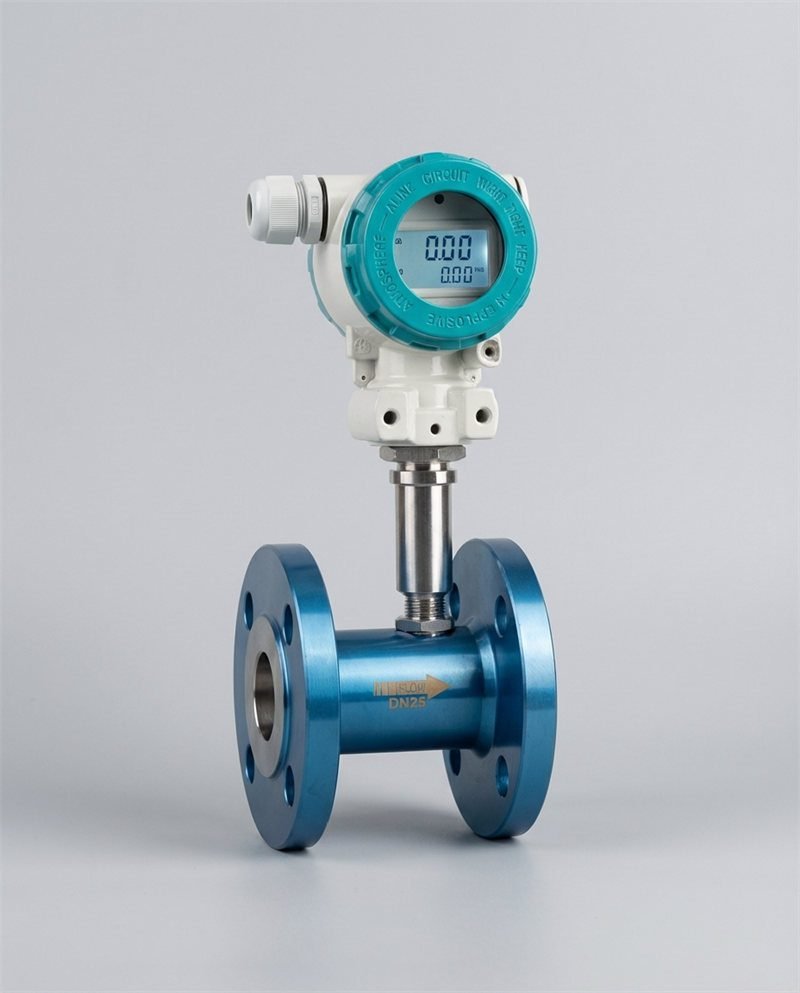
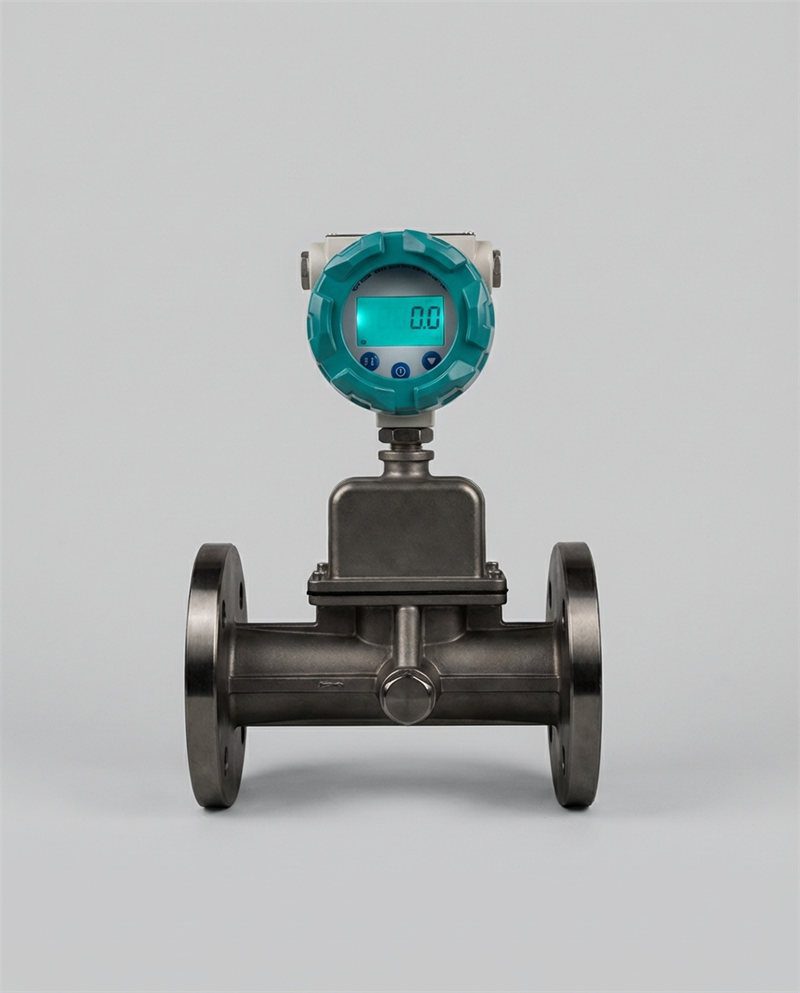
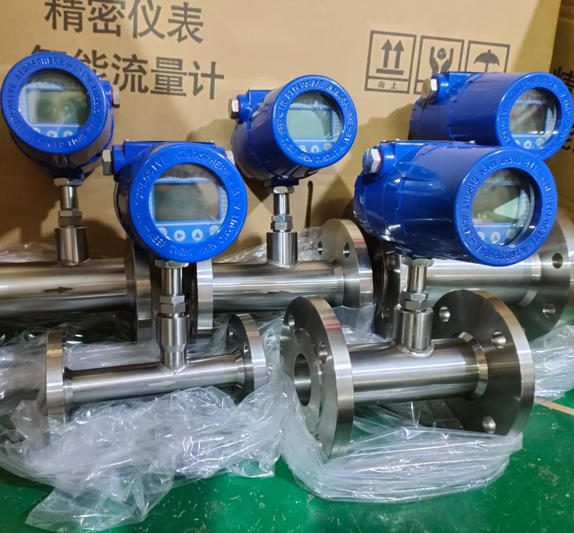
Thermal mass flow meters are the technology of choice for gas applications requiring standard-condition outputs — the unit displayed on the screen directly reflects standard conditions.
kg/h — Kilograms per hour is the global industrial standard for process applications on metric systems. Chemical reactors, pharmaceutical batch lines, HVAC heat metering, food ingredient dosing, and European industrial processes almost universally specify in kg/h. When a European EPC client’s datasheet says kg/h, this is the non-negotiable output your meter must provide or be configurable to provide.
lbm/h — Pounds-mass per hour is the North American equivalent. Oil and gas, petrochemical, power generation, and legacy industrial systems in the US, Canada, and parts of the Middle East with US-origin equipment specify in lbm/h. The important distinction: it is lbm (pound-mass, a unit of matter) — never lbf (pound-force). When a client’s spec sheet shows “lbf/hr,” they have almost certainly made a notation error that you should diplomatically flag before issuing a calibration certificate.
SCFM — Standard Cubic Feet per Minute is a volumetric-at-standard-conditions unit used predominantly in the US for compressed air, pneumatic conveying, and gas flow applications. “Standard” in SCFM typically means 60°F (15.6°C) and 14.696 psia — although this varies by manufacturer and application. It is not a mass unit, but because standard conditions are fixed, it has a calculable mass equivalent for each gas. This is one of the most frequently misused units in procurement — more on this in Section 4.
Nm³/h — Normal Cubic Meters per Hour is the European equivalent of SCFM. “Normal” refers to defined reference conditions: 0°C (32°F) and 101.325 kPa. European gas meters, combustion air systems, compressed air generation, and industrial gas distribution predominantly use Nm³/h. The reference temperature is the critical difference from SCFM — 0°C versus 60°F creates approximately a 7% difference in gas volume for the same mass of gas, which is more than enough to cause a specification error in compressor or meter sizing.
SLPM — Standard Liters per Minute is the metric equivalent of SCFM, used in laboratory gas supply, pharmaceutical cleanroom HVAC, semiconductor process gases, and analytical instrument supply. When a client specifies in SLPM, they are almost always in a precision, low-flow gas application where a 0.5% measurement error has immediate, measurable consequences — which shapes both your product recommendation and your margin conversation.
SCCM — Standard Cubic Centimeters per Minute operates one scale below SLPM and is found almost exclusively in semiconductor fabrication, precision laboratory gas blending, and analytical chemistry. A customer specifying in SCCM is telling you they are handling very small quantities of high-value gas — a context that directs you toward thermal mass flow controllers rather than industrial-scale meters.
Unit-to-Industry Quick Reference
| Unit | Typical Reference Conditions | Primary Industries | Scale |
|---|---|---|---|
| kg/h | Actual mass (T&P independent) | Chemical, pharma, food, HVAC (metric) | Grams/hour to tonnes/hour |
| lbm/h | Actual mass (T&P independent) | Oil & gas, petrochemical, US industrial | Oz/hour to thousands lbm/h |
| SCFM | 60°F / 14.696 psia | US compressed air, pneumatics, gas | Low to high industrial flows |
| Nm³/h | 0°C / 101.325 kPa | European gas, combustion air, industrial | Low to pipeline-scale flows |
| SLPM | 0°C or 20°C / 101.325 kPa | Lab gas, pharma, semiconductor | mL/min to hundreds L/min |
| SCCM | 0°C / 101.325 kPa | Semiconductor, precision lab | Sub-mL/min to ~1 L/min |
| t/h (MT/h) | Actual mass | Mining, bulk chemical, pulp & paper | Hundreds to thousands kg/h |
| g/s | Actual mass | Precision pharma, sterile filling | Sub-gram to ~100 g/s |
For a comprehensive guide to how unit requirements connect to technology selection in thermal mass flow applications, the Jade Ant Instruments thermal mass flow meter specification checklist covers the 10 critical questions to confirm before specifying — including unit output configuration.
Standard Conditions — How Temperature and Pressure Affect Unit Interpretation
The Word “Standard” Is Not Standard
This is the single most dangerous ambiguity in flow meter procurement. When a datasheet says a meter reads in “standard cubic feet per minute,” the word “standard” refers to a specific temperature and pressure — but which temperature and pressure depends entirely on who wrote the datasheet.
Definition: Standard conditions (also called reference conditions or normal conditions) are a defined set of temperature and pressure values used to report gas flow at a consistent, reproducible basis. They exist because gas volume changes with temperature and pressure, so without a fixed reference, two meters measuring the same mass flow would report different volumetric numbers if their reference conditions differ.
The problem is that different industries, regions, and manufacturers use different standard conditions — and a 7% error in a flow specification can result from nothing more than using the wrong reference temperature.
Quick-Reference: Standard Conditions by Region and Standard
| Standard / Region | Reference Temperature | Reference Pressure | Common Use |
|---|---|---|---|
| ISO 13443 (Natural gas, international) | 15°C (59°F) | 101.325 kPa (14.696 psia) | International natural gas custody transfer |
| SCFM (US typical) | 60°F (15.6°C) | 14.696 psia | US compressed air, pneumatics, gas meters |
| Nm³/h (European / ISO) | 0°C (32°F) | 101.325 kPa | European industrial gas, combustion air |
| SLPM (scientific / pharmaceutical) | 0°C or 20°C | 101.325 kPa | Lab gas, pharma, varies by manufacturer |
| NTP (NIST, US scientific) | 20°C (68°F) | 101.325 kPa | US laboratory and scientific instruments |
| STP (IUPAC standard) | 0°C (32°F) | 100 kPa | International chemistry reference |
| API MPMS (petroleum, US) | 60°F (15.6°C) | 14.696 psia | US petroleum custody transfer |
The 7% trap: Converting 1,000 Nm³/h (referenced to 0°C) to SCFM (referenced to 60°F) without applying the temperature correction overstates the flow by approximately 7.3% — because the same mass of gas at 0°C occupies less volume than at 60°F. In a compressor sizing calculation, that 7% error means specifying a compressor that is too small. In a billing application, it means consistently over- or under-charging. The error is silent, systematic, and cumulative.
Practical rule for your team: Never accept a gas flow specification that uses the word “standard” or “normal” without confirming which temperature and pressure those words refer to. Add this as a mandatory field in your request-for-quote template: “Standard/Reference conditions: ___°C (or °F) at ___ kPa (or psia).”
Converting Between Mass Flow Units — Practical Tools and Formulas
The Calculations Your Team Needs on Every Client Call
Unit conversion is not a sign that something went wrong — it is a standard part of cross-industry and cross-border instrumentation work. The distributor who can perform these conversions confidently during a client conversation earns credibility that lasts far longer than the call itself.
Master Conversion Table: Mass Flow Rate Units
| From | To | Multiply By |
|---|---|---|
| kg/h | lbm/h | × 2.20462 |
| kg/h | kg/s | ÷ 3,600 |
| kg/h | g/s | × 0.27778 |
| kg/h | t/h | × 0.001 |
| lbm/h | kg/h | × 0.45359 |
| lbm/h | lbm/min | ÷ 60 |
| lbm/h | lbm/s | ÷ 3,600 |
| lbm/s | kg/s | × 0.45359 |
| g/s | kg/h | × 3.6 |
| t/h | kg/h | × 1,000 |
| t/h | lbm/h | × 2,204.62 |
| kg/s | lbm/s | × 2.20462 |
Critical note on the “2.2 shortcut”: Using 2.2 instead of 2.20462 introduces a 0.21% error. For process monitoring, this is harmless. For custody transfer applications where the contractual accuracy requirement is ±0.1%, it is not. Use 2.20462 for every formal document — proposals, calibration certificates, commissioning sheets. Reserve 2.2 for verbal estimates only.
Converting SCFM to kg/h: Step-by-Step for Natural Gas (Methane)
This is the conversion your team will perform most frequently on US-to-international project handoffs.
Step 1: Identify the standard conditions of the SCFM value (typically 60°F / 14.696 psia for US gas applications).
Step 2: Convert SCFM to standard cubic meters per hour (SCMH):
Step 3: Multiply by the gas density at those standard conditions. For methane (CH₄) at 60°F / 14.696 psia: density ≈ 0.6785 kg/m³.
Example: 100 SCFM of methane at 60°F / 14.696 psia:
Density correction factors for common gases at 60°F / 14.696 psia:
| Gas | Molecular Weight | Density at 60°F / 14.696 psia (kg/m³) |
|---|---|---|
| Air | 28.97 | 1.2041 |
| Methane (CH₄) | 16.04 | 0.6785 |
| Natural gas (typical) | ~17.4 | ~0.737 |
| Nitrogen (N₂) | 28.01 | 1.1649 |
| Oxygen (O₂) | 32.00 | 1.3313 |
| Carbon dioxide (CO₂) | 44.01 | 1.8301 |
| Hydrogen (H₂) | 2.016 | 0.0839 |
| Propane (C₃H₈) | 44.10 | 1.8660 |
Source: Engineering toolbox and NIST reference data. Verify with NIST WebBook for exact process conditions.
Converting Nm³/h to kg/h
For gases measured at European normal conditions (0°C / 101.325 kPa), use the normal density:
Example: 500 Nm³/h of nitrogen at 0°C / 101.325 kPa. Nitrogen normal density = 1.2504 kg/m³:
For a reliable online gas flow conversion calculator that handles gas-specific density corrections across SCFM, Nm³/h, SLPM, and kg/h simultaneously, the Xchanger Gas Flow Calculator is a practical tool to bookmark for client calls.
How to Read and Verify Flow Meter Specifications Correctly
What to Look For — and What to Question — Before You Quote
A flow meter datasheet contains the answers to your most important pre-sale questions — but only if you know where to look and what ambiguities to flag. Many unit-related procurement errors originate in a datasheet that the buying team accepted at face value without checking the small print.

Datasheet review is where unit errors are either caught or carried forward into the project — a 10-minute check here prevents weeks of rework later.
Red flag 1 — Missing standard reference conditions on gas flow units. If a datasheet lists capacity in “500 SCFM” or “250 SLPM” without stating the reference temperature and pressure, the specification is incomplete. Different manufacturers define “standard” differently — one supplier’s SLPM may use 0°C as reference; another’s may use 20°C. At 100 SLPM, this difference is approximately 7.3%, which is more than the accuracy specification of most thermal mass flow meters. Always request the explicit reference conditions before finalizing a quote.
Red flag 2 — Ambiguous abbreviations. “SL/min,” “NL/min,” “SLM,” and “slm” are all used to mean standard liters per minute — but not by every manufacturer. “NL/min” specifically implies normal liters per minute at 0°C, while “SL/min” may imply 20°C. In semiconductor and pharmaceutical applications where these units appear most frequently, a one-line clarification request before ordering eliminates ambiguity that could cause calibration mismatches.
Red flag 3 — No stated accuracy basis. Accuracy specified as “±1%” without stating whether it is “±1% of reading” or “±1% of full scale” is incomplete. At 10% of rated flow, ±1% of full scale represents ±10% of actual reading — far worse than the top-line specification suggests. For clients with wide-range flow applications, this distinction is significant.
Red flag 4 — Unit mismatch between the rated capacity and the output signal. A meter rated to “1,000 SCFM” but configured to output a 4–20 mA signal scaled to “0–1,000 Nm³/h” in the transmitter has a 7% systematic span error built in from day one. This is not hypothetical — it occurs when meters are reconfigured in the field by personnel unfamiliar with the standard-conditions difference.
Pre-Quote Technical Validation Checklist
Before issuing any quote for a gas mass flow application, confirm the following in writing:
- Unit system confirmed (kg/h, lbm/h, SCFM, Nm³/h, SLPM, etc.)
- Standard reference conditions confirmed (temperature °C or °F, pressure kPa or psia)
- Gas type and composition confirmed (affects density correction)
- Operating conditions confirmed (actual T and P at the measurement point)
- Accuracy basis confirmed (% of reading vs. % of full scale)
- Output signal and engineering unit scaling confirmed (4–20 mA span, Modbus register unit)
- Control system / DCS input unit confirmed (must match meter output without conversion)
- Calibration certificate unit confirmed (must match application documentation unit)
For a 10-question specification validation framework specifically for thermal mass flow meters — the technology most frequently affected by unit and standard-conditions ambiguities — the Jade Ant Instruments thermal mass flow meter specification checklist provides a field-ready pre-order review process.
Avoiding Costly Miscommunications with End Clients and Engineers
The Conversations That Determine Whether You Win the Deal or Walk Away Confused
Unit confusion manifests at three different points in the project cycle — and each point has different consequences.
Pre-quote: A misunderstood unit specification leads to quoting a meter with the wrong capacity or the wrong standard conditions. The cost is a revised quote and lost time — if caught. If not caught, it progresses to the next stage.
Post-order, pre-installation: The unit mismatch is discovered when the calibration certificate arrives with a different unit than the control system expects. The cost is recalibration, delivery delay, and a client who now has concerns about your attention to detail on future orders.
Post-installation: The meter is installed and reads differently than expected. The root cause investigation reveals a standard-conditions mismatch built in at specification. The cost is a service call, potential recalibration at site, and a client relationship that requires active repair.
How to Discuss Units Confidently with Engineers and Procurement Teams
The framing that works best with technical buyers is diagnostic, not prescriptive. Rather than arriving with a unit recommendation, ask the three questions that reveal what unit the application actually requires:
Question 1: “What unit does your existing control system accept on this measurement input?” This is the non-negotiable constraint. Whatever the DCS or PLC is configured to receive, the meter must output in the same unit — or a conversion must be explicitly documented and controlled.
Question 2: “What unit does your existing process documentation use for this parameter?” Batch records, production reports, and regulatory documentation should be consistent throughout. Introducing a meter that outputs a different unit creates a documentation translation step that adds audit risk.
Question 3: “What does your process engineer use when troubleshooting this parameter?” The unit that comes most naturally to the person managing the process is usually the right one. A meter that displays in a unit that requires mental conversion at every troubleshooting event is a practical friction that compounds over years.
Scripting Tips for Unit Conversations
When a client specifies an unfamiliar unit (SCCM, MMSCFD, FAD):
“Let me confirm that conversion so I can pull the right specification — I want to make sure we’re comparing the same quantity before I recommend a product.”
When a client’s specification contains a likely notation error (lbf/hr instead of lbm/hr):
“I want to flag something before we go further — the unit listed is lbf/hr, and for a mass flow application I’d expect lbm/hr. They look the same numerically at standard gravity, but I want to confirm before we issue the calibration certificate, because the distinction matters for your traceability documentation. Can I verify with your instrumentation engineer?”
When a client only knows GPM and needs to understand mass flow:
“GPM measures space — how much room the fluid takes up per minute. Kg/h measures substance — how much actual material is moving per hour. For your batch recipe, the chemistry is written in mass terms. GPM will give you different results on hot summer days versus cold winter nights because the liquid density changes with temperature. Kg/h gives you the same result regardless of conditions.”
Case Studies — Unit Errors That Led to System Failures
Two Scenarios That Illustrate the Real Commercial Cost of Unit Confusion
These scenarios are drawn from documented field patterns in industrial instrumentation projects. Details have been adjusted for confidentiality.
Case Study 1: SCFM vs. ACFM on an OEM Skid — A $60,000 Rework
An OEM manufacturer building packaged air-handling skids for a US food processing client specified thermal mass flow meters rated at 500 SCFM — capacity at standard conditions of 60°F and 14.696 psia. The meters were installed and commissioned at an altitude of 5,200 feet (Denver, Colorado), where atmospheric pressure is approximately 12.2 psia — 17% lower than sea level.
At altitude, the same meter that reads 500 SCFM at sea level is measuring air at actual conditions corresponding to only 415 SCFM equivalent at sea level standard conditions. The skid’s process design assumed 500 SCFM of actual air delivery. The delivered actual flow was approximately 415 SCFM — an 85 SCFM shortfall that caused inadequate cooling in the food processing lines.
ACFM (Actual Cubic Feet per Minute) (definition): The volume of gas flowing at actual temperature and pressure conditions at the measurement point — not corrected to any reference. ACFM changes with altitude, temperature, and pressure. SCFM does not.
The root cause: the meter was specified and calibrated in SCFM (a standard-condition unit), but the application required delivery at actual local conditions that differed significantly from sea level. The OEM’s design engineer had not applied the altitude correction factor.
The rework — replacing 14 meters with altitude-compensated units and revalidating the skid — cost approximately $60,000 in materials, labor, and project delay.
Prevention: When the delivery location is above 1,000 meters (3,280 feet) elevation, ask explicitly: “Are we specifying in standard-condition units (SCFM) or in actual-condition units (ACFM)? If the process needs a specific actual flow, we need to apply the altitude correction before sizing the meter.”
Case Study 2: Nm³/h Reference Temperature Mismatch on a Municipal Gas Project
A European instrumentation distributor was subcontracted to supply gas flow meters for a municipal natural gas district metering station in Germany. The meter specification from the German utility read 2,500 Nm³/h — standard European format, reference conditions assumed to be 0°C / 101.325 kPa per DIN EN ISO 13443.
The meters were sourced from a supplier whose published “Nm³/h” specification used 15°C / 101.325 kPa as the reference temperature — a valid variant of “normal” used by some manufacturers, particularly those serving the UK and Scandinavian markets where 15°C is the natural gas custody reference temperature per ISO 13443.
The same mass flow rate corresponds to approximately 5.5% more volume at 15°C than at 0°C. The meters were sized, calibrated, and delivered based on the supplier’s 15°C normal conditions. Installed at the metering station, they read approximately 5.5% higher than expected against the utility’s 0°C-reference billing system.
The project was delayed by six weeks while the meters were returned for recalibration at the correct reference temperature. The commercial cost included demurrage for delayed billing activation, technician travel for two return visits, and expedited recalibration fees — approximately €18,000 total.
Prevention: Add one line to every RFQ for gas meters: “Please confirm the reference temperature and pressure used for your Nm³/h (or SCFM/SLPM) specification.” A single line in the purchase order would have prevented €18,000 in rework. For international projects involving European gas metering standards, ISO 13443 — Natural Gas Standard Reference Conditions is the definitive reference for confirming which temperature definition applies.
Best Practices for Distributors — Building Unit-Aware Workflows
Converting Individual Knowledge into Organizational Capability
Individual knowledge of mass flow units is valuable. Organizational processes that enforce unit verification regardless of who is handling the account are far more valuable — because they protect you on every transaction, not just the ones handled by your most technical team members.

Building unit verification into your quoting workflow removes the dependency on individual expertise — and protects every transaction, not just the ones handled by your most experienced engineers.
Internal Protocol 1 — Unit verification fields in your quoting template. Add two mandatory fields to every gas flow meter quote: “Unit system confirmed as: ___” and “Standard reference conditions confirmed as: __°C (or °F), ___ kPa (or psia).” These fields cannot be left blank before the quote is issued. The discipline of filling them in forces the verification conversation with the client before the order.
Internal Protocol 2 — Standardized request-for-quote templates. When requesting quotes from suppliers, use a standardized RFQ form that explicitly states the required unit, the reference conditions, the gas type and composition, and the operating conditions at the measurement point. A supplier who receives an ambiguous RFQ will respond with an ambiguous quote — and the unit mismatch will appear at commissioning. A supplier who receives a complete, specific RFQ returns a quote that can be directly compared and issued to the client.
Internal Protocol 3 — Unit training as part of onboarding. Unit knowledge is not acquired through product training — it requires dedicated instruction. New sales team members should complete a structured unit training module within their first 30 days that covers: the difference between mass and volumetric flow, the six most common mass flow units and their reference conditions, the most frequent conversion calculations, and the three red flags to look for in a datasheet. Make it practical — include written exercises, role-play scenarios, and a competency check before the team member handles technical client calls independently.
Collaboration with OEMs and EPCs: For large project accounts where specifications are issued by an engineering team and procured by a purchasing team, establish a technical pre-order review process. Before the purchase order is finalized, your technical account manager reviews the instrument tag list for unit consistency — checking that every tag’s specified unit matches the control system’s configured unit for that input. This review takes one to two hours for a medium-sized project and prevents the kind of systematic unit mismatch that caused both case studies above.
Positioning accuracy as a competitive advantage: In bid situations, a distributor who submits a proposal that explicitly documents the unit system, reference conditions, and control system unit alignment — and explains what was verified — differentiates from competitors who simply list a model number and a price. Technical buyers remember the supplier who demonstrated they understood the specification. That memory is the foundation of a preferred supplier relationship.
For a broader framework connecting technical accuracy to commercial positioning in distributor markets, the Jade Ant Instruments distributor selection guide covers how technical depth translates into account retention and margin protection across flow meter product lines.
Becoming the Trusted Advisor on Flow Measurement
What Unit Expertise Actually Earns You
A distributor who can correctly answer “What’s the difference between SCFM and Nm³/h for my application, and how does it affect meter sizing?” in a client conversation has just moved from the pricing category to the expertise category in that client’s mental filing system.
The expertise category earns you things that pricing never can: early access to upcoming projects before competitive bids are issued, preference in specification writing (“we always list their products in the spec”), and the forgiveness and loyalty that comes when an occasional problem is handled professionally. None of those outcomes are available to the distributor who is seen as a catalog with a phone number.
Mastering mass flow rate units is one part of that expertise journey — but it is an unusually high-leverage part, because unit knowledge is tested in virtually every technical sales conversation. Every quote, every datasheet review, every commissioning visit, every client troubleshooting call involves unit language. Every interaction where your team demonstrates fluency reinforces your position as the measurement authority. Every interaction where they fumble it reinforces the opposite.
For ongoing technical education: Explore the Jade Ant Instruments flow meter resource library for application guides, technology comparison tools, and specification checklists across all major flow meter technologies. For mass flow meter brand comparison including thermal mass and Coriolis models most commonly specified in kg/h, lbm/h, SCFM, and Nm³/h applications, the mass flow meter brand comparison guide covers calibration certificate formats, unit configurability, and output protocol options for nine leading manufacturers.
Your immediate next step: Open the last five gas flow meter quotes your team issued. Check each one: Is the unit explicitly stated? Are the standard reference conditions documented? Does the stated unit match what the client’s control system accepts? If the answer to any of these is “I’m not sure,” that gap is costing you orders. This guide has given you the framework to close it.
Watch: How Thermal Mass Flow Meters Measure — and Why Units Matter

▶ Watch: How Thermal Mass Flow Meter Technology Works — explains how thermal dispersion mass flow meters measure gas mass flow directly, why they output in standard-condition units (SLPM, SCFM, Nm³/h), and how the reference condition setting in the transmitter determines the unit your client’s DCS receives.
Glossary of Mass Flow Rate Unit Terms
Mass flow rate: The quantity of material (by weight) passing through a pipe per unit of time. Temperature- and pressure-independent. Units: kg/h, lbm/h, g/s, t/h.
Volumetric flow rate: The volume of fluid passing through a pipe per unit of time. Changes with temperature and pressure. Units: m³/h, L/min, GPM, CFM.
SCFM (Standard Cubic Feet per Minute): A gas flow unit corrected to standard conditions, typically 60°F and 14.696 psia in US applications. Not a mass unit, but has a fixed mass equivalent for each specific gas at defined conditions.
ACFM (Actual Cubic Feet per Minute): Gas flow volume at actual operating temperature and pressure — not corrected to any reference. Changes with altitude, temperature, and pressure.
Nm³/h (Normal Cubic Meters per Hour): A European gas flow unit corrected to normal conditions: 0°C and 101.325 kPa. Approximately 7% different from SCFM for the same mass of gas due to the temperature reference difference.
SLPM (Standard Liters per Minute): Gas flow corrected to standard conditions, typically 0°C or 20°C at 101.325 kPa. Used in laboratory, pharmaceutical, and semiconductor applications.
lbm (pound-mass): A unit of mass (quantity of matter) equal to 0.45359 kg. Used in mass flow rate as lbm/h or lbm/min. Distinct from lbf (pound-force).
Standard conditions: A defined temperature and pressure reference used to normalize gas flow measurements. Not universal — varies by region, industry, and manufacturer. Always confirm which standard is in use.
DCS (Distributed Control System): A plant-level process control platform that receives measurements from field instruments. The unit configured in the DCS input card must match the unit output by the flow meter.
Density correction factor: The fluid density at the standard reference conditions used to convert volumetric standard-condition flow (SCFM, Nm³/h) to mass flow (kg/h, lbm/h). Changes with gas type and reference conditions.
Frequently Asked Questions
1. What is the difference between mass flow rate and volumetric flow rate?
Mass flow rate measures the actual quantity of molecules — how much material by weight passes through a pipe per unit of time. It is independent of temperature and pressure. Volumetric flow rate measures the volume of fluid per unit of time, which changes whenever temperature or pressure changes. For custody transfer, process chemistry, pharmaceutical batching, and any application where you need to account for actual material quantity rather than space occupied, mass flow rate is the correct measurement. Volumetric flow is sufficient when fluid density is stable and known, such as water at a constant temperature in a closed system.
2. Why can’t I directly compare SCFM and ACFM?
SCFM is corrected to defined standard conditions (typically 60°F and 14.696 psia in US applications) — it tells you what the flow would be at sea level, standard temperature. ACFM is the actual flow volume at real operating conditions — it changes with altitude, temperature, and pressure. A compressor or flow meter specified at 500 SCFM at sea level will deliver approximately 415 SCFM equivalent at 5,200 feet elevation due to lower atmospheric pressure. Using them interchangeably causes compressor undersizing, meter miscalibration, and process capacity shortfalls. Always confirm which unit applies before specifying any gas flow equipment.
3. What does “standard” mean in Nm³/h or SCFM?
“Standard” or “normal” means the gas flow has been corrected to a defined reference temperature and pressure — so that different measurements under different operating conditions can be directly compared. The challenge is that “standard” is not globally standardized. SCFM (US) typically uses 60°F / 14.696 psia. Nm³/h (European) typically uses 0°C / 101.325 kPa per ISO 13443. NTP (NIST scientific standard) uses 20°C / 101.325 kPa. A 7% difference in gas volume arises simply from the reference temperature difference between SCFM and Nm³/h — enough to cause specification errors in meter sizing and billing accuracy. Always verify the exact reference conditions on every gas flow specification.
4. How do I convert SCFM to kg/h for natural gas?
The three-step process is: first, convert SCFM to standard cubic meters per hour (SCMH) by multiplying by 1.699 (= 60 min/hr × 0.028317 m³/ft³). Second, identify the standard density of natural gas at your SCFM reference conditions — for typical pipeline natural gas (roughly methane) at 60°F / 14.696 psia, density ≈ 0.737 kg/m³. Third, multiply: kg/h = SCMH × density. For 100 SCFM of typical natural gas: 100 × 1.699 × 0.737 ≈ 125.2 kg/h. The exact result depends on the actual gas composition — higher CO₂ or ethane content increases molecular weight and therefore kg/h. For verified gas composition-specific conversions, the LMNO Engineering Gas Flow Conversion Calculator handles real-gas corrections for common industrial gas mixtures.
5. Why do European specs use Nm³/h while US clients use SCFM?
The difference is regional convention rooted in different national measurement standards. European industrial gas measurement follows ISO and DIN norms that use 0°C as the reference temperature — defining “normal” conditions. US industrial gas measurement follows API, ASME, and NIST conventions that use 60°F as the reference temperature — defining “standard” conditions. Neither is more correct than the other, but they produce different numbers for the same mass of gas. Converting between them requires applying the temperature correction: 1 SCFM ≈ 1.573 Nm³/h for air at the respective reference conditions. The critical point for your procurement process: always document which standard applies on every cross-border gas meter specification.
6. Can a flow meter calibrated in SLPM be used for kg/min readings?
Only with a verified, gas-specific conversion. SLPM is a volumetric-at-standard-conditions unit. Converting to kg/min requires knowing the exact gas type (because molecular weight determines density) and the exact standard conditions used for the SLPM calibration (because reference temperature affects density). For a single pure gas at a fixed standard condition, the conversion is a constant multiplication. For gas mixtures or applications where gas composition varies, the conversion changes with composition and requires either a Coriolis meter (which measures mass directly without conversion) or regular recalibration at each new composition. If your client is using SLPM-calibrated meters for process control that requires kg/min accuracy and their gas composition changes, recommend recalibration or conversion to a direct mass measurement technology.
7. What happens if I install a flow meter sized in SCFM into a high-altitude location?
The meter will deliver less actual gas than specified. At higher altitudes, atmospheric pressure is lower — air and most gases are less dense at the measurement point than at sea level standard conditions. A meter rated for 500 SCFM at sea level (14.696 psia) will read 500 SCFM on its display but is physically measuring less dense air. The actual mass of gas delivered per hour is correspondingly lower. At Denver altitude (5,280 feet, approximately 12.2 psia), the density correction factor is approximately 0.83 — meaning actual delivery is about 83% of the sea-level-equivalent mass flow. For altitude-sensitive applications, specify meters in ACFM (actual conditions) with the operating altitude documented, or apply the altitude correction factor to your SCFM specification before sizing.
8. How do I explain mass flow units to a client who only understands GPM?
Use this analogy: “GPM measures space — how much room the fluid takes up per minute. kg/h measures substance — how much actual material is moving per hour.” Then make it concrete with their application: “Your batch recipe calls for 50 kg of caustic soda per batch. A GPM meter will give you 50 gallons per batch — but the density of caustic soda varies with concentration and temperature, so 50 gallons of 30% caustic is not the same mass as 50 gallons of 50% caustic. A kg/h meter gives you the same 50 kg regardless of concentration drift.” For clients in batching, mixing, and emissions reporting — where the required quantity is defined by recipe or regulatory limit in mass terms — this framing connects the unit choice directly to the problem they are trying to solve.
9. Are all “standard” conditions the same across instrument manufacturers?
No — and this is one of the most persistent sources of specification error in international gas flow procurement. One manufacturer’s “standard” may be 20°C / 101.325 kPa (NIST NTP). Another’s may be 0°C / 101.325 kPa (European “normal”). A third’s may be 15°C / 101.325 kPa (ISO 13443 natural gas reference). The difference between a 0°C reference and a 20°C reference produces a 7.3% difference in reported gas volume for the same mass flow rate — larger than the accuracy specification of most meters. Always check the datasheet. If the standard reference conditions are not explicitly stated, request them in writing from the manufacturer before placing an order. This is non-negotiable for any gas application involving billing, compliance reporting, or process recipe control.
10. What unit should I use for custody transfer of compressed air?
For custody transfer — any measurement used as the basis for commercial billing — use either direct mass units (kg/h or lbm/h) or standardized volumetric units (SCFM or Nm³/h) with the reference conditions explicitly defined in the supply agreement. Direct mass units are preferred because they are temperature- and pressure-independent, eliminating any dispute about what “standard conditions” means between buyer and seller. If the existing metering infrastructure uses SCFM or Nm³/h, confirm that both parties’ reference conditions (temperature, pressure, humidity basis) are identical and documented in the supply contract. A difference of just one degree Celsius in reference temperature creates a 0.37% billing discrepancy — small per transaction, significant over a year of commercial metering.
11. How can I prevent unit errors when sourcing flow meters from global suppliers?
Implement a four-point unit verification protocol on every international gas flow meter order. First, specify the unit explicitly in the purchase order — not in a separate email or verbal conversation. Second, state the standard reference conditions (temperature and pressure) on the PO line item. Third, request that the calibration certificate issued with the meter explicitly states both the calibration unit and the reference conditions used. Fourth, verify on receipt that the transmitter’s configured unit and reference conditions match the purchase order before accepting the delivery. For complex international projects with multiple meter suppliers in different unit conventions, an instrument index (a master spreadsheet cross-referencing each meter tag, its specified unit, its calibration reference conditions, and the DCS input unit) provides the project-level oversight that prevents the kind of systematic unit mismatch documented in the case studies above.
12. Do thermal mass flow meters output in actual or standard units?
Most thermal mass flow meters output in standard units — SLPM, SCFM, SCCM, or Nm³/h — because the thermal measurement principle inherently normalizes gas flow to standard conditions. The sensor measures the heat carried away by the gas, which is directly proportional to mass flow rate; the transmitter then converts this to a standard volumetric unit using the calibration gas density at the configured reference conditions. The configured standard conditions are set at the factory during calibration to the specific gas type and reference temperature. If your client’s system uses 0°C as the reference and the meter was configured with 20°C, the meter will read approximately 7% high — not because the calibration is wrong, but because the reference conditions are mismatched. Always verify the transmitter’s configured standard conditions against the application’s reference conditions before commissioning. For a complete technology comparison covering when thermal mass meters’ standard-unit output is an advantage versus when direct mass units from Coriolis meters are preferable, the Jade Ant Instruments thermal mass vs volumetric flow meter guide provides a side-by-side decision framework.
Technical conversion factors, density reference values, and standard condition definitions in this article are drawn from NIST reference data, ISO 13443, API MPMS Chapter 12, and manufacturer technical documentation. All values should be verified against current reference sources and manufacturer datasheets for specific application design.