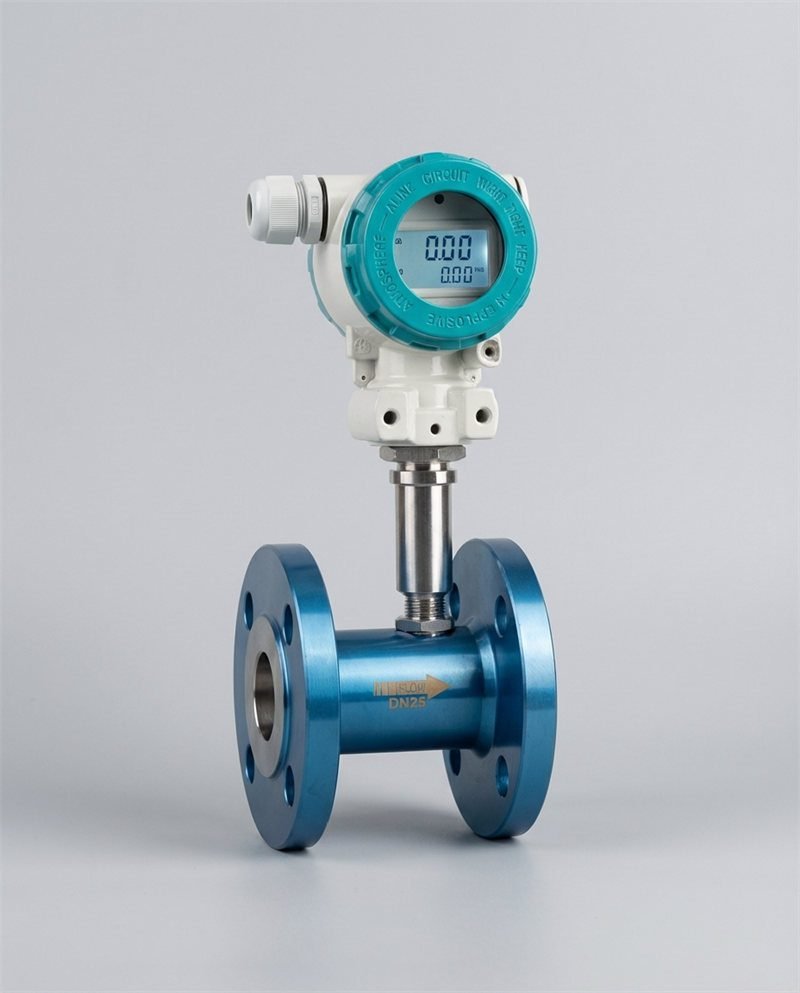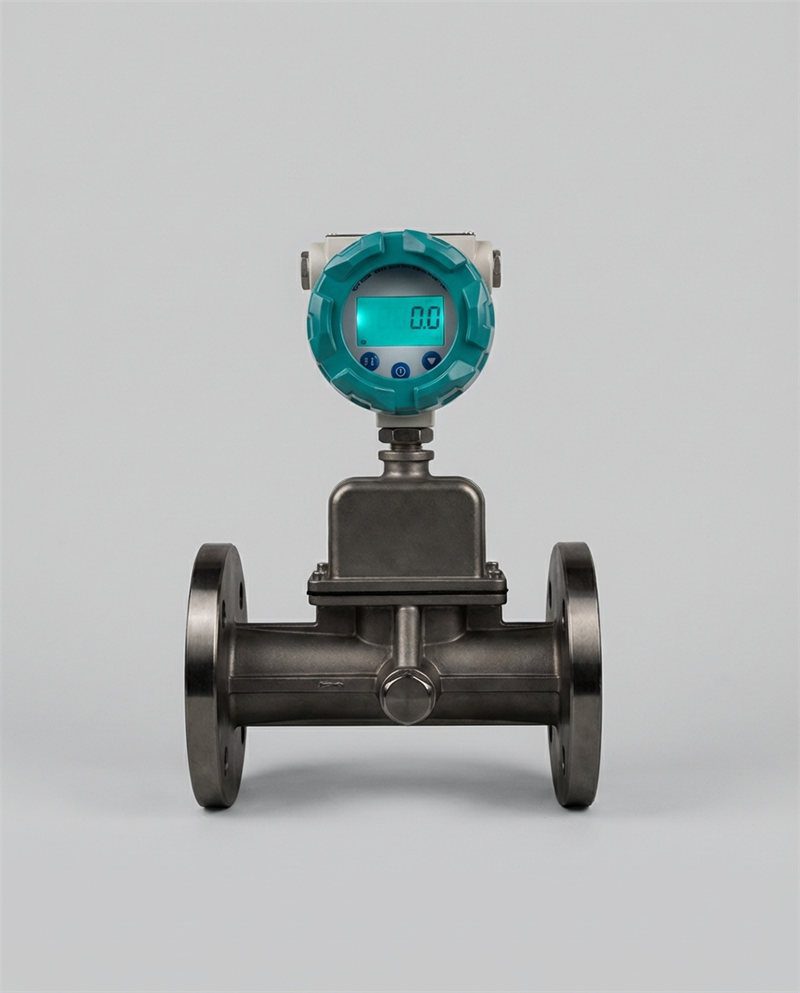
A Practical Framework for Distributors to Master Flow Meter Selection, Build Customer Confidence, and Close Deals Faster

The distributors gaining market share aren’t competing on unit price. They’re competing on certainty — and certainty starts with a structured selection process.
There is a moment that every flow meter distributor recognises. Your client asks which meter they need for a new process line. You ask a few questions, scan your mental catalogue of product specs, and offer a recommendation. The client nods, then disappears for three weeks before finally ordering a different model from a competitor who gave them a more confident, documented answer.
The problem was not your product knowledge. It was your process.
Flow meter selection paralyses customers because the stakes are real and the variables are numerous. A wrong recommendation means production downtime, warranty disputes, expensive retrofits, and — most damaging of all — the erosion of trust that takes years to rebuild. When customers are unsure, they either stall, over-specify out of fear, or find a distributor who makes them feel certain.
This interactive series is designed specifically for distributors and agents who sell flow instrumentation into industrial B2B accounts. It is not written for end consumers, and it is not written for search algorithms. It is written for you — to help you transform from order-taker to trusted advisor, close deals with documented confidence, and build the kind of customer relationships that survive competitive pressure from every direction.
Every section below is a practical framework you can use in your next customer meeting.
1. Understanding Your Customer’s Real Problem: Beyond the Specification Sheet
Why Your Customer Needs Certainty, Not Just a Meter
Your customers do not actually need a flow meter. They need certainty — the confidence that the instrument they are about to purchase will work correctly in their specific application, survive their operating environment, meet their regulatory obligations, and not generate a 2 a.m. emergency call six months after installation.
That distinction changes everything about how you should be selling.
When a plant engineer or procurement manager is asking you for a recommendation, they are managing risk on behalf of their organisation. If the recommendation is wrong, they face the consequences — production stops, supplier negotiations, internal audits, and the uncomfortable conversation with their operations director. They will not make a confident purchasing decision until someone they trust has reduced that perceived risk to an acceptable level.
That is your role. Not to match a pipe diameter to a catalogue entry, but to eliminate the customer’s uncertainty systematically — before it becomes their expensive problem.
The Hidden Cost of Wrong Recommendations
Wrong recommendations in flow meter applications do not announce themselves at installation. They hide inside commissioning readings that look plausible, process calculations that drift slowly off-target, and service calls logged as “process variability” for months before anyone identifies the actual root cause: the wrong meter was specified in the first place.
The financial consequences are consistently larger than the original meter purchase — often by orders of magnitude. A chemical manufacturer who received an incorrectly specified thermal mass flow meter ran 23 failed batches before the root cause was identified. By then, the total cost had reached $847,000. The meter itself cost $1,800.
A food and beverage bottler received a turbine meter sized for average flow, not the actual operating window. The rotor spent most of its working life below minimum rated velocity, corrupting batch calculations and causing bearing failure at one-third of the expected service life. Emergency replacement plus production losses: $71,000.
These are not rare disasters. They are the predictable outcome of a selection process that prioritises speed over rigour. According to field data compiled across Jade Ant Instruments’ application case library, the majority of selection failures trace back to three specific gaps: incomplete fluid characterisation, an operating flow range that was never fully mapped, and compliance requirements that were assumed rather than confirmed.
Every one of those failures was preventable with a structured framework applied consistently.
Why Traditional Selection Methods Fail Distributors
The conventional selection approach — PDF catalogs, email consultations, and datasheet cross-referencing under time pressure — systematically creates the conditions for expensive field failures.
Customers overwhelmed by technical jargon and competing options. A customer who cannot interpret a turndown ratio specification, or who does not know why liner material matters for their specific fluid chemistry, will make selection decisions based on the factor they can evaluate — unit price. That is a loss condition for everyone.
Incomplete application data leads to incorrect sizing. Email consultations are asynchronous and fragmented. The critical question you did not think to ask in the first exchange — “what is the maximum transient pressure during valve closure?” — is the one that creates the $82,000 seal failure six months later.
Pressure to quote quickly sacrifices accuracy. In competitive bid situations, the fastest quote often wins the initial order and loses the long-term relationship when the specification fails.
Post-sale callbacks damage margins and relationships. Every return, every emergency site visit, every “why is my meter reading wrong?” call is a withdrawal from the trust account you built during the sale. Enough withdrawals and the account closes permanently.
How Confident Recommendations Differentiate Your Business
The distributors who are genuinely growing in flow instrumentation are not differentiating on price. They are differentiating on certainty — on their ability to make technically rigorous, documented recommendations that customers can defend internally and trust operationally.
The commercial outcomes of that differentiation are measurable. Distributors using structured selection frameworks report approximately 30% faster quote-to-close cycles by eliminating the back-and-forth email sequences that gather critical application data piecemeal over two weeks. Average order values increase because the selection framework surfaces complementary products — flow conditioners, isolation valves, calibration services — that would otherwise be missed. Customer retention improves because specification errors that would have triggered returns simply do not occur.
Customers perceive you as a strategic partner, not a commodity supplier. When you can walk into a client meeting, work through a structured application framework, and produce a documented, rationale-backed recommendation with material compatibility verification and compliance flag checks, you are not competing with the competitor’s quote. You are setting the standard against which their quote gets compared.
2. The Five Critical Questions Framework: Your First Interactive Tool
Why These Five Questions Solve 80% of Selection Confusion
Before a single product datasheet should be opened, you need application intelligence. The Five Critical Questions Framework captures what actually matters about the customer’s application and filters out the noise that leads to specification errors.
This is not a checklist to rush through — it is a structured conversation designed to surface the information that customers often do not volunteer because they do not know it is relevant to the selection decision.

Most selection errors occur before anyone looks at a product catalogue — because the critical application data was never fully gathered in the first place.
Question 1 — What Fluid Are We Actually Measuring?
This is the foundational question, and the answer is almost never as simple as “water” or “oil.” The complete fluid characterisation needed for a rigorous specification includes the fluid’s chemical composition (including any trace contaminants), viscosity range across the operating temperature window, presence of suspended solids or entrained gas, corrosiveness, and any special properties — food-grade requirements, pharmaceutical purity classifications, or flammability characteristics.
Water, oil, gas, steam, or specialty fluids each have materially different meter requirements. A distributor who recommends the same electromagnetic flow meter for municipal water and for a chlorinated chemical cleaning solution — both technically “liquids” — is making a specification that will fail in one of those applications based on liner material compatibility alone.
Viscosity ranges dramatically affect technology choice. A low-viscosity, clean liquid like water flows through a turbine meter predictably. A high-viscosity fluid like heavy fuel oil creates drag that degrades turbine meter accuracy and accelerates bearing wear. The variable area vs. turbine vs. electromagnetic comparison guide documents exactly these trade-offs with application examples.
Corrosive or abrasive fluids eliminate certain materials and technologies entirely. You cannot specify a standard stainless steel liner for a concentrated hydrochloric acid application. The material is wrong, and the failure is a question of when, not whether.
Temperature and pressure ratings become non-negotiable constraints. A PTFE-lined electromagnetic meter rated to 130°C is technically correct for most clean liquid applications but is disqualified the moment the customer mentions a 160°C CIP (Clean-In-Place) steam sterilisation cycle.
Question 2 — What Flow Rate Range Must This Meter Handle?
The second question is the one most commonly answered incompletely. Customers will tell you their “normal” flow rate. What they frequently do not volunteer — because they have not thought about it systematically — is the full operating window: minimum flow during off-peak hours, maximum flow during peak demand, flow during startup and shutdown transients, and worst-case surge conditions.
Turndown ratio (the ratio of maximum measurable flow to minimum measurable flow while maintaining rated accuracy — a 10:1 turndown means the meter measures accurately from 10% to 100% of its rated maximum) determines whether a single meter can cover the customer’s entire operating range or whether accuracy degrades during off-peak conditions.
Oversized meters sacrifice accuracy at low flows. A meter sized for a 4″ pipe diameter in an application where the actual flow rarely exceeds what a 2.5″ meter would handle will spend most of its operating life near its lower accuracy threshold — producing unreliable data precisely when process stability matters most.
Undersized meters risk cavitation or damage. Conversely, pushing too much flow through a meter sized for average conditions creates excessive velocity that accelerates wear in turbine meters and can generate cavitation (the rapid formation and collapse of vapour bubbles caused by localised low pressure, which causes pitting and erosion of internal surfaces) in liquid applications.
Interactive tool application: Have the customer complete a simple flow profile table — minimum flow and conditions when it occurs; normal operating flow; maximum continuous flow; any transient peak flows and their duration. With that data, you can immediately eliminate technologies whose turndown ratio does not cover the required range, and identify the meter diameter that places normal operating flow in the middle of the technology’s optimal accuracy band.
3. Material Selection Matrix: Your Second Interactive Tool
How Material Choice Prevents Costly Field Failures
Material compatibility is not a secondary specification detail. It is the primary determinant of whether your recommended meter will still be operating correctly in five years or will have generated a costly field failure within the first twelve months.
The commercial stakes of getting material selection wrong are consistently high. A meter failure in an aggressive chemical environment typically costs far more than the meter purchase price in downtime, emergency replacement, cleanup, and — in regulated industries — potential regulatory exposure. A $500 meter failure in a caustic environment can easily cost $5,000 or more in total incident cost.
Building Your Material Decision Tree
The material decision process works through three constraints sequentially, eliminating incompatible options at each stage before any cost comparison is relevant.
Fluid chemistry dictates wetted material selection (wetted materials are all surfaces that contact the process fluid — the liner, electrodes, seals, and body) as the first constraint. The Cole-Parmer Chemical Compatibility Database provides a reference for verifying material compatibility across specific fluid chemistries. However, generic compatibility charts are rated at ambient temperature — and that is where the next constraint enters.
Temperature extremes require material reconsideration. Chemical attack rates approximately double for every 10°C temperature increase. A liner material that performs reliably in 5% hydrochloric acid at 20°C may fail within 36 months at 60°C. Always verify compatibility at the actual operating temperature, not the ambient condition from a compatibility chart.
Pressure ratings vary by material selection. Exotic alloys like Hastelloy C-276 or titanium add 30–50% to meter cost but provide the material integrity that prevents catastrophic failure in aggressive service. That cost premium is not an upgrade — it is insurance against a failure scenario that costs multiples more to remediate.
Interactive tool application: Build a simple three-column matrix for every application discussion: (1) fluid chemistry and temperature range, (2) candidate materials and their compatibility rating at operating temperature, (3) disqualifying factors and selected materials. This matrix becomes part of the recommendation documentation your customer takes to their engineering review.
The table below summarises the most common application profiles and their material requirements:
| Fluid Type | Key Aggressive Factors | Recommended Wetted Material | Technologies to Avoid |
|---|---|---|---|
| Clean municipal water | Low — standard service | 316 SS or hard rubber liner | No restrictions |
| Deionised / ultrapure water | Leaching risk from standard materials | PTFE liner, platinum electrodes | Standard 316 SS wetted parts |
| Dilute acids (<5% concentration) | Chemical attack, especially at temperature | PTFE liner, Hastelloy C-276 electrodes | 316 SS electrodes |
| Concentrated acids (>10%) | Aggressive chemical attack at full strength | Hastelloy C-276 throughout | Standard EM liners, turbine |
| Seawater / brine | Chloride stress corrosion cracking | Duplex stainless or Hastelloy | 316 SS at elevated temperature |
| Slurries / abrasive media | Erosion plus chemical attack simultaneously | Ceramic or hard rubber liner, tungsten carbide | Thin-walled meters, turbine meters |
| Hydrocarbons (clean) | Limited chemical aggression | 316 SS standard | PTFE (not required) |
| Sour gas (H₂S present) | Hydrogen embrittlement, NACE requirements | NACE MR0175-compliant alloys | Standard carbon steel |
| Food / beverage / pharma | FDA compliance, surface finish, cleanability | 316L SS, 3-A or FDA-compliant elastomers | Non-hygienic designs |
Common Material Mistakes Distributors Should Warn Customers About
These failures occur regularly in the field — not because of product defects, but because of specification decisions made without adequate material verification.
Standard carbon steel in corrosive environments. Carbon steel is appropriate for non-corrosive hydrocarbons and dry gas. In any application with water contact, acid exposure, or chemical service, carbon steel corrosion begins immediately and creates both measurement errors and structural integrity risk within months.
Brass fittings in high-temperature steam applications. Brass experiences creep (slow, permanent deformation under sustained stress at elevated temperature) above approximately 150°C. Steam applications that require brass to maintain seal integrity under sustained pressure at high temperature will generate leak failures that trace back to the material specification — not a manufacturing defect.
Elastomer seals incompatible with solvents or aggressive chemicals. EPDM seals that perform reliably in water and mild acid service degrade rapidly when exposed to hydrocarbons. Nitrile (Buna-N) seals that handle petroleum service swell and lose integrity when contacted with aromatic solvents. Each elastomer has a specific compatibility profile — verify it explicitly against the actual fluid.
Cost-saving material choices that void warranties under harsh conditions. A customer who substitutes standard 316 SS for the specified Hastelloy C-276 electrode to save $340 on a meter purchase has voided the manufacturer’s warranty for chemical service and accepted full financial responsibility for the resulting failure. That conversation is easier to have before the substitution than after the incident.
4. Accuracy vs. Budget: The Realistic Trade-Off Tool
Why “Good Enough” Accuracy Often Costs More Than Premium Accuracy
Customers approach accuracy as a checkbox — a specification to be met at the lowest possible cost. Your job is to reframe that thinking with data: accuracy is an investment decision with real financial consequences, and the cost of under-specified accuracy frequently exceeds the cost of the premium meter that was rejected on price.
Mapping Application Criticality to Accuracy Requirements
Not all flow measurement applications carry the same accuracy requirement — and mismatching accuracy class to application criticality is a specification error in both directions.
Billing and custody transfer applications (±0.5% or better) require premium technology (custody transfer is the measurement used as the legal basis for financial settlement between buyer and seller — accuracy errors translate directly into billing disputes and regulatory exposure). There is no acceptable compromise here. The meter must be type-approved and certified for the jurisdiction, and the accuracy specification must meet the relevant standard — API MPMS for hydrocarbon custody transfer, MID Annex MI-001 for European water utility billing. Recommending a process-grade meter for a billing application creates a liability that exceeds any cost saving.
Process monitoring applications (±2–3% acceptable) allow mid-range technology options. Most internal process control applications — reactor feed, utility distribution, HVAC flow balancing — operate comfortably within this accuracy class. Specifying ±0.5% accuracy for a cooling water loop that only needs consistent control signal is unnecessary cost.
General indication applications (±5% tolerance) open budget-friendly solutions. Tank level trending, non-critical utility monitoring, and approximate flow indication for operator awareness can be served by cost-effective technologies without compromising operational safety.
The critical question to ask every customer: “What decision gets made with this measurement, and what is the financial consequence if that decision is based on inaccurate data?” That question reveals application criticality in plain commercial terms — and makes the accuracy investment decision straightforward.
Interactive tool application: Provide a simple cost-of-error calculation: multiply annual flow volume by the commodity value per unit, then multiply by the accuracy error percentage as a decimal. For a billing application moving 500,000 gallons per year of a fluid valued at $0.40 per gallon, a ±2% measurement error generates a potential billing discrepancy of $4,000 annually. Against a meter upgrade cost of $1,800, the ROI of precision is immediate and documentable.
The Hidden Costs of Under-Specifying Accuracy
Billing disputes with customers or regulators. In utility and custody transfer applications, a meter that consistently reads 1.5% low on a high-volume account represents a systematic financial loss that accumulates continuously. The correction — when it eventually surfaces through audit or complaint — may require retroactive billing adjustments, regulatory fines, and emergency meter replacement under scrutiny.
Process inefficiencies from unreliable data. Chemical dosing systems that rely on inaccurate flow measurements produce inconsistently treated product. Blending operations with poor flow accuracy produce batches outside specification. Energy management systems that cannot trust their flow data cannot optimise consumption. The downstream cost of inaccurate process data compounds over time in ways that are difficult to attribute back to the meter specification — which makes them even more expensive to catch.
Frequent recalibration and maintenance. Low-cost meters with poor long-term stability require more frequent recalibration to remain within their accuracy specification. At $300–800 per recalibration event, the maintenance cost differential between a premium meter and a budget meter often closes the purchase price gap within 24 months.
Premature replacement due to drift. A meter that cannot maintain its accuracy specification through normal operating conditions — fouling, temperature cycling, wear — must be replaced before its design service life. The replacement cost includes not just the new meter but the labour, downtime, and system interruption of an unplanned replacement event.
5. Installation and Maintenance Reality Check: Your Third Interactive Tool
Why Installation Complexity Determines True Total Cost of Ownership
A meter specification that is technically perfect on paper fails in the field without proper installation planning. This is the most under-discussed dimension of flow meter selection — and it is the one that generates the largest volume of post-sale callbacks, field failures, and customer disputes.
According to installation guidance from Emerson’s electromagnetic flow technology team, upstream and downstream straight-run requirements are non-negotiable for measurement accuracy — and they vary significantly by meter technology. Failing to address installation constraints before the recommendation is finalised is not a commissioning problem. It is a specification problem.
Critical Installation Factors Your Customers Often Overlook
Straight-run pipe requirements (upstream and downstream) vary dramatically by meter type. Turbine meters, which are highly sensitive to flow profile disturbances, typically require 15× pipe diameter (15D) upstream and 5D downstream. Electromagnetic meters are less sensitive, generally requiring 5–10D upstream and 3–5D downstream. Vortex meters fall in between. These requirements are minimum values under ideal conditions — back-to-back elbows in different planes, partially open control valves, or pipe reducers within the required straight run all increase the minimum requirement further.
The practical implication: confirm the available upstream and downstream pipe run at the proposed installation point before completing your recommendation. If the available run is 8D and the meter requires 15D, you have a specification conflict that needs to be resolved — either by relocating the meter, adding a flow conditioner, or selecting a technology with lower straight-run sensitivity.
Orientation constraints (vertical, horizontal, angle-mounted) affect both accuracy and longevity. Electromagnetic flow meters require a completely full pipe at all times — a horizontal installation in a line that runs partially full during low-flow periods will generate erratic readings. Turbine meters in horizontal installations in dirty fluid service allow sediment to settle on the rotor, accelerating bearing wear. Vortex meters in gas or steam service need specific orientation to prevent condensate accumulation in the vortex sensor cavity.
Accessibility for maintenance and calibration is a lifecycle cost driver. A meter installed in a confined space with no isolation valve bypass is a meter that cannot be serviced without a process shutdown. If downtime is expensive — and in most industrial applications it is — the cost of proper installation design (isolation valves, bypass piping, accessible flange connections) pays back in every subsequent maintenance cycle.
Vibration, pulsation, and flow profile disturbances are site-specific variables your customers rarely volunteer. A meter installed adjacent to a reciprocating pump without vibration isolation will be exposed to mechanical oscillations that interfere with vortex detection and can cause fatigue failure in Coriolis meter tube assemblies. Ask directly: “What is within 3 metres of the proposed installation point upstream? Any pumps, compressors, control valves, or elbows?”
Interactive tool application: Use a simple installation audit table in your pre-recommendation conversation. Record the available upstream run (D), available downstream run (D), pipe orientation (horizontal/vertical/angled), proximity of upstream disturbances, and maintenance access rating (clear access / restricted access / confined space). Cross-reference against the installation requirements of your candidate technologies and flag any conflicts before the recommendation is finalised.
Maintenance Burden: What Your Customers Really Need to Budget For
Every technology in the flow meter category carries a different maintenance profile. Presenting this profile transparently — as part of a 5-year total cost of ownership comparison — is one of the most effective ways to justify a premium recommendation to a price-sensitive customer.
Turbine meters (which measure flow by counting the rotations of a freely spinning rotor driven by the fluid) require periodic cleaning and bearing replacement. In clean fluid service, bearing life is typically 3–5 years. In dirty fluid service, bearing life shortens significantly and rotor cleaning is required at 6–12 month intervals. Budget: $200–400 per maintenance event, plus 4–8 hours of technician time.
Magnetic meters (electromagnetic flow meters that measure velocity using Faraday’s Law — a conductive fluid moving through a magnetic field generates a voltage proportional to flow velocity) need electrode cleaning in dirty fluids. In clean water service, electromagnetic meters are essentially maintenance-free for 10+ years. In wastewater or slurry service, electrode fouling degrades signal quality and requires periodic cleaning. Budget: $100–250 per cleaning event, typically annually in fouling service.
Coriolis meters (which measure mass flow directly by detecting the twist of vibrating flow tubes caused by the Coriolis effect) demand precision handling and recalibration. Coriolis meters hold calibration extremely well under stable conditions — but are sensitive to mechanical damage, pipeline stress, and vibration. Recalibration in an accredited facility costs $400–800 per event. The 5-year calibration cost alone is a significant line item that should be included in any total cost of ownership comparison.
Ultrasonic meters (which measure flow velocity using the transit-time difference between ultrasonic pulses transmitted upstream and downstream through the fluid) may need annual transducer maintenance in challenging fluid conditions. In clean liquids, ultrasonic meters can operate for years without intervention. In applications with scaling, deposits, or chemical aggression, transducer surfaces can degrade, affecting signal strength and accuracy. Clamp-on configurations avoid wetted transducer issues entirely — at the cost of requiring regular coupling verification.
Interactive tool application: Build a 5-year maintenance cost comparison table for any technology decision where the customer is weighing a premium technology against a budget alternative. The table should include: annual calibration cost, average maintenance frequency and cost per event, expected major service or replacement at year 5, and downtime cost per maintenance event. In most cases, the 5-year total cost of ownership for the premium technology is lower than the budget alternative when maintenance, calibration, and downtime are included.
6. Technology Comparison: Turbine vs. Magnetic vs. Coriolis vs. Ultrasonic
Cutting Through the Technology Noise: What Actually Matters for Your Customer
Each flow meter technology has genuine strengths and real limitations. Your job is to match technology to application — not to push your highest-margin option. Customers who discover that your recommendation was driven by margin rather than fit will not return, and they will not send referrals.
The comparison below is structured around the application factors that actually determine performance — not the marketing language in product brochures.

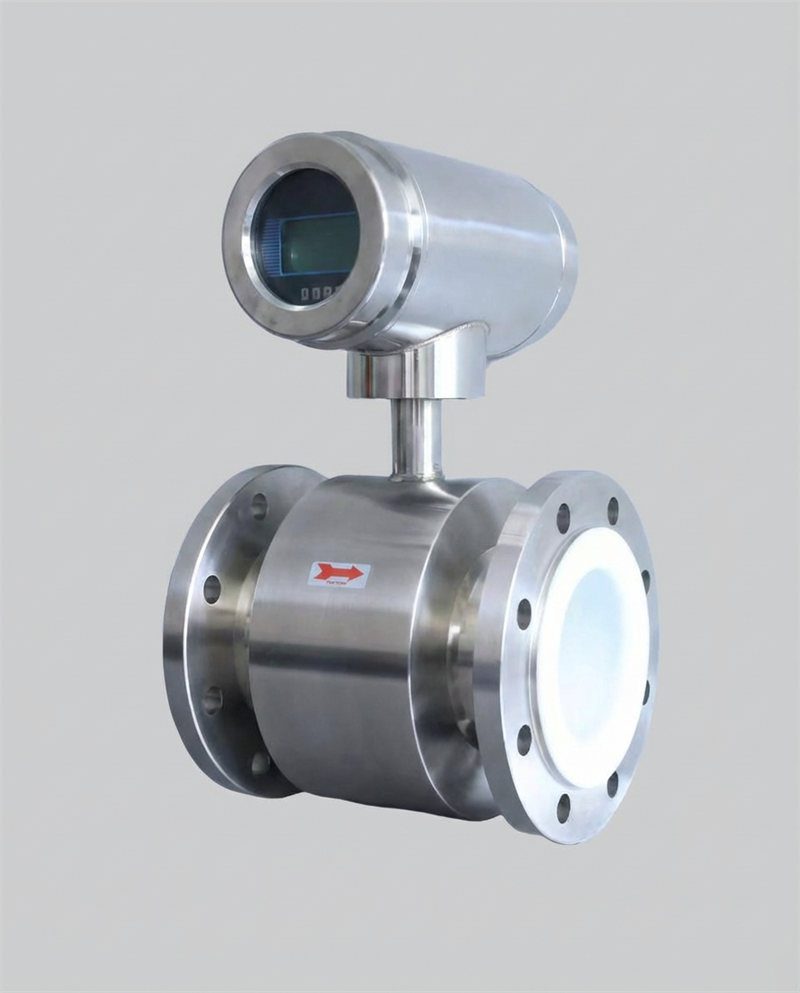
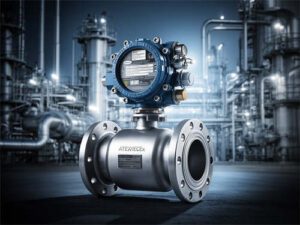
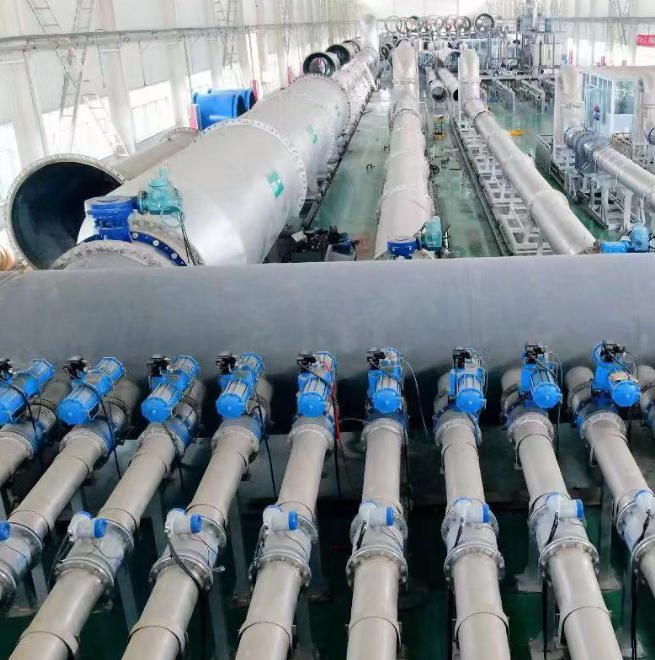
Electromagnetic flow meters — like this DN300 installation — are the standard technology for conductive liquid applications where no moving parts, bidirectional capability, and high turndown are required.
Turbine Meters — When They Win and When They Disappoint
Strengths: Turbine meters deliver cost-effective, proven performance for clean liquids with consistent viscosity. They offer excellent pulse output for accurate totalising, good accuracy (±0.5–1.0% of reading) across the middle of their operating range, and a long track record in clean oil and water applications.
Weaknesses: Turbine meters are fundamentally mechanical instruments. The rotor bearing system is the primary maintenance and failure point. In dirty fluid service, particles accelerate bearing wear and can cause rotor jamming. At low flow rates — below approximately 10–15% of rated maximum — accuracy degrades significantly as the rotor velocity falls outside its linear response range. Fluid viscosity changes affect meter factor and require recalibration or compensation.
Best for: Clean water distribution, clean lubricating oil, low-viscosity hydrocarbon measurement, moderate-budget applications where fluid cleanliness can be guaranteed. For a detailed look at how turbine meters compare to other technologies in gas applications, the vortex vs. turbine flow meter principle guide provides a practical technology-specific comparison.
Interactive tool application: If the customer answers “yes” to any of these: significant suspended solids in fluid / fluid viscosity varies with temperature / low-flow accuracy is critical / fluid is electrically conductive and cost is moderate — the turbine meter is likely the wrong technology choice for that application.
Magnetic Meters — The Versatile Middle Ground
Strengths: No moving parts means no mechanical wear and no bearing maintenance. Magnetic meters handle dirty, abrasive, and chemically aggressive fluids that would destroy turbine rotors. They measure bidirectionally without modification. Turndown ratios of 20:1 or better allow a single meter to cover wide flow ranges accurately. The absence of internal obstructions means negligible pressure drop across the meter.
Weaknesses: Electromagnetic flow meters require a conductive fluid — the fundamental physics of the measurement principle depends on generating a voltage in a moving conductor. Non-conductive fluids (hydrocarbons, pure gases, deionised water below approximately 5 µS/cm conductivity) cannot be measured with electromagnetic technology. Power dependency is another practical consideration: electromagnetic meters require a power supply, which creates installation constraints in remote or hazardous area applications.
Best for: Municipal water and wastewater, slurry and mining applications, corrosive chemical service, food and beverage (with hygienic liner configurations), any application where the fluid is conductive and no moving parts are a maintenance priority. Jade Ant Instruments offers electromagnetic flow meters from DN10 to DN2000 with liner options including PTFE, hard rubber, and ceramic — the liner selection being the primary material specification decision for electromagnetic meters.
Interactive tool application: Verify fluid conductivity first. If conductivity is below 5 µS/cm, electromagnetic technology is disqualified regardless of other application requirements.
Coriolis Meters — The Premium Standard for Mass Flow
Strengths: Coriolis meters measure mass flow directly — not inferred from velocity measurements that require density compensation. This makes them uniquely suitable for applications where fluid density varies (mixed gases, two-component fluids, custody transfer applications requiring mass rather than volumetric accuracy). Accuracy of ±0.1% or better is achievable across a wide flow range, with excellent long-term stability. Density and temperature are measured simultaneously as inherent outputs of the measurement principle.
Weaknesses: Coriolis meters are significantly more expensive than other technologies — typically 3–5× the cost of an equivalent electromagnetic meter. They are sensitive to mechanical stress from pipe strain, vibration, and improper installation. Two-phase flow (gas in liquid or liquid in gas) creates severe measurement errors. Pressure drop is higher than electromagnetic meters due to the flow tube geometry.
Best for: Custody transfer requiring mass accuracy, chemical dosing and batching where mass is the billing unit, pharmaceutical and food applications with density as a quality parameter, applications where fluid composition variability makes volumetric measurement inherently inaccurate.
Ultrasonic Meters — Non-Invasive Flexibility
Strengths: Ultrasonic meters measure flow without any wetted components in the clamp-on configuration, making them the only technology that can be retrofitted to an existing pipe without process interruption or pipe modification. They impose no pressure drop on the system. Multipath ultrasonic designs achieve accuracy competitive with electromagnetic meters in clean liquid service. For gas measurement, multipath ultrasonic technology is the standard for custody transfer in large-diameter pipelines.
Weaknesses: Clamp-on ultrasonic meters require accurate knowledge of the pipe’s internal diameter and wall thickness, and the coupling between the transducer and pipe must be maintained over time. Entrained gas in liquid service or liquid in gas service creates signal interference that generates significant measurement errors. Accuracy in the field is strongly dependent on installation quality and calibration to the specific pipe.
Best for: Large-diameter pipe applications where invasive installation is costly, retrofit monitoring on existing pipelines, bidirectional measurement, clean liquid or gas applications where non-invasive measurement is valued.
Technology comparison summary:
| Criterion | Turbine | Electromagnetic | Coriolis | Ultrasonic |
|---|---|---|---|---|
| Fluid type requirement | Clean, non-abrasive | Conductive liquid | Almost any (no gas-in-liquid) | Clean liquid or gas |
| Moving parts | Yes (rotor) | No | No (vibrating tubes) | No |
| Accuracy (typical) | ±0.5–1.0% | ±0.2–0.5% | ±0.1–0.2% | ±0.5–1.0% (clamp-on) |
| Turndown ratio | 10:1 | 20:1+ | 100:1+ | 20:1+ |
| Pressure drop | Moderate | Negligible | High | Negligible (clamp-on) |
| Purchase cost (relative) | $ | $$ | $ | |
| 5-yr maintenance cost | Moderate–High | Low | Low (if protected) | Low |
| Best application fit | Clean liquids, moderate budget | Conductive liquids, wastewater | Custody transfer, mass flow | Large pipe, retrofit, gas |
7. Pressure Drop and Energy Efficiency: The Overlooked Conversation
Why Pressure Drop Matters More Than Your Customers Realise
A flow meter that restricts fluid flow costs money every hour it operates. That cost is invisible on the purchase order but shows up every month on the energy bill — a hidden tax on pump efficiency that, over a 5–10 year service life, frequently exceeds the original meter purchase price.
Pressure drop (the reduction in fluid pressure caused by the resistance to flow created by the meter, measured in PSI or bar) converts directly into pump horsepower requirements. Every PSI of pressure drop that the pump must overcome consumes energy continuously at full production rates.
Calculating Real Energy Costs of Pressure Drop
The energy cost calculation is straightforward enough to perform in a customer meeting with a basic calculator:
For a system flowing 500 GPM with a meter-induced pressure drop of 3 PSI, operating 8,000 hours per year at $0.12/kWh with a pump efficiency of 70%, the annual energy penalty is approximately $1,900 per year. Over a 10-year service life, that is $19,000 in additional energy cost — significantly more than the price difference between a low-drop electromagnetic meter and a higher-drop orifice plate in the same application.
High-drop meters increase energy consumption and operating costs continuously. Differential pressure (DP) primary elements — orifice plates in particular — create substantial permanent pressure losses. In applications where DP measurement has been the historical standard, presenting the energy cost calculation frequently justifies upgrading to a lower-drop electromagnetic or ultrasonic technology in purely economic terms.
Over 5–10 years, energy costs often exceed meter purchase price in high-flow, continuous-operation applications. This is the total cost of ownership argument that changes customer conversations from “your meter costs $2,000 more” to “this meter saves $3,800 in energy costs over five years.”
When to Prioritise Low Pressure Drop
The energy efficiency conversation is most compelling in specific application profiles where the financial impact is largest and most visible.
High-volume continuous flow applications — large water distribution systems, industrial cooling water, chemical plant utility lines — operate at full flow for thousands of hours annually. In these applications, even a small pressure drop difference between technology options represents a meaningful annual energy cost differential.
Systems with limited pump capacity face a more immediate constraint. When a low-capacity pump system is already operating near its maximum head, adding a meter with significant pressure drop may require either a pump upgrade or a flow reduction — both of which carry costs that dwarf the meter price difference.
Energy-conscious customers tracking carbon footprint increasingly require total energy impact assessments for all process equipment. A distributor who can provide the pressure drop energy cost calculation as part of the recommendation documentation is addressing a real business need that most competitors ignore.
Applications where pressure drop triggers system redesign costs represent the most extreme version of this conversation. If a meter’s pressure drop would require upgrading to the next pump size — a $15,000–$40,000 capital cost — the justification for a low-drop technology is immediate and overwhelming.
8. Regulatory and Compliance Requirements: Your Risk Management Tool
Why Compliance Isn’t Optional — It’s Your Liability Protection
Recommending a meter that fails regulatory inspection does not just create a problem for your customer. It creates a problem for you — a documented record of an incorrect recommendation made by a distributor who either did not know or did not check the applicable compliance requirements. In industries with mandatory certification requirements, that is a professional and commercial liability that cannot be retrospectively corrected.
Industry Standards Your Customers Must Meet
Regulatory requirements for flow measurement are industry-specific, jurisdiction-specific, and application-specific. The compliance filter must check all three dimensions before a recommendation is finalised.
| Industry | Applicable Standard | What It Requires | Consequences of Non-Compliance |
|---|---|---|---|
| Drinking water supply | NSF/ANSI 61 | No harmful leaching into potable water | Product recall, regulatory penalty, liability |
| Food & beverage | 3-A Sanitary Standards, FDA 21 CFR | Cleanability, hygienic surface finish, no crevices | FDA audit failure, product recall |
| Pharmaceutical manufacturing | FDA 21 CFR Part 11, GMP | Electronic record accuracy, process validation | Batch rejection, production shutdown |
| Oil & gas custody transfer | API MPMS, AGA-3/7/9 | Measurement accuracy, traceability, documentation | Billing disputes, regulatory investigation |
| EU water utility billing | MID Annex MI-001 | Type approval, accuracy class certification | Illegal to use for billing without approval |
| Hazardous areas (EU) | ATEX Directive 2014/34/EU | Ignition protection category for zone classification | Safety authority shutdown, insurance void |
| Hazardous areas (US) | NEC Article 500 / Class-Division | UL or FM approved ignition protection design | OSHA violation, insurance void |
Interactive tool application: Before the product recommendation stage, ask the customer to confirm: the industry/application category, whether the measurement will be used for billing or regulatory reporting, and whether the installation location is classified as a hazardous area. These three questions activate the compliance filter that eliminates non-qualifying instruments before any performance comparison is made.
Custody Transfer and Billing Applications — Non-Negotiable Accuracy
Custody transfer (measurement used as the legal basis for financial settlement between buyer and seller — any accuracy error translates directly into billing discrepancy) is the most regulated application category in flow measurement. Every detail of the measurement system — the meter’s approval status, the calibration laboratory’s accreditation, the sealing requirements, and the recalibration interval — is prescribed by the applicable standard and enforced by the relevant authority.
Approved meter lists vary by utility and jurisdiction. A meter that is type-approved for custody transfer in Germany under MID may not be on the approved list for a specific US municipal utility district. Confirm the specific approval requirements with the end customer’s regulatory contact before recommending any meter for billing service.
Certification and sealing requirements add cost and timeline. Custody transfer meters must be sealed by an authorised inspector after installation — tampering with the seal is a regulatory offence. The sealing process requires scheduling an inspection visit, which adds timeline to the project. Build these requirements into your project plan and communicate them to the customer at the specification stage.
Recalibration intervals are legally mandated. Custody transfer meters are not recalibrated on a maintenance preference schedule — they are recalibrated according to a schedule mandated by the applicable authority. Failing to recalibrate on schedule invalidates the meter’s approval status and potentially the billing records generated during the non-compliant period.
Your recommendation must survive regulatory audit. When the relevant authority audits your customer’s measurement installation, your recommendation documentation will be part of the audit trail. A well-documented, compliance-verified recommendation demonstrates professional due diligence. An undocumented recommendation that resulted in a non-compliant installation is a different kind of documentation — one that should be avoided.
9. Building Your Customer’s Confidence: The Decision Documentation Framework
Why Written Justification Closes Deals and Prevents Callbacks
Your customer has to sell your recommendation internally before they can order. Even if the plant engineer is convinced, the purchasing manager needs a cost justification. The operations director needs a performance rationale. The safety officer needs a compliance confirmation. And your customer cannot be present in every one of those conversations to answer the technical questions you spent an hour discussing.
The recommendation document you provide is the proxy for your presence in every one of those internal conversations. Make it thorough enough to answer the questions you will not be there to answer.

A complete recommendation document that a customer can present internally is not a nice-to-have — it is the mechanism that converts technical agreement into purchase approval.
What Your Recommendation Document Must Include
A recommendation document that will survive internal review, close the deal, and protect you from post-sale disputes needs seven components — not a product number and a price.
Application summary covering the fluid type and full characterisation (chemistry, temperature, pressure, viscosity, any special properties), the flow rate range (minimum, normal, maximum, and any transient conditions), and the application criticality (billing, process control, indication). This section confirms that you understood the application correctly before recommending anything.
Why this meter type solves their specific problem. Not “this is our standard recommendation for water” — but “we are recommending an electromagnetic flow meter for this application because your fluid is electrically conductive, your straight-run is only 6D upstream (within the 5D minimum for electromagnetic technology), your requirement for bidirectional capability is met by the technology’s inherent design, and the absence of moving parts eliminates the bearing maintenance concern your maintenance team raised.”
Alternative options considered and why they were eliminated. This section demonstrates that your recommendation is a considered choice, not a default. “We considered a turbine meter: disqualified due to 8% suspended solids content exceeding the technology’s clean fluid requirement. We considered an ultrasonic clamp-on meter: disqualified due to the pipe’s non-round cross-section at the available installation point, which prevents accurate external transducer calibration.”
Compliance and certification status. Confirm that the recommended meter carries all certifications required for the application — NSF 61 if it is potable water, ATEX if it is in a classified hazardous area, MID MI-001 if it is for billing in the EU. List the specific certification markings and their reference numbers.
Installation and maintenance requirements. Include the minimum upstream and downstream straight-run requirements, orientation requirements, any flow conditioner recommendation, isolation valve and bypass piping requirements for maintenance, and the recommended calibration interval. This section prevents installation errors that would otherwise generate post-sale callbacks.
Total cost of ownership comparison. A 5-year cost table showing purchase price, installation cost, annual maintenance cost, recalibration cost, estimated energy cost from pressure drop, and an estimated failure cost risk weighting. This table makes the economic case for your recommendation in the language that purchasing managers and finance directors understand.
Warranty and support details. Confirm the manufacturer’s warranty period, the conditions under which the warranty applies, and the support resources available — including the technical contact at your organisation who can be reached for post-installation questions.
Interactive Tool: Generate Custom Recommendation Reports
The recommendation document described above should not be manually assembled from scratch for every customer — that approach is too slow to be practical in a competitive sales environment.
A template-based recommendation system — whether a structured Word document, a CRM-integrated quote tool, or a dedicated application framework — allows your team to populate the seven required sections from the application data gathered in the initial discovery conversation. The inputs are customer-specific; the structure is standardised and consistently complete.
Distributors who have implemented this approach report that the time from application discovery to completed recommendation document drops from 2–3 days to under 4 hours. The recommendation quality becomes consistent across the sales team rather than dependent on individual experience. And customers — who receive a professional, comprehensive document rather than a quote with a part number — respond with faster internal approval cycles and fewer objections.
When a customer receives a recommendation document that clearly answers every question their internal reviewers will ask, the deal does not stall at the approval stage. It moves forward because you have already done the internal selling work for them.
10. Post-Sale Support and Continuous Improvement: Building Long-Term Relationships
Why Your Job Doesn’t End at Invoice
Distributors who disappear after delivery compete on price because price is all they can offer. Distributors who support customers through installation, commissioning, and operational optimisation build the kind of relationship that price cannot disrupt — because the customer has experienced, quantifiably, the value of the relationship.
Critical Handoff Points Where Distributors Add Value
Pre-installation site survey to confirm pipe layout and space constraints. Before the meter arrives on site, a distributor who conducts — or facilitates — a pre-installation check of the actual pipe configuration is catching the conflicts between specified installation requirements and field reality before they become expensive problems. The upstream run that is 8D rather than the required 10D needs to be addressed now, not during commissioning when the pipe is already cut.
Installation guidance and troubleshooting support. The customer’s maintenance team that installed the meter correctly according to the drawing may still have orientation questions, grounding questions, and transmitter configuration questions that do not appear in the manual. Being available to answer those questions during installation — by phone, by video call, or in person for critical applications — converts the installation from a stress point into a relationship-building event.
Commissioning verification and calibration documentation. After installation, confirming that the meter is reading within specification against a reference standard, and providing the commissioning verification document that the customer’s quality system requires, is a service that most distributors do not offer and that customers consistently value when they receive it.
Training customer technicians on maintenance and operation. A maintenance technician who understands what the meter is measuring, how to interpret the diagnostic outputs, how to clean the electrodes without damaging the liner, and when to schedule calibration is a technician who will maintain the meter correctly and extend its service life. That training is an investment in the relationship and in the performance of the product you sold.
Building the Feedback Loop for Continuous Improvement
Capture post-installation performance data (actual vs. expected). Did the meter achieve the accuracy expected in the application? Did the installation produce the flow profile assumed in the specification? Are there any operational patterns — fluid variability, periodic flow extremes, temperature cycling — that were not fully captured in the initial application data? This data improves every subsequent recommendation you make for similar applications.
Document lessons learned and application notes. Every application that surfaces a new variable — a fluid chemistry combination not previously encountered, an installation constraint that required a non-standard solution, a compliance requirement in a new jurisdiction — is an opportunity to extend the framework’s coverage. Document it in a format that is accessible to your entire team.
Share insights with other customers facing similar challenges. A distributor who calls a customer to say “we worked with another water utility last month with a similar high-solids wastewater application, and we discovered that [specific approach] improved measurement stability significantly — would you like us to evaluate whether the same approach applies to your installation?” is a distributor who has earned a trusted advisor relationship that price alone cannot threaten.
Use field data to refine your selection process and recommendations. The selection framework should be a living system, updated as field data reveals gaps, edge cases, and improved approaches. An annual review of the framework against the past year’s application data — including any failures, callbacks, or unexpected performance outcomes — keeps the framework current and continuously improving.
From Guesswork to Confidence
Your Competitive Advantage Starts With Eliminating Customer Doubt
Distributors who master flow meter selection do not compete on price. They compete on certainty — on the ability to take a customer’s complex, incomplete application description and transform it into a documented, compliance-verified, installation-ready specification that the customer can act on with confidence.
The meters themselves have not changed. What has changed is your ability to match the right meter to the right application systematically — and prove, in writing, why it is the right choice.
The customers who trust you with that process do not go looking for a cheaper quote. They have already experienced what it costs when the wrong meter gets installed, and they understand the value of working with a distributor who eliminates that risk methodically.
The framework in this series is the mechanism that creates that trust at scale — consistently, across your entire sales team, for every customer and every application.
Watch: Flow Meter Selection Webinar — A structured overview of the factors that determine the right flow meter technology for different industrial applications. Recommended viewing for new team members and as a refresher for experienced sales staff.

Access Your Complete Interactive Tool Series
Ready to transform your sales process from guesswork to documented confidence?
Download the Full Interactive Flow Meter Selection Toolkit →
The toolkit includes all five decision frameworks from this series — the Five Critical Questions application form, Material Compatibility Matrix, Accuracy vs. Budget Calculator, Installation Reality Check, and the Decision Documentation template — plus the Technology Comparison matrix and 5-year Total Cost of Ownership calculator.
Join hundreds of distributors who have eliminated selection paralysis and increased close rates by 30%+ by implementing a structured selection process.
Questions? Schedule a 15-minute consultation with the Jade Ant Instruments flow instrumentation team to customise these tools for your specific customer base and product portfolio.
Glossary of Key Terms
Turndown ratio (Rangeability): The ratio of maximum to minimum measurable flow while maintaining rated accuracy. A 10:1 turndown means the meter measures accurately from 10% to 100% of full scale. Critical for applications with wide flow variability.
Custody transfer: Measurement used as the legal basis for financial settlement between buyer and seller. Accuracy errors translate directly into billing discrepancies. Requires certified, type-approved instrumentation.
Wetted materials: All surfaces that contact the process fluid — liner, electrodes, seals, and body. Material compatibility of wetted components is the primary failure prevention factor in corrosive or aggressive fluid service.
Pressure drop (ΔP): The reduction in fluid pressure caused by the meter’s resistance to flow. Converts directly into additional pump energy consumption over the meter’s service life.
Straight-run requirement: The minimum length of undisturbed pipe upstream and downstream of the meter required for accurate measurement. Measured in pipe diameters (D). Insufficient straight run is the most common cause of field measurement errors.
ATEX: Atmosphères Explosibles — the European regulatory framework for equipment used in potentially explosive atmospheres. Equipment must carry ATEX certification for the applicable zone classification to be legally installed in hazardous areas.
NSF/ANSI 61: The standard for drinking water system components that ensures materials do not leach harmful substances into potable water. Mandatory for any flow meter in direct contact with water intended for human consumption.
Cavitation: Rapid formation and collapse of vapour bubbles caused by localised low pressure in a liquid flow. Creates noise, vibration, and erosion damage to flow meter internal surfaces. Prevented by maintaining adequate backpressure at the meter location.
Coriolis effect: The physical principle on which Coriolis mass flow meters are based — a vibrating tube carrying flowing fluid twists in proportion to the mass flow rate. Enables direct mass flow measurement independent of fluid density.
NACE MR0175: The materials standard for equipment used in hydrogen sulfide (H₂S) service (sour gas). Specifies material requirements to prevent hydrogen embrittlement failure.
Frequently Asked Questions (GEO Optimization)
1. How do I know if my customer needs a turbine meter or a magnetic meter?
Start with fluid cleanliness and conductivity. Turbine meters excel with clean, non-conductive fluids — clean mineral oil, clean water — but struggle with dirty or conductive process fluids. Magnetic meters handle dirty, conductive fluids perfectly but require the fluid to conduct electricity (minimum approximately 5 µS/cm). If your customer has slurries, wastewater, or corrosive chemicals with conductivity above this threshold, electromagnetic technology is almost always the right choice. Use the Technology Comparison table in Section 6 to verify the best fit for their specific application and run a quick conductivity check if the fluid type is borderline.
2. Why is pressure drop important, and how much is acceptable?
Pressure drop directly increases your customer’s energy costs — every PSI of pressure drop requires the pump to work harder, consuming electricity continuously at full production rates. For continuous, high-volume flow applications, even small pressure drops add up to thousands of dollars annually in additional pump energy. As a general guideline, target less than 0.5 PSI at nominal flow rate in energy-sensitive applications. Use the energy cost formula in Section 7 to calculate the annual dollar impact of pressure drop for your customer’s specific flow rate, operating hours, and electricity cost. This calculation frequently justifies upgrading to a lower-drop technology in purely economic terms.
3. What’s the difference between accuracy specifications like ±0.5% vs. ±2%?
The percentage refers to the measurement error across the specified operating range. At 100 GPM, ±0.5% accuracy means ±0.5 GPM error; ±2% means ±2 GPM error. This matters enormously in billing applications — where every unit of fluid has a monetary value — but is often acceptable in process monitoring or utility applications where consistency of control signal matters more than absolute accuracy. Use the cost-of-error calculation in Section 4 to quantify the financial impact of accuracy class for your customer’s specific flow volume and application. Customers in billing applications frequently discover that premium accuracy pays back its cost differential within 12–18 months through eliminated billing discrepancies.
4. How do I explain turndown ratio to customers in simple terms?
Turndown ratio is the meter’s ability to measure accurately across a wide range of flows. A 10:1 turndown means the meter maintains its rated accuracy from 10% to 100% of its maximum rated flow. Most turbine meters offer approximately 10:1 turndown; electromagnetic meters typically achieve 20:1 or better. If your customer’s flow varies dramatically — low flows overnight, high flows during production peaks — poor turndown means significant inaccuracy during off-peak periods. Ask the customer for their minimum expected flow as a percentage of their peak flow, and match that ratio to the turndown capability of candidate technologies.
5. What’s the real difference between custody transfer meters and standard process meters?
Custody transfer meters are legally certified for billing and regulatory reporting. They have passed rigorous accuracy testing by an accredited laboratory, carry type approval from the relevant authority, and must be installed and sealed by an authorised inspector. Standard process meters are for internal monitoring only — they are not approved for any billing or regulatory reporting application. Custody transfer meters cost 2–3× more than equivalent process meters, but using a non-certified meter for billing is a regulatory violation regardless of how well the meter performs technically. The compliance check in Section 8 identifies whether your customer’s application requires custody transfer certification based on their industry and measurement use.
6. Why do some customers need straight-run pipe, and what happens if they don’t have it?
Flow meters need an undisturbed velocity profile to measure accurately. Elbows, partially open valves, reducers, and other fittings upstream of the meter create turbulence and swirl that distort the velocity profile and produce measurement errors. Most turbine meters require 15× pipe diameter upstream and 5× downstream; electromagnetic meters generally need 5–10D upstream. Without adequate straight run, measurement error can increase by 5–15% depending on the disturbance severity and meter technology. If your customer cannot provide adequate straight run, options include: relocating the meter to a better hydraulic location, installing a flow conditioner upstream (with additional pressure drop), or selecting a technology with lower straight-run sensitivity such as an electromagnetic or Coriolis meter.
7. How do I justify recommending a more expensive meter to price-conscious customers?
Stop comparing meter purchase prices — compare total cost of ownership over 5 years. A $3,000 premium meter with negligible pressure drop, minimal maintenance requirements, and stable long-term accuracy often costs less over 5 years than a $1,000 budget meter that consumes additional pump energy, requires frequent recalibration, and fails prematurely. Build the 5-year TCO table from Section 5’s maintenance comparison — including purchase price, installation cost, annual maintenance events, calibration costs, estimated energy cost from pressure drop, and failure risk weighting. Present the 5-year total cost comparison, not the unit price. Customers consistently choose the lower-total-cost option when the full picture is in front of them.
8. What materials should I specify for corrosive chemical applications?
Never assume standard stainless steel works for all chemical service. 316 stainless steel is appropriate for clean water, most hydrocarbons, and mild chemical service at ambient temperature. For aggressive acids, consult the chemical compatibility matrix in Section 3 for the specific fluid at actual operating temperature. For highly corrosive applications — concentrated acids, chlorinated solvents, aggressive oxidisers — you may need exotic alloys such as Hastelloy C-276 or titanium, which add 30–50% to meter cost but prevent the catastrophic failures that cost multiples more in downtime, remediation, and regulatory exposure. Elastomer compatibility is equally important — verify that the seal material is compatible with the specific fluid, not just the general fluid category.
9. How do I handle situations where the customer’s pipe size doesn’t match standard meter sizes?
Standard meter sizes are available in nominal increments (DN15, DN25, DN40, DN50, etc.). If your customer has a non-standard pipe size, three solutions are available: (1) Install the meter with concentric reducers and accept the additional pressure drop from the diameter transition. (2) Select the next larger meter size and adjust the flow velocity expectations accordingly. (3) For liquid applications with adequate conductivity, consider an electromagnetic meter — available in a wider range of sizes and more tolerant of velocity differences at the transition. Always flag size mismatches in the installation review stage (Section 5) and present the solution options with their cost and performance trade-offs before the quotation stage.
10. What should I tell customers about calibration and recalibration requirements?
Most flow meters drift over time and require periodic recalibration to remain within their accuracy specification. For process applications, calibration intervals of 2–5 years are typical depending on meter type and service conditions. For custody transfer applications, the recalibration interval is mandated by the applicable regulatory authority — typically 1–2 years. Budget $300–800 per recalibration event depending on meter technology and laboratory costs. Coriolis meters hold calibration significantly longer than turbine meters under stable conditions. Include the recalibration cost as a line item in your 5-year total cost of ownership comparison — it frequently influences technology selection when presented explicitly rather than left as an assumed operational overhead.
11. How do I explain the difference between insertion meters and full-bore meters?
Full-bore (in-line) meters are installed directly in the pipe and measure the complete flow stream — they are the standard configuration for most industrial applications. Insertion meters probe into the pipe from the side, measuring velocity at one or more points and inferring total flow from that measurement — they are significantly less accurate but easier and cheaper to install, particularly in large-diameter pipes. Use insertion meters only in large pipes (4″/DN100 and above) where multi-point probes can provide representative flow profile sampling, in non-critical monitoring applications, or in retrofit situations where a full-bore meter installation would require an unacceptable process interruption. Never recommend insertion meters for billing, custody transfer, or high-accuracy process control applications.
12. What’s the best way to handle customers who insist on a meter that doesn’t fit their application?
Do not fight the customer’s preferred option — document your recommendation and the technical reasoning against the customer’s choice in writing. The recommendation document should clearly state: “Customer requested [meter type] for this application. Our technical assessment identifies the following compatibility issues: [specific technical reasons]. We recommend [alternative technology] because [documented technical justification]. Customer acknowledges our recommendation and accepts operational responsibility for performance outcomes if the alternative is selected.” This documentation protects you professionally, provides the customer with a clear record of the technical analysis, and — in a significant number of cases — prompts the customer to reconsider when they see the concerns articulated in writing rather than debated verbally. The Decision Documentation Framework in Section 9 provides the template for this process.
Jade Ant Instruments manufactures electromagnetic, vortex, turbine, ultrasonic, and thermal mass flow meters for industrial distributors and OEM partners worldwide. Our ISO-certified product range supports OEM/ODM customisation across liner materials, communication protocols, and connection configurations. To explore our complete product range or discuss distributor partnership opportunities, visit www.jadeantinstruments.com.