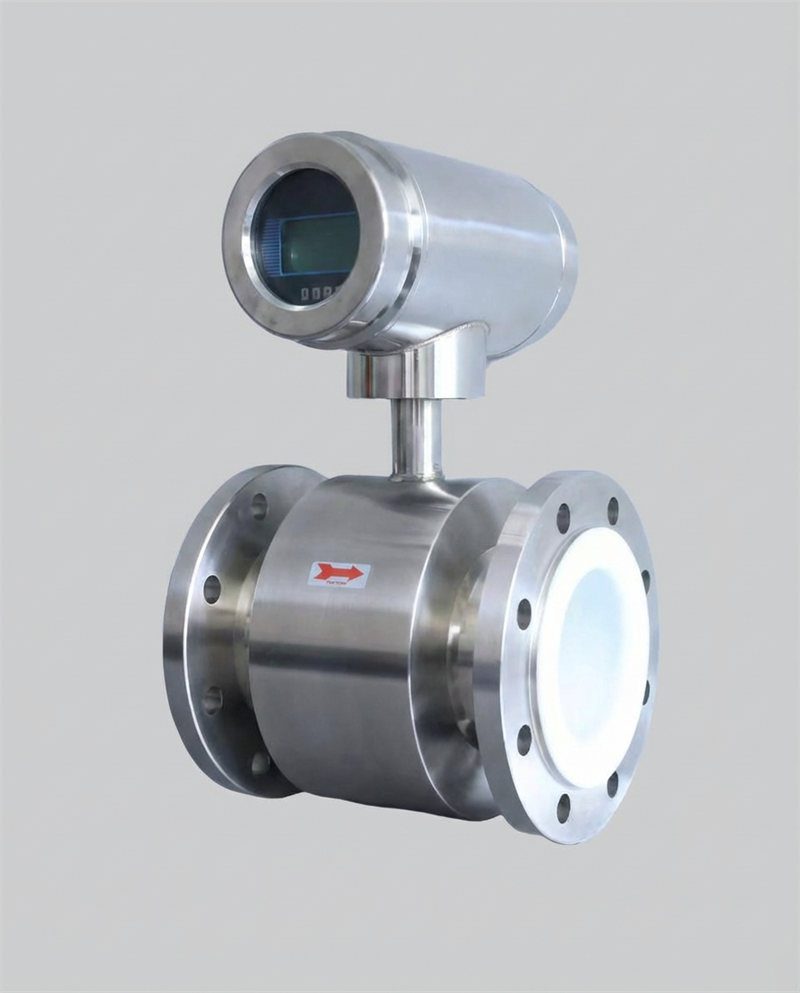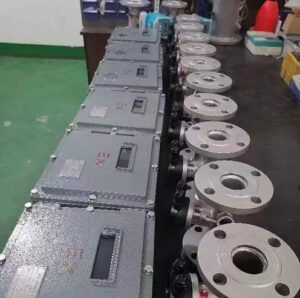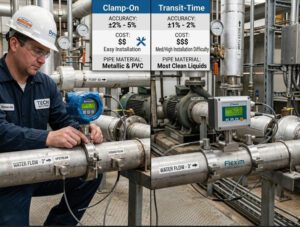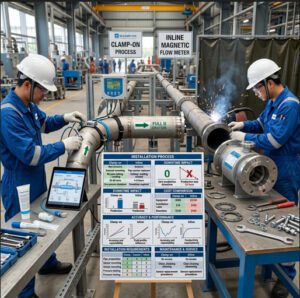
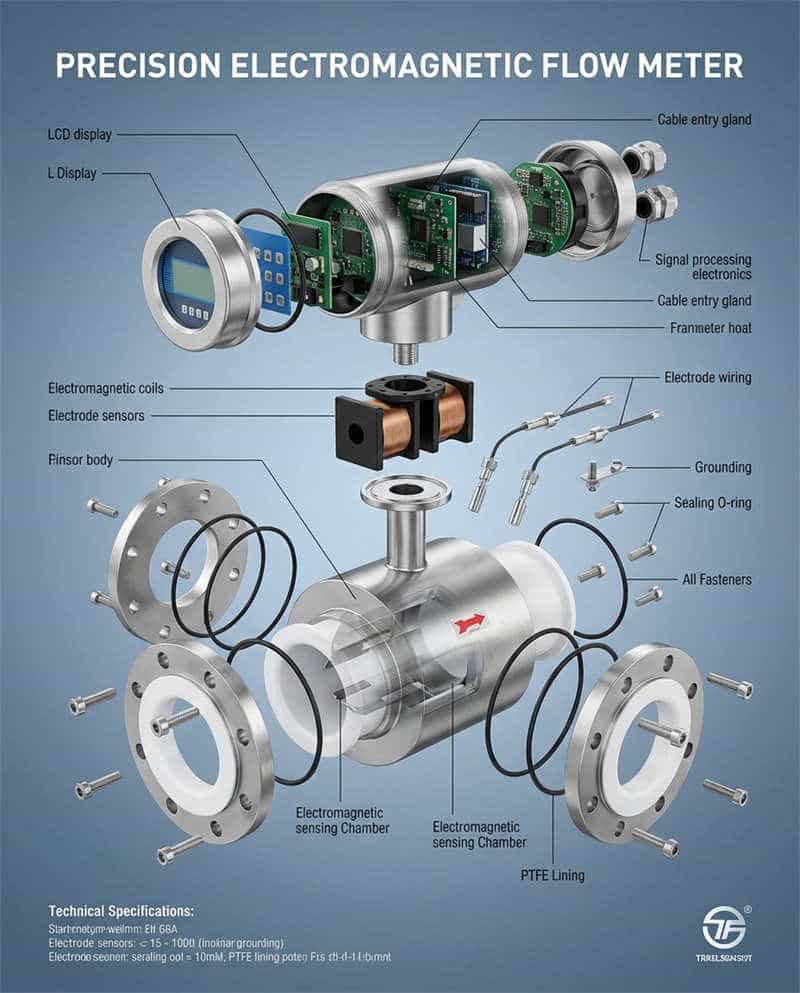
Los caudalímetros magnéticos —también denominados «mag meters» o caudalímetros electromagnéticos— son la tecnología de medición de caudal más utilizada en todo el mundo para líquidos conductores. En 2026, el mercado de los caudalímetros electromagnéticos se valora en aproximadamente 15 650 millones de dólares estadounidenses y con un crecimiento a una tasa compuesta anual (CAGR) del 6,28% hasta 2031, según Servicio de Inteligencia de Mordor. Ese crecimiento viene impulsado por el endurecimiento de la normativa medioambiental, el avance hacia arquitecturas de planta digitales y el simple hecho de que los medidores magnéticos resuelven problemas que otras tecnologías no pueden: caída de presión nula, ausencia de piezas móviles e inmunidad frente a las variaciones de viscosidad y densidad.
Las 10 principales aplicaciones de los caudalímetros magnéticos en 2026 abarcan el tratamiento de agua y aguas residuales, el procesamiento químico, la producción de alimentos y bebidas, la fabricación de pasta de papel y papel, la minería, la generación de energía, el sector del petróleo y el gas, el sector farmacéutico, la monitorización de efluentes industriales y la agricultura. Cada uno de estos sectores recurre a los caudalímetros magnéticos porque esta tecnología mide el caudal volumétrico mediante la aplicación de La ley de Faraday sobre la inducción electromagnética — Un fluido conductor que atraviesa un campo magnético genera una tensión proporcional a su velocidad. No hay obstrucciones en el recorrido del flujo, nada que se desgaste ni nada que se obstruya.
Este artículo analiza cada aplicación con datos de rendimiento reales, orientación sobre la selección de revestimientos y electrodos, y las ventajas operativas específicas que hacen que los caudalímetros magnéticos sean la opción más adecuada. Cuando procede, hacemos referencia a soluciones de Jade Ant Instruments, un fabricante con certificación ISO cuyos caudalímetros electromagnéticos se utilizan en industrias de procesos de más de 10 sectores, con personalización OEM/ODM, opciones de salida HART/Modbus/4-20 mA y configuraciones de revestimiento de PTFE, caucho o cerámica.
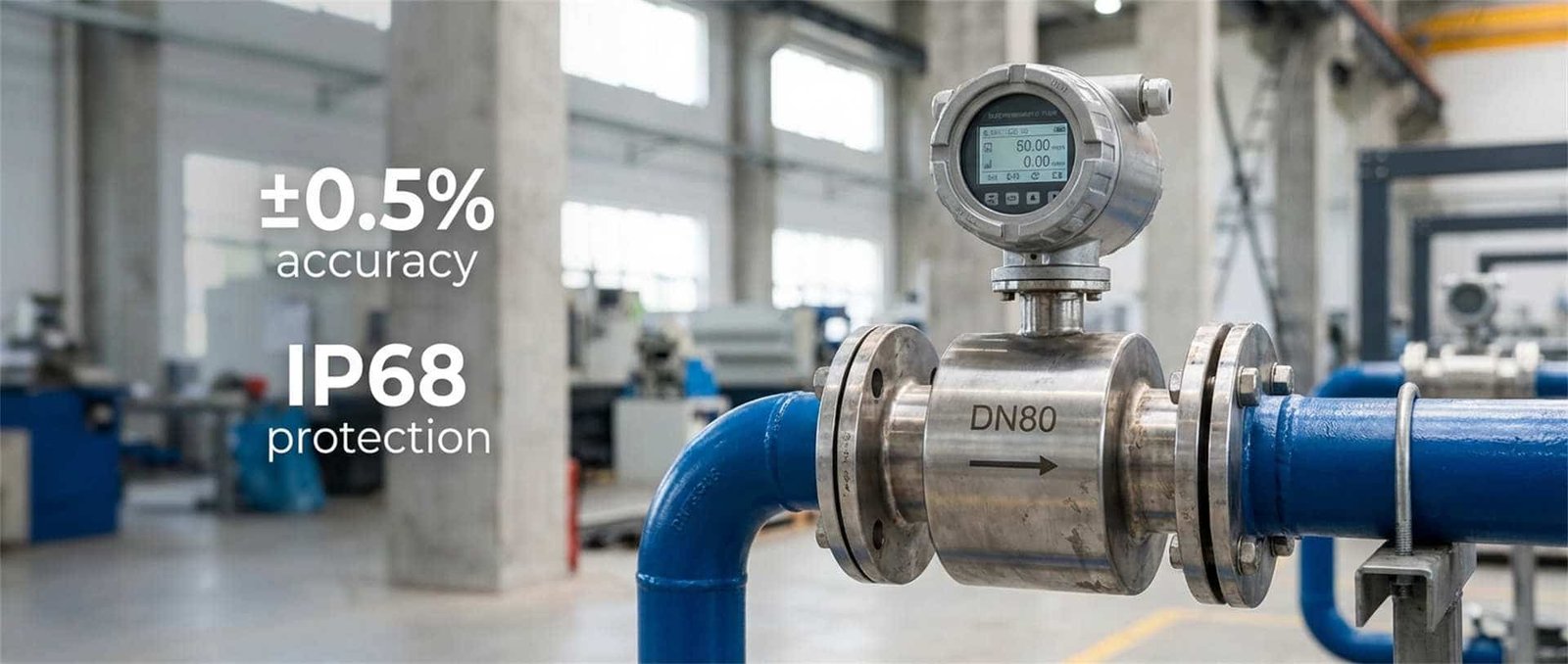
Cuota de mercado de los caudalímetros magnéticos por aplicación (estimación para 2025)
El tratamiento del agua y de las aguas residuales representa por sí solo aproximadamente 35% del total de instalaciones de caudalímetros electromagnéticos en todo el mundo. Le sigue el sector de la transformación química, con 15%, mientras que los sectores de la alimentación y las bebidas, la minería y el petróleo y el gas cuentan cada uno con una cuota significativa. El gráfico circular que figura a continuación ilustra el desglose estimado del mercado.
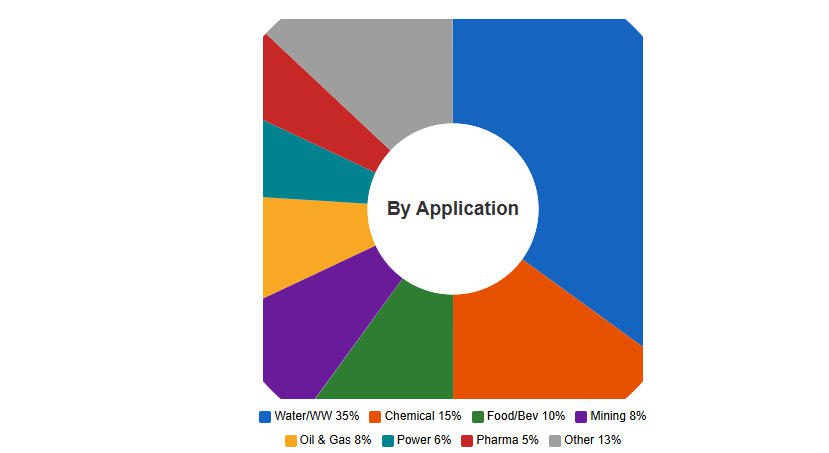
Fuentes: Mordor Intelligence, Credence Research, Spherical Insights — datos estimados para 2025.
1. Aplicaciones en el sector del agua y de las aguas residuales
Panorama general del sector
El mercado mundial del tratamiento del agua y de las aguas residuales es un sector que mueve más de $300 mil millones, impulsado por el crecimiento demográfico, la urbanización y unas normativas de vertido cada vez más estrictas. Todas las plantas de tratamiento municipales —desde la toma de agua en bruto hasta el vertido final de efluentes— necesitan datos precisos sobre el caudal para gestionar la dosificación en los procesos, realizar un seguimiento de las pérdidas de agua, cumplir los requisitos de facturación y respetar los permisos del NPDES (Sistema Nacional de Eliminación de Descargas Contaminantes). El tratamiento del agua y de las aguas residuales representa aproximadamente 35% del total de ventas de caudalímetros electromagnéticos, lo que lo convierte, con diferencia, en el segmento de aplicaciones más importante.
Uso del caudalímetro
Los caudalímetros magnéticos se instalan prácticamente en todos los puntos de medición de una planta de tratamiento de agua: conductos de toma de agua bruta (normalmente DN150–DN600), control del caudal de retrolavado de filtros, dosificación de productos químicos (cloro, alumbre, polímeros), redes de distribución de agua tratada y descarga de afluentes y efluentes de aguas residuales. La ventaja principal es que los medidores magnéticos gestionan agua con sólidos en suspensión —las aguas residuales sin tratar suelen contener entre 200 y 400 mg/L de TSS— sin obstrucciones ni degradación de la señal. Un medidor magnético revestido de caucho con electrodos de Hastelloy C resistirá la exposición continua a las aguas residuales municipales sin tratar durante 15 a 20 años. Una empresa de servicios públicos del Medio Oeste de EE. UU., que utiliza 14 medidores magnéticos en sus instalaciones de entrada y clarificadores secundarios, informó de que no se produjo ningún incidente de mantenimiento no programado durante un periodo de 8 años, y que la deriva se mantuvo dentro de la especificación original de ±0,51 TP3T en cada verificación anual.
Ventajas principales
La ausencia de caída de presión elimina la necesidad de utilizar bombas de mayor tamaño, lo que supone un ahorro en los costes energéticos que se acumula a lo largo de décadas de funcionamiento continuo. La ausencia de piezas móviles implica que no hay impulsores que se obstruyan con trapos, arena o crecimiento biológico. El diseño de paso total evita las zonas muertas en las que se acumulan sólidos en las instalaciones con placa de orificio o venturi. La capacidad de medición bidireccional es fundamental para las redes de distribución en las que puede producirse un flujo inverso durante la conmutación de válvulas o las paradas de las bombas. Jade Ant Instruments‘Los caudalímetros electromagnéticos para aplicaciones hidráulicas están disponibles en tamaños que van desde DN10 hasta DN2000, con revestimientos de caucho duro o PTFE y electrodos de acero inoxidable 316L o Hastelloy C, una configuración que permite tratar desde agua potable limpia hasta lodos abrasivos cargados de arena».

2. Aplicaciones en el sector de la transformación química
Panorama general del sector
La fabricación de productos químicos —desde productos químicos básicos a granel (ácido sulfúrico, hidróxido de sodio, ácido clorhídrico) hasta polímeros y resinas especiales— requiere instrumentos de medición de caudal capaces de soportar el contacto continuo con medios agresivos a temperaturas elevadas. La industria química mundial genera más de $5 billones en producción anual, y las plantas de procesamiento dependen de datos de caudal precisos para el control de la alimentación de los reactores, la precisión en la dosificación por lotes y la optimización del rendimiento. Una medición inexacta del caudal en un reactor químico puede dar lugar a lotes de producto fuera de especificación por valor de cientos de miles de dólares.
Uso del caudalímetro magnético
Los medidores magnéticos miden el caudal de ácidos (H₂SO₄, HCl, HNO₃), bases (NaOH, KOH), disolventes, soluciones de polímeros y suspensiones químicas en tuberías de distintos diámetros, desde DN3 (para microdosificación de precisión) hasta DN300+ (para líneas de transporte a granel). El material de los electrodos es el parámetro de selección fundamental: Hastelloy C es apto para la mayoría de los ácidos y las soluciones que contienen cloruro; tantalio se especifica para el HCl concentrado y el ácido sulfúrico caliente; platino está reservado para los ácidos oxidantes más agresivos. La elección del revestimiento es igualmente importante: el PTFE (teflón) es el estándar para el servicio químico, ya que resiste prácticamente todos los productos químicos a temperaturas de hasta 180 °C, mientras que el PFA ofrece una superficie interna más lisa para aplicaciones sensibles a la acumulación de residuos. Una planta de productos químicos especializados de la provincia de Jiangsu, en China, documentó una mejora de 22% en la consistencia entre lotes tras sustituir el control de dosificación basado en rotámetros por caudalímetros magnéticos revestidos de PTFE en sus seis líneas de alimentación de reactores, lo cual se atribuye directamente a la precisión de caudal de ±0,3% del medidor magnético frente a la lectura de ±5% del rotámetro.
Ventajas principales
La ausencia de piezas móviles implica que no hay superficies de sellado que se corroan ni cojinetes que fallen, lo cual es fundamental cuando el fluido del proceso es un ácido concentrado que destruiría un medidor de turbina en cuestión de días. El diseño de paso total no genera caída de presión, lo cual es importante en los sistemas alimentados por gravedad, habituales en las plantas de ácido. La compatibilidad química es configurable: al seleccionar la combinación adecuada de revestimiento y electrodo, una única plataforma de medidor magnético puede utilizarse en docenas de corrientes químicas dentro de la misma instalación.
3. Aplicaciones en el sector de la alimentación y las bebidas
Panorama general del sector
El sector de la transformación de alimentos y bebidas es una industria mundial valorada en $7+ billones, regulada por estrictas normas de higiene —el título 21 del Código de Reglamentos Federales (CFR) de la FDA, el Reglamento (CE) n.º 1935/2004 de la UE y las Normas Sanitarias 3-A de EE. UU. Los caudalímetros utilizados en la producción de productos lácteos, cerveza, zumos, refrescos y aceite de cocina deben cumplir los requisitos de CIP (limpieza in situ) y SIP (esterilización in situ), lo que significa que las superficies en contacto con el producto deben soportar la exposición repetida a lavados cáusticos calientes (2–5% de NaOH a 80 °C) y enjuagues ácidos (1–2% de HNO₃ a 60 °C) sin sufrir degradación.
Uso del caudalímetro
Los medidores magnéticos sanitarios con conexiones Tri-Clamp, cuerpos de acero inoxidable 316L electropulido y revestimientos de PTFE o PFA aprobados por la FDA se utilizan para medir el caudal de leche procedente de los pasteurizadores (normalmente entre 5.000 y 50.000 L/h), el trasvase de cerveza entre los tanques de fermentación y los de almacenamiento, la mezcla de concentrados de zumo y la dosificación de sirope en las líneas de bebidas carbonatadas. Una empresa láctea europea que procesa el equivalente a 1,2 millones de litros de leche cruda al día informó de que, tras cambiar los medidores de desplazamiento positivo por medidores magnéticos sanitarios en sus seis líneas de pasteurización, el tiempo de ciclo CIP se redujo en 15 minutos por línea y ciclo, ya que el diseño de paso total del medidor magnético elimina las cavidades internas que retienen el producto y requieren un lavado prolongado.
Ventajas principales
Los medidores magnéticos no introducen fuerzas de cizallamiento en el flujo del fluido, lo que permite conservar la textura y la calidad de productos sensibles al cizallamiento, como el yogur, la nata y la pulpa de fruta. La ausencia de piezas móviles elimina el riesgo de contaminación por partículas, una cuestión fundamental en la producción de leche de fórmula para lactantes y bebidas de calidad farmacéutica. La compatibilidad con los sistemas CIP/SIP reduce el tiempo de inactividad entre ciclos de producción. Los modelos sanitarios de fabricantes como Jade Ant Instruments Están disponibles con certificación 3-A y materiales en contacto con el producto que cumplen con la normativa de la FDA, y se integran directamente en los sistemas de tuberías sanitarias existentes mediante conexiones Tri-Clamp o DIN 11851.
4. Aplicaciones en el sector de la pasta de papel y el papel
Panorama general del sector
La industria de la pasta y el papel procesa enormes cantidades de lodos acuosos: pasta de madera con una consistencia de 3–6%, licor blanco y negro, lodo de cal, tintes de recubrimiento y suspensiones de fibra reciclada. Una sola máquina de papel puede consumir entre 10 000 y 60 000 litros de agua por tonelada de papel producida, y la medición precisa del caudal en cada etapa del proceso influye directamente en la uniformidad del gramaje de la hoja, la eficiencia en el uso de productos químicos y los volúmenes de vertido de aguas residuales.
Uso del caudalímetro
Los medidores magnéticos se utilizan en líneas de preparación de pasta, sistemas de alimentación de la caja de entrada, circuitos de repulpado de desechos, líneas de dosificación de productos químicos (alumbre, apresto, agentes de retención) y circuitos de recirculación de agua blanca. El principal reto es la abrasión de la pasta: la pasta de papel con una consistencia de 4%+ contiene fibras de madera que desgastan los revestimientos convencionales en un plazo de 2 a 3 años. Los revestimientos cerámicos (Al₂O₃) y los electrodos de carburo de tungsteno prolongan la vida útil hasta 8-12 años en aplicaciones con pasta abrasiva. Guía de Emerson sobre caudalímetros para la industria de la pasta y el papel señala que los caudalímetros magnéticos “se utilizan ampliamente en toda la planta para medir la pasta, el licor, los productos químicos, los lodos de cal y el agua”, y que la tecnología de excitación de doble frecuencia mejora la estabilidad de la medición en lodos con alto contenido en sólidos, al distinguir la señal de caudal del ruido del lodo.
Ventajas principales
El diseño de paso total elimina el riesgo de obstrucción que afecta a las placas de orificio y a los medidores de cono en V en aplicaciones con lodos fibrosos. La ausencia de caída de presión implica que no se necesita energía adicional para el bombeo, lo que supone un ahorro significativo cuando una fábrica opera docenas de líneas de pasta de gran volumen las 24 horas del día, los 7 días de la semana. La medición bidireccional gestiona las condiciones de flujo inverso que se producen durante las roturas de hoja y las paradas de la máquina.
5. Aplicaciones en el sector minero y de los minerales
Panorama general del sector
Mining operations rely on slurry transport — ore concentrate, tailings, and process water pumped through pipelines that can stretch for kilometers. These slurries are extremely abrasive (containing quartz, feldspar, magnetite, and other hard minerals at concentrations up to 65% solids by weight) and operate at high velocities (2–5 m/s) to prevent settling. A flow meter installed on a mine tailings line must survive continuous sandblasting from the inside.
Uso del caudalímetro
Mag meters are installed on cyclone feed lines, flotation cell feeds, thickener underflow, tailings pipelines, and reagent dosing systems (xanthate, lime, flocculant). Ceramic-lined mag meters with tungsten carbide or Hastelloy B electrodes are the standard for abrasive slurry service. In a copper concentrator in Chile processing 80,000 tonnes per day of ore, ceramic-lined mag meters on the rougher flotation feed lines achieved a verified service life of 11 years before the first liner replacement — compared to 18–24 months for the rubber-lined meters they replaced. The abrasion resistance of 99.9% alumina ceramic (Vickers hardness ~1,700 HV) versus natural rubber (~35 Shore A) explains the difference.
Ventajas principales
No moving parts eliminates the single biggest failure mode in slurry service — impeller wear. Full-bore design prevents the particle buildup and blockages that plague differential-pressure meters. The measurement principle is unaffected by changes in slurry density, viscosity, or particle size distribution, providing a stable reading even as ore grades and grind sizes vary throughout the day.
6. Power Generation Applications
Panorama general del sector
Thermal power plants (coal, gas, nuclear) and combined-cycle facilities consume enormous volumes of cooling water, boiler feedwater, condensate, and chemical treatment fluids. A 600 MW coal-fired unit can circulate 60,000–80,000 m³/hr of cooling water through its condenser. Accurate flow measurement is essential for heat balance calculations, boiler efficiency optimization, and environmental compliance (thermal discharge monitoring).
Uso del caudalímetro
Mag meters are deployed on cooling water intake and discharge lines (DN600–DN2000), demineralized water systems, boiler chemical dosing (phosphate, hydrazine, ammonia), condensate return lines, and FGD (flue gas desulfurization) slurry systems. In FGD applications, the limestone slurry (15–25% solids) is highly abrasive and corrosive — rubber-lined mag meters with Hastelloy C electrodes are the standard, with ceramic liners specified for the most demanding installations. A 1,000 MW combined-cycle plant in Texas reported that replacing venturi meters with mag meters on its two main cooling water lines reduced measurement uncertainty from ±2.5% to ±0.5%, enabling more precise condenser performance monitoring and a measurable improvement in turbine heat rate.
Ventajas principales
Zero pressure drop on large-diameter cooling water lines translates directly into reduced pumping energy — at the scale of a power plant, even a 0.1 bar pressure saving across a DN1200 line can represent tens of thousands of dollars in annual electricity costs. High-temperature liner options (PFA to 180 °C, ceramic to 200+ °C) handle condensate and boiler water applications that exceed the temperature limits of ultrasonic clamp-on meters.
7. Oil & Gas Applications
Panorama general del sector
While crude oil itself is not conductive enough for mag meter measurement, the oil and gas industry generates massive volumes of conductive fluids: produced water (often 5–10× the volume of crude produced), drilling mud, completion fluids, chemical injection streams, and refinery process water. The produced water management market alone exceeds $10 billion annually, and every barrel must be measured for allocation, treatment, and disposal reporting.
Uso del caudalímetro
Mag meters are used on produced water disposal and reinjection lines, drilling mud flow monitoring (to detect lost circulation events), chemical injection systems (corrosion inhibitor, scale inhibitor, demulsifier), refinery cooling water circuits, and desalter wash water. ATEX/IECEx-certified and Class I Division 1/2 rated models are required for hazardous area installations. Liner selection for oilfield service typically specifies hard rubber or polyurethane for abrasive drilling mud, and PTFE for chemical injection lines handling corrosive additives. An offshore platform in the North Sea that installed mag meters on its produced water injection system achieved ±0.5% of rate accuracy at flow rates ranging from 200 to 8,000 barrels per day — critical for meeting OSPAR Convention discharge limits of 30 mg/L oil-in-water content, where flow accuracy directly affects concentration calculations.
Ventajas principales
Mag meters handle the high salinity of produced water (often 100,000–200,000 mg/L TDS) — the higher the conductivity, the stronger the measurement signal, so brine-rich fluids actually improve performance. No moving parts means no downtime in remote or offshore locations where maintenance access is expensive and time-consuming. Explosion-proof certifications are standard from major manufacturers including Jade Ant Instruments, which offers ATEX-rated electromagnetic flow meters with 4-20 mA + HART communication for seamless integration with oilfield SCADA systems.
8. Pharmaceutical Applications
Panorama general del sector
Pharmaceutical manufacturing operates under the most stringent regulatory framework of any industry — FDA 21 CFR Parts 210/211, EU GMP Annex 1, and USP standards govern every aspect of production. Flow meters used in purified water (PW), water for injection (WFI), and active ingredient transfer must meet USP Class VI material biocompatibility, support electronic data recording for 21 CFR Part 11 compliance, and deliver repeatability that ensures batch-to-batch consistency in drug formulation.
Uso del caudalímetro
Mag meters are installed on WFI distribution loops, clean steam condensate return lines, CIP/SIP supply systems, buffer preparation and media transfer lines, and active pharmaceutical ingredient (API) solution dosing. Pharmaceutical-grade mag meters feature electropolished 316L stainless steel wetted surfaces with Ra ≤ 0.8 μm surface finish, PFA liners (preferred over PTFE because PFA can be injection-molded to a smoother internal surface), and platinum or Hastelloy C electrodes that resist the dilute acids and bases used in cleaning cycles. A contract pharmaceutical manufacturer producing injectable biologics documented that its WFI loop mag meters maintained ±0.2% repeatability over 36 months of continuous operation — verified against a gravimetric reference during each semi-annual calibration check — satisfying FDA auditors’ requirements for measurement reliability in a critical quality attribute loop.
Ventajas principales
No crevices, dead legs, or internal recesses where biofilm can form — this is non-negotiable in pharmaceutical water systems where microbial contamination limits are measured in CFU per 100 mL. Full drainability ensures the meter does not trap product between batches. Electronic batch recording with HART or Modbus output feeds directly into SCADA/MES systems for automated 21 CFR Part 11 compliant documentation.
9. Industrial Effluent Monitoring
Panorama general del sector
Industrial facilities — from electroplating shops and textile dyeing plants to semiconductor fabs and steel mills — generate wastewater streams that must be measured, treated, and reported before discharge to municipal sewers or receiving waters. In the United States, the EPA’s NPDES program requires accurate flow measurement at every permitted discharge point. Penalties for non-compliance can reach $25,000–$50,000 per day per violation under the Clean Water Act, making flow measurement accuracy a financial risk management issue, not just an operational one.
Uso del caudalímetro
Mag meters are installed on effluent discharge pipes, equalization basin inlet/outlet lines, chemical treatment system feeds (pH adjustment, coagulation, flocculation), and sludge transfer lines. The fluids range from relatively clean rinse water (conductivity 50–500 μS/cm) to highly loaded industrial wastewater containing heavy metals, oils, surfactants, and suspended solids exceeding 1,000 mg/L. PTFE liners with Hastelloy C electrodes handle the chemical variability of mixed effluent streams, while hard rubber liners are specified for abrasive sludge lines. A metal finishing facility in Ohio that installed PTFE-lined mag meters on its three NPDES discharge points reported passing every quarterly compliance audit over a 5-year period — the ±0.5% accuracy and continuous totalizer output provided the auditable flow records the state environmental agency required.
Ventajas principales
Continuous electronic totalization provides the tamper-resistant flow records that regulators demand. Bidirectional capability detects backflow events that could indicate sewer system surcharges. The absence of moving parts means the meter stays operational through slug loads and upsets that would stall or damage mechanical meters. Low-flow cutoff and empty-pipe detection prevent false readings during intermittent discharge operations.
10. Agriculture & Irrigation
Panorama general del sector
Agriculture consumes approximately 70% of global freshwater withdrawals, and as water scarcity intensifies, regulators and growers alike demand precise measurement of irrigation deliveries. In the western United States, water rights are adjudicated to the acre-foot, and state agencies require flow meters on all diversions above a minimum threshold. McCrometer, one of the largest suppliers to the agricultural sector, notes that electromagnetic flow meters are increasingly specified over propeller meters because of their broader flow range, higher accuracy, and zero maintenance requirement in sediment-laden canal water.
Uso del caudalímetro
Mag meters are installed on main delivery lines from reservoirs and canals, pivot irrigation supply pipes, fertigation (fertilizer injection) systems, and drainage/tail water recovery pumps. Agricultural installations present unique challenges: remote locations with limited power (solar-powered meters are common), large pipe diameters (DN200–DN600 for main delivery lines), and water carrying sand, algae, and organic debris. Battery-powered and solar-compatible mag meters with low-power electronics (under 3 W) have made remote agricultural metering practical without running utility power to each measurement point.
Ventajas principales
Zero pressure drop is a major advantage in gravity-fed irrigation systems where every millibar of head loss reduces water delivery to the field. No moving parts means the meter won’t stall or under-register when debris passes through — a chronic problem with propeller meters in canal water. Mag meters measure accurately down to 0.1 m/s velocity, capturing the low-flow conditions that occur during drip and micro-sprinkler irrigation. Jade Ant Instruments’ water flow meter selection guide covers sizing considerations for agricultural installations where flow rates vary widely between peak irrigation and off-season baseline.

Magnetic Flow Meter Application Comparison Table
The table below summarizes the key parameters — typical pipe sizes, liner and electrode materials, accuracy requirements, and primary measurement purpose — for each of the 10 applications covered in this guide.
| Solicitud | Typical Pipe Size | Recommended Liner | Recommended Electrode | Accuracy Required | Primary Purpose |
|---|---|---|---|---|---|
| Agua y aguas residuales | DN50–DN2000 | Hard Rubber / PTFE | 316L SS / Hastelloy C | ±0,51 TP3T | Process control, billing, compliance |
| Procesado químico | DN3–DN300 | PTFE / PFA | Hastelloy C / Tantalum / Pt | ±0.3–0.5% | Reactor feed, batch dosing |
| Alimentación y bebidas | DN10–DN150 | PFA / PTFE (FDA) | 316L SS / Hastelloy C | ±0,51 TP3T | Batching, CIP monitoring |
| Papel y celulosa | DN100–DN600 | Ceramic / Hard Rubber | Hastelloy C / WC | ±0.5–1.0% | Stock flow, chemical dosing |
| Mining & Minerals | DN50–DN600 | Ceramic (Al₂O₃) | WC / Hastelloy B | ±0.5–1.0% | Slurry transport, tailings |
| Power Generation | DN100–DN2000 | Hard Rubber / PTFE | Hastelloy C / 316L SS | ±0,51 TP3T | Cooling water, FGD slurry |
| Petróleo y gas | DN25–DN300 | Hard Rubber / PTFE | Hastelloy C | ±0,51 TP3T | Produced water, chem injection |
| Farmacéutico | DN10–DN100 | PFA (Ra ≤ 0.8 μm) | Platinum / Hastelloy C | ±0.2–0.5% | WFI loop, API dosing |
| Industrial Effluent | DN50–DN600 | PTFE / Hard Rubber | Hastelloy C | ±0,51 TP3T | Discharge compliance (NPDES) |
| Agriculture & Irrigation | DN100–DN600 | Hard Rubber | 316L SS | ±1,0–2,01 TP3T | Water rights, delivery metering |
Typical Mag Meter Service Life by Application
Service life depends heavily on the aggressiveness of the process fluid. The bar chart below illustrates typical service life expectations (in years) before major maintenance or liner replacement is required.
Water/WW
Chemical
Food & Bev
Papel y celulosa
Mining
Power Gen
Petróleo y gas
Pharma
Ind. Effluent
Agriculture
Figure: Typical mag meter service life (years) by application, assuming correct liner/electrode selection. Mining and pulp/paper have shorter life cycles due to abrasive media.
Watch: How Magnetic Flow Meters Work — Principles & Applications
Magnetic flow meters have earned their dominant position in conductive liquid measurement because the underlying physics — Faraday’s law applied in a full-bore, no-moving-parts package — translates into tangible operational advantages: zero pressure drop, immunity to viscosity and density changes, resistance to clogging by solids and fibers, and service lives that stretch to 15–20 years in favorable applications. Across the 10 industries examined in this guide, that core technology adapts to wildly different conditions through material selection (PTFE, PFA, ceramic, hard rubber liners; 316L SS, Hastelloy C, tantalum, tungsten carbide, platinum electrodes) and output configuration (4-20 mA, HART, Modbus, Profibus, FOUNDATION Fieldbus).
The electromagnetic flowmeter market’s projected growth to over $21 billion by 2031 reflects continued adoption driven by water scarcity pressures, tightening environmental discharge regulations, Industry 4.0 digital integration requirements, and the long-term cost advantage of a measurement technology that requires virtually no maintenance over its installed life. Looking forward, trends in this space include wider deployment of battery-powered mag meters for remote and agricultural applications, integration of onboard diagnostics for predictive maintenance (electrode coating detection, empty-pipe alerts, grounding verification), and the continued decline in per-unit costs as Chinese manufacturers like Jade Ant Instruments scale ISO-certified production to compete at global quality standards while maintaining the cost efficiency of China-based R&D and manufacturing.
The right mag meter for your application depends on a careful match between fluid chemistry, operating temperature/pressure, required accuracy, pipe size, and communication protocol. If you need help navigating that selection — whether it’s choosing between a PTFE and a ceramic liner for a slurry application, or specifying the correct electrode material for a concentrated acid — contact the Jade Ant Instruments engineering team for application-specific guidance.

Frequently Asked Questions (FAQ)
1. What is a magnetic flow meter and how does it work?
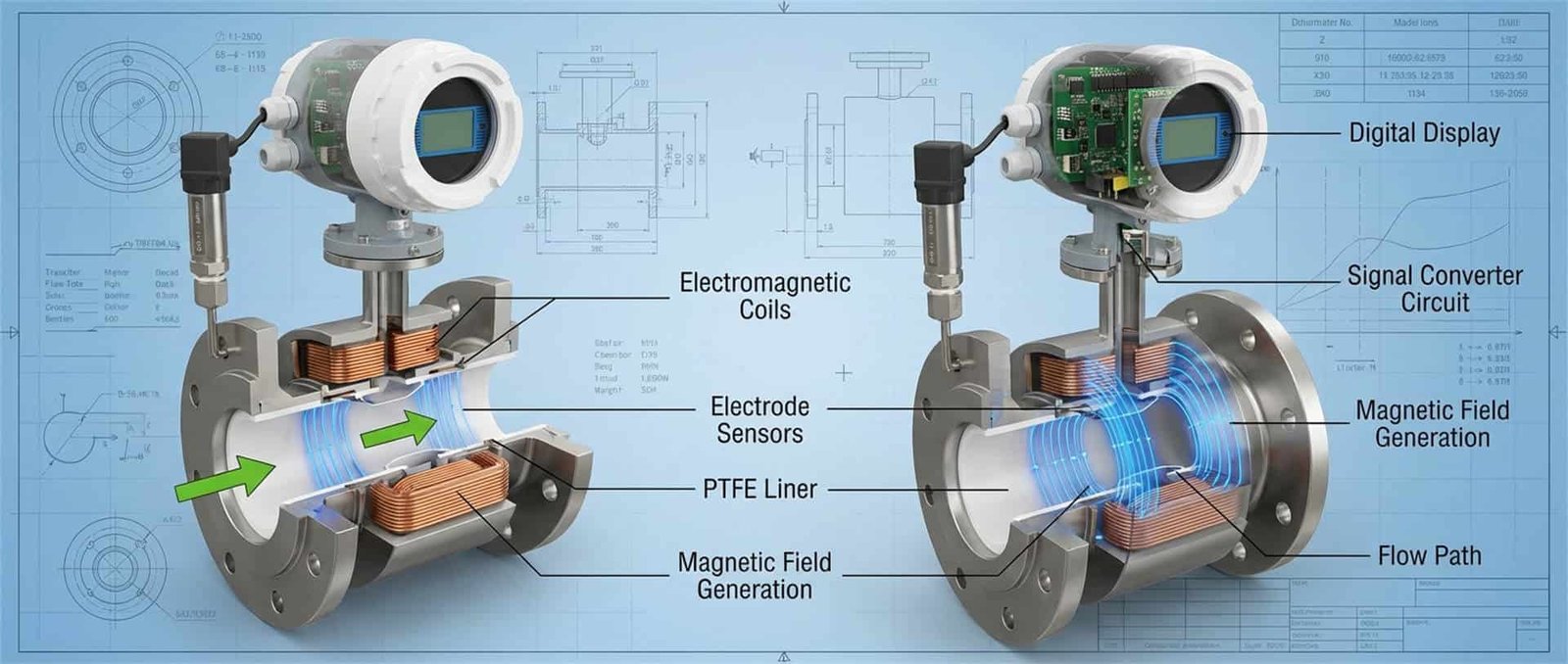
A magnetic flow meter (mag meter) applies Faraday’s law of electromagnetic induction to measure the volumetric flow rate of conductive liquids. The meter generates a magnetic field across the pipe bore using electromagnetic coils. When a conductive fluid passes through this field, it generates a voltage proportional to the fluid’s velocity. Electrodes embedded in the pipe wall detect this voltage, and the transmitter electronics convert it into a flow rate reading. The formula is E = k × B × D × V, where E is induced voltage, B is magnetic flux density, D is pipe diameter, and V is fluid velocity.
2. What minimum fluid conductivity does a magnetic flow meter require?
Standard industrial mag meters require a minimum fluid conductivity of 5 μS/cm (microsiemens per centimeter). Some high-sensitivity models can measure down to 1 μS/cm. For reference, tap water typically ranges from 50–800 μS/cm, and most industrial process liquids — acids, bases, slurries, and wastewater — are well above the 5 μS/cm threshold. Demineralized water (1–10 μS/cm) is on the borderline and may require a high-sensitivity model. Hydrocarbons, gases, and non-conductive solvents cannot be measured by mag meters.
3. Can magnetic flow meters measure slurries and fluids with suspended solids?
Yes — this is one of the mag meter’s primary strengths. Because there are no obstructions, orifices, or moving parts in the flow path, solids pass through freely without causing wear, clogging, or measurement error. Mag meters routinely measure mining slurries at 40–65% solids, paper stock at 3–6% consistency, raw sewage with 200–400 mg/L TSS, and food products containing fruit pulp or particulates. The key to long service life in abrasive slurry applications is selecting the correct liner — ceramic (Al₂O₃) for maximum wear resistance, or polyurethane for moderate abrasion at a lower cost.
4. What liner material should I choose for my magnetic flow meter?
Liner selection depends on the fluid chemistry and temperature. Hard rubber (Neoprene or EPDM) is the default for clean water and non-aggressive wastewater at temperatures up to 80 °C. PTFE (Teflon) resists virtually all chemicals and is rated to 180 °C — it is the standard for chemical processing, pharmaceutical, and aggressive wastewater service. PFA offers similar chemical resistance with a smoother surface finish, preferred in food/beverage and pharmaceutical applications. Ceramic (99.9% Al₂O₃) provides extreme abrasion resistance for mining slurries and pulp stock but is more expensive and fragile under mechanical shock. Jade Ant Instruments’ flow measurement device comparison guide includes liner material selection charts organized by fluid type.
5. How accurate are magnetic flow meters?
Industrial mag meters typically achieve ±0.5% of rate accuracy as standard, with high-performance models offering ±0.2% or even ±0.1% for custody transfer applications. Accuracy is maintained across a wide flow range — most mag meters are specified from 0.3 m/s to 10 m/s fluid velocity, covering a turndown ratio of approximately 30:1 or better. At very low velocities (below 0.1 m/s), accuracy may degrade due to signal-to-noise ratio limitations. Proper grounding, correct installation (5D upstream / 2D downstream straight run), and a full pipe are critical to achieving rated accuracy in the field.
6. Do magnetic flow meters require a full pipe to measure accurately?
Yes. Mag meters require the pipe to be completely full of liquid to produce an accurate reading. A partially filled pipe means the electrodes may be partially or fully exposed to air, which is non-conductive — this generates a zero or erratic signal. Most modern mag meters include empty-pipe detection (EPD) that alerts operators when the pipe is not full. For installations where partial-pipe conditions are unavoidable (such as gravity-fed sewer lines), an open-channel flow meter (e.g., ultrasonic + flume) is the correct alternative.
7. What is the typical service life of a magnetic flow meter?
In clean-water and pharmaceutical applications, a well-installed mag meter can operate for 15–20 years without liner replacement or major maintenance. In chemical processing and effluent monitoring, 10–15 years is typical. In abrasive slurry service (mining, pulp/paper), service life depends on liner material: rubber liners may last 2–5 years, while ceramic liners extend life to 8–12 years. The transmitter electronics typically last 15–25 years and can usually be re-paired with a new sensor body if the original liner wears out.
8. Can magnetic flow meters be used in hazardous (explosive) environments?
Yes. Mag meters are available with ATEX, IECEx, Class I Division 1, and Class I Division 2 certifications for installation in zones where flammable gases, vapors, or dust are present. This makes them suitable for refineries, chemical plants, oil platforms, grain processing facilities, and paint manufacturing plants. Always verify that the specific model’s hazardous area rating matches your site classification.
9. What are the installation requirements for a magnetic flow meter?
The standard recommendation is a minimum of 5 pipe diameters (5D) of straight run upstream y 2–3 pipe diameters (2–3D) downstream to ensure a fully developed flow profile. The meter should be installed in a section where the pipe is always full. Vertical installation (flow upward) is preferred for partially filled pipe scenarios, as gravity keeps the pipe full at the measurement point. Proper grounding is essential — without it, stray electrical currents can cause measurement drift. Grounding rings or grounding electrodes are used when the meter is installed in plastic or lined piping that lacks electrical continuity.
10. How does Jade Ant Instruments support magnetic flow meter selection?
Jade Ant Instruments is an ISO-certified Chinese manufacturer specializing in electromagnetic, vortex, turbine, and ultrasonic flow meters. Their engineering team provides application-specific recommendations covering pipe sizing, liner/electrode material selection, output protocol configuration (4-20 mA, HART, Modbus RS-485), and integration with existing SCADA/DCS systems. They support OEM/ODM customization, meaning customers can specify custom flange standards, special liner materials, or private-label branding for integration into their own product lines. Their electromagnetic flow meters are available in DN10–DN2000 with PTFE, hard rubber, and ceramic liner options.
Further Reading & Resources
Variable Area vs Turbine vs Electromagnetic Flow Meters — Jade Ant Instruments
Comparing Leading Flow Meter Companies — Jade Ant Instruments
Theory of Magnetic Flow Meters — Emerson
Electromagnetic Flowmeters for All Industries — Endress+Hauser
Magnetic Flow Meter — Wikipedia
Flow Measurement Compliance — U.S. EPA